



Abstract
In this study we examined how specific personality traits are related to psychosocial adjustment in people with intellectual disability. We studied 73 students with mild intellectual disability and 25 students with moderate intellectual disability who attended special schools in Poland. Personality traits were assessed with the Revised Edward Zigler-Yale Questionnaire (EZPQ-16R) and to assess adjustment we used a total-difficulties score in Strengths and Difficulties Questionnaire (SDQ). We hypothesized a predictive relationship between the specific personality traits and adjustment. The relation between personality and adjustment was stronger in people with moderate intellectual disability than in people with mild intellectual disability. In students with moderate intellectual disability the relation between personality and adjustment was significant for each of the studied traits and in students with mild intellectual disability it was significant for negative-reaction tendency, and assignment alacrity. Obtained results indicate that specific traits are important to adjustment of people with intellectual disability.
Background
According to Zigler’s (1999, 2001) theory people with intellectual disability are prone to develop specific personality-motivational traits which influence their functioning. This theory emphasises the role of environmental factors stating that such traits emerge as a result of exposure to certain events and situations common for people with intellectual disability, such as failures in cognitively demanding tasks or negative social experiences like institutionalisation or parental neglect (Bennet-Gates and Zigler, 1999a; Bybee and Zigler, 1999; Weisz, 1999). The significance of this approach lays in the fact that specific traits not only allow to capture aspects of functioning that are more likely to manifest in people with intellectual disability than in people from the general population, but also allow to explain functioning of people with this type of disability by going beyond judgments that attribute all manner of difficulties experienced by people within this group to a general decline in their cognitive functioning.
Zigler and his colleagues described seven specific personality traits: positive- and negative-reaction tendencies, expectancy of success, outerdirectedness effectance motivation, curiosity/creativity, and obedience. The first two traits referred to social interactions. The positive-reaction tendency related to heightened need for contact, especially from supportive adults, and the negative-reaction tendency referred to initial wariness and reluctance in contact with strangers (Bennett-Gates and Zigler, 1999a; Zigler and Balla, 1972). The next trait, expectancy of success, related to persons’ confidence that they are able to perform well in given tasks (Bennett-Gates and Kreitler, 1999). The outerdirectedness referred to preference to imitate others and use given cues rather than trying to solve the problem using their own cognitive abilities (Bybee and Zigler, 1992, 1999; Yando and Zigler, 1971). Effectance motivation was related to tendency to tackle tasks and problems being motivated by the feeling of competence that comes from accomplishing the task (Harter and Zigler, 1974; Bennett-Gates and Zigler, 1999b). The last two traits introduced in a study which aimed to integrate Zigler’s theory were: curiosity/creativity, which manifested in creative behaviour and active exploration of the environment, and obedience, which was related to following the rules of conduct (Zigler et al., 2002).
Traits described by Zigler and his colleagues are usually presented together as different facets of a personality structure specific for people with intellectual disability (Roy et al., 2015; Zigler and Balla, 1977). However, the results of studies in which authors attempted to measure all the seven specific traits suggested that these traits may partially overlap and indicated the necessity for a more refined measurement (Henrich et al., 2005; Gilmore and Cuskelly, 2011). In this context it is important to note that Zigler and his colleagues used the term “specific trait” to describe individual differences related to motivation, social interactions, and attitudes towards performance in cognitively demanding tasks (Zigler, 1999; Zigler et al., 2002). Such an approach may cause confusion about the theoretical status of the constructs under study. In the contemporary personality psychology there is a distinction between dispositional traits, like the ones in the Big Five theory, which provide a basic outline for relatively broad and decontextualized personality description, and characteristic adaptations or personal concerns, which are influenced by both dispositional traits and situational variables, and which may be more typical of certain groups in which people share similar life experiences (McAdams, 1995; McAdams and Pals, 2006; McCrae and Costa, 1999;). Zigler’s specific traits fit into the category of characteristic adaptations, since they are not innate features of people with intellectual disability, although, as we presented in another article they are linked to dispositional traits (Gacek et al., 2022). Also, according to Zigler’s theory the specific traits emerge in interactions with an overly demanding and socially reclusive environment.
The latest efforts to advance Zigler’s theory using the results of factor analyses (Gacek et al., 2022) lead to obtaining four specific personality traits which were derived from the seven traits described by Zigler and his colleagues. These four traits were: readiness to explore, assignment alacrity, negative-reaction tendency, and support dependence. The negative-reaction tendency was understood in the same way as the construct in the original theory. Readiness to explore covered the aspects of curiosity/creativity and expectancy of success (Bennett-Gates and Kreitler, 1999). This trait was manifested in active exploration of the environment and a tendency to engage in actions by testing various possibilities. The next trait, assignment alacrity, was derived from effectance motivation and obedience (Bennett-Gates and Zigler, 1999b; Harter and Zigler, 1974), and was related to the tendency to find pleasure in assigned work and to follow social rules and guidelines. Lastly, support dependence covered the aspects of outerdirectedness and positive-reaction tendency (Bennett-Gates and Zigler, 1999a; Bybee and Zigler, 1992, 1999). Support dependence was reflected in the tendency to rely on external cues in challenging situations and to seek supportive contact with adults. Following the original claims of Zigler and his colleagues, the four specific traits should be related to how well a person functions in the environment. Specifically, higher levels of readiness to explore and assignment alacrity, and lower levels of negative-reaction tendency and support dependence should indicate better functioning. The relations between the traits introduced in the original and revised version of Zigler’s theory are presented in Figure 1. Diagram presenting the structure of personality traits in Zigler’s original theory and the revised four-factor model. Grid-filled arrows: positive correlations, dash-filled arrows: negative correlations.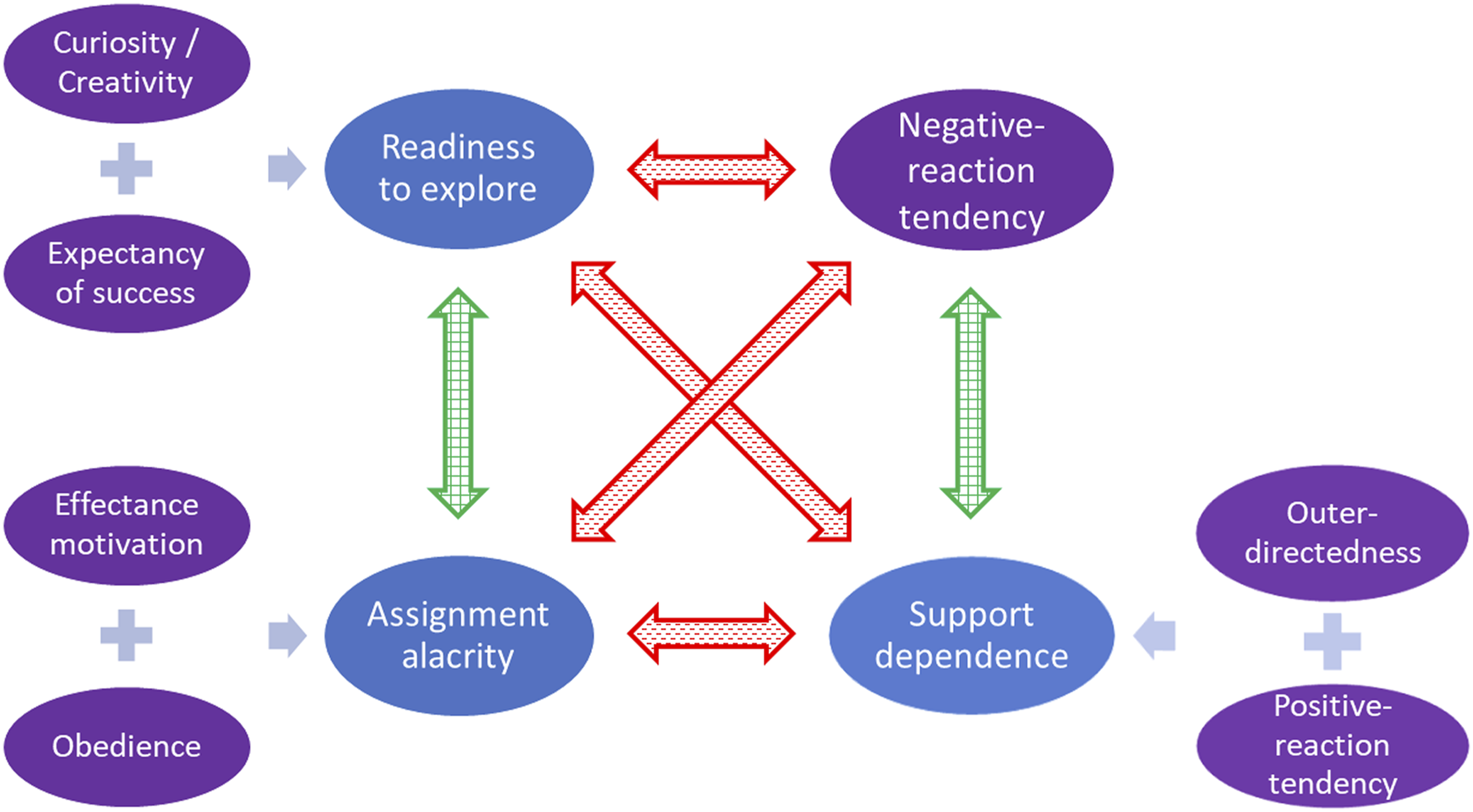
The study described in this paper aimed to explore relations between the specific personality traits and psychosocial adjustment in people with mild and moderate intellectual disability. Associations between personality traits and behavioural and psychological symptoms are often found in patients with cognitive impairments, suggesting that personality may be an important predictor of difficulties in functioning when cognitive decline occurs (Osborne et al., 2010; Rubio et al., 2013, Sutin et al., 2018). We hypothesized a predictive relationship between the specific personality traits and psychosocial adjustment in people with intellectual disability. Also, we hypothesized that such a relationship will be stronger in people with moderate intellectual disability than in people with mild intellectual disability. We regarded the four traits specified in the revised theory as independent variables, and psychosocial adjustment level as a dependent variable, justifying this with the fact that the specific traits emerge early in development and are related to the social context of functioning of individuals with intellectual disability. Zigler et al. (2002) investigated the specific personality traits in children as young as the age of five. Thus, we presumed that the specific traits should be viewed as relatively stable individual characteristics that may predict adjustment, and not only as correlates of adjustment. Also, we assumed that people with mild and moderate intellectual disability share different developmental experiences (Iarocci and Petrill, 2012; Zigler, 1967). People with moderate intellectual disability usually present more cognitive deficits than people with mild intellectual disability, and they more often possess visible signs of disability, such as characteristic facial features. This may contribute to more frequent experiences of failure in cognitive tasks and social rejection than in people with mild intellectual disability. Taken together these difficulties may in turn be important in respect to personality development.
Method
Ethical considerations
We obtained the approval of the ethical committee at the Pedagogical University of Krakow (approval number WP.113-3/2018) and the relevant school boards. The data was kept and used in accordance with the General Data Protection and Regulation Law in force (European Parliament, 2016).
Participants
We assessed students of special education centres in Poland. The centres in which the study was conducted accept only students with intellectual disability at different levels of severity, and students with autism spectrum disorder. The diagnoses of students are based on the ICD-10 (World Health Organization, 1996) criteria and are provided by psycho-pedagogical counselling centres. In the special education centres students are taught in classes with other students functioning on a similar intellectual level. Classes for students with mild intellectual disability allow a maximum of 16 students per class, and classes for students with moderate intellectual disability allow maximum of 8 students per class. Each student has an individualized educational-therapeutical program prepared by a team of teachers and therapists. The sample in our study consisted of 98 students aged 16-21 years (mean age: 18.94 with standard deviation: 1.43). In this group 73 students had a diagnosis of mild intellectual disability (mean age: 19.0 with standard deviation: 1.28) and 25 students had a diagnosis of moderate intellectual disability (mean age: 18.9 with standard deviation: 1.81). We did not include persons with secondary diagnoses, such as autism or hearing impairment, and we did not include persons with known organic aetiology of disability, such as Down syndrome. The data was obtained from special education teachers who completed questionnaires regarding their students. All teachers were qualified disability educators (special pedagogy in Poland), and had worked with the assessed students for at least six months with two hours of classes per week.
Measures
The Revised Edward Zigler-Yale Personality Questionnaire (EZPQ-16R) is a measure developed by Gacek et al. (2022). The measure comprises of 16 items allocated to four scales: readiness to explore, assignment alacrity, negative-reaction tendency, and support dependence. The student assessment is carried out by a teacher familiar with the students’ typical behaviour. Each statement in the questionnaire is rated on the scale from 1 (very much not true) to 5 (very much true). Higher scores on readiness to explore, assignment alacrity scales, and lower scores on negative-reaction tendency, and support dependence indicate more positive personality development. The reliability of EZPQ-16R scales is high in terms of internal consistency (Cronbach’s α coefficients ranging from .84 to .87) and temporal stability (test-retest correlations ranging from .72 to .82 after one month). The convergent validity was confirmed in correlational analyses with other measures of personality and adjustment (for the details see Gacek et al., 2022).
The Strengths and Difficulties Questionnaire (SDQ) is a measure developed by Goodman (1997, 2001). The questionnaire comprises of 25 items which assess children’s and adolescents’ attributes in five domains: emotional symptoms, conduct problems, hyperactivity-inattention, peer problems, and prosocial behaviour. The sum scores on scales that measure difficulties provide the means to obtain a total-difficulties score. The statements are rated on a 3-point Likert scale. In our study we used a version of the questionnaire that allows the assessment of symptoms by a third-party. The measure has good psychometric properties which were confirmed in a nationwide British sample (Goodman, 2001), and it was also used in studies conducted in Poland (e.g. Papieska et al., 2019). The official site for this measure (https://www.sdqinfo.org/) provides information regarding over 5000 studies from over 100 countries in which SDQ was used.
Procedure
After obtaining the approval of school boards, we contacted the teachers of special education centres and presented them information regarding the study. Teachers who gave their informed consent to participate in the study received instructions on how to fill in the questionnaires. The teachers completed the questionnaires at school in their free time.
Statistical analyses
Independent samples Welch 2-sided t-test with Hedges’ g as a measure of effect size with 95% confidence intervals was used to test if mean scores on scales of EZPQ-16R and scores on total-difficulties scale of SDQ differ between students with mild and moderate intellectual disability. Pearson product-moment correlation coefficients with 95% 2-tailed confidence intervals estimated based on Fisher’s r-to-z transformations were computed to assess bivariate linear relationships between scores on total-difficulties scale of SDQ and scores on scales of EZPQ-16R. The moderated regression analysis using a linear model fit by the ordinary least squares were computed to verify whether the impact of the scores on EZPQ-16R scales on total-difficulties scores in SDQ differed between students with mild and moderate intellectual disability. In the analytic model we adopted, the scores on EZPQ-16R scales were explanatory (independent) variables, the severity of intellectual disability was the moderator variable, and the total-difficulties score in SDQ was the response (dependent) variable. Analyses were performed using the free and open-source statistical platform jamovi (The jamovi project, 2021), based on the R programming language for statistical computing (R Core Team, 2020) with the GAMLj jamovi module (Galluci, 2021). This module is designed, among other functions, to perform moderated linear regression analyses, as presented by Hayes (2022), and also available in the PROCESS macro for IBM SPSS Statistics.
Results
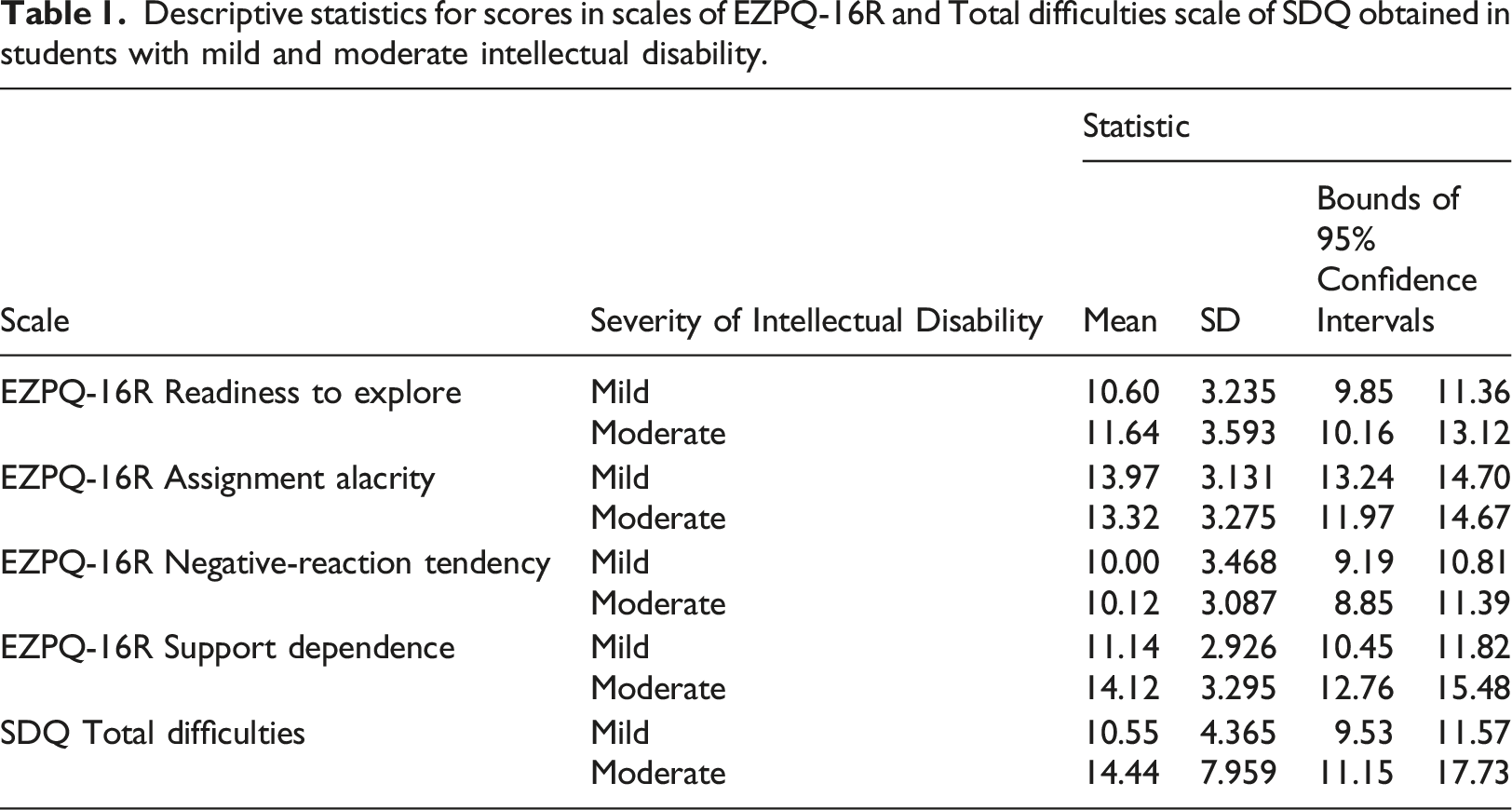
Descriptive statistics for scores in scales of EZPQ-16R and Total difficulties scale of SDQ obtained in students with mild and moderate intellectual disability.
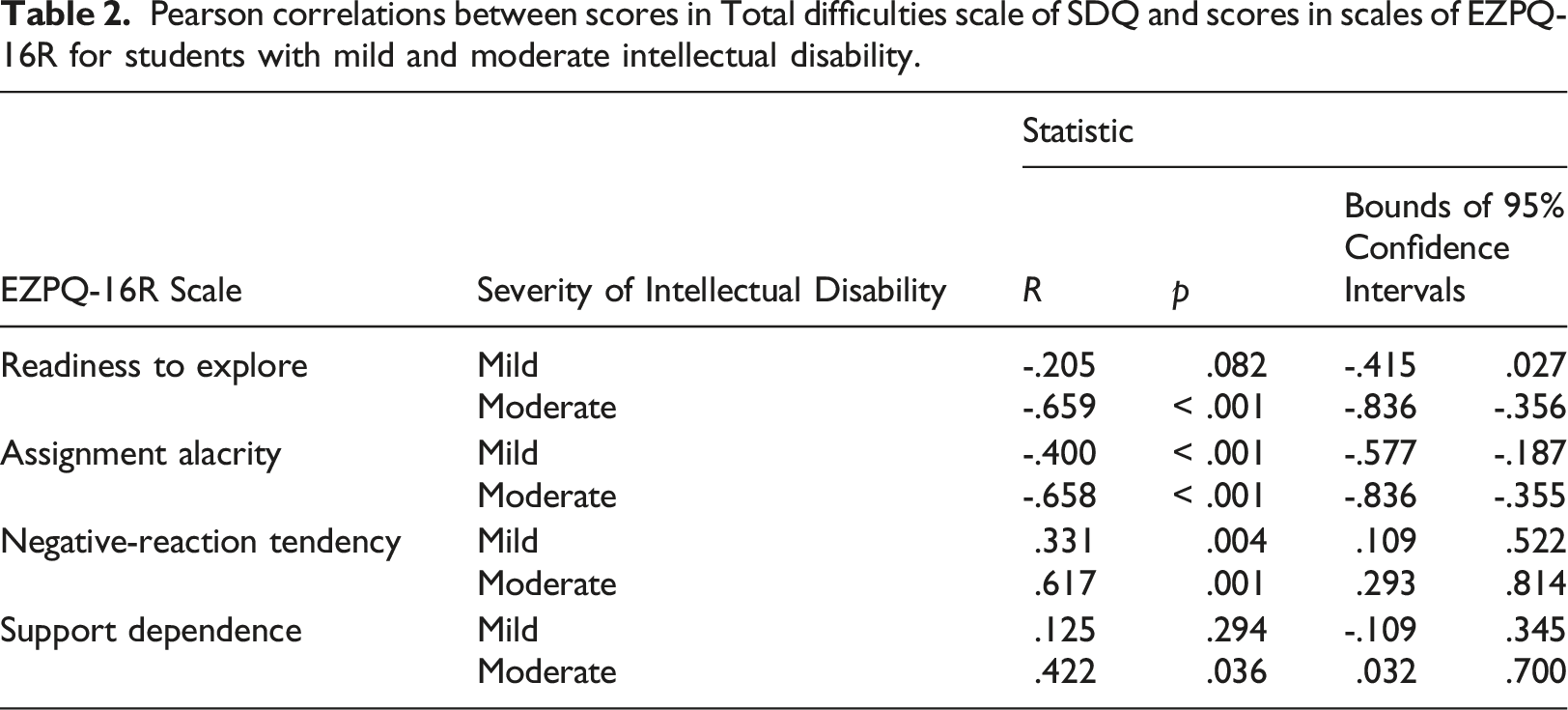
Pearson correlations between scores in Total difficulties scale of SDQ and scores in scales of EZPQ-16R for students with mild and moderate intellectual disability.
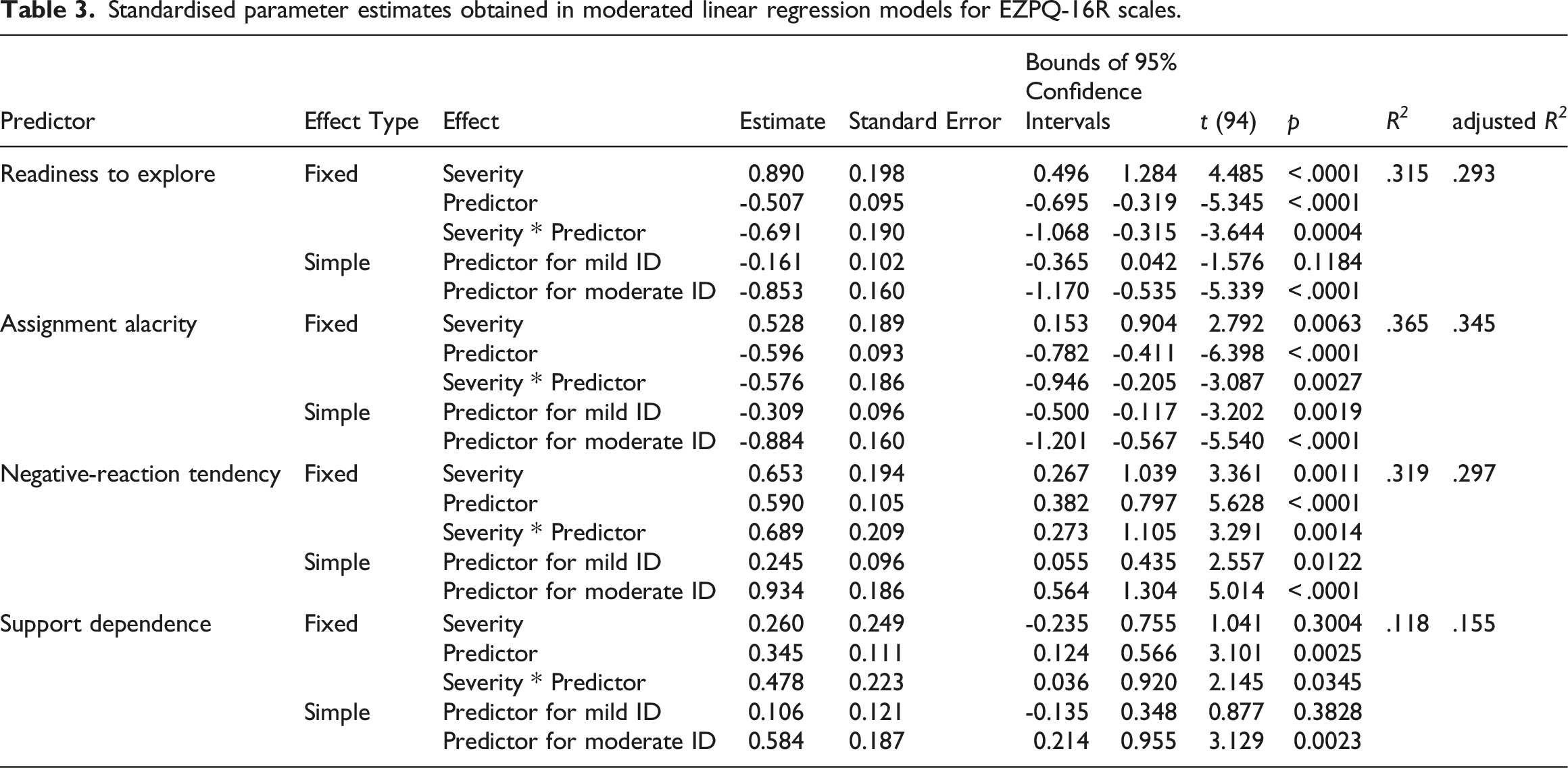
Standardised parameter estimates obtained in moderated linear regression models for EZPQ-16R scales.
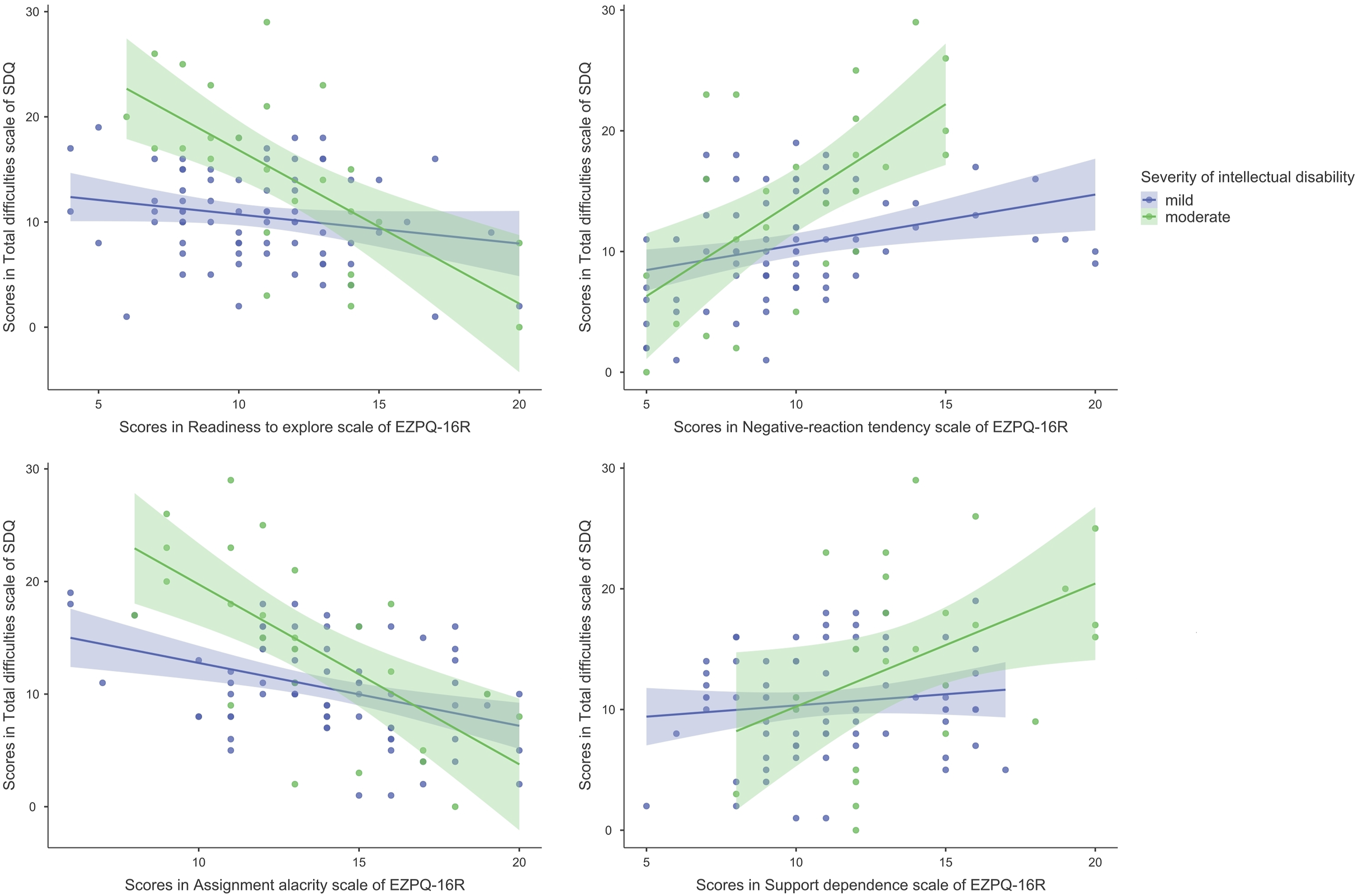
Scatterplots with linear regression lines and 95% confidence intervals for the relationship between scores on the four scales of the revised Edward Zigler Yale-Personality Questionnaire (EZPQ-16R) and scores on the Total difficulties scale of Strength and Difficulties Questionnaire (SDQ) in students mild and moderate intellectual disability.
To summarize the results, the correlations of readiness to explore and assignment alacrity with total-difficulties scores in SDQ were negative, while the correlations of negative-reaction tendency and support dependence with total-difficulties scores in SDQ were positive. The severity of intellectual disability moderated the relationships between scores on all scales of EZPQ-16R and the total index of difficulties. The magnitude of these correlations appeared to be greater in individuals with moderate intellectual disability compared to those with mild intellectual disability.
Discussion
In this study we explored relations between the specific personality traits and psychosocial adjustment in people with mild and moderate intellectual disability. In our analyses we included four personality traits: readiness to explore, assignment alacrity, negative-reaction tendency, and support dependence, and as a measure of general psychosocial adjustment we used total-difficulties score of SDQ. We hypothesized a predictive relationship between the specific personality traits and psychosocial adjustment. Also, we hypothesized that such a relationship is stronger in people with moderate intellectual disability than in people with mild intellectual disability. It is emphasized in the literature that persons with mild and moderate intellectual disability differ in developmental experiences (Zigler, 1967; Iarocci and Petrill, 2012). People with moderate intellectual disability have more cognitive difficulties and possess visible signs of disability more often than people with mild intellectual disability. Thus, it seems more probable that specific traits which hinder their functioning may manifest more conspicuously in this group than in the group with mild intellectual disability. In our study we found that persons with moderate intellectual disability scored higher on support dependence scale than persons with mild intellectual disability. This trait covers the aspects of positive-reaction tendency (Bennett-Gates and Zigler, 1999a) and outerdirectedness (Bybee and Zigler, 1992, 1999) from Zigler’s theory. The heightened need for supportive contact with adults and tendency to rely on external cues in persons with moderate intellectual disability may be related to more negative social experiences, and more difficulties in tackling cognitive problems than in a group with mild intellectual disability. Also, persons with moderate intellectual disability differed from persons with mild intellectual disability in regard to the total-difficulties score, which indicates that persons from this group present more symptoms of maladjustment in the environment.
We found that the specific personality traits predicted psychosocial adjustment in both groups. The relationship between personality and adjustment was stronger each time in persons with moderate intellectual disability than in persons with mild intellectual disability, and in the former group significant for each of the four traits. This suggests that the assessed personality traits influence adjustment, and that they play the more important role in persons functioning, the more such persons fall short in cognitive resources and skills. Relation of personality to behavioural and psychological symptoms is found in patients with cognitive impairments (Osborne et al., 2010; Rubio et al., 2013; Sutin et al., 2018). Our results indicate that more profound limitations in cognitive resources make the connection between personality and adjustment more noticeable. In persons with moderate intellectual disability the specific personality traits may be seen as an especially important resource that allows to compensate for cognitive deficits. In case of persons with mild intellectual disability the most important traits related to adjustment were negative-reaction tendency, which manifests in tendency to isolate from social interactions, and assignment alacrity, which is related to following rules and deriving pleasure from assigned work (Gacek et al., 2022). In the case of persons with mild intellectual disability significance of these two traits for adjustment may be related to social context, such as interactions in the classroom with other students and teachers, which may be especially valuable for adolescents and young adults. Our results stand in accordance with Zigler’s (1999, 2001) view on importance of personality for functioning of people with intellectual disability and they indicate that specific personality traits should be considered in therapy and education, especially when it comes to people with moderate intellectual disability.
Our study has some limitations. Firstly, we did not obtain the exact IQ scores of the assessed students. Inclusion of IQ scores in regression models should allow us to understand better the relation between diminishment of cognitive abilities and adjustment. Secondly, the number of students with moderate intellectual disability in this study was relatively small. Future studies should involve bigger samples of persons with moderate intellectual disability. Lastly, we did not include persons with genetic syndromes. In this case relations between personality and adjustment may differ due to behavioural phenotypes and other factors specific to those syndromes.
To the best of our knowledge, this is the first study to explore the relation between specific personality traits of people with intellectual disability and adjustment in which moderating effect of severity of intellectual disability was estimated. The results of this study indicate that the assessment of specific personality traits derived from the Zigler’s theory may contribute to explaining adjustment difficulties in people with an intellectual disability. In future studies it would be important to study larger samples of people with intellectual disability, and to include other indicators of adjustment related to different types of tasks and situations. Data regarding adjustment could be obtained in the process of evaluating students’ progress at school or in therapy. Adjustment measures which tap into other than SDQ aspects of functioning could be used to gain a more comprehensive knowledge regarding the relation between the specific traits and adjustment. The results of our study should have implications for educational and clinical practice. Knowledge regarding specific personality traits may be useful for practitioners who attempt to optimize their methods of work with people with intellectual disability by creating more individualized plans of activities. Obtaining information on specific personality traits should help teachers and therapists to better understand persons with intellectual disability, and thus provide a better suited support to persons within this group.
Footnotes
Declaration of conflicting interests
On behalf of all the authors, the corresponding author states that there is no conflict of interest.
Funding
The author(s) disclosed receipt of the following financial support for the research, authorship, and/or publication of this article: Financial support was provided by the Polish Ministry of Science and Higher Education from funds for statutory research at the Pedagogical University of Krakow.
Data availability statement
The data supporting the findings of this study will be made available by the authors to qualified researchers upon reasonable request.
Ethical approval
We obtained the approval of the ethical committee at the Pedagogical University of Krakow (approval number WP.113-3/2018) and the relevant school boards.
