




Abstract
In the residential sector, energy consumption and greenhouse gas (GHG) emissions remain key issues. Heat pumps are an emerging technology that shows promise of addressing both these issues through the electrification of space heating. Cold climates pose a unique challenge to specifically air-source heat pumps (ASHPs) due to reduced efficiency at lower ambient temperatures. A solution to this is fuel-switching heating systems, which can potentially reduce utility costs, GHG emissions, or energy consumption through the optimized utilization of multiple fuel sources for space heating. This study aims to investigate the energy efficiency and GHG emissions of a fuel-switching heating system composed of an ASHP and tankless water heater (TWH) in the city of Edmonton, Alberta, which is characterized by a cold climate. The key lessons learned from this in-situ evaluation were (1) The studied units consumed 13,361 kWh (52.7%) less total energy and emitted 3364 kgCO2eq (62.8%) fewer GHG emissions compared to the average rowhouse in Alberta. Despite exhibiting promising reductions, caution is required before implementing increased electrification measures in regions with high-pollution generation methods, such as Alberta. (2) The efficiency of fuel-switching systems is dependent on the controller. It was found that half of the studied units never utilized their ASHP for space heating, and that these units consumed 14.5% less HVAC energy compared to units with regular ASHP heating. This was caused by poor controller configuration, where the ASHP and TWH were operated on a single control loop, leading to the ASHPs being utilized in extreme cold conditions, and (3) Occupant behavior has a significant impact on energy performance between units. When investigating an occupant change for a single unit, the new occupants were found to consume up to 2.07 times more plug energy and 1.50 times HVAC and DHW energy during periods with similar weather conditions.
Keywords
Introduction
Throughout the 21st century, energy consumption has remained a key issue on the global stage, with the race to reduce greenhouse gas (GHG) emissions and energy consumption driving innovations and research topics. Canada’s GHG emissions from 2021 were reported as 670 Mt CO2 equivalent, where approximately 13% of released GHG emissions (87.2 Mt CO2eq) were from the national residential sector (Environment and Climate Change Canada, 2024). Canada’s energy consumption profile is characterized by its cold climate, where there’s a heavy reliance on space heating driven by cold temperatures in the winter to various degrees across the provinces. A majority of households in Canada rely upon forced air furnaces for primary space heating (Statistics Canada, 2023), where of the total energy consumed in Canadian households, 53.4% was consumed through natural gas in 2019 (Statistics Canada, 2022). The Canadian space heating sector has been evolving in recent years, with a growing margin of space heating demand being met through electricity, rather than natural gas. This is mainly the result of the progressive adoption of electric-driven heat pumps in Canada, which is expected to continue penetrating Canada as a critical technology. Canada Energy Regulator (2023) predicted that by 2050, heat pumps will account for 50% of space heating in the country.
Heat pumps are an emerging technology that is well-suited to address the challenges of rapid decarbonization and energy reduction. Gaur et al. (2021) broadly define heat pumps as devices that extract heat from one location and transfer it to another using electrical or mechanical energy. While devices that directly convert electrical energy to heat have a theoretical maximum of 100%, heat pumps instead rely on the ability to move existing heat, allowing them to reach higher efficiencies (Wang et al., 2022). The focus of this study is air-source heat pumps (ASHPs), which are one of the most common types used in residential applications. Other variations of heat pumps include water source, ground source, sorption, solar, and hybrid (Gaur et al., 2021). Heat pumps enable two potential benefits: Reduced GHG emissions through the electrification of space heating and reduced energy consumption through high-efficiency space heating and cooling. However, studies have noted that the success of space-heating electrification for decarbonization is dependent on the local grid’s emission intensity (Wang et al., 2022).
Despite their novel use as a space heating solution, cold climates pose a unique challenge for ASHP integration. At low ambient temperatures, the efficiency of ASHPs decreases due to frosting over the evaporator coils and large pressure ratios (Li, 2018). A study using a fuel-switching heating system in Edmonton found that the coefficient of performance (COP) of their ASHP ranged from approximately 4 at 15°C ambient temperature to only 1.2 at −25°C (Qu et al., 2024). This variation in performance hinders the integration of ASHPs in cold climates, as the efficiency of ASHPs decreases as the associated space heating demand with lower ambient temperatures increases. Additionally, the electrification of space heating also has ramifications for the grid, with studies highlighting the increased future electrical demand imposed by the additional electrical load (Bennett et al., 2022). Although ASHPs have historically been the most commonly used heat pump due to their affordability and relatively simple installation, other variations of heat pumps, such as ground source heat pumps (GSHPs), are known to be more suitable for providing space heating in cold climates (Adebayo et al., 2024). Additionally, emerging deep cold ASHPs are capable of providing high-efficiency space heating in colder conditions compared to typical ASHPs.
A solution to these problems is the introduction of a fuel-switching heating system, which can be more widely classified as a type of hybrid heating system (HHS). Fuel-switching systems can be described as bivalent (Bennett et al., 2022), with the ability to switch between two space heating appliances that operate using different fuel sources. Compared to heat pump heating, fuel-switching heating systems offer three main benefits: The first benefit is that fuel-switching heating systems can alternate between multiple fuel sources. Depending on the occupants’ desires, the system controller can be optimized for energy consumption, utility cost, GHG emissions, heating rate, or some combination of these factors. Another benefit is the increased flexibility (Keogh et al., 2019) and redundancy of having multiple heating systems in case one heating system fails. The third benefit is the ability to size the heat pump at a fraction of the heating design load (Bagarella et al., 2016; D’Ettorre et al., 2019). Typically, heating systems are designed for the peak heating load (heating load at minimum temperature), which rarely occurs, resulting in the heat pump almost always exceeding heating requirements (Bagarella et al., 2016). With a secondary system available to assist with heating, the utilization of each appliance in the system can be increased, allowing for higher efficiencies and lower costs.
In literature, fuel-switching heating systems have consistently shown promising results compared to traditional space heating appliances. Bennett et al. (2022) showed that a compact HHS saved 16%–62% energy compared to the reference boiler system, with the highest energy savings achieved when the ASHP was always given priority. Many previously conducted studies on fuel-switching heating systems have focused on the system as a retrofit for existing households, predominantly in areas with a higher share of older housing stock, such as in Europe. Keogh et al. (2019) performed an analysis of a fuel-switching heating system retrofit for existing households in Ireland. Compared to natural gas and oil boiler systems, the fuel-switching system and fully electric heat pump systems showcased the best performance. The fuel-switching system outperformed the fully electric heat pump in this study, saving 9.6% primary energy. A Canadian retrofit study consisting of an air-to-water heat pump, auxiliary boiler, and thermal storage showed an average 23% GHG emission reduction across Canada (Asaee et al., 2017). This study shows the importance of the local grid emission intensity for heat pump integration, as Alberta, which is a region in Canada traditionally dependent on fossil fuels, recorded a 25% GHG increase with the retrofit. Building on existing fuel-switching heating systems, the emissions and efficiency of these systems can be further improved through the integration of renewable resources, such as geothermal plants or solar panels (Beccali et al., 2022). A study in Michigan found that for rural residential buildings, where oil and natural gas boilers are the most prevalent, switching to heat pumps would have immediate economic benefits (Padovani et al., 2021). Additionally, they found that by modeling a photovoltaic-assisted ASHP (PV-ASHP), GHG emissions could be reduced by 60% compared to the heat pump system alone.
Within fuel-switching heating systems, a critical component is the control system that decides when and how each space heating appliance is used within the system. This subset of research focuses on introducing more advanced control systems into fuel-switching heating systems, with some studies referring to these systems as smart hybrid heating systems (SHHS) (Sun et al., 2019a, 2019b). Studies in this field can typically be classified as either rule-based control (RBC) or model predictive control (MPC), with rule-based controllers being more common in literature (Beccali et al., 2022). Conventionally, fuel-switching heating systems are controlled by either a timing switch or an external temperature monitor (Sun et al., 2019a, 2019b). As an improvement, a study focusing on a primary school building in Italy equipped with a gas boiler, photovoltaic-assisted heat pump, and thermal energy storage water tank introduced a method to obtain an optimal control problem solution and compared it against a rule-based controller (Zanetti et al., 2020). Through simulations, they found the optimal control problem solution achieved 20% average cost savings and 10% emission reductions compared to the rule-based controller through better utilization of the thermal energy storage to store excess PV energy, increasing PV self-consumption. As opposed to RBC, MPC studies incorporate future information into current decisions, which has the potential to shift energy consumption away from peak hours, reducing the stress on the grid. Sun et al. (2019a) achieved considerable cost-saving results for an SHHS with MPC, with the heat pumps typically operating overnight for preheating to reduce costs.
Within Canada, the province of Alberta represents a unique case for the implementation of ASHPs. As a region historically dependent on the production of fossil fuels, utility prices have favored natural gas solutions over electricity for residential space heating. It has been shown that in terms of emissions intensity and pricing, pure natural gas solutions currently remain the most feasible in the city of Edmonton (Udovichenko and Zhong, 2020). This is by a shrinking margin, however, as the consumption intensity in Alberta has been steadily decreasing over recent decades (Environment and Climate Change Canada, 2024). Alberta is reaching a tipping point where electric space heating solutions are becoming increasingly feasible from an emissions standpoint. Typical ASHPs are suitable for a large portion of Alberta’s climate conditions; however, specialized deep cold ASHPs or auxiliary heating are necessary to meet the heating capacity during the region’s regularly occurring extreme cold external temperatures. The ability to supply efficient, auxiliary space heating along with providing additional flexibility and optimization opportunities are the driving factors for adopting fuel-switching heating systems in cold climate regions such as Alberta. As these systems are still relatively new to the region, it is important for thorough in-situ analysis to identify potential complexities when utilizing these systems in physical, occupied households. To address this, the objectives of this study are to (1) benchmark the energy and GHG emission performance of a relatively new fuel-switching heating system in Edmonton, Canada, and (2) explore the lessons learned regarding limitations and future optimizations of the in-situ fuel-switching heating system that can be applied to future studies. Both objectives were met through an energy monitoring project that took place in Edmonton which had a focus on fuel-switching heating systems.
The remainder of this paper is organized as follows: the Methodology discusses the case study data collected, the Results and Discussions cover the findings from the various analysis performed, and the Conclusion summarizes the findings and lessons learned from the study.
Methodology
For this study, a MURB block consisting of six regularly occupied household units was utilized to provide energy consumption data for analysis. The study took place in Edmonton, Alberta, which is characterized by a cold climate. The studied building was constructed in 2019–2020, where the household units were categorized as “townhome” in style, consisting of multiple levels on the interior and no horizontal gap between units within the block. Each household was equipped with a relatively new fuel-switching heating system consisting of an electrically powered air-source heat pump (ASHP) and a natural gas fueled tankless water heater (TWH) that both provided space heating for the unit. Each system provided space heating and cooling to a singular zone, with each unit having a heating area of 135.0 m2. The installed ASHPs had an average annual operating COP and heating capacity of 3.56 and 11.2 kW, respectively. Due to the extreme cold conditions that occur through the winter, the installed ASHPs were not capable of providing sufficient space heating to homes in extreme cold conditions. This required the additionally installed natural gas TWHs that provided an additional 23.9 kW of space heating capacity. It was intended for the fuel-switching heating systems to have the ability to alternate between heating devices within the system to provide space heating; however, due to hardware limitations, both the ASHP and TWH were operated on a single control loop for space heating. With the singular control loop configuration, the ASHP and TWH were unable to operate independently, hence space heating was always supplied from both devices simultaneously when active. Apart from the fuel-switching system, the units were also designed to be energy efficient, with heat recovery ventilation systems installed in each household. A schematic of the fuel-switching heating system is included below in Figure 1. The data collection period lasted 3 years, starting in March 2020 and ending in February 2023.
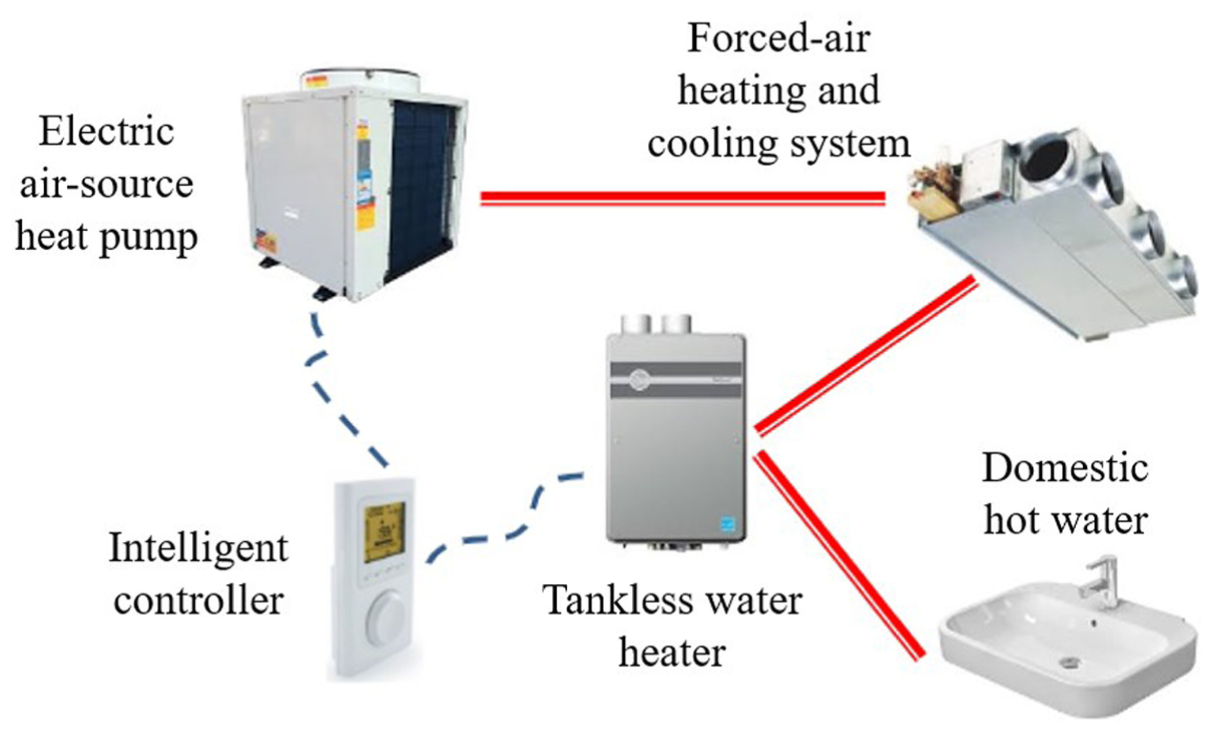
Schematic of fuel-switching heating system in studied units.
To collect energy consumption data, a commercial energy monitoring system was installed in each unit. These systems consisted of an electricity meter in the electrical panel that measured the power drawn from multiple breakers in the panel using current transformers clamped around the wires, as well as a natural gas meter. The electrical panel was sub-metered to include individual channels for the ASHP, air handling unit (AHU), and mechanical room power draws measured in Watts. This system also indirectly monitored the plug load from the occupants, defined as the total load subtracting the sum of ASHP, AHU, and mechanical room load for any timestep. The gas meter recorded changes in the volume of natural gas consumed each minute in cubic feet (cf) and was measured to the nearest cubic foot. To allow for direct comparisons to be made between electrical and natural gas consumptions, natural gas consumption in cf was converted to kWh in equation (1) using a conversion factor from Canada Energy Regulator (2016). The data collection resolution was once every minute, and in the case that any of the systems lost connection to the internet, each system could store up to 2 weeks of data offline.

Using the processed datasets for electrical and natural gas consumption, benchmarking was performed to assess the overall performance of the MURB. The benchmarking process was conducted by comparing the case study household’s annual consumption averages against rowhouse averages in the region provided by Statistics Canada (2024). The total, electrical, and natural gas energy consumptions between units were compared to identify the best and worst performing units, corresponding to the lowest and highest energy consumptions, respectively. Further observations were made regarding the electrification impact of the fuel-switching heating system by investigating the GHG emissions associated with each form of energy utilization. Following the benchmarking process, energy consumption data was organized into five unique categories: three electrical consumption categories (ASHP, ventilation, and plug load) and two natural gas consumption categories (space heating and DHW). For the ventilation category, AHU and mechanical room (the mechanical room consisted of the HRV and a water pump) consumptions were summed at each time step. To dissect natural gas consumption data into space heating and DHW, an algorithm was developed using the AHU fan power and external temperature to determine if natural gas was consumed for space heating (high fan power) or DHW (low or no fan power) following the process shown below in Figure 2. Natural gas data division required extensive data cleaning, hence only 1 year of natural gas data from August 2021 to July 2022 was divided for analysis.
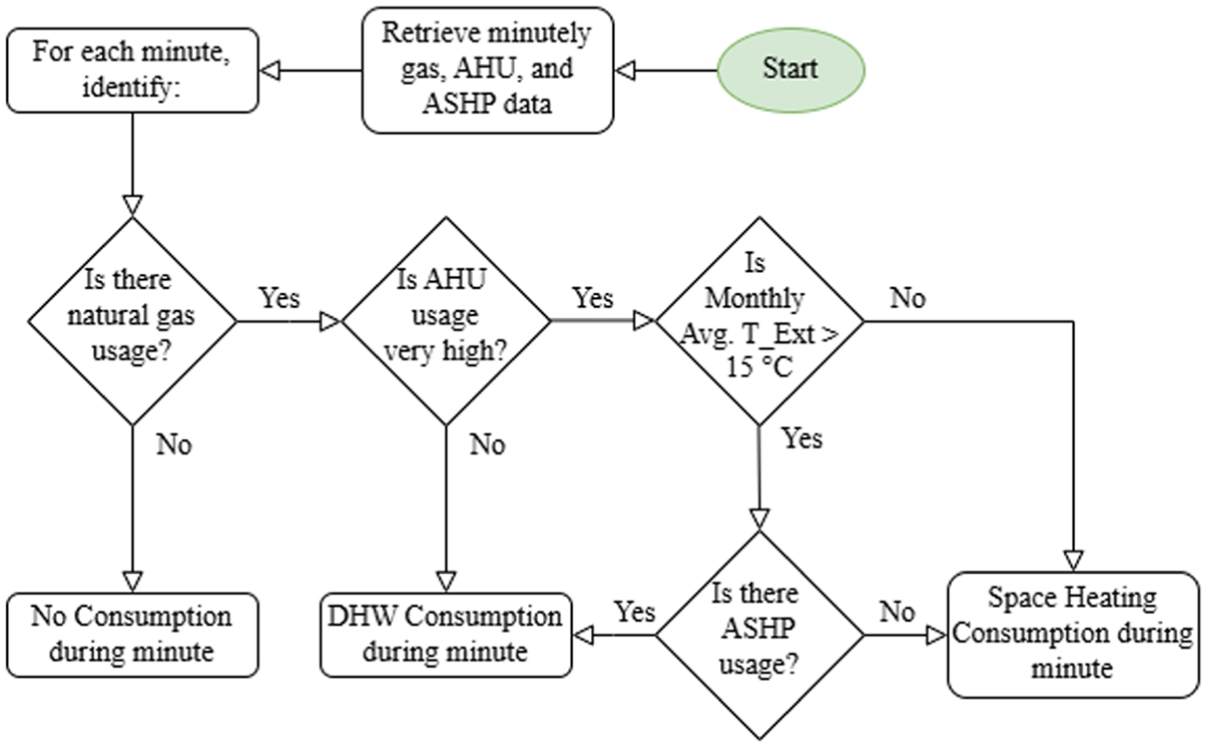
Flowchart depicting method for identifying category of natural gas consumption.
Once the data was categorized into individual consumption categories, two areas of analysis were conducted to investigate the variations and similarities between households in the study. The first area of focus concerned the fuel-switching heating system and the utilization of the different devices within the heating system. Early analysis of the data suggested that some units never utilized ASHPs to provide space heating, so another analysis was conducted by splitting the units into active and inactive ASHP space heating systems. The second area of analysis considered the effects of individual tenants on different energy consumption categories. As the units were rentals, the property management company provided lease duration dates that could be used to determine when the occupants within each unit changed. Particular attention was given to plug load, as well as to changes in the HVAC system performance that may have stemmed from changes in thermostat setting behaviors.
Results and discussions
This section covers the results and discussions of the analysis performed on the collected data. Initially, the fuel-switching heating system is benchmarked against average Alberta row housing for electrical, natural gas, and total energy consumption. Energy consumption was then divided into five categories for each unit, with comparisons made for the energy and emissions performance of each category between the studied units. The following section compared the utilization of each component of the fuel-switching heating system in the studied units. It was found that units could be categorized as having either an “active” or “inactive” ASHP for space heating, and an energy consumption analysis was done comparing the averages of the units in each category. To assess the potential impact of occupant behavior on energy consumption, an occupant change within the same unit was analyzed by comparing the energy consumption of the previous and new tenants.
Energy consumption and GHG emission benchmarking
To evaluate the performance of the studied units, regional average rowhouse energy consumption data from Statistics Canada (2024) was used to benchmark the studied units’ energy performance. The average Alberta rowhouse data used for benchmarking is representative of all rowhouses in Alberta, encompassing different building ages and designs. The average annual electricity and natural gas consumption across all studied units and the selected benchmarks are shown below in Figure 3. A similar benchmarking process was done for evaluating the GHG emissions performance, with the kilograms of carbon dioxide equivalent emitted annually for the studied unit average and the Albertan rowhouse average shown in Figure 4. The electricity emission consumption intensity for Alberta was reported as 490 gCO2eq/kWh by Environment and Climate Change Canada (2024) for 2022, and natural gas emissions from combustion were 187 gCO2eq/kWh, converted from the 54.81 kgCO2eq/1000cf coefficient provided by the U.S. Energy Information Administration (2024) using equation (1). GHG emissions are commonly measured using carbon dioxide equivalents (kgCO2eq) to balance and compare the effects of different gases emitted, where Environment and Climate Change Canada includes CO2, CH4, N2O, and SF6 for electricity generation. Both the Alberta emission consumption intensity and natural gas emissions from combustion values were used as conversion factors to obtain the values in Figure 4.
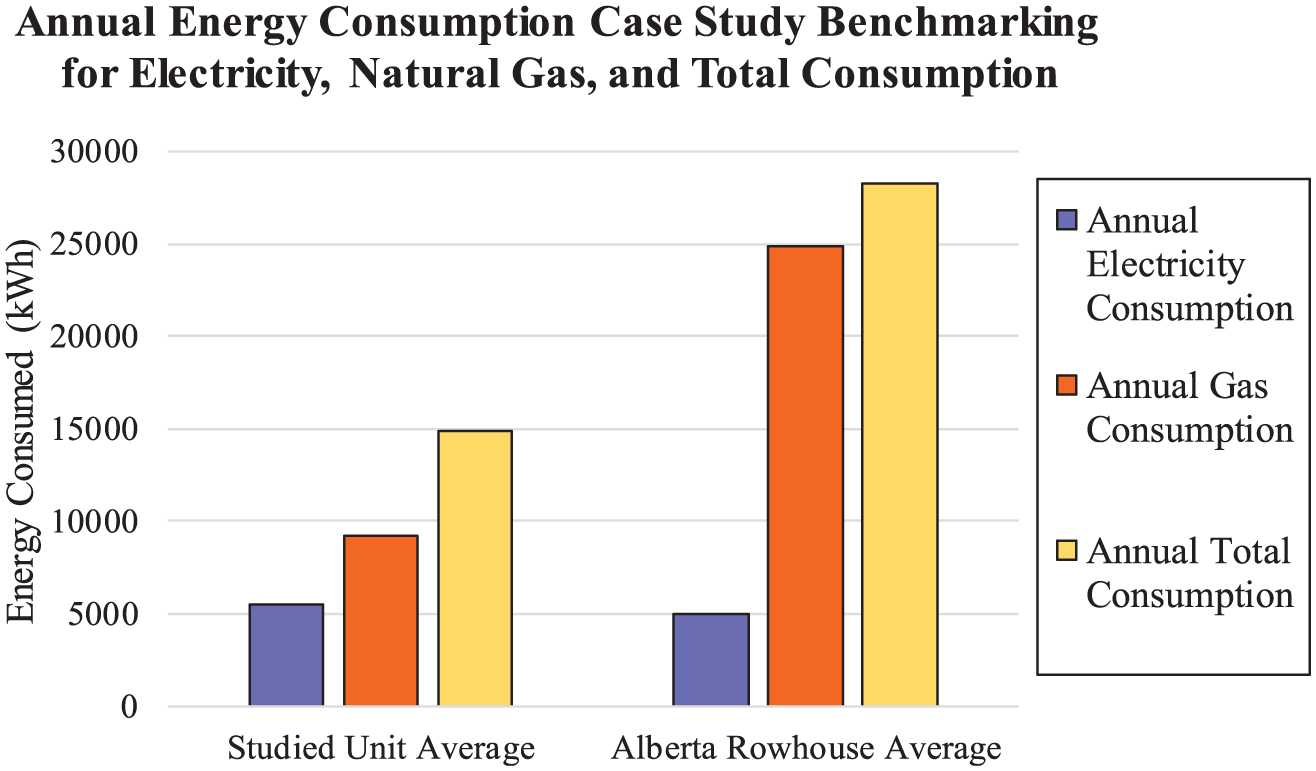
Consumption benchmarking of studied unit average against regional averages.
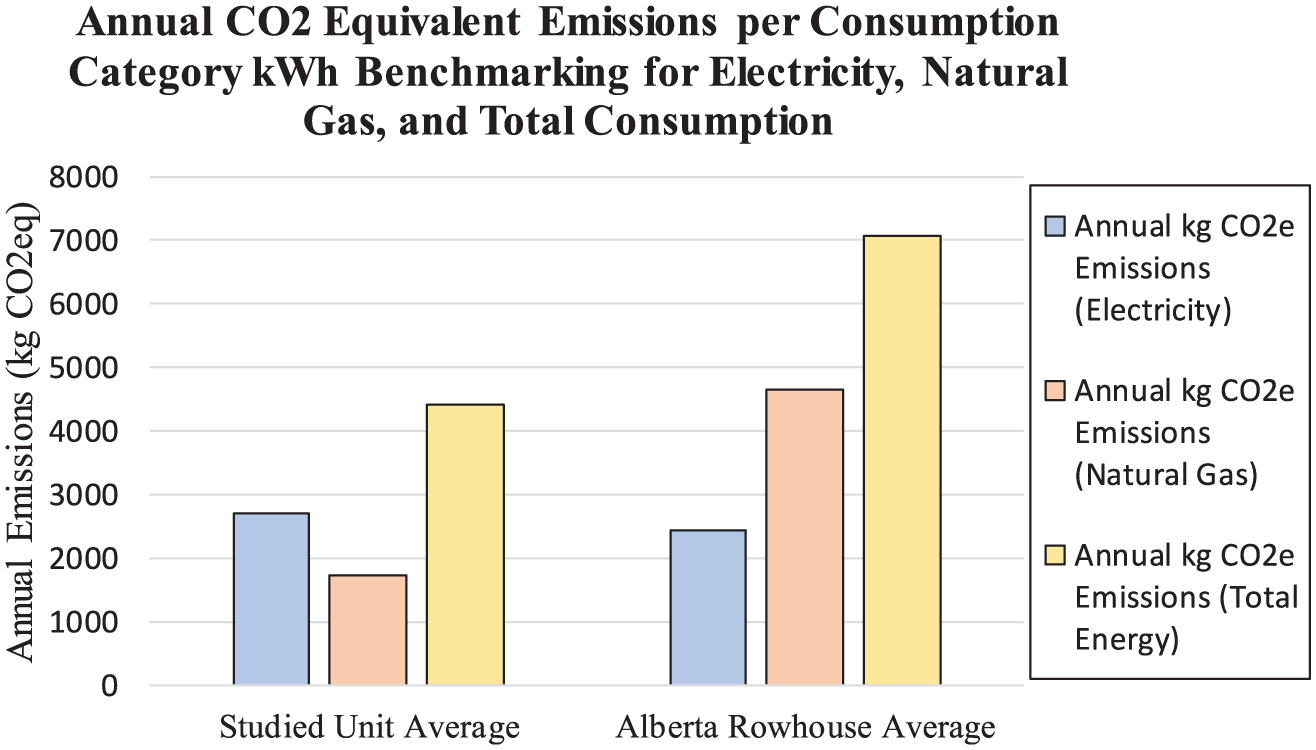
GHG Emission benchmarking of studied unit average against regional averages.
From the energy consumption benchmarking in Figure 3, it is observed that the difference in total energy consumption between the studied units and the Alberta rowhouse average is primarily driven by natural gas consumption. The studied units on average consumed 13,361 kWh (47.3%) less total energy, with 15,620 kWh being attributed to reduced natural gas consumption. For the Alberta average rowhouse natural gas consumption, Statistics Canada reports the average natural gas consumption (GJ/rowhouse) only considering rowhouses that consume natural gas. This leads to a discrepancy in Alberta average values, as approximately 6.3% of Canadian rowhouses that do not consume natural gas are excluded from the average rowhouse natural gas consumption reported (Statistics Canada, 2024). Additionally, despite the studied units having a portion of space heating energy shifted from natural gas to electricity, the average annual electrical consumption between the studied units and the Alberta average is within 539 kWh, or 9.8%. This is a result of the studied units having high energy efficiency, which was expected, as they are newly constructed (2020) and have high-efficiency HVAC systems installed. The studied units, therefore, had an inherent advantage, as the average Alberta rowhouse consists of buildings of all ages, where older buildings were more likely to have deteriorated envelopes and aging HVAC equipment. However, the purpose of benchmarking was not to demonstrate that the studied units consume less energy, but rather to compare the amount and effects of shifting a portion of space heating energy from natural gas to electricity. Additionally, it should be noted that compared to Canadian national averages, the local region of Alberta represents a unique case, tending to have higher natural gas consumption and lower electricity consumption. This trend is driven by the region’s cold climate and abundance of fossil fuels, resulting in more space heating and less space cooling required compared to the national average.
From the emission benchmarking performed below in Figure 4, it is observed that the electricity emissions for both the studied and Alberta unit averages are disproportionately larger relative to natural gas when comparing emissions to the energy consumption in Figure 3. Despite the studied units consuming 3729 kWh (40.4%) less electricity than natural gas, the studied units emitted 972 kgCO2eq (36.0%) more GHG emissions from electricity. This result is attributed to Alberta’s relatively high electricity emissions intensity, which was reported as 490 gCO2eq/kWh in 2022 by Environment and Climate Change Canada (2024) These results show promise in that the fuel-switching system ultimately does reduce emissions through reducing the overall energy consumption, but highlight the potential risk of increased emissions associated with further electrification of Alberta households under the same generation conditions.
To further understand the driving factors behind the energy consumption of the studied units, energy consumption has been further decomposed into five categories using the sub-metered power channels. For the three power categories, ASHP was selected as the first category and had an individual channel for its power consumption, and the AHU and mechanical room channels were combined into a single category for ventilation. The plug load category consisted of the remaining power consumption representing appliances, lights, and other various devices plugged into wall outlets. Gas consumption was divided into two categories: domestic hot water (DWH) and space heating. The consumption categories units 2–6 (unit 1 was excluded from this analysis due to gas data quality) and corresponding unit averages are shown in Figure 5 below for a sample year from August 2021 to July 2022. This time frame was selected because it had relatively good data availability, whereas the method for decomposing gas data relied on the processed data having no missing values. Figure 6 shows the corresponding GHG emissions associated with each consumption category for units 2–6 and the unit average.
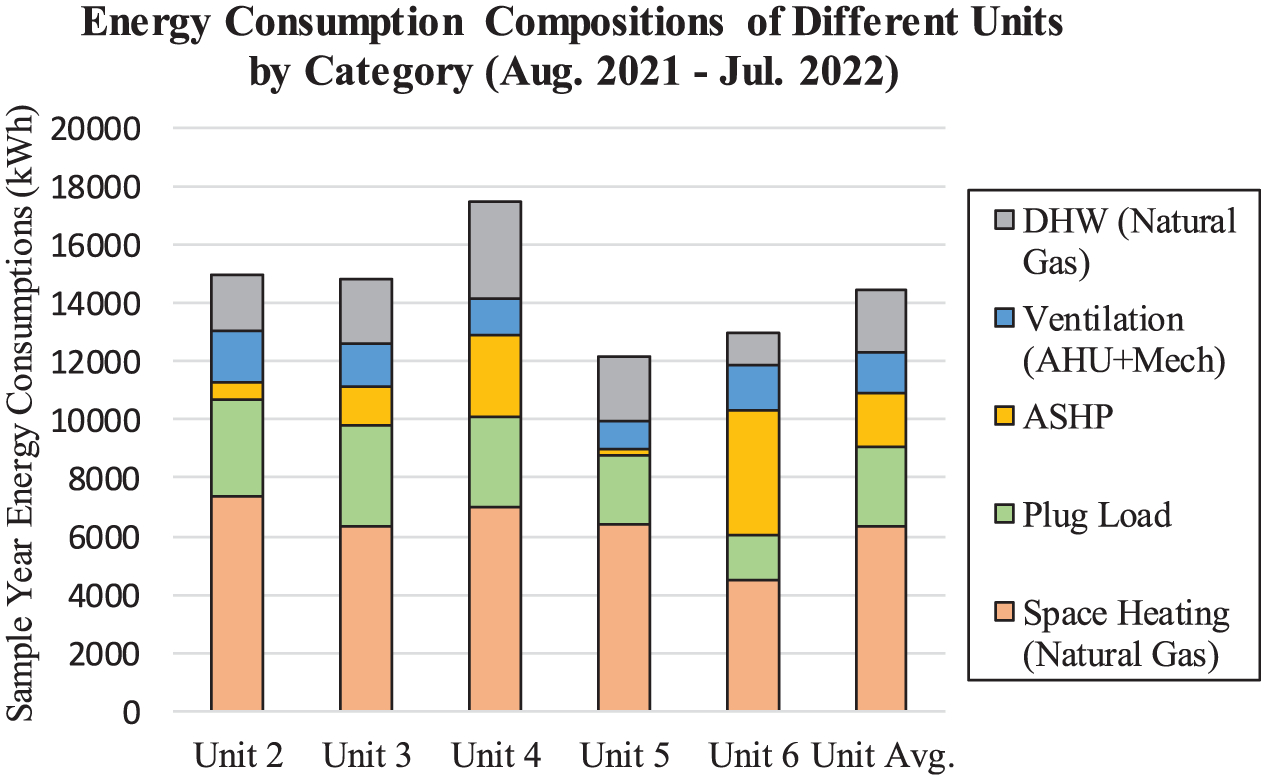
Energy consumption by category for case study units.
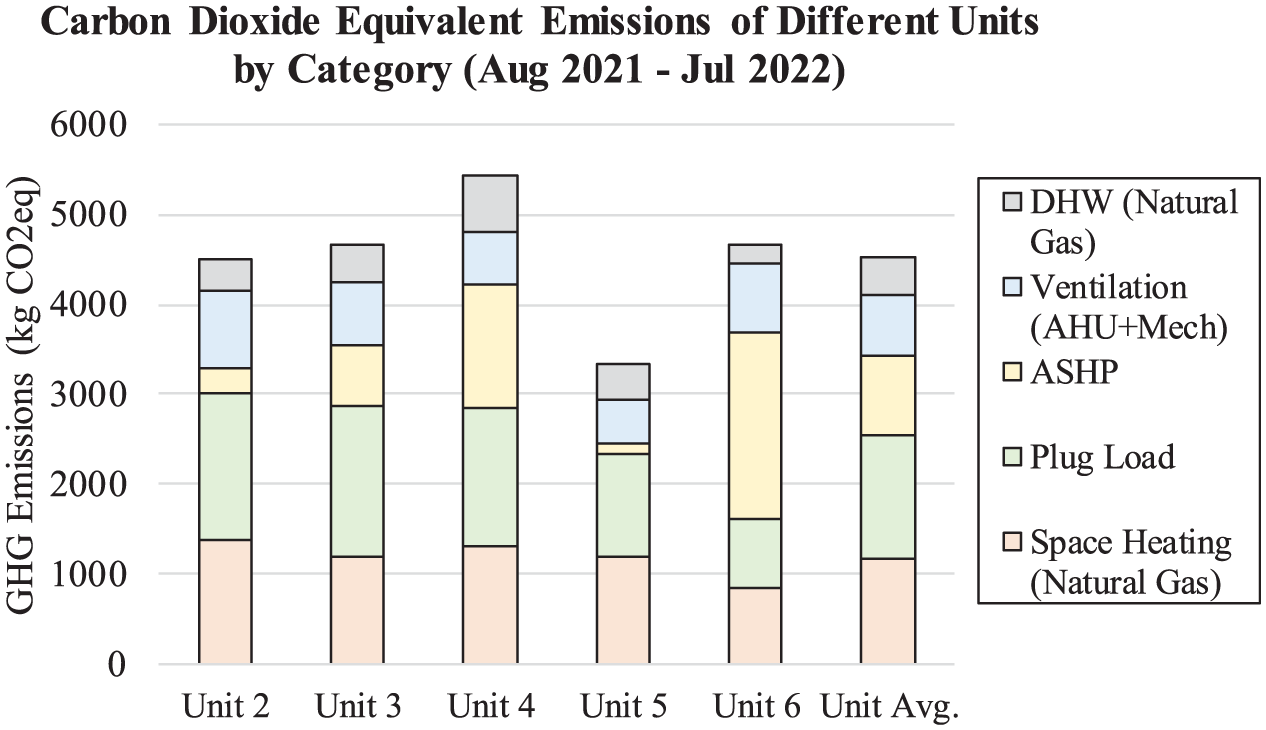
GHG Emissions by energy consumption category for case study units.
The difference in overall consumption between the best performing (Unit 5 with the lowest consumption) and worst performing (Unit 4 with the highest consumption) units is significant, with unit 5 consuming only 69.45% of unit 4’s consumption. From the consumption categories, the biggest visible difference in Figure 5 was from the ASHP consumption category, where the ASHP was rarely utilized in the best performing unit compared to the worst. This difference, along with the other electrical consumption categories, was further amplified in Figure 6 by the high consumption emission intensity associated with electricity compared to that of natural gas. As the ASHP data recorded was cumulative for space heating and cooling, there was no definitive method for establishing whether the high consumption of unit 4 was driven by heating or cooling. However, by further breaking down the consumption data for unit 4 into monthly profiles as done below in Figure 7, the effects of exterior temperature on each consumption category can be inferred. As seen in Figure 7, ASHP consumption is observed throughout all seasons, indicating the ASHP was utilized for significant portions of both space heating and cooling.
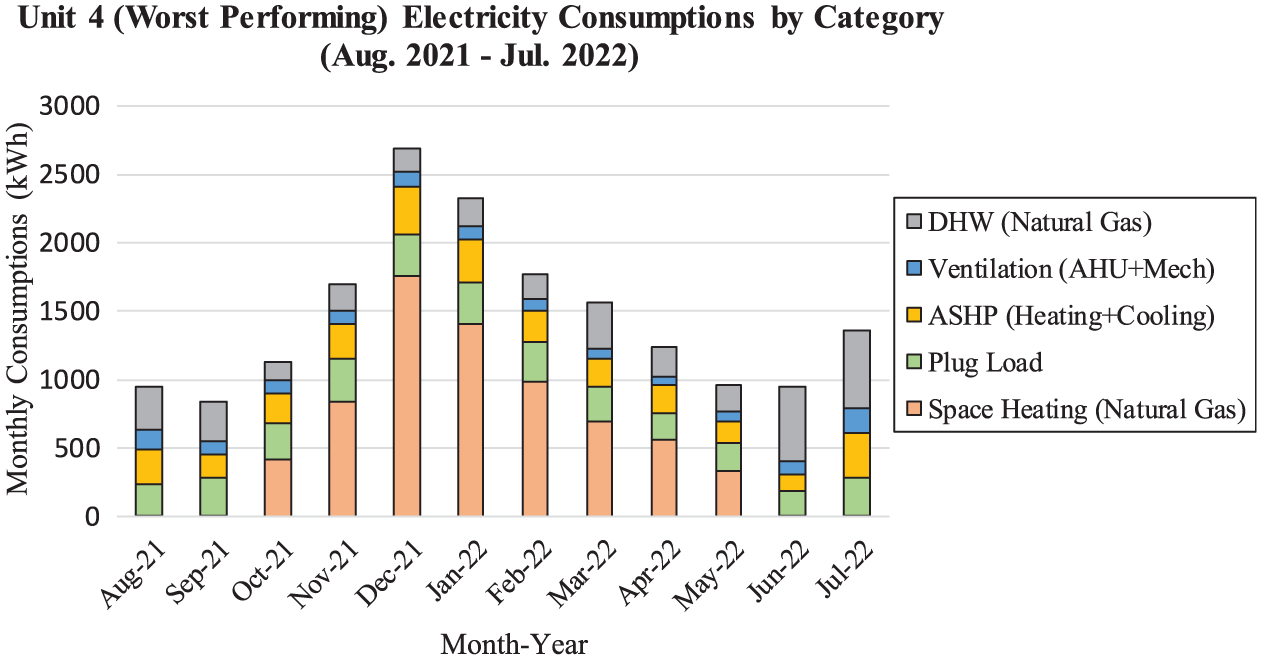
Monthly consumption profile of unit 4 by consumption category.
Fuel-switching heating system analysis and component utilization
To further assess the fuel-switching space heating systems installed in the studied MURB, the first goal of this section was to investigate how these systems’ performances varied between units. An early discovery was that of the five studied units (unit 1 was excluded from this analysis due to poor natural gas data quality), only three utilized the ASHP for space heating during winter months. Of the three units that utilized ASHPs for space heating, the installed equipment required both the TWH and ASHPs to be operated on a singular control loop within each unit. Therefore, for these units, space heating was always simultaneously provided by a combination of the ASHP and TWH when active, regardless of the exterior condition. The mechanical settings for controlling the contribution of each heating device to total space heating were unknown; however, based on the observation that the ASHPs operated continuously through all external temperature conditions, the systems did not have a functional cut-off temperature. Alternatively, the units that didn’t utilize ASHPs for space heating in the winter were identified by having 0.00 kWh of ASHP consumption in the winter months but still registered ASHP consumption in the summer months for cooling, indicating this wasn’t a fault with the monitoring system or malfunctioned ASHP but rather the operation sequence setting in the HVAC controller. The units that regularly used ASHPs for space heating were defined as
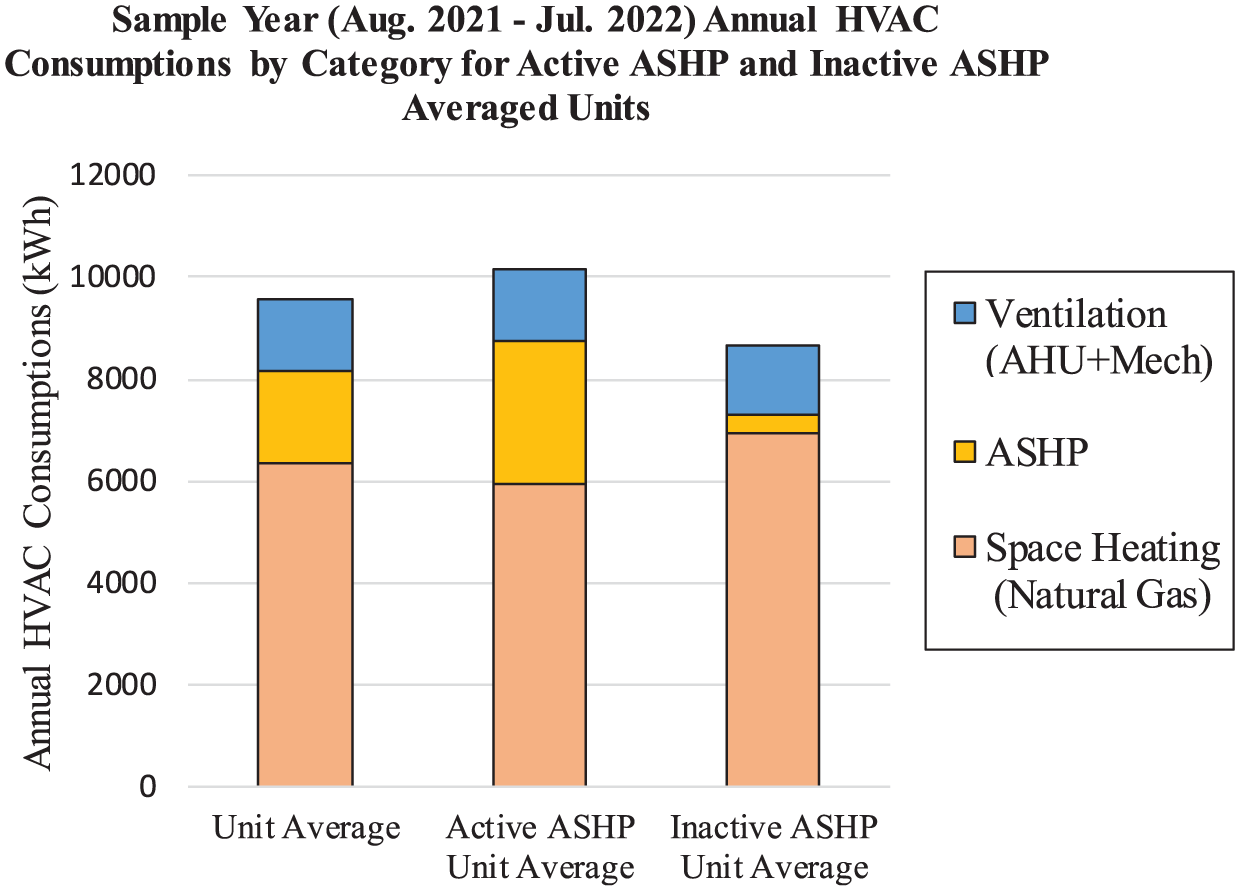
Sample year HVAC consumptions for active and inactive ASHP units.
From the sample year in Figure 8, it was found that Active ASHP units consumed 15.5% more HVAC and natural gas compared to the Inactive ASHP unit average. A majority of the observed difference in HVAC annual consumption stems from natural gas and ASHP consumption categories, where active ASHP units on average used 972.7 kWh less space heating natural gas energy but 2402.0 kWh more electricity toward ASHP energy. This shows that the Active ASHP units successfully offset some of the natural gas consumption to the heat pump for space heating; however, the additional ASHP usage resulted in an average of 1469 kWh of HVAC energy discrepancy in Figure 8, attributed to higher consumption for active ASHP units. For the remaining consumption categories, ventilation remained relatively unchanged between ASHP usage types.
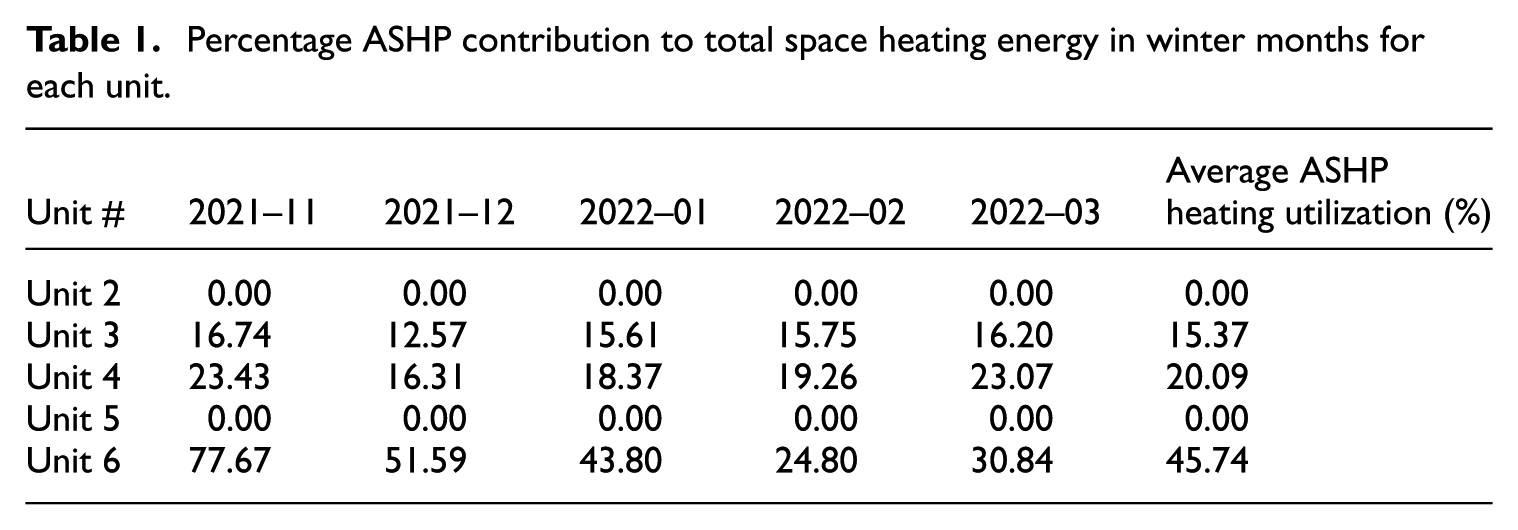
To observe the ASHP and TWH utilization in each unit’s fuel-switching heating system, the ASHP contributions to total space heating from November 2021 to March 2022 were calculated as percentages below in Table 1 for each unit. These months were selected to isolate space heating, as each of these months had a negative outdoor ambient temperature, removing the possibility of ASHPs consuming energy for space cooling. To see the performance of Active and Inactive ASHP units throughout the year, averaged monthly energy profiles for each unit type were plotted below in Figure 9. From Table 1, it was found that there was variation within the Active ASHP units, with unit 6 utilizing its ASHP more than double that of units 3 and 4. One unexplained observation was that unit 6’s ASHP utilization decreased throughout the winter, while the ASHP utilization for the other Active ASHP units remained relatively stable. The decrease in ASHP utilization was not caused by weather, as the average outdoor temperatures in November and March were close at −1.3°C and −1.5°C, respectively. The cause for this likely stemmed from the controller algorithm; hence, the decrease in ASHP utilization for unit 6 remained unexplained. From the monthly profiles of each unit type in Figure 9, Active ASHP units consumed more energy than Inactive units for the majority of observed months.
Percentage ASHP contribution to total space heating energy in winter months for each unit.
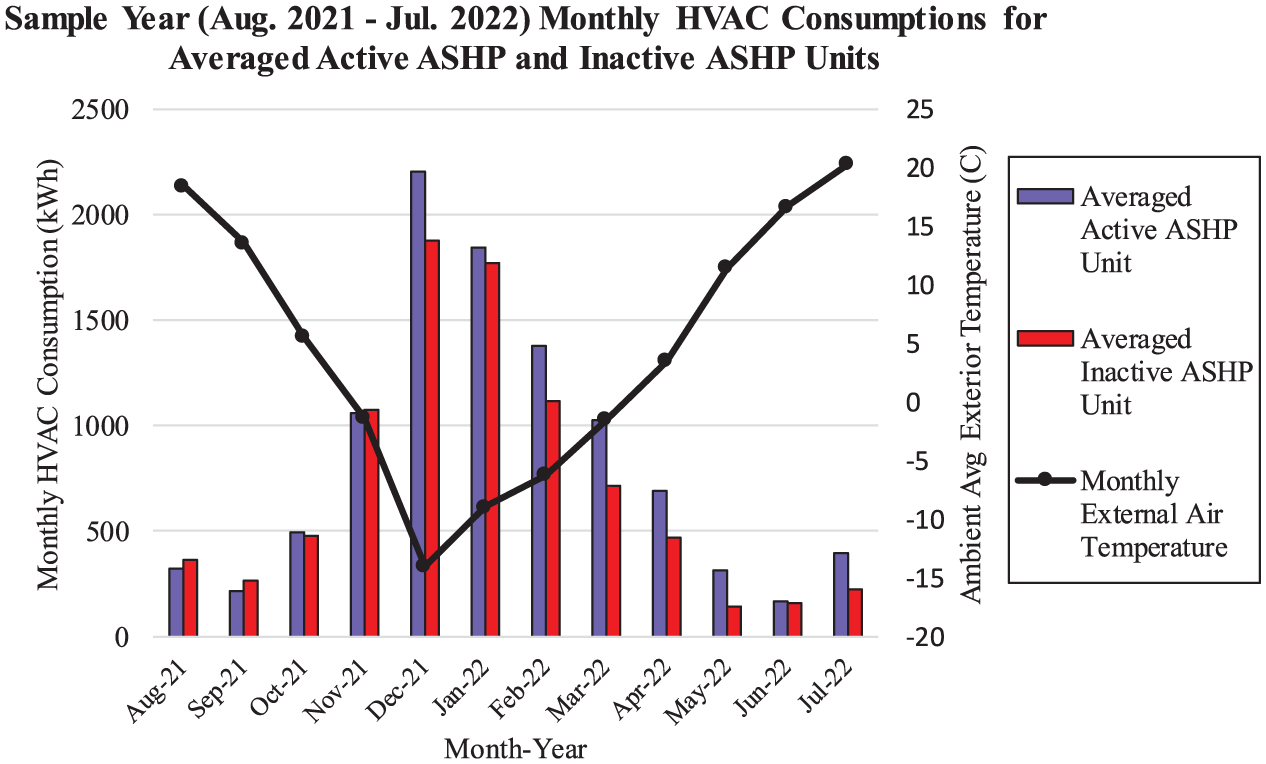
Monthly HVAC (ventilation, ASHP, and NG space heating) profiles for averaged Active and Inactive ASHP units during sample year.
The findings thus far suggest that under the given operating conditions (i.e. external weather, singular control loop configuration, and installed equipment), the fuel-switching space heating systems operated more efficiently without the use of the ASHP for space heating. This finding conflicts with the expected results, as both the ASHP and TWH have different optimal exterior temperature operating points, which should allow for overall increased efficiency. Therefore, further analysis was conducted for both active and inactive ASHP units for every month in the sample year to attempt to find potential causes for the observed results. Following the monthly profile for HVAC consumptions of active and inactive ASHP units in Figure 9, the monthly profiles have been broken down into consumption categories (natural gas space heating, ASHP, and ventilation) for active ASHP unit averages in Figure 10 and inactive ASHP unit averages in Figure 11. An additional monthly comparison plot for TWH natural gas space heating is shown in Figure 12 for active and inactive unit averages.
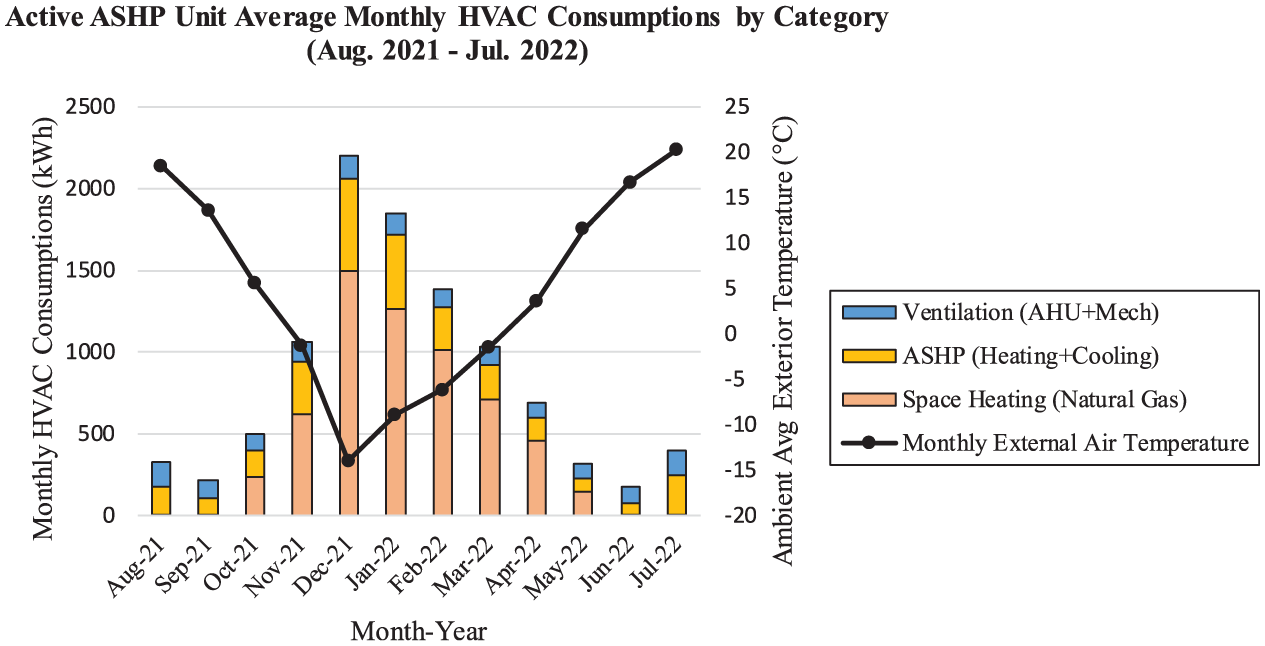
Sample year monthly HVAC consumption profile for active ASHP unit average.
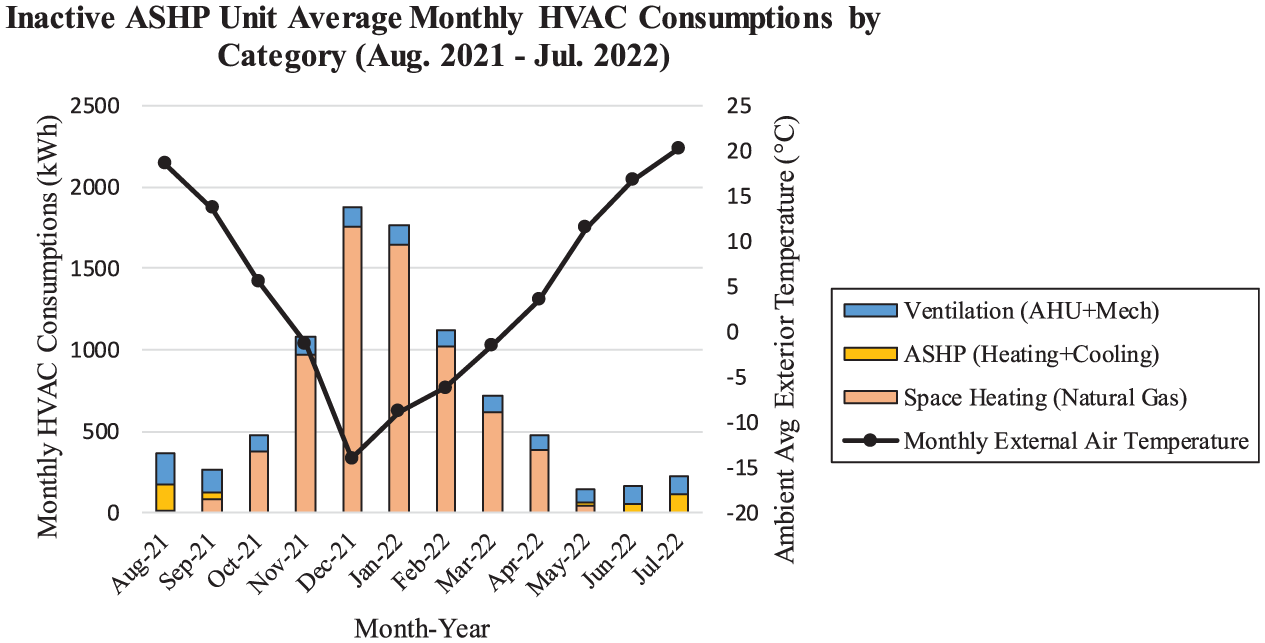
Sample year monthly HVAC consumption profile for inactive ASHP unit average.
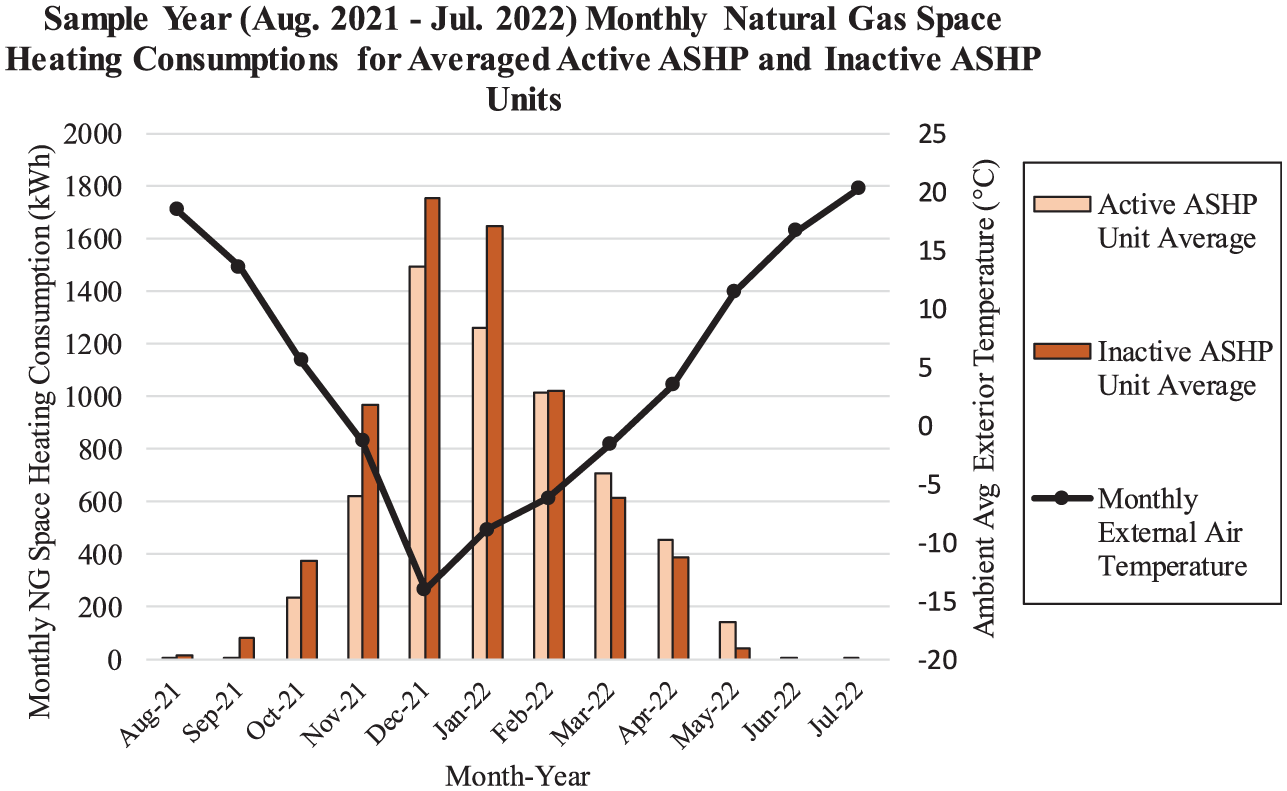
Sample year monthly space heating (natural gas) consumptions for active and inactive unit averages.
For the monthly comparison between active ASHP and inactive ASHP units, differences in Figure 8 between unit types within 100 kWh were considered statistically insignificant, with the main focus being on exploring months with larger variations in performance. Additionally, as the focus of this study is the space heating functionality of the fuel-switching heating systems, months with an average external temperature above 10°C were not considered for analysis, as a majority of the energy consumed in these months would stem from circulation and space cooling. Under these two conditions, the months of May to September were not considered due to average external temperatures above 10°C, and October and November had comparable consumptions between unit types.
This left the period between December and April as the main contributor to the difference in HVAC consumption between active and inactive units in terms of space heating. Within this period, December was identified as having both the lowest average external temperature and the highest ASHP consumption, which is assumed to be all toward space heating in this case due to the low external temperature. ASHP consumption being the highest in December is directly correlated with the overall space heating demand being the highest due to the singular control loop for space heating. As both the TWH and ASHP were forced to operate regardless of exterior condition, higher space heating demand also equated to higher ASHP consumption. This led to the first of two critical drawbacks of the singular control loop, where the ASHPs were most utilized in extreme cold conditions when space heating demand was the highest. This led to overall higher space heating energy consumption for Active ASHP units due to the relatively low operating COP of ASHPs during extreme cold conditions compared to natural gas systems.
The second critical drawback of the singular control loop was that during ideal ASHP exterior air temperature conditions, ASHP utilization was limited by the forced utilization of both heating devices within the system. Due to the high operating COP of ASHPs at ideal conditions, it is expected that Active ASHP units would have a reduction in energy consumption in months with average temperatures between approximately 0°C and −5°C (October, November, March, and April in this case). This was not observed in Figures 10 and 11, where energy consumption was comparable between unit types in October and November. It is also noted in Figure 12 that Active ASHP units consumed more natural gas for space heating in March and April compared to Inactive ASHP units. This finding suggests that other factors, such as occupant behavior, influenced the results between unit types, where behaviors such as opening doors and windows, cooking, and higher temperature setpoints may have led to increased total space heating demand in Active ASHP units.
In summary, the Active ASHP units consumed more energy compared to the Inactive ASHP units due to their poor controller configuration that consisted of two key drawbacks: (1) increased ASHP utilization in extreme cold temperatures led to increased energy consumption due to reduced ASHP efficiency in extreme cold conditions, and (2) ASHP utilization in high-efficiency operating conditions was limited due to the forced combination of TWH and ASHP space heating.
Assessing the potential impact of occupant behavior on energy performance
A key factor of this study was that each residential unit in the MURB was regularly occupied. Although this aspect provides the most accurate depiction for an in-situ deployment evaluation, due to the low sample size of units, the concern of differences in occupant behaviors affecting energy performance could not be overlooked. To evaluate the potential of occupant behavior to influence prior results, a before and after analysis was conducted for an occupant change that occurred for
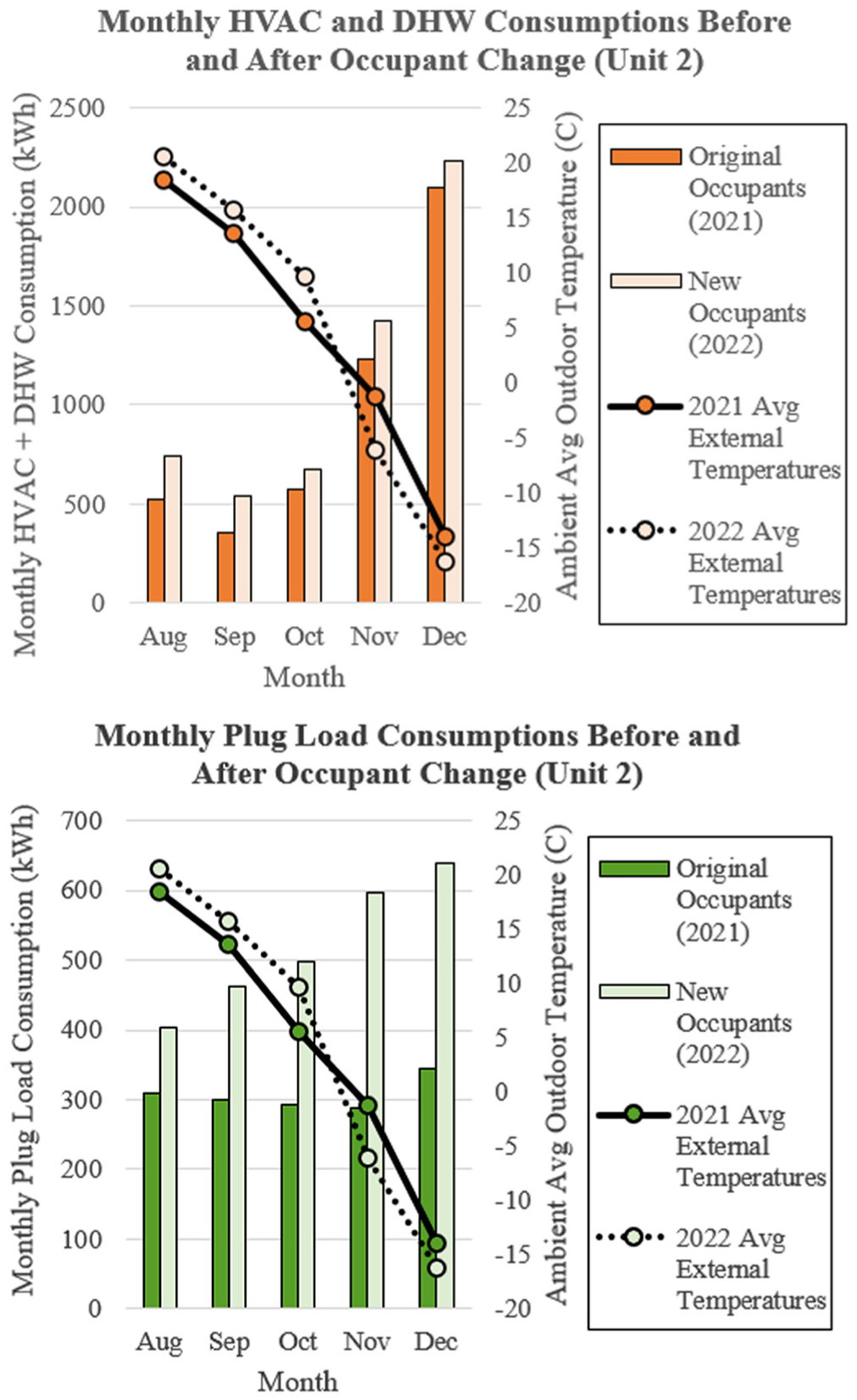
Sample month HVAC and DHW consumptions and plug load consumptions for two sets of occupants.
For the energy consumption seen in Figure 13, the new tenants consumed more energy on average, with this trend persisting across all months. However, there were some notable differences in the average exterior air temperature between years that may have influenced the comparison results. Regarding consumption categories, for combined HVAC and DHW, it was seen that the new tenants consumed 26.31% more combined HVAC and DHW energy than the previous tenants. The gap in HVAC and DHW consumption between occupants decreased as the exterior air temperature decreased. This decrease could be correlated to the general increase in demand for space heating in the winter, where the absolute difference in HVAC and DHW consumption between occupants for each month ranged from 217.71 to 98.86 kWh. As HVAC and DHW consumptions are compared for the same unit in this case, the only potential source of variation stems from occupants, which could include behaviors such as higher space heating and cooling demands (through thermostat adjustment), opening/closing windows and doors, and cooking behaviors.
The biggest driving difference in total energy consumption between occupants resulted from plug load. On average, the new occupants consumed 69.58% more energy in plug load compared to the previous occupants. In November, the new tenants consumed 2.07 times the amount of the occupants from the previous year. Due to the new occupants consuming more plug load energy, it would be expected for the new occupants to use less HVAC and DHW energy, as plug load ultimately dissipates as heat, lowering the heating demand of the building. The opposite was observed in this study, where within the same unit, the new occupants consumed significantly more plug load energy and also consumed similar HVAC and DHW energy compared to the previous occupants. This observation is partly explained by the difference in ambient temperatures between the compared years; however, the differences in plug load are significantly larger than those of HVAC and DHW, still leading to the observation deviating from expectations. These results highlight the significance that occupant behavior has on the overall building performance.
Conclusion
This study aimed to evaluate the performance of a hybrid, fuel-switching heating system employed in regularly occupied study homes for a MURB in Edmonton, Alberta. Through energy monitoring and benchmarking, the total energy consumption of the studied units was found to be 13,361 kWh (47.3%) lower than the provincial rowhouse average. This result was attributed to the high-performance HRV, ASHP, and TWH equipment within the fuel-switching system, and was further aided by the studied households being newly constructed. Despite having lower energy consumption, studied units with higher ASHP utilization for space heating exhibited correspondingly heightened GHG emissions due to Alberta’s high emissions intensity. Through analyzing individual electricity and natural gas consumption categories for the studied units, it was found that natural gas space heating accounted for the largest share of energy consumption (43.8%), and plug load had the largest share of GHG emissions (30.0%). These results showcase the reliance of future electrification on the local emission intensity of the grid as a solution for decarbonization.
When analyzing the performance of the fuel-switching heating systems, the controllers in two of the five units never utilized the ASHP, and mixed utilization was recorded from the remaining units. It was found that units that actively used ASHPs for space heating consumed 1469.4 kWh (17.0%) more energy toward HVAC energy (ventilation, ASHP, and natural gas space heating) compared to units that only used natural gas space heating. Through further analysis of consumption categories, this observation was attributed to poor utilization of the ASHP and TWH and the unmeasured influence of occupant behavior. The controller algorithm for the fuel-switching systems in this study used a singular control loop that forced both the ASHP and TWH to operate simultaneously when space heating was active. This configuration carried two critical drawbacks: forcing the ASHPs to operate in extreme cold conditions when ASHPs have reduced efficiencies, and also limiting the ASHPs’ usage in ideal external temperatures, as the TWH accounted for a majority of the heating capacity. These drawbacks highlight the importance of the control algorithm for achieving high efficiencies for fuel-switching space heating systems. Additionally, when investigating the impacts of occupants for an occupant changeover, it was determined that occupant behavior plays a significant role in overall building performance.
From the results of this study, the main lessons are summarized as follows: (1) The studied units consumed 13,361 kWh (52.7%) less total energy and emitted 3364 kgCO2eq (62.8%) less GHG emissions compared to Alberta average rowhouse data. Despite these results, units with higher ASHP utilization had correspondingly increased GHG emissions due to Alberta’s high emissions intensity, affirming that caution should be considered when implementing electrification measures in regions with a high grid emission intensity (2) The overall efficiency of fuel-switching heating systems is dependent on the controller algorithm. This study uncovered generally poor utilization of the fuel-switching heating systems through the use of a singular control loop for both the ASHP and TWH within each heating system. It was found that units that did not use their ASHP for space heating consumed 14.5% less HVAC energy compared to units that used both the ASHP and TWH for space heating, and (3) For in-situ evaluations of space heating systems, occupant behavior influences all energy consumption categories. An occupant change was analyzed within a singular unit and it was found that the new occupants consumed up to 2.07 times more plug energy and 1.50 times more HVAC and DHW energy over periods with similar external conditions. Therefore, for future studies, larger sample sizes of households are recommended to reduce the impact of individual occupants.
Footnotes
Acknowledgements
The authors would like to express appreciation to Landmarks Homes who provide research fields, resources, and financial support for this work, without their sponsor, this project is not possible.

Funding
The authors disclosed receipt of the following financial support for the research, authorship, and/or publication of this article: The project was mainly funded by Natural Sciences and Engineering Research Council of Canada (NSERC) Collaborative Research and Development Grants, CRDPJ 530932-18 entitled “Intelligent net-zero energy (ready) modular homes for cold regions.”
Declaration of Conflicting Interests
The authors declared no potential conflicts of interest with respect to the research, authorship, and/or publication of this article.