




Abstract
Climate change and the need for energy savings challenge the hygrothermal performance of timber-framed wall structures in cold climates. The future climate conditions will be more suitable for mould growth than the present, and the attempts to save heating energy involve the use of very effective thermal insulation. Hence, the hygrothermal performance of the outer parts of exterior walls must be studied and effective measures must be introduced to prevent mould growth. In this study, four timber-framed exterior wall constructions were studied. All the walls were equipped with a gypsum board wind barrier having a minimal thermal resistance. Insulation thicknesses of 150 and 300 mm, demonstrating a moderate and a very effective levels of thermal insulation, were compared. Wooden cladding and brick veneer were compared as façade materials. Thickness of thermal insulation was the dominant parameter in this study. Although even the walls with 300 mm thermal insulation performed decently in the study, they might become problematic in the future. A wind barrier with a noticeable thermal resistance or the use of a thermal insulation layer outside the gypsum board wind barrier would obviously improve the performance of the studied walls.
Keywords
Introduction
Background of the study
Effects of climate change must be already considered when designing new buildings and retrofitting existing ones. In Finland, the average outdoor temperature has increased approximately 2°C since the year 1900 (Ruosteenoja and Räisänen, 2021). According to the current research, climate change will cause even further temperature rise, increased precipitation and floods due to raised sea levels in the Nordic countries (IPCC, 2023). The climate of Southern Finland, roughly between the latitudes 60 °N and 65 °N, will become a temperate oceanic one instead of the present continental type. On the other hand, a cold continental climate will replace the present subarctic climate in Northern Finland (Rubel and Kottek, 2010). Monthly temperatures are predicted to rise roughly 3°C–4.5°C compared to the present (Ruosteenoja and Jylhä, 2021). These changes are likely to occur during the latter half of the 21st century. Most contemporary buildings in Finland are designed for 50 or 100 years of service life and their lifespan can be extended with renovations and proper maintenance. Therefore, these buildings will with certainty encounter the effects of climate change.
The hygrothermal performance of typical exterior wall structures is rather straightforward in the present Nordic climate. During the heating period, which lasts approximately two thirds of the year, there is more water vapour in the indoor air than the outdoor air. This is due to various moisture sources inside (inhabitants, cooking, laundry, shower, cleaning, process water in industrial buildings etc). This causes a moisture gradient from indoors to outdoors over a building shell. In the case of a leaky interior surface, indoor moisture is likely to enter inside of the building shell by convection. When indoor moisture enters the building shell, it may condense in the outermost, coldest parts. The interior surface of the wind barrier is particularly vulnerable to condensation, especially when the thermal insulation layer is open to diffusion. To protect the insulation layer from windchill, the wind barrier must have a denser structure than the typical diffusion-open insulation. Hence, the water vapour is likely to accumulate on the interior surface of the wind barrier. This may cause mould growth and even rotting of the bottom sill when condensing water drips down to the bottom of the wall cavity. Because the outdoor relative humidity (RH) tends to be high during the heating season, there is no ample safety margin against condensation.
Favourable condition for mould growth may arise in in the outer parts of the structure, even if no condensation occurs. Onset of mould growth depends on the temperature and humidity conditions as well as on the materials subjected to these conditions (Ojanen et al., 2010; ; Hukka and Viitanen, 1999; Viitanen et al., 2010). The intensity of mould growth is proportional to both temperature and relative humidity, providing that the former does not exceed +50°C. A temperature of at least 0°C is required, although the growth is very slow below +5°C. In general, RH of 80% is considered as a minimum on sensitive materials and 85% on less sensitive. In future conditions, rising temperature levels with increased precipitation may cause even more challenging conditions for building shells.
Traditionally, heat flow through relatively poorly insulated building shells has helped to keep the structures dry. This heat flow has kept the outer parts of the building shell warmer than the outside air. If there is no excessive moisture flow from indoors, RH inside the lightly insulated building shell can stay well below 100% all the time, provided that the wall has been protected from rainwater. It has been assumed that having excessive insulation thicknesses, leading to lower thermal transmittance values (U-values) compared to the former practice, causes too cold temperatures at the outermost parts of building shells ( Ge et al., 2019; Gullbrekken et al., 2015; Lacasse et al., 2016). However, there are several other factors which influence the hygrothermal performance of a building shell. In the timber-framed walls used in the Nordic countries, there are usually the following layers which affect the overall performance of the structure:
- Interior sheathing
- Vapour barrier, vapour retarder or air barrier (vapour barrier and vapour retarder also act as an air barrier)
- Timber frame + thermal insulation between the timber parts
- Optional extra insulation + timber battens (sometimes even on the inside of the timber frame and vapour barrier)
- Wind barrier
- Ventilation gap
- Cladding, brick veneer or siding (vinyl, steel and fibre cement board)
Building geometry and orientation, eaves, surrounding terrain and other buildings also have a major influence. The interaction between temperature and humidity has been demonstrated, for example, by Berardi and Naldi (2017).
Previous studies
There is plenty of data for wall structures insulated with mineral wool, either fibreglass or rockwool. Both products work similarly in the Nordic climate. There has even been research dealing with very well insulated structures which are suitable for near zero-energy buildings or even passive houses (Gullbrekken et al., 2015; Lacasse et al., 2016; Pihelo et al., 2016). The effect of climate change on the hygrothermal performance of timber-framed walls has also been investigated (Ameri and Rüther, 2019; Defo et al., 2021; Sehizadeh and Ge, 2016). Gradeci et al. (2018) have developed a probabilistic-based methodology, which takes into account the variability of crucial parameters. There has been recent research with the aim of creating a tool for risk assessment of brick walls in the changing climate (Janssens et al., 2024) as well as research taking a probabilistic approach in assessing the risk of moisture-related degradation of building envelopes (Ryan et al., 2024).
As stated in the Background of the study, the main direction of diffusion flow over a building shell is outwards in the Nordic climate and other cold climates with a long heating period and only an occasional cooling demand. Several researchers (Ge et al., 2019; Glass et al., 2018; Lacasse et al., 2016; Piot et al., 2011; Trainor et al., 2016) have studied the consequences of vapour diffusion, air convection and liquid water penetration flow on the hygrothermal performance to wood-framed exterior walls in real outdoor conditions. This method gives the possibility to study the hygrothermal performance during all seasons and is suitable for comparing different structures with each other. The measured data enables benchmarking hygrothermal models (Piot et al., 2011) (Trainor et al., 2016). Finding an agreement with the measured data and the simulation model is, however, a rather complicated task (Busser et al., 2019; Wang and Ge, 2018; Zhao et al., 2011). Bio-based materials, such as ones used in this study, have known to be challenging in hygrothermal modeling. This was evident in a case study done in Denmark, where the simulated and measured data derived different results (Bastien et al., 2023). There’s ongoing research on the dynamic water vapour sorption of porous materials. Better results have been attained in recent studies by applying a statistical inversion approach for low-density wood-fibre materials (Huttunen and Vinha, 2023) and by using a local kinetics approach to predict stronger and steeper hygric dynamics with bio-based materials (Reuge et al., 2023).
Based on the latest evidence, extremely well insulated and well-designed exterior walls can be used in the present Nordic climate. However, gypsym boards and thin wood fibre boards are not optimal products regarding the overall hygrothermal performance of the exterior wall structure due to their low thermal resistance. On the other hand, handling of prefabricated panels, demands for stability of the building and other mechanical issues may hamper the use of less rigid materials such as mineral wool wind barriers.
Rainwater infiltration through a brick veneer is a common phenomenon in many areas (Van Der Bossche et al., 2011) and causes three main problems. First, water penetration through the veneer into the ventilation cavity, reaching the timber frame via improperly installed wall ties and other imperfections, can lead to mould and rot damage. Second, a saturated brick veneer may cause excessive relative humidity (RH) in ventilation gap, leading to mould growth in the outermost parts of a timber-framed wall. Third, in cold regions there is risk of frost damage of the brick veneer itself if both the brick and mortar are not frost-proof enough. Hygrothermal modelling is an essential tool to predict the extent of these problems in the future. Reliable modelling results can be achieved when the boundary conditions and material parameters, especially results from rainwater infiltration measurements, are implemented to the models in a proper way (Calle et al., 2020). However, there are several other factors in addition to rainwater infiltration, including air temperature, driving rain and solar radiation, which need to be considered when studying the hygrothermal performance of wall structures in future climate scenarios (Conroy et al., 2024).
Climate change will have different effects in different locations. Defo et al. (2021) analysed the performance of timber-frame walls with brick veneers in different cities of Canada, finding the coastal areas with high annual precipitation most problematic. The future climate conditions appeared to be more favourable to mould growth than the present due to the increase in temperature and annual rainfall. No single way to completely eliminate the mould growth risk was found, but the risk was reduced by using several interventions simultaneously. Sehizadeh and Ge (2016) studied original and retrofitted post-war timber-framed walls with brick veneers in the Montreal climate. In the future climate, risk of rot and decay did not increase, but the mould growth risk did. In southern Sweden, mould became a problem in attics approximately between the years 1990 and 2010 when winters became considerably warmer than before (Nik et al., 2012). The same trend continues even nowadays. The present circumstances are favourable for mould growth because sub-zero temperatures are rare and RH is high enough for mould growth for longer periods. According to the studies of Nik, Kalagasidis and Kjellström (Nik et al., 2012), this is a continuous trend requiring changes to design and building practices. The results indicate that the design principles for various parts of building shell structures should be critically verified.
Research aims
There are few studies addressing well-insulated structures having a wind barrier with high water vapour permeability but also low thermal resistance. A gypsum board wind barrier is a common product having such properties. Brick facades have also been found to be problematic in certain conditions, especially when exposed to excessive driving rain loads. Hence, the purpose of this research was to study the effects of the insulation thickness and the façade material on the hygrothermal performance of the whole exterior wall structure. The study focused on the hygrothermal performance of timber-framed exterior walls having a gypsum board wind barrier. The orientation of the façade was also one key variable in the study. Wall assemblies with a moderate insulation thickness and wooden external cladding were assumed to perform better than those with greater insulation thickness and a brick veneer.
Further studies will consist of simulations of the measured structures in future climates and further measurements with defects implemented to the vapour barrier. Therefore, the performance of the structures in the present climate conditions will give indications which structures are worth studying and provide a basis for simulation model calibration. The simulations and measurements with defective vapour barriers are outside the scope of this paper, but they were considered when the test setup was designed.
Methods and materials
Test facilities
To study the hygrothermal performance during various seasons, in real-life conditions, the study was performed as a long-term field measurement. The measurements were done in a test building at Tampere University. There are two identical test buildings at Tampere University, of which on was used for the test structures in this study. The building has a load-bearing steel frame and a total of 12 test bays for wall assemblies. There are six test bays on both the south and the north façade of the building. The width of the test bays is 1.3 m in the height 2.6 m. The test bays are separated from the steel frame and each other by heavy foam insulation. Temperature and relative humidity conditions inside the building can be controlled. The layout, site plan and section of the test buildings are presented in Figure 1. To study the effect of wall orientation, identical test elements were built for each of the test structures, one test element placed on the north and one on the south façade of the test building.
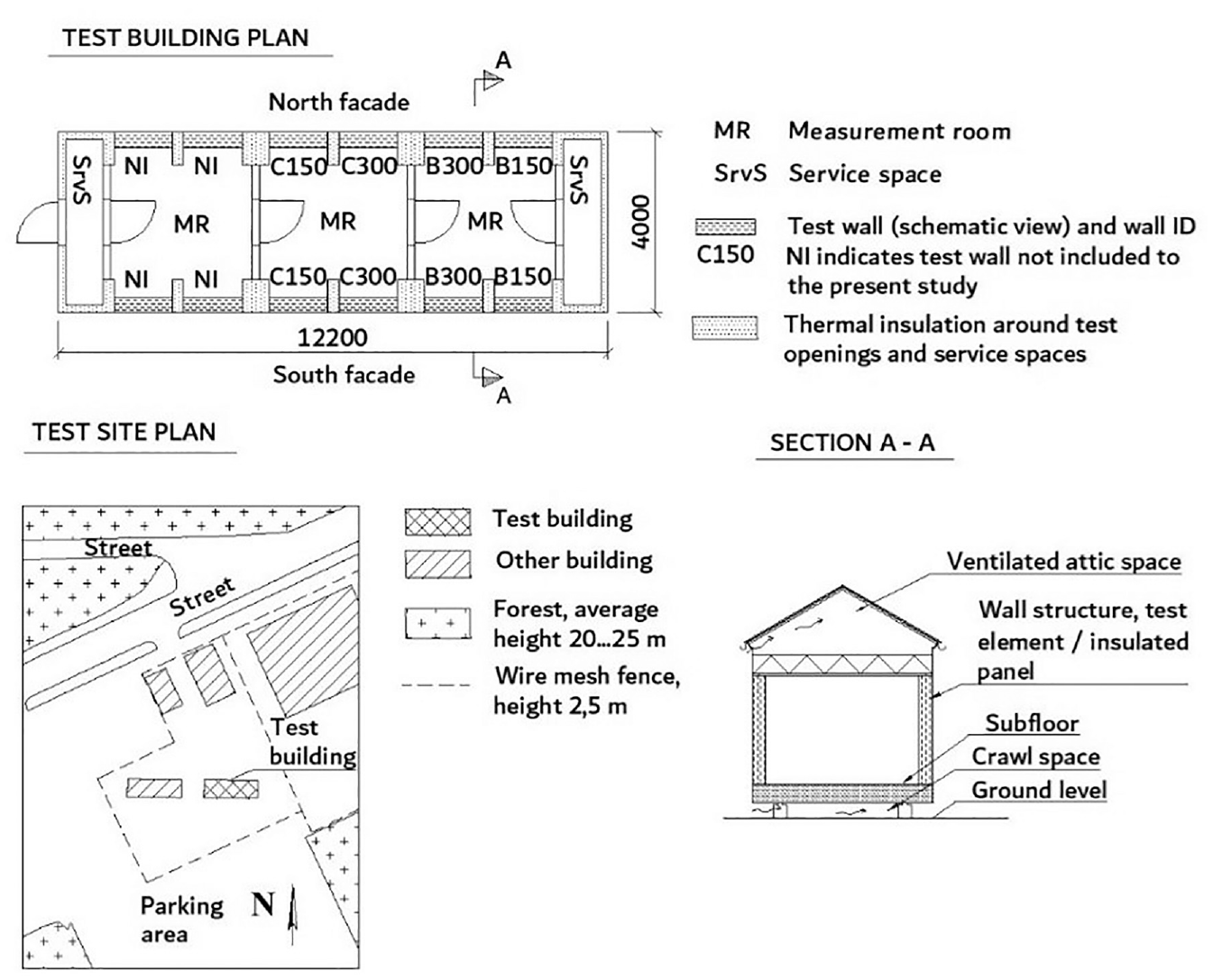
Test building and the locations of the test walls.
The test building indoor air and test site outdoor air conditions are monitored with continuous measurements. The tets building has automated indoor air monitoring with several sensors monitoring the air temperature, relative humidity, pressure and pressure difference over the building envelope. The outdoor air conditions are measured with a Vaisala Automatic Weather Station located next at the test site next to the test buildings. The weather station measures the outdoor air temperature, relative humidity, atmospheric pressure, wind speed and direction, short and long wave radiation and rainfall.
Climate conditions on the test site
The test buildings are situated at Tampere University’s Hervanta campus area, with other test facilities, a parking area and a forest. The coordinates of the campus are 61°27′N, 23°52′E. Ground height at test building site is approximately 135 m above sea level. The terrain category of the test site is III, classified according to the standard EN 1991-1-4 (CEN, 2011). The site has turned out to be in a rather protected area, with modest winds and driving rain.
The present climate zone of Tampere is Dfc according to the Köppen-Geiger classification (Beck et al., 2018). A cold winter is distinctive to the local climate. The amount of heating degree days is 4233 at +17°C basis for indoor temperature, not taking into account days when the average outdoor temperature is above +10°C during spring and above +12°C during autumn (FMI, 2023). During the heating season, direction of diffusion flow through the building shell is outwards as explained in Chapter 1.1.
The most prominent period for mould growth is typically from August to November (Fedorik et al., 2021; Hietikko et al., 2024). If temperature and/or RH are over monthly averages, the onset of mould growth is possible in outdoor conditions. This is realistic because rather large variations between years are distinctive for Nordic climate.
Figures 2 and 3 show the weather conditions at the test site during the 2020 and 2021 autumn test periods.
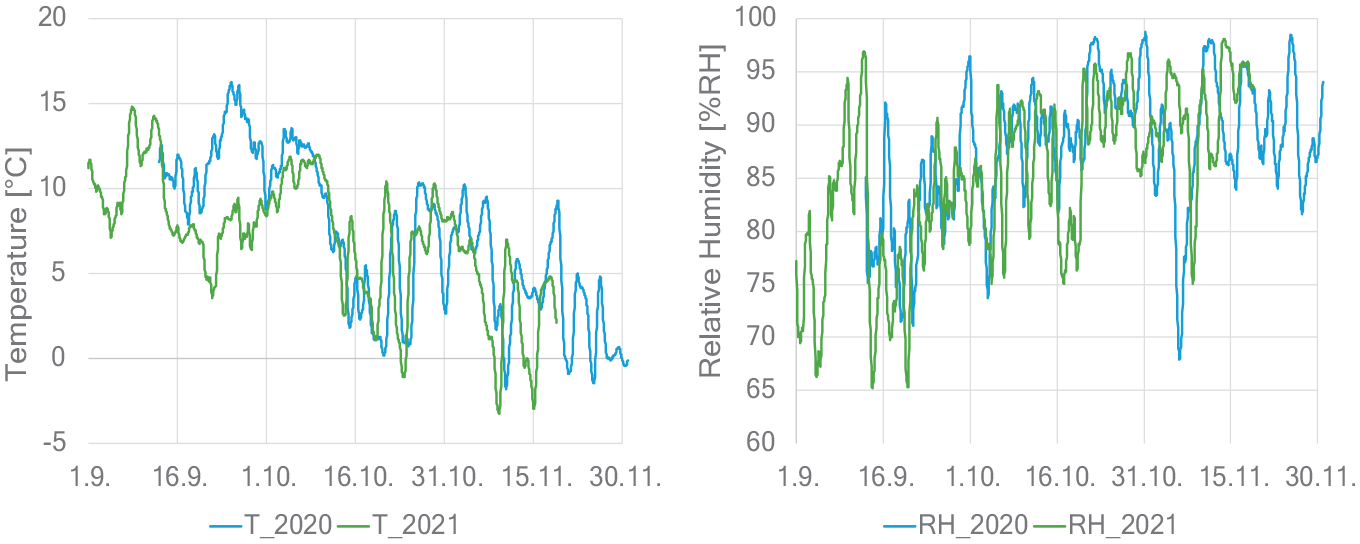
The 24-h sliding average outdoor temperature and relative humidity at the test site during the 2020 and 2021 autumn test periods.
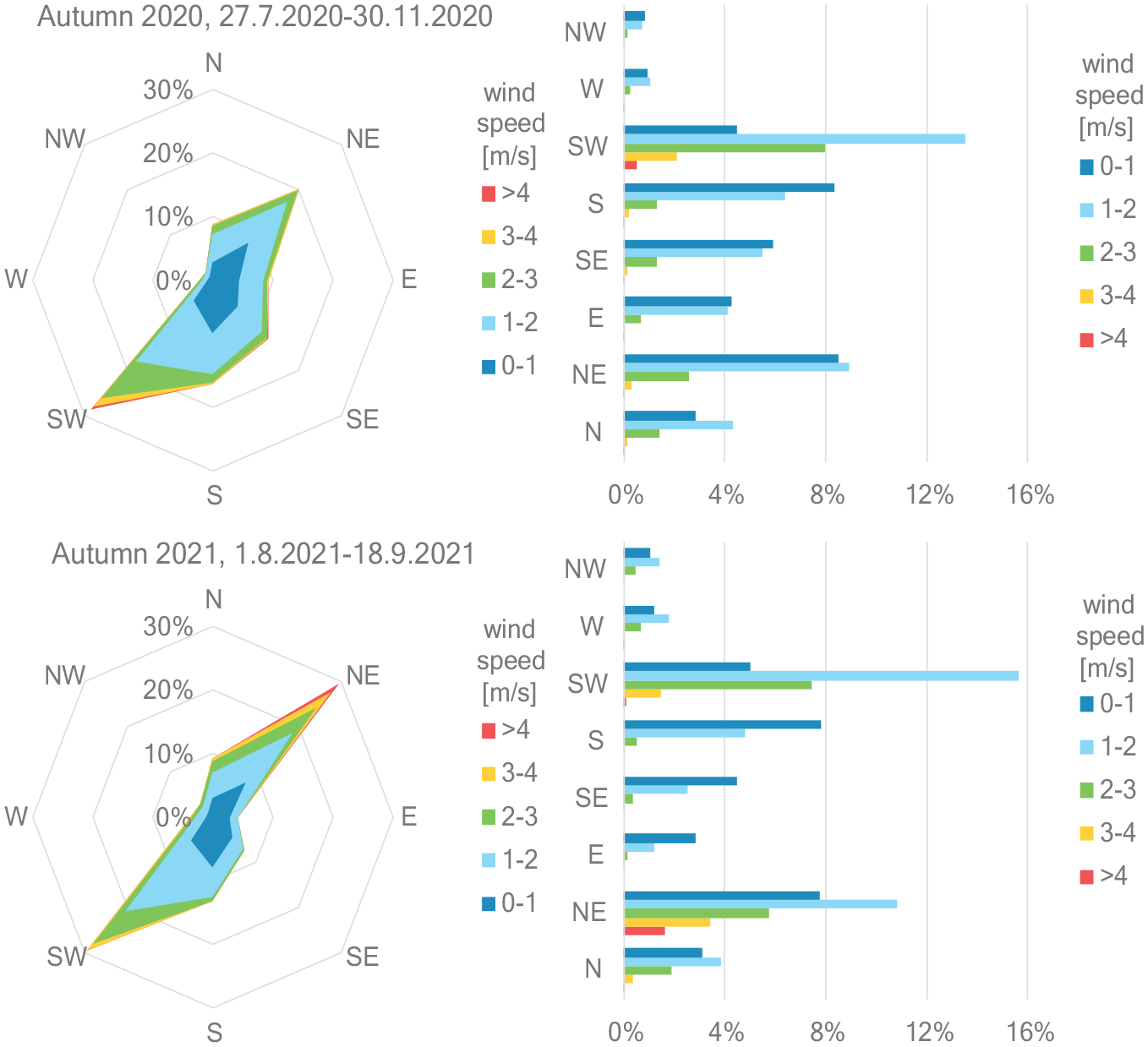
The wind conditions at the test site during the 2020 and 2021 autumn test periods.
The 2020 autumn test period had on average slightly higher temperatures and relative humidity than the 2021 test period. This resulted in autumn 2020 having a stronger impact on the hygrothermal performance of the tested structures. Wind data for the autumn 2021 test period was insufficient during the latter parts of the period.
Studied exterior walls
Four timber-framed exterior walls were studied (Valovirta et al., 2024). All walls were equipped with a 9 mm thick gypsum board wind barrier. The idea was to find out how a wind barrier with small vapour resistance and small thermal resistance performs with different insulation thicknesses and façade types. Mineral wool insulation thicknesses of 150 and 300 mm were used. The former represents thermal insulation levels used from late the 1970s until the end of the 1990s. The latter represents the level which meets the present Finnish building regulations. Brick veneer and wooden cladding were used as façade materials. The studied walls are presented in detail in Figure 4 with calculated thermal transmittance values (U-values).
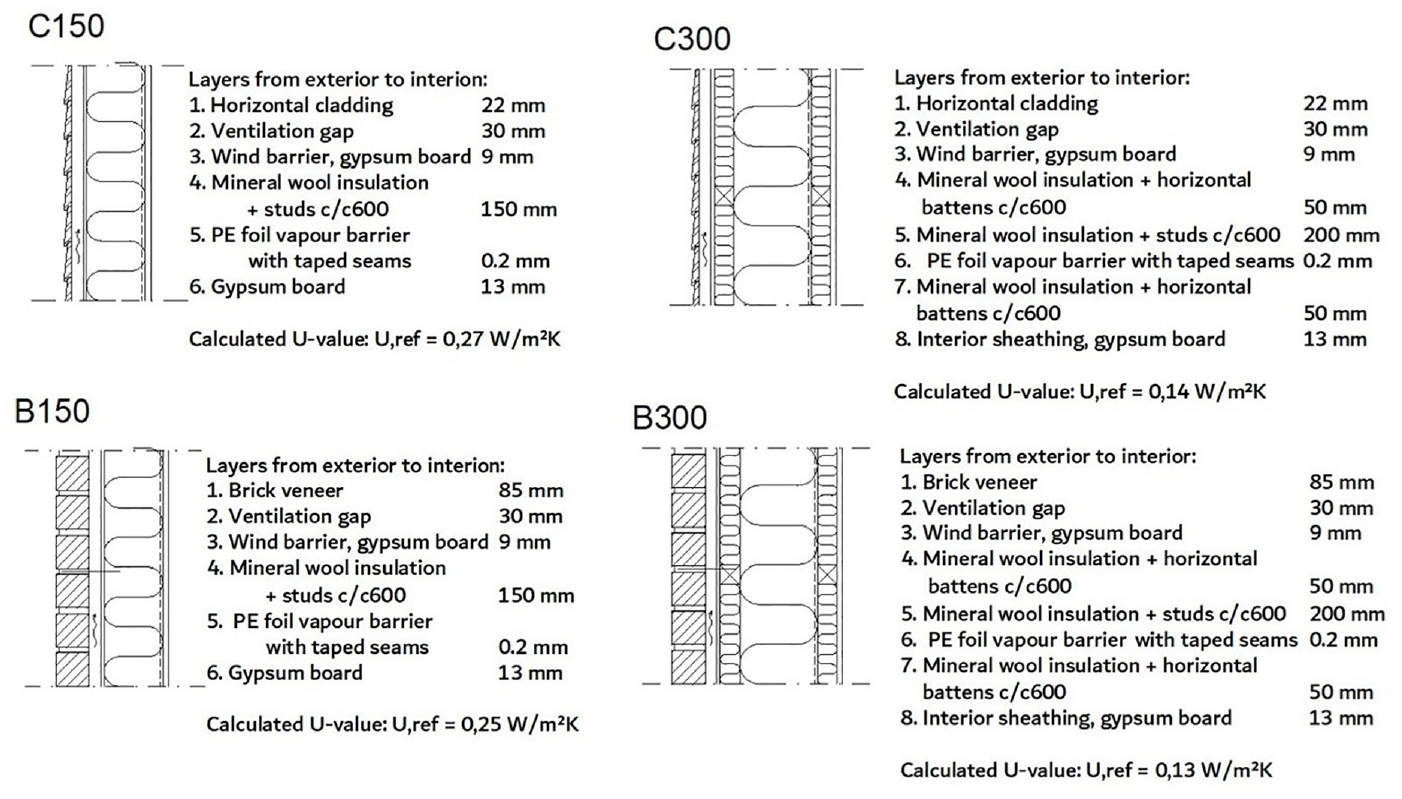
The studied exterior walls.
Mineral wool insulation and an exterior grade gypsum board wind barrier were chosen because they represent typical Finnish building materials. The gypsum board wind barrier has good fire protective properties, sufficient mechanical properties for, for example, prefabrication and suitable water vapour permeability for the Nordic climate. However, because of the low thermal resistance of the board, mould index on its interior surface may be an issue. There is a plastic foil vapour barrier in all of the test structures which is a common practice in Finland. In well-insulated walls C300 and B300, there is a 50 mm insulation layer inside of the vapour barrier. This enables placing electrical installations inside the exterior walls without piercing the vapour barrier with sockets, cable penetrations etc. The vapour barrier was made as airtight as possible for each of the test structures. Hence, the moisture loads from inside of the building were minimized and the outdoor air was the main moisture source.
Brick facades are capillary active, and they have considerable water storage capacities. While this enables the absorption of minor amounts of water hitting the façade, it may cause problems when the façade is saturated. Contrary to a common belief, typical brick facades are not water-tight, but instead heavy and long driving rains can even cause water flow inside of them. Because drying of a façade takes much longer than wetting, the RH inside the ventilation gap may remain high for an extended period due to the evaporating water. Leaking water can also easily penetrate inside the wall structure unless all details have been properly designed and constructed. Because of the simple and robust design of the studied walls, this was not an issue in this study.
Wooden external claddings have been used for a long time in Finland, even before the era of timber-framed buildings, they were used to protect the walls of log houses. A typical cladding assembly with a ventilation gap behind either vertical or horizontal boards is known to be reliable, although it requires more maintenance than a brick façade.
Material properties of construction materials used in the test walls are presented in Table 1.
Material properties.
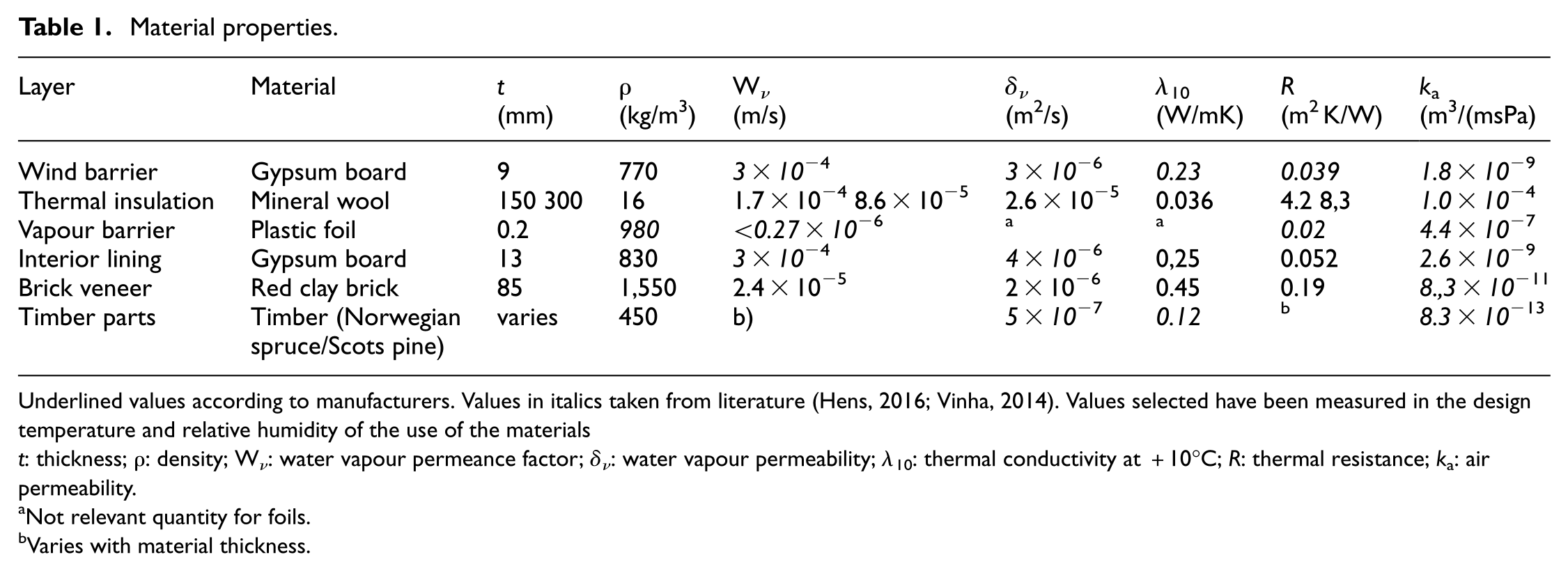
Underlined values according to manufacturers. Values in italics taken from literature (Hens, 2016; Vinha, 2014). Values selected have been measured in the design temperature and relative humidity of the use of the materials
t: thickness; ρ: density; Wν: water vapour permeance factor; δν: water vapour permeability; λ10: thermal conductivity at +10°C; R: thermal resistance; ka: air permeability.
Not relevant quantity for foils.
Varies with material thickness.
To characterize the energy-efficiency of different wall constructions, U-values of wall structures were calculated, as shown in Figure 4 (Uref-values). In Finland, U-values are generally used to compare different exterior wall constructions as well as to calculate the energy demand of buildings.
Instrumentation
Numerous temperature and RH sensors were installed at different positions, both next to the timber frame and in the middle of the insulation, between the studs. The implementation of these instrumentation can be seen in Figure 5.
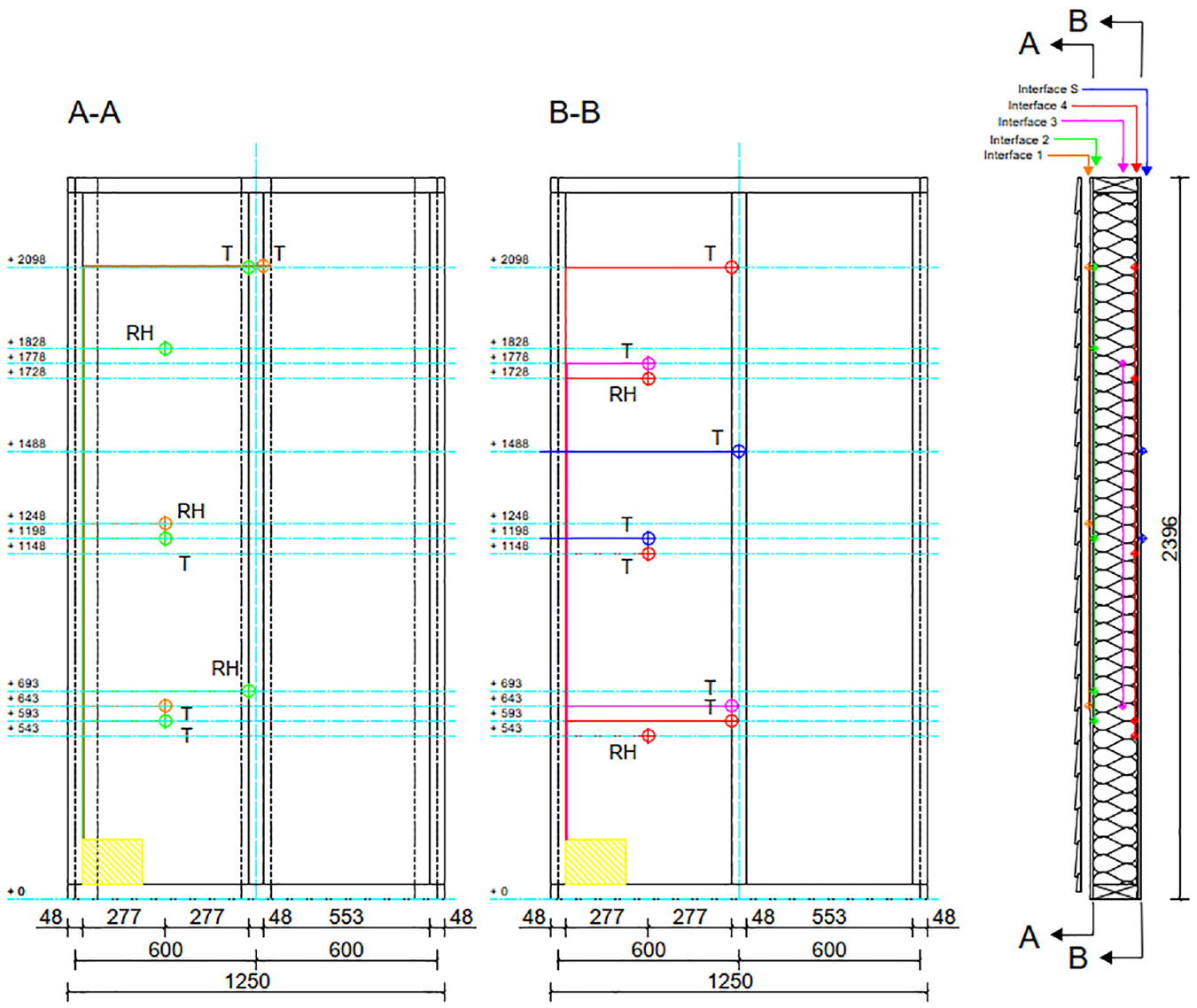
The implementation of temperature and RH sensors in the test structures.
In the Finnish climate conditions, the most critical location, regarding the overall hygrothermal performance of the structure, of a timber-framed external wall is on the inside surface of the wind barrier. Therefore, this location was equipped with several temperature and RH sensors. Sensors were also placed in the ventilation gap between the wind barrier and the façade. Several surface temperature sensors were also attached to the inner surface of the interior sheathing. Sensor properties are presented in Table 2.
Properties of sensors.
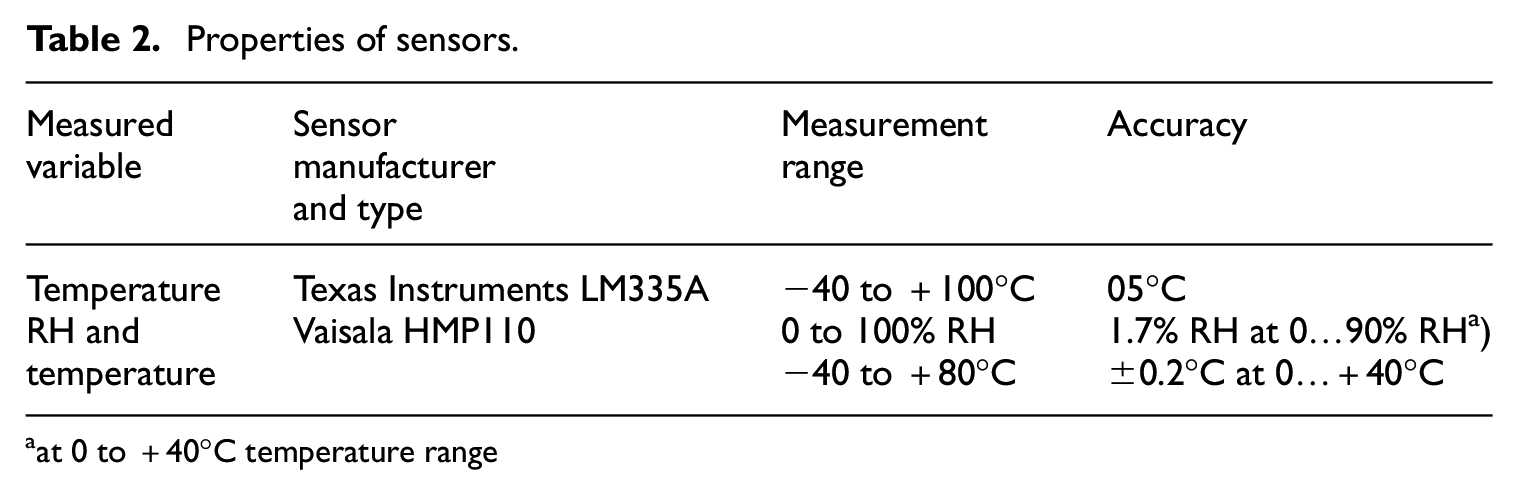
aat 0 to +40°C temperature range
Indoor climate conditions
The temperature and moisture conditions inside the test building were controlled to imitate those in real buildings. The test buildings were equipped with heating and cooling equipment and humidifiers, which were all controlled with PID controllers. The indoor temperature setpoint was +21°C and this was achieved well. The average indoor air temperatures were 21.1°C for the 2020 autumn test period and 20.8°C for the 2021 autumn test period.
The target value for the internal moisture load wasn’t achieved due to the humidifier setup not working properly. The average indoor air relative humidities were 40%RH for the 2020 autumn period and 46%RH for the 2021 autumn period. This resulted in an average moisture load of a bit above 1 g/m3 of excess moisture during the two test periods compared to the outdoor air moisture content. This wasn’t a problem in this study because all the tested structures had plastic foil vapour barriers intact, and the internal moisture load would not have had a significant effect even if it had been higher. The internal moisture load will become an important factor in later studies when we will be implementing air leakage points on the inside, which will puncture the vapour barrier. This, however, won’t be a part of the study concerning this paper. At the time of writing of this paper, the humidifier setup has been upgraded and is working properly.
Criteria for hygrothermal performance
There were two main criteria for the hygrothermal performance. First, condensation inside a wall assembly was not allowed. The possibility of favourable conditions for condensation was monitored with temperature and RH sensors. Effective drying of wall assemblies is possible only during spring and summer time in the Nordic climate. Mould growth and even rot is possible during the autumn period when conditions are unfavourable for drying.
Mould growth was the second criteria. In this study, mould growth was evaluated with a mould index according to the Finnish mould growth model (Ojanen et al., 2010; Viitanen et al., 2010). The model takes into account the dynamic temperature and RH histories of the subjected material. There are four mould sensitivity classes (MSC) for materials, ranging from 1 to 4. Sawn Norwegian spruce (Picea abies) and sawn or planed Scots pine (Pinus sylvestris) belong to class 1. The frames of the test structures were built using the aforementioned materials. The cardboard-surfaced gypsum boards, such as the ones used on the test structures, have also been found to belong to MSC1. The mould index, ranging from 0 to 6, expresses the intensity of mould growth. The larger the mould index, the more intense mould growth is expected to occur. Value 0 indicates that no mould growth occurs. Value 1 indicates the possibility of minor mould growth which can only be seen with a microscope. In this study, mould indices over 1.0 were considered undesirable.
Test period
The tests were performed between 13 September 2020 and 30 November 2021. Data from the autumn months were analysed thoroughly because autumn is the most critical season in the local conditions.
Results
Hygrothermal conditions behind the wind barrier
In highly insulated structures, the temperature behind the wind barrier is generally lower than in structures with moderate thermal insulation. Brick veneer and wooden cladding are also very different façade materials, the former having considerable thermal and moisture capacities. With a thick thermal insulation, the heat flow from the inside to the outside of the structure is minimal and does not significantly heat the outermost parts of the wall assembly. Therefore, the RH near the wind barrier increases compared to the walls with less thermal insulation and a larger heat flow through the wall.
No condensation was detected during this study (Valovirta et al., 2024). Mould indices, calculated with T and RH values measured on the inner surface of the wind barrier over a two-year period, were also well below the limit value 1 for all structures. The highest values were 0.048 for wall C300 and 0.046 for wall B300. Hence, all tested structures passed both criteria for their hygrothermal performance, see chapter Criteria for hygrothermal performance. There were still occasional favourable conditions for mould growth. This is not problematic if these conditions occur only sporadically as they did during this study.
Isopleth charts in Figures 6 to 9 display the distributions of measured RH and temperature values with the limit curve for mould growth above which the conditions for mould growth are favourable. On the south façade, the RH-temperature value pairs are mostly below the limit curve. On the north façade, conditions are challenging for the walls with 300 mm insulation. The results for walls with a brick veneer, B150 and B300, are interesting. It was assumed that, for the brick façades, the south façade would be more problematic than the north façade. This was due to the dominating wind directions which cause heavier driving rain loads to the south façade (Pakkala and Lahdensivu, 2023). However, the façade material did not affect the results as much as expected. This indicates the absence of driving rain loads due to the test site being in a moderately protected area. It is obvious that the absence of direct solar radiation on the north façade keeps the temperature near the wind barrier lower and therefor the RH levels higher compared to the south façade. A properly constructed and maintained wooden cladding prevents the direct moisture entry from outdoors to the ventilation gap. Opposed to a typical brick veneer, the water vapour permeability and capillary coefficient of wood are very small when perpendicular to the direction of grain (Ross and Usda Forest Service, 2010). Hence, a wooden cladding gives better protection from heavy driving rains than a brick veneer.
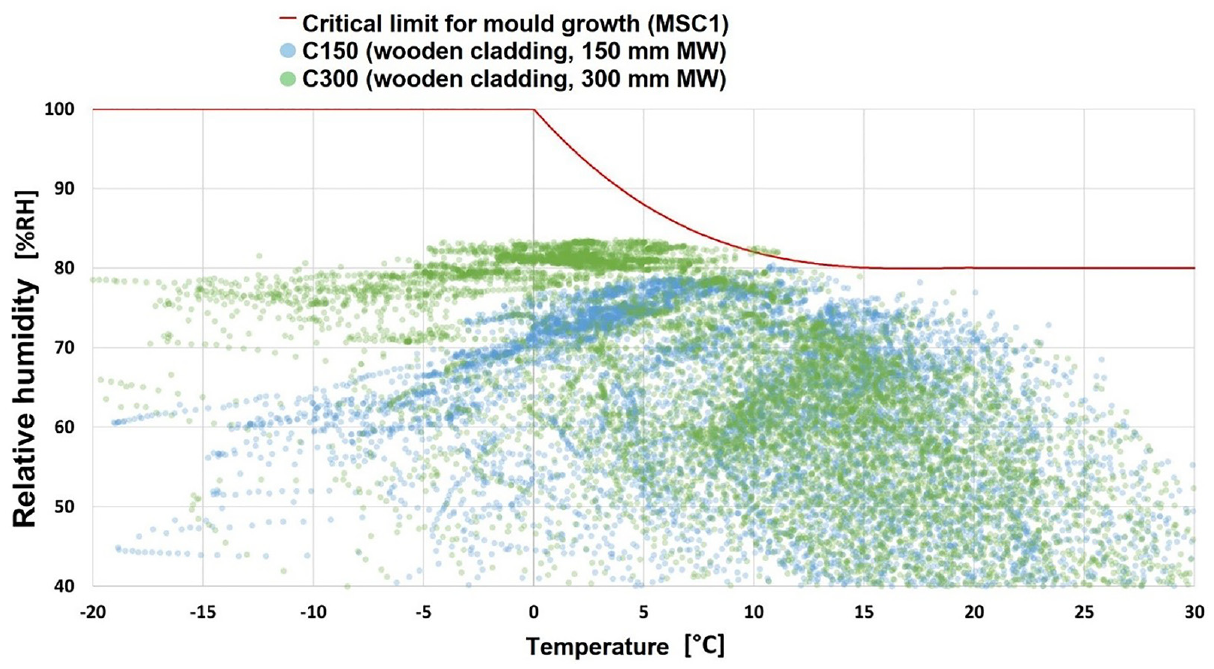
Temperature and RH distribution during the whole test period, south façade, walls with wooden cladding.
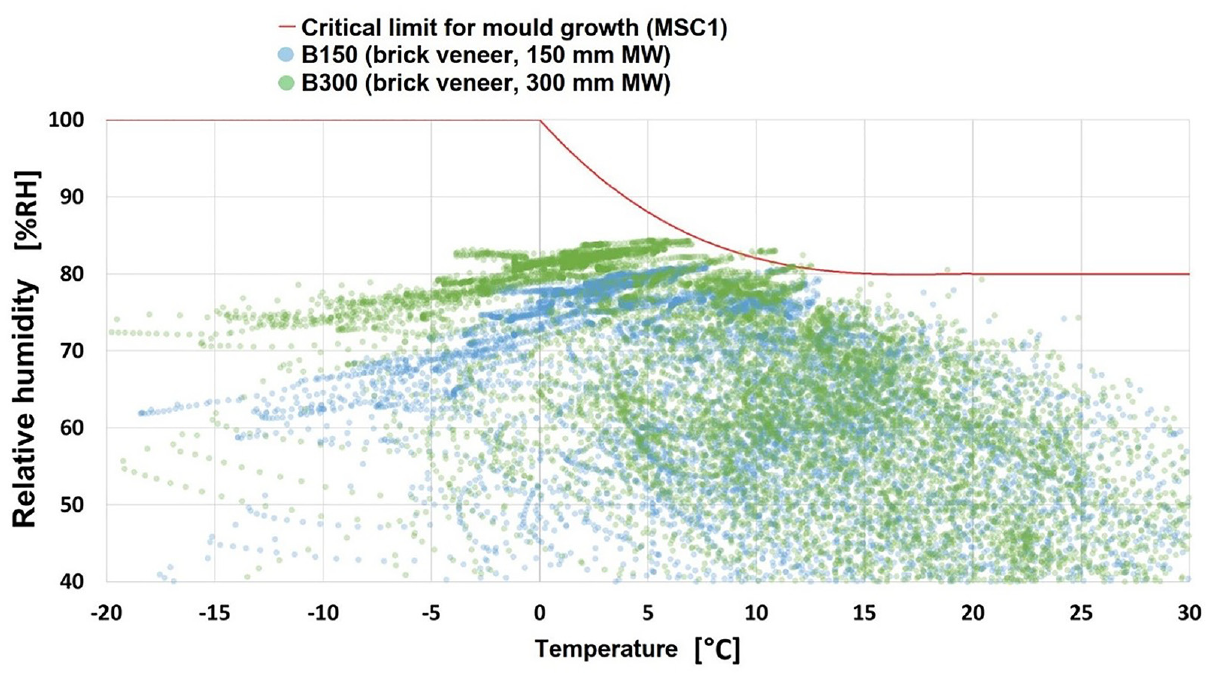
Temperature and RH distribution during the whole test period, south façade, walls with brick veneer.
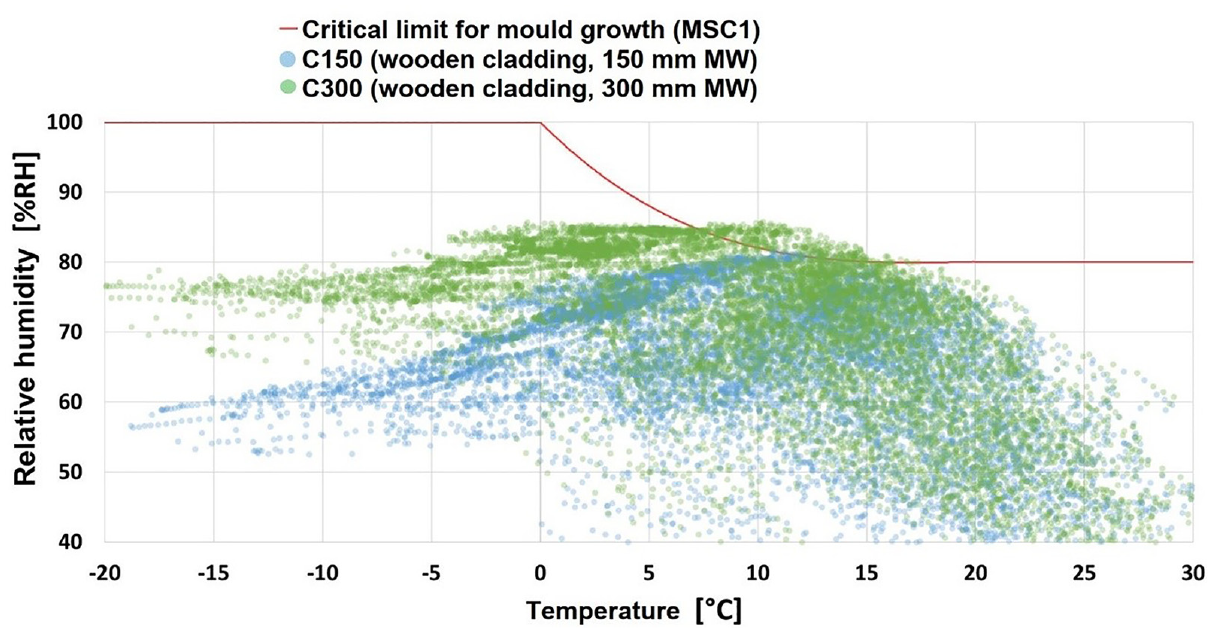
Temperature and RH distribution during the whole test period, north façade, walls with wooden cladding.
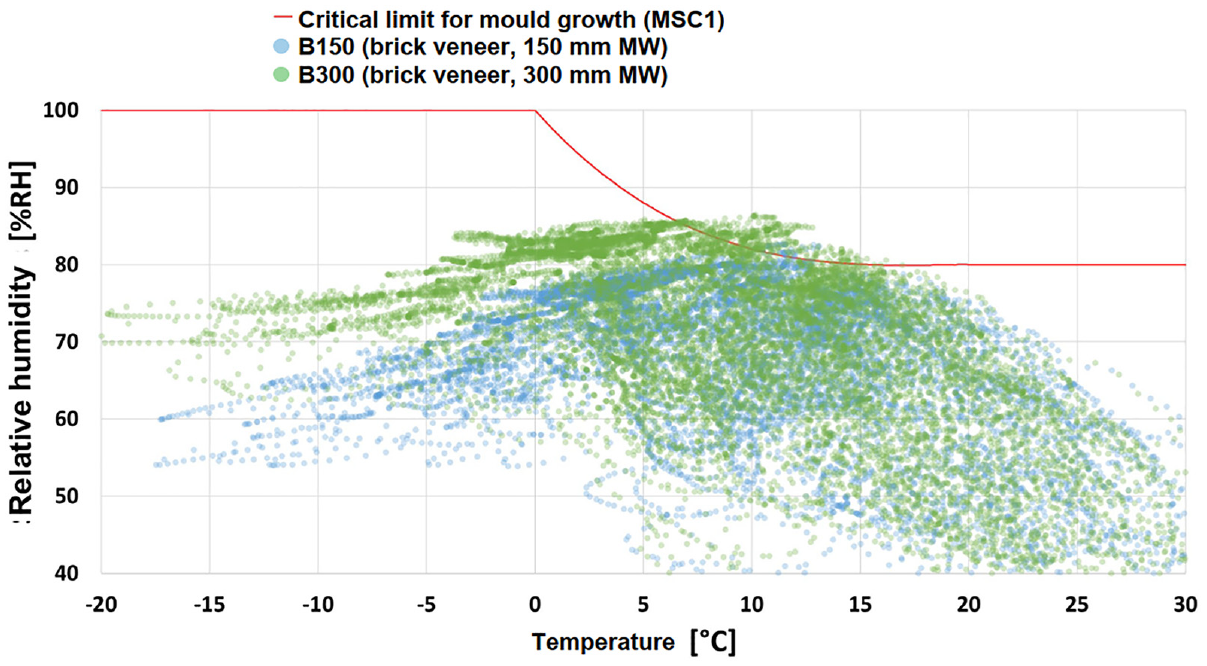
Temperature and RH distribution during the whole test period, north façade, walls with brick veneer.
RH levels next to the studs were systematically lower than between the studs in the middle of the insulation, where the thermal bridge effect of the timber frame does not have an effect. Hence, this paper focuses only on the more critical conditions occurring between the studs.
Figures 10 and 11 demonstrate further the impact of thermal insulation thickness. The bar charts depict the average RH, distribution of RH and the amount of favourable conditions for mould growth. The results have been calculated from two autumn periods. Autumn represents the most critical period for building envelope structures during the year in the Nordic climate. During this period, weather conditions are often suitable for mould growth because both the RH and temperature levels are high enough for extended periods of time. The impact of thermal insulation thickness can be seen in the bar charts of Figures 10 and 11 as well as in the isopleth charts in Figures 6 to 9. The difference in average temperatures on the warm side of the gypsum wind barrier board between moderately insulated structures (C150 and B150) and well-insulated structures (C300 and B300) are within 2°C. Relative humidity is very sensitive to even small changes in temperature, therefore, even with a moderately small difference in the average temperature, the impact on the RH level is quite big. This can clearly be seen on the right-hand side of Figures 10 and 11, where the well-insulated structures (C300 and B300) show distinctly higher average RH values and greater amounts of favourable conditions for mould growth. The average temperature and RH values behind the wind barriers of walls C300 and B300 are very close to the outdoor conditions. This is due to the low thermal resistance of the gypsum wind barrier board coupled with the high thermal resistance of the thick insulation layer of the structures C300 and B300.
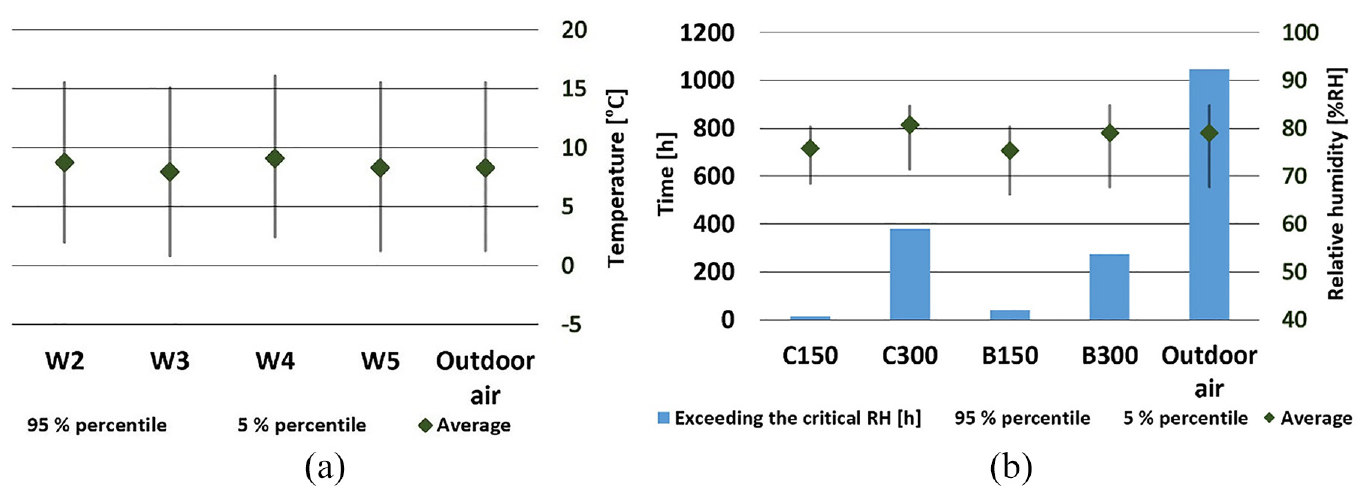
The measured average conditions on the inner surface of the wind barrier for each test structure on the North facxade during the measurement period 13th September-1st December 2020: (a) the measured average temperatures, (b) the measured average relative humidities and the number of hours the measured conditions were favourable for mould growth, ie. the critical RH was exceeded.
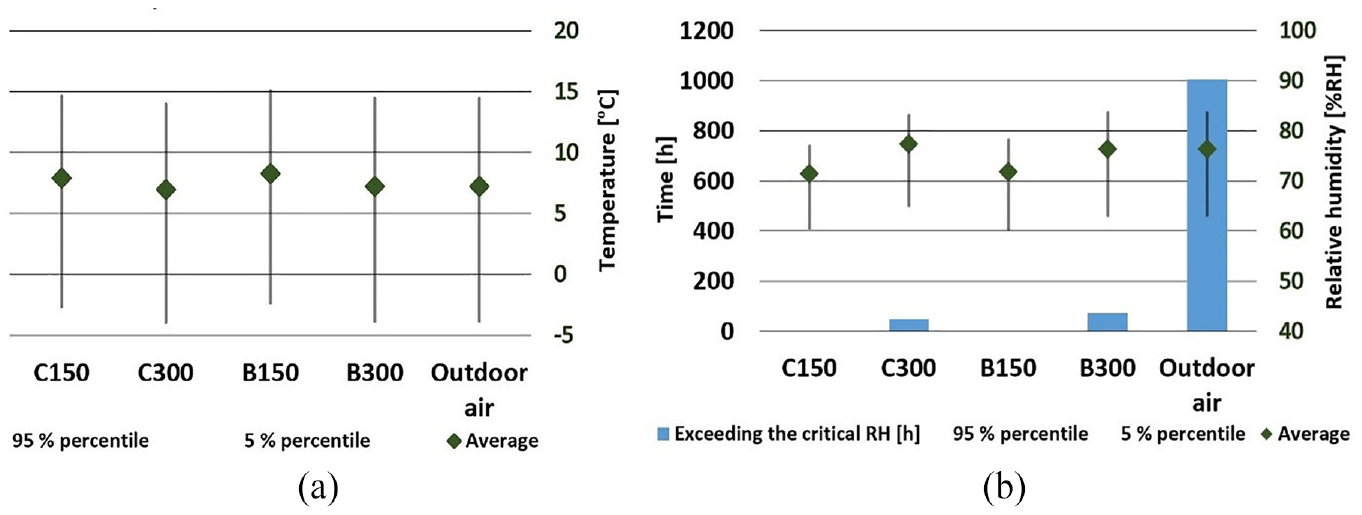
The measured average conditions on the inner surface of the wind barrier for each test structure on the North facxade during the measurement period 1st September-1st December 2021: (a) the measured average temperatures, (b) the measured average relative humidities and the number of hours the measured conditions were favourable for mould growth, ie. the critical RH was exceeded.
During the autumn period, the brick veneer can perform even better with thick insulation compared to the wooden cladding. This phenomenon can be seen in Figure 10. The obvious explanations are a lack of driving rain, solar heating of the façade and different thermal properties of the two studied façade materials. Differences between the two studied autumn periods are considerable. This indicates the peculiarities of the Finnish climate, where the variations between years are distinctive. Autumn 2020 was clearly harsher than autumn 2021, as shown in Figures 10 and 11. The former clearly shows the increased risk for mould growth with structures with thick insulation layers and wind barriers with very little thermal resistance. Outdoor air always poses considerably larger amounts of favourable conditions for mould growth than any prevailing conditions behind the wind barriers of the studied structures. However, the rather small differences between the outdoor air conditions and conditions behind the wind barriers of the well-insulated structures C300 and B300 indicate a clearly higher risk for mould growth compared to the moderately insulated structures C150 and B150.
Moisture flow by diffusion and convection
All the wall assemblies were sealed with a plastic foil vapour barrier as airtight as possible. This includes, for example, proper sealing of all sensor cable penetrations. Moisture flow from the inside of the test building into the test structures by diffusion and convection did not have a significant effect in the measurement results of any of the tested wall structures. There were also no signs of unintended air exfiltration which would have caused excessive moisture transport by convection.
Discussion
The hygrothermal performance of structures
The effect of increased thermal insulation was evident. The measured RH values on the inside of the wind barrier were 5%–7%-units higher with well-insulated walls (C300 and B300) compared to the moderately insulated walls (C150 and B150). These results were measured at the interface between the thermal insulation and the wind barrier. This interface is the most critical point in timber-framed wall assemblies in the Nordic climate due to three reasons. First there have been numerous reports of high mould indices found on the inner surface of an exterior wall structures wind barrier. Second, this interface is the most probable condensation location for water vapour entering the insulation space from the inside due to diffusion and/or convection. Third, any mould living on the inner surface of the wind barrier – thermal insulation interface emits metabolic products to the insulation space. These products can enter the indoor air if there are any air leaks on the interior side of the wall assembly. For these reasons, building envelope structures should always be designed in such a way that no amounts of mould growth shall be allowed on the inner surface of the wind barrier. The RH levels must stay below the critical level when temperature is high enough for mould growth, and vice versa.
The measurements were performed using a gypsum board wind barrier. It has both a low thermal resistance and a low water vapour resistance. Therefore, the conditions on the inside surface of the wind barrier react rapidly to the prevailing conditions in the ventilation gap. These conditions are, in turn, rather close to the outdoor air conditions. Hence, climate change may impact the conditions on the inner surface of the wind barrier. This should be studied further with simulations in the predicted future climate scenarios to determine the possible effects climate change is imposing to the hygrothermal performance of the studies structures. With well-insulated structures, such as C300 and B300, the current conditions are already near the threshold for mould growth so even small climatic changes could impose a risk for mould growth.
One obvious measure to prevent mould growth behind the wind barrier is the use of a wind barrier product having both considerable thermal resistance and a high water vapour permeability. According to Viljanen (2023), highly insulated wall structures should have at least 10% of the overall insulation placed on the outside of the wind barrier-insulation interface to decrease the probability of moisture problems caused by indoor air exfiltration. Placing insulation on the outside of the insulation-wind barrier interface increases the temperature at the interface which lowers the relative humidity if the moisture content stays constant. However, a rise in temperature also lowers the critical relative humidity threshold for mould growth. Figure 12 shows this threshold going from 100%RH at 0°C to 80%RH at 15°C.
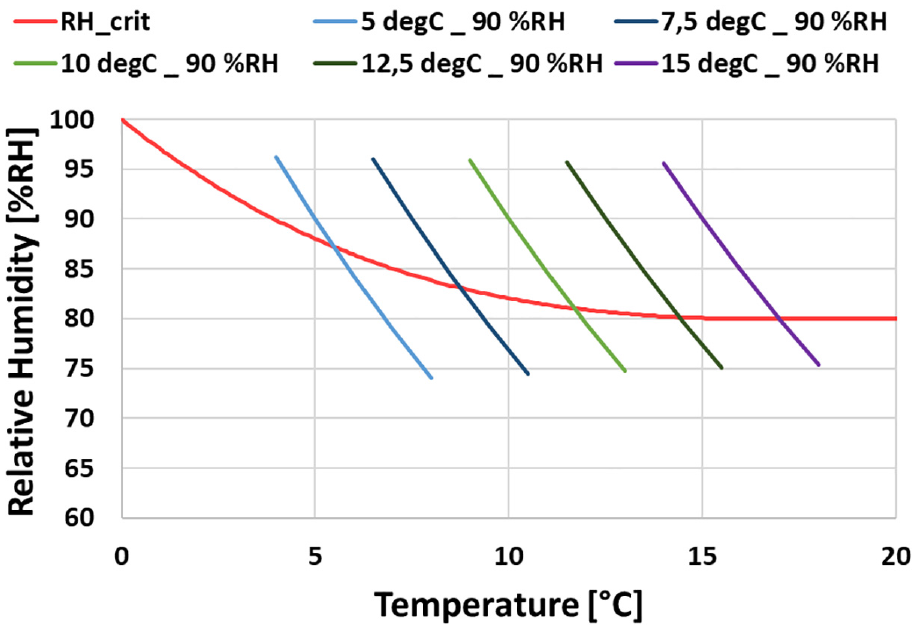
The effect of change in temperature while moisture content is constant. A change of −1…+3 in temperature has been calculated with different starting points which are stated in the labels.
The moisture content inside a wall structure doesn’t tend to be constant. As the Nordic climate is estimated to get warmer and more humid, we could be expecting more scenarios with lower critical relative humidity thresholds and higher moisture content levels (Ruosteenoja and Jylhä, 2021). In additions wind driven rain events are predicted to become more frequent which imposes a heightened risk for structures vulnerable to wind driven rain (Pakkala and Lahdensivu, 2023). To address these questions, we aim to continue this research with simulations in future climate scenarios.
There were distinct differences between the two studied façade materials. However, insulation thickness was the dominating factor affecting the hygrothermal performance of the tested wall assemblies in this study. The differences between the brick veneer and the wooden cladding could have been considerable if the façades had been exposed to greater loads of driving rain (Aggarwal et al., 2021). Brick veneers have been a conversation topic in Finland in recent years. This study indicates that even well-insulated exterior walls can be equipped with a brick veneer if it is situated in a protected circumstance. In this study, the test site is in a rather protected area, the height of the test building is quite low, and the building has approx. 400 mm overhang of eaves, which all contribute to the façades of the test structures being protected from heavy driving rain.
Methodological limitations
The results are valid for the studied exterior wall constructions which are described in detail in this paper. The results are valid in the measured climate conditions only. Conditions are expected to be harsher especially in the coastal areas and other areas with less protection, vulnerable to driving rain. This is especially crucial for walls with a brick veneer as described before. Depending on the year, the climatic conditions can sometimes be harsher than during the measurement periods of this study. Harsher conditions can be studied with simulations: analysing the hygrothermal performance in the future climate conditions is possible with simulation tools (Jylhä et al., 2015; Nielsen and Kolarik, 2021).
Conclusions
When the insulation thickness of a timber-framed exterior wall is increased from 150 to 300 mm, it will impact the hygrothermal performance of the structure. A thicker insulation layer will decrease the heat flow through the structure resulting in a drop in temperature near the outer most parts of the assembly, including the surface temperature on the inside of the wind barrier. Due to the drop in temperature, relative humidity rises which can result in conditions becoming favourable for mould growth. This scenario gets highlighted with wind barriers with low thermal resistance, as with the gypsum board used in this study. Therefore, for structures used in the Finnish climate, there should be enough thermal insulation placed on the outside of the thermal insulation – wind barrier interface. This can be done either by choosing a wind barrier with sufficient thermal resistance or by placing insulation on outside of the wind barrier. The latter method may be used when the mechanical and/or fire protective properties of the gypsum board are to be utilized.
Climate change may become problematic for the studied structures. Although all the tested structures performed well in the present climate, the possibility for the risk of mould growth increasing in the future, due to the rise in temperature combined with similar RH conditions to the present, should be investigated. Simulation studies are needed to determine if the hygrothermal performance of the tested structures in future climate scenarios. Hygrothermal simulations would indicate when the studied well-insulated structures will become problematic in the changing climate conditions of Finland. Because simulation tools and simulated data for future climate are available (Jylhä et al., 2015; Nielsen and Kolarik, 2021; Ruosteenoja and Jylhä, 2021), the simulations are highly advisable.
Footnotes
Declaration of conflicting interests
The author(s) declared no potential conflicts of interest with respect to the research, authorship, and/or publication of this article.
Funding
The author(s) disclosed receipt of the following financial support for the research, authorship, and/or publication of this article: This study was funded by the public Finnish innovation funding agency, Business Finland, with co-innovation (grant number 33250/31/2020), Tampere University, VTT Technical Research Centre of Finland and five private companies. The authors gratefully acknowledge the financial support.
