




Abstract
There is a common perception that ‘every refugee carries a smartphone’, but research on this phenomenon is limited. We conducted a representative survey of 400 refugees to Germany which provides insight into their use of digital media in preparation for and during forced migration. We also asked whether digital media shaped images of and expectations about the refugees’ target country Germany. The data show that refugees are not a homogeneous group and that usage patterns depend on regional origins. Internet use also contributed to a positively biased perception of Germany, but the effect of traditional media use was stronger.
Keywords
Introduction
In 2015, Europe became the target destination for more than a million refugees fleeing war-torn countries such as Syria and Iraq (Eurostat, 2017; UNHCR, 2017). Yet, in addition to the extraordinary high number of asylum applications (Connor, 2016), another peculiarity distinguishes the recent refugee movements from previous ones: the movements of our time – be they to Europe or other regions – are taking place in the digital age. Beyond a doubt, just as digital communication technology has transformed connective action and mobilization through technology’s network capabilities (Bennett and Segerberg, 2012), it is likely to have an impact on large groups of people who simultaneously embark on a journey to a safe haven.
The mainstream media quickly picked up that most refugees carried smartphones with them (Haverkus and Schmitt, 2015; Locke, 2017; Rosenblum, 2016; Worley, 2016), which to some observers appeared to be a paradox: a modern device in the hands of individuals who had lost all their other belongings (O’Malley, 2015). Yet, in news articles, refugees explained how valuable smartphones had been during their journey as a compass in transit (Haverkus and Schmitt, 2015) or after they had arrived at their destination country as ‘a link to an old life’ (Worley, 2016). However, even though many journalists have shown interest in this rather new and multifaceted phenomenon, only a few scholars have approached the issue from a scientific perspective. Against this backdrop, this study contributes to filling the academic gap by highlighting the role digital media played in the recent refugee movements to Europe.
To provide a solid foundation for the analysis, the first aim of this study is to provide reliable data on how digital technologies are applied by refugees for preparing for and conducting forced migration. Through a survey of a representative sample of refugees who arrived in Germany in late 2015 and early 2016, this study provides answers to fundamental questions about (digital) media use during such exceptional circumstances: Which particular digital services do the refugees turn to? How important are mobile phones compared with other sources of information? Do refugees look for the experiences of other refugees in social media, and do they share their own? Furthermore, we assume that digital communication technologies also serve as vital information sources in advance of their departure. Hence, the second aim of this study is to analyse what influence digital media use might have on the knowledge refugees acquire about their target destination, in this case Germany. In online environments, which provide an abundance of (unverified) information, the question is whether refugees who had frequently used the Internet before their departure were better or worse informed about their target destination than others. Moreover, it is an established axiom of communication studies that beyond providing facts, media also contribute to creating ‘pictures in our heads’ (Lippman, 1998). Although images and expectations of other countries are certainly developed in complex processes across an individual’s lifespan and involve a variety of factors, it is likely that media use plays a significant role (Wanta et al., 2004). In the specific case of refugees, the content to which individuals are exposed before they depart might have an even stronger impact on their perception of the target destination, as they are more likely to purposefully search for country-specific information and to pay particularly close attention. Against this backdrop, third, this article seeks to answer the question whether digital media use contributes to a well-informed or biased perception of the target country.
This study is divided into four sections. It starts with a brief elaboration on the state of research, followed by theoretical considerations. Subsequently, we present our methodology while the third section provides descriptive results about media use before and during forced migration. The fourth section addresses the analytical question of the effects of digital media use on knowledge and perception of the target country.
State of research: Refugees’ media use
Till our survey in 2016, scant research had been conducted on refugees’ media use in not just the German context, but also in other European countries, where the interest had so far been limited. It is only during the course of the current refugee flows to Europe that interest on the continent has increased (Leurs and Smets, 2018). Typically, most studies focus on the post-migration phase and the refugees’ situation after their arrival in the target country. The general impression can be summarized in the words of Gillespie et al. (2018: 1): ‘smartphones are lifelines, as important as water and food’. However, there is a growing tendency to focus on the ambivalences of digital media use among refugees. Studies that address the transit phase of refugees in camps in Lebanon and Jordan describe the ‘information precarity’ felt by refugees regarding technical access to information, the frequency of rumours and misinformation, and the lack of control over their own image and surveillance by the state (Di Giovanni, 2013; Wall et al., 2015: 2). The refugees attempt to avoid such insecurity, above all, by retaining contact with existing networks of family and friends with the help of mobile phones. In contrast, traditional mass media, and also social media such as Facebook, are not granted much trust. In addition, a study by BBC Media Action (2016) has tried to map the information needs of refugees in Greek camps using a sample of 66 respondents and additional focus groups. They describe that the refugees were looking most of all for current and reliable information and were frustrated that they were not able to obtain this from local helpers and media, resulting in a pronounced loss of orientation. Borkert et al. (2018) interviewed 83 Arab refugees in Berlin shelters and their study provides insights into the ways in which refugees try to get information en route to Europe. They observed that, in particular, instant text messaging was popular among refugees and highlighted that ‘conversations with other travellers’ is an important information source and that the few among them with continuous access to information via social media were the information mediators (Borkert et al., 2018: 6).
Studies in Australia, France and Italy (Charmarkeh, 2013; Gifford and Wilding, 2013; Harney, 2013; Khorshed and Sophia, 2015; Leung, 2011) provide further insights into the ambivalence of media technologies in the daily lives of refugees in the post-migration phase. Of note among these are the one by Houssein Charmarkeh (2013), who employed ethnographic methods to investigate the precarious situation of Somali refugees in France, examining their social media usage before, during and after flight. Also of interest is the study by Nicholas Harney (2013), who looked at the mobile phone usage of migrants and asylum seekers in Naples, Italy. In both studies, smartphones are highlighted as great support tools for coping with daily life. Charmarkeh (2013: 50) explicitly stresses that ‘refugees know how to employ social media, contrary to prevailing clichés, because social media play a crucial role in their navigation of the migratory trajectories and also allow them to find a place where they feel accepted’. Witteborn (2011, 2012, 2015) repeatedly visited asylum seekers in shelters in Germany over a span of 3 years and analysed the inhabitants’ media practices. Her interest was in seeing how these ‘forced migrants’ developed a specific identity through self-presentation in the digital media. She especially highlighted the field of tension between the situation in Germany, which is experienced as unsatisfactory, and existing contact through digital media (a kind of co-presence) with those left behind in their homeland, who mostly assumed a significant improvement in the refugees’ living conditions. This tension often leads to the asylum seekers transmitting rather overoptimistic reports to the country of origin (Witteborn, 2015). More recent qualitative studies which focus on people who had recently fled from Syria, Iraq and Central Asia and presently live in Germany also emphasize the importance of the smartphone for the maintenance of contacts with the country of origin (Borkert et al., 2018; Fiedler, 2016, 2019) and also for the bridging function to the host country (Kutscher and Kreß, 2015), for example, through language learning apps. Fiedler (2016), who conducted 36 in-depth interviews with Syrian refugees, is one of the few scholars who also looks at media usage in the country of origin before flight. She finds that respondents informed themselves about the situation in the target country using diverse channels, thus demonstrating a broad repertoire of information. Nonetheless, this information acquisition is channelled primarily through social media and personal contacts (Fiedler, 2016: 11–12). Another study by Dekker et al. (2018) examined, through interviews, 54 Syrian asylum seekers in the Netherlands. They highlighted the importance of verification of information through personal contacts, arguing that ‘[t]he importance of trust and personal contact is again stressed when respondents indicate that one-to-one communication with known others via social media is more trustworthy than public communication of unknown others’ (Dekker et al., 2018: 7).
This brief overview of the literature highlights the importance of digital media in the specific life circumstances of refugees. The majority of researchers focus on the period after arrival to the target country, while a few recent ones have also integrated the period before and during flight. Almost all of the studies apply a qualitative methodology, which serves the purpose of understanding the subjective meaning individuals attribute to digital technologies and allows the researchers to explore in depth the users’ motives and behaviours. The downside of qualitative research is the usually non-representativeness of the samples and the unclear generalizability of the data. To our best knowledge, so far, no study has quantified the frequency and types of refugees’ digital media use and the thematic priorities of refugees’ communication.
Theoretical background
Media use
When aiming to develop hypotheses about explanations of refugees’ media use, the entry point is to identify the probable motives of refugees for turning to media. In this regard, research has yielded some theories which aim to answer the question of why individuals choose to use specific media above all other options. Prominent approaches such as the uses and gratifications approach focus on motives adapted for a Western lifestyle, with an emphasis on typical leisure-time motives, such as relaxation, escapism or self-affirmation (Katz et al., 1973; LaRose and Eastin, 2004; Rubin, 2002). However, in the kind of emergency situation refugees experience, it is not only unlikely that an individual would use media for relaxation or self-affirmation, but also that media options are much fewer than for citizens living in Western countries, where research on media use is mostly conducted. Overall, it seems more likely that refugees are driven by very practical considerations following a rational choice logic. The rational choice model implies that individuals weigh up the utility and the costs of actions and choose the one that maximizes utility and minimizes costs (Dohle et al., 2004; Emmer et al., 2008; Harsanyi, 1980). Even though this approach is mostly applied in economic or political contexts (Aldrich, 1993; Blais, 2000), it is probably a more suitable approach to refugees’ media use, because the rational choice theory initially describes the logic of the situation in which the individual finds him/herself and subsequently derives the options of actions from this social context. Consequently, the respective costs and utility are dependent on the context and not on allegedly universal needs, as traditional media use theories imply. Refugees might, for instance, engage in interpersonal communication via messenger services instead of searching for information on official governmental sites when the refugees need information about the asylum policies of a country, as they consider these services more time-efficient and even more trustworthy in their specific social context. Yet, despite these theoretical considerations, we have very little knowledge about the situational context of refugees for developing detailed hypotheses which are based on previous research or a sound theoretical framework. The lack of empirical groundwork is what motivates our first research question to address basic usage patterns.
With this question, we attempt to learn more about: (A) refugees’ media use in general; (B) their patterns of digital media use and (C) what their communication before and during their flight was about.
Media influence
The question of how media use influences an individual’s attitudes, knowledge and perceptions has been at the centre of communication studies for many decades. By now, studies in the tradition of theoretical approaches such as the cultivation hypothesis (Gerbner, 1998), agenda-setting (McCombs and Shaw, 1993) and framing (Scheufele, 2000) have accumulated valuable knowledge on how media use can shape people’s notions of reality. Moreover, in the context of digitalization, a rapidly growing body of research is addressing the effects of digital media use in Western societies – such as the digital divide hypothesis (Mossberger et al., 2003; Van Dijk and Hacker, 2003) or fragmentation and polarization of audiences (Dahlberg, 2007). Referring to refugees’ presumed pragmatic use of media, in particular, effects of media use on knowledge – in particular, knowledge relevant for flight – seem to be of interest in this context. Empirical studies have produced evidence that, for example, digital media use can increase knowledge gaps between different segments of the population (Van Dijk and Hacker, 2003; Wei and Hindman, 2011).
However, whereas the vast amount of research provides insight into the fundamental consequences of digitalization for the West, it does not provide insight into the impact digital media use might have on populations in unstable societies that see themselves forced to flee due to war, poverty or other such threats. The motives and types of media use of these individuals differ from Westerners not only due to different cultural backgrounds, but also due to the extraordinary circumstances in which they find themselves. Till now, the communication behaviour and effects of refugees in the digital era is an under-researched field, which we therefore attempt to approach with two hypotheses. In our second research question, we ask
Moreover, we test whether Internet use (compared with traditional media use) might lead to a positively biased perception of the target country, which we assume is the case due to the vital role of interpersonal communication and usage of social media platforms. As a study by Witteborn (2015) shows, after arrival at their target destination, refugees tend to create a more positive image of their situation online than can be found in reality. Thus, our hypotheses for RQ2 are:
Method
To answer the research questions, we have designed and conducted a representative standardized survey with refugees from different countries in the German federal state of Berlin.
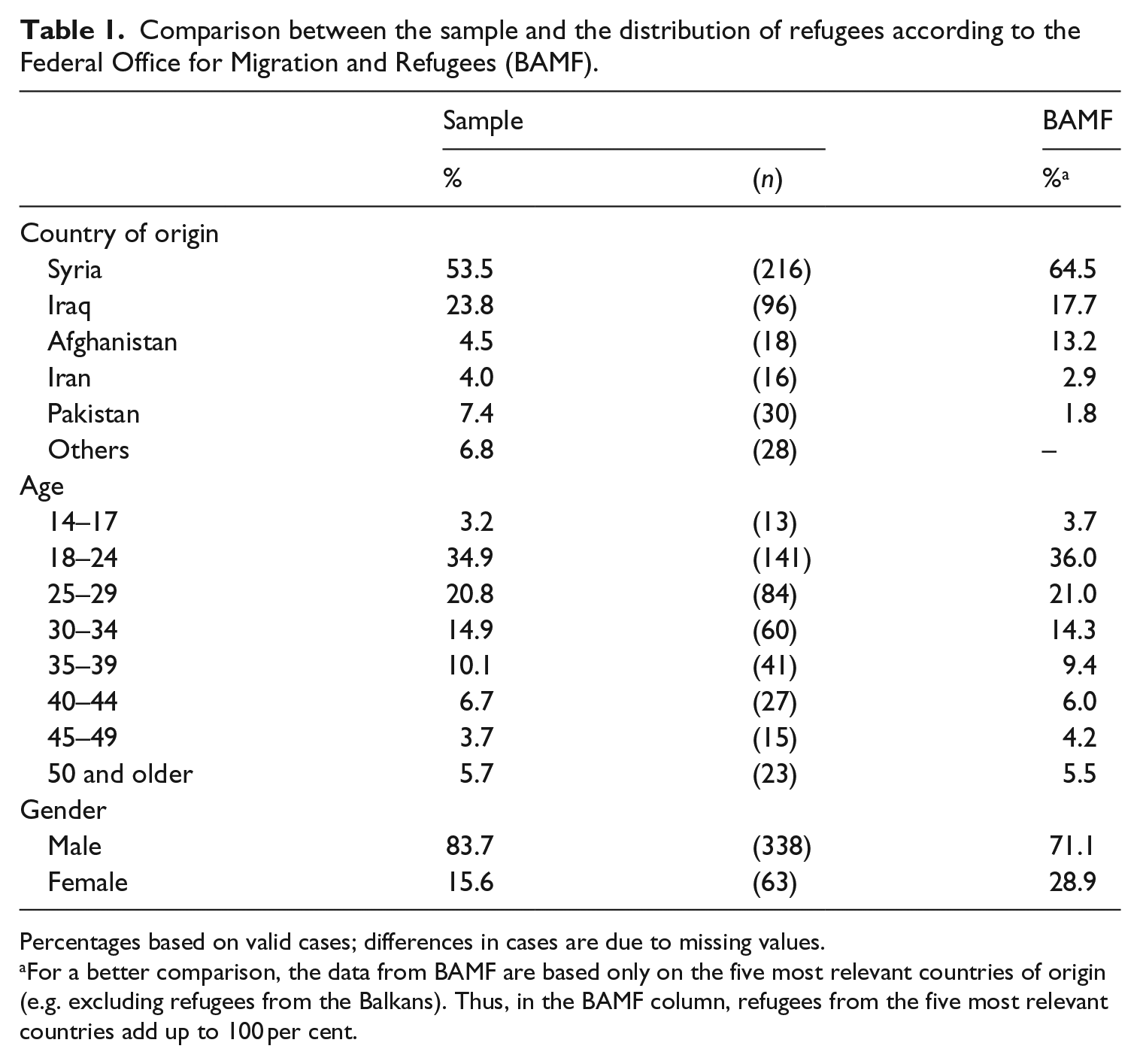
The sampling procedure was designed to produce a data set as close as possible to the structure of the population, which we defined as the persons arriving in Germany with the great refugee movements along the so called ‘Balkan Route’ in late 2015. Germany distributed the arriving refugees to its 16 states (which are responsible for their housing and social care) according to the states’ size and capacity, regardless of any personal characteristics of the incoming people. Due to this random distribution, refugees in the state of Berlin can be regarded as a subpopulation that represents the whole population. We approached four companies and organizations that run refugee shelters and selected 12 shelters that were different in size and hosted different kinds of refugees (families, single men, etc.). Random sampling of respondents was not possible because we could not get access to lists of inhabitants (for reasons of data protection) and other methods of random approach (e.g. during dinner time) appeared to be impracticable in most shelters, which is why we chose a quota sampling procedure to select respondents. Quota criteria were sex, age and country of origin, which were taken from the data of first-time asylum seeker applications for January to February 2016 published by the Federal Office for Migration and Refugees (Bundesamt für Migration und Flüchtlinge (BAMF), 2016; Table 1). 1 The interviews were conducted in May 2016 by 14 trained interviewers who were native speakers of Arabic, Farsi and Urdu. The willingness to participate among the residents of the emergency shelters was very high. Larger biases through self-selection from presumably disproportionately willing participants are therefore not to be expected in the data.
Comparison between the sample and the distribution of refugees according to the Federal Office for Migration and Refugees (BAMF).
Percentages based on valid cases; differences in cases are due to missing values.
For a better comparison, the data from BAMF are based only on the five most relevant countries of origin (e.g. excluding refugees from the Balkans). Thus, in the BAMF column, refugees from the five most relevant countries add up to 100 per cent.
The questionnaire consisted of 145 questions, although, due to the differentiated filtering, the actual number of questions posed was much smaller, depending on the individual response behaviour. The questionnaire covered basic demographics, media use, individual living situations in the country of origin and during forced migration, and knowledge and expectations about Germany (questionnaire accessible on https://www.polsoz.fu-berlin.de/en/kommwiss/arbeitsstellen/mediennutzung/forschung/Flucht-2_0/Fragebogen-Flucht-2_0.pdf). The questions predominantly involved standardized question types (for instance, questions with binary answers, multiple answers or Likert-type scales). In addition, some open questions were asked. The questionnaire was developed in English and subsequently translated into Arabic, Farsi and Urdu.
A total of 404 completed interviews were conducted, with an average duration of about 45 minutes. Only individuals older than 14 years were interviewed. The fieldwork began on 20 April 2016 and ended on 26 May 2016.
Slightly more than half of the sample comprised Syrians (53.5%) and about a quarter came from Iraq (23.8%). A further 15.9 per cent were from the Central Asian states of Afghanistan, Iran and Pakistan (Table 1). This distribution is based on the participants’ self-disclosure.
The sample mostly matches the data from the BAMF, with some underrepresentation of Afghan refugees (which may be partly due to the very difficult language situation with many different local languages and dialects not covered by the interviewers) and women (which can be explained by the higher willingness of men to participate in the survey).
Descriptive analysis
The first answer to RQ1 will be given by an analysis of the distribution of media use variables among the refugees. However, we acknowledge that although the participants of our study are all refugees in a foreign country, they cannot be regarded as a homogeneous group, and are likely to differ in terms of cultural aspects according to their country of origin. Therefore, the descriptive analysis in the following section is mostly carried out separately for each nationality. Because enough cases need to be available to be able to draw conclusions about the population under study, countries with few cases were combined into groups. Syrian and Iraqi respondents are present in great numbers in the sample, so these two groups are considered individually. In the third group, respondents from Afghanistan, Pakistan and Iran are combined, and together comprise the category ‘Central Asia’. The collective analysis of the respondents from these countries is meaningful to the extent that they come from countries which, though often characterized by problematic political relations and poor living conditions, are not experiencing a civil war, but are more prone to extremism and oppression; the respondents thus show similar hopes, expectations and motivations for fleeing. The number of cases for the descriptive analysis is 377, as 27 of the participants came from diverse countries which could not be merged into groups (e.g. Egypt, Somalia and Eritrea). In the subsequent analytical section, all 404 cases are included.
In terms of socio-demographic variables, the country groups differ only marginally (in all of the categories, the values fail to reach the significance level of p < .05 in chi-square tests). Only in particular features do several stronger differences emerge. For example, among the Syrian respondents, there were more women (19.7%) than in the other refugee groups (Iraq, 13.5%; Central Asia, 6.2%). This is hardly surprising considering the dramatic situation in Syria, in which people, regardless of sex (and age), see themselves as being forced to flee.
Consumption of media content before forced migration
Although the focus of the present investigation was strongly on the use of digital mobile media and the Internet, the refugees were also surveyed about their use of traditional media such as television or newspapers during the period before their flight to answer RQ1A. The decisive factor in whether to ask about media usage in the country of origin or in the interim country of residence was the moment of decision about Germany as a destination. Those who had decided while in their country of origin to flee to Germany were asked about their media use in their country of origin. Those who had made the decision only after they had left their country of origin, and initially spent 3 months or more in a country other than Germany, were interviewed about their media use in this interim country. During this period, media use presumably influenced the refugees’ decision to flee and the general image they formed of Germany (as tested in the last section of this article).
The questions about media use either in the country of origin or in the interim country showed that the most popular medium for the participants from all three regions was television. Radio played a far smaller role and print media the smallest role. The media affinity seems to be most strongly pronounced among the Iraqis, although country differences can in the best case only be carefully interpreted as a trend as the differences for the most part are not significant. We found, however, the use of foreign media content during the time period before forced migration among the Iraqis in the sample to be higher than among other nationalities. Print media evidently played a stronger role only in Central Asia.
Internet use: Devices, frequency and form of usage
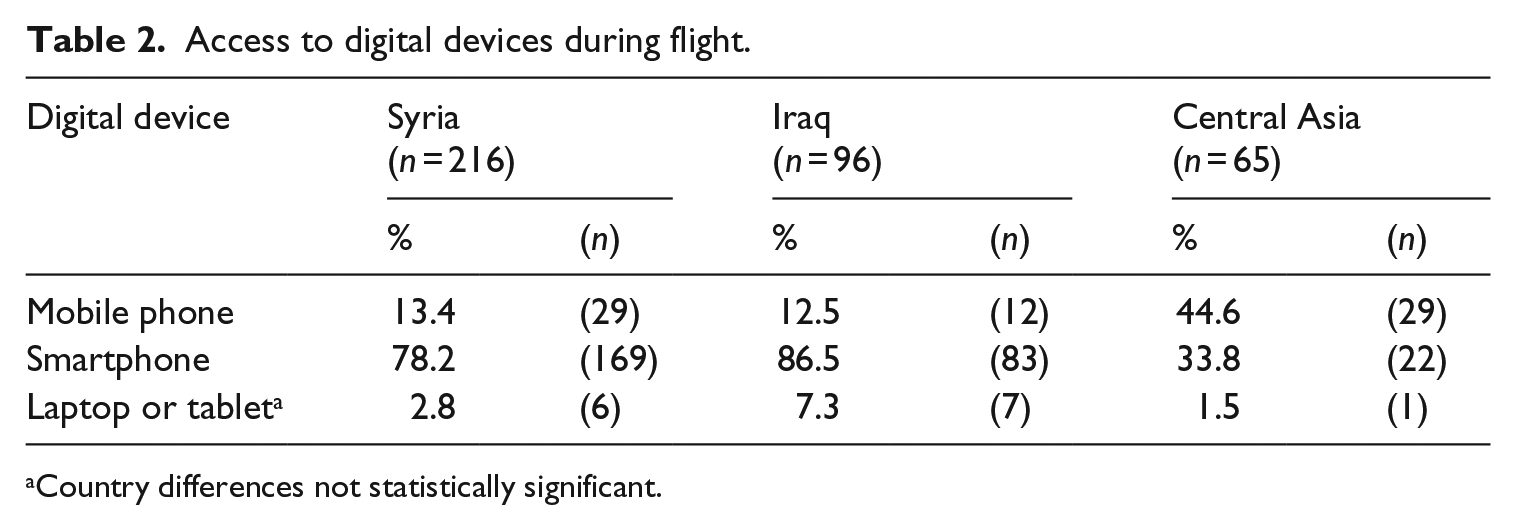
As it can be assumed that during the refugees’ flight, traditional media such as television and radio are less accessible and largely replaced by mobile digital media, the participants were asked extensively about their Internet use during their flight (RQ1B). First, the refugees’ access to Internet-enabled devices was recorded (Table 2). This access includes not only the possession of a device, but also the possibility of using such devices, for instance, through family members, because other studies had shown that refugee groups had formed around digitally savvy persons en route to Europe (Gillespie et al., 2018: 7).
Access to digital devices during flight.
Country differences not statistically significant.
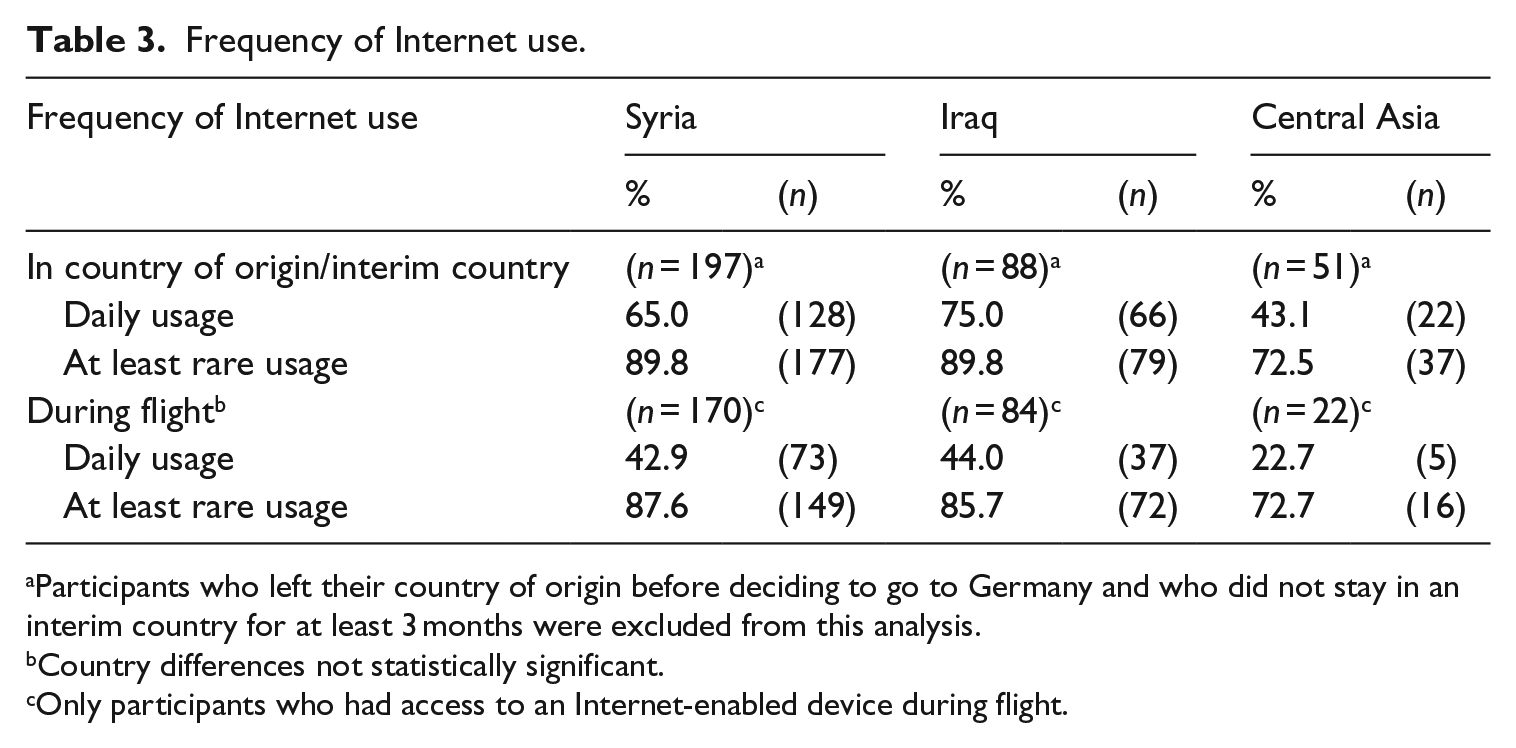
While the vast majority of Syrians and Iraqis had access to a smartphone during their flight, only a third of the respondents from Central Asia had such access; the Central Asians were found to use mostly simple mobile phones. This ‘digital divide’ between the regions is reflected in the results for the frequency of Internet use (Table 3).
Frequency of Internet use.
Participants who left their country of origin before deciding to go to Germany and who did not stay in an interim country for at least 3 months were excluded from this analysis.
Country differences not statistically significant.
Only participants who had access to an Internet-enabled device during flight.
Table 3 illustrates that not only access to Internet-enabled devices, but also the frequency of Internet use in the group of respondents from Central Asia (before and during their flight) are comparatively the least pronounced. Interestingly, even among the Central Asian refugees in the sample who had access to an Internet-enabled device during their flight, the affinity for using these devices seems to be somewhat lower. In contrast, with heavier usage, Syrians and Iraqis are very similar. Moreover, during their flight, noticeably all of the groups used the Internet less frequently, which can probably be explained by the difficulties they must have faced on their way to Europe. The opportunities to connect to Wi-Fi or to buy data were probably scarce and, therefore, the Internet was accessed only in cases considered meaningful according to a rational choice logic. However, when focussing on only rare use, the rate for all of the nationality groups stands at more than two-thirds. This indicates that under the circumstances of forced migration, the smartphone was a central means of communication. Moreover, due to the assumed general absence of conventional media, it is likely that the Internet was the most important access point to information beyond face-to-face communication.
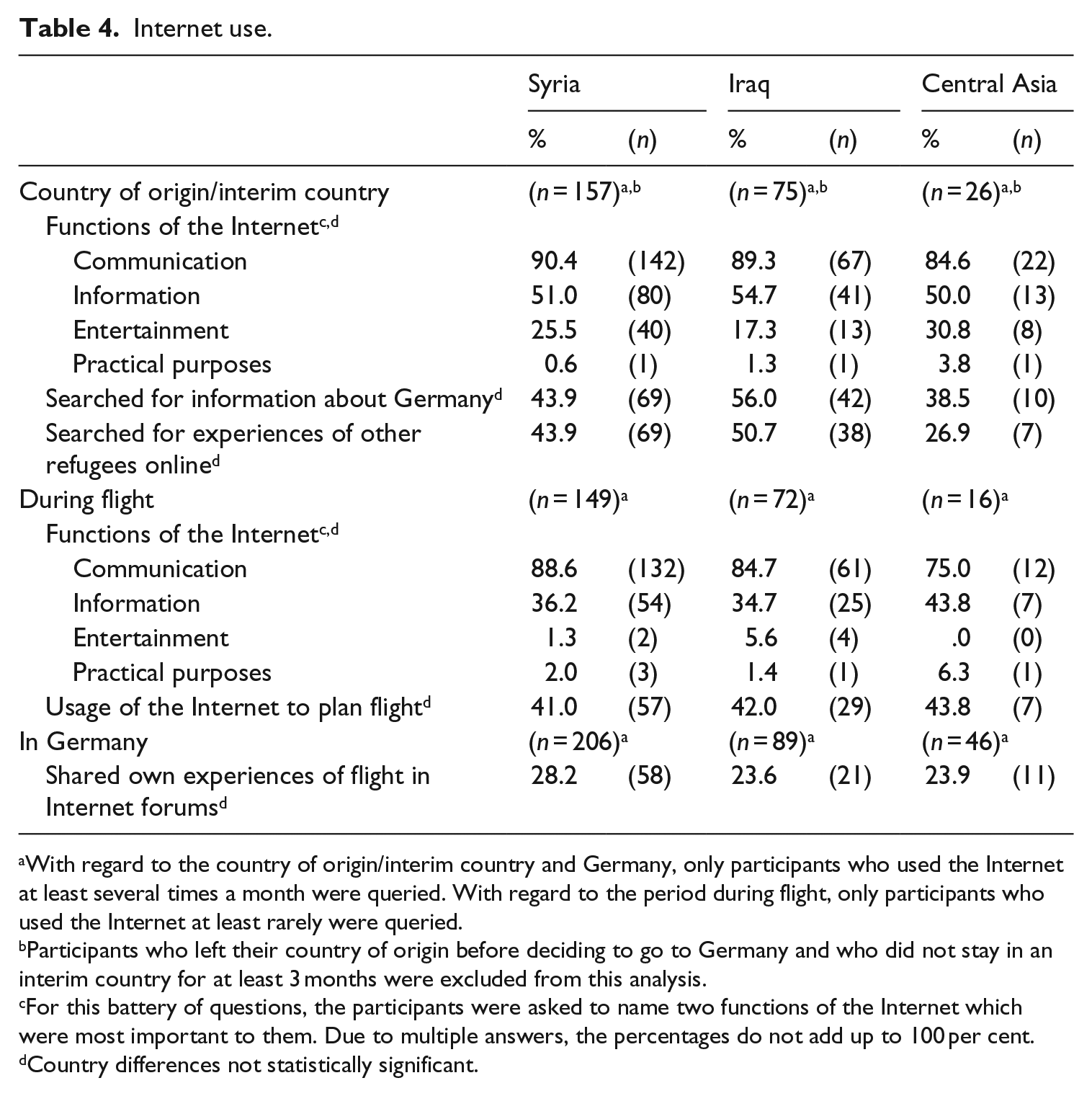
As Table 4 shows, at all of the stages of travel and no matter from what region the refugees were fleeing, communication with others was the most frequent form of usage of the Internet. The search for information on the Internet plays a significantly smaller role, especially during the flight phase. Information here is seemingly more sought and disseminated through communication with acquaintances than through general Internet sources such as websites. The majority of such interpersonal communication is conducted through the services of popular social media platforms and messenger apps like WhatsApp and Facebook, with Telegram being popular among refugees from Iran, as at the time, this platform was relatively unhindered by state censorship (Dehghan, 2016). The proportion of those who reported about their flight in public forums (and not just in private conversations) from Germany is quite large: comprising about a quarter, these individuals contribute a relevant share to transnational communication during forced migration and thereby surely also to influencing refugee movements. Searching online for others’ experiences before deciding to go to Germany might for many have been particularly influential for their perceptions and expectations of Germany.
Internet use.
With regard to the country of origin/interim country and Germany, only participants who used the Internet at least several times a month were queried. With regard to the period during flight, only participants who used the Internet at least rarely were queried.
Participants who left their country of origin before deciding to go to Germany and who did not stay in an interim country for at least 3 months were excluded from this analysis.
For this battery of questions, the participants were asked to name two functions of the Internet which were most important to them. Due to multiple answers, the percentages do not add up to 100 per cent.
Country differences not statistically significant.
The refugees’ communication content
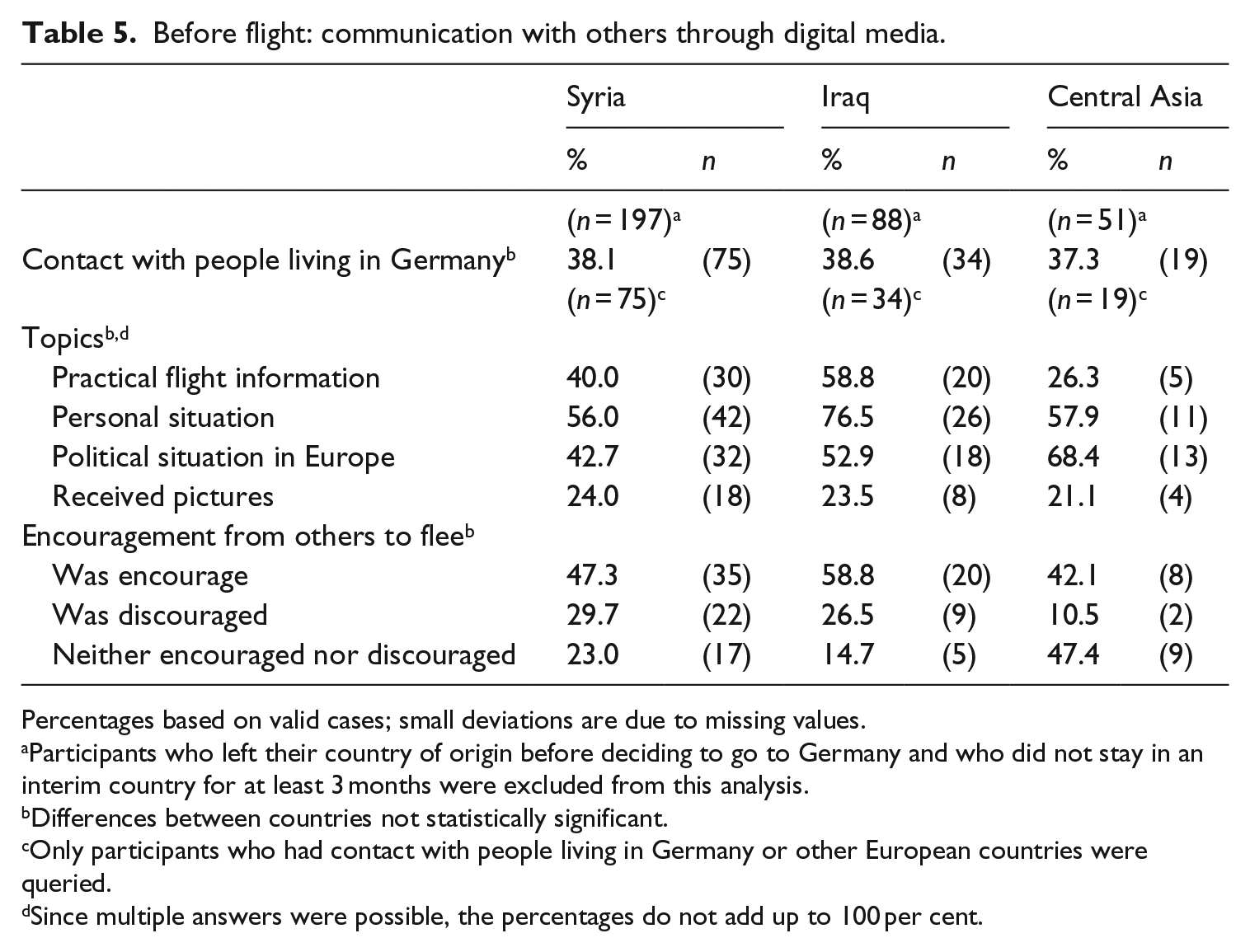
Data on the topics of communication can serve to answer RQ1C. Yet, the respondents not only searched for information of unknown others before they fled, but also intensively utilized digital media for interpersonal communication. Intriguingly, when asked for the information source most trusted during concrete crisis situations, respondents cited interpersonal communication most frequently. Against this background, it is of interest to learn who were the contact persons and which topics played a strong role in their communication (Table 5).
Before flight: communication with others through digital media.
Percentages based on valid cases; small deviations are due to missing values.
Participants who left their country of origin before deciding to go to Germany and who did not stay in an interim country for at least 3 months were excluded from this analysis.
Differences between countries not statistically significant.
Only participants who had contact with people living in Germany or other European countries were queried.
Since multiple answers were possible, the percentages do not add up to 100 per cent.
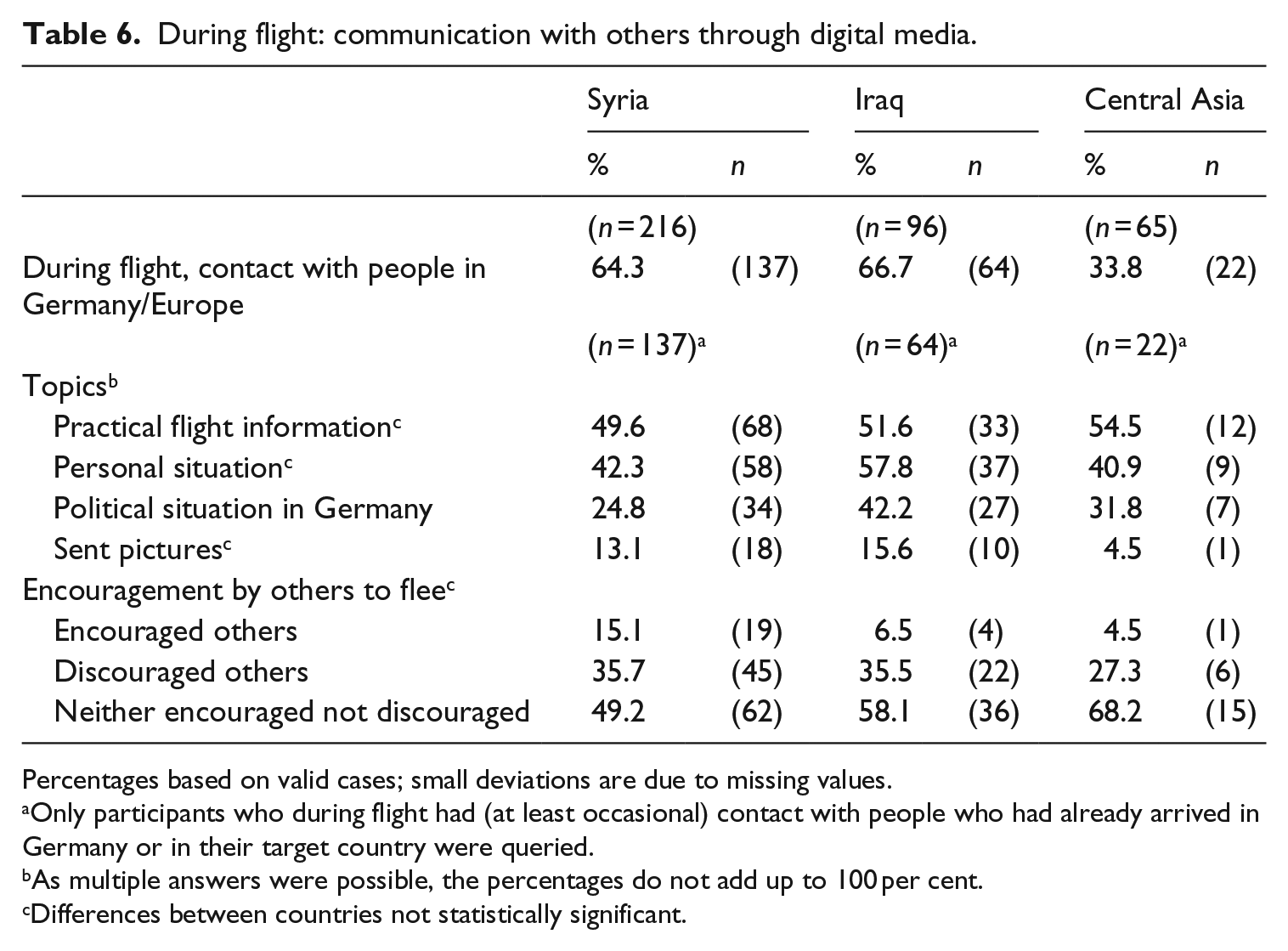
The results demonstrate that about one-third of all of the groups in the country of their flight already had contact with people in Germany. Intriguingly, before the respondents fled, on average, about 50 per cent of refugees were encouraged to flee by contacts who had already arrived in Germany or other European destinations. Thus, communication between refugees via digital media is likely to be an additional driver for refugee movements. The relevance of interpersonal communication is also confirmed in Table 6, which shows that during forced migration, communication between people en route and those who had already arrived intensified.
During flight: communication with others through digital media.
Percentages based on valid cases; small deviations are due to missing values.
Only participants who during flight had (at least occasional) contact with people who had already arrived in Germany or in their target country were queried.
As multiple answers were possible, the percentages do not add up to 100 per cent.
Differences between countries not statistically significant.
While for the Syrians and Iraqis, the number of contacts in Germany and other European countries expanded en route, for refugees from Central Asia, the contacts declined; Central Asians’ contacts are evidently not as concretely flight-relevant as those of Syrians and Iraqis. However, for all the respondents, practical information about fleeing got increasingly important in their communication with others who had arrived in Germany or Europe, while the personal and political situation faded into the background. This is not surprising: while the latter topics are meaningful during the period when the respondents decide whether and where to flee, once the decision is made and the journey embarked upon, information which helps one get ahead is the most valuable. During flight, most respondents neither encouraged nor discouraged others to flee, which is probably due to the uncertainty about how things would turn out.
Effects of media use on perceptions of Germany
As questions about the importance of communication media for flight and their potential impact on cognitive dimensions are at the centre of this investigation (RQ2), we shall first examine how specific media use and communication processes influence refugees’ notions about Germany before they flee or before they arrive in Germany. To measure this influence, two constructs were generated as dependent variables. The first dependent variable ‘knowledge’ is composed additively out of items regarding refugees’ knowledge of effectively applicable facts (such as their right to social benefits in Germany; H1). When interpreting the data, it must be taken into account that ‘knowledge’ is one of the most difficult concepts to operationalize because there are no independent indicators regarding what knowledge can objectively be expected. Which knowledge is relevant depends on both subjective (own life situation and life goals) and contextual factors (current events, etc.). Thus, questions about the legal and living situation for refugees in Germany were included in this study.
The second construct analysed below to give answers to H2 is a ‘positively-biased image of Germany’. It comprises the (positive) facts about Germany included in the index ‘knowledge’ and also positive but wrong items (e.g. ‘every refugee receives his own house in Germany’). The answers were summed up and transformed into a five-tier variable with the corresponding percentile values. Differently from the variable ‘knowledge’, the highest value of the variable ‘positively-biased image of Germany’ indicates an extremely positive but less realistic image of Germany. By developing these constructs, we kept in mind how Dekker et al. (2018) had characterized the fine line between knowledge and expectations: ‘In the context of migration, rumors are “hypotheses” about a future situation upon which migrants act’ (p. 3).
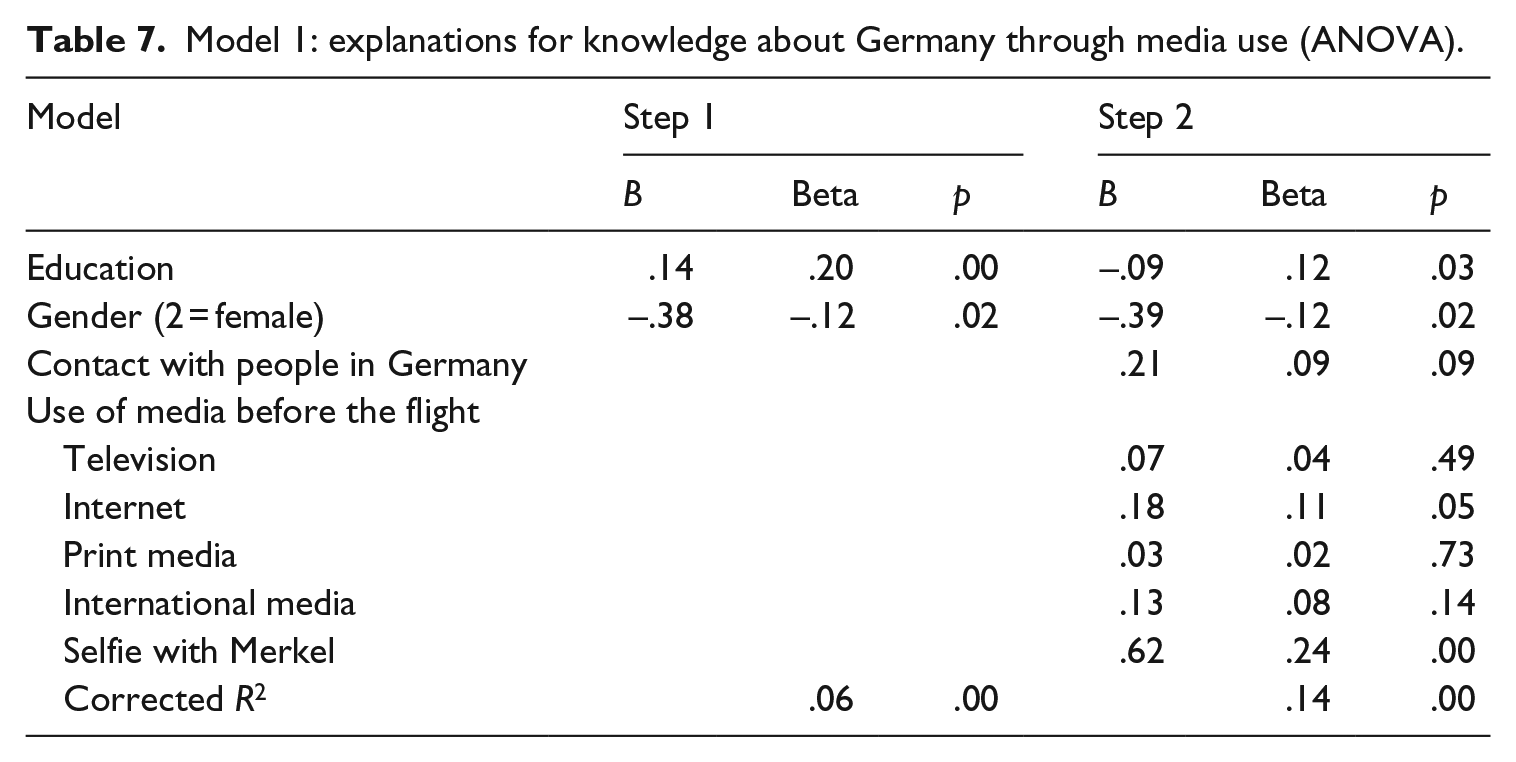
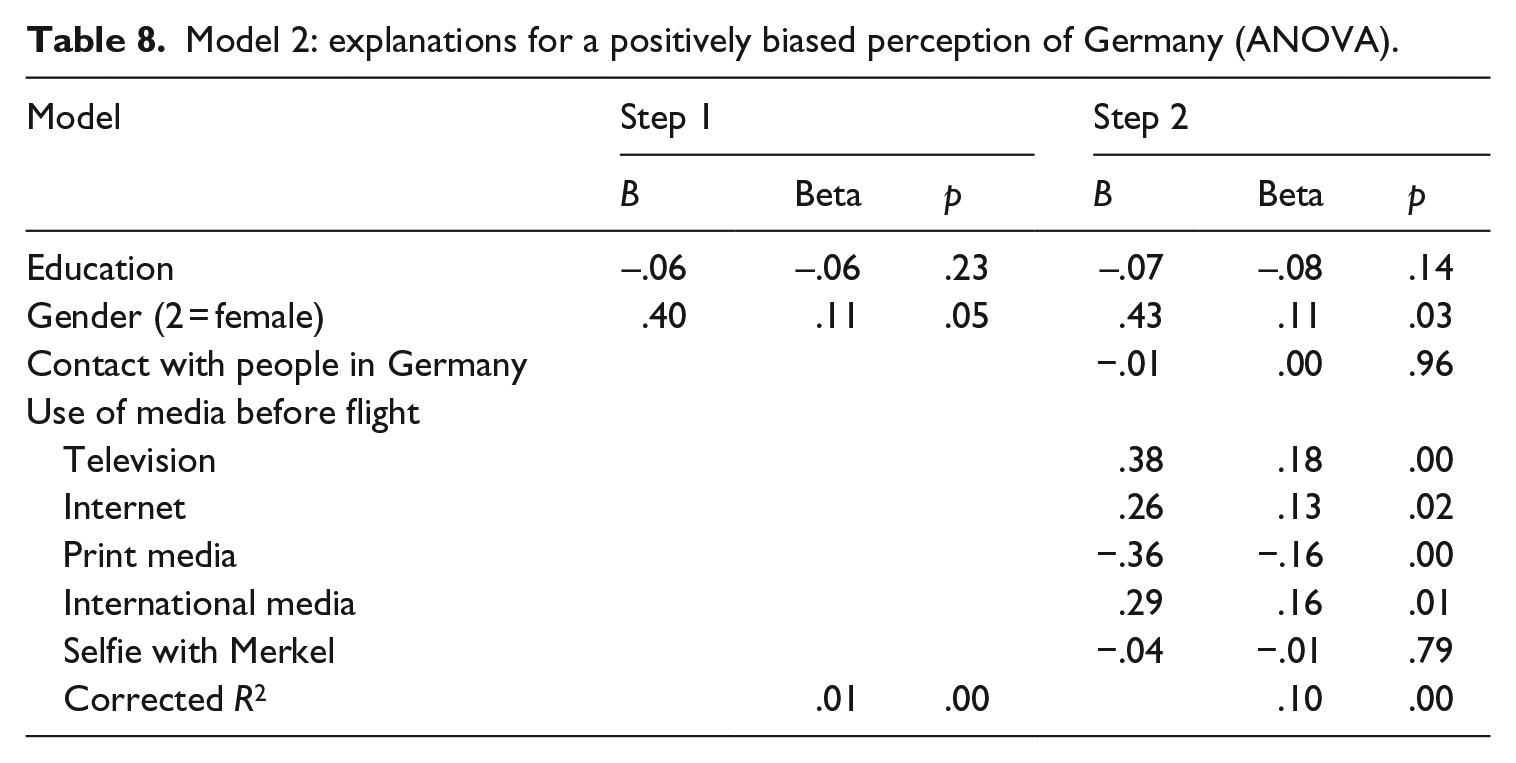
For each of the two constructs, an explanatory model based on a multidimensional analysis procedure – analysis of variance (ANOVA) – was developed (Table 7 and Table 8). They are based on two theoretical core assumptions: first, that knowledge is influenced by some general traits such as level of education, and second, that the higher the (informational) media use among respondents, the more knowledge they should have acquired. In the case of refugees, some particular media outlets like international media (CNN and Al-Jazeera) and media from the target country, Germany (Deutsche Welle), were included in the questionnaire. Special cases were the widely distributed ‘selfie’ pictures of German Chancellor Angela Merkel with refugees in late 2015. These photographs were partly seen as a factor further motivating refugees to come to Germany (and in this analysis to gain more information about the potential target country).
Model 1: explanations for knowledge about Germany through media use (ANOVA).
Model 2: explanations for a positively biased perception of Germany (ANOVA).
In general, as depicted in Figure 1, knowledge about Germany can partly be explained by fundamental socio-demographic factors such as the level of education: the higher the educational level, the greater the knowledge related to Germany. Use of media in the country of origin increases the explanatory power of the model considerably in the second step: Internet usage is linked to greater knowledge. The famous ‘selfies’ of Merkel apparently served as a motivator for more intensive exposure to content related to Germany. Beyond that, one can carefully assume that personal contact with people in Germany positively affects refugees’ knowledge – although this variable slightly misses a strict significance level of (p < .05).
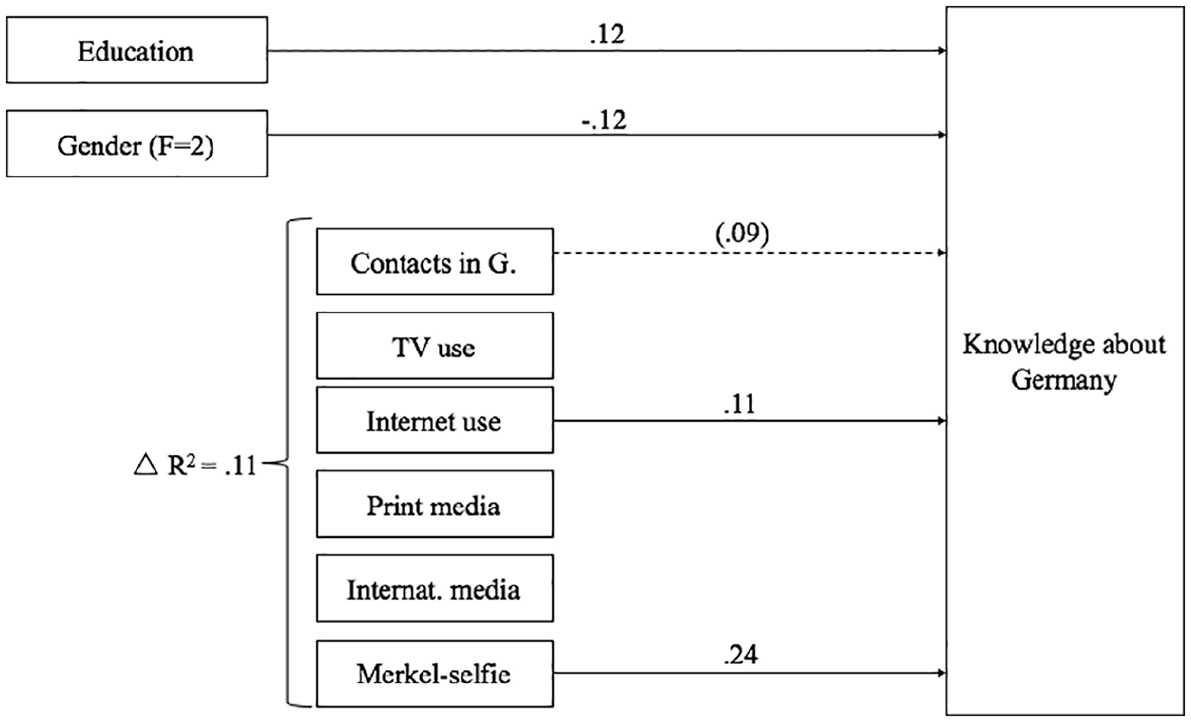
Explanations for knowledge about Germany.
Noticeable and somewhat counterintuitive is that the use of other media such as television (also international programmes) or print media is not linked to greater knowledge about Germany. A reason might be that the relevant share of information on Germany in media in the region is presumably small and possibly also somewhat biased. The print media moreover represents the least international content, which explains why it plays no special role here. Television tends to be more strongly geared towards satisfying entertainment rather than information needs. The low trust in mass media in general might also explain this finding.
Instructive in the following analysis is the comparison with the second dependent variable, the positively biased image of Germany (Figure 2; Table 8). There are no substantial differences regarding education; more strongly or weakly pronounced positive images exist equally in groups with higher and lower education.
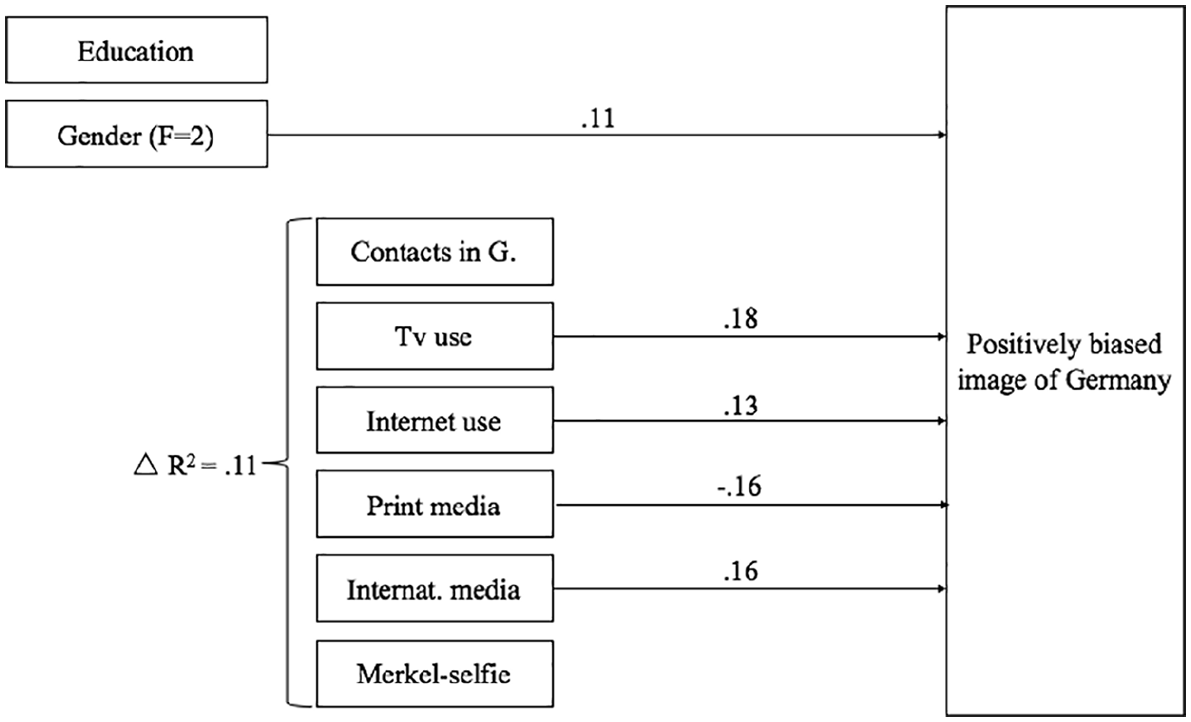
Explanations for positively biased perceptions of Germany.
Practically, all of the media used are related to Germany’s image, and a particularly great role here is played by television. While the consumption of televised content, due to previously expounded reasons, hardly increases factual knowledge about Germany, this consumption has the potential to spur a positively biased image of Germany. Yet, respondents with more intensive use of international media offerings (both on television and on the radio), such as the BBC, Al-Jazeera or Deutsche Welle, have a more positive picture of Germany – the same as heavy Internet users. On the other hand, the relation with print media use is negative: the more often the print media is used, the less positively skewed is Germany’s image. This can probably be explained by the fact that print media consists mostly of local media offerings which rarely report on Germany, and that the origin countries queried here mostly provide protocol news, which in foreign coverage focusses mostly on negatively connoted content such as disasters and conflicts.
The effects of selective perception, however, are not to be underestimated during the interpretation of media influence: even in minimally positive news environments, recipients can systematically pick out positive aspects according to their own expectations. The connection between media consumption and positive perception therefore cannot directly lead to the conclusion of a predominantly positive presentation of Germany in the consumed media. A supplemental content analysis could provide more insights in this regard.
Conclusion
Our research confirms that digital media play a crucial role for today’s refugees. Through our representative sample of refugees from the big 2015 to 2016 movements to Germany from the conflict zones in the Middle East, we gained insight into the basic communication patterns and communication content of those refugees (RQ1). Unsurprisingly, we found that refugees are not a homogeneous group, but that communication behaviour is partly dependent on regional backgrounds. Most notably, in comparison with Syrians and Iraqis, Central Asian refugees are less likely to have access to digital devices and to use the Internet both before and during their flight. This indicates a digital divide among the refugee population. Also, the preferences for messenger services and social media platform differ between the regional groups. However, our data also allow for more universal observations. For the majority of respondents, the main purpose of the Internet is interpersonal communication followed by search for information. As already implied in our theoretical considerations, during the flight, the Internet is particularly rarely used for entertainment, as this motive for media use gets irrelevant in the context of emergency situations. Moreover, interpersonal communication is the source which enjoys most trust among refugees, probably due to negative experiences with traditional media in their countries of origin. In preparation for flight, almost half of the refugees searched for information about Germany and experiences of other refugees online. These findings indicate that interpersonal communication or the production of and exposure to user-generated content are more important than traditional media in the context of flight. On the bright side, this enables refugees to collaborate with and benefit from each other’s experiences, but on the dark side, it opens the door for misinformation and rumours.
This leads us to RQ2 which investigated the media’s role in knowledge acquisition and image formation. The findings show that Internet use is associated with higher factual knowledge about Germany, thus confirming H1, whereas the use of traditional media is not. However, while Internet use is also related to a more positively biased perception of Germany (confirming H2), we found stronger correlations between the perception of Germany and more traditional types of media use. Thus, even though it seems correct to assume that Internet use could have led to a more positively biased image of Germany, the respective effect of traditional media consumption is comparatively stronger.
Just as every other study, this one too has several limitations. First, as the theoretical ground in the field of migrant and refugee media use is rather weak, our options for developing strong hypotheses were limited. Therefore, we partly focussed on descriptive findings. Second, we can certainly not provide any evidence for causality due to cross-sectional data. Third, bigger samples would be necessary to increase the statistical power as well as to analyse refugees from each country of origin individually instead of merging nationalities into groups. However, in spite of these limitations, this study provides findings that can be generalized for the group of refugees coming to Germany via the ‘Balkan route’ in 2015. While this study provides some first insights into the dynamics of refugee movements in the digital age, we suggest communication scholars intensively engage in (forced) migration as one of the most important issues of our time with qualitative and quantitative methodology. We strongly believe that our discipline can contribute to a deeper understanding of the influence of communication technology on the dynamics of refugee movements in the years to come.
Footnotes
Funding
The author(s) disclosed receipt of the following financial support for the research, authorship, and/or publication of this article: Data collection and analysis through a research grant from the German Ministry for Foreign Affairs (German: Auswärtiges Amt, AA).