




Abstract
Shared leadership refers to a post-heroic conceptualization of leadership dispersed among employees. Studies on shared leadership in teams show its emergence depends highly on team and formal team leader characteristics, but employees’ own voice is remarkably absent: we know little about how employees individually consider how they would want to execute shared leadership. Taking a bottom-up perspective, this study presents a large-scale conjoint experiment in which 6742 healthcare employees were asked to evaluate specific leadership behaviours. The results show a notable share of employees are willing to execute shared leadership, but willingness varies dependent on a number of factors. Employees are more willing to share leadership when it is focused on building relationships or bringing about change, when it takes only few hours and when it benefits others. Besides, willingness to execute shared leadership is higher among young or male employees, and in the context of the COVID-19 crisis. This study contributes to understanding how leadership behaviour, personal characteristics and context affect the emergence of shared leadership. The study concludes by critically exploring some of the possible systemic causes for differences in willingness to execute shared leadership, connecting these to broader issues in healthcare employment.
Keywords
Introduction
In the past decades, scholars of organizational theory have increasingly questioned the traditional, heroic and hegemonic view of leadership and suggested leadership could be shared by multiple employees (Collinson et al., 2018; Pearce, 2004; Pearce and Conger, 2002; Pearce et al., 2018; Tourish, 2015). Shared leadership can be executed on varying levels in the organization, from inter-organizational levels to inter-individual levels (Ulhøi and Müller, 2014). When shared leadership is executed within teams specifically, ‘leadership roles and influence are dispersed among team members’ (Zhu et al., 2018: p. 836). An increasingly vast literature indicates antecedents of shared leadership are found majorly in the characteristics of the team and formal team leader, and shared leadership is in turn associated with increases in positive team attitudes and team performance (Döös and Wilhelmson, 2021; Wu et al., 2020; Zhu et al., 2018).
Although our understanding of antecedents of shared leadership has increased, we still know little about how employees consider exercising shared leadership on an individual level (Gockel and Werth, 2010), specifically in the public sector (Crosby and Bryson, 2018; Tummers and Knies, 2016). Put differently, employees’ own voice and considerations have been somewhat overlooked. This is unfortunate as illustrated by the following thought experiment. Imagine an opportunity for shared leadership arises. What makes employees have the ‘willingness and confidence to take on’ this leadership role (Pearce and Manz, 2005: p. 137)? In the general leadership literature, scholars have developed leadership behaviour taxonomies to study leadership as a collection of specialized behaviours (Yukl, 2002: p.74). Within the shared leadership literature, this approach has rarely been used. Therefore, in this article, I apply insights on leadership behaviour taxonomy to shared leadership, by testing how employees individually evaluate varying specific leadership behaviours (Jønsson et al., 2016; Yukl, 2002). Hence, the present study questions: which shared leadership behaviours do employees want to exercise?
In a conjoint experiment on Dutch healthcare employees, I conceptualized shared leadership into multiple leadership behaviours that employees are supposed to exercise, also including the effort that these behaviours require, and the beneficiary or beneficiaries that these behaviours are likely to have. Besides, I assessed whether individual willingness varies dependent on employees’ personal characteristics, specifically gender and age. Finally, during the design of the study, the COVID-19 crisis hit and severely affected healthcare systems (Zhou et al., 2020). Due to its unprecedented consequences, I also added this as a relevant contextual variable to the conjoint design.
This study contributes to the shared leadership literature by finding how shared leadership may or may not emerge on an individual level dependent on (a) the specific shared leadership behaviour, (b) the person that is supposed to exercise shared leadership, and (c) the context they find themselves in. Hence, this study looked beyond the higher-order concepts that shared leadership usually focuses on, like the general level of shared leadership (Carson et al., 2007; Avolio et al., 2003), and beyond the more often studied shared leadership antecedents on a team level (Döös and Wilhelmson, 2021; Wu et al., 2020; Zhu et al., 2018). In doing so, this study opens up the conceptual black box of shared leadership and studies it like leadership itself is often studied: as a collection of specialized behaviours, executed by an individual (Yukl, 2002). Importantly, this study includes, and aims to further foster, a critical discussion of the systemic issues that underlie individual differences in willingness, like socio-cultural norms in organizations and differences in the romanticization of leadership between men and women. Besides, this approach allows the consideration of the promise as well as the potential pitfalls that shared leadership presents. Finally, this study responds to pleas to study shared forms of leadership in public settings (Crosby and Bryson, 2018; Tummers and Knies, 2016). There is also a practical contribution: if (HR) managers want to explain current levels of shared leadership in organizations or if they want to successfully implement shared leadership, this study shows how they can take into account what specific leadership behaviours employees are more willing to execute.
To address the research question, I conducted a conjoint experiment (Hainmueller et al., 2014, 2015). Conjoint experiments were developed in mathematical psychology (Luce and Tukey 1964), have been often used in marketing and consumer research to assess consumer preferences (Green and Srinivasan, 1990) and, more recently, in political science to study voter preferences (Hainmueller et al., 2014). Very few studies on leadership have applied conjoint methods (exceptions include Tavares et al., 2018). Within shared leadership studies specifically, most empirical studies rely on surveys and case studies (Ulhøi and Müller, 2014). Conjoint analysis offers a valuable addition to the literature’s methodological toolbox as, among its many benefits, it allows the assessment of individual preferences regarding shared leadership on a granular level (Wu et al., 2020). Besides, a conjoint experiment mitigates social desirability bias and multicollinearity (Horiuchi et al., 2021; Karren and Barringer, 2002) and is shown to more closely represent real-world behaviour (Hainmueller et al., 2015).
Theory
Shared leadership
Traditionally, leadership is defined as the process of social influence towards certain goals exercised by people with formal leadership roles in the organization towards their followers (Antonakis and Day, 2017). Yet, already a century ago, Mary Parker Follet argued leadership should originate from the individual with the best skills in a particular situation (Fitzsimons et al., 2011; Follet, 1924). This claim marks an explicit questioning of the traditional, hegemonic view of leadership as a heroic, individual quest (Collinson et al., 2018; Tourish, 2015). Notions like these preceded the conceptualization of shared leadership, which centres on one question: could leadership be something that many members of a team share (Pearce, 2004; Pearce and Conger, 2002)? The study of shared leadership has since then spread over social science disciplines and has been explored in numerous public and private contexts (e.g., Crosby and Bryson, 2018; Pearce et al., 2018; Ulhøi and Müller, 2014). Not surprisingly then, many definitions of shared leadership exist (Ulhøi and Müller, 2014; Wu et al., 2020; Zhu et al., 2018). Carson et al. (2007: p. 1221) point out shared leadership ‘can take place in a team with or without a designated leader, can be either formal or informal, and addresses the distribution and sharing of leadership among all team members, in contrast to only one or two leaders’. Zhu et al. (2018) argue that most definitions share three similarities, regarding the source of leadership, the unit of analysis and the distribution. Shared leadership, in their view, can be understood as (a) lateral influence amongst peers, (b) that can emerge within a team, and (c) is characterized by a dispersion of roles and influence among team members (p. 836).
There are multiple concepts that are related to shared leadership. Most closely related are concepts like distributed leadership (Barry, 1991). Like shared leadership, distributed leadership has been studied in a variety of academic disciplines and contexts (Tian et al., 2016). It has been used to study, for example, self-managed teams within the disciplines of organizational behaviour and HRM (Barry, 1991), network structures of leadership perceptions in the private sector (Mehra et al., 2006), and leadership practices in schools within educational research (Fitzsimons et al., 2011). More recently, Jønsson et al. (2016) developed a scale to measure distributed leadership within healthcare contexts. Besides distributed leadership, collective leadership is often used interchangeably with shared leadership (e.g., Avolio et al., 2009). A related but slightly different topic concerns collaborative leadership: sharing leadership can happen at varying levels of collaboration (Sullivan et al., 2012). Subtle differences between the concepts remain open to debate (e.g., Currie and Lockett, 2011).
Antecedents of shared leadership
Ulhøi and Müller (2014) find relatively few studies address the antecedents of shared leadership. Nevertheless, Zhu et al. (2018), Wu et al. (2020) and Döös and Wilhelmson (2021) present integrative frameworks linking shared leadership to its antecedents and outcomes.
Most shared leadership antecedents that have been studied originate in either factors relating to characteristics of the team or the formal team leader (Döös and Wilhelmson, 2021; Wu et al., 2020; Zhu et al., 2018). For example, shared leadership is facilitated by an internal team environment that allows employees to share a purpose, express mutual social support, and have a voice (Carson et al., 2007: pp. 1222–1223). Also, team member characteristics, like integrity and trust are positively related to shared leadership (Drescher et al. 2014). Besides, transformational and empowering leadership of leaders (Hoch, 2013), and leader humility (Chiu et al., 2016) stimulate shared leadership.
Conceptualizing shared leadership
Although many antecedents have been studied, the literature is notably silent about the willingness of employees to execute shared leadership (Gockel and Werth, 2010). There is a viable reason for this gap in the literature related to its conceptualization. Shared leadership has been conceptualized mainly in one of two ways. Some studies approach shared leadership as a generic concept. For example, Carson et al. (2007: p. 1225) measure the amount of general leadership behaviour by asking ‘to what extent does your team rely on this individual for leadership?’. Paletta (2012) measures distributed leadership in schools by measuring the ratio of leaders to teachers. Molenveld et al. (2021) distinguish conveners, mediators and catalysts as different types of shared leaders. Other studies measure how a specific leadership style is shared by adapting an existing leadership scale. For example, Avolio et al., (2003) measure shared transformational and transactional leadership.
These two approaches are still relatively abstract and focus on leadership as a generic process. In contrast, Yukl (2002) presents a way of conceptualizing leadership that has been largely overlooked in the shared leadership literature. He argues leadership is a collection of specialized behaviours, such as networking, problem solving and encouraging innovation (Yukl, 2012: p. 74). A notable exception is Jønsson et al. (2016), whose distributed leadership scale is based on an earlier version of Yukl’s leadership behaviour taxonomy. One of the few mentions of this behaviour-focused shared leadership approach is voiced by Pearce et al. (2008: p. 626), who argue shared leadership theory is an ‘explicit attempt’ at ‘integrating the view of leadership as a role performed by an individual with the view of leadership as a social process’. Similarly, Ospina (2017: p. 280) argues ‘the primary source of leadership is not the person but the role that he or she takes up’.
If leadership is a collection of specialized behaviours, shared leadership is the allocation of one (or more) of these behaviours to an employee in a non-leadership position. Conceptualizing shared leadership as the sharing of a specific leadership behaviour has the advantage that it is possible to assess how the willingness of employees alters according to the type of shared leadership behaviour. Imagine that in a team there is a certain, hitherto formal, leadership behaviour that presents an opportunity for shared leadership. This means that employees have the choice to share this leadership behaviour and will consider whether they have ‘the willingness and confidence to take on part of the leadership role’ (Pearce and Manz, 2005: p. 137). It is likely that their consideration on whether to exercise shared leadership will include what exactly it is that they would have to share. In the literature on shared leadership there has been little attention to factors that affect employees’ willingness. Therefore, below I develop a framework to test the assumption that shared leadership behaviour matters for willingness to execute shared leadership (Gockel and Werth, 2010).
Three features of shared leadership.

Shared leadership behaviour
Leadership behaviour taxonomy (cf. Yukl 2012: pp. 68-74).
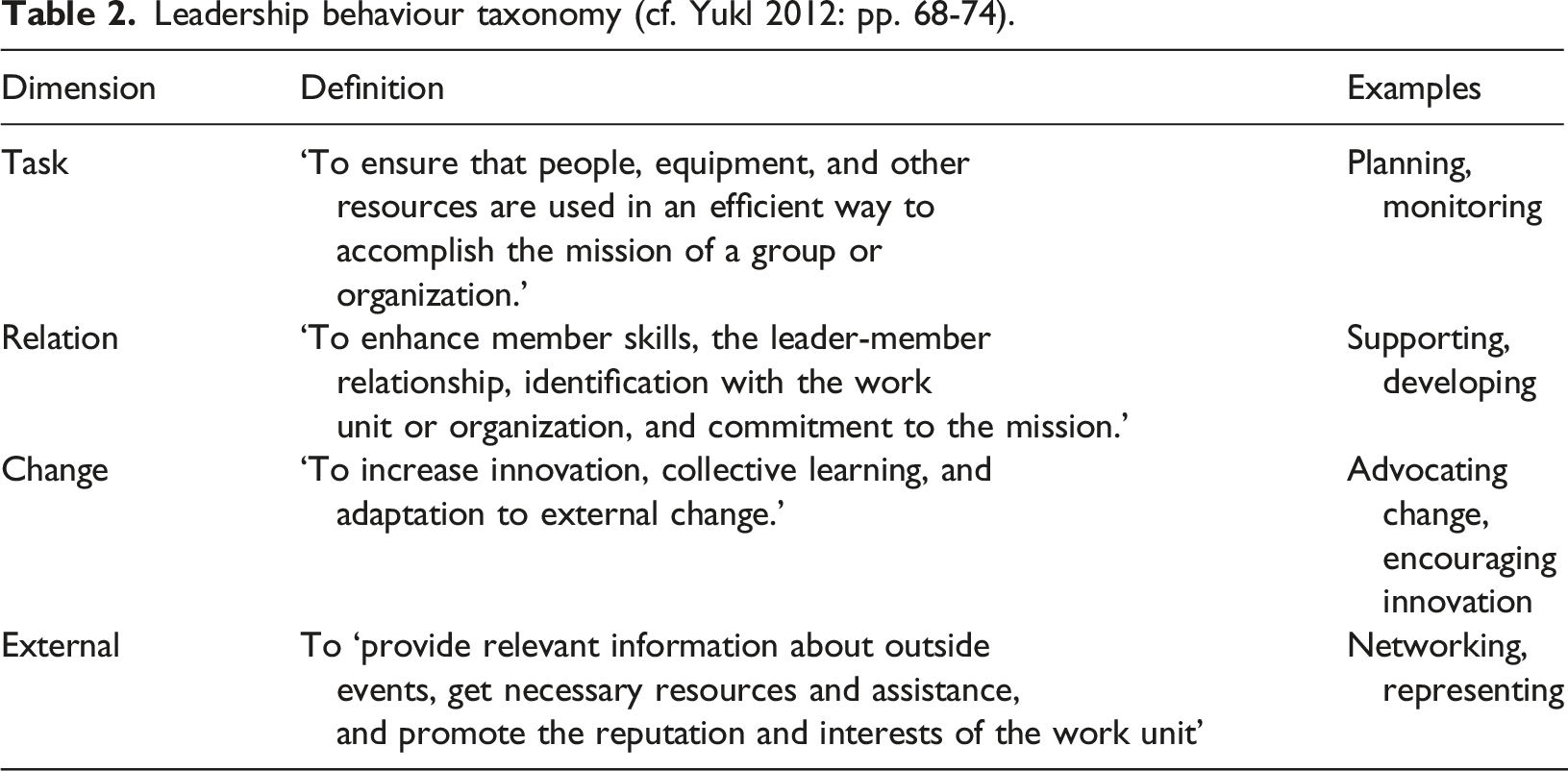
Besides, whereas behaviours focused on task or relation behaviour are meant to maintain the status quo, e.g., providing necessary resources and caring for team members, a change behaviour is meant to challenge existing situations by, e.g., encouraging innovation (Yukl, 2012). Pearce (2004) argues that two of the characteristics that especially call for shared leadership concern tasks that are high in complexity and tasks that require a lot of creativity (see also Fitzgerald et al., 2013). The need for shared leadership may also be increased when the organization faces turbulent times (Lund and Andersen, 2023), is struggling to achieve its goals (Günzel-Jensen et al., 2018). In contrast, for routine tasks, ‘the need for any type of leadership (…) is minimal’ (Pearce, 2004: p. 50). The emergence of shared leadership is closely linked to the observation that ‘today’s employees desire more from work than just a paycheck; they want to make a meaningful impact’ (Pearce, 2004: p. 47). As change behaviours are more complex, require more creativity and have more impact, employees are more drawn to change leadership behaviours.
Employees are less willing to exercise external leadership behaviour compared to other leadership behaviours.
Employees are more willing to exercise leadership behaviour aimed at change compared to other internal leadership behaviours.
Effort
Second, employees will consider the effort a shared leadership behaviour requires. Specifically, whilst employees may be willing to exercise a shared leadership behaviour, they are likely to be less attracted to extra workload. Employees have only limited work time to employ and increases in workload have shown to be related to, e.g., more burnout (Bakker and Demerouti, 2017) and absenteeism (Van Woerkom et al., 2016). Therefore, employees are likely to be drawn more to shared leadership behaviours with less additional workload. Another avenue through which executing a shared leadership behaviour does not imply higher workload, is if in exchange for it, the amount of regular work is decreased. Indeed, Pearce argues that in order for shared leadership to succeed, the preconditions include ‘securing necessary resources’ (2004, p. 51). If employees, in exchange for taking on a shared leadership behaviour, are provided with sufficient resources, they may be more likely to exercise such a behaviour.
The hypotheses express effort as the sum of intensity (i.e., how many hours a week), longevity (i.e., how many months), and subsidiarity (on top or in exchange for regular work):
Employees are more willing to exercise leadership behaviour that take fewer hours per week compared to more hours per week.
Employees are more willing to exercise leadership behaviour that has shorter longevity compared to longer longevity.
Employees are more willing to exercise leadership behaviour when exchanged for regular work compared to when exercised on top of regular work.
Beneficiary
Third, employees will consider the beneficiary or beneficiaries that the shared leadership behaviour is likely to have. Shared leadership is about making meaningful impact (Pearce, 2004). This impact is primarily directed towards others, as shared leadership is argued to improve group-level caring through increases in psychological empowerment climate and group solidarity (Houghton et al., 2015). In other words: ‘sharing is caring’ (Houghton et al., 2015: p. 313). Similarly, research shows endorsing collectivistic views will more likely lead to shared leadership (Hiller et al., 2006). Therefore, employees are more drawn towards behaviours that are likely to benefit others rather than themselves.
Finally, research shows ‘shared leadership has benefits for work teams beyond just improving team processes’ (Carson et al., 2007: p. 1229). Many studies show shared leadership affects the ‘ultimate’ goal: increases in team performance, like higher client or customer satisfaction (Zhu et al., 2018; Houghton et al., 2015). In most organizations, performance is still a huge factor in formal reward systems, and in the end, employees will engage more in behaviours that are expected from them (Pearce, 2004: p. 51; D’Innocenzo et al. 2016). Therefore, employees are more drawn to shared leadership behaviours that are likely to directly affect performance measures, meaning they will value benefits for clients (e.g., patients) over benefits for peers.
Employees are more willing to exercise leadership behaviour that benefits others compared to behaviour that benefits themselves.
Employees are more willing to exercise leadership behaviour that benefits clients compared to behaviour that benefits peers.
Methods
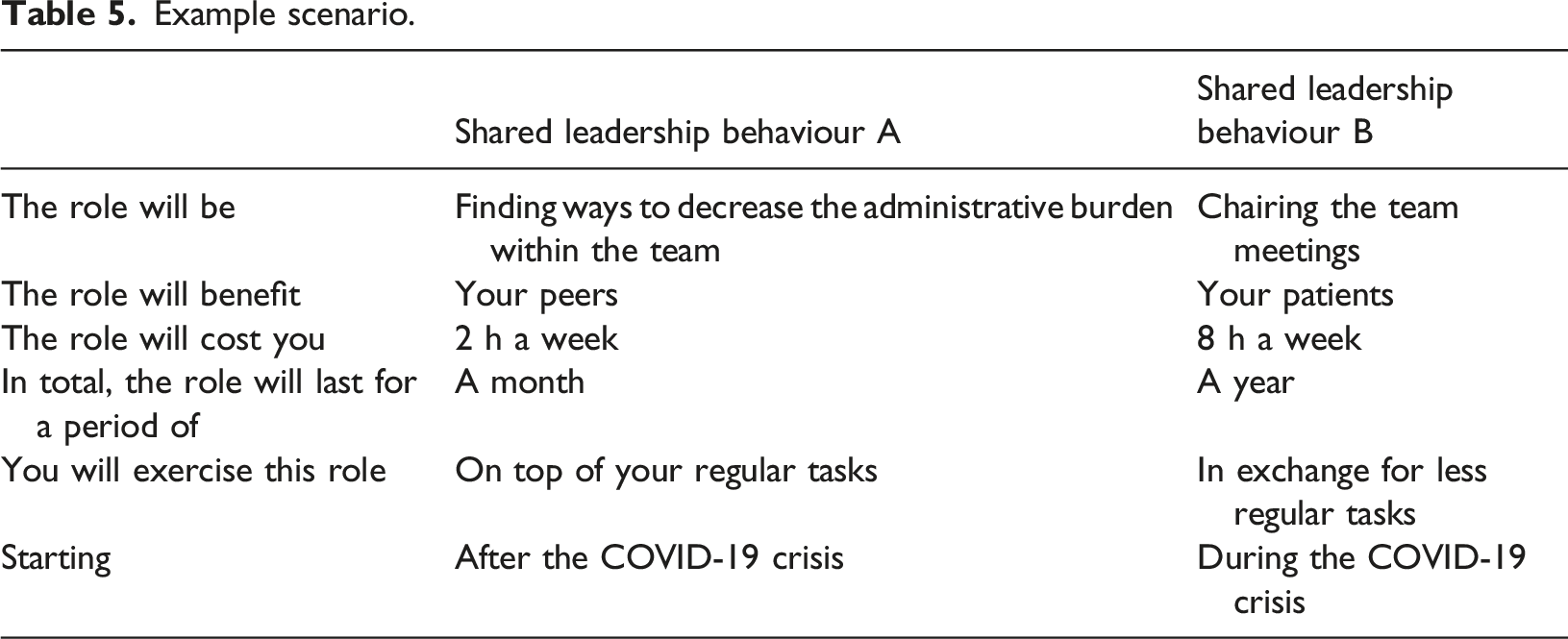
To assess the above, I executed a conjoint experiment. In this conjoint experiment, respondents were asked to choose between two shared leadership scenarios. I applied a conjoint experiment with prompted choice, meaning respondents were forced to choose. Conjoint experiments with prompted choice are shown to satisfactorily mimic real choice (Hainmueller et al., 2015): when respondents have to choose between alternatives, they will take more effort evaluating them. Both scenarios include a number of attributes (i.e., the conjoint term for variables, e.g., which specific leadership behaviour) and levels (i.e., all possible values for a variable, e.g., a task leadership behaviour). For each respondent, each of the two scenarios presents a random level for each attribute and across the two scenarios attributes are presented in a random order to counter survey order effects (Krosnick and Alwin, 1987). By analyzing respondents’ choices, a conjoint experiment allows the assessment of multiple hypotheses at the same time (Hainmueller et al., 2014, 2015).
The main benefit of using a conjoint experiment in the context of shared leadership is that it allows individual preferences of employees to be addressed. Most of the literature on shared leadership has used aggregating measures or social network analysis, hereby largely ignoring individual considerations (Wu et al., 2020). Besides, conjoint experiments offer multiple methodological benefits above more common survey methods in shared leadership research (Ulhøi and Müller, 2014). First, conjoint experiments mitigate social desirability bias because respondents’ attention is drawn away from the most sensitive attributes (Horiuchi et al., 2021). Therefore, estimates about employees’ preferences regarding shared leadership may be more accurate than if they were assessed with regular survey measures. Second, surveys can suffer from multicollinearity when independent variables correlate. In contrast, conjoint methods allow the researcher to experimentally manipulate variables to truly assess their independent effects (Karren and Barringer, 2002). Third, conjoint experiments more accurately represent real-world behaviour because respondents, like in real life, make multidimensional choices (Hainmueller et al., 2015; Karren and Barringer, 2002).
I set up the conjoint experiment for Qualtrics using the Conjoint Survey Design Tool (Strezhnev et al., 2019). This tool, together with a webserver, allowed the loading of the conjoint experiment as a web element into the survey.
Survey and sample
This experiment was included in a large annual survey. Data collection was approved by the Faculty Ethical Review Committee of Utrecht University. Before analyzing the data, the research description, hypotheses and methods were preregistered at the Open Science Framework (Van Roekel, 2020). The survey was sent out via a Dutch healthcare employee collective in May-June 2020. At becoming a member of this collective, respondents agreed to be sent emails, including the one that invited them to participate in this survey. Before participating in the survey, respondents provided their informed consent. Following standard procedure, I presented respondents with information about the goal of the survey, the procedure of participation (including opting out after participation in the survey, this was possible until 4 weeks after the first survey invitation), data storage, processing and usage, and ways to get in touch with the researcher. After reading this information, respondents gave their active informed consent by clicking ‘Yes, I agree’ to being informed by the goal of the survey, being able to ask any questions, understanding the way the data is treated, and understanding the opt out procedure. For those that chose ‘No, I don’t agree’, the survey was terminated.
This study did not use deception: no intentional misleading was used and information relevant to the study was provided beforehand (see section ‘Experimental setup’). The only information that was withheld was that the survey questions were about leadership rather than generic additional tasks, but this is very unlikely to pose any potential risk to respondents. Therefore, no debriefing was provided directly after the survey experiment. However, at the end of the general survey, respondents were given instructions on how to receive the survey results and interpretation in their inbox.
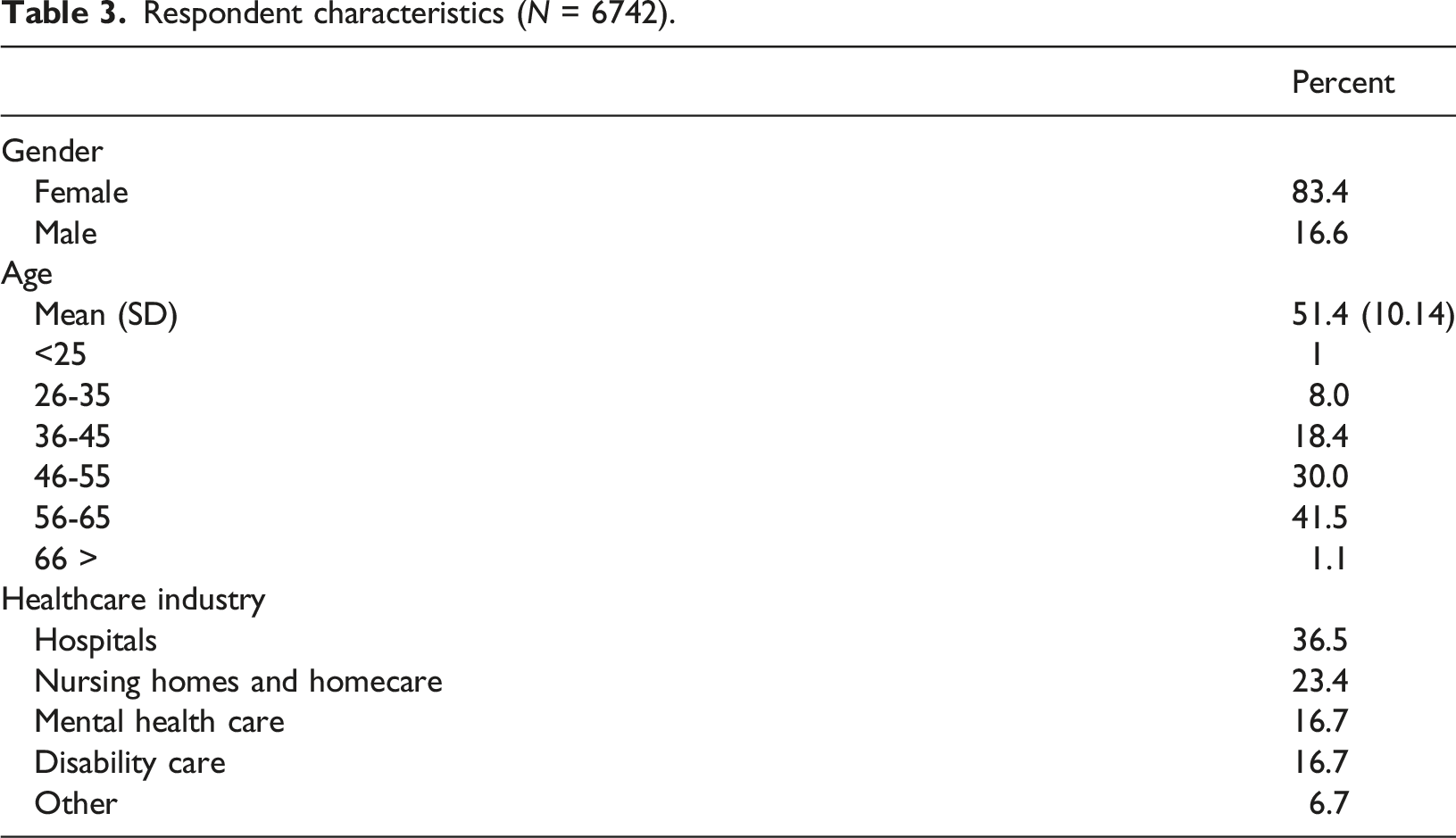
Respondent characteristics (N = 6742).
Attributes
Operationalization of shared leadership.
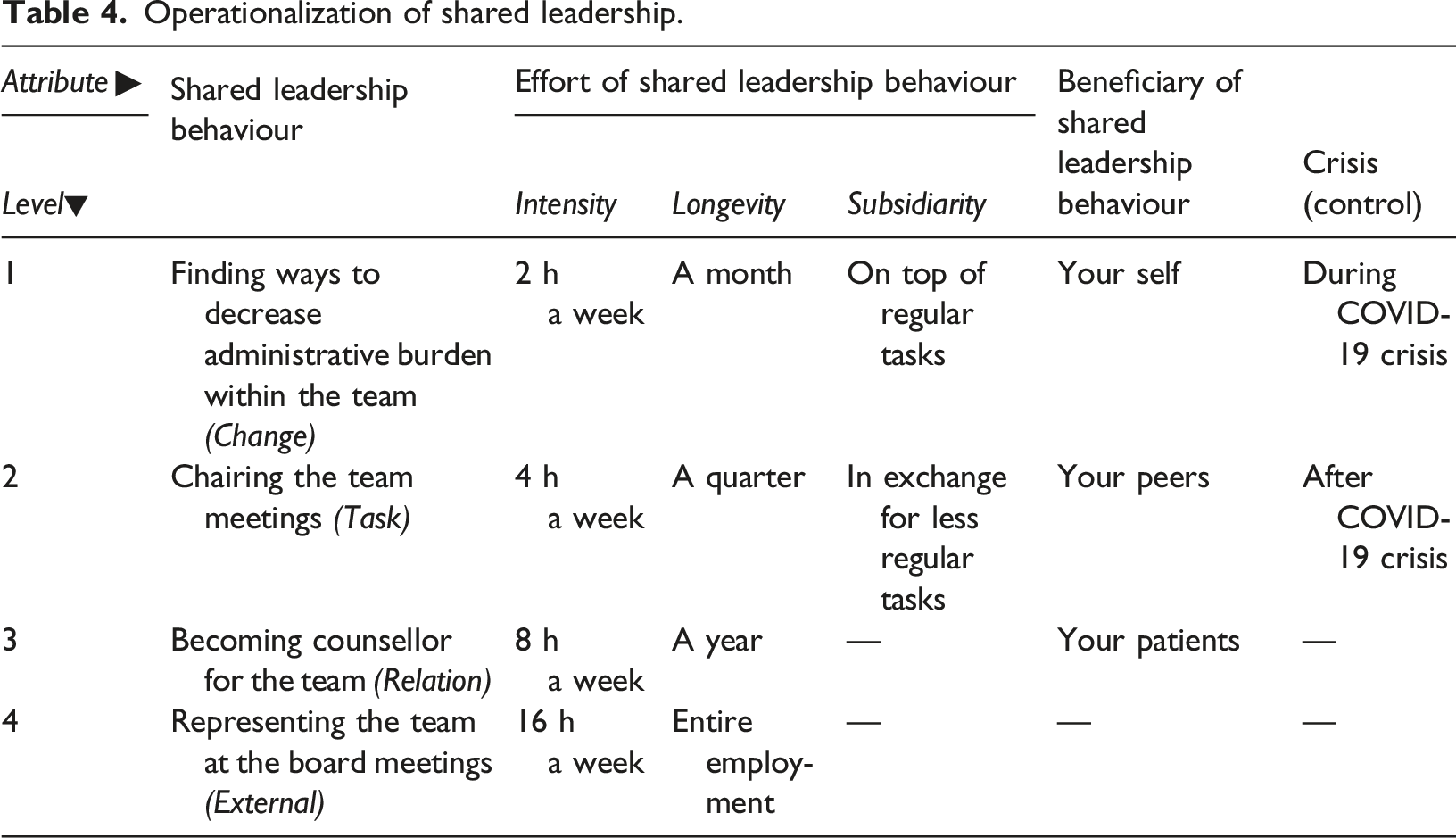
During the design of this study, the COVID-19 crisis severely affected healthcare systems around the world (Zhou et al., 2020). This crisis increased job demands among many healthcare workers, especially affecting the well-being of employees working with COVID-19 patients (Van Roekel et al., 2021). Consequentially, effects of COVID-19 on the willingness to take on challenges like shared leadership are likely as well (Kniffin et al., 2021). Because of this, and following an increasing call that leadership studies address the important societal issues (Tourish, 2017), I specifically address this contextual variable in this study’s design. In the conjoint experiment, I assessed whether it matters if the leadership behaviour is supposed to be exercised during the COVID-19 crisis, or afterwards.
Experimental setup
Example scenario.
Analysis
After data collection, I transformed and analyzed the data in R, using the Cjoint package (Hainmueller et al., 2014). My main analysis consisted of calculating the Average Marginal Component Effect for every attribute (AMCE). The AMCE is the ‘marginal effect of each randomized attribute, averaged over the joint distribution of all attributes’ (Jilke and Tummers, 2018: p. 234). Following Hainmueller et al. (2014), I calculated the AMCE using a linear regression model with employees’ behaviour choice as the outcome variable. Besides, to assess whether results differ over gender and age, I conducted identical analyses over subsets of the data (cf. Hainmueller et al., 2014). Again, note that the analyses present sample sizes that are double the number of respondents, as each respondent evaluated two vignettes at the same time, choosing one and rejecting another. Finally, I reported the results of the evaluation of each behaviour of the respondents, in total and for the subsets 1 .
Results
Main analysis
I present the results of the analysis in Figure 1 and Table 6. In the figure, for each conjoint attribute level, regression coefficients are represented with the dot, extended with 95% confidence intervals. Hence, when confidence intervals do not cross the zero line, it shows that the specific coefficient is statistically significant compared to the baseline of the attribute (at 95% confidence level). This means that the specific conjoint attribute level, which is a leadership behaviour feature, is associated with a significantly higher or lower probability of willingness to exercise leadership behaviour compared to the attribute level set as baseline. Results of main analysis: Average Marginal Component Effect of all attributes on change in willingness. (95% confidence intervals, n = 13,484). Results of main analysis. *** = p < .001.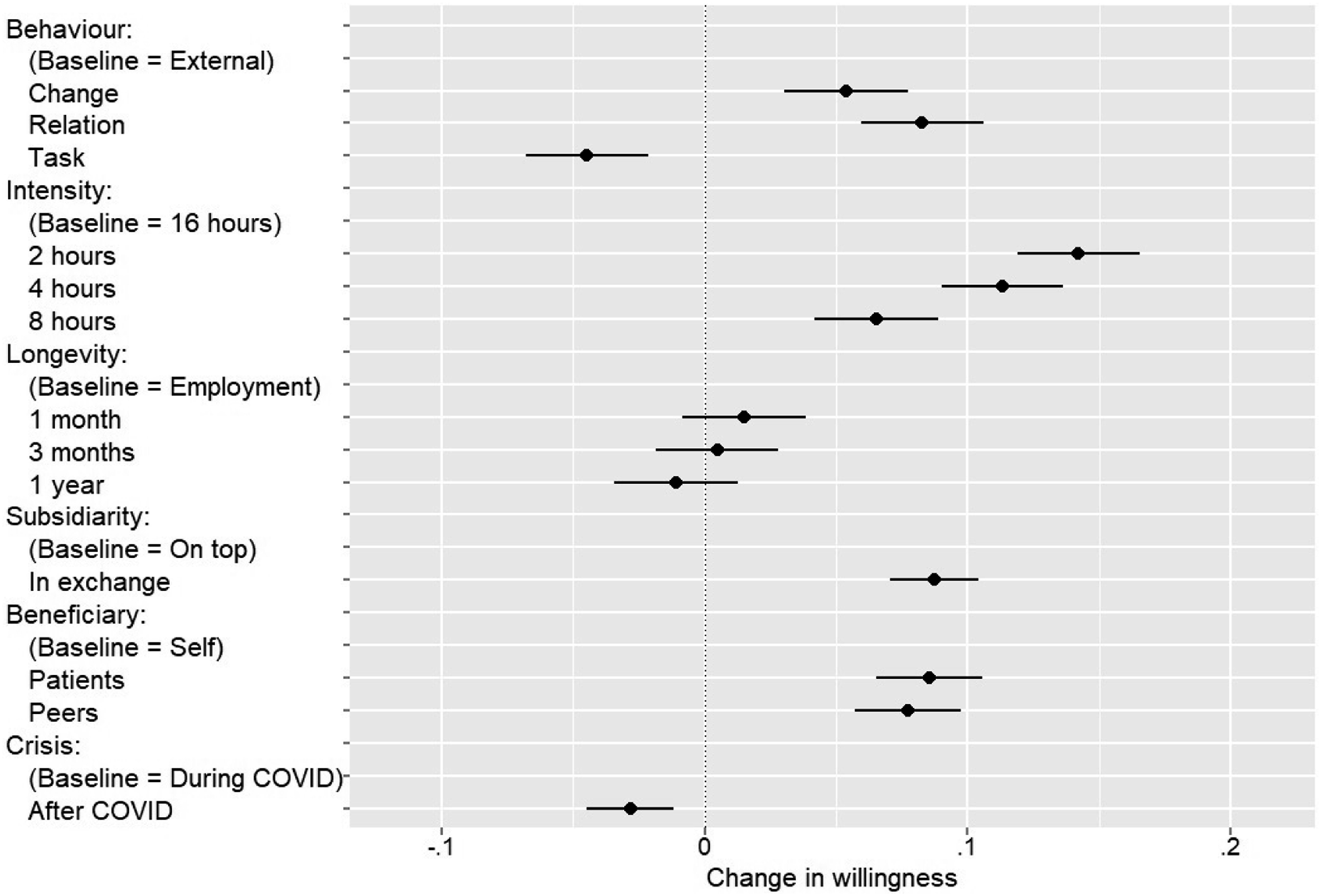
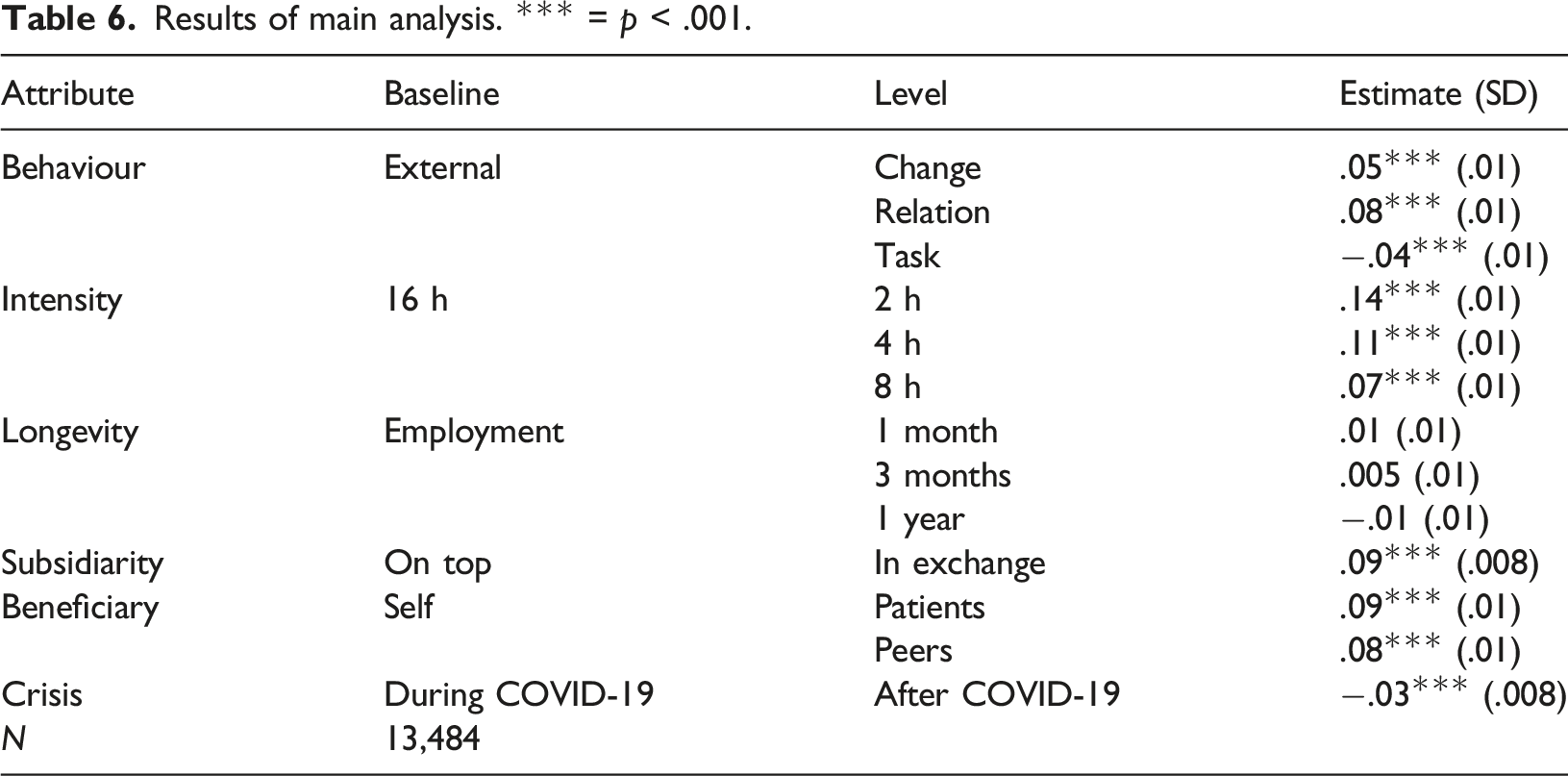
First, for behaviour, I find that, compared to external leadership behaviour (leading the external connections of the team), employees are 5% (p < .001) more likely to choose change behaviour (leading innovation, learning and change within the team), 8% (p < .001) more likely to choose relation behaviour (leading the improvement of intra-team relations), but 4% (p < .001) less likely to choose task behaviour (leading in accomplishing tasks efficiently within the team). This means that hypothesis 1a is partially accepted: employees are not more willing to execute external behaviour than change and relation behaviour but they are more willing to execute external behaviour than task behaviour. Also, hypothesis 1b is partially accepted: employees are more willing to execute change behaviour than task behaviour, but they are not more willing to execute change behaviour than relation behaviour.
Second, for effort, I find that, compared to behaviour that costs 16 h per week, employees are 7% (p < .001) more likely to choose behaviour that costs 8 h, 11% (p <.001) more likely to choose behaviour that costs 4 h, and 14% (p < .001) more likely to choose behaviour that costs 2 h. In contrast, no significant differences are found for longevity. Finally, employees are 9% (p < .001) more likely to choose behaviour when in exchange for work rather than on top of it. This means that hypotheses 2a and 2c are accepted: employees are more willing to execute behaviours that take fewer hours than behaviours that take more hours, and they are more willing to execute behaviours when exchanged for regular work compared to on top of regular work. Hypothesis 2b is rejected: longevity does not matter.
Third, for beneficiary, compared to behaviour that benefits themselves, I find that employees are 8% (p <.001) more likely to choose behaviour that benefits peers and 9% (p < .001) more likely to choose behaviour that benefits patients. This means that hypothesis 3a is accepted: employees are more willing to execute behaviours that benefit others than behaviours that benefit themselves. In contrast, hypothesis 3b is rejected: employees are not more willing to execute behaviours that benefit patients than behaviours that benefit peers.
Finally, I find an effect for crisis: employees are 3% (p < .001) less likely to choose behaviour to be carried out after the COVID-19 pandemic compared to during the pandemic.
Context analysis
To test whether employee characteristics matter, I carried out identical conjoint experiments on subsets of the data and checked whether there were notable differences. These differences can only be interpreted as differing preferences relative to baseline categories, and not as descriptive, absolute differences in preference (Leeper et al. 2020).
First, I compared the subset of male employees (n = 2240) versus the subset of female employees (n = 11,244). Since the majority of the main sample is female, the results for the female sample are similar to the main sample. However, for the male sample, there are differences. Male employees are not more willing to choose change and relation behaviours compared to the baseline of external behaviour, they are not more willing to choose behaviours benefitting patients compared to behaviours benefitting themselves, and they are not less willing to exercise behaviours after the crisis compared to during the crisis.
Second, I compared the subset of younger employees (younger than the mean age, <51.4, n = 5746) versus the subset of older employees (older than or equal to the mean age, > = 51.4, n = 7738). Younger employees (mean age = 41.5, SD = 7.2) are not less willing to choose a task behaviour compared to the baseline of external behaviour, and older employees (mean age = 58.7, SD = 3.9) are not less willing to exercise behaviours after the crisis compared to during the crisis.
Chance analysis
Means, standard deviations and t-tests a for the chance employees would exercise specific leadership behaviours on a five-point Likert scale ranging from ‘very low to ‘very high’.
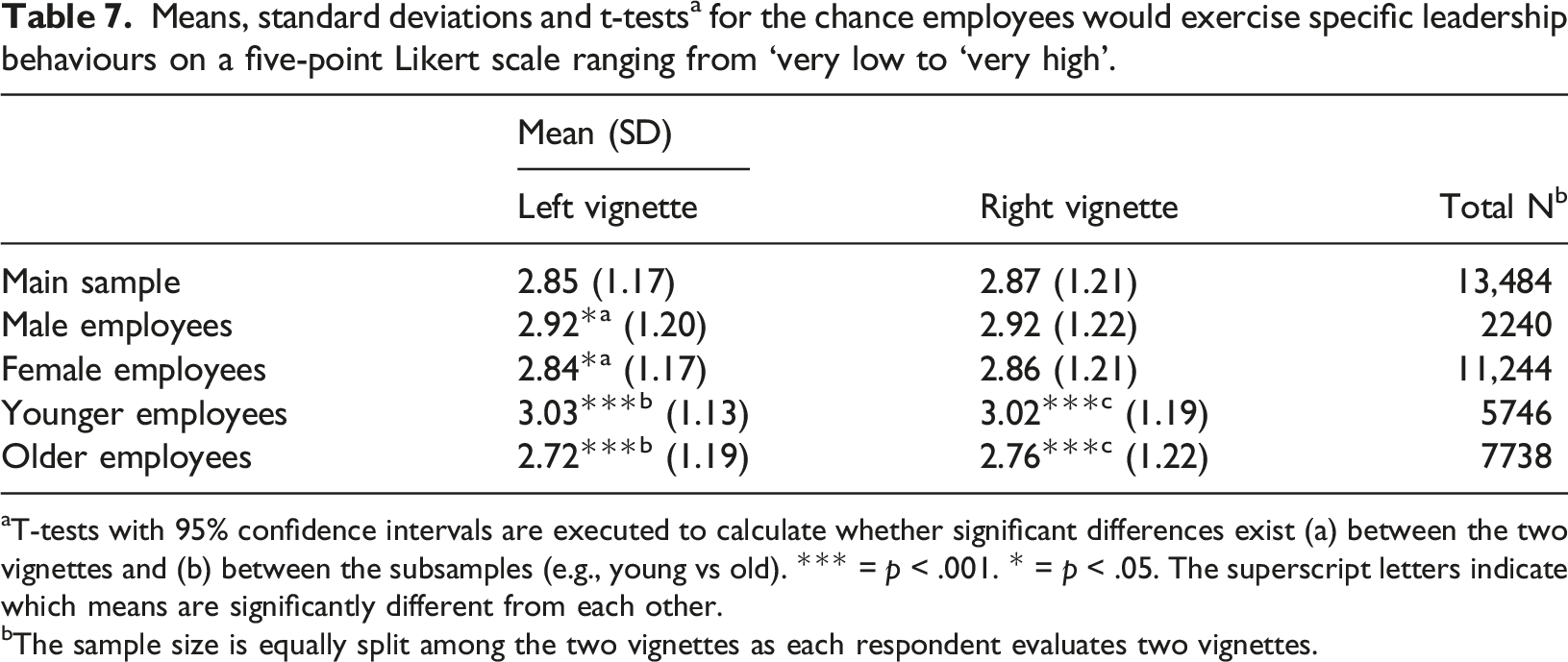
aT-tests with 95% confidence intervals are executed to calculate whether significant differences exist (a) between the two vignettes and (b) between the subsamples (e.g., young vs old). *** = p < .001. * = p < .05. The superscript letters indicate which means are significantly different from each other.
bThe sample size is equally split among the two vignettes as each respondent evaluates two vignettes.
Discussion
Main findings
The central aim of the present study was to investigate which shared leadership behaviours employees want to exercise. In a two-scenario conjoint experiment with prompted choice, I randomly varied the leadership behaviour employees are supposed to display, the effort the leadership behaviour requires, and the beneficiary or beneficiaries the leadership behaviour is likely to have. Besides, I studied whether willingness of employees varied based on gender and age, and dependent on the COVID-19 context.
The results show that employees are more willing to execute relation and change leadership behaviours than external leadership behaviours, but they are still more willing to execute external leadership behaviours than task leadership behaviours. They are also more willing to execute shared leadership behaviours that take fewer hours per week than behaviours that take more hours, but longevity does not matter. And they are more willing to execute behaviours that benefit clients or peers than behaviours that benefit themselves. There are some differences in willingness between employees based on gender and age. The most striking difference is that the relative dislike of external behaviours does not seem apparent for male employees. Besides, a large share of employees is willing to exercise the leadership behaviours as presented, but most notably male and younger employees more so. Finally, employees are more willing to exercise shared leadership in a COVID-19 context.
Implications and contributions
This study has employed a new approach to assessing the emergence of shared leadership, by conceptualizing leadership as a collection of specialized behaviours, as is common in the literature on leadership behaviour taxonomy (Yukl, 2002), but rarely used within the context of shared leadership. Rather than investigating on a team level, individual employees were questioned about their willingness. As a result, this study improves our understanding of the emergence of shared leadership on an individual level, beyond general antecedents on a team level (Döös and Wilhelmson, 2021; Wu et al., 2020; Zhu et al., 2018).
Figure 2 visualizes the three key contributions. This study finds that shared leadership emerges on an individual level dependent on the leadership behaviour an employee has to execute, the characteristics of the person involved and the context they are in. The main findings have described these factors separately, yet the factors may also have combined explanatory power, of which examples are given in the figure. Below, I elaborate on the three key contributions, their combined explanations, and the extent to which the results match the hypotheses and existing literature. Shared leadership emerges on an individual level based on leadership behaviour, person and context. *. * Examples shown are potential explanations of the results using combinations of factors. SL = shared leadership.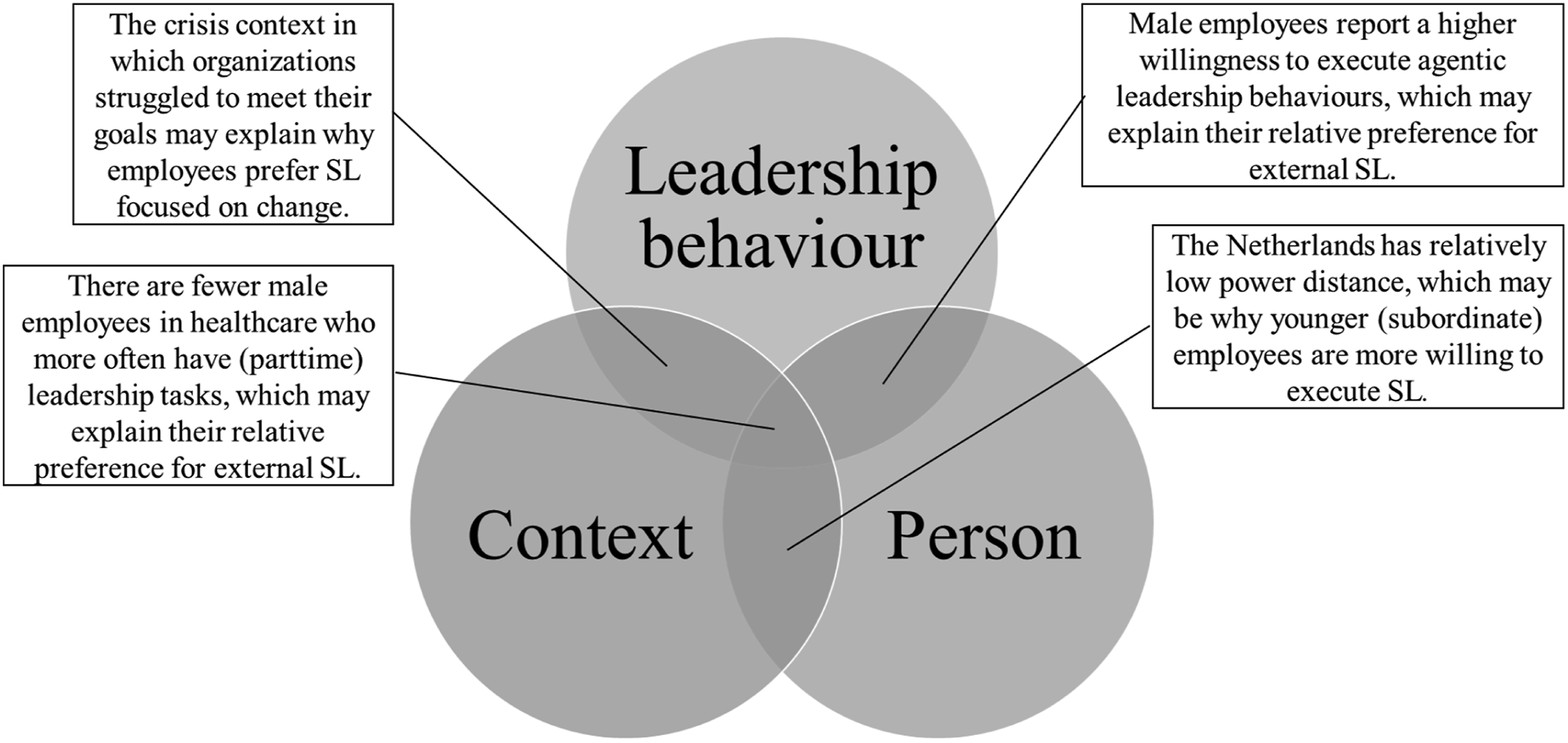
First, shared leadership emerges dependent on the specific leadership behaviour. In this study, I distinguished specific behaviours based on the leadership behaviour taxonomy, as well as the effort and beneficiary of those behaviours. The first contribution of this study is that employees are more willing to execute shared leadership behaviours focused on change and relations than other behaviours. This suggests that not all leadership behaviours are equally suitable for shared leadership. While slightly differently than hypothesized, a likely explanation for the higher willingness regarding relation behaviours is that the quality of relationships between employees in a team is shown to motivate shared leadership behaviours and may thus especially motivate behaviours that, in turn, foster relationships (Carson et al., 2007; Drescher et al., 2014; Zhu et al., 2018). The higher willingness regarding change behaviours is in line with earlier findings in the general leadership literature that there is more meaningful impact in leadership behaviours that are complex and require creativity, something that may have been exacerbated by the challenges organizations faced during COVID-19 (Lund and Andersen, 2023; Pearce, 2004; Yukl, 2012). In contrast, the fact that for routine tasks the need for leadership is little and less meaningful (Pearce, 2004) could be a cause of the relative dislike for task behaviours, behaviours that are concerned with leading in accomplishing tasks efficiently within the team (Yukl, 2012). Also, external leadership may be less popular as shared leadership tends to emerge within teams and employees have fewer opportunities to observe external leadership, something that may be exacerbated even more by the hierarchical nature of the healthcare sector (Zhu et al., 2018; Yukl, 2012).
Another implication of this study is that employees want shared leadership that is manageable: they are more willing to execute behaviours that take less effort compared to more effort and in exchange for other work, as too much increase in workload may have negative consequences for employee well-being (e.g., Bakker and Demerouti, 2017). In contrast, a potential explanation for the lack of effects on longevity is that people notoriously underestimate how their preferences will change over time, known as the presentism bias (e.g., Bauckham et al., 2019).
When it comes to benefits from shared leadership, this study suggests that shared leadership is primarily driven by collectivistic rather than individualistic reasoning (Houghton et al., 2015; Hiller et al., 2006). However, the difference between clients and peers is small, which suggests the proposed mechanism that employees engage especially in those behaviours that are rewarded (i.e., behaviours benefitting clients which improves performance, Pearce, 2004), does not apply here. Peer support may be as big of a driver of shared leadership as is client care, as employees want to be generally prosocial (Carson et al., 2007).
Second, shared leadership emerges dependent on the person. This study finds male employees are generally more willing to exercise shared leadership, and that male employees do not share the relative dislike of external behaviours with female employees. This might show a parallel with a recent meta-analysis on the gender gap in general leadership, which found that men are still more likely to emerge as a leader. Men report a higher willingness to execute agentic leadership behaviours (Badura et al., 2018). The findings of this study may imply that the gender gap often observed in general leadership is also present in shared leadership. There are multiple factors to be considered here.
First, it is important to consider the differences in conceptualization of leadership between leadership emergence and shared leadership. Leadership emergence is understood as the degree to which an individual is perceived by others as a leader (Badura et al., 2018), whereas this study uses employees’ own assessments of willingness. At the same time, multiple studies have found men to report higher self-estimates of their leadership abilities than women (see Fleenor et al., 2010). Another difference is that shared leadership, by definition, implies multiple people can be a leader, whereas for leadership emergence approaches vary. Some studies analyze leader elections or rankings (with one ‘winner’), while others employ scale ratings per employee. The latter approach is more compatible with shared leadership and is shown to be a significant methodological moderator between gender and leadership emergence (Badura et al., 2018).
Second, the particular healthcare sector context affects this study’s findings. Research indicates that healthcare leaders are often male (Mousa et al., 2021). A 2019 WHO report, titled ‘Delivered by women, led by men’, confirmed that gender-based gaps in leadership are present across the global healthcare workforce: women represent 70% of the workforce but hold only 25% of the senior positions. While none of the employees in the sample primarily fulfilled a leadership position (this was an eligibility criterium), male employees (16.6% in the sample) may feel more invited to leadership. In organizations affected by sexist norms, men may be more socialized than women to feel a willingness to display shared leadership behaviours.
Third, this study addressed individual preferences. However, such preferences are related to larger and systemic issues, not empirically addressed in this study, which play a role when it comes to gender and leadership (Fleenor et al., 2010; Ryan et al., 2016). It is crucial to critically discuss these systemic issues and their consequences, as failing to do so would essentialize gender differences instead of approaching them as products of socialized norms. In this section I aim to start this critical discussion, and I also refer to important literature on the topic to foster further discussion. The aforementioned WHO report (2019) points out how the gender leadership gap within healthcare is perpetuated by, among other things, stereotypes (e.g., the socialized norm that equates women to nursing positions but not managerial roles), sexism (e.g., not appointing women to leadership positions because of sexism, or appointing women for different leadership tasks compared to men) and deep-rooted hierarchies within patriarchal organizations (see also Ryan et al., 2016). Hence, systemic issues like sexism foster a discriminatory environment in which female employees are treated differently and do not get the same opportunities as male employees (Ryan et al., 2016). As a consequence, willingness to execute shared leadership may depend on how leadership is perceived differently by men and women. Within the critical feminist literature, scholars have shown how notions of heroically taking up leadership positions are often tied to masculinity (Collinson, 2011; Elliott and Stead, 2008). Scholars have suggested future research should study whether men romanticize leadership to a greater extent than women (Collinson et al., 2018). The question that this study poses is whether shared leadership, although defined as a post-heroic form of leadership, may still perpetuate gender differences. If so, shared leadership could still be dominated by men who, because of an environment with systemic inequality, may feel more drawn to exercise leadership (compare this to Khan et al.’s (2022) notion of post-heroic heroes or Schweiger et al.’s (2020) sense of self-as-a-leader). Finally, explanations of gender effects may also be found beyond the workplace. Studies show COVID-19 has exacerbated the unequal division of care burdens between women and men (Carli, 2020; Power, 2020), which may further hamper female employees’ opportunities to participate in additional work activities like executing shared leadership behaviours.
Besides gender, I find age effects: younger employees indicated significantly higher willingness to exercise shared leadership than older employees. This finding contributes to a literature with mixed findings (compare e.g., Chaturvedi et al., 2012). A potential explanation for the finding is that for older employees, there is less motivation to do more than required and work their way up the career ladder (Zacher et al. 2011). Likewise, in the context of the Netherlands, a country with relatively low power distance, younger employees may take more initiative even if they are more often subordinate employees (Hofstede et al., 2010). As the sample is older than the population, all analyses on the (relatively) younger and older subsamples should be interpreted with some caution. However, analyzing the younger subsample separately also provides relevant information for the very reason that the sample is older than the population, as a way to control for age effects.
Third, I found the COVID-19 crisis had an effect on the emergence of shared leadership. As the COVID-19 crisis struck healthcare systems around the world, calls for leadership intensified (Kniffin et al., 2021). Following calls for leadership studies to address such societal changes (Tourish, 2017), I consider that several mechanisms may play a role here. A potential mechanism is that the crisis increased the need for and meaningfulness of shared leadership (e.g., Lund and Andersen, 2023), causing healthcare employees to favor shared leadership during a crisis (Pearce, 2004). However, a slight variation of presentism bias – ‘we are in a crisis now’ – may also have played a role (e.g., Bauckham et al., 2019).
Limitations and future research
The main limitation, inherent in much survey research, is that I measure self-reported preferences rather than actual preferences or behaviour. As a result, a gap between intent and behaviour may exist that can be explained by other mechanisms. For example, respondents may be subject to social desirability bias, which suggests respondents may consider some answers as socially desirable and this may inflate findings (Grimmelikhuijsen et al., 2017). Nevertheless, researchers argue social desirability bias is likely less problematic in this study as leadership is not a very sensitive, personal or private matter (Lee et al. 2012). What is more, design choices also helped to combat social desirability bias: respondents were anonymous and not under direct observation of the researcher. Finally, in this conjoint experiment employees were forced to choose between leadership behaviours that differed on multiple, randomly presented attributes. Recent research suggests that in doing so, conjoint experiments may counter social desirability bias because respondents’ attention is drawn away from the most sensitive attributes (Horiuchi et al., 2021).
Furthermore, limitations apply to the way the study is designed. It is important to emphasize that preferences in a conjoint experiment should always be interpreted as relative to the presented baseline categories (e.g., employees are more willing to execute change leadership than external leadership) rather than descriptively (e.g., employees like change leadership) (Leeper et al., 2020). Furthermore, while differences in preferences are significant in this large-scale sample, some differences that I found are small. Besides, in this study, three elements (behaviour, effort and beneficiary) were assessed, and they were operationalized in a specific way. For example, I used a taxonomy of leadership behaviours to define shared leadership behaviours (Yukl, 2012). This assumption could be questioned: shared leadership behaviours and leadership behaviours may not necessarily overlap entirely. Nevertheless, many influential studies within the shared leadership literature have successfully deduced shared leadership behaviours from formal leadership behaviours (e.g., Avolio et al., 2003; Carson et al., 2007). More fundamentally, this study focuses on shared leadership behaviours as a role that employees are supposed to execute. This resembles a more formal approach to shared leadership. However, Carson et al. (2007) have already stated shared leadership can manifest itself in both formal and informal ways. By focusing on a more formal role, this study has not addressed ways in which shared leadership emerges informally and how employees take up leadership behaviours as informal activities (Zhu et al., 2018). Finally, this study has not addressed the extent to which willingness coincides with competencies (i.e., knowledge and skills) needed to execute shared leadership. This study has addressed willingness (i.e., employees’ attitude), yet whether employees who are willing are also capable of sharing leadership is another question (a point closely related to found discrepancies between self- and other-ratings of leadership, see for example Fleenor et al., 2010).
Overall, this study provided evidence of the factors that affect the willingness of employees to execute formal shared leadership roles within teams. Due to its specific assumptions and operationalization, it has necessarily neglected many other factors and their interactions: how willingness relates to competencies (i.e. knowledge and skills) or opportunities (i.e., contextual factors), how shared leadership is executed in informal activities rather than formal roles, how shared leadership relates to other forms of collective leadership, and how shared leadership is executed on different levels than the team, to name a few. In future research, these topics as well as other avenues may be studied. For example, qualitative studies may inductively explore what conceptualizations employees come up with themselves and dive deeper into employees’ own understanding of shared leadership. Through practices of workers inquiry, we could acquire more immersive evidence on how leadership is shared (Smolović Jones et al., 2021).
Conclusion
Using insights from the general leadership literature, this study aimed to contribute to understanding the emergence of shared leadership among employees in teams. With a conjoint experiment, this study has shed light on the willingness of employees to execute shared leadership. This study found three factors that are important to employees’ individual considerations about shared leadership: the specific leadership behaviour an employee has to execute, including the effort hereof and the beneficiary, the characteristics of the person involved and the context they are in. Ultimately, this study has modelled itself after the spirit of shared leadership: shared leadership implies giving a voice to individual team members, and research on shared leadership should do the same.
Ethics statement
This study involves human participants and was reviewed and approved by the Faculty Ethical Review Committee of Utrecht University. The participants provided their written informed consent to participate in this study.
Data availability statement
The syntax and main data that support the findings of this study are openly available in https://osf.io/ekdr6/?view_only=f802587d0ff3434cabc1a9a80c42a7eb. Further inquiries can be directed to the author (Van Roekel, 2023).
Footnotes
Declaration of conflicting interests
The author(s) declared no potential conflicts of interest with respect to the research, authorship, and/or publication of this article.
Funding
The author(s) disclosed receipt of the following financial support for the research, authorship, and/or publication of this article: This research was funded by IZZ, a healthcare employee collective in the Netherlands.
