




Abstract
Managerial shared leadership is a practice that goes beyond traditional ways of organising leadership functions. It is an organisational phenomenon where a few individuals share responsibility for the tasks of a managerial position. This paper reviews 67 empirical papers published in scientific journals. The review covers 55 years (1965–2019). The aim is to contribute knowledge about managerial shared leadership as a research field and offer some relevant theoretical concepts. No review to date has specifically focused on managerial shared leadership, and this paper intends to close this knowledge gap. The paper details the start of managerial shared leadership as a research field, presents a bibliometric analysis and the methodological approaches used, and describes the structural characteristics of managerial shared leadership. The paper includes a thematic content analysis of necessary and enabling antecedents and outcomes. Historically, the imprecise use of concepts has hampered managerial shared leadership’s development into a cohesive research field, so this paper develops and uses theoretical concepts to form a theoretical construct for the entire field. This construct is briefly discussed in relation to general shared leadership theory and critical leadership studies. In practice, managerial shared leadership may provide leadership solutions where there is an imbalance between demands and resources while managing complex situations.
Keywords
Introduction
Managerial shared leadership is a practice that goes beyond traditional, singular ways of organising leadership functions. It has long been hidden behind our societies’ individualistic, heroic view of leadership (Denis et al., 2012; O'Toole et al., 2002). As a research field, managerial shared leadership continues to be studied empirically in various contexts, yet still has not developed into a recognised research field. This paper reviews empirical studies published in scientific journals between 1965 and 2019. The aim is to contribute knowledge about managerial shared leadership as a research field and offer some relevant theoretical concepts. In this introductory section, we briefly contextualise managerial shared leadership using the collective leadership literature, before providing a more precise definition. The following sections detail the methods used in the study and present the results of the review in five numbered sections. The empirical research of managerial shared leadership is discussed as a field and a theory in the making is introduced. Two potential research contexts are suggested.
The collective nature of leadership has increasingly been discussed in recent decades. This has materialised in empirical studies as well as in reviews, meta-analyses and theoretical papers (e.g. Crevani et al., 2007; Empson and Alvehus, 2020; Quick, 2017; Bolden, 2011; Ulhøi and Müller, 2014; Pearce and Conger, 2003; Wu et al., 2020). Denis et al. (2012) identify several streams of scholarship on plural leadership, which they define as ‘a collective phenomenon that is distributed or shared among different people, potentially fluid, and constructed in interaction’ (p. 212, our italics). The broad label ‘plural leadership’ was chosen to cover a range of collective leadership phenomena in a way that is distinct from the existing unstable terminology. In fact, scholars continue to notice a good deal of conceptual inconsistency in the literature on leadership in the plural (Denis et al., 2012; Döös, 2015; Ulhøi and Müller, 2014; Zhu et al., 2018). In line with Bolden (2011), we hold that distributed and shared leadership are the two dominant collective concepts. In this review, both concepts are relevant, but they are used interchangeably by many authors and with varying content (Sweeney et al., 2019; Zhu et al., 2018).
Managerial shared leadership is connected to, and partly included in, other phenomena studied in the shared and distributed leadership literature, such as team sharing (e.g. Carson et al., 2007; Wang et al., 2014), pooled leadership (e.g. Denis et al., 2012) and co-leadership (e.g. Gronn and Hamilton, 2004; Heenan and Bennis, 1999). It is not always easy to delineate managerial shared leadership from these neighbouring phenomena, and the conceptual inconsistency in the field created difficulties in our search for empirical studies. Nevertheless, managerial shared leadership is an organisational phenomenon in its own right and needs to be reviewed on its own merits. Our definition of it (see below) has guided our selection of papers. Despite some adjacent reviews (Denis et al., 2012; Dust and Ziegert, 2016; Kocolowski, 2010; Upsall, 2004) and meta-analyses about team sharing (D'Innocenzo et al., 2016; Nicolaides et al., 2014; Wang et al., 2014; Wu et al., 2020), this paper is the first review to specifically focus on managerial shared leadership.
Scholars support the inclusion of small sharing constellations of managers inside the plural leadership frame (e.g. Thorpe et al., 2011). Within distributed leadership, Spillane (2005) acknowledges that leadership practice can be spread across two or more leaders. Gronn (2008) includes small number groups, emphasising their potential to go beyond aggregates and ‘germinate into holistically expressed forms of influence’ (p. 148), which are exemplified by a study of co-principalship (Gronn and Hamilton, 2004). Within shared leadership, Pearce and Conger (2003) state that two individuals simultaneously sharing one leadership position can ‘under the right circumstances’ be considered a special case of shared leadership, ‘the two-person case’ (p. 8).
Shared leadership between two leaders is a phenomenon with a long history. Sally (2002) and Wistrand (1978) note that shared leadership was practised in ancient Rome by the two highest officers of state: the co-leading consuls. The consuls shared power at the apex of a system in which every official had a colleague with equal authority. O’Toole et al. (2002) and Sally (2002) connect this ancient history to managerial shared leadership in today’s business context. The contemporary resistance to managerial shared leadership – noted in several papers in this review – is thought to stem ‘from thousands of years of cultural conditioning’ (O'Toole et al., 2002: 65). With this paper’s 55-year perspective, we touch upon contemporary managerial history, and the results we present begin by depicting the start of managerial shared leadership as a research field. There, we explain our choice of 1965 as the starting year for this review.
Managerial shared leadership: definition and theoretical connections
In this section, we present our definition of managerial shared leadership, as well as the conceptual considerations and choices made. The definition is related theoretically to shared leadership.
Managerial shared leadership explicitly focuses on situations where a limited number of people (Gronn, 2002) either lead an entire organisation from the top, or lead a part of an organisation as middle or first-line managers. The term managerial is used to tie this kind of shared leadership to managerial functions. Learmonth and Morrell (2017) critique the terminology of critical leadership studies, where the term leader has replaced manager in a ‘semantic swap’ (p. 262). In our usage, we bring the term manager back in alongside leader and leadership. Alvesson and Spicer (2014) support this when arguing that rigid distinctions between leaders and managers are questionable as management and leadership are frequently intertwined.
We define managerial shared leadership as an organisational phenomenon where a few individuals have and/or take mutual responsibility for the tasks included in holding a managerial position. This encompasses tasks such as administration, leadership towards goals and organising working conditions for others. Such responsibility-taking requires close collaboration and can emerge between managers or be introduced as an organisational leadership solution. This kind of leadership exists in several structural forms that are more or less compatible with traditional organisational hierarchies (Döös, 2015), such as sharing leadership abreast or in tandem, and with tasks divided or held jointly (Döös et al., 2018b).
Managerial shared leadership comprises both formal and informal aspects. The formal aspects involve appointed managers having an organisation-specific permission that clarifies the formal relations between managers as either hierarchical or non-hierarchical, and specifies the formal division of tasks between them, if any. The informal aspects relate to how the sharing constellation (Hodgson et al., 1965) operates inside between managers and outwardly in relation to others in the organisation. Thus, managerial shared leadership is formally embedded in the organisational structure when pooling leadership capacities to direct others (Denis et al., 2012). It also develops informally as an emerging phenomenon where lateral influence among peers disperses leadership tasks and power (Zhu et al., 2018) across the sharing constellation. Accordingly, we see the unit of analysis for this review as a bounded set of elements that makes up an entity (Gronn, 2009), that is, a sharing managerial leadership constellation. With reference to Hodgson et al. (1965), our choice is to use the term constellation to refer to the managerial sharing entity. This is further developed in the first results section and in the discussion.
Within the literature about both shared leadership (Carson et al., 2007; Pearce and Conger, 2003) and distributed leadership (Spillane et al., 2008; Gronn, 2002), managerial shared leadership focuses on empirical situations in which two, three or more individuals conjointly work as leaders (Denis et al., 2012). They share leadership within the frame of a managerial position and distribute leadership tasks and power within the sharing constellation. Naturally, such managerial constellations may also be looked at as teams, and we note a prominent focus on other types of team within the shared leadership literature (e.g. Carson et al., 2007; Ensley et al., 2006; D'Innocenzo et al., 2016; Fox and Comeau-Vallée, 2020; Wang et al., 2014). Accordingly, we chose the term shared to conceptualise the focal point of this review, drawing on Pearce and Conger’s (2003) widespread definition of shared leadership: ‘…a dynamic, interactive influence process among individuals in groups for which the objective is to lead one another to the achievement of group or organizational goals or both’ (p. 1).
While there is ample literature about shared leadership theory and its historical bases (e.g. Pearce et al., 2008; Ensley et al., 2003; Wassenaar and Pearce, 2018), managerial shared leadership theory is underdeveloped and the phenomenon is underexplored. In order to differentiate managerial shared leadership from other sharing teams, the formal aspect needs to be added as the sharing takes place between formally appointed leaders. Consequently, unlike how shared leadership is typically defined (see Pearce and Conger, 2003; Zhu et al., 2018), managerial shared leadership is special in that the sharing individuals are not ordinary team members. Instead, managerial shared leadership occurs within a constellation consisting of sharing managers, while ordinary employees are external to the constellation.
Methods
This section outlines how we carried out our review of the managerial shared leadership literature.
Literature searches and identification of papers
Managerial shared leadership is a research field in which we have worked for many years. Thus, literature searches were carried out both before deciding to do this review and in direct relation to the review. The final selection of 67 papers was limited to studies with sufficient empirical depth (qualitative or quantitative) that were published in scientific journals (mainly peer-reviewed journals in the English language). Five of these were published in Swedish or Norwegian. In terms of journal quality, 61 of the 67 papers were published in journals classified as level 1 or 2 according to the so-called Norwegian list 1 meaning that they either had the status of a scholarly channel or as a scholarly channel with particularly high prestige. The search process involved both searching for candidate papers and a removal of those papers that, on closer inspection, were not relevant. Reasons for removal were: a) a focus on subjects other than managerial shared leadership, b) not being empirical and c) having insufficient data quality.
At the outset of this review, we were already aware of a substantial number of empirical studies in this field. It is a difficult field to search due to the conceptual inconsistency already described. However, over the years, our skills in finding research about managerial shared leadership have grown. An important lesson we learnt 8 years ago was finding a research stream where the managerial title ‘principal’ was used instead of ‘leadership’, thus labelling the sharing phenomenon ‘co-principalship’ (e.g. Gronn and Hamilton, 2004; Eckman, 2006).
The review work started by bringing together publications about managerial shared leadership that had accumulated in our reference library over the years. We then identified additional relevant papers by checking our computer folders and re-checking our reference library for other terms (e.g. dual leadership). We continually added the references we found when reading through the papers we had identified. In parallel with the search for more papers, we read through the full papers to decide which ones to include in our final selection. The same reading was used to register data from the selected papers in data matrices.
Towards the end of the identifying process we searched the last 3 years of 10 key journals, that is, journals in which we had found three or more papers, among those we had read. We conducted this search on the basis of titles and abstracts, and found two more papers to read. Finally, we searched the SCOPUS database for articles using the following search terms: managerial shared leadership, shared leadership between managers, shared principalship, dyadic leadership, co-CEO, co-leadership, joint leadership, co-principalship, shared leadership AND manager, dual leadership, and co-principal. We found eleven new papers during this search. In all, our search actions generated 132 papers that we read and we identified 67 as relevant and fulfilling the requirements of this review.
Reading of papers and data registration
Data from the 67 relevant papers were registered in two data matrices (see Figure 1). Matrix 1 mainly contained basic bibliometric and methodological information as well as conceptual usage. In addition, journal information was created using EndNote software. Matrix 2 aimed at understanding managerial shared leadership and mainly contained structural characteristics and antecedents and outcomes according to each study. There was significant variation in the amount of relevant information to collect from each paper. For example, some papers contributed a plethora of antecedents while others did not deal with the issue of antecedents at all. We also identified antecedents and outcomes for papers that mainly focussed on other aspects. Matrix headers showing the content of data matrices. Columns 1, 8 and 9 were used only to facilitate our understanding while analysing the data.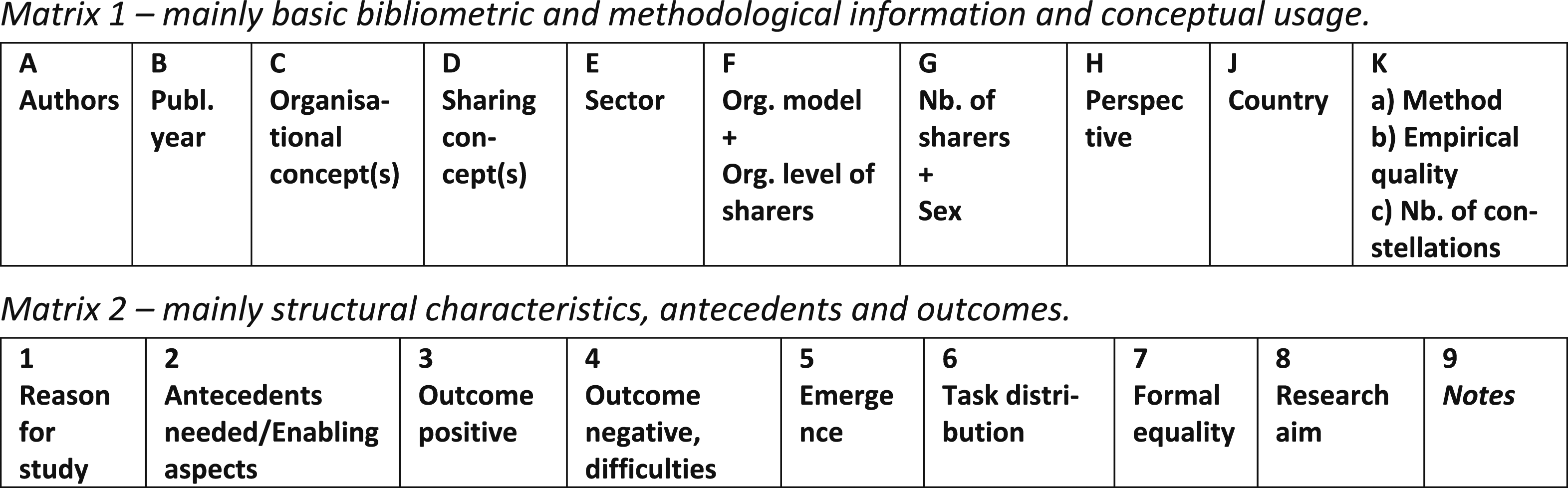
For some columns, it was possible to predetermine specific categories (e.g. columns K and 7), while others required an open listing of words, concepts or sentences (e.g. columns C and 3). For some columns, it is clear what kind of data they contain; the others are described in result sections II–V.
Each author read roughly half of the 132 papers in their entirety. Reading and registering data in the matrices alternated with meetings where we decided jointly which papers to include, correcting the data transferred to the matrices as necessary. For the first two reading-meeting rounds, we both read the same papers and a few columns were added to the matrices as we calibrated our judgements. Attunement of the data continued until the last round.
Data analysis
The data collected in matrices 1 and 2 were treated in different ways depending on the type of column content. Some columns were easily compiled. The five columns (F, G, 5, 6 and 7) concerning the characteristics of the studied managerial sharing constellation(s) required extra attention as several papers studied more than one constellation.
The two concept columns (C and D) caused difficulties. In the sharing concept column (D), we had registered too many concepts without giving any specific order or weight to them, so we decided to define one main concept for each paper by using the papers’ titles, abstracts or in a few cases, the full text body. For column C, the data quality was somewhat problematic concerning what was registered, though it was possible to identify and describe a variation in terms.
Three columns (2–4) in Matrix 2 required thematic content analysis. The content of these columns reflected three themes that we considered basic and interesting for managerial shared leadership: antecedents, positive outcomes and negative outcomes. In the analyses, each theme was treated separately allowing the categorisation to emerge from the empirical data. One exception to this was one category within the antecedent theme that was theoretical and based on previous research about a relational bedrock for managerial shared leadership (Döös, 2015). All the occurrences of each theme were compiled and linked to one of the papers by a number (1–67). The three themes proved to be generic since a large number of papers dealt with them (antecedents 58 papers, positive outcomes 54 papers and negative outcomes 46 papers).
Reflections on method
The field’s lack of conceptual consistency presented difficulties with search terms and, as a result, we expect there are publications on managerial shared leadership we have not found, despite the measures described above. The most obvious risk would be if a specific sector utilises a leadership term unknown to us. Nonetheless, we found more papers than have been collected elsewhere. The majority of our papers could not be found through the Web of Science database, which indicates that our search actions were effective in finding relevant literature. For the sake of transparency, and to assist researchers in finding and adding references, we have marked all 67 papers included in this review with an asterisk (*) in the reference list2. The authors’ own work is referred to in the third person throughout the paper.
Finally, a comment on historical awareness. We are aware that our decisions about insufficient data quality were based on a contemporary view of scientific quality. Also, publishing in scientific journals has generally grown in importance during the past 55 years. The lack of early scientific papers may partly be explained by this.
***
The results are detailed below in five numbered result sections that together structure the findings of empirical research about managerial shared leadership. In the first section, publications outside our selected papers are used. Result sections II–V are based on the 67 papers included in the review. The start of managerial shared leadership as a research field. Bibliometric analysis and methodological approaches. Structural characteristics of managerial shared leadership. Antecedents and outcomes of managerial shared leadership – a thematic content analysis. Conceptual usage – the labelling of managerial shared leadership.
I. The start of managerial shared leadership as a research field
This review covers a long time span – 55 years – beginning in the year 1965. The reason for this point of departure lies in a study of three executives who ‘constituted the top echelon of a highly innovative’ psychiatric hospital, thus forming an executive role constellation (Hodgson et al., 1965: x). To our knowledge, this is the first empirical study of what we call managerial shared leadership, which makes this departure point appropriate. Therefore, it was an unexpected result to find that no papers that fulfilled our requirements were published until 1998. This made us think about how to cover the start of managerial shared leadership as a research field. Below, some early contributions to contemporary managerial history are briefly accounted for to portray the start of the field. Two books and five papers are presented and related to how frequently these early contributions are referenced by the 67 reviewed papers.
Early seminal books
Two significant but quite different books, written 34 years apart were identified: The Executive Role Constellation by Hodgson et al. (1965) and Co-leaders by Heenan and Bennis (1999). Both deal with the top management level. Heenan and Bennis is a core reference work of the field, referred to in 34% of the empirical papers we identified for this review, whereas Hodgson et al. were referenced in only 9%. While Heenan and Bennis’ contribution largely concerns spreading awareness of managerial shared leadership and popularising the co-leadership concept, Hodgson et al. are important for their early identification and deep study of the phenomenon.
In 1965, Hodgson et al. took their point of departure in an ‘increasingly organizational society’ with its complex organisations where ‘executives are often faced with the task of managing systems that extend well beyond the limits of the executives’ own expertise’ (pp. 4-5). Their study was originally intended as a contribution to role theory. The three authors gathered data in a psychiatric hospital that was successful in terms of growth, innovation and wider social impact. The hospital was led by three men (the superintendent, the assistant superintendent and the clinical director) who worked closely together in specialised roles and ‘yet maintained a tightly integrated complementarity’ (p. 477). They formed an executive role constellation where the tasks they performed and their emotional and affective communication were largely complementary. When the structure of an executive group is highly differentiated and integrated, as in a constellation, the symbolizations around each role type tend to reinforce one another. (Hodgson et al., 1965: 497, our italics)
The concept of constellation as a way of labelling a tight collaboration of sharing individuals was coined by Hodgson et al., who state that role structures may vary on a continuum of complexity and interrelatedness, with constellation and aggregate as the two poles.
Heenan and Bennis (1999) identify the formally subordinate co-leader as a person playing second-fiddle close to a formally appointed leader. In coining the co-leadership concept, they describe a partnership at the level of managing director, where ‘the only difference between a leader and a co-leader is the greater fame of No. 1 and the size of his or her compensation package’ (Heenan and Bennis, 1999: 263). The book’s subtitle, The Power of Great Partnerships, well reflects Heenan and Bennis’ message and the potential of co-leadership.
Early papers outside our selection
This section gives a brief overview of five early papers that have not been included in the review, for example, because of a more anecdotal empirical approach than aimed for in the review. Yet, these papers are interesting as they point to persistent issues of the field. They are from various sectors, published between 1965 and 1999. All are from the USA, and portray managerial shared leadership in a positive light. The five papers use five different concepts in their titles: dual leadership, co-manager, co-principalship, co-leadership and sharing. Some issues brought up in these papers continue to be discussed today, such as different ideas about how to divide (or not) the managerial assignment and the relevance of managerial shared leadership during mergers.
Building on Bales-Parsons’ analysis of small groups, Etzioni (1965) concludes that task-oriented groups tend to develop two kinds of leader, one social-emotional leader and one instrumental, task-oriented leader. Etzioni’s contribution lies in transferring dual leadership from small group research into formal organisations. In our 67 papers, Etzioni’s paper is referenced only twice.
Senger (1971) discusses the co-manager concept and presents dual leadership as a solution to the problem of dichotomous demands of leadership in organisations. The solution is to divide the leader ‘function between two members of a unit; one member acting as the task leader and the other as the social-emotional leader’ (p. 78). His departure point is that two ‘major dimensions of leader behavior have been repeatedly isolated by researchers: a task function and a social-emotional function’ (p. 82). An organisation with a co-manager system, where the managers have equal responsibility and authority and share in all major organisational decisions, could provide such a specialisation. Senger’s paper is not referenced in our selected papers.
West (1978) proposes a reorganisation of school leadership to co-principalship. As a superintendent, he introduced a model of managerial shared leadership between principals that lasted for 10 years. His intention was to reduce principals’ workload, and he proposed a work division between a principal of administration and a principal of instruction. Both principals were jointly responsible for creating a learning environment for the students, holding meetings with teachers, giving annual reports to the organiser, delegating responsibility to staff, evaluating results and long-term planning. West’s paper continues to have an impact on today’s research and is referred to in 15% of our papers – though only papers from educational settings.
In a short magazine article, Jaklevic (1999) examines a successful case of a four-year co-leadership in combination with a merger. The article’s message is that co-leadership can surprisingly work. The sharing CEO couple – two men with distinct knowledge bases – shared the same values and visions and clicked on a personal level. When necessary, they assumed responsibility for gathering information and kept talking until reaching a united focus. They took turns in public representation, worked in adjacent offices and consulted each other on decisions. The paper is not referred to at all in our selected papers.
The growing number of mergers is Troiano’s (1999) focus in his idea of ‘a new paradigm of leadership’ (p. 40). He identifies two types of power sharing arrangement: the abreast arrangement, where two co-CEOs share the top position and are equally responsible for important decisions, and, with reference to Heenan and Bennis (1999), the in tandem arrangement of co-leadership with one official leader who works in close partnership. Troiano concludes that power can indeed be shared. His work is referenced twice in our selected papers.
II. Bibliometric analysis and methodological approaches
In this section, we give an overview of the field and its development, and we shed light on bibliometric information and the methodological approaches used in the 67 papers.
Bibliometric analysis
The first study among our selected papers was published in 1998 (Court, 1998). Since then, the number of published studies has grown, especially during the last 5 years (see Figure 2). The development of the number of published papers in five-year intervals (67 papers).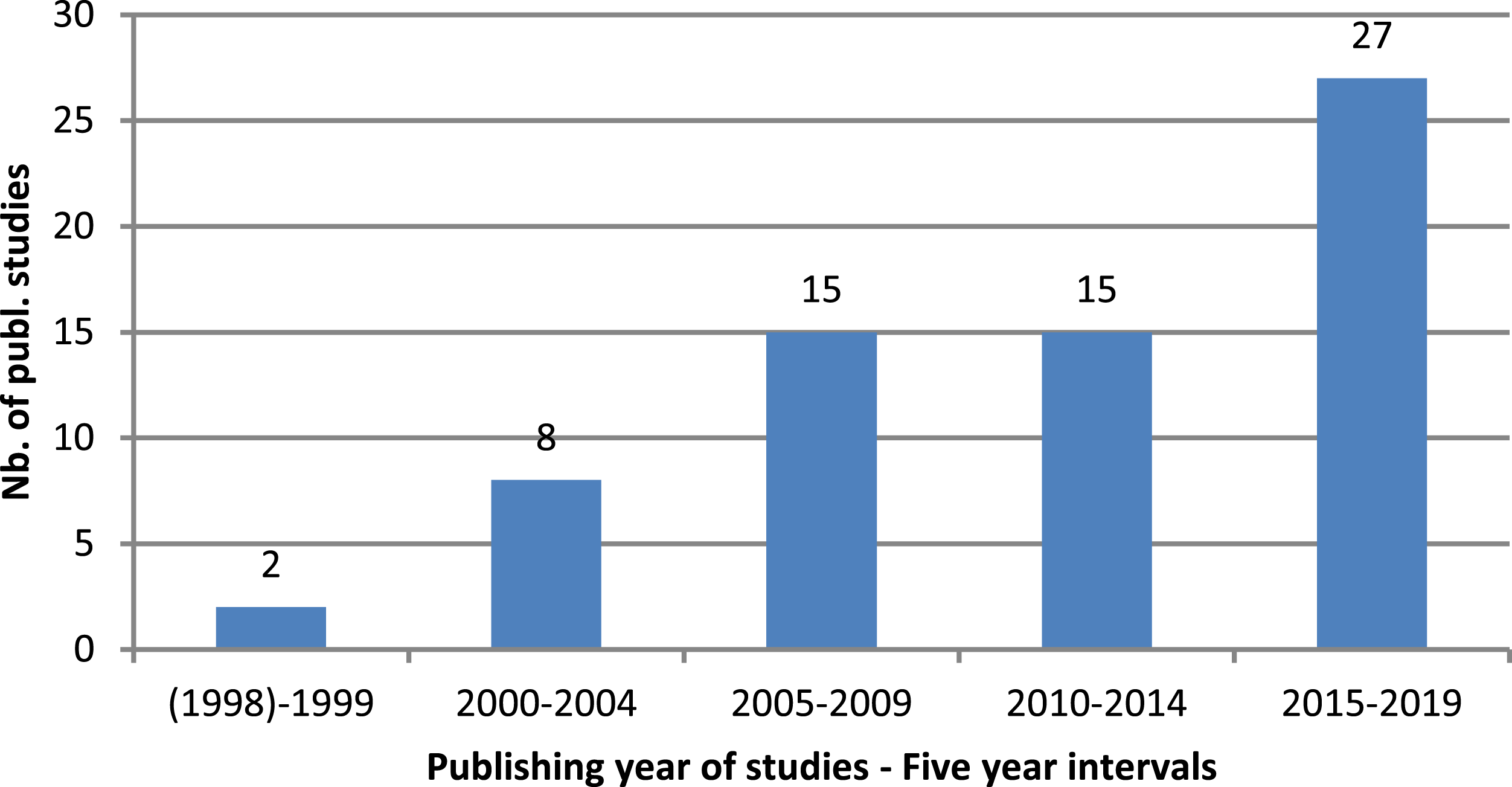
Many of the studies have a European origin (27 papers), with Sweden being the dominant country (17 papers). Other European papers originate in Denmark, Finland, Germany, The Netherlands, Norway and the UK (1–3 papers each). North America contributes 20 papers (USA 14 and Canada 6) and Oceania 15 (Australia 8 and New Zealand 7). Finally, Asia and South America contribute a few papers (China, India, South Korea and Chile). See Figure 3. Here, ‘origin’ mainly refers to where data was collected. In cases where this information was not available or relevant, the origin is where the authors worked. Number of published papers per continent (67 papers).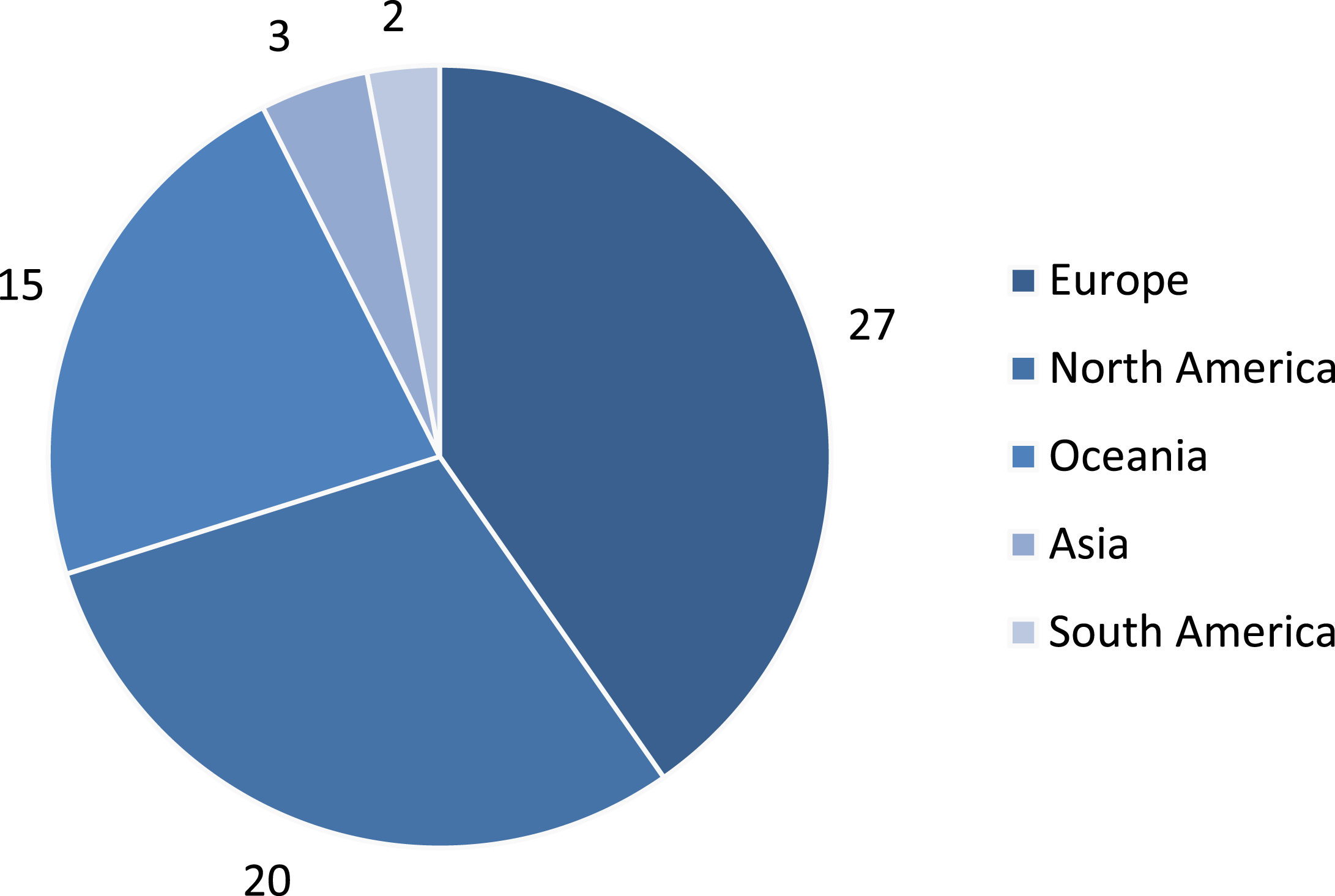
The field contains both a core of researchers and a scattered distribution. A few authors have published multiple studies on managerial shared leadership, with three researchers or groups authoring 23 of the 67 papers (34%): Marianne Döös and Lena Wilhelmson with colleagues (Sweden) publishing 12 papers, Marian Court (New Zealand) six and Ellen Eckman (USA, twice with a colleague) five. Eight different researchers/groups published two empirical papers each. The remaining 28 papers were singular occurrences in the field (42%).
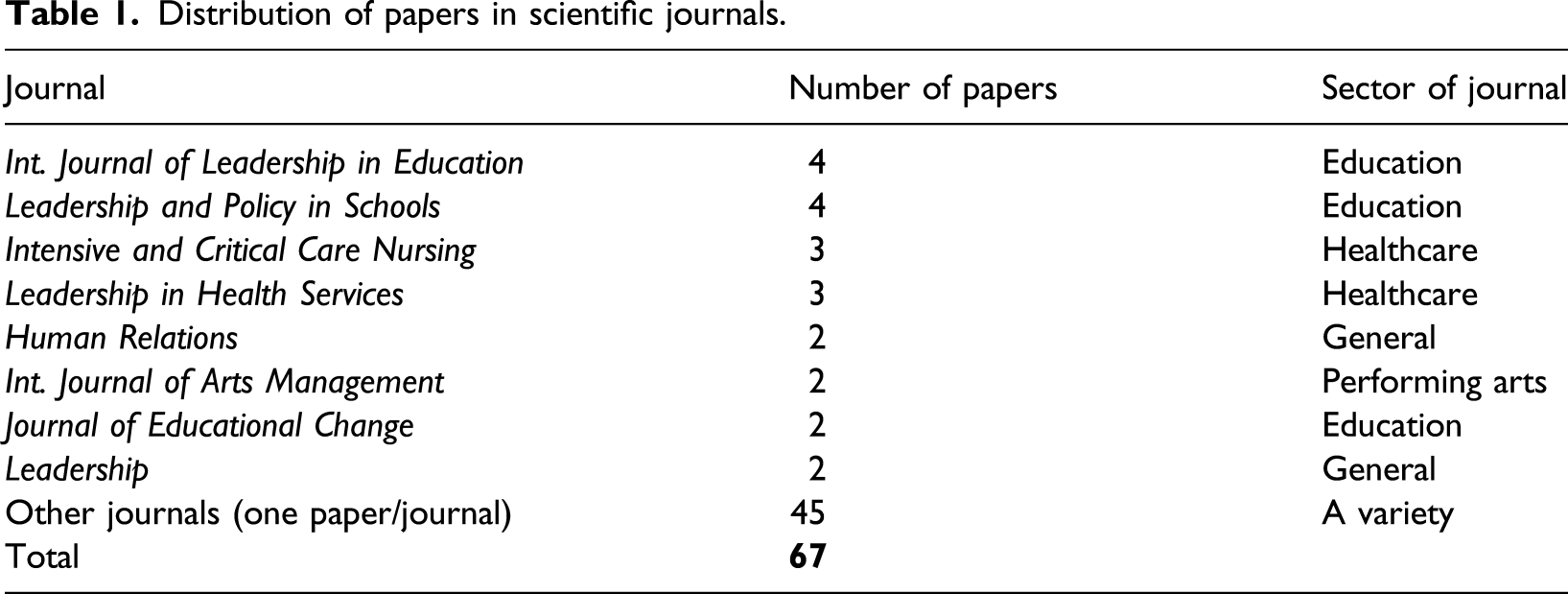
The studied sectors were predominantly education (mainly schools) followed by healthcare and performing arts organisations (see Figure 4). A mix of sectors were studied in 13 papers and five were single cases of banking, finance, hotels, museums and a supervisory authority. Number of published papers by sector (67 papers).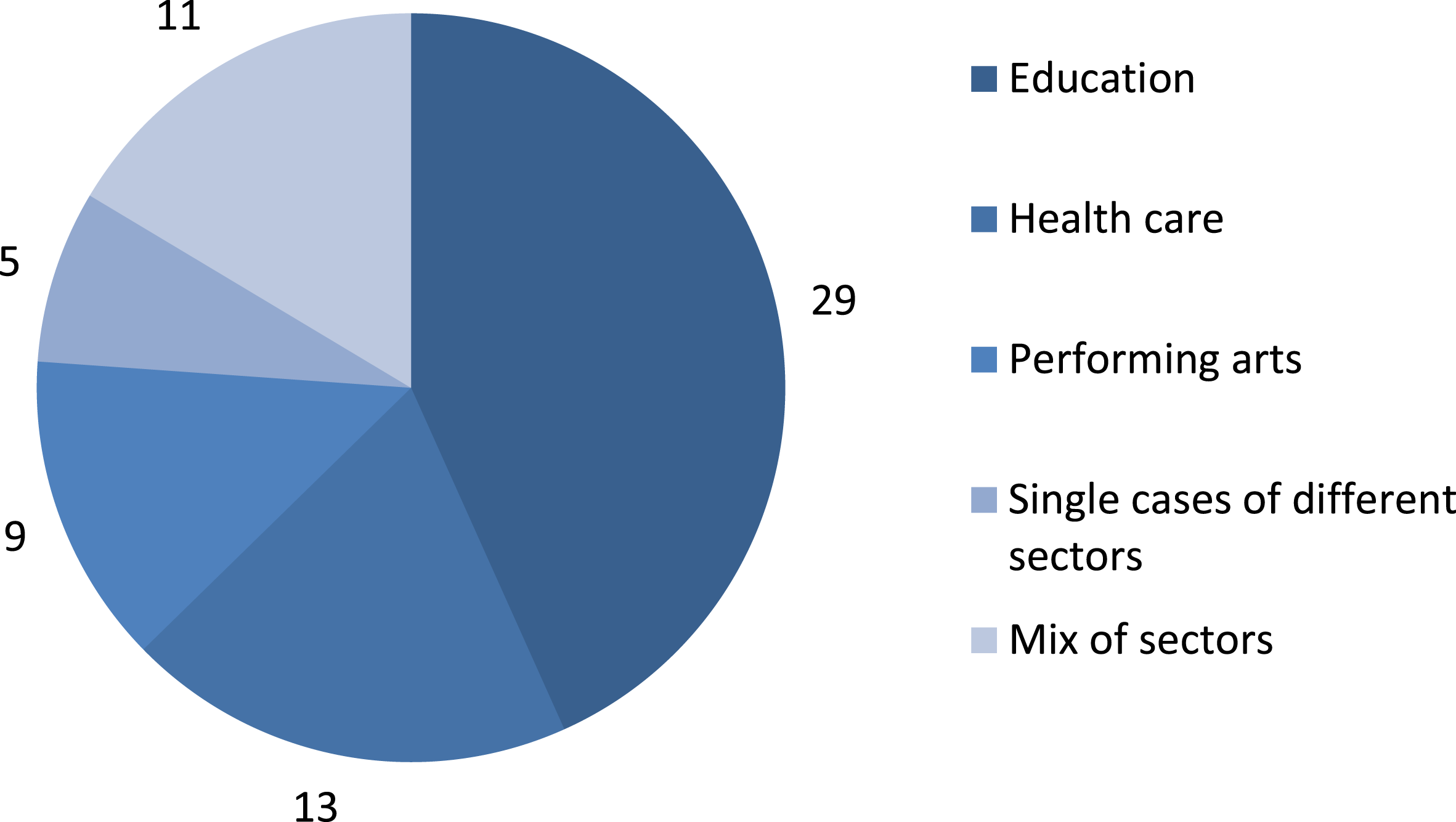
Distribution of papers in scientific journals.
Methodological approaches among the papers
Qualitative methods dominate this research field and were used in 46 of the 67 papers (69%). Interviews were the most frequently used technique, at times combined with observations and documents. Interestingly, in one case, the sharing managers’ actual speech in their doing of leadership was used as data (Vine et al., 2008). It was mainly the qualitative papers that focussed on managerial shared leadership by studying one or more leadership constellations. Quantitative methods, mainly surveys and questionnaires, were used in 15 papers (22%) and six papers (9%) used mixed methods, such as a combination of interviews and surveys.
The bulk of the studies (49 papers) reflected the perspective of the sharing managers (73%). Of these, nine also reflect, at least to a minor extent, the perspective of subordinates and/or superordinates. Four papers reflect the subordinates’ perspective and another four the superordinates’. One paper reflected legislators’ perspectives (Döös et al., 2018a). For nine papers, it was not possible or relevant to categorise a perspective.
III. Structural characteristics of managerial shared leadership
This section deals with the structural characteristics of managerial shared leadership, that is, the organisational model, managerial level, emergence, formal equality and task distribution. First, the studied constellations’ size and gender are accounted for.
Number of sharing people and gender
For almost all papers (97%), it was possible to identify the number of people within the sharing constellation, and it varied between two and eight. Several papers studied more than one constellation. Duos were the focus of 48 papers, while 15 focussed on larger constellations or both duos and larger constellations. Trios were the focus of four papers (Choi et al., 2012; Court, 1998; Court, 2007; Court, 2004a). The issue of constellation size was particularly emphasised in one paper, which studied constellations of four and five sharing managers (Döös et al., 2017b).
With a few exceptions (Court, 1998; Court, 2007), gender was not an issue that was explored. Many papers (41) did not even contain information about the sharing constellations’ gender mix. Among those papers with gender information, there was roughly one-third of each combination type: mixed, female and male.
Organisational model and managerial level
All the papers but one contained information about the organisational model, that is, whether the managerial sharing took place within one organisational unit or across organisational boundaries. Most papers (56) focussed on cases where the sharing constellation led a single organisational unit (Arena et al., 2011; Bhansing et al., 2012; Gronn, 1999; Wadel, 2017) 3 . Eight papers focussed on both constellations sharing within one unit and those sharing across organisational unit boundaries (Arnone and Stumpf, 2010; Grubb and Flessa, 2006; Döös et al., 2017a; Döös et al., 2018b). Two papers (Klinga et al., 2018; Klinga et al., 2016) were special in that the managerial shared leadership took place in an organisation that integrated psychiatric care across care providers (i.e. each organisational unit was led by two managers – one from each care provider).
In the selected papers, sharing took place at all managerial levels (top, middle and first-line), and all papers but two could be categorised according to the organisational level of the sharing managers
4
(see Figure 5). Studies of first-line managers were the most common (Thomson and Blackmore, 2006; Rosengren and Bondas, 2010; Eckman and Kelber, 2010; Döös et al., 2018a; Court, 2003; Court, 2004b), followed by studies of shared leadership at the top level, that is, CEOs and directors (Voss et al., 2006; Reynolds et al., 2017; Reid and Karambayya, 2009; Fischbach et al., 2007; Cater III and Justis, 2010). A few studies only focussed on sharing between middle managers (Clausen et al., 2017), a few on both middle and first-line (Thude et al., 2017), and a few on all three levels (Steinert et al., 2006; Saxena et al., 2018; Klinga et al., 2018). Number of papers focussing on sharing among top, middle and first-line managers (65 papers).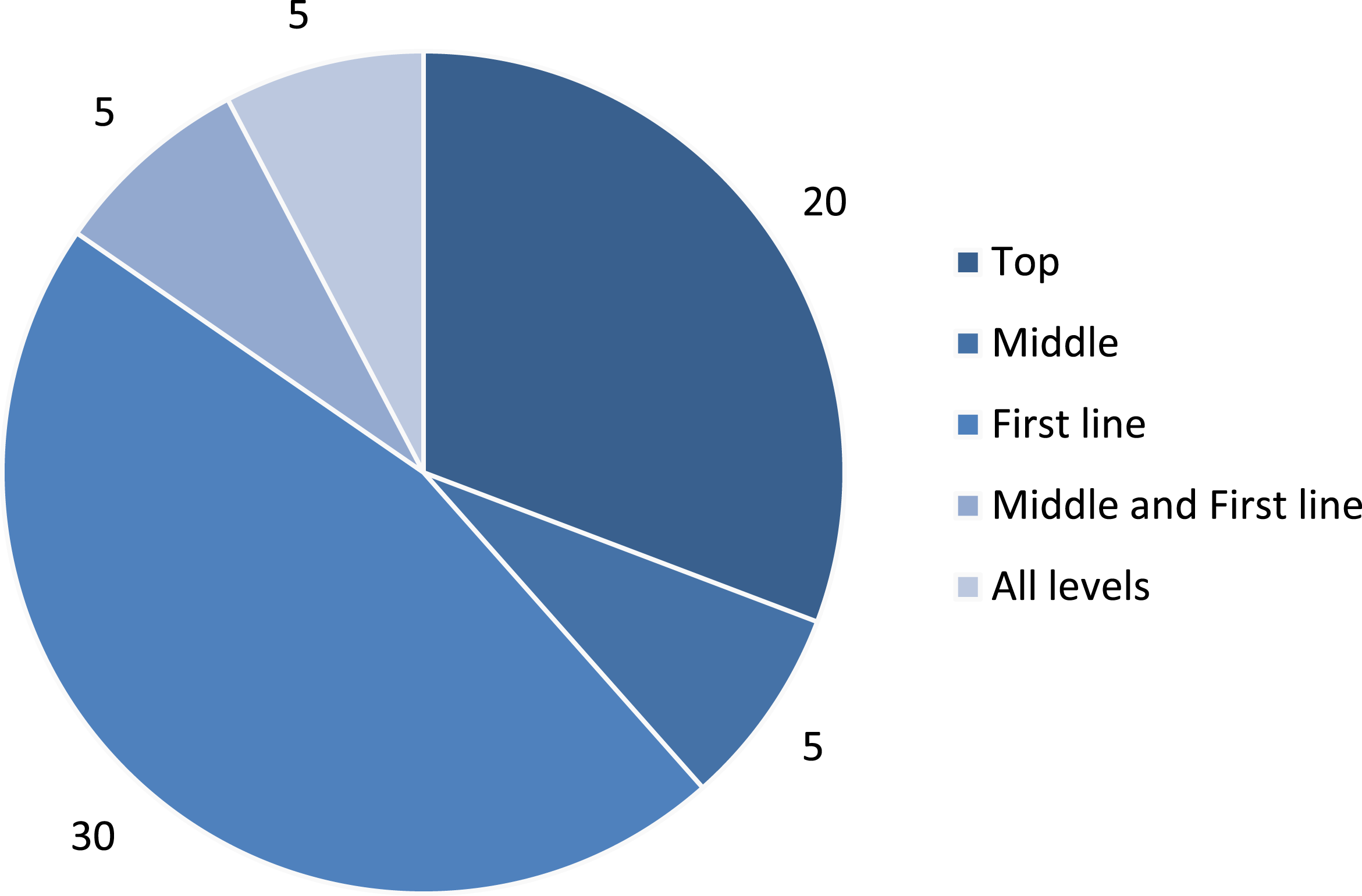
Emergence
According to the reviewed papers, managerial shared leadership can either emerge informally between the sharing managers themselves (Döös et al., 2017a; Waldersee and Eagleson, 2002) or be implemented by the organisational level above the sharing managers (Eckman, 2018; de Voogt, 2006), for example by a decision by the board or by a superordinate manager. Implementation of managerial shared leadership occurs both as a transitional arrangement in connection with mergers (Arnone and Stumpf, 2010) and with the intention of providing a lasting solution (Döös and Wilhelmson, 2019). Most commonly, the papers studied constellations that were implemented from above (30 papers), but cases where sharing had emerged informally were also studied (12). Some papers (10) included both cases. For 15 papers, the information about emergence was either missing or not relevant.
Formal equality and task distribution
Most papers studied cases in which the sharing managers were equals in the organisational hierarchy (Ebbers and Wijnberg, 2017; Krause et al., 2015). Six papers (Aravena and Quiroga, 2019; Choi et al., 2012; Flessa, 2014; Gronn, 1999; Johne and Harborne, 2003; Vine et al., 2008) studied non-equal sharing and eleven papers studied sharing cases of both equals and non-equals (Thude et al., 2018) (see Figure 6). For four papers, the information about formal equality was either missing or not relevant. Number of papers focussing on formally equal or non-equal managerial sharing (63 papers).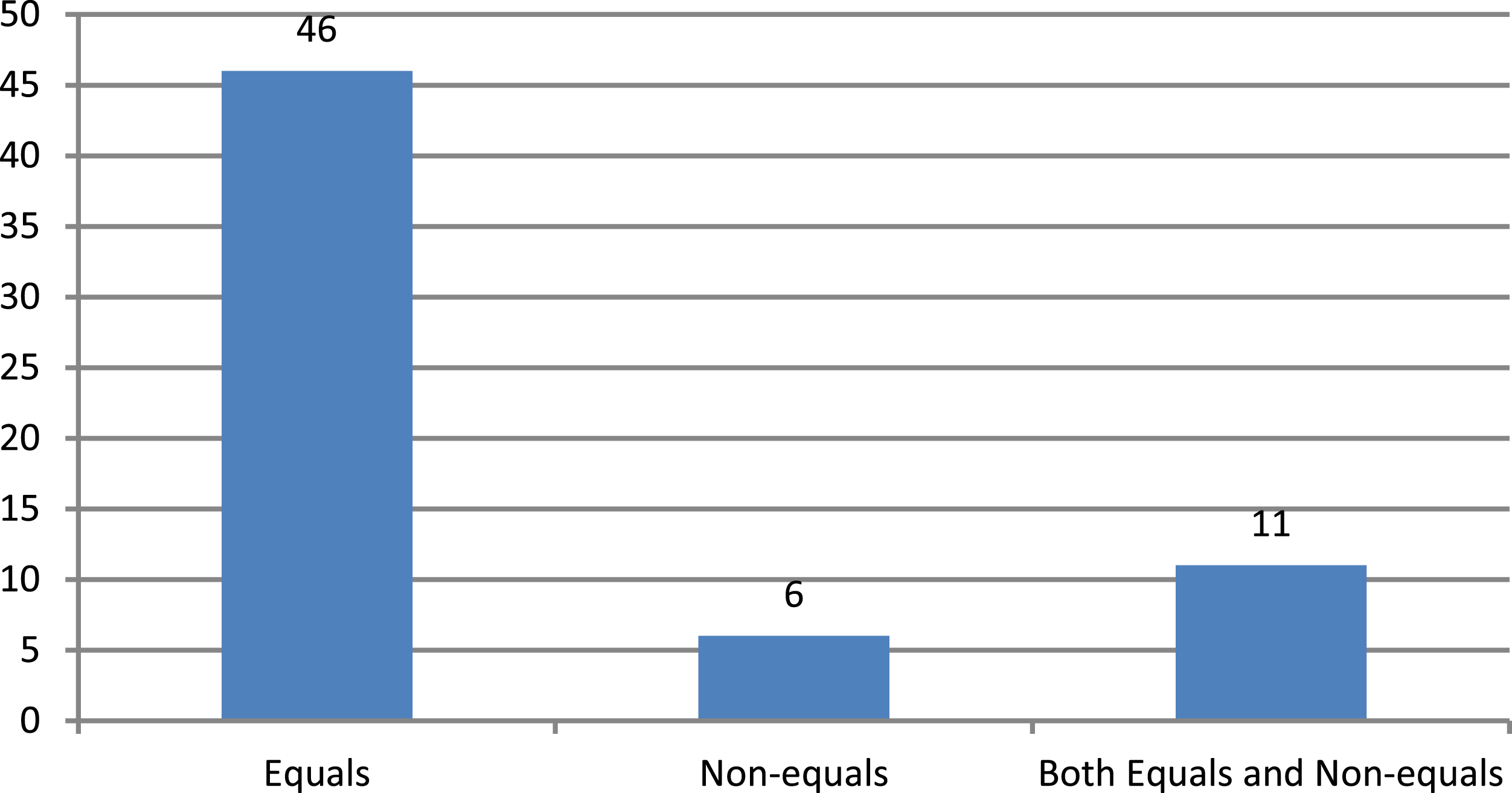
The managerial sharing featured in the papers used different ways to solve task distribution between the managers. They focussed equally on cases of divided task distribution and on cases where the tasks were held in common (see Figure 7). Another 16 papers focussed on both types of cases. For nine papers, this information was either missing or not relevant. Number of papers focussing on a basically divided or in common task distribution (58 papers).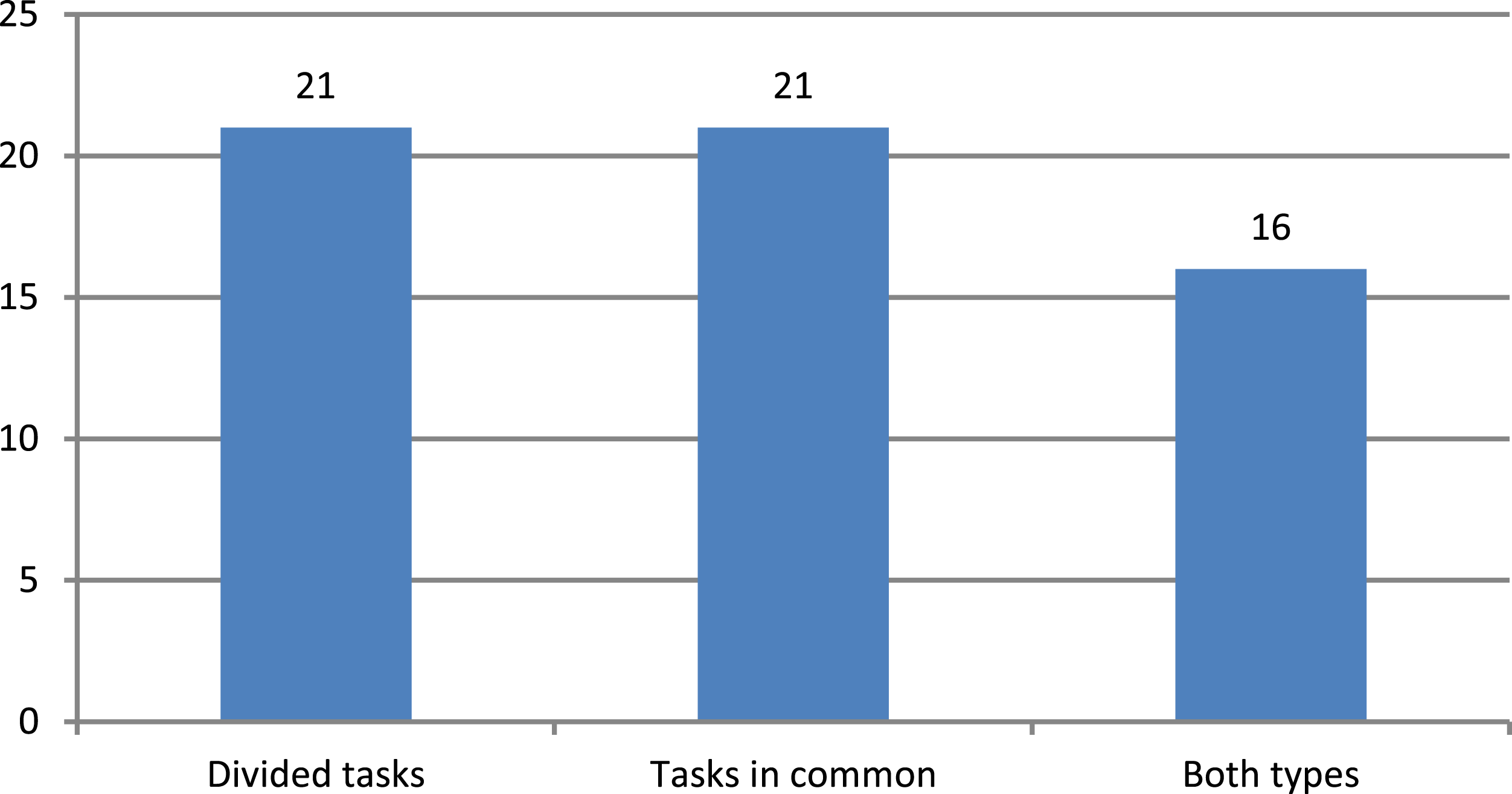
IV. Antecedents and outcomes of managerial shared leadership: a thematic content analysis
In this section, we deal with what the empirical research literature says about the antecedents that facilitate sharing and those that are necessary for successful shared leadership. We then detail potential positive and negative outcomes of such organising.
Antecedents identified
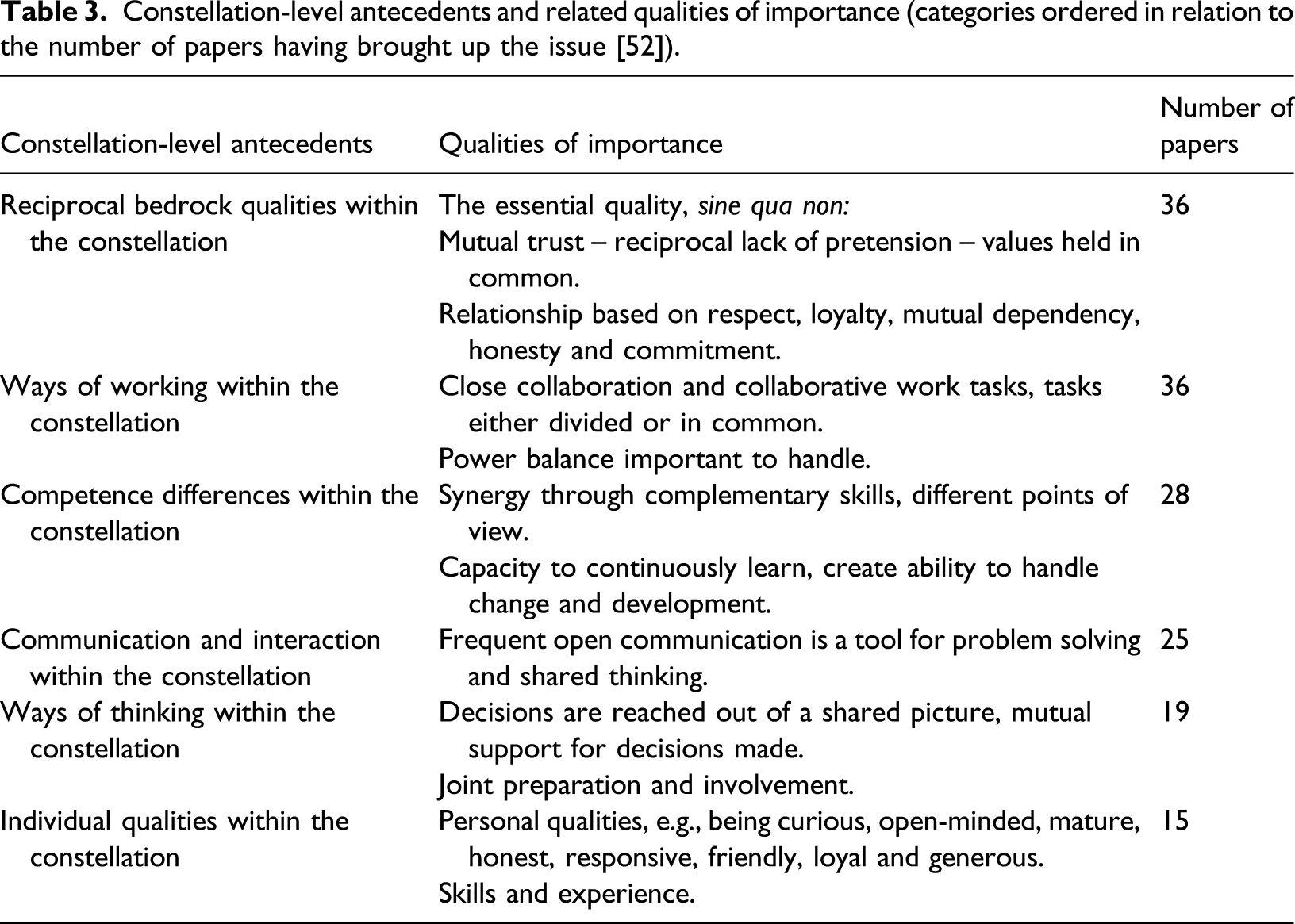
The vast majority of papers (58) identified antecedents that were deemed important for managerial shared leadership to develop and persist. Although both organisational level antecedents and ways of behaving towards staff were described, it was clear that constellation-level antecedents were studied much more often. These antecedents within the sharing constellation are essential as they predict the quality of collaboration and responsibility-taking between the leaders. Other antecedents play an enabling, enhancing role.
Organisational level antecedents and related qualities of importance (categories ordered in relation to the number of papers having brought up the issue [28]).
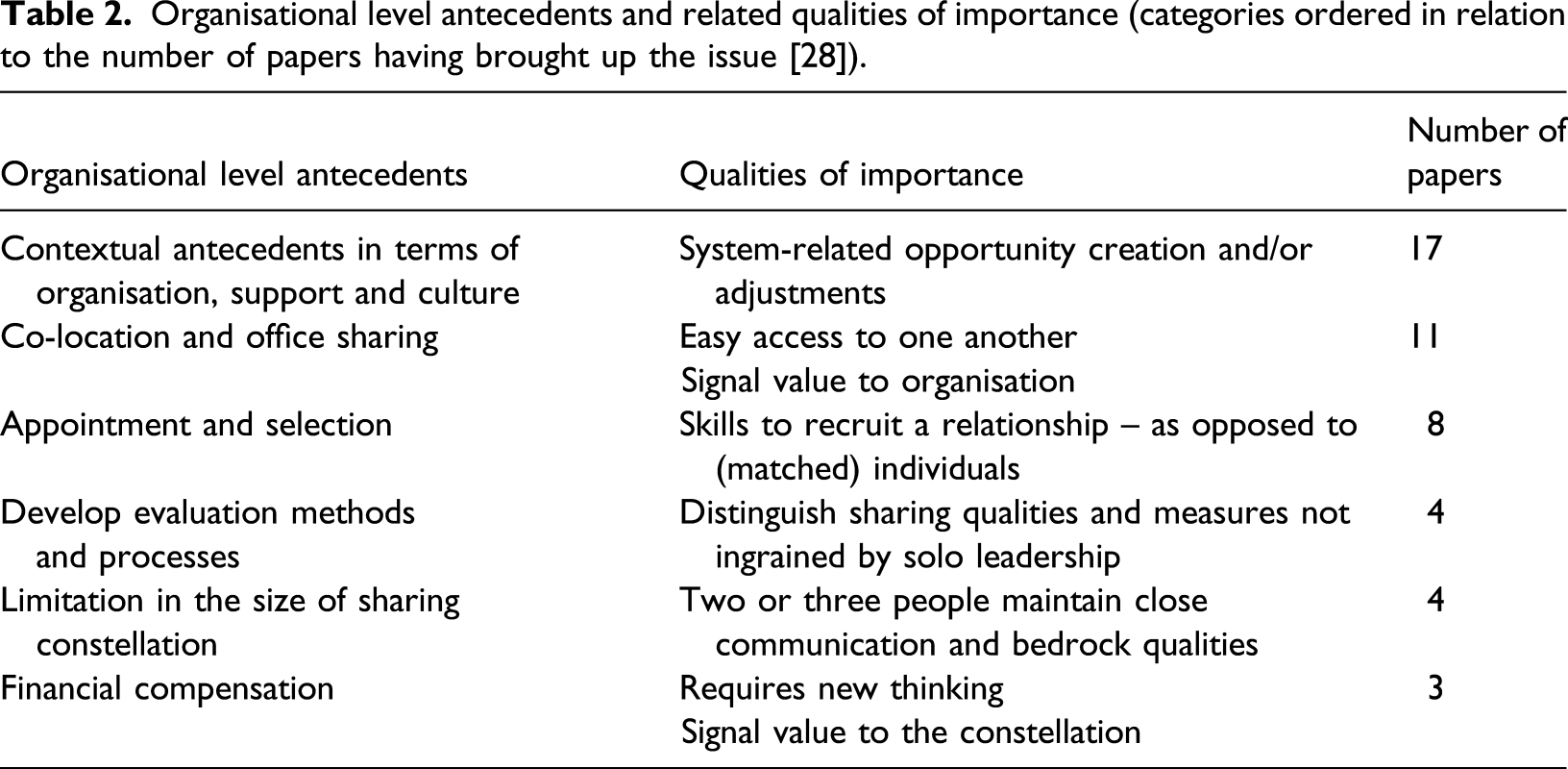
Ways of behaving towards staff seemed to create antecedents for the sharing to develop and persist, and was brought up in 17 papers. In this antecedent category, sharing leaders were portrayed as including others, being trustworthy to others, realising the need to create a unified voice and making their collaboration visible to others.
Constellation-level antecedents and related qualities of importance (categories ordered in relation to the number of papers having brought up the issue [52]).
Positive and negative outcome qualities identified
We strove to find and register all empirically identified outcomes, both when they were the focus of the study and when mentioned in passing. Before presenting these findings, it is important to explain our use of the term outcome. In principle, an outcome might refer either to a result or a consequence (see Reason, 1990; Aronsson and Berglind, 1990; Döös et al., 2004). A result here represents an intended outcome of something done. A consequence represents an unintended outcome of something done. A consequence is often, but not necessarily, negative. When translated to how outcome is used here, it means that when managerial shared leadership is introduced in an organisation, it is done for a reason, for example, to reduce a principal’s workload. In this example, a reduced workload is the intended result and, if that also makes it easier to recruit principals that would be a positive consequence. On the other hand, if the sharing constellation does not function well, this may produce negative consequences like a tougher workload or organisational ineffectiveness. In sum, accounting for positive and negative outcomes of managerial shared leadership is a complicated issue. Negative outcomes concern negative consequences that are described as difficulties, weaknesses and problems related to managerial shared leadership. Depending on the focus of each study, there are many different types of outcome.
Positive outcomes
The positive outcomes presented here are perhaps best understood as potentials that might occur if the bedrock qualities described above are met, and if also supported by other favourable antecedents. Positive outcomes were found in 54 papers, but no paper even came close to mentioning all. So, when managerial shared leadership works well, what positive outcomes are there to hope for?
Positive outcomes related to managerial shared leadership. Figures in parentheses are the number of papers in which each outcome was mentioned.
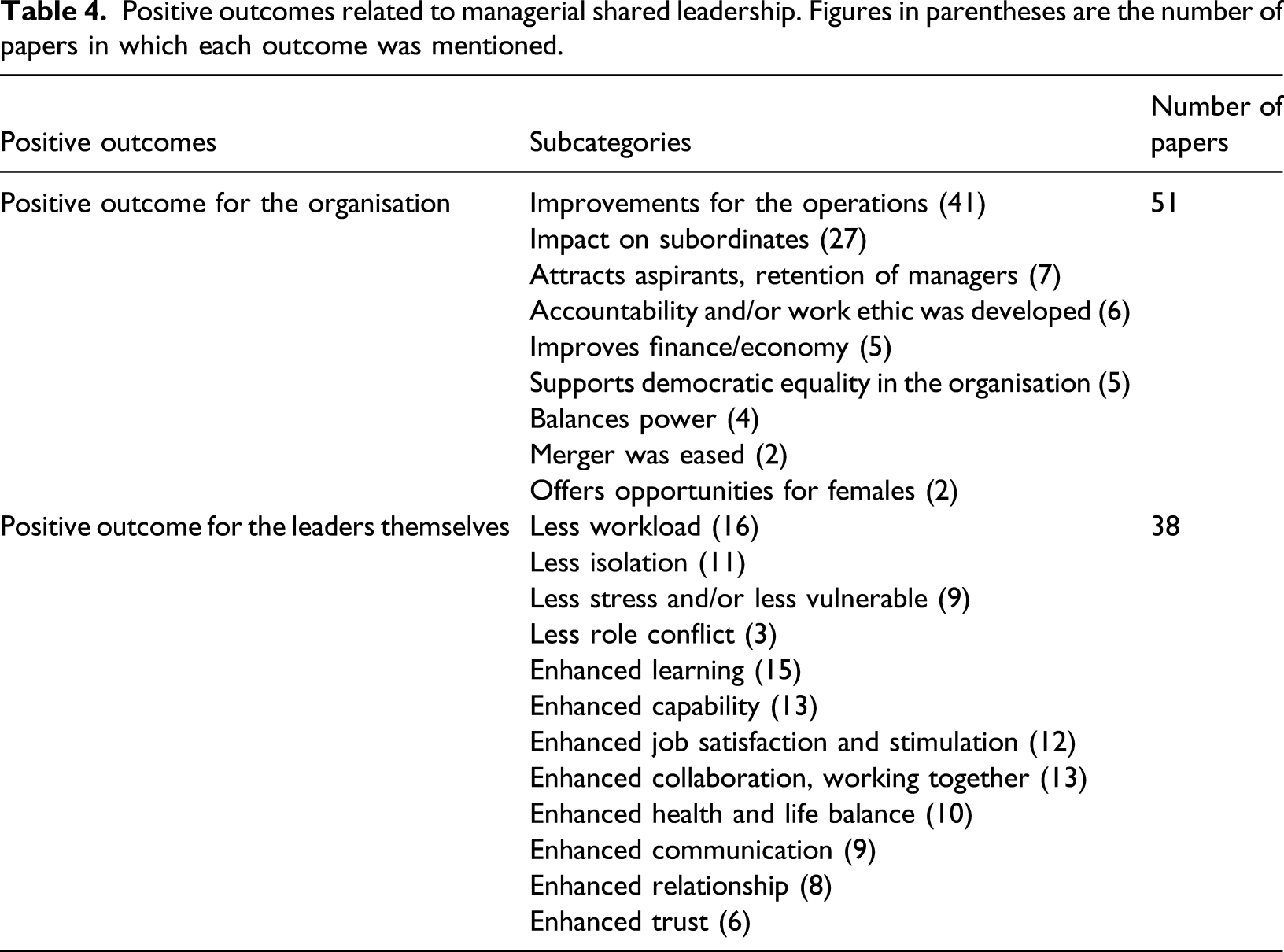
Positive outcomes for the organisation. Improvements for the operations were the most frequently mentioned positive outcome (41 papers). Managerial shared leadership was thought to strengthen operations in general as well as provide specific benefits for the organisation. Some examples mentioned were a positive work climate, getting more things done in less time, wiser decision-making, increased ability to solve crises, greater benefits for service users and high market valuation. The sharing leaders spread their collective vision, improved work standards and achieved successful change; they were present and bridged organisational boundaries. The second largest subcategory concerned positive impact on subordinates (27 papers). Managerial shared leadership modelled cooperation and power sharing with staff was reported. Equality was fostered and sharing allowed more contact with subordinates and others, entailing visibility and accessibility. Other positive outcomes were the encouragement of aspiring managers, increased accountability and balanced power (see Table 4 for more examples).
Positive outcomes for the leaders themselves. Positive outcomes for the leaders themselves were identified in 38 papers. For example, sharing leaders experienced reduced workload, isolation, stress and role conflict, as well as enhanced learning, competence, job satisfaction, health and life balance. They collaborated, communicated and developed mutual trust (see Table 4).
Negative outcomes
Negative outcomes related to managerial shared leadership. The figure in parentheses after each subcategory refers to the number of papers in which it was mentioned.
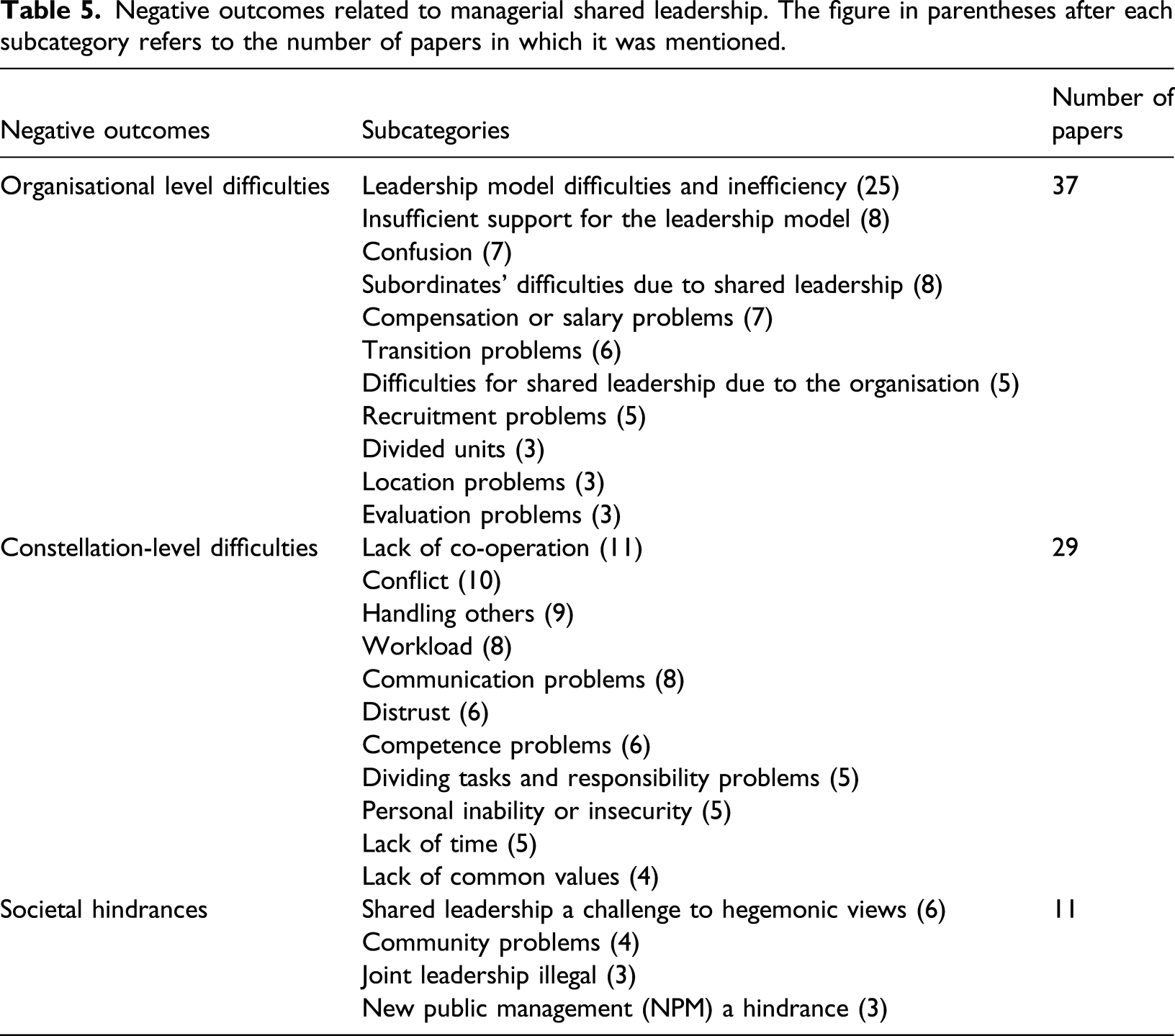
Constellation-level difficulties. The difficulties that occurred within the sharing constellations showed in a variety of ways (see Table 5). There was a lack of cooperation as well as conflict, distrust, communication problems and a lack of common values. The sharing leaders sometimes had difficulties in dividing tasks and responsibilities, or suffered from personal inabilities, insecurity or lack of competence. In addition, they sometimes described an overwhelming workload despite (or because of) the sharing, which could manifest as long working hours and an unhealthy work situation. Also, a lack of time was described as making cooperation difficult, which manifested as insufficient time for communication and a deepened inability to tackle problems together.
Organisational level difficulties. Especially related to constellation-level difficulties were organisational problems that we identified as: leadership model difficulties and inefficiency, insufficient support for the leadership model, confusion and difficulties among subordinates due to lack of cooperation within the constellation. For example, a toxic relationship between sharing leaders could permeate throughout the organisation. Furthermore, there were other kinds of organisational issues concerning compensation and salary, recruitment, location and evaluation problems (see Table 5).
Societal level hindrances. Finally, we identified problems emanating from the societal level. These were not related to the functioning of specific constellations, but emanated from the fact that managerial shared leadership challenged the predominant view of solo leadership. In this category, we found cases where a society had legally prohibited joint leadership 5 or where New Public Management had been identified as a hindrance (Madestam, 2017).
V. Conceptual usage – the labelling of managerial shared leadership
Managerial shared leadership as a research field would benefit from well-defined and consistent usage of concepts relating to both the sharing concepts and the organisational concepts used to link the sharing phenomenon to the formal organisation. Yet, the empirical papers show a scattered and inconsistent use of concepts.
Sharing concepts used
Main managerial sharing concepts appearing in title, abstract or text. Concepts grouped after prefix.
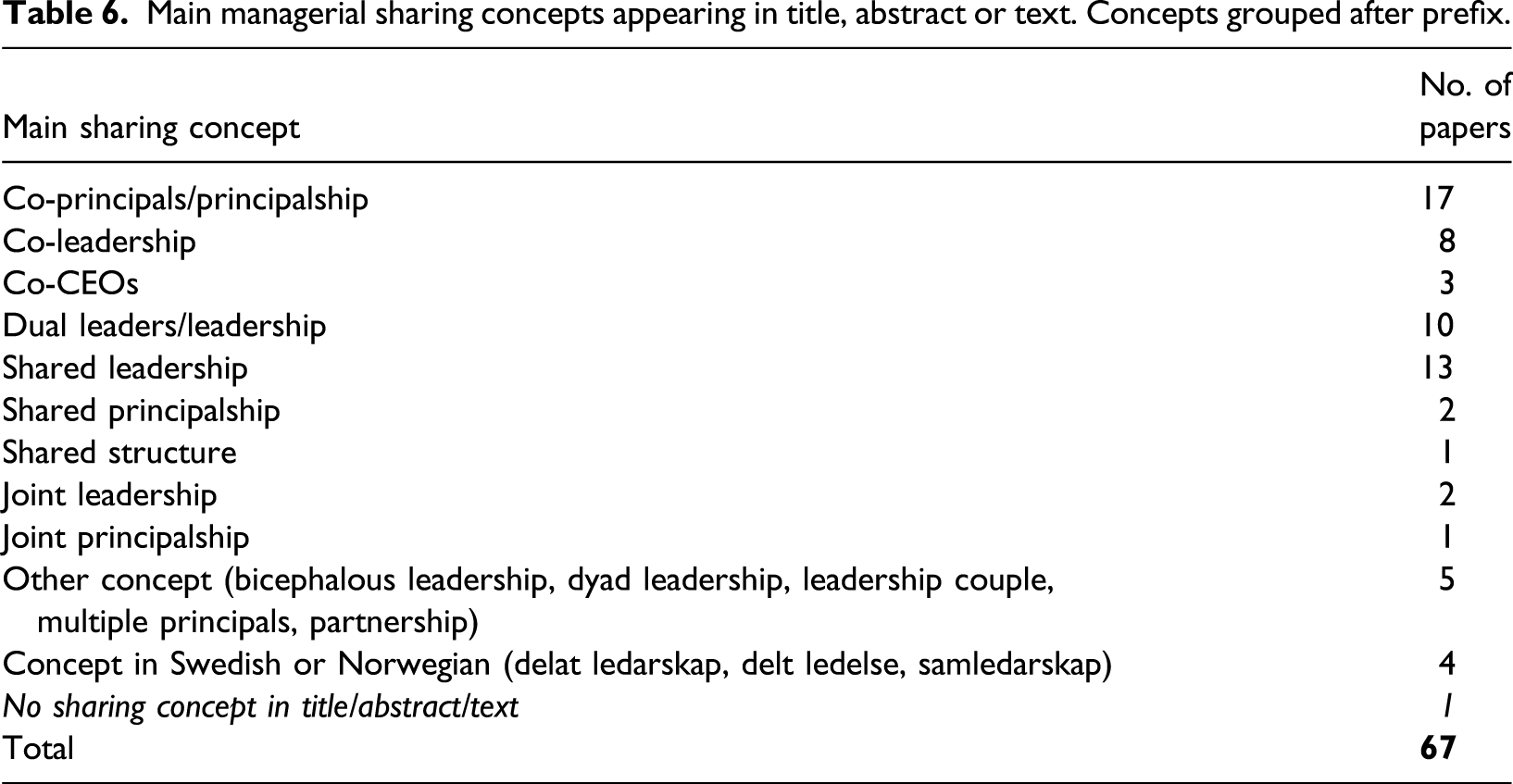
Besides our identification of main concepts, we noted that scholars’ struggle to grasp the sharing phenomenon generated a huge variety of terms in the main text of the papers – a sign of scientific incoherence or immaturity in this research field. Three quarters of the 67 papers used two or more terms for sharing leaders, while a fifth used five or more. Examples included: co-heads, formalised dyads, co-directors, rotating leadership, duo, pair-leadership, multiple leadership, equal or dyad partners, two-getherness and twosome-ness. Yet, some papers contributed to the field by elaborating and suggesting defined subforms of managerial sharing (Döös, 2015; Court, 2003) like functionally shared leadership or vertically invited leadership. Over time, there was no sign of increasing conceptual coherence. The prefixes co-, dual, shared, joint and others continued to co-exist. In the last 5 years of the papers, dual and shared were equally common, followed by co-, and two occurrences of joint and one each of bi- and dyad.
Organisational concepts used
When the sharing phenomenon was captured by an organisational concept, model and structure were the most frequently used terms, producing a plethora of combinations like leadership structure, governance structure or organisational model. Some papers did not use any organisational concepts, while some used a few specific and defined concepts and others used a diversity.
Few papers used a consistent organisational term to label sharing people. Apart from team, the concept most often used was constellation.
Discussion
The result sections above show that the research field of managerial shared leadership exists and how it has been studied over 55 years. Knowledge about managerial shared leadership has moved far beyond the need to point out that such arrangements are surprising and can work. The results presented can be used in future research to identify areas where the empirical contributions are few or theoretically underdeveloped. Managerial shared leadership is not a single model that can be simply inserted into an organisation to produce a given result. Empirical studies reveal a plethora of ways of doing managerial shared leadership, the antecedents needed, and the many potential outcomes.
For the first 30 years (1965–1997) covered by this review, there was an empirical void where no studies of sufficient empirical quality for this review were published in scientific journals. However, some findings from this period are still of importance today, such as Hodgson et al. (1965), who contributed the constellation concept and West (1978), who devised a principle for how shared managerial work could be divided. His division of functions between two different task areas continues to be common today (e.g. de Voogt, 2006; Döös et al., 2018b; Ebbers and Wijnberg, 2017), while the suggestion of division between a social-emotional leader and a task-oriented leader (Hodgson et al., 1965; Senger, 1971) is no longer common. Contemporary studies add that there is no need to divide tasks at all (e.g. Wilhelmson, 2006). Some 20 years after West’s (1978) paper, managerial shared leadership began to take shape as an empirical research field and the phenomenon was received with surprise and fascination. It was described as being exciting and beneficial, it is pointed out that it works, but also that it was being neglected (Gronn, 1999; Heenan and Bennis, 1999; Troiano, 1999). Since then, interest in it has continued and grown and today there is a range of studies approaching managerial shared leadership from various angles. Also, the field has moved from studying top management constellations to including all managerial levels. It was not uncommon among the reviewed papers to emphasise managerial shared leadership as an alternative solution to problems identified with traditional solo leadership. For example, managerial shared leadership was suggested as a remedy to some of the negative consequences of solo leadership like heavy workloads and loneliness (Court, 2002; Eckman, 2007). It was also posited as a transitional solution to bridge cultures during mergers, organisational change or succession planning in family firms (Cater III and Justis, 2010; Arnone and Stumpf, 2010; Choi et al., 2018).
In the following, we discuss the empirical research-based knowledge about managerial shared leadership as an emerging research field, and introduce a managerial shared leadership theory in the making. Then, we discuss general shared leadership theory and critical leadership studies as two potentially helpful contexts in which managerial shared leadership studies and theory can thrive.
Theorising managerial shared leadership
In the reviewed papers, managerial shared leadership was portrayed as a model used in practice where responsibility is shouldered by two (or more) managers together. In contrast to thinking about managerial shared leadership as a model, previous literature has recognised shared and distributed leadership as theoretical perspectives. Shared and distributed leadership are seen as ways of thinking about practice (Spillane, 2005) and function as analytical tools to understand how leadership responsibilities and decision-making are done when spread between several individuals (Crevani et al., 2010). Along this line of thought, we suggest that leadership practice may also be analysed through the theoretical lens of managerial shared leadership, where a number of related concepts form a theory construction. Below, such a theory in the making is laid out, based on our findings from the reviewed papers.
A theory in the making
Conceptual inconsistency and unawareness have been distinctive features of the empirical managerial shared leadership literature from the start and are still present. This continues to result in a lack of theoretical understanding. On the one hand, this originates in a desire to create a clear distance from mainstream solo leadership, which brings about innovative modes of expression instead of relevant theoretical concepts. On the other hand, especially in later years, the conceptual variation reflects ignorance about managerial shared leadership as a research field, or even an unwillingness to conform into concepts and theory constructed by others. Each main concept we identified in the reviewed papers (see Table 6) was loaded with different meanings by different authors. In constructing managerial shared leadership as a research field, we offer here related concepts that form a theoretical foundation. Also, four structural concepts (see Figure 8) were employed in a tentative classification of the structural forms studied in the reviewed papers. The result of the classification is briefly presented below. Managerial shared leadership – structural aspects.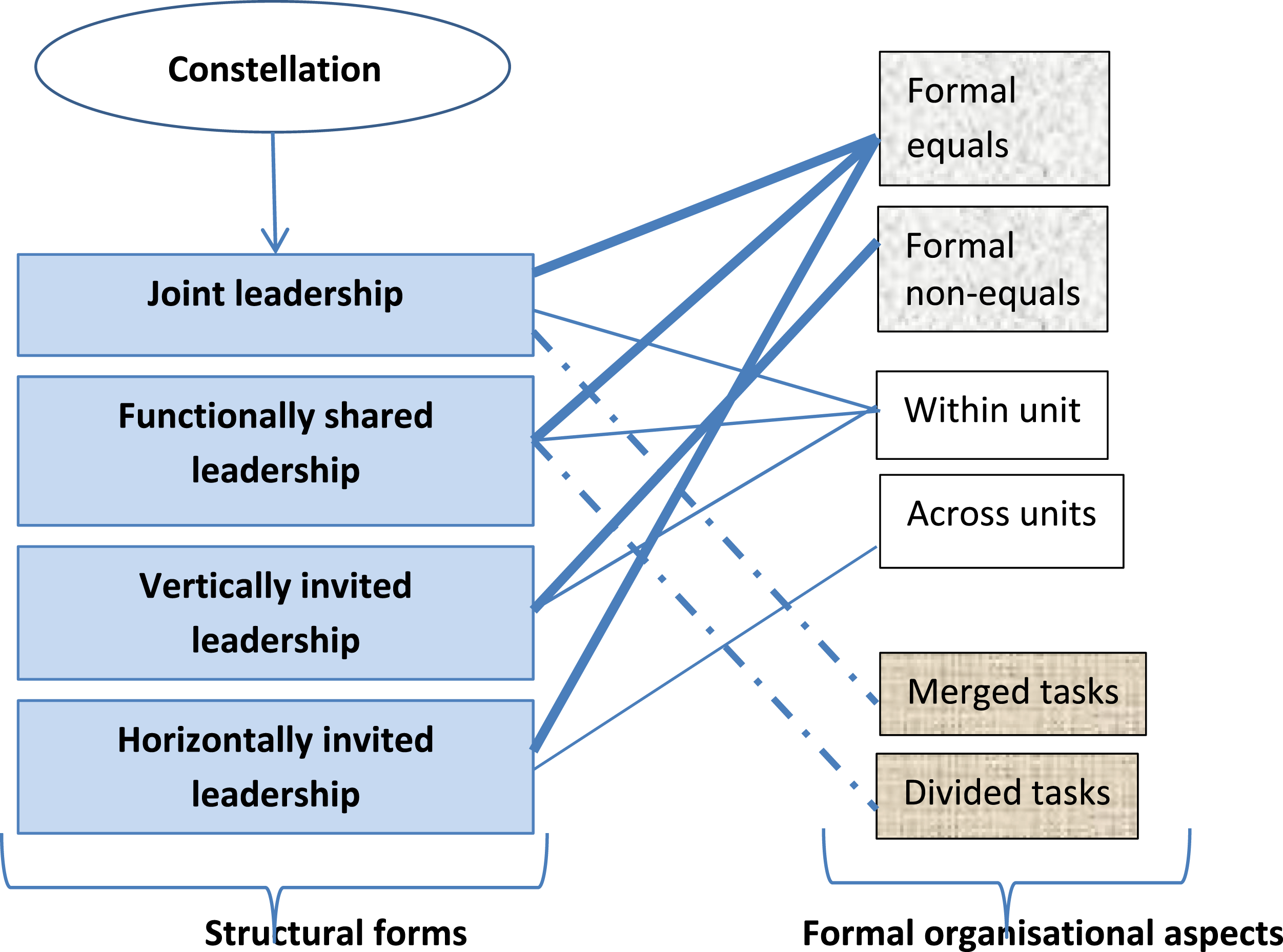
Managerial shared leadership is, we suggest, the main concept for sharing between managers – a concept relating to both managers and leadership. By not defining managerial sharing through the number of managers (i.e. using terms such as duo, dual, two-getherness or pair), the concept is kept open for the further study of existing variations in size and structural forms. This concept has the ability to unify the research field, thus making use of previous studies. Numbers do count (Gronn, 2008; Döös et al., 2017b), but not to the extent that it should split the field. The conceptual inconsistency is a hindrance when trying to make use of previous work, and risks hiding any affinities that various subforms may share. In the same unifying vein, and as the reader may have noticed, we have throughout the review consistently used the term constellation when referring to the entity formed by the sharing managers (see Figure 8). We argue that there is a need for such a specific concept if the research field is to coalesce. We have also avoided the far too general label of team. Hodgson et al. (1965) argue that role structures may vary on a continuum, where constellation and aggregate are the two poles. While aggregates are loosely structured, a constellation has room for both complementarity and integration, as well as for a tight interplay between the two. Thus, a constellation points to the tight collaboration and mutual taking of responsibility for the tasks that comprise sharing managers’ assignment. In cases with severe problems between the sharing managers, where no solid bedrock (Döös, 2015) is developed, the intended constellation would move along the continuum towards the aggregate.
Figure 8 shows that a managerial sharing constellation may either be built on formal equality or formal hierarchy, and either has managerial tasks in common or divided. In the light of the empirical studies in this review, a constellation does not need to be highly specialised, differentiated and complementary (as found by Hodgson et al. (1965)), but rather depends on the structural form of managerial shared leadership. Thus, there is a use for concepts that define different subforms. The empirical studies in this review use conceptualised subforms to a limited extent. Troiano’s (1999) abreast sharing arrangement signifies hierarchical equality, and the in tandem arrangement points to a vertical difference in rank. In line with Gronn’s (2009) search for a unit of analysis, we argue that concepts describing variations in pattern or arrangements of practice are valuable. Therefore, each constellation needs to be defined according to how it relates to formal organisational aspects (see Figure 8). It is important to distinguish between structural forms where the sharing managers are equal or unequal in rank, forms where the managerial assignment is divided according to some specialisation or merged and held in common and forms where the constellation runs one organisational unit or bridges organisational boundaries. We identified four defined structural forms of managerial shared leadership in the reviewed papers, and Figure 8 illustrates how they relate to formal organisational aspects of equality, work tasks and unit boundaries. All but one form (the vertical) concern sharing between formal equals and all but one (the horizontal) exist within one organisational unit. The horizontally invited leadership occurs across organisational boundaries. As seen in the figure, only joint leadership and functionally shared leadership by definition outline how tasks are distributed amongst the sharers as either merged or divided. In both vertically and horizontally invited leaderships, tasks can be distributed as the sharers themselves decide.
Joint leadership is characterised as being practised by managers who have the same managerial mandate and status, assume equal responsibility, share power and accountability, and have joint authority and merged work tasks (Döös, 2015; Wilhelmson, 2006). Neither is subordinate to the other. Likewise, functionally shared leadership is characterised by formal equality and collective responsibility for the managerial whole, but basically with divided work tasks in separate functions (Döös and Wilhelmson, 2020). Function here refers to a principle of organisational task division (e.g. Bratton, 2010). Also, horizontally invited leadership refers to formal equality, but implies sharing across organisational unit boundaries (Döös et al., 2018b). Finally, vertically invited leadership (de Voogt, 2006) implies a formal hierarchy of decision-making when it comes to issues of formal responsibility and authority, which may also signal differences in status in relation to employees and customers. Despite this formal hierarchy, the sharing managers regard each other as equals and practice joint responsibility and joint authority (Heenan and Bennis, 1999).
For this review, a tentative classification was made using the abovementioned structural forms, which showed that these four concepts were capable of classifying most of the 67 empirical studies. The two equal forms that take place within one organisational unit – joint leadership and functionally shared leadership – were the two most studied structural forms. Despite functionally shared leadership basically having leadership tasks divided, this form also builds on having some tasks in common (e.g. Döös and Wilhelmson, 2020; West, 1978). While most papers had one structural form in focus, 20% studied two or more forms. It is probable – but beyond this review’s scope to determine – that different forms to some extent are related to different antecedents, work processes and outcomes. It surprised us that vertically invited leadership was seldom the study focus. Rather, it seemed hidden in informality as a frequent in-praxis solution (Döös et al., 2012).
The above conceptualisations relate to the formal side of managerial shared leadership. There are also the processual and informal aspects, which represent the informal side. Figure 9 illustrates a process from antecedents to outcomes, where the antecedents interact with the everyday work of the sharing constellation, which in turn produces outcomes. This informal organising occurs between the sharing managers within the constellation and between the constellation and staff and the organisation they lead, that is, the organisational context. The antecedents are of two types: the enabling and the necessary. A two-way arrow between antecedents and the work of a sharing constellation symbolises that there are antecedents created in the constellation’s work processes. For example, the necessary bedrock antecedent is continuously constructed and reconstructed between the managers. Finally, the outcomes are of two types: the intended results and the side-effects, that is, the consequences. Managerial shared leadership – processual aspects relating the formal and informal sides to antecedents and outcomes.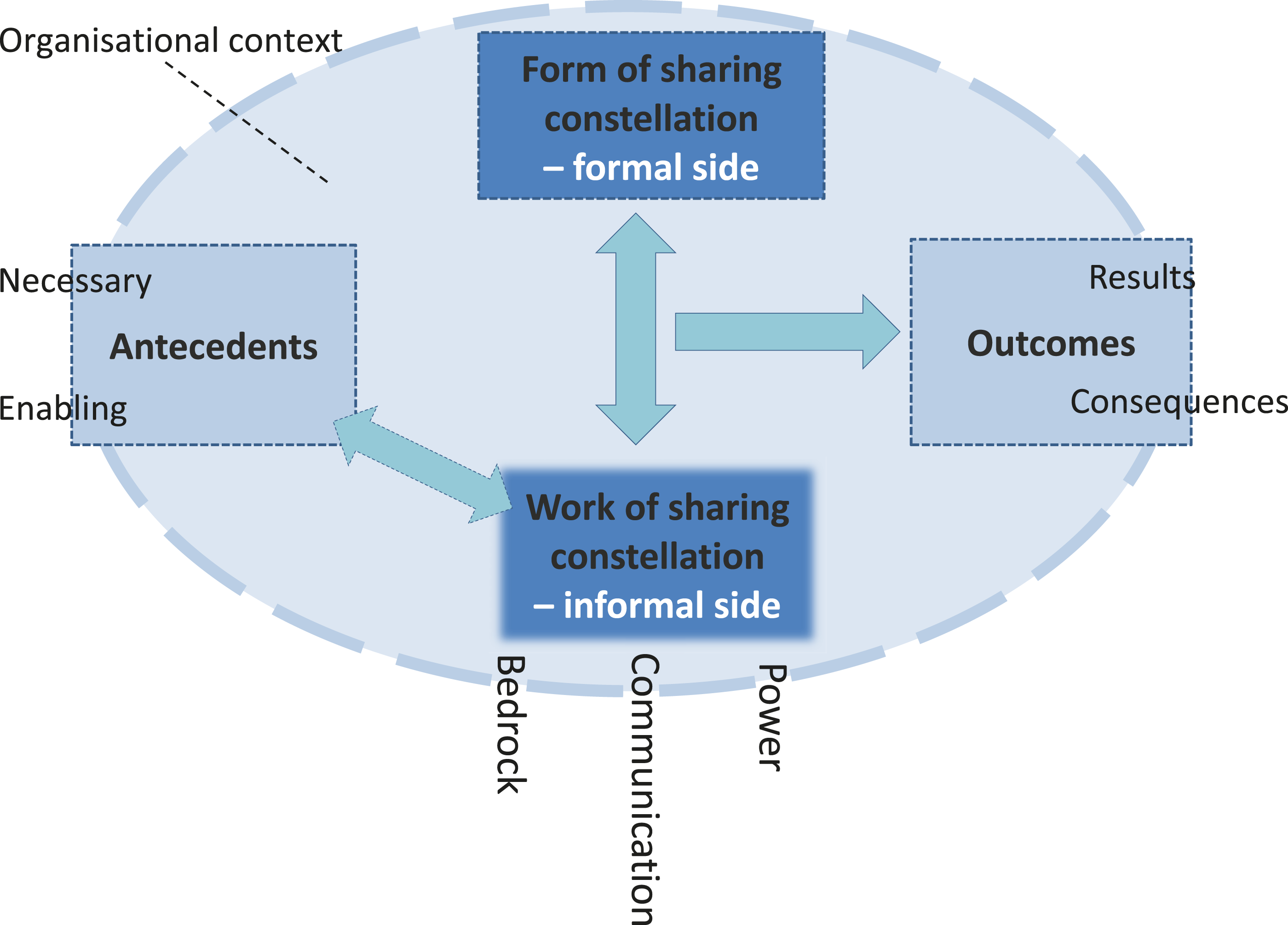
This review shows that a relational value-based platform, or bedrock, is the core antecedent for managerial shared leadership. It conditions the leaders’ quality of collaboration and responsibility-taking. Also, the complementarity Hodgson et al. (1965) identified is built on a relational bedrock. The necessity of a value-based platform has been brought up throughout the years in different ways. Heenan and Bennis (1999) emphasised qualities like balanced power, egalitarianism, trust, togetherness and to ‘celebrate the enterprise, not the celebrity’ (p. 273). Sally (2002) argued that, for the two consuls in the lead of the Roman Republic ‘attention was paid to assuring that each consul had a task of roughly equivalent importance and an equal opportunity for glory’ (p. 89). He stressed the importance of perks and symbols, showing that there may be two (or more) leaders, but only one office. Among the reviewed papers, Döös and colleagues stressed the importance of the bedrock of managerial shared leadership, describing a triad: mutual trust, reciprocal lack of pretension and values held in common (Döös, 2015; Döös et al., 2018b). Values held in common constitute a foundation for the building of trust, and concern two equally important aspects, that is, the goal and vision of the activity, and how to lead and treat human beings (Döös, 2015). Several papers described similar qualities like a trustful and loyal relationship (Klinga et al., 2016; Rosengren and Bondas, 2010), humility (Clausen et al., 2017), keeping egos in check or to have low egos (Eckman, 2007; Grubb and Flessa, 2006) and having a similar scope of job, role and responsibility (Bhattacharyya and Jha, 2013) or a need for compatibility of ethos (Masters, 2013).
There are also enabling antecedents at the organisational level in relation to staff, and at the relational level between the sharing leaders (e.g. frequent communication, ways of thinking and working and competence differences). The emergence of antecedents through the work of the sharing constellation is further symbolised in Figure 9 by the three words: bedrock, communication and power, like three pillars in the everyday organising work processes. Furthermore, there are influence processes between the informal and formal sides, where organisational decisions are made about the structural form, constellation size and so on. Troublesome outcomes were found in the review in the form of organisational difficulties, difficulties within the sharing constellation and societal hindrances. As described in the results, we identified a wide variety of positive outcomes, both for the organisation and for the sharing managers.
Two potential research contexts
We identify two theoretical contexts in the literature where openings might exist to engage in studying managerial shared leadership. We propose that the abovementioned theory could potentially link to a) plural leadership studies, especially shared and distributed leadership, and perhaps also to b) critical leadership studies.
By constructing managerial shared leadership as an emerging research field through this review, we hope to contribute to an awareness of the field’s existence and facilitate easier identification of previous studies. In this review, we have offered conceptual labels that might be further developed or questioned in future research. Our theory in the making is a potentially useful lens to identify and create further knowledge about managerial shared leadership. The structural aspects (see Figure 8) are fairly well understood today, and form a conceptual basis that may, for example, be used to design future comparative studies. They also point to areas where there is a lack of empirical studies. The processual aspects (see Figure 9) are much less researched, and it remains to be studied how the sharing and distribution of tasks and power within managerial shared leadership constellations is done in ongoing work processes. Scholars in the mainstream fields of shared and distributed leadership could, for example, feel motivated to study managerial shared leadership as an alternative model of vertical leadership that potentially widens the distribution of leadership tasks in an organisation. The field would benefit from questions being asked about how leadership processes function within constellations of differing kinds, and also about how the identified antecedents for managerial shared leadership may be tied to those identified for shared leadership in general (Wassenaar and Pearce, 2018).
The literature on plural leadership connects to, and to some extent already includes, the managerial shared leadership phenomenon (Denis et al., 2012) – especially when it comes to shared leadership theory (Pearce and Conger, 2003). In this context, there are several potential points of connection. As mentioned above, the continuous interest in the relationship between shared and vertical leadership (Binci et al., 2016; Ensley et al., 2006; Pearce and Manz, 2014; Wassenaar and Pearce, 2018) would be a start. This interest points out that shared and distributed leadership both tend to profit from support from an appointed leader. This might fuel further interest in managerial shared leadership per se as it is suggested to serve as a role model of democratic cooperation in organisations. Wilhelmson and Döös (2016) found that, in cases of joint principalship, the decision-making power did not remain solely with the principals, but empowered teachers who then wanted to involve their pupils. Furthermore, shared leadership theory ‘offers a concept of leadership practice as a team-level phenomenon where behaviors are enacted by multiple individuals’ (Bligh et al., 2006: 305). We suggest this team concept is also useful for thinking about teams of formal leaders, that is, constellations of managerial shared leadership. Overall, this suggests that shared leadership theory is a supportive context for the managerial shared leadership phenomenon to rise out of the shadows – a context where managerial shared leadership is recognised as a manifestation within the overarching theory of shared leadership.
As researchers within the field of managerial shared leadership, we agree with the critique of the grand man theory and the myths of leadership as visionary and heroic (Alvesson and Sveningsson, 2003; Tourish, 2013; O'Toole et al., 2002). We thus combine with critical leadership studies in identifying problems of principle within the mainstream leadership field. However, managerial shared leadership seems like a blind spot for critical leadership studies, and a number of critical leadership studies pay no attention to it, for example Alvesson and Spicer (2014), Jones (2014), Learmonth and Morrell (2017), Quick (2017), and Tourish (2013). Thus, it appears as if being critical and focussing on the dark sides of solo leadership (Tourish, 2013; Alvesson and Spicer, 2014) risks not developing plural alternatives or scrutinising or problematising them. Managerial shared leadership is still often portrayed as an alternative to solo leadership in the empirical studies of this review. As these sharing alternatives exist in practice, they are important to study and create knowledge about. In the critical leadership field, there is interest in phenomena adjacent to managerial shared leadership, as well as relevant analysis tools (e.g. Alvehus, 2019; Empson, 2020; Fox and Comeau-Vallée, 2020; Crevani et al., 2010). This may result in increased interest in studying managerial shared leadership.
An emerging research field
The research field of managerial shared leadership appears fragmented due to a lack of integrated research. Its studies do not accumulate but are isolated in different sectors, and cross-referencing between papers seems weak. The broad variation in main concepts is striking and continues to create difficulties for managerial shared leadership as an emerging research field. Ever since its inception, there has been no sign of increasing conceptual coherence.
That said, we obtained coherent results for some generic aspects of managerial shared leadership in the 67 empirical papers in the review. It is possible that the field is gaining structure as the identified antecedents and positive and negative outcomes are to a large degree coherent, in spite of the different sectors, methods and theoretical perspectives. Even though many studies in the field are not connected, important conclusions are often unanimous, and this could indicate an emerging essence for the field as a whole. The result of the abovementioned classification of managerial shared leadership forms is another sign of possible coherence.
In this multidisciplinary field, where the 67 reviewed papers were spread across 53 scientific journals, it is typical to publish in sector-specific journals (e.g. healthcare and education). A relevant question here is whether this is because of high sector-specific relevance or because it is somehow easier to get managerial shared leadership papers accepted in sector-specific journals. Both reasons are probably valid to some extent. That no general leadership journal has recognised managerial shared leadership as an empirical research field in its own right – meaning no frequent papers or special issues – may be interpreted as a combination of negligence and lack of knowledge about the phenomenon. We suggest that general leadership and management journals have a role to play, especially when it comes to further theory development and moving managerial shared leadership research beyond being merely a solution to problems caused by solo leadership.
With some exceptions (e.g. Döös, 2015; Court, 2003), there is a lack of awareness about conceptualised structural forms of managerial shared leadership. In order to develop managerial shared leadership into a recognised research field, we offer our theoretical framework. Also, there is room for new types of studies like the in-depth study of interaction through recorded talk (Vine et al., 2008) or the study of conflict dynamics between sharing leaders (Reid and Karambayya, 2009). Also, the vital issue of trust is interesting to explore empirically in relation to a theoretical conceptualisation of trust (Dietz and Den Hartog, 2006). The fact that gender issues are largely disregarded in the field also calls for some attention from gender theoretical points of view. Another interesting question for the future could be how many people are optimally able to co-exist in a sharing constellation and how to best support it. Other questions are to what extent the phenomenon exists in different forms in different parts of the world, and whether there are studies in languages other than English and Scandinavian. As the current norm is still to think of leadership or management as being done by a singular person, this review calls for increased awareness of managerial leadership in the plural.
That managerial shared leadership is here to stay is hardly a bold statement. This plural sort of leadership has, in various forms, been found to exist since before Christ (Sally, 2002), was warned of at the start of the 20th century (Fayol, 1916), has been researched since at least 1965 (Hodgson et al., 1965) and is studied today with more frequency (e.g. Döös and Wilhelmson, 2020; Bhansing et al., 2016; Bunnell, 2008; Choi et al., 2018). Yet, in leadership practice, we note a tendency to return to habitual thinking and old ruts (e.g. Döös and Wilhelmson, 2020; Liljenberg and Andersson, 2020). In the managerial shared leadership research field, there is a perennial trend of subordinating it to solo leadership. The habit of putting an equals sign between a managerial position and the number one is ingrained, and there is always the risk of falling back to solo solutions (Döös and Wilhelmson, 2020) either because of organisational forgetfulness (Brunsson, 2006) or legislative ignorance and resistance (Örnberg, 2016; Döös et al., 2018a; Upsall, 2004; Court, 2004a).
Research continues to ask for new organisational ideals (Tengblad et al., 2018) based on the understanding that complexity demands the ability to survey and understand jointly. This argument was presented early on (Drucker, 1954; Hodgson et al., 1965) and is still valid today. Given managerial shared leadership’s longstanding practice, we argue that the time has come to incorporate it into mainstream thinking about leadership – a phenomenon to research in its own right and something to consider in leadership studies in general. An increase in the awareness of managerial shared leadership in future leadership studies would be a welcome result of this review. Leadership researchers who are not used to shifting their focus beyond individual leadership run the risk of arriving at simple answers and/or false conclusions. In turn, leadership researchers within the frame of shared and distributed theory are at risk of missing the relevance of managerial shared leadership due to it being rooted in traditional vertical organisations’ appointment of managers. Even in these plural contexts, we note the habit of referring to vertical leaders in the singular (e.g. Wassenaar and Pearce, 2018) even though a managerial shared leadership constellation would be beneficial for the wider sharing of leadership in an organisation. The ‘two-person case’ (Pearce and Conger, 2003: 8) is not attended to.
Finally, as researchers within this field, we are not suggesting managerial shared leadership as an alternative to all solo leadership and singular managers; both in practice and in research, we welcome an awareness of plural alternatives so that it is no longer the case that a leadership position should routinely be assigned to a single leader. Furthermore, the issue of how leadership is organised needs to be reconsidered when assessing the outcomes, success, sustainability and value of leadership to the organisation. Pluralism in how to organise leadership positions, calls for a thorough deliberation concerning when and in which structural form managerial shared leadership is appropriate.
Footnotes
Acknowledgement
We thankfully acknowledge our university library’s agreements with scientific publishers, which have made it possible to easily access all the papers we needed for this literature review.
Declaration of conflicting interests
The author(s) declared no potential conflicts of interest with respect to the research, authorship, and/or publication of this article.
Funding
The author(s) received no financial support for the research, authorship, and/or publication of this article.
