




Abstract
There is increasing interest in asking patients questions before their visits to elicit goals and concerns, which is part of the move to support the concept of coproducing care. The phrasing and delivery of such questions differs across settings and is likely to influence responses. This report describes a study that (i) used a three-level model to categorize the goals and concerns elicited by two different pre-visit questions, and (ii) describes associations between responses elicited and the phrasing and delivery of the two questions. The questions were administered to patients with rheumatic disease, and patients with inflammatory bowel disease (IBD). Paper-based responses from 150 patients with rheumatic disease and 338 patients with IBD were analyzed (163 paper, 175 electronic). The goals and concerns elicited were primarily disease or symptom-specific. The specific goal and concern examples featured in one pre-visit question were more commonly reported in responses to that question, compared to the question without examples. Questions completed electronically before the visit were associated with longer responses than those completed on paper in the waiting room. In conclusion, how and when patients’ goals and concerns are elicited appears to have an impact on responses and warrants further investigation.
Introduction
Eliciting patients’ goals and concerns can be a valuable method to better understand “what matters most” to patients. 1 However, how and when to best ask patients to express their goals and concerns is an emerging area of research. Questions developed to elicit goals commonly add a query about concerns, despite the two concepts being different. Concerns describe discomfort stemming from an issue (health-related or otherwise), whereas goals have intention, and are future-oriented. Responses to goal-eliciting questions will likely be influenced by how questions are formulated and by how much guidance is given.2,3
To explore this issue further, questions used in studies conducted within the Arthritis Foundation's Rheumatology Learning Health System (AF RLHS) and the Crohn's & Colitis Foundation's Inflammatory Bowel Disease (IBD) Qorus Learning Health System (LHS) were compared. The aim was to: (i) use a three-level model 4 to categorize the goals and concerns elicited by two different pre-visit questions, and (ii) describe associations between responses elicited and the phrasing and delivery of the two questions.
Methods
Design
A secondary analysis was conducted of datasets containing patient responses to questions about goals and concerns from two settings: the AF RLHS and IBD Qorus LHS.
Settings, participants, and questions compared
Data were obtained from two studies: (1) patients 18 years or older with a rheumatic disease diagnosis at the Veterans Affairs (VA) rheumatology clinic in Dallas, Texas; and (2) patients over the age of 18 who attended clinics that were part of the IBD Qorus LHS. In both groups, patients were asked to respond to a pre-visit question (see Appendix 1) to elicit their goals and/or concerns.5–7
Four key similarities and differences in the wording of the two questions were noted. Both questions: (i) did not draw a distinction between the concept of goal versus concern; (ii) directed patients to focus on healthcare related issues; and (iii) asked the response to be singular. Fourth, the IBD Qorus question provided guidance by giving examples such as surgery, travel, and cost Appendix 1 shows the question used in each setting.
Data collection
Study 1
Patients with rheumatic disease received a pre-visit intake packet to complete in the waiting room. Responses to the first question in the packet were analyzed (see Appendix 1). Responses were collected from April to September 2019. Due to the high volume of responses, a sample of 150 responses were selected for analysis using a random number generator.
Study 2
Patients enrolled in the IBD Qorus platform received an email request one week prior to their encounter to complete a 23-item online survey. A different group of patients completed the survey on paper in the waiting rooms. Responses to the first survey question were analyzed (see Appendix 1). Online data collected between 2015 and 2017 were obtained. Paper surveys were analyzed from a sample collected in February 2018. A total of 654 paper and 705 electronic surveys were completed. Due to the high volume of responses in the given timeframe, every fourth survey response was selected, which yielded a sample of 163 paper and 175 electronic responses for analysis.
Analysis
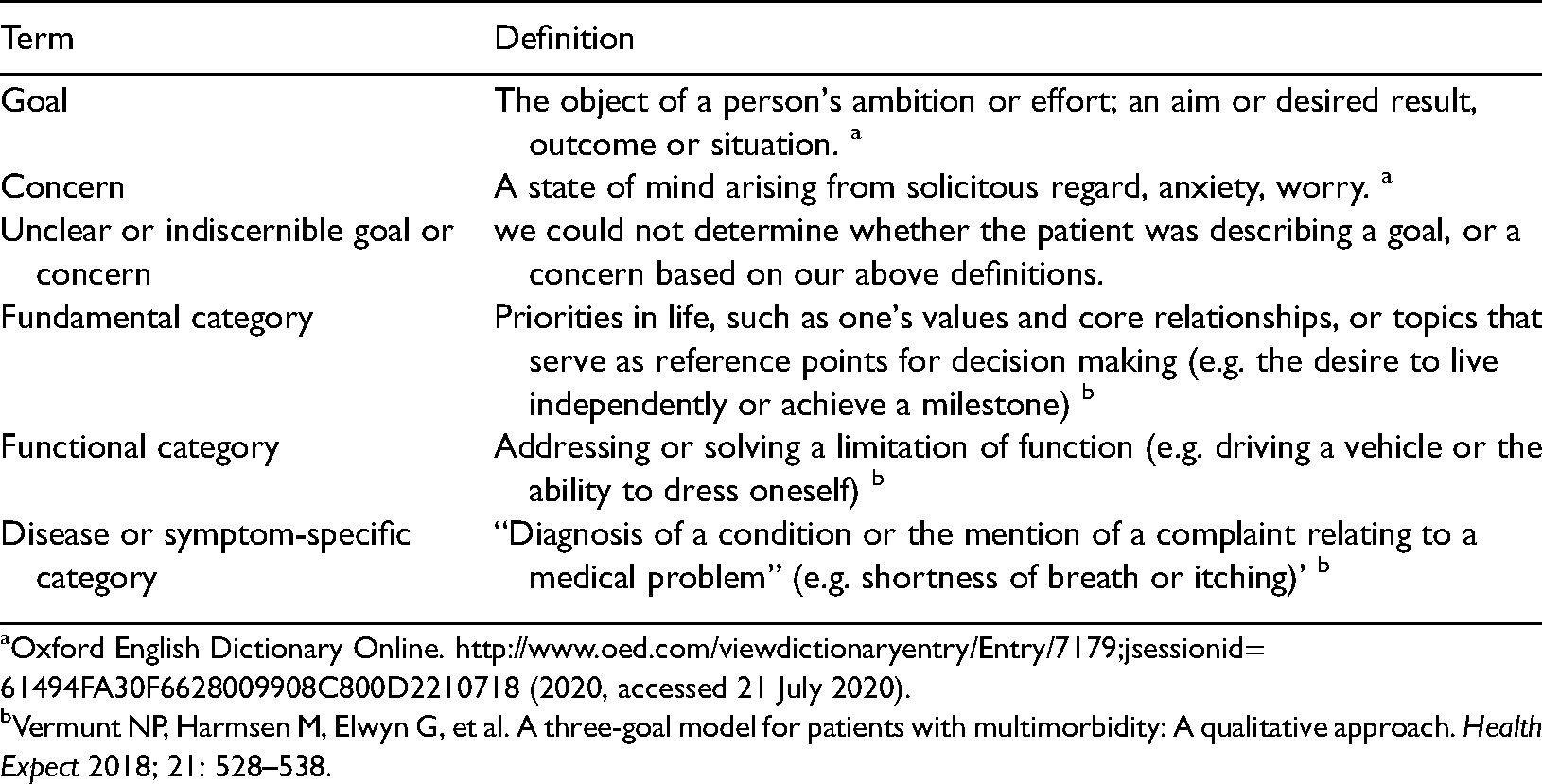
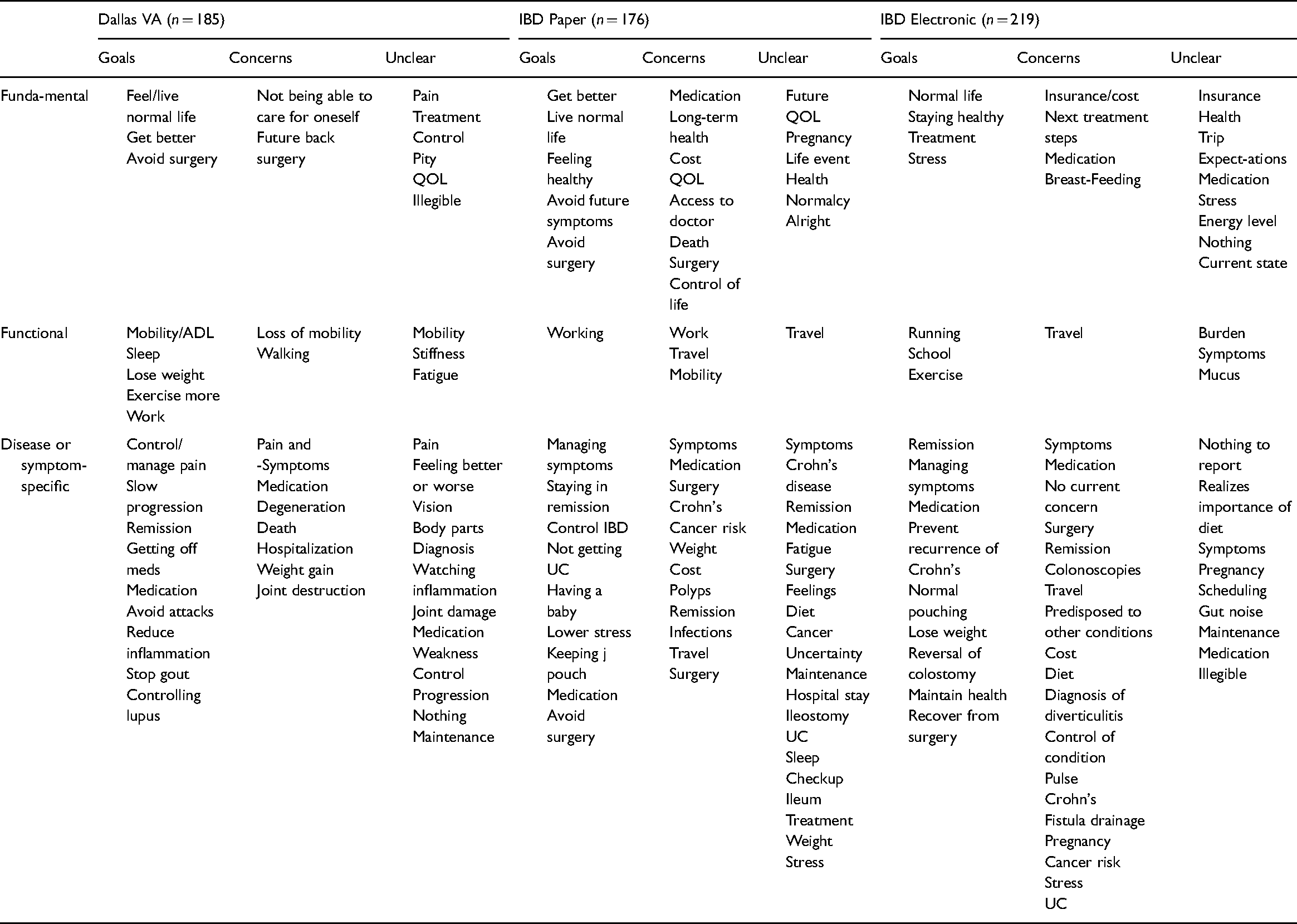
To address aim 1, a framework analysis was conducted based on the “three-goal model”, which consists of the following categories: fundamental, functional, or disease or symptom-specific goals. 4 Appendix 2 provides a definition for each category. Two researchers independently coded a random sample of 10 responses using the codebook (see Appendix 3) and checked the categorization with the rest of the research team. The two researchers then proceeded to code the remaining responses. To address aim 2, a description of how responses differed (i.e. content, length) across question phrasing and delivery characteristics was provided.
Results
Summary of response data
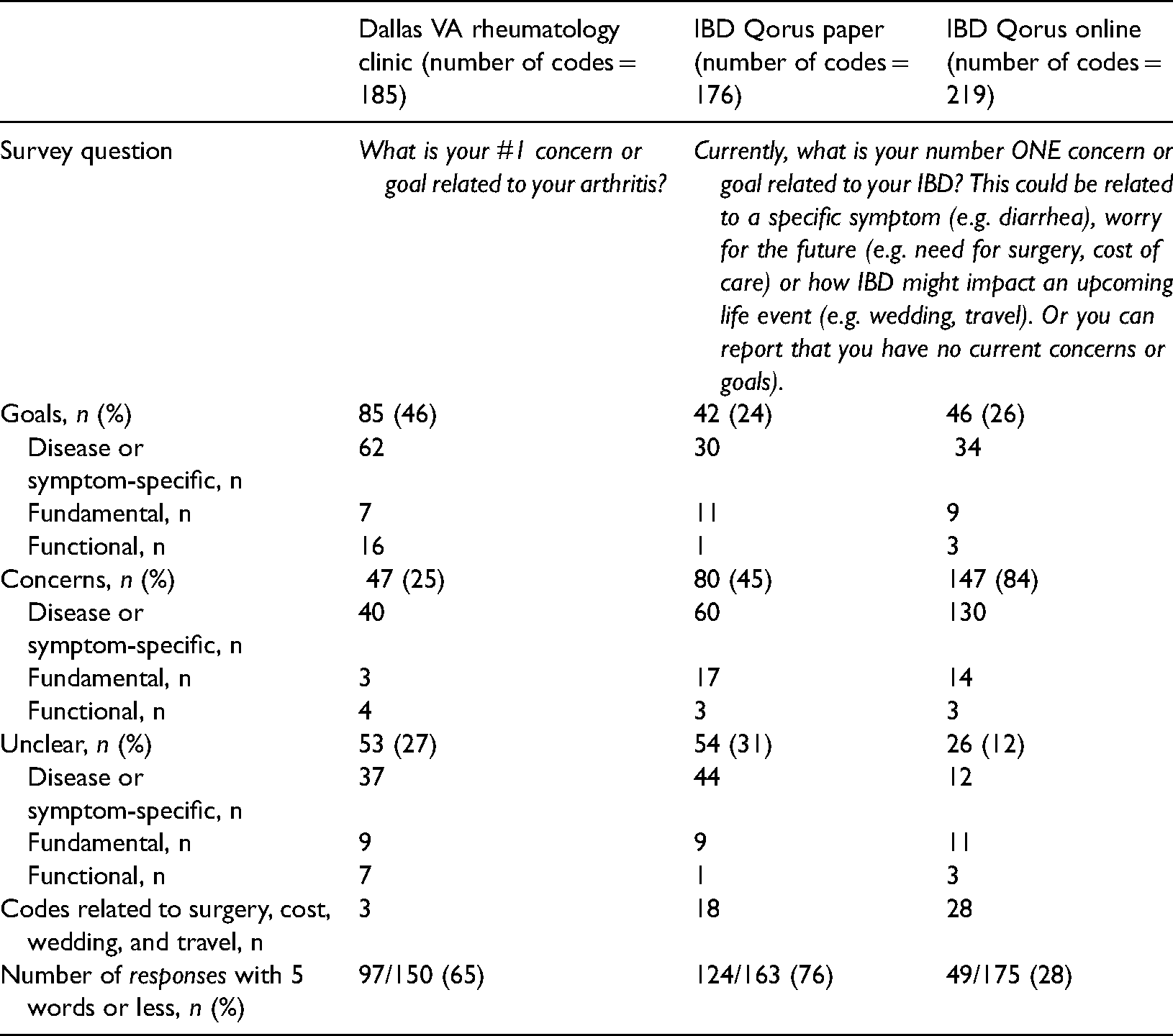
A total of 488 patient responses was collected: 150 from the Dallas VA (paper) and 338 from the IBD Qorus LHS (175 electronic, 163 paper). The 488 responses across both settings contained 580 codes. Appendix 4 details key examples of patients’ goals and concerns (including examples of unclear or indiscernible responses) based on the three-goal model. The majority of codes (77%, 449/580) were in the disease or symptom-specific category. 16% (90/580) were in the fundamental category, and 7% (41/580) were in the functional category.
Response differences across questions and delivery characteristics
The examples of surgery, travel, and cost featured in the IBD Qorus question were more frequently reported in the IBD Qorus sample (10%, 41/395) compared to the Dallas VA sample (2%, 3/185). The IBD Qorus responses contained a higher percentage of fundamental goals and concerns (paper: 16%, 28/176; electronic: 11%, 23/219) compared to the Dallas VA responses (4%, 7/185). Dallas VA responses however, contained a higher percentage of functional goals and concerns (11%, 20/185) compared to the IBD Qorus responses (paper: 2%, 4/176; electronic: 3%, 6/219) (see Figure 1).
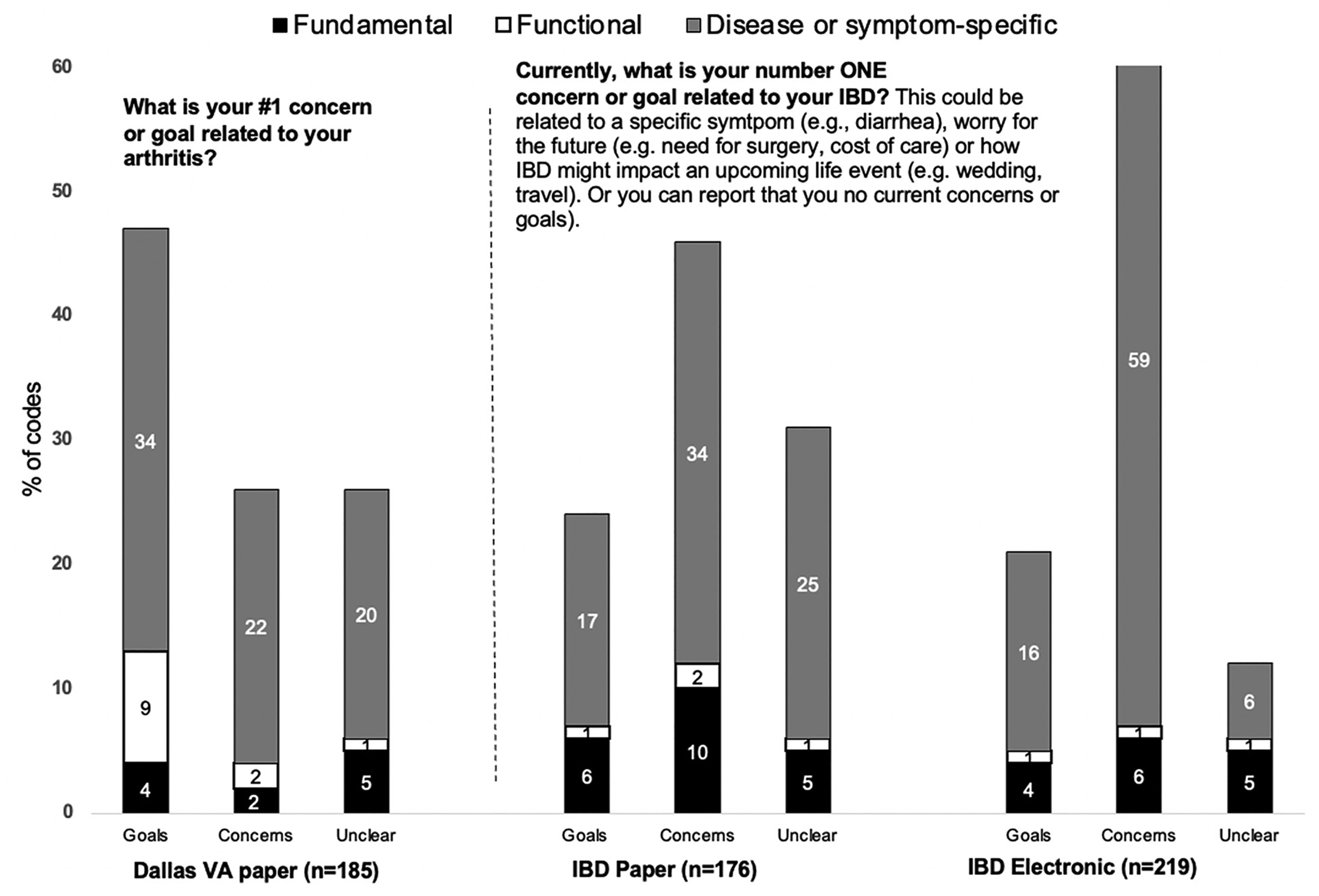
The percentage of codes for each “three-goal” model category.
Responses provided on paper in the waiting room were brief compared to the responses collected electronically prior to the clinic visit. For example, 76% (124/163) of responses on the IBD Qorus paper survey and 65% (97/150) of responses from the rheumatology clinic paper intake packet contained five words or less. Only 28% (49/175) of electronic survey responses contained five words or less (see Appendix 5).
Discussion
Findings from this study suggest that how and when patients’ goals and concerns are elicited has an impact on responses. Disease or symptom-specific goals were the most prioritized across patients. Examples provided in the IBD Qorus question were commonly featured in IBD patients’ responses, but less so in those of VA patients. Further, electronic question delivery before the visit yielded lengthier responses than paper delivery in the waiting room.
A major limitation is that each group came from different disease and clinic settings, and information was not available on demographic differences. Different practice settings likely also contribute to different concerns (i.e. cost is less likely to be a concern for patients at the VA). Despite these factors, this work serves as an important first step in identifying key elements of question design and delivery that require further research.
Other health systems ask patients questions such as “what matters to you?” in the workflow to facilitate meaningful conversations between patients and providers.8,9 However, none of these systems have studied if or how various formulations of goal questions impact patient responses.
Ultimately, it may be problematic to simultaneously ask for both goals and concerns. Conceptually, concerns are relatively easy to elicit considering they are predictors of help-seeking behaviors. Marrying the two concepts may lead a patient to state their concerns, but not realize the embedded and unvoiced goal in their response. How we formulate questions to elicit the goals and concerns of patients with chronic conditions likely influences their responses. More work is needed to determine how to best ask questions to facilitate more effective coproduction of care.
Footnotes
We would like to thank Jabeen Ahmad, Dr Alex H. Gifford from the Dartmouth-Hitchcock Medical Center and Kathy Sabadosa from the Cystic Fibrosis Foundation for reviewing the study protocol and being part of early project discussions. We would also like to thank the Crohn's & Colitis Foundation's IBD Qorus™ Learning Health System and the VA Medical Center in Dallas for providing the datasets for our study.
Contributorship
Concept: GE and GN. Acquisition of data: LCJ, WKvD, SBR. Analysis of data: PS and JE. Interpretation of data: All authors. Drafting manuscript: PS. Critical revision of manuscript: All authors. All authors read and approved the final manuscript.
Declaration of conflicting interests
The author(s) declared the following potential conflicts of interest with respect to the research, authorship, and/or publication of this article: GE’s academic interests are focused on shared decision making and coproduction. He owns copyright in measures of shared decision making and care integration, namely collaboRATE, integRATE (measure of care integration), consideRATE (patient experience of care in serious illness), coopeRATE (measure of collaborative goal setting), incorpoRATE (clinicians’ willingness to incorporate shared decision making in practice). GE, EN, and GS are involved in research on the development and/or evaluation of an intervention to elicit patient goals and concerns, as well as a patient-reported measure of collaborative goal setting (coopeRATE). All other authors do not have conflicts of interests to declare.
Funding
This work has been funded by the Robert Wood Johnson Foundation (#75925), the Arthritis Foundation (#639214), and the Crohn’s & Colitis Foundation (#516181).
Ethical approval
Ethical approval for the secondary analysis of data presented in this manuscript was received from the Dartmouth-Hitchcock Health Human Research Protection Program Institutional Review Board (IRB) (STUDY02000168).
Informed consent
For patients in the IBD Qorus network who completed the survey electronically, they consented to the use of their deidentified data for research purposes. For the patients in the IBD Qorus network who completed the paper surveys, the requirement for consent was waived as the data was collected completely anonymously. Consent was also waived for the Dallas VA patients, as the goal prompt is considered part of standard care to improve healthcare delivery.
Guarantor
GE and EN are the guarantors of this study.

Trial registration
Not applicable, because this article does not contain any clinical trials.
Appendix
Comparing the questions used to elicit goals and/or concerns at each setting. The definitions of goals, concerns, and the “three-goal” model categories used in the framework analysis. Oxford English Dictionary Online. http://www.oed.com/viewdictionaryentry/Entry/7179;jsessionid=61494FA30F6628009908C800D2210718 (2020, accessed 21 July 2020). Vermunt NP, Harmsen M, Elwyn G, et al. A three-goal model for patients with multimorbidity: A qualitative approach. Health Expect 2018; 21: 528–538. Codes developed to determine themes. Feel/live normal life Get better Avoid surgery Not being able to care for oneself Future back surgery Pain Treatment Control Pity QOL Illegible Get better Live normal life Feeling healthy Avoid future symptoms Avoid surgery Medication Long-term health Cost QOL Access to doctor Death Surgery Control of life Future QOL Pregnancy Life event Health Normalcy Alright Normal life Staying healthy Treatment Stress Insurance/cost Next treatment steps Medication Breast-Feeding Insurance Health Trip Expect-ations Medication Stress Energy level Nothing Current state Mobility/ADL Sleep Lose weight Exercise more Work Loss of mobility Walking Mobility Stiffness Fatigue Working Work Travel Mobility Travel Running School Exercise Travel Burden Symptoms Mucus Control/ manage pain Slow progression Remission Getting off meds Medication Avoid attacks Reduce inflammation Stop gout Controlling lupus Pain and -Symptoms Medication Degeneration Death Hospitalization Weight gain Joint destruction Pain Feeling better or worse Vision Body parts Diagnosis Watching inflammation Joint damage Medication Weakness Control Progression Nothing Maintenance Managing symptoms Staying in remission Control IBD Not getting UC Having a baby Lower stress Keeping j pouch Medication Avoid surgery Symptoms Medication Surgery Crohn's Cancer risk Weight Cost Polyps Remission Infections Travel Surgery Symptoms Crohn's disease Remission Medication Fatigue Surgery Feelings Diet Cancer Uncertainty Maintenance Hospital stay Ileostomy UC Sleep Checkup Ileum Treatment Weight Stress Remission Managing symptoms Medication Prevent recurrence of Crohn's Normal pouching Lose weight Reversal of colostomy Maintain health Recover from surgery Symptoms Medication No current concern Surgery Remission Colonoscopies Travel Predisposed to other conditions Cost Diet Diagnosis of diverticulitis Control of condition Pulse Crohn's Fistula drainage Pregnancy Cancer risk Stress UC Nothing to report Realizes importance of diet Symptoms Pregnancy Scheduling Gut noise Maintenance Medication Illegible Goals, concerns, and unclear or indiscernible responses mapped onto the disease or symptom-specific, functional, and fundamental categories of the three-goal model. Overview of results.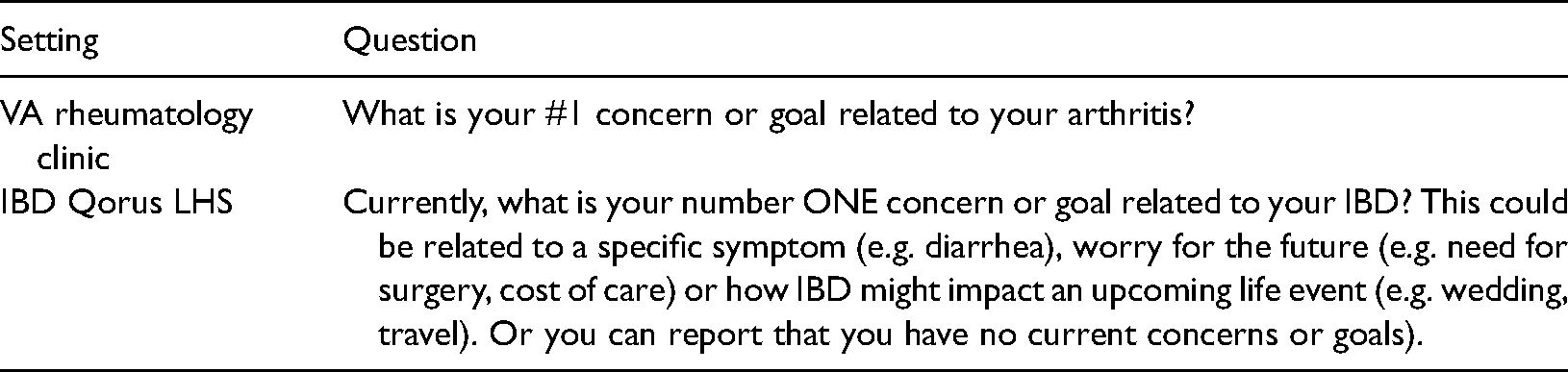
Setting
Question
VA rheumatology clinic
What is your #1 concern or goal related to your arthritis?
IBD Qorus LHS
Currently, what is your number ONE concern or goal related to your IBD? This could be related to a specific symptom (e.g. diarrhea), worry for the future (e.g. need for surgery, cost of care) or how IBD might impact an upcoming life event (e.g. wedding, travel). Or you can report that you have no current concerns or goals).
Term
Definition
Goal
The object of a person's ambition or effort; an aim or desired result, outcome or situation.
a
Concern
A state of mind arising from solicitous regard, anxiety, worry.
a
Unclear or indiscernible goal or concern
we could not determine whether the patient was describing a goal, or a concern based on our above definitions.
Fundamental category
Priorities in life, such as one's values and core relationships, or topics that serve as reference points for decision making (e.g. the desire to live independently or achieve a milestone)
b
Functional category
Addressing or solving a limitation of function (e.g. driving a vehicle or the ability to dress oneself)
b
Disease or symptom-specific category
“Diagnosis of a condition or the mention of a complaint relating to a medical problem” (e.g. shortness of breath or itching)’
b
Dallas VA (n = 185)
IBD Paper (n = 176)
IBD Electronic (n = 219)
Goals
Concerns
Unclear
Goals
Concerns
Unclear
Goals
Concerns
Unclear
Funda-mental
Functional
Disease or symptom-specific
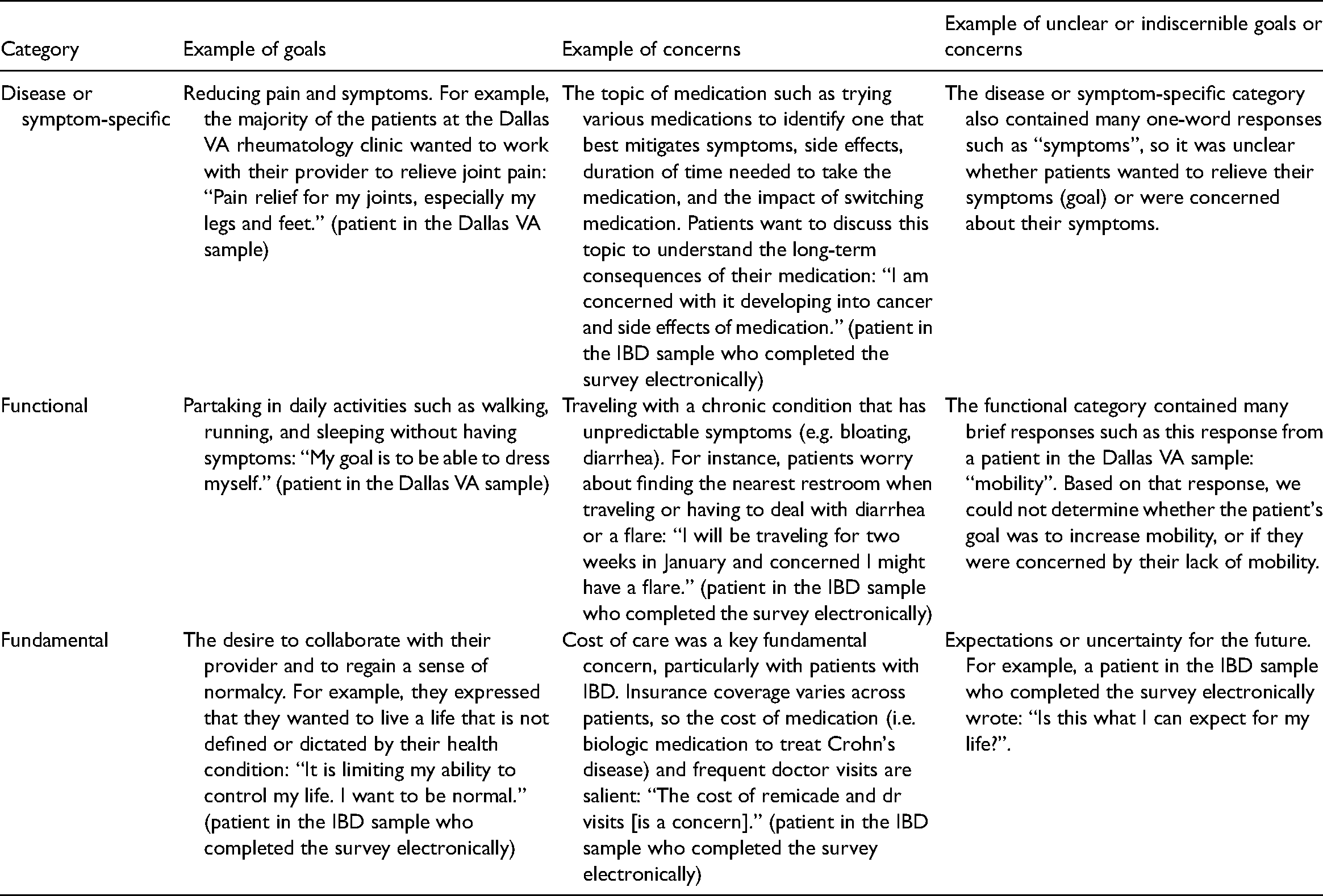
Category
Example of goals
Example of concerns
Example of unclear or indiscernible goals or concerns
Disease or symptom-specific
Reducing pain and symptoms. For example, the majority of the patients at the Dallas VA rheumatology clinic wanted to work with their provider to relieve joint pain: “Pain relief for my joints, especially my legs and feet.” (patient in the Dallas VA sample)
The topic of medication such as trying various medications to identify one that best mitigates symptoms, side effects, duration of time needed to take the medication, and the impact of switching medication. Patients want to discuss this topic to understand the long-term consequences of their medication: “I am concerned with it developing into cancer and side effects of medication.” (patient in the IBD sample who completed the survey electronically)
The disease or symptom-specific category also contained many one-word responses such as “symptoms”, so it was unclear whether patients wanted to relieve their symptoms (goal) or were concerned about their symptoms.
Functional
Partaking in daily activities such as walking, running, and sleeping without having symptoms: “My goal is to be able to dress myself.” (patient in the Dallas VA sample)
Traveling with a chronic condition that has unpredictable symptoms (e.g. bloating, diarrhea). For instance, patients worry about finding the nearest restroom when traveling or having to deal with diarrhea or a flare: “I will be traveling for two weeks in January and concerned I might have a flare.” (patient in the IBD sample who completed the survey electronically)
The functional category contained many brief responses such as this response from a patient in the Dallas VA sample: “mobility”. Based on that response, we could not determine whether the patient's goal was to increase mobility, or if they were concerned by their lack of mobility.
Fundamental
The desire to collaborate with their provider and to regain a sense of normalcy. For example, they expressed that they wanted to live a life that is not defined or dictated by their health condition: “It is limiting my ability to control my life. I want to be normal.” (patient in the IBD sample who completed the survey electronically)
Cost of care was a key fundamental concern, particularly with patients with IBD. Insurance coverage varies across patients, so the cost of medication (i.e. biologic medication to treat Crohn's disease) and frequent doctor visits are salient: “The cost of remicade and dr visits [is a concern].” (patient in the IBD sample who completed the survey electronically)
Expectations or uncertainty for the future. For example, a patient in the IBD sample who completed the survey electronically wrote: “Is this what I can expect for my life?”.
Dallas VA rheumatology clinic (number of codes = 185)
IBD Qorus paper (number of codes = 176)
IBD Qorus online (number of codes = 219)
Survey question
What is your #1 concern or goal related to your arthritis?
Currently, what is your number ONE concern or goal related to your IBD? This could be related to a specific symptom (e.g. diarrhea), worry for the future (e.g. need for surgery, cost of care) or how IBD might impact an upcoming life event (e.g. wedding, travel). Or you can report that you have no current concerns or goals).
Goals, n (%)
85 (46)
42 (24)
46 (26)
Disease or symptom-specific, n
62
30
34
Fundamental, n
7
11
9
Functional, n
16
1
3
Concerns, n (%)
47 (25)
80 (45)
147 (84)
Disease or symptom-specific, n
40
60
130
Fundamental, n
3
17
14
Functional, n
4
3
3
Unclear, n (%)
53 (27)
54 (31)
26 (12)
Disease or symptom-specific, n
37
44
12
Fundamental, n
9
9
11
Functional, n
7
1
3
Codes related to surgery, cost, wedding, and travel, n
3
18
28
Number of responses with 5 words or less, n (%)
97/150 (65)
124/163 (76)
49/175 (28)