




Abstract
Recent campaigns to remember those accused during the witch-hunts of the 16th and 17th century in Scotland have exposed the vindictiveness of law and kirk (church). The practice of ‘witchcraft’, or consulting with a ‘witch’, though ill-defined, was a capital offence under the Witchcraft Act of 1563 resulting in the execution of over 2500 people, mainly women. For the convicted, execution was frequently followed by the eradication of their lives from local history. Grieving is a powerful individual and cultural response to loss and an expression of mourning. In the case of controversial deaths, the right to grieve is often removed and drawing on the work of Judith Butler, some lives are considered ‘un-grievable’. By exploring this concept through primary research into contemporary campaigns to memorialise the historic Scottish witch-hunts, this paper highlights the ways in which campaigners have resisted the distortion and eradication of some lives. Importantly, the paper argues that the cultural power of memorialisation is a form of resistance and witnessing, making ungrievable lives grievable through collective acts of remembrance.
Introduction
On the 4th of June 2024 a group of people gathered under the shadow of Dunfermline Abbey in the Kingdom of Fife, Scotland, to mark the first National Memorial Day for those accused and persecuted under the Witchcraft Act 1563. Attendees consisted of campaigners working to remember the accused witches of Scotland, artists and performers aligned to the Creative Coven, local dignitaries including a representative of the Church of Scotland and many local people. The ceremony of remembrance poignantly included reading the names of the accused where these were recorded, but many of those executed remain unknown (listed only as ‘unknown’ or ‘wife of . . .’). The National Memorial Day marked the terrible events that affected communities across Scotland during the 16th and 17th centuries, when around 4000 people, mostly women, were persecuted under the Witchcraft Act, at least 2500 of whom were executed (see Image 1).
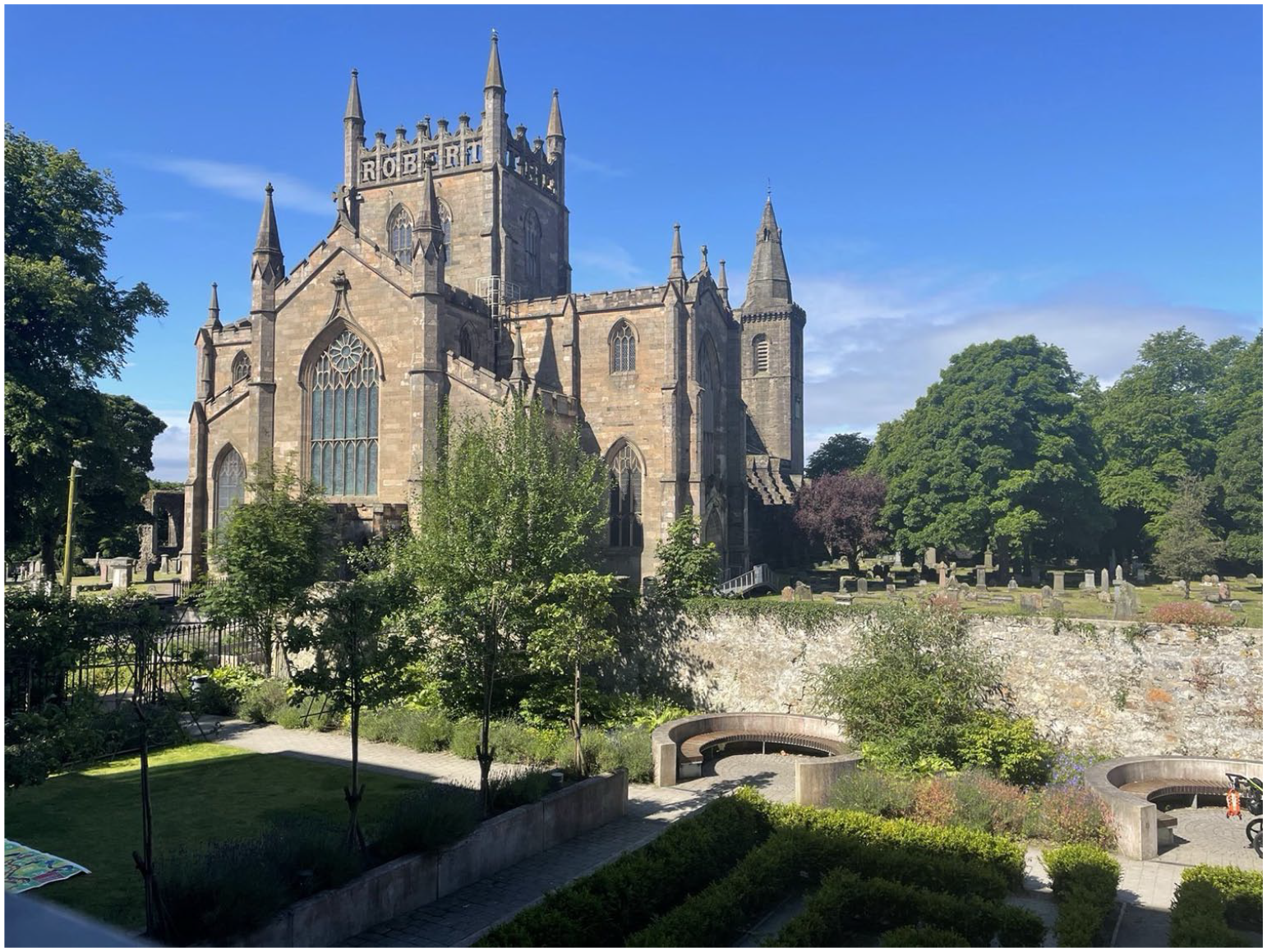
Gathering to Remember - Dunfermline Abbey. Photo courtesy of Craig MacInnes.
The past few years have seen considerable interest in Scotland, and internationally, in uncovering the historical witch-hunts and memorialising the lives of those who were accused. In Scotland, various groups – local and national – have been involved in the extraction of information from archives and historical records, telling the stories of the accused and marking their lives by formal memorials, artistic representations and a plethora of publications. In 2022, then First Minister of Scotland Nicola Sturgeon, issued a formal apology to the accused on behalf of the state. This was followed by an apology from the General Assembly of the Church of Scotland.
Action to remember those accused of witchcraft has a particular resonance with recent critical criminological interest in the importance of excavating historical injustice (Black, 2025; Brangan, 2024). Attention is being paid to the ghostly spectres that emanate from the past, particularly colonialism and the legacy of slavery and the significance of these hauntings across time and space (Fiddler et al., 2022; Gordon, 1997/2008). The association of magical practices, apparitions and witchcraft make the historical witch-hunts of significant relevance to scholars with an interest in life beyond the material realm. But this work also has a profound importance in developing cultural understanding of the interconnection between the dead, and those who encounter them in the present.
The injustice and brutality that characterised the Scottish witch-hunts, carried out largely under the laws administered by the church and crown, affected those accused, their families, friends and the wider community. Around 85% of those accused in Scotland were women. 1 The erasure of many of the accused from history continues the ongoing injustice by obscuring their lives and deaths, and through the silence that followed the discrediting of the witch-hunts with the repeal of the Witchcraft Act in 1736. While the spectral presence of ‘the witch’ remains shrouded in folklore and myth, the reality of the lives and deaths of those who were killed is obscured by silence and falsehood. In the many little towns and villages across Scotland where these events occurred, it is important to consider the legacy of the witch-hunts, in some cases intense and repeated. Emerging from the convergence of a complex interplay of factors rooted in deeper structural anxieties and societal tensions, the introduction of legislation to root out ‘witches’ occurred across many European countries and their colonies. The hunts varied historically and geographically; practices differed across space and time. Yet uniformly, the witch-hunts represented struggles for power, control and in Scotland, the creation of a ‘godly society’. Literature on this topic has been led by historians who have searched for the causes and conditions that instigated and sustained the witch-hunts. This paper considers their afterlife, taking criminology into the realm of the dead, examining the contemporary campaigns to memorialise the persecuted, inevitably connecting with the spectral ghosts that come to haunt those who want to remember. As Brown (2022: 88) notes: ‘The body around which we most often organize for justice [. . .] is a dead one’. In the context of the witch-hunts, that body is also gendered.
Those accused of witchcraft, primarily although not exclusively women, experienced the rituals of torture, degradation and for many, public execution. Fear that witches could reanimate (return to life) and the association of witchcraft with heresy resulted in their bodies being burnt after strangulation and their ashes scattered to ensure that they could not rise from the grave. They were denied a burial place or Christian burial, even though the majority were likely to be Christian. 2 The deaths of those accused of witchcraft were both physical and social – evident in the absence of memorials or markers of their lives and deaths. While deaths are left un-mourned and the rituals of grieving and remembering are denied, the transition from one category (life) to another (death) remain undone, leaving the dead (and their family) in a liminal space.
Several accused Scottish ‘witches’ continue to be a source of literary and academic interest, for example Isobel Gowdie, executed as a witch in Auldearn in the north of Scotland in 1662. Detailed accounts of her ‘confessions’ included references to magical practices, a coven, fairies and shapeshifting (see Wilby, 2010). For most of those accused however, the traces of their lives, and often their deaths, have been erased from history. The Survey of Scottish Witchcraft (http://www.shca.ed.ac.uk/Research/witches//], collates the names of those accused, but there are many gaps in the records – some lost, others no doubt destroyed. Based on the Survey, of the 3837 individuals who are identified by the database as accused, 625 have no recorded name. From those named, there is only information on the sentence after trial for 305 cases (of these, 205 were executions) – leading to estimates that around two-thirds of those accused (over 2500 people) were executed. 3 The absence of complete records, or even the likelihood that all accusations were formally recorded, means that actual numbers of accusations and executions are likely to have been much higher. Indeed Larner (1981) notes that various sources, including documented local histories, raise questions about the number of ‘dubiously legal’ executions that took place and therefore the actual number of individuals who were put on trial and executed.
In Scotland and many other countries, the lives of those accused are now being uncovered through citizen action and campaigning. In contrast to the stereotyping and vilification of ‘the witch’, a feature of cultural life for centuries, these campaigns have focused on exploring the stories of the witch-hunts and piecing together the lives of the ordinary people caught up in them. This serves to bring the accused back into the present, in their ordinariness. It is an encounter with ghosts – while the future and present are haunted by the past, this is inevitably distorted when the past itself has been obscured or concealed. Thus, campaigners have focused their activities on remembering and creating a productive process of memorialisation. Memorials effectively signify past events, condensing complex situations and time into one place to allow remembering, encounters with ghosts, markers of loss. Monuments (and their absence) are often sites of conflict and contestation (see e.g. Zebracki et al., 2023), as are the processes of mourning and loss (e.g. Walklate et al., 2011, 2015). We live with the afterlife of the dead (Fiddler et al., 2022) – if we can uncover their stories, how do we achieve justice for them?
This paper examines recent campaigns to remember and mourn the lives lost during the historical Scottish witch-hunts. It considers the extent to which commemoration is a form of activism, an attempt to obtain ‘justice’ from obscured historical injustice. In doing so, it draws upon the work of Judith Butler, and in particular Butler’s (2004, 2010, 2022) reflections on the ‘grievability of lives’. It also reflects on the wider eradication of women’s lives as a legacy of the witch-hunts. The central argument of this paper is, as Butler notes, that mourning is an important human need – but some lives are framed as unworthy of being grieved. This absence of grieving is dependent on the status of the dead and its impact is experienced by the bereaved who are denied the right to public grief. Importantly, Butler also suggests that collective engagement to address this denial can result in political awareness and action to redress the silencing and obfuscation of grief and mourning. Butler (2004: 30) notes: ‘To grieve, and to make grief itself into a resource for politics, is not to be resigned to inaction, but it may be understood as the slow process by which we develop a point of identification with suffering itself’.
Methods
The study on which this paper is based employed several different approaches including extensive interviews with campaigners and participation in campaigns to memorialise the accused across several years (2020–2025). The study is informed by attendance at, and participation in, local campaign meetings, memorial services, conferences, public talks, exhibitions, the National Day of Remembrance and events leading up to it. As an engaged participant, rather than an objective observer, immersion in campaigns and related events (many of which were moved on-line due to the various lockdowns following the Covid 19 pandemic and emerged into the public sphere after 2022), reflected my own emotional resonance with the campaigns and an appreciation of the aims of the campaigners. However, while this paper is informed and contextualised by my wider participation, it draws on data from semi-structured interviews with participants (n = 35) who were actively engaged in campaigns to remember the accused. Interviews were transcribed verbatim, with full consent obtained for their recording (written prior to interview and verbally at the beginning of the interview). Institutional ethical approval was obtained from the host university. Direct quotations from research participants are included in the findings below, and although consent was obtained to identify participants where appropriate, the quotes have not been assigned to individuals to ensure anonymity across the study.
Thematic analysis of the data (Braun and Clarke, 2022) identified emerging themes and key concepts: the background to the campaigns; their aims and objectives; and attempts to create appropriate forms of memorialisation. The paper explores these themes, highlighting the attempts by campaigners to depict the ‘ordinariness’ of the accused, and the importance of ‘re-membering’ the lives and reputations of the dead. It is these aims that underpin the originality and significance of this study and its importance for contemporary campaigns to memorialise injustice. The data, like the campaigns, resound with grief and sadness about what happened during the Scottish witch-hunts and is overlain by a strong sense of injustice about the historical legacy of these events. However, there is also a sense of action, a need expressed by many campaigners to uncover the stories of the lives of the accused and to remember them. In this sense, the fieldwork for this study was always emotionally charged and connections to the past were evident throughout.
What happened – the witch hunts
Historical academic interest in the witch-hunts across the UK has been considerable (e.g. see Gaskill, 2008). There has also been much attention (by Scottish historians in particular) to the circumstances of Scotland, where the intensity of the hunts and the number of people executed was much greater than in England (including Craig, 2020; Goodare, 2005; Levack, 2008; MacDonald, 2002 and many others). The vigour with which witch-hunting was conducted in Scotland is often attributed to the context of the Scottish Reformation (1525–1560) and the quest for a ‘godly society’ which was followed by the introduction of the Witchcraft Act 1563. 4 While the notion of godliness applied across society, women were a particular target of monitoring, surveillance and punishment. 5
In Scotland, the imposition of Calvinist ideology and the development of new forms of social control intent on monitoring the mobility and behaviour of the population, particularly ungodly women, emerged with the transition from Catholicism and attempts to legitimise the Protestant nation-state. For Larner (1981) the establishment of a ‘machinery for the enforcement of orthodoxy’ and the ‘punishment of deviance’ were influential in the development of the witch-hunts. Indeed Larner (1981: 53) notes that: ‘in the ministers and elders of the Reformed Church the land-owning classes were provided with a police force and civil service’. The Kirk sessions distributed penalties for moral misdemeanours that included ritual degradation and the imposition of fines. Mobility of the population was enforced by restrictions on accommodating someone without permission (specifically aimed at the control of landless labour and vagabonds), and a certificate of good conduct was required to move to another parish (Larner, 1981: 57).
Sylvia Federici’s examination of the witch-hunt in the enclosure of land and of women’s bodies is informative (Federici, 2004, 2018). In Caliban and the Witch, Federici provides a useful framework for understanding the Scottish witch-hunts as part of a broader socio-economic transformation linked to the rise of capitalism. The European witch-hunts, she argues, were instrumental in facilitating capitalist development by dismantling communal landholding and suppressing women’s autonomy. In Scotland, where witch-hunts were among the most intense in Europe, similar dynamics were at play. The enclosure of land, widespread poverty and economic dislocation in early modern Scotland created deep social tensions that disproportionately affected women, particularly the elderly, widowed, or poor. The Scottish Reformation reinforced patriarchal control through moral regulation and ecclesiastical discipline, often targeting women who challenged emerging norms of feminine subservience and domesticity. Using this framework, the witch-hunts can be understood as systematic mechanisms of gendered and class-based control, essential to the restructuring of social relations under early capitalism.
The Scottish Witchcraft Act of 1563 solidified witchcraft as an offence against statute law punishable by death and it centralised the prosecution machinery in 1597. Neither a witch nor witchcraft were defined in the Act, leading Goodare (2002) to suggest that it is likely that the Witchcraft Act was written by a churchman rather than a legal expert. 6 Most prosecutions took place between 1590 and 1662 with peaks in 1590–91 (James VI and I investigation into ‘treasonable sorcery’); 1597 (publication of Daemonologie authored by King James); 1629-30 (the peak of the continental witch-hunts); 1649 (height of Covenantors influence); 1661–2 (following the Restoration of the monarchy). While there was a relatively steady decline in prosecutions from 1662 onwards, there were still outbreaks in various parts of the country (e.g. Renfrewshire 1697, when seven people 7 : Agnes Naismith, Katherine Campbell, Margaret Lang, Margaret Fulton, John Lindsay, James Lindsay, and John Lindsay of Barloch were executed by hanging and burning on Gallow Green in Paisley. This mass execution was supposedly the last in Western Europe. 8
Enforcement of the Witchcraft Act varied according to time and place. The early witchcraft accusations (1590–91) involved the belief in ‘treason-by-witchcraft’ (emerging from claimed attempts to kill the king and his new bride). From 1591–97, (mainly in Aberdeenshire, Fife and the Lothians), the trials often took place in local courts under a general Commission that had been issued to local landowners and officials by the Privy Council. For example, a commission was issued to the provost and bailies of Aberdeen in 1596, and from the records of the Dean of Guild for the years 1596–97, it appears that at least 23 women and one man were executed in Aberdeen for witchcraft.
While the outcome of a conviction was frequently death, often carried out immediately after trial, unknown numbers of individuals died in the custody of the authorities. Many died in prison, either from suicide, torture or neglect. For some poor souls, suicide was the only way they could see to escape the prolonged and intense suffering. Many others died as a direct result of the torture they were subject to. For example, one local author, Schipke (2021) uncovered the case of Jonett Fentoun who died in gaol in Dunfermline in 1643 and notes the death of Isobel Marr, who was held in a cave-like dungeon in Dunfermline, dying by hanging ‘at her own hand’ in August 1643, her body thrown into the Witch Knowe. It was notable that during the Cromwellian occupation in Scotland proceedings against accused witches were often abandoned and an investigation by the English Commissioners for Administration of Justice in 1652 discovered accounts of torture and deaths under the torture that led them to call for ‘an account of the grounds for this cruelty’ (Larner, 1981: 119).
Torture, although generally prohibited, was certainly carried out with some considerable frequency. It could be employed (legitimately) to secure a confession, and once that had been obtained could be applied again to obtain the name/s of potential conspirators. The measures used to make women confess to using witchcraft or to establish their allegiance to the devil were highly sexualised. This involved being presented to their inquisitors naked with all hair shaved off. King, James I/VI participated in the North Berwick trials in 1590–1 where over 70 people were executed for witchcraft and where horrendous forms of torture were applied to secure confessions and the naming of others. ‘Pricking’ was applied regularly and provided an occupation for ‘witch-prickers’. It involved the use of a long needle to identify an insensitive mark on the body considered to be the mark of the devil, which was often found around the genitals. The silencing of this sexual violence in many historic accounts of the witch trials, as with contemporary accounts of torture (see Canning, 2016; 2023) is notable, despite its ever-pervasive presence in the gendered nature of the interrogation, choice of victims and power of the male gaze. In the context of the religious upheaval that surrounded the hunts, the patriarchal form of the new religion was evident, the moral and ritual inferiority of women was preached and the witch-hunts represented the large-scale criminalisation of women. 9
In this changing social climate, it could be seen that many of the accused were women who presented a challenge to the patriarchal order, or the depiction of the ‘ideal woman’. For Larner (1981: 102) however, this was not a direct attack on women as women, rather ‘The pursuit of witches was an end in itself and was directly related to the necessity of enforcing moral and theological conformity’. There is no doubt however, that in Scotland, women were the key targets of this conformist assault.
There have been various contributions by scholars attempting to identify these atrocities as a war on women (Hester, 1992), a war on healers and midwives (Ring et al., 2024) and an enforcement of the power of church and state (Goodare, 2002, 2005; Levack, 2008). But these events, and the burning bodies of women across the country which followed a hunt, created fear and terror among the communities in which they took place. There can be little doubt that the witch-hunts produced, and were the product of, a climate of fear, suspicion and disruption that would have had an impact nation-wide, instilling long-lasting terror in the areas where witch-hunts were repeated and intense. This had profound consequences for people who had been accused and acquitted but could very easily be accused again when the hunt returned to town. That these events were removed from general accounts of Scottish history, and the lives of those accused were distorted and maligned, has created considerable interest in conversations about what should be remembered and in what way. 10
What life is grievable?
A tragic feature of the historic witch-hunts is the failure to record the names and lives of so many of those accused. This injustice continues with the erasure of these lives. Although records list the landed (male) gentry who made up the juries and the ministers and elders who led the accusations, for many of the accused there are no names recorded (625 people whose accusation is recorded by the Scottish Survey of Witchcraft are noted as ‘unknown’) and for most of the remainder, there is no information about their lives. This has contributed to the eradication of the memory of the dead, and in this process, a re-presenting of history and the impact of these events. Attempts to re-examine history through a reading that incorporates and recognises the witch-hunts, and their wider impact include the work of Starhawk (1982) and more recently, the comprehensive analysis of Federici (2004, 2018). Haraway (1988) argues for the importance of ‘situated knowledges’ in contrast to the visualising technologies, ‘tied to militarism, enclosure, colonialism and male supremacy. . ..’ (p. 581). In such processes, memory can be manipulated by the powerful who select the narratives that are remembered. For Haraway, the standpoints of the subjugated are important where ‘the subjugated have a decent chance to be on to the god trick and all its dazzling – and therefore blinding – illuminations’ (p. 584).
The eradication of so many lives and deaths from history, and the distortion and obscuring of this past, is the impetus behind the recent campaigns in Scotland and elsewhere to remember the accused and to memorialise them. For some of those executed, their lives have become entwined with myths and stereotypes about the supernatural and occult
11
; for most, there is nothing to denote their humanity and the cruel injustice that they encountered under the law. Butler (2004: 36) notes: ‘Violence against those who are already not quite living, that is, living in a state of suspension between life and death, leaves a mark that is no mark’. So, as Butler queries ‘whose lives are real’? In the realm of witchcraft accusations, this is surely a pertinent question and it is important to consider the process of dehumanisation that made so many lives ‘unreal’ as part of the process of accusation and trial – but also continued after their deaths, as the absence of memorials or markers of the lives of the persecuted illustrates. Butler points out: If violence is done against those who are unreal, then, from the perspective of violence, it fails to injure or negate those lives since those lives are already negated. But they have a strange way of remaining animated and so must be negated again (and again). They cannot be mourned because they are always already lost or, rather, never “were”, and they must be killed, since they seem to live on, stubbornly, in this state of deadness (Butler, 2004: 33).
Like the absence of obituaries for the casualties of (some) wars, there are few memorials (from the time of the witch hunts) for the accused because, as Butler (2004: 34) notes, ‘If there were to be an obituary, there would have had to have been a life, a life worth noting, a life worth valuing and preserving, a life that qualifies for recognition’ (see also Brown and Rafter, 2013). In this way, certain deaths are rendered ‘unmarkable’ and thus ungrievable.
Black and Ring (2023), discussing the institutional abuse of women in Ireland, note the importance of drawing on this history as a way to further understand both gendered and state-perpetrated harms and importantly, call for more criminological attention: ‘to understand[ing] the role of the state in the perpetration and facilitation of crimes and broader social harms in the past and the ongoing manifestation of these harms in the present’ (p. 27). Importantly, they also note (p. 30): ‘Blurring the past and the present requires a criminology of memorialization, asking questions about how violence is remembered (if at all) and why the state has been so poor at this, and what kinds of harms are being perpetrated by the failure to commemorate the suffering of the victims of historical gendered [. . .] abuse’. How might this also apply to the historical witch-hunts and persecutions? My attempt to answer this is not by asking why the state has been so poor at memorialising, but to explore how contemporary campaigns are attempting to address this.
Findings
Involvement in campaigns to remember the accused
Remembering and mourning is a complex process, as Walklate et al. (2011, 2014 have highlighted). It is also, they note, a useful way to consider public responses to the suffering of others. Across Scotland, action to remember the accused witches of Scotland, has included various forms of collective memorialisation of the lives and deaths of those subjected to the Witchcraft Act 1563. The over-representation of women among the accused seems to have garnered the interest of the (mainly but not exclusively) female campaigners across the country. While the magical, supernatural, and demonological features surrounding ‘witches’ have long been a source of fascination, the recent interest in the topic has also been informed by the material factors of the hunts and growing awareness of the historical punitiveness of the law and church, the impact of reputation and accusation in the process of becoming accused and the injustice that (in the context of the world today) appears to underpin the witch-hunting process. This resonates with a widespread lack of confidence in the judicial system to address gender-based violence and in the role of the authorities to investigate violence against women (e.g. the #MeToo movement, the murder of Sarah Everard by a serving police officer, the ongoing Undercover Policing Inquiry and the admission by Police Scotland (and many other forces) of their failures to address sexism and misogyny within their ranks.
Participants in this study, highlighted various reasons that brought them to an awareness of the historic witch-hunts: moving to a new area and wanting to find out more about local history, being involved in historical societies, additional free time during covid lockdowns, and for several study participants, the catalyst was a conference held in Dunfermline, Fife in 2019 by a network Fife Witches Remembered (later changed to Remembering the Accused Witches of Scotland). For others, the Witches of Scotland podcast series which began in 2020 initiated their interest. The interactive map and data provided by the Survey of Scottish Witchcraft at the University of Edinburgh was a key resource for many participants. Sometimes local archivists and historians worked alongside campaigners, connecting with other groups or individuals. In some areas, local ministers were approached and participated in the conversations and actions taken around memorialisation. Local councillors were involved and at points, journalists and film makers. Authors and artists added their creative talents to the campaigns in many powerful and evocative ways. The key aims and objectives for many of those uncovering local history was raising awareness, educating people about the witch-hunts, excavating the stories about the lives of the individuals accused, naming those persecuted and executed. Most participants emphasised the importance of remembering the accused as ordinary people who were subject to a great injustice. While there are too many names to list here, it is notable that the archival searches carried out by campaigners often uncovered the stories of the lives of individuals – their personal circumstances and the reasons why they were accused of witchcraft (albeit limited by time and record-keeping). These stories provided a powerful narrative about the ordinary lives of the accused and the horror of the accusations made against them, their trials and eventual execution. The (now) unbelievable accusations they faced (maleficent magic, copulating with the devil) add to the terrifying narratives of their lives and deaths.
Uncovering the silence of the past around particular individuals, created a sense of connection and responsibility. As Bano and Pierce (2013) note: ‘How can stories that have been previously untold or neglected be heard through the prism of the law and the state? What are the processes of telling and listening and how might they translate into action and social change?’ Stories, Bano and Pierce note, can have a particular role in animating imagination and influencing future actions – in essence, collective stories can inform action towards social justice. The lives of the ordinary people caught up in the maelstrom of the witch-hunts is evocative because of their ordinariness (see Stewart, 2007) and was reflected by the ‘ordinary’ people who sought to memorialise them. As Gordon (1997/2008: 195) notes: ‘[. . .] ordinary people ascertain these evidentiary things [the evidence of things not seen] not also, but more often than professional seers’.
As with the work of Walklate et al. (2011, 2014) and Young (2022), this uncovering of the dead, took on a form of ‘witnessing’ that also involved collective grief and public acts of mourning, and an engagement with the suffering of others. While Walklate et al. consider the public procession of coffins of the military dead through Wootton Bassett, their reflections on the significance of ‘witnessing’ are important. For those involved in campaigns to remember the witch-hunts, such processes of publicly seeing and grieving can grant agency and voice to those who may not otherwise be heard and to expose contradictions that are, or have been, concealed by those in positions of power.
Reclaiming the accused
In many local areas, myths abounded about witches and the locations associated with them – such folklore often bore little resemblance to reality but had become anchored in the narrative of places. In such context, ‘witches’ were often depicted in a humorous and mocking way. The people exploring the history of the witch-hunts felt that this needed to change. One participant noted: we have one woman, Margaret Thompson who was held in the vestry of the Kirk, and she appealed to the Privy Council. . . She describes being kept awake for 26 days and being made to stand on a stool, being naked except for a sack cloth and being hit so hard she felt that her brains were ‘dinging oot’. And on that basis, the Privy Council ordered that she should be released. On the original Kirk website, she was described as ‘the one that got away’. . . So I think there was a sense . . .let’s make sure that our community knows this history in a way that is more respectful and recognises that injustice.
Some of the campaigns were focused on local history with specific intent to raise awareness of the life of women, and men, whose lives and deaths were connected to that area. Others (notably Remembering the Accused Witches of Scotland (RAWS), Witches of Scotland and the Creative Coven) had a wider remit and a more national focus. The importance of challenging normative narratives of history featured across the groups, and while the identity of being ‘troublesome women’ was shared, concepts of ‘feminist’ varied. Attention to understanding a normative narrative of history was evident: I think there is an interesting movement around that whole decolonising education [. . .]that has opened up lots of questioning about our historical past and for us what gets memorialised, what gets remembered, . . .so I think that it also attracts a lot of rebels that want to question the past that they were told as it was and what might actually have been the case. So, I think that’s encouraging lots of people to sort of start asking questions and looking into our histories and our past and not like what we see.
Often, when participants had set out to find out more about the accused, they discovered there was no mention of them in the local museum or library. One participant discovered that a witch-hunt took place in Abernethy in 1662 where three women were believed to have been executed. 12 The local museum did not have any information on this history so invited her to find out more and, when she had done so, to develop a display for the museum. This display was opened to the public in 2022 and following on from this, an application was made for a grant to fund a memorial. Similarly, in Kilwinning, another participant was asked by Kilwinning Heritage to find out more about Bessie Graham who had been arrested and accused of witchcraft in 1649; and in doing so, discovered that five people had been accused in the town. This participant wanted to make sure that the lives of all the accused from her area were recorded, and she went on to collate details of 75 named people, 12 unnamed individuals and three unspecified groups across the area. Over 100 accused people were recorded by another citizen researcher across South Ayrshire. Some records simply refer to ‘a group’ of witches, so presumably the actual figures were significantly higher.
Very few individuals or groups had funding for the work they did, although some were fortunate enough to tap into resources that allowed them to set up a website, commission a memorial, fund a little research for local organisations. Putting together exhibitions, establishing a National Memorial Day and contributing to the history of local communities (via information boards, apps that highlighted local sites of interest, collating booklets about the witch-hunt history etc) – brought interested individuals together and has built a developing legacy that is informing local communities about the events of the past. Groups formed to design and sew banners with the names of the accused (see Image 2) and symbols representative of the local area, while some campaigning led to streets named after the accused (in areas of new house building (see Image 3)
13
). Participants gave examples of what they had hoped to achieve: To connect with other people and support a small group to make people aware of the Corstorphine witch-hunts. Then to get a plaque erected to commemorate those accused in Corstorphine. Wanted to give the Forfar accused a voice, have them recognised as being ordinary people who were the victims of a miscarriage of justice. To tell the stories of the lives of the individuals who were accused.
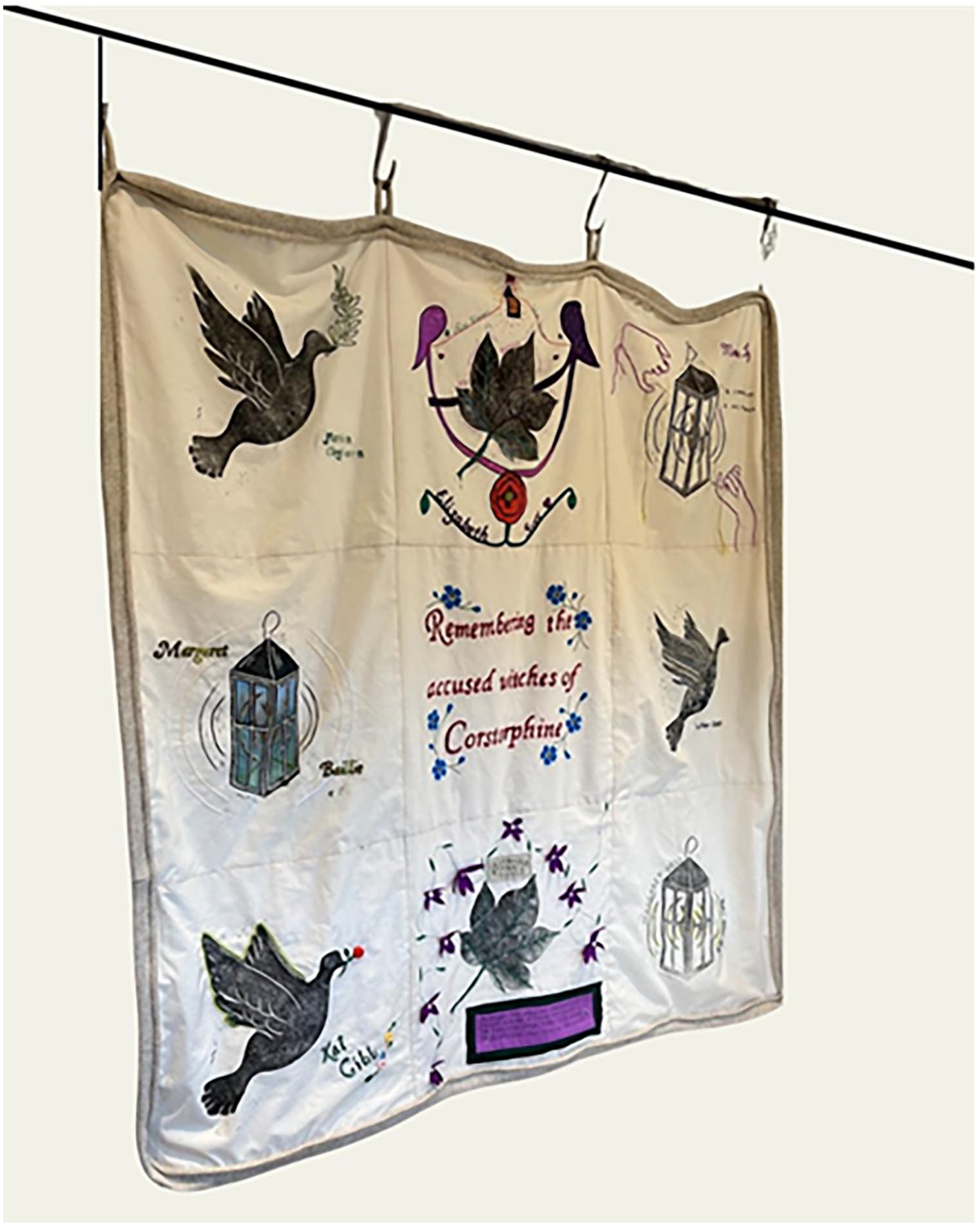
Collective embroidery by women in Corstorphine (photo courtesy of Emma Cowan).
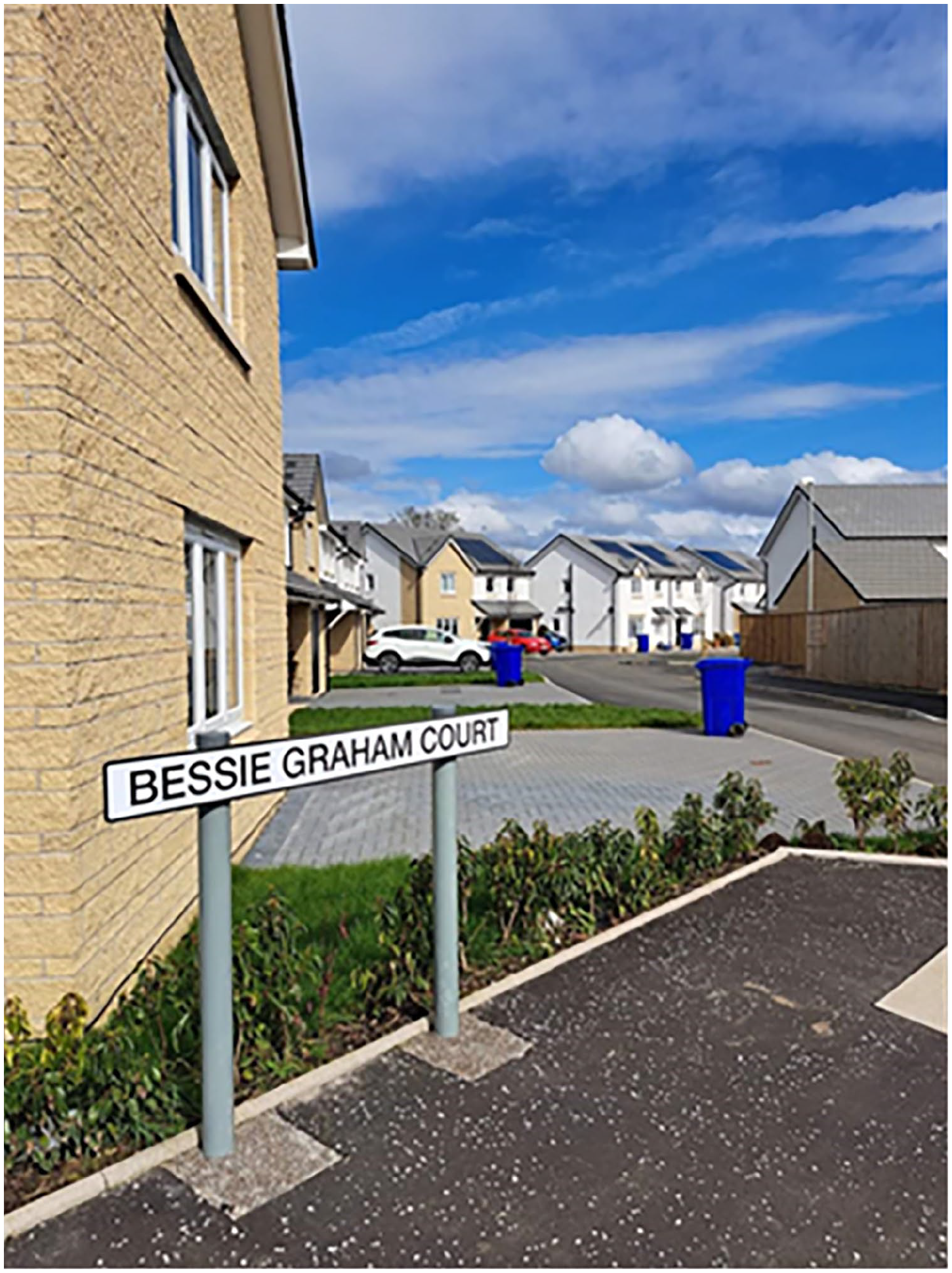
Street Names: Bessie Graham Court (photo courtesy of Heather Upfield and Lorraine Quinn).
For many participants, the powerful emotional basis of this exploration into a previously obscured history, was notable. Anger, rage and despair at what happened to people, mostly women, was expressed frequently by participants. This emotional resonance is fundamental to a politics of memorialisation and features too in the work of Black and Ring (2023) as they highlight the activism that such injustice often generates.Participants reflected: I think I felt enraged about the silencing . . .how silenced women were, how they were not remembered. . .. So that sense of invisibility just tapped into a whole. . .a bigger sort of conversation, dialogue, or belief of mine that the society we live in is very patriarchal and minimises women’s place in society. So, it was like a kind of collective rage . . . And I think particularly when you first come across it and first start reading it, the horror of it is just awful. I mean, it really is. And what these people were put through. . . and my position has always been a belief that they weren’t witches, they were just people. Who happened to be in the wrong place at the wrong time and probably did very little or nothing at all.
Hauntings
For some campaigners, there is little doubt that their encounters with the accused took the form of a haunting. While there are different engagements with the concept of haunting, the work of Gordon (1997/2008) has resonance with the voices that emerged from the afterlife of the Scottish witch-hunts. As Gordon (1997/2008: xvi) has noted : What’s distinctive about haunting is that it is an animated state in which a repressed or unresolved social violence is making itself known, sometimes very directly, sometimes more obliquely. (. . .) those singular yet repetitive instances when home becomes unfamiliar, when your bearings on the world lose direction, when the over-and-done-with comes alive, when what’s been in your blind spot comes into view.
This haunting was evident in reflections on the uncovering of this violent history that had hitherto been concealed for many participants. And once revealed, it could not be covered over again. The sense of injustice, and the action that it demanded was evident in the views of one participant who noted: . . .initially it was the anger that got me in but then when I read those stories, I had this really visceral kind of response . . .I was so sad at reading these stories of these women and in places that still exist today and so it kind of brought it to the present rather than being in the past. . . the church still stands, the woods are still there, Gogar is still a place that exists and so it stopped being history and it felt much more present. So, then there was the feeling of sadness and feeling disempowered and so my belief is that if you have a sense of disempowerment then you must do something to act on that to balance that, even if it’s just a small act that brings a bit of empowerment back.
This view of taking action to address feelings of powerlessness, rage or grief brought campaigners together with the intention of doing something to address these events that were perceived as injustice. This often took the form of a sense of direct personal connection with one or more of the accused, as their lives were uncovered from the archives, animating the dusty pages into familiar places and the imagined experiences of those lives being excavated. Resonance between past and present meant that campaigners often felt a sense of connection with the historical accused, who would have walked the same streets and lived in the same local area. A recurring theme across interviews was the continuity of features such as surnames in the local area – indicating that those involved in the trials (as both accused and accusers) were likely to have descendants still living in the area. This highlighted the absence of general community knowledge about this history and the importance of collective remembering. It also caused reflections about the divisions within communities that would have contributed to, and been a legacy of, the witch-hunts.
For some participants, addressing the experience of haunting involved engagement beyond the physical world. Some of the events that took place involved ceremonies for lamenting the dead; evocative and powerful rituals of remembrance, that aimed to provide some form of healing for the spirits of the dead. For many of the artists and healers who had become involved with campaigns to remember the accused, their openness extended to magical and transformative energies accessed across different realms. One participant noted: I also view the witch hunts from a spiritual perspective, (. . .) and have done a lot of work on the denial of the death rites to the accused and the impact that had on their eternal soul. The only form of justice I can bring is the carrying out of the rites that were denied when they were convicted and refused burial on consecrated ground. I used the ancient rite of keening to address this part of the overall injustice they experienced, for some became earthbound due to the trauma they endured.
This ceremonial aspect marked the spiritual encounter with the dead and an attempt to heal the harms of the witch-hunts, crossing dimensions of time. It took the form of facilitating the passage of the dead from one realm to another, including a ceremony on the promenade at Edinburgh Castle in 2023 to mourn those executed on that site. Ceremonies conducted in local churches across the country aimed to give the accused the rights to a Christian burial denied to them at their death. Remembering the dead by planting trees, repopulating forests provided a transfer of energy from the dead to the alive – in a metaphorical, nature-based way.
‘Grievability’ and remembering the dead
What are the cultural barriers against which we struggle when we try to find out about the losses that we are asked, not to mourn (. . .)? (Butler, 2004: 46)
The distorted history of the witch-hunts and the obscuring of the lives and deaths of those accused has masked this historic injustice and limited the mourning and remembering of those accused and executed. The grievability of the lives of so many women and men has been negated by their absence from history and by the distorted stories of their lives constructed from the narratives of the powerful men who constituted the witch-hunting authorities.
The eradication of the history of this historical period is notable for those who are now reclaiming it. One participant recounted delivering talks about the witch-hunts to their local community and noted that audiences seemed ‘genuinely surprised and shocked’ to discover the practices in place to get confessions from those accused of witchcraft and at what happened to the accused ‘before they even got to court’: I have been sharing my research on this topic to people in Glasgow, Renfrewshire and Inverclyde through talks mostly over the last six years, relating to local cases. [. . .] It is difficult to measure impact in a quantitative way, but based on qualitative feedback received, people are interested in the subject and the women’s’ history aspect particularly. Many people also feel a kinship particularly those who are marginalised in today’s society.
Other participants noted how public talks to local communities helped challenge misconceptions and some of the stereotypes that surrounded the accused (see Image 4). In sharing information about the individual lives of the accused, the wider collective injustices that occurred become clearer: . . .When we talk about historic justice for so-called witches, we are not trying to rewrite history or put modern-day values onto the past. These convictions should have been overturned centuries ago. You cannot be guilty of a crime which does not exist.
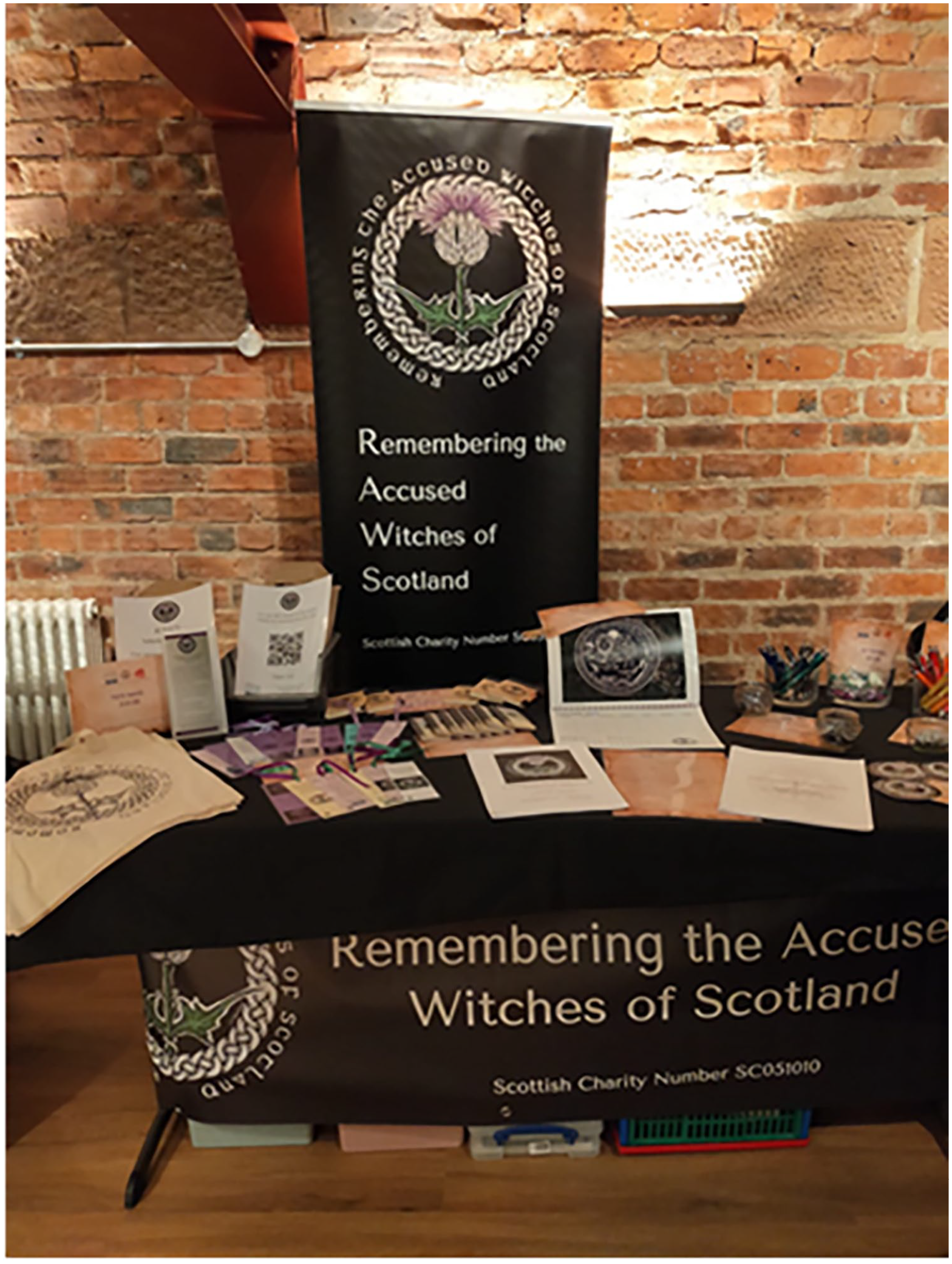
Remembering the Accused Witches of Scotland.
Study participants often met together at different events – including conferences, memorial services/rituals, public talks – and there were different views and priorities among the different groups. However, what did bring them together was reflections and action on how to remember the dead: I think one of the things that we’ve found is that this was a really significant part of Scottish history that connects in with a lot of international work that’s going on as well but it’s not been talked about for a long time and the individuals who’ve been accused and executed have been misrepresented in lots of really concerning ways and so our work has really been to recapture the lives and ensure that people are aware of the sort of ordinary men and women, predominantly women, 85% of them being women, who have been subject to these persecutions by what was the law and the state.
The recognition of injustice, and the distortion or eradication of these lives, has been a key component in widening campaigns for remembrance and memorialisation (see Image 5) – through the process of grieving: I mean I think the idea of justice for me was about being remembered more than anything, just the whole feeling of them being forgotten and discarded was. . .it felt. . .it just felt so unfair, that was the injustice for me, there’s nothing that can be changed about what happened, it happened but to be forgotten and not remembered . . .it just felt awful and as the Church of Scotland made their formal public apology I could feel an energetic shift in my body of feeling like ‘ah okay there’s acknowledgment’ and I was really tearful when that happened. . . .But there is something about the pain that these women went through. And I mean physically as well as mentally, that really touches people really deeply, I think. . . . the people who were accused would have been Christian. Almost certainly the church would have been important to them. And they almost certainly would have believed in God and the devil. So, when you had the church telling you that you were in league with the devil, and you renounced your baptism, and you knew that when you were found guilty that you were going to be denied the burial rights and the religious rights that you would expect would send you to heaven. [. . .] and there wouldn’t be a body, it wouldn’t be buried, there wouldn’t be a grave. There wouldn’t be any place for the family to mourn them. So, it felt quite important to kind of put some of that right for the women.
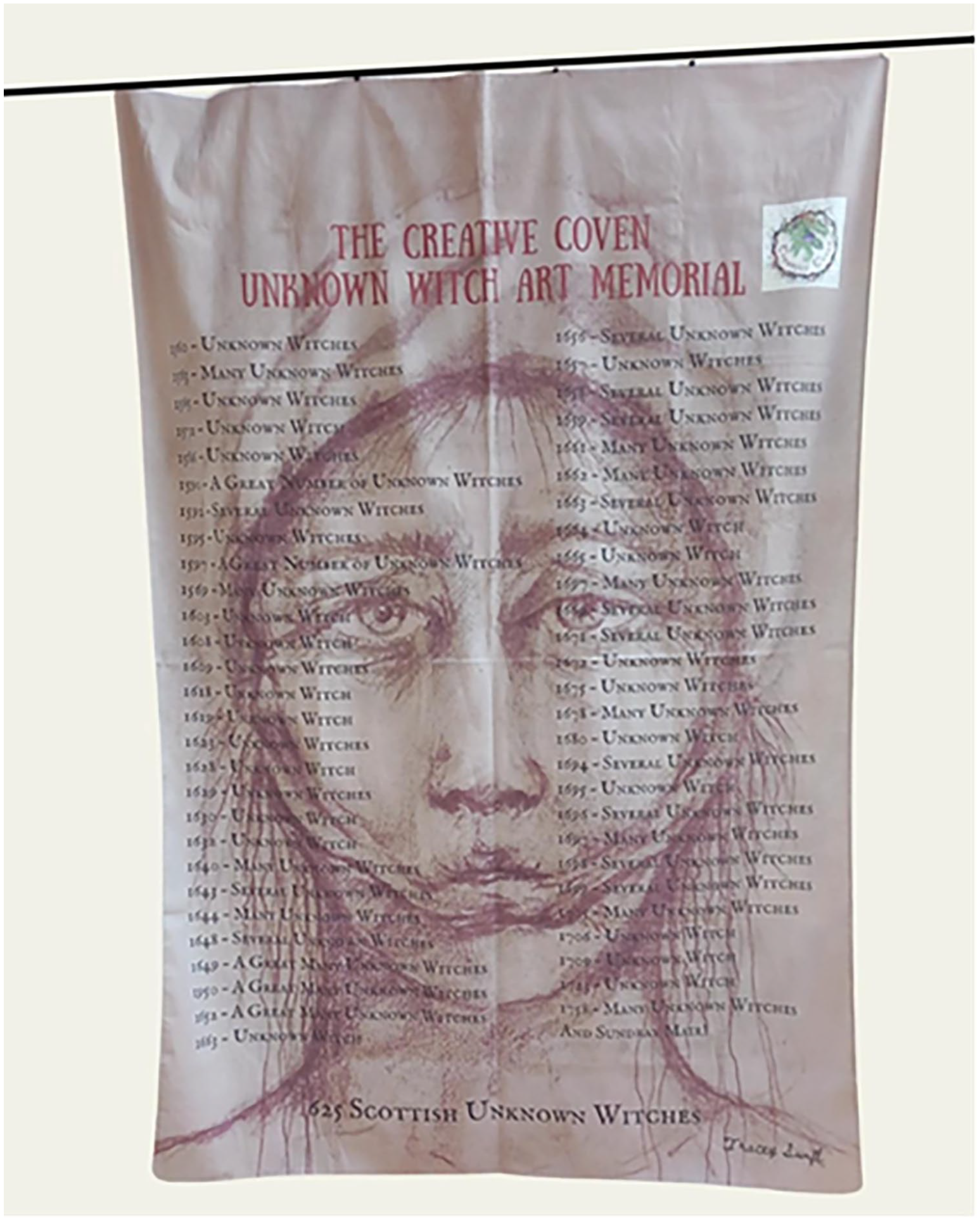
The Unknown Witch – courtesy of the Creative Coven and Rowan Morrison.
Efforts were made to find a fitting memorial for the accused. However, without resources, this proved difficult. Some of the artwork produced had been removed during building renovations and it was not clear where/if they will be repositioned. Educational aspects were notable and included incredibly well-attended public talks, engagement with schools and universities, inviting people into churches and museums where displays and exhibitions provided information and artwork about the witch-hunts (e.g. in Calder, Paisley and Forfar, Fife and Inverclyde). These efforts are ongoing.
Concluding reflections
As Black and Ring (2023) note, remembering and memorialising are worthy subjects for a critical criminology. They are important ways to mark injustice and in doing so, to collectively challenge narratives of the past, as well as marking out the future. Brown and Rafter (2013) refer to ‘the(se) problems of memory, demonstrating how a collective memory that is attentive to justice is inevitably a struggle and kind of intellectual and analytical labour’ (p. 1029). Memory work, they suggest, has been ‘foreclosed in criminology’ but on-going closure is a communicative process (p. 1030): ‘. . . without memorialization, memories can be entirely lost; but, if we lose them, we also lose history, and we fail ethically to acknowledge vast suffering’. Thus ‘. . .the study of pain and social suffering’ may indeed be ‘important provinces of criminology’.
The process of grieving and memorialising enmeshes the lives of the living and the dead and can become an emancipatory project to transform the depiction of those persecuted from the prevailing myths and stereotypes – and to collaborate in a resistance to dominant narratives. The campaigns to remember those accused and executed as witches had significant resonance with contemporary injustices for many of the study participants. While some referred to ongoing witch-hunts across the contemporary world, others considered gender-based violence and abuse that continues in various forms globally.
This confrontation between past and present, for Gordon (1997/2008), in a similar vein to Butler’s discussion of collective grieving, provides a recognition that ‘something needs to be done’. This encounter with ghosts does not remain simply in the ethereal realm but demands action. Gordon (1997/2008: 208) notes: ‘(. . .) ultimately haunting is about how to transform a shadow of a life into an undiminished life whose shadows touch softly in the spirit of a peaceful reconciliation. In this necessarily collective undertaking, the end, which is not an ending at all, belongs to everyone’.
The significance of these campaigns to memorialise was not only evident in their objectives to educate and inform communities about the historical events of the witch-hunts, and the people who were targeted; but in creating a wider sense of community among the campaign groups themselves. The campaigners were following an ethical call from the dead of the past to be remembered, where injustices were buried in legal doctrines and often inaccurate or incomprehensible records. The animation of these records, helped to bring the life of the dead back to centre-stage, rebuilding the story of their lives and finding a space to remember and mark their life and death.
The starting point for this study into the campaigns to remember the accused witches of Scotland emerged from an exploration of how these campaigns impacted understandings of ‘justice’. The complexity of this was evident from the reflections of study participants. One participant noted: Is it justice that I want for them? I want them to be remembered definitely; I want their names to be known definitely [. . .] and what I would also wish to see is the Church of Scotland having a service of remembrance for all those who died without a Christian burial which they were entitled to. All these people were God fearing Christians because you had to be back then. [. . .] they didn’t get the last rights of any kind, [. . .] they didn’t get forgiveness of sins before death which everyone is entitled to and they were murdered and the body burnt as quickly as possible so that all traces of this evil could just be blown away by the wind and that is one thing that does bother me that they weren’t given a proper burial . . . [. . .] Do memorials give justice? No, I don’t think they do because like I said, the person is gone. They’re so long gone now. Their families are so long gone and any benefits that they could have had from this is gone. There’s a loveliness to remembering people and to remembering the stories and remembering and knowing your local history. Justice no. Lessons maybe.
There have been various attempts across the UK and internationally to memorialise those accused. However, there does not appear to be a period, as there is now in Scotland, when there has been such co-ordinated engagement around this issue. This form of activism raises interesting questions that reflect on ‘grievable lives’ – whose lives and why now? And on the wider ‘atmosphere’ that relates to these questions and these campaigns. But there is little doubt that recent campaigns have been galvanised by grassroots engagement, emerging from local communities, that contains outrage at the lack of information about the lives and deaths of the accused and the amnesia that seems to have affected the local communities in which they were persecuted.
Importantly, this study has highlighted the efforts to retrieve the reputations of those accused under the Witchcraft Acts and to reclaim them as ‘ordinary fowk’ whose tragic lives and deaths should be mourned and grieved. The injustice done to ordinary women (and men) with the full backing of the law and legal system – reinforced by communities – and the stigmatisation that exacerbated and underpinned all forms of accusation is a reminder of the punitive cultures that continue to shape penal policy and the ‘vindictive state’. Parallels with contemporary campaigns to memorialise the legacy of the slave trade and more recently, contemporary deaths in penal custody and detention, are resonant of some of the central themes of campaigns to memorialise the witch-hunts.
Where plaques, or memorials, or exhibitions have been established, there has been significant public interest and increased attendance recorded at many of the sites hosting these exhibitions and memorials. Importantly, this has also allowed the humanity of the accused to be highlighted through educational resources and the provision of information. Participants noted: ‘Local people now increasingly think of the accused as ordinary people rather than ‘witches’’. One participant echoed the sentiments of others noting: The bit that I’m very pleased about is that their names. . .all of the people’s names are on the plaque and that there’s an acknowledgement of the people who were the persecutors.
For criminology, the activity of remembering and memorialising the lives of those accused under the historical witchcraft acts serves to provide a reinterpretation of the events of the past, bringing the humanity of the accused to the fore. Challenging misconceptions about who the accused were, creates a different version of history to the many myths and stereotypes that have abounded in the absence of accurate facts. Importantly, as these facts are uncovered and shared, the horror of the witch-hunts and the impact they had on the people and communities in which they occurred, is revealed. As Gordon (1997/2008: 27) reminds us, ‘paying attention to ghosts can, among other things, radically change how we know and what we know about state terror. . . [. . .]’ The silencing of the traumas of the past is replaced by recognition of injustice and attempts by campaigners to address this through remembering and memorialisation. Remembering together can create alternative spaces to confront historical injustices.
As Butler notes, collective mourning creates a space for shared compassion that can serve as a prompt to action. That process of grieving is a fundamental part of the process of reestablishing the humanity of the victims and indeed, resurrecting that humanness. While the arguments and debates are ongoing about the appropriateness of a legal pardon, the reinstalment of the events of the past, as grave injustices against ordinary people, opens a collective space for recognition of the contemporary encounters with injustice that continue today and should be central to a critical criminology. Indeed, interrogating the assumptions of historical legal systems highlights the myth of objective and neutral systems/processes of justice. Relations of power, processes of stigmatisation and marginalisation, gender-based violence and the violence of the state that underpins criminal legal systems are exposed in these histories. Perhaps this recognition, in an historical context, also opens a space to expose the inequities that continue to exist today in relation to the law, legal system and punitive state. While for many of the campaigners, this has also drawn their attention to contemporary witch-hunts 14 and gender-based violence, it has served to highlight the denial of grief in state-orchestrated killings and controversial deaths, with significant cultural implications for individuals and communities. It also shows us the power of collective engagement in remembering and mourning and the action that can emerge from a shared need to grieve.
Footnotes
Acknowledgements
Thanks to all the campaigners and activists who participated in the study which forms the basis for this paper and to the Leverhulme Trust who funded the study. Thanks to Dr Karen Corteen for helpful comments on an earlier draft of this manuscript and to the two anonymous reviewers for their advice and thoughtful suggestions.

Ethical considerations
The General University Ethics Panel at the University of Stirling approved the full ethics application submitted for this study (approval: 14580) on 07 July 2023.
Consent to participate
Respondents gave written consent for interviews confirmed by verbal consent at the beginning of the interview.
Funding
The author disclosed receipt of the following financial support for the research, authorship, and/or publication of this article: This work was supported by the Leverhulme Trust [Research Fellowship RF-2023-245\8].
Declaration of conflicting interests
The author declared no potential conflicts of interest with respect to the research, authorship, and/or publication of this article.
Data availability statement
Data is not currently archived as the study is ongoing.