




Abstract
Anti-trans fatal violence refers to the hate-motivated murder of transgender and gender-diverse individuals. This study examines news media coverage surrounding 36 victims of anti-trans fatal violence in the United States in 2022. A qualitative content analysis of news articles (n = 75) reveals that journalists often frame anti-trans fatal violence as a systemic issue while highlighting the perspectives of queer organizations/advocates when discussing the murder of transgender individuals.
Keywords
Introduction
In 2022, there were 315 anti-2SLGBTQIA+ bills introduced in the United States, with 149 bills directly targeting transgender 1 and non-binary people (Human Rights Campaign, 2023). At the time, 2022 was marked the year in which the most anti-transgender legislation passed in recent history (Human Rights Campaign, 2023). Increases in hate-motivated violence, transphobia, genderism, 2 and anti-trans fatal violence have followed legislative attacks on transgender rights (Flores et al., 2023; Human Rights Campaign, 2020; Messinger and Guadalupe-Diaz, 2020; Stotzer, 2009; Truman and Morgan, 2022). In recent years, media depictions of trans issues have garnered scholarly attention around understanding the role that news media may play in perpetuating anti-trans rhetoric. Scholars have begun to raise concerns in regard to news media reporting about anti-trans fatal violence, such as the failure to recognize the role played by transphobia, the misidentification of victims, the erasure of the disproportionate violence experienced by Black trans women, and adherence to binary depictions of gender. Given that media depictions shape societal perceptions about certain groups and issues (Richards et al., 2011), it is imperative to work toward understanding the ongoing role U.S. news media may play in informing the public about violence against transgender individuals, especially in an increasingly hostile anti-trans legislative environment.
The present study has three objectives: 1) to examine if discourse around transphobia, hate-motivated violence, and broader structures of inequality are being discussed in U.S. news media accounts of anti-trans fatal violence; 2) to understand which individuals or groups are being used as sources by journalists when reporting about anti-trans fatal violence; and 3) to explore how U.S. news media portray victims of anti-trans fatal violence. To achieve these objectives, I combine a queer criminological framework with intersectionality as an analytic lens to reflexively explore how compounding structural inequalities may influence news media coverage about transgender victims. News media coverage surrounding 36 victims of anti-trans fatal violence in the United States that occurred in 2022 is qualitatively examined. The content analysis of 75 news articles (n = 75) reveals that journalists often situate anti-trans fatal violence as a systemic issue, and they frequently use queer organizations/advocates as expert sources when reporting about the murder of transgender individuals. These findings suggest there may be some progress in news media reporting about anti-trans fatal violence, in turn adding to scholarly understandings about the role played by journalists when reporting about violence against marginalized groups.
Literature review
Anti-trans legislation
Following the 2016 presidential election in the United States, acceptance for 2SLGBTQIA+ individuals decreased (GLAAD, 2019).
The introduction of varying anti-trans legislation, such as anti-trans “bathroom bills,” has been found to impact transgender individuals’ mental health negatively (Horne et al., 2022) and increase disparities in access to equitable healthcare resources (Barbee et al., 2022). Scholars argue that promoting inequality through legislated hate directed toward the transgender community has resulted in the perpetuation of violence against this group (Seely, 2021). Owen (2022) highlights that certain laws may be enacted in an effort to eradicate trans identity. Attacks on transgender rights have manifested in the form of healthcare-based attacks, bans on teaching about queerness, bathroom restrictions, and the Trump-era military service ban against transgender individuals—all of which have effectively othered transgender people while situating them as morally deviant, deceptive, and dangerous (Owens, 2022). Despite emergent research surrounding the negative impact of anti-trans legislation on the transgender community in terms of the perpetuation of hate and anti-trans rhetoric, Seely (2021) found that only 3% of articles about anti-trans fatal violence during 2018 and 2019 mentioned these harmful policies.
Media depictions of anti-trans fatal violence
Scholars have begun to investigate news media coverage about anti-trans fatal violence (DeJong et al., 2021; Osborn, 2022; Seely, 2021; Schilt and Westbrook, 2009). Research has shown that transphobia is frequently downplayed by news media sources as a primary cause of violence against transgender individuals (Schilt and Westbrook, 2009); however, two recent studies have shown that there may be a shift occurring in news media reporting about anti-trans fatal violence. Journalists have seemingly begun to discuss broader issues of transphobia, systemic racism, and genderism in coverage depicting victims of anti-trans fatal violence (DeJong et al., 2021; Seely, 2021).
According to Seely (2021), the misidentification of transgender victims presents challenges when attempting to understand news media depictions of anti-trans fatal violence. Journalists face challenges when reporting on these incidents due to their own ignorance of gender issues, but also due to a reliance on official police reports and other, sometimes conflicting, information from various sources (Seely, 2021). Research highlights that news media coverage that relies on police reports when discussing transgender victims of homicide often includes victims’ deadnames due to police using government documents to identify victims (Barker-Plummer, 2013; Capuzza, 2014). “Deadnaming” refers to using a transgender person’s name assigned at birth rather than their actual name. DeJong et al. (2021: 143) contend that the use of deadnames in police reporting practices may “serve to deny, dishonour and disrespect the victim’s identity, and it fails to represent accurately the nature of these crimes.” It has been suggested that the use of deadnames by police agencies may be improving as police organizations begin to work toward improving their relationships with advocacy groups (Fae, 2015); however, solely blaming news media sources for the misgendering of victims may prove to be quite reductionist, as news media reporters must rely on many sources to gather information about a given case (DeJong et al., 2021).
Additionally, research has shown that victims’ family members are another source for the deadnaming and misgendering of victims in news media reports about anti-trans fatal violence (DeJong et al., 2021; Osborn, 2022; Seely, 2021; Wood et al., 2022). Osborn (2022) suggests that close relatives such as parents or siblings often express affection and grief regarding the death of their loved one while simultaneously failing to address their name and pronouns, highlighting the refusal of certain family members to accept their loved one’s identity, even after their death. Seely (2021) found that when quoting family members who misgendered victims, journalists would sometimes address this by stating that the family members were not accepting of the victim’s gender identity or were unaware of the victim’s gender identity. Additionally, Avalos (2024) suggests that there are differences in depictions of trans men and trans women in terms of deadnaming, highlighting that victims of anti-trans fatal violence who are trans men are even more likely to be deadnamed by friends and family members within news media depictions.
Studies examining disparities in coverage surrounding racialized 3 trans women have found that despite being killed at higher rates than white transgender women, Black trans women have been rendered “intersectionally invisible,” as news media has tended to erase or minimize violence against these women (Joseph, 2022; Wood et al., 2022). One study examining disparities in coverage surrounding racialized transgender women found that Black transgender women were represented the most frequently in the news media coverage collected (Osborn, 2022). The author explains this is likely because seventeen individuals included in their sample (n = 27) were Black transgender women (Osborn, 2022). Despite there being more Black transgender victims, a white genderfluid victim received the largest amount of coverage, with 46 articles that were published about the case (Osborn, 2022). Notably, this victim’s genderfluidity was rarely mentioned in the extensive media coverage that they received. In other words, the victim being white may explain the high rates of coverage, but the flattening of the victims’ gender identity may have taken place to make consumers feel more “comfortable” by promoting an ideal victim type (Osborn, 2022). It is important to note that there is limited literature highlighting disparities in the number of news articles written about racialized transgender women as compared to white transgender women, but scholars have shown that news reporting rates regarding the murders of racialized cisgender 4 women, particularly Black, Indigenous, and Latinx women, are drastically lower when compared to coverage about the murders of white cisgender women (Human Rights Campaign, 2020; Momen and Dilks, 2021; Slakoff and Brennan, 2023; Sommers, 2016).
Gender fixing
The notion that gender fluidity and trans-identity may be downplayed by news media depictions of anti-trans fatal violence illustrates that gender-fixing may occur to construct “comfortable” representations of binary gender categorizations. Gender-fixing as a language choice has been used by journalists to appeal to conventional gender norms by failing to address gender diversity (Barker-Plummer, 2013). For instance, journalists’ use of pronouns or descriptions of gendered characteristics may favor binary understandings of gender regardless if a victim identifies as genderfluid or nonbinary (Barker-Plummer, 2013). Binary depictions of gender in news media reporting may reduce trans experiences by failing to address the transphobic violence that trans individuals uniquely face. Moreover, Capuzza (2014) found that although there may be an increase in transgender visibility within media spheres, there is a disconnect regarding which individuals are being granted the opportunity to define what gender diversity means. Often, transgender voices are minimized within news media reporting about transgender issues, as their accounts are often reduced to individual experiences, or they are labeled as “experts in their own lives” rather than being described as legitimate sources (Capuzza, 2014). Moreover, it is argued that journalists may place more emphasis on transgender individuals who are perceived to fit within the existing gender binary rather than individuals who are genderqueer (Capuzza, 2014; Osborn, 2022).
Humanizing the victim
Research conducted by Anastasio and Costa (2004) asserts that news media depictions of crime that provide details about a victim’s personality may serve to humanize them, reducing victim blaming, whereas accounts of victims that depersonalize them may serve to normalize violence against them. By humanizing victims, journalists can garner sympathy from audiences, acting as a segue to situate victims within a broader epidemic of violence against trans individuals (DeJong et al., 2021). However, Slakoff and Brennan (2023) found disparities in which individuals are humanized in media accounts of violence. For instance, when examining unsympathetic and sympathetic narratives in news media stories portraying women victims, Black and Latinx women were most often depicted unsympathetically compared to white women victims (Slakoff and Brennan, 2023).
The current study
The present study employs a qualitative content analysis in an effort to examine explicit phrasing used by journalists to depict victims of anti-trans fatal violence. Combining intersectionality as an analytic lens with queer criminological perspectives, news media articles surrounding victims of anti-trans fatal violence in the United States during 2022 are qualitatively examined.
Conceptual framework
Since its inception, the field of criminology has largely overlooked queer individuals’ experiences with victimization, criminalization, and the justice system broadly (Ball, 2014; Buist and Stone, 2013; Buist and Lenning, 2016; Buist and Lenning, 2023; Woods, 2014). According to Woods (2014: 6), despite critical criminology “challenging orthodox assumptions about the world around us,” historically, critical criminologists have also reproduced damaging rhetoric by portraying queer people as sexual deviants. To address these shortcomings, informed by intersectionality and queer theory, the emergence of queer criminological perspectives has begun to explore queer experiences of victimization and criminalization as they relate to structures of inequality (Buist and Lenning, 2016). In many cases, the term queer has been applied as a label, suggesting that queer is an adjective describing one’s gender and/or sexuality; however, this one-dimensional use of the term has been critiqued by queer theorists as it fails to recognize the role played by norms and structural inequality (Alexander 2008; Ball, 2014). Ball (2014) contends that solely using queer as an identity category overlooks the importance of defining queer as an action word. Queerness actively sits in opposition to normalcy; as such, the policing of queerness refers to the problematizing of identity that exists beyond norms.
The queer criminological approach that I take up in this research is intersectional, meaning I use an analytic lens that aims to discern how different social identities, such as race, class, gender identity, sexual orientation, ability status, and more, overlap and how this shapes multifaceted experiences of inequality (Crenshaw, 1989; Hill Collins and Bilge, 2016). Intersectionality investigates the existence of intersecting power relations as they are situated within societal structures and how these relations work to shape discrimination (Hill Collins and Bilge, 2016; Potter, 2013). Intersectionality refuses to conceptualize discrimination as one-dimensional, instead addressing the interacting dynamics of varying inequalities (Crenshaw, 1989; Hill Collins and Bilge, 2016). Further, Potter (2013) contends that intersectionality is critical for scholars and activists to expose discrimination that may otherwise go unnoticed. By addressing the multidimensionality of experiences related to discrimination, oppression, and structural inequality more broadly, intersectionality as an analytic lens allows for a more nuanced understanding of how power relations impact the portrayal of transgender victims of violence.
Data and methods
Using Factiva, an international news database, the names of 36 transgender victims of anti-trans fatal violence were searched. The dataset gathered for the present study is informed by a list of transgender victims of homicide in the United States in 2022 compiled by the Human Rights Campaign (HRC) (Human Rights Campaign, 2022). Initially, there were 38 transgender victims of homicide reported; two of these victims were killed in a targeted mass shooting incident. Due to the nature of mass shootings being beyond this project’s scope, these two victims have been excluded from the study.
All publication types were included in the present study, and the date range was set to include all coverage published during the past 2 years at the time of data collection (between June 2021 and June 2023). This was done to ensure that all media coverage about the incident and any court proceedings that had been reported were captured. While the results are only generalizable to news articles published between June 2021 and June 2023 and only to those cases that received media coverage, the 1-year time period was chosen to establish a census of all recorded cases to allow for the generalizability of results (Maxfield and Babbie, 2017).
Using the Boolean operator “OR,” each victim’s name, alongside any reported nicknames or deadnames that came up in initial searches and variations in the spelling of their names, was searched. Duplicates published by multiple news outlets were included to collect news stories circulated in different regions, as varying audiences consumed the coverage. However, as illustrated by Figure 1, exact duplicates by the same news outlets mentioning multiple victims were removed prior to the analysis. Each article was saved individually and organized into separate files for each victim. All languages were included, as Factiva has a translation option. Only one article was not written in English. In total, there were initially 176 articles collected when searching each victim’s name and after carefully reviewing all articles and removing exact duplicates, 75 (n = 75) articles were included in the analysis (see Figure 1). Each article was read four times to ensure consistency in the analysis (Silcox, 2022).
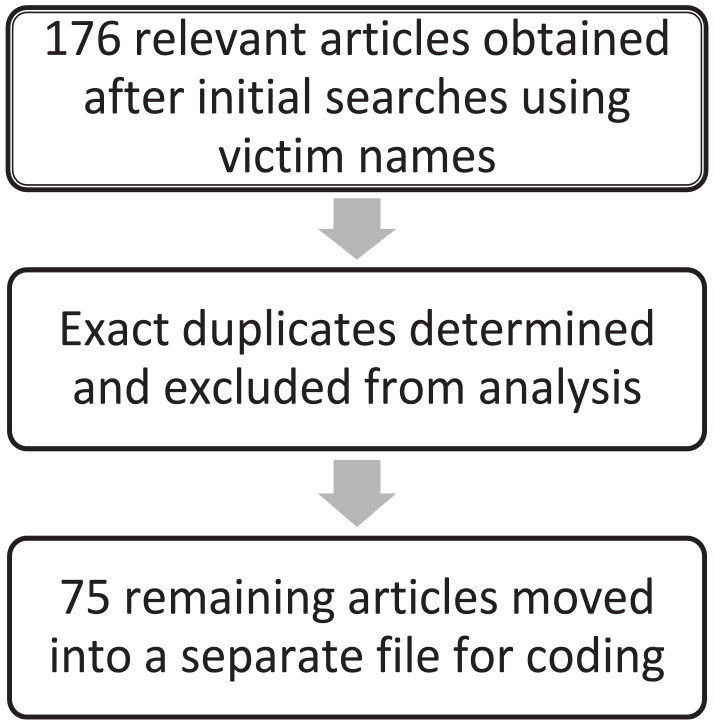
Article search process.
All demographic data made available by the 2SLGBTQIA+ organization and case characteristics were gathered. Particular attention was paid to the victim’s gender identity, race, age, and cause of death. Then, a qualitative content analysis was conducted using the 75 news articles gathered. Content analysis refers to a process used by researchers to systematically study the meaning of messages (Maxfield and Babbie, 2017). According to Maxfield and Babbie (2017: 344), content analysis is “particularly well-suited to answering the classic question of communications research: who says what, to whom, why, how, and with what effect?” As such, content analysis is particularly effective for researchers attempting to understand themes presented by news media and their effect on consumers (Maxfield and Babbie, 2017). Content analysis was chosen over a more in-depth approach, as the purpose of this study is to understand explicit phrasing used by journalists when publishing articles about anti-trans fatal violence. NVivo, a qualitative coding software, and Microsoft Excel were used to organize and code the news articles. Initially, NVivo was used for line-by-line coding to gather longer open codes before creating focused codes (Guadalupe-Diaz and Jasinski, 2017). Following this, Excel was used to code each article dichotomously (0 = no and 1 = yes) after emergent themes were identified during the line-by-line coding process.
Analytic strategy
The present study adopts both inductive and deductive qualitative coding processes. Inductive coding refers to a coding process whereby researchers are able to use “detailed readings of raw data to derive concepts, themes, or a model through interpretations made from the raw data” (Thomas, 2006: 238). Deductive coding processes refer to coding practices wherein a researcher attempts to test/compare whether data are consistent with prior findings from different studies (Thomas, 2006). In the present study, articles were coded inductively as themes emerged; however, inspired by Osborn (2022), special attention was paid to the episodic and thematic framing of homicides, and as such, articles were also coded deductively.
Additionally, Maxfield and Babbie (2017) contend that a conceptual framework informs the coding process in content analysis. They suggest that “for all research methods, conceptualization and operationalization typically involve the interaction of theoretical concerns and empirical observations” (Maxfield and Babbie, 2017). As such, the present study combines queer criminological perspectives with intersectionality as an analytic lens; these perspectives are deployed to explain how interacting power dynamics relative to transphobia, systemic racism, and genderism influence media coverage. Combining queer criminological perspectives with an intersectional analytic lens allows for the nuances associated with reporting styles surrounding anti-trans fatal violence to be explored in depth. Results are presented as descriptive statistics tables, and key quotations are used to illustrate important findings.
Qualitative codes
Demographic and case characteristics
Information indicating the victim’s identity markers were included, such as the victim’s gender identity, race, age, and reported cause of death.
Source type
The sources employed by news media outlets were included to understand which individuals are being “given the mic” to talk about these incidents. Each article was coded as being informed by 1) a friend of the victim; 2) a politician or political figure; 3) family members of the victim; 4) family members of the perpetrator; 5) queer organizations/groups; 6) Police reports/law enforcement officials. Many articles included more than one source, and as such, each source was coded separately.
Anti-trans violence
The “anti-trans violence” thematic category includes whether articles explicitly mentioned: 1) the targeted violence faced by transgender and gender-diverse individuals; 2) framed anti-trans violence as a hate crime; 3) discussed the disproportionate violence experienced by racialized transgender women; 4) mentioned dating stigma or intimate partner violence experienced by transgender individuals.
Representation of victim
Articles were coded based on how they represented victims. Codes included in this thematic category are comprised of 1) the article discussed the victim’s personality; 2) the central focus of the article was the victim(s); 3) the victim was identified as a transgender person; 4) the victim was misgendered; 5) victim was deadnamed.
Anti-trans legislation
The ‘anti-trans legislation’ category includes articles that mention anti-trans legislation as perpetuating violence and hatred directed toward transgender and gender-diverse individuals.
Community vigils
The “community vigils” code indicates whether an article mentions community gatherings, ceremonies, or vigils organized to remember victims of anti-trans fatal violence.
Framing of anti-trans fatal violence
Articles were each coded deductively for thematic or episodic framing of anti-trans fatal violence (Osborn, 2022). Thematic framing refers to news media coverage that situates an incident within broader structures of violence and inequality (Osborn, 2022). For instance, articles highlighting the prevalence of hate crimes, transphobia, and targeted violence against trans people were examples of thematic framing. Episodic framing situates an event/incident as an isolated occurrence and does not suggest that there could be a broader culture of violence that caused the incident (Osborn, 2022). Framing is critical to examine when investigating media coverage about systematically oppressed groups, as these events are largely influenced by broader structures of inequality (Osborn, 2022).
Results
Demographic and case characteristics
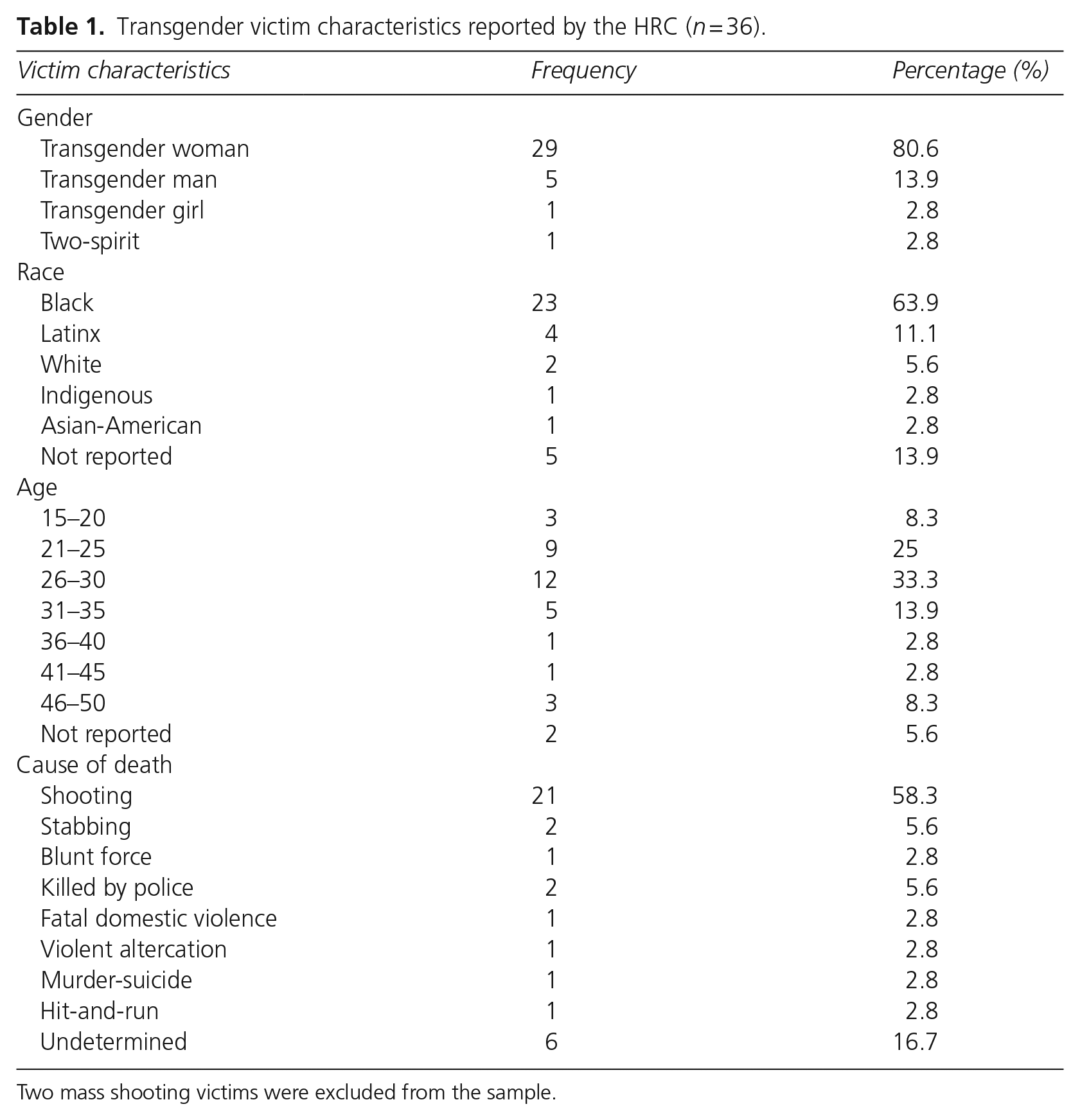
As shown by Table 1, of the 36 transgender individuals murdered in 2022 that were included in the sample, 80.6% were transgender women, and 13.9% were transgender men. One two-spirit person and one transgender girl (under age 18) were included in the sample. Racialized individuals accounted for 80.5% of the sample, with 63.9% of the sample being Black victims. The victim’s ages ranged from 17 years old to 50 years old. Over half of the sample were victims under age 30 (66.6%), consistent with existing research surrounding victims of anti-trans fatal violence (Gruenewald, 2012). Staggeringly, 55.6% of victims in the sample were Black transgender women (n = 20) and a Black transgender girl (n = 1).
Transgender victim characteristics reported by the HRC (n = 36).
Two mass shooting victims were excluded from the sample.
Also demonstrated by Table 1, in line with prior research (Gruenewald, 2012), the most common cause of death (COD) was being shot (58.3%), followed by being stabbed (5.6%), and being killed by the police (5.6%). Only one victim was killed in each of the following categories: fatal domestic violence, blunt force trauma, murder-suicide, and hit-and-run. One victim was killed by an ambiguously phrased “violent altercation” that did not include more information about the event. It is worth noting that six victims’ CODs were not identified.
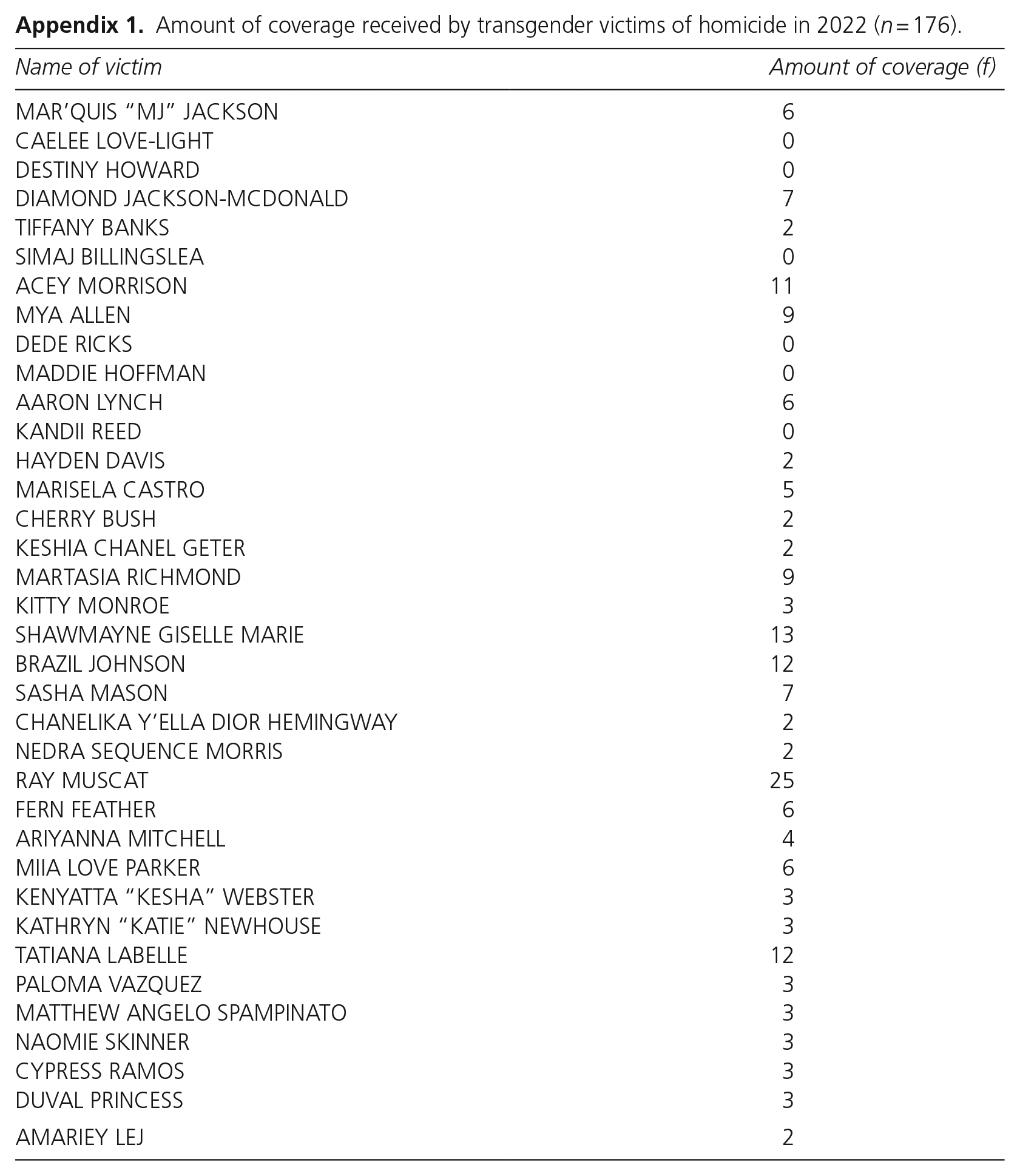
When searching each victim’s name to gather any coverage mentioning their death, six victims in the sample did not receive any coverage. The lowest number of articles that a victim’s name was mentioned in was two articles (2.5% of coverage), and the highest number of articles a victim’s name was mentioned in was 25 articles (33.3% of coverage) (see Appendix for more detail).
Source type
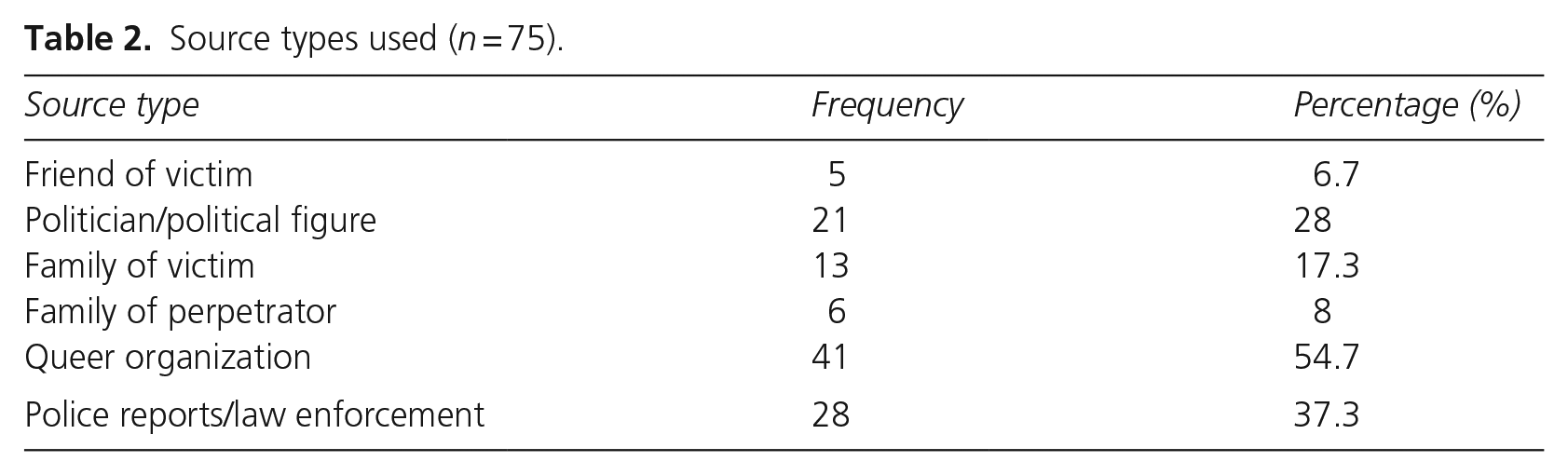
As shown in Table 2, queer organizations were the most frequently used source (54.7%) by journalists when reporting about victims of anti-trans fatal violence. This is in line with prior research conducted by DeJong et al. (2021) and Seely (2021), in which it is suggested that advocacy groups are frequently cited in news media reporting about anti-trans fatal violence. Police reports and law enforcement officials were used as sources by journalists in 37.3% of coverage, and politicians/political figures were used as sources in 28% of coverage. Friends and family members of the victim were used as a source in 24% of coverage, and family members of the perpetrator were used as a source in 8% of coverage. This is an interesting finding, as an earlier study conducted by Seely (2021) found that news media depictions of trans homicide victims during 2018 and 2019 used friends and family members of victims as a source in 39.2% of media coverage collected.
Source types used (n = 75).
Anti-trans violence
As demonstrated by Table 3, targeted anti-trans violence was mentioned in 62.7% of articles, and violence against transgender individuals was explicitly identified as a hate crime in 20% of articles. The disproportionate violence experienced by racialized transgender women was discussed in 46.7% of articles. Some illustrative examples of these findings are as follows: They died at the hands of a system that chooses to ignore them. That casts them out – and believes that they need to conform. (Bilinski, 2022) According to the Human Rights Campaign, at least 32 transgender people have been fatally shot or killed violently in the United States in 2022 so far. In Chicago, at least two transgender women have been killed, including Martasia Richmond in June and Tatiana Labelle in March. “We say ‘at least’ because too often these stories go unreported – or misreported,” the Human Rights Campaign notes on its website. “In previous years, the majority of these people were Black and Latinx transgender women.” (Perez, 2022)
Anti-trans violence (n = 75).
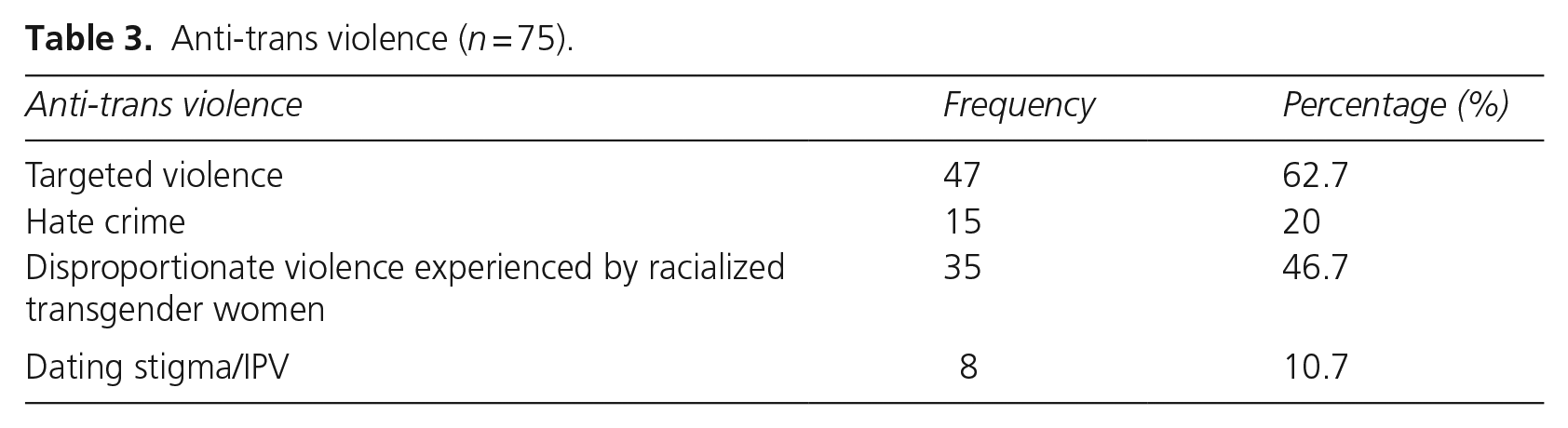
In many articles, journalists explicitly mention how existing in opposition to normalcy and experiences of violence are linked through structures of inequality. Often, transphobia and racism are discussed as compounding axes of discrimination, illustrating how journalists are beginning to make statements about intersections of inequality and how they influence broader cultures of violence against transgender people. Additionally, in 10.7% of articles, intimate partner violence (IPV) and dating violence (DV) were identified as modes of violence disproportionately experienced by transgender people – transgender women in particular. These findings illustrate how news media depictions of anti-trans fatal violence are situating this violence as hate-motivated while portraying the violence as multidimensional and structurally embedded.
Representation of victim(s)s
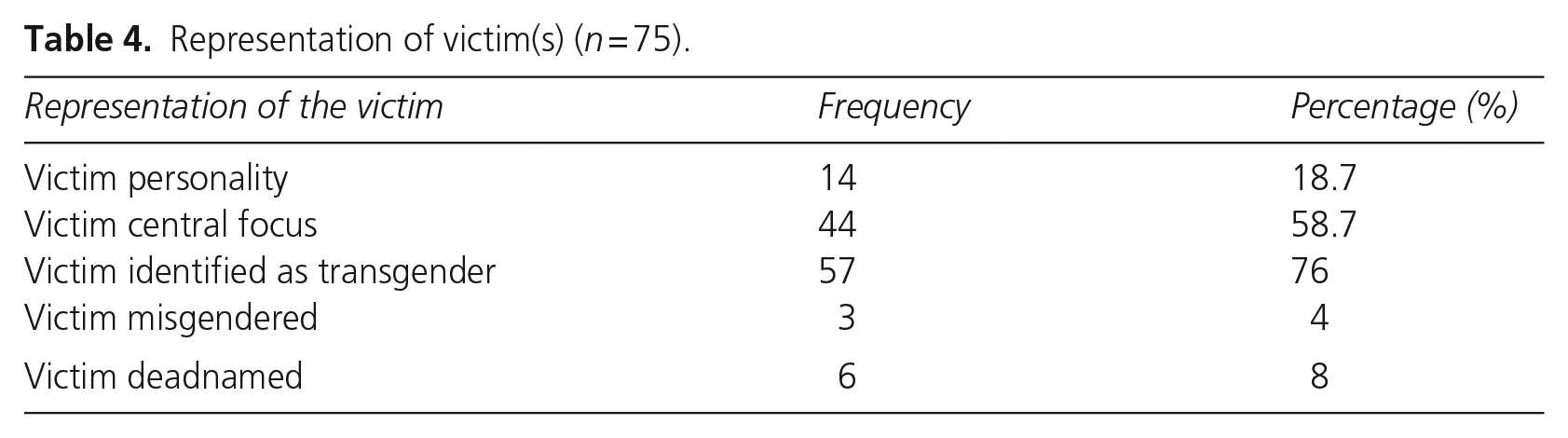
Table 4 highlights how news media coverage portrayed victims of anti-trans fatal violence. In 18.7% of articles, victims’ personalities were discussed. Often, friends, family members, and queer organizations were quoted when discussing the victim’s personality. In all articles mentioning victims’ personalities, positive narratives about the victims were shared using language that reflected their relationships with others. Illustrating this, one article discussed Naomie Skinner’s personality by using quotes from multiple sources: Though her life was short, Skinner made sure it was “fabulous,” said Shycuria Harris, her sister. A friend called Skinner “a very outstanding person.” (Graham, 2022a)
Representation of victim(s) (n = 75).
Many articles mentioning victims’ personalities would discuss multiple victims in a “list” format. A few journalists did this to ensure that victims were receiving news media coverage relative to accounts of their deaths. For example, the same article also highlighted the lives of fourteen other victims in a similar way, with the journalist stating: I’m devoting one of my columns to those lost to anti-trans violence – not how they died, but how they lived. (Graham, 2022b)
This finding shows the effort being made to direct attention toward the systemic issue of anti-trans violence while remembering victims. By discussing victims’ personalities, hobbies, and relationships with others, journalists provide a more humanized and sensitive account of the victims. This finding is particularly important, as humanizing accounts of victims may play a role in the shaping of public perceptions about transgender people and anti-trans fatal violence. In 58.7% of articles, victims of anti-trans fatal violence were the article’s central focus.
Also shown in Table 4, 76% of articles explicitly identified the victim as a transgender person. Victims were misgendered in only 4% of articles, and deadnames were used in only 8%. Deadnames were used most often by journalists and police; in line with previous research (see Osborn, 2022), phrasing suggesting that the victim “previously went by” or “used to be” was most often used before referring to the victim by their deadname. This finding is particularly alarming because it is clear that the journalists knew the victim’s chosen/actual
5
name and chose to use their deadname instead. In some cases, however, when the victim was deadnamed in quotes by family members, journalists used their discretion to change the use of the victim’s deadname to their chosen/actual name using brackets. This highlights that some journalists are making conscious efforts to include only the victims’ actual names rather than including their deadname in direct quotes. Illustrating this finding, one article states: A popular hairstylist, Princess was known as a “little firefly” with an “outgoing personality.” Meka Robinson, her mother, said, “I miss [Princess] calling me, telling me to come get my hair done, just calling me, telling me 'Ma, good morning and I love you.” (Graham, 2022)
As demonstrated above, it appears that the journalist removed the victim’s deadname from the report to ensure the victim’s identity was respected in news media accounts depicting their life/death. This practice has been encouraged by the Trans Journalists Association (2020) when discussing victims of anti-trans fatal violence, as these amendments allow for publications to affirm the gender identities of trans victims.
Anti-trans legislation
An important finding suggests that media depictions of anti-trans fatal violence identify anti-trans legislation as perpetuating hatred directed toward transgender individuals. Table 5 shows that 29.3% of articles mention the dangers imposed upon transgender individuals by the spread of “legislated hate.” Notably, when looking at previous research (see Seely, 2021), the present study suggests that there is a significant increase in coverage mentioning anti-trans legislation as it relates to the perpetuation of anti-trans fatal violence. Illustrating this finding, one article states: States have enacted 25 anti-LGBTQ bills so far this year, including 17 directed at transgender people, according to the report. More than 145 anti-transgender bills have been introduced across 34 states, marking the largest number recorded by the Human Rights Campaign in a state legislative session. Although the bills do not directly encourage violence against LGBTQ people, Goldberg said, they enforce a culture of bias that is often exacerbated by racism and sexism and can lead to an increased risk of fatal violence. (Schoenbaum, 2022)
Anti-trans legislation (n = 75).

By mentioning how anti-trans legislation may influence biases and harmful stereotyping, journalists situate anti-trans legislation as a calculated attack on transgender rights. They position anti-transgender legislation as bureaucratic efforts to reinforce structures of inequality that perpetuate violence against transgender people. In particular, journalists often mention transgender bathroom bans and access to sports and recreation, suggesting that anti-trans legislation reinforces negative beliefs about transgender people while positioning them as dangerous and deceptive. This finding is particularly important, as heightened rates of violence against transgender people have accompanied increases in anti-trans bills, illustrating how media depictions and legislated hate may influence violence against particular groups.
Community vigils
As illustrated by Table 6, community vigils and ceremonies remembering victims of anti-trans fatal violence were addressed in 24% of articles. Articles that mentioned community vigils being held to remember victims of anti-trans fatal violence often depicted victims in a positive manner and included memories about the victims’ lives, as well as quotes from queer organizations, family members, and friends of the victims. Journalists also portrayed community vigils and ceremonies as sites of anger and frustration regarding the lack of action directed toward ending transphobic violence. An article published on the Transgender Day of Remembrance states: Speakers also expressed anger at the lack of action from Chicago and from allies. Angelina Nordstrom, Elise Malary’s best friend, said they feel fatigue and despair as their past pleas for the importance of transgender lives have “fallen on deaf ears.” “While I am tired of lip service from allies, I am putting a call to action to accomplices to step forward and to step up,” Nordstrom said. “This should not be such an experience where the trans community is an afterthought day in and day out.” After speakers addressed the crowd, Ladden led a moment of silence. The crowd then moved to a fire ceremony held in a lot next to the Chicago Waldorf School. Over a bonfire and small cups of hot chocolate, the crowd was hushed. Above, the setting sun painted the sky blue and pink. “The sky said ‘trans rights’” someone shouted. (Ellis, 2022)
Community vigils.

Often, articles that mentioned community vigils suggested that the victims’ deaths were a result of the inaction of allies and broader political structures. Journalists discussed the anger directed toward governing structures, stating that the failure to protect transgender people and trans rights has resulted in communities losing loved ones. In these articles, journalists interviewed multiple groups (friends of the victim, families, and community members); they produced vibrant accounts of victims and depicted the anger and sadness of the communities.
Framing of anti-trans fatal violence
As demonstrated in Table 7, journalists framed anti-trans fatal violence thematically in 64% of articles. This means that journalists often discuss systemic inequalities that serve as underlying causes of hate-motivated crimes directed toward transgender individuals. Often, journalists would situate the killing of transgender individuals as a result of unchecked access to firearms, transphobia, homophobia, systemic racism, and the failure of the justice system and governing bodies to protect transgender individuals from violence. Some journalists referred to violence against transgender individuals as an epidemic. In 36% of articles, anti-trans fatal violence was framed episodically. These articles were often police reports about the murder of a transgender individual, and they did not provide any structural context regarding transphobia or hate-motivated violence. The violence was depicted as an isolated incident, employing a very “matter-of-fact” tone when discussing the murders.
Framing of anti-trans fatal violence.

Discussion
This study explored news media coverage surrounding anti-trans fatal violence in the United States during 2022. A qualitative content analysis using news articles (n = 75) about 36 transgender victims reveals that media narratives about transgender victims may be shifting. This study highlights seven major findings: 1) queer organizations were the most commonly used source by journalists when reporting about anti-trans fatal violence; 2) often, articles mentioned anti-trans violence and labeled these occurrences as hate crimes; 3) the disproportionate violence experienced by racialized transgender women was discussed in nearly half of the articles; 4) an overwhelming majority of articles explicitly labeled victims as transgender; 5) a noteworthy subset of articles mentioned anti-trans legislation; 6) community vigils were depicted as “collective mourning” after the victim’s death; 7) most articles situated anti-trans fatal violence as a structural problem fueled by transphobia, homophobia, racism, anti-trans legislation, and unchecked access to firearms. Previously, media discourses regarding anti-trans fatal violence have suggested that these occurrences are isolated incidents, promoted victim-blaming narratives, and devalued the lives of transgender individuals by failing to report the nature of this violence accurately (Schilt and Westbrook, 2009). The shift in the framing of anti-trans fatal violence may serve to change narratives about transphobia and anti-2SLGBTQIA+ sentiment more broadly.
Previous literature has demonstrated that journalists often refrain from including advocates as sources when reporting about crime, as they want to be viewed as unbiased (Gillespie et al., 2013). It has been suggested that the use of police or other public figures as a source in crime reporting may be perceived by the public as more “legitimate” than other sources. As such, journalists’ use of queer organizations and advocacy groups as a source when reporting about anti-trans fatal violence highlights a shift from relying primarily on police reports. In the present study, queer organizations and advocacy groups often provided intersectional depictions of anti-trans fatal violence. Quotes from these groups would discuss inequality in terms of power dynamics, suggesting that violence against transgender individuals is multifaceted; in other words, these groups contextualized violence by maintaining that it does not happen “inside of a vacuum.” Rather, anti-trans fatal violence was situated within broader structures of power, privilege, and inequality. These groups also helped to humanize victims. In multiple articles, victims were known members of queer activist groups; as such, members of these groups would discuss the personality traits of victims. By humanizing victims, queer organizations and journalists are able to gain sympathy from audiences (DeJong et al., 2021). These humanizing narratives, in tandem with discussions about structural violence, illustrate a shift in news media depictions of anti-trans fatal violence. Perhaps, this shift may be a result of an increased awareness of gender, sexuality, and the hate-motivated violence directed toward queer people (DeJong et al., 2021). Additionally, journalists seeking out queer organizations and advocacy groups may demonstrate an awareness of the failures of police and public figures to report about transgender victims accurately. Thus, perceptions of police and public figures such as politicians as legitimate sources may also be shifting.
There were very few instances of misgendering and/or deadnaming in the present study. Nevertheless, it is important to recognize that one instance of deadnaming or misgendering is too many. Most often, victims were deadnamed in early police reports about an incident or by family members. Police practices that promote the use of government documentation when identifying transgender victims have been challenged by scholars, as the deadnaming of transgender people in early reports can be damaging for later reports about their deaths (DeJong et al., 2021; Greenberg, 2020). Despite this, many police agencies have policies that ensure officers use driving licenses or other government identification when writing initial reports. Suppose a victim has not changed their government identification to reflect their chosen/actual name and gender identity. In that case, it is possible that in early reports about a transgender victim’s death, police may be unaware of their trans identity. Another source of deadnaming and misgendering was family members. Both sources of deadnaming often first used the victim’s chosen/actual name and then proceeded to state that the victim “used to go by (insert deadname)” or was “previously referred to as (insert deadname).” This language is an apparent choice by journalists to include the deadname of the victim.
In contrast, when dealing with direct quotes wherein a source deadnamed the victim, it appears that some journalists amended the quotes to reflect the victim’s chosen/actual name. Which begs the question: if the journalist is aware of the victim’s chosen/actual name, why would they fail to amend quotes that state the victim’s deadname? However, for articles that only deadnamed the victim, the journalists may not have been aware of the victim’s gender identity. Thus, journalists must be diligent in reaching out to multiple sources prior to reporting about an incident (Seely, 2021). Journalists often control narratives about crime and victimization; as such, it is their responsibility to ensure transparency when reporting about anti-trans fatal violence.
Journalists discussed the disproportionate violence experienced by racialized transgender women in nearly half of the articles. Past research has shown that the erasure and minimization of the violence faced by Black transgender women has been quite harmful (Joseph, 2022; Wood et al., 2022). Due to the intersection of the “isms” and “phobias”: racism, classism, cissexism, and transphobia, Black transgender women have received far less media outcry than Black men murder victims as well (Joseph, 2022). The findings of the present study suggest that the experiences of racialized transgender women (Black and Latina transgender women in particular) are being depicted by journalists as a systemic issue. In many cases, journalists explicitly mentioned the overrepresentation of Black transgender women as murder victims. Notably, in some cases, journalists mentioned power relations relative to race, class, gender, and sexuality in conjunction with each other, maintaining that structures of inequality are inextricably linked and cannot be examined separately.
Previous research has suggested that transgender victims’ identities have been downplayed by news media stories about their victimization (Baptista and Himmel, 2016; Barker-Plummer, 2013; Osborn, 2021). The downplaying of victims’ identities was related to the concept of gender-fixing, wherein the trans identity of victims was flattened by news media depictions of their deaths (Osborn, 2022). The findings from this study suggest that the overwhelming majority of articles explicitly state the victim was a transgender person. Following this, many news articles situated their identity within a broader context of structural inequality. It is worth noting that there were no victims included in the sample that were labeled as genderfluid or genderqueer. As such, these findings may have been different if news media depictions of a genderfluid or genderqueer person were included.
Seemingly, journalists have begun to situate violence against transgender individuals within the current anti-trans-fueled political climate. In recent years, anti-trans legislation in the U.S. has become a terrifying reality for many transgender individuals. Media rhetoric framing transgender individuals as the “deviant other,” situating them as folk devils, has led to a moral panic, which some scholars have termed a “gender panic” (Stone, 2018). By promoting harmful rhetoric casting transgender individuals as sexual predators, adultifying 6 transgender youth, and excluding these groups from spaces that are deemed to be “sex-segregated,” moral entrepreneurs have essentially drawn a target on the backs of transgender people. A notable finding derived from the present study shows that journalists are beginning to situate anti-trans violence within the current political climate, drawing connections between anti-queer hate-motivated crime and anti-trans legislation. The implications of this are profound: in solidarity with the queer community, journalists may be using their platforms as a site of protest.
Similarly, past research has shown that journalists have portrayed community vigils and ceremonies surrounding the killing of transgender individuals as sites of remembrance (Osborn, 2022). Journalists cast community responses to the deaths of transgender individuals as community tragedies, and the victims were depicted in a way that garnered sympathy from audiences (Osborn, 2022). The present study echoes these findings, as the collective mourning of communities was cast in a similar way. Like previous findings, friends, family members, and queer organizations/advocates were quoted when discussing the life/death of the victims. However, the current study suggests a more nuanced approach to reporting is found in the depictions of community vigils and ceremonies. Anger, frustration, and fear were commonly associated with articles mentioning community vigils. Rather than solely depicting these events as tragedies deserving of sympathy, journalists are beginning to frame these events as sites of anger and movement mobilization. When quoting queer organizations and advocates in particular, community vigils were portrayed as memorials due to unnecessary and preventable violence. Articles highlight the need for increased legal protections for transgender individuals and suggest that continued inaction from allies and other public figures was portrayed as a contributor to anti-trans fatal violence.
When examining thematic and episodic framing of trans homicides, Osborn (2022) found that news depictions of trans homicides during 2016 relied heavily on episodic framing, suggesting that instances of anti-trans violence are isolated events. In contrast, DeJong et al. (2021) found that many articles depicting trans homicide in 2018 did situate the murders within the broader context of transphobia and structural violence against trans individuals. In the present study, the majority of articles would assert that anti-trans fatal violence exists due to broader frameworks of inequality and injustice, framing the violence thematically. Articles also mentioned previous failings of the criminal justice system to protect the lives of transgender individuals due to the lack of emphasis placed upon the value of trans lives. Framing also included discussions surrounding varying social conditions faced by trans people, highlighting nuances in the varying forms of oppression that this group may be exposed to, such as ableism, racism, and classism. In the case of one transgender victim, the individual was neurodivergent, and articles surrounding the death of the victim mentioned the intersection of transphobia and ableism that this individual was subjected to. This being directly in contrast with previous research, as accounts of transphobic violence were often depicted as one-dimensional by news articles. When explored temporally, the findings derived by Osborn (2022), DeJong et al. (2021), and the present study, a positive shift in the framing of anti-trans fatal violence can be seen, as seemingly, there has been an increase in the framing of this violence as a structural problem.
Limitations
This study exhibits several limitations. First, this study only examined the media depictions of anti-trans fatal violence over 1 year (2022), and some news articles may not have been available due to the database used to gather media coverage. However, the search strategy would have gathered any coverage that mentioned the victims’ names made available by the database. In saying this, it is important to note that this study used only the victims’ chosen/actual names when gathering news coverage about the cases. A comprehensive list including victims’ deadnames was not available (I would argue that it is a good thing this list does not exist, despite the challenges this may present for researching these issues), and as such, only deadnames that came up during initial searches were included in the search process. Due to this, coverage that misidentified victims was likely missed. Speculatively, another possible explanation for the lack of coverage gathered is that reporting about the deaths of transgender victims may have decreased due to the anti-trans sentiments being expressed in the current political climate. Still, the findings derived from the present study are valuable when examining the role that journalists play in depicting victims of anti-trans fatal violence, as well as the portrayal of broader structures of inequality as causes of transphobic violence.
Additionally, while content analysis is a valuable method for systematically studying explicit phrasing in media, it does risk oversimplifying nuanced broader historical, social, and political contexts in which the content was produced (Babbie and Edgerton, 2023). In an effort to mitigate this risk, my analysis of news articles about victims of anti-trans fatal violence in the United States was carefully informed by intersectionality and queer criminological perspectives; however, it is worth noting that a true intersectional analysis may be beyond the scope of news analysis, as the study is limited to what is explicitly written by journalists, and this may not be genuinely reflective of the situation.
Conclusion
Although most of the findings derived from this study seem to be reflective of a positive shift in news media depictions surrounding anti-trans fatal violence, it is crucial to recognize that many victims of this violence are never identified as transgender (Human Rights Campaign, 2020). Queer organizations, such as the Human Rights Campaign, attempt to put together comprehensive lists of transgender individuals that are murdered yearly, but unfortunately, there are likely many names missing (Human Rights Campaign, 2020). It is also worth noting that the burden should not be placed solely on 2SLGBTQIA+ organizations to collect and distribute statistics about queer victims (DeJong et al., 2021; Seely, 2021).
Violence against transgender individuals has been labeled an epidemic. Previously, news media depictions of violence against transgender individuals have devalued their lives by misgendering and/or deadnaming them, failing to address transphobia, and labeling them as deviant others. By examining news media coverage (n = 75) surrounding 36 transgender homicide victims during 2022, this study suggests that a positive shift in news media depictions of anti-trans fatal violence may be taking place. This study has shown that journalists most often frame anti-trans fatal violence as a systemic issue, and they primarily use queer organizations/advocates as sources when discussing transphobic violence. Anti-trans legislation is being mentioned in news articles by journalists as the legislation relates to the perpetuation of transphobic hate and violence. Interestingly, community vigils have been framed as both sites of tragedy and anger, highlighting the need for increased legal protections for transgender individuals. Taken together, these findings indicate a need for more research to be conducted on media portrayals of anti-trans fatal violence, as the impact of this seemingly positive shift warrants deeper investigation.
Footnotes
Appendix
Amount of coverage received by transgender victims of homicide in 2022 (n = 176).
| Name of victim | Amount of coverage (f) |
|---|---|
| MAR’QUIS “MJ” JACKSON | 6 |
| CAELEE LOVE-LIGHT | 0 |
| DESTINY HOWARD | 0 |
| DIAMOND JACKSON-MCDONALD | 7 |
| TIFFANY BANKS | 2 |
| SIMAJ BILLINGSLEA | 0 |
| ACEY MORRISON | 11 |
| MYA ALLEN | 9 |
| DEDE RICKS | 0 |
| MADDIE HOFFMAN | 0 |
| AARON LYNCH | 6 |
| KANDII REED | 0 |
| HAYDEN DAVIS | 2 |
| MARISELA CASTRO | 5 |
| CHERRY BUSH | 2 |
| KESHIA CHANEL GETER | 2 |
| MARTASIA RICHMOND | 9 |
| KITTY MONROE | 3 |
| SHAWMAYNE GISELLE MARIE | 13 |
| BRAZIL JOHNSON | 12 |
| SASHA MASON | 7 |
| CHANELIKA Y’ELLA DIOR HEMINGWAY | 2 |
| NEDRA SEQUENCE MORRIS | 2 |
| RAY MUSCAT | 25 |
| FERN FEATHER | 6 |
| ARIYANNA MITCHELL | 4 |
| MIIA LOVE PARKER | 6 |
| KENYATTA “KESHA” WEBSTER | 3 |
| KATHRYN “KATIE” NEWHOUSE | 3 |
| TATIANA LABELLE | 12 |
| PALOMA VAZQUEZ | 3 |
| MATTHEW ANGELO SPAMPINATO | 3 |
| NAOMIE SKINNER | 3 |
| CYPRESS RAMOS | 3 |
| DUVAL PRINCESS | 3 |
| AMARIEY LEJ | 2 |
Acknowledgements
I would like to thank my supervisor, Dr. Victoria Sytsma, for all of her kindness, support, and guidance throughout the process of writing this manuscript. Additionally, I would like to thank Dr. Martin Hand, Dr. Jennifer Silcox, and Dr. Liam Kennedy for their helpful comments on earlier drafts of this manuscript.
Funding
The author received no financial support for the research, authorship, and/or publication of this article.
