



Abstract
This study examines the relationship between instructional leadership (IL) and teacher professional learning (TPL) through the mediating role of teacher leadership (TL) and the moderating role of distributed leadership (DL) within Türkiye's centralized education system. Grounded in a social-constructivist approach, the study posits that TPL is linked to interactive and shared processes. Data from 765 public school teachers in Ankara were analyzed using structural equation modeling, bootstrapping, and moderated mediation analysis. Results from the unconditional model demonstrated a low-level yet significant association between IL and TPL, with TL serving as a partial mediator in this linkage. Findings from the conditional model, based on moderated mediation analysis, revealed that the associations within the IL-TPL, IL-TL, and IL-TL-TPL pathways vary significantly depending on the level of DL. While high DL levels strengthened these positive interactions, low DL conditions were associated with weakened or reversed linkages, suggesting bureaucratic resistance. Among control variables, gender and experience significantly predicted TPL, favoring female and relatively less-experienced teachers. Theoretically, this study conceptualizes TPL through the interplay between vertical and horizontal leadership processes within an integrated framework. Practically, the findings suggest that strengthening collaborative leadership structures is essential for the sustainability of reform-oriented professional learning.
Keywords
Introduction
Teacher professional learning (TPL) is a critical process that enhances teachers’ adaptability to evolving professional demands and strengthens collective knowledge creation, thereby supporting student achievement and the institutional development of schools (Bellibaş et al., 2021; Liu and Hallinger, 2024). Indeed, the success of comprehensive educational reforms hinges on this process (Jensen et al., 2016); consequently, TPL lies at the heart of both educational policy and research agendas. The growing policy-level interest in TPL is mirrored in educational leadership research, which consistently demonstrates that leadership strengthens teachers’ professional learning (Bellibaş and Gümüş, 2023; Karacabey et al., 2022). Nevertheless, existing research on more effective professional learning either focuses on school principals’ singular leadership approaches (Thien and Yeap, 2023) or emphasizes the necessity for them to adopt holistic leadership models (Bellibaş et al., 2021).
In line with these orientations, empirical studies conducted in recent years have examined, from various perspectives, the relationship between the different leadership styles exhibited by school principals and teachers’ professional learning. Özdemir et al. (2024) identified a significant positive relationship between transformational leadership and TPL in Turkish vocational high schools, whereas Long and Xia (2025) demonstrated that instructional leadership is directly related to teacher learning, with transformational leadership linked indirectly. Similarly, within the framework of “learning leadership,” Savaş et al. (2025) demonstrated that school principals’ instructional, transformational, and shared leadership practices collectively provide significant support for teachers’ professional learning. In the majority of existing studies, teachers’ professional learning is explained primarily through the practices and influence of the school principal, regardless of whether singular or holistic leadership approaches are adopted (Daşcı Sönmez et al., 2025; Liu and Hallinger, 2024). This situation highlights the need for a more detailed examination of the interactive and indirect mechanisms through which different leadership actors within schools (such as teacher leaders), as well as systemic characteristics (such as distributed leadership), influence professional learning, in addition to the leadership practices of school principals.
Instructional leadership (IL), teacher leadership (TL), and distributed leadership (DL) have emerged in the literature as mainstream school leadership approaches that support teacher professional learning (TPL). IL is a foundational form of leadership that connects teachers’ professional development with students’ academic needs through classroom observations, feedback, and alignment of instructional processes with curricular goals (Liu and Hallinger, 2018). It also fosters collaborative learning cultures and the development of coherent instructional practices across the school (Bellibaş et al., 2021). However, the increasingly complex demands of schools demonstrate that IL alone is insufficient to sustain TPL and that leadership cannot be viewed solely as a process dependent on the principal (Hargreaves and Shirley, 2020). In this context, TL plays a critical role by facilitating knowledge sharing among colleagues and ensuring the continuity of professional learning communities (Liu and Hallinger, 2024), while DL practices strengthen the distribution of responsibilities and support collective knowledge creation and learning processes across the school (Polatcan, 2024).
These leadership practices concretize the school-based reflections of the social constructivist perspective by nurturing social learning processes in which teachers construct knowledge and meaning through interaction, shared meaning-making, and contextual factors. However, the limited number of studies that address teacher professional learning from a social constructivist perspective in conjunction with holistic school leadership (Long and Xia, 2025; Savaş et al., 2025) points to a research gap in the theoretical grounding of this relationship. This gap highlights the need to conceptualize leadership in the school context not merely as an administrative function, but as a set of horizontal, shared, and interactional processes that enable and sustain teacher professional learning.
To address these limitations in the literature, this study examines the mediating role of TL and the moderating role of DL in the relationship between IL and TPL within a social constructivist framework. Theoretically, the study aims to expand the limited body of literature that approaches teacher professional learning holistically from a social constructivist perspective. Practically, it seeks to empower teacher learning communities and support coherent instructional practices across schools through shared responsibility and collaborative practices involving school leaders and teacher leaders.
Context
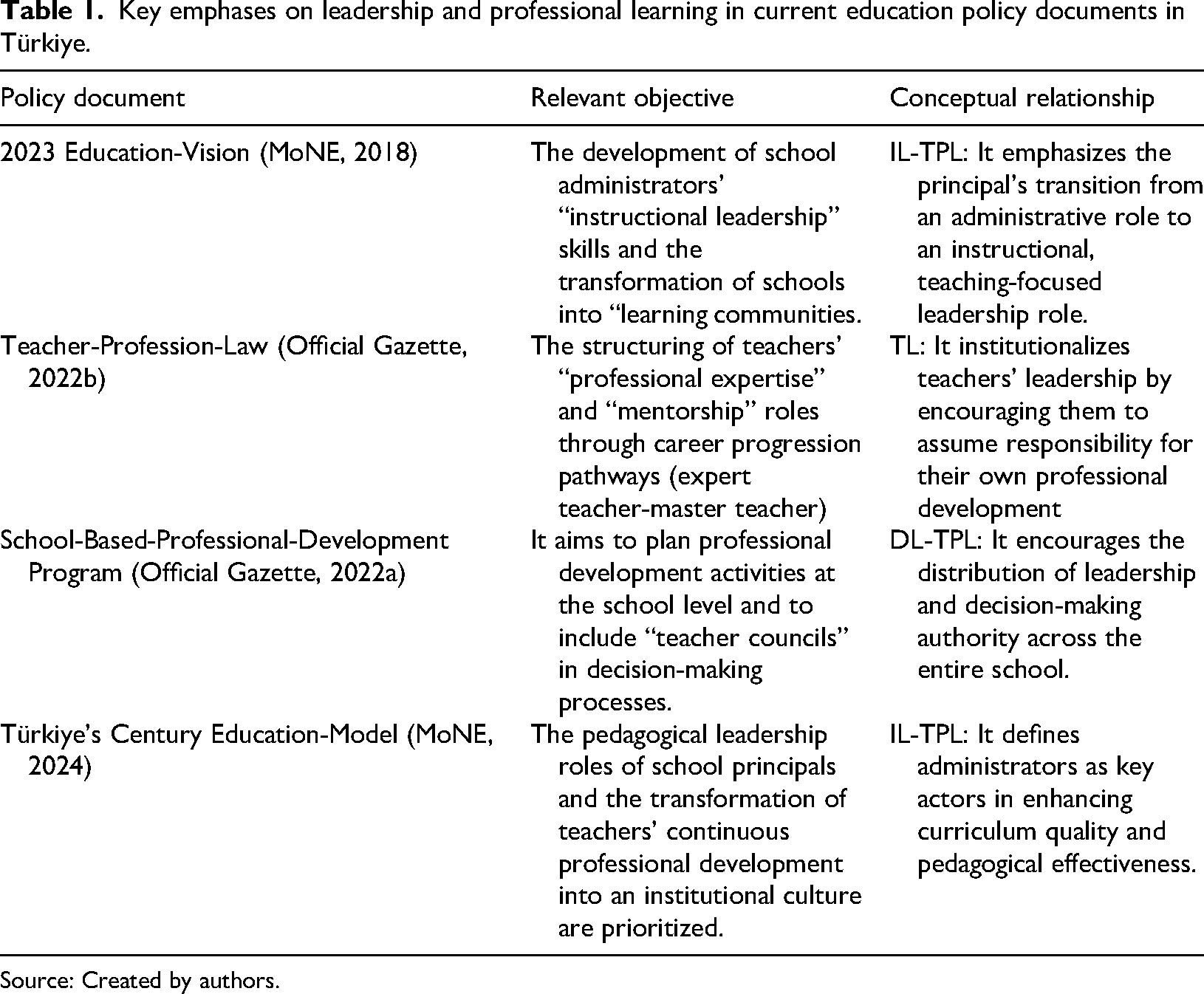
The research was conducted within the context of the Turkish education system, which is characterized by its centralized structure. In this centralized framework, the Ministry of National Education (MoNE) plays a decisive role in all processes (from school administration and teacher appointments to financing and curriculum regulation). In addition, teachers’ professional development activities are largely carried out within the framework of centralized planning and supervision. Nevertheless, in recent years, policy documents in Türkiye have supported a transformation that prioritizes school-based professional development, shared leadership, and stakeholder participation. The implications of these documents with respect to the core variables of this study (IL, TL, and DL) are presented in Table 1.
Key emphases on leadership and professional learning in current education policy documents in Türkiye.
Source: Created by authors.
The reform initiatives summarized in Table 1 indicate that, despite Türkiye's centralized structure, there is an ongoing and dynamic pursuit of encouraging diverse leadership roles. This context offers a rich research setting for examining the interaction between leadership mechanisms and teachers’ professional learning. However, recent studies (Daşcı Sönmez et al., 2025) suggest that a gap persists between these policy objectives and practices in the field. This landscape reveals a tension between idealized goals and the prevailing administrative focus, underscoring the importance of empirically assessing the potential role of different leadership practices in teachers’ learning.
Theoretical framework
This study is grounded in the social constructivist approach, which positions learning as a process constructed through interaction, collaborative meaning-making, and contextual factors (Vygotsky, 1978). From this perspective, teachers’ professional learning is not merely an individual cognitive activity but can be conceptualized as a collective process occurring through dialogue, reflection, and collaboration within school communities (De Jong et al., 2022). Within this framework, IL is critical in fostering teachers’ participation in learning communities by supporting vision development, providing constructive feedback, and strengthening professional support (Liu and Hallinger, 2024). This influence is primarily manifested through TL, which translates formal leadership practices into teachers’ daily learning and teaching practices (Dasci Sonmez et al., 2025). Teacher leaders, in this mediating role, facilitate collective knowledge construction by connecting formal leadership practices with teachers’ everyday learning behaviors (Akinlar et al., 2025). Furthermore, DL serves as a contextual moderating variable that can either strengthen or weaken the relationship between IL, TL, and TPL. Under conditions of strong trust and shared leadership responsibilities, constructivist principles can be applied more effectively, thereby enhancing school-based professional learning.
This framework links teachers’ individual and collective learning processes with leadership practices implemented within the school. In this respect, it positions social constructivism as an integrative perspective that explains how IL, TL, and DL jointly shape teacher professional learning. Consequently, the study extends prior leadership models (Bellibaş et al., 2021; Liu and Hallinger, 2024; Thien et al., 2023) by explicitly situating the interaction of IL, TL, and DL within a socially constructed understanding of teacher learning. The conceptual model and hypotheses based on this framework are presented in Figure 1.
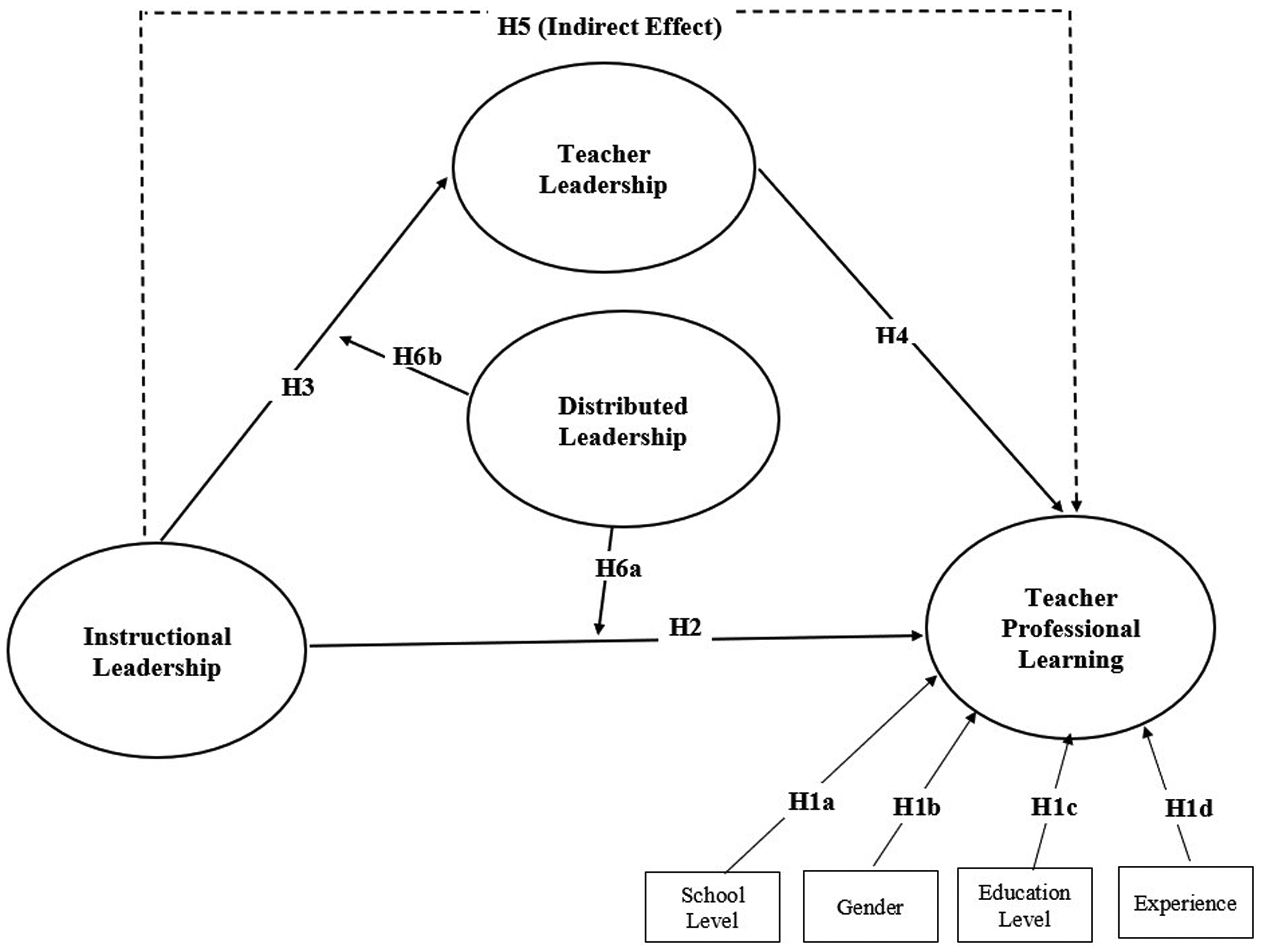
Conceptual model. Source: Created by authors.
Literature review and hypotheses
Teacher professional learning
Teacher professional learning (TPL) is an interactive, contextual, and reflective process through which teachers enhance their pedagogical knowledge, skills, and beliefs. This learning extends beyond individual cognitive activities, primarily occurring through teachers’ sharing of experiences with colleagues, experimenting with new teaching approaches, and critically examining their practices (Darling-Hammond, 2017). Within this framework, TPL comprises complementary dimensions, including collaboration, reflection-experimentation, and reaching out to the knowledge base (Li et al., 2016). Collaboration enables teachers to improve their instructional practices through interactions with peers (De Jong et al., 2022). Reflection-experimentation involves critically evaluating challenges encountered in the teaching process and experimenting with innovative methods in the classroom (Li et al., 2016). Reaching out to the knowledge base pertains to utilizing resources to enhance pedagogical competencies (Gümüş et al., 2018).
Research demonstrates that sustained, collaborative professional learning improves teachers’ instructional practices, enhances their professional autonomy, and fosters greater classroom engagement, thereby contributing to school improvement (Darling-Hammond, 2017). Moreover, the literature emphasizes that various leadership practices supporting TPL play a role in generating these positive outcomes (Bellibaş and Gümüş, 2023; Hallinger et al., 2019; Savaş et al., 2025). In addition to leadership practices, a limited number of studies suggest that variables such as school level, educational attainment, gender, and professional experience may be associated with teachers’ professional learning (Qin and Liu, 2023). Therefore, these variables were included in the study as control variables, and their potential effects on TPL were analyzed.
(a) School level, (b) gender, (c) education level, and (d) experience are significantly related to participants’ reports on teacher professional learning.
The role of instructional leadership in teacher professional learning
The effective schools movement identifies instructional quality as the primary determinant of school success, emphasizing the active role of school principals in instructional processes (Marks and Printy, 2003). In the literature, the scope of instructional leadership (IL) ranges from strategic decisions such as staff recruitment and curriculum selection, emphasized by Murphy (1988), to broader organizational processes encompassing the management of a school's vision, resources, and climate (Hallinger et al., 2015; Leithwood and Louis, 2011). However, the function of IL may vary depending on the structural characteristics of education systems and the scope of authority granted to administrators. In centralized systems such as Türkiye, where strategic authorities related to curriculum and personnel selection reside with central governance, school principals tend to concentrate their instructional leadership roles on areas such as pedagogical mentoring, teacher support, and school climate management (Karacabey et al., 2022). Building on this structural condition, the present study conceptualizes IL in a way to cover duties of school principals, such as teacher support/development and the creation of a conducive learning climate, both of which focus directly on the “instructional core”.
The relationship between IL and TPL is strongly supported in the literature. Liu and Hallinger (2021) found that effective IL enhances teachers’ reflection and collaboration processes through classroom observations and constructive feedback, while Bellibaş et al. (2022) established that a positive school climate promotes collective knowledge construction. Karacabey et al. (2022) demonstrated that IL strengthens teachers’ pedagogical skills and supports school-based professional learning communities. In Turkish education system, IL practices have been observed to effectively enhance teacher learning despite the dominance of administrative tasks (Bellibaş et al., 2021). From a social constructivist perspective, this study posits that IL is effective through principals’ support of teachers and the creation of a conducive teaching-learning climate. This process facilitates teachers’ engagement in learning through dialogue, the co-construction of meaning, and collaboration. In this context, H2 tests the relationship between IL and TPL.
IL is positively related to TPL.
The teacher leadership as a mediator in the relationship between instructional leadership and teacher professional learning
Teacher leaders are professionals who influence their colleagues, school administrators, and other stakeholders to enhance teaching and learning practices while taking a leading role in these processes (York-Barr and Duke, 2004). Unlike formal roles, teacher leadership (TL) is a peer-based, often informal form of leadership grounded in teachers’ expertise and voluntary commitment to school improvement. According to Schott et al.'s (2020) meta-analysis, TL encompasses multiple dimensions, including supporting professional learning, mentoring, advocating for school improvement, and building capacity. In the context of the Turkish education system, where leadership is predominantly defined at the administrative level, teacher leadership predominantly covers the ways teachers contribute to school improvement by supporting colleague learning and enhancing instructional practices (Authors, 2024).
Ghamrawi et al. (2024) emphasize that TL shapes TPL through mutual empowerment, conceptual awareness, and collaborative metacognition. Shen et al. (2020) demonstrate that teacher leaders foster the transformation of professional development by cultivating learning communities within the school, whereas Liu and Hallinger (2024) show that this role supports job-embedded professional development across formal, hybrid, and informal dimensions. However, the mediating role of TL in the relationship between IL and TPL, as well as the indirect impact of principal actions on teacher development, remains underexplored in the literature. Principal leadership encourages teachers to assume leadership roles by supporting them and creating learning environments (Lee and Ip, 2023), which positions TL as a catalyst that strengthens the relationship between principal leadership and TPL (Dascı Sönmez et al., 2025; Karakose et al., 2025). This process enhances peer learning and innovative teaching practices while serving as a bridge between formal authority and grassroots collaboration. In this context, the study assumes that TL functions as a mediating variable that transmits the influence of principals’ instructional leadership practices into TPL. Based on this assumption, the following hypotheses were developed.
IL is positively related to TL.
TL is positively related to TPL.
TL mediates the relationship between IL and TPL.
The distributed leadership as a moderator
Distributed leadership (DL) is a leadership approach that conceptualizes leadership not as an individual competency but as a collective process shared among teachers, administrators, and other stakeholders (Spillane, 2006). According to this perspective, leadership emerges as a dynamic phenomenon within the social interaction networks of a school. DL enhances the school's institutional learning capacity by guiding these dynamics through collaboration, collective decision-making, and knowledge sharing (Harris and DeFlaminis, 2016; Polatcan, 2024). Considering that the emergence and implementation of DL vary according to organizational and cultural contexts, Authors (2017) in the Turkish context describe DL through elements such as encouragement and common goals, trust and solidarity, and shared responsibility.
From a social constructivist perspective, DL supports collective knowledge construction through teachers’ dialogue and collaboration, with shared responsibility and a common vision fostering trust-based interactions that nurture constructivist learning processes (Hallinger and Kulophas, 2022; Printy and Liu, 2021). In Türkiye, the School-Based Professional Development Program (Official Gazette, 2022a) promotes teachers’ engagement in school-based leadership roles, thereby operationalizing the principles of DL. However, principals’ focus on administrative duties may constrain teachers’ professional learning (Savaş et al., 2025), highlighting a tension between educational reforms (MoNE, 2018; Official Gazette, 2022b) and centralized practices.
Drawing on examples from Türkiye, there is a growing trend in studies indicating that DL supports TPL in non-Western and developing centralized education systems (Thien and Adams, 2021). In addition, research examining the effects of the interaction between DL, IL, and TL on TPL is also increasing (Torres et al., 2020). However, the moderating role of DL in these relationships has not yet been systematically addressed in the literature. A strong DL culture may enhance the impact of IL on teachers’ leadership behaviors and professional learning processes, while a weak DL culture may constrain these effects. Consequently, this study posits that DL serves as a moderating variable in the effects of IL on TL and TPL, leading to the development of the following hypotheses:
DL moderates the relationship between IL and TPL
DL moderates the relationship between IL and TL.
Method
This study employed a cross-sectional design to test the study hypotheses. The data are collected at a specific time and location in cross-sectional studies. The following sections present the study's sample, measures, and data analysis strategy.
Sampling and data collection process
Participants included teachers working in 59 public schools in Ankara Province of Türkiye. Of participants, 72.8% (n = 557) were working in secondary or lower-level schools, and 27.2% (n = 208) were working in high schools. 78.4% (n = 600) were female, and 21.6% (n = 165) were male. About 75.6% (n = 578) of the participants had a bachelor's degree, and 24.4% (n = 187) had a postgraduate degree. About 51.5% (n = 394) of the participants had 20 years or fewer experience, and 48.5% (n = 371) had 21 years or more experience. We employed a two-stage selection process during the data collection process. In the first stage, we selected the schools to administer questionnaires. We visited these schools and received permission from the school principals to conduct our study in their schools. In the second stage, we invited teachers to participate in our study voluntarily. We delivered the questionnaires in envelopes to teachers in person.
Variables and measures
This study used four measures: TPL, IL, TL, and DL. Before this study, we conducted exploratory factor analyses (EFA) to validate the study's measures by using a different dataset collected from teachers. This section introduces the measures and control variables used in this study.
Teacher professional learning. We employed the TPL scale developed by Li et al. (2016). This scale was adapted in Turkish by Gümüş et al. (2018). The original scale consists of 27 items. EFA resulted in 18 items loaded on three factors. Factor loadings of the items ranged between .51 and .84. Three factors accounted for 65.43% of the total variance. The scale's factors are collaboration, reflection-experimentation, and reaching out to the knowledge base. This is a 5-point scale ranging from (1) “strongly disagree” to (5) “strongly agree”.
Instructional leadership. We used items of two subscales of the instructional leadership behaviors scale developed by Şişman (2016) to measure IL: teacher support and development (10 items) and creating a proper teaching-learning climate (10 items). EFA produced a single-factor scale with 13 items. Factor loadings of the items ranged between .75 and .88. A single factor accounted for 71.05% of the total variance. This is a 5-point scale ranging from (1) “never” to (5) “always”.
Teacher leadership. We used items of two subscales of the TL scale developed by the Authors (2024) to measure teacher leadership: professional development (5 items) and improving teaching (4 items). EFA produced a single-factor scale with six items. Factor loadings of the items ranged between .74 and .86. A single factor accounted for 65.12% of the total variance. This is a 5-point scale ranging from (1) “never” to (5) “always”.
Distributed leadership. We employed the DL scale developed by the Authors (2017) to measure distributed leadership. The original scale consists of 32 items. EFA produced a three-factor scale with 20 items in this study. Factor loadings of the items ranged between .63 and .82. Three factors accounted for 71.17% of the total variance. The scale's factors are encouragement and common goals, trust and solidarity, and shared responsibility. This is a four-point scale ranging from (1) “absolutely disagree” to (4) “absolutely agree”.
Control variables. We included school level, gender, education level, and experience as control variables in this study. School level was coded as 0 = secondary school and below, and 1 = high school. Gender was coded as 0 = female and 1 = male. Education level was coded as 0 = bachelor's degree and 1 = graduate degree. Experience was coded as 0 = 20 years or fewer, and 1 = 21 years or more. Negative standardized regression coefficients imply a significant difference in favor of base cases, while positive ones denote a difference in favor of upper cases.
Analytical strategy
Before performing multivariate statistics, we scrutinized the skewness and kurtosis coefficients of the items and outliers. Items’ skewness coefficients ranged between −1.38 and +1.00, and kurtosis coefficients between −1.26 and +1.83, which can be regarded as acceptable ranges (Hair et al., 2014). Furthermore, no outliers were found as a result of the analysis. We, therefore, evaluated that the dataset was appropriate for multivariate statistics. We also performed Harman's single-factor test to control the possibility of common method variance (CMV) by using EFA, since the data were collected from the same participants in the same measurement context. The results showed that the first factor accounted for 40% of the total variance, which suggested CMV is unlikely to fully explain the findings; nevertheless, CMV remains a potential limitation.
In the preliminary analysis stage, we calculated descriptive statistics like means, standard deviations, intra-class correlations (ICC), and correlation coefficients among variables. We also presented reliability and validity values (like Cronbach's Alpha, composite reliability, average variance extracted, Heterotrait-Monotrait ratio of correlations, and variance inflation factor values). In the second stage, we conducted a series of confirmatory factor analyses (CFA) to test the study's scales’ suitability to the data and evaluate the goodness of the fit of the proposed model. We conducted Structural Equation Modeling (SEM) to test the hypotheses in this stage. We used (χ2/df), (RMSEA), (SRMR), (CFI), and (TLI) indices in this study. Due to the sample size (765), we adopted these criteria in CFA and SEM analyses to assess the model fit: χ2/df < 5 (significant p-values expected), RMSEA < .07, SRMR < .08, and CFI and TLI > .92 (Hair et al., 2014). In the third stage, bootstrapping was conducted to test the indirect effects of IL on TPL. We calculated confidence intervals to determine the significance of the indirect effects. Following Preacher and Hayes (2008), we performed bootstrapping with 5000 resamples. In the last stage, we conducted moderation and moderated mediation tests. Conditional indirect effects were examined in Mplus using the MODEL CONSTRAINT command with TYPE = COMPLEX estimation, which generates estimates of the indirect effect at specific values of the moderator (−1 SD, mean, and +1 SD). All models were estimated with maximum likelihood using cluster-robust standard errors (CS-SE) to account for the nested structure of the data. We performed all tests at .05 and .01 levels as a precaution against type 1 error, as the study's sample was large (Hair et al., 2014).
Results
We presented the results in this section. This section includes preliminary analysis, direct and indirect effects, and moderated mediation test sections.
Preliminary analysis
This subsection presents descriptive statistics, validity and reliability values, and precautions taken against multicollinearity problems. Table 2 shows descriptive statistics and correlations.
Descriptive statistics, correlations among variables.
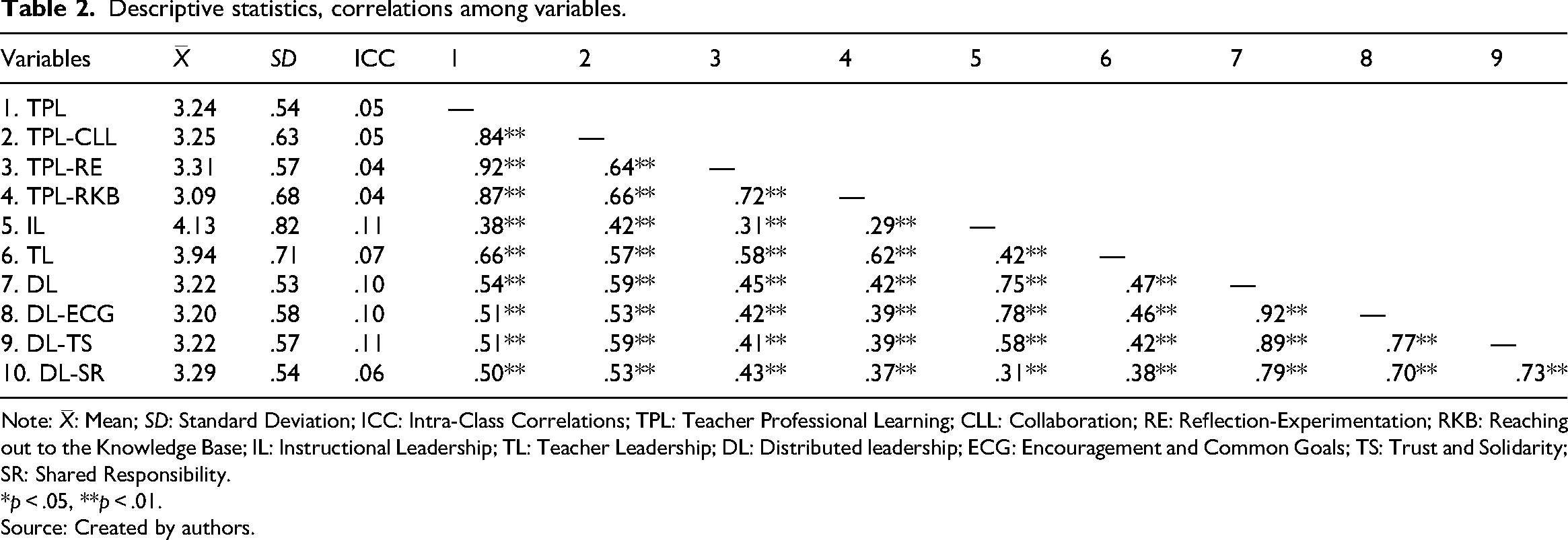
Note: X̅: Mean; SD: Standard Deviation; ICC: Intra-Class Correlations; TPL: Teacher Professional Learning; CLL: Collaboration; RE: Reflection-Experimentation; RKB: Reaching out to the Knowledge Base; IL: Instructional Leadership; TL: Teacher Leadership; DL: Distributed leadership; ECG: Encouragement and Common Goals; TS: Trust and Solidarity; SR: Shared Responsibility.
*p < .05, **p < .01.
Source: Created by authors.
Table 2 reveals that teachers reported high levels of IL (M = 4.13, SD = 0.82) and TL (M = 3.94, SD = 0.71). In contrast, the DL mean score was moderately high (M = 3.22, SD = 0.53), and the TPL mean score was at a moderate level (M = 3.24, SD = 0.54). Correlations ranged from .29 to .92, all positive and significant (p < .01). IL was found to be positively linked to both TL (r = .42) and TPL (r = .38). We found that DL was highly correlated to IL (r = .75) and moderately to TL (r = .47). Moderate and high correlations were found among the subscales of TPL and DL. These patterns confirm coherent, positive interrelations among leadership forms in Turkish schools, with IL consistently fueling TPL. The intraclass correlation (ICC) values ranging from .04 to .11 suggest that only a limited proportion of the total variance in the variables was attributable to differences between schools. This implies that the majority of the variance arose at the teacher-level rather than the school-level, and these constructs were predominantly shaped by individual rather than institutional factors. Table 3 presents the reliability and discriminant validity indices.
Reliability and discriminant validity scores.
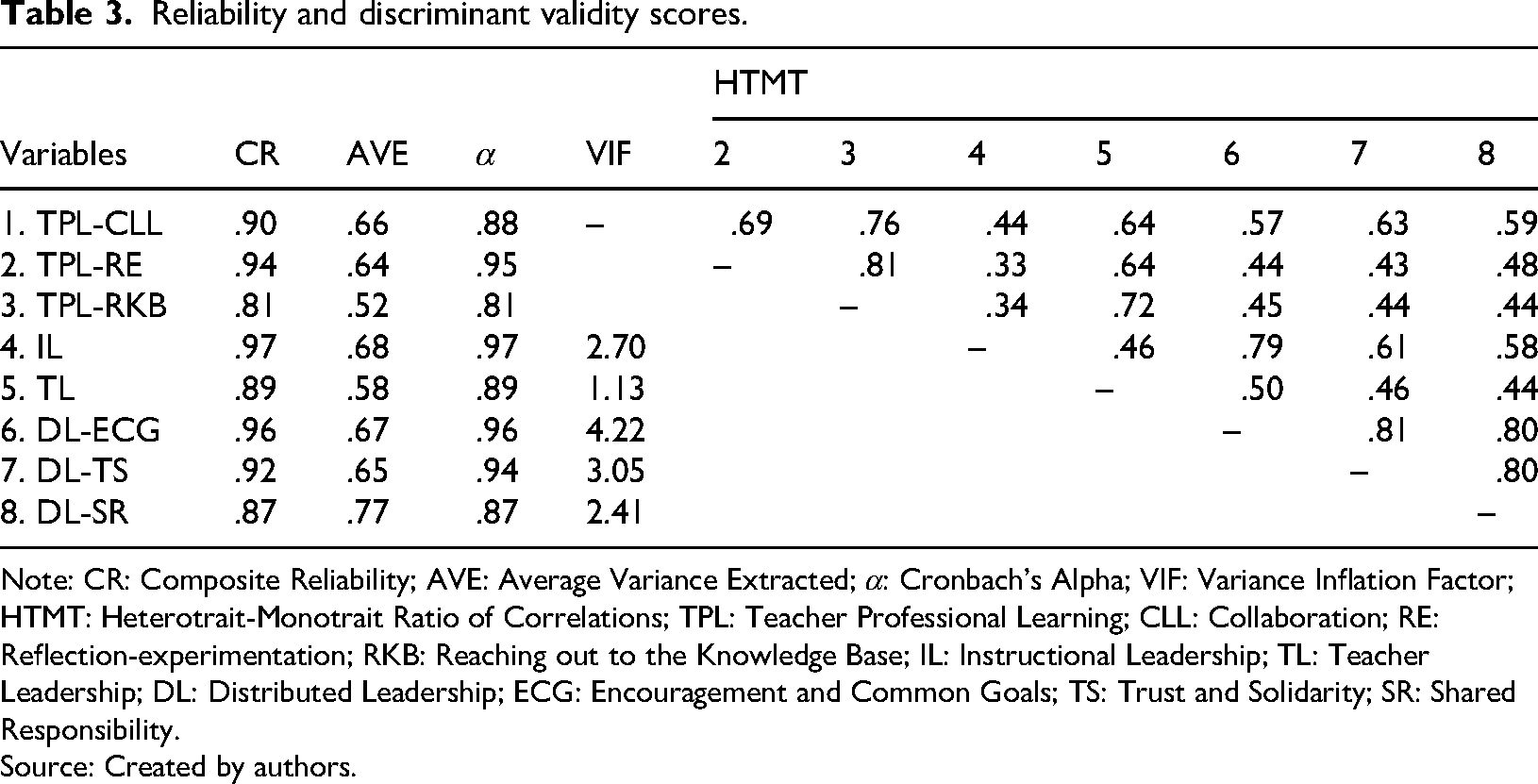
Note: CR: Composite Reliability; AVE: Average Variance Extracted; α: Cronbach's Alpha; VIF: Variance Inflation Factor; HTMT: Heterotrait-Monotrait Ratio of Correlations; TPL: Teacher Professional Learning; CLL: Collaboration; RE: Reflection-experimentation; RKB: Reaching out to the Knowledge Base; IL: Instructional Leadership; TL: Teacher Leadership; DL: Distributed Leadership; ECG: Encouragement and Common Goals; TS: Trust and Solidarity; SR: Shared Responsibility.
Source: Created by authors.
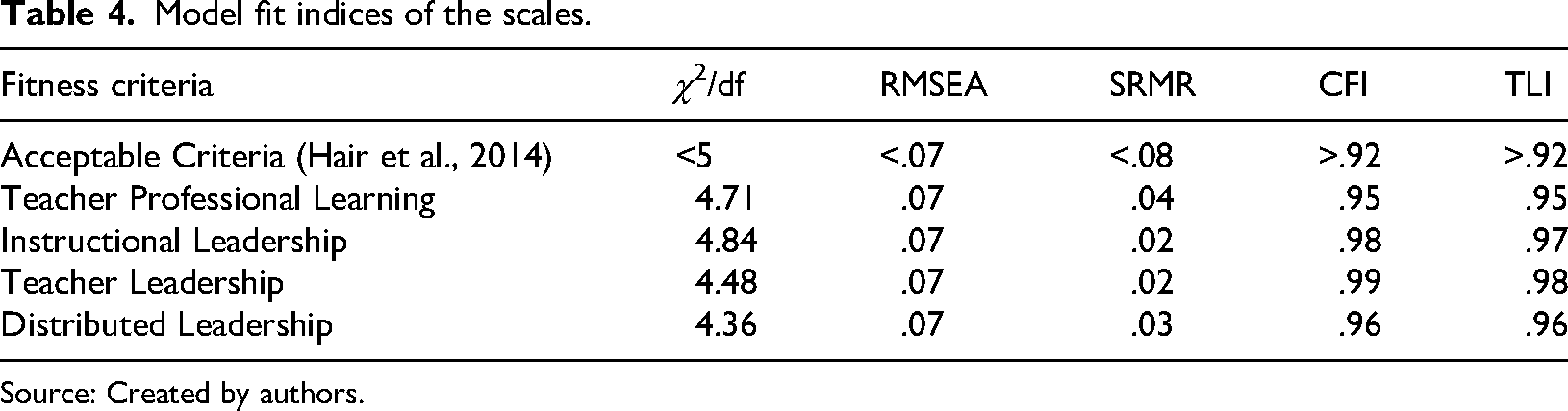
Table 3 demonstrates that the scales exhibit strong psychometric properties in terms of reliability and validity. The CR values range between .81 and .97, while Cronbach's alpha coefficients fall between .81 and .97—both exceeding the .70 threshold (Hair et al., 2014). For convergent validity, the AVE values range from .52 to .77. The lowest AVE value (.52), being above the .50 cutoff, is considered acceptable. In the multicollinearity analysis, the VIF values ranged from 1.13 to 4.22. VIF values indicate the degree of increase in the standard error due to multicollinearity. Multicollinearity leads to interpretation or estimation problems, particularly when the relationships are relatively weak and the sample size is relatively small (Hair et al., 2014). Hair et al. (2014) argue that <5 could be regarded as a cutoff value when assessing the effects of multicollinearity, since this value suggests that multicollinearity does not pose serious reliability problems for estimates, particularly in medium- and large-scale samples. We, therefore, concluded that multicollinearity did not lead to serious threats to the reliability of the estimates in this study. For discriminant validity, the HTMT ratios ranged from .33 to .81. As suggested by Henseler et al. (2015), this indicates that discriminant validity was strictly maintained. Therefore, all scales were confirmed to possess strong internal consistency and adequate validity indicators. Table 4 presents the fit indices of the scales.
Model fit indices of the scales.
Source: Created by authors.
Table 4 indicates that the measurement model possesses a highly robust structure in terms of validity and reliability. The goodness-of-fit indices of all scales fall within the reference ranges suggested by Hair et al. (2014). In particular, the CFI values, ranging from .95 to .99, demonstrate a high level of model-data fit. The obtained fit indices confirm that the constructs of IL, TL, and DL, as observed in schools, along with teachers’ professional learning, were measured in a valid and reliable manner. This verification further indicates that the SEM is grounded on a solid measurement foundation.
Direct and indirect effects
We conducted SEM analysis to examine the direct and indirect effects of IL on TPL through TL. We included TPL, IL, TL, and control variables (school level, gender, education level, and experience) in the SEM analysis. SEM analysis indicated a good fit to the data (X2/df = 2.75; RMSEA = .05; SRMR = .05; CFI = .94; TLI = .94). Figure 2 shows the SEM results regarding the direct and indirect effects.
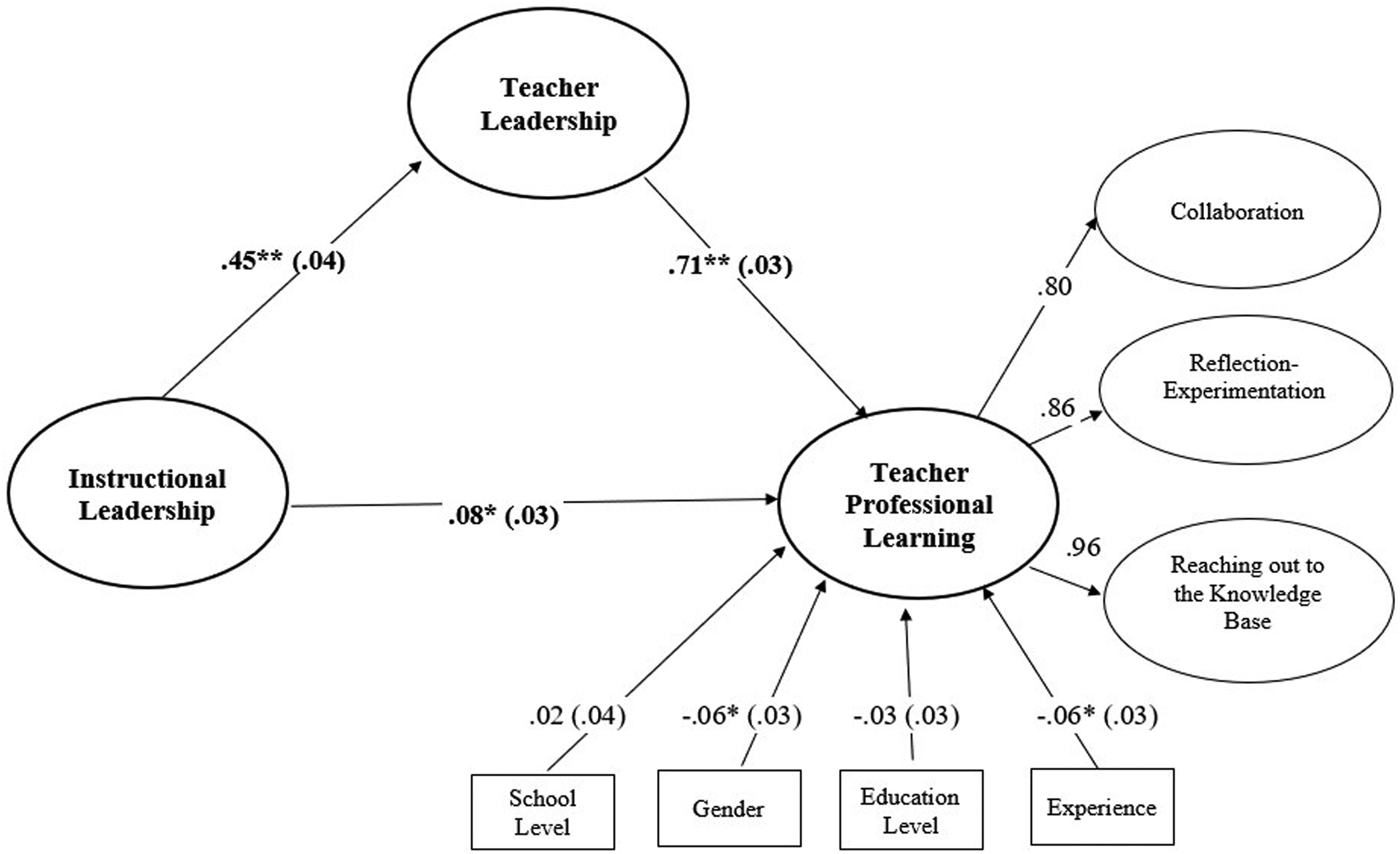
SEM analysis (unconditional model).
The unconditional structural model presented in Figure 2 indicates that among the control variables, gender (β = –.06, p < .05) and experience (β = –.06, p < .05) had significant influences on teacher professional learning (TPL) (H1b, H1d). Negative standardized estimates imply that female teachers and teachers with 20 years or fewer experience reported higher levels of professional learning. School level and educational attainment do not produce significant differences (p > .05). The direct effects of IL on TPL (β = .08, p < .05) and on TL (β = .45, p < .01) were found significant. Likewise, the influence of TL on TPL (β = .71, p < .01) was significant. Accordingly, hypotheses H2, H3, and H4 were supported. These findings demonstrated that IL influenced TPL both directly and indirectly through TL. The instructional guidance provided by school principals predominantly leads to meaningful transformation in teachers’ learning processes when teachers assume leadership roles themselves. This mediating effect was verified through bootstrapping analysis, and the results are presented in Table 5.
Bootstrapping results.
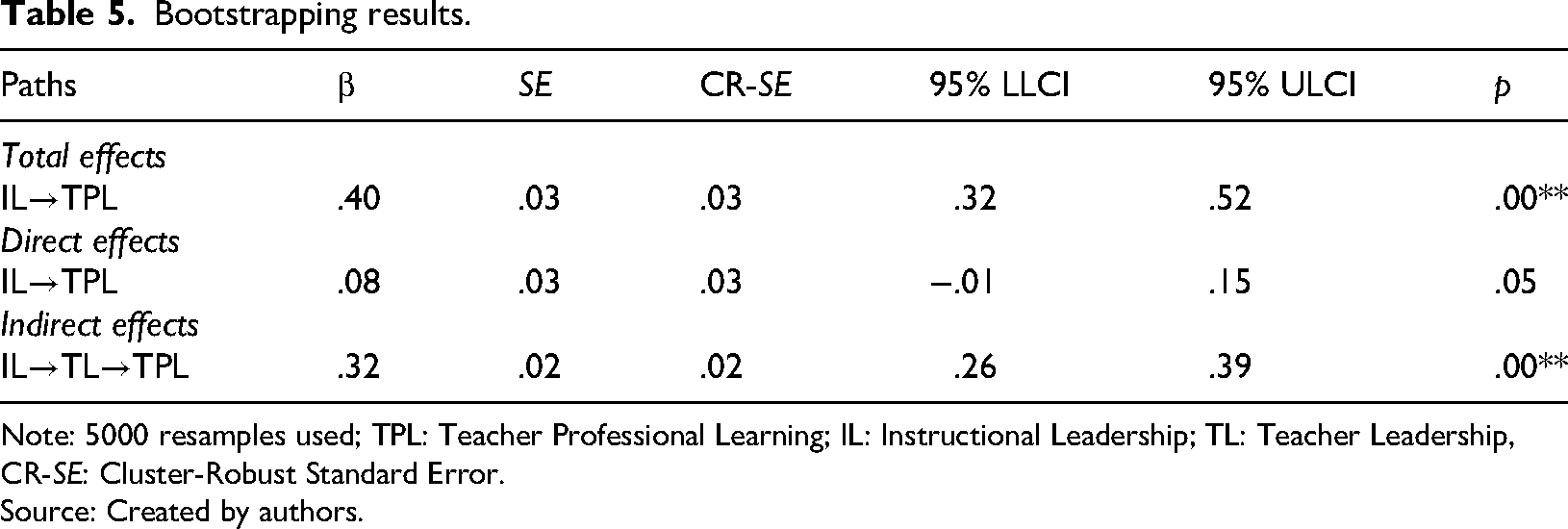
Note: 5000 resamples used; TPL: Teacher Professional Learning; IL: Instructional Leadership; TL: Teacher Leadership, CR-SE: Cluster-Robust Standard Error.
Source: Created by authors.
Table 5 demonstrates that IL exerts a significant indirect effect on TPL through TL (β = .32, p < .01), thereby supporting hypothesis H5. Unlike SEM results, bootstrapping results revealed a nonsignificant direct influence of IL on TPL (β = .08, p > .05). The difference between the SEM and bootstrap results for the direct effect reflects differences in inferential assumptions. SEM assumes that effects follow a normal distribution and calculates standard errors based on this assumption, whereas bootstrap inference constructs an empirical sampling distribution without imposing normality, producing confidence intervals that better capture borderline effects (Hair et al., 2014). We, therefore, relied on bias-corrected bootstrap confidence intervals as the basis for inference and emphasized that the indirect effect is the robust finding.
In other words, when the principal's instructional guidance enhances TL, this form of leadership meaningfully transforms teachers’ learning processes. These findings reveal that the principal's influence reaches teachers primarily through TL and that TPL is strengthened via this network of interaction. The following section explores how DL reinforces this pathway of influence and accelerates learning at the school-level.
Moderated mediation tests
To test the moderating role of DL, an interaction term (IL × DL) was added to the SEM. After the inclusion of this interaction term, the conditional model's fit indices remained within acceptable thresholds (χ2/df = 2.97; RMSEA = .05; SRMR = .08; CFI = .93; TLI = .93). This result indicates that the inclusion of the interaction term did not compromise the overall model fit. According to the analysis findings, DL significantly moderated the effects of IL on both TL (β = .30, p < .01) and TPL (β = .11, p < .01). This finding demonstrates that DL serves as a contextual factor that amplifies the influence of IL within school leadership processes, thereby supporting hypotheses H6a and H6b. Figure 3 illustrates how this moderating effect is reflected in the structural model.
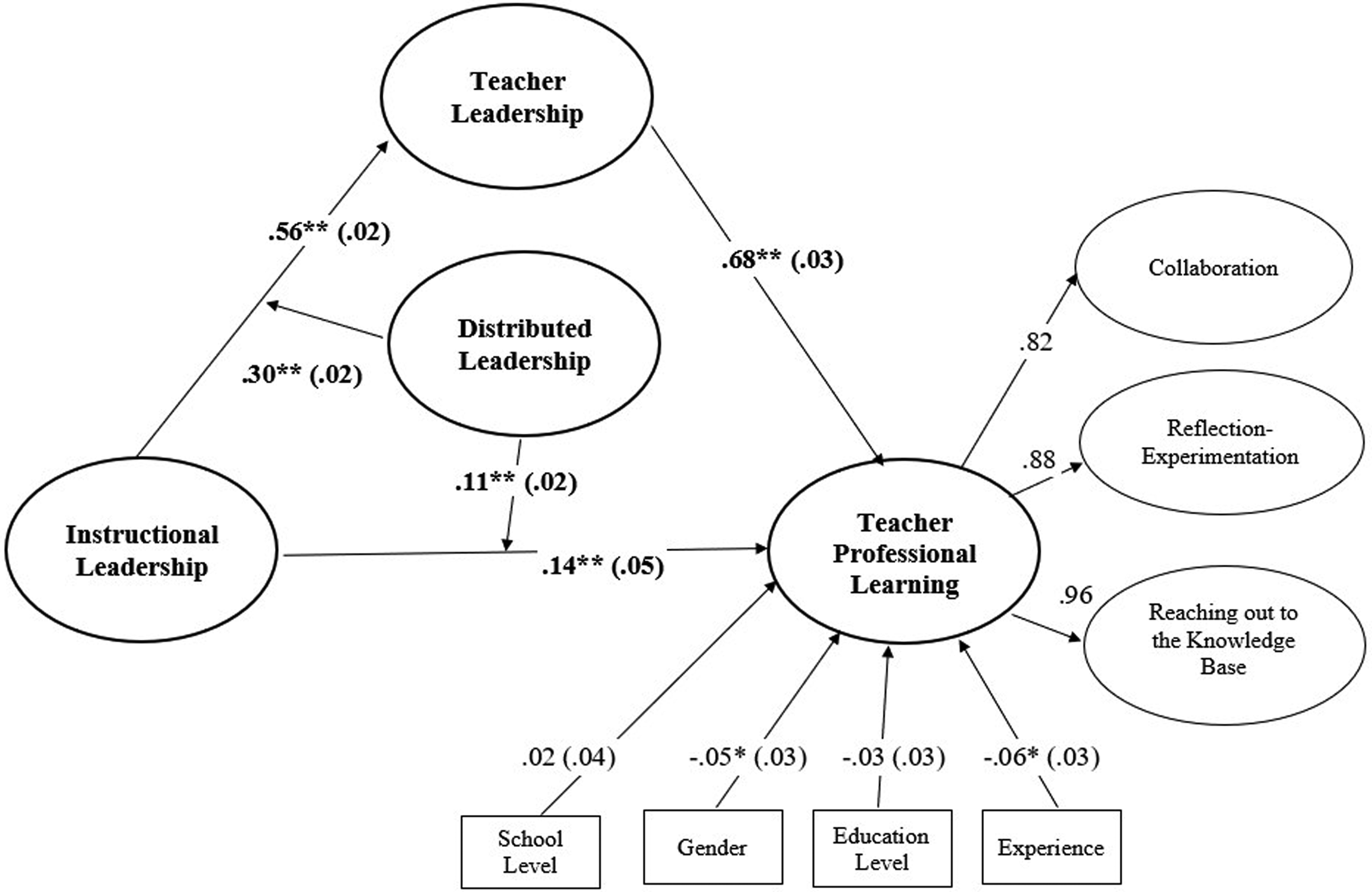
SEM analysis (conditional model).
As illustrated in Figure 3, when the interaction term was incorporated into the conditional model, the effect of IL on TPL increased from β = .07 to β = .14 (p < .01), while its effect on TL rose from β = .45 to β = .56 (p < .01). In contrast, the effect of TL on TPL remained strong and statistically significant (β = .68, p < .01). These results imply that the conditional indirect effect of IL on TPL becomes stronger as DL increases. Put differently, DL functions as a moderating variable that reinforces the relationships between IL, TPL, and TL. Figure 4 illustrates these moderating effects.
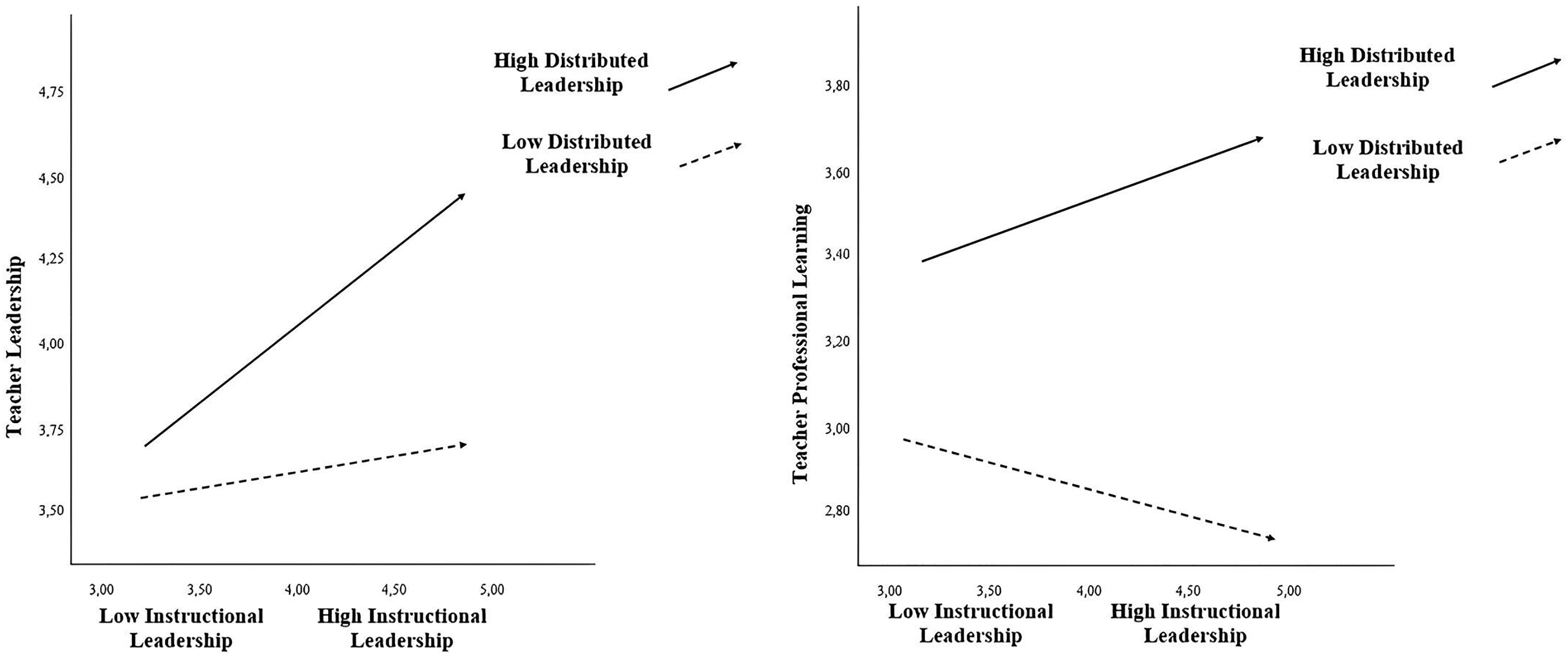
Interacting effects of DL on IL.
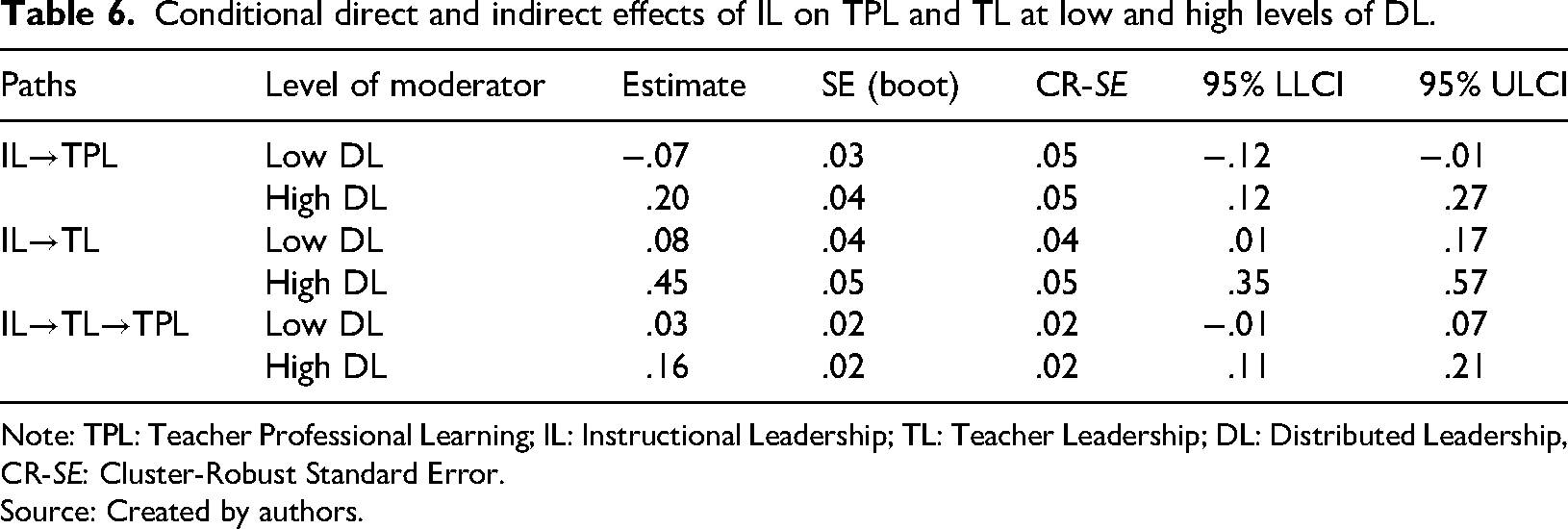
Figure 4 shows that when DL was low, high levels of IL had a negative influence on TPL (β = –.07) (refer to Table 5). This finding suggests that in environments where leadership roles are not shared among staff, the principal's individual directive efforts may constrain rather than support teacher learning. In contrast, when the level of DL was high, the conditional direct effect of IL on TPL became positive and strong (β = .20) (refer to Table 5), indicating that in contexts where leadership responsibilities are distributed among teachers, IL markedly fosters professional learning. The increase in IL's conditional effect on TL under both DL conditions further indicates that DL functions as a contextual factor strengthening both direct and indirect pathways of influence. These results are also supported by the conditional direct and indirect effect analyses presented in Table 6.
Conditional direct and indirect effects of IL on TPL and TL at low and high levels of DL.
Note: TPL: Teacher Professional Learning; IL: Instructional Leadership; TL: Teacher Leadership; DL: Distributed Leadership, CR-SE: Cluster-Robust Standard Error.
Source: Created by authors.
Table 6 illustrates how the indirect effect of IL on TPL varies depending on the level of DL. We found that the conditional indirect effect of IL on TPL through TL was not significant (β = .03, p > .05) when DL was low. This result confirms that the principal's efforts alone may not be sufficient to encourage teachers to engage in professional learning in schools where leadership is minimally distributed. On the other hand, when DL was high, the conditional indirect effect of IL on TPL through TL became significant (β = .16, p < .01). This finding indicates that the positive impact of IL on teachers’ professional learning could be indirectly fueled through principals’ sharing their leadership with teachers and fostering teacher leadership. Overall, these results revealed that IL could positively contribute to TPL predominantly through school principals’ encouraging collective leadership structures in schools.
Discussion
This study, adopting a social constructivist perspective, explains the mediating role of TL and the moderating effect of DL within the IL-TPL relationship. This approach, which conceptualizes school leadership as an interactional process rather than an individual orientation, demonstrates that teacher professional learning is shaped within schools through multiple actors and shared responsibilities (Harris and DeFlaminis, 2016; York-Barr and Duke, 2004).
Although not central to the conceptual model, several variables were included in the analysis to control for their potential effects on TPL. The findings indicated that gender and professional experience were significantly associated with TPL, suggesting meaningful differences in favor of female teachers and those with 20 years or fewer of professional experience. This result is consistent with studies showing that female teachers participate more actively in professional learning and tend to define their professional identities more strongly around instructional practice (Qin and Liu, 2023; UNESCO, 2022). With respect to professional experience, the findings support the literature indicating that teachers’ participation in professional development activities tends to decline as their careers progress, and that this pattern may be associated with experienced teachers’ perceptions that their existing pedagogical competencies are sufficient (Yoon and Kim, 2022).
SEM yielded a small yet statistically significant direct effect of IL on TPL; however, this effect did not hold under bootstrap estimation (H2). These findings indicate that school principals’ instructional guidance may directly support professional learning; however, the magnitude of this effect may remain limited. The results align with inconsistent patterns in the literature regarding the IL-TPL relationship. While some studies report that IL directly promotes teacher learning (Bellibaş et al., 2021; Qin and Liu, 2023), others emphasize that this relationship is shaped through indirect or conditional mechanisms (Liu and Hallinger, 2018). For example, the IL–TPL relationship was found to be explained by teacher self-efficacy and organizational culture (Long and Xia, 2025) or, as in the Malaysian case, to be shaped by shared processes rather than by a direct effect (Thien et al., 2023). Kim and Lee (2020), in contrast, found that these patterns display inconsistency in high–performance–oriented Asian contexts. In centralized education systems, principals’ increasing administrative workload tends to weaken the direct impact of instructional orientation on professional learning (Bellibaş et al., 2022). In the Turkish context, this situation reflects the tension between the idealized “instructional leader” role articulated in policy documents and the managerial realities of practice. Centralization and bureaucratic oversight constrain the redirection of leadership energy toward pedagogical processes (Savaş et al., 2025). Within this framework, the findings support the argument that IL alone is insufficient to generate professional transformation (Mowat and McMahon, 2019) and that such transformation materializes only through teachers’ extra-role leadership initiatives (Printy and Liu, 2021) and shared leadership structures within schools.
The findings from the unconditional model confirm that the linkage between IL and TPL is shaped through an indirect pathway via TL, with TL playing a significant mediating role in this process (H3, H4, H5). This pattern is further corroborated by studies conducted across diverse educational systems (Lee and Ip, 2023). In Singapore, TL facilitates the connection between IL and teacher reflection as well as learning communities (Ho et al., 2023); whereas in Türkiye, it is regarded as a functional channel that translates the principal's instructional orientations into teachers’ daily professional practices (Dasci-Sönmez et al., 2025). Research conducted in the United States also confirms that TL serves as a key mediator in transforming the strategic vision of IL into collective professional learning (Pan and Chen, 2021; Sebastian et al., 2016). In systems like Türkiye, where centralized structures and hierarchical distances are prominent, this bridging function becomes even more critical (Akinlar et al., 2025). The ‘official’ instructional messages of the principal can permeate the classroom through the informal and horizontal interaction networks of teacher leaders (Dasci-Sönmez et al., 2025). Consequently, by mobilizing the school's social learning networks, TL transforms the strategic vision of IL into learning processes driven by teacher agency. This pattern, similarly observed in autonomous school systems in the West (Boylan, 2016; Schott et al., 2020), supports the notion that TL may be a universal mechanism for mobilizing professional learning, independent of cultural context. Thus, this study empirically demonstrates that the integration of the vertical (IL) and horizontal (TL) dimensions of leadership is a strategic necessity for achieving the ‘learning community’ ideal targeted in Türkiye's policy documents.
The findings from the conditional model confirm that DL assumes a central moderating role in both the IL-TL and IL-TPL relationships (H6a, H6b). The strengthening of IL's effect upon the inclusion of the interaction term incorporating DL supports the view that leadership is an interactional phenomenon rather than a singular authority. Specifically, in schools where DL is weak, the effect of IL is neutralized by bureaucratic resistance; whereas under conditions of high DL, this effect increases substantially through practices of shared responsibility and collaboration (Nguyen and Hunter, 2018; Pan et al., 2017).
From the perspective of conditional indirect pathways, the moderating effect of DL enhances the overall indirect effect of IL on TPL through TL. The conditional mediating role of TL becomes stronger at higher levels of DL and weaker at lower levels. This indicates that DL regulates, at the second stage, the leadership capacity transmitted to professional learning through TL. In schools characterized by a strong DL structure, teachers more readily internalize principals’ instructional guidance, extend it through TL initiatives, and sustain reflective learning communities (Boylan, 2016; Mowat and McMahon, 2019). Consistent with Maslowski et al.'s (2016) typology of “integrated leadership,” these findings demonstrate that leadership becomes functional when grounded in collective processes rather than individual authority (Printy and Liu, 2021; Spillane, 2006), and that DL serves as a strategic lever enabling reforms envisioned in policy documents to be effectively realized in practice (Teng et al., 2024).
Although DL is typically regarded in Western contexts as a complementary element that supports IL (Printy and Liu, 2021), in centralized systems such as Türkiye, DL becomes a strategic prerequisite for enabling the principal's instructional vision to penetrate beyond the classroom door. In light of these findings, the resulting interaction pattern is directly related to Türkiye's centralized structure and supervision-oriented context. In schools with low levels of DL, the concentration of leadership within administrative boundaries transforms the principal's instructional efforts into a hierarchical tool of ‘bureaucratic control’ rather than pedagogical support in the eyes of teachers. In such cases, teachers may interpret the principal's interventions as an infringement on their professional autonomy, thereby distancing themselves from collaboration and reflective practices (Savaş et al., 2025). Our findings confirm, through the case of Türkiye, that under high DL conditions where leadership is inclusively shared, this defense mechanism is dismantled, and IL assumes a supportive character that further stimulates professional learning (Mowat and McMahon, 2019; Printy and Liu, 2021). Consequently, the results of this study demonstrate that the participatory leadership model targeted in Türkiye's policy documents (Table 1) is a structural prerequisite for the principal's instructional vision to gain legitimacy among teachers.
Theoretical and practical implications
This study integrates the domains of IL, TL, and DL (typically examined in isolation within school leadership research) into a cohesive social constructivist model, thereby reconceptualizing leadership as an ecological process rather than an individual disposition. In doing so, it transcends fragmented explanations of leadership effects and empirically illuminates the multilevel interactions that shape a school's learning culture. Theoretically, the study demonstrates that IL's direct contribution is limited, that TL's mediating role activates the formal leader's capacity to trigger knowledge sharing among teachers, and that DL's moderating effect establishes trust and collaboration as prerequisites for constructivist learning. These findings challenge traditional principal-centered paradigms (Hallinger, 2003) while extending Spillane's (2006) DL framework. By surpassing existing models (Liu and Hallinger, 2024; Savaş et al., 2025), the study redefines leadership in centralized contexts as a socially co-constructed phenomenon. This pattern corroborates the social constructivist assumption that learning is distributed across social networks and sustained through collaborative norms, as evidenced through the distinctive administrative dynamics of centralized contexts such as Türkiye.
Practically, school leaders should structure IL practices to foster TL by providing teachers with opportunities for peer mentoring, collaborative inquiry, and managing professional learning communities, thereby strengthening TPL. In this regard, DL can serve as a lever by cultivating shared decision-making mechanisms and trust-based school cultures. Moreover, formal recognition of TL roles, allocation of dedicated time, and inclusion in performance evaluations can enhance the sustainability of this transformation. To ensure effective implementation, defining concrete targets through pilot school programs (e.g., establishing a TL coordinator in every school) and strengthening guidance- and professional development-focused support mechanisms would be beneficial; monitoring progress through annual reports can also ensure transparency and continuity. Finally, considering gender and experience-related differences, designing professional development programs to secure equitable participation across all demographic groups can contribute to building sustainable learning cultures that indirectly support student achievement.
Limitations
Given its cross-sectional design, this study is limited in establishing causality and tracking changes over time. Future research could employ longitudinal designs to examine the causality and continuity of these relationships. Additionally, since data were collected solely from public schools in Ankara (Türkiye's capital, known for its centralized education system) the generalizability of the findings to other contexts is constrained. From a methodological perspective, the collection of data from teachers through self-report measures and from a single source entails the risk of common method variance. Although statistical controls like Harman's single-factor test were applied, this issue should be considered a limitation of the study, and future research is recommended to draw on multiple data sources (e.g., matched principal-teacher data). Moreover, comparative studies conducted in countries with different education systems may help overcome these limitations by testing the universality of leadership mechanisms.
Conclusion
Within the context of the Turkish education system, this study empirically demonstrates a low-level association between IL and TPL, which is further shaped by the partial mediating role of TL and the second-stage moderating mechanism of DL. These indirect and conditional linkages reconceptualize school leadership, moving it away from a hierarchical chain of command toward an integrated learning network based on trust and collective responsibility. These findings enrich the social-constructivist underpinnings of integrated leadership models while providing a comprehensive and integrated roadmap for the successful school-level implementation of leadership-oriented reforms, particularly within centralized systems.
Footnotes

Ethical considerations
This study was approved by the Ethics Committee for Social and Human Sciences Research of Necmettin Erbakan University (Decision No: 2025/703, dated July 25, 2025).
Funding
The authors received no financial support for the research, authorship, and/or publication of this article.
Declaration of conflicting interests
The authors declared no potential conflicts of interest with respect to the research, authorship, and/or publication of this article.
Data availability
The data that support the findings of the current study are available from the authors upon reasonable request.