



Abstract
This systematic review addresses a critical gap in educational leadership research by examining how instructional leadership (IL) shapes school climate, pedagogical innovation, and teacher commitment in the UAE's multicultural, rapidly reforming education system. Although IL has been widely credited with improving student achievement, its influence on these organizational dimensions remains underexplored, especially in the UAE context. Through a thematic synthesis of the limited extant literature, the review finds that distributed and transformational leadership approaches promote inclusive school climates, collaborative professional cultures, and higher teacher engagement. However, persistent top-down bureaucratic structures and limited leadership autonomy continue to hinder pedagogical innovation and restrict teacher agency. Moreover, current IL practices are not sufficiently culturally or gender inclusive, underscoring the need for more relational and context-sensitive leadership strategies. These findings highlight the importance of policy and leadership development reforms that empower school leaders with greater autonomy and cultural responsiveness. By situating the UAE experience within international best practices, this review contributes insights and recommendations to align local leadership models with global standards, emphasizing the incorporation of indigenous perspectives, gender-inclusive practices, and relational leadership to foster innovation and sustain teacher commitment.
Keywords
Introduction
Background
Instructional leadership (IL) involves more than the strategic management of teaching and learning, it reflects a growing emphasis on collaboration, professional growth, and student-centered improvement (Goddard et al., 2015). While previous definitions emphasized matching managerial and instructional responsibilities to enhance outcomes (Alig-Mielcarek and Hoy, 2005), newer research broadens this perspective. IL has come to be broadly accepted as a leadership framework in which the principal is actively engaged in constructing instructional practices, facilitating instructional coherence, and sharing responsibility for knowledge acquisition (Aas and Paulsen, 2019). It borrows related concepts, such as leadership for the acquisition of knowledge, curriculum leadership, and pedagogic leadership, all of which point to the leader's construction of a shared vision and instructional capability.
IL has consistently demonstrated a positive impact on school improvement and student achievement (Hallinger, 2005). It is most effective where leadership is based on trust, collaboration, and genuine involvement in teaching practice. Recent research emphasizes the growing importance of relational leadership, where trust and responsiveness are paramount, particularly in schooling contexts that are both demographically diverse and complex (Baxter and Ehren, 2023). Developing long-term relationships among teachers as well as with school communities fortifies leaders’ influence while also facilitating long-term growth in instruction (Li et al., 2016). IL is accordingly increasingly recognized, not just technically, as a part of the business, but also as a human-centered approach to facilitating educational change.
UAE context
The United Arab Emirates (UAE) has undergone a rapid educational transformation, reflecting explicit governmental initiatives aimed at modernization, equity, and international competitiveness. Adult illiteracy has fallen from 58% of men and 38% of women in 1975 to almost 95% of both men and women in 2025 (UNESCO, 2025). These shifts broaden the pipeline of leadership while mirroring the pressures of advancing women's leadership in culturally conservative settings. Instructional leadership frameworks emphasize leadership styles that stress inclusiveness and modeling, and gender equity becomes as much a social good as a shaper of future leadership practices as shown in Figure 1.
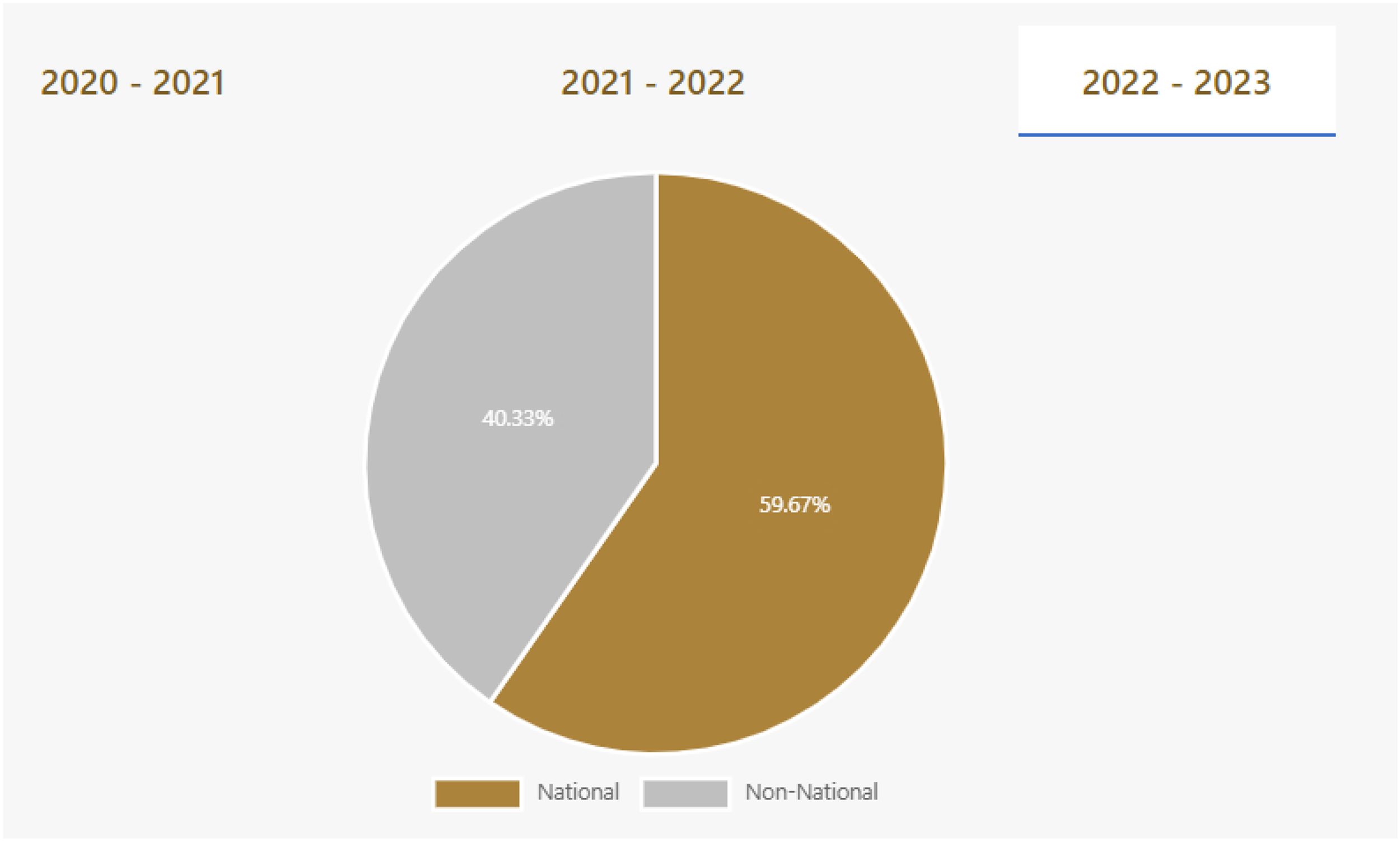
Higher education graduates by nationality and academic year.
Structural reforms have further altered the landscape. Fewer public schools existed in 2021–2022 (662) compared to 2023–2024 (555), while private schools flourished, with Dubai boasting no fewer than 580 schools (GEMS Education, 2024; Ministry of Education, 2024). These kinds of privatization patterns characteristic of the broader Gulf trend create a fragmented landscape of governance where principals are caught between pedagogical imperatives and market pressures, recasting leadership as both instructional and managerial. At the policy level, national policies are set by the Ministry of Education, while local councils in Abu Dhabi, Dubai, and Sharjah adjust their implementation (Godwin, 2006). These multi-level governance structures resemble traits of “distributed leadership”; however, at the practice level, they may restrict autonomy at the school level. These dynamics underscore the growing need for systematic leadership preparation to enable principals to address the skills required to navigate the UAE's evolving landscape.
Amidst such systemic changes and structural overhauls, leadership preparation itself has also been attempted through programs like the School Education Administration (SEA) program. The SEA program focuses on technical skills and professional norms but has also been recognized for underscoring the relational and culturally mindful aspects of leadership (MOE, 2024). Its utility lies in framing the ways school leaders internalize both bureaucratic responsibility and professional freedom within the UAE landscape
Rationale
A recent scoping review of school leadership in the UAE found that over the past two decades, research has primarily focused on school leaders’ roles in reform initiatives, professional development, recruitment, leadership styles, and educator leadership (Rai and Beresford-Dey, 2023). Future research should examine indigenous paradigms for compassionately, and relationally informed school leadership. This recommendation guided the focus of this study on school climate, teacher commitment, and pedagogical innovation. National educational leadership standards encompass the capabilities, skills, and knowledge outlined by the Ministry of Education (Ministry of Education, 2024). Instructional leadership skills promote a positive school learning environment for staff and students. A mediation analysis by Dutta and Sahney (2022) revealed that principal instructional leadership has an indirect effect on student achievement through the school environment and educator performance. Leadership competencies that combine shared vision and values are paramount in the UAE, where schools instruct diverse learners. Moreover, innovation also figures as a priority in the country's National Education agenda. Instructional leaders combine innovation with instructional and learning practices (Naicker et al., 2013), facilitating a shift away from traditional instruction-based paradigms to more progressive, learner-centered settings that align with the country's long-range educational goals.
Additional international research supports these points as follows: instructional leadership is consistently linked to favorable school climate, teacher morale, and commitment (Dutta and Sahney, 2022; Dutta and Sahney, 2016). Moreover, both instructional leadership and transformational leadership are found to enhance teacher innovativeness and professional growth, particularly when mediated by school climate, trust, and teacher collective efficacy (Cansoy et al., 2022; Vermeulen et al., 2022). Nevertheless, despite this international breadth, relationships of this nature are largely unexamined within the UAE setting, where varying school settings combined with rapid change lend them great immediacy.
Research gap
Although educational reform and school leadership development efforts in the United Arab Emirates have emphasized instructional leadership, a research gap remains. Specifically, there is limited synthesized evidence regarding how instructional leadership influences school climate, pedagogical innovation, and teacher commitment. Several studies have examined instructional leadership practices, leadership models, and instructional roles in the national context (Al-Husseini, 2016). Still, few offer a comprehensive and integrated analysis of how instructional leadership shapes these three organizational outcomes. Recent reviews and empirical studies from diverse contexts confirm that instructional leadership (IL) positively predicts teacher commitment and organizational commitment (Cansoy et al., 2022; Hosseingholizadeh et al., 2023) and that school climate and teacher commitment often mediate the relationship between leadership and teacher innovation or job satisfaction (Hosseingholizadeh et al., 2023; Kilinç et al., 2024). Rai and Beresford-Dey (2023) similarly explored school leadership in the United Arab Emirates and recommended further investigation into compassionate, relational, and culturally grounded leadership through indigenous paradigms. However, their work did not address instructional leadership in relation to innovation, school climate, or teacher commitment.
Aim and objectives
This article aims to systematically review the impact of instructional leadership in the United Arab Emirates education system on pedagogical innovation, teacher commitment, and school climate within the context of global best practices. The study seeks to: (1) systematically review the literature on instructional leadership practices in the United Arab Emirates; (2) explore the influence of these practices on school climate, pedagogical innovation, and teacher commitment; and (3) contextualize the findings through comparison with international best practices.
Theoretical framework
Instructional leadership models
Hallinger and Murphy's framework
One of the earliest models of instructional leadership was developed by Hallinger and Murphy in 1985 (Hallinger and Murphy, 1985). This framework has been extensively tested and widely adopted in the field of instructional leadership as shown in Figure 2.
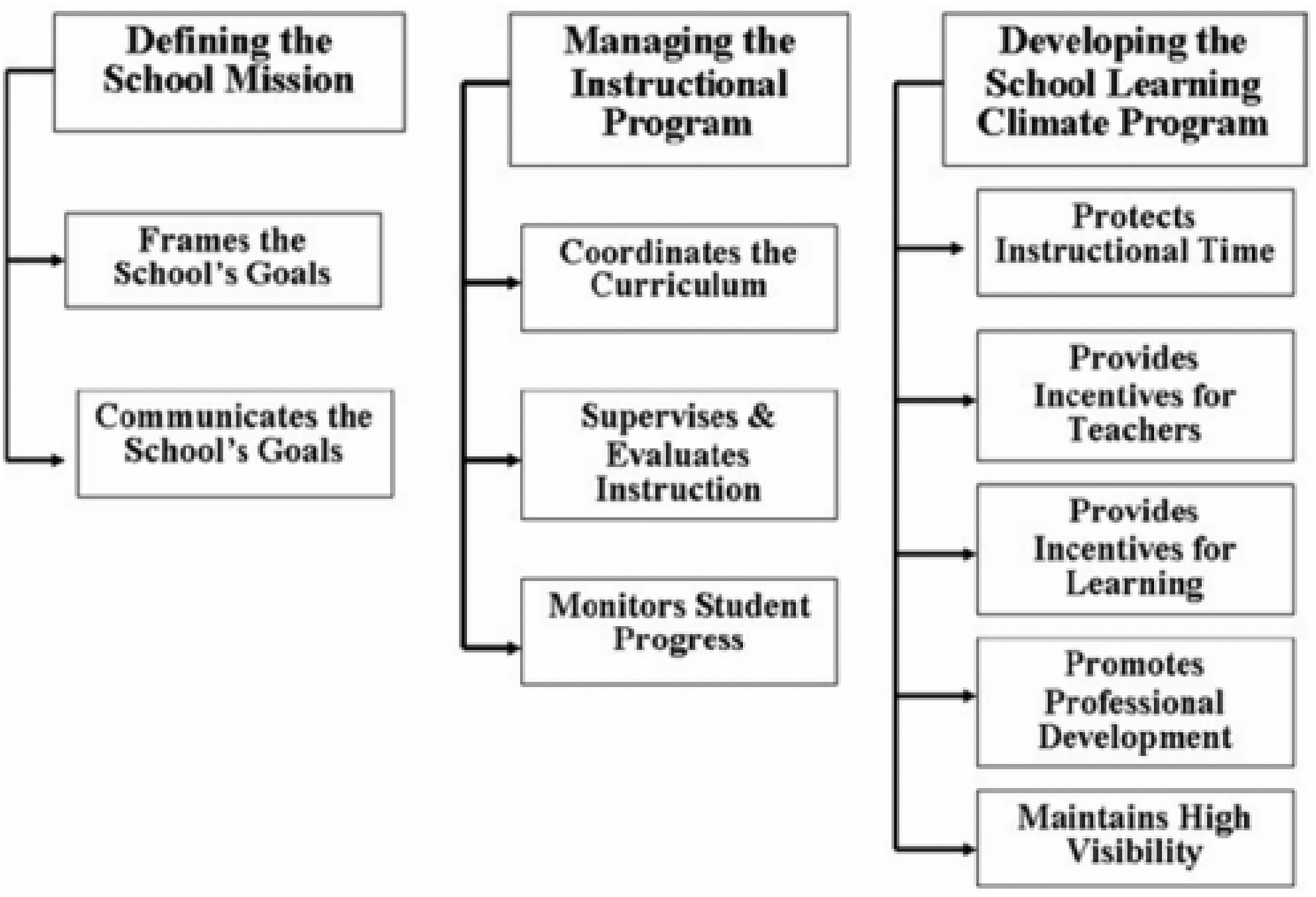
Instructional leadership framework by Hallinger and Murphy.
The model outlines three core dimensions of instructional leadership: defining the school mission, managing the instructional program, and developing a positive school learning climate. The first dimension is setting institutional goals and communicating them to the school community to establish the school's mission. Hallinger and Murphy (1985) emphasized the principal's collaboration with staff to set academically focused goals. These goals should be communicated consistently and supported by all stakeholders. Leadership in the second dimension includes curriculum coordination, instruction supervision and evaluation, and student progress monitoring. These responsibilities position the principal as a central figure in academic leadership, though not necessarily the sole leader. According to the model, principals are accountable for instructional improvement and guide the school's educational direction. Finally, the third dimension focuses on fostering a positive school learning climate. Notably, this framework centers on the principal's actions and accountability, but it downplays distributed leadership roles and ignores individual leadership style differences.
Leithwood's transformational leadership theory
Building on the foundations of leadership theory, transformational leadership gained prominence in the 1980s, emphasizing the inspiration of followers toward shared goals and personal growth (Leithwood and Jantzi, 2005). Leithwood adapted this framework to the educational context by applying its principles to instructional leadership.
Leithwood's conception of transformational leadership reframes the instructional leadership paradigm by centering a collaboratively articulated vision and by deliberately empowering the teaching faculty (Leithwood and Jantzi, 2005). Authority does not reside solely with the principal; instead, the model insists that the principal must catalyze affective and cognitive growth among colleagues by presenting a compelling vision, by stimulating reflective and evidential inquiry, and by providing responsive, differentiated support, thereby normalizing collective participation in shared governance. In contrast to Hallinger and Murphy's model (Hallinger and Murphy, 1985), which prioritizes the actions of the principal as the principal instructional agent, Leithwood's framework distributes power and influence by modeling reciprocal accountabilities among staff, thereby aligning individual and collective practice with a jointly envisioned future (Leithwood and Jantzi, 2005).
Organisation for economic co-operation and development leadership for learning
In contrast to traditional instructional leadership models, the Organisation for Economic Co-operation and Development (OECD) developed a learning leadership framework that responds to contemporary educational challenges. Although distinct, this model shares several foundational elements with instructional leadership, particularly its emphasis on promoting quality teaching and learning at the pedagogical core of the school (OECD, 2019). However, the OECD's model extends further by emphasizing adaptive leadership that is capable of addressing complex challenges requiring solutions beyond existing practices. According to the OECD (2019), learning leadership plays a critical role in educational innovation and reform by designing, implementing, and sustaining learning environments that support continuous innovation. This model situates twenty-first-century conditions, such as digital transformation, global competencies, and learner agency, at the center of leadership practice. The primary distinction between the OECD's approach and earlier instructional leadership frameworks lies in its explicit focus on fostering innovation as a core leadership responsibility.
Key constructs influenced by instructional leadership
School climate
School climate denotes the prevailing quality and character of life within an educational institution (Cohen et al., 2009). Empirical evidence highlights the view that an affirmative climate is simultaneously multidimensional and grounded in a collectively shared educational vision. Thapa et al. (2013) delineate three principal domains, pedagogy, interpersonal relations, and perceived safety, while Wang and Degol (2016) assert that a congruent vision held by educators, caregivers, and learners fosters a healthier institutional environment. Conjointly, these observations suggest that principals who deliberately convene all stakeholders around well-articulated, democratic objectives can cultivate supportive and academically advancing conditions. Robust instructional leadership, grounded in a collaboratively constructed and consensually endorsed mission, fosters a climate that simultaneously enhances learners’ psychological well-being and academic performance. This correlation highlights the commitment of instructional leaders to foster, negotiate, and periodically refine a shared vision among the entire educational community; the resulting climate is the crucial, lived environment in which learners engage positively. It follows that an instructional leader's commitment to establishing elevated yet achievable performance standards, coupled with the continual modeling of mutual respect, is absolutely decisive; it progressively materializes the aspirational construct of a constructive climate into the quotidian practices that confer tangible educational benefits.
Pedagogical innovation
Modern educational research focuses on pedagogical innovation to meet the changing needs of learners and societal demands. Walder (2017) defined pedagogical innovation as instructional practices that enhance student learning beyond traditional lecture-based approaches. Law (2014) described it as the continuous development and application of new teaching strategies to improve the learning experience. Adapting instruction to diverse student populations and using educational technologies to create more interactive and personalized learning environments are common practices. Some models emphasize integrating culturally embedded knowledge, known as local wisdom, into the educational process for relevance and inclusivity.
Digital tools enable real-time interactive instruction, global learning resources, and international collaboration, enhancing pedagogical innovation (Zou et al., 2025). Despite these benefits, some educators and parents are hesitant to adopt innovative methods due to limited exposure to the diverse learning needs of today's students (Walder, 2017). Project-based learning, social-emotional learning, and flipped classrooms, where lectures are delivered outside of the class and use class time for problem-solving, with the teacher acting as a facilitator (Altemueller and Lindquist, 2017), and gamification, which refers to the use of game design elements in non-game contexts (van Gaalen et al., 2021), exemplify innovation in practice. These methods promote inclusive, student-centered learning and active learning. Openness to change and creativity are essential for developing adaptable, future-ready learners as education systems evolve.
Teacher commitment
Teacher commitment refers to the internal motivation that drives educators to invest additional time and energy in supporting school-wide goals and student success (Razak et al., 2009). This dedication strengthens the emotional ties between teachers and their institutions, encouraging them to contribute to teaching and create authentic, meaningful learning environments. Student achievement and institutional effectiveness depend on teacher commitment. Moreover, passion—the desire for new challenges and experiences—drives professional engagement and instructional quality. Committed teachers tend to form respectful relationships with their students and employ innovative strategies to enhance educational outcomes.
According to Fresko et al. (1997), such teachers prioritize students’ development and employ adaptive instruction to enhance classroom effectiveness. Their commitment boosts performance and creates a respectful, high-achieving learning environment. This dedication often leads to school loyalty and ongoing improvement efforts. Ultimately, beyond staff retention, teacher commitment fosters excellence, professional growth, and a lasting educational impact. Teachers are more likely to positively impact students’ academic success when they feel valued and connected to their students.
Taken together, the studies affirm that teacher commitment is a potent, multipronged lever for enhancing both student achievement and the institution's overall health (Li et al., 2022). When educators internalize the mission of their school, their emotional and intellectual investment mobilizes discretionary effort that manifests in tailored scaffolding for learners, the modeling of positive attitudes, and the cultivation of classroom climates that routinely exceed previously established performance norms (Alzoraiki et al., 2023; Shu, 2022). The adept resonance generated by this commitment ripples both longitudinally and across the school, elevating overall student performance and embedding a self-reinforcing cycle of improvement that enshrines experimentation, reflection, and collaborative learning. Instructional leaders, therefore, are presented with a deliberate mandate: the fortification of teacher commitment is neither an ancillary adjunct nor a ritual affirmation, but rather a core pillar of strategic steering (Sun, 2015). The textual and empirical bodies of research converge around two potent levers: deepening the instructional gravitation of the principal's daily practice and providing a well-structured mosaic of professional growth pathways for faculty (Dorukbaşi and Cansoy, 2024; He et al., 2024). When these moves are executed with consistency and authenticity, they enhance teachers’ sense of efficacy and professional purpose (Pan and Cheng, 2023). Pragmatic challenges can be addressed through reciprocity, targeted acknowledgment of expertise (Parr et al., 2017), and ongoing professional dialogue, converting transient goodwill into durable commitment (Cheng and Zhao, 2023). The cumulative effects include improved student learning outcomes, higher teacher retention, and a progressively positive school culture (Luesse et al., 2022).
Relevance in international and UAE contexts
In both international and national contexts, the constructs of pedagogical innovation, teacher commitment, and school climate are central to educational transformation. Within the United Arab Emirates, these elements are closely aligned with the national educational goals outlined in the UAE Vision 2030 (Ministry of Education, 2020). A multicultural student and teacher population, rapid reform, and a focus on innovation and excellence shape the education system. However, maintaining long-term commitment among educators—particularly expatriate staff—remains an ongoing challenge.
Recognition, professional development, and a shared vision are key to addressing this issue through instructional leadership. This boosts teacher commitment, student outcomes, and institutional stability (Fresko et al., 1997). Similarly, the UAE's knowledge-based economy emphasizes pedagogical innovation. Innovation can be fostered by instructional leaders who promote the use of technology, new pedagogical approaches, and professional development (Walder, 2017).
Given the critical role of a favorable school climate, instructional leaders in the UAE must foster collaboration, high expectations, and shared values to support student success (MOE, 2020). Instructional leadership can help schools create inclusive, innovative, and sustainable practices that prepare students for global challenges when aligned with national priorities. Strategic alignment is necessary to achieve Vision 2030 and promote long-term educational excellence.
International scholarship identifies the fusion of distributed, transformational, and instructional leadership as a catalyst for markedly higher student and system-level performance (Leithwood et al., 2008; Spillane, 2006). Leithwood et al. (2008) further specify that leadership that couples instructional direction with a robust, transformative vision affects instructional quality and student achievement primarily through indirect pathways. Concurrent inquiries within the UAE corroborate this corpus; meticulous instructional leadership strategies, typified by systematic lesson observation followed by constructive feedback, have been linked to appreciable gains in teaching efficacy and student outcomes (Al-Husseini, 2016). Nevertheless, a parallel line of evidence argues that the nation's predominately centralized, inspection-centred accountability architecture, compounded by pronounced cultural respect for authority, tends to restrict authentic collegial engagement and professional autonomy, thereby attenuating the potential of distributed leadership to take root (Litz et al., 2016; Rai and Beresford-Dey, 2023). In response, UAE-based instructional leaders are urged to judiciously translate and recalibrate internationally recognized practices within the prevailing institutional context, deliberately cultivating relational trust, incremental empowerment, and a collectively owned vision while navigating entrenched hierarchies (Massouti et al., 2024; Ramadan and Ismail, 2023). Such context-sensitive leadership remains essential to the advancement of the innovative, high-impact pedagogy articulated in strategic frameworks, including the UAE Vision 2030.
Use of international best practices as a benchmark
To guide the analysis, international instructional leadership models will be used as benchmarks to synthesize findings in the UAE context. The Hallinger and Murphy (1985) framework, which emphasizes school missions, instructional programs, and school climate, provides a framework for aligning school goals with national educational objectives. UAE schools can benefit from this model's coherent instruction and shared purpose. In addition, the Organization for Economic Co-operation and Development's (OECD, 2019) learning leadership model emphasizes the creation of innovative and collaborative professional learning communities. Its integration into the UAE system can enhance instructional leadership by prioritizing adaptability and inclusivity.
Leithwood and Jantzi (2005) emphasizes shared vision, intellectual stimulation, and individual support, providing relevant insights. These components inspire teachers and innovation in diverse educational settings. The study will examine how UAE instructional leadership can be tailored to local organizational and cultural contexts using these frameworks. Given the limited research, these international models provide theoretical foundations for research on UAE school climate, teacher commitment, and pedagogical innovation. Global best practices enable adaptable, evidence-based strategies to improve educational quality and teacher effectiveness, supporting the UAE's long-term educational vision.
A systemic synthesis of relevant scholarship positions distributed leadership as the principal connective motif between universally recognized exemplary practices and the actual landscape of the UAE education system. Meta-analyses and case studies worldwide consistently demonstrate that the diffusion of leadership roles across the professional community is linked to elevated student outcomes and enhanced teacher morale (Leithwood et al., 2008; Spillane, 2006). Although pedagogical investigations of UAE institutions are still in their early stages, preliminary findings suggest that the diffusion of leadership prerogatives is beginning to yield beneficial effects on institutional governance and overall performance metrics (Massouti et al., 2024). Crucially, a meticulous appraisal of the socio-cultural and administrative variables reveals that regionally entrenched vertical leadership structures and a pervasive epistemic deference to authority can inhibit the transition to collaborative, co-productive modes of leadership (Litz et al., 2016; Rai and Beresford-Dey, 2023). Such impediments counsel prudence, urging designers of leadership policy to internalize the global normative preference for shared vision and participatory communities within a curriculum of careful contextualization. By coordinating international theoretical postulates with emergent empirical data from UAE schools, the accumulated literature eschews mere descriptive accounts and instead forges a normative agenda, articulating pathways for the operationalization of distributed instructional leadership that optimizes teacher agency and institutional reciprocity, while concurrently neutralizing contextual impediments. This thematic prism ensures a coherent, forward-oriented appraisal, linking distant exemplary practices with the distinct exigencies of the Emirates to produce a leadership framework that is analytically sound yet culturally resonant (Massouti et al., 2024).
Methodology
Systematic review design
This study follows PRISMA 2020 guidelines. These include an expanded checklist and a statement paper explaining the development of reporting standard (Swartz, 2021). In addition to abstract guidelines and flow diagram templates, the 27-item checklist provides reporting recommendations for each stage of review. These protocols document the entire review process, ensuring data provenance (Page et al., 2021). These protocols were selected due to the fragmented nature of instructional leadership research in the UAE. An internationally recognized framework was used to ensure transparency, consistency, and comparability across studies (Massouti et al., 2024; Rai and Beresford-Dey, 2023).
Furthermore, thematic synthesis was employed to synthesize findings from other qualitative studies. In addition to detecting and interpreting common themes from data sources (Thomas and Harden, 2008), thematic synthesis also allows findings to be linked to broader theoretical frameworks. Thematic synthesis was appropriate here, as it allowed for UAE-centered studies to examine UAE instructional leadership in relation to school climate, teacher commitment, and pedagogical innovativeness through the use of thematic synthesis.
Eligibility criteria
The eligibility criteria were established in accordance with the PRISMA 2020 guidelines (Swartz, 2021). The inclusion criteria required studies to be peer-reviewed empirical research, employing quantitative, qualitative, or mixed methods, published between 2000 and 2024, and focused on instructional leadership within schools in the UAE. We restricted the review to studies from this timeframe, covering two decades of UAE educational reform, during which instructional leadership gained a systematic focus on policy and research. Furthermore, school climate, pedagogical innovation, and teacher commitment also need to be addressed in studies. Leadership and equity comparative international studies were also included in this review. These criteria focus on UAE instructional leadership and fill gaps in the literature on the identified paradigms. To maintain methodological rigor and reliability, only peer-reviewed journal articles were included in the analysis. Dissertations and grey literature were excluded due to limited peer review. K-12 studies were selected, as instructional leadership differs between school and higher education contexts. Screening and data extraction were primarily conducted by one researcher, with uncertainties resolved through consultation with a second reviewer to minimize bias.
Search strategy
Scopus, Web of Science, ERIC, EBSCO, Education Source, and UAE-specific repositories were searched. These databases were selected due to their international recognition and coverage of education journals and articles. Search terms were chosen to align with the review's objectives and inclusion/exclusion criteria. The main keywords were “instructional leadership” or “leadership for learning” combined with “United Arab Emirates” or “UAE,” and one or more of the following: “school climate,” “pedagogical innovation,” or “teacher commitment.” Variations and combinations of these keywords were employed, utilizing Boolean operators such as AND, OR, and NOT to refine the search results effectively. The subsequent step involved executing and documenting the searches in accordance with the PRISMA guidelines. A PRISMA flow diagram illustrating the search process and results is presented in the following section as shown in Figure 3.
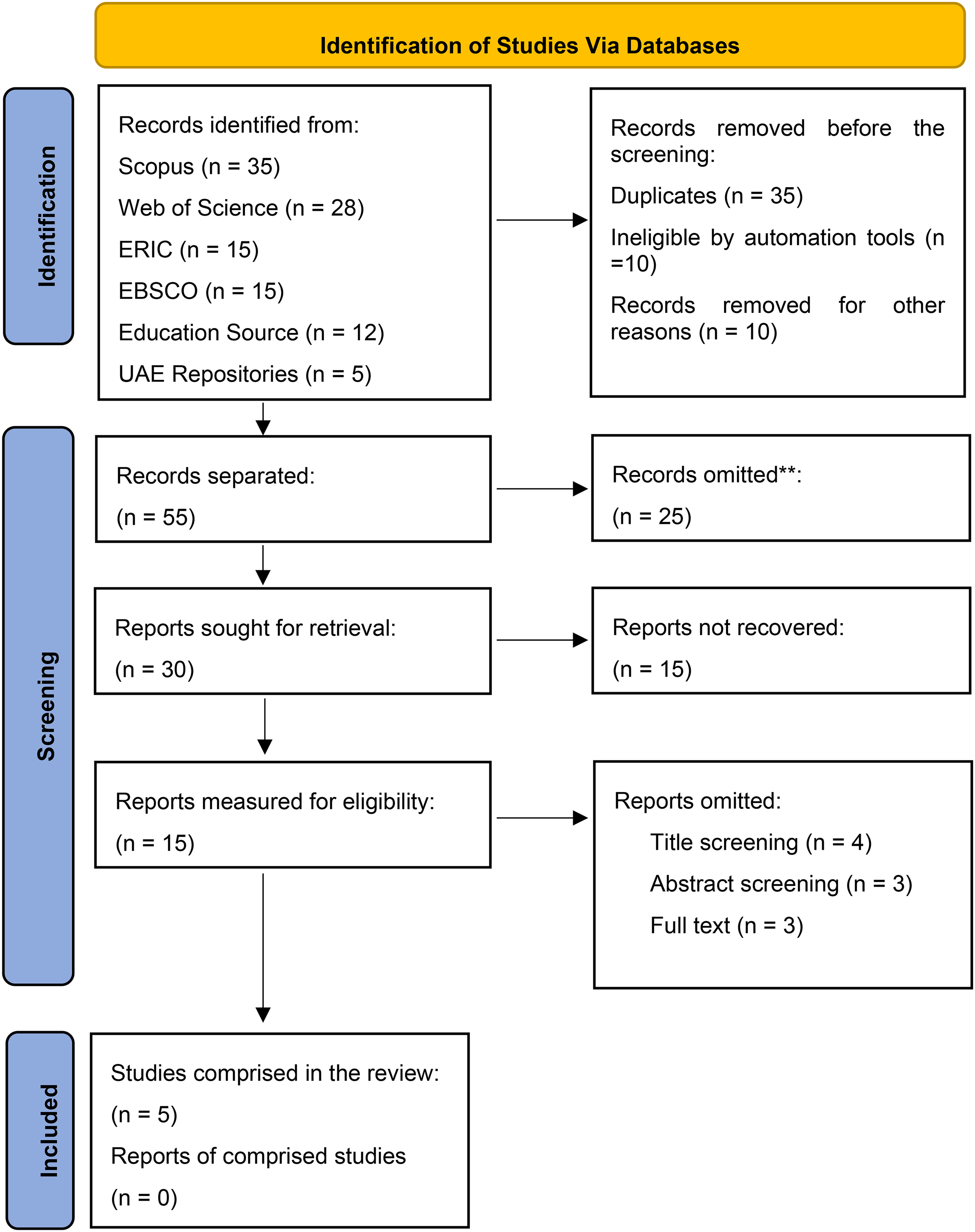
PRISMA flow diagram for identification of studies via databases.
Screening process
Data extraction
To provide a comprehensive overview of the empirical studies included in this review, Table 1 summarizes the key characteristics of each study. The table highlights essential details including the authors, publication year, research setting, sample size, and methodology. Collectively, these studies provide diverse perspectives on instructional leadership within the United Arab Emirates, encompassing both qualitative and quantitative approaches across various educational contexts. Understanding these foundational elements is essential for interpreting the subsequent thematic and analytical syntheses.
Study characteristics.
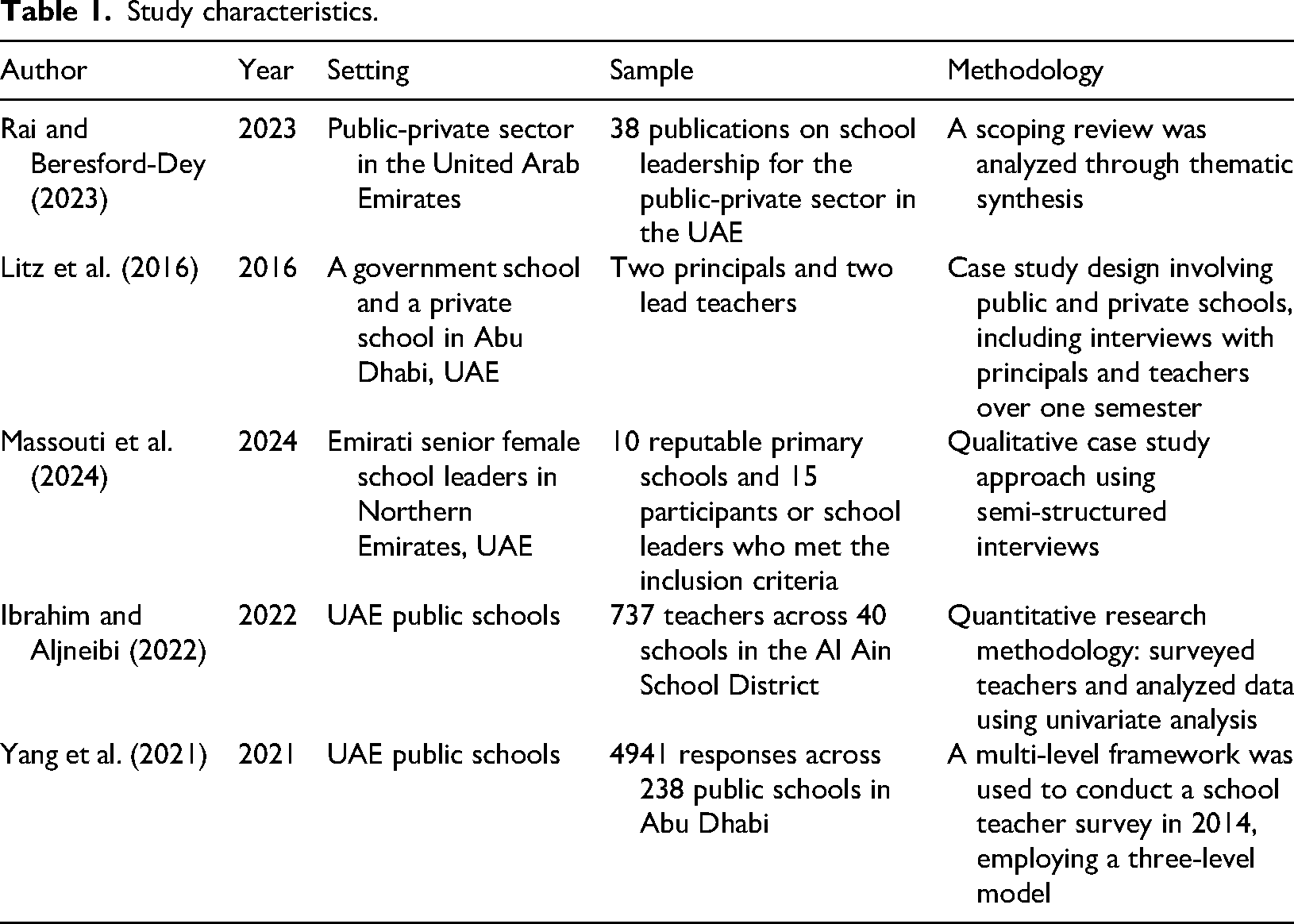
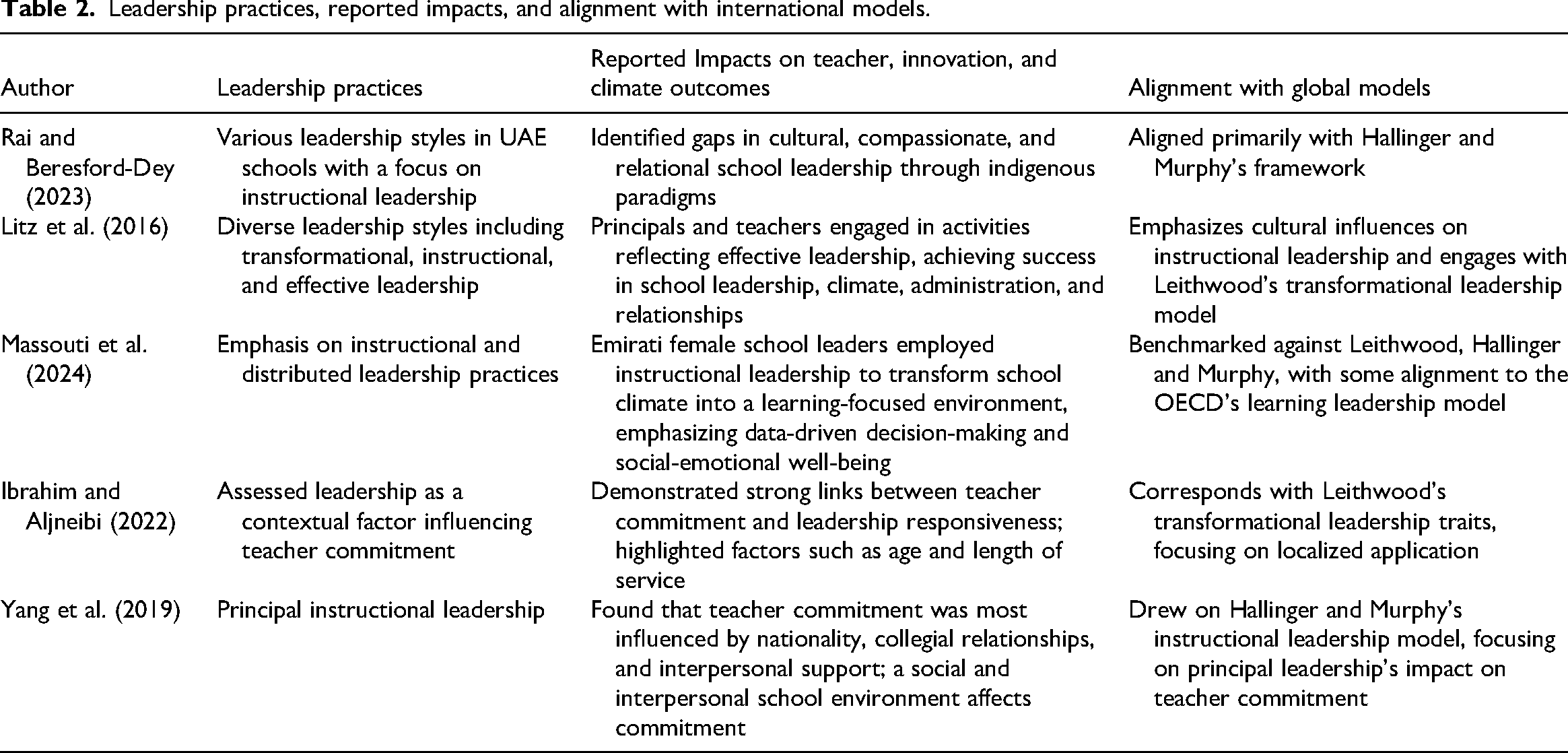
Table 2 details each study's leadership practices and their effects on teacher commitment, pedagogical innovation, and school climate. Additionally, the table aligns these findings with established international leadership models providing a theoretical context for the empirical evidence. This synthesis helps explain leadership in the UAE's unique cultural and educational environment.
Leadership practices, reported impacts, and alignment with international models.
Quality appraisal
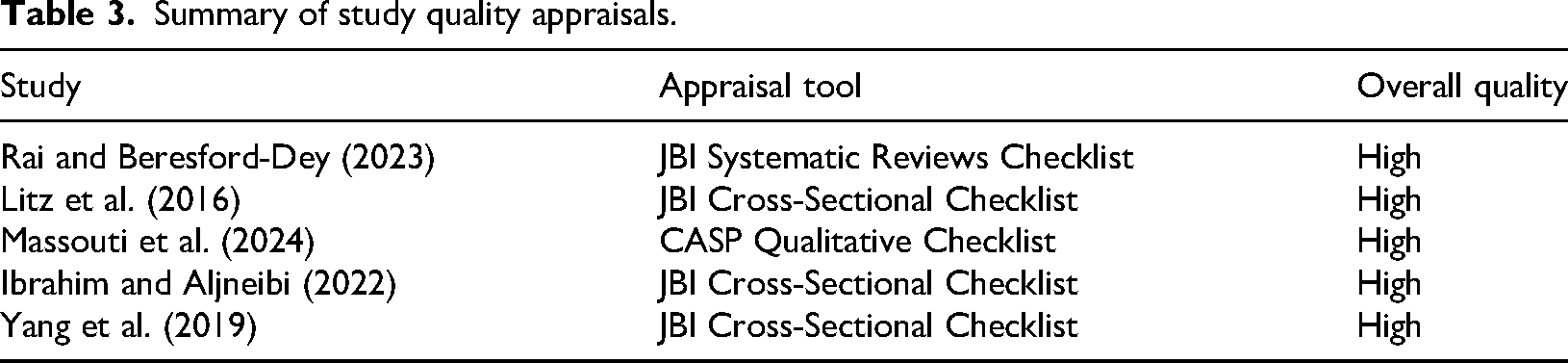
Each of the included studies underwent a quality appraisal process using appropriate assessment tools. The Critical Appraisal Skills Programme (CASP) checklist was applied to qualitative studies. In contrast, the Joanna Briggs Institute (JBI) checklist for cross-sectional studies was utilized for quantitative research (Zeng et al., 2015). The use of JBI and CASP checklists was not only procedural but also reflected the diversity of included studies, ensuring that both quantitative and qualitative contributions would be assessed against pertinent standards. Since most of the five studies employed quantitative methodologies, the JBI checklist was used. Quality assessments are summarized in Table 3. All included articles demonstrated high quality, as they accurately described their settings, identified potential confounding factors, and effectively described their settings, identified confounding factors, and effectively implemented solutions. Additionally, this study's scoping review used adequate sources and was critically appraised by two or more independent reviewers.
Summary of study quality appraisals.
Data analysis
The initial phase of thematic synthesis involved line-by-line coding of the findings from each study (Thomas and Harden, 2008) as shown in Table 4. The following table presents the codes derived from the findings of the included studies.
Code generation.
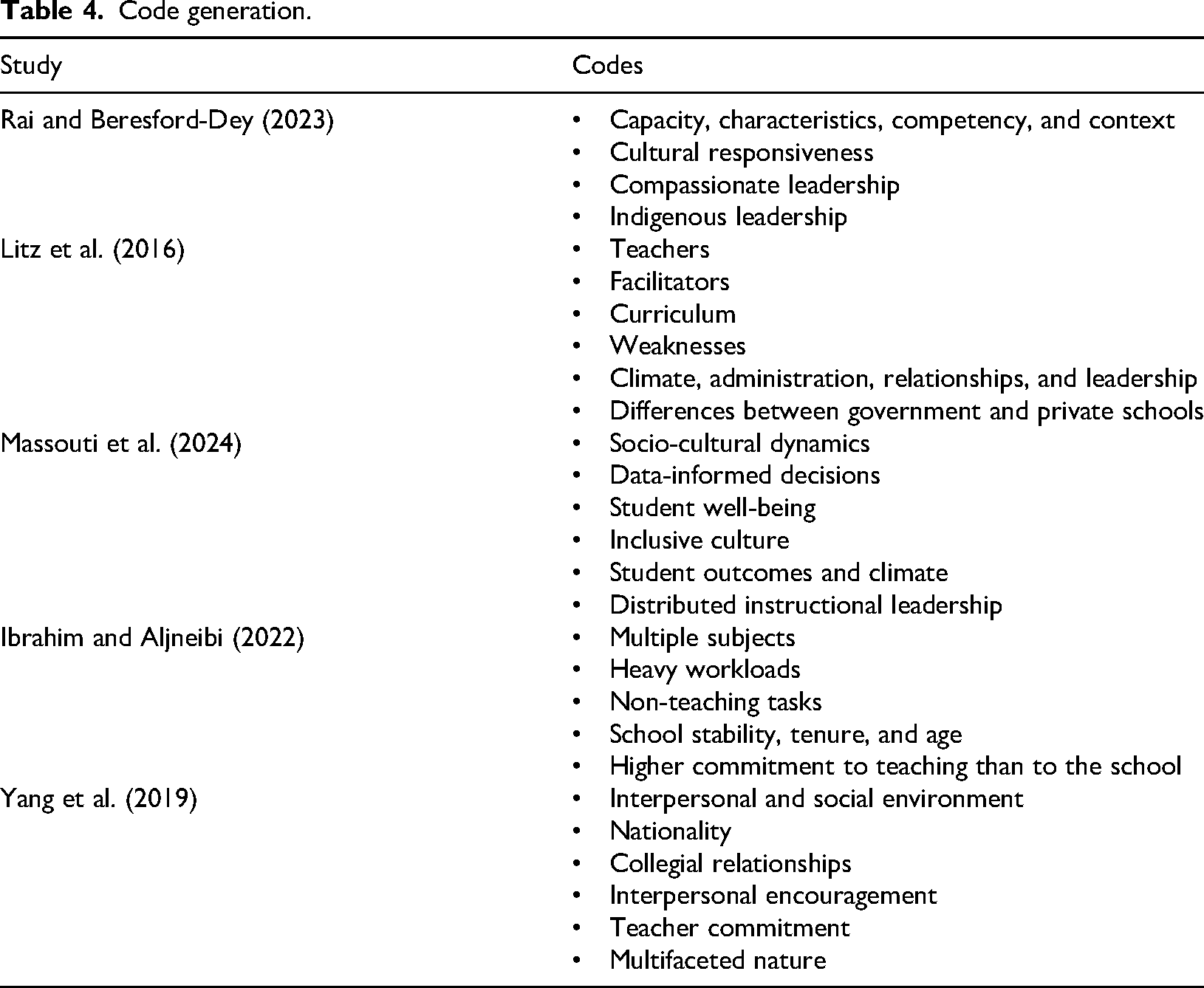
Table 5 synthesizes earlier codes into descriptive themes that reveal data patterns. These themes summarize study findings and highlight leadership dimensions and their effects on school climate, teacher engagement, and pedagogical innovation. This coherent structure guides analysis to meaningful conclusions.
Descriptive themes.
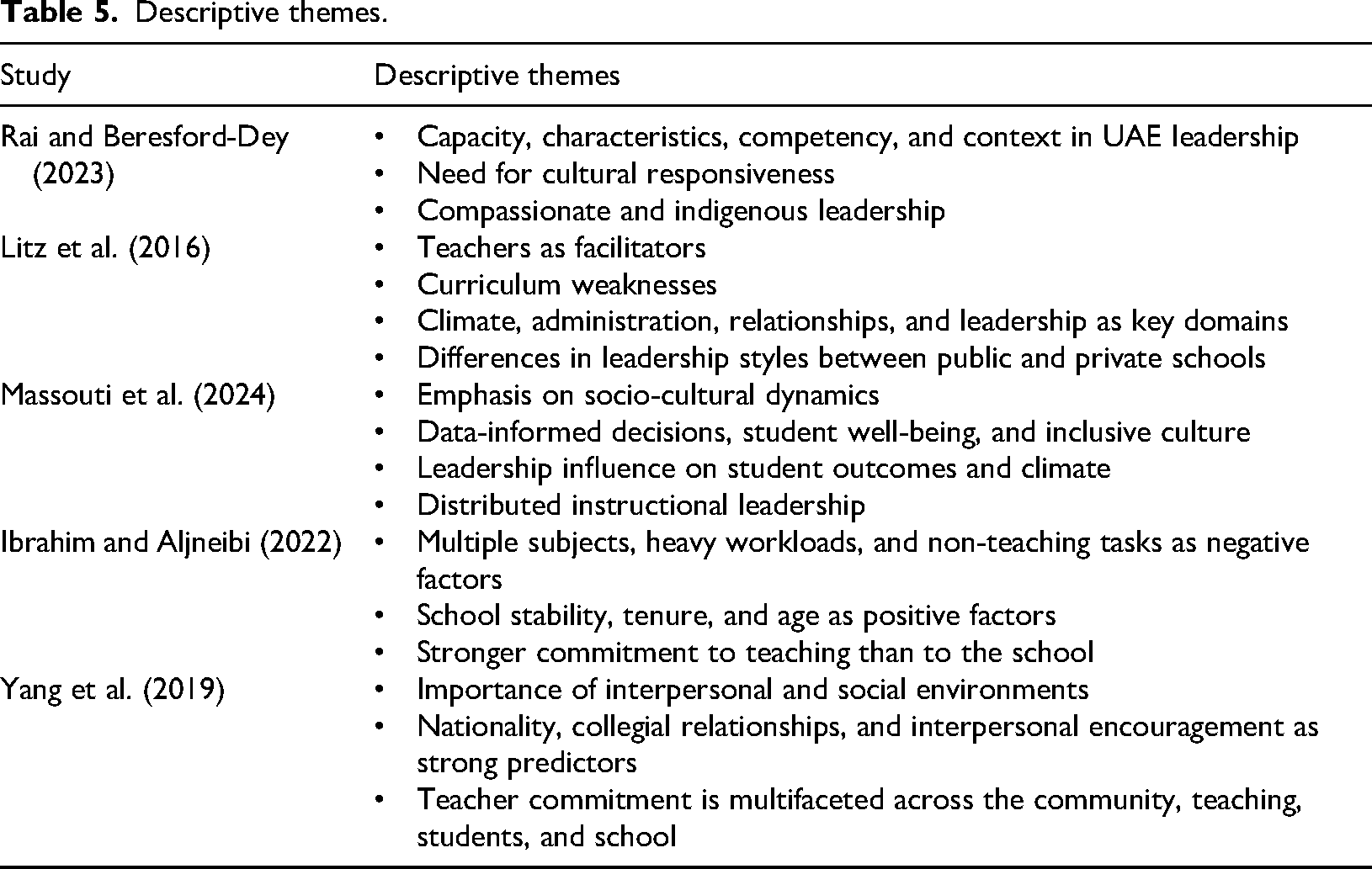
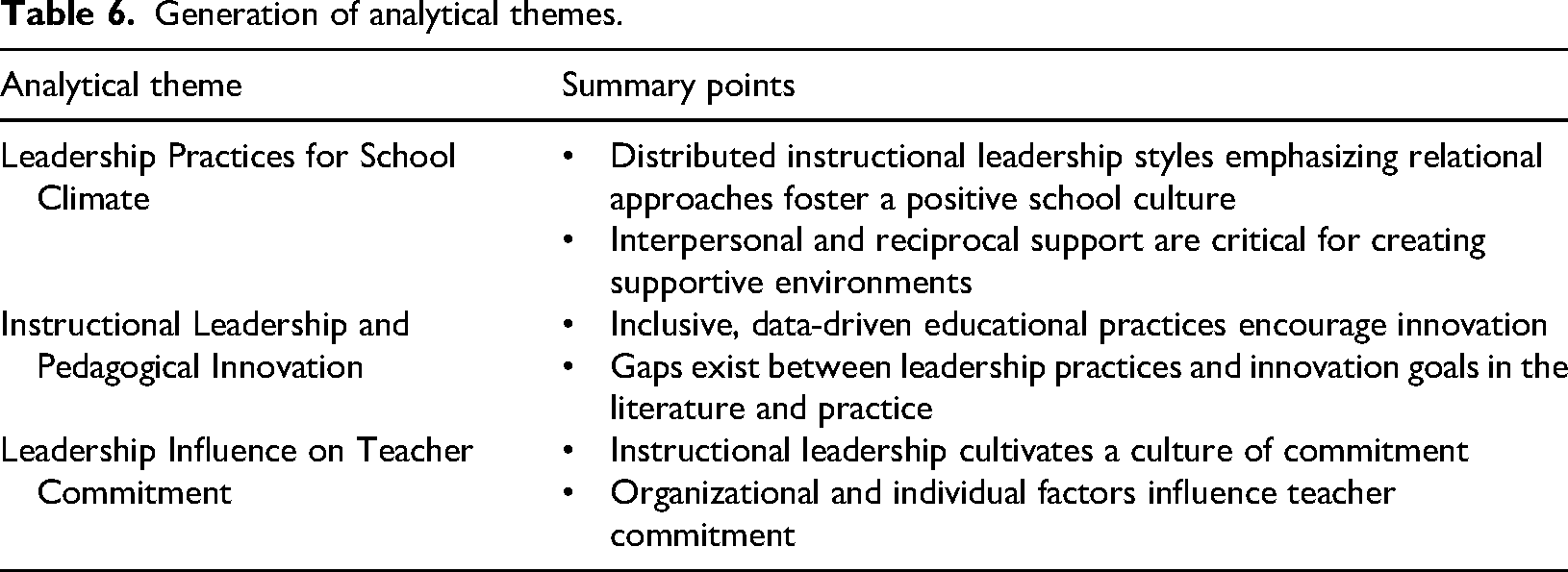
Table 6 presents the analytical themes developed by integrating the descriptive themes with established international leadership frameworks. These themes provide interpretive insights into how instructional leadership influences school climate, innovation, and teacher commitment. By situating the findings within global models, the synthesis supports actionable recommendations and strategic directions tailored to the educational context of the United Arab Emirates.
Generation of analytical themes.
Findings
Leadership practices for school climate
Interpersonal and reciprocal support as foundations of a supportive environment
Studies consistently show that cultivating a supportive environment and fostering an inclusive school climate is the quality of interpersonal relationships and mutual support among teachers, staff, and school leaders (Hosford and O'Sullivan, 2016; Ufermann et al., 2025). For instance, Yang et al. (2019) found that collegial relationships and interpersonal assistance were the most consistent predictors of teacher commitment across several domains, including teaching, students, the school, and the broader community. These relational dynamics enhance teachers’ emotional well-being and reduce professional isolation, thereby fostering trust and cooperation among teachers.
Altogether, these findings suggest that a supportive environment characterized by collaboration facilitates effective problem-solving and cultivates a sense of belonging, which is essential for sustaining an inclusive school culture.
However, Litz et al. (2016) found that rigid top-down administrative structures in public schools in the UAE hinder educators’ ability to maintain interpersonal relationships. This inequality implies that meaningful support relationships can only flourish when structural barriers are removed. In contrast to Leithwood and Jantzi's (2005) transformational leadership model, which emphasizes the importance of interpersonal trust and emotional support in promoting teacher well-being, school success, and student achievement, research centered on the UAE examines both the possibilities and constraints of such relationships within rigid, institutionalized educational systems.
Distributed instructional leadership and relational focus in positive school culture
According to the UAE's educational development and leadership frameworks, instructional leadership models are increasingly utilized (Rai and Beresford-Dey, 2023). Massouti et al. (2024) found that Emirati female leaders employed distributed IL approaches, transforming their schools into learning organizations where teacher empowerment, shared responsibility, and collaboration were key. These leaders fostered trust and respect by decentralizing authority and promoting collective decision-making, thereby creating a cohesive and supportive school culture.
At the same time, Litz et al. (2016) observed that top-down leadership continued to limit professional growth and creativity, contrasting with Hallinger and Murphy's IL model, which promotes supervision and instructional oversight. Similarly, Rai and Beresford-Dey (2023) identified this gap and recommended exploring Indigenous paradigms for compassionate and culturally responsive school leadership. Their findings show that UAE educational leadership research and policy expand beyond structural compliance and incorporate more relational, inclusive, and contextually grounded models.
Together, these studies highlight a core tension: while global IL models promote inclusive and collaborative learning, rigid bureaucracies often hinder their implementation. UAE-based research, therefore, calls for integrating international IL approaches with locally rooted, relational leadership aligned with national priorities.
Inclusive learning and pedagogical innovation
Inclusive educational and data-driven practices foster innovation
Few studies have explicitly focused on innovation within the UAE education sector in relation to instructional leadership. Massouti et al. (2024) noted that female leaders in UAE schools have strategically used data to inform educational decisions. Their focus extends beyond academic outcomes to include student well-being, demonstrating a holistic approach to education. This focus on data-driven decision-making highlights the importance of inclusive and diverse learning environments for students’ emotional and social development.
Instructional leadership promotes evidence-based and contextually relevant teaching to modernize education. Collaboration and shared responsibility for student success are challenges for these models. Instructional leaders contribute by enhancing collective teacher efficacy. In contrast, traditional IL frameworks, such as those proposed by Leithwood, emphasize compliance and control rather than transformative, inclusive, or distributed leadership that fosters meaningful innovation (Leithwood and Jantzi, 2005). Long-term success requires sustained support and targeted professional development for innovative practices. Compared to international best practices, research on educational leadership innovation in the UAE is scarce. Understanding how UAE instructional leaders can integrate traditional leadership frameworks with contextually relevant and innovative practices is also crucial. IL may boost educational innovation by incorporating international models and culturally responsive leadership.
Gaps in leadership practice and literature: misalignment between innovation goals and implementation
Although IL is widely recognized within the UAE education system, areas such as curriculum control and expert development remain underexamined. A review by Rai and Beresford-Dey (2023) emphasized the importance of aligning leadership competencies with UAE national standards and cultural values. However, the absence of targeted professional development opportunities has hindered students and school leaders by depriving them of essential tools for instructional reform. Furthermore, few studies have critically evaluated the limitations of generic training programs that fail to address the needs of UAE educators in multicultural schools.
According to Litz et al. (2016), public and private school teachers and principals demonstrated strength in community engagement and school climate, but they struggled with professional learning programs and curriculum planning. These gaps hinder long-term educational quality and instructional innovation. Top-down organizational structures that exclude school leaders from curriculum planning are a major factor. This exclusion limits creativity and ownership. More collaborative, bottom-up leadership models that empower school leaders in curriculum and development planning are needed to address this issue. Meaningful and sustainable instructional change requires tailored professional learning opportunities that cater to the UAE's diverse educational landscape.
Leadership influence on teacher commitment
Organizational and individual factors shape teacher commitment
In the UAE, many organizational and individual factors influence teacher commitment, including leadership traits, practices, and experiences. Ibrahim and Aljneibi (2022) found that teachers were more committed to their students, subject areas, and the teaching profession than to the school organization during educational change. The study also found that teaching experience, age, and school continuity were associated with increased organizational commitment. Conversely, excessive workloads, non-teaching duties, and multi-subject teaching assignments reduced commitment.
These findings suggest that leadership decisions have a significant impact on teacher morale, loyalty, and commitment. Yang et al. (2019) similarly found that leadership interpersonal support shaped teachers’ loyalty and professional identity. This support fosters dedication to students, subject matter, and teaching. The evidence shows that school leaders must recognize teachers’ identities and clarify their professional roles to boost organizational commitment. International research confirms that leadership quality and working conditions affect teacher performance and retention (Fresko et al., 1997). When leaders ignore organizational and personal influences, schools may lose commitment. Leithwood (1994) suggests using instructional leadership approaches to boost teacher commitment.
Instructional leadership shapes a culture of commitment
Instructional leadership has been a central theme throughout this review. According to the literature, IL improves school climate, innovation, and teacher commitment. According to Ibrahim and Aljneibi (2022), leadership and the environment have a significant impact on teachers’ professional and emotional well-being. Communicative, approachable leaders who foster respect and safety are more likely to boost teacher commitment. Given the diversity of UAE students, educators must value inclusiveness. IL's transformational elements foster inclusivity. Monitoring school operations, providing instructional support, engaging the community, and making informed staffing decisions can enhance teacher engagement and dedication.
Educational leadership becomes increasingly relevant in conjunction with instructional management (Leithwood, 1994). Leadership strategies should address teacher participation, recognition, and workload through inclusive decision-making to boost commitment. Thus, instructional leadership must empower teachers through shared governance to adapt to diverse educational contexts. Teacher engagement and retention improve with empathy, acknowledgment, and collaborative planning. Future UAE leadership frameworks should prioritize inclusive, context-responsive strategies that meet the changing needs of educators and students.
Discussion
The thematic synthesis of the five most relevant studies on instructional leadership in the United Arab Emirates, and its impact on school climate, teacher commitment, and pedagogical innovation, yielded several critical insights. Reforms in the UAE have aimed to modernize educational practice by enhancing leadership standards, school inspection systems, and accountability mechanisms. However, persistent structural challenges, such as centralized bureaucracy, restricted leadership autonomy, and a gap between policy rhetoric and practice, continue to hinder progress (Gardezi et al., 2024; Rai and Beresford-Dey, 2023). These constraints reveal a gap between the espoused goals of instructional leadership and the operational realities that school leaders face. This gap reflects a pattern also found in other centralized education systems, such as those in Singapore and England, where reform agendas promote innovation; yet, school leaders often lack the autonomy needed to implement meaningful change. From the perspective of distributed and contingency leadership theories, this over-centralization constrains leaders’ ability to exercise adaptive and collaborative practices (Bush, 2020), thereby undermining the very innovation that policy frameworks claim to support.
Additionally, the findings underscore a persistent tension between the policy discourse of innovation and the structural realities of school leadership in the UAE. While national frameworks emphasize instructional leadership as a driver of pedagogical transformation, in practice, many leaders are overburdened by bureaucratic demands. Inspection regimes often prioritize quantitative performance metrics over relational or developmental indicators. This accountability culture not only restricts instructional autonomy but also discourages professional risk-taking (Alkutich and Abukari, 2018). Comparable evidence from high-performing systems such as Finland and Ontario show that trust-based accountability fosters teacher agency and sustainable innovation (Sahlberg, 2021). In contrast, the UAE's reliance on inspection-driven mandates risks creating surface-level compliance rather than profound pedagogical change. Although localized education councils offer some flexibility, their implementation authority is limited by overarching ministerial mandates, resulting in policy fragmentation (Gardezi et al., 2024). This fragmentation signals a misalignment between centralized control and the need for school-level responsiveness. These structural and procedural constraints suggest that instructional leadership in the UAE operates within a paradox, encouraged to innovate but systemically constrained from doing so. Therefore, any effort to enhance the impact of instructional leadership must include structural reforms that reduce bureaucratic pressure and foster localized, trust-based governance.
Current leadership policies emphasize compliance with performance metrics and standardized frameworks, rather than prioritizing relational and developmental aspects of leadership. However, emotional support, interpersonal relationships, and access to professional development were found to have a significant influence on leadership outcomes (Litz et al., 2016). These relational dimensions align closely with transformational leadership theory, which emphasizes the importance of trust, empathy, and a shared vision in driving sustainable school improvement (Vermeulen et al., 2022). Yet, transformational and relational leadership remain peripheral in UAE policy, which privileges compliance over trust-building. This imbalance raises questions about the sustainability of reforms premised on innovation without corresponding support for relational capacity. In this respect, the UAE case reflects international debates on whether performativity cultures undermine the human dimensions of leadership and teacher motivation.
Gender dynamics are another underrepresented area in UAE leadership policy. Cultural expectations and gender-specific leadership experiences have not been adequately addressed. Although female leaders have demonstrated effective use of distributed IL, their practices have not been integrated into the mainstream school leadership development framework outlined in the UAE Vision 2020. This omission reflects a broader gap in both research and policy. It also contrasts with global leadership agendas that increasingly recognize gender diversity as essential to innovation and inclusive governance. Gender-sensitive leadership in the UAE remains underdeveloped, with women's leadership pathways historically constrained by cultural barriers (Madsen, 2010). Yet, evidence shows that female principals foster more supportive school climates (Rai and Beresford-Dey, 2023), and recent validation of an inclusive leadership model highlights how Emirati women leaders enact equitable and context-specific practices (Alnuaimi and Opoku, 2024).
The review also emphasized the relevance of distributed and transformational leadership theories, which promote collaboration, shared vision, and empowerment. These approaches align with Leithwood's model of transformational leadership, which encourages leaders to inspire and motivate teachers to enhance instructional quality and student outcomes (Leithwood and Jantzi, 2005). Likewise, school climate and interpersonal relationships emerged as central components of leadership that influence long-term teacher commitment. These factors support transformational leadership principles that prioritize trust, empathy, and collective vision (Allen et al., 2015). However, without contextual adaptation, these frameworks risk being misapplied or inconsistently implemented within UAE schools. Top-down accountability structures and inspection-driven mandates pose substantial challenges. Such mechanisms often marginalize teacher agency and create misalignment with relational leadership models, despite official support for reform initiatives (Holloway and Brass, 2018). This disjunction suggests that schools in the UAE continue to operate within prescriptive systems that inhibit innovation and local responsiveness.
Finally, these systems often reflect imported leadership models that may not align with the cultural values and expectations of the UAE's diverse school communities. The literature underscores the need to adopt alternative theoretical models, including Indigenous leadership paradigms, better to reflect the cultural and demographic diversity of UAE schools. Reliance on borrowed Western models without adaptation risks cultural dissonance and shallow reform (Hallinger and Walker, 2017). By contrast, Gulf-centric leadership approaches that embed local values of collectivism, relational authority, and community trust can enhance contextual fit and effectiveness. Research shows that Emirati leadership authority values (Neal et al., 2005) and humanistic leadership practices rooted in Islamic and Bedouin traditions (Anadol and Behery, 2020) highlight the importance of context-sensitive models that bridge the gap between abstract leadership ideals and lived cultural realities in the UAE.
Limitations
Although this review offered critical insights into instructional leadership within the context of UAE education, several limitations must be acknowledged. A primary limitation is the small number of studies included in the review. This constraint is due to the limited research on the effects of IL on the UAE education, particularly regarding teacher commitment, pedagogical innovation, and school climate. The database search yielded 110 articles, which were screened for strict eligibility. To include only relevant and methodologically sound studies, these criteria were applied. A single researcher conducted the screening, which could introduce selection bias; however, the inclusion and exclusion criteria were rigorous, thereby maintaining the quality and reliability of the review.
Another limitation is publication and language bias, which may have limited literature coverage. Studies published in languages other than English or in less accessible academic outlets may have been excluded unintentionally, potentially omitting relevant findings. Additionally, the reliance on peer-reviewed journal articles may have limited the inclusion of valuable insights from grey literature, such as government reports or dissertations, which are relevant in emerging research contexts like the UAE. Although thematic synthesis was employed to analyze the findings and methodologies of the selected articles, this approach involves interpretive judgment. It carries an inherent risk of subjectivity, as noted by Rafi et al. (2012). The synthesis used a three-step model to mitigate risk. This process involved generating initial codes from the textual data within each article, organizing them into descriptive themes, and then constructing analytical themes to meet the study's objectives. This systematic approach was used to enhance the transparency and reliability of the review's thematic interpretations.
Conclusion
Summary of findings
This review examined how instructional leadership influences the school climate, pedagogical innovation, and teacher commitment in schools in the UAE. A synthesis of five key studies (2000–2024) revealed apparent gaps in the literature, particularly in the areas of innovation and culturally grounded leadership (Rai and Beresford-Dey, 2023).
In terms of school climate, the evidence indicated that interpersonal support and reciprocal relationships play a critical role in fostering positive and supportive school environments. Moreover, distributed IL approaches that emphasize relationships were shown to contribute meaningfully to school culture. The review found that current UAE educational policies often rely on top-down directives, which present obstacles to innovation and limit the decision-making capacity of school leaders.
Regarding teacher commitment, the findings indicated that teacher characteristics have a significant influence on levels of engagement and motivation. IL approaches in the UAE should incorporate context-sensitive strategies that respond to these diverse characteristics. This necessity aligns with the broader emphasis on transformational leadership, which promotes relational and adaptive practices. Gender-sensitive leadership also remains underdeveloped despite evidence of female leaders’ valuable contributions (Alnuaimi and Opoku, 2024).
Implications and recommendations
Educational policy should reduce bureaucratic accountability and shift away from inspection-driven models toward frameworks that also value collaboration, teacher well-being, and school climate (Day et al., 2020; Sahlberg, 2021). Leadership preparation programs such as the SEA must go beyond technical skills to foster relational and culturally responsive leadership. Professional development should be continuous and context-sensitive, reflecting the characteristics of the teacher, such as tenure, age, and school environment (Massouti et al., 2024). Policies should formally integrate the distributed leadership practices demonstrated by female leaders to enhance inclusivity and innovation. In practice, principals must be supported to exercise autonomy, emotional intelligence, and collaborative decision-making in multicultural school settings. For further research, empirical studies are needed to explore how leadership behaviors interact with climate, innovation, and retention, with a particular focus on gendered and culturally responsive models that adapt global frameworks to the UAE context.
Footnotes

Funding
The authors received no financial support for the research, authorship, and/or publication of this article.
Declaration of conflicting interests
The authors declared no potential conflicts of interest with respect to the research, authorship, and/or publication of this article.