




Abstract
In an era of uncertainty and frequent crises, understanding how school principals lead effectively under adversity has become increasingly important for ensuring educational continuity and resilience. This quantitative study aimed to develop and validate a new scale for school principals’ management during a crisis, with exploratory and confirmatory factor analyses of the scale items to examine factorial validity. Three samples from Israel's educational system were used: the first included 50 principals (pilot study), the second, 130 principals, and the third, 95 principals and 954 teachers. The research was conducted from February 2022 to June 2024. Results yielded a developed (second-order) scale based on five main factors (32 items) influencing school-management during a crisis: (1) promotion of internal and external learning processes; (2) inclusion and support of students, parents, and the community; (3) sustaining principal's resilience; (4) enabling systems management; and (5) collaboration with external organizations and principals’ peers. The crisis-management scale was positively related to principals’ cognitive complexity and systems thinking, organizational resilience, and teachers’ ability to cope with crises. This scale holds both theoretical and practical significance in addressing schools’ effective management during times of crisis, enabling schools to prepare practical strategies for crisis situations based on its various dimensions.
Keywords
Introduction
School principals work in complex and uncertain environments, with constant policy changes that increase their accountability and responsibility and force them to master new school processes and coping skills. In times of change, fraught with ambiguity, complexity, and uncertainty, school principals’ work requires reorganization of school processes and resources (Da’as et al., 2025; Oreg and Berson, 2019); they have to set a vision to achieve school goals and support the development of their staff (Da’as, 2021; Gawlik, 2015). Crises, such as COVID-19, terrorist attacks (Brickman et al., 2004), natural disasters (Bishop et al., 2015), and school shootings (Oredein, 2010), affect school principals’ role, perceptions of school management, and leadership practices (Da’as et al., 2025; Harris, 2020; Ragnarsdóttir and Storgaard, 2023; Schechter et al., 2024; Thomson and Greany, 2024). These changes have significant implications for school communication, collaborations among stakeholders, decision-making processes, and more.
A crisis is defined as an urgent situation requiring immediate and decisive action by an organization and its leaders. A typically unexpected event, it threatens stakeholder expectations and can negatively impact organizational performance (Coombs, 2007). In the school setting, it is a form of chaos that can expose students and teachers to trauma, threat, and loss, and destabilize both their sense of security and the stability of the school community (Smith and Riley, 2012). In this context, school principals must be prepared for various situations and respond effectively to the circumstances of the crisis and the surrounding uncertainty (Karasavidou and Alexopoulos, 2019).
Crisis management requires resilience and efficiency; principals must systematically prepare for crises to minimize the damage from management failures and potentially severe short- and long-term consequences (Bilgin and Oznacar, 2017). During a crisis, principals’ leadership is not primarily future-oriented, instead addressing immediate events, emotions, and consequences to minimize personal and organizational harm within the school community (Smith and Riley, 2012). This skill-set differs fundamentally from that in routine situations, focusing on instilling a sense of certainty, inspiring hope, and ensuring open and trusting communication within the school community (Grissom and Condon, 2021; Smith and Riley, 2012).
The body of research on educational leadership during crises remains underdeveloped (Da’as et al., 2025; Röhl et al., 2024); managerial functions of school principals during crises warrant assessment to provide them with the relevant tools for effective crisis management. Based on the literature on crisis management (e.g., Adams et al., 2023; Beauchamp et al., 2021; Harris, 2020; Pashiardis and Brauckmann-Sajkiewicz, 2022; Thomson and Greany, 2024) and recent studies conducted in the context of COVID-19 regarding principals’ challenges, role, and ability to cope within educational systems (Da’as et al., 2025; Floyd et al., 2023; Oplatka and Crawford, 2021; Schechter et al., 2024; Thomson and Greany, 2024), the current research contributes to filling this research gap by developing and field-testing a novel instrument designed to measure crisis management in the school context, and determining its validity and reliability. A valid crisis-management scale is expected to be of both theoretical and practical significance for schools facing crises and adversities.
Theoretical background
Management and challenges during crises
School principals face multiple complex challenges during times of crisis. These include the need to make decisions under conditions of uncertainty and ambiguity, often without access to reliable or timely information (Devitt and Borodzicz, 2008; Gainey, 2009). Moreover, the nature and impact of crises can vary significantly, requiring principals to tailor their responses to the specific context and demands of each situation (Karasavidou and Alexopoulos, 2019).
In the context of the COVID-19 pandemic, school leaders encountered additional challenges, such as navigating distance learning and managing their schools remotely from their laptops (Da’as et al., 2025; Schechter et al., 2024). They also had to respond to the diverse needs of students from different socioeconomic backgrounds (Van Lancker and Parolin, 2020) and to ensure that the appropriate support structures were in place after the pandemic to mitigate educational disparities exacerbated by the crisis. Another major challenge was reflected in the relentless efforts of school leaders to safeguard the well-being of students, staff, and the broader community by identifying signs of distress and emotional strain (Harris, 2020). Researchers have demonstrated that crises impose numerous, ongoing, and often urgent demands on leaders, requiring them to adopt multiple roles, demonstrate flexibility, and respond effectively to rapidly changing circumstances (e.g., Harris and Jones, 2020).
In this regard, crisis management is a systematic process involving the anticipation and identification of potential crises and acting to minimize their impact (Chafjiri and Mahmoudabadi, 2018). It includes attentiveness to early warning signs, managing, coordinating, and organizing during the crisis, and overseeing post-crisis processes (Chafjiri and Mahmoudabadi, 2018). School leaders who are effective during crises establish a positive school culture, allowing for the improvement and expansion of educators’ professional skills, abilities, and knowledge (Leithwood et al., 2020). Leaders need to develop agile and holistic management, considered important in responding to crises and as part of crisis management; in this context, school principals must adopt a distributed leadership style and develop systems thinking and multidimensional leadership (Da’as et al., 2025; Mutch, 2018). Furthermore, school principals managing crises should strive for a flexible and enabling bureaucracy that encourages initiative, innovation, and effective communication (Hoy and Miskel, 2006).
Previous studies have highlighted salient dimensions of crisis management (e.g., Goswick et al., 2018; Mutch, 2015; Oplatka and Crawford, 2021; O’Connor and Takahashi, 2014), the first and most important (Bishop et al., 2015; Brown, 2018; O’Connor and Takahashi, 2014) being caring and support, i.e., responses to the social, emotional, and psychological needs of the school staff and students (Goswick et al., 2018). Most researchers concur that support, care, concern, and a sense of security are crucial for students during crises (Mutch, 2015). By demonstrating empathy, love, and support, and prioritizing the health and mental well-being of the students, staff, and the broader school community during and after a crisis (Brown, 2018; Mutch, 2015), leaders transition from “caring for individuals” to “caring for the community” (O’Connor and Takahashi, 2014). Leaders’ concern for the staff's needs during crises involves recognizing signs of stress, providing appropriate support, and offering opportunities for the staff to discuss their feelings and concerns (Geer and Coleman, 2014; Mutch, 2014). In the context of COVID-19, Da’as et al. (2025) and Schechter et al. (2024) suggested promoting care, collaboration, and resilience in leading schools during the crisis, providing support for the inner sanctum of the school community (e.g., students, staff), and promoting collaboration between teachers, parents, and the broader community.
The second dimension is communication (Fischer et al., 2016). Clear and accurate communication during a crisis (Pashiardis and Brauckmann-Sajkiewicz, 2022) can minimize damage and help build trust between an organization and its stakeholders (Javed and Niazi, 2015). Mutual and inclusive communication channels allow school leaders to convey accurate messages and prevent rumors or misinformation (Sutherland, 2017). Ineffective communication during a crisis can unravel relationships and affect trust levels between key stakeholders (Howat et al., 2012). Communication also helps manage the potentially rapid changes in an evolving crisis (Goswick et al., 2018). Researchers consider social networks to be a vital tool in crisis management (Alanezi, 2020), helping to promote communication.
The third dimension is collaboration—among the principal, school counselors, and staff—which positively impacts immediate post-crisis responses (LaRoe and Corrales, 2019). Collaboration and joint decision-making lead to successful crisis navigation and sometimes even foster better relationships among the staff, students, and parents (Sutherland, 2017). The fourth dimension is decision-making. During a crisis, principals must understand how to support, rebuild, and assist in the recovery of their school community by relying on quality information. However, such information is rarely fully available, forcing principals to make decisions based on their own sources or to seek out others who can fill the information gaps (Helsloot and Groenendaal, 2017). Gardiner and Enomoto (2007) suggested that principals need to learn during crises, rather than act all-knowing, through a process of ambidexterity whereby existing resources are preserved while new learning, knowledge, and working processes are created or sought (Da’as et al., 2025; Schechter et al., 2024). They must act quickly while carefully considering the options, consequences, and related effects of their actions (Netolicky, 2020). In crisis leadership, mistakes will occur, but it is important to move forward through the most challenging times (Harris, 2020).
Finally, during a crisis, it has been recommended that principals establish a management team to restore the system to its previous balance (Williams et al., 2017). A successful crisis-management team will develop practical and functional plans that are continuously updated based on experience, research, and recognition of weaknesses and imbalances, ensuring individuals’ security (Adams and Kritsonis, 2006). A dedicated and qualified crisis-management team can overcome crises by allocating the necessary resources to address them (Alawawdeh, 2016).
Leaders’ role during crises
The school leader's role during crises changes in three domains: organizational, professional, and emotional (Da’as et al., 2025). In the organizational domain, school principals need to manage more flexibly, quickly execute actions in response to a complex and uncertain reality (Beauchamp et al., 2021)—requiring a high capacity for decision-making, especially when information is lacking, and take care of the school community (O’Connor and Takahashi, 2014). They must demonstrate adaptive leadership and creativity, transforming routine responsibilities into opportunities (Da’as et al., 2025; Stoll and Temperley, 2009).
The professional domain focuses on communication, support, cooperation, participation in decision-making, and building a crisis-management team (e.g., Goswick et al., 2018; Mutch, 2015). Crises present ongoing, complex, and frequently urgent challenges that require leaders to assume unfamiliar roles and make immediate, well-considered decisions, often without prior training (Harris and Jones, 2020). Cooperation between principals, school counselors, and assistant principals has been shown to positively impact school responses during and following a crisis (LaRoe and Corrales, 2019).
The emotional domain emphasizes school principals’ empathy, support, and concern for the well-being of the students, parents, and staff (Brown, 2018; Mutch, 2018; O’Connor and Takahashi, 2014), while providing a “trustworthy, credible voice for their community” (Netolicky, 2020: 393). In a recent qualitative study during the global COVID-19 pandemic, Da’as et al. (2025) found that school principals’ emotional role was comprised of their own emotional experiences during the crisis (loneliness, feelings of suffocation and distress, taking a “lone wolf” approach, and reporting significant difficulties and administrative overload in performing their roles); and support and caring toward the school staff and stakeholders, with a focus on students’ resilience. For example, during the COVID-19 crisis, the role of Arab school principals in Israel was found to center on caring, supportive, and social justice-oriented practices—including encouraging community engagement, providing economic support, and ensuring a safe and equitable environment for all students and staff (Qadach et al., 2025). Caring leadership involves cultivating a positive school culture, supporting professional development, and setting clear standards for performance (Haglund and Glaés-Coutts, 2023).
Previous research has highlighted the need for resilience among school leaders (e.g., Chen, 2023; Halevi and Schechter, 2023). In the context of Hong Kong and Mainland China, Chen (2023: 1) argued that “principal resilience is not just a buzzword, but an important quality that supports principals to infuse themselves into their professional lives in pursuit of the collective good.” In times of crisis and uncertainty, school principals are required to respond and cope effectively by drawing on their resilience (Chen, 2023).
Despite growing recognition of the multidimensional nature of the school leadership role during crises (e.g., Adams et al., 2023; Thomson and Greany, 2024), there remains a significant lack of validated, comprehensive tools that capture leaders’ management in such situations. While existing studies have identified leaders’ management components—such as communication, empathy, organizational flexibility, and decision-making processes (Adams et al., 2023; Oplatka and Crawford, 2021; Pashiardis and Brauckmann-Sajkiewicz, 2022), no measurement tool has been developed to systematically assess these leadership domains within the context of school crises. Furthermore, most existing research has relied on qualitative findings or context-specific case studies (e.g., Da’as et al., 2025; Floyd et al., 2023; Jones et al., 2021). A multidimensional scale will enable researchers and practitioners to identify, evaluate, and strengthen effective leadership practices in times of crisis. To address this need, the present study developed and validated a new scale measuring school principals’ management practices during a crisis, based on the crisis-management literature.
Research design
A tool to assess school principals’ crisis management was developed in three stages, using a quantitative research design. Table 1 presents the validation stages and the statistical analyses conducted at each stage.
Validation stages and statistical analysis at each stage of the principals’ crisis-management scale's development.
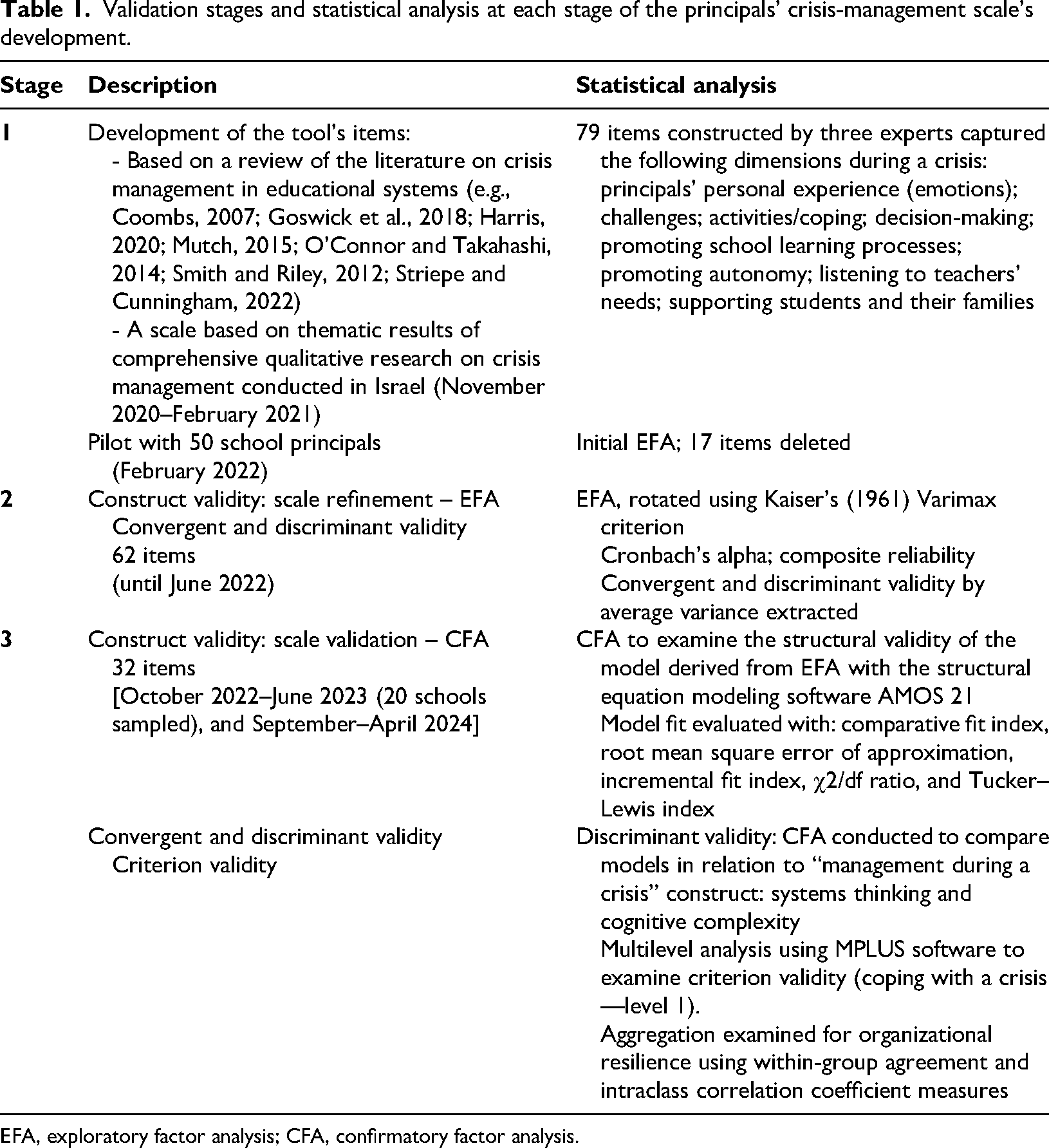
EFA, exploratory factor analysis; CFA, confirmatory factor analysis.
In total, three sample populations from Israeli Arab and Jewish schools were used to assess the developed scale. In this research context, the Arab schools were managed by Arab principals and the Jewish schools were managed by Jewish principals. All phases of the research were approved by the Chief Scientist of the Ministry of Education. All participants were fully informed of the aims of the study and were assured complete confidentiality.
Development of the crisis-management scale
Stage 1: pilot study
A pilot study was completed in which 50 school principals from 50 elementary, middle, and high schools from all over the country were asked to point out any scale items that were either ambiguous or difficult to answer, and an initial exploratory factor analysis (EFA) was conducted [through Varimax rotation; we removed items that did not load on any factor (>.5) or loaded on two factors]. Of the sampled, randomly selected schools, 17 (34%) were Jewish and 33 (66%) were Arab.
Principals’ comments on the scale items’ clarity were evaluated, and experts in educational leadership and crisis management provided detailed comments that led to the modification of some items and the elimination of 17 items (Supplementary Table S1). Items were checked for phrasing and relevance to their respective content domains, yielding a questionnaire containing 62 items. Principals’ answers to the 62 items (as well as the 79 items in the first version) in the context of management during a crisis were measured on a 5-point scale ranging from 1 “strongly disagree” to 5 “strongly agree.”
Stage 2: scale refinement—EFA
Participants
To explore the factor structure, a new stratified sampling of 130 principals from 130 schools [106 (81.5%) Arab and 24 (18.5%) Jewish] were asked to respond to the 62 items by ranking them from 1 “strongly disagree” to 5 “strongly agree” (same questions as in stage 1). Of the 130 principals, 81.5% had a MA degree, 12.3% had a BA degree; 62.3% were principals in elementary schools, 16.9% in middle schools, 13.8% in high schools, 3.1% in 6-year schools, and 3.8% in special education; mean age was 47.15 years [standard deviation (SD) = 8.25], and mean tenure as principal was 13.16 years (SD = 8.31).
Students’ socioeconomic status as reported by the principals was 29.2% low, 64.6% intermediate, and 6.2% high; mean student number in each school was 416 (SD = 217.60), and mean number of teachers in each school was 43 (SD = 22.46). EFA of the item matrix was performed to determine item clustering for the 62 items.
In the first stage, we received EFA results with six 1 factors with an explained variance of 58.19%; the fourth factor included two items, which did not align well theoretically (Spearman correlation between them yielded a weak and non-significant relationship, rs = .120). These two items were: “I communicate with parents about school activities” and “The crisis disrupts school operations.” In addition, Cronbach's alpha values for the first, second, third, fourth, fifth, and sixth factors were .86, .84, .73, .22, .72, and .70, respectively. Thus, because the fourth factor lacked theoretical justification (Cronbach's alpha = .22), a new EFA was conducted with five factors. Table 2 presents the final results of the EFA (Varimax rotation, loadings >.5; only loaded items are reported).
Structure matrix for exploratory factor analysis.
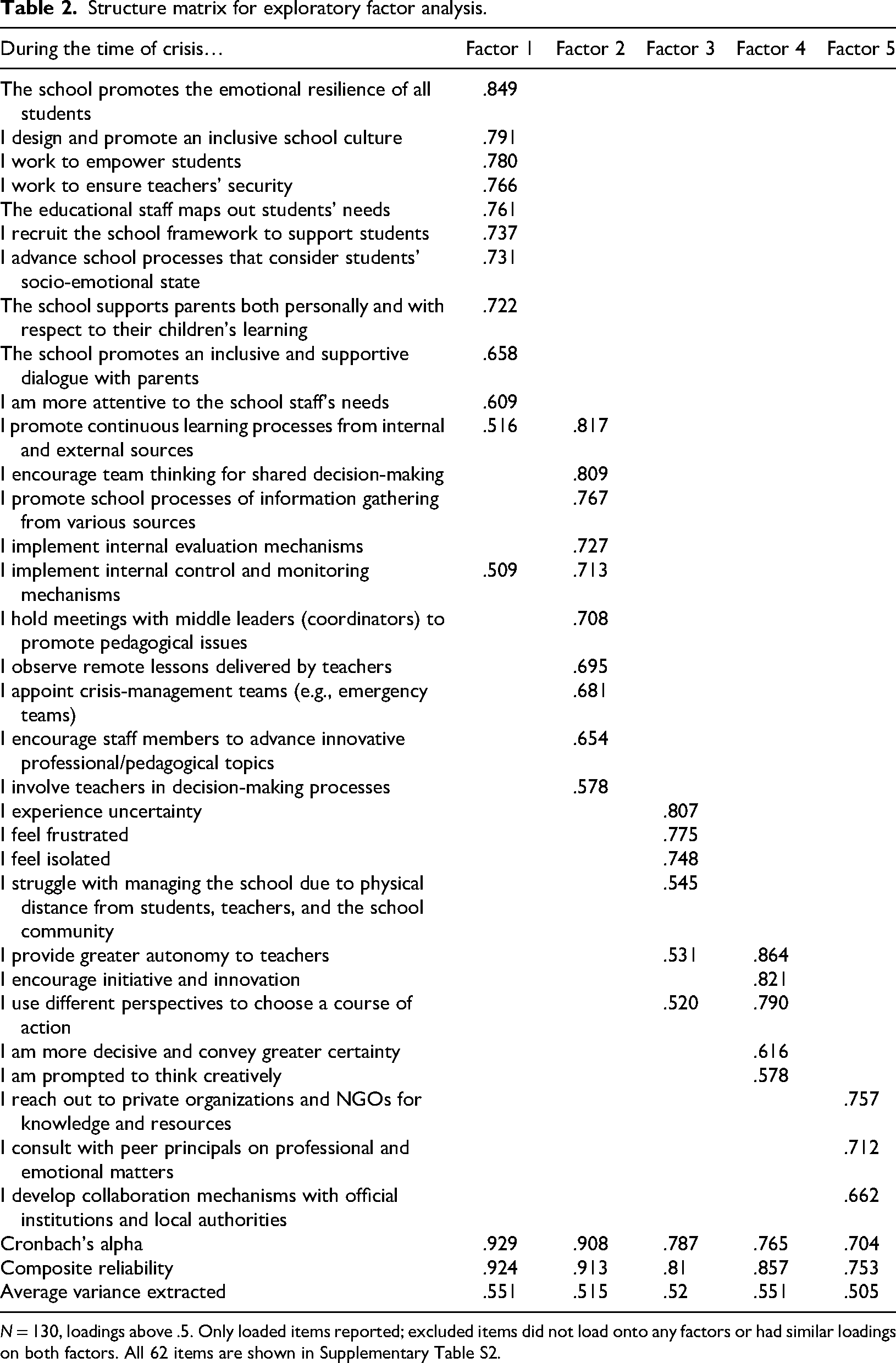
N = 130, loadings above .5. Only loaded items reported; excluded items did not load onto any factors or had similar loadings on both factors. All 62 items are shown in Supplementary Table S2.
Based on Table 2 (the EFA), we removed items that did not load on any factor or loaded on two factors (all 62 items are shown in Supplementary Table S2), leaving 32 items out of the total 62. Cronbach's alpha was >.7 for each of the five factors (see Table 2), and total explained variance for the five factors was 61.27% (higher than for the six-factor EFA: 58.19%). Composite reliability was also higher for the five-factor versus six-factor model, and its eigenvalue for the variables was >1. Therefore, the five-factor model was chosen for the measurement scale's development.
Following discussion among the three authors, the factors were: (1) inclusion and support of students, parents, and the community; (2) promotion of internal and external learning processes; (3) sustaining principal's resilience; (4) enabling systems management; and (5) collaboration with external organizations and principals’ peers.
Convergent and discriminant validity
Construct validity is typically assessed through its convergent and discriminant components (Bollen, 1989). Convergent validity determines the assessment's alignment with theoretical expectations, ensuring that the scale captures interrelated items that can be integrated into a single measurement. Discriminant validity is the degree to which two or more measurements designed to measure different theoretical constructs are not correlated (Camisón and Forés, 2010). Following Fornell and Larcker (1981), we evaluated convergent validity by examining the average variance extracted (AVE) for each latent construct and assessing composite reliability. As shown in Table 2, all AVE values exceeded .5, thus all five factors of the crisis-management scale demonstrated convergent validity. Discriminant validity is confirmed when the square root of the AVE surpasses the correlations among latent constructs (Fornell and Larcker, 1981). This criterion was met (Table 3), supporting the crisis-management scale's psychometric properties and providing strong evidence of discriminant validity.
Fornell–Larcker coefficients for the first sample.
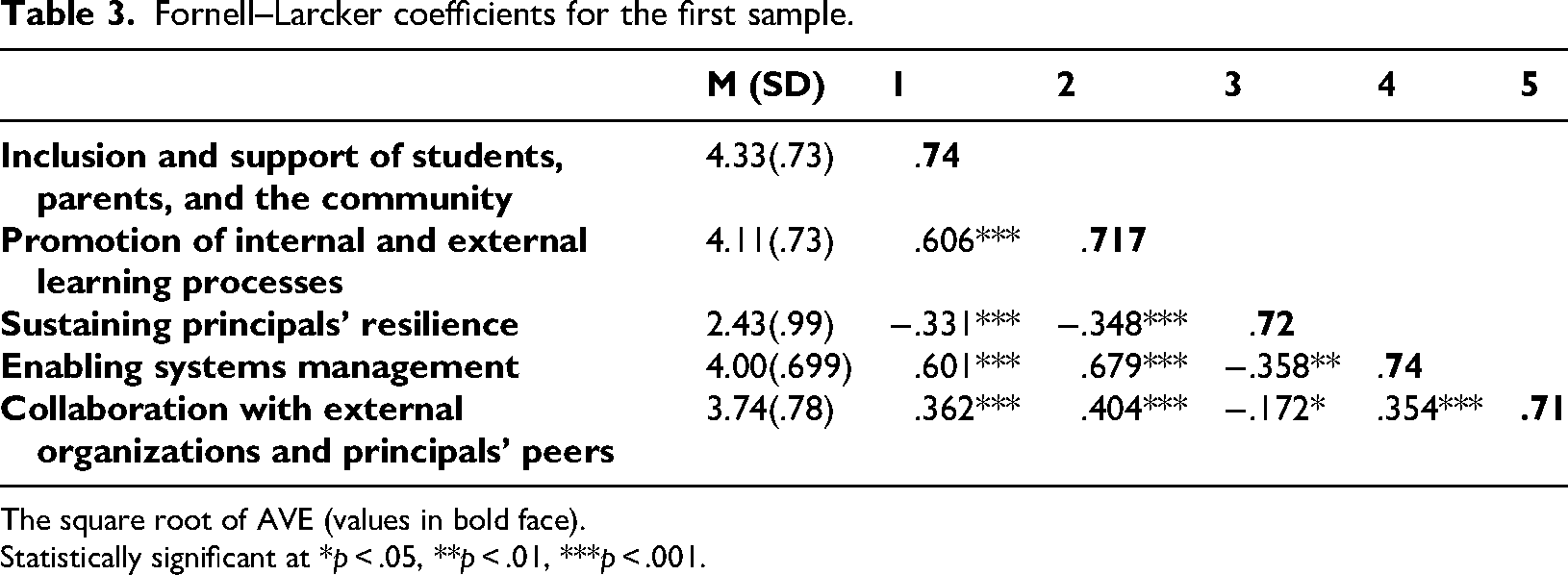
The square root of AVE (values in bold face).
Statistically significant at *p < .05, **p < .01, ***p < .001.
Stage 3: scale validation—confirmatory factor analysis (CFA)
Participants
A new sample was selected by convenience sampling method, consisting of 95 principals of schools from the 6 districts in the country (44% elementary, 23% middle, 16% high, 11% 6-year, and 6% from the ultra-orthodox Jewish sector) and 954 teachers (in those schools); 64 schools were from the Arab sector and 31 from the Jewish sector; 27.4% of the schools had low socioeconomic status, 63.2% intermediate, and 8.4% high.
Regarding school principals: 62% were male, 34% female; 78% had a MA degree, 8% a BA degree, 9% a PhD. The average number of students per school was 431.50 (SD = 231.60). Average tenure as principal was 11.30 years (SD = 8.31), average seniority in teaching was 24.76 years (SD = 8.33), and average age was 50.21 years (SD = 8.08).
At least 30% of the teachers from each school participated in this study. Teachers filled out a questionnaire regarding coping with crises, organizational resilience, and demographic variables. Mean tenure with their current principal was 6.69 years (SD = 5.83); tenure in their school was 13.08 years (SD = 8.48); mean age was 40.35 years (SD = 9.32); 47.7% had a BA degree and 42.5% a MA degree, and 61.2% were female.
Measures for teachers
Organizational resilience
Organizational resilience is the ability to recover from, cope with, and adapt to various situations, the willingness and ability to implement change, and the capacity to overcome adversity (Isaacs, 2012). Resilience enables schools, teams, and individuals to perform well during a crisis, and it increases their readiness to handle future complex situations (Shani and Somech, 2019). Organizational resilience was measured using a short form of the Benchmark Resilience questionnaire (Whitman et al., 2013), with 13 items depicting two dimensions: planning (sample item: “We are mindful of how a crisis could affect us”) and adaptive capacity (sample item: “There is a sense of teamwork and camaraderie in our organization”). Teachers were asked to rate the items on a scale of 1 (strongly disagree) to 4 (strongly agree).
Coping with crises
Coping refers to “thoughts and behaviors used to manage the internal and external demands of situations that are appraised as stressful” (Folkman and Moskowitz, 2004: 745). Coping with crises was measured using a questionnaire adopted from Judge et al. (1999) and suited to times of crisis, with 11 items; a sample item: “I think I cope with crises better than most of those with whom I work.” Teachers rated the items on a scale of 1 (agree to a very low extent) to 5 (agree to a very large extent).
Measures for principals
The school principals’ crisis-management scale was examined in comparison with related concepts: cognitive complexity and systems thinking.
Cognitive complexity
Based on Kelly's (1991) personality theory, which posits that an individual has a certain number of personal cognitive structures/dimensions which they use to identify, recognize, and perceive events in their social world, cognitive complexity refers to the way in which individuals evaluate their environment (Carraher et al., 2004); it is “the ability to differentiate among and integrate multiple perspectives” (Wong et al., 2011: 1208). Leaders with a high level of cognitive complexity are able to cope with complex situations and uncertainty in their environment (Da’as, 2024a, 2024b; Da’as et al., 2023; Green, 2004), and process information effectively to gain an understanding of problems in their environment (Chan et al., 2024). Furthermore, cognitive complexity is essential to elucidating causal connections and distinct categories (Shah et al., 2004), and considering various perspectives when making decisions and evaluating the environment (Da’as, 2024a, 2024b; Da’as et al., 2018; Green, 2004). Such abilities are essential during crises, allowing for the replacement of simplistic responses with flexible, adaptive strategies that consider both immediate needs and an uncertain future (Da’as et al., 2018).
To assess principals’ cognitive complexity, we used a questionnaire developed by Bagdasarov (2009), with responses to each item ranging from 1 (strongly disagree) to 5 (strongly agree). This measure contained two dimensions: differentiation (an individual's ability to apply different viewpoints and perspectives to a particular issue; Green, 2004) and integration (an individual's ability to identify and synthesize connections across diverse perspectives or differentiated characteristics; Green, 2004); an example item for differentiation (7 items): “To fully understand how something works, you need to know all of the details about it”; an example item for integration (7 items): “Before making a decision, I tend to think about possible consequences.” Higher scores for differentiation and integration indicate a higher level of cognitive complexity.
Systems thinking
This approach argues that the system cannot be understood by breaking it down into its components and examining its individual characteristics, but rather by understanding the interactions, processes, and connections between those components (Checkland and Poulter, 2006). In essence, systems thinking is the ability to see the whole beyond the sum of its parts and to see the parts in the context of the whole (Vidal, 2023). Thus, problems and goals are viewed as components of larger structures, rather than isolated events. In times of crisis, uncertainty, and change, this type of thinking enables principals to understand the various elements that make up the resultant unfamiliar and uncertain managerial landscape, while “connecting the dots” to recognize interactions between components and understand their broader implications (McCaughan and Palmer, 2018). During the COVID-19 crisis, principals reported that managing schools remotely limited their ability to oversee and influence what was happening in the digital space, especially within virtual classrooms (Schechter et al., 2024). Because systems thinking supports a more holistic perspective, it could be especially valuable when dealing with the complexities of remote school management (Da’as et al., 2025; Marshall and Fisher, 2018; Vidal, 2023).
A questionnaire developed by Shaked et al. (2018) was adopted for this research, with 17 items depicting 4 dimensions: (1) evaluating significance (e.g., “The principal tends to take unexpected occurrences into account”); (2) openness to a variety of opinions (e.g., “The principal engages in dialogue with those holding educational outlooks that differ from his/her own”); (3) leading wholes (e.g., “The principal attempts to identify repetitive patterns in the information at hand”); and (4) adopting a multidimensional view (e.g., “When making decisions, the principal tends to view the entire picture before examining its details”). Principals rated the items on a 5-point Likert scale ranging from (1) never to (5) extremely often.
CFA
CFA was conducted to examine the structural validity of the model derived from the EFA (Table 2; 32 items) with the structural equation modeling software AMOS 21. Different models, based on factors that may be theoretically related, were compared (Table 4). For example, in Model M2, the inclusion and support factor emphasizes the emotional aspect, as does sustaining the principal's resilience. Therefore, we combined them. In Model M3, we integrated the items of three factors: external collaborations, enabling systems management, and the promotion of internal and external learning processes—all related to the principal's work. Table 4 presents the results of the CFA comparing the different structural models of crisis management.
Results of confirmatory factor analysis comparing different structural models of principals’ crisis management.
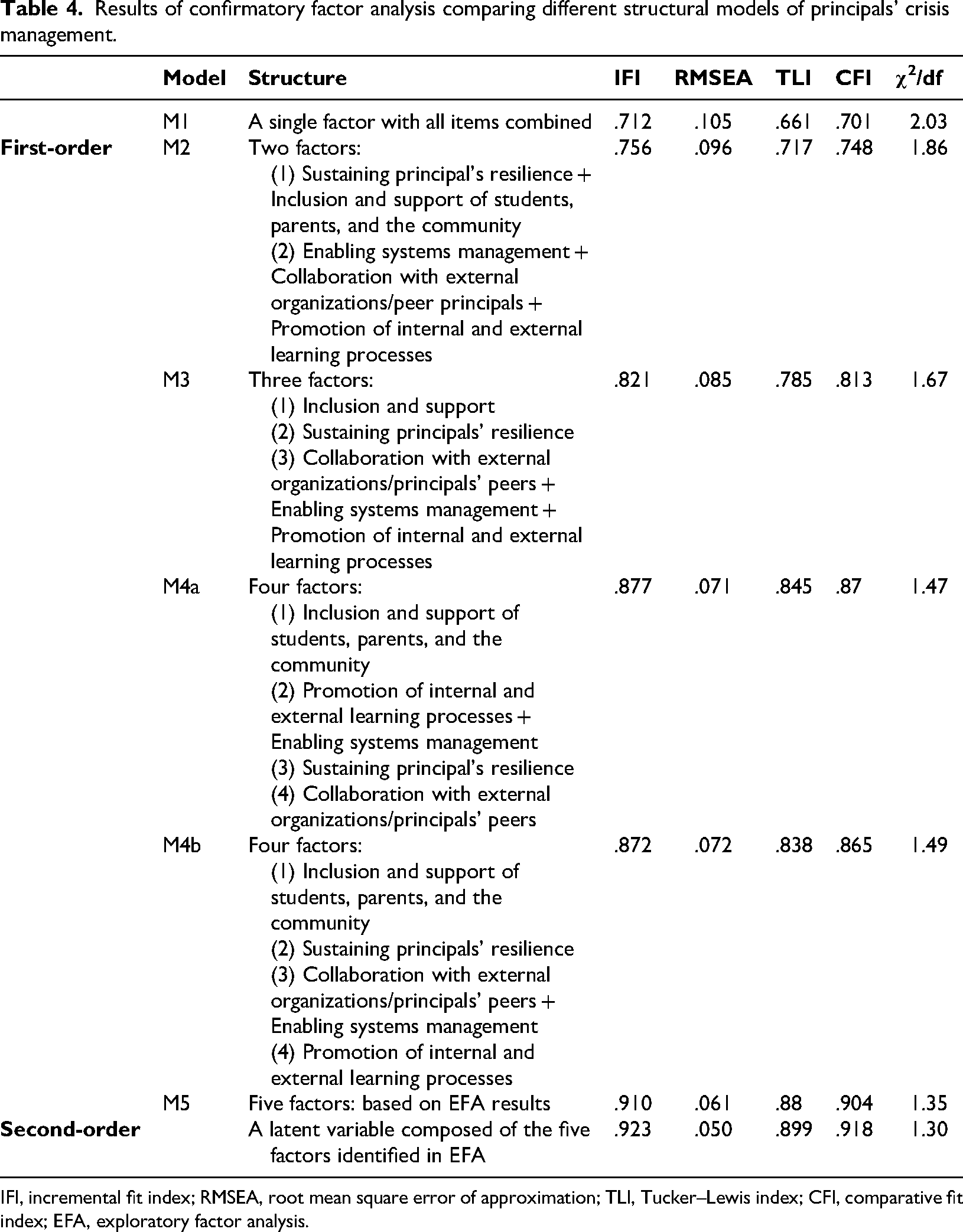
IFI, incremental fit index; RMSEA, root mean square error of approximation; TLI, Tucker–Lewis index; CFI, comparative fit index; EFA, exploratory factor analysis.
The values of the fit indices ranged from 0 to 1, with ≥ .90 considered acceptable (good fit) (Hoyle, 1995). For the root mean square error of approximation (RMSEA), values between .06 and .08 suggest an acceptable fit, and values ≤ .05 a close fit (Browne and Cudeck, 1993). The second-order model was better than the others, with fit indices >.9. Figure 1 presents the second-order model with item loadings on each factor.
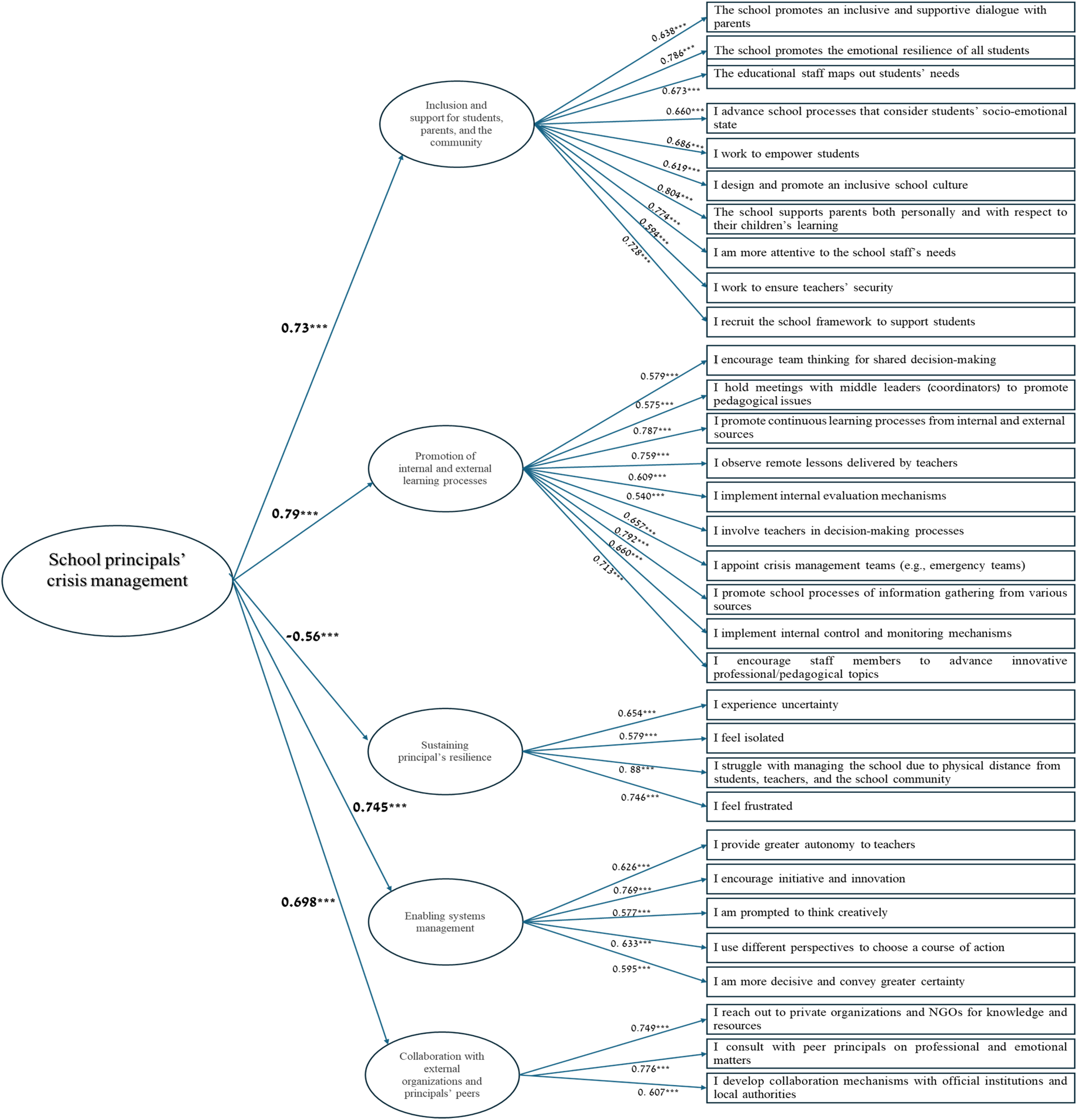
Second-order model for principals’ crisis-management scale factors. Statistically significant at ***p < .001.
Convergent, discriminant, and criterion validity
Convergent validity
We examined convergent validity with principals’ systems thinking and cognitive complexity. Pearson correlations between these and the school principals’ crisis-management scale were significant (rp = .389, p < .001; rp = .505, p < .001, respectively), confirming convergent validity. In terms of the crisis-management factors (N = 95), inclusion and support of students, parents, and the community had the highest average (4.49, SD = .54); promotion of internal and external learning processes averaged 4.03 (SD = .70); sustaining principal's resilience 2.59 (SD = 1.05); enabling systems management 4.14 (SD = .64); and collaboration with external organizations and principals’ peers 3.61 (SD = .89).
Discriminant validity
We compared the proposed model to alternative ones to determine discriminant validity. In the first model, the three dimensions were related (factor 1: cognitive complexity, factor 2: systems thinking, factor 3: management during a crisis; comparative fit index [CFI] = .91, RMSEA = .089, Tucker–Lewis index [TLI] = .89, incremental fit index [IFI] = .915). In the second model, the items from the crisis-management scale were combined with cognitive complexity to create a single factor, and the second factor was systems thinking (CFI = .874, RMSEA = .10, TLI = .80, and IFI = .858). In the third model, the items from the crisis-management scale were combined with systems thinking to create a single factor, and the second factor was cognitive complexity (CFI = .779, RMSEA = .17, TLI = .697, and IFI = .785). CFA showed that the three-factor model had better fit indices (CFI = .91, RMSEA = .089, TLI = .89, and IFI = .915), indicating that the three individual concepts can be distinguished.
Criterion validity
Criterion validity is “the degree of correspondence between a measure and a criterion variable, and expresses the extent to which the construct behaves as theoretically predicted in relation to other associated constructs” (Bollen, 1989: 186). The school principals’ crisis-management measure was examined in relation to a teacher's ability to cope with crises and organizational resilience. We hypothesized that: Hypothesis 1: School principals’ management during crises will positively affect school resilience. Hypothesis 2: School principals’ management during crises will positively affect a teacher's ability to cope with crises.
Results—stage 3
First, intraclass correlation coefficients (ICCs)—ICC1 = .14 and ICC2 = .59—and within-group agreement (rWG) = .73 justified organizational resilience aggregation at the school level, according to the range determined by Bliese (2000) and James et al. (1993). We controlled for the effects of student socioeconomic status, school size (number of teachers), and teachers’ tenure at the school (the control variables were included in the multilevel equation, dependent on their level, as shown in Figure 2). Figure 2 summarizes the multilevel structural equation modeling results for the hypothesized model (hypotheses 1 and 2).
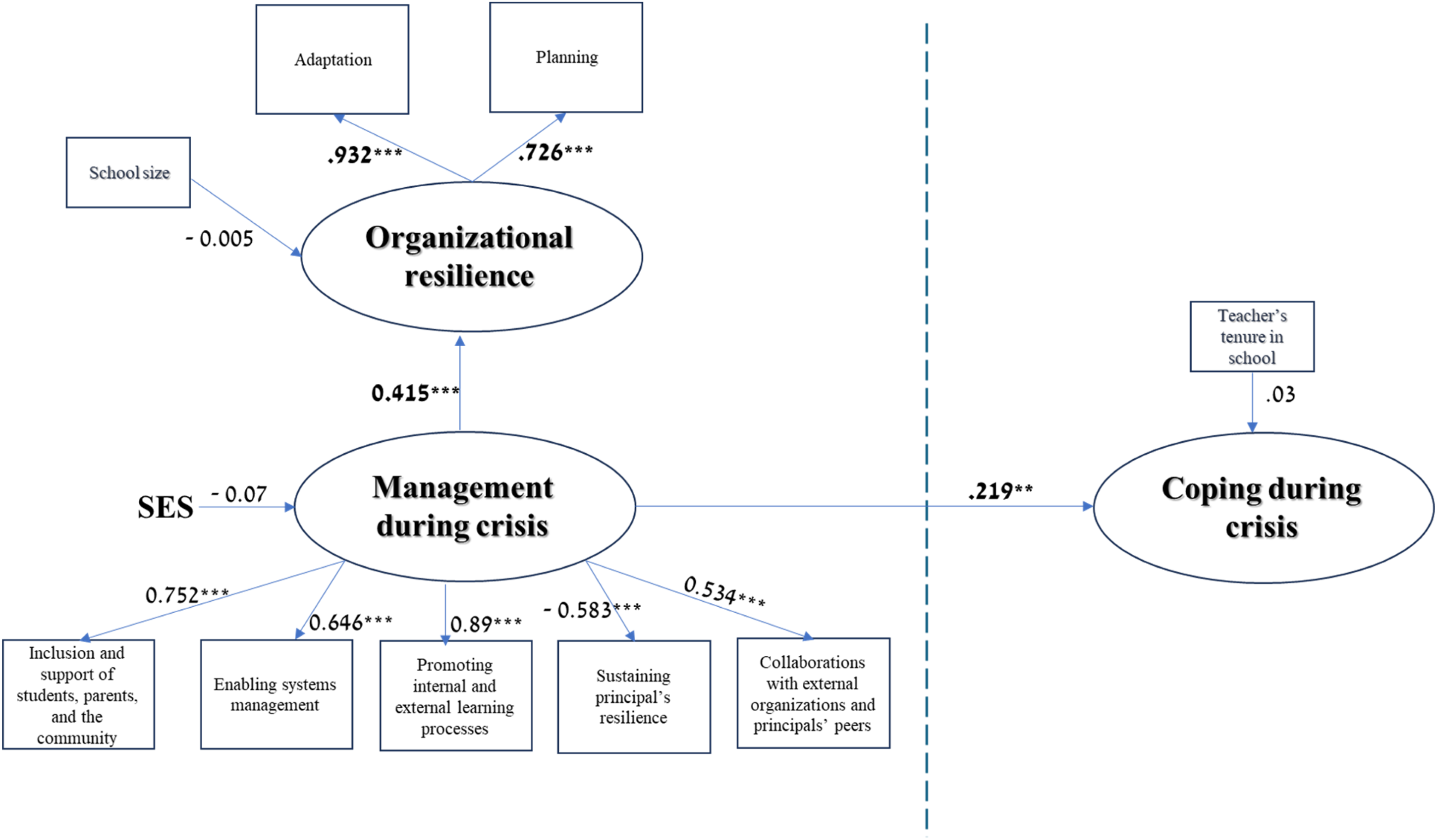
Results of the hypothesized model. Statistically significant at **p < .01 and ***p < .001, respectively.
Results showed an adequate fit between the model and the data (CFI = .92 and RMSEA = .071). A positive relationship was found between principals’ crisis management and school resilience (standardized β = .415; p < .001), as well as between the former and teacher's coping with crises (standardized β = .219; p < .01), confirming hypotheses 1 and 2. Thus, criterion validity was confirmed.
Discussion
The aim of this study was to develop and validate a measure for principals’ crisis management. The questionnaire, with its second-order structure, depicts five factors: inclusion and support of students, parents, and the community; promotion of internal and external learning processes; sustaining principals' resilience; enabling systems management; and collaboration with external organizations and principals’ peers. Convergent, discriminant, and criterion validity analyses supported the scale's validity. Relationships were found between the crisis-management structure, principals’ systems thinking, and cognitive complexity, and teachers’ level of coping with crises and organizational resilience. The five distinct factors identified in the study are interconnected and reflect a systemic approach to crisis leadership. These factors work together as an integrated model of effective school management during times of crisis. Each of them represents a critical domain of crisis leadership and, together, they form a second-order construct that reflects the multifaceted nature of school leadership in crisis contexts.
Inclusion and support of students, parents, and the community
This factor highlights the importance of providing support not only to students, but also to their parents and teachers, and addressing students’ socio-emotional needs to enhance their resilience and empower them. It emphasizes creating an inclusive school culture and mobilizing school systems to support students, parents, and teachers. Research underscores the significance of principals offering care and attention, emphasizing the social, emotional, and psychological well-being of students, teachers, and the school community, during (Brown, 2018; LaRoe and Corrales, 2019; Mutch, 2018; O’Connor and Takahashi, 2014) and after (Goswick et al., 2018; LaRoe and Corrales, 2019) a crisis. This includes identifying and creating opportunities to address distress among the staff (Geer and Coleman, 2014; Mutch, 2014), as well as the economic and socio-emotional needs of the broader circle of students’ families and the school community. This may include financial and social assistance, such as providing technology for students or aiding families affected by job losses during the crisis. It is important to note that an inclusive school culture in times of crisis, based on varied stakeholders’ perspectives, is anchored in the organization's internal learning abilities. To navigate organizational learning to meet the diverse stakeholders’ needs, school leaders may formalize internal organizational mechanisms, such as a dedicated crisis leadership team.
The emergence of inclusion and support as the most prominent factor reflects a substantive leadership-response pattern. Principals prioritize caring and supportive leadership actions as central to stabilizing school communities during crises. This finding aligns with crisis-leadership literature emphasizing emotionally responsive, community-centered leadership during disruptions (Day and Gu, 2014; Harris and Jones, 2020). Supporting this, Qadach et al. (2025) identified caring and supportive leadership practices—including community engagement and socio-emotional support—as central components of principals’ responses to crisis conditions. The current result, across both Arab and Jewish schools, suggests that in times of uncertainty, principals view personal care and emotional support as essential leadership practices for managing crises effectively. Leadership-preparation programs should thus emphasize these supportive competencies alongside operational and managerial skills.
Promotion of internal and external learning processes
This factor emphasizes the need for continuous internal and external learning, supported by actions such as fostering evaluations, encouraging teacher inquiry and information-seeking, team collaboration, forming a crisis-management team, leveraging internal strengths, engaging middle leaders in innovative professional and pedagogical initiatives, and involving the staff in decision-making. Collaborations within and outside of the school are critical for effective crisis management (LaRoe and Corrales, 2019). Research shows that decision-sharing and partnerships during crises foster better relationships among educators, students, and families (Sutherland, 2017). Internal collaboration involves leveraging internal capacities to navigate organizational learning tailored to concurrent needs. Especially in times of crisis, by mapping staff strengths, a community of teachers can share expertise and learn from one another.
Sustaining principal's resilience
This factor focuses on the principal's own emotions during crises—feelings of loneliness, uncertainty, difficulty, and frustration. Resilience is defined as “bouncing back” or adapting to distress, trauma, tragedy, threat, or stress (Malik and Garg, 2018). Prior research highlights emotional strain as a fundamental component of leaders’ crisis experience and signals the conditions from which resilience processes may emerge (Mahfouz, 2020). Research shows that resilient principals are more effective and successful leaders (Chen, 2023; Peden and Gal, 2020). Halevi and Schechter (2023) identified practices that help principals better cope with crises, including both tangible and cognitive strategies to enhance resilience, and hence their well-being and emotional recovery. Because resilience is a developmental process, practicing these strategies is crucial, particularly as preparation for future crises.
Enabling systems management
This factor highlights management approaches during crises, such as granting autonomy and encouraging innovation, decisiveness, creative thinking, and systems thinking. Harris (2020) argued that school leaders should adopt distributed leadership during crises, emphasizing capacity-building and collective engagement rather than control (Azorin, 2020). Crisis management requires reducing bureaucratic formalities to focus on essential problem-solving within the school. Enabling bureaucracy supports teachers through clear hierarchies and regulations designed to resolve issues, encouraging innovation, good communication, and efficiency (Hoy and Miskel, 2006). Principals are advised to reduce traditional monitoring routines and allow their faculty to develop context-specific, rapid-response mechanisms combined with internal evaluation systems.
Collaboration with external organizations and principals’ peers
This factor emphasizes seeking knowledge and resources from external organizations, consulting peers, and collaborating with official institutions and local authorities. Partnerships with external service-provision mechanisms are also critical. Howat et al. (2012) found that during crises, school leaders formed partnerships with organizations for services, advice, and financial resources. Beyond institutional collaborations, partnerships with private and non-governmental organizations provide valuable knowledge and resources. Collegial learning with peers is also essential for mutual support and information sharing. Schechter (2012) highlighted the importance of principal networks—groups of school leaders working together to advance educational initiatives, share expertise, and address common challenges that individual schools cannot solve independently. During radical crises, such networks offer opportunities to acquire new knowledge and emotional support, enabling adaptation to the changes (Harris and Jones, 2020; LaRoe and Corrales, 2019).
Implications, limitations and future research
Inclusion and support of students, parents, and the community were the most significant factors for effective crisis management, achieving the highest mean score. This aligns with previous research conducted in the context of the global COVID-19 pandemic, highlighting the need for principals and management teams to demonstrate genuine care and attention to students’, staff's, and families’ emotional states (e.g., Adams et al., 2023; Thomson and Greany, 2024). The factor with the next-highest average was promotion of internal and external learning processes, reflecting the crucial need for schools, especially in times of crisis, to maintain a focus on continuous learning, professional development, and knowledge-sharing—both within the school and with external partners. This factor highlights the role of school leaders in fostering a learning-oriented culture that supports both immediate crisis resolution and long-term resilience.
The crisis-management scale was also linked to systems thinking and organizational resilience, reflected in proactive and rapid organizational flexibility (Ma et al., 2022). Organizational resilience requires internal organizational capabilities for learning, development, and creativity, especially in times of crisis, based on organizational mechanisms and processes (Duchek, 2020). Thus, principals and their teams should view crises as an opportunity for creativity and organizational improvement (Shah et al., 2020). Cases from the COVID-19 period highlight the importance of organizational resilience in ensuring continuity of learning and teaching processes, overcoming teacher shortages, and maintaining the mental and physical well-being of teachers within the social and community ecosystem (Ma et al., 2022; Sawyer et al., 2023).
This study has several limitations. First, this scale was not designed to examine a specific type of crisis, but rather principals’ perceptions of crises in general. Nevertheless, the strength of the developed tool lies in its being based on research conducted in the context of global (COVID-19) as well as national (regional war) crises. However, administering the developed tool in different school settings, cultures, and countries experiencing crisis situations would be an important step in extending the validity of the factorial model. The second limitation relates to the lower participation of Jewish-sector vs. Arab-sector schools in the study. However, cultural differences have not been found to significantly affect crisis management, and the minor differences between the two societies (Da’as et al., 2021) were taken into account when constructing the items for the current study. Future research might explore the cultural dimensions of crisis leadership using in-depth qualitative or comparative approaches. Third, the schools in this study participated in relatively short-term assessments. Further research might examine the tool over time or compare management differences between routine and crisis periods to identify and interpret specific variations in the measured factors. Moreover, future studies should consider validating the scale criteria with student-level variables, such as mental well-being, or parent-level variables, such as strengthened school–community relationships. Additional research might investigate the tool in relation to student motivation and coping strategies in times of crisis and adversity.
The importance of a tool that assesses management during times of crisis lies in its practicality—principals can use this scale to minimize crisis damage and evaluate the strengths and weaknesses of their own management processes, as well as to plan for the prevention of future crises. The ability to prepare and build practical readiness for times of crisis is crucial, and indeed, this tool offers the development of crisis-management strategies based on its various factors. The results of this study give rise to the following recommendations.
Organizational psychologists (or mentors/coaches) can guide principals in promoting resilience and minimizing the negative emotions that arise in their daily work and in their interactions with the school community. This guidance could include analyzing “case studies” from the field to teach resilience practices that are useful for crisis management. Such processes should take place during routine times to foster organizational resilience before crises arise.
Principals’ training programs can focus on managing internal and external learning processes. This involves developing learning routines and transmitting information internally and externally to prepare the organization for crises. Research highlights the principal's role in balancing resource exploitation and exploration, which is crucial for innovation during crises (Benoliel and Schechter, 2017; Bingham and Burch, 2019; Da’as, 2024b).
Clear communication channels between the principal, teaching staff, and parents are essential (Goswick et al., 2018; LaRoe and Corrales, 2019). Establishing open communication helps debunk rumors, correct misinformation, and build trust in times of crisis (Geer and Coleman, 2014; Sutherland, 2017). In addition, creating partnerships with external organizations (municipalities, non-governmental organizations, etc.) is crucial.
Supplemental Material
sj-docx-1-ema-10.1177_17411432251387306 - Supplemental material for Crisis leadership: Developing and validating a scale for school principals’ crisis management in Israel
Supplemental material, sj-docx-1-ema-10.1177_17411432251387306 for Crisis leadership: Developing and validating a scale for school principals’ crisis management in Israel by Rima'a Da'as, Mowafaq Qadach and Chen Schechter in Educational Management Administration & Leadership
Footnotes

Funding
The author disclosed receipt of the following financial support for the research, authorship, and/or publication of this article: This work was supported by the Chief Scientist, Israel's Ministry of Education.
Declaration of conflicting interests
The authors declared no potential conflicts of interest with respect to the research, authorship, and/or publication of this article.
Supplemental material
Supplemental material for this article is available online.
Notes
Author biographies
References
Supplementary Material
Please find the following supplemental material available below.
For Open Access articles published under a Creative Commons License, all supplemental material carries the same license as the article it is associated with.
For non-Open Access articles published, all supplemental material carries a non-exclusive license, and permission requests for re-use of supplemental material or any part of supplemental material shall be sent directly to the copyright owner as specified in the copyright notice associated with the article.
