




Abstract
In recent years, principal social justice leadership (PSJL) has received increasing attention in the field of education. Through a systematic review of 133 theoretical and empirical journal articles on PSJL, this article identifies the current research landscape and shifts in the definition of PSJL, key themes, major methods, and contextual coverage over the past two decades. To this end, the Preferred Reporting Items for Systematic Reviews and Meta-Analyses statement was applied to peer-reviewed papers available on two databases: Web of Science and Scopus. This study found the following: (1) the definition of PSJL has been constructed in different contexts, resulting in a lack of consensus; (2) the focal themes of PSJL have changed over stages; (3) the predominant research method has been qualitative, with an increasing use of quantitative methods in recent years; and (4) the contextual coverage expanded from the United States to other parts of the world. Despite the promising growth of the research on PSJL, limitations include insufficient cross-national studies, small-scale data, traditional methods, and few widely applied measurement tools. This review highlights the urgent need to promote social justice-oriented leadership policies in diverse educational settings and include social justice leadership as a core competency in principal preparation programs and leadership practices.
Introduction
Social justice leadership has gained increasing attention in educational research (Berkovich, 2014; Furman, 2012; Miller, 2019), especially as inequalities based on race, class, and other social dimensions persist in educational systems (Ryan, 2016). In the 21st century, these inequalities have been intensified by neoliberal educational policies—the emphasis on standardized testing and accountability resulting in resource allocation that favors high-achieving students at the expense of marginalized groups (Dematthews et al., 2016; Richard et al., 2020; Theoharis, 2008). Within this challenging policy landscape, principals struggle to balance rigid policy requirements with their moral commitment to equity and inclusion (Dematthews and Mawhinney, 2014; Shaked, 2023a, 2023b; Liu et al., 2024). In response to these tensions, scholars have increasingly focused on how principals enact social justice leadership practices within complex policy environments to ensure equitable educational opportunities for all students (Brown, 2006; Jean-Marie, 2008; Theoharis, 2007).
Notably, “social justice leadership” emerged as a meaningful term through this scholarship (Lewis, 2016). With the significant increase in related research, the concept of principal social justice leadership (PSJL) gained prominence in the field of education (Gümüş et al., 2021).
Despite the growing attention of researchers and policymakers to the topic of PSJL over the past two decades, systematic and comprehensive reviews remain limited (Gümüş et al., 2021; Karakose et al., 2023). Existing reviews lack an in-depth synthesis of key themes and frameworks in PSJL (Karakose et al., 2023) and fail to thoroughly examine how this type of leadership manifests across different cultural and policy contexts, particularly from a cross-cultural comparative perspective (Gümüş et al., 2021). Moreover, scholars have not yet systematically explored the methodological evolution of PSJL research, limiting our understanding of its empirical development and application (Gümüş et al., 2021; Karakose et al., 2023).
Given these gaps, this article conducts a systematic review of PSJL research to provide a comprehensive account of its conceptual development, thematic evolution, methodological trends, and regional distribution over the past two decades. Thus, this review article addresses the following research questions:
RQ1: How has PSJL been conceptualized over the past two decades? RQ2: How have the themes, methods, and geographical contexts of PSJL research evolved over time? RQ3: What are the limitations of the current literature?
Method
To address the aforementioned research questions, we adopted a systematic review method, which is a widely recognized approach for identifying and synthesizing high-quality research evidence on specific topics due to its replicability and transparency (Hascher and Waber, 2021; Schott et al., 2020). Specifically, we followed the Preferred Reporting Items for Systematic Reviews and Meta-Analyses guidelines (Moher et al., 2009).
Prior to reviewing the literature, we established inclusion criteria based on insights from previous systematic literature reviews (Hascher and Waber, 2021; Schott et al., 2020). First, the research topic of the included literature had to be social justice leadership. Articles that only mentioned social justice leadership without conducting an in-depth study on it were excluded from this review. Second, the subject of the study had to be principals. As our research questions pertain to how principals exercise social justice leadership in schools, studies focusing on teachers, students, and other subjects were not included in our review. Third, regarding research design, we included empirical and nonempirical studies because we were interested in the proportion of empirical and nonempirical studies in the literature. Fourth, we set our study period to articles published between January 2005 and April 2024. In our initial search, we found that literature from 2000 to 2004 was limited, with only three studies meeting our inclusion criteria (Brown, 2004; Brunner et al., 2002; Shields, 2004). This finding aligns with an earlier review (Gümüş et al., 2021), which noted a significant increase in the number of studies on PSJL since 2005. Additionally, a 20-year time span allows us to observe the evolution of research in this field adequately. Fifth, only studies written in English were included because key journals in the field of educational leadership worldwide use English as the scholarly working language. Given this language convenience as well as limitations, we only reviewed English-written articles on non-English-speaking countries or regions. Finally, to ensure the quality of the included studies, only peer-reviewed articles were included.
To identify eligible studies, we searched two major international databases, Web of Science and Scopus, which are commonly used in bibliometric research (Gümüş et al., 2021; Karakose et al., 2023). These databases include eight core journals in educational administration that provide authoritative and cutting-edge knowledge in the field: Educational Administration Quarterly, Journal of Educational Administration, School Effectiveness and School Improvement, Educational Management Administration and Leadership, International Journal of Educational Management, International Journal of Leadership in Education, Leadership and Policy in Schools, and School Leadership and Management.
For Scopus, the following search string was used: ((TITLE (“social justice”) AND TITLE (leader*) AND TITLE-ABS-KEY (principal*) OR TITLE-ABS-KEY (school) OR TITLE-ABS-KEY (education*)) AND PUBYEAR > 2004 AND PUBYEAR < 2025). As of 28 April 2024, 288 articles were generated. After filtering out book chapters, books, editorials, notes, and conference papers and limiting the language to English, 207 articles were generated.
For Web of Science, the following search string was used: TITLE: (“social justice”) OR TITLE: (leader*) Refined by: [excluding] DOCUMENT TYPES: (EDITORIAL MATERIAL OR BOOK REVIEW OR EARLY ACCESS OR LETTLE OR MEETING ABSTRACT OR PROCEEDING PAPER) AND LANGUAGES: (ENGLISH). Indexes: SCI-EXPANDED, SSCI, A&HCI, ESCI. As of April 28, 2024, 103 articles were generated.
Our initial search of data basis with the application of our inclusion/exclusion criteria generated 310 articles. After removing 89 duplicates, the remaining 221 articles were screened by reviewing titles and abstracts to check their alignment with eligibility criteria. This led to the exclusion of 82 articles, primarily because they were unrelated to the topic or non-English studies. Subsequently, the full texts of 139 articles were reviewed for inclusion, and six articles were excluded. Ultimately, 133 studies were included in the final analysis (Figure 1).
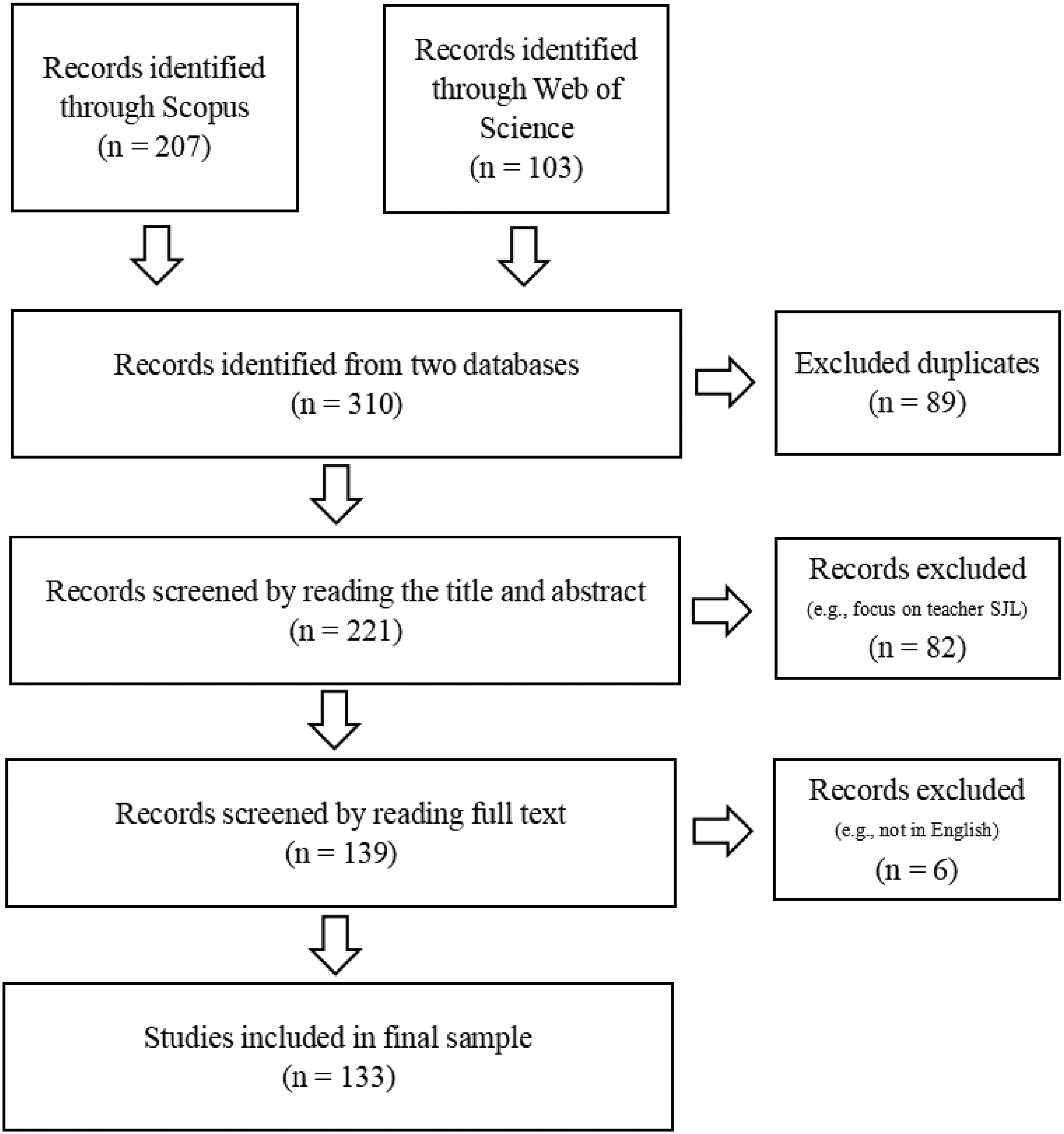
PRISMA flowchart.
Conceptual development of PSJL
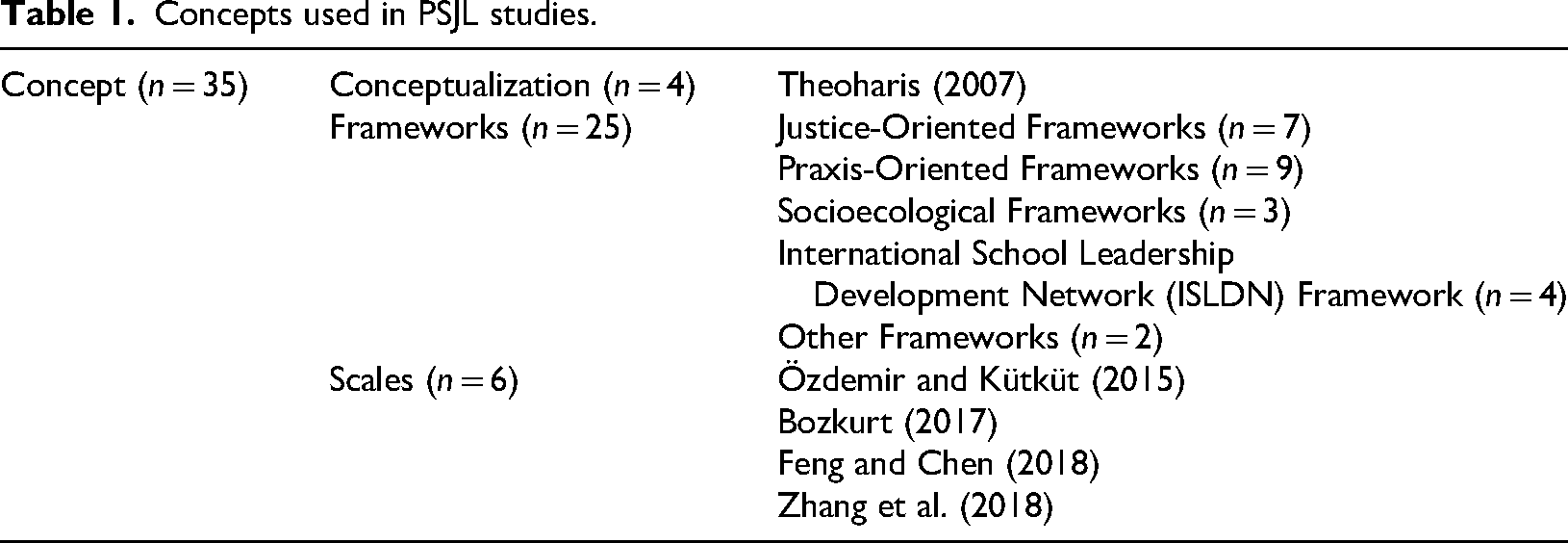
Social justice leadership is a complex and multilayered concept (Brown, 2006; Capper et al., 2006; Mckenzie et al., 2008). Despite growing academic attention, how it is understood and applied in practical school settings remains unclear and subject to criticism (Furman, 2012). This review examined 133 studies on PSJL, of which 35 defined the concept or provided a conceptual framework. Of these, four studies proposed definitions, 25 developed structured frameworks, and six advanced measurement scales to assess SJL in practice (Table 1).
Concepts used in PSJL studies.
Conceptualization
Early definitions of PSJL were largely shaped by the civil rights movement and feminist thought, with a focus on inequities related to race, class, and gender. Drawing on the social justice theories of various scholars, Theoharis (2007) defined social justice leadership as the leadership demonstrated by principals who placed issues of race, class, gender, disability, and sexual orientation at the core of their advocacy, leadership practices, and vision. This definition played a foundational role in subsequent research, with many later studies adopting or building upon this definition to develop conceptual frameworks (Dematthews and Mawhinney, 2014; Theoharis, 2008; Zembylas and Iasonos, 2015). For example, Dematthews and Mawhinney (2014) extended this conceptualization by emphasizing inclusive education and leadership for equity, while Dematthews and Izquierdo (2016) focused on bilingual education and leadership practices that support linguistically diverse students.
However, cultural norms and values in regions such as China and Tonga may differ significantly from those in the West (Chen, 2009; Johansson Fua, 2007). In this respect, Johansson Fua (2007) challenged the Western definition of PSJL and proposed a definition more suited to the Tongan cultural context, emphasizing relational leadership based on respect and community bonds. These diverse definitions demonstrated that PSJL is not a singular concept but an evolving framework shaped by cultural, political, and educational contexts.
Frameworks
Among the selected articles, 25 proposed conceptual frameworks, which can be broadly categorized into four main types: justice-oriented frameworks (n = 7), praxis-oriented frameworks (n = 9), socioecological frameworks (n = 3), and International School Leadership Development Network (ISLDN) frameworks (n = 4).
First, justice-oriented frameworks emerged in the work of Gewirtz and Cribb (2002), who built on the work of Fraser (1997) to provide a foundational lens for analyzing PSJL. Fraser's (1997) two-dimensional model conceptualized social injustice as stemming from redistributional inequality (economic disparities) and misrecognition (cultural devaluation), highlighting the dual nature of structural inequities. Gewirtz and Cribb (2002) extended Fraser's (1997) model by incorporating associational justice, emphasizing the role of political participation and decision-making power alongside distributive and cultural justice.
This three-dimensional framework has guided numerous studies exploring how leaders negotiate the interplay between distributive, cultural, and associational justice in diverse cultural and policy contexts (Dematthews and Izquierdo, 2017; Silva et al., 2017; Slater et al., 2021; Taysum and Gunter, 2008). Building on this framework, scholars introduced developmental justice as a fourth dimension, shifting the focus from structural inequities to capacity-building and agency, further elaborating on this in 2015 by integrating it with distributed leadership (Woods and Roberts, 2015).
Second, praxis-oriented frameworks emerged as research on PSJL deepened, with scholars increasingly focusing on its developmental pathways and proposing various frameworks to guide the preparation of school leaders. For example, Capper et al. (2006) developed a 3 × 3 matrix model, integrating critical consciousness, knowledge, and practical skills with curriculum, pedagogy, and assessment to provide a systematic framework for the preparation of PSJL. Mckenzie et al. (2008) emphasized that the preparation of social justice leaders should enhance candidates’ knowledge and awareness and focus on student selection, curriculum content, and postgraduation support.
Nevertheless, these frameworks tended to focus on critical consciousness, neglecting practical leadership capacities. In response, Furman (2012) proposed “social justice leadership as praxis,” stressing the continuous interplay of reflection and action, and developed a framework comprising five dimensions for leader preparation: personal, interpersonal, communal, systemic, and ecological. Additionally, some studies expanded the perspective on social justice leadership development, broadening the focus from mere preparation stages to include long-term practice and career growth (Bertrand and Rodela, 2018; Forde and Torrance, 2017a; Scanlan, 2013).
Third, socioecological frameworks were utilized in recent studies on PSJL that transcended a school-centered approach to highlight educational inequities embedded in multilayered ecological systems beyond school boundaries (Berkovich, 2014; Caliskan, 2020; Richard et al., 2020). Based on the ecological systems theory developed by Bronfenbrenner (1979), Berkovich (2014) proposed a framework for social justice leadership that highlighted the need for leaders to engage across individual, school, community, and policy levels to address systemic inequities. Applying this model to refugee education in Turkey, Caliskan (2020) examined how school principals’ efforts to promote social justice were influenced by the broader sociopolitical and economic context. Richard et al. (2020) expanded Berkovich's model by integrating school–community relationships, emphasizing how leaders mobilize community partnerships and advocacy efforts to tackle systemic inequities.
Finally, the ISLDN framework emerged as an analytical tool for cross-national comparisons, enabling scholars to understand the transformative trajectories of PSJL within different national and societal contexts (Flood, 2017). The ISLDN framework emphasizes that PSJL is not confined to school-based practices but is embedded within a multilayered environment, spanning the micro level (individual), meso level (school and community), and macro level (policy and social structures), with leadership practices shaped by complex interactions across these levels (Forde and Torrance, 2017b; Ogden, 2017; Slater et al., 2014).
Scales
Several studies developed measurement scales for PSJL based on different theoretical frameworks and applied in various regions. Under the ISLDN framework, Zhang et al. (2018) developed the Social Justice Leadership Questionnaire (SJQ2) to assess social justice practices. The SJQ2 comprises four dimensions: school leader, school context, community context, and policy context. In Turkey, Özdemir and Kütküt (2015) developed the widely used Social Justice Leadership Scale, which comprises three core dimensions: critical awareness, stakeholder support, and participation (Akman, 2020; Canlı and Demirtaş, 2022; Koçak, 2021). Bozkurt (2017) expanded this framework by adding distributive justice, and conducted further research to validate it (Bozkurt, 2022). Feng and Chen (2018) contributed a pioneering advancement to the conceptualization and measurement of PSJL by incorporating Starratt's (2004) Ethical Leadership Framework—comprising justice, care, and critique—into the development of a contextually grounded scale in Taiwan. Their study stands out as one of the few validated measurement tools in the field, marking a significant step toward implementing and assessing PSJL within the East Asian context (Feng and Chen, 2018).
Notably, the two Turkish studies that proposed measurement scales were published in the journals outside the core databases—early research on PSJL measurement remained peripheral in certain contexts. This observation underscores the importance of considering a broader range of academic outlets, including those outside mainstream journals, to gain a more comprehensive understanding of social justice leadership in diverse cultural and regional settings.
Thematic shifts
Informed by Karakose et al.'s (2023) approach of categorizing research by the number of articles published, we divided PSJL research into three stages: 2005–2011, 2012–2017, and 2018–2024. In addition to publication frequency, we considered the general trends in and average duration of each stage, which spanned five to six years on average. However, these stages were not fixed but only defined for statistical convenience.
Based on this temporal categorization, we identified seven key research themes, with the reviewed articles typically touching on multiple themes: PSJL in Different Cultural Contexts (n = 67), Impoverished Areas and Immigrant Students (n = 26), Conceptual Frameworks (n = 35), Principal Preparation (n = 22), Principals’ Personal Experiences (n = 16), Impact on Teachers and Students (n = 21), and the Relationship with Other Types of Leadership (n = 15). These themes and the number of articles under each theme reflect the evolving trends in each stage of PSJL research (Figure 2). Collectively, these areas form the core knowledge structure of PSJL research. Among them, PSJL in Different Cultural Contexts (n = 67) was the most frequently explored—cultural adaptability became a key concern in PSJL research under the growing influence of globalization and educational diversity.
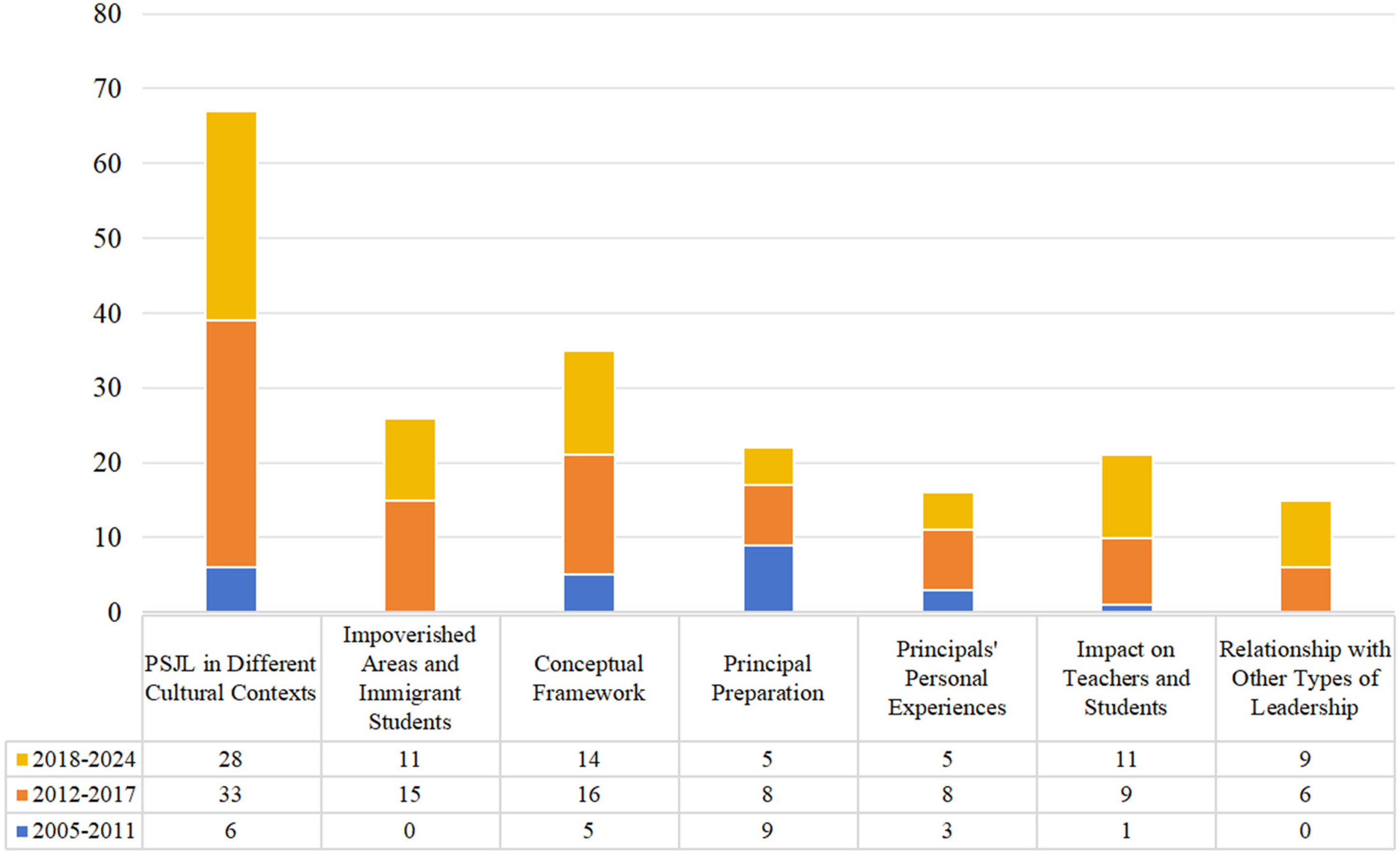
Distribution of research themes in PSJL studies.
PSJL in different cultural contexts
PSJL in different cultural contexts was the most frequently studied theme in this field. Research in this area evolved from exploring the leadership practices of specific social groups to examining leadership across diverse cultural settings and, more recently, conducting cross-national comparative studies.
Influenced by the civil rights movement and feminism, early research (2005–2011) focused on issues of race and gender, particularly the leadership experiences of African American female principals in the United States (Jean-Marie et al., 2009; Murtadha and Watts, 2005; Normore and Jean-Marie, 2008). While these studies shed light on marginalized leadership experiences, they did not fully engage with the variations of PSJL across different cultural contexts. Nevertheless, a few studies explored PSJL in other cultural settings, although these remained limited in number (Bosu et al., 2011; Chen, 2009; Chiu and Walker, 2007; Johansson Fua, 2007; Taysum and Gunter, 2008; Zembylas, 2010).
Amid increasing globalization and migration, PSJL research began to move beyond single cultural settings and into multicultural educational environments, leading to a significant rise in studies during the 2012–2017 period (n = 33), which saw a 450% increase compared to the previous stage. Since 2012, research has expanded to contexts beyond the United States, with articles produced in South Africa (Mafora, 2013a, 2013b), India (Richardson and Sauers, 2014), Israel (Arar, 2015; Arar and Oplatka, 2016), Cyprus (Liasidou and Antoniou, 2015; Zembylas and Iasonos, 2015, 2016), Mexico (Dematthews et al., 2016; Dematthews and Izquierdo, 2016), and Hong Kong (Szeto, 2014). Other articles published in this period compared the influence of cultural, policy, and social structures on leadership practices in different contexts, including cross-comparisons between Costa Rica, Mexico, and Spain (Silva et al., 2017; Slater et al., 2014), Israel and Turkey (Arar et al., 2016), and Costa Rica and the United Kingdom (Slater et al., 2014).
Research published from 2018 to 2024 (n = 28) continued to expand on prior studies across various regions. Notably, this period saw the emergence of large-scale cross-national research. Miller (2019) conducted a study across 16 countries, highlighting common tensions between policy and practice in the pursuit of social justice among school leaders worldwide. This study provided robust empirical evidence and significant theoretical insights for promoting global educational equity and informing policy reform (Miller, 2019).
Despite these advancements, in-depth comparative studies across distinct cultural contexts remain limited. The bulk of existing research has focused on comparisons among neighboring regions or within ethnic or cultural groups in the same national context. Large-scale international comparative studies of PSJL were relatively rare.
Impoverished areas and immigrant students
Amid increasing global migration and deepening social stratification, a growing number of studies examined how principals support marginalized students in the contexts of limited resources and systemic inequity—particularly in impoverished communities and immigrant-dense areas. Principals practicing social justice leadership typically had to navigate the complex relationship between standardized policy demands and the need to address deep-rooted social inequities in marginalized contexts (Dematthews, 2015, 2016; García-Carmona et al., 2021).
This theme only emerged in the 2012–2017 stage, during which it appeared in 15 publications. Most studies during this period examined how school leaders addressed the needs of underserved students amid resource scarcity and structural disadvantage, especially in highly unequal settings, such as on the United States–Mexico border and in South Africa (Dematthews, 2015, 2016; Mafora, 2013a, 2013b; Scanlan, 2013). Key topics included resource redistribution, cultural inclusion, teacher empowerment, and family engagement. Bilingual education was identified as a critical approach for improving language access and cultural identity among immigrant students (Dematthews et al., 2016; Dematthews and Izquierdo, 2016).
Between 2018 and 2024, interest in this area remained steady (n = 11). The geographical scope of PSJL research expanded to countries such as Spain and Turkey, where school leaders responded to complex challenges associated with migration, cultural diversity, and social inequality (Ayanoğlu and Arastaman, 2023; García-Carmona et al., 2021).
Conceptual frameworks
Between 2005 and 2011, PSJL research entered the initial phase of theoretical construction (n = 5), during which scholars began developing systematic conceptual frameworks to better understand the role of school leaders in identifying and addressing educational injustice (Capper et al., 2006; Johansson Fua, 2007; Theoharis, 2007).
From 2012 to 2017, PSJL frameworks became more multidimensional and theoretically integrated (n = 16), with a 220% increase from the previous phase. Scholars proposed more structured and layered models by drawing on perspectives such as ecological systems and practice-oriented leadership (Berkovich, 2014; Bertrand and Rodela, 2018; Furman, 2012). These frameworks enriched the theoretical foundations of PSJL and were increasingly applied in principal preparation and educational leadership practice.
Between 2018 and 2024, PSJL frameworks moved toward operationalization, measurement, and theoretical integration (n = 14). Researchers began developing instruments and scales to assess PSJL practices (Feng and Chen, 2018; Zhang et al., 2018) and embedding social justice principles into mainstream leadership models, including instructional leadership (Shaked, 2023a) and adaptive leadership (Sarid, 2019).
Principal preparation
Research on principal preparation remained relatively stable across all three stages, primarily focusing on the introduction of social justice concepts into principal preparation programs, often in conjunction with the construction of conceptual frameworks (Berkovich, 2014; Capper et al., 2006; Furman, 2012). As scholars increasingly turned their attention to different cultural contexts, this theme expanded to include the implementation of and contextual challenges facing social justice leadership in principal preparation programs across various sociopolitical environments (Guillaume, 2021; Potter and Chitpin, 2020).
Principals’ personal experiences
Against the backdrop of increasing globalization, cultural diversity, and persistent educational inequality, a growing number of researchers turned their attention to how principals’ personal experiences shaped their PSJL. Studies conducted between 2005 and 2024 indicated that principals’ personal backgrounds, educational socialization, critical life events, and professional experiences significantly influenced their values, belief systems, and understandings of educational justice (Jean-Marie, 2008; Mafora, 2013a; Szeto, 2014; Theoharis, 2008).
Impact of PSJL on teachers and students
From 2012 to 2017, the number of studies on the impact of PSJL on teachers and students increased from one to nine. These studies explored the lasting impact of PSJL in contexts of limited resources, high policy pressure, and urban or border-area disadvantage, revealing its critical role in addressing teacher resistance, fostering collaboration, and enhancing professional identity among educators (Dematthews, 2015; Dematthews and Mawhinney, 2014; Woods and Roberts, 2015). Subsequently, a growing number of quantitative studies explored how PSJL influences school members, finding that it enhanced teachers’ organizational citizenship and academic optimism (Bozkurt, 2022; Feng and Chen, 2018). PSJL was also found to impact students’ nonacademic outcomes, such as resilience (Koçak, 2021), school alienation (Canlı and Demirtaş, 2022), and trust in leaders (Akman, 2020).
Relationship with other types of leadership
A new theme has emerged in recent years, namely the integration of PSJL with other leadership models. Scholars have explored how PSJL serves as a value extension of these frameworks (Dematthews and Mawhinney, 2014; Woods and Roberts, 2015; Zembylas and Iasonos, 2016), with increasing interest in how PSJL can address the limitations of these models in practice (Sarid, 2019, 2021; Shaked, 2020; 2023a, 2023b).
However, some scholars have sharply pointed out challenges in integrating PSJL with other leadership approaches. For instance, while instructional leadership emphasizes standardization and efficiency, PSJL prioritizes equity and empowerment, potentially creating conflicts in their core objectives (Shaked, 2020). Additionally, models like distributed leadership struggle to achieve genuine equity if they lack a clear commitment to social justice (Woods and Roberts, 2015). Therefore, the integration of PSJL with other leadership models requires further theoretical clarification and practical reflection.
Methodological trends
Informed by Hallinger et al.'s (2013) study, we analyzed the research methods used in PSJL studies in terms of whether they adopted a quantitative, qualitative, mixed methods, or nonempirical approach. As Figure 3 shows, qualitative research was the predominant approach in this field. In response to the growing complexity of educational issues and the diverse demands of research, research methods gradually evolved from initial theoretical exploration and qualitative studies on PSJL to the increasing adoption of quantitative and mixed-method approaches.
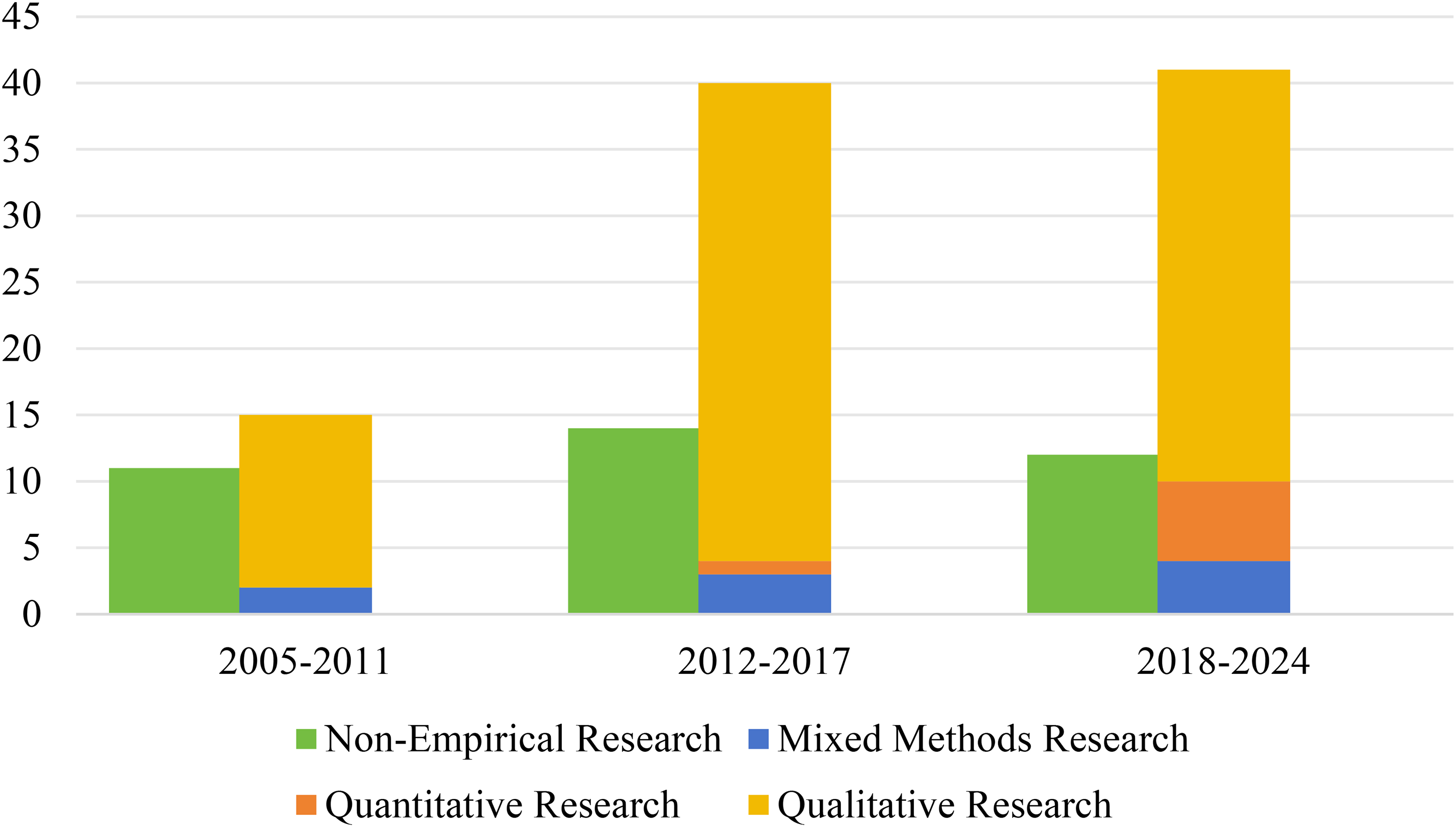
Statistical analysis of research methods.
For the 2005–2011 sample, a total of 26 articles were reviewed, including 11 nonempirical studies and 15 empirical studies. Among the empirical articles, 13 adopted qualitative methods such as in-depth interviews (Theoharis, 2008) and case studies (Theoharis and O’toole, 2011) to explore how principals and other educational leaders identified and addressed inequities in specific contexts. The remaining two articles employed a mixed methods approach (Brown, 2005, 2006).
The 2012–2017 sample comprised a total of 54 articles, comprising 14 nonempirical studies and 40 empirical studies. Of the latter, 36 used qualitative methods. Of the remaining articles, three employed mixed methods (Mistry and Sood, 2015; Shields, 2014; Ward et al., 2016) and one used a quantitative approach (O’malley and Capper, 2015).
Compared to the previous stage, there was a significant increase in the number of empirical articles in the 2012–2017 stage. Notably, one qualitative study used an uncommon data collection strategy, in which two vignettes depicting different biased behaviors were used in interviews, allowing researchers to understand how principals apply their social justice leadership in actual situations (Rivera-McCutchen, 2014). This method involved simulating real-life scenarios to reveal principals’ actual behaviors and decisions regarding social justice leadership, providing stronger predictive evidence based on unique qualitative data. This study represents a methodological innovation in studying PSJL.
The 2018–2024 sample comprised 53 published articles, including 12 nonempirical and 41 empirical studies. Among the empirical articles, the majority (31 articles) used qualitative research methods. Of the remaining articles, four employed mixed methods and six used quantitative research. Although qualitative research remained dominant, there was an increase in quantitative research during this stage. Among the ten studies that employed quantitative or mixed methods, two focused on the development of PSJL measurement instruments. Specifically, Zhang et al. (2018) developed the SJQ2 based on the ISLDN framework, while Feng and Chen (2018) created a culturally grounded scale for Taiwan. These studies represent a significant step in the PSJL measurement.
Geographical diffusion
To provide an overview of the geographical distribution and evolution of PSJL research, Figure 4 visualizes the number of studies conducted across different regions from 2005 to 2024, highlighting the shift from a U.S.-dominated landscape to a more internationally inclusive scope. Note, in Figure 4, the statistics reflect the regions covered by each empirical study; if a study covered multiple regions, each region was counted separately in the corresponding totals.
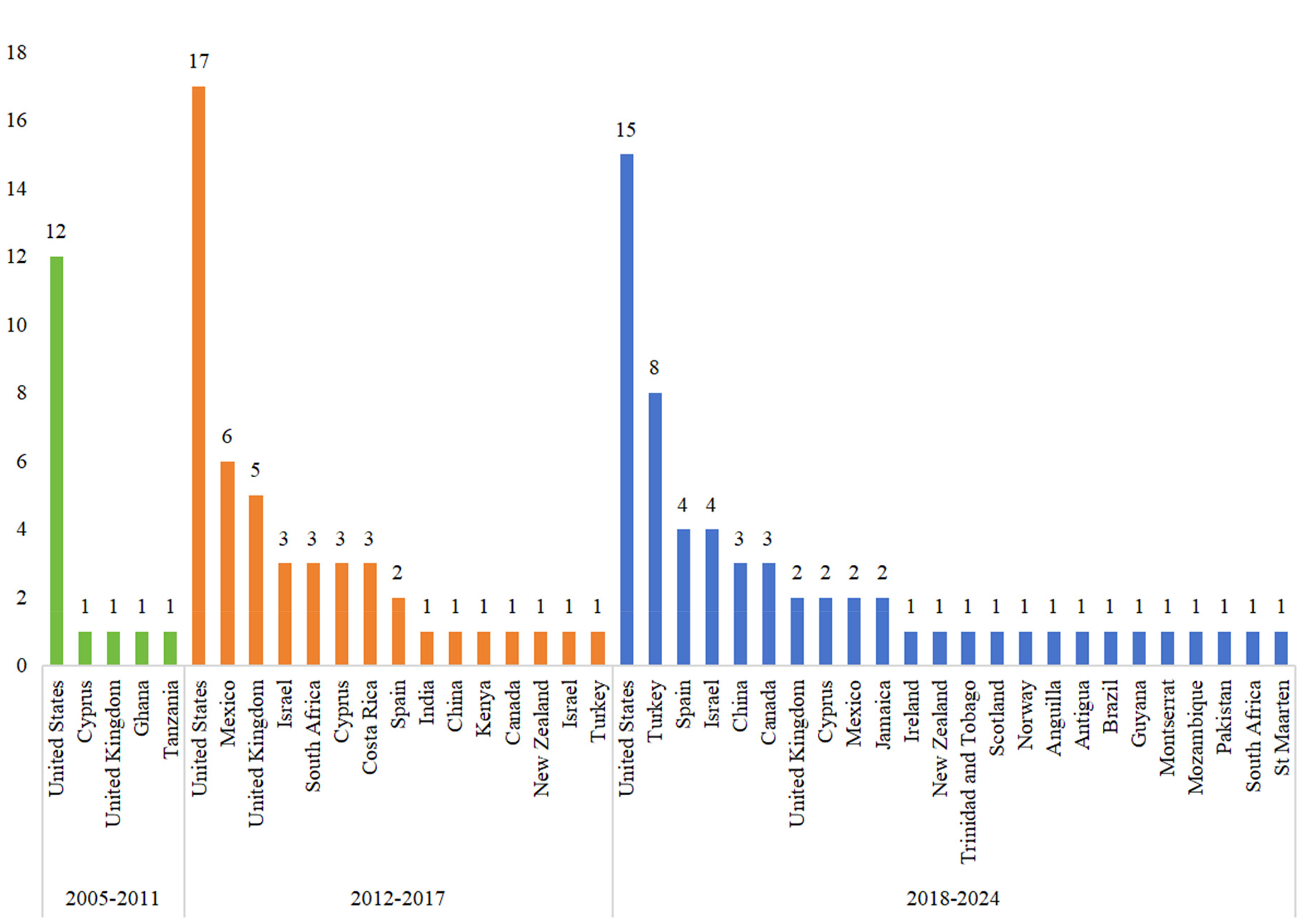
Number of PSJL studies by country and time period.
In the early stage, the geographical focus of PSJL studies was primarily centered on the United States. Among the 15 empirical articles published between 2005 and 2011, 12 were conducted in the United States, accounting for 80% of the sample for this period. Of the remaining three studies, one was conducted in Cyprus, one in the United Kingdom, and one covered Ghana and Tanzania.
Between 2012 and 2017, the geographical scope of PSJL studies expanded significantly. Of the 40 empirical studies during this period, 17 focused on the United States, which, despite remaining the dominant contributor, saw its share decrease from 80% to 43%. There was an increase in research from the United Kingdom (n = 5) and Cyprus (n = 3) compared to previous years.
Notably, many new regions emerged during this period, particularly Mexico, which saw a substantial rise in studies (n = 6). Additionally, studies from Israel (n = 3), South Africa (n = 3), Costa Rica (n = 3), Spain (n = 2), India (n = 1), China (n = 1), Kenya (n = 1), Canada (n = 1), New Zealand (n = 1), and Turkey (n = 1) were published during this period. The number of cross-national comparative studies also increased, including analyses of leadership practices in Costa Rica, Mexico, and Spain, as well as comparisons of cases from Israel and Turkey. This shift reflected growing international engagement with social justice leadership across diverse educational contexts.
International engagement with PSJL continued to increase between 2018 and 2024, with a growing number of studies from regions such as Turkey (n = 8), Spain (n = 4), China (n = 3), and Canada (n = 3). Although the United States led in the total number of studies (n = 15), its share decreased to 37%. A significant development during this period was the emergence of a large-scale multinational study covering 16 countries, including Anguilla, Antigua, Brazil, Guyana, Jamaica, Montserrat, and Mozambique, among others (Miller, 2019). Along with other comparative works, Miller's (2019) study reflected a growing interest in global perspectives on social justice leadership. The shift toward more comprehensive and internationally comparative frameworks marked a significant move away from single-country analyses. This progress notwithstanding, cross-national research represented a relatively small proportion.
The geographic distribution of PSJL studies reflects the contributions of key scholars. In the United States, Brown (2005), Normore and Jean-Marie (2008), and Theoharis (2007) explored issues of equity, race, and leadership practices in American schools (Brown, 2005; Normore and Jean-Marie, 2008; Theoharis, 2007). Dematthews and Izquierdo (2016, 2017) focused on social justice leadership along the United States–Mexico border, particularly immigration policies and bilingual education. Outside the United States, scholars contributed to social justice leadership research in various regions. For example, Szeto (2014) studied social justice leadership in Hong Kong, Zembylas and Iasonos (2016) focused on leadership in Cyprus, Arar (2015) examined Arab school leaders in Israel, and Slater et al. (2017) contributed to cross-national comparative studies on PSJL.
Limitations of existing research
Analysis revealed that PSJL research has undergone evident knowledge development over the past 20 years. However, several limitations remain.
Insufficient cross-cultural research
Studies that conducted cross-comparisons across different cultures mainly focused on multiethnic countries, such as comparisons between Black and White leaders in the United States (Normore and Jean-Marie, 2008) and between Arab and Jewish principals in Israel (Arar, 2015; Arar and Oplatka, 2016). Cross-national comparisons were also conducted in geographically or linguistically similar regions, such as among Costa Rica, Mexico, and Spain (Silva et al., 2017), and between Israel and Turkey (Arar et al., 2016). However, concentration on a single geographic region may affect the generalizability of results. In this respect, the lack of large-scale cross-national comparative studies limits comprehensive understanding of school leadership practices and policy implementation in different countries and cultural contexts (Miller, 2019).
Limited data and research methods
Although we identified the growth of and innovation (Rivera-McCutchen, 2014) in PSJL research, the majority of studies relied on qualitative methods with small sample sizes, leading to a lack of generalizability of the research findings. Additionally, data collection often occurred over a short period, with a lack of in-depth analysis of long-term impacts. Quantitative and qualitative methods used in PSJL studies were in their infancy, requiring larger datasets and more innovative methods.
Limited research instruments
PSJL is a complex and multifaceted practice constructed according to specific contexts and changing needs (Wang, 2018; Zhang et al., 2018). The absence of an agreed concept and framework has resulted in poor generalizability in the development of its scales. The lack of international scales has limited broader cross-national research. Existing tools were generally developed based on local cultures, such as the Turkish PSJLS (Bozkurt, 2017; Özdemir and Kütküt, 2015) and Feng and Chen's (2018) scale for Taiwan. While these scales have proven reliable, their applicability in different cultural contexts remains uncertain. Similarly, although Zhang et al. (2018) developed a scale based on the ISLDN framework, offering potential for international application, its reliability and validity have yet to be confirmed due to a small sample size and limited testing regions. Future research should consider cultural and contextual variations when evaluating the results using widely validated instruments.
Limited integration with other leadership models
While some scholars have explored how PSJL can complement models such as instructional, distributed, or adaptive leadership, this kind of research remains limited in depth and scope. Some have noted theoretical tensions and practical challenges in integration, including conflicting goals between PSJL and instructional leadership (Shaked, 2020, 2023b), or the risk of distributed leadership lacking a justice-oriented focus (Woods and Roberts, 2015). These challenges indicate that the integration of PSJL with other leadership models lacks clarity, coherence, and empirical grounding, limiting its application in real school contexts.
Conclusions and implications
This systematic review analyzed 133 peer-reviewed articles published between 2005 and 2024 to examine the evolution of PSJL research. Guided by three research questions, this review provides a comprehensive understanding of how the field has developed conceptually, thematically, methodologically, and geographically over the past two decades. Findings can be summated as follows.
First, the conceptualization of PSJL remains context-dependent and multifaceted, with no universally agreed-upon definition (Guillaume et al., 2019; Kondakci et al., 2021). While early studies framed PSJL through the lenses of race, class, and gender (Theoharis, 2007), recent frameworks have increasingly incorporated ecological, praxis-oriented, and adaptive perspectives, reflecting theoretical diversification over time (Berkovich, 2014; Furman, 2012; Sarid, 2021).
Second, thematically, the field primarily focused on PSJL in different cultural contexts, impoverished and immigrant regions, principal preparation, and conceptual frameworks. Recent years have witnessed increased attention to the impact of PSJL on teachers and students (Akman, 2020; Bozkurt, 2022; Canlı and Demirtaş, 2022; Feng and Chen, 2018; Koçak, 2021), as well as efforts to integrate PSJL with other leadership models, such as instructional leadership (Shaked, 2023a, 2023b). Methodologically, although qualitative approaches dominated PSJL research, an increasing number of studies adopted quantitative and mixed methods, including the use of culturally specific scales (Feng and Chen, 2018; Zhang et al., 2018). Geographically, research gradually expanded beyond the United States to include diverse national and regional contexts, although large-scale cross-national comparisons remain limited (Gümüş et al., 2021; Karakose et al., 2023; Torrance et al., 2020).
Third, this review identified several persistent limitations in PSJL literature. A key limitation is the lack of unified, cross-culturally validated measurement instruments, limiting the use of quantitative methods and hindering large-scale cross-national comparisons. Additionally, while efforts have been made to link PSJL with other leadership models, empirical studies on their practical integration and tensions remain scarce.
This review yielded several important implications for both policy and research in the field of educational leadership. Policy-wise, school leaders—particularly those working in high-need or diverse communities—often struggle to fulfill policy mandates while addressing deep-rooted social inequities (Ayanoğlu and Arastaman, 2023; Dematthews, 2015, 2016; Dematthews and Izquierdo, 2016; García-Carmona et al., 2021; Koçak, 2021; Kondakci et al., 2021). To support justice-oriented leadership, policy frameworks must consider greater flexibility, resources, and development opportunities. National leadership standards and evaluation systems should explicitly incorporate social justice indicators, ensuring that equity is embedded in school accountability and reform initiatives.
Finally, in respect to future research, given the growing body of evidence demonstrating that PSJL positively impacts both teachers and students (Bozkurt, 2022; Feng and Chen, 2018; Koçak, 2021; Küçükakın and Gökmenoğlu, 2023), it is essential to mainstream social justice leadership, not as a peripheral topic, but as a core leadership competency. Rather than functioning as a parallel model, PSJL should serve as a guiding framework that informs principal preparation programs and is integrated with other leadership approaches, ensuring that equity remains central to educational practice.
Footnotes

Funding
The authors disclosed receipt of the following financial support for the research, authorship, and/or publication of this article: China MOE Project of Key Research Institute of Humanities and Social Sciences (Grant No. 22JJD880024).
Declaration of conflicting interests
The authors declared no potential conflicts of interest with respect to the research, authorship, and/or publication of this article.