




Abstract
Learning and teaching (L&T) effectiveness is crucial for university success. The literature indicates that Department Chairs often struggle to improve L&T quality within their units due to the under-resourcing and undervaluing of their leadership roles. In this article, through document analysis and semi-structured interviews with Department Chairs, 1 and through an L&T leadership lens, we explore their experiences in faculty support and development for L&T. Analysis identified 26 components that constitute the L&T leadership of Department Chairs, including what competencies they possess, how they implement leadership, and what challenges they encounter. Department Chairs recognised that shared governance and collegial relationships are of particular importance to their sustainable leadership in L&T. By examining the factors that enable or inhibit the L&T leadership role of Department Chairs, this article highlights the need for enhanced institutional support to develop their role.
Introduction
In higher education, middle leadership serves as a pivotal nexus between institutional decision-making and the day-to-day operations of departments (Bush, 2022; Franken et al., 2015; Ghamrawi et al., 2024a). Academic middle leaders, such as Associate Deans, Heads of School, and Programme Leaders, are key actors who ‘translate institutional visions into actionable plans while managing the dynamics of their academic units’ (Ghamrawi et al., 2024b: 1). Department Chairs, the focus of this article, are likewise widely recognised as influential middle leaders in universities (Branson et al., 2016; Ghamrawi et al., 2024b; Lizier, 2024; Maddock, 2023). To clarify this role, this article adopts the definition proposed by Aziz et al. (2005), whereby Department Chairs are academic staff formally appointed by Faculty Deans to lead departmental activities, while balancing this responsibility with their own teaching and research duties. Common conceptualisations of middle leading in higher education follow two distinct perspectives. The structural perspective defines middle leaders by their intermediary leadership positions within institutional hierarchies – ‘being subordinate to more senior leaders while also being a leader themselves to those they are required to lead’ (Lizier, 2024: 242). This lens explicitly articulates ‘how the Faculty is to function’ (Branson et al., 2016: 129). In contrast, the practice-based perspective highlights relational aspects and processes through which middle leaders negotiate with others (Lizier, 2024; Maddock, 2023). Adopting a hybrid perspective, this article foregrounds university Department Chairs as middle leaders who hold formal leadership positions while also leading L&T through relational practices such as support, guidance, and collaboration.
There have been, and still are, challenges faced by Department Chairs in leading L&T across Anglosphere higher education systems. These challenges have been consistently identified in studies from Canada (Armstrong and Woloshyn, 2017), New Zealand (Thornton et al., 2018), Australia (Lizier, 2024; Maddock, 2023; Marshall et al., 2011), and the United Kingdom (Hulme et al., 2023). Operating with limited institutional power and authority, Department Chairs are still expected to ‘work up, down and across structures and networks’ (Hulme et al., 2023: 1377), balancing institutional L&T strategies with the L&T needs of faculty and students (Armstrong and Woloshyn, 2017; Lizier, 2024; Thornton et al., 2018). Yet, the lack of formal leadership training leaves them ill-prepared to meet these expectations (Hulme et al., 2023; Maddock, 2023; Thornton et al., 2018). In research-intensive universities (e.g. the United Kingdom, Canada), where Department Chair sojourn is ‘a phase and not a future’ (Hulme et al., 2023: 1376) and where incentives to improve L&T are minimal (Marshall et al., 2011), Department Chairs are often discouraged from engaging in long-term academic planning and programme development. This situation is further exacerbated by cultural resistance, as their leading efforts may ‘be in conflict with notions of collegiality, academic freedom, and scholarship’ (Thornton et al., 2018: 210). In response to common global challenges, this study examines how Department Chairs lead L&T at a Canadian university, offering insights into strategies for supporting pedagogical practices applicable to the higher education sector internationally.
An emerging body of higher education research has attempted to understand the role of Department Chairs in leading L&T, both in Canada (Hoekstra and Newton, 2017) and internationally (Hulme et al., 2023; Lizier et al., 2024; Maddock, 2023; McClellan et al., 2023). For instance, a Canadian study by Hoekstra and Newton (2017) developed a model of leadership for learning (LFL) aimed at enhancing the leadership capacity of Department Chairs. Drawing on prior research including that of Hallinger (2011), this model identifies three key functions of Department Chairs: establishing shared goals and visions; supporting faculty learning; and overseeing educational programmes. Lizier (2024) and Maddock (2023), both based in Australian universities, underscored Department Chairs’ frontline role in promoting faculty profiles, calculating workloads, and fostering a collegial organisational climate. The extent to which these practices are valued and supported varies according to institutional priorities and disciplinary hierarchies. McClellan et al. (2023) highlighted the pivotal role of Department Chairs in undergraduate curriculum changes in the United States, primarily through adjustments to course sequencing and the introduction of new courses or tracks. However, value-driven changes, particularly those related to equity, diversity, and sustainability were notably scarce, echoing observations by Hulme et al. (2023) in the U.K. context. All these studies as well as others (e.g. Irving, 2015; Marshall et al., 2011) found that Department Chairs play a vital role in bringing about change in the enhancement of teaching quality and learning outcomes in higher education institutions and called on policymakers and senior administrators worldwide to provide targeted support to strengthen the L&T leadership of Department Chairs.
Despite growing recognition, L&T leadership by Department Chairs remains poorly understood and relatively underexplored. Existing research on middle leadership of university L&T has predominantly focused on Associate Deans who oversee cross-departmental initiatives (Mason and de La Harpe, 2020) and Programme Leaders who facilitate both vertical (e.g. institutional policies) and horizontal (e.g. peer collaborations) flows in programme development (Haugen et al., 2024). In contrast, the literature on Department Chairs is limited, fragmented, and under-theorised, offering descriptive accounts of their responsibilities, challenges, and tensions instead of in-depth analyses of how they enact L&T leadership in everyday practice. This gap is problematic, given that Department Chairs play a critical role in ‘enabling efficacious university L&T and facilitating beneficial educational change’ (Maddock, 2023: 1–2). To gain a more nuanced understanding of the intersection of Department Chairs and L&T leadership, this article presents a case study informed by a leadership of L&T model developed by Quinlan (2014). This article aims to investigate the experiences of Department Chairs in leading L&T at a Canadian research-intensive university, looking specifically at their strategies and techniques in faculty development and support for L&T.
By examining how Department Chairs lead L&T, this study seeks to provide deep insights into the complexities surrounding their L&T leadership work within the university context. In doing so, it aspires to inform both broader academic middle leadership discourse and institutional practices, offering evidence-informed guidance for future policy development and implementation globally. A focus on L&T is crucial for drawing institutional attention to the creation of environments that prioritise high-quality teaching and student-centred learning. Enhancing L&T effectiveness in higher education can support faculty professional growth, ensure student engagement, outcomes, and employability, and contribute more broadly to educational policy agendas. This study strengthens educational leadership approaches, helping to build more responsive and resilient higher education systems that align with the international priority of Sustainable Development Goal 4 which seeks to ensure inclusive, equitable, and quality education.
Literature review
To provide guidance and context to this study, this section offers a brief review of the literature. Specifically, it examines literature on the role of Department Chairs in Canadian university governance, L&T in Canadian higher education, leadership of L&T, and assumptions about Department Chair leadership. The lack of a clear intersection across these areas necessitates exploration into how Department Chairs lead L&T within a Canadian university.
The role of department chairs in Canadian university governance
Department Chairs in Canadian universities are typically drawn from faculty in their respective departments (Armstrong and Woloshyn, 2017). They are most often in-scope of the same faculty collective agreements as other faculty members, which constrains their authority to the roles outlined in these agreements and by potential conflicts of interest with their peers. As a result, the authority to supervise the work of their faculty peers can usually be considered as supportive or facilitative rather than directive (Maddock, 2023). Canadian universities commonly operate under bicameral (Board for financial oversight, Senate for connecting to the public) or tricameral (adding a Council for academic oversight) governance structures, where academic decision-making authority predominantly resides with faculty members. This structural configuration limits Department Chairs’ autonomy in human resource functions, such as hiring, discipline, and salaries (Armstrong and Woloshyn, 2017). Within this governance context, Department Chairs’ roles in supporting L&T practices are generally confined to the assignment of teaching duties and guidance for faculty members meeting standards for tenure and promotion in the area of teaching (Lebovitz et al., 2023). Given these structural constraints, Department Chairs in Canada have relatively limited responsibility and autonomy in leading L&T in comparison with their counterparts in comparable countries, such as New Zealand (Thornton et al., 2018).
L&T in Canadian higher education
Whether driven by New Public Management (Lizier et al., 2024), neo-liberalising reforms (Hulme et al., 2023), or both, the L&T landscape of Canadian universities has undergone far-reaching changes over the past decade. Among the most notable changes is an increased emphasis on accountability within L&T governance and policy frameworks. This emphasis is reflected in federal agencies’ efforts to articulate shared visions for the enhancement of L&T. For example, a 2016 report by the Social Sciences and Humanities Research Council (SSHRC), which outlines priorities for twenty-first-century L&T, called upon Canadian universities to embed innovation, inquiry-based learning, and new technologies into L&T initiatives (SSHRC, 2016). Yet, these recommendations often lack concrete implementation mechanisms, defined timelines, or evaluation measures, rendering them aspirational rather than actionable. Moreover, changes in Canadian higher education policy have elevated expectations for Department Chairs to take on broader responsibilities, including leading L&T. The policy's growing emphasis on equity, diversity, and inclusion (EDI) has further positioned Department Chairs as key figures in fostering inclusive pedagogy practices. By 2019, 23% of Canadian universities had developed EDI action plans, many of which explicitly assigned Department Chairs the responsibility for delivering EDI training to instructors and graduate supervisors (Universities Canada, 2019). Still, support and resources for Department Chairs to establish inclusive L&T environments are often inadequate. These developments expose a persistent policy-practice disconnect in the implementation of L&T reforms.
The typology of universities in Canada falls into three categories: (1) research-intensive universities, which prioritise research output and graduate education; (2) comprehensive universities, which offer a broad-based education while also supporting research and innovation; and (3) primarily undergraduate universities, which focus on teaching and offer limited graduate-level programmes (Campbell, 2025). This institutional diversity presents distinct challenges for Department Chairs in leading L&T change. In research-intensive institutions, where academic prestige is predominantly measured by research metrics, Department Chairs often lack the time, resources, and recognition to implement meaningful L&T activities. Conversely, teaching-oriented institutions demonstrate a more explicit commitment to instructional effectiveness; however, insufficient staffing and limited funding make it challenging for Department Chairs to sustain L&T enhancements.
Despite varying institutional priorities, Department Chairs across Canadian universities face common challenges that shape the broader landscape of L&T leadership. One such challenge is addressing the increasing cultural and linguistic diversity, as universities are expected to embrace internationalisation and Indigenisation driven by global migration patterns and national commitments to reconciliation (Tamtik and Balasubramaniam, 2024). This requires Department Chairs to develop inclusive curricula and culturally responsive pedagogies that effectively engage underrepresented students. Secondly, shrinking government grants have intensified universities’ reliance on student enrolment as a primary source of income. This reliance is threatened by the Canadian federal government’s 2024 cap on study permits, which was expected to reduce international student intake by 35% compared to 2023 (Tamtik and Balasubramaniam, 2024). The amalgamation of fiscal constraints and declining enrolment has heightened the imperative for universities to prioritise teaching quality alongside disciplinary expertise to attract and retain students. This places further pressure on Department Chairs to support pedagogical development and faculty capacity building (Hulme et al., 2023), despite their limited access to institutional resources for professional learning. Finally, the surge in demand for online learning has prompted Canadian universities to strategically develop distance education programmes whilst upholding academic rigour (Regehr, 2013). Unless Department Chairs can secure sufficient internal or external funding, their capacity to lead and implement these L&T reforms remains significantly constrained.
Leadership of L&T
Leadership of L&T is an emerging area of inquiry within higher education that remains conceptually underdeveloped and is often conflated with other forms of educational leadership (Marshall et al., 2011). The concept of LFL has gained definitional clarity within K-12 settings, where it refers to ‘approaches that school leaders employ to achieve important school outcomes, with a particular focus on student learning’ (Hallinger, 2011: 125). In contrast, its higher education counterpart lacks a unified definition. Terms such as ‘L&T leadership’, ‘leadership for L&T’, and ‘leadership of teaching for student learning’ are frequently used interchangeably in the literature, reflecting the concept’s blurred boundaries (Frisk et al., 2023; Quinlan, 2014).
The conceptual boundaries between administration, management, and leadership vary considerably across international contexts. In particular, the term administration denotes routine bureaucratic tasks in the United Kingdom and parts of Europe, whereas in America it serves as an ‘overarching term embracing both leadership and management and relates to the most prestigious level’ (Kapambwe and Sohawon, 2021: 154). The distinction between management and leadership is a subject of ongoing debate in higher education. Marshall et al. (2011) distinguished the two terms to better examine and understand academic leadership roles in L&T within Australian universities. Management involves overseeing institutional resources through operational tasks such as budgeting and workload allocation, while leadership focuses on articulating a vision for L&T that inspires stakeholders to commit to meaningful organisational change. In other contexts, however, the rhetorical divide between these terms has taken on less importance, and in Canadian universities, there appears to be little distinction between leadership and management activities. As Riveros et al. (2016) have argued: Despite the widespread distinction between leadership and management in … policy documents, it is not clear how they could be separated in any study of the actual practices of … leaders or if such separation offers useful insights about the ways in which … leaders exercise their agency … The importance of, and moral and ethical consequences inherent in, questions about budget, resources, staffing decisions, collective agreements, timetables and so on ought to be treated as more than diversions from leadership. (p. 156)
Accordingly, we adopt Riveros et al.'s (2016) conceptualisation of leadership as a practice that is fundamentally embedded in administrative and managerial responsibilities, rather than a role isolated from them.
Contemporary scholarship increasingly conceptualises educational leadership through an integrated lens that combines distributed, instructional, servant, shared, and transformational approaches (Maddock, 2023; Quinlan, 2014). In line with this perspective, Quinlan (2014) proposed a model of leadership of L&T in higher education. It consists of three core dimensions: (1) knowledge of L&T – understanding pedagogical strategies, curriculum design, and learning principles that enhance student learning; (2) transformative leadership – the processes by which leaders build authentic and relational connections with other members of the community to sustain meaningful practices; and (3) organisational development – creating supportive environments for L&T and fostering a sense of campus community. Quinlan (2014: 33) suggests that universities can benefit from this model to ‘support integrative holistic student learning and development’.
Despite its conceptual strengths, to date, as far as we are aware, no study has applied this model to examine how Department Chairs lead L&T. Previous research has often employed singular leadership approaches to examine middle leadership roles, such as distributed (Lizier, 2024) and destructive (Ghamrawi et al., 2024a) leadership. However, a one-size-fits-all approach may not effectively capture the multifaceted responsibilities and challenges faced by Department Chairs in leading L&T. Employing Quinlan's (2014) framework, this study explores L&T leadership by Department Chairs at a Canadian research-intensive university, while remaining open to additional context-specific dimensions. As such, this article aims to answer the following questions:
What backgrounds and experiences do university Department Chairs have that inform their practices in support of L&T? How do university Department Chairs develop and support faculty members for departmental L&T? What challenges do university Department Chairs face in the process of leading L&T?
Assumptions
This study is grounded in several assumptions about Department Chair leadership, which influence our approach to data analysis and interpretation. First, Department Chairs are viewed as L&T leaders who seek to enhance faculty instructional effectiveness, thus, facilitating student learning improvement (McClellan et al., 2023). Second, the leadership of Department Chairs in faculty development and support differs from that of school principals/headteachers who have direct responsibilities for teacher performance and working conditions (Crawford and Earley, 2011; Marshall et al., 2011). Third, the power held by Department Chairs is limited, but despite this, it does serve as an essential mechanism in their L&T leading (Maddock, 2023). Finally, the leadership practices of Department Chairs in L&T are guided by institutional policies (Hulme et al., 2023).
Method
This qualitative study employed an exploratory case study methodology to examine the experiences of a sample of Department Chairs leading L&T at a Canadian research-intensive university. The case study design was deemed to be appropriate for this study as it facilitates an in-depth exploration of ‘a contemporary phenomenon within real-world bounded contexts’ (Yin, 2018: 10). The case boundary for this study was defined as the entire university community across multiple disciplines, with a focus on the roles for Department Chairs defined in policy, the collective agreement, and position profiles.
Recruitment and participants
The study used a purposive sampling technique to recruit current Department Chairs in departmentalised colleges, excluding those on sabbatical or administrative leave during the interview period. Programme directors and curriculum coordinators who had similar roles in terms of execution and intent were also excluded because their additional responsibilities were not germane to the research objectives of this study. A total of 62 Department Chairs who met these criteria were invited via email to participate in this study. The recruitment process varied across colleges, with Department Chairs in the College of Education being selected through established networks and those in other colleges recruited through outreach facilitated by the Dean's Office over a period of three months. Recruitment letters were sent to the Deans who were requested to forward the invitation to eligible participants or, in some cases, sent directly to the Department Chairs. Interested individuals were instructed to contact the research team.
Of all the invited Department Chairs, eight (12.9% response rate) consented to participate. A range of factors, either structural or perceptual, resulted in this low response rate. While several Department Chairs expressed interest, many cited heavy workloads as a significant barrier to participation. Further, some perceived their role as primarily administrative- or research-focused and therefore felt ill-positioned to comment on L&T, while others were newly appointed due to the high turnover of this leadership position and thus, lacked the experience or confidence to contribute meaningfully to L&T leadership discourses. Despite the modest sample size, participants were drawn from a wide disciplinary spectrum spanning both the social and natural sciences, including Educational Foundations, Educational Psychology & Special Education, Linguistics, Sociology, Psychology, Music, Agriculture, and Soil Science. This strategic diversity enabled us to gain insights into how L&T leadership unfolds across departments with varying sizes, histories, cultures, and financial standings, thereby enhancing the transferability of our findings.
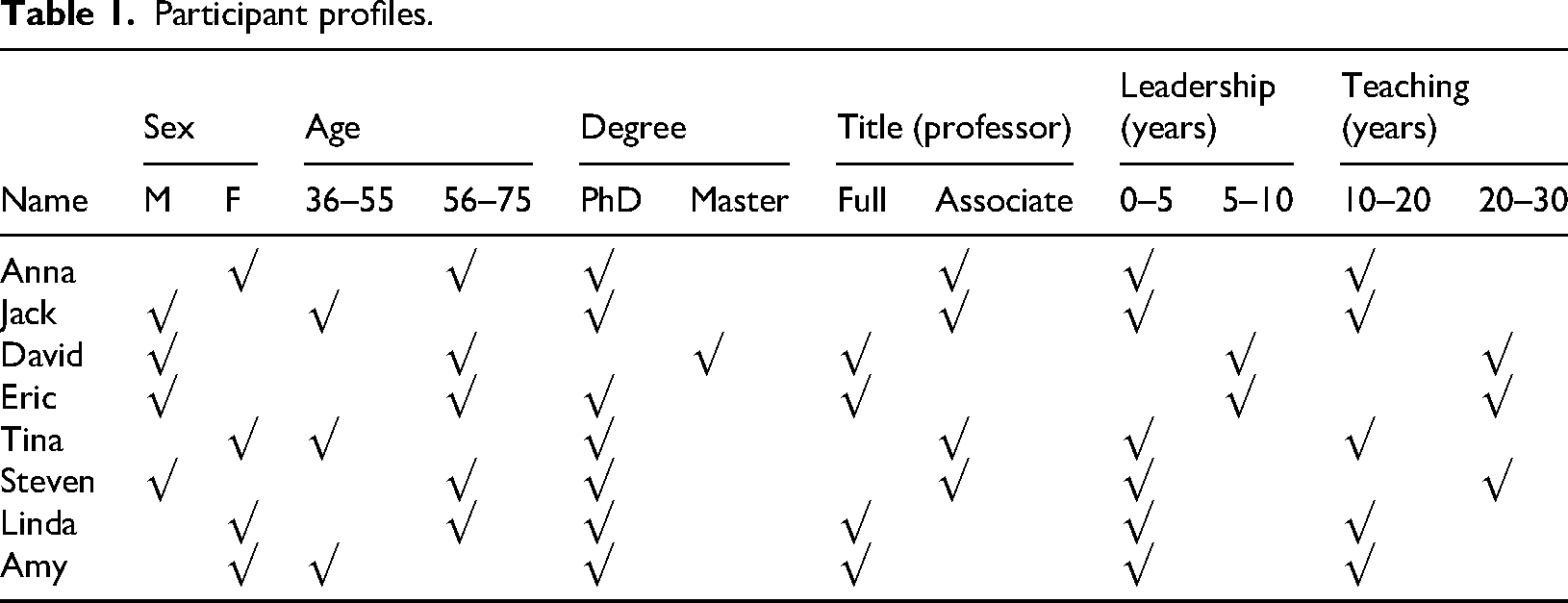
Table 1 shows that participants had a wide range of expertise. The majority of Department Chairs (87.5%) who participated were senior faculty members with 1–9 years of leadership experience in universities. Additionally, 25% of participants had served as the Department Chair for a second term, whereas 37.5% had previously held roles such as the Vice-Dean or Committee Chair.
Participant profiles.
Data collection
The study was conducted in two stages. In the first stage, we conducted document analysis to examine university governance policies. Document selection criteria included: (1) relevance to the role of Department Chairs in leading L&T; (2) issuance by academic units, governing bodies, or university administrative offices; and (3) exclusion of duplicate documents. We selected and analysed publicly available institutional policy documents, including Job Profiles of Department Chairs, University Guidelines for Learning, Course Policies, Faculty Collective Agreements, and Student Learning Experience Evaluation Surveys. Additionally, departmental vision statements and standards for faculty promotion and tenure were reviewed through official departmental webpages.
On completion of document analysis, we conducted semi-structured interviews with Department Chairs in early 2024. One-to-one interviews were conducted via Zoom during university office hours. The interviews ranged in length from 52 to 69 min, producing approximately eight hours of audio recordings which were transcribed verbatim for analysis. The interview protocol comprised questions concerning: (1) the interviewees’ experiences in L&T; (2) leadership philosophy and strategies for enhancing L&T within their departments; and (3) challenges in fostering a positive L&T culture at the departmental level.
Data analysis
This study used a hybrid approach that combines inductive and deductive thematic analysis (Nowell et al., 2017), supported by NVIVO software. Codes and themes developed inductively from the document analysis were used to inform the interview stage. To gain familiarity with the data, we read and re-read the interview transcripts, highlighting content relevant to the L&T leadership of Department Chairs. Each researcher then independently assigned ‘leaf’ codes to relevant data segments. After comparing our initial coding results, we collaboratively consolidated the ‘leaf’ codes into broader ‘branch’ codes that captured key concepts. The coding was then iteratively refined by reviewing coded extracts, adding new codes, and eliminating overlaps. Once all transcripts had been coded with both ‘leaf’ and ‘branch’ codes, we grouped the ‘branch’ codes into overarching themes. Finally, illustrative quotes were selected from the transcripts to exemplify the identified themes, which were part of the first author's thesis study (Zan, 2024).
To assess sample saturation, we employed multiple strategies proposed by Hennink and Kaiser (2022). Using the code frequency count approach, we observed that the emergence of new codes declined dramatically after the seventh interview. Moreover, the absence of new themes in the final two interviews satisfied the stopping criterion model. Further evidence of saturation was demonstrated by the richness and repetition of patterns within higher-order thematic groupings. These indicators suggest that eight interviews provided the sufficient depth and breadth of data to meaningfully address the research questions, which aligns with the recommendation by Ahmed (2025) that 4–10 participants are generally adequate for in-depth analysis in a single case study.
Findings
The 26 key emergent codes of L&T leadership by Department Chairs are presented in Table 2. These codes are categorised into three domains: ‘competencies for leading L&T’ (6), ‘practices of leading L&T’ (16), and ‘challenges in leading L&T’ (4). This section delves deeper into these domains through an analysis of Department Chairs’ experiences in leading L&T.
Emergent codes of L&T leadership by Department Chairs.
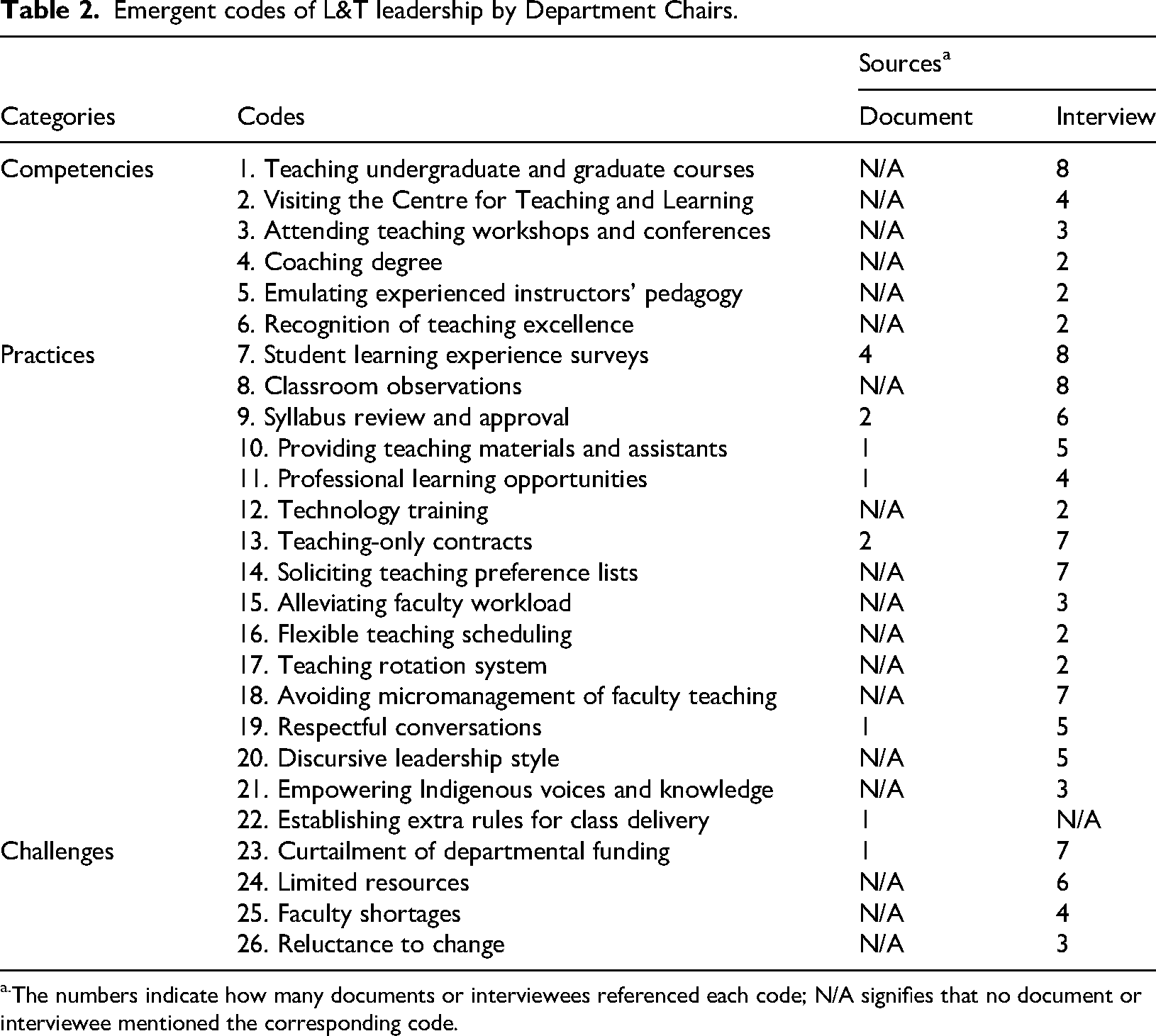
The numbers indicate how many documents or interviewees referenced each code; N/A signifies that no document or interviewee mentioned the corresponding code.
Competencies
To address the research question concerning what backgrounds and experiences Department Chairs have that inform their leadership in support of L&T, this first category highlights pedagogical training, prior teaching experience, and professional development. Two subcategories were prioritised for analysis: (1) the credibility gaps Department Chairs faced for leading L&T, and (2) the ways in which Department Chairs developed teaching competencies that underpinned their L&T leadership practices.
Department Chairs’ credibility gaps for leading L&T
Most Department Chairs (n = 7) reported lacking teacher education backgrounds, and all participants (n = 8) indicated that they had not received any formal institutional training in pedagogy after assuming faculty roles, leaving them feeling ill-prepared to fulfil teaching responsibilities. As one Department Chair lamented: I received no training, which is incidentally something I find problematic. The first time I served on a promotion committee, I realised others used rubrics to assess student work. I just thought, why nobody had ever told me that? (Amy)
This sentiment was widely shared. As Linda noted, ‘Most of my colleagues are in the same boat’, pointing to a systemic lack of pedagogical preparation among faculty members. One Department Chair attributed this gap to entrenched institutional hiring practices: PhD graduates are still hired into faculty positions predominantly based on their research credentials, with almost zero attention paid to teaching. (Eric)
This structural disregard for teaching competencies left Department Chairs feeling ill-equipped and lacking confidence to lead L&T initiatives. Their insufficient pedagogical grounding frequently resulted in scepticism from faculty peers regarding their efforts to lead L&T reforms, ultimately weakening their perceived credibility as L&T leaders.
Department Chairs’ experiences of developing teaching competencies
Faced with minimal formal preparation, Department Chairs built their teaching competencies and the credibility needed to lead L&T through three primary avenues: experiential learning in teaching, use of institutional resources, and self-initiated strategies tailored to their own developmental needs.
I learned by doing. I worked hard to prepare accurate lectures and deliver them clearly. I didn’t do either well at first but got better over time. (Eric)
This account highlights that teaching was learned ‘on the job’ through trial and error over years of practice rather than following a structured pathway. Such lived experiences, often undervalued in academic reward systems, became the primary foundation for their leadership in teaching.
Pedagogical and curricular experts are still learning how to effectively communicate with faculty members who … don’t appreciate being advised that they should change practices. (Eric)
Practices
In response to the second research question regarding how Department Chairs develop and support faculty members for departmental L&T, the category of practices presents the strategies and actions they implemented within their academic units, with three subcategories standing out (Figure 1). Operating at the meso-level, their approaches were pragmatic and context-sensitive, shaped by institutional demands and everyday departmental dynamics.
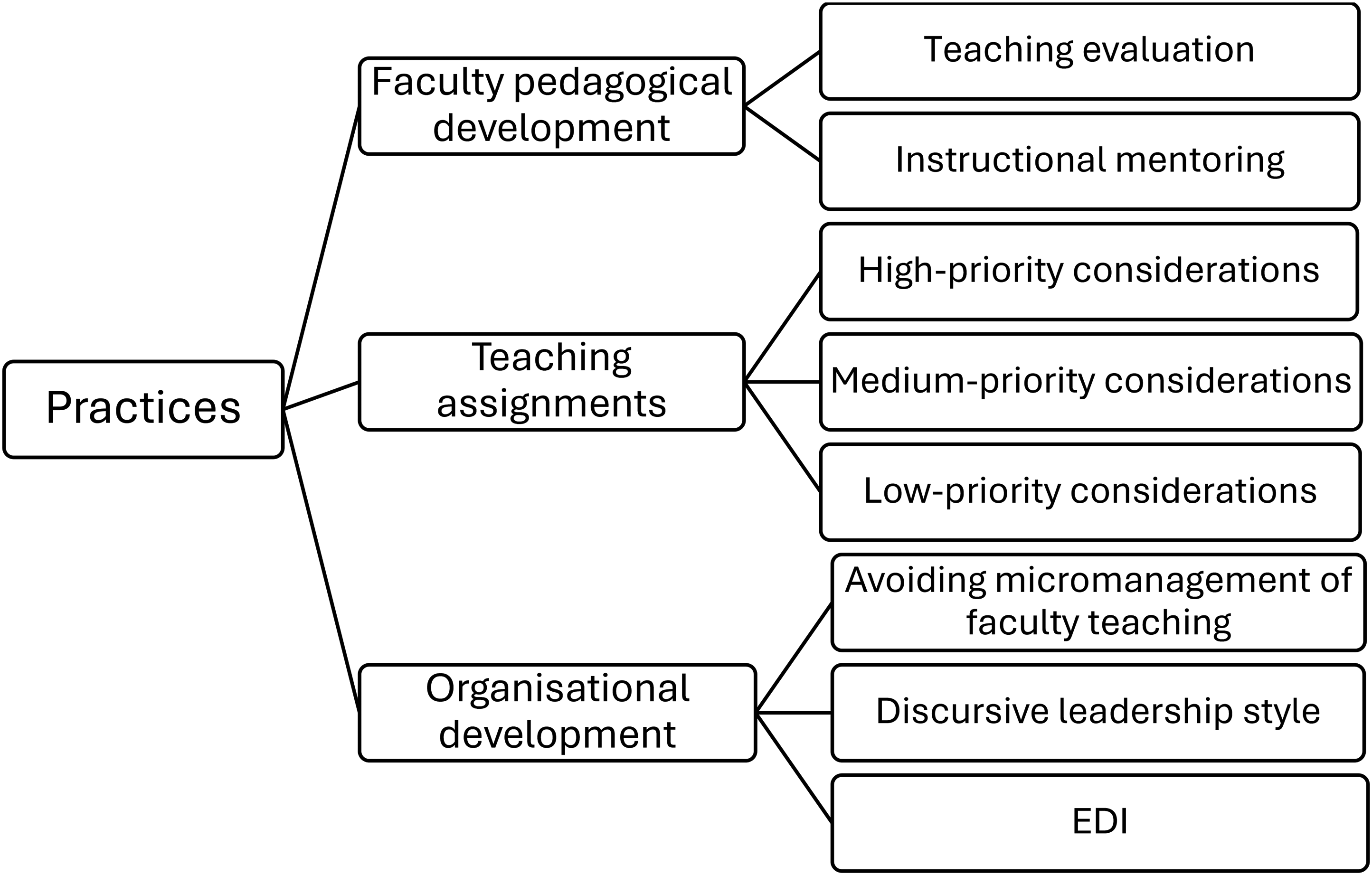
Practices of Department Chairs for departmental learning and teaching.
Supporting faculty pedagogical development
Supporting faculty pedagogical development emerged as a prominent finding in the empirical analysis, with teaching evaluations and instructional mentoring identified as its core components. These activities were underpinned by values of collaboration, reciprocity, and shared learning, which Department Chairs frequently emphasised during interviews.
To mitigate this limitation, all participants (n = 8) complemented classroom observations with student learning experience surveys that were valued for providing a broader overview of faculty teaching performance throughout the semester. Nevertheless, some participants (n = 4) pointed out that student feedback was sometimes clouded by stereotypes and societal prejudices. One Department Chair emphasised that approaching such feedback critically was essential for avoiding unfair judgments of faculty teaching quality. We take student feedback not with a grain of salt, but we look at the whole pattern of it, especially in the case of people of colour and other marginalised groups. (Amy)
Times are changing. We have to re-educate ourselves, acquiring new skills, new knowledge … what a graduate of our program should know and should be able to do. (Eric)
In addition to proactive mentoring efforts, many Department Chairs (n = 5) also engaged in responsive guidance when teaching issues were identified through teaching evaluations. They worked collaboratively with faculty members to diagnose the underlying causes of problems and suggested concrete improvements. One Department Chair described it as follows: ‘I would offer them advice on how they might go about rectifying that and whether it's the assistance we can provide at the department level’ (Linda).
However, the heavy research workload of Department Chairs constrained their capacity to offer formal mentoring consistently. As a result, much of the guidance and support for faculty members occurred informally through peer collaboration. New faculty members were typically paired with experienced colleagues within their discipline, enabling them to adapt more quickly to teaching responsibilities through a shared repertoire of teaching strategies and tacit knowledge. As one Department Chair reflected, I do provide some mentorship, but I believe in flat administrative structures where colleagues … The CTL can also provide such support … Department Chairs are not uniquely positioned to offer guidance on faculty teaching. (David)
This perspective underscored a shift away from hierarchical models of instructional development toward a collegial approach. Peer-based mentoring not only reflected a decentralised model of expertise-sharing but was also seen as a practical response to the time constraints inherent in the Department Chair role. Rather than positioning themselves as sole pedagogical authorities, Department Chairs facilitated environments where teaching knowledge circulated horizontally among faculty members, making teaching development support more feasible and sustainable.
Allocating teaching assignments
Allocating teaching assignments was widely seen by Department Chairs as a routine yet influential task. While the approaches adopted varied across departments, most participants (n = 7) reported the difficulty in balancing employment contracts, faculty expertise, and course demands. To better present the patterns illustrated in Table 3, participants’ responses are organised into high- (equality and equity), medium- (knowledge and expertise; preferences and interests), and low-priority (programmatic requirements; timetable; workload) considerations.
Factors that participants considered for allocating teaching assignments.
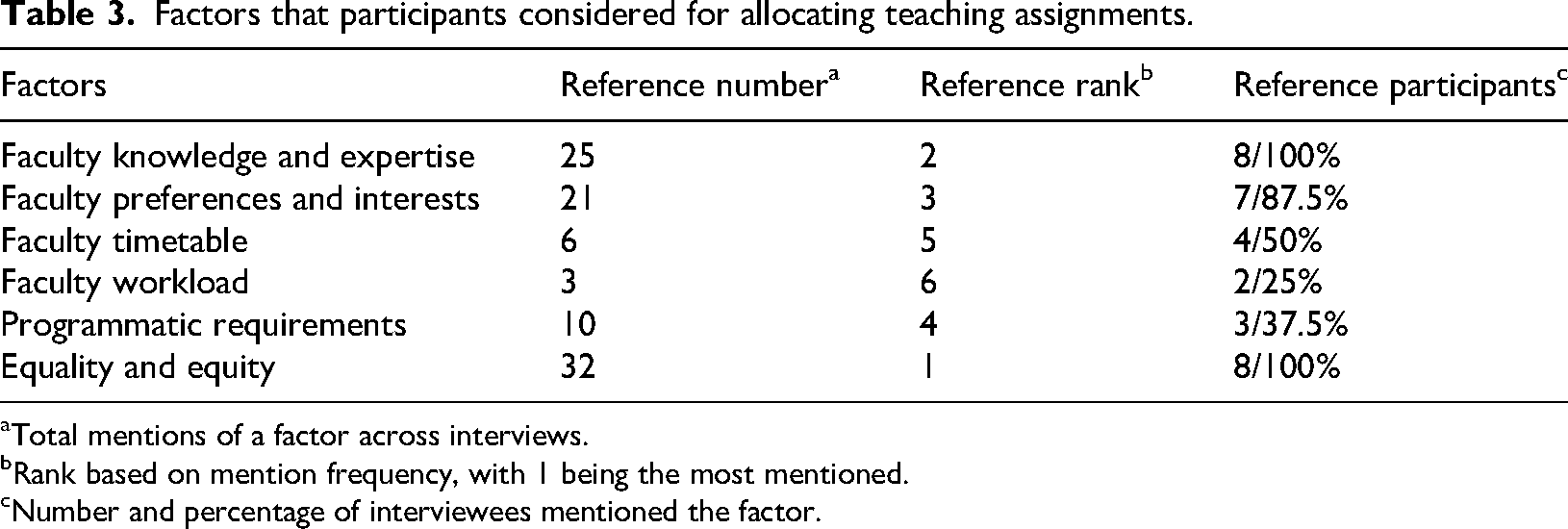
Total mentions of a factor across interviews.
Rank based on mention frequency, with 1 being the most mentioned.
Number and percentage of interviewees mentioned the factor.
… an online course with 350 students versus a smaller in-person course, both carrying three credits, strategic faculty assignment distribution is needed. (David)
Despite this attention, Department Chairs found it difficult to achieve truly equitable teaching assignments. Structural constraints imposed by faculty employment contracts and oversight from the Dean's office often limited their decision-making autonomy. Notwithstanding, they recognised the need to address these challenges as ‘avoiding them only prolongs existing real or perceived inequities, which is bad for morale’ (Eric).
Faculty can select their preferred courses. I then compare the list of what everyone wants to teach with the list of what needs to be taught and start matching things up. (David)
Five Department Chairs took faculty interests into account by intentionally assigning courses that complemented research, scholarship, or creative work, as ‘there is an interplay between what you teach and what you research’ (David). To balance faculty engagement and operational needs, two participants adopted a teaching rotation system to ‘mitigate the monotony of teaching the same courses repeatedly’ (Eric), but sometimes it conflicted with faculty preferences for teaching continuity.
Timetabling, though often seen as logistical, was adapted by Department Chairs (n = 4) to support faculty well-being. One Department Chair spread teaching over 2–3 days across semesters to balance workloads, while others offered flexible schedules for faculty members with caregiving responsibilities. These informal adjustments were seen as practical ways to ease faculty work pressures.
Furthermore, faculty workload imbalances prompted Department Chairs (n = 2) to redistribute responsibilities informally. One Department Chair intervened to relieve pressure on overburdened colleagues: I release teaching loads … getting external research grants, develop curricula and programs, and supervise numerous students … For those who teach large classes … I also minimised their committee assignments. (Tina)
Such discretionary adjustments were seen as acts of collegial care, yet they also underscored the lack of systemic solutions to address persistent workload inequities.
Developing organisational culture
Department Chairs recognised the importance of fostering collegial, respectful, and inclusive academic environments. Despite their privileged access to departmental budgets and resources, they were committed to preventing racist or oppressive ideologies and behaviours in their leadership of L&T activities.
While I occasionally offer opinions … my suggestions are typically gentle. If the issue is not particularly significant … there are many ways to reach Beijing. (Eric)
This strategy was viewed as important for Department Chairs in fostering teaching innovation and a collegial departmental culture. It also reflected Department Chairs’ trust that faculty members, as disciplinary experts, would consistently deliver high-quality teaching. Two participants shared that their baseline expectation of faculty members was simply to meet minimum acceptable teaching standards. However, other participants (n = 4) felt that this low-oversight approach risked fostering complacency over continuous teaching improvement.
Reflecting the ethos of this leadership, participants (n = 4) commonly regarded departmental meetings as spaces for inclusive dialogue, where they acted not as authoritative figures but as facilitators. As one Department Chair shared, I try to create an environment where open discourse and civil disagreements are encouraged … in a way that embraces our interests and concerns. (Steven)
However, whether these meetings were effective depended on faculty members’ buy-in. As Eric noted, if dialogue was perceived as merely a bureaucratic formality, it risked becoming performative rather than meaningful.
Given the ambiguity of EDI statements, I’m inclined to think that in certain cases, they may pose more of a problem than offer a solution … we don’t have a formal process to reflect these principles in our classroom. (Eric)
Challenges
To understand the challenges that Department Chairs faced in the process of leading L&T, we identified a combination of structural and cultural barriers, consisting of a lack of funding, limited resources, faculty shortages, and reluctance to change. Seven of the eight participants viewed the lack of funding as the biggest challenge to their effectiveness in leading L&T. They commented that the curtailment of departmental funding limited their ability to improve educational outcomes that fed into university reputations. This financial constraint resulted in a widespread reluctance among Department Chairs to implement large-scale L&T programmes. Limited resources were seen as the second biggest challenge, making it difficult for Department Chairs to support faculty members in innovating pedagogical methods and pursuing teaching excellence. This challenge was reflected in participants’ remarks: Materials we make available to new instructors are just old class syllabi from past instructors. (Linda) The biggest problem is not a lack of ideas for strengthening L&T; however, it’s resources. (David)
Such financial and resource pressures became particularly pronounced in natural science departments, where laboratories and experimental setups were essential for effective L&T practices.
Faculty shortages, though mentioned less frequently, were identified as another significant challenge. Linda lamented, ‘While we’re being asked to increase enrollment in all our classes, we can’t hire more faculty’. This mismatch between institutional expectations and staffing capacity not only placed strain on existing faculty members but also limited Department Chairs’ flexibility in assigning teaching duties. Though the least frequently cited, resistance to change remained a persistent barrier for Department Chairs in motivating faculty members to revise courses or improve teaching quality. As one Department Chair explained, ‘it's human nature that people don’t get up in the morning and say I can hardly wait to work on course revision’ (David).
Discussion and conclusion
In response to recent calls for site-specific empirical studies of middle leading practices within higher education (Maddock, 2023), this article examines the lived experiences of Department Chairs in leading L&T. The case study focuses on a Canadian research-intensive university that has recently experienced a significant rise in global rankings. This institutional success cannot be attributed to a single actor but to collective efforts (Bush, 2022), including Department Chairs’ contributions to implementing institutional L&T strategies in resource-constrained environments. The dissemination of this study’s findings has the potential to influence international audiences by sharing knowledge with practitioners, researchers, and policymakers worldwide.
As found in this study, the experiences of Department Chairs in leading L&T generally cohere with the three dimensions of Quinlan's (2014) framework. Under the first dimension, knowledge of L&T, participants developed teaching competencies through informal learning processes, such as on-the-job teaching experience, professional development, and collegial exchanges, which helped bridge gaps in their credibility as L&T leaders. Under the second dimension, transformative leadership, participants worked collaboratively with stakeholders to mentor, evaluate, and supervise departmental teaching practices, aiming to foster a shared commitment to teaching excellence; they also engaged faculty members in co-constructing fair and sustainable solutions when allocating teaching responsibilities; under the third dimension, organisational development, participants cultivated collegial, respectful, and empowering organisational culture to support L&T. This study also surfaced contextual challenges as a critical dimension that is not captured in Quinlan's (2014) framework. Structural constraints, including limited funding, faculty shortages, and resistance to innovation, were consistently reported as barriers to improving L&T quality by participants.
The effectiveness of Department Chairs in leading L&T depends on various factors. Lizier (2024) and Lizier et al. (2024) indicated that trust, clarity, relationships, and hierarchy, when appropriately enacted, serve as enablers of departmental leadership in universities, particularly in L&T. In contrast, Ghamrawi et al. (2024a) identified several obstacles that constrain the leadership of Department Chairs in L&T, including infringements on faculty work–life balance, harsh communication, micromanagement, and a toxic organisational atmosphere. These conditions not only undermine faculty morale but also adversely affect the productivity of L&T. Most of these mentioned factors were identified in this study, while additional factors not highlighted in previous studies, including adaptability, balance, shared responsibility, and institutional support, were also observed and are discussed as follows.
Adaptability plays a crucial role for Department Chairs in mediating L&T issues, as university (employer) expectations sometimes differ from those of faculty members (employee). As a result, several ‘N/A’ entries in Table 2 do not merely indicate the absence of relevant policies yet more often reflect participants’ informed decisions to get things done in response to cultural or contextual constraints. For instance, policy-culture conflicts influence how Department Chairs oversee teaching practices. Although institutional policies empower them to impose additional teaching regulations, participants generally refrained from doing so, out of respect for faculty academic freedom (Thornton et al., 2018). Moreover, institutional constraints, such as persistent teaching faculty shortages, further limited Department Chairs’ ability to implement policy directives as written, prompting them to adopt context-sensitive strategies in allocating teaching duties to ensure course delivery. These findings underscore that fulfilling the role of a Department Chair is not simply a matter of policy compliance, but of navigating institutional realities with flexibility and cultural awareness.
The inherent tension between teaching and research in the research-intensive university has been identified in this study. Once in the role, Department Chairs must maintain research productivity to secure career advancement and academic credibility, while simultaneously dedicating time and effort to leadership roles, particularly those related to teaching. Previous research has identified three approaches to time allocation for Department Chairs navigating this tension: prioritising leading for teaching over research output; juggling both responsibilities; and treating teaching leadership as a temporary task (Thornton et al., 2018). In this study, Department Chairs rarely conceived leading L&T as their primary role, given that their career progression is heavily contingent on research productivity (Lizier, 2024). Hence, they intentionally cultivated peer-based mentoring structures to delegate certain pedagogical leadership responsibilities, thereby freeing up time to focus on research. However, they did not perceive the research-teaching balance as a zero-sum game in their leadership practice. For example, they navigated competing institutional priorities by aligning teaching assignments with faculty members’ research agendas. This strategy enables them to mitigate the perceived trade-off between teaching and research, thus fostering synergies that benefit both domains. Although this study lacks direct examples, the literature suggests several strategies for Department Chairs to foster teaching culture within research-focused departments, including teaching-oriented hiring, support for teaching role models, and formal teaching recognition (Couch et al., 2024).
There is no clear consensus regarding who holds responsibility for leading L&T in higher education. Echoed with this ambiguity, the Department Chairs interviewed did not explicitly identify themselves as L&T leaders. Instead, they perceived responsibility for facilitating L&T as a shared endeavour involving multiple university stakeholders. While this distributed approach moves away from leader-centric and command-and-control models focused on standardised outcomes (De La Harpe and Mason, 2014), it also risks diluting accountability, as individual L&T needs may not always receive tailored support. Nevertheless, Department Chairs’ everyday practices, such as mediating faculty L&T needs clearly reflect an active L&T leadership role. This indicates that L&T leadership is enacted not through formal authority or explicit role recognition, but through decentralised and relational practices embedded in the day-to-day functioning of academic departments.
Given the structural constraints in Canadian university governance, Department Chairs rely heavily on institutional support to lead L&T effectively. Their limited authority over staffing, funding, and workload allocation means that they cannot independently address challenges such as teaching faculty shortages. Without targeted institutional mechanisms – such as funding for pedagogical initiatives, professional development, administrative support, and clear policies that prioritise teaching – L&T enhancement becomes an uphill battle.
The study’s findings both confirm and challenge existing research on leadership of L&T in higher education. This study found the CTL to be problematic due to its disconnect from faculty teaching needs, contrasting with Forgie et al. (2018), who argued that it could enhance L&T. Among the various factors Department Chairs considered when allocating teaching assignments, equality and equity, listed in Table 3, stood out as the most frequently cited. This observation differs from that of Lebovitz et al. (2023: 1), who reported that ‘support college/school strategies and priorities ranked highest’ in a survey of Department Chairs. According to this study’s findings, Department Chairs hired contract faculty for the purpose of back-filling teaching. This contradicts the assertion of Hulme et al. (2023) that the primary motivation for hiring sessional lecturers is to create space for faculty research activities. We, like Hulme et al. (2023), raise concerns that this alternative strategy risks creating ‘a divided faculty’, potentially diminishing student experience and straining partnership relations.
Our findings do not lend strong support to those advocating for EDI in higher education (Maddock, 2023; Tamtik and Balasubramaniam, 2024). This study reveals that the integration of EDI into departmental L&T is largely symbolic and compliance-driven, rather than being embedded in everyday leadership practices. Although national imperatives such as reconciliation and decolonisation inform institutional discourse, there is scant evidence of initiatives grounded in ethical frameworks, such as collaborative curriculum design that foregrounds EDI values (Hulme et al., 2023). The endeavours of the Department Chairs interviewed to advance EDI in L&T were characterised by fragmentation, informality, and a strong dependence on individual faculty interests. These findings reflect structural limits in Canadian academic governance that restrict Department Chairs to facilitative roles, while cultural norms like academic freedom further limit their ability to lead EDI in L&T within academic units. In the absence of formalised mechanisms for monitoring, recognition, and professional development targeting inclusive teaching, EDI remains marginalised in the landscape of departmental L&T leadership.
Theoretical contributions
Although the three dimensions of Quinlan's (2014) framework provide a great starting point for understanding Department Chairs’ leadership of L&T in higher education, they offer a somewhat static and decontextualised view of how such leadership operates in practice. Unlike macro-level sociocultural or national policy influences, our findings reveal that the leading practices are embedded at the micro-level within organisational, structural, and cultural contexts of the institution. The contextual variations in academic cultures, governance structures, institutional policies, and material conditions shape how L&T leadership is practiced. This orientation foregrounds the need for a more contextually sensitive theoretical lens on academic middle leadership. Moreover, our findings challenge the assumption in Quinlan’s framework that leadership for L&T will naturally become self-sustaining through the presence of knowledge of L&T, transformative leadership, and organisational development. Instead, we demonstrate the necessity of ongoing monitoring, feedback, and institutional support mechanisms to maintain system efficacy. Meanwhile, we reconceptualise organisational development not as a mere contextual backdrop but as an active and integral domain of leadership practice. Finally, we propose an adapted Competencies-Practices-Challenges Framework (Figure 2), which integrates individual leadership qualities with structural and institutional factors. This model captures a recursive cycle wherein, in the absence of formal institutional professional learning support, informal learning cultivates leaders’ teaching competencies that inform their leadership practices in L&T, yet the sustainability and effectiveness of these practices depend on the degree to which structural challenges are mitigated through targeted institutional support.
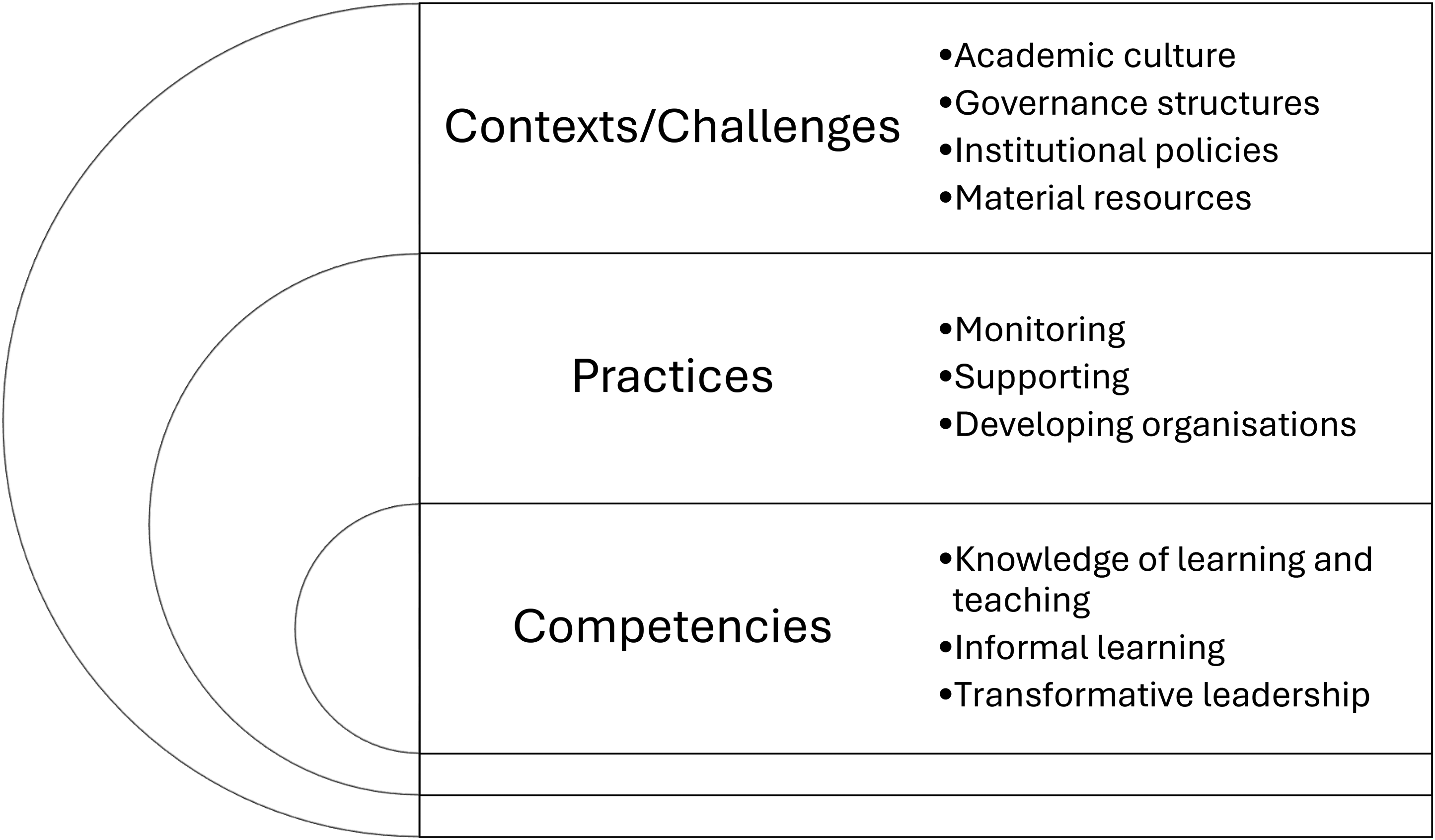
A recursive model of Department Chairs’ leadership of learning and teaching.
Recommendations for practice
Lacking sufficient support, space, and time for strategic leadership, Department Chairs often find themselves ‘buffeted by the wind’ within the university ecology (Hulme et al., 2023: 1382). To address this, we outline a number of leverage points that can strengthen their L&T leadership capacity as follows. The term ‘leverage point’ refers to a focal area where minor interventions can catalyse substantial changes in traditional university culture (Mason and de La Harpe, 2020).
A rigorous selection and recruitment process for Department Chairs is the first step in ensuring L&T leadership effectiveness. Human resources units should ensure that appointees possess L&T expertise, leadership skills, and a commitment to improving L&T. These personal qualities are crucial for facilitating high-quality pedagogical practices and innovative curriculum development. Priority should be given to candidates with a PhD, full professorship, and L&T research grants, as these credentials not only elevate the status of the Department Chair position but also enhance their credibility in leading L&T. A discretionary budget and sufficient resources would equip Department Chairs with the necessary capital to lead L&T projects and prioritise L&T responsibilities which are frequently overshadowed by service, research, and administrative duties. Incentives for faculty members, such as teaching recognition awards, financial bonuses, and reimbursement for coaching qualifications, would enable Department Chairs to support faculty members being recognised for teaching excellence. Professional development support for Department Chairs could equip them with the knowledge and skills needed to lead L&T initiatives within their departments. Structured induction programmes should familiarise newly appointed Department Chairs with institutional policies, governance structures, and L&T quality assurance procedures. Ongoing professional learning opportunities, such as regular training sessions, leadership retreats, and peer learning networks, would benefit Department Chairs for exchanging best practices in leading L&T. The Centre for Teaching and Learning should design and implement initiatives to support Department Chairs who serve as key levers of L&T reform in universities. It consists of identifying L&T needs through rigorous data analysis, providing tailored L&T consultation services, and fostering strategic institutional partnerships. Fostering a university culture that genuinely values L&T can not only enhance pedagogy and student learning outcomes but also generate broader societal impact (Marshall et al., 2011). L&T is often undervalued in research-intensive universities, where success is predominantly measured by citation counts and grant success (Hulme et al., 2023; Lizier, 2024). Revisiting faculty tenure and promotion criteria and advocating for ranking reforms that recognise pedagogical excellence are recommended to enhance the value of L&T in academia. Additionally, implementing a dual-track faculty evaluation system, which differentiates between teaching- and research-intensive roles while ensuring equal career progression opportunities, could strategically address tensions between federal governments’ emphasis on enhanced accountability in L&T quality and the traditionally research-centric university culture.
Limitations and suggestions for future research
The case study methodology engendered certain limitations. This research examined a small sample of Department Chairs from a single research-intensive university in Canada. The modest sample size constrains the extent to which the findings can be applied to institutions with different structural, cultural, or financial contexts. Given the nature of voluntary participation, the sample may be subject to response bias, potentially overrepresenting Department Chairs with a stronger commitment to L&T than those who are less engaged, which further limits the generalisability of the findings. Nonetheless, the study prioritises analytical over statistical generalisability, offering transferable, theoretically informed insights relevant to similar university settings. Future comparative or longitudinal research would be necessary to track contextual differences. While the sample spans diverse academic departments, it does not extend to professional faculties like engineering, business, or medicine, where leadership dynamics may differ. Future research could examine L&T leadership within these settings. Although this L&T leadership study focused solely on the role of Department Chairs, the inclusion of other academic leaders (e.g. Associate Deans, Curriculum Coordinators, Programme Leaders, etc.) would advance the understanding of middle leadership of university L&T. Some interviewees may not have fully grasped the significance of this research, potentially affecting the depth and authenticity of their responses. To encourage engaging and candid discussions, we started with ice-breaking questions followed by additional comments, clarifications, and inquiries based on participants’ responses. Adopting an action research approach to future inquiries is recommended, fostering active collaboration between researchers and participants to identify challenges, test strategies, and implement solutions simultaneously. While this study investigated participants’ gender, age, and other profile information, these factors were not used as analytical lenses due to the small sample size. Future studies using larger datasets could better examine how the intersectionality of demographic variables shapes Department Chairs’ leadership styles, decision-making processes, and commitment to EDI in L&T, ultimately contributing to ongoing university success. As this study did not explicitly focus on EDI and teaching-research tensions, the related findings emerged incidentally from participant accounts. Future research should provide deeper insights given their importance in higher education.
Footnotes

Ethical approval and informed consent statements
This study was approved by the University of Saskatchewan Behavioural Research Ethics Board (Approval No. 4360) on November 23, 2023. This research was conducted ethically in accordance with the Tri-Council Policy Statement on Ethical Conduct for Research Involving Humans. Informed consent was obtained verbally before participation. The consent was audio-recorded in the presence of an independent witness.
Funding
The authors received no financial support for the research, authorship, and/or publication of this article.
Declaration of conflicting interests
The authors declared no potential conflicts of interest with respect to the research, authorship, and/or publication of this article.
Data availability statement
The datasets generated during and/or analyzed during the current study are available from the corresponding author on reasonable request.