



Abstract
The present study aimed to investigate school principals’ perspectives on resilient leadership, drawing from their experiences during the COVID-19 pandemic. Additionally, the role of job crafting as a strategy for enhancing principals’ self-efficacy in crisis leadership was examined. Using a mixed-method approach, the research integrates qualitative insights from open-ended survey responses and quantitative analyses of job crafting's impact on crisis leadership efficacy. The findings reveal that crisis-resilient leadership involves individual-level sensemaking, sensegiving and collective sensemaking, all of which are influenced by communication and well-being-related factors. Job crafting, particularly engaging in challenging tasks, positively influences principals’ crisis leadership efficacy by fostering confidence and adaptability. Conversely, reducing hindering job demands negatively impacts crisis leadership preparedness. The study highlights the critical role of sensemaking and sensegiving processes in fostering collective resilience and collaboration within school communities. The study underscores the importance of proactive job crafting and emotional resilience as key components of effective leadership during prolonged crises. Recommendations include integrating job crafting and resilience-building strategies into leadership training programs to enhance principals’ capacity for adaptive leadership. These findings contribute to understanding the dynamic processes underlying resilient school leadership and offer actionable insights for supporting school principals in crisis and non-crisis contexts.
Introduction
The COVID-19 crisis profoundly altered the everyday operations of schools and the work of principals, requiring school leaders to adapt in order to ensure continued functionality, implementing distance learning and maintaining effective teaching practices (Pollock, 2020; Thomson and Greany, 2024). During the pandemic, the already complex role of school principals became even more challenging. Principals were responsible for numerous tasks including developing strategy, maintaining culture and relationships and continuing to supervise administration and operations; they were also involved with complex decision-making. This took place amid multiple moving parts and often conflicting stakeholder views (Elomaa et al., 2024; Wang et al., 2018). They had to respond to constantly evolving circumstances and the increasing complexities within school communities and among other stakeholders (Longmuir, 2021; Netolicky, 2020; Upadyaya et al., 2021). Principals were expected not only to draw on their existing skills and knowledge to address the challenges of maintaining school operations but also to develop new personal competencies, such as information and communication technology skills and management skills. Simultaneously, they were responsible for supporting teachers, students and parents in enhancing their competencies and adapting to their evolving roles (Elomaa et al., 2024; Upadyaya et al., 2021).
All of these demands occurred during unexpected circumstances. Normally, sensemaking and sensegiving processes play a crucial role in navigating turbulent times and contribute to fostering crisis-resilient leadership by creating conditions for sustained resilience (Kilskar et al., 2020). In this pandemic situation in addition to principals’ individual sensemaking of the situation, they also needed to provide a sense of the situation to the school community, including teachers, other staff, students and parents (Netolicky, 2020; Thomson and Greany, 2024; Upadyaya et al., 2021). Furthermore, collective sensemaking, which occurs through sensemaking–sensegiving processes (Cristofaro, 2022), enables groups to develop a shared understanding of complex problems and adapt to rapidly changing circumstances. This fosters collaboration, reduces cognitive overload and supports effective decision-making (Coburn, 2001).
In contrast to previous crises discussed in the crisis leadership literature (e.g., Boin et al., 2010; Much, 2015; Katsiyannis et al., 2018), which were characterized by sudden and rapid transitions from normalcy to crisis, the COVID-19 crisis differed in its nature. It unfolded over an extended period and its prolonged duration led to the establishment of a ‘new normal’: a crisis state that persisted for an extended time. This eventually transitioned into an ‘even newer normal’, referring to a stabilized non-crisis state distinct from the pre-crisis situation as conditions gradually stabilized (Hadley et al., 2011). As a result of these processes, principals were compelled to continuously craft and adapt their roles throughout the crisis to address evolving demands from the schools and community.
Despite the growing body of research on the impact of the COVID-19 pandemic on school principals and their work, studies specifically focused on crisis-resilient leadership remain limited. While numerous studies have explored the immediate challenges faced by educational leaders during the pandemic (Netolicky, 2020; Pollock, 2020), fewer have examined the sustained leadership strategies that contribute to resilience over time. Even fewer studies consider which of these strategies and lessons should be carried forward into the ‘new normal’ of post-crisis everyday functioning – knowledge that is essential for improving preparedness and adaptability in future crisis (Biag et al., 2021; Fernandez and Shaw, 2020). Moreover, although school leadership, resilience and sensemaking have been explored in prior literature as separate constructs (Ganon-Shilon and Schechter, 2017; Lombardi et al., 2021; Weick et al., 2005), to our knowledge, no previous literature has explicitly integrated these with the concept of job crafting in the context of school leadership. This integration is significant, as job crafting has been linked to increased motivation, role clarity, and well-being across various professional domains (Tims et al., 2012; Wrzesniewski and Dutton, 2001) but remains unexplored in educational leadership research.
Given the extensive impact of COVID-19 on school operations and the leadership roles of principals, as well as the likelihood of future crisis, it is crucial to investigate how principals interpreted and adapted their roles over time. Understanding principals’ personal experiences of crisis-resilient leadership – through the lens of sensemaking, sensegiving and collective adaptation – can offer rich insights into how effective leadership is cultivated in volatile conditions. Furthermore, examining job crafting as a potential mechanism to enhance principals’ self-efficacy and occupational well-being is grounded in recent findings suggesting that proactive role redesign can buffer against stress and support adaptive leadership (Toyama et al., 2024). This study addresses these gaps by proposing a model of crisis-resilient leadership derived from principals’ lived experiences and by examining how job crafting behaviours might influence their efficacy leading through crisis. Through this integrated approach, the study offers timely and actionable knowledge for improving both leadership training and school crisis preparedness.
Literature review
Resilience
In earlier literature, resilience has been conceptualized either as a trait or a process. When resilience is conceived as a trait, it is suggested that it represents the personal qualities that enable individuals to thrive in the face of adversity (Connor and Davidson, 2003). The process conceptualization of resilience acknowledges that the effect of protective and promotive factors differs based on context (from situation to situation) and over time (throughout the situation and across an individual's lifespan) (Fletcher and Sarkar, 2013). For school leaders, the resilience during crisis involves not only withstanding adversity and external shocks but also learning from these experiences and preparing effectively for future challenges (Giustiniano et al., 2020; Lombardi et al., 2021). Principals must navigate the paradoxes of balancing immediate responses with long-term preparation, rationality with empathy and organizational stability with innovative opportunities, ensuring their schools can adapt and thrive in the face of uncertainty (Giustiniano et al., 2020; Lombardi et al., 2021). Drawing on Lombardi et al. (2021), we note that resilience in such situations can be described as the process of being knocked down, rising again, learning from these experiences and preparing to face future challenges. In current research, we adopt the conceptualization of resilience as a dynamic developmental process that includes positive adaptation within the context of significant adversity (Luthar et al., 2000; Vanmeter and Cicchetti, 2020). It involves a complex interplay of factors and represents the ability to withstand adversity, trauma, external shocks or other sources of stress.
Resilient leadership
Despite extensive research on resilience and leadership separately, there is evidence that the COVID-19 pandemic has underscored the necessity to integrate resilience into leadership and emphasized the importance of combining these concepts (Lombardi et al., 2021). Resilient leadership, as defined by Dartey-Baah (2014), is both performance- and change-oriented. It involves not only achieving organizational goals but also initiating and sustaining changes within an organization to meet the demands of both internal and external environments. As resilient leadership involves both long-term preparation and short-term responses, encompassing planning and adapting strategies to handle unpredictable and challenging situations effectively, a key characteristic of resilient leadership is leading while learning. Resilient leadership is a process with a paradoxical nature. It is characterized by various tensions, such as balancing rationality with empathy, safeguarding the mission while pursuing new opportunities and being conservative while planning for the future (Giustiniano et al., 2020); thus, these tensions are essential for effectively managing crisis.
Sensemaking
Sensemaking and sensegiving are integral to leaders’ work, as they involve interpreting complex challenges and guiding their school communities towards a shared understanding and cohesive action, particularly during times of uncertainty (Ganon-Shilon and Schechter, 2017; Kilskar et al., 2020; Maitlis and Christianson, 2014). These processes became even more critical for principals during the COVID-19 crisis (Longmuir, 2021; Thomson and Greany, 2024). According to Weick (1995), sensemaking is a socially constructed process that occurs when conflicting signals disrupt individuals’ ongoing activities. It involves looking back and creating plausible explanations to make sense of and justify their actions. Weick et al. (2005) argue that explicit efforts at sensemaking typically arise when the current state of the world is perceived to diverge from the expected state or there is no clear way to engage with the world. Sensemaking is a continuous, nonlinear cycle of enactment, selection and retention (Eddy-Spicer, 2019). In enactment, people shape their environment through actions rather than merely observing it. They then select and interpret cues to construct plausible explanations of their experiences. Finally, retention involves storing these interpretations in memory – both individually and organizationally – where they influence culture, routines and future actions. This ongoing loop of action, feedback, interpretation and learning never truly ends. Systems can benefit from lessons learned and adapt their actions or interpretations to accommodate changes in the system and its context only through the effective use of prior knowledge (Weick et al., 2005). Crisis situations, such as the COVID-19 pandemic, provide a powerful occasion for sensemaking, as individuals’ ongoing routines were disrupted and they were compelled to question themselves and those around them about events (Maitlis and Sonenshein, 2010). Educational leaders navigate highly institutionalized settings where they must engage in routine sensemaking – attempting to reconcile the round peg of daily, context-responsive practice with the square hole of standardized policy requirements (Eddy-Spicer, 2019). As they made sense of their leadership roles, school leaders underwent a learning process through interaction with both external demands and internal school goals (Ganon-Shilon and Schechter, 2017).
Sensegiving and collective sensemaking
Principals’ not only make sense of situations themselves but also help others to interpret and understand them as a part of their daily social practice. Sensegiving in school leadership is about giving meaning to unclear experiences while dealing with ambiguity (Ganon-Shilon and Schechter, 2017). According to Weick et al. (2005), the content of sensegiving and its target affect how people interpret the actions they confront (Weick et al., 2005). Individuals do not make sense of their experiences in isolation from their broader environments; sensemaking during a crisis is cumulatively influenced by the institutional context in which the organization and its members are embedded (Mills et al., 2010). Principals influence teachers’ sensemaking both directly and indirectly. Directly, they affect what teachers focus on by facilitating access to certain messages over others. Indirectly, they contribute to a collective learning process through formal meetings and informal conversations. By fostering a collaborative work environment, providing professional development and offering ongoing informal support, principals as leaders shape the focus and direction of teachers’ sensemaking (Coburn, 2005).
As stated by Kilskar et al. (2020), sensemaking creates the context for being resilient while sources of resilience help individuals to make sense of situations. Earlier literature describes various interconnections between sensemaking and resilience, such as viewing resilience as a factor that enhances sensemaking, considering sensemaking as a factor that influences or creates resilience (with adaptability being a crucial component of resilience) and using sensemaking as a means to analyse or explain resilience (Kilskar et al., 2020; Lundberg et al., 2012; Talat and Riaz, 2020).
Job crafting and its relation to resilience and sensemaking
At the core of job crafting lies the idea that individuals make changes to certain aspects of their work roles, on their own initiative, to better align their job with their skills, abilities and preferences (Tims et al., 2021). In addition, Wrzesniewski and Dutton (2001) have defined job crafting as a process through which individuals make physical and cognitive changes to the task or relational boundaries of their work. The motivation for job crafting arises from individual needs to assert some control over one's job to avoid alienation from work, to create a positive self-image in their work and to fulfil the basic human need for connection with others (Wrzesniewski and Dutton, 2001). As employees modify the tasks and relational aspects of their roles, the focus of their activities and interactions changes, which can significantly influence how they experience their work and perceive its meaning (Wrzesniewski et al. 2013).
While these sorts of behaviours develop naturally in normal times, the COVID-19 pandemic brought significant uncertainty and ambiguity; principals faced the challenge of responding to rapidly changing situations and evolving regulations in relation to their own jobs and those of others. These circumstances increased job demands, compelling principals to repeatedly adapt and redefine their roles throughout the various phases of the crisis. These adaptive processes may further manifest in their crisis leadership efficacy in the future, reflected in their motivation to lead during crises and their performance in crisis situations which involves role-taking, decision-making accuracy, ease and confidence (Hadley et al., 2011). By implementing job crafting, school principals may better navigate the professional challenges and adversities associated with crises. In turn, this approach can enhance not only their self-efficacy but also their well-being and resilience as leaders (Toyama et al., 2024).
The aim of the study
This study explores principals’ perspectives on resilient leadership and draws on their experiences during the COVID-19 pandemic. Quantitative methods will also be used to examine the role of job crafting as a strategy for enhancing principals’ self-efficacy in crisis-resilient leadership. The specific research questions are:
What does resilient crisis leadership entail, based on principals’ experiences during the COVID-19 pandemic? What is the potential role of job crafting as a strategy for promoting principals’ self-efficacy in resilient crisis leadership?
Methodology
Participants and procedures
The current study is part of the Principal Barometer (Helsinki University, 2025), a comprehensive longitudinal study aimed at investigating the occupational well-being of Finnish principals. The research is conducted in collaboration between the University of Helsinki and the Association of Finnish School Principals. It also forms part of the international Principal Occupational Health, Safety, and Wellbeing Survey. The present study utilizes qualitative and quantitative data from the 2022 cohort, which includes a total of 698 participants. An invitation to participate, containing a link to an online survey, was distributed by email. The survey was launched in late March 2022. The present study was conducted by using convergent mixed-method research design (Creswell and Plano Clark, 2018). Qualitative and quantitative data were analysed separately, and the results were merged and compared to obtain a more complete understanding of a problem (Creswell and Plano Clark, 2018).
Qualitative data
Qualitative data was collected by open-ended question: Based on your pandemic experiences, what does resilient leadership entail? All together 175 participants answered the open-ended question.
Analysis
The qualitative analysis was conducted using inductive reasoning with content analysis (Krippendorff, 2013; Patton, 2015). The data analysis involved three phases. In the first phase, the data was read multiple times to identify relevant text units that addressed the research question. In the second phase, the researcher familiarized herself with the relevant literature to determine whether the data from the current study supported any established theories or frameworks. In the third phase, open coding was applied to label key concepts, develop main themes and divide them by subthemes (Patton, 2015). For instance, from an answer describing principals’ perception of crisis-resilient leadership: Being constantly aware of the current situation, listening attentively to the messages from staff and students, with communication playing a significant role. Monitoring the broader context and considering how to act accordingly, while conveying national guidelines and information effectively. (P158)
Two key meanings were identified and categorized: (1) the subtheme ‘adaptation and flexibility in a changing environment’ under the main theme of ‘sensemaking for self’ and (2) the subtheme ‘quality of communication’ under the main theme of ‘communication’.
Quantitative data
The final sample for the quantitative component of the study comprised 425 principals, with 64.0% identifying as male, 35.8% as female and 0.2% as non-binary or other. The age distribution was 5.4% for 31–39 years, 28.7% for 40–49 years, 52.9% for 50–59 years and 12.9% for 60–64 years, with a mean age of 51.6 years (SD = 6.8). The vast majority (93.4%) held a master's degree or higher. On average, participants had served as school principals for 7.9 years (SD = 6.9).
Measures
Principals’ job crafting behaviour was assessed using the Job Crafting Scale (Tims et al., 2012). Example items are ‘I try to develop myself professionally’ (increasing structural job resources); ‘I ask colleagues for advice’ (increasing social job resources); ‘If there are new developments, I am one of the first to learn about them and try them out’ (increasing challenging job demands) and ‘I make sure that my work is mentally less intense’ (decreasing hindering job demands). The items were scored on a scale from 1 (never) to 5 (often). One preliminary confirmatory factor analysis showed a poor model fit. Further examination showed that three items showed a too-small factor loading: an item for increasing structural job resources (‘I decide on my own how I do things’), an item standing for increasing social job resources (‘I look to my supervisor for inspiration’) and an item standing for increasing challenging job demands (‘I regularly take on extra tasks even though I do not receive extra salary for them’) (see Toyama et al., 2024). In addition, a modification index suggested there was a large value for the covariance between two items for decreasing hindering job demands. Thus, following the regular analysis strategy, these items were allowed to covary in the model. This model showed a good fit to the data, χ2 = 217.946, df = 128, CFI = .952, TLI = .943, RMSEA = .041, SRMR = .047. Cronbach's alpha was .83 for increasing structural job resources; .63 for increasing social job resources; .77 for increasing challenging job demands; and .78 for decreasing hindering job demands.
Crisis leadership efficacy was assessed using six items from the Crisis Leader Efficacy in Assessing and Deciding (Hadley et al., 2011). Example items are ‘I can make decisions and recommendations even when I don't have as much information as I would like’ and ‘I can modify my regular work activities instantly to respond to an urgent need’. Items are rated on a scale from 1 (Completely disagree) to 6 (Completely agree). Cronbach's alpha of the scale was .71.
Statistical analysis
Potential multicollinearity was inspected using a Variance Inflation Factor (VIF) test. Following the guideline proposed by Yu et al. (2015), VIF values over 10 were interpreted as indicative of multicollinearity. All statistical significance was defined as p < .05.
Results
Principals’ perceptions on crisis-resilient leadership
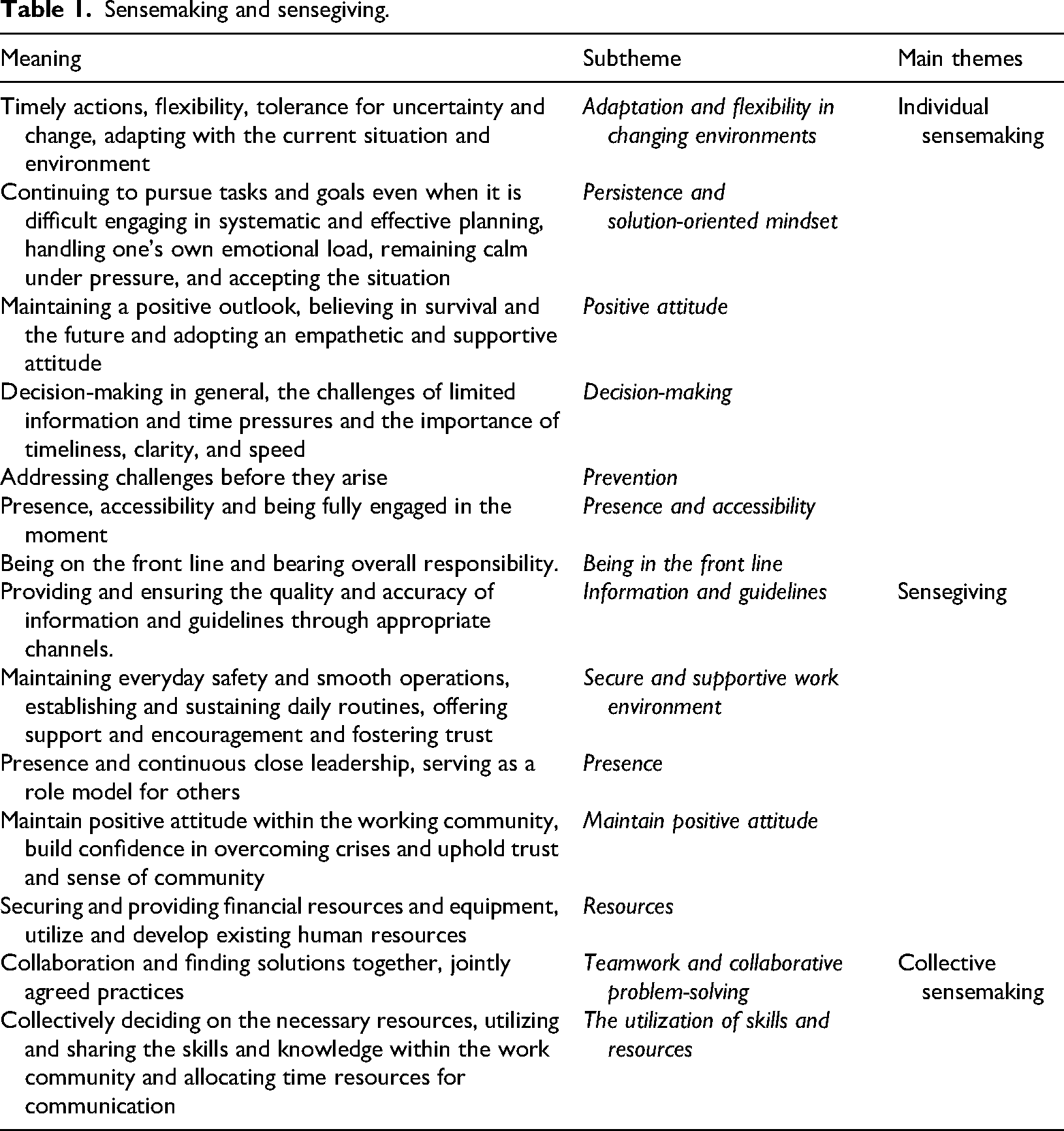
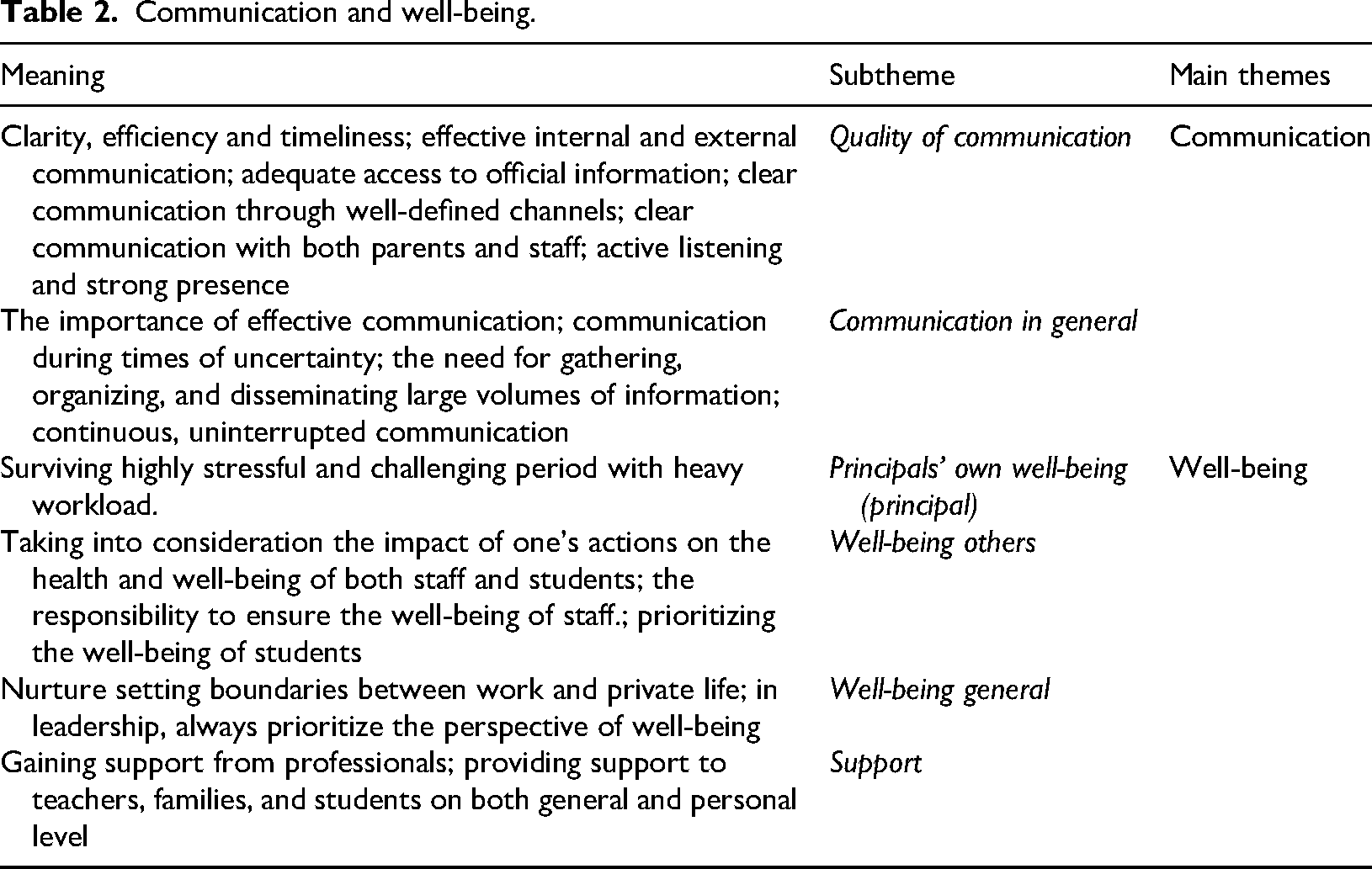
The first aim was to explore how principals perceive resilient leadership based on their experiences during the COVID-19 pandemic. As a result, principals’ self-reported descriptions were divided into five data-driven main themes as follows: (a) Individual sensemaking; (b) Sensegiving; (c) Collective sensemaking; (d) Communication and (e) Well-being. These main themes were further divided into subthemes according to their content (see Tables 1 and 2). Individual sensemaking, sensegiving and collective sensemaking can be seen as core elements of crisis-resilient leadership, influenced by overarching elements of communication and well-being (see Figure 1).
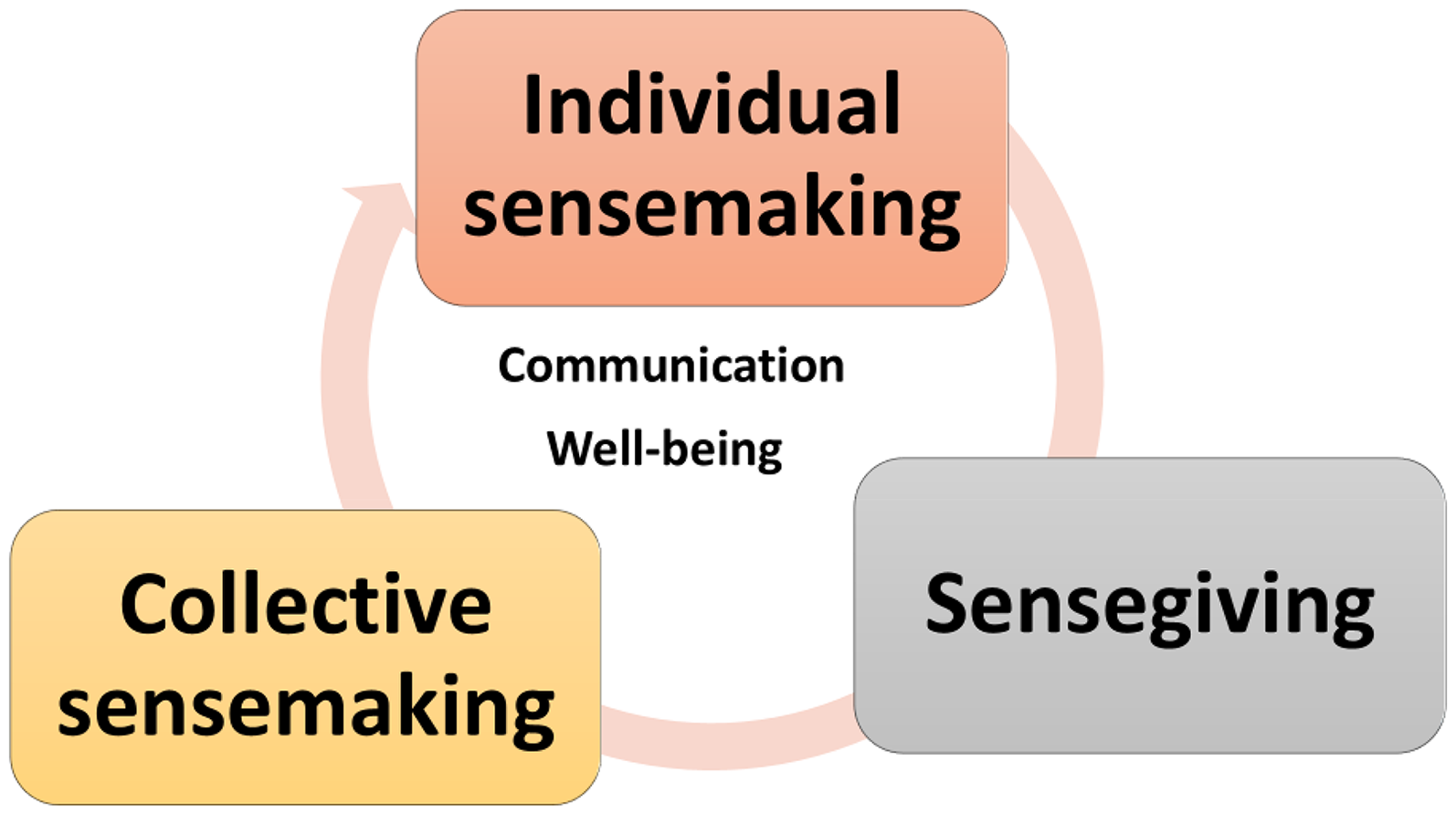
Crisis-resilient leadership.
Sensemaking and sensegiving.
Communication and well-being.
Elements described in Figure 1 may also overlap due to the multidimensional nature of crisis-resilient leadership. Emotion regulation is also emphasized from various perspectives across different themes. For example, principals discussed emotion regulation within the context of individual sensemaking, associating it with persistence, a solution-oriented mindset and maintenance of a positive attitude. Additionally, the regulation of others’ emotions is evident in sensegiving, encompassing actions such as offering support and encouragement, fostering trust and cultivating a positive atmosphere within the school community.
Individual sensemaking
The results reveal that principals view sensemaking for themselves as a foundational element of resilient leadership. It involves personal traits and leadership actions related to adaptation and flexibility in changing environments. They must demonstrate persistence and adopt a solution-oriented mindset while maintaining a positive attitude, especially during decision-making and prevention. They must maintain a presence and be accessible while being on the front line.
According to principals, crisis-resilient leadership calls for adaptation and flexibility in a changing environment through timely actions, flexibility, tolerance of uncertainty and change in addition to adapting to the current situation and environment. For example, P33 reported the need to ‘Make timely decisions and be flexible’. Furthermore, P56 describes the personal characteristics of a principal that support crisis-resilient leadership: ‘A leader must have such strong resources and belief in survival that they can motivate and encourage others’. P34 added a description of a leader with good resilience: ‘A leader with good resilience is able to adapt quickly to changing situations, make rapid decisions, manage their own emotional load, act rationally and calmly under pressure, consider the needs and emotions of others and receive and handle criticism resulting from the aforementioned factors’.
Persistence and a solution-oriented mindset were characterized as important elements of resilient leadership. For example, P54 described resilient leadership through emotion regulation as: ‘Maintaining peace and functionality amidst uncertainty, pressure and confusing information and leading people and matters toward a safe and stable everyday flow’. Participants also highlight the importance of maintaining a positive state of mind and belief in survival and the future. Key aspects of this included showing mercy and gentleness towards oneself and others, ensuring peace of mind and adopting an empathetic and supportive attitude.
Principals further noted the importance of decision-making in general and personal challenges due to lack of information and time pressures. They emphasized the significance of timeliness, clarity and rapidity in communication and decision-making. As P45 pointed out, there was a need for ‘the courage to make quick, well-justified, and clear decisions, even when their correctness cannot be guaranteed in advance’. Addressing challenges before they arise was also identified as important and was exemplified by phrases such as ‘proactive crisis preparedness’ (P21) and ‘proactive measures’ (P28), as mentioned by principals when reflecting on crisis-resilient leadership.
Furthermore, crisis-resilient leadership requires being present, making oneself accessible to the school community and being fully engaged in the moment. As P158 described: ‘Knowing where things stand at all times, listening attentively to messages from staff and students, communicating, keeping track of broader developments and potential actions, disseminating national guidelines and information and maintaining daily accessibility’. Lastly, another participant agreed that taking overall responsibility and ‘standing on the front line’ (P65) were also seen as essential actions.
Sensegiving
Our findings indicate that sensegiving encompasses the provision of clear, high-quality information and guidelines, the creation of a safe and supportive work environment, active presence and engagement, the promotion of a positive attitude within the work community and the effective resolution of resource-related challenges.
Under the information and guideline's sub-theme, P47 saw ‘Clear instructions, decisions and commands’ as highly important. P114 emphasized the role of a leader in crisis-resilient leadership as follows: ‘The leader is able to lead, guide and communicate in a timely and precise manner according to the demands of the crisis situation, ensuring clarity and enabling changes to be made as required by the situation’. Clear information and guidelines should be provided to the school community even when the leader does not have complete information, as P163 describes ‘Clear instructions, even if the leaders themselves may have uncertain information’.
Creating a secure and supportive work environment involves elements such as maintaining peace, calmness, everyday safety and smooth operations. Furthermore, principals could establish and sustain daily routines, offer support and encouragement, foster trust and take care of others. For example, P31 describes creating ‘peace in the daily school life’ while P138 adds that it involves ‘leadership that can constantly support the work community’ as part of sensegiving for others. Additionally, being present for the school community and engaging in continuous close leadership work are seen as essential for sensegiving processes. As P79 describes, ‘trust and presence are paramount; they form the basis of interaction, upon which everything relies’. Maintaining a positive attitude in the school community requires a commitment to maintain positive attitudes within the work community, build confidence in overcoming crises and uphold trust and a sense of community. Participant 24 noted the importance of ‘keeping up a positive spirit, even though the whole situation is already tiring for you as well’. P36 highlighted the need for ‘strengthening the community's resilience, fostering belief in survival and enabling the overcoming of the crisis’ as essential tasks for crisis-resilient leadership.
Results also indicate that principals view themselves as responsible for providing and organizing resources (P126). In addition to securing and allocating financial resources, there is a need for organizing in-service training as necessary. Effectively utilizing existing human resources is also crucial. As P139 reports, ‘sharing knowledge and skills’ is a key component of crisis-resilient leadership.
Collective sensemaking
Collective sensemaking incorporates teamwork and collaborative problem-solving and utilization of skills and resources.
Teamwork and collaborative problem-solving are crucial for surviving a crisis and the COVID-19 pandemic presented great challenges to principals in exercising those skills. As P14 describes: We have always gone through things together and adjusted our guidelines to our operations so that everyone truly understands why we do things differently than usual. This has led to understanding and good new routines. During the pandemic, we have also learned to make quick decisions and change our operating models. This has led to a new and less rigid way of thinking. We are now happy that we can open up again and, for example, start gathering together and doing things together. The community is important and it suffered during the pandemic.
Principals describe the importance of listening to and involving the entire work community in decision-making (P22) and ‘encouraging each other to help and get through it together’ (P31).
According to principals’ reports, collectively discussing and deciding on resources needed, as well as making use of the skills existing within the work community, are important aspects of crisis-resilience leadership. Furthermore, allotting time resources for communication and collaboration (P86) is essential. Furthermore, some participants saw other ways of working as they reported that ‘knowledge and skills should be shared in the working community’ (P138) and ‘skills should be utilized in various ways’ (P28).
Communication
Results indicate that communication can be seen as overarching theme influencing sensemaking and sensegiving. In addition to ‘emphasizing the importance of communication and good communication practices that have been learned during the pandemic’ (P19), some participants found that managing the vast number of communications ‘coming from various sources’ (P12) is crucial for surviving a crisis. According to the principals, the quality of communication comprises clarity, efficiency and timeliness. The ability to ‘maintain effective communication amidst a flood of information, without burdening the work community or caregivers’ is described by P24. Communication should be particularly effective both internally and externally (P28); P29 further describes the importance of ‘effective, clear, and proactive communication to different stakeholders (families, students, the Finnish National Agency for Education) and employees’. In addition to communication within the school community, participants also highlight the importance of quality timely communication with those on the upper administrative level.
Well-being
Issues of well-being also appeared to influence sensemaking and sensegiving at various levels similarly to the role of communication. This theme includes individual well-being, the well-being of others and general well-being and support. In addition to the overarching principle to ‘always consider the perspective of well-being management in leadership’ (P68), crisis-resilient leadership during the COVID-19 pandemic was described as ‘in the long run, very stressful’ (P5) and as ‘a long and heavy work period with an immensely large amount of additional work, even in the evenings and on weekends’ (P11); all of this extra workload impacted principals’ individual well-being. Principals also highlighted the responsibility of ‘ensuring the well-being of students and staff while getting things done’ (P20) and emphasized that ‘the leader must take care of the well-being of the staff and foster optimism, enabling breaks and opportunities for debriefing’ (P28). Gaining support from professionals and providing support to teachers, families and students on both general and personal levels were seen as overarching and essential elements of crisis-resilient leadership. For instance, P13 described it as ‘being there and assisting parents and school community through their current difficulties’, while P163 added that ‘a leader is a support, someone you can always turn to when you feel the need for support, providing a calming effect’.
Job crafting as a strategy for promoting principals’ self-efficacy
The regression analysis revealed the different contributions of job crafting dimensions to crisis leadership efficacy. We found that increasing challenging job demands showed a significant positive association with crisis leadership efficacy. Increasing structural job resources and increasing social job resources were not associated with crisis leadership efficacy. Decreasing hindering job demands was negatively associated with crisis leadership efficacy. The overall regression model explained 9.2% of the variance in crisis leadership efficacy, F (6, 424) = 7.06, p < .001 (Table 3).
Estimates of the regression analysis predicting the variance in crisis leadership efficacy.
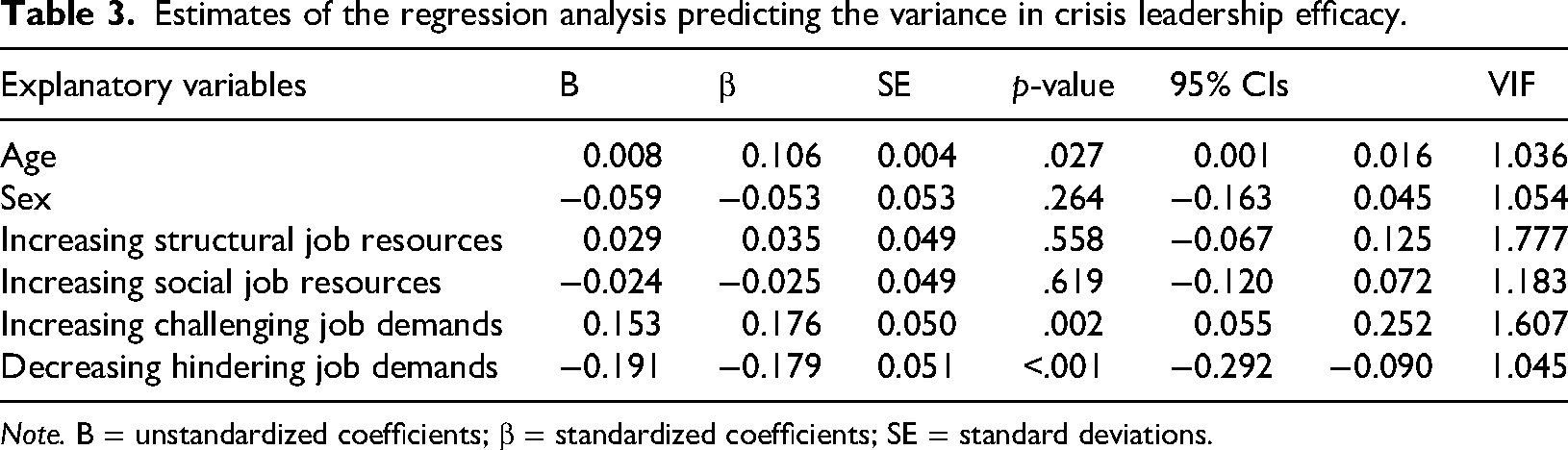
Note. B = unstandardized coefficients; β = standardized coefficients; SE = standard deviations.
Discussion
The current study contributes to the existing literature by proposing a model of crisis-resilient leadership based on principals’ experiences during the COVID-19 pandemic and by identifying job crafting as a strategy to enhance principals’ self-efficacy in resilient crisis leadership. To bridge the gap between the qualitative focus on resilient leadership and the quantitative focus on crisis leadership effectiveness, it is important to explain how these two concepts are connected. Resilient leadership, as derived from the qualitative findings, encompasses principals’ adaptive capacity emotion regulation, and ability to foster a supportive and collaborative school environment under prolonged stress. Crisis leadership efficacy, as measured quantitatively, captures a principal's perceived ability to assess, decide and respond effectively during crisis – skills that are critical components of resilient leadership. While crisis leadership efficacy does not encompass all dimensions of resilience it reflects a key operational facet of resilience: the leader's capacity to maintain functionality and make timely decisions under pressure. This connection enables the study to link theoretical insights with measurable constructs, while also highlighting the need for future research to develop more holistic instruments that encompass the full spectrum of resilience in educational leadership.
First, the results indicate that crisis-resilient leadership involves individual-level sensemaking, sensegiving and collective sensemaking, all of which are influenced by communication and well-being-related factors. Second, principals, individual job-crafting activities appear to be an effective strategy for supporting principals’ self-efficacy in sensemaking processes, thereby strengthening resilient crisis leadership (see Figure 2). In the following section, we describe these findings in greater depth.
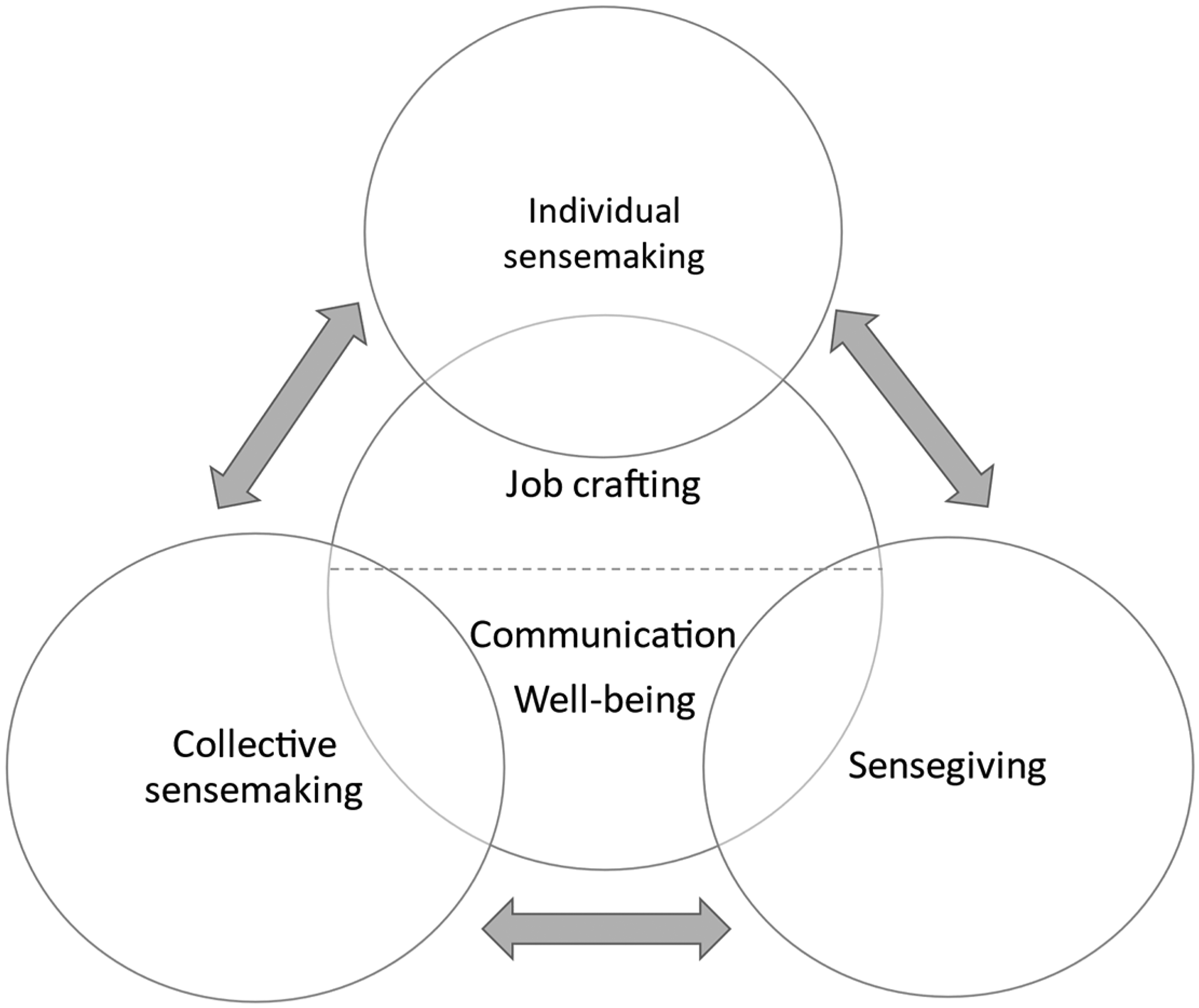
Crisis-resilient leadership and the role of job crafting.
The aforementioned elements of crisis-resilient leadership appear to be interconnected and continuously interact, exerting reciprocal effects throughout the crisis-resilient leadership process over time. For example, principals with a positive outlook and belief in the future (individual sensemaking) may be more capable of fostering a similar mindset within their work community (sensegiving). This positive mindset can enhance the level of collaboration and collective sensemaking, helping the community work together to find solutions. Furthermore, a collaborative environment can support principals in adapting to current circumstances and managing their own emotional burdens more effectively (individual sensemaking). This highlights the role of principals’ intrinsic emotion regulation processes during which they modulate the intensity, frequency and duration of emotional responses (Gross, 1998; Vanderlind et al., 2022). During the COVID-19 pandemic, the decision-making responsibilities of principals increased significantly as they navigated rapidly changing rules and regulations. In doing so, they often had to rely on their ‘gut feeling’ (Snellman et al., 2024) to make timely decisions. Such decision-making processes require effective emotion regulation, and it is likely that principals who managed their emotions well were better equipped to maintain their own well-being while leading and supporting their school communities through the crisis.
Given that principals primarily mentioned issues related to individual sensemaking, we argue that, in many cases, crisis-resilient leadership begins with principals making sense of the situation and developing an understanding of current events. Once principals establish their own understanding, they are better positioned to support others in their sensemaking processes and to foster collective sensemaking (see also Kilskar et al., 2020). Principals’ descriptions of crisis-resilient leadership highlight a complex interplay between personal traits (e.g., persistence, emotional resilience, empathy) and adaptive leadership behaviours (e.g., timely actions and decision-making, proactive prevention, and frontline engagement). These descriptions suggest that a successful individual sensemaking process may rely on effective emotion regulation and advanced socio-emotional skills, which enable principals to work efficiently and persistently, build trusting relationships, manage stress and setbacks, inspire and lead others and demonstrate creativity.
Emotion regulation, as part of the broader set of socio-emotional skills, plays a critical role in this process. Investigating the various socio-emotional skills and their combinations in relation to resilience would be a valuable area for future research. Additionally, principals with strong socio-emotional skills may be more likely to adopt beneficial job-crafting strategies, a possibility that warrants further exploration. The significance and role of socio-emotional skills in principals’ work and resilient leadership deserve deeper investigation, as these factors are strongly connected to resilient crisis leadership and decision-making processes.
During the crisis, principals received information from various sources and rapidly changing regulations posed significant challenges to their sensemaking and decision-making abilities (Longmuir, 2021; Netolicky, 2020). Prioritizing among information channels became crucial, as information provided by the media often differed from that issued by local health officials. Moreover, many decisions had to be made rapidly, often with limited information and without clear frameworks for action. Beyond their role in supporting teachers, principals also take on the role of sensegiving for students, parents, and, at times, the wider local community (Thomson and Greany, 2024; Upadyaya et al., 2021). Thus, particularly in situations where the information was abundant but not necessarily clear or consistent, the role of sensemaking and sensegiving became especially significant, with principals playing a crucial role in this process (see also Coburn, 2001; Giustiniano et al., 2020).
By ensuring clear communication and addressing resource needs, principals foster a sense of security among staff. The essence of this communication was its quality and clarity. Clear, timely and efficient communication is essential for reducing uncertainty and facilitating informed decision-making. The ability to manage information flow and provide precise guidance is crucial for maintaining trust and morale within the school community. Effective communication is not merely a transmission of information but rather a strategic process that shapes understanding and facilitates collaboration (Mills et al., 2010). The findings suggest that effective communication practices, developed during the pandemic, can now serve as a foundation for future resilient leadership. Principals acknowledged the challenges posed by the overwhelming volume of information and emphasized the importance of establishing well-defined communication channels within the school community. They highlighted the need for a mutual understanding of how and where information is shared, as well as which channels are used for different types of information.
Consistent with Ganon-Shilon and Schechter's (2017) assertion that sensegiving involves guiding others in interpreting and navigating complex situations, principals emphasized the importance of providing clear information and instructions and maintaining a positive and supportive atmosphere as essential elements of crisis-resilient leadership. Conversely, when a school community shares common goals and understanding of a situation, the principal's individual sensemaking process becomes more manageable. As noted by Mills et al. (2010), individuals engage in sensemaking not only to determine their next actions but also to manage the anxiety and fear that may accompany these experiences, highlighting concerns related to well-being. Principals similarly emphasized that to exercise crisis-resilient leadership effectively, they must prioritize their own well-being while also striving to ensure the well-being of the school community (Upadyaya et al., 2021). They must remain mindful of how their decisions impact the well-being of others throughout the leadership process.
Furthermore, our results showed that collective sensemaking underscores the importance of collaboration and shared understanding among school leaders and the broader school community. The COVID-19 pandemic challenged traditional structures of teamwork (Pollock, 2020; Thomson and Greany, 2024) yet principals described how they adapted by fostering collaborative problem-solving and inclusivity in decision-making processes. This collective approach not only enhances resilience but also promotes a shared sense of agency among staff, enabling a more effective response to challenges (Weick et al., 2005). These findings align with previous research emphasizing the significance of social learning and collective resilience in organizational contexts (Kilskar et al., 2020). By engaging in collective sensemaking, principals can draw on the diverse perspectives and expertise of their teams (Linkov et al., 2022) thus, they can create a more robust response to crises. This collaborative environment encourages shared ownership of challenges, leading to innovative solutions and a stronger sense of community. Interpretations done during this circle of endless individual sensemaking, sensegiving and collective sensemaking become part of the culture, routines or mental models, shaping future actions and sensemaking (Eddy-Spicer, 2019). Implying that the experiences gained during the COVID-19 crisis have offered already a learning situation and are influencing people’s understanding during post-crises ‘normal times’.
The second goal was to examine the potential role of job crafting in enhancing principals’ crisis leadership efficacy. The results suggest that principals who actively seek or embrace more challenging tasks, as measured by the job-crafting scale (Tims et al., 2012), also tended to report greater confidence in their ability to assess situations and make decisions during crisis (Hadley et al., 2011). In other words, when principals push themselves to take on demanding, stimulation or growth-oriented tasks, this may positively relate to their confidence in leading through a crisis. Conversely, when principals engage in behaviours aimed at reducing hindering job demands, it appears to relate to lower self-reported confidence in their crisis leadership efficacy. The job-crafting behaviours related to hindering job demands include efforts to make work less mentally or emotionally demanding, minimize difficult interactions and avoid challenging decisions or situations requiring sustained focus (Tims et al., 2012, 2021). While reducing these hindering job demands might make day-to-day work easier, it may also limit opportunities to build skills or resilience that are important for leadership during crisis. In essence, principals who engage more with challenging aspects of their job may strengthen their perceived crisis leadership capabilities, while those who focus too much on avoiding or reducing hindrances might feel less prepared for crisis situations. This may be due to the fact that, during the COVID-19 crisis, there were numerous highly demanding tasks (e.g., Elomaa et al., 2024; Longmuir, 2021). Principals who undertook these tasks reported greater confidence in their efficiency, whereas those who avoided them reported feeling less efficient. Additionally, the crisis compelled principals to engage with more challenging responsibilities. Similarly, Toyama et al. (2024) highlighted the importance of proactive job-crafting strategies, such as taking on challenging tasks, which are associated with perceived leadership efficacy during crises. The lack of association between structural and social job-crafting resources and crisis leadership efficacy may be explained by the orientation of structural and social resources, such as skill development and performance feedback (Tims et al., 2012, 2021), towards long-term personal development. In contrast, as noted by participants, crisis leadership efficacy demands rapid decision-making, situational assessment, task prioritization and high-stakes communication under pressure. Crisis situations demand immediate, decisive actions, which contrasts with the slower, developmental nature of job crafting. This may also suggest that job-crafting behaviours should be established as common practice before crises arise to better support crisis-resilient leadership. Nevertheless, it would be important to explore whether similar results would emerge when examining the associations between job-crafting and regular leadership efficacy.
Limitations
While this study provides valuable insights into the relationship between job crafting and crisis leadership efficacy, some limitations should be acknowledged. In the regression analysis, the model controls for gender and age; however, it does not account for other potentially significant confounding variables such as leadership experience, the availability of school resources or the level of support from teachers and staff. These unmeasured variables may influence principals’ perceived efficacy in leading through crisis and could therefore affect the interpretation of the results. Future research should aim to incorporate a broader range of contextual and professional background variables to better isolate the specific effects of job crafting on leadership outcomes. Additionally, while this study makes important contributions to understanding crisis-resilient leadership, several other limitations need to be considered. First, the findings are specific to crisis leadership during the COVID-19 pandemic. Further research is needed to explore whether similar dynamics apply to regular leadership contexts and how job crafting influences leadership efficacy outside of crisis situations. Second, the data was collected in Finland, which impacts the generalizability of the results. Different results might emerge in other cultural and educational systems, where leadership expectations, resources, and responses to crises may differ significantly. Third, participation in this study was voluntary, introducing the possibility of self-selection bias. Fourth, the cross-sectional design of the study limits causal inferences. The observed relationships between job crafting and crisis leadership efficacy represent associations rather than cause-and-effect relationships. Longitudinal or experimental studies would be needed to establish causality. Finally, leadership efficacy was assessed using a self-reported instrument, which may be subject to social desirability or self-perception biases. While this tool has been validated in previous studies, it does not capture external perspectives. The lack of triangulation with data from other stakeholders, such as teachers or school staff, limits the ability to evaluate the broader credibility and accuracy of the reported leadership efficacy. Further research should consider incorporating multi-source data to enhance the robustness of findings.
Conclusions
This study provides important insights into the multifaceted nature of crisis-resilient leadership and the role of job crafting as a strategy to enhance crisis leadership efficacy. The findings emphasize that resilient leadership is a dynamic and evolving process, characterized by the interplay between individual sensemaking, sensegiving and collective sensemaking, all of which are influenced by communication and well-being considerations. On a personal level, this interplay is enhanced by effective job-crafting – particularly the pursuit of growth-oriented and challenging tasks. Importantly, the study's findings have strong relevance in the post-pandemic era. As schools settle into new operational norms, the lessons learned from prolonged crisis leadership offer a foundation for improving daily leadership practices and long-term preparedness. The emphasis on adaptive leadership, emotion regulation and collaborative problem-solving remains crucial not only for managing crisis but also for strengthening everyday leadership in evolving school environments.
To build principals’ capacity for resilient leadership, it is essential to provide tailored support and professional development. This includes the integration of job-crafting strategies into both pre-service and in-service leadership training, with a focus on developing self-awareness, aligning personal strengths with leadership roles and fostering proactive role design. Principals should be supported in developing emotional intelligence through practical coaching in emotion regulation, empathy and stress management. Opportunities for peer learning and collaboration, such as structured coaching networks, can enhance the sharing of effective leadership strategies. Schools and policymakers should also promote flexibility in job design, ensuring that principals can adapt their responsibilities to suit the needs of local context. This requires allocation sufficient resources – including time, staffing, and funding – for professional development and role customization. In addition, feedback mechanisms should be established to monitor how training influences leadership behaviour, well-being, and overall school performance. By embedding these strategies into leadership development and policy frameworks, educational systems can better equip school leaders for both ongoing challenges and future disruptions. This proactive approach not only strengthens principals’ individual and collective leadership capacities but also enhances the resilience of entire school communities.
Footnotes
Acknowledgements
This manuscript is not under consideration by any other journal. The authors confirm that we have adhered to APA ethical standards in the treatment of our research participants. All listed authors have approved the order of authorship and the submission of this manuscript in its current form. The corresponding author has taken responsibility for keeping co-authors informed throughout the editorial review process, including sharing reviewer comments and any necessary revisions.

Funding
The authors disclosed receipt of the following financial support for the research, authorship and/or publication of this article: This research was supported by the EduRESCUE Strategic Funding Agency and the Strategic Research Council at the Academy of Finland [Grant Number 345264].
Declaration of conflicting interests
The authors declared no potential conflicts of interest with respect to the research, authorship, and/or publication of this article.