



Abstract
E-leadership, a form of leadership facilitated by advanced information technology, has gained prominence over the past decade, particularly during the COVID-19 pandemic, as it extends traditional leadership to support remote work environments. This study investigated the impact of e-leadership on employees in the higher education sector, explicitly exploring its effects on work engagement, well-being and organisational citizenship behaviours (OCB). Data for this study were collected through an online survey administered to 445 employees working from home during the pandemic in the higher education sector in Vietnam. Data were analysed using structural equation modelling to test the study's hypotheses. The results suggested that perceived e-leadership significantly influenced employees’ work engagement, well-being and OCB. This study’s findings hold important implications for effectively managing a diverse workforce, emphasising the importance of appropriate leadership styles in the ever-evolving landscape of remote work. Amid the COVID-19 pandemic, where remote work has become the norm, this research sheds light on the crucial role of e-leadership in shaping employee outcomes. It provides both practical and theoretical insights that can guide leaders in optimising their approaches to leadership within the context of advanced information technology-mediated work environments. These findings represent a valuable contribution to understanding the evolving dynamics of leadership in the digital age and its impact on employee well-being and performance.
Introduction
The emergence and spread of COVID-19 have led to rapid growth for many employees working from home with little time and conditions provided to organise themselves for this transition. COVID-19 has also challenged businesses and individuals globally and has brought forth new business challenges for organisations, including working methods such as working from home (Bailey and Breslin, 2021; Bush, 2021; Caligiuri et al., 2020). Since the pandemic spread, several studies have suggested that leadership is even more crucial in affecting employee outcomes (Bailey and Breslin, 2021; Contreras et al., 2021; Hamouche, 2020). The literature shows that different leadership styles lead to a variety of outcomes, including undesirable (absenteeism and turnover) and desirable (organisation citizenship behaviour, employee well-being and employee performance) (Casida and Parker, 2011; Ismail et al., 2010; Klein et al., 2013; Koo and Park, 2018; Poels et al., 2020; Quintana et al., 2015; and Yahaya and Ebrahim, 2016).
Many research papers explored leadership in education and large-scale educational change by 2020. As societies and educational systems have been impacted by a global pandemic since 2020, educational leadership styles have also changed (Campbell, 2021). The Fourth Industrial Revolution context requires an effective educational e-leadership practice to promote learning outcomes that equip students for the future (Elkington, 2021). During the uncertain period, educational leaders are required to take rapid actions and decisions (Netolicky, 2020). The review by Yuting et al. (2022) indicated a more significant e-leadership role in responding to emergencies and crises and engaging more stakeholders in the educational sector in rapid technology transformation. According to Campbell (2021), the response to COVID-19 has created new leaders and contemporary leadership approaches. Initially, educational leadership centred on formal leaders, such as principals, and leadership practices across the educational system. In the context of the pandemic, the roles of the broader group of educational workers and the importance of distributed leadership and e-leadership have been highlighted (Campbell, 2021; Harris and Jones, 2012).
Working from home has become a new norm across different sectors post-pandemic, including higher education institutions worldwide, creating challenges in leading. The leadership of working from home does have aspects of e-leadership or digital leadership. E-leadership or digital leadership refers to effectively leading and managing remote teams using digital technologies and online communication tools (Dasgupta, 2011). During COVID-19, the leaders used digital tools to communicate with their employees. Hence, in working from home, leaders need to adapt their leadership style to the virtual environment and leverage digital tools to foster their employees’ collaboration, engagement and productivity. This situation has led to an essential aspect of significant managerial support (Hamouche, 2020). Leaders need to demonstrate an inclusive leadership style to engage their virtual teams and establish a solid and trustworthy relationship with the employees. The study by Antonopoulou et al. (2021b) found that participants showed strong tendencies toward transformational and transactional leadership, with a high proficiency in digital leadership and an active avoidance of passive-to-avoid leadership. Notably, strong digital leadership was linked to higher performance and job satisfaction. Another study by Antonopoulou et al. (2021a) found that the leadership outcomes were positively linked to transformational leadership and negatively associated with passive-to-avoid leadership. This confirms that increased transformational leadership leads to enhanced employee efficiency and satisfaction.
Further, leaders must ensure their followers have the necessary tool kit and support system (Piccolo and Buengeler, 2013). Virtual leadership pertains to the practice of leading teams and individuals who are separated by geographical or temporal distances. This leadership approach is facilitated by utilising information and communication technologies (ICTs), including but not limited to tools like email and videoconferencing (Cascio, 2000; Kiljunen et al., 2022; Schmidt, 2014). As a result of the ongoing digital revolution and the inevitable working from home, leaders and managers have adopted e-leadership. E-leadership, alternatively referred to as virtual leadership, is multifaceted, with distinct attributes that set it apart from the conventional offline leadership. In the context of e-leadership, as Samartinho et al. (2015) outlined, an emerging paradigm can be observed, encompassing a knowledge framework categorised into three main domains: e-leadership, virtual teams and technology. Notably, technology serves as the common thread, as a foundational platform for fostering connections. Virtual leadership can be conceptualised as a blend of competencies and knowledge structures, encompassing cognitive capacities, perceptions and metacognitive elements that collectively contribute to an overall performance, as Serban et al. (2015) highlighted. Therefore, the focus of our paper is confined to the realm of virtual leadership, which is also interchangeably called e-leadership. We investigate its impact on various employees’ outcomes.
Integrating technology into leadership practices requires the leaders to transform their role, vision and practices as face-to-face dependency on the leaders decreases (Chua and Chua, 2017). It also causes changes in the strategies used to lead the institution, especially in planning, monitoring and follow-up (Albidewi, 2016). According to Avolio et al. (2014), e-leadership is leadership in organisations where work is mediated by advanced information technology. Under the e-leadership concept, Van Wart et al. (2019) proposed six skill-based competencies: (a) communication; (b) social; (c) team building; (d) management; (e) technological and (f) trustworthiness. The current study attempts to test these six competencies of e-leaders. As Dalton (2020) stated, visibility is vital in leadership now more than ever. In virtual leadership, the leader’s ability to lead compassionately and empathetically makes them visible. Du Plessis and Keyter (2020) suggested a combination of innovative and collaborative leadership styles in adaptive leadership during the pandemic period. Plassis and Keyter (2020) further pointed out that communication is vital during the crisis response and the post-crisis stages, and empathy is the most critical trait in a leader. Chaudhary et al. (2022) found that communication, change management and technological skills are crucial for the well-being of employees in global virtual teams during the COVID-19 pandemic. Ahuja et al. (2023) highlighted the importance of leadership adapting to digital technologies for a successful transition to remote work, identifying critical success factors such as technology management, e-motivation and well-being and e-change management, with employee engagement being a significant factor. Ahmed et al. (2022) examined the influence of e-leadership competencies in the automobile industry, demonstrating significant effects on employee performance, motivation, satisfaction and commitment. Gupta and Mathur (2023) investigated Virtual Communication Technology (VCT) adoption among educational leaders and found that factors such as performance expectancy, effort expectancy, social influence and facilitating conditions influence intention to use.
Hence, if the leader displays themselves as a role model showing suitable traits, characteristics and leadership styles, then their team members understand the significance of interpersonal communication, which results in increased positive outcomes within the organisation (Dalton, 2020; Plassis and Keyter, 2020). As a post-Covid workplace landscape, it would be necessary for organisations to make changes moving forward. The ‘Great Resignation’ refers to a phenomenon where many employees voluntarily leave their jobs. The COVID-19 pandemic has prompted individuals to reassess their career priorities and seek greater fulfilment in their professional lives. Factors such as burnout, re-evaluation of personal values, desire for better work-life balance and increased focus on mental health have all contributed to this trend. Employees are increasingly seeking opportunities that better align their personal and professional lives, including flexible work arrangements, remote work options and supportive organisational cultures. The ‘Smart Work’ concept emphasises the importance of productivity and performance based on outcomes rather than traditional notions of working hours or physical presence. It involves leveraging technology, automation and flexible work arrangements to optimise productivity and efficiency. Smart work encourages employees to find innovative ways to accomplish tasks while maintaining a healthy work-life balance. This trend recognises that employees can be productive and successful without being confined to a traditional office environment or adhering strictly to traditional work schedules.
The success and sustainability of organisations post-COVID will be determined by their ability to adapt their leadership style based on the global implications post-pandemic (Du Plessis and Keyter, 2020). Past research has indicated that effective leadership practices can increase employees’ work engagement and well-being, and during this pandemic, the role of leaders has gained even greater centrality to provide support to the employees (Bailey and Breslin, 2021; Contreras et al., 2021; Hamouche, 2020; Khan et al., 2021; Liu et al., 2022). Thus, the pandemic instigated the need for e-leadership (virtual environmental leadership), which has emerged as an extension of traditional leadership where the leader–member interactions are now mediated by information technology to provide guidance and support to the employees (Bailey and Breslin, 2021; Contreras et al., 2021; Hamouche, 2020). This study explores the effect of e-leadership styles (virtual leadership style) on the work engagement, well-being and organisational citizenship behaviours of employees who worked from home during the COVID-19 pandemic.
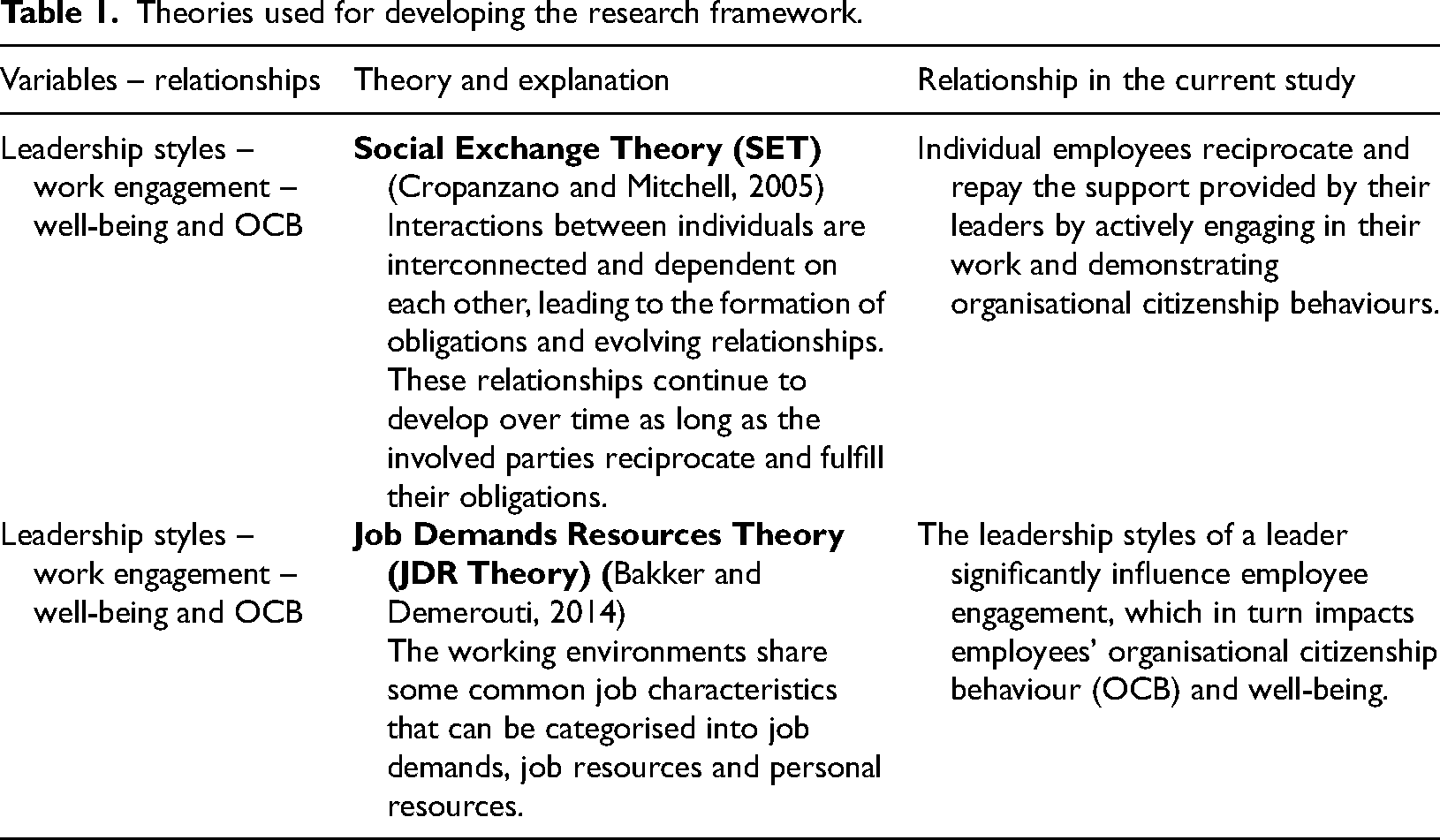
Cooke et al. (2020) suggest that during the pandemic, Asian countries underwent significant changes and developments, including those related to economy, business strategy, supply chain management, and globalisation. Koo and Park (2018) stress that leadership studies in the Asian context are essential because of the variety of cultures, management philosophies and governance structures. The theoretical support for this study comes from the Job Demands Resources theory (Bakker and Demerouti, 2014) and Social Exchange Theory (Cropanzano and Mitchell, 2005), which is presented in Table 1. Based on the tenets of these three theories, the current study suggests that (1) employees feel engaged at work and their well-being is improved because of the job resources, including supervisor support and feedback, clear communication and leader trust, and (2) employees respond to the leader's trust, communication and coordination and their support with organisational citizenship behaviour. The current study also proposes that effective e-leadership will generate a feedback loop from the leader's continued support to work engagement, well-being and organisational citizenship behaviours in the post-pandemic period. The various theories used for developing the research framework are presented in Table 1 as below:
Theories used for developing the research framework.
The global work landscape has experienced unprecedented transformations, partly catalysed by the COVID-19 pandemic. While this context has undeniably shaped the adoption of various leadership strategies and changes within organisations, it is essential to consider whether these shifts would have naturally emerged in the absence of the pandemic. As we delve into the discussion on the impact of virtual leadership on employees and organisations, we aim to examine the changes introduced and the leadership strategies implemented critically. We aim to discern whether these strategies are uniquely pandemic-induced or reflect a broader evolution in leadership practices that would have occurred regardless of the global situation in the future. Hence, this study aims to examine the effect of e-leadership on employees’ outcomes (work engagement, well-being and organisational citizenship behaviour) in the higher education sector in Vietnam. To the best of our knowledge, none of the studies in Vietnam has been conducted on e-leadership’s influence on employees’ outcomes. Hence, this study aims to fill this unexplored area in the literature in this South-East Asian nation.
Literature review and hypothesis development
Perceived e-leadership
Leadership is about guiding and influencing other people's behaviours to achieve organisational goals (Leithwood and Reihl, 2003; Stogdill, 1950). The leader can utilise organisational assets, including human resources, to solve problems and accomplish objectives (Sunarsi et al., 2020). However, information and communication technology has developed rapidly in the present era, and work can be done anywhere and anytime (Ibrahim et al., 2018). Thus, the leadership style has integrated virtual leadership, which requires the leaders to perform management roles across national, cultural and geographic boundaries using information technology to attain common goals (Sunarsi et al., 2020). The term ‘e-leadership’ was developed in 2000 and is defined as the process of influencing behaviour, attitudes, thinking and performance of individuals, teams and organisations using information technology (Avolio et al., 2000). Rather than substituting traditional communication methods with technological tools, e-leadership is more about incorporating conventional and virtual media to enhance effectiveness in performance towards organisational outcomes (Wang et al., 2022). Since the COVID-19 pandemic forced the transition to the remote and hybrid working mode, virtual leadership roles have become vital to adapt to a new situation and prepare for any emergency and uncertain circumstances.
In a remote working context, the performance of virtual teams and organisations is influenced by trust, coordination and communication skills and the behaviour of leaders (Flavian et al., 2019; Hambley et al., 2007; Thomas et al., 2007; Van Wart et al., 2019). The three components, leader trust, leader communication and coordination and leader behaviour, are incorporated in our proposed research framework as characteristics of perceived e-leadership to study its effect on employee factors in the higher educational sector. Chamakiotis et al. (2021) explored how leadership in virtual teams (VTs) can be adapted during the COVID-19 pandemic by drawing on the existing VT literature to understand the challenges leaders face transitioning from traditional teams to VTs. Through a literature review, they identified four key themes on e-leadership: (a) for digital well-being; (b) for engagement, trust development and relationship building; (c) for creating work-life boundaries; and (d) for fostering creative performance and innovation identified, which can help e-leaders effectively navigate the unique characteristics of VTs in the COVID-19 context (Chamakiotis et al., 2021).
Leader’s trust
Trust is defined as the degree of confidence and beliefs one person has in the competence and behaviour of the trustee (Deutsch, 1962; Nyhan and Marlowe, 1997). Moreover, trust is a relational phenomenon that can be developed progressively in the interactions between the trustor and trustee (Mayer et al., 1995). Trust contributes to effective coordination and motivates cooperative behaviour in the trustor–trustee relationship (Lewicki et al., 2006). Leaders must have the ability to build trust among their followers, as trust positively affects employee factors in the organisation, such as performance, well-being, work engagement and OCB (Chughtai et al., 2015; Hassan and Ahmed, 2011; Lee et al., 2010; Nasra and Heilbrunn, 2016; Sharkie, 2009). In a working environment with less face-to-face interaction, trust building is one of the crucial tasks of e-leaders to strengthen the relationship between leaders and employees, which will further increase the performance and well-being of the virtual workforce.
Leader’s communication and coordination
In the remote working environment, leaders must prioritise effective communication and coordination among team members to minimise miscommunication. In this context, e-communication is vital in using basic technology tools like email and video conferencing to facilitate communication and contribute to the overall performance (Roman et al., 2019). The study of Cortellazzo et al. (2019) indicated that an effective communication method should be developed by e-leaders, considering appropriate digital tools, possible cultural diversity and contextual dimensions. This helps employees comfortably present ideas, participate in decision-making and demonstrate positive organisational commitment. Computer-based communication makes information more visible and easily shareable, enhancing employees’ work independence, and this helps organisations minimise the need to supervise employees (Cortellazzo et al., 2019; Schwarzmüller et al., 2018).
Leader’s behaviour
Leadership is a significant factor in tackling challenges and achieving organisational goals in a virtual workplace setting. Thus, leader behaviours are considered when studying the effect of e-leadership in organisations. According to Liao (2017), the behaviours of leaders can be categorised into task-oriented and relationship-oriented behaviours. Task-oriented behaviours focus on the roles and responsibilities of followers, aiming towards efficiency and goal accomplishment. Relationship-oriented behaviours concern the well-being, support and interactions between leaders and employees (Liao, 2017). Prior research found that leader behaviours significantly influence the performance of virtual team members (Hill et al., 2014) as well as organisational citizenship behaviour and attitude towards new technology and virtual work (Lilly and Durr, 2012).
Work engagement
According to Kahn (1990), engagement is a person's cognitive, emotional and physical behaviours that stimulate the relationship with work and other people, influencing the employees’ well-being and engagement. Schaufeli et al. (2002) state that work engagement is a positive job-related psychological state characterised by vigour, dedication and absorption. Vigour is related to high levels of mental hardiness and energy. Dedication implies a strong commitment to work with a sense of enthusiasm, significance and challenge. Absorption is described as being fully involved in job responsibilities (Bakker and Demerouti, 2008). Work engagement was found to promote employees’ performance and citizenship behaviours (Bailey et al., 2017). In addition, engagement is considered one of the predictors of employees’ well-being (Mäkikangas et al., 2013; Schaufeli et al., 2008). Workforce engagement also facilitates the organisation's development and competitive advantage, contributing to its sustainability goals and long-term success (Vila-Vázquez et al., 2018).
Many researchers highlighted that leadership is one of the crucial determinants driving the work engagement of employees and organisational success (Carasco-Saul et al., 2015; Gyu Park et al., 2017; Wiley, 2010). Studies on higher education also indicated the importance of leadership in improving the academic staff's engagement (Arokiasamy and Tat, 2020; Mufeed, 2018). In a virtual setting, Mutha and and Srivastava (2021) identified the significant impact of leaders on employees’ engagement in a remote working environment. The results of Agustina et al. (2020) showed that digital leadership positively influenced the work engagement of vocational teachers in Indonesia. Teachers considered principals with digital characteristics (such as creating a digital culture and understanding digital technology) more flexible and tended to allow them to run classes freely (Agustina et al., 2020). The study found increased motivation and excitement among teachers in their reflective learning practice (Agustina et al., 2020). Zhang et al. (2022) also confirmed that technology leadership strongly impacted teachers’ and students’ technology-enhanced learning and teaching engagement in Chinese higher education institutions. Hence, based on the above discussion, the below hypothesis is designed to determine the effect of e-leadership on employees’ work engagement in the higher educational sector:
Well-being
The well-being of employees is defined as the overall quality of the functioning and experience of the employee at work (Warr, 1987). Specifically, well-being is often theorised with three main dimensions: happiness, health and relationships (Grant et al., 2007; Van De Voorde et al., 2012). In the studies of McCarthy et al. (2011) and Brunetto et al. (2012), well-being is not only related to the physical aspect but also associated with emotional, social, intellectual and spiritual facets. Additionally, Skakon et al. (2010) included the tiredness–vigour dimension (general well-being), pleasure–displeasure attribute (job satisfaction) and enthusiasm–displeasure characteristic (burnout) to define well-being in organisations.
Employee well-being is among the most critical factors that benefit organisations, including higher educational institutions (Samad et al., 2022). The relationship between leadership and the well-being of employees has been explored in various studies, concluding that leadership has a significant effect on the well-being of employees in organisations (Eriksson et al., 2008; Sparks et al., 2001; Zeng et al., 2022). According to the study of Van Dierendonck et al. (2004), subordinates who had higher levels of well-being reported that the leadership style of their managers was more supportive and active over time. The study of Samad et al. (2022) emphasised the significant effect of transformational leadership style on employee well-being and job satisfaction in Australian higher educational institutions. Moreover, authentic leadership has been proven to positively influence the well-being of higher education staff (Adil and Kamal, 2016, 2020). As per Antonopoulou et al. (2019), transformational leadership is the most suitable approach for higher education as it emphasises distributing leadership responsibilities among academically capable individuals who collectively manage diverse leadership needs in various contexts.
The study by Ibrahim et al. (2018) showed that e-leadership contributed positively to the well-being of school teachers via the team communication factor. The research of Jin et al. (2022) on the Chinese higher education sector found that psychological well-being positively impacts employees’ physical health. Previous studies also indicated that employees’ well-being increases work engagement and organisational citizenship behaviour in educational contexts (Huang et al., 2021; Xu et al., 2019). The well-being and health of students and employees are widely appreciated as the key to the success of higher educational institutions, with the development in productivity and performance (Dooris et al., 2021). The following hypotheses are constructed to investigate further the impact of virtual leadership on employees’ welfare:
Organisational citizenship behaviour (OCB)
Organisational citizenship behaviour (OCB) is conceptualised as a voluntary individual behaviour in which employees’ performance exceeds the formal job requirements, contributing to effective organisational functioning (Organ, 1988). Specifically, behaviours such as volunteering for extra work, helping colleagues, and following regulations and rules at work are exhibited as OCB of employees (Notanubun, 2021). Many studies have found OCB to develop organisational performance (Khasawneh, 2011; Notanubun, 2021). The study of Gyamfi et al. (2019) highlighted the positive impact of OCB dimensions, including courtesy, conscientiousness, sportsmanship and organisational loyalty, on employees’ productivity and satisfaction in higher educational institutions. Hence, OCB is a critical factor that promotes the quality of work and the growth of organisations.
The role of leaders is significant in encouraging OCB of employees in the workplace. Many scholars in the field have identified the positive relationship between several leadership styles and OCB (Gurmani et al., 2021; Nohe and Hertel, 2017; Paredes et al., 2021). Additionally, Masood et al. (2020) found that transformational and transactional leadership styles positively influenced OCB, while laissez-faire leadership adversely impacted employees’ OCB in Pakistan universities. Similarly, transformational leadership was found to have a significant relationship with OCB through organisational commitment as a mediating factor in Malaysian research institutions (Al-Mamary, 2021). Although OCB is a critical determinant of successful organisations, no studies have investigated the effect of e-leadership on OCB in higher education, although a similar relationship has been tested in different contexts (Neufeld et al., 2010; Ziek and Smulowitz, 2014). Therefore, this study will explore the relationship between e-leadership and university employees’ OCB to fill this existing gap in the literature. The below hypothesis is postulated as below:
Influence of work engagement on well-being and OCB
Employees’ work engagement is stimulated by intrinsic job motivation (Schaufeli et al., 2002). Thus, employees with high levels of engagement perceive their work to be more enjoyable, exciting and satisfying (Van Beek et al., 2012). Employees who demonstrate engagement in their work are less exposed to burnout and exhaustion in both physical and emotional states (Babcock-Roberson and Strickland, 2010). The study of González-Romá et al. (2006) also supports the concept that work engagement and burnout can be considered a contradiction of each other. Shimazu et al. (2015) asserted that work engagement could enhance job performance and life satisfaction and eliminate the ill-health of employees in Japan. In an educational context, university teachers with greater work engagement were proven to have higher well-being (Adil and Kamal, 2016). Several empirical studies have found that job engagement is a significant antecedent of OCB. According to the study by Paredes et al. (2021), there is a positive relationship between work engagement and OCB, which is also in line with the results of Babcock-Roberson and Strickland (2010) that emphasised the impact of engagement on OCB in the organisation. In recognition of these relationships, the following hypotheses are proposed to study the effects of work engagement on the well-being and OCB of employees in higher educational institutions:
The mediating effect of work engagement on the relationship between perceived e-leadership and well-being and between perceived e-leadership and OCB
Previous studies found that leadership had a positive impact on work engagement (Carasco-Saul et al., 2015; Mufeed, 2018; Mutha and Srivastava, 2021), and work engagement is a critical factor in enhancing the well-being and OCB of employees (Paredes et al., 2021; Shimazu et al., 2015). Thus, it is believed that leadership can indirectly influence employees’ welfare and OCB through work engagement. This premise is consistent with the findings of Adil and Kamal (2020), which indicated that work engagement mediated the relationship between leadership and job-related well-being of employees in the higher education sector. In addition, Babcock-Roberson and Strickland (2010) demonstrated the mediating effect of work engagement in the association between charismatic leadership and OCB. The study emphasised the leaders’ role in developing job engagement in the workforce, which further encourages positive behaviours that improve OCB and boost organisational effectiveness. Digital leadership has positively impacted employees’ work engagement in the educational sector (Agustina et al., 2020; Zhang et al., 2022). According to the study by Agustina et al. (2020), digital leaders contributed positively to the effectiveness of teacher-reflective practice with work engagement as a mediator. However, to the best of our knowledge, research has yet to analyse work engagement as a mediator in the relationship among e-leadership, well-being and OCB of higher education employees. Hence, the following two hypotheses are incorporated into the study:
The proposed research framework presents the independent, mediating and dependent variables (as in Figure 1).
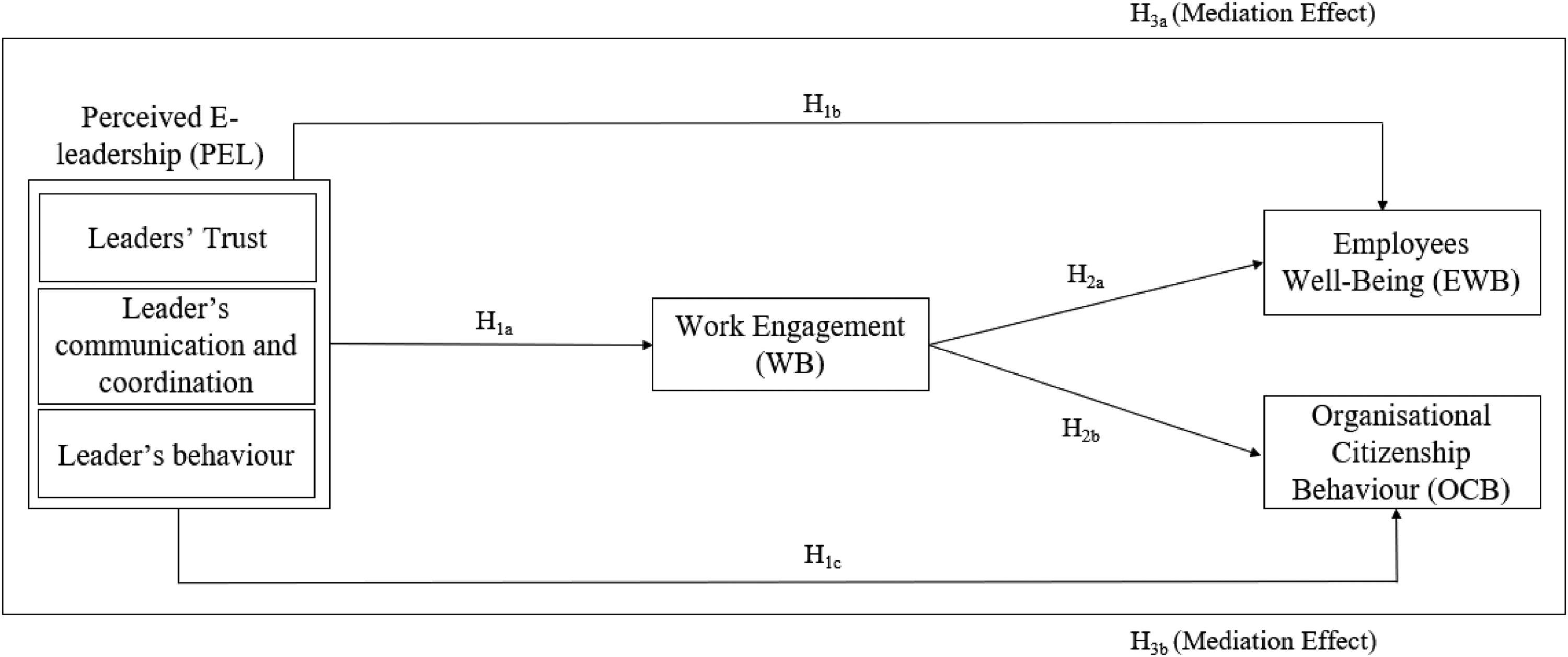
Proposed conceptual framework.
Research methodology
Data collection and sampling
This study is a quantitative research study conducted in Vietnam between April 2022 and July 2022. A random sampling method was employed to collect the data from academics at the Associate Lecturer, Lecturer, or Senior Lecturer level and non-academic professionals working in the higher education sector. To collect the data for this study, the online survey link was posted on researchers’ social networking sites, and a total of 553 participants took the survey. However, only 445 participants could be used as the final sample size due to incomplete responses or participants not meeting the inclusion criteria, such as not working in the higher education sector in Vietnam. The survey was not explicitly targeted to any geographic context as it was an online survey open to all the higher education staff working in Vietnam. Hence, it is not based on a particular region in Vietnam.
As part of the pre-testing phase, a small group of participants (n = 5) working in the higher education sector was selected to complete the survey among all the participants before its launch. This pre-testing aimed to identify any issues with the survey instrument. The participants provided feedback on the survey, which helped adjust the questionnaire items. Based on the feedback received from this small group, certain modifications were made to the questionnaire. For instance, to align the study with its focus on e-leadership (virtual leadership) during the COVID-19 pandemic, the researchers added ‘While working from home’ to all the questionnaire items. This modification clarified the context of the study, emphasising the examination of leadership aspects during remote work rather than perceived leadership in regular circumstances.
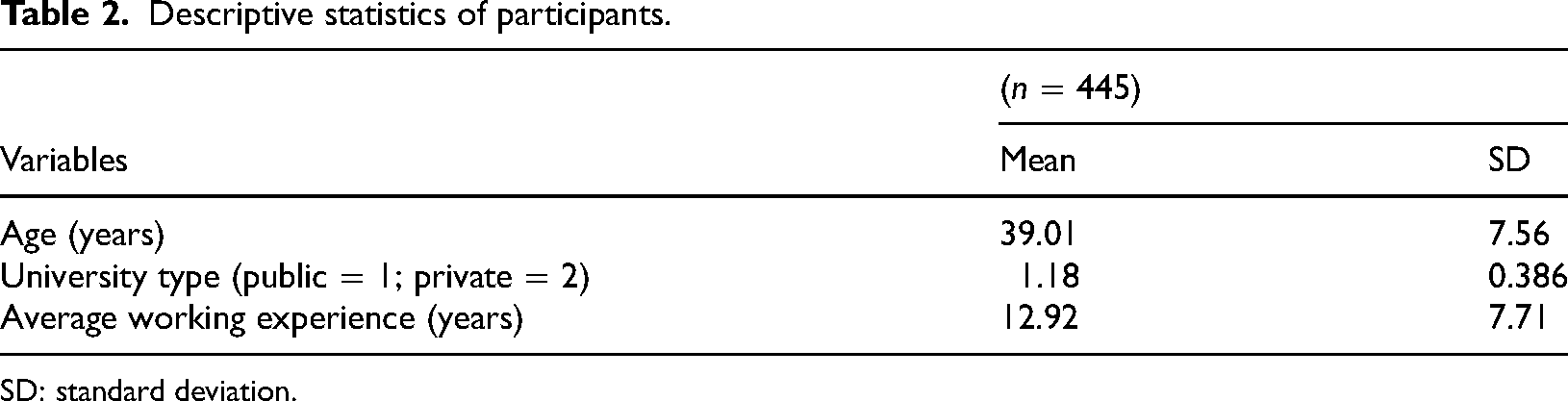
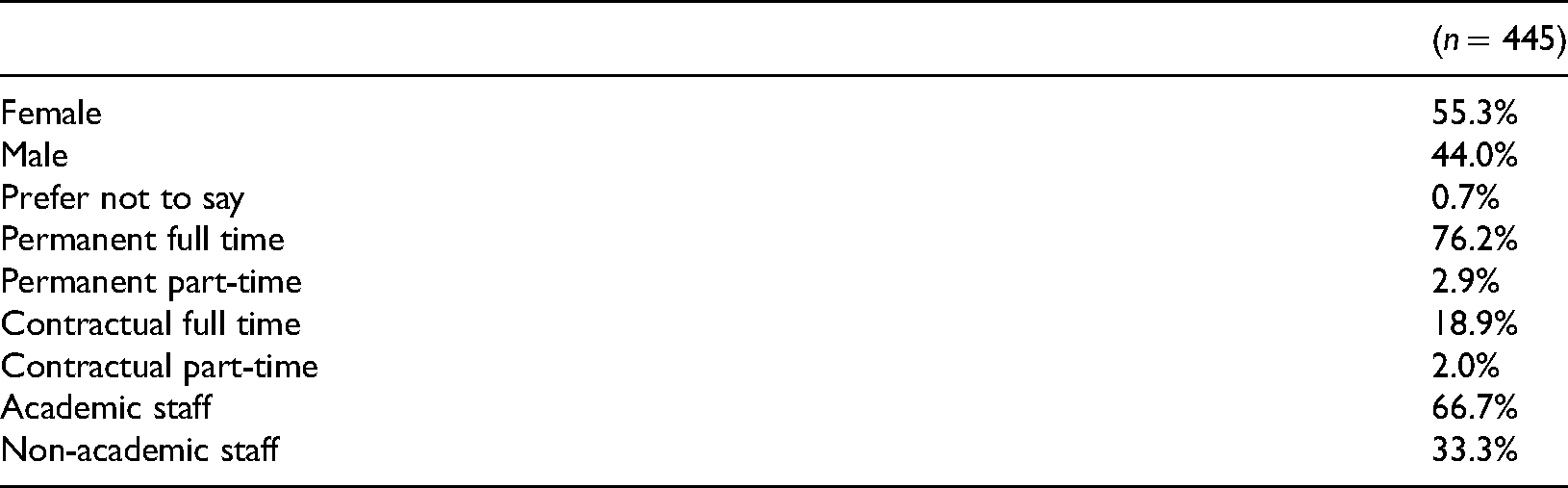
The descriptive statistics of the participants for this study are presented in Table 2. The average age of the participants was around 39 years, with an average work experience of around 13 years. The participants mostly worked in public universities (82%). There were more female participants (approximately 55%), and the rest were male. The majority of the participants, 76%, were permanent full-time staff and around one-fourth of the participants worked as part-time staff. Around two-thirds of the participants (66.7%) worked as academic staff.
Descriptive statistics of participants.
SD: standard deviation.
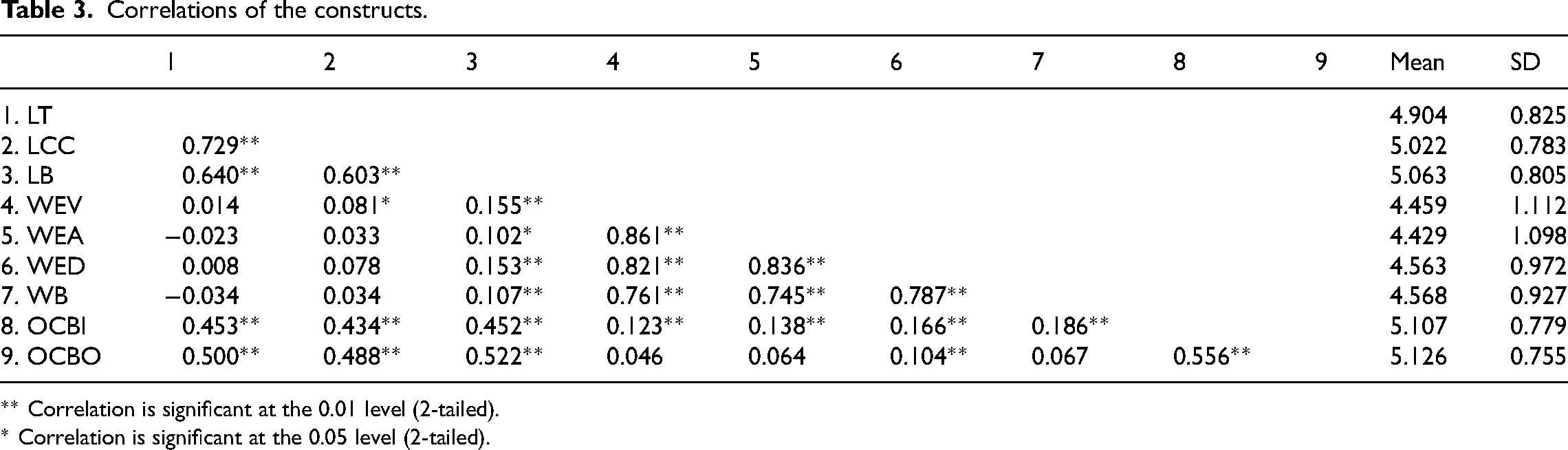
The correlation between different constructs is shown in Table 3, and the highest correlation is found between employee engagement and well-being.
Correlations of the constructs.
** Correlation is significant at the 0.01 level (2-tailed).
* Correlation is significant at the 0.05 level (2-tailed).
Instrument development (independent, mediating, and dependent variables)
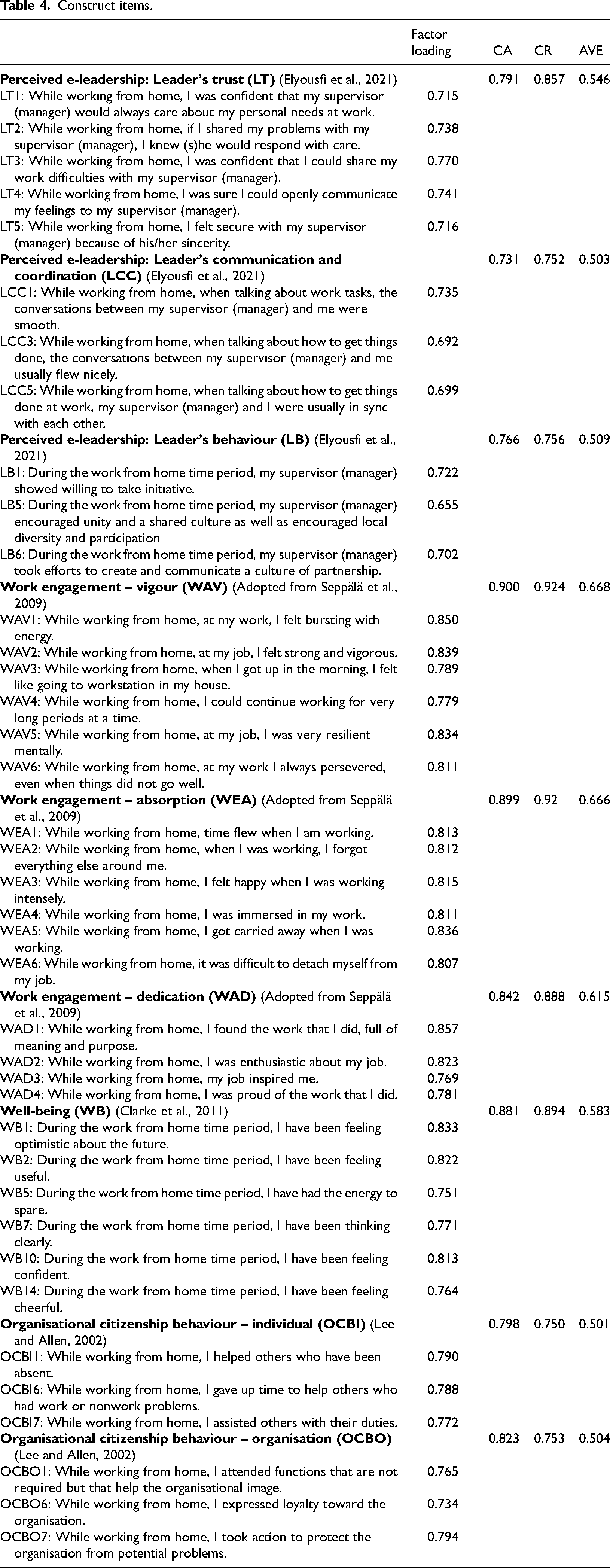
The study consisted of one independent variable (perceived e-leadership), one mediating variable (employees’ work engagement) and two dependent variables: employee well-being and organisational citizenship behaviour. All the variables consisted of different items and were measured on a scale of 1 to 7, with 1 = extremely disagree to 7 = extremely agree. The items of all the variables with their factor loadings are presented in Table 4.
Construct items.
Independent variable
The measurement scale included for perceived e-leadership was adopted from Elyousfi et al. (2021) and consisted of three constructs (leader's trust (LT), leader's communication and coordination (LCC) and leader's behaviour (LB)). LT and LCC were measured using five items each, while LB was measured using six items. Due to the low correlation with the construct or due to cross-loadings, only three items from LCC and LB could be retained for this study. The reliability was tested using Cronbach's alpha (CA) for the retained items, and the values were 0.79, 0.73 and 0.77 (Table 4) for LT, LCC and LB, respectively, which were above the threshold of 0.7 (Maheshwari, 2022).
Mediating variable
The mediating variable, employees’ work engagement, was also measured using three constructs, namely vigour, absorption and dedication, adopted from Seppälä et al. (2009). Vigour and absorption comprised six items, while dedication was measured using five items (Table 4). For dedication, only four items can be retained due to cross-loading. All three constructs showed a high CA ranging from 0.84 to 0.90.
Dependent variables
One of the dependent variables of this study, well-being (EWB), is measured using 14 items, and another dependent variable, organisational citizenship behaviour (OCB), was measured by two constructs, the organisational citizenship behaviour at an individual level (OCBI) and an organisational level (OCBO). EWB was designed using the Warwick-Edinburgh Mental Well-being Scale (WEMWBS) and was adopted from Clarke et al. (2011), while the items for OWB were adopted from Lee and Allen (2002). Both OCBI and OCBO consisted of eight items, but only three items from each were retained for this study. For well-being, this study could only retain six items. The CA for these variables was also above the cut-off value of 0.7 (Olarewaju et al., 2023) (Table 4).
Results and analysis
Measurement model validation
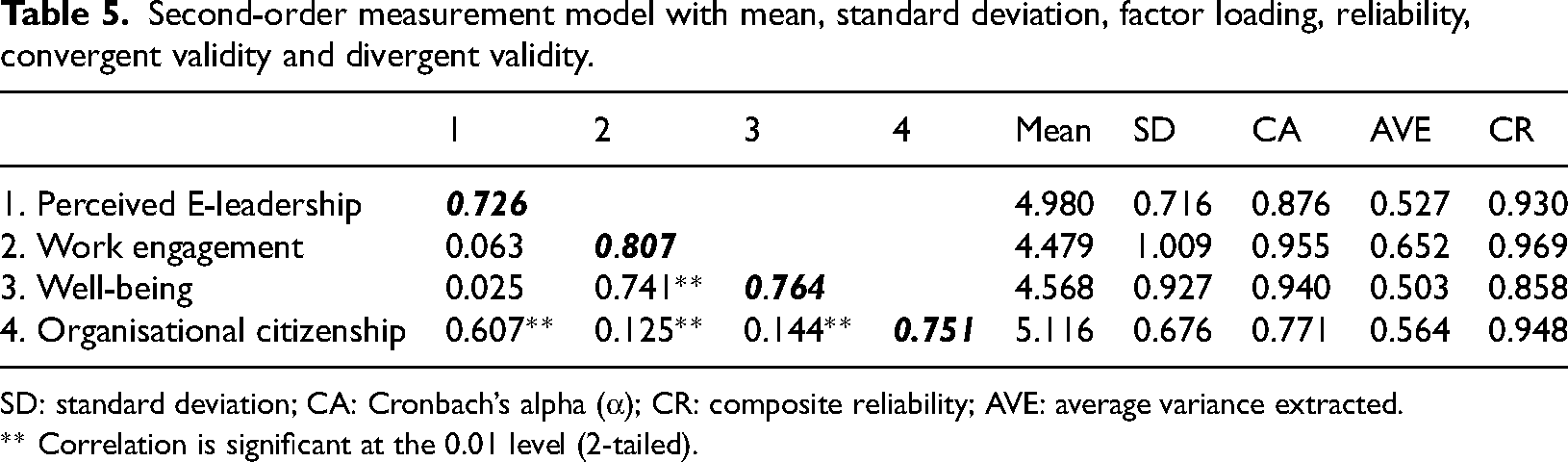
The data for this study were analysed using AMOS, version 28 and SPSS, version 28. The confirmatory factor analysis (CFA) was used to validate the model. The model fit indices (CMIN/DF = 1.740, CFI = 0.900, AGFI = 0.864, IFI = 0.901, TLI = 0.890, RMSEA = 0.041) were all above the threshold levels (Hair et al., 1998) and hence the model was considered as a good fit. After testing the model fit, the internal and discriminant reliability was tested. The internal reliability was tested using CA and composite reliability (CR), and the square root of average variance extracted (AVE) was calculated to test the discriminant reliability. The values of CA and CR were both above the cut-off value of 0.7, and AVE for all the constructs was also above the acceptable value of 0.5 (Maheshwari and Kha, 2022) (as in Table 4). In Table 5, the square root of AVE (diagonal in bold and italics) was higher than the respective correlations for each construct vertically, and horizontally, justifying the discriminant validity of this study.
Second-order measurement model with mean, standard deviation, factor loading, reliability, convergent validity and divergent validity.
SD: standard deviation; CA: Cronbach’s alpha (α); CR: composite reliability; AVE: average variance extracted.
** Correlation is significant at the 0.01 level (2-tailed).
Common method bias
In the self-reported survey, the reliability and validity of model constructs might reduce due to common method variance (CMV), one of the measurement errors (Fuller et al., 2016). We used procedural and statistical methods to minimise this effect. As a part of the procedural approach, the survey questions were designed clearly, and the respondents were also informed about the confidentiality of their responses so that they could provide honest responses (Gonzalez-Tamayo et al., 2023). Harman's single factor test was used as a statistical method for testing CMV, and there was no threat of common method bias as the single factor accounted for 33.1%, which is lower than 50% of the total variance explained (Podsakoff et al., 2012).
Results of hypothesis testing from the structural equation model
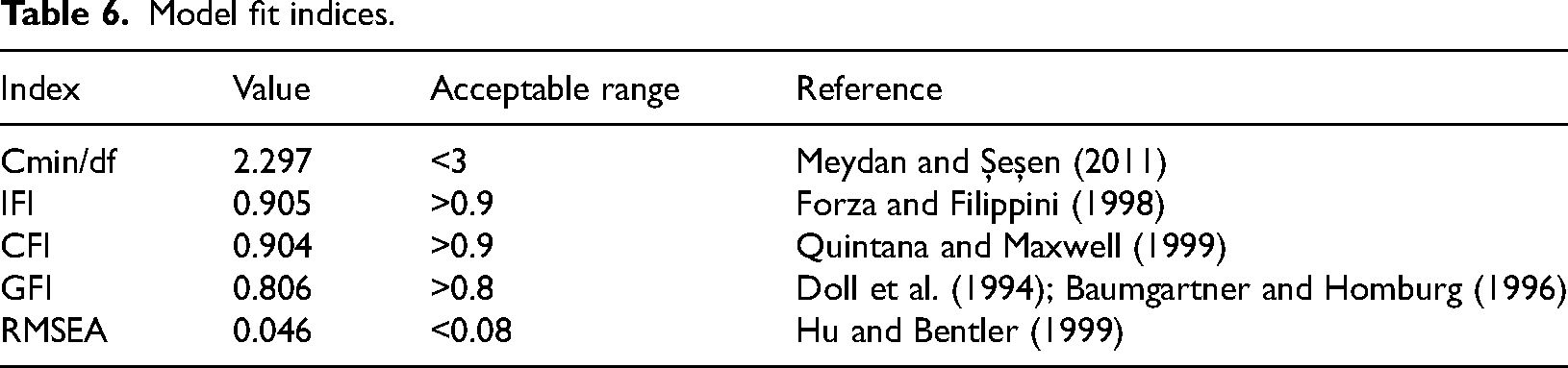
The structural equation model (SEM) was selected as the most appropriate technique for analysing the data based on its suitability for this study, as suggested by Hair et al. (2021). SEM is a useful method for identifying causal relationships between variables as it combines exploratory factor analysis (EFA) and multiple regression, as outlined by Ullman et al. (2001) and Maheshwari (2021). By utilising SEM, this study examined the proposed hypotheses to explore and understand the relationships between the various variables under investigation. Before testing the hypothesis results, the model's fitness was examined. The model was found to be a good fit (as in Table 6).
Model fit indices.
The path coefficient results are presented in Table 7 and Figure 2.
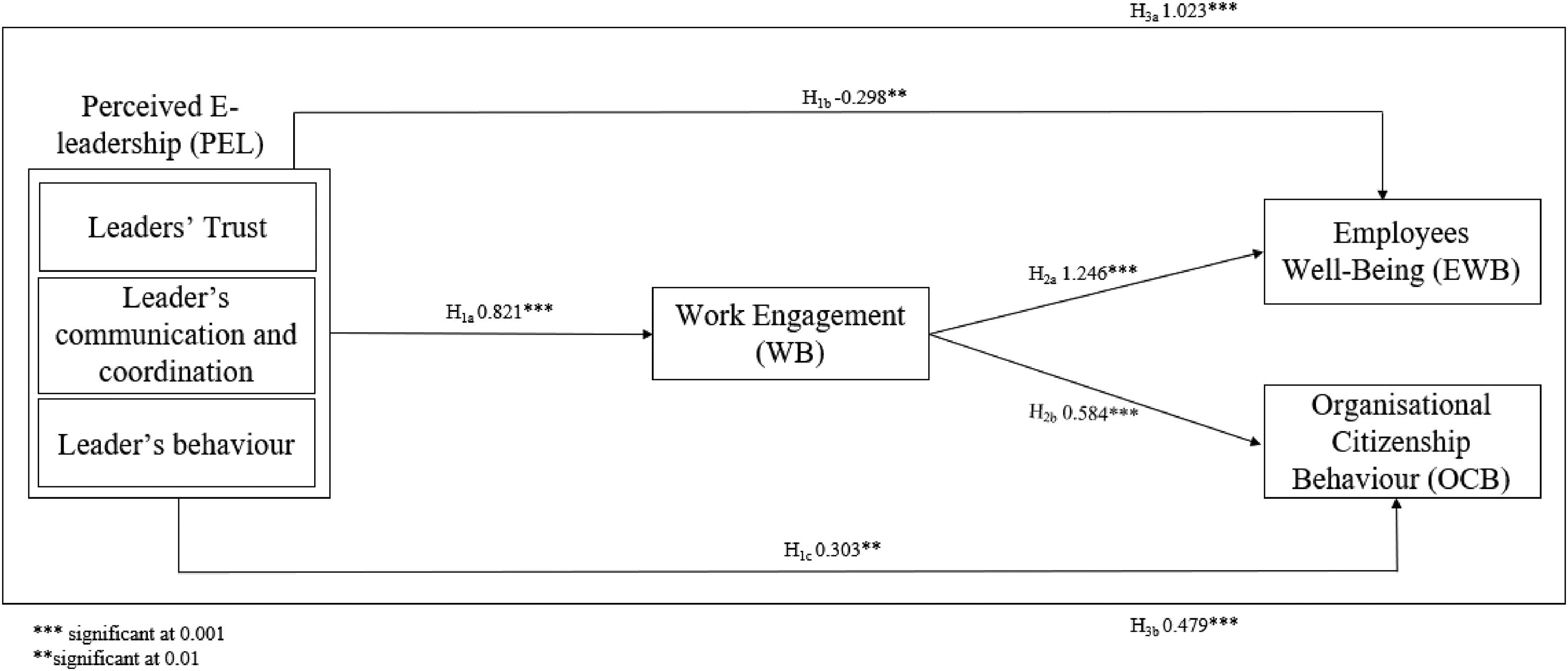
SEM model results.
Structural equation model – path analysis results.
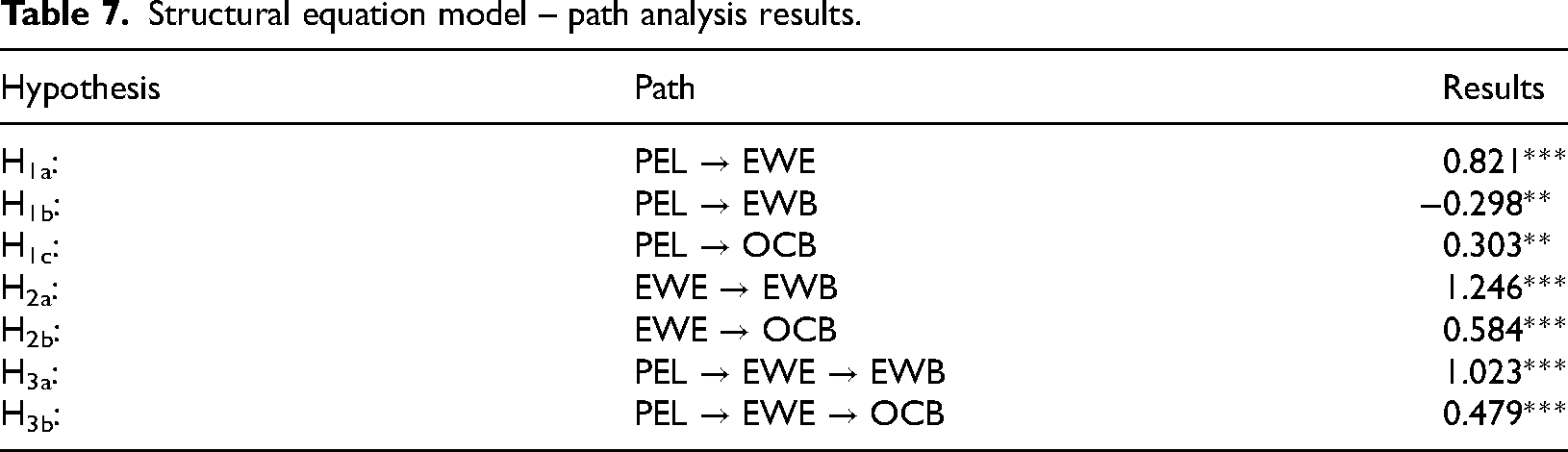
In total, three hypotheses were designed for this study (as in Table 7). The first hypothesis (H1a, H1b and H1c) was to test the relationship between PEL and the study's three remaining variables (EWE, EWB and OCB). The perceived e-leadership was found to have a relationship with all these three variables. PEL was found to have a positive relationship with EWE (β = 0.821) and OCB (β = 0.303), while it has a negative impact on EWB (β = −0.298). The strongest influence of leadership was found on employee work engagement. The following hypotheses of the study (H2a and H2b) were to test the influence of EWE on EWB and OCB. EWE does impact the EWB of the employees positively with β = 1.246. The OCB of employees impacted EWE for the employees and was found to be positively correlated (β = 0.584).
The aim of hypotheses H3a and H3b was to examine the indirect effects of PEL on EWB and OCB through the mediating role of EWE. The results indicated that there was a significant positive indirect impact of PEL on EWB (β = 1.023). However, the direct effect of PEL on EWB was negative, with a coefficient of β = −0.298. This implies that the direct impact of PEL alone on employee well-being is not as significant as its influence through the mediating factor of EWE. In terms of OCB, the indirect effect of PEL was stronger (β = 0.479) compared to its direct effect (β = 0.303). This indicates that when employees perceive ethical leadership in their organisation, it has a greater influence on their organisational citizenship behaviour when mediated by employee well-being. These results are supported by various studies in the literature. According to the studies by Carasco-Saul et al. (2015), Mufeed (2018), and Mutha and Srivastava (2021), leadership plays a positive role in enhancing work engagement. This, in turn, has been identified as an important factor influencing the Employee Well-Being (EWB) and Organisational Citizenship Behaviour (OCB) of employees, as supported by the findings of Paredes et al. (2021) and Shimazu et al. (2015).
Discussion, conclusion and implications
An increasingly competitive global economy driven by global knowledge and innovation presents Vietnam with many challenges in achieving prosperity and happiness. Moreover, the lockdown due to COVID-19 has forced most higher education institutions to close and switch to online learning and teaching. The uncertainty and volatility during COVID-19 have brought challenges for higher educational institutions (Bailey and Breslin, 2021), including working from home. This has led to the rising virtual education era in Vietnam, which was not popular and widespread before the pandemic. Thriving in remote work environments needs managers and leaders to adopt suitable leadership styles (Contreras et al., 2020) and focus on aspects such as engagement and motivation of employees through the development of superior communication and trust (Wolor et al., 2021).
The results of this study suggest that perceived e-leadership has a positive direct and indirect effect (mediated by employees’ work engagement) on employees’ work engagement and organisational citizenship behaviour. In this study, it was found that EWE and OCB have a direct influence on PEL. These results align with previous studies stating that leadership styles such as ethical leadership, authentic leadership and transformational leadership improve workers’ engagement (Bush, 2017; Chughtai, 2014; Mehmood et al., 2017; Salanova et al., 2011). Not only job engagement but OCB is also improved based on a good leadership strategy. Various studies state that leadership is significantly correlated to employees’ well-being. For example, a study in 82 staff Sweden psychiatric hospitals stated that transformational leadership positively correlated to well-being (Mehari, 2015). These results are not in line with the previous studies in Vietnam, wherein leaders are negatively impacting the well-being of the employees, suggesting that the employees might not be getting the required support from the leaders during this difficult time. The negative influence of e-leadership during the COVID-19 pandemic in Vietnam could be due to several factors. Firstly, it is possible that leaders in Vietnam may not have been adequately trained or prepared to navigate the challenges posed by the pandemic, leading to a lack of effective support for their employees. This could result in increased stress and decreased well-being among employees. Secondly, the unique circumstances and uncertainties brought by the pandemic may have created additional pressures and demands on both leaders and employees. Leaders may have struggled to adapt their leadership styles and provide the necessary guidance and reassurance during this challenging time, further contributing to the negative impact on employee well-being. Additionally, cultural and contextual factors specific to Vietnam may influence leadership dynamics and how leaders interact with their employees.
The studies done by Carasco-Saul et al. (2015), Mufeed (2018), and Mutha and Srivastava (2021) suggested that leadership has a positive impact on work engagement, which further acts a crucial factor affecting the EWB and OCB of employees as found by Paredes et al. (2021); Shimazu et al. (2015). These results resonate with this study's results where EWE does affect OCB. Motivating the employees’ spirits is vital to enhancing a better working environment and improving teaching and learning outcomes and educational quality (Waheed and Ahmad-Shah, 2017).
Our study sheds light on the interplay between virtual leadership and employees’ outcomes within the context of the pandemic. We have identified how different leadership style has been adopted, recognising the undeniable influence of the COVID-19 pandemic in catalysing these shifts in working with staff. While the pandemic accelerated specific adaptations, the potential longevity of certain aspects of the virtual leadership style within an ever-evolving work landscape might continue within an organisation in the future as well. Hence, the findings of this study will also guide future leaders in managing their staff during remote working scenarios.
Theoretical contributions
E-leadership plays a critical role in maintaining and enhancing educational quality, which has far-reaching implications for a country’s well-being, including economic prosperity, national security, public health and social well-being (Sunarsi et al., 2020). While previous research has predominantly focused on traditional leadership styles such as transformational, servant and transactional leadership and their effects on employee outcomes (Arokiasamy and Tat, 2020; Maheshwari, 2021; Mufeed, 2018), the domain of e-leadership has received relatively limited attention (Mutha and Srivastava, 2021). This knowledge gap presents an opportunity for theoretical advancement in the field of leadership studies. By having conducted this research study on e-leadership and its impact on post-Covid workplace management and organisational success, particularly within the higher education sector, the current research contributed to this lesser-known area. The study expands the conceptual understanding of e-leadership by exploring its unique dynamics and implications in a digital and remote work environment. The theoretical implications of this study lie in broadening the understanding of leadership theories to incorporate the challenges and opportunities posed by e-leadership. The study further enhances the theoretical foundation of leadership research, particularly in the higher education sector.
Practical implications
The findings of this study suggest practical implications for leaders, managers and organisations, particularly during and after the pandemic. As the pandemic continues to present constant challenges, leaders and managers need to evolve and adapt to the environmental, strategic and workforce-related changes brought about by the crisis. Successful organisations in the post-Covid new way of work will be those whose leaders can effectively navigate and respond to these changes (Contreras et al., 2020; Samsoondar, 2021). For academic institutions, this study sheds light on the expectations and requirements of e-leadership, and it is imperative for the academic sector to adapt to the future ways of working in the post-Covid era. The insights from this study can assist academic leaders in understanding the key factors contributing to the success of e-leadership in the context of Vietnam's higher education sector. This knowledge can guide them in effectively managing and leading their institutions through digital transformation and remote work, ensuring educational quality and organisational success. Furthermore, the study emphasises the importance of leadership in motivating employees and positively impacting their well-being. Leaders should recognise their crucial role in fostering a positive work environment, especially during challenging times like the pandemic. By leveraging e-leadership approaches, leaders can effectively motivate and engage their employees in a virtual work setting, promoting their well-being and enhancing overall organisational performance.
Limitations and suggestions for future research
One potential limitation of our study is that a study focused on the influence of e-leadership on employees during the most challenging time of the pandemic. Leaders may not have been adequately trained to handle such uncertainties before this crisis, which could have impacted their ability to exhibit effective e-leadership. As a result, the findings of this study might differ once leaders receive proper training to navigate similar situations in the future. Future research could explore the impact of e-leadership after leaders have undergone specific training to enhance their skills in managing crises and uncertainties. Another limitation of this study is that it focused on Vietnam, a Southeast Asian country. The cultural differences across regions, such as Africa, America, Europe, and other areas, may lead to variations in the influence of e-leadership on employees. Therefore, future research could examine the influence of e-leadership in different cultural contexts to understand better the role of cultural barriers in shaping leadership outcomes. To further expand the understanding of e-leadership, future studies could adopt a longitudinal approach and examine the effects of e-leadership in the post-Covid era. This would allow for comparing the findings from this study with the evolving circumstances and dynamics after the pandemic. Future studies could employ quantitative and qualitative methods to explore a broader range of factors and outcomes related to e-leadership. This would provide a more comprehensive understanding of the effectiveness of different leadership styles across diverse workforces. As Vietnam is part of the ASEAN framework and may face increasing workforce diversity and varied modes of working in the future, future studies can explore the effect of e-leadership on other factors such as employees’ job satisfaction, employees’ motivation, team collaboration and cohesion, employees’ creativity and innovation, work-life balance and employees’ resilience. Furthermore, while this study focused on the higher education sector, there is scope to extend the research to other sectors such as corporations, government, non-profit and entrepreneurial ventures. Replicating the study’s results in different sectors would provide valuable insights into the findings’ generalisability and e-leadership principles’ applicability across various organisational contexts.
Footnotes
Declaration of conflicting interests
The author(s) declared no potential conflicts of interest with respect to the research, authorship, and/or publication of this article.
Funding
The author(s) disclosed receipt of the following financial support for the research, authorship, and/or publication of this article: This work was supported by the RMIT University, Vietnam, (grant number TRF-003)
