



Abstract
Based on ethical leadership and authoritative school climate theories, the current study used doubly latent multilevel structural equation modeling (M-SEM) to test links between school principals’ ethical leadership and students’ aggressive attitudes through the mediation of authoritative school and classroom climates. Data included three sources: 317 educators (homeroom teachers), 504 teachers and 6589 students from 64 Arab Israeli middle schools (grades 7–9). Results showed that ethical leaders positively affect educators’ perceptions of authoritative school climate (a disciplinary structure of fairness and justness, and student support), which in turn affect their classroom conditions of fairness, justness and student support, as perceived by their students; this then negatively affects students’ aggressive attitudes. Furthermore, ethical leaders negatively affected students’ aggressive attitudes through the mediation of authoritative school climate and educators’ work reflected in classroom climate. Classroom climate was directly and negatively related to aggressive attitudes; however, school climate was not directly related. Further examination of the dimensions of climate separately demonstrated that only classroom fairness and student support (students’ willingness to seek help and teachers’ respect) negatively affect students’ aggressive attitudes. Finally, only a school climate of justness was directly related to students’ aggressive attitudes.
Introduction
Adolescence involves social, physiological, emotional and cognitive changes in the child's life (Tomova et al., 2021). Studies have shown that the prevalence of risky behaviors and aggressive attitudes increases during this period and then decreases at the end of it (e.g., Blankenstein et al., 2018). However, not all adolescents show a tendency toward violence or have attitudes that support aggressiveness (Blankenstein et al., 2018). Youth with positive attitudes toward aggression have a high probability of engaging in aggressive behavior, assault and bullying (e.g., Huang et al., 2015; López et al., 2021). At the school level, attitudes that support aggression have been related to increased teasing and victimization of students, suspensions and aggression-related disciplinary violations, along with teachers’ perception of reduced safety (Huang et al., 2015). Youth aggressive attitudes are negatively related to students’ affective engagement (i.e., perceptions of liking the school) (Da'as, 2022). These aggressive attitudes have been identified as a serious problem in schools that needs to be prevented before violence (Da'as, 2022; Jiménez and Estévez, 2017) or serious future consequences result.
Much research has examined the factors that influence aggressive attitudes (e.g., Huang et al., 2015), such as classroom environment or positive school climate, the latter of particular relevance for the prevention of aggressive attitudes and behaviors such as bullying and teasing (Montero-Montero et al., 2021; Petrie, 2014; Thapa et al., 2013). However, school principals’ effects on students’ aggressive attitudes have not, to my knowledge, been investigated.
The school leader has a central role in promoting students’ success, learning and achievements, and in designing their values and attitudes (e.g., Berson and Oreg, 2016; Day et al., 2016; Wu and Shen, 2022). For example, school principals have been found to affect students’ behavior (e.g., disciplined behavior) through their values (e.g., openness to change), school climate and students’ values (Berson and Oreg, 2016). However, few studies have addressed the effect of ethical leadership on student outcomes, achievement and attitudes (e.g., Grayum, 2018; Hughes and Jones, 2011), despite the fact that ethical considerations (e.g., care, justice, community) affect leaders’ decision-making (Eyal et al., 2011, 2020), which in turn has an important impact on the students and the school community (Arar and Saiti, 2022), and has been found to affect student achievement (e.g., Hughes and Jones, 2011). Furthermore, ethical school principals can affect students’ chances for success through increased teacher morale, which positively affects teaching strategies (Grayum, 2018), students’ learning through teachers’ empowerment (Paulsen et al., 2016), and achievement through increased ethical school practices (Shapira-Lishchinsky, 2020). School leaders’ ethical behaviors have also been found to be related to teachers’ outcomes (Berkovich and Eyal, 2020; Chu and Fang, 2017; Eyal et al., 2011; Liu and Yin, 2023; Sam, 2021), such as teacher commitment (Chu and Fang, 2017) and school creativity (Yılmaz, 2010).
More specifically, school principals face complex ethical dilemmas in their daily work (Berkovich and Eyal, 2020). Eyal et al. (2011) and Berkovich and Eyal (2020) have suggested multiple ethical considerations that can help school leaders deal with these dilemmas (e.g., caring, professionalism). “Multiple ethical perspectives promote flexibility and facilitate arriving at complex and non-dogmatic solutions that are in the best interests of students” (Eyal et al., 2011: 788), and involve treating all students fairly with justness, respect and care (Stefkovich and Begley, 2007). Kanungo (2001) stated that ethical leaders engage in actions and behaviors that benefit others, while at the same time avoiding behaviors that may harm others. Ethical leaders incorporate moral principles into their beliefs, values, and behaviors (Khuntia and Suar, 2004).
However, the literature remains silent on how ethical school leadership affects student outcomes and specifically, their attitudes toward aggression through its effect on school climate and in particular, educators’ work. Ethical leaders have been related to ethical (Cansoy et al., 2021) or positive school climates (Eranil and Özbilen, 2017). Furthermore, educators hold a central role in leading their classroom toward change and promoting educational values. They build a classroom environment that is caring and social by guiding and facilitating discussions that will help students understand what is happening in class and in the school (Israeli Ministry of Education, 2012); they contribute to students’ empowerment and success, and influence their academic performance (e.g., Da'as, 2022; Liew et al., 2010; Israeli Ministry of Education, 2012). Nevertheless, research on educators is also scarce (Ciampa et al., 2022; Paes et al., 2022).
Based on authoritative school climate theory, which is considered a framework for conceptualizing the main factors of school climate that are linked with students’ academic outcomes (Cornell et al., 2016), and on ethical leadership theory (Brown and Treviño, 2006), the present study tries to answer the main question of: How do school principals as ethical leaders affect students’ aggressive attitudes? The main argument is that ethical school leaders affect students’ aggressive attitudes through the design of an authoritative school climate that includes student support and a structure of fairness and justness, which in turn affects educators’ work in designing an authoritative classroom climate, as perceived by the students. The proposed model is schematized in Figure 1.
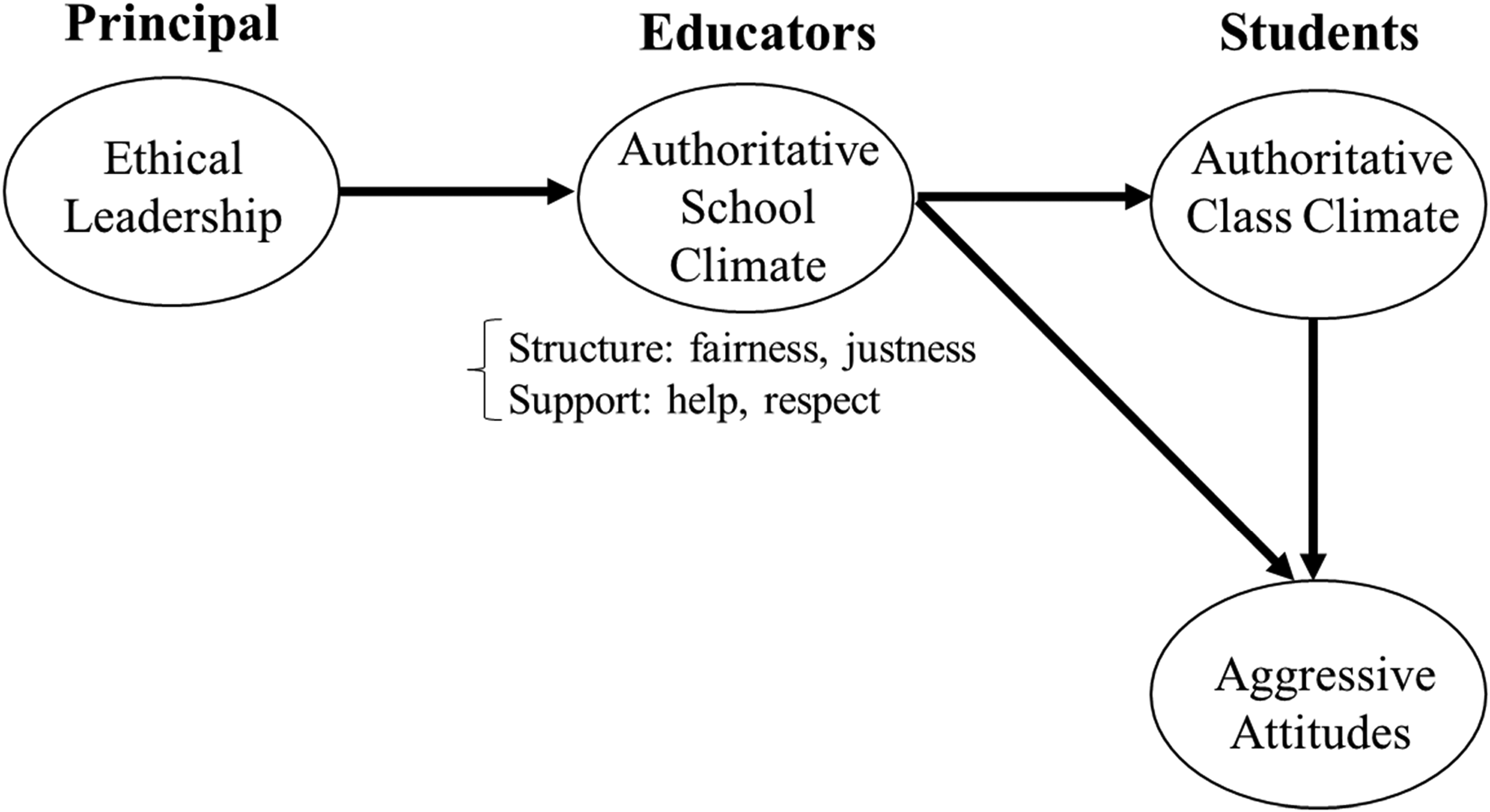
The proposed model.
Thus, within the field of educational leadership research, exploring the proposed theoretical model (Figure 1) may identify antecedent variables and potentially powerful mediators—school- and class-related variables—that contribute to negatively affecting students’ aggressive attitudes and are amenable to leadership intervention. Moreover, this study addresses the under-researched phenomenon of links between ethical leadership and students’ aggressive attitudes, thus contributing to the research on adolescence and educational ethical leadership. The current study was conducted in middle schools (grades 7–9) in the Arab society in Israel.
The context of the study
The Arab minority in Israel is considered a separate ethnic, religious, linguistic, cultural and national minority (Smooha, 2012), comprising about a fifth of the country's population (Israeli Central Bureau of Statistics, 2022). Arab society is characterized by a collectivist culture that maintains its traditional values (e.g., respecting elders) while being committed to community (Masry-Herzalah and Da'as, 2022). Thus, school principals are expected to behave well, respectfully and morally with their teachers, and to lead justice in their schools (Arar, 2015). In this regard, Arar et al. (2016) mentioned that Arab leaders’ ethical considerations in decision making are also related to their social and cultural background.
Arab schools are part of the Israeli educational system (approximately 27% of the system's schools); they are managed by Arab principals, and the teaching is in Arabic. Like most schools, Israeli schools are relatively autonomous organizations in which formal leaders (principals) can influence organizational processes (Da'as, 2021). The principals are held accountable by the school community (including parents and municipality) for school performance and student achievement (Qadach et al., 2020).
The Arab population in Israel is considered to be very young: 41.2% of the population consists of children aged 14 and under, and the proportion of children aged 19 and under is about 49% (Ali et al., 2021). There is an increasing awareness in Arab society of the importance of higher education and of both girls and boys acquiring an education (A'li and Da'as, 2019). For example, from 2009 to 2020, there has been a 106% increase in the number of Arab students receiving a bachelor's degree (Council for Higher Education, October 2021). Nevertheless, violence among teenagers in Arab society is not decreasing, especially among males (Ali et al., 2021; Harel-Fisch et al., 2020). In a study of 6th-, 8th-, and 10th-grade students, it was found that boys in the Arab sector report very high rates, relative to all other population groups, of drinking alcohol, drug use—including hard drugs, and involvement in violence, including carrying weapons—mostly firearms. These findings undoubtedly place them as a high-risk population that requires immediate and significant referral of intervention resources (Harel-Fisch et al., 2020). In examining the item of “participation in bullying: the percentage of students who participated in acts of bullying, harassment or bullying of another student on school grounds, three or more times in the last two months” (6th-, 8th- and 10th-grade survey), a higher percentage was found among boys than girls in the Arab society in the research year (2019) (boys 20% and girls 9.2%). About 21% of the Arab students were involved in bullying another child, compared to 9% among the Jewish students (Harel-Fisch et al., 2020).
It is important to note that reports from the National Authority for Measurement and Evaluation (2020) indicate high rates (about 70% in Arab and Jewish middle and high schools) of positive overall satisfaction with the school. Nearly 50% of the students in the middle and high schools reported close and caring relationships with their teachers, with about 15% more Arabic speakers reporting this compared to Hebrew speakers (National Authority for Measurement and Evaluation, 2020).
Thus, an examination of antecedent effects on aggressive attitudes in adolescence—and specifically in middle school in Arab society—is critical. During adolescence, aggressive attitudes increase (albeit not in all adolescents). This period is characterized by rebelliousness, the formation of teen identity and independence, and identification with one's peer group (Bar El, 1996; Seiffge-Krenke, 2013; Tomova et al., 2021). Therefore, it is important to identify the antecedent factors that can influence these attitudes at this age and prevent them, thus eliminating the negative consequences for the teenagers themselves, their peer group or their school and community; specifically, these antecedents should be examined within Arab schools, where this phenomenon is on the rise.
Ethical decision-making and considerations have been examined in the context of the Arab minority in Israel (Arar and Saiti, 2022; Arar et al., 2016; Eyal et al., 2020), emphasizing the use of different ethical considerations when making socially just decisions that will benefit all students (Arar and Saiti, 2022; Arar et al., 2016; Eyal et al., 2020). Where ethical leadership emphasizes aspects of morality, caring, fairness and being responsible for the interests of the students, and promoting a positive and ethical climate, an examination of this style of leadership is presumed necessary to promote the interest of students in their decisions, and can be expected to influence student attitudes. This in view of the finding that ethical leaders promote subordinates’ ideas and create a climate of mutual respect (Sağnak, 2017), such that they can safely express different views (Walumbwa and Schaubroeck, 2009).
Studies have shown that school climate affects student behavior (Berson and Oreg, 2016). An atmosphere of classroom discipline is very beneficial to students: especially in middle school, students will be more likely to obey the rules when they feel that they are being treated fairly and justly, and are being supported; this is also related to lower rates of peer aggression and bullying among students (e.g., Gregory et al., 2011). Thus, it is relevant to examine climate in the context of students’ aggressive attitudes and ethical leaders.
Theoretical framework
Ethical leadership
Ethical leadership theory addresses the way in which leaders promote and model ethical behavior (Brown and Treviño, 2006). Ethical leaders have been described as fair and principled; they make decisions that take into consideration people and the organization, and behave ethically in the personal and professional sphere (Treviño et al., 2003). Brown et al. (2005: 120) define ethical leadership as “the demonstration of normatively appropriate conduct through personal actions and interpersonal relationship, and the promotion of such conduct to followers through two-way communication, reinforcement, and decision making.” Moreover, school leaders—as role models—need to display ethical practices and behaviors (Brown et al., 2005).
Waheed et al. (2019) found practices of ethical leadership in Selangor, Malaysia that included: trusting relationships, professional commitment, acting as a role model, openness to school members, and warranting ethically appropriate conduct as important ethical leadership practice. Liu (2016) found that principals’ ethical leadership includes the values of care, openness, honesty, fairness and a trusting relationship with teachers, staff and parents. These leaders are characterized by commitment to an organization, altruism and integrity (Yukl et al., 2013). Ethical leaders promote followers’ ideas and “create a climate of mutual respect” (Sağnak, 2017: 1102), where employees can express their views, feel safe (Sağnak, 2017), and employ their voice behaviors—defined as a “discretionary communication of ideas, suggestions, concerns, or opinions about work-related issues with the intent to improve organizational functioning” (Sağnak, 2017: 1105). Furthermore, such leaders are responsible for altering the causes of unethical structure and processes (Duignan, 2006). A recent study in the context of Chinese schools found that professional learning communities in the school were promoted when teachers perceived their principals as ethical leaders (Liu and Yin, 2023).
Research in a school context found that ethical leadership is negatively related to organizational hypocrisy (in the context of Turkish teachers) (Kılıçoğlu and Kılıçoğlu, 2021), the latter defined as voluntary behavior that does not match stated values and agreed-upon expectations (Kılıçoğlu and Kılıçoğlu, 2021; Phillippe and Koehler, 2005). In turn, hypocrisy was negatively related to organizational commitment, motivation at work, job satisfaction and organizational citizenship behaviors.
Ethical leadership is related to teacher outcomes—voice behavior (Sağnak, 2017), work engagement (Buonomo et al., 2021), trust in the school principal (Siva Vikaraman et al., 2021)—and to promoting professional learning communities (Liu and Yin, 2023). In a sample of teachers and staff in a public school district in the eastern United States, ethical leadership was negatively related to followers’ incivility (Taylor and Pattie, 2014).
Research that connects ethical leaders with student outcomes and learning is more scarce. In the context of of 246 individual teachers from 10 Finnish primary schools, Paulsen et al. (2016) found that school principals’ moral leadership supports teachers’ sense of empowerment in both the work domain (such as deciding about teaching materials to be used in class) and the classroom domain (e.g., control over classroom discipline), i.e., it empowers teachers in a manner that supports student learning (Paulsen et al., 2016). In research based on the 8th grade TIMSS 2015 international assessment (the sample comprised 8353 principals and 280,130 students that participated in the TIMSS 2015 survey), Shapira-Lishchinsky (2020) found a positive relationship between principals’ perceptions of ethical school practices (i.e., caring for students’ learning, respect of the rules among students and teachers, and parents’ and students’ involvement in schooling) and 8th-grade students’ achievements in science (Shapira-Lishchinsky, 2020). Hughes and Jones (2011) found a significant positive relationship between elementary school principals’ ethical decision-making (principals educated in ethics, either pre-service or in-service) and student academic achievement.
Moreover, ethical leaders are particularly relevant for effective school development (Liu and Yin, 2023) and “are essential prerequisites for effective change” (Waheed et al., 2019: 624). Specifically, where schools worldwide are becoming more diverse with respect to students’ (as well as teachers’ and staff's) backgrounds, cultures and ethnicities, for leaders to be effective, they need to balance this diversity by developing equity and justness in the school and among students (Arar et al., 2016). For example, in the context of refugees, Arar et al. (2018) stressed that leaders need to highlight ethics of care to empower students and help them achieve academic success.
Authoritative school/class climate
Authoritative school climate is based on authoritative school climate theory (Gregory et al., 2010a, 2010b), which is derived from research on authoritative parenting style. Parenting research has found that authoritative parents provide their children with a combination of strict discipline and emotional support (Baumrind, 1968; Jia et al., 2016). Disciplinary structure and student support characterize such climates (Huang and Cornell, 2016), where the dimension of support is comprised of two aspects: students feel respected by their teachers and staff, and they have a willingness to seek help from them. The disciplinary structure of fairness refers to consistency in the application of the school's rules of conduct, and that of justness is related to the enforcement of disciplinary procedures and practices in the school (Huang and Cornell, 2016).
Pellerin (2005) found that authoritative high schools are associated with lower levels of student dropout. Supportive teacher–student relationships and academic press (high academic expectations for students) were found to be significantly related to students’ behavioral and emotional engagement (Lee, 2012). Higher disciplinary structure and student support were associated with higher student engagement in school (Cornell et al., 2016), and with lower levels of student risk behaviors as reported by students, such as alcohol and marijuana use; bullying, fighting, and weapon-carrying at school; interest in belonging to a gang; and suicidal thoughts and behavior in students in high schools (grades 9–12) (Cornell and Huang, 2016). Based on 68 studies, it was found that school discipline has a positive relationship with the ability to show self-control, from preschoolers to high-school students (Li et al., 2021). Jia et al. (2016) found that high academic expectations are associated with lower dropout rates when students perceive their teachers as supportive.
Students’ aggressive attitudes
Aggressive attitudes are those that support and encourage aggression, and they are considered a critical factor in aggressive behavior (Huang et al., 2015). Perceptions of aggression as normative influence a student's aggressive behavior (pushing, hitting and kicking; McConville and Cornell, 2003; Wright and Li, 2013). For example, students who believe that it is necessary to be the attacker and to use violence against others in order to gain the respect of their peers will engage in more aggression than adolescents who do not share this belief (Wright and Li, 2013). Huesmann's (1988) theory of aggression claims that children show higher beliefs in the normativity of aggression as a result of cognitive scripts regarding aggression that they learn from others. These cognitive scripts are maintained through observations of others (peer context) and active involvement (such as bullying others).
Ethical leadership, authoritative school and class climates and students’ aggressive attitudes
Studies have found that the school principal has a vital role in shaping the school climate (Berson and Oreg, 2016) and in particular, ethical leaders promote an ethical climate in the organization (Shin, 2012) and a positive organizational climate (Eranil and Özbilen, 2017). Ethical leaders influence organizational members through their mind-sets, beliefs and practices, and spread a strong ethical message to maintain organizational values (Treviño et al., 2000). Ethical leadership is further viewed as using ethical means to apply influence for a shared purpose (Prince II et al., 2009). The current study argues that school principals who behave ethically will design a school climate consisting of student support with a fair and just disciplinary structure. Thus,
It has been argued that educators lead their class toward change by promoting educational values and establishing social justice and equal opportunities in the classroom, so that students can control their lives as independent members (e.g., Liew et al., 2010; Israeli Ministry of Education, 2012), regardless of their background. Educators can influence the social and educational climate in the classroom and students’ motivation to learn (Katz and Cohen, 2018). According to attachment theory (Bowlby, 1978), teachers and educators can serve as objects of attachment and a secure base that enables learning and development (Bergin and Bergin, 2009). Thus, educators who perceive the school climate as authoritative will also design an authoritative climate in their classroom.
A study of 243 Italian middle-school students examining positive perceptions of school climate found that these perceptions positively predicted students’ levels of emotional engagement and negatively predicted burnout a year later (Grazia, 2022). Furthermore, students’ positive perceptions of school climate have been found to be positively related to student attendance (Hamlin, 2021). A positive school climate is negatively related to risk behaviors (Harel-Fisch et al., 2016). When a higher number of teachers perceived justness and more teachers reported support in their schools, there were lower levels of students reporting aggressive attitudes (Jia and Konold, 2019). Thus,
Classroom climate has also been related to student achievement (Allen et al., 2013). Higher levels of student achievement in classrooms were related to classroom characteristics, such as: a positive emotional climate, a sensitivity to adolescent needs and perspectives. Moreover, student achievements were highest when the teachers applied an interactionist management style in their classrooms (Djigic and Stojiljkovic, 2011). Thus,
Based on the educator's role, I argue that classroom climate will have more of an effect on aggressive attitudes than school climate.
How does school ethical leadership shape students’ aggressive attitudes?
Finally, I argue that school principals’ ethical leadership affects students’ aggressive attitudes through its effect on authoritative school climate and educators’ work in designing classroom conditions of justness, fairness and support derived from the school climate. Previous research has found that school principals indirectly affect student outcomes (Berson and Oreg, 2016; Dumay et al., 2013; Leithwood and Jantzi, 2000). For example, school principals were found to affect students’ attitudes, values and outcomes indirectly through climate (Berson and Oreg, 2016); school principals’ values of openness to change affected students’ values of openness to change through an innovative climate; and principals’ leadership resulted in increased student achievement through teacher collaboration and collective efficacy (Dumay et al., 2013). More specifically, Sağnak (2017) found that ethical leadership is positively related to teachers’ voice behavior through ethical culture and psychological safety. Liu and Yin (2023) found significant indirect effects of ethical leadership on professional learning communities through teacher obligation. Wu (2021) found that follower identification is a significant mediator in the relationship between ethical leadership and knowledge sharing (participants were 510 administrative group members from 54 schools in Taiwan). Thus, I argue that
Methods
Procedure and participants
Data were collected from three sources: (i) 317 educators in 64 Arab public middle schools from all over Israel which were randomly selected (cluster method) from the Israeli Ministry of Education's lists of schools for each district. Of these, 105 educators worked with grade 7 (33.1%), 121 with grade 8 (38.2%) and 91 with grade 9 (28.7%). A minimum of 4 educators from each school participated in this study; (ii) 504 teachers (minimum 30% of the teachers in each school); (iii) 6589 students from grades 7–9, 50.4% female, 40.2% male. The average number of students per school for all schools was 453 (SD = 165.75). The students’ socioeconomic status (SES) was determined according to principals’ reports as follows: 56.3% of the schools were with medium SES, 26.6% had low SES, and the rest had high SES.
A minimum 50% of the students in each educator's class participated, after obtaining parental consent. Some of the students filled out the questionnaire online, but most filled out a hard copy. Educators and teachers completed an online survey. Each student received a class code (or a number according to his/her class) to enable cross-checking the information with that from the educator (who had the same code). Table 1 presents descriptive statistics of the research participants.
Descriptive statistics of the research participants.
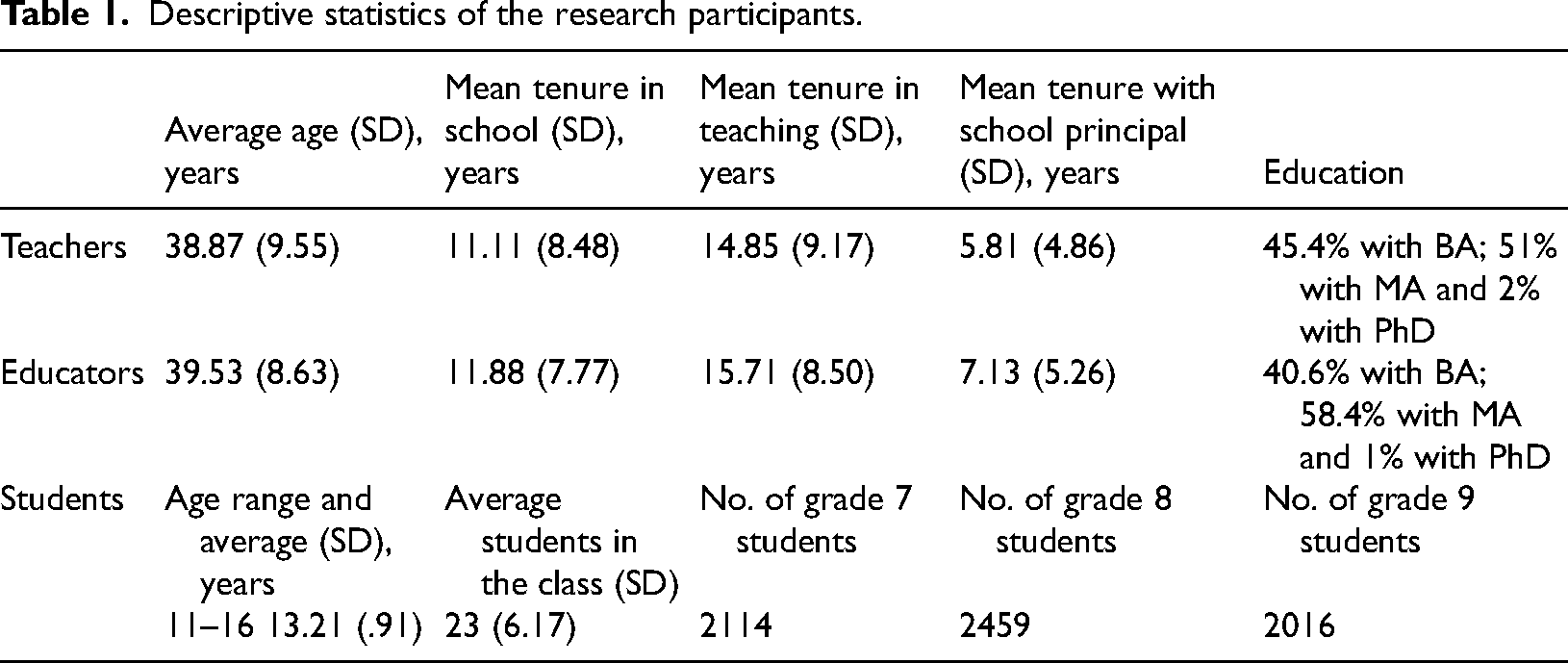
School principals provided demographics and school background information. Educators filled out a questionnaire related to school climate. Students completed a questionnaire related to their classroom climate and attitudes toward aggression. Teachers filled out a questionnaire related to school principals’ ethical leadership. The study was approved by the Chief Scientist of the Israeli Ministry of Education. Parents filled out a consent form for student participation. All participants were assured that their responses would remain confidential.
Measures
Control variables
The effects of tenure with principal, student age and gender, class size and school SES were controlled in the study. Previous research has shown that a school's SES has a significant contextual effect on school performance (Sui-Chu and Willms, 1996) and hence, it is a common control variable in educational research (Berson et al., 2015).
Table 2 presents means, SD and Cronbach's alpha for the study variables.
Mean, standard deviation and Cronbach's alpha for study variables.
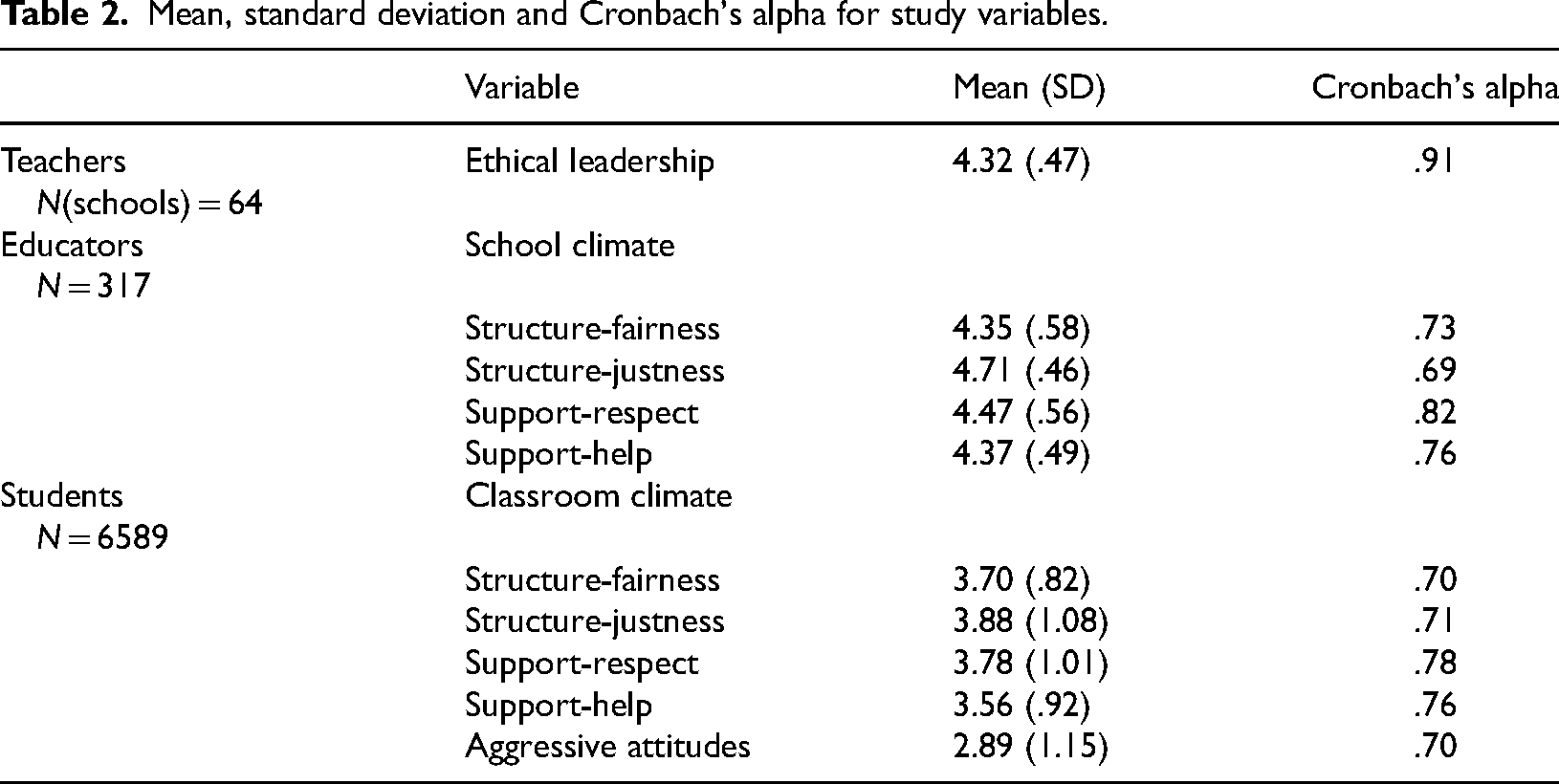
Alpha Cronbach was ≥ .7, except for school climate justness (.69). Considering the number of items, this result is also acceptable (Da'as, 2022).
Analytical procedure
In the current study, the data were hierarchically structured – students, a level 1 (L1) variable, were nested within a level 2 (L2) variable. Thus, doubly latent multilevel structural equation modeling (M-SEM) was used to analyze the data (Marsh et al., 2012) with the Mplus program (Muthén and Muthén, 2012). This method draws on multiple sources (e.g., teachers, students) and “enables testing theoretically relevant relationships at proper level of analysis (i.e., class, teacher, school)” (Burić, 2022: 99); it includes multilevel and confirmatory factor analyses and controls for sampling error and measurement error (Marsh et al., 2012): first, latent in relation to controlling the measurement error, at both individual (student: L1) and cluster (school/class: L2) levels, “due to sampling of items as in the traditional factor analysis approach: it incorporates multiple indicators of each construct to form latent factors; and second, latent in relation to controlling the sampling error (as in the traditional multilevel approach), in the aggregation of L1 responses to form L2 constructs” (Da'as, 2023: 129–130).
L1 constructs depend on the responses of individual students; these are students’ characteristics which are meaningful by themselves, and may have another meaning in L2 (Morin et al., 2014). L2 constructs depict the aggregated responses of students within classes (and teachers within schools) (Burić, 2022); thus, the creation of L2 constructs can be based on L1 reports (Marsh et al., 2012). This implies students’/educators’ shared perceptions of class/school climate (e.g., students’ individual perception of class climate is aggregated to L2). Further, ethical leadership (Figures 2, 3) is a unified construct affecting all members of the unit (Kark et al., 2003).
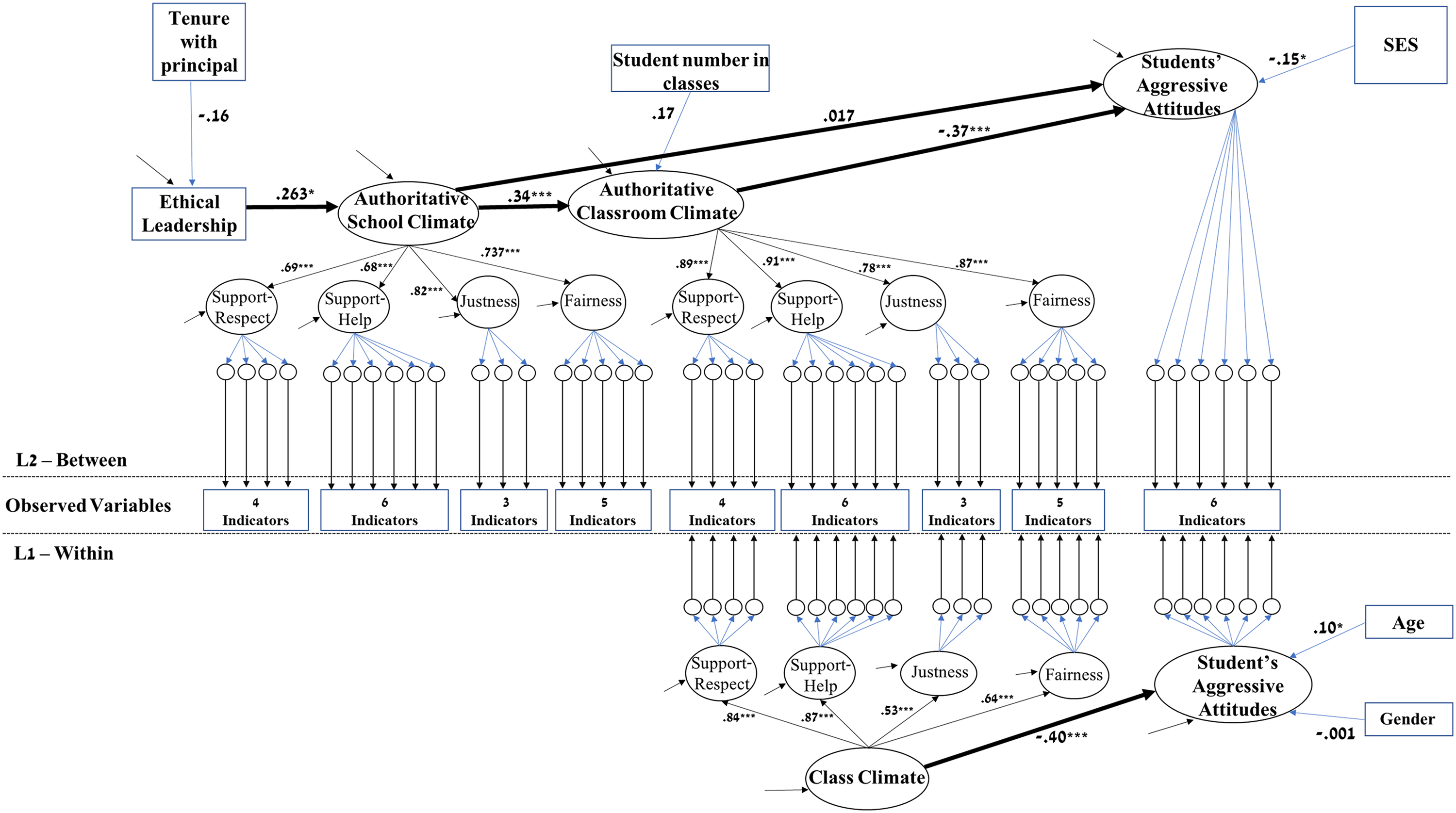
Doubly latent multilevel structural equation model tested in this study.
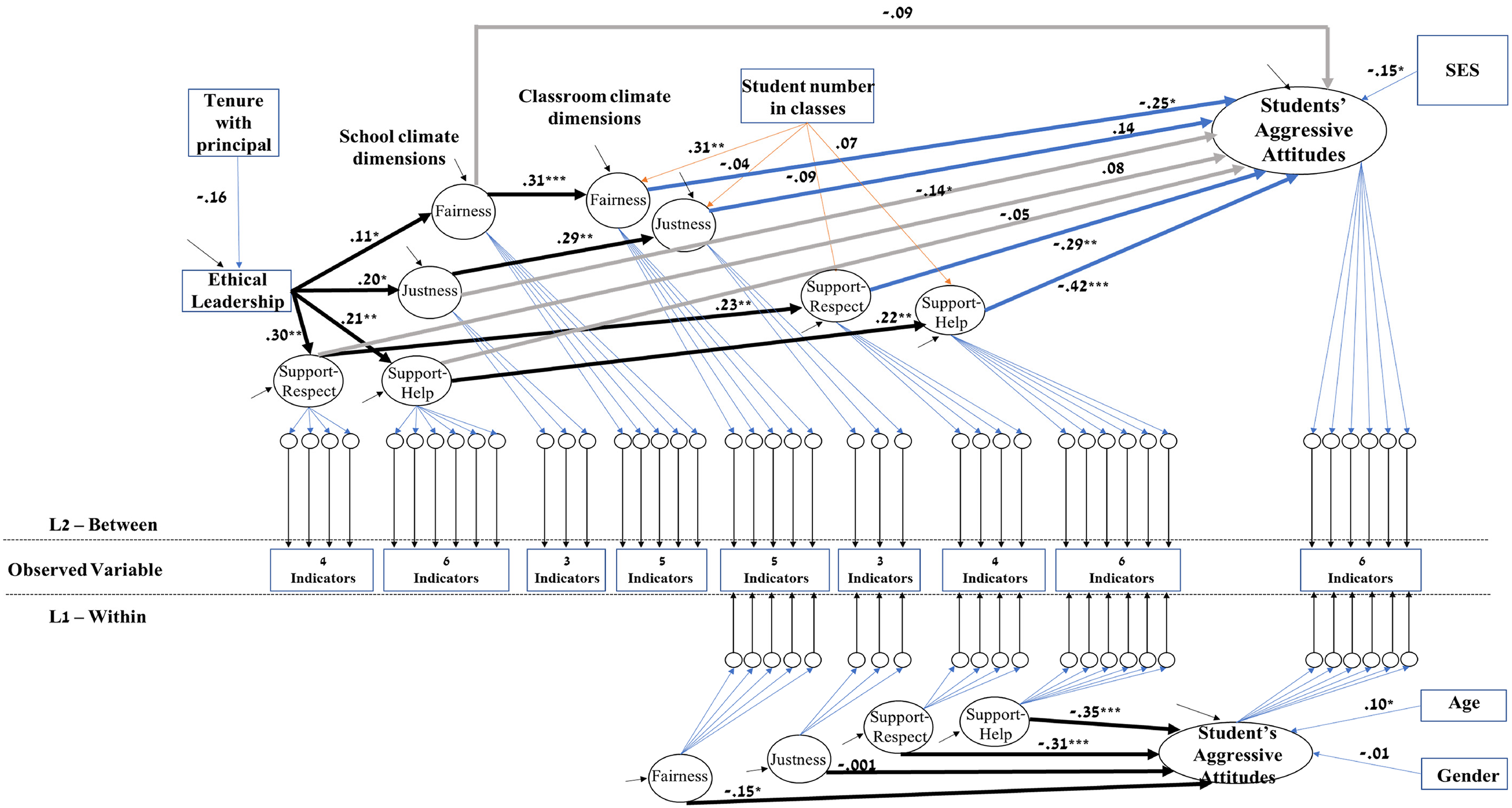
Doubly latent multilevel model tested in this study for climate dimensions separately.
Before evaluating the effects, aggregation was examined using intraclass correlations ICC1 and ICC2 and within-group inter-rater agreement—the rwg index. “ICC1 refers to the proportion of the total variance in ratings occurring at level 2 or the average agreement between pairs of students within the same class” (Burić, 2022: 104). ICC2 refers to the reliability of the L2 aggregate (Burić, 2022; Pietsch et al., 2019).
Table 3 presents confirmatory factor analysis (CFA), intraclass correlations and rwg for the study variables. CFA for research variables showed adequate fit with the data (comparative fit index [CFI] > .90; root mean square error of approximation [RMSEA] < .10; Byrne, 2006).
Confirmatory factor analysis, intraclass correlations and within-group inter-rater agreement for study variables.
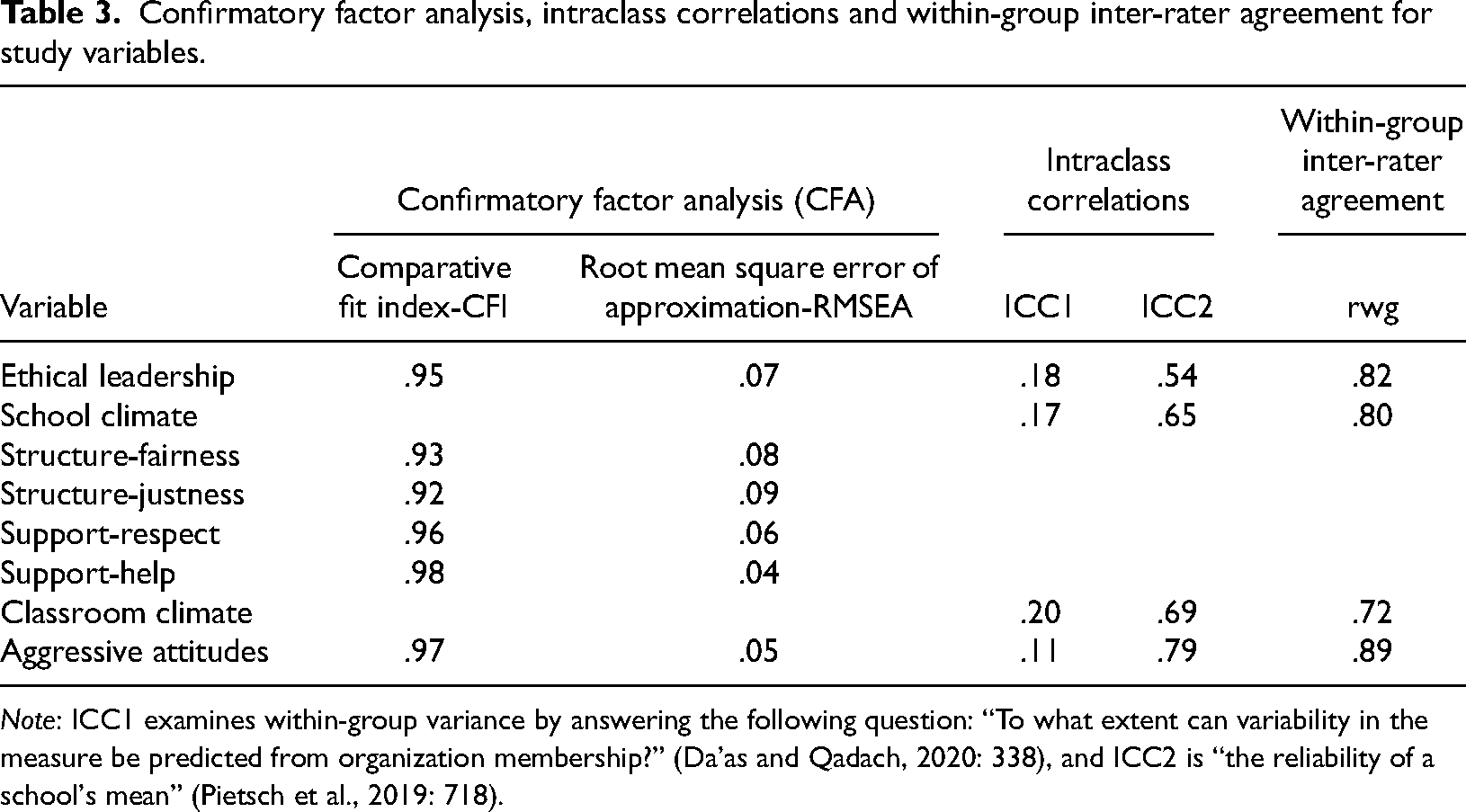
Note: ICC1 examines within-group variance by answering the following question: “To what extent can variability in the measure be predicted from organization membership?” (Da'as and Qadach, 2020: 338), and ICC2 is “the reliability of a school's mean” (Pietsch et al., 2019: 718).
The rwg for all measures was more than .7, suggesting a sufficiently “good” level of within-group inter-rater agreement (James et al., 1993). ICC1 and ICC2 results (Table 3) imply that the nested structure of the data can be analyzed using doubly latent M-SEM in accordance with Arens et al. (2015).
Finally, the fit structure to the data of the doubly latent M-SEM was evaluated. CFAs were evaluated with two commonly used goodness-of-fit indices: CFI and RMSEA (Byrne, 2006). Mediation was examined using bootstrapping procedure in line with Preacher et al. (2010). A nonzero confidence interval means that mediation exists (Preacher et al., 2010). Mediation exists when the indirect effect is significant (the conditions to examine indirect effect are: a significant relationship between dependent variable and mediator and between independent variable and mediator) (Preacher et al., 2010).
The control variables were interred in the analysis of the model according to their level of analysis (Figures 2, 3).
Results
Correlations for the study variables are reported in Table 4. The results show, at the group level, significant positive intercorrelations between ethical leader and authoritative school climate dimensions, which in turn are positively related to classroom climate dimensions: school fairness is related to classroom fairness, school support to classroom support, and school justness to classroom justness.
Correlations between study variables.
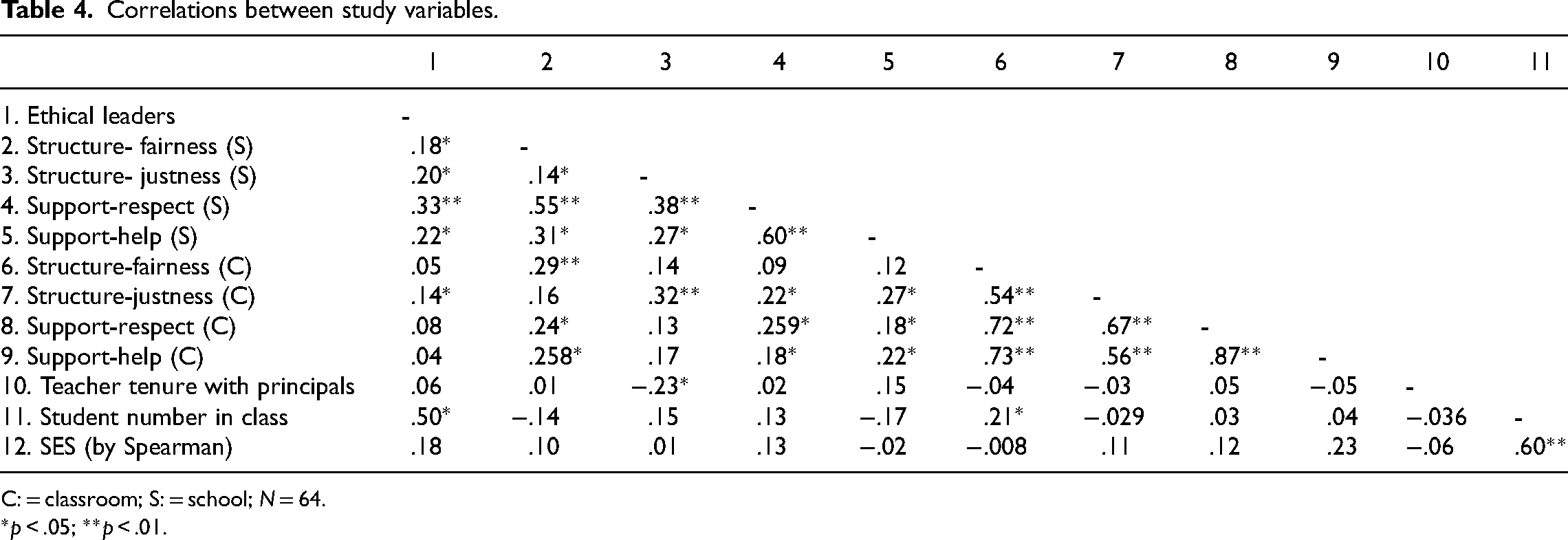
C: = classroom; S: = school; N = 64.
*p < .05; **p < .01.
Figure 2 shows the results of the doubly latent M-SEM, which indicated a good fit between the model (Figure 2) and the data (CFI = .952; RMSEA = .084). At the school level, the relationship between ethical leadership (teachers’ perceptions) and authoritative school climate was positive and significant (standardized β = .263; p < .05), as was that between school climate and class climate (standardized β = .34; p < .001), confirming hypotheses 1 and 2. Furthermore, the relationship between class climate and students’ aggressive attitudes was negatively correlated (standardized β = −.37; p < .001), supporting hypothesis 4. No significant relationship was found between school climate and students’ aggressive attitudes (hypothesis 3 was not confirmed and hypothesis 5 was confirmed). However, at the student level, a negative relationship was found between class climate and aggressive attitudes (standardized β = −.40; p < .001).
Figure 3 presents the authoritative climate dimensions separately, indicating a good fit between the model (Figure 3) and the data (CFI = .94; RMSEA = .087). At the school level, the relationship between ethical leadership (teachers’ perceptions) and the separate school climate dimensions was significant and positive: for structure-fairness, standardized β = .11, p < .05; for support-respect, standardized β = .30, p < .01; for support-help, standardized β = .21, p < .01; and for structure-justness, standardized β = .20, p < .05 (confirming hypothesis 1, related to the climate's separate dimensions). A school climate emphasizing structure-justness promoted a classroom climate of justness (standardized β = .29; p < .01); a school climate of support-respect was related to a class climate of support-respect (standardized β = .23; p < .01); a school climate of support-help was related to a class climate of support-help (standardized β = .22; p < .01); and a school climate emphasizing structure-fairness was related to a class climate of structure-fairness (standardized β = .31; p < .001), confirming hypotheses 2a–d. Only the classroom dimensions of structure-fairness, support-respect and support-help were respectively related to students’ aggressive attitudes (standardized β = −.25; p < .05; standardized β = −.29; p < .01; standardized β = −.42; p < .001); thus, hypotheses 4a–c were confirmed, and hypothesis 4d, related to justness, was not confirmed. Furthermore, no negative relationship was found between school climate dimensions and aggressive attitudes except for the structure-justness dimension (standardized β = −.14; p < .05), leaving hypotheses 3a–c unconfirmed, and hypothesis 3d, related to justness, confirmed. The results thus indicated that only classroom climate of structure-fairness, support-help and support-respect were respectively related to students’ aggressive attitudes, supporting hypotheses 5a–c. Hypothesis 5d was not confirmed, as a school climate of justness affected students’ aggressive attitudes more than a classroom climate of justness.
At the student level, negative relationships were found between class climate dimensions and aggressive attitudes except for structure-justness; for structure-fairness, support-respect and support-help, respectively, I obtained standardized β = −.15; p < .05; standardized β = −.31; p < .001; standardized β = −.35; p < .001, respectively.
Indirect effects
In line with Preacher et al. (2010), using a Monte Carlo resampling simulation to test the significance of, and determine confidence intervals for the indirect effects (Selig and Preacher, 2008), mediation was examined between ethical leaders and students’ aggressive attitudes through authoritative school and classroom climates and their separate dimensions (hypotheses 7, 7a–d), and between school principals’ ethical leadership and educators’ work in designing a classroom climate via an authoritative school climate (and its separate dimensions) (hypothesis 6). According to Figure 4 and Table 5, the indirect effect of ethical leaders on students’ aggressive attitudes through authoritative school and class climate was negative and significant (abc: −.03; p < .01); the indirect effect of ethical leadership on classroom climate through authoritative school climate was significant and positive (ab: .08; p < .01); the indirect effect of authoritative school climate on students’ aggressive attitudes through classroom climate was negative and significant (bc: −.10; p < .01). A nonzero confidence interval means that mediation exists. Thus hypotheses 6 and 7 were confirmed.
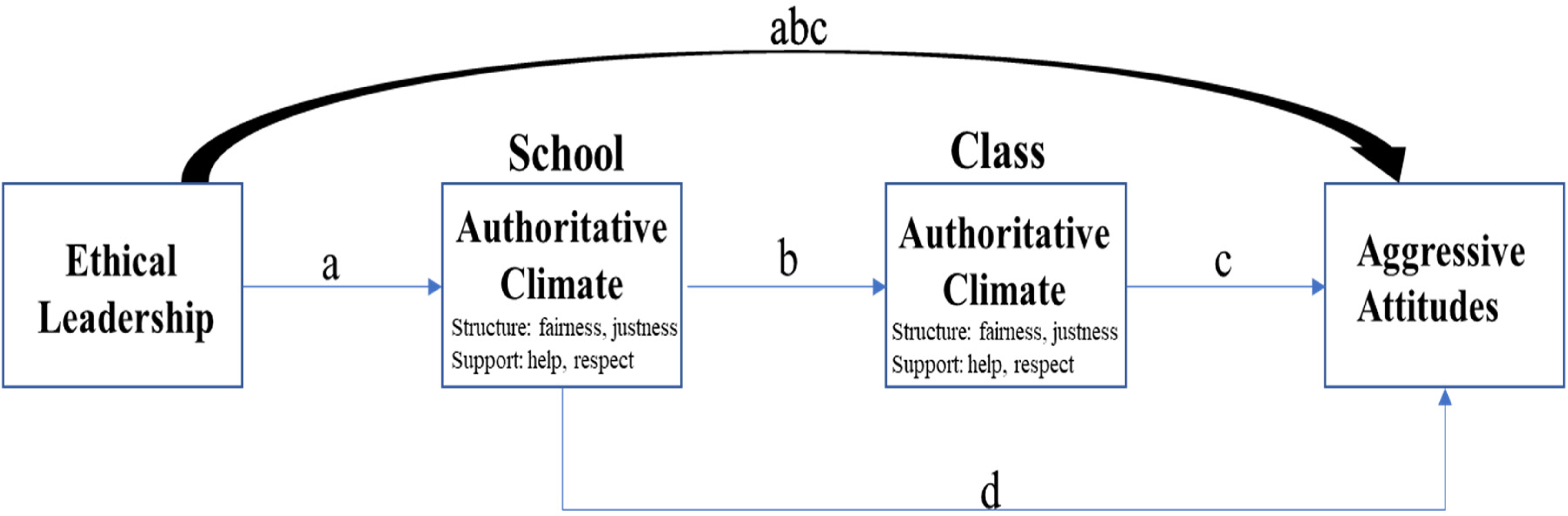
Diagram showing model paths for which indirect effects were calculated (see Table 5).
Results of the tests of indirect effects on students’ aggressive attitudes.
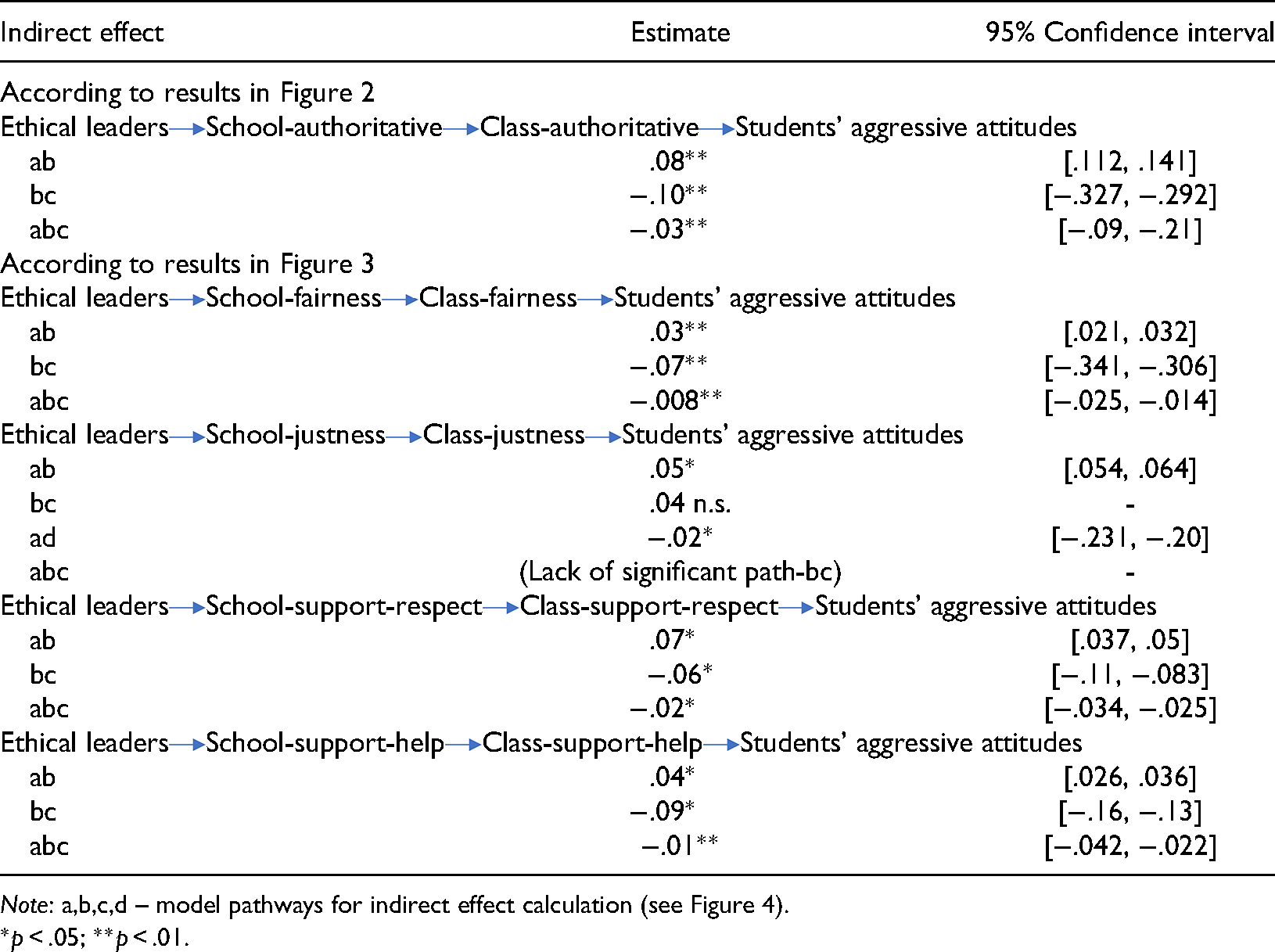
Note: a,b,c,d – model pathways for indirect effect calculation (see Figure 4).
*p < .05; **p < .01.
Results for the mediation are presented in Table 5.
Mediation was examined as shown in Figure 4 and for each climate dimension separately. As shown in Table 5, the indirect effects (abc) of principals’ ethical leadership on students’ aggressive attitudes through the school and classroom climate dimensions were significant, except for classroom justness. Further, the indirect effects (ab) of school principals’ ethical leadership on classroom climate dimensions through the authoritative school climate dimensions were significant. Thus, hypotheses 6 (the part related to separate dimensions) and 7a–c were confirmed. Hypothesis 7d was not confirmed. Mediation was found between ethical leaders and students’ aggressive attitudes through a school climate of justness (Table 5, ad: −.02; p < .05, the confidence interval did not contain zero).
Discussion
The study sheds light on the effect of school principals’ ethical leadership on school processes and class processes through the design of an authoritative school climate, which in turn affects classroom climate as designed by educators. Leaders who incorporate moral principles in their values, beliefs and behaviors (Khuntia and Suar, 2004) promote an authoritative school climate, as perceived by educators, which emphasizes a structure of fairness and justness, and support; school students can ask for help from their teachers, the teachers respect them, and there is equity in the rules for all students. This is in line with research claiming an important role for ethical leaders in forming and upholding an ethical organizational culture (Avey et al., 2012) and a positive school climate (Eranil and Özbilen, 2017). Their ethical decision-making results in a fair and principled organizational system (Brown et al., 2005), and in this strong ethical culture, the organization's members feel secure (Sağnak, 2017).
When educators perceived their school climate as authoritative, they also designed an authoritative classroom climate, as reported by their students, thus negatively affecting students’ aggressive attitudes, as also reported by the students. More specifically, when examining the dimensions of school and classroom climate separately, school principals’ ethical leadership (as perceived by school teachers) promoted fairness, student support and justness in their schools. When educators perceived their school environment as fair, their students reported a classroom climate of fairness; when they perceived the school climate as just, their students reported justness in their classroom; and when they perceived their school climate as supportive, their class climate emphasized support for students, as reported by those students.
The study results highlight the effect of classroom climate on aggressive attitudes. Students who perceive the classroom climate as fair, with consistent implementation of classroom rules of conduct by the educator and class teachers, and experience support from the staff and a willingness to ask for help from the teachers who treat them with respect, hold less aggressive attitudes. This result is in line with the previous argument that the quality of teacher–student interactions can add value to the classroom setting (Allen et al., 2013). This is also indicated in the present study by the strong association between classroom support and aggressive attitudes, in line with previous research arguing that a climate with clear rules and discipline is desirable; when these rules are the same for all students, and they feel that they are supported and their voice is respected by the teaching staff, there is less bullying and aggression among peers and toward teachers (e.g., Gerlinger and Wo, 2014; Gregory et al., 2010a, 2010b). This is especially important for teenagers, as they seek more control in their decision-making and expect fair and just adult authority (Turiel, 2005).
However, it was found that classroom justness does not have an effect on students’ aggressive attitudes, whereas school justness has a direct effect on them. One of the explanations for this result is that justness is expected to be an aspect of school policy and the community as a whole, in accordance with research that emphasizes the importance of school social justice and leaders for justice for all students (Arar, 2015; Brooks, 2015). A growing body of leadership research (e.g., Bogotch and Shields, 2014) calls for leaders to take action to promote school initiatives and practices that support justice and equality in schools. Building school climate through social justice is considered one of the elements of leadership for social justice (Wang, 2018). Thus, schools need to ensure equal opportunities so that the students can control their lives as independent members, thus guaranteeing social justice (Brooks, 2015). Results also showed that at the individual level, a student who perceived his or her classroom climate as consisting of support from teachers and educators, a fair environment, and the ability to ask for help had a less aggressive attitude.
Furthermore, the study adds to authoritative school climate theory, first, in examining ethical leaders as antecedents to this type of climate; and second, in its effects on adolescents’ aggressive attitudes through classroom climate (with school climate mediating the relationship between ethical leaders and classroom climate). Educators who adopt an authoritative parental management style have the power to affect students’ aggressive attitudes during a critical period in their lives—adolescence—by designing a class climate (as perceived by the students) that has a direct effect on aggressive attitudes. In contrast, authoritative school climate was not directly related to aggressive attitudes, in alignment with previous research showing that classroom conditions contribute more substantially to student achievement than school conditions (Bosker et al., 1990).
Examining the connections between ethical leaders and student outcomes through school and classroom climate contributes to the literature by emphasizing the indirect effect of school principals on student outcomes (Berson and Oreg, 2016). An indirect effect was found between ethical leaders and students’ aggressive attitudes through authoritative classroom and school climates. Principals who esteem ethical values, emphasizing ethical behaviors such as honesty or loyalty—as perceived by teachers—negatively affected students’ aggressive attitudes through an effect on authoritative school climate (as perceived by educators) and the development of school social and ethical values, such as student support and respect, fairness and justness, and through an effect on educators, as part of the staff, in designing an authoritative classroom climate—as perceived by students. The effect of ethical leaders on educators’ perceptions of authoritative school climate led them to design their classrooms according to authoritative values (as perceived by the students). This indicates, first, the ethical leader's establishment of a positive working environment which can also enhance the quality of the work, thereby increasing the employees’ job satisfaction (Eranil and Özbilen, 2017); and second, “ethical leaders model behaviours and attitudes (e.g., fairness, honesty, and trust) that reinforce their legitimacy as role models” (Ahmed, 2023: 2).
Mediation was also found between ethical leadership and aggressive attitudes through school and classroom fairness and support. This is in line with ethics research that emphasizes the importance of “students’ interests” and of making decisions that are in the students’ best interest (Eyal and Berkovich, 2022; Stefkovich and Begley, 2007). It is thus assumed that treating the individual student with fairness, justness, and caring sends a strong message to all of the students that they can expect similar justness and caring, and that they should act in a similar manner toward others (Stefkovich and Begley, 2007). In other words, the teachers’ perception of school principals’ behavior as ethical negatively affects students’ aggressive attitudes through its effect on the school and classroom's ethical environment of fairness. Furthermore, teachers who perceive their school principals as ethical demonstrate values such as fairness, which negatively affect students’ aggressive attitudes through support, in both the school and their class. This is an important theoretical contribution to the notion of ethical behavior affecting students’ attitudes and decreasing negative behaviors.
The study further contributes to educators’ research in examining the influence of ethical principals on promoting student outcomes through the work of classroom educators. Educators are considered a less well-researched group in the school setting (Da'as, 2022; Haataja et al., 2020). Ethical leadership is central to encouraging change in organizational members (Waheed et al., 2019). According to Gill (2002), if leaders want to convince others to change, they need to demonstrate ethical behaviors, such as honesty and trustworthiness. The current research demonstrates that the educator, as part of the school organization, is influenced by the school principal's ethical style and organizational processes, and this influences classroom processes; in general, the educator affects school outcomes that are also reflected in students’ attitudes, which in turn affect the school as a whole.
Limitations and future research
One of the limitations of this study is related to the focus on Arab middle schools. Future studies might draw comparisons between Arab and Jewish schools, and expand the research to different levels of education (e.g., high schools).
Another limitation is related to the use of a cross-sectional design in which all variables were measured at the same point in time. However, the use of three different sources of data helped offset this problem (Podsakoff et al., 2012). Nevertheless, I suggest that future research employ the more definitive longitudinal design to examine the causal effects of leadership on student outcomes.
The justness dimension of classroom climate was not found to be related to student outcomes, thus increasing the importance of fairness and support. In future research, it would be useful to examine the relationship between the classroom justness dimension and other results at the student level, such as class cohesion, and to expand the examination of the effect of educators to other objective results, such as student achievement or students’ risk behaviors.
The literature also emphasizes leaders’ engagement in unethical practices, for example, in dealing with finances, abuses of teachers’ power, lack of respect toward teachers, or a non-multicultural approach (e.g., Arar et al., 2016; Sam, 2021). Unethical leaders can also have a negative influence, leading to teacher absenteeism (Shapira-Lishchinsky and Raftar-Ozery, 2018) and teachers’ intent to leave (Shapira-Lishchinsky and Rosenblatt, 2009), or affecting teachers’ work in the classroom (Blasé and Blasé, 2003). Thus, future research should examine leaders’ unethical practices and their effect on student attitudes and outcomes.
Although I examined ethical leadership with respect to authoritative school climate, I do not rule out the importance of other leadership styles, such as transformational leadership. Thus, future research might examine other leadership styles and other indices of student performance, such as engagement (e.g, Leithwood and Jantzi, 2000).
Finally, the research on ethical leadership in relation to students’ outcomes, such as student achievement, needs to be extended (Ahmed, 2023). Thus, future research should examine the effect of ethical leadership and its dimensions on student learning, especially with respect to specific dimensions, such as fairness, in the context of marginalized students.
Practical implications
The findings have several implications for practice. First, the results highlight the pivotal role of ethical leaders in designing mechanisms that will affect students’ aggressive attitudes. Principals should be aware of the importance of an ethical leadership style and its ability to influence student attitudes. They should behave ethically and morally, with honesty, integrity and fairness toward the school community (teachers and students), and be a role model for their staff. This may affect their teachers’ commitment, toward a positive school climate (fairness and support).
Specifically, principals need to design school policies and a vision for the school that emphasize justness, fairness and student support. These policies should be communicated to the students in a uniform language, with clear rules that are consistently applied to all students, providing support and equal opportunities for students, encouragement and a listening ear in an open atmosphere where students can ask for help when needed. Therefore, it is very important to promote school strategies and methods of action that will allow shaping values of fairness and strengthening support for students. This can be done at the school level, at the teacher level and at the class level, so that these dimensions hold a main position in the school's policy (for example, design a school constitution listing the rules).
Educators are agents of change and should be aware of their power and influence on students through the design of an authoritative classroom climate, and by adopting an authoritative parenting style. Furthermore, educators need to cooperate with their classroom teachers and discuss student matters with them. Cooperation with the classroom teachers for the sake of the students strengthens the connections and relationships between students and teachers. This can be achieved by establishing and maintaining regular school meetings between the educators and teachers, where they can share classroom instruction practices and rules, and the importance of listening to, caring for and supporting students, and behaving fairly according to consistent rules. These practices may also promote a positive classroom climate and effective learning environment. In a short-term longitudinal study of 23 ethnically diverse public middle schools in the US, it was found that 7th-grade students’ perception of their teachers as supportive, responsive and caring was positively related to their behavioral and emotional engagement in the 8th grade, as reflected by school participation and school identification, and that this engagement was related to students’ academic achievement in the core academic subjects (Wang and Holcombe, 2010).
In this regard, school principals need to empower educators, expand their responsibilities, and support them with the school's resources. Furthermore, educators need to design—with the classroom teachers and school counselor—intervention programs, starting in the 7th grade, to promote and mold positive attitudes and to reduce attitudes that support aggression. The educator should also encourage students to turn to him/her when they need help or assistance, inspire them to be brave and report cases of violence, and direct them to key teachers in the school who can offer help.
At the policy level, it is recommended that training courses be set up for educators, to provide them with the necessary tools and skills for classroom management, as well as an authoritative style. The findings of this study are important for policymakers who are responsible for training new principals or providing advancement courses in leadership development to acquire leadership abilities that will enable the development and promotion of ethical leadership behaviors and skills. Training programs should be further based on ethics and on improving leaders’ ethical awareness and judgment structuring, and their self-reflection on enhancing their moral leadership capacity. This can also be promoted by suggesting ethical dilemmas and other issues related to students and teachers or students and educators, and discussing them in the training course.
In the Israeli context, it is necessary to start promoting the role of educator as an essential profession like any other in the school, central to promoting the students. It is recommended that colleges (or universities) for education and teacher training promote special courses on the subject of classroom education.
The results of the study will help school administrators build comprehensive intervention programs, together with educators, that will have long-term positive effects aimed at reducing aggressive attitudes among adolescents in general, and among teenagers in Arab society in particular. Such programs can both reduce aggressive behaviors in the future and strengthen a sense of belonging to the school. The latter is extremely important, because it reduces acts of vandalism in the classrooms, in the school and in society in general. Therefore, ethical principals have a central role in promoting authoritative school and classroom climates, especially through the effect of the values of fairness and school support for students.
In conclusion, although this study was conducted in an Arab society, its theoretical and practical implications may be relevant in other educational contexts, to educators’ work, leaders and staff, and policymakers who work with adolescent students and those with aggressive attitudes. The characteristics of adolescence are universal—related to mental and emotional changes, the formation of personality and the rise of aggressive attitudes (albeit not in all adolescents), the influence of peer group and bonding with peers. Thus, it is very important during this period to reduce unwanted attitudes and strengthen positive behaviors. Understanding the antecedents that affect students’ attitudes can provide a foundation for helping adolescents and reducing aggressive attitudes in different contexts. The results of this study have practical implications for the design of a policy concerning educators and intervention programs for the students. In particular, every school can formulate its own strategies, plans and intervention programs according to its resources, students and staff, and based on the results of this study, through the ethical behavior of leaders, authoritative classroom and school climates and educators’ work, promote students and reduce aggressive and unwanted phenomena that have future consequences for society and schools as a whole.
Footnotes
Declaration of conflicting interests
The author declared no potential conflicts of interest with respect to the research, authorship, and/or publication of this article.
Funding
The author disclosed receipt of the following financial support for the research, authorship, and/or publication of this article: This work was supported by the Lion Family Foundation.