



Abstract
There is increasing evidence of the influence of neoliberal and New Public Management (NPM) agendas in education systems around the world. Research shows the associated restricted drive for efficiency and effectiveness has induced negative effects on students, teachers and school leaders. Distributed leadership features prominently in policy frameworks in such countries. Despite this, research shows it manifests in limited forms of delegation. Taking Ireland as an example, this study extends this via interrogation of discourses of educational leadership advanced by the Department of Education there. This allows for an understanding of not just what is occurring but illuminates why, thereby opening up opportunities for alternative practices. Specifically, having explicated the contested term ‘distributed leadership’, this research reports on a thematic and discourse analysis of the Department's Whole School Evaluation (WSE) reports on a sample of 12 post-primary schools. Key findings reveal the Department's espoused ‘enhanced’ model of ‘distributed leadership’ belies its advancement of delegated leadership and ‘discursive twists’ that enable ‘unleaderful’ activities of teachers and routine educational experiences of students to masquerade as leadership. Leadership implications for the Department that would enable, rather than constrain, enhanced educational leadership practice in schools are highlighted.
Keywords
Introduction
There is increasing evidence of the influence of neoliberal and New Public Management (NPM) agendas in education systems in jurisdictions around the world (Apple, 2006, 2013, 2014; Mac Ruairc, 2010) and Ireland is no exception (Ball, 2016; Sugrue, 2015). In such contexts, within a regime of a market, competition and choice in conjunction with one of accountability, performance targets, standardised curricula and national and state-wide testing (Apple, 2006), schools are required to function as ‘competing business units’ (Hall et al., 2013: 175). This ‘supposedly will lead us to the promised land of efficient and effective schools’ (Apple, 2013: 6). To a certain extent, elements underpinning these ideologies do have a place in education. Indeed, it would be difficult to argue with schools not being held accountable at least to some extent in respect of the learning outcomes of students. However, the associated restricted drive for efficiency and effectiveness has induced negative effects on students, teachers and school leaders: It has resulted in a narrowing of curriculum (Sahlberg, 2011), neglect of wider social and ethical values, such as wellbeing, care and inclusion (Tett and Hamilton, 2019), ‘restructuring of professional identities in line with technicist job requirements’ (Lynch, 2014: 6) and erosion of professionally responsible educational leadership (Niesche and Thomson, 2017; Sugrue, 2011). Such leadership can be understood as leadership that is likely to mitigate rather than perpetuate inequalities in and of education. Research also shows that young people's sense of belonging in school is deteriorating in environments impacted by neoliberal and NPM influences, ‘with one-in-four feeling that they do not belong’ (Riley, 2019: 91). This brings leadership in education centre stage given that it is, by definition, inherently concerned with change (Cuban, 1988) and has consistently been identified as fundamental to successful schools (Leithwood et al., 2020). In turn, this raises the question, what might educational leadership that would interrupt the influence of neoliberalism and NPM to the ‘common good’ entail in the contemporary era? In other words, how might the aforementioned professionally responsible leadership practice manifest in practice? Notably, the literature reveals the advancement of a plethora of conceptions of leadership as applicable in education, including concentrated leadership (Gronn, 2009), shared leadership (Cobanoglu, 2020), distributed leadership (Murphy and Brennan, 2022), transformational leadership (Li and Karanxha, 2022), instructional leadership (Liu et al., 2021), leadership for learning (Pietsch et al., 2019), distributed culturally responsive leadership (Brown et al., 2017) and transactional leadership (Berkovich and Eyal, 2021). While acknowledging this, our research is primarily concerned with distributed leadership, ‘one of the most influential … ideas to emerge in the field of educational leadership’ (Harris et al., 2022: 438). More specifically, it focuses on the roles of organisations with overall responsibility for governing education systems at national levels regarding the school evaluation reports they publish, a practice that in itself is an outcome of neoliberal and NPM imperatives. These reports have been found to shape school leadership practice (Perryman et al., 2018). In particular, taking a normative perspective as identified by Gunter et al. (2013), it advances a case for holistic forms of distributed leadership as espoused by Gronn (2002b) and Spillane (2006). The literature indicates that significant benefits can accrue for the enactment of such forms of distributed leadership (Akdemir and Ayik, 2017; Harris and DeFlaminis, 2016; Hairon and Goh, 2014; Sun and Xia, 2018), as distinct from delegation and we elaborate on this in our literature review below. So, for us, collectively, holistic forms of distributed leadership can be interpreted as representing a ‘better’ or ‘purer’ form of distributed leadership.
However, despite its incorporation into national policy frameworks in a variety of countries including the United States, Australia, New Zealand (Klar et al., 2016), England, Malta, Wales (Mifsud, 2017) and Ireland (Hickey, 2017; Murphy, 2019), research shows that the distribution of leadership manifests in practices akin to delegation rather than holistic forms of distributed leadership (Lárusdóttir and O’Connor, 2017; Mifsud, 2017). Research utilising Michel Foucault's work has provided insight into such disparities between the theory of distributed leadership and its espousal in national policy frameworks in comparison to its actualisation in practice (Dolan, 2020; Mifsud, 2017). This current study extends this research via interrogation of discourses of educational leadership advanced by the Department of Education (henceforth Department) in the Republic of Ireland in respect of a sample of Whole School Evaluation (WSE) reports it has published. Through examination of its WSE reports, our research illuminates the subtle ways these reports invoke delegated leadership and, what could be viewed as mundane and ‘unleaderful’ activities, under the guise of distributed leadership. In this way, it extends the works of Courtney and Gunter (2015), Dolan (2020), Lárusdóttir and O’Connor (2017) and Mifsud (2017) which demonstrate how theory and policy regarding distributed leadership are at variance with its enactment in practice. Specifically, in unpacking the nature of the ‘discourses of distributed leadership’ being promoted, our research sheds light on why disparities exist between the theory of distributed leadership and its actualisation in practice. In allowing for an understanding of not just what is occurring, but in illuminating why, our research points to specific ways the Department could better promote the realisation of holistic forms of distributed leadership. Given that the education system in Ireland is not alone in displaying variance between theory, policy and practice concerning distributed leadership, our research could have import for the practices of organisations that govern education systems beyond the Irish context.
The literature review below examines Michel Foucault's concept of discourse, a theorist whose work is now well established in educational leadership research (Heffernan, 2018), before critiquing the types of leadership pertinent to this research. Subsequently, the methodology for this study is clarified. Key findings that emanated from the same are then critiqued with reference to relevant literature. This article concludes by making explicit its leadership implications for organisations that govern education systems at national levels.
Literature review
As indicated above, this literature review first focuses on Foucault's concept of discourse (Foucault, 1972) to inform the scrutiny of discourses of educational leadership invoked by the Department in Ireland through a sample of its WSE reports. The second subsection moves towards clarifying the nature of the contested term distributed leadership, ‘the dominant leadership idea of the moment’ (Shava and Tlou, 2018: 282). The penultimate subsection explores its strengths and limitations. The literature review concludes by appraising the relevance of transactional leadership in light of the foregoing consideration of distributed leadership.
Discourse
In everyday usage, discourse generally implies human conversation (Walshaw, 2007), where the emphasis in on the use of language to describe things. However, Foucault's concept of discourse is not merely reducible to language and speech as discourses do not reflect social reality but, rather, actually construct it. Foucault used the word discourse ‘treating it sometimes as the general domain of all statements, sometimes as an individualizable group of statements, and sometimes as a regulated practice that accounts for a certain number of statements’ (Foucault, 1972: 90). Discourses ‘imply forms of social organisation and social practices, at different historical times, which structure institutions and constitute individuals as thinking, feeling and acting subjects’ (Walshaw, 2007: 19). In the context of neoliberalism and NPM, research reveals discourses result in principals being ‘disciplined’ to attend to the ‘time-consuming demand’ of PR and impression management ‘as an essential function of the job … [while] much is left to be desired in the area of curriculum leadership’ (Cohen, 2014: 12–17). Essentially, the discourses in question construct principals in practice as public relations managers rather than educational leaders. It can be appreciated from this that discourses are ‘practices that systematically form the objects of which they speak’ (Foucault, 1972: 54), ones that exercise considerable sway over the practices of school leaders.
That said, when considering the impact of discourse, it is important not to focus on what is said to the exclusion of what is not said as, silence itself – the things one declines to say, or is forbidden to name … – is less the absolute limit of discourse, the other side from which it is separated by a strict boundary, than an element that functions alongside the things said, with them and in relation to them within overall strategies. (Foucault, 1981: 27)
Distributed leadership: Delegated and holistic forms
The functionalist leadership literature which has been historically dominant in the Global North centred mostly on those in formal positions in schools, notably the principal (Spillane et al., 2004). This has sometimes been referred to as ‘focused leadership’ (Gronn, 2002b), which reflects the heroic model of leadership (Hairon and Goh, 2014). During the noughties, the focus moved away from such interpretations of leadership as the preserve of a minority to leadership as a distributed phenomenon based on the engagement of a wider pool of people in leadership practice. Distributed leadership has since evolved to become the preeminent notion of leadership in the modern era (Shava and Tlou, 2018). Its prominence in policy frameworks in the United States, Australia, New Zealand (Klar et al., 2016), England, Malta, Wales (Mifsud, 2017) and Ireland (Murphy, 2019) attests to this. In connection, it is apt to take a normative position regarding distributed leadership as identified by Gunter et al. (2013) in their mapping of the same. This normative stance draws on ‘research that provides models and rationales for practitioners to improve their practice’ (Gunter et al., 2013: 563). In a similar vein, this current paper centres on the practice of distributed leadership and the theorisation of this practice. However, explicating and justifying a model of distributed leadership is by no means straightforward as the expression can accommodate a diverse range of interpretations and practices. This is evident in the widespread use of the phrase in which different terms and descriptions are used interchangeably (Diamond and Spillane, 2016), resulting in both conceptual confusion (Mifsud, 2015; Shava and Tlou, 2018) and ‘theoretical overlaps’ (Shava and Tlou, 2018: 284). This draws attention to different interpretations of distributed leadership. In this context, it is apposite to focus on the models of distributed leadership articulated by Gronn (2002b) and Spillane (2006), the scholars whose works ‘exerted profound influence on’ its conceptualisation (Tian et al., 2015: 150).
One of the key features of a holistic form of distributed leadership that is true to the works of Gronn and Spillane relates to those who engage in distributed leadership practice. In this view, distributed leadership necessitates the engagement of those occupying both formal and informal roles in leadership practice (Diamond and Spillane, 2016; Gronn, 2002b; Harris, 2013; Harris et al., 2022; Spillane, 2006). It represents a move away from an individual or small group of individuals exercising authority through hierarchical systems and structures in an organisation to a form of collective leadership involving multiple sources of direction setting for a school, based on the involvement of those with expertise to lead wherever they exist within an organisation (Harris, 2013). It can be appreciated that a holistic form of distributed leadership as espoused by Gronn and Spillane is premised upon the engagement of those in both formal and informal leadership positions in exercising agency in determining the directions of schools.
In unison with Gronn and Spillane's perspectives, a second distinguishing characteristic of a holistic form of distributed leadership centres on what actually constitutes leadership. In this context, Gronn (2002b) identifies three different patterns of distributed leadership practice. Essentially, these comprise three varieties of ‘concertive action’ which can occur between two or more members of an organisation; one emerges from a spontaneous collaboration between co-leaders, a second occurs when co-leaders develop close intuitive working relationships over time and a third manifests itself in institutional arrangements that seek to regularise distributed leadership practice (Gronn, 2002b). The defining attribute of these patterns of concertive action is ‘conjoint agency’, which is reflected in a process of reciprocal influence and the experience of interpersonal synergy between those involved (Gronn, 2002b: 431). In this way, distributed leadership is an emergent property of the dynamic interplay of a group of interacting individuals (Gronn, 2002a) whereby the outcome is more than the sum of the individual actions of its members (Gronn, 2002a, 2002b). Similarly, Spillane et al. (2004) conceive of distributed leadership as stretched over the practice of two or more leaders and followers and their situation (Spillane et al., 2004). From this perspective, reciprocal interdependencies (Spillane, 2006) in the interactions amongst leaders, followers and situation are a critical (constitutive) element of leadership practice and consequently, leadership practice, again, equates to ‘more than the sum of each individual's practice’ (Spillane et al., 2004: 19). It follows that a holistic form of distributed leadership as articulated by Gronn and Spillane is inherently concerned with reciprocal influence and synergy amongst groups of various individuals engaging in leadership practice, in situations which can be both spontaneous and planned.
In light of the above, it is evident that Gronn and Spillane's conceptualisations of a holistic form of distributed leadership are underpinned by the engagement of a wide variety of individuals in processes of reciprocal influence in determining the trajectories of schools. The exercise of agency by various individuals is a fundamental feature of the same. In this context, the extent to which those in formal and informal leadership roles actually exercise agency in determining the means and ends of leadership practice is key. To illustrate this, and assist in addressing the abovementioned issues of conceptual ambiguity and theoretical overlap, it is worthwhile to consider Figure 1, which was developed from Hargreaves and Fink's (2006: 112) ‘continuum of distributed leadership’. It places five different forms of distributed leadership on a continuum based on the extent to which they are characterised by devolution of decision-making regarding direction setting at schools. These range from forms of delegation towards one end to expansive forms of holistic distributed leadership towards the other. Regarding the former, the continuum distinguishes between two forms of delegation. These are, ‘Traditional delegation’, which involves the principal delegating specific tasks to particular individuals, and ‘Progressive delegation’, which is represented by the senior leaders orchestrating leadership through the formal structures of schools (Hargreaves and Fink, 2006). While these forms of delegation can influence the directions of schools, the devolution of decision-making authority is quite limited and opportunities for reciprocal influence are not characteristic of them. As indicated in the literature (Harris, 2013; Mifsud, 2017), it follows that ‘delegated leadership’ (Hargreaves and Fink, 2006) does not constitute a holistic form of ‘distributed leadership’ as espoused by Gronn (2002b) and Spillane (2006).
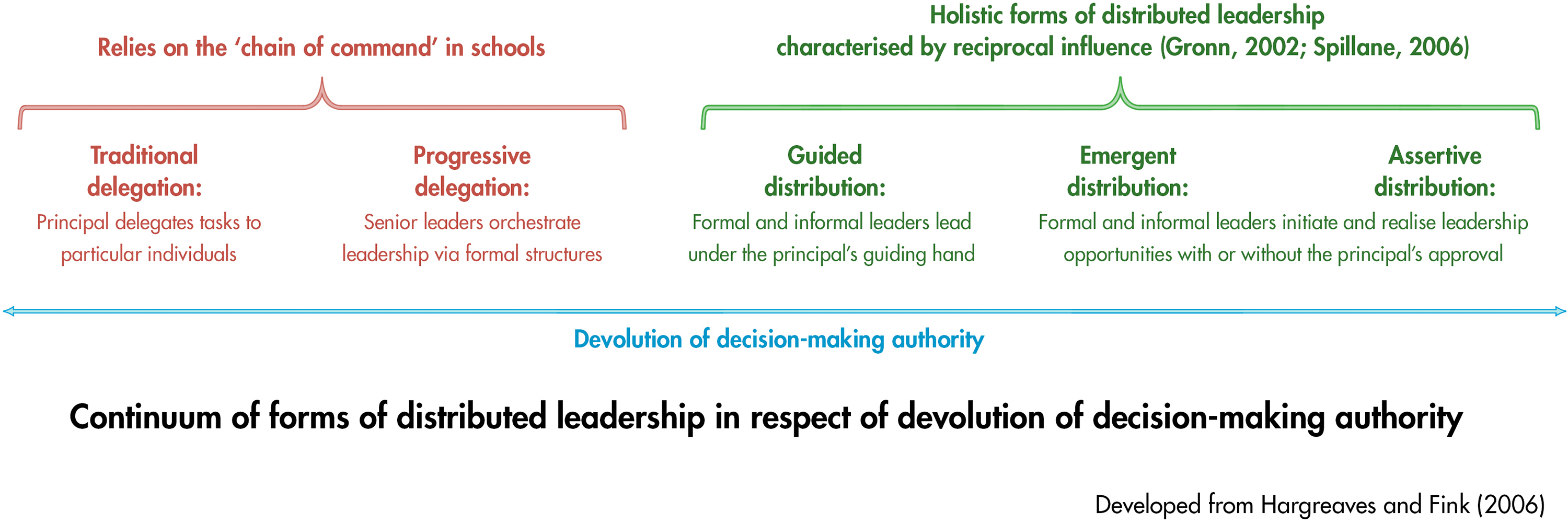
Continuum of forms of distributed leadership in respect of devolution of decision-making authority.
The concept of ‘Guided distribution’, characterised by the engagement of formal leaders and a wide variety of teachers in collectively developing a range of aspects of a school under the ‘guiding hand’ of the principal (Hargreaves and Fink, 2006: 121), is included in the middle of the continuum. This can constitute a holistic form of distributed leadership (Gronn, 2002b; Spillane, 2006), albeit in situations where the leadership practice has the blessing of the principal. The notions of ‘Emergent distribution’ and ‘Assertive distribution’ are situated towards the other end of the spectrum. Essentially, these represent holistic forms of distributed leadership in which leadership opportunities are initiated and realised by formal and informal leaders with or without the approval of the principal (Hargreaves and Fink, 2006). It follows from this that leadership practice can take the form of delegation whereby responsibility for undertaking predetermined tasks is passed down through the hierarchy within a school, which does not represent a holistic form of distributed leadership. In contrast, the distribution of leadership can take different forms that embody holistic forms of ‘distributed leadership’ (Gronn, 2002b; Spillane, 2006), each varying in the extent to which the sources of influence over decision-making are actually devolved and the leadership practice is characterised by reciprocal influence between those involved. In connection, while the preceding has brought some clarity regarding the concept of distributed leadership, it is acknowledged that there is no blueprint or definitive guide that schools should follow to successfully enact it (Harris and DeFlaminis, 2016). In light of this, the foregoing can be interpreted as guiding principles for the realisation of holistic, as distinct from delegated, forms of distributed leadership.
Strengths and limitations of distributed leadership
Having considered the nature of distributed leadership, it is timely to reiterate that, from our perspective, cumulatively, holistic forms of distributed leadership represent a better or ‘purer’ form of distributed leadership. That said, holistic forms of distributed leadership have both strengths and limitations. It is important to take account of these to inform a critique of the espousal of ‘distributed leadership’ by organisations with responsibility for governing education systems at national levels. To this end, we sourced and examined literature on distributed leadership that concerned holistic forms of distributed leadership (Gronn, 2002b; Spillane, 2006). Taking the strengths of these forms of distributed leadership first, it indicates that significant benefits can accrue from the actualisation of these. Specifically, the literature references a variety of studies which suggest that distributed leadership can contribute to school improvement (Harris, 2013; Harris and DeFlaminis, 2016) while several authors highlight its capacity to act as a lever for instructional improvement (Hairon and Goh, 2014; Harris and DeFlaminis, 2016). Research indicates that distributed leadership can have positive effects on teachers’ collaboration (Amels et al., 2020; Çoban and Atasoy, 2020), collegiality and for their motivation to advance to educational change (Amels et al., 2020). Çoban and Atasoy's (2020) study also showed a positive relationship between distributed leadership and organisational innovativeness. Studies also indicate that distributed leadership can enhance teachers’ self-efficacy and job satisfaction (Sun and Xia, 2018), and have positive effects on teachers’ organisational commitment (Akdemir and Ayik, 2017).
Turning attention to the limitations of distributed leadership, it is imperative to acknowledge the research literature indicates inconclusive findings regarding the relationship between distributed leadership and students’ learning outcomes (Hairon and Goh, 2014; Klar et al., 2016; Shava and Tlou, 2018; Tian et al., 2015). In other words, while distributed leadership can impact positively student outcomes (Leithwood et al., 2020), resultant positive effects on their learning outcomes are not guaranteed (Harris et al., 2022). It is necessary to recognise that any form of distributed leadership practice is not inherently good as it depends on how it is manifest (Harris, 2008, 2013; Harris and DeFlaminis, 2016). In this context, research shows different patterns of distributed leadership can have positive and negative effects (Mascall et al., 2008), while it can also account for what Lumby refers to as ‘abuse’ in leading to work overload among staff (Lumby, 2013). Notably, in unison with this latter point, research in an Irish context indicates that the Department does use distributed leadership as a mechanism for promoting the engagement of teachers in ‘management work in an unpaid and voluntary capacity’ through its WSE reports (Quinn, 2022: 16). The literature also indicates that researchers and practitioners are passing off leadership practice that ‘resembles much more closely formal and informal delegation’ as distributed leadership (Lumby, 2019: 11). Essentially, ‘task delegation is [being] misrecognised as distributing leadership’ (Courtney and Gunter, 2015: 409, emphasis in original). Empirical research has revealed that in the context of pronounced discourses promoting distributed leadership at national, regional and local levels, ‘it fails to be enacted as such’ (Mifsud, 2017: 992), with ‘highly structured forms of limited, or “directed”, delegation, rather than genuine distribution [manifest], especially at school level’ (Mifsud, 2017: 995). Given the prevalence of distributed leadership in the Irish educational policy landscape (Hickey, 2017; Murphy, 2019), these issues resonate with the research conducted in this jurisdiction by Lárusdóttir and O’Connor (2017). Notably, albeit during the ‘atypical environment’ of the Covid pandemic in Northern Ireland, Brown et al.’s (2021: 156) research demonstrates how prevailing conditions can result in the regression of distributed leadership practice. Research even demonstrates that distributed leadership ‘may actually function as a mechanism of control’ in respect of school leadership (Dolan, 2020: 181). Notwithstanding, it can be concluded that significant benefits can accrue from holistic forms of distributed leadership (Gronn, 2002b; Spillane, 2006), with the caveat, when enacted in certain ways. This explains why we hold them in higher regard than other forms of distributed leadership.
Transactional leadership
It can be appreciated from the foregoing that discourses exert influence that shapes the practices of teachers and school leaders. While acknowledging this, it is important to recognise that, as Foucault put it, when ‘power relations … come into play, there must be at least a certain degree of freedom on both sides’ (Foucault, 2000: 292). In other words, in such situations, individuals have a margin of freedom to exercise agency. This brings the idea of transactionalism into sharp focus as a vital part of the discursive environment. It is inherent to transactional leadership, a type of leadership that has not featured as prominently as other types of leadership in recent educational leadership literature. In the context of our research, it is important to take account of it because, as is apparent from the findings of our study, the ‘silence’ surrounding it functions alongside the espousal of distributed leadership (Foucault, 1981). It ‘occurs when one person takes the initiative in making contact with others for the purpose of an exchange of valued things’ (Burns, 1978: 19). More specifically, it centres on leaders clarifying the responsibilities and expectations of followers, the tasks to be completed by them and the benefits to their self-interests (Bass, 1985). Essentially, it is premised upon mutual exchange. Notably, like other types of leadership, it is neither inherently good nor bad. It depends on how it is manifest: it underpins the contractual work of senior school leaders, who, on the evidence of existing research, actualise leadership in both wholesome (Brown et al., 2017) and questionable ways (Hutchinson and Crenna-Jennings, 2019). It could be utilised in devolving responsibility to teachers vis-à-vis formal middle leadership positions and/or time in lieu regarding leadership pertaining to the increasing proliferation of externally imposed reform initiatives that seem to be ‘raining’ down on schools. Indeed, empirical research supports the moral view of school leaders employing transactional leadership being ‘committed to ethical conformism through a pragmatic utilitarian approach that considers the welfare and interests of all individuals affected by their decisions’ (Berkovich and Eyal, 2021: 141). It is worth observing that in incentivising teachers to engage in substantive leadership – direction setting – in respect of educational reform, the use of transactional leadership could mitigate above cited concerns regarding misuse of distributed leadership concerning their manipulation in respect of workloads. In this way, the practice of transactional leadership could coexist with actualisation of ‘delegated leadership’ (Hargreaves and Fink, 2006) and/or ‘distributed leadership’ (Gronn, 2002b; Spillane, 2006), depending on the nature of the associated leadership practice. The challenge is to realise a balance (which is of course open to interpretation) between the extent to which educational practitioners are influenced by ‘discourses of distributed leadership’ and transactionalism in a discursive environment that features both. Our study explores how the Department in Ireland is contributing and might contribute, to this with emphasis on WSE reports it publishes.
Methodology
This research centres on the nature and effects of discourses (Foucault, 1972) of educational leadership promulgated by organisations with responsibility for governing education systems at the national level, with emphasis on jurisdictions impacted by neoliberal and NPM influences. It takes the Irish Education system as a case in point. As previously indicated, this system functions under the Department, ‘a department of the Irish State with responsibility for education and training’ (DE, 2023b). It is ‘a ministerial department, supported by various agencies and aegis bodies’ (DE, 2023a). Together with its agencies, it has ‘an important role in providing strategic leadership within the sector’ (DE, 2021: 22). In this context, it publishes WSE reports on schools and such evaluations have been found to influence school leadership practice (Perryman et al., 2018). In the light of this, the research questions for our research were:
What is the nature of the leadership approach the Department has been promoting in its WSE reports in respect of post-primary schools in Ireland? What are the leadership implications of the approach at 1 above for the Department in terms of the type(s) of leadership it advocates for through its WSE reports in the future?
To address these questions, the WSE reports of a sample of post-primary schools (n = 12) were analysed. The Department began publishing such reports in 2006 and so it was decided to select a sample of reports on schools published between then and 2014 as the Department completed a first round of WSEs during this time. This would allow for examination of the second round of WSE reports published by the Department on the sample schools, thereby providing insight into both continuity and change over time regarding the nature of the leadership it was advancing in its WSE reports.
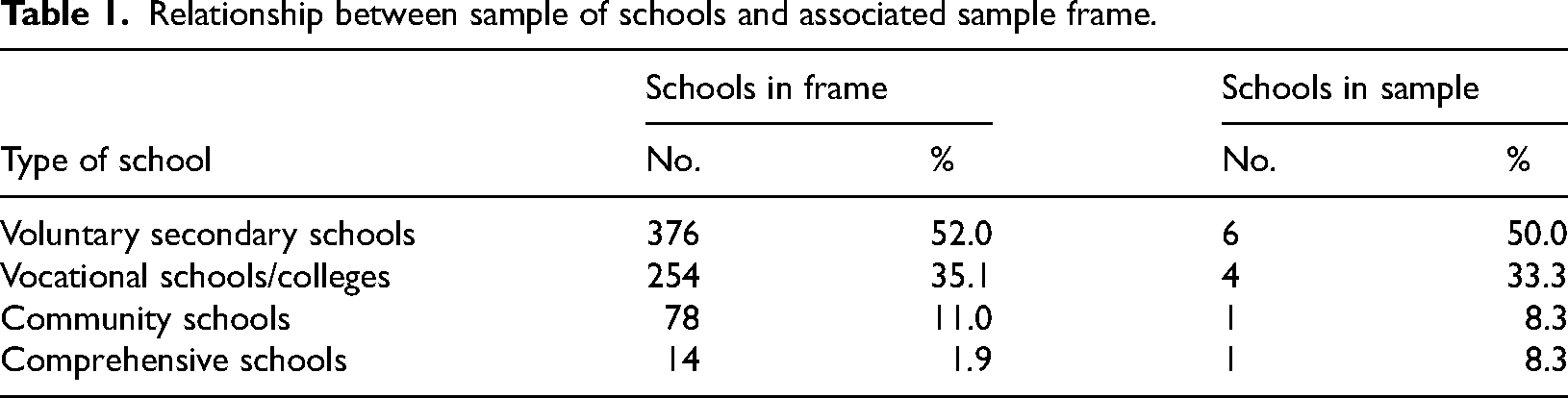
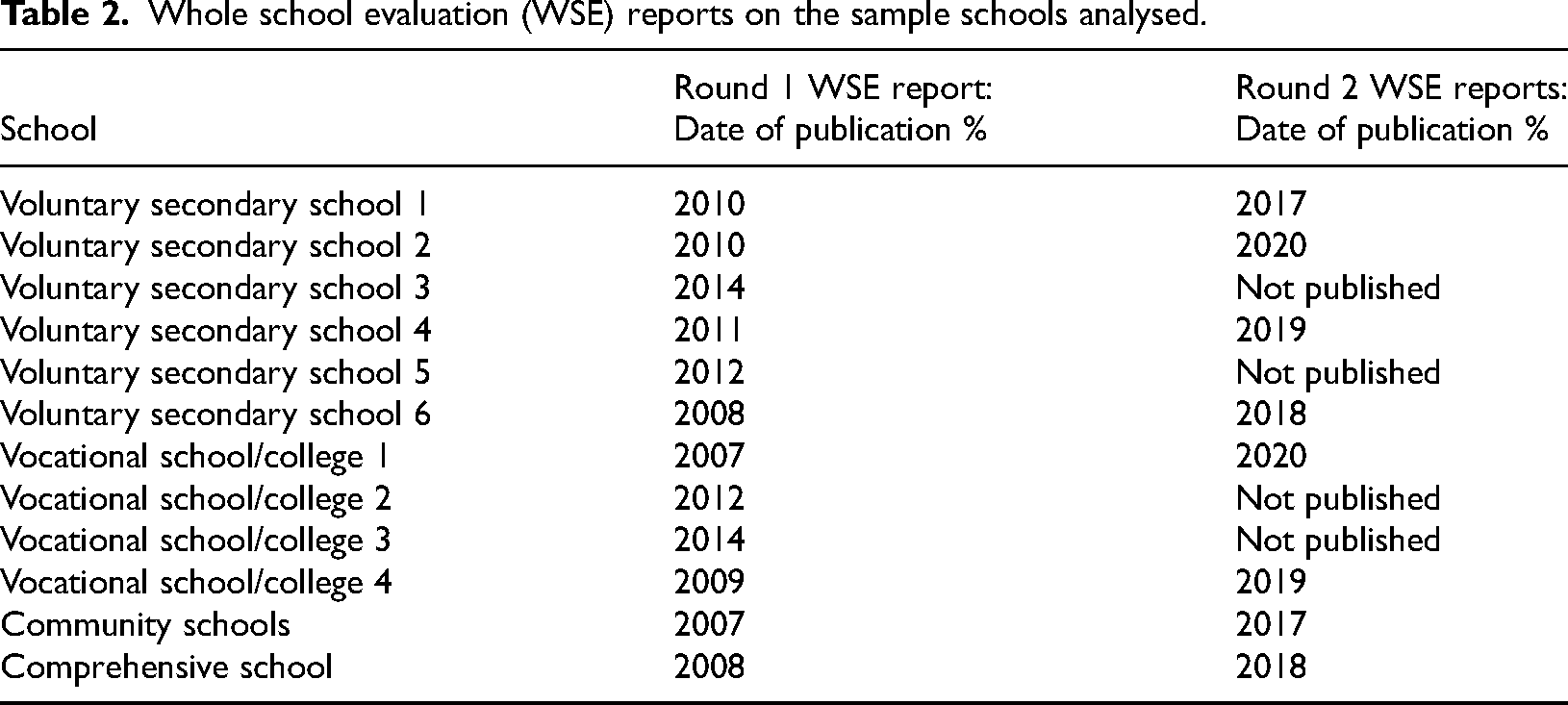
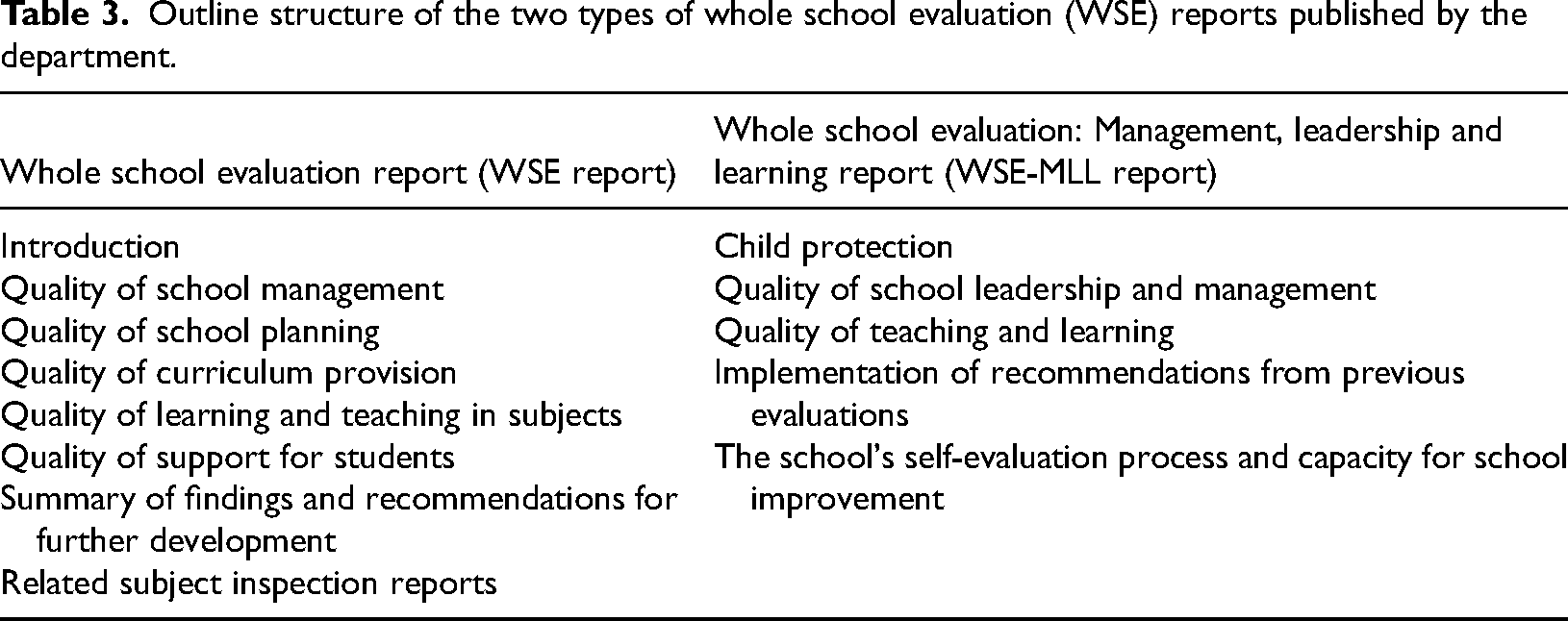
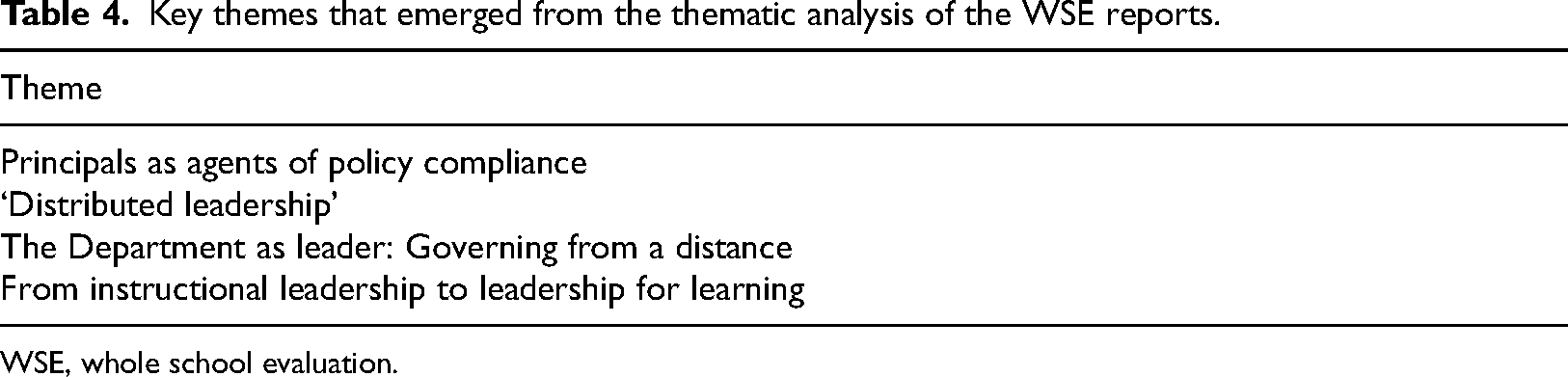
The national list of second-level schools published by the Department in 2014 was used as the sample frame from which the sample of schools was drawn. Purposeful (Creswell and Creswell, 2023) and maximum variation (Palys, 2008) sampling were employed to ensure this sample comprised each of the four types of post-primary schools in the jurisdiction, while also reflecting their distributions nationally (see Table 1). This culminated in a sample of six Voluntary Secondary Schools, six Vocational Schools and Colleges, one Community School and one Comprehensive School. The associated documentary evidence included the WSE reports on each school published between 2007 and 2014 and from 2017 to the present day as indicated in Table 2 1 . The Department has conducted two types of WSE for second-level schools. Up to 2012, this resulted in the publication of a ‘Whole-School Evaluation report’ (WSE report), while more recently the publication of a ‘Whole School Evaluation: Management, Leadership and Learning report’ (WSE-MLL report) has ensued. Table 3 provides an outline structure of these reports. The WSE reports on the sample schools were imported into the MAXQDA qualitative data analysis software programme and two rounds of analysis were undertaken on them. The first round centred on Strauss's (Strauss, 1987) approach to coding data embracing three processes, open coding up, axial coding and selective coding. The four key themes that emerged from this thematic analysis are presented in Table 4. While acknowledging that these themes are interrelated, this paper reports on the theme of ‘Distributed leadership’ due to the confines of space.
Relationship between sample of schools and associated sample frame.
Whole school evaluation (WSE) reports on the sample schools analysed.
Outline structure of the two types of whole school evaluation (WSE) reports published by the department.
Key themes that emerged from the thematic analysis of the WSE reports.
WSE, whole school evaluation.
This theme of ‘Distributed leadership’ from the first round of analysis was subsequently analysed using critical discourse analysis (as were the other three themes not being reported on here – see Table 4). Critical discourse analysis is a qualitative and interpretive method involving the analysis of text and the situated context (Fairclough, 2010) and as such it is influenced by human reasoning. It places emphasis on injustices in society (Wodak, 2014) and implies a focus on shortcomings in ‘a society (an institution, an organisation etc.)’ (Fairclough, 2010: 7) and how these might be mitigated (Fairclough, 2010; Foucault, 1972), which is of course values laden and dependant on perspective. A particular feature of the analysis concerned both the nature and frequency of the Department's use of the terms ‘lead’, ‘leader(s)’, ‘leadership’, ‘led’ and ‘change’ in its WSE reports. Analysis of these reports in respect of the theme of ‘distributed leadership’ drew attention to two pertinent Circulars 2 concerning leadership and management in post-primary schools, so these were included in the documentary evidence examined under this theme (see Table 5).
Circulars included in the documentary evidence analysed.

Note: DES Circular letter PPT 29/02 was active until 2018 when it was replaced by Circular letter 0003/2018
The reflexivity of the researchers was fundamental to the data analysis process (Creswell and Creswell, 2023), particularly as regards enabling them to mitigate the major concern of confirmation bias (Evers and Wu, 2006). To complement this, the theoretical framework for this article on distributed leadership was developed based on the findings that emerged from the data analysis, as opposed to being determined in advance of the same.
The key findings that emerged from analysis of the data under the theme of distributed leadership related to the nature of the ‘distributed leadership’ practice the Department was promoting in its first round of WSE reports (published up to 2014) and ways this has evolved in its second round of WSE reports (published since 2017). While acknowledging that given the nature of the sample, the findings of this study cannot be generalised to larger populations, they provide insight into how the Department was establishing a ‘truth’ of ‘good’ (Foucault, 1982) distributed leadership practice over two periods of time. They also illuminate possibilities for the Department to invoke alternative truths regarding holistic forms of distributed leadership, ones that could result in enhanced leadership practices and effects of education.
Findings and discussion
The findings of this study provide insight into the nature of the model of leadership the Department was found to promote in its first round of WSE reports on the sample of schools (up until 2014) and how this discourse has evolved in its second round of associated WSE reports (from 2017 to 2020). Each of these is explored in the subsections that follow, respectively. While this evolution seems to represent progress, scrutiny of the same calls this into question.
Delegated and distributed leadership: Use and misuse
One of the key findings that emerged from the analysis of the data was that up to 2014, the Department was affirming leadership practice at schools should embrace the enactment of a type of leadership it referred to as ‘distributed leadership’. Its following statement is illustrative: ‘Both members of senior management … have devolved many duties in line with the principles of distributed leadership. Further delegation … is recommended’ (DES, WSE report, 2010). Additionally, this quotation emphasises that the devolution of duties via ‘delegation’ by senior school leaders was inherent to the form of ‘distributed leadership’ being promoted. The Department clarified the principles of this form of distributed leadership were outlined in its ‘circular PPT29/02’ (DES, WSE report, 2008). This circular set out the arrangements for middle leadership and management posts at post-primary schools in Ireland (locally, the incumbents are referred to as ‘post holders’) and was active until 2018 when it was replaced by circular letter 0003/2018 (see Table 5). The former circular centres on the specification of procedures for the allocation of duties and the appointment of teachers to such posts. Essentially, these are premised upon each school determining ‘the duties which need to be performed for the effective internal management of the school, and … the distribution of these duties between the available in-school management posts’ (DES, 2002). This reflects the central tenet of the circular which concerns the allocation of duties to posts to ensure the internal management needs of a school are met effectively. In light of this, it can be concluded that the delegation of duties by senior school leaders to the middle leadership and management team to ensure the management needs of a school were met was fundamental to the form of distributed leadership the Department was promoting. This represents ‘delegated leadership’ (Hargreaves and Fink, 2006).
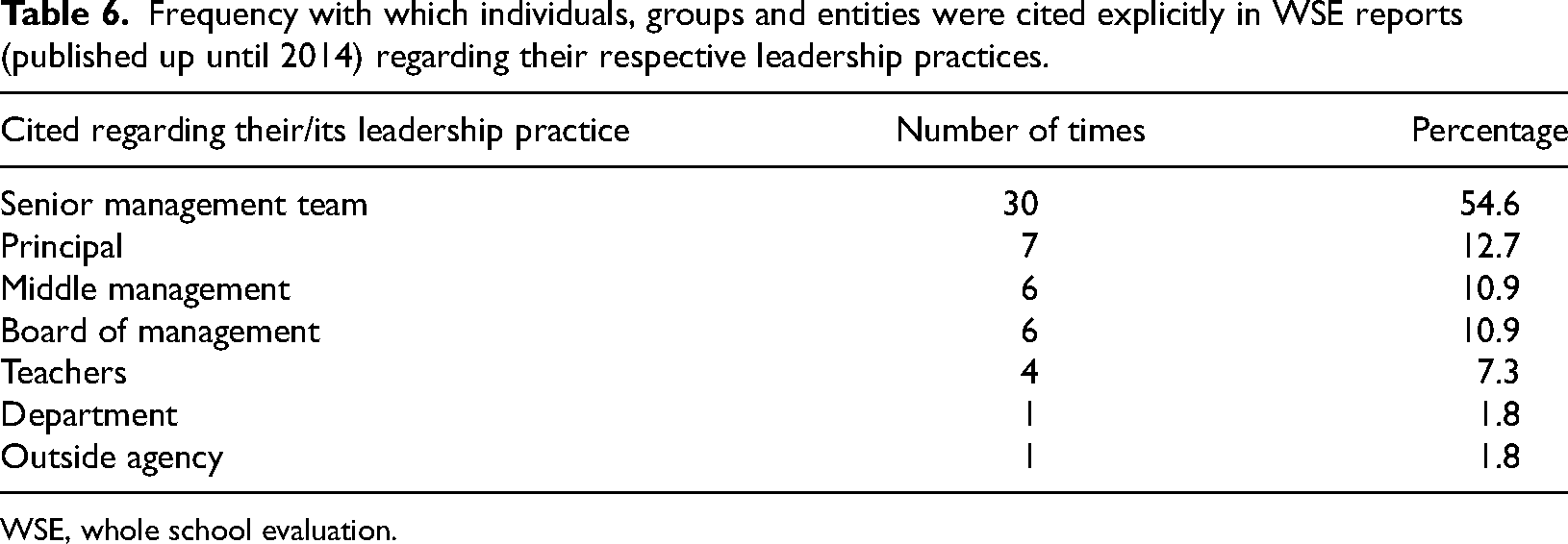
The data provided further insight into who the Department was attributing responsibility to for leading. In connection, Table 6 is informative. It shows the frequency with which individuals, groups and entities were explicitly cited regarding their leadership practice at schools in the first round of WSE reports (published up until 2014). It indicates that together the senior management teams and principals at schools accounted for just over two-thirds (54.6% + 12.7% = 67.3%) of these references. In contrast, the table confirms that the leadership practices of middle management and boards of management were each cited in a little over one-tenth (10.9%) of the Department's references to leadership practice, while the corresponding proportion for teachers was just over one-fourteenth (7.3%). Notably, neither parents nor students were cited directly in any of the WSE reports regarding their leadership practice. It is evident that in its explicit references to the realisation of leadership practice at schools, the Department was focusing predominantly on the roles of senior school leaders, i.e., principals and deputy principals. It was promoting enactment of concentrated or ‘focused leadership’ (Gronn, 2002b). Moreover, in failing to acknowledge leadership practice as a function of parents and students, it was, in the first round of WSE reports analysed, marginalising their roles as educational leaders.
Frequency with which individuals, groups and entities were cited explicitly in WSE reports (published up until 2014) regarding their respective leadership practices.
WSE, whole school evaluation.
The Department's abovementioned advancement of ‘delegated leadership’ (Hargreaves and Fink, 2006) by principals and deputy principals was characterised by the devolution of management roles through the formal post structure of schools. It was contingent upon exchange; Post holders receive additional remuneration and in some cases time in lieu in return for undertaking duties that are delegated. This delegated leadership espoused by the Department necessarily involves transactional leadership (Burns, 1978). It can be appreciated the Department was in fact promoting enactment of a model of leadership premised on ‘focused leadership’ (Gronn, 2002b), which also embraced a combination of ‘delegated leadership’ (Hargreaves and Fink, 2006) and ‘transactional leadership’ (Bass, 1985; Burns, 1978).
At this juncture, it is crucial to reaffirm the Department presented its model of leadership as ‘distributed leadership’ (DES, WSE reports, 2007, 2008, 2010, 2014). While this may be understood as a correct interpretation of the term distributed leadership arising from conceptual confusion surrounding its use (Mifsud, 2015; Shava and Tlou, 2018), the foregoing theoretical framework illuminates two significant gaps between the model of leadership advanced by the Department and one that embraces a holistic form of distributed leadership as articulated by Gronn and Spillane. One of these lacunae concerns the nature of the leadership practice involved. Regarding the Department's model, leadership practice is primarily concerned with what formal leaders do, that is the delegation of roles and responsibilities to post holders. At best, this represents ‘distributed leadership as numerical action’ in which leadership amounts to the sum of the influence attributed to individuals in formal positions who exercise leadership practice, ‘the sum of its parts’ (Gronn, 2002b: 429). In contrast, a holistic form of distributed leadership is delineated by processes of reciprocal influence and the experience of interpersonal synergy between those involved (Gronn, 2002b; Spillane, 2006). In this view, distributed leadership is an emergent property of the dynamic interplay of a group of interacting individuals (Gronn, 2002a; Spillane, 2006) whereby the outcome is more than the sum of the individual actions of those involved (Gronn, 2002a, 2002b; Spillane et al., 2004). It is apparent the Department's model of leadership centred on the realisation of outcomes through the ‘chain of command’ in schools. Divergently, a holistic form of distributed leadership is characterised by reciprocal influence and synergy amongst groups of various individuals engaging in leadership practice (Gronn, 2002a; Spillane, 2006).
A second disparity between the model of leadership the Department was advancing and one that embraces a holistic form of distributed leadership (Gronn, 2002a; Spillane, 2006) concerns those who engage in leadership practice. From the Department's perspective, these centre on those in formal leadership positions within schools, namely, principals, deputy principals and post holders (middle leaders and managers). Incongruently, a holistic form of distributed leadership necessarily involves the engagement of those occupying both formal and informal roles in leadership practice (Diamond and Spillane, 2016; Gronn, 2002b; Harris, 2013; Harris et al., 2022; Spillane, 2006). It is evident the Department's model of leadership differs from a holistic form of distributed leadership (Gronn, 2002a; Spillane, 2006) in that the former centres on those in formal positions, while the latter is premised upon individuals in both formal and informal roles engaging in leadership practice.
In retrospect, it is important to recognise the model of leadership the Department was promoting in its first round of WSE reports on the sample schools for precisely what it is as opposed to what it was espoused as but is not: Essentially, it is a model of leadership that relies on ‘delegated leadership’ (Hargreaves and Fink, 2006) as opposed to ‘distributed leadership’ (Gronn, 2002b; Spillane, 2006). There are significant gaps between it and one that embraces a holistic form of distributed leadership (Gronn, 2002a; Spillane, 2006) in terms of the nature of what constitutes leadership practice and those who exercise it. It can be concluded that the Department's use of the term ‘distributed leadership’ reflects ‘misuse’ of this phrase (Harris, 2008: 173) as ‘a “catch all” term to describe any form of devolved, shared or dispersed leadership practice’ (Harris and Spillane, 2008: 32). In terms of the formative role inspection reports are intended to have on schools, it could be argued that privileging this form of distributed leadership is at best a missed opportunity for system reform and improvement and at worst misleading and counterproductive.
‘Good’ leadership practice: Continuity and change over time
Analysis of the Department's second round of WSE reports on the sample schools (published since 2017) revealed significant shifts in discourse regarding its perspective on what constitutes ‘good’ (Foucault, 1982) leadership practice. Notably, these concern two key aspects. One of these is related to its increased acknowledgement of leadership as a dispersed phenomenon. The second concerns discursive practices that supplant distributed leadership with delegated leadership while also cultivating a ‘mirage-like form of leadership’ (Lumby, 2013: 587). These developments are considered under the two subheadings that follow.
Leadership as a dispersed phenomenon
Analysis of the Department's reports revealed that it has increasingly advanced a rhetoric of leadership as a dispersed phenomenon. In the first instance, this is reflective of the fact that the second round of evaluation reports of the sample schools were based on ‘WSE-MLL reports’ as opposed to the blend of these and ‘WSE reports’ that comprised the first round of reports. The structures of these reports are outlined in Table 3. It can be observed that the section heading ‘Quality of school management’ in the ‘WSE reports’ changed to include the word ‘leadership’ in the ‘WSE-MLL reports’. The new section heading reads ‘Quality of school leadership and management’. Quinn (2022) indicates that in enacting this change, the Department was raising the profile of leadership in the lexicon of evaluation reports. This increased emphasis on leadership is also evident in Table 7 which shows the frequency with which individuals, groups and entities were explicitly cited regarding their leadership practice in the first and second rounds of WSE reports of the sample schools (published between 2007 and 2014 and between 2017 and 2021, respectively). It indicates there was a total of 224 such references in the second round of reports, which represents a significant increase on the total of 55 such references in the first round of reports. This confirms the Department is placing substantially increased emphasis on the lexicon of leadership in its WSE reports since 2017.
Frequency with which individuals, groups and entities were cited explicitly over time in WSE reports regarding their respective leadership practices.
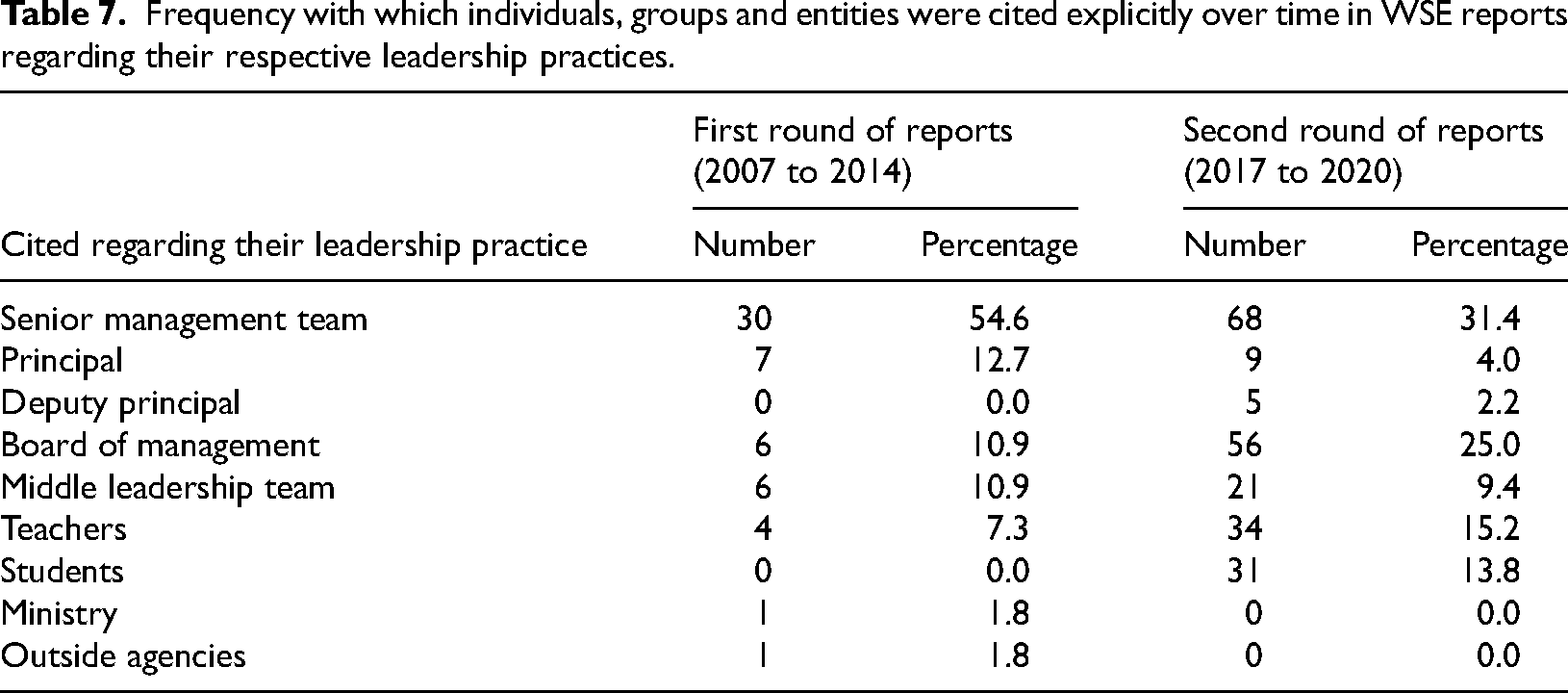
It can also be deduced from Table 7 that in the WSE reports since 2017 (second round of reports), explicit references to the leadership practice of the senior management team or a member thereof account for over one-third (36.6%) of the references to leadership practice. This represents a significant decrease in emphasis on focused leadership, whereby the corresponding proportion of references to leadership practice was just over two-thirds (67.3%) up to 2014 (first round of reports). This decrease is reflected in concomitant increases in emphasis on the leadership practices of each of the boards of management, teachers and students in the second round of WSE reports, which would seem to suggest the Department is increasingly advocating in its WSE reports for the engagement of these stakeholders in leadership practice at schools. In connection, Table 7 shows the Department's references to the leadership practice of teachers more than doubled to account for just over one-seventh (15.2%) of the total number of references to leadership practice in the second round of WSE reports. The corresponding increase regarding students is even more pronounced: they were not cited explicitly regarding their leadership practice in the first round of WSE reports; however, they feature in just under one-seventh (13.8%) of the Department's references to leadership practice in the second round of reports. Moreover, it is remarkable that explicit reference to leadership practice as a function of parents did not feature in any of the WSE reports: their engagement in leadership remains under-recognised in the sample of WSE reports. Notwithstanding, these findings demonstrate that while emphasising focused leadership, the Department is also increasingly acknowledging leadership practice as a phenomenon that is dispersed beyond those who hold formal leadership positions in schools, notably teachers and students. This seems to suggest that, consistent with relevant literature (Gronn, 2009), the Department is advocating that leadership practice at schools should draw on a more balanced blend of focused and distributed leadership. However, given the ambiguity surrounding the use of the latter term, scrutiny of what the Department is advancing as constitutive of increasingly dispersed leadership practice is warranted.
Leadership: A discursive twist!
In unison with the Department's rhetoric of increasingly acknowledging dispersed leadership practice, analysis of its second round of WSE reports of the sample schools drew attention to its 2018 circular which supersedes the aforementioned one concerning middle leadership and management positions. This currently active circular states, it ‘contains the … enhancement of a distributed leadership model in post primary schools’ (DES, 2018: 4). The focus in this circular on ‘identifying and prioritising the evolving leadership and management needs of the school and in assigning and re-assigning post holders to specific roles and responsibilities to meet the evolving needs’ (DES, 2018: 4, emphasis added) does reflect an enhanced model of leadership, as its forerunner centred solely on the delegation of ‘management’ roles (DES, 2002). Notwithstanding, this ‘enhancement’ of the model of leadership centres on the distribution of specific roles and responsibilities to those who hold formal middle leadership positions within schools. This is more akin to delegation rather than a holistic form of distributed leadership. Analysis of the second round of WSE reports supports this. The Department's affirmation that follows is illustrative: Senior management provides very good support to staff while empowering them to take on leadership roles. It is clear that the senior management team has prioritised and delegated responsibilities appropriately to the middle management team. (DES, WSE report, 2019)
Moreover, the Department's rhetoric of increasingly acknowledging leadership as a dispersed phenomenon raises further concerns with specific reference to teachers and students. As regards the former, its statement that follows is illustrative: A notable example of leadership within the school is the involvement of staff in a wide range of extra-curricular and co-curricular activities. (DES, WSE report, 2020)
In conclusion, the findings of this section confirm both continuity and change in the discourse invoked by the Department regarding leadership practice at schools. It is continuing to and increasingly acknowledge leadership as a dispersed phenomenon, thereby reflecting the reality of leadership practice at schools in any eventuality (Harris, 2008). However, the ‘devil is in the detail’. Analysis of its rhetoric reveals its model of ‘distributed leadership’ continues to rely on delegated leadership (Hargreaves and Fink, 2006), thereby cultivating discursive formations (Foucault, 1981) that supplant the concept of ‘distributed leadership’ (Gronn, 2002b; Spillane, 2006) with ‘delegated leadership’ (Hargreaves and Fink, 2006). Fundamentally, it is engaging in a ‘discursive twist’ that serves to change our ‘common sense’ understanding (Apple, 2016: 128) of what is meant by the in vogue term ‘distributed leadership’. Similarly, its rhetoric invokes discourses that enable management activities and routine student learning activities to masquerade as leadership. Moreover, given the Department's influential position in the education system, these practices have a propensity to influence senior school leaders to actualise ‘delegated leadership’ (Hargreaves and Fink, 2006) under the guise of distributed leadership (Harris, 2008, 2013; Lumby, 2013, 2019) and pass off management and the provision of extracurricular activities as distributed leadership too. Simply put, it is promoting delegated leadership and what could be viewed as management activities without giving due and explicit recognition to holistic forms of distributed leadership. At this juncture, it is timely to establish the implications of these discursive formations which, extend to school leadership at both local and national levels.
Concluding discussion
This study clarifies the nature of the model of leadership the Department in Ireland is advancing for enactment at schools through its WSE reports on the sample of schools pertaining to this research. Although foregrounded as an enhanced form of distributed leadership (DES, 2018), this was found to belie its advancement of a combination of ‘focused leadership’ (Gronn, 2002b), ‘delegated leadership’ (Hargreaves and Fink, 2006) and ‘transactional leadership’ (Bass, 1985; Burns, 1978) under the umbrella term ‘distributed leadership’. Issues arising from ‘political, school leadership and workload issues are significant contextual factors’ in Ireland and suggest that, in part, distributed leadership in schools should address management roles and responsibilities (Quinn, 2022: 2). From this perspective, the promotion of delegated leadership and transactional leadership in themselves is not a matter of contention and is supported by the Department through remuneration for post holders. However, presenting them under the façade of distributed leadership without duly acknowledging the holistic form of distributed leadership (Gronn, 2002b; Spillane, 2006) is of concern. In so doing, the Department is employing discursive strategies (Foucault, 1972) associated with neoliberalism and NPM (Apple, 2006) in conflating ‘distributed leadership’ (Gronn, 2002b; Spillane, 2006) and ‘delegated leadership’ (Hargreaves and Fink, 2006). In so doing, it is failing to duly promote a model of leadership that embodies holistic forms of distributed leadership (Gronn, 2002b; Spillane, 2006) from which aforementioned significant benefits can accrue, albeit, when enacted in certain ways. Moreover, in supplanting distributed leadership with delegated leadership, it is endorsing actualisation of ‘delegated leadership’ (Hargreaves and Fink, 2006) under the guise of ‘distributed leadership’ (Gronn, 2002b; Spillane, 2006), whence the identities of senior school leaders can be viewed as partially delusional as they ‘believe that they are engaged in participative forms of decision-making when they continue to be attached to forms of leadership which are largely reliant upon hierarchical control’ (Hall et al., 2013: 187). Moreover, by remaining virtually silent (Foucault, 1981) on holistic forms of distributed leadership in the WSE reports on the sample schools, the Department is marginalising their enactment and inhibiting the realisation of associated potential benefits. This could account for the divergence between the incorporation of distributed leadership into national policy frameworks (Hickey, 2017; Mifsud, 2017; Murphy, 2019) and its failure to manifest in holistic forms (Gronn, 2002b; Spillane, 2006) in schools as evidenced in literature (Lárusdóttir and O’Connor, 2017; Mifsud, 2017). Therefore, it is reasonable to proffer that entities with responsibility for governing education systems at national levels, should cultivate discourses (Foucault, 1981) in their school evaluation reports that duly promote holistic forms of distributed leadership (Gronn, 2002b; Spillane, 2006). In this context, it is acknowledged that distributed leadership is not the only ‘show in town’ as the educational leadership literature indicates that school leadership should embrace a variety of types of leadership in the modern era, including focused, transactional, delegated and holistic forms of distributed leadership while taking due account of changes in school context over time.
This study also revealed that in appearing to increasingly promote leadership practice as a dispersed phenomenon, the Department was actually advancing a mirage-like form of leadership (Lumby, 2013) in classifying the work of teachers in areas of school life typically associated with management and students experiencing a holistic education as leadership whilst failing to substantiate this. In conflating the engagement of teachers in management activities and involvement of students in their learning as leadership, it is cultivating discursive formations (Foucault, 1981) that fabricate the identities of schools as leadership dense when this may not be the case, an approach that serves to buttress maintenance of the status quo. These findings are consistent with research which illuminates that discourses pertaining to models of effective leadership result in senior school leaders marginalising the professional agency of teachers under the guise of enacting the vision of the leader (Courtney and Gunter, 2015). Taken together, these findings suggest that it is incumbent on those with responsibility for governing education systems at national levels to take action to mitigate the shortcomings of potential intended and or unintended consequences of their actions. In broad terms, in respect of cultivating holistic forms of distributed leadership (Gronn, 2002b; Spillane, 2006) in an Irish context, this should involve enabling school leaders to engage in context-sensitive Continuing Professional Development (CPD) in respect of distributed leadership (Murphy and Brennan, 2022), a matter that is more pressing arising from the Covid pandemic (Murphy and Devine, 2023). This CPD should extend beyond senior school leaders and include middle leaders as well (Kavanagh et al., 2021). More specifically, it can be concluded from our research that it behoves the Department to complement this by proactively cultivating enhanced leadership practice at schools by making explicit in its school evaluation reports authentic examples of teachers, students and parents engaging in leadership practice to good effect. In applying leadership terminology to devolved roles previously classified as management, it should ensure this does not constitute a discursive change in the use of language by making explicit how associated underling practices actually constitute forms of distributed leadership. The Department would then be reversing its enactment of the ominous strategy of changing our common sense understanding of key terms we employ to understand the social and educational world (Apple, 2006), in this case, the term ‘distributed leadership’. Consequently, it would be reshaping what counts as ‘good’ school leadership and ‘good’ school leaders (Foucault, 1982). In so doing, it would be taking an important step towards enhancing the quality of leadership at schools, that is, promoting an educational environment in which potential benefits of distributed leadership (Gronn, 2002b; Spillane, 2006) would be more likely to materialise to the benefit of school communities, and, ultimately, our students. In this way, it would be enabling rather than constraining the realisation of its own espoused strategic action of seeking to ‘promote innovation and excellence in leadership’ (DES, 2019: 14), surely a responsibility of all organisations with responsibility for governing education systems at national levels.
Footnotes
Declaration of conflicting interests
The authors declared no potential conflicts of interest with respect to the research, authorship, and/or publication of this article.
Funding
The authors received no financial support for the research, authorship, and/or publication of this article.
