



Abstract
Introduction
Educational leaders have long experienced a variety of workplace stressors that can impact their well-being (Doyle Fosco, 2022). In the United States (US), high-stakes testing, scarce resources, and growing student need have left educational professions strained. Educational leaders have experienced constantly shifting responsibilities as student and school needs have changed with increased policies and requirements. The National Policy Board for Educational Administration has a series of wide-ranging standards that US educational leaders are supposed to meet. Leaders are responsible for everything from directing the “mission, vision and core values” of their educational institution to creating a “community of care and support for students”, “meaningful engagement of families and community” and “professional capacity of school personnel” (NPBEA, 2015: 3). With these wide-ranging responsibilities, turnover in educational leadership can impact stability, working conditions, and community building in schools (DeMatthews et al., 2022).
While teacher turnover is oft discussed (e.g., Ingersoll et al., 2018), educational leaders do not fare much better. A report from 2019 showed that the average tenure for principals was only 4 years, with 35% of US principals in their roles for less than 2 years (Levin and Bradley, 2019). Further, 18% of principals were no longer in the same position one year later, and this figure was even higher (21%) in high-poverty schools (Levin & Bradley, 2019). These findings are particularly concerning, considering it takes up to 5 years to implement a leadership vision (School Leaders Network, 2014). A recent report from the National Association of Secondary School Principals (NASSP, 2021) found that 38% of US principals were planning to leave their positions within the next three years. NASSP President Gregg Wieczorek accentuated this looming crisis by saying, “The principal pipeline is becoming increasingly fractured at all levels…Recruiting and retaining school leaders will become even more difficult if more is not done…” (NASSP, 2021: 1).
In addition to school disruption, principal onboarding has financial implications. Estimates have shown principal onboarding costs $75,000 on average in the US (School Leaders Network, 2014). Further, instability brought about by leadership burnout and turnover can have costly downstream effects such as teacher turnover (DeMatthews et al., 2022; Sorensen and Ladd, 2019). With an already financially strained education system, prioritizing ways to increase educational leader well-being and decrease turnover is imperative.
Attrition and mobility issues also extend upward to district leadership. Data from three US states showed that after three years, almost half of superintendents (44%) and assistant superintendents (45%) left their roles; only 7% of assistant superintendents transitioned to superintendents (Meyer et al., 2020). Further, a recent report indicated “historic turnover among superintendents” since March 2020 (ILO Group, 2022). Looking at the 500 largest public school districts in the US, the ILO group found that 37% had experienced leadership changes. This report also showed that when women leaders stepped down, they were more likely to be replaced by men (76%). This is concerning because few 20% of superintendents (20%) and school principals (33%) are women (Martínez et al., 2021; Tarbutton, 2019). Not only are districts losing experienced leaders, but they may also be losing ground with gender representation in leadership.
This loss of leadership may, in part, be because of the multitude of stressors impacting educational leaders. Robinson and Shakeshaft (2016) reported constantly changing regulations, funding issues, expansive time commitment, and difficulty managing work-life balance as primary stressors for US superintendents. Research with US school principals has shown similar concerns, but they also report a lack of time for valued instructional leadership, constant workplace interruptions, and overwhelm from job-related paperwork and emails (Boyland, 2011; Klocko and Wells, 2015). School principals have also reported that work stress negatively impacts home life by interfering with family and recreational time (Boyland, 2011). These kinds of stressors, if unaddressed, can easily lead to burnout (DeMatthews et al., 2021).
For women leaders, there can be additional challenges. For example, women leaders are often still primary caretakers (Elmuti et al., 2009), which can bring about role conflict and additional stress when work tasks spill over to home. Further, women tend to be more relationally oriented, and because of the gender imbalance in leadership in the US, they can feel isolated without sufficient female mentors and few female peers (Elmuti et al., 2009). Finally, stereotypical beliefs about how women should interact may cause additional stress. Women are expected to be more communal, warm, and selfless than their male counterparts; however, they may also be questioned in their leadership if they do not possess more masculine traits like “assertiveness and instrumentality” (Eagly & Carli, 2003: 818). The systemic structure in the US may also be problematic; Burton and Weiner (2016: 2) described school leadership as an “‘old boys club’ with males receiving formal and informal mentoring to succeed and women receiving fewer supports.”
Educational leader attention to their personal resilience and wellbeing is crucial if they wish to provide a high level of support for their school communities (DeMatthews et al., 2021; Mahfouz and Gordon, 2021). Studies have shown that educational leaders are pivotal in supporting teachers’ wellbeing and school climate (Lambersky, 2016; Price, 2012). Further, leaders with lower wellbeing may be less able to impact student engagement (Maxwell and Riley, 2017). Educational leader self-care if of utmost importance given that downstream effects such as burnout and turnover can be costly financially and for student success.
To combat chronic exposure to stressors it is vital to cultivate assets and engage in practices that buffer against the effects of stress. US educational leaders have indicated using humor, exercise, organizational strategies, mentor support, and boundary setting to cope with job stress (Lefdal and DeJong, 2019). Cherkowski et al. (2020) found that efforts toward cultivating balance, building trusting relationships, and finding a sense of purpose were important for workplace wellbeing. That said, recent research has also shown that school leaders often fail to attend to their basic wellbeing needs, including exercise, sleep, nutrition, hydration, and work-life balance (Ray et al., 2020).
While efforts have been made to understand workplace wellbeing, more research is needed. The relationships between stressors experienced, the impacts of these stressors, and the types of self-care strategies that help mitigate the effects of stress are still not fully understood. Further, given the different expectations for male and female leaders, it is important to understand if there are gender differences in stress and self-care requiring different strategies for resilience. Therefore, this investigation explores qualitative and quantitative data from US educational leaders on stress, impacts, and mitigating factors.
Methods
Current study
This case study examines data collected from educational leaders in single school district in the northeastern United States using a convergent parallel mixed-methods design (Fetters et al., 2013). This design provided a more robust understanding of the phenomena than either methodological paradigm alone. The goals of this research were to understand: (1) the types of stressors leaders are regularly experiencing, (2) the impacts of the stress, (3) coping/self-care skills used to buffer against chronic stress exposure, and (4) differences observed by gender. Content analysis of qualitative responses and data analysis of quantitative responses together provided a clearer picture of the educational leader experiences.
Sample
Data for this project were collected in May of 2019 with Penn State University IRB approval (#12251). A district staff member sent the survey and consent form to all school and district leaders. Respondents completed the survey before engaging in a professional development program.
District demographics
This suburban district in the northeastern US (pseudonym used) is one of the largest in the state; in 2019, it served almost 12,000 students and employed over 1200 staff and administrators (Cherry District, 2019). Racial/ethnic makeup was primarily White (69%), Black (16%), Hispanic (6%), and Asian (6%); 44.8% of students were economically disadvantaged (Cherry District, 2019; EDGE, 2021). District spending per pupil ($14,714) was below the state average ($18,291) but still above the 2019 national average of $13,187 (Cherry District, 2019; PSBA, 2020; U.S. Census Bureau, 2021).
Participant demographics
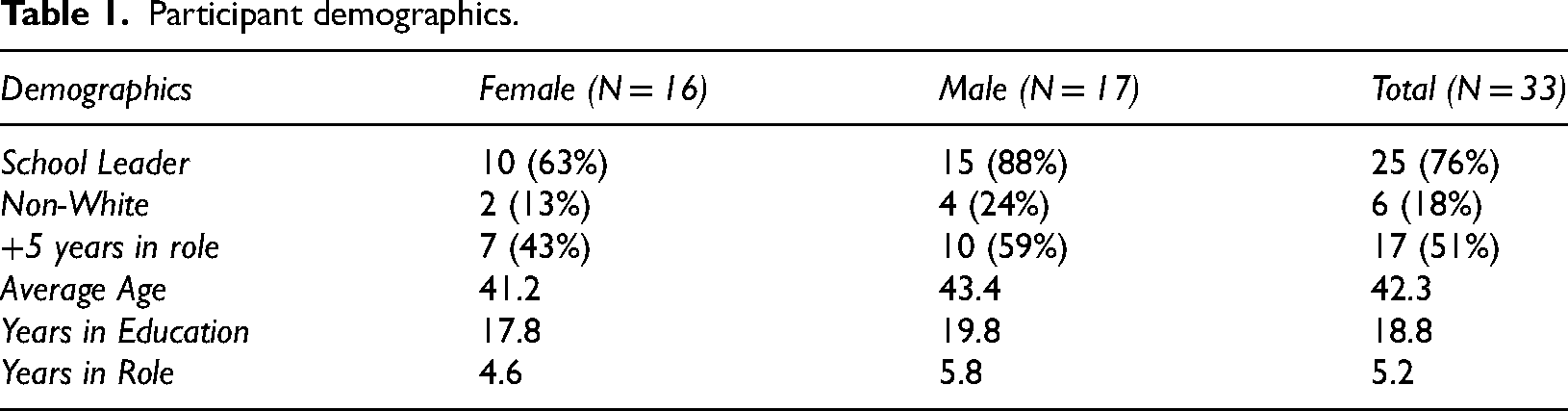
In 2019, all school leaders (i.e., principals and assistant principals) and district leaders (e.g., special education supervisors and directors, pupil services and curriculum and instruction, and assistant superintendents) were invited to participate in a survey. Of the 64 administrators on staff, approximately half (n = 33) chose to participate (see Table 1). The majority were school leaders (76%). Almost half of the participants were female (49%), with more representation in district administration. The sample was 73% White, 12% Black/African American, and 3% Asian/Filipino; 12% did not disclose race/ethnicity. About half reported more than five years of experience in their current role. District leaders had less time in their roles (M = 3.6) than school leaders (M = 5.8).
Participant demographics.
Risk of bias and positionality
The first author and primary coder (White female) for this project is a trained facilitator who provided professional development on educator resilience to leaders after survey administration. She has also supported hundreds of leaders through workshops focused on cultivating awareness and resilience in education. To minimize the influence that those experiences may have on the codes and themes identified in this study, the second author who previously worked in public education (African American female) served as a second coder. The third author (White female), a former teacher and current Professor of Educational Leadership, also reviewed findings and provided guidance. We acknowledge that, because we are all female, there is a risk of potential gender bias in conclusions drawn from this study; however, the gender differences emerged from the data in this study rather than being a topic that was pre-determined to assess. Finally, all members of this team are from the US, and therefore have viewed these findings through a Western lens.
Measures
Surveys were collected through Qualtrics and took 15–30 min. No compensation was provided. Demographics were asked first, followed by open-ended questions. Closed-ended questions were asked later so they did not color open responses.
Demographic data
Gender
Participants were asked, “What gender do you identify as?” Only two categories were used: Female = −1 and Male = 1.
Qualitative questions
Four open-ended questions followed demographics: (1) What are your biggest sources of stress at work? (2) How does work stress impact your ability to do your job? (3) How does work stress impact your home life? (4) What do you do now to take care of yourself?
Quantitative scales
Psychological Distress
The four-question Patient Health Questionnaire assessed psychological distress (PHQ-4; Kroenke et al., 2009). Respondents reported how often they were bothered by anxiety (two questions; e.g., feeling nervous, anxious, or on edge) or depression (two questions; e.g., little interest or pleasure in doing things) on a 0–3 scale (0 = Not at all to 3 = Nearly every day). Alphas for the full scale (.85) and subscales of anxiety (.89) and depression (.79) were acceptable. Flags (0 = no, 1 = yes) were created using clinical cut-off scores to indicate risk for depression/anxiety.
Stress
Two questions probed overall stress level at home and work. Three questions asked about stress from (1) students, (2) teachers/other staff, and (3) external mandates. All questions were rated from 1 = Very Low to 10 = Extremely High.
Physical Health
Eight questions examined the frequency of health issues related to or exacerbated by stress, including heart, gastrointestinal, blood pressure, eating problems, substance use, breathing problems (e.g., asthma), headaches/migraines, and chronic fatigue. Respondents rated how often issues occurred in the past three months from 1 = Never to 5 = Almost Always. Items were recoded to 0 = Never experienced the health issue and 1 = Having experienced the health issue.
Self-Care Practices
Nine items inquired about self-care strategies, including strength training, cardio exercise, mindful practices, mindful movement, musical/artistic activities, counseling/therapy, spiritual/religious practices, journaling/writing, and talking with others for support. Each item was rated on the frequency of use from 0 = Never to 6 = Daily. Responses were recoded to identify regular self-care practices so that 1 = Weekly or more and 0 = Less than weekly. Two scales were created. Physical exercise practices (strength training, cardio) were combined (alpha = .72), and spiritual self-care was created from mindful practices, mindful movement, and spiritual/religious practices (alpha = .71). Items were also examined individually.
Analytic strategy- qualitative
First cycle
In preparation for coding, unstructured conceptual mapping was conducted for each qualitative question. Once maps were drawn, theories and frameworks were identified that linked emerging codes within existing literature. Spillover theory described by Sok et al. (2014) was influential when examining reported impacts of stress. This theory suggests that events occurring in one aspect of life can “spill over” and influence others (e.g., work-family, family-work). Further, qualitative self-care themes were informed by Hettler's (1976) Dimensions of Wellness Framework which discusses the importance of emotional, physical, spiritual, intellectual, social, and occupational wellness strategies. Although theories/frameworks were identified to support code development, codes were allowed to emerge inductively throughout the first cycle. Those that fit with existing literature were labeled accordingly. This approach is consistent with Schensul and LeCompte (2016), who highlighted that references to coding being solely inductive or deductive is an “oversimplification” as both are often used throughout the process.
A structural approach to content analysis was used (Saldana, 2015). Each question was coded individually so codes could be indexed back to the source question. Codes were given at the “person” level. This structural form of analysis is particularly suited for open-ended survey questions because responses are usually brief, and longer and shorter responses are weighted equally. A leader could be awarded multiple codes for a response; however, they were only given each code once. As such, the metric represents the frequency of the response within the sample. Given the limited amount of data available for each person, coding was done in Microsoft Excel so the entire dataset could be viewed simultaneously. This was especially helpful in later coding cycles.
In the second cycle, a codebook was constructed. Like codes were grouped, and overarching themes were identified. Questions were recorded with themes, retaining most first-cycle codes but removing non-distinct low-frequency codes (e.g., reflection was coded for one person who also noted engaging in religious practices, both were under the theme “spiritual”).
In the third cycle, themes were examined across questions to harmonize labels. Most harmonizing was done with “impacts of stress at home” and “impacts of stress at work.” Upon examination, four of the seven themes were found in both places.
Interrater reliability
At the end of the third cycle, interrater reliability was established (see supplementary coder agreement table). A second coder (second author) was given the codebook and independently coded one-third of the responses (n = 11) as practice. Depending on the agreement during practice, additional coding was conducted. All discrepancies were identified and rectified through discussion.
Source of self-care
Percent agreement (Range from 90% to 100%) met the minimum benchmark of 80%–90% (Saldana, 2015: 37) during practice coding. Cohen's kappa was also calculated to minimize bias from agreement due to chance. Kappas were acceptable, ranging from .74 (moderate agreement) to 1.0 (perfect agreement) (McHugh, 2012).
Sources of stress
Percent agreement was met for practice coding (Range = 82%–100%). However, Cohen's kappa for two “sources of stress” codes, student wellbeing and admin/district behavior, fell below acceptable levels (.56). Coding rules were clarified, and an additional 33% of the transcripts were coded for reliability; perfect agreement was found across all codes.
Impacts of stress
During practice coding, percent agreement did not meet minimum benchmarks for themes of spillover and time/task management. Additional decision rules were put in place for the two themes, and the remaining transcripts (66%) were double-coded with the coding clarifications. Coder agreement met minimum benchmarks across the remaining responses (Range = 85%–100%); Cohen's Kappa indicated moderate to perfect agreement (Range = .64–1.0) (McHugh, 2012).
Analytic strategy- quantitative
A dataset with qualitative themes across all questions was created where each person received a numeric value of one for each theme addressed in their qualitative responses. A correlation matrix was created using SPSS Version 28 to visualize relationships between themes; a standard correlation matrix was used to see all variables simultaneously. Because these were binary variables, for significant or marginally significant relationships (p < .10), the strength of relationship was confirmed using more appropriate statistics (χ2 & Phi-Coefficient) available in the crosstabs function in SPSS 28. For quantitative variables, descriptive analyses were conducted. Further, z-tests (Crosstabs function with Bonferroni correction) of binary variables and t-tests of continuous variables were used to examine demographic differences.
Findings
This study examined qualitative and quantitative data on to understand educational leader wellbeing. This data was focused on three areas of inquiry: sources of stress that they experience, the impacts of that stress, and the self-care practices they engage in to mitigate the effects of stress. We also explored the relationships between them. Findings are presented below by area.
Sources of stress
Qualitative
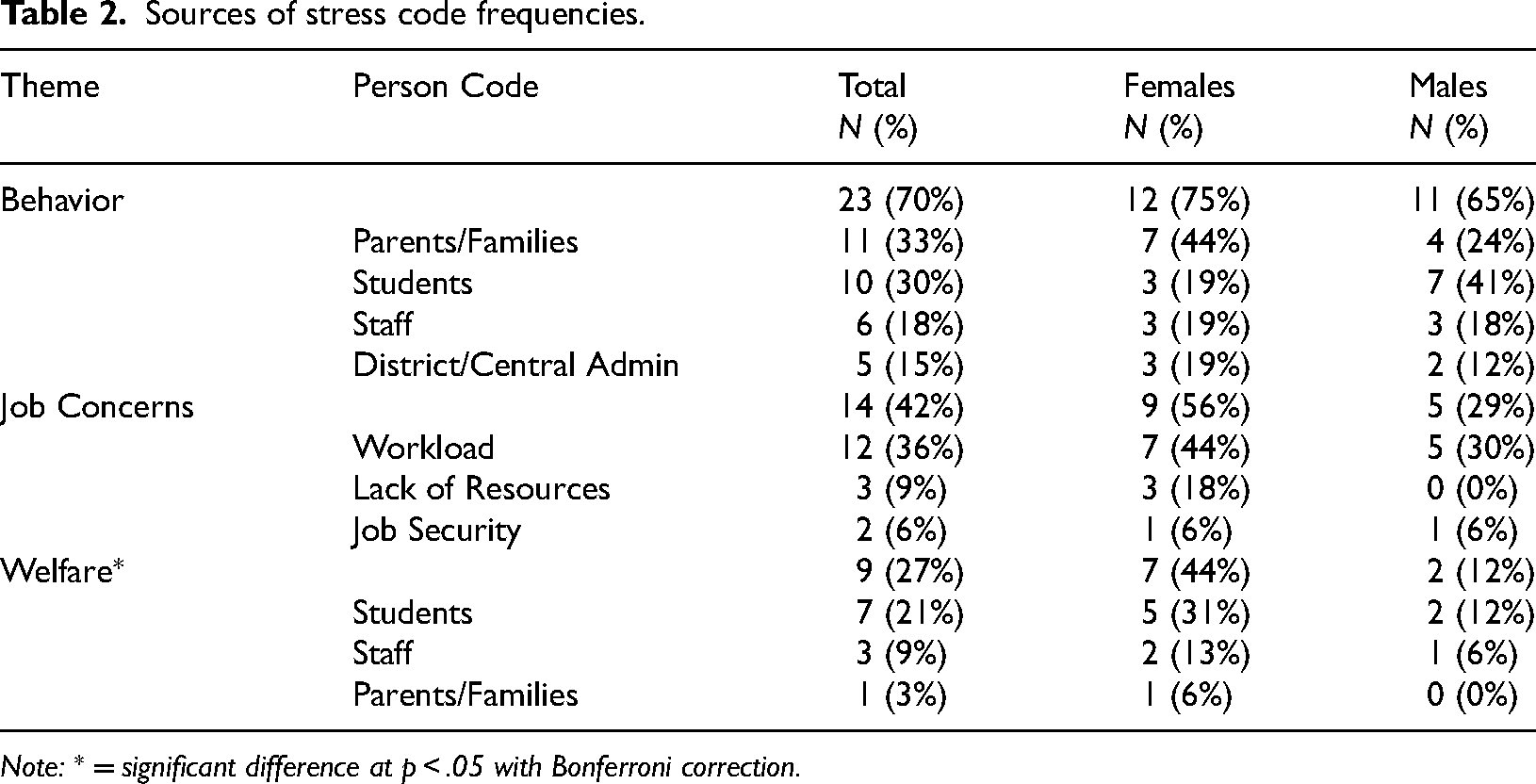
Three themes emerged related to work stress: behavior of others, wellbeing of others, and job concerns (see Table 2). “Others” included students (n = 12), parents/families (n = 11), teachers/staff (n = 9) and district/central office (n = 3), and the school board (n = 1). Table 2 shows the total number of leaders in the sample who received each theme and person code.
Sources of stress code frequencies.
Note: * = significant difference at p < .05 with Bonferroni correction.
Behavior of others
Most leaders (70%) discussed stress related to behavior from various sources. Stress from student behavior was largely related to discipline (e.g., “dealing with immediate student issues”). Leaders also referred to behavior of teachers/staff (e.g., “teachers who don't see the big picture-only their own needs”), parents/families (e.g., “Getting yelled at by parents”), and the district/ central office (e.g., “Getting other district staff to comply/ respond/be involved…”). There were also non-specific references (e.g., “Those who feel they have a sense of entitlement, apathy of others…”).
Job Concerns
About half of leaders surveyed (42%) discussed aspects of the job that caused stress, including workload, lack of resources, and job insecurity. When discussing workload stress, leaders referenced issues with “keeping up with the high demands on everyday needs” and the sheer “number of projects and items that need to be juggled.” Additionally, leaders talked about “not having enough resources…” and “doing more with less.” Finally, in reference to job security, a district leader shared, “It has been stressful thinking my role could be eliminated…”
Concern for wellbeing of others
About a quarter of leaders discussed concern for wellbeing of students, families, and staff. For example, an experienced school leader shared about the “Lack of social service opportunities for students.” Another school leader talked about “dealing with decisions of a staff member that negatively impact a student or parent.” Still, other leaders were concerned instead for their staff members. One district leader addressed “Managing contentious behavior of families in order to support staff.” There was also a general concern for others (e.g., Worrying about how people will be impacted by [my] decisions…). Significantly more females (44%) than males (12%) reported concern for wellbeing of others.
Quantitative
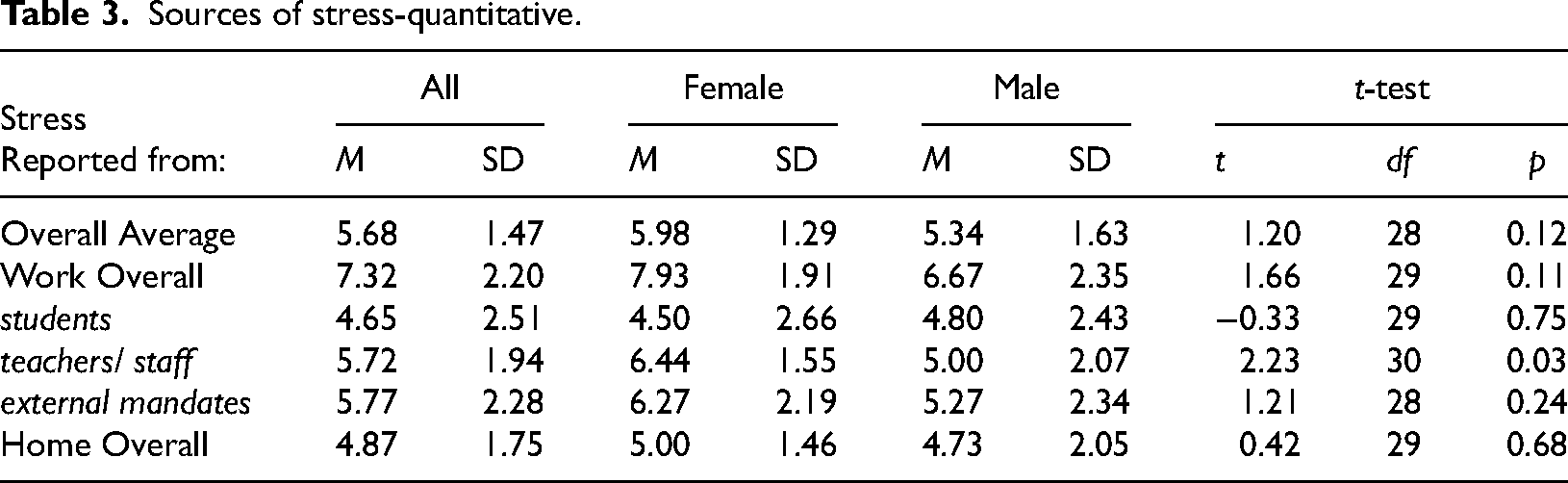
Leaders rated their stress level quantitively in multiple areas (see Table 3). Overall work stress ranked highest, with 68% of the sample rating work stress as a seven or higher on a ten-point scale. Home stress was much lower; only 13% of the sample reported a seven or higher. Students were rated as the lowest source of stress (M = 4.65). Females reported significantly higher stress from teachers/school staff (M = 6.44) than males (M = 5.00) (t(30) = 2.23, p = .03).
Sources of stress-quantitative.
Impacts of stress
Qualitative
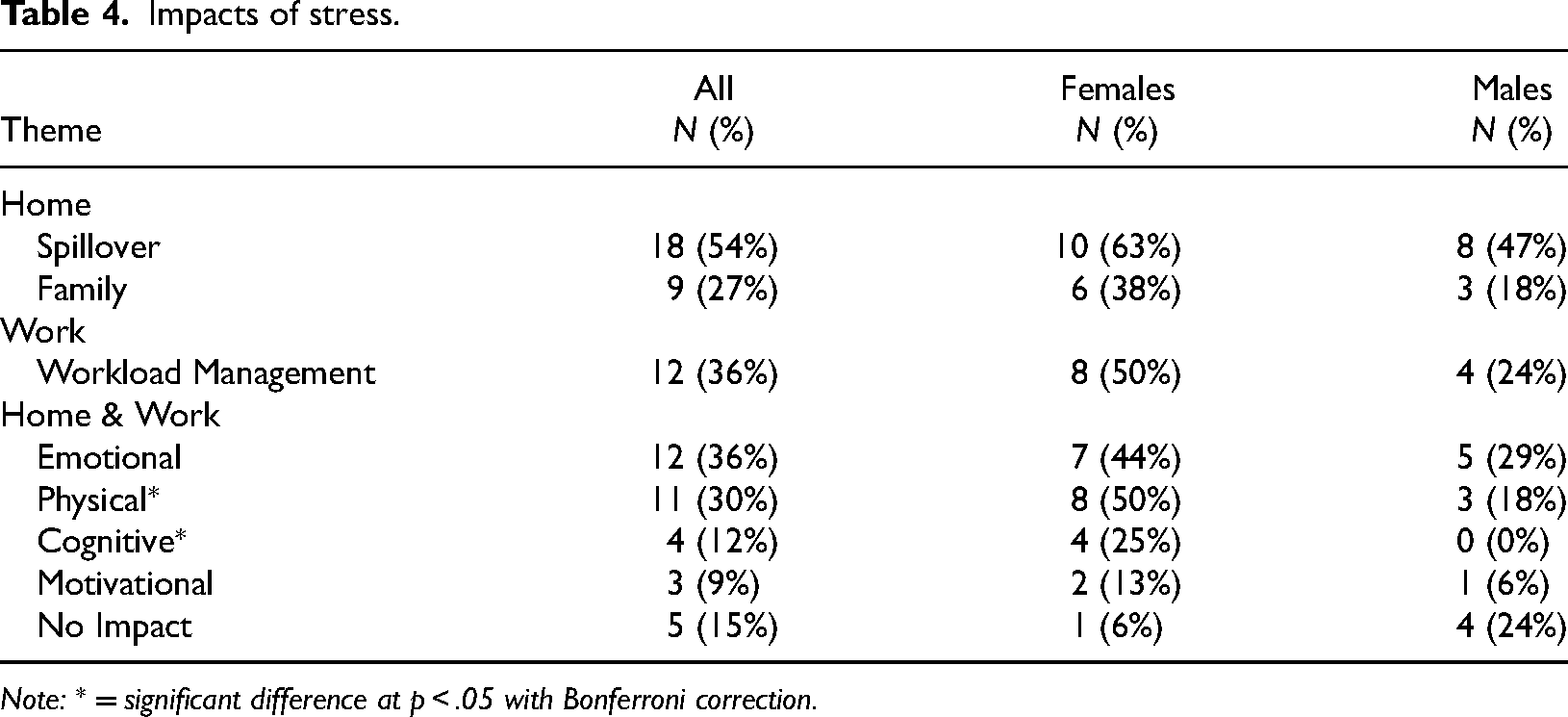
Two open-ended questions ascertained impacts of stress at home and at work separately. Findings are reported together because four of seven themes overlapped. Two themes were exclusive to the home and one to work (frequencies in Table 4).
Impacts of stress.
Note: * = significant difference at p < .05 with Bonferroni correction.
Work-to-home Spillover – Home Only
Eighteen leaders indicated work-to-home spillover. This theme captured time-related and strain-related spillover (Sok et al., 2014). A primary school leader provided an example of strain-related spillover saying, “I often bring my stress home and treat my family like my students.” For time-related spillover, a veteran school leader shared that she was impacted by “[t]ime away from family to address work issues in evening and weekends.” A third code of “boundaries” was also under this theme, as leaders often set boundaries to keep spillover from happening. For example, a veteran secondary school leader said, “I do my best to separate work from home.”
Family Impacts – Home Only
Nine leaders indicated impacts on family. For example, a veteran school leader talked about not being available when her family needed her. Another school leader said, “I don't have the motivation to play with my kids.”
Workload Management – Work Only
Issues with workload management arose for twelve leaders. This theme included time management, task management, and focusing/prioritizing as they occurred in the workplace. For example, one veteran male school leader talked about how the “added components of the job takes away from everything else that needs to be done.” A female district leader discussed having to take work home with her and said, “attending to other domestic tasks and my own needs often falls to the wayside.” Meanwhile, a veteran school leader responded with self-care strategies to mitigate impacts; she said, “I balance my responsibilities, prioritize what needs to be done, and manage my time to minimize stress.”
Emotional wellbeing
Emotional impacts were reported by twelve leaders. This theme encapsulated anxiety/worry, irritability, and feeling overwhelmed. For example, a secondary school leader talked about getting “frustrated with the daily grind” at work, while another experienced primary school leader talked about becoming “grumpy” at home. Finally, anxiety/worry is well-captured by one primary school leader who said, “My mind doesn't stop-it keeps going on and on about what I need to do, [and] how I need to do it.”
Physical wellbeing
Eleven leaders indicated one or more physical health impacts of stress; significantly more females (50%) reported problems with physical wellbeing compared to males (18%). These impacts included sleep patterns (e.g., “trouble sleeping”), eating habits (e.g., “eat poorly”), feelings of exhaustion/lack of energy (e.g., “Energy is an ongoing issue”), and somatic complaints (“I get headaches”). It was not unusual for leaders to indicate more than one type of physical health impact (e.g., “I am always exhausted, sometimes trouble sleeping”).
Cognitive wellbeing
Four female leaders (no males) indicated cognitive impacts of stress. This theme included difficulty with decision-making, lack of creativity, and difficulty being in the present moment. For example, one primary school leader shared that she could “feel indecisive at times.” A district leader shared that stress “really impact[ed her] ability to be in the moment when dealing with situations….”
Motivational wellbeing
Motivation issues were discussed by three leaders with positively and negatively valenced responses. This theme included general motivation and loss of passion. For example, a female district leader said, “I see a certain level of stress to positively affect work performance as it keeps me focused and motivated….” Meanwhile, an experienced female school leader shared that work stress leaves her “worn down and unmotivated.” Similarly, an experienced male leader said, “I'm afraid of burning out - my passion for education is dwindling.”
No impact
Interestingly, five leaders reported no impacts of stress either at home or at work. One secondary school leader said stress “[d]oes not impact [his] ability to do [his] job.” Another experienced secondary school leader said, “It does not impact my home life.”
Quantitative
Most educational leaders reported issues with over/under-eating, chronic fatigue, headaches, and gastrointestinal (GI) problems (see Table 5). Regular issues (“often” or “almost always”) were reported most frequently with chronic fatigue (33%), eating (28%), and GI (22%). Consistent with increased qualitative reporting of physical health impacts, females were also significantly more likely than males to report experiencing headaches.
Physical & psychological health impacts.
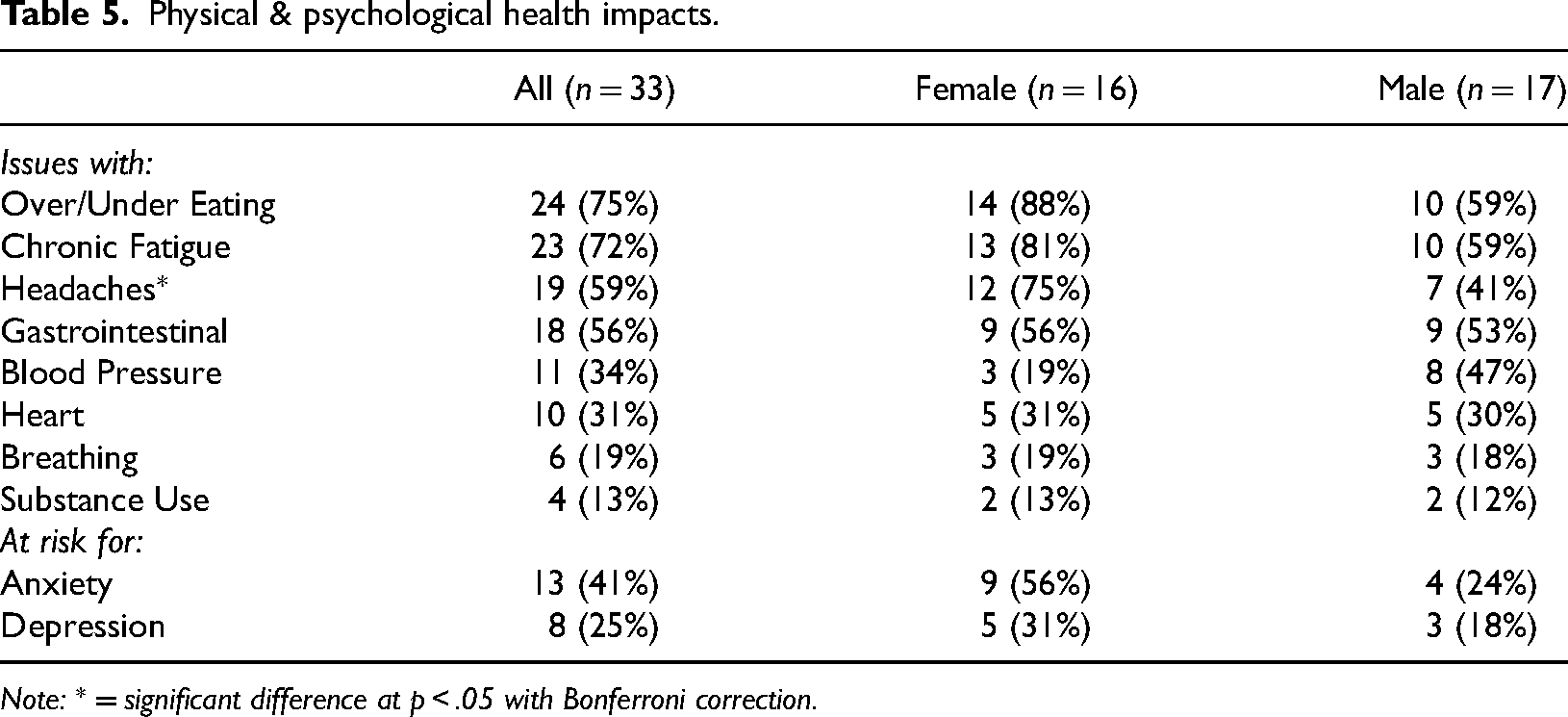
Note: * = significant difference at p < .05 with Bonferroni correction.
Regarding psychological health, 25% of leader responses indicated risk for depression, and 41% were at risk for an anxiety disorder. Overall, 72% of educational leaders had at least mild risk for mental health concerns; 31% were at moderate or severe risk. No significant gender differences were found for psychological health.
Self-care
Qualitative
Five of the six dimensions of Hettler's (1976) Dimensions of Wellness framework were identified as themes in responses (see Table 6). Qualitative code labels were also aligned with previous work on self-care strategies in a community sample by Hansson et al. (2005).
Self-Care themes.
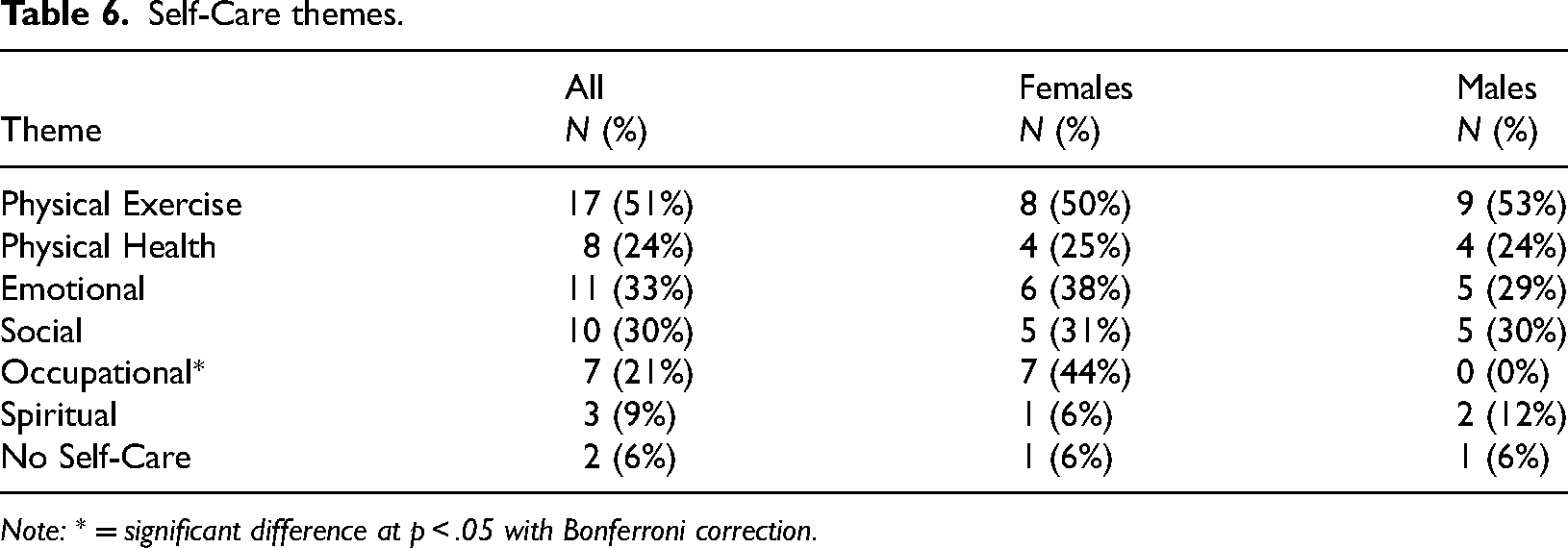
Note: * = significant difference at p < .05 with Bonferroni correction.
Physical
Two “Physical” themes were identified. First, over half of the sample reported engaging in physical exercise (e.g., “work out”). Second, 24% of the leaders discussed physical health, including healthy eating, taking vitamins or medication, and good sleep hygiene (e.g., “go to bed early”).
Emotional
A third of leaders reported emotional self-care. Three codes were included: enjoyable activities, rest/relaxation, and professional support. Enjoyable activities included hobbies (e.g., “I am focused only on the moment and getting the little [golf] ball into the 4-inch cup.”), outdoor (e.g., “we go camping practically every weekend”), and other activities (e.g., “I binge watch cartoons and tv shows….”). Rest/relaxation was best described by an experienced secondary school leader who said, “[I] do what I want to relax. Go to movies, read books, chill.” Finally, two leaders reported emotional support from a mentor or a counselor.
Social
Thirty percent of leaders referenced positive social relationships as a source of self-care. Most often, leaders discussed spending time with family (e.g., “I make time to spend with my son and family”) and friends (e.g., “Hang with friends”).
Occupational
Occupational self-care was referenced by seven female leaders. This theme came from two codes, prioritizing (e.g., “prioritize”) and setting boundaries. For example, one district leader said, “I TRY to compartmentalize and keep work issues at work…” Another secondary-level district leader said, “I really try not to do work in my RV - it is a sacred space.”
Spiritual
Three leaders spoke about spiritual self-care. One experienced primary school leader said, “I attend church regularly and rely on my faith when I feel overwhelmed”; another shared that he “Dig[s] deeper into [his] religion and faith.”
No self-care
Finally, two leaders reported not engaging in any self-care. One experienced secondary school leader said, “I do not take care of myself. There is no time.”
Quantitative
Table 7 shows the number of educational leaders reporting different types of self-care quantitatively. Consistent with qualitative findings, when rating frequency of engagement in
Leader weekly self-care practice by gender.
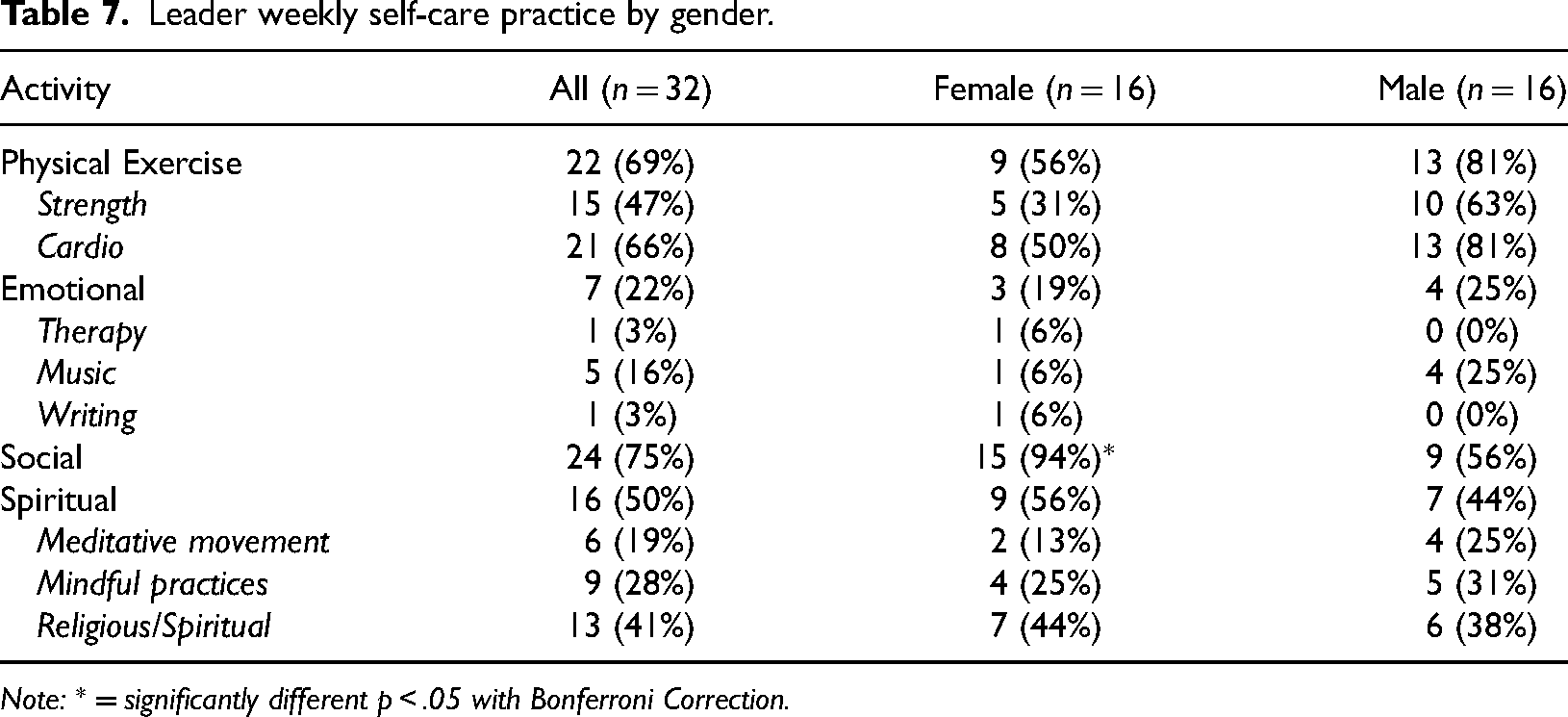
Note: * = significantly different p < .05 with Bonferroni Correction.
different types of self-care to cope with stress, most leaders indicated physical exercise. Although spiritual practice was rarely mentioned in qualitative responses, half of the leaders surveyed reported engaging in mindful or religious/spiritual activities when asked directly. In addition, most educational leaders reported talking with friends or co-workers for support; women were significantly more likely to be engaged in this social support seeking.
Relationships between sources of stress, impacts of stress, and self-care
Sources of stress and impacts of stress
Stress related to others’ behavior was significantly related to emotional impacts (Phi = .36, χ2= 4.31, p = .038). For example, one K-12 district leader shared that “getting other district staff to comply/respond/be involved is a major source of stress.” When asked about impacts, she stated, “I feel that work stress is constantly on my mind and I can't let it go…” Stress related to the wellbeing of others was significantly related to cognitive impacts (Phi = .40, χ2= 5.23, p = .022). This relationship was evidenced by a veteran secondary school leader who shared that she “worr[ied] about how people will be impacted by [her] decisions”; because of this, she “may not entertain some of [her] out-of-the-box ideas.” Finally, stress related to job concerns was significantly related to workload management (Phi = .50, χ2= 8.19, p = .004). For instance, a primary school leader discussed stress from “completion of paperwork while dealing with immediate student issues” and shared that he was “unable to complete assignments.”
Sources of stress and self-care behaviors
Occupational Self-Care was positively related to stress from others’ behavior (Phi = .34, χ2= 3.86, p = .049) and concern for others’ wellbeing (Phi = .35, χ2= 4.00, p = .046). For example, a primary school leader shared that her stress came from “Dealing with decisions of a staff member that negatively impact a student or parent” and reported that part of her self-care was “doing work at work and not bringing it home.” Similarly, a district leader reported stress from “Managing contentious behavior of families in order to support staff” and said her self-care involved “limit[ing] work after hours and on the weekends when possible.”
Impacts of stress and self-care behaviors
Family Impacts (Phi = .43, χ2= 6.19, p = .013) and Motivational Impacts (Phi = .45, χ2= 6.60, p = .010) were significantly positively related to emotional self-care. For illustration, a female primary school leader said she did not “have the motivation to play with [her] kids…”and took her “mind off things by playing on [her] iPad or watching TV.”
Further, a negative relationship was found between Physical Impacts and Physical Exercise self-care (Phi = −.35, χ2= 4.06, p = .044). This relationship is illustrated by a district leader who, when asked about impacts of stress at home, shared that “lack of energy prevents working out.” That said, the inverse may also be true as increased physical exercise can help with physical health issues like sleep (Youngstedt, 2005).
Discussion
Understanding educational leader stress and self-care is important because leader wellbeing can have ripple effects throughout the entire educational community (Mahfouz et al., 2019). US leaders are not just tasked with student education, they are also responsible for providing for the emotional and physical needs of students and sometimes students’ families. Further, they directly affect staff wellbeing (Cann et al., 2021) which also has downstream impacts on student success (Jennings and Greenberg, 2009). Leaders need to be well-supported so they are able to perform myriad roles under challenging circumstances (Levin et al., 2020).
In this study, US educational leaders reported high stress in their workplaces from both internal and external pressures. Qualitative findings showed that the most common source of stress was the behavior of others, primarily accounted for by students and families. This is consistent with previous work showing that interactions with difficult parents and discipline issues with students were reported as a concern for almost all leaders (Sogunro, 2012). Job concerns, specifically workload, was also a highly cited as a source of stress. Klocko and Wells (2015) identified similar issues with personal and professional task management and instructional demands. Finally, concern for wellbeing, especially for students, was frequently reported. Worryingly, a recent report shows that concern for students is a growing issue for educational leaders (NAESP, 2018).
Considering the impacts of stress, over half of the participants surveyed reported gastrointestinal issues, and three-quarters indicated problems with eating. Similar to these findings, Ray et al. (2020) found that 87% of their principals failed to eat lunch at least once a week and 92% reported that their weight was less than “ideal.” Most of our sample also reported problems with chronic fatigue and headaches. Additionally, almost three-quarters of the educational leaders surveyed were at some risk for psychological distress. Impacts of stress reported qualitatively also focused on the spillover of work into the home environment. Many leaders reported impacts not only on their time, but also on their families. Research has shown the dangers of work-home spillover, including associations with emotional exhaustion (Leiter and Durup, 1996) and diminished physical health (Lee et al., 2015).
Educational leaders’ responses regarding self-care included five of Hettler's (1976) Six Dimensions of Wellness: cognitive, emotional, occupational, spiritual, and physical. Similar to findings reported later by Hayes et al. (2022) during the COVID-19 pandemic, physical health and physical exercise were frequently reported for coping and self-care. Interestingly, some research indicates that physical activity may moderate the link between work-home spillover and physical health (Lee et al., 2015). Although spiritual forms of self-care did not frequently appear in open-ended responses, when asked to report the frequency of engagement in mindful, spiritual, or religious types of practice, over half reported engagement weekly or more. The discrepancy between qualitative and quantitative responses may be because of the divide experienced between one's religious identity and one's role in secular public schools (White, 2009). Without being asked directly, leaders may not think to report spiritual self-care related to workplace stress. In previous research, both prayer (Carter, 2018) and meditation (Walker, 2020) were reported as a source of strength and support to cope with the challenges of being a leader.
Gender differences
Student behavior and wellbeing were common stressors reported in qualitative findings. More women than men expressed concern for others’ wellbeing. This difference may be explained by previous research that has shown that women are higher in empathy than men (Christov-Moore et al., 2014). That said, in the US, women are also socialized to be responsible not just for instrumental support but also for the caretaking of others (Elmuti et al., 2009).
This difference in responsibilities could also be behind the increased stress for female leaders related to teachers and staff. Teachers and staff were qualitatively reported as a source of stress by a quarter of the educational leaders surveyed. In quantitative ratings, women reported significantly higher stress related to teachers/staff. Given that women are often required to have different leadership styles, needing to be more collaborative and relational (Chin, 2011), they may experience additional stress concerning staff management compared to their male counterparts. Further, in the workplace, women may be given less respect than their male counterparts (Hoyt, 2010). They can also experience unwritten rules around expressing themselves without being perceived negatively (Hoyt, 2010; Sanchez and Thornton, 2010).
Differences also arose between men and women related to coping strategies, especially around the use of social support. Consistent with findings from previous research, social support seeking was more prevalent for women. Past research has reported that men are more likely to use problem-focused rather than emotion-focused coping; socialization to gender norms can play a role in this difference (Ptacek et al., 1994). It is important to note that social support seeking may not always be positive for educational leaders; if social support leads to co-rumination, it can increase feelings of burnout (Beausaert et al., 2016). More research is needed to understand the ways in which female educational leaders use social support.
Finally, no men in this sample reported using occupational self-care. It may be that because of competing roles at home (Elmuti et al., 2009), women need to have firmer boundaries and engage in more task prioritization then men. This finding may also reflect a cultural artifact in the US as men may feel compelled to prioritize work over other aspects of life. Research by Duckworth and Buzzanell (2009: 564) found that, for men in the US, “work-family balance did not mean equal resource allocation to two life aspects but, rather, conscious attempts to juxtapose and prioritize family activities around the necessity of work”; they often saw their work as the way that they took care of their families. Unfortunately, this research could not disentangle whether males are less likely to engage in this form of self-care or just less likely to report it. Future research on gender differences in occupational self-care is encouraged.
Implications for practice
Because most leaders in this study were using social support for self-care, districts in the US should consider offering formal mentorship for all leaders, and especially for new female leaders, so there are opportunities to discuss challenges with someone who can provide instrumental and emotional support. Mentors can also encourage engagement in practices that help to reduce burnout and support wellbeing; DeMatthews et al. (2021: 162) referred to this as “self-care supervision.” Further, professional learning communities that offer social support in a structured setting may be helpful (Jones et al., 2013).
Additionally, leadership preparation programs and in-service professional development could be harnessed to help support resilience and wellbeing (Klocko and Wells, 2015; Mahfouz and Gordon, 2021). These programs can incorporate topics important for US leaders such as occupational self-care strategies and work-life balance. Formal training in mindfulness-based practices has also been suggested (Hayes et al., 2022; Mahfouz and Gordon, 2021); some mindfulness-focused professional development programs have already been developed (Doyle Fosco et al., in press Felver et al., 2020; Mahfouz, 2018). Finally, given the challenges to physical wellbeing and the importance of physical self-care, districts may consider interventions such as an “executive health assessment and coaching” that can increase awareness of challenges and provide supportive feedback (O’Neill & Glasson, 2019: 887).
Limitations and suggestions for future research
First, it is important to note that this research was conducted in the US and may not generalize well to other countries, especially Non-Western countries. For example, findings related to gender may be different depending on cultural norms and values. Past research using a geographically diverse sample showed similarities and differences in experiences for female educational leaders (Cubillo and Brown, 2003).
Further, more research is needed on how demographics affect educational leader wellbeing. Although this study was balanced concerning gender, our sample was predominantly White. Previous research has indicated that race and ethnicity can impact leadership experience at multiple levels (Ospina and Foldy, 2009). Additionally, leader experience level may be impactful. Unfortunately, for this study, we asked how long they were in their current role without inquiring how long they had been in related leadership roles. Future research should examine whether experience in leadership roles may change how stress is experienced.
School demographics should also be considered. The district studied for this research was in a middle-class area in the northeastern US and may not have had the same concerns that other districts experience. Increased stressors in the environment may drive further impacts on leader wellbeing. Previous research has shown that more junior educational leaders are often assigned to high-poverty schools at a higher rate than experienced principals (Clotfelter et al., 2006).
Finally, future research should consider bi-directionality and valence of spillover. Wellbeing is a multifaceted concept that can be impacted by home experiences as well as the stressors that occur in the workplace (Leiter and Durup, 1996). This research only focused on ways stress in the workplace impacted work and home. Given the average age of educational leaders in this sample, they may have been responsible for caring for children and aging parents. Further, spillover may also be positive (Sok et al., 2014). Leaders can experience joy, a sense of purpose, and passion in their work (Cherkowski et al., 2020) that may also carry over into the home. The way questions were worded for this study likely biased leaders to provide negatively valenced responses. To form a complete picture of wellbeing of educational leaders, future research should assess these factors.
Conclusion
Educational leader wellbeing affects all within the educational community (Mahfouz et al., 2019). This study endeavored to understand more about the sources of stress, impacts of stress, and sources of self-care for educational leaders, broadly defined. Although there will always be stress that occurs within educational environments, it is important to consider what those sources are, and what buffers there are to minimize the effects of that stress. This may include school or district systemic changes to support wellbeing (Doyle Fosco, 2022), changes in preparation programs for educational leaders so they have the skills needed to handle the stress (Wells and Klocko, 2018), and providing professional development for ongoing support (e.g., Doyle Fosco et al., in press). In addition to further examination of factors affecting leader wellbeing in the US and around the world, more research is also needed on programs and practices that would best support them and enhance role longevity.
Footnotes
Acknowledgements
We would like to thank the educational leaders who participated in this research. We would also like to thank our peer reviewers for their valuable time and input.
Authorship statement
SLDF: project administration, conceptualization, data curation and coding, analysis, writing-original draft
MAB: data coding, writing-reviewing & editing
DLS: writing- reviewing & editing
Declaration of conflicting interests
The author(s) declared no potential conflicts of interest with respect to the research, authorship, and/or publication of this article.
Funding
The author(s) received no financial support for the research, authorship, and/or publication of this article.
