



Abstract
Over the past decade, research into principals’ work intensification has revealed that principals spend significant work hours on student discipline and attendance issues, and that they report high levels of emotionally draining situations. In the current study, we examined the relationship between student discipline issues and principals’ emotionally draining situations to determine if variables related to student discipline issues affected principals’ experiences of emotionally draining situations. Using a correlational research design with hierarchical regression, we analysed data from a digital survey of school principals in Ontario, Canada. A total of 1434 surveys were included in the final analysis, with respondents from elementary, high-school and combined schools. Results showed a correlation between student discipline and attendance issues and principals’ experiences of emotionally draining situations, while also showing that student discipline and student and parent mental health were strong predictors of principals’ experiences of emotionally draining situations. These findings have important implications in supporting principals: These insights can inform principal preparation programmes by showing the need for increased training on identifying and treating emotionally draining situations. Insights may also encourage policymakers to review student discipline and student/parent mental health policies in light of the revelation of their impact on principals’ work.
Keywords
Empirical research paper
Over the past decade, we have argued that Ontario principals experience work intensification. Principals also indicate that they spend significant weekly work hours on student discipline and attendance issues, and that many experience emotionally draining situations at work (Pollock et al., 2014; Pollock and Wang, 2019). In this article, we explore how student discipline issues (time principals spent on student discipline issues, discipline policies, effects of student discipline on principals’ work, the mental health of parents and students and the socioeconomic status of students) affect principals’ emotionally draining situations.
Much research demonstrates that principals indirectly influence student success (Day et al., 2009; Hendriks and Scheerens, 2013; Leithwood et al., 2010; Pollock et al., 2015). This body of research almost exclusively describes student success in terms of student achievement on jurisdictional standardized tests (Ball et al., 2012; Eacott, 2011; Foster, 2004; Stack, 2006) with principals playing the role of instructional, curriculum, and/or pedagogical leader (Day et al., 2009; Jenkins and Pfeifer, 2012; Leo, 2015; Robinson et al., 2008; Seiser, 2019). In reality, however, principals have several roles within their position, including creating safe and accepting school environments where all students can learn (Ontario Ministry of Education, 2014). In trying to create these environments, principals must address student discipline.
In education, student discipline typically refers to educators’ responses to student behaviours that are considered inappropriate according to social and education norms, policies and laws (Luiselli et al., 2010). Given that there is substantial research exploring the area of student discipline (Anyon et al., 2014; Bear, 2012; Bell, 2020; Bruns et al., 2005; Fabelo et al., 2011; Findlay, 2015; Gonzalez, 2012; Greflund et al., 2014; Hemphill et al., 2014; Lee et al., 2021a; Skiba et al., 2014), we do not focus specifically on the factors that make up student discipline in this article, but rather focus on how student discipline issues could affect principals’ emotionally draining situations.
Interaction with students around discipline can be positive and rewarding, such as designing, implementing and reaping the rewards of proactive policies and supports that dissuade or prevent the occurrence of behaviours that are considered inappropriate (Luiselli et al., 2010). These interactions can also be negative, however, such as enforcing consequences to inappropriate behaviours or lack of appropriate behaviour (truancy) through such practices as suspension and expulsion (Lacoe and Steinberg, 2018; Raffaele Mendez and Knoff, 2003). We know from the literature that principals are affected by the time they spend on discipline (Alberta Teachers’ Association, 2014; Bayer, 2016; Chirichello, 2010; Findlay, 2015; Horng et al., 2010; Pollock, 2017), the discipline policies to which they are expected to adhere (Lacoe and Steinberg, 2018), the added work resulting from engaging in student discipline (Pollock, 2016, 2017), the mental health of parents and students (Pollock et al., 2017) and the socioeconomic status of students (Petras et al. 2011). Because these variables affect principals in a very substantive way, we chose to investigate them further.
To understand what an emotionally draining situation is, we first need to describe what we mean by emotionally draining. Emotionally draining situations are incidents that trigger a negative mental and physical reaction in the individual who is involved in the experience, and can contribute to cumulative stress (Caesens and Stinglhamber, 2019; Hur et al., 2014; Skaalvik, 2020). A high frequency of emotionally draining situations can lead to occupational burnout, wherein a principal no longer feels valued and capable of fulfilling their role (Caesens and Stinglhamber, 2019). Occupational burnout can lead to health problems, adverse occupational behaviours and shortened time in the principal role (Caesens and Stinglhamber, 2019).
Student discipline issues and time principals spend on tasks
Our time-on-task research indicates that principals spend the greatest amount of their time dealing with student discipline issues, which take up 7.6 h per week on average (Pollock et al., 2014, 2015). Other research corroborates this finding, indicating that school principals spend a considerable amount of their work time on student discipline (Alberta Teachers’ Association, 2014; Bayer, 2016; Canadian Association for Principals and Alberta Teachers’ Association, 2014; Chirichello, 2010; Findlay, 2015; Horng et al., 2010; Pollock, 2017). We know from a parallel qualitative study that principals spend substantial amounts of time dealing with student discipline issues and creating a safe and positive environment that is conducive to student learning (Pollock et al., 2014). As we discuss in later sections, principals’ work regarding student discipline is changing because of changes in the nature of student discipline. Over recent decades, positive approaches to student discipline, such as progressive discipline or restorative justice, are becoming more commonly used than traditional punitive and exclusionary practices, such as corporal punishment, zero tolerance and suspension and expulsion (Chiodo et al., 2016; Greenberg et al., 2003; Hannigan and Hannigan; 2016; Katic et al., 2020). These changes impact how principals spend their time on student discipline issues.
Student discipline issues and related policies
The time principals spend on student discipline issues and their experiences of emotionally draining situations may also be influenced by student discipline policies. Historically, teachers and principals would administer discipline in a punitive manner, with principals possessing the power to decide upon suspensions and expulsions (Baird, 2014; Barber et al., 2012). This punitive approach to student discipline was exclusionary, often inequitable, and in some cases quite severe (Barber et al., 2012; Ontario Ministry of Education, n.d., 2010; Pepler and Craig, 2014). Children for whom the system could not provide an education were either voluntarily removed or pushed out (McIntosh et al., 2012; Skiba and Peterson, 2000; Skiba et al., 2011). Presently, legislation, policies and programmes work towards a different approach to student discipline.
The two most influential discipline policies in Ontario, Canada where our research is situated, are Bill 13 (The Accepting Schools Act, 2012) and Bill 212 (The Education Amendment Act [The Progressive Discipline and School Safety], 2007). Implementation of both of these policies is the responsibility of school principals. These two Acts have generated substantial numbers of additional policy and program memoranda (PPMs) that direct principals on how they should carry out their role, how decisions should be made and what recourse should be followed in specific situations. For example, PPM 145 (Ontario Ministry of Education, 2018), PPM 141 (Ontario Ministry of Education, 2012a) and PPM 142 (Ontario Ministry of Education, 2012b) are intended to demonstrate the Ontario Ministry of Education's commitment providing a ‘safe, inclusive, and accepting’ school environment that uses a discipline approach combining prevention, intervention and discipline with the intent of supporting students to continue their education (Ontario Ministry of Education, 2012c).
As mandated by the provincial government, school boards across Ontario must now provide programming for students who have been suspended or expelled from their school, in both the long and short term (Ontario Ministry of |Education, 2012a, 2012b). These progressive approaches to student discipline and efforts to support student academic achievement have changed the nature of principals’ work (Milne and Aurini, 2017). Consequences of this change include increasing principals’ meetings with parents and teachers, more time spent developing individual Student Achievement Plans (SAPs) and organizing out-of-school student support and creating additional paperwork (Pollock et al., 2017). We believe that these changes in policy and work are contributing to emotionally draining situations for school principals.
Student discipline and mental health concerns of students and parents
A recent evaluation of Ontario's suspension and expulsion programmes has indicated that many students who exhibit behaviours that become discipline issues also experience mental health issues (Pollock et al., 2017). So much so that ‘interviewees from every school board indicated that student mental health concerns [were] at the core of why students [were] being suspended and expelled’ (Pollock et al., 2017: 15). The results of the evaluation indicated that schools and school systems were struggling to meet the needs of students with mental health issues and when these needs were not met, students often found themselves suspended or expelled. Principals expressed frustration about their inability to access the support for students with mental health issues that could have prevented or mitigated the discipline issues.
The mental health of parents also affects principals’ work and, potentially, their emotionally draining situations. Emerging research points to a link between parents’ mental health and student mental health (Wang et al., 2019). There appears to be evidence that parents’ mental health contributes to children's cognitive and social development (Mensa and Kiernan, 2010). Whether this occurs because of genetic predispositions, the home environment or a combination of both, has been long debated (Acri and Hoagwood, 2015; Bibou-Nikou, 2004; Fitzsimons et al., 2017; Wilkinson et al., 2021).
Student discipline issues and socioeconomic status
Decades of research indicate that poverty is connected to student discipline: Low socioeconomic status (SES) students are suspended or expelled at a higher rate (Brantlinger, 1991; Petras et al. 2011; Wu et al., 1982). The reasons for these differences are unclear, but may be individual or structural, such as with low SES students facing stigmatization and increased disciplinary measures due to staff biases (Shabazian, 2020) and parents of higher SES students more actively fighting against disciplinary actions (Milne and Aurini, 2015). Further, schools that primarily have students from households with low SES (hereafter referred to as low SES schools) face structural inequities that may influence student discipline (Lacour and Tissington, 2011; Lumpkin, 2016). Teachers in low SES schools may spend less time on instruction, leading to more students falling behind and misbehaving in class (Desimone and Long, 2010).
Perceptions of discipline also affect student achievement, with Chi et al.'s (2018) study showing that low-SES students who perceived a positive disciplinary climate in their school performed better academically and reported finding more enjoyment in school than their peers who perceived a negative disciplinary climate. Negative disciplinary climates may be more prevalent in lower SES schools due to higher student-to-teacher ratios, resulting in teachers having less time to spend on individual students and therefore employing more stringent disciplinary actions (Ajayi et al., 2017; Martinez et al., 2015). Approximate school SES was a variable analysed in our study, as detailed in the methodology section.
Significance
Academic researchers tend to exclusively focus on principals’ practices regarding student discipline (see, e.g. Alsubaie, 2015; DeMatthews, 2016; Mukuria, 2002; Shabazian, 2020). Generally, principals and their work are viewed from a solution- or problem-based standpoint; few studies reverse the unit of analysis to ask how the issues around student discipline influence principals’ work and, in this case, their emotionally draining situations. Flipping the unit of analysis is important because we want to understand what factors contribute to the increasing challenges school principals and administrators experience, such as stress, burnout, coping strategies, workload and the general challenges around health and wellness (Cooper and Kelly, 1993; Darmody and Smyth, 2016; Nhundu, 1999; Pollock and Wang, 2020; Riley, 2017, 2018; Wang and Pollock, 2020). Many of these studies directly associate principals’ health and wellness concerns with their work and workloads. In an effort to support school principals in their work, we wanted to know if student discipline issues contributed to emotionally draining situations.
Methodology
In Canada, education is the responsibility of the provinces and territories. Data for this study come from Ontario, Canada. Ontario is the second largest province geographically and has the highest population, with a student population just over two million (Ontario Ministry of Education, 2023). Ontario's public education system, of which 94% of students attend (People for Education, 2019), is considered one of the top-performing public education systems, globally (O’Grady et al., 2019). The public system is divided into 72 school districts organized into four types: English public, English Catholic, French-language public and French-language Catholic. The data reported on in this article were collected from the English public school system only.
Data collection
Data collection for this study was completed through a digital survey, designed collaboratively by the first and second authors. The completed survey contained 60 questions in 12 areas of principals’ work: (a) how they spend their time; (b) duties and responsibilities; (c) accountability and external influences; (d) challenges and possibilities; (e) well-being and job satisfaction; (f) work–life balance; (g) supports; (h) the Ontario Leadership Framework (2013); (i) professional development; (j) school-level partnerships; (k) personal information; and (l) school details (Pollock et al., 2014, 2015). Survey questions were predominantly designed using a Likert scale, with opportunities for participants to provide additional comments. A convenience sampling technique was implemented whereby members of a jurisdictional association representing English-language principals in Ontario were emailed an invitation to participate. No Catholic or French-language district school boards were included in this study, nor were any vice-principals.
Principals were sent the first invitation to participate in mid-October, 2012, with reminder emails sent every week for 4 weeks. Invitations included a letter of information detailing study procedures, anonymity protection and potential risks and benefits of participating. Implied consent was indicated by participants’ choosing to complete the survey. Principals were advised that the survey was expected to take approximately 60 min to complete; however, principals were able to close the survey and restart at a later time so that they did not have to complete the survey in one sitting. Completed surveys were received by the principal investigator where they were stored in an encrypted digital file. The survey closed 26 days after opening, allowing sufficient time for interested principals to participate.
Preliminary findings published elsewhere (Pollock et al., 2014) demonstrated that Ontario principals experience significant emotionally draining situations at work. The same study also determined that principals spend a substantial amount of time on student discipline issues. Upon reviewing the literature on student discipline and principals’ work, we were able to identify a number of variables that could be connected to student discipline issues and principals’ emotionally draining situations. Data collected in the original survey allowed us to explore five independent variables: (a) time principals spent on student discipline issues, (b) discipline policies, (c) effects of student discipline on principals’ work, (d) the mental health of parents and students and (e) the socioeconomic status of students, as they affected the dependent variable – principals’ emotionally draining situations.
Data analysis
There were 60 total questions in the survey and 10 questions were used in the regression analyses. Each question included one variable. Data were cleaned using Microsoft Excel and analysed using IBM SPSS and STATA14. Listwise deletion was used to clean data during preliminary analysis. Five-point Likert scale questions were coded using the simpler method, as 1 = Never, 2 = Rarely, 3 = Sometimes, 4 = Often, 5 = Always, and assumed to be intervally scaled. Four-point Likert scale questions were coded as 1 = Never, 2 = A Little, 3 = Some, 4 = A Lot, (Edmondson, 2005). For questions asking participants to indicate which school programmes influenced their work by selecting all that apply, selected programmes were coded as ‘1’ and non-selected programmes as ‘0’. Missing data were coded as ‘.’
Hierarchical regression was used to determine the predictive value of principals’ educational attainment, racial identification, school type, years of experience, gender and approximate socioeconomic status, as well as policy, student discipline and student and/or parent mental health, on principals’ experiences of emotionally draining situations. Assumptions were tested using the Shapiro–Wilk W test, the Breusch-Pagan/Cook–Weisberg test and the Durbin–Watson test. Variables were categorized into four blocks of potentially predictive variables, as shown in Figure 1. R2 change was measured to report the effect size of each block. Lastly, three, two-way interaction effects were introduced to find issues of multicollinearity.
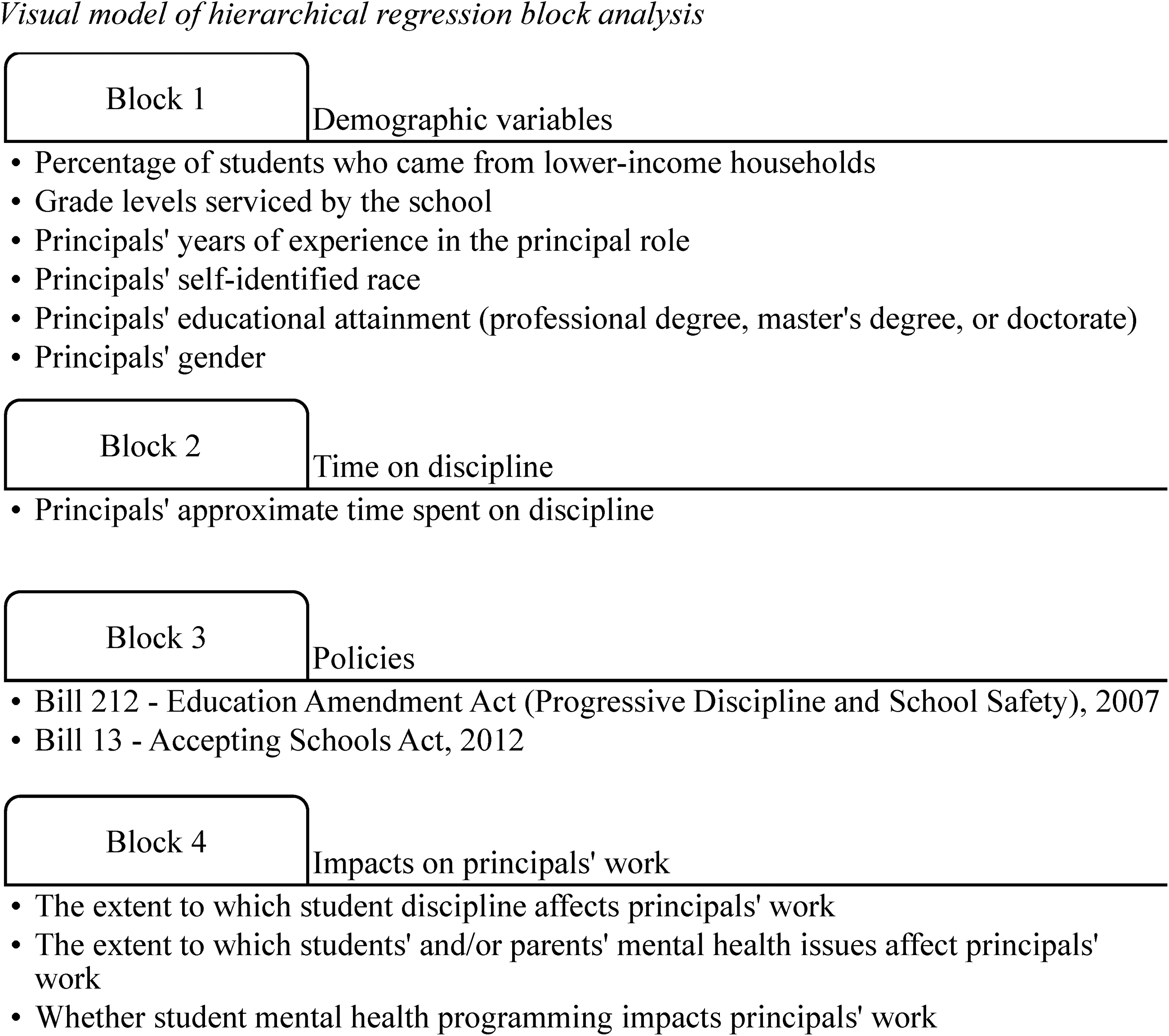
Visual model of hierarchical regression block analysis.
Findings
The survey achieved a 52.7% response rate, with 1821 surveys submitted. After excluding surveys submitted by non-principals or those who answered fewer than five questions, 1434 surveys were included in the analysis. Survey participants consisted of 77.3% elementary principals, 16.4% secondary principals and 2.9% combined elementary/secondary school principals. Principals had an average 7.6 years of experience in the principal role. Over one-third of participants worked in cities ranging from 100,000 to 1,000,000 people (n = 35.6%).
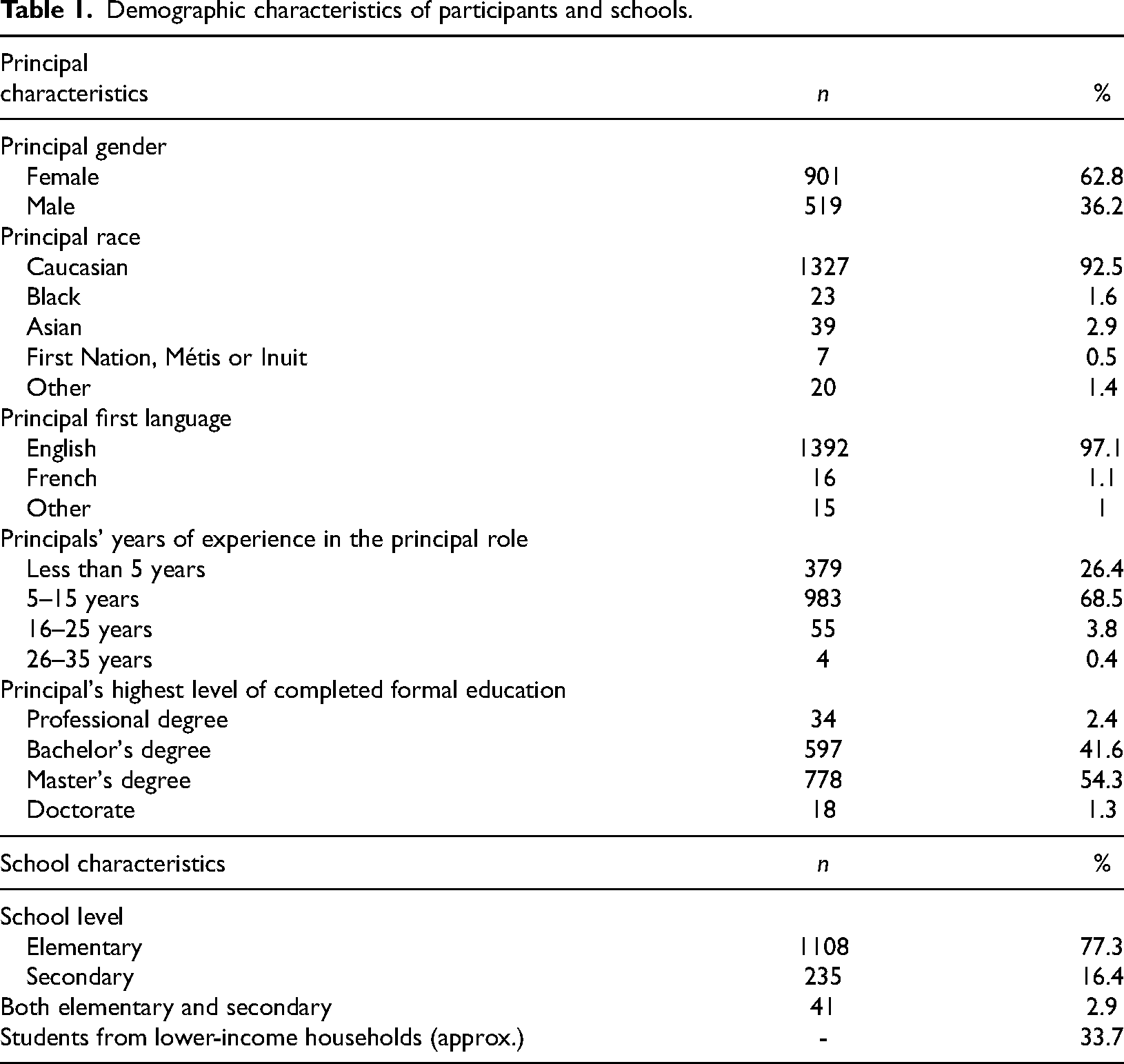
The survey sample approximately reflects the Ontario Ministry of Education's (2016) reporting of the general population of Ontario principals at the time the survey was conducted in terms of gender and school type (elementary or secondary). Due to the lack of race-based data available for Ontario principals (George et al., 2020), we cannot confirm race-based representation; however, our high sample size and response rates imply a likelihood that principals’ race was also represented. Regarding gender, 62.8% of the sample self-identified as female, with the remaining 36.3% self-identifying as male. No participants entered their gender differently when asked if they identified in a way other than female or male. Principals who self-identified as Caucasian 1 accounted for 92.5% of the sample, potentially indicating that Ontario's principal population is not diverse in terms of ethnicity. Similarly representative of the 2014–2015 school year (Ontario Ministry of Education, 2016), elementary school principals made up 77.3% of respondents and secondary school principals made up 16.4%. A smaller number (2.9%) of participating principals led schools that serve both elementary and secondary school students. Results from the survey also indicated that, on average, principals approximated that 34% of their student body came from lower-income households (M = 33.67, SD = 25.80). Lower income was not defined in the survey, so participants may have interpreted the threshold differently. See Table 1 for full demographic data.
Demographic characteristics of participants and schools.
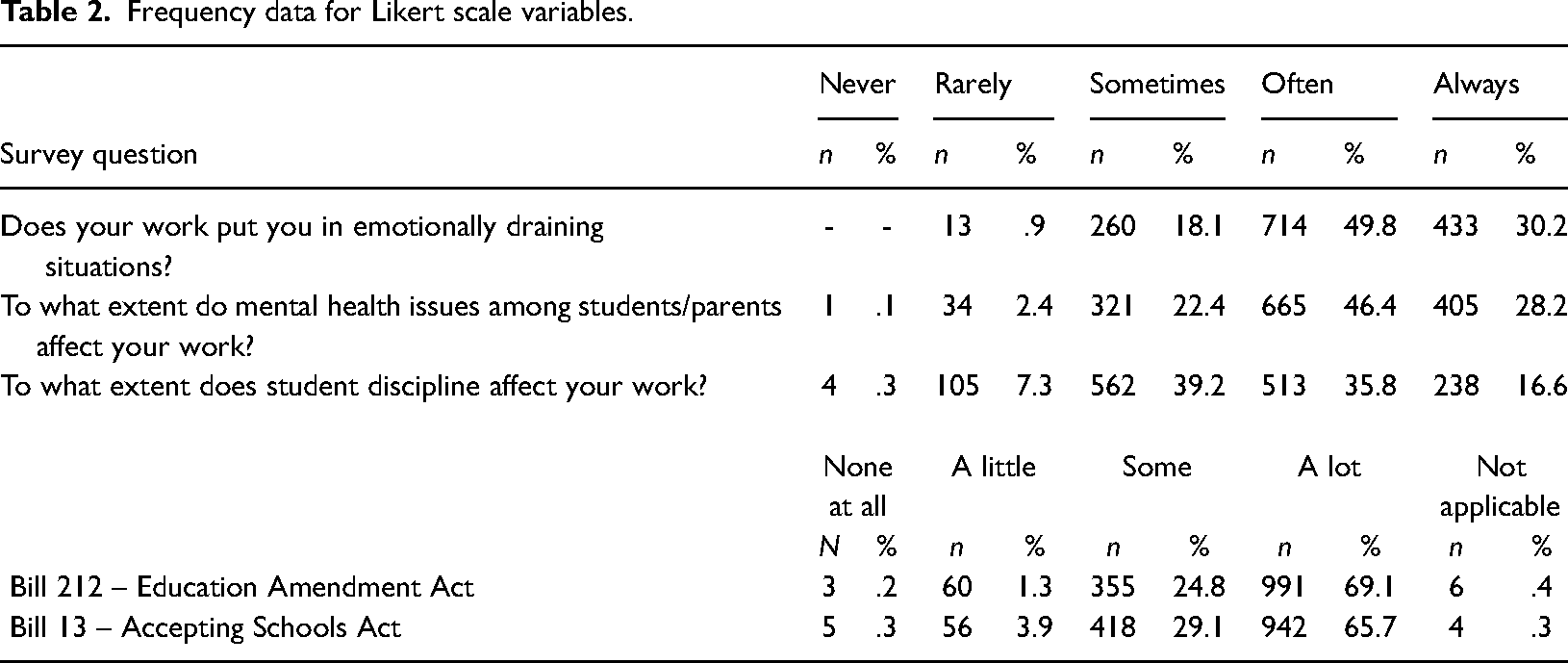
After survey data were cleaned to remove outliers reporting hours under 40/week and over 90/week, principals reported working an average of 58.7 h (M = 58.66, SD = 8.46, min = 40, max = 90) per week, with approximately 8 h (M = 8.01, SD = 5.74, min = 0, max = 40) or one full work day, on student discipline and attendance issues each week. When asked about the frequency with which their work put them in emotionally draining situations, the most common response was often (n = 714, 49.8%). When asked which school policies impacted their work, the vast majority of respondents indicated that Bill 212 and Bill 13 impacted their work some or a lot (Bill 212: n = 1346, 93.9%; Bill 13: n = 1360, 94.8% [cumulative]). When asked how student and parent mental health issues affected their work, principals’ most common response was often (n = 665, 46.4%). Similarly, high responses were found when principals were asked about the frequency with which student discipline affected their work. Full frequency data for responses to these variables are shown in Table 2.
Frequency data for Likert scale variables.
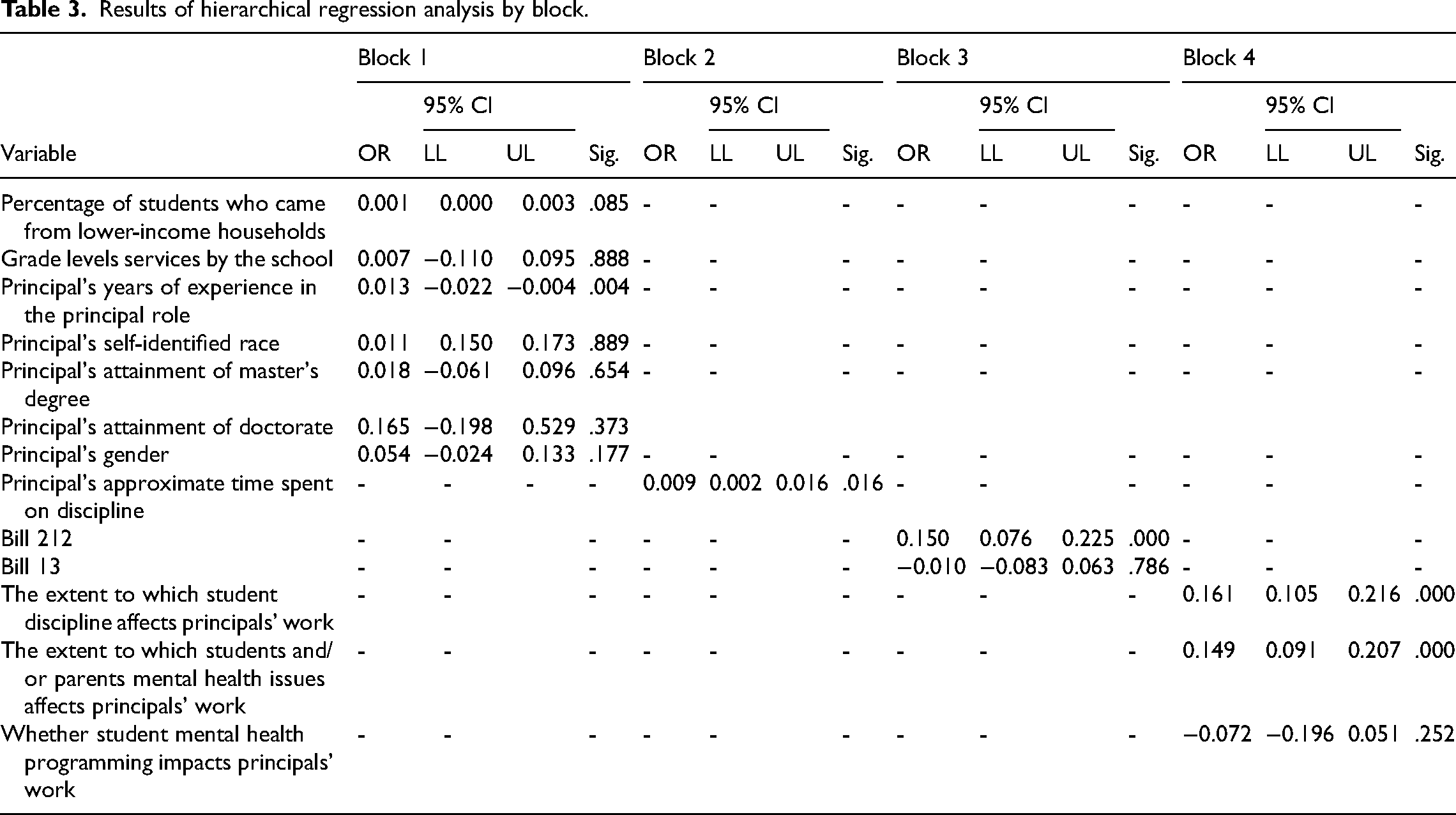
Assumptions for normality (Shapiro–Wilk W test), homogeneity of variance (Breusch–Pagan/Cook–Weisberg test) and independence (Durbin–Watson) were met. Results from the hierarchical regression showed principals’ years of experience (OR = 0.13, 95% CI [-0.022–-0.004], p = .004), principals’ time spent on student discipline and attendance (OR = 0.009, 95% CI [0.002–0.016], p = 0.016) and Bill 212 (OR = 0.150, 95% CI [0.076–0.225], p < .001) all significantly correlated with principals’ experience of emotionally draining situations. Further correlations were found between principals’ indication that student discipline (OR = 0.161, 95% CI [0.105–0.216], p < .001) and student and parent mental health (OR = 0.149, 95% CI [0.091–0.207], p < .001) impact their work and experiences of emotionally draining situations. All blocks had statistically significant predictive power (p < 0.001), with Block 4 showing the highest R2 value at 7.2%, followed by Block 2 at R2 = 4.1% and Block 3 at R2 = 3%. Taken together, the results of the hierarchical regression and R2 change indicate that student discipline and student and parent mental health are the strongest predictors of principals’ experience of emotionally draining situations (Table 3).
Results of hierarchical regression analysis by block.
Three two-way interaction effects were introduced to test for issues of multicollinearity. Multicollinearity refers to when two or more independent variables significantly correlate with each other, thereby making measurement of their correlation with the dependent variable difficult, if not impossible (Daoud, 2017). These tests revealed collinearity between the frequency of time spent on student discipline, mental health issues among students and/or parents, and Bill 212. After controlling for these background terms in the model, the interaction was deemed nonsignificant, thereby not interfering with the results of the hierarchical regression.
Although the current analysis has a low R-squared value for each block of variables in the hierarchical regression analysis and there might be variance that is not explained by the current model, the results still reveal how students’ discipline and its related issues predict or relate to principals’ emotionally draining situations. An exploration of this variance is covered in other publications (Wang et al., 2022), and will be further addressed in future research.
Discussion
Our findings indicate that student discipline and student and parent mental health are the strongest predictors of principals experiencing emotionally draining situations. These findings corroborate previous research into principals’ work, student discipline and student and parent mental health. We suggest two reasons that student discipline may contribute to principals’ experience of emotionally draining situations: First, student discipline may be a sign that a student is not succeeding in school, and thus may represent a perceived failure for the principal; second, student discipline issues may exacerbate existing stresses experienced by principals relating to their work intensification.
Student discipline and principals’ emotionally draining situations
Generally, by the time school principals are involved in student discipline (unless it is a serious safety concern), the situation has escalated through several levels of intervention and prevention efforts found within the school. Over the past two decades, Ontario public education systems have moved away from the ‘zero tolerance’ approach to student misbehaviour to one of progressive discipline (PPM 145) (Ontario Ministry of Education, 2018). This means theoretically (or ideally) that schools, through school board programmes, are to not only create a safe learning environment for all but to also exhaust all options to support students in their learning and only when it has been determined that a student's behaviour threatens the safety or learning opportunities of others that the options for short-term suspension or long-term suspension or expulsion be considered and/or enacted (PPM 141, 142 and 145). Principals find themselves spending substantial amounts of time engaging in progressive discipline practices with the goal of supporting students’ learning. We suspect these case-by-case situations can be emotionally draining as the time and effort dedicated to supporting learning do not always reap the anticipated positive outcomes.
On top of this, our research indicates that when asked to whom they feel most accountable, the majority of Ontario principals ranked students first (Wang et al., 2021); this ranking aligns with previous research showing that involvement with student learning is often the reason principals chose their career (Chen and Walker, 2021; Cranston, 2007; Gajda and Militello, 2008; García-Rodríguez et al., 2020; Ng, 2013; Schutte and Hackman, 2006). Therefore, school principals not only feel accountable for student success (Wang et al., 2021), but they also want to see students succeed and reach their potential. Addressing student discipline may be emotionally draining because school principals have to reconcile these internal tensions. Tension can arise between wanting to provide each and every student with a successful education and to create a safe learning environment for all, while also recognizing the often negative consequences for individual learners who are removed from the learning environment.
Student discipline may also contribute to emotionally draining situations because of other factors such as inadequate resources. When it comes to student discipline, resource levels are adequate, more or less, for the provision of a base level of suspension and expulsion programming (Pollock et al., 2017). However, in our 2017 programme evaluation, Ontario school boards perceived resources to be inadequate regarding the provision of specialized or individualized staff supports, such as having staff members to address student mental health concerns, staff members to intervene before there is a safe school infraction and staff members to provide alternatives to suspension programming at the school site. For these reasons, school principals have argued that they are not only doing more of the same work with additional types of work added, but they are also working without an appropriate resource base to carry out the new initiatives and student supports. It can be argued that these situations set principals up for the opportunity to feel a sense of helplessness where they have limited decision-making power and resources to engage in other actions for individual students and their well-being and academic success. We suspect that continued exposure to these kinds of situations can drain principals emotionally.
Knowing that student discipline predicts emotionally draining situations for principals is important in terms of principals’ wellness practices and for those who design and deliver professional principal learning opportunities. Because we know that emotionally draining situations can contribute to principal burnout and workplace stress (Caesens and Stinglhamber, 2019; Hur et al., 2014; Skaalvik, 2020), these findings help to build the urgent case for investigating why student discipline predicts emotionally draining situations. In terms of practice, this knowledge is useful for school leaders because it allows them to understand how part of their work can influence their well-being and prepare them to determine ways to mitigate the emotional drain they may experience when addressing student discipline (Caesens and Stinglhamber, 2019).
From a policy perspective, knowing that student discipline contributes to principals’ emotionally draining situations can influence what supports should be put in place. Specifically, school boards and governing jurisdictions can explore why this relationship between student discipline and principals’ emotionally draining situations exists, revisit policies and programmes to determine if any of the outcomes contribute to these situations, and consider policy and programme modifications to mitigate them. Further, there may need to be more detailed examination of the progressive discipline and restorative justice policies as they impact principals’ work. Lastly, providers of professional learning opportunities can focus on strategies to mitigate the emotional drain that student discipline causes by including learning opportunities focusing on how principals can manage this part of their work in a positive manner.
Student and parent mental health and emotionally draining situations
Student and parent mental health may predict principals’ experiences of emotionally draining situations because of the connection to principals’ high commitment to student success and frustrations with the limitations of their role. When we consider the impact of student and parent mental health on principals’ experience of emotionally draining situations, our findings align with previous research showing student mental health as a highly important issue for principals (DeMatthews and Brown, 2019; Iachini et al., 2016; Pollock et al., 2017). For principals, supporting students experiencing mental health issues most likely generates a level of emotional affect such as stress or anxiety as they try to support student success (Bosco, 2021; DeMatthews and Brown, 2019; Reid, 2021). Add to this the fact that we also know that many students with mental health issues who attend public K–12 schooling often, unfortunately, find themselves involved in discipline issues and in some cases involved in suspension and expulsion (Pollock et al., 2017; Teske, 2011). Keeping in mind that students have agency and, at times, make negative decisions that lead to becoming subject to discipline consequences, an over-abundance of a particular community of students being disciplined may also be related to limited professional skills among teaching staff (Armstrong, 2018), insufficient funding for mental health programmes (Loomis et al., 2021) and lack of community supports and services (Schulte-Körne, 2016). Principals not only have to deal with the frustration of unmet intrinsic goals and feeling helpless over limited resources, but also frustration in witnessing students with mental health and wellness issues misaligned with discipline issues, and making decisions that they morally believe do not address the underlying causal issues.
Parent mental health as a predictor of principals’ experiencing emotionally draining situations is also not surprising because we know that students from homes where a parent suffers from a mental health issue are more likely to develop mental health issues themselves (Acri and Hoagwood, 2015; Bibou-Nikou, 2004; Fitzsimons et al., 2017; Hu et al., 2017; Wilkinson et al., 2021). We propose that this impacts principals’ emotionally draining situations because some school principals find themselves in situations where there are limited resources to support students, particularly those with mental health issues; when it comes to students whose home life cannot support their learning, principals are often left with limited comprehensive alternatives for students.
Given that principals directly and indirectly influence student outcomes (Lee et al., 2021b), they play a key role in student, school and system success. The insights gleaned from this statistical analysis are vital in supporting principals because if principals are not well, then they cannot effectively fulfill their role. If engaging with student discipline and addressing student and parent mental health issues are triggers for principals experiencing situations that are emotionally draining, then it is critical that principals develop a skill set to cope with these situations in ways that mitigate the emotional drain. Time-on-task studies demonstrate that principals spend ample time addressing student discipline and with parents: This is part of the principalship and there is no way to avoid it. Principals who experience high levels of stress or burnout brought on by emotionally draining may struggle to fulfill their role. These findings can inform the focus of those who design and develop professional learning opportunities.
Conclusion
Over the past decade, we have researched different facets of principals’ work and work intensification in Ontario, Canada (Pollock et al., 2014; Pollock and Wang, 2019, 2020; Wang et al., 2021). Our research has shown that not only are principals’ experiencing work intensification (Pollock et al., 2015, Pollock and Wang, 2020; Wang and Pollock, 2020), but also that principals’ work is causing them to experience emotional drain, potentially leading to higher levels of stress and occupational burnout (Caesens and Stinglhamber, 2019; Hur et al., 2014; Skaalvik, 2020). In the current study, we sought to examine what variables lead to these emotionally draining situations. Our hierarchical regression analysis revealed that principals’ time spent on student discipline and attendance issues, and student and parent mental health, are significant predictors of principals’ experiencing emotionally draining situations in the work. We have argued that these results may be significant in informing policies, practices and training programmes to better support principals. As of early 2023, Bill 212 and Bill 13 remain active with no amendments, which imply that they are likely still affecting principals today. By better understanding contributing factors to principals’ experience of emotionally draining situations, our research contributes to the growing body of work on supporting principals’ overall well-being.
Footnotes
Declaration of conflicting interests
The author(s) declared no potential conflicts of interest with respect to the research, authorship, and/or publication of this article.
Funding
The author(s) received no financial support for the research, authorship, and/or publication of this article.
