




Abstract
The improvement of teaching quality within secondary schooling has been a core focus within Rwandan educational reforms. Despite this emphasis, efforts towards defining this construct have been minimal, particularly amongst head teachers and government officials who often hold responsibilities in monitoring, evaluating and guiding teaching improvements. To address this gap, this study aimed to shed light on these stakeholders’ perceptions of teaching quality, the extent of alignment between their views and the degree to which they reflected earlier teacher conceptions. Data from this study drew upon semi-structured interviews with 5 head teachers and 11 government officials from three Rwandan districts. Using constant comparison analysis, findings revealed that strong agreement exists between perceptions of stakeholder groups, as evidenced by a shared recognition that teaching inputs, processes and outcomes are vital components of the teaching quality construct. Key differences that emerged included recognition of the impact of external factors on teaching quality and their greater focus on the importance of inclusion compared with teachers. The results suggest a need for greater emphasis on these factors within initiatives focused on improving teaching to better align the expectations of stakeholders concerning teaching quality. These results have implications for policy and for the evaluation and professional development of teachers.
Introduction
In recent years, there has been a surge in demand for secondary education within Sub-Saharan Africa (SSA). With increased enrolment in and completion of primary school, greater numbers of pupils have and will enter secondary school [Mastercard Foundation (MCF), 2020]. By 2030, it has been estimated that more than 10 million secondary teachers will be needed in SSA and that student demand for this stage of school will exceed 100 million. This equates to twice the level of need for student places in secondary school in 2015 (MCF, 2020; World Bank, 2018). Over the last two decades, numerous countries within SSA, including Rwanda, have been implementing reforms to more effectively manage the increased number of adolescents into the secondary education system and to better equip students with the skills needed to succeed in the workplace. A core focus of these reforms has been enhancing teaching quality, particularly within Science, Technology, Engineering and Mathematics (STEM) subjects. This has been recognised by the Rwandan Ministry of Education as one of the ‘core Government of Rwanda priorities for improving the relevance of education’ (MINEDUC, 2018a: 14) and has included ensuring that teaching within these subjects is meaningful, equitable as well as supported by appropriate resources, in order to facilitate both student engagement and retention. The focus on improving teaching quality has also involved an emphasis on enhancing instructional leadership, particularly via head teachers and government officials through responsibilities including setting shared school goals, providing materials, monitoring, evaluating, supervising and supporting teacher professional development (Fleisch et al., 2019; MCF, 2020; Sibomana, 2020; Uworwabayeho et al., 2020). Instructional leadership has been differentiated from traditional leadership through its emphasis on instructional improvement and greater awareness of teacher strengths and weaknesses as well as what happens in the classroom (Manaseh, 2016). This focus has been in light of previously recognised gaps in instructional leadership competencies amongst Rwandan stakeholders and has been enabled through initiatives including Continuous Professional Development focused on personal learning and behaviour changes in relation to the encouragement of teacher autonomy and shared goal setting, amongst other foci (Ntahomvukiye et al., 2017; Uworwabayeho et al., 2020).
Despite the conspicuous effort to improve secondary teaching quality in Rwanda, there has been less focus on adequately defining this construct, particularly in terms of what it means for those most responsible for its realisation. For example, a rapid review of Scopus-indexed documents published between 1962 and 2022 revealed only two articles on the topic of teaching quality in Rwandan secondary schools (i.e. Dorimana et al., 2022; Iwakuni, 2017). The first of these studies involved an examination of the quality of initial teacher training amongst prospective lower secondary school teachers in Rwanda, with overall results demonstrating a lack of consideration in pre-service training into how student teachers learn. The second study was focused on gaining understanding into the types of teacher–student interactions that facilitate mathematical learning in senior secondary school, with a teachers’ use of purposeful questions and feedback amongst the most influential factors observed (Dorimana et al., 2022). In both cases, however, the construct of teaching quality was not explored comprehensively, that is, it was only examined via certain dimensions and by certain stakeholder groups. In response to this gap, research conducted for the Mastercard Foundation's Leaders in Teaching initiative in 2019 examined perceptions of teaching quality according to teachers of varying levels of experience (Carter et al., 2021). This study revealed a number of themes associated with three main dimensions recognised in prior research as underpinning the construct of teaching quality, including 1) inputs, 2) processes and 3) outcomes (Goe, 2007). In terms of inputs, qualifications, knowledge and teacher disposition, which comprised sub-themes, such as passion and cultural values, were underscored as the most important factors. For processes, a teacher's classroom practices, including monitoring learning, providing equal opportunities, preparedness and understanding of the whole learner arose as central themes. Lastly, both immediate goals, such as positive academic performance and inculcation of cultural values, and future goals, including applying learning, becoming good citizens and gaining employment, emerged as critical factors linked to the dimension of outcomes. Additional findings showed that teachers of varying experience levels associated a number of different factors with teaching quality. Furthermore, several factors emerged more prominently than others, demonstrating that views can vary in the extent of their perceived importance and be shaped by an individual's school position and experience (Carter et al., 2021).
Whilst this study was highly beneficial in its provision of a contextualised and comprehensive understanding of teaching quality, it was focused upon teachers’ views and did not encompass the perspectives of other important stakeholders involved in shaping and monitoring teaching quality in Rwanda (Sibomana, 2020; Uworwabayeho et al., 2020). Our study attempted to bridge this gap by gaining perspectives on teaching quality from head teachers and government officials, including Sector Education Officers (SEOs) and District Education Officers (DEOs) from the Rwandan Education Board. This topic, which has not, to the best of our knowledge, been empirically explored in the context of Rwanda, is of strong interest given the current government and programmatic focus on improving instructional leadership behaviours of these stakeholders within secondary schools (Uworwabayeho et al., 2020).
Literature review
Understanding teaching quality
Research from a broad range of contexts attests to the crucial role of teaching quality on the improvement of student outcomes. Despite this, however, definitions of the construct differ considerably, and no coherent set of indicators has yet been identified which are deemed applicable across contexts (Pacheco, 2009). Ambiguity also arises from descriptors linked to teaching quality with some applied synonymously and others differentiated. Distinctions, for instance, have been made between the terms ‘teaching quality’ and ‘teacher quality’ with the former focused on practices and what teachers do in the classroom and the latter referencing more broadly the characteristics, skills and expertise that a teacher possesses (Naylor and Sayed, 2014). Additionally, the terms ‘teacher quality’ and ‘teacher effectiveness’ can be used interchangeably (Goe et al., 2008) even though the latter descriptor is more typically discussed in the context of pupil outcomes (Ochoa et al., 2018). Within the context of this study, the term ‘teaching quality’ was applied but treated broadly to encompass teacher inputs, teaching processes and pupil cognitive and non-cognitive outcomes. This framework was informed by the work of Goe (2007) who operationalises inputs as teacher characteristics and qualifications, processes as a teacher's instruction in the classroom and outcomes as reflecting what students derive from quality teachers, including achievement and motivation, amongst other factors. The need for this framework stemmed from an effort to make sense of the multitude of ways in which researchers have been measuring the construct over time. The framework has also been successfully applied to a range of educational settings, including within the Global South (e.g. Nilsen and Gustafsson, 2016). This framework allowed for flexibility in presenting our findings given an underlying assumption that the three dimensions of inputs, processes and outcomes are interlinked. Aligning with our earlier research, the preference and rationale for utilising the term ‘teaching quality’ was based on our main interest in the practices teachers employ in their lessons, whilst appreciating the considerable influence that external and internal variables can exert upon the nature and quality of these practices (Carter et al., 2021).
There is growing recognition that having a localised knowledge of teaching is critical to understanding teaching quality as well as its evaluation (Goe et al., 2008; Mitchell, 2019). This is particularly pertinent within low-income country contexts, given the generalisations and deficit positioning of teachers which can often occur. Tao (2016) states: The assumption that teachers-irrespective of gender, years of experience, socio-economic background, religious faith or ethnicity-act and have values based on a singular identity can lead to a deeply misled understanding of teachers. This indiscriminate understanding also leaves subsequent analysis and policies lacking in nuance or relevance. (4)
Exploring head teacher, and government officials’ perspectives of teaching quality
Understanding how head teachers and government officials perceive teaching quality is important for a number of reasons. Firstly, those working at this level of the education system typically hold responsibilities in guiding teachers to teach effectively and are further known to exert considerable influence on teachers and their practices which in turn can impact student achievement (Bellibaş, 2016; Oketcho et al., 2019; Paul and Toyin, 2017). As described by Uworwabayeho et al. (2020: 8) in the context of Rwanda, school leaders’ educational values, reflective strategies and practices mould teachers’ processes and instruction, which result in improved student academic and affective outcomes. Day (2017: 101) further states: Although ensuring that they teach to their best and well is an individual teacher responsibility and, arguably, their moral duty, it is also a government responsibility, in order to enable the development of a just society and economic progress, and an individual school responsibility through the daily presence and actions of principals and other school leaders.
Elucidating the views of head teachers and government officials concerning factors that are integral to the construct of teaching quality has strong potential, therefore, for impacting the ways teachers teach, the measurements used to evaluate teaching quality and priorities that are set for teacher professional development.
Secondly, whilst a body of literature exists which examines teacher perceptions of effective leadership (e.g. Blase and Blase, 2000; Sibomana, 2020), there is less research that investigates the converse, that is, school leaders’ perceptions of teaching quality and why shedding light on these views is important. This research is particularly lacking within low- and middle-income contexts. One example from the United States has examined the extent of alignment between administrator and teacher perceptions of effective teacher leaders with results revealing agreement amongst these groups regarding the importance of a teacher's personal attributes and those related to the classroom environment. When compared to teachers, however, administrators generally feel that certain leadership attributes are more important, such as open communication, creative problem-solving, collegiality and respect (Mills et al., 2014).
Researchers have also discussed more broadly the importance of understanding teachers’ perceptions and expectations of leaders for gaining a holistic understanding of effective school leadership and increasing the quality of the teacher–school leader relationship (Mills et al., 2014; Sibomana, 2020). With respect to the former, it has been argued that school leaders may not fit the ‘leadership prototype’ held by teachers, in terms of their conceptions and expectations of what an ideal leader and leadership should look like. Studies have revealed that teachers value school leaders who are honest, competent, flexible and trusting of teachers as well as those who listen to teachers’ ideas, encourage autonomy and apply democratic decision-making approaches. When school leaders do not meet these expectations, they can be deemed as ineffective, with teachers less inclined to respect and follow their lead (see Mills et al., 2014 for review). Whilst these arguments have been raised in relation to seeking insights from teachers on what is meant by quality leadership, they are equally applicable to the reverse scenario.
A third compelling rationale for the understanding of head teachers' and government officials’ views of teaching quality is that those working at this level typically possess far greater responsibility compared with other stakeholders within education in monitoring and evaluating teaching and learning (Sibomana, 2020). They are thus, perhaps, best situated in describing the complex nature of the profession and the factors which can help facilitate or impede teachers’ success. This is especially relevant within the context of Rwanda, where research has attested to the extent of direct involvement these stakeholders have with teachers and teaching (Le Saux et al., 2021; Sibomana, 2020; Uworwabayeho et al., 2020). For example, a study examining school leadership in Rwanda found that head teachers had an average of over 16 years of educational experience and 5 years of teaching experience. A third of head teachers were also found to have teaching obligations (Le Saux et al., 2021).
Further research looking at teacher perceptions of leadership behaviours in Rwanda found that head teachers performed extremely highly on dimensions related to supervising instruction and providing feedback to teachers (Sibomana, 2020). Head teacher–teacher collaboration was found to be at the core of the school development process whereby teachers regularly drew from head teachers’ expertise and experience in informing goals that focused on student learning and achievement (Sibomana, 2020). This direct involvement of teachers with head teachers was further underscored as being stronger compared with other countries examined in the study, including Turkey (Bellibaş, 2016) and Tanzania (Manaseh, 2016). Within these contexts, head teachers regarded classrooms as ‘private zones’ 1 of teachers. For example, in the context of Tanzania, head teachers were found to not undertake classroom observations within classrooms, preferring to walk in corridors instead, as they felt that this could lead to teacher mistrust and discouragement (Manaseh, 2016). Within the Rwandan study, however, head teachers were found to make strong efforts to understand how teachers are teaching and pedagogical aspects that require support and improvement (Sibomana, 2020). These efforts and the comparative strengths of Rwandan school leaders can be related to the strong government focus of late in improving instructional leadership via a number of practices, including setting and articulating clear collective school mission and goals, promoting a positive school culture, planning and coordinating the curriculum, supervising teaching, encouraging teacher professional development and enabling access to resources and materials (Sibomana, 2020; Uworwabayeho et al., 2020). These practices have been reflected as important goals within the Strategic School Improvement Plan, which school leaders are required to complete on a three- to five-year basis (Rwanda Education Board, 2020). They have also been promoted through training provided by a number of Rwandan-based organisations for school leaders, such as the University of Rwanda College of Education (URCE) and VVOB Rwanda (Uworwabayeho et al., 2020).
Method
Research design
Research presented in this paper forms part of a broader study aimed to explore perceptions of teaching quality within Rwandan secondary schools. Stakeholders involved include teachers of varying experience levels, school-based mentors, head teachers, government officials and implementing partners linked with the Mastercard Foundation's Leaders in Teaching initiative. This study builds upon earlier qualitative research findings focused upon teachers (see Carter et al., 2021) by examining the views of secondary school head teachers and government officials. Specifically, it seeks to answer the question: What are head teachers' and government officials’ perceptions of teaching quality in Rwandan secondary schools? Relatedly, this study aims to gain insight into the following guiding questions:
To what extent do head teachers' and government officials’ views of teaching quality align or differ? To what extent do head teachers' and government officials’ views of teaching quality align or differ with those of teachers?
A multiple case-study design was applied for this research (Stake, 2005) in order to elicit a varied and contexualised understanding of teaching quality from the stakeholders of interest. This involved selecting multiple cases, including head teachers as well as government officials encompassing SEOs and DEOs working for the Rwanda Education Board.
In respect to the different roles of these stakeholders, head teachers are typically responsible for the smooth management of the school, the academic achievement of students as well as staff management. In terms of government officials, SEOs are responsible for ensuring the delivery of effective quality education services to individuals within the sector to which they are allocated. Their main role consists of ensuring that the implementation of major education activities in schools is in accordance with national policy and standards, collecting and transmitting educational statistics (e.g. on teacher and student attendance) and in-service training of teachers and head teachers. Furthermore, SEOs support schools and regularly conduct supervision visits where they monitor and assess teacher and head teacher performance. DEOs, on the other hand, are responsible for preparing District Education Development and Strategy plans, ensuring all district education activities are aligned with current priorities, coordinating routine school supervisions, textbook distribution, teacher training and coordinating examinations. DEOs also review SEOs’ reports on education statistics and school supervision (Honing, 2014; Le Saux et al., 2021).
Philosophical framework
This research was informed by a constructionist epistemology and an interpretivist paradigm. Constructionism implies that no single objective reality exists and that knowledge, therefore, is developed individually and purposely (Lythcott and Duschl, 1990). Stemming from this epistemology, interpretivism suggests that meanings are created based upon the interactions individuals have with their environment, and their interpretation of this. As such, differing constructions of reality and its meaning typically ensue (Willig, 2011).
This philosophical framework was considered relevant for our research given we were seeking views of teaching quality according to the participants involved. Due to participant differences, it was expected that perspectives would vary and be shaped by factors related to gender, background, experience, school type and location, amongst others. The multiple case-study design of this research as well as the decision to use semi-structured interviews for the key data method were also based upon this framework due to the potential of these approaches in enabling head teachers' and government officials’ unique and varied insights into and experiences with teaching quality to emerge. In addition, this framework influenced our process of designing the research and developing the research tools. This was enabled through joint discussions with local researchers and implementing partners of the Leaders in Teaching interventions on the objectives, sampling approach and data collection methods to be used in the study. It was also enabled through piloting the research instruments and integrating feedback from local participants to ensure that the tools were meaningful and contextualised.
Research participants and instruments
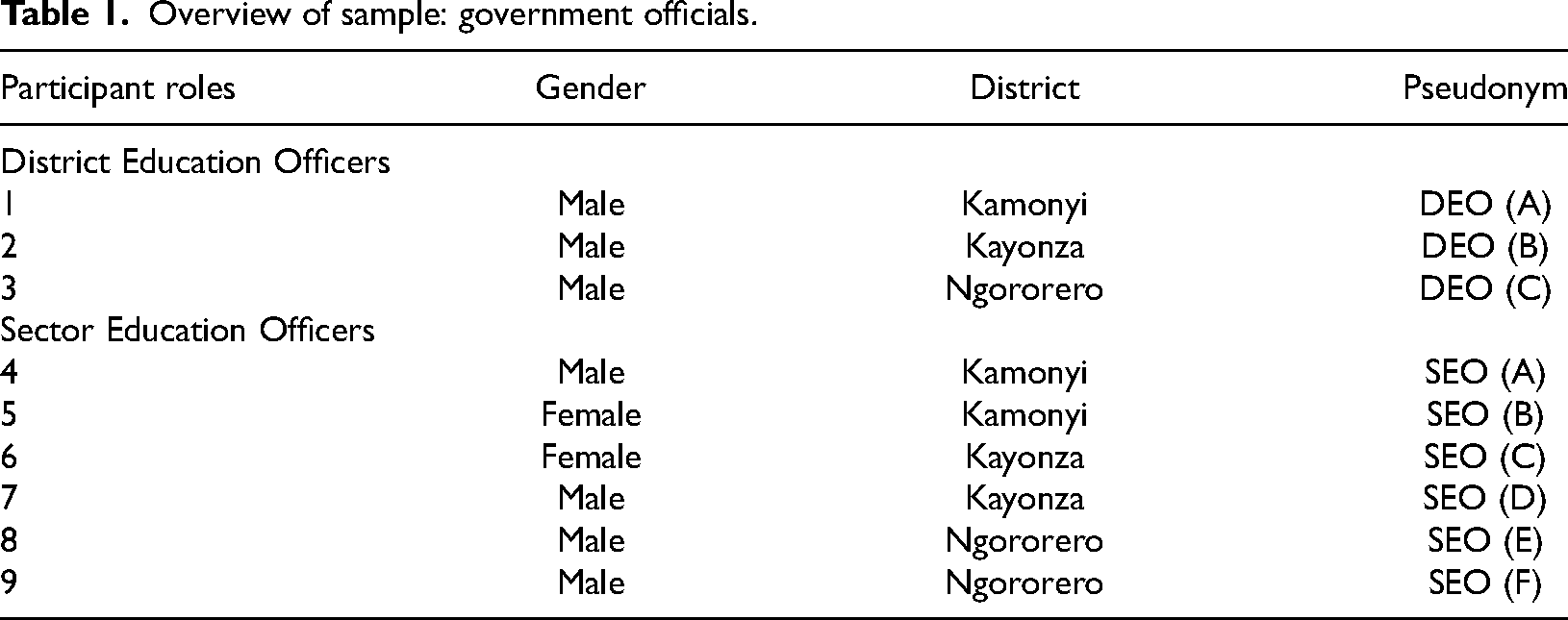
A purposive sampling approach was applied for this study. This approach involves selecting informants intentionally and based upon a set of pre-defined characteristics which allow for a specific concept or construct to be elucidated (Palys, 2008). Specifically, head teachers and government officials were selected with attention also given to geographical spread and gender. All head teachers involved in the study were actively working in rural schools at the time of data collection and had received training in leadership. Participants were selected from the following districts across different provinces: Kamonyi (Southern Province), Kayonza (Eastern Province) and Ngororero (Western Province). Based on these sampling approaches, a total of 14 semi-structured interviews were conducted (see Tables 1 and 2).
Overview of sample: government officials.
Overview of sample: head teachers.
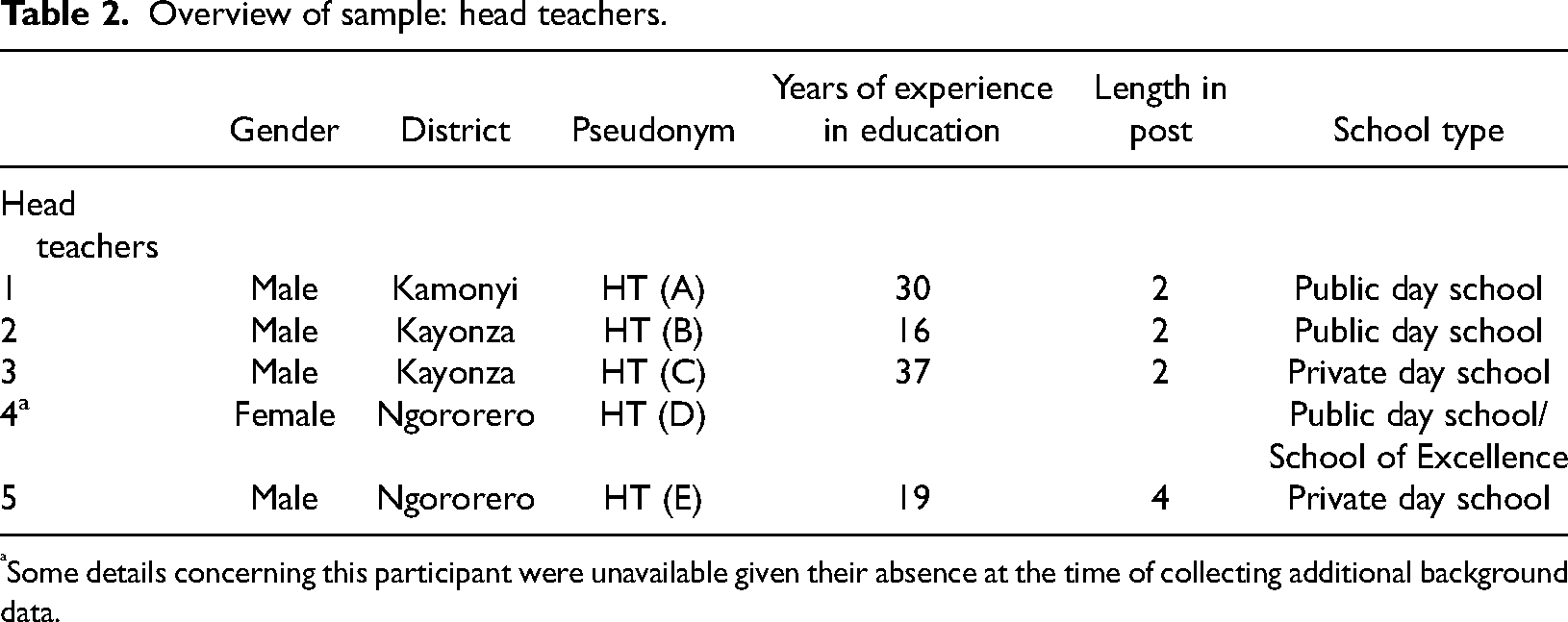
Some details concerning this participant were unavailable given their absence at the time of collecting additional background data.
Research instruments and process
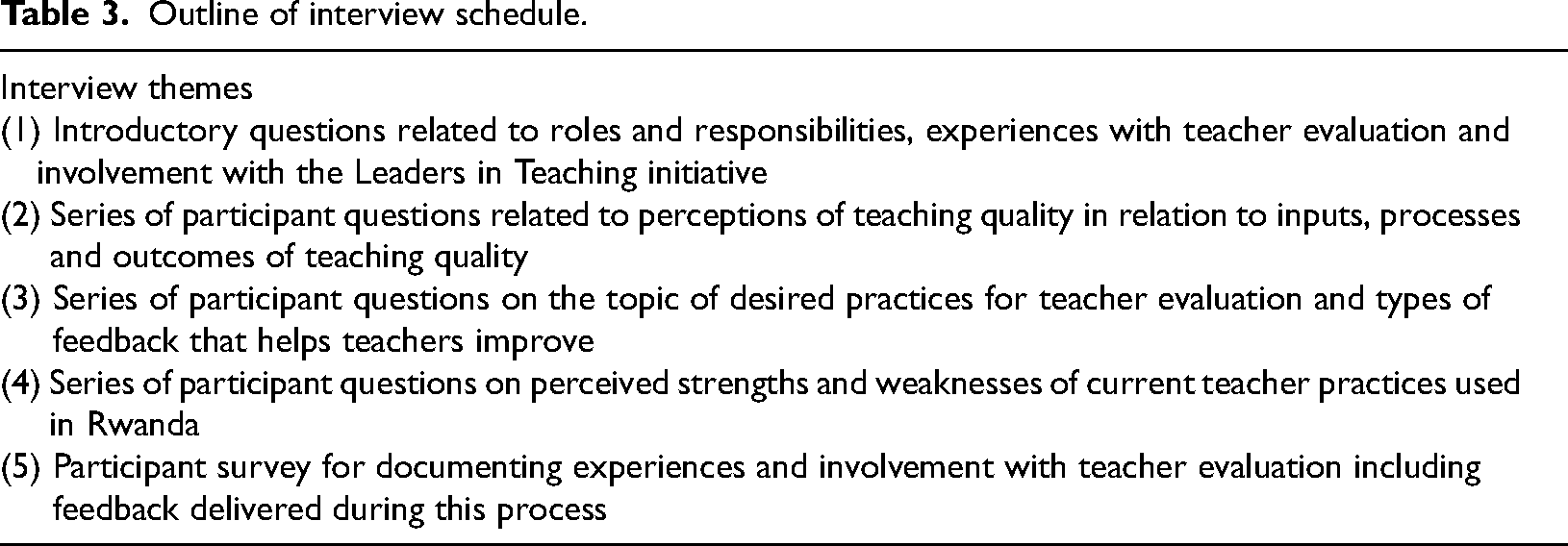
Semi-structured interviews were used in this study in order to facilitate a multifaceted exploration of the construct of teaching quality. These interviews, whilst involving a set of pre-prepared open questions aimed to probe views related to various dimensions of teaching quality, also afforded the participants considerable freedom to influence the direction of the conversation and share their own perspectives towards how they define teaching quality. The interview schedule comprised five parts (see Table 3). The second part, which constitutes the focus of this paper, involved questions exploring perceptions of teaching quality, wherein participants were asked to discuss what makes a good teacher through considering variables associated with the following dimensions, as informed by Goe's (2007) framework, inputs, processes and outcomes.
Outline of interview schedule.
Semi-structured interviews were piloted in three schools in one district (Gasabo). For the main data collection, interviews took place in five schools across the three previously noted districts. Interviews were led by facilitators from the field staff team who received extensive training on the project's background and conducting qualitative interviews through undertaking mock and pilot interviews. All interviews lasted between 45 and 60 min and were audio-recorded, transcribed and translated from Kinyarwanda into English.
Semi-structured interviews were conducted at the participants’ workplace and during time slots that were indicated as convenient in appointment calls conducted by enumerators several days before the start of data collection. Head teachers were interviewed in their offices at their schools, whereas SEOs and DEOs were interviewed at the sector and district offices, respectively.
Process for gaining ethical consent
Approval for this research was obtained from the National Council for Science and Technology in Rwanda (Project No. NCST/482/133/2019) and the University of Cambridge Ethics Committee. Prior to conducting interviews, enumerators provided participants with a comprehensive consent process that communicated details of the study to help them make an informed decision relating to their involvement. The consent form included an explanation of the purpose of the study, a description of the procedures to be followed, an explanation of how the participants’ records would be kept confidential, and how their privacy would be protected. Enumerators clearly stated that participation was voluntary and that they could discontinue their interviews at any time. Enumerators provided participants with an opportunity to ask for clarifications and additional questions to make sure they felt comfortable taking part in the data collection. Enumerators collected signed consent and provided participants with physical copies of the consent forms for future reference.
Analysis
This study utilised a constant comparison analytical approach, a process involving the comparison of each finding and interpretation as they emerge from the data with previous examples (Lewis-Beck et al., 2004). Through the use of NVivo version 12 software, data were coded, annotated, retrieved and subsequently analysed. The overall goal of the constant comparison analysis was to identify themes and sub-themes from the interviewee's responses through the application of three steps:
Open coding (arrangement of data into meaningful and labelled clusters) Axial coding (arrangement of labelled clusters into like categories, namely, codes) Selective coding (pooling and refining codes into a narrative) (Glaser, 1965).
Classical content analysis, denoting the development of numerical descriptions of certain features of the text which is analysed (Bauer, 2000), was further used to analyse the data by determining the frequency of themes and sub-themes brought about via the constant comparison analysis.
We established trustworthiness via a process of investigator triangulation (Stahl and King, 2020). Specifically, this involved multiple researchers examining participant responses and subsequently discussing and agreeing upon the identification of themes as well as their interpretation. Peer debriefing was also used during the write-up of the paper in order to establish consensus on key findings, discussion points and conclusions. In addition, trustworthiness in the data itself was established through various means. During interviews, member checking was utilised as a strategy to verify understanding of responses. This would include, for instance, the interviewer summarising the main points made by the interviewee following questions and checking whether the interpretation reflected the meaning expressed. Additional quality checks to establish trustworthiness in the data included listening to interview recordings to ensure adherence to study protocols and comparing recording content to Kinyarwanda transcriptions of interviews to ascertain completeness and accuracy. During the process of translation as well, where all transcripts were anonymised, regular comparison between Kinyarwanda and English transcripts of interviews were made to ensure accuracy, clarity and contextualisation.
Findings
This study sought to understand head teachers' and government officials’ perceptions of teaching quality in Rwandan secondary schools. This aim was guided by the following questions: 1) To what extent do head teachers’ and government officials’ views of teaching quality align or differ? 2) To what extent do head teachers' and government officials’ views of teaching quality align or differ with those of teachers? To address the first guiding question, this section presents an overview of the main dimensions, themes and sub-themes that interviewees associated with the construct of teaching quality. It further describes within-study similarities and differences between head teachers' and government officials’ perceptions. Within the tables of findings, numbers in brackets are also used to indicate the proportion of interviews where themes and sub-themes were discussed and therefore the salience of the factors which emerged. In response to the second guiding question, this section additionally summarises similarities and differences with earlier findings related to teacher perceptions of teaching quality (Carter et al., 2021). Differences arising at a thematic level are indicated via shading within the presented tables. Comparisons evident at a sub-theme level are shown through the organisation of data into three separate columns: 1) aligned sub-themes (representing factors consistent with those raised by teachers); 2) additional sub-themes (denoting factors unique to head teachers and/or government officials); and 3) silent sub-themes (factors only raised by teachers).
Across interviews, government officials commented on how they felt that overarching components of inputs, processes and outcomes of teaching quality were interdependent. In general, a directionality was also implied by participants, with inputs impacting processes, then subsequently, student outcomes. DEO (A) commented: ‘One component produces another. The inputs bring about processes and processes produce outcomes. They are steps. The first step is of inputs after that, there are teacher's processes at work and finally the outcomes of his work’. In addition, some interconnections between themes were observed, and these examples are noted throughout the analysis.
Inputs
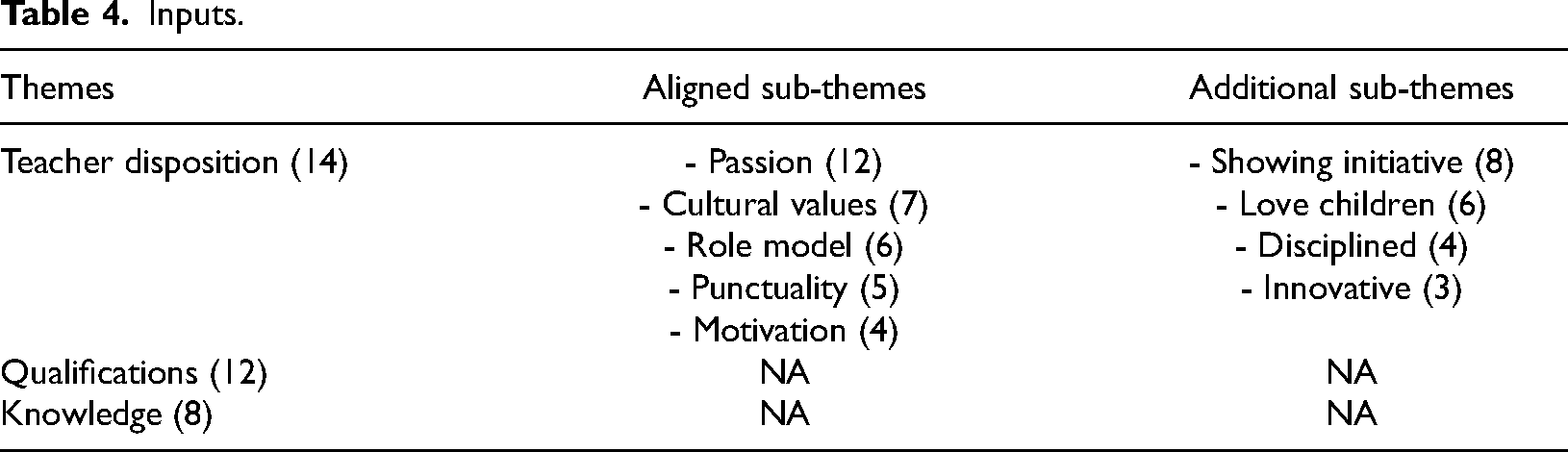
In respect to the dimension of
Inputs.
Having It will not be right for the teacher to behave as a Caucasian in front of students. Rather, he shall conduct himself as a Rwandan and teach children the cultural values of Rwandans. The teacher should inspire children to be patriotic and help them understand that whatever we do, is for our country. There are many cultural values that a child should learn and all of them are positive. For instance, if they meet an adult, they should respect him. Similarly, they should respect their colleagues and leaders.
I suppose that there are certain pieces of advice that other head teachers give their teachers. As for me, I always tell them that the most important thing is to love children. When teacher loves a child, he/she takes pity on them and teaches them out of passion.
Being a
Additional sub-themes that arose, albeit to a lesser extent, included being
Contrasts with teacher perceptions of teaching quality
For the dimension of
Processes
In regard to the dimension of In his or her work, he or she should have that culture of inclusive education. There are qualities that differentiate a group of people, even between us, we have what differentiates us. It could be age, background, gender, religion, physical appearance, skin colour, capacity level, rich and poor. Therefore, a teacher with children in a classroom should consider them equal although we teach different students who include the sick, those with disability, those without scholastic materials and those with other challenges due to poor living conditions.
Processes.
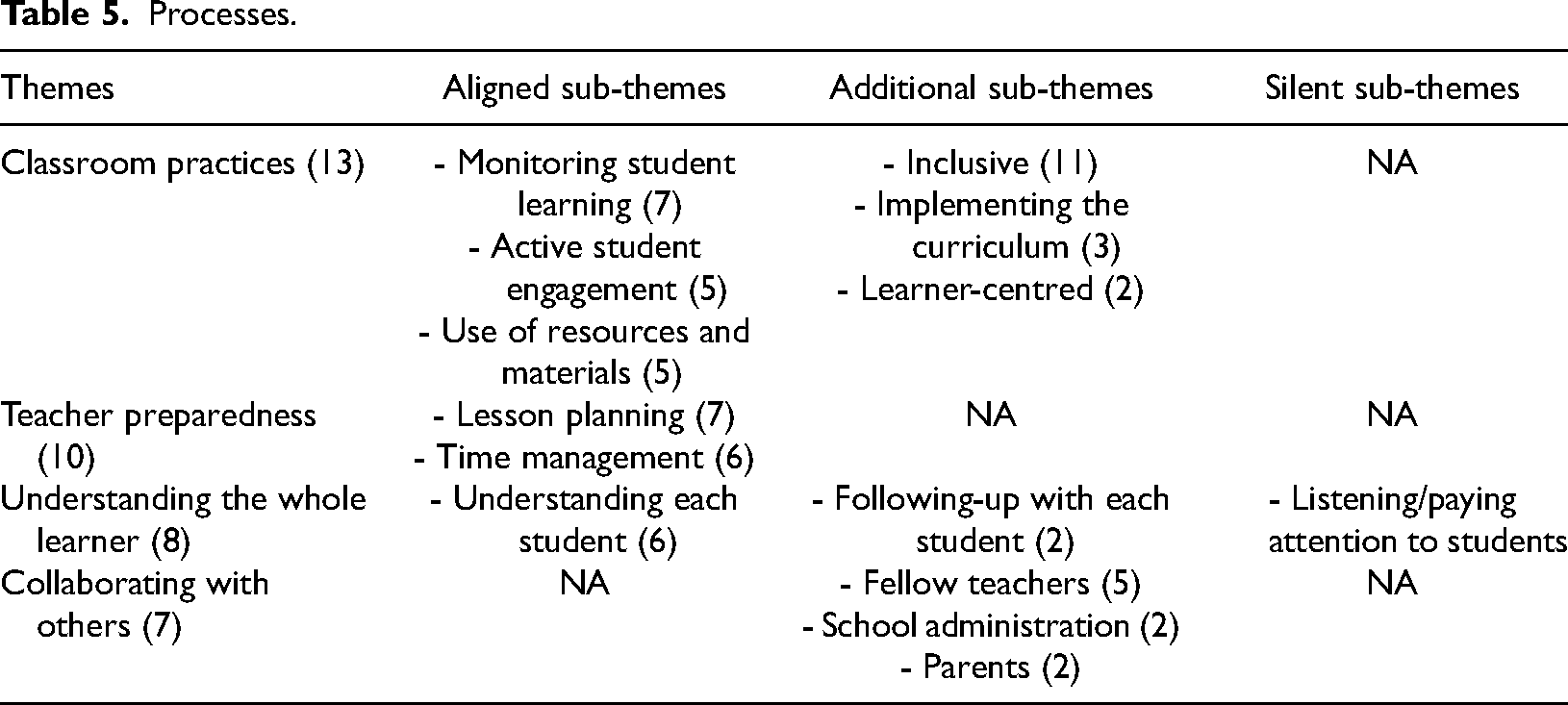
Giving students opportunities for
Use of
Firstly, a teacher should conduct a class after having prepared a lesson. And this teacher should prepare lessons continuously so he or she must not prepare a lesson today and ignore other days for instance three days or a week.
The teacher must know his timetable. He should know when his lessons start and end. When the teacher is late to start the lesson, students get bored and when he uses more time to his class period, he is hindering his fellow teacher that is coming for the next period. Therefore, he should know how to manage his time well.
Contrasts with teacher perceptions of teaching quality
For the dimension of
Outcomes
For the dimension of
Outcomes.
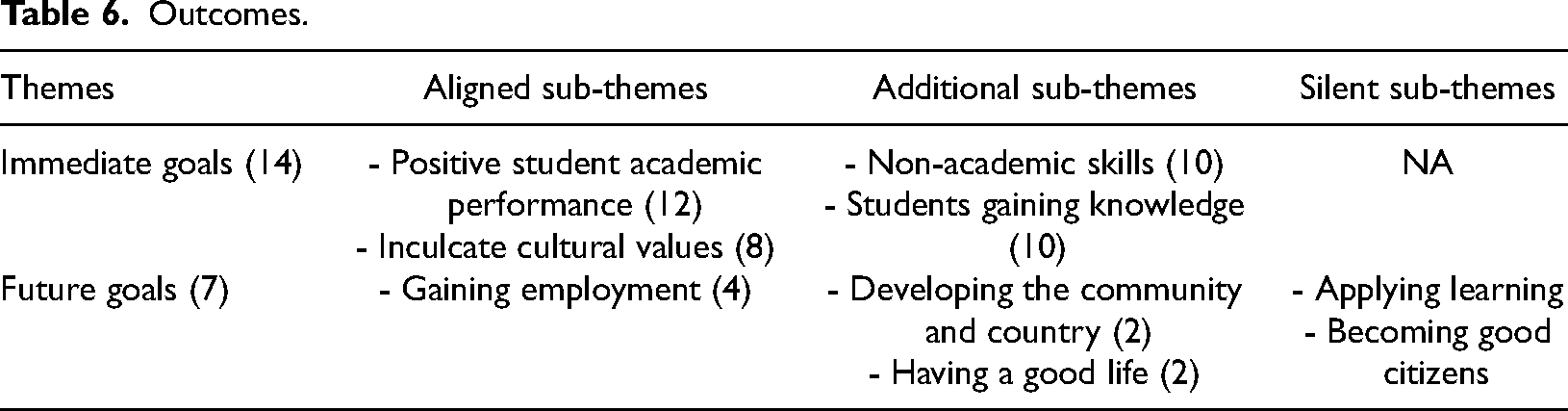
The theme
Contrasts with teacher perceptions of teaching quality
Both themes raised in reference to the dimension of outcomes were present across studies. As with previous dimensions of teaching quality, however, several sub-theme level differences were apparent. For
In addition to inputs, processes and outcomes, a number of Whether teacher trains him/herself or receives trainings from an organization/Implementing Partner, it increases his/her intellectual capacity. However, follow up after these trainings is necessary [HT (B)]
External factors.

Contrasts with teacher perceptions of teaching quality
Interestingly, the dimension of
Discussion
Within this section, the results presented above are discussed in relation to the two research questions guiding this work. Additionally, the findings are contextualised within the broader evidence-base related to teaching quality, particularly that which has been emerging within Rwanda.
1) To what extent do head teachers’ and government officials’ views of teaching quality align or differ?
Areas of alignment
Overall, head teachers and government officials showed strong agreement with their framing of teaching quality and with themes associated with each dimension. For example, there was consensus amongst groups that teaching quality could be understood via four primary components: inputs, processes, outcomes and external factors. Similarly, there was a shared understanding concerning each of the main themes linked to each component. For example, both head teachers and government officials felt that teacher disposition, qualifications and knowledge were important teaching inputs. In respect to processes, participants were in accordance with their views that classroom practices, understanding the whole learner, teacher preparedness and collaboration with others were necessary behaviours that quality teachers should employ. For outcomes, the importance of both short- and long-term learning goals was further emphasised by both participant groups. In addition to these components, the dimension of external factors was highlighted by head teachers and government officials as being a critical contributor to the realisation of teaching quality.
Areas of difference
Whilst the broader framework through which participants conceptualised teaching quality was largely similar, sub-theme differences were apparent within each of the core dimensions discussed. In regard to inputs, both participant groups highlighted the overall theme of teacher disposition; however, some sub-themes were unique to each. Government officials, for instance, were the only subgroup who raised that teachers should be ‘disciplined’ and ‘punctual’, a result that may stem from the Ministry of Education's longstanding focus on monitoring and mitigating the issue of teacher absenteeism (Karamperidou et al., 2020). Head teachers also were alone in their consideration of a ‘love for children’ as being an important dispositional factor, a finding which may be linked to their closer contact with students, compared with government officials.
2) To what extent do head teachers' and government officials’ views of teaching quality align or differ with those of teachers?
Areas of alignment
Considerable crossover between this study and earlier research carried out with teachers in Rwanda was observed (Carter et al., 2021). Notable was the joint recognition of overarching components of teaching quality reflecting inputs, processes and outcomes. Strong alignment between themes and sub-themes linked with each dimension was also observed. In regard to inputs, this included the focus on a teacher's disposition and emphasis on teachers possessing passion and cultural values. As highlighted in earlier research, teacher disposition has been found to be a highly valued component of teaching quality within Rwanda (Carter et al., 2021), and the expression of cultural values by educators has been a key priority of the government in their training initiatives for teachers and curriculum since the 1994 genocide (Ndabaga et al., 2018). Its emergence in the present study, therefore, lends further support of the need to consider this aspect as paramount in the Rwandan definition of teaching quality.
In terms of processes and outcomes, consistency with themes and sub-themes was also evident. Notable was the joint acknowledgment that monitoring student learning, active student participation and use of resources and materials were essential classroom practices that good teachers should employ. This shared understanding of what teaching quality means in terms of processes reflects the strong direct involvement that both head teachers and government officials from Rwanda have with teachers and teaching within schools for which they are responsible, as also demonstrated within recent research focused in this context (e.g. Le Saux et al., 2021, Sibomana, 2020).
In more general terms, results from both studies further demonstrated that participants held a multi-perspectival understanding of teaching quality. This multi-dimensionality resounded with other research on teaching quality, including one study from South Africa which associated the construct with various factors, including the provision of a safe and stimulating learning climate and clear instruction (de Jager et al., 2017). A further similarity between studies was that views regarding teaching quality may also differ depending on the participant's role and experience (Carter et al., 2021).
Areas of difference
A focus on inclusion: In respect to differences between head teachers' and government officials’ views of teaching quality and those of teachers, distinctions were noted at the sub-theme, theme and dimension level. In respect to sub-theme differences, one example of interest related to the strong focus upon ‘inclusion’ amongst head teachers and government officials. Indeed, this constituted the most widely cited factor linked to a teacher's classroom practices and was discussed comprehensively. This sub-theme, whilst not a prominent point of discussion amongst teachers (Carter et al., 2021), was touched upon through reference to the importance of ‘equal opportunities in learning’, which was also raised in the present study but in the broader context of inclusivity. It was apparent from these studies that head teachers and government officials possessed a far more extensive and informed understanding of inclusion and how it can be effectively enacted within a classroom, compared with teachers, an awareness which may be due to the Rwandan Government's increased attention in this area, as evidenced by the introduction of a revised Special Needs and Inclusive Education Policy (MINEDUC, 2018b), a broadening of the definition of special needs and the incorporation of ‘equitable access to education for students with special educational needs within mainstream and special schools’ as one of the 10 outcomes developed for the 2013/2014–2017/2018 Education Sector Plan (UNESCO, 2021).
The importance of collaboration: At a thematic level, ‘collaboration with others’ was a factor that emerged strongly amongst head teachers and government officials. Whilst this theme was not apparent with teachers in Rwanda (Carter et al., 2021), it has been raised in studies examining teaching quality outside this context (e.g. Mills et al., 2014). This theme was not an unexpected finding due to its correspondence with recent efforts made within the Rwandan education system to improve teaching quality through collaborative means. This has been seen, for example, through the government's encouragement of establishing shared school visions, missions and values, as evidenced within the Rwanda Education Board's School Improvement Planning guide (Rwanda Education Board, 2020). Another key way in which this is currently being realised in Rwanda is through Communities of Practice, which promote and facilitate teachers’ taking responsibility for their professional development by supporting each other, sharing their experience and imparting their expertise in order to improve teaching practice (Rossignoli et al., 2019). Whilst head teachers and government officials may not be directly involved in Communities of Practice, they are responsible for establishing accountability structures, such as making classroom visits, tracking implementation of meeting action points, providing space for teachers to attend and following up with teachers (Rossignoli et al., 2019). For example, SEOs and DEOs can monitor effective implementation at the school level with information leading to recommendations to school leadership (VVOB, 2019). This overarching role may help explain why ‘collaboration with others’ arose as a prominent theme within the study.
External factors play a prominent role in enabling teaching quality: Another notable difference with the current study involving head teacher and government officials from Rwanda was the dimension of external factors, which was not raised by teachers in this context (Carter et al., 2021). This component, however, has been captured within broader definitions of teaching quality which have emphasised classroom, school, community and system level impacts (Bainton et al., 2016; Naylor and Sayed, 2014; Pacheco, 2009). Naylor and Sayed (2014), for example, in their evidence review largely focused upon literature examples in low-income countries, outlined three external factors that have been found to affect different components of teacher quality, namely, professional development, school environment and government teacher policy frameworks. Their conceptualisation, which identifies various interconnected ‘levers of change’, has been developed and successfully applied in low-income country contexts. It holds that external factors shape the ways teachers can or cannot actualise their training as well as how learners experience teaching.
Research by Pacheco (2009) has also acknowledged the importance of external factors and the mediating role they play in enabling other markers of teaching quality. Within a natural classroom environment, for example, there is a multiplicity of interactions over which a teacher can exert limited control, not just between the teacher and student but also between one student and another which introduces further variables which can influence teaching quality. According to Pacheco (2009), this context, which has been referred to as the social surround, is vitally important in any determination of teaching quality. School and community cultures, which are marked by sets of rules, values and norms, can also bring about new variables that impact these teacher-to-student and student-to-student interactions, thus influencing the quality of teaching.
Our current research lends further support to the critical role that external factors can play in the realisation of teaching quality as well as the need for a model that considers this dimension. The emergence of this component may be due to the greater awareness that head teachers and government officials have on the impact of external factors on teaching due to their more extensive experience with teachers, teaching and monitoring and evaluating in varying contexts as well as their stronger understanding of differences which can exist between schools of different types and geographic locations (Honing, 2014; Le Saux et al., 2021).
Conclusions and implications of findings
In addressing the first guiding question, this study demonstrated that strong alignment exists between head teachers', government officials' and teachers' perceptions of teaching quality. In respect to the second guiding question, this study revealed that differences were primarily observed at the sub-theme level, therefore, demonstrating mainly nuanced distinctions in participants’ views of the construct. The considerable crossover between participants’ perceptions of teaching quality attests to the close involvement between these stakeholder groups as well as to the effectiveness of the collaboration that is occurring within the Rwandan secondary education context.
Differences arising between stakeholder groups suggest, however, that despite their close connection, greater emphasis could be placed on enhancing teachers’ understanding of inclusion and what this means in a classroom. This finding is consistent with research indicating that despite strong efforts to promote inclusivity in classrooms by the Rwanda Education Board, as outlined above in this paper, there is currently a policy to practice divide with official policy recommendations having minimal effect on classroom practices (Kuppens et al., 2019). Additionally, points of distinction arising from the present study suggest that increased attention could be placed upon communicating with teachers the importance of collaboration with members of the school and broader community. Addressing these areas of difference could go a long way to help align the expectations of stakeholders concerning teaching quality and its actualisation. They could also help reinforce current government initiatives focused on improving these processes within schools, as also described above (e.g. through use of the Strategic School Improvement Plan, Rwanda Education Board, 2020). Finally, at a systems level, heightened awareness of external elements which were noted by head teachers and government officials as effecting and shaping teaching quality could allow for greater focus on these variables, potentially leading to improvements in teaching. This could also help improve measurements for determining and developing teaching quality.
Footnotes
Acknowledgements
The researchers would like to thank all head teachers and government officials who agreed to take part in this study.
Authors Note
Kangabe Bélise Hategeka is affiliated at Laterite Rwanda, House 33, KG 584 St Kibiraro II Village, Nyarutarama, Remera, Gasabo District, Kigali, Rwanda.
Nidhi Singal is affiliated at Faculty of Education, University of Cambridge, 184 Hills Rd, Cambridge CB2 1TN, UK.
Declaration of conflicting interests
The author(s) declared no potential conflicts of interest with respect to the research, authorship, and/or publication of this article.
Funding
The author(s) disclosed receipt of the following financial support for the research, authorship, and/or publication of this article: This work was carried out with funding from the Mastercard Foundation as part of the Leaders in Teaching initiative. The REAL Centre and Laterite are learning partners for the Leaders in Teaching initiative and are responsible for generating evidence on improved teacher performance and student learning. Views expressed in this paper are those of the authors and do not necessarily reflect views of the Mastercard Foundation.
