



Abstract
Academic excellence is brought about by effective leadership, which may encompass the concept of distributed leadership, which signifies a collective engagement. However, leadership positions within higher education are frequently filled with scholars lacking leadership skills and experience, which can be detrimental both to their performance and well-being. To address this, we explored via interviews with academic leaders how academic leadership is defined and conceptualised and what their developmental needs are. Participants (N = 23) came from junior, middle and senior management levels. Findings suggest that their notions of leadership as well as any developmental needs/activities perceived useful, differ according to their leadership level. Although junior leaders were more concerned with procedural elements of leading, senior leaders focused on mentoring, social expectations and knowledge of academia. These findings have important implications for a wider theoretical conceptualisation of academic leadership, which are typically focused on individual senior leaders. Further, our findings inform leadership development programmes, as universities’ dealings with academic leaders tend not to consider the differing requirements of junior, middle and senior academic leaders.
Introduction
“Important? Definitely. Overworked? Probably. Prepared for the job? Rarely. This is the typical academic department chairperson.” (Bennett 1983: 1)
Effective academic leadership is a key contributor to attaining academic excellence and its importance has increased as a result of changes in government funding and increased national and international competition (e.g. Kok and McDonald, 2015; Rowley, 1997). A leadership concept thought to be particularly applicable to higher education (HE) is distributed leadership, which argues for a shift away from leadership being the responsibility of an individual leader alone to a more systemic outlook, where academic leadership is a collective social process dispersed across the organisation, a group activity based on relationships between individuals (e.g. van Ameijde et al., 2009; Bolden, 2011; Vuori, 2019). In this context, academic leadership results from systems design and role structures, involving multiple stakeholders and taking place in an intersubjective space (Crossley, 1996). This rather fluid conception of leadership is thought to be a preferred style for academic leaders in middle and senior positions (Gronn, 2000).
Despite its importance within HE, to date, there is little empirical research on distributed leadership amongst academics (e.g. Bolden, 2011; Bolden et al., 2009; Floyd and Preston, 2018). Macfarlane and Chan (2014) observed that, compared to individuals holding designated managerial roles, such as department heads or deans, little attention has been given to those who take on less formal forms of distributed leadership, for instance, professors who engage in ‘intellectual leader’ roles, such as creating a developmental space as a role model, mentor, advocate or guardian. They note further that informal and distributed forms of intellectual leadership are often excluded from academic leadership research and reporting. Vuori (2019) suggests that joint sensemaking is critical in creating distributed leadership practices, particularly in teaching-oriented HE institutions. Bolden et al. (2009) refer to HE’s strategic plan, arguing that leadership is or should be shared across institutions, which was supported by their research involving middle and senior leaders from 12 UK universities.
This study seeks to contribute to the evidence for distributed leadership approaches within HE as well as to a theoretical discourse that stems from the tension between managerial and more collegial conceptions of leadership. To do so, we examine what constitutes academic leadership at different levels (senior, middle and junior), an aspect that previous researchers highlighted as a shortcoming of their own studies (e.g. Uslu and Welch, 2016). In comparison to previous work, in particular, Dinh and colleagues’ research (2020), our study (i) develops its research questions within the context of distributed leadership, (ii) considers the role of seniority levels in defining academic leadership and (iii) provides suggestions for leadership development programmes, including leadership coaching (Dyson et al., 2019) by specifically considering developmental needs of leaders at different leadership levels.
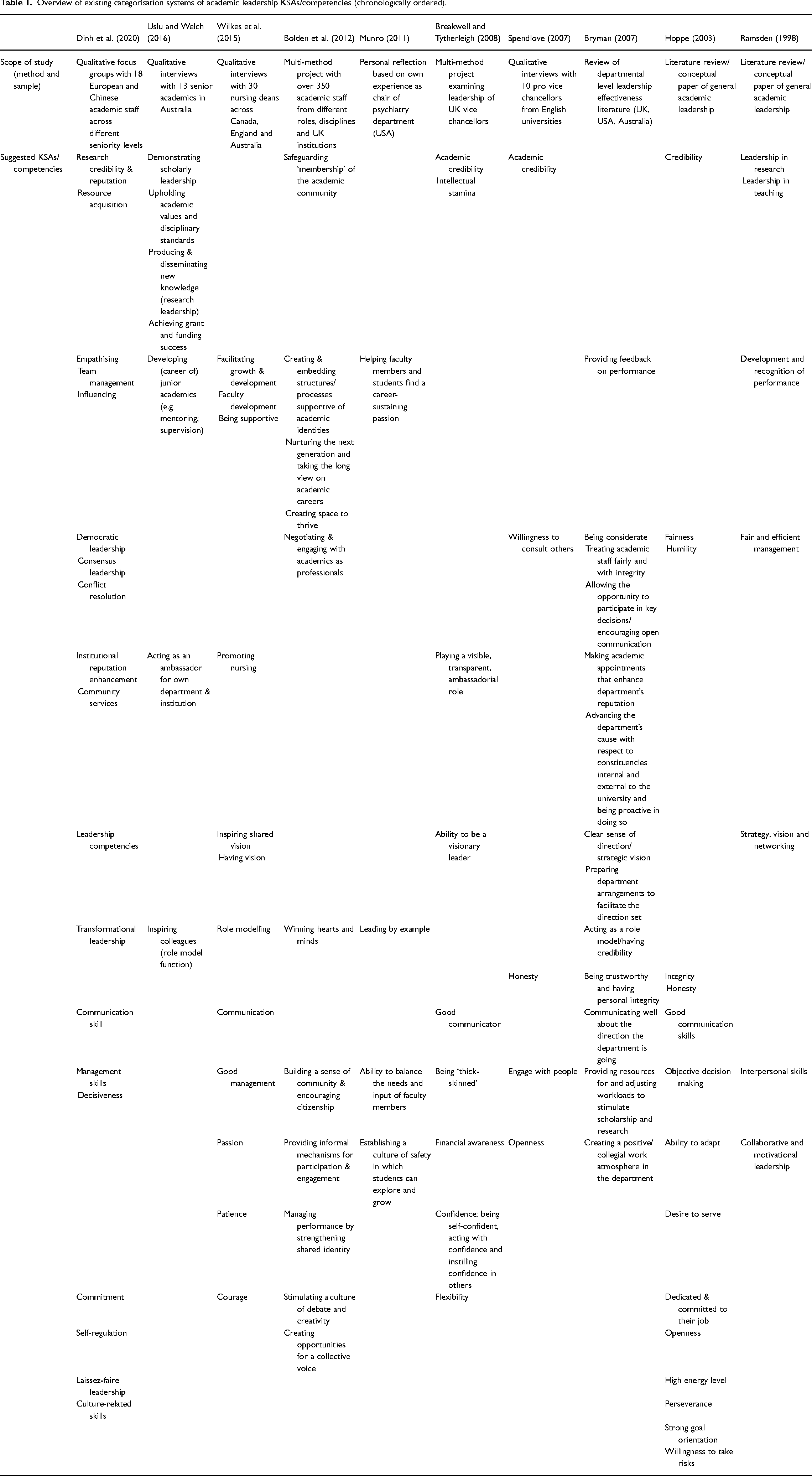
Research to date further observed that leadership vacancies in academia are often filled with scholars who may be specialists in their own subject area but have not acquired the necessary skills to exercise effective leadership (e.g. Evans, 2017; Hoppe, 2003; Raines and Alberg, 2003). This lack of leadership skills such as communicating a vision, inspiring trust or providing recognition (Ramsden, 1998; see also Table 1) is likely to negatively impact on individuals’ effectiveness in their roles and may also be a source of stress and worry, potentially resulting in health and well-being problems (Chartered Institute of Personnel Development, 2013). In turn, leaders’ high stress levels can negatively affect the level of support they provide to their teams, with detrimental implications for overall organisational effectiveness.
Overview of existing categorisation systems of academic leadership KSAs/competencies (chronologically ordered).
To assist academic leaders in being effective and avoiding problems, it is important they are supported by adequate personal and professional development provision. Indeed, many HE institutions offer programmes and activities targeted at their (academic) leaders though it is unclear to what extent these are successful in assisting academic leaders’ effectiveness. In our study, we therefore examine perceptions, demands, skills and developmental needs of academic leaders at three hierarchical levels (Bolden et al., 2012; Bryman, 2007; Evans et al., 2012; Wilkes et al., 2015). In so doing, we seek to advance understanding of the academic leadership construct per se. Moreover, our research contributes evidence regarding skills and competencies necessary for academic leaders to be effective in their roles and ways in which such skills and competencies may be developed (Hoff, 1999). Although previous research has considered these aspects, overall understanding of academic leadership remains limited, either not taking account of the specific demands placed on academics or focusing only on functional aspects of senior academic leadership (e.g. vice chancellors; Breakwell and Tytherleigh, 2008) or lower-level individual leadership activity.
The specific objectives of this study were to (i) conceptually explore and define academic leadership, with focus on distributed leadership, (ii) identify demands and expectations placed on academic leaders, (iii) identify relevant skills and competencies, and (iv) determine leadership development approaches in HE. These objectives were operationalised by means of an exploratory, qualitative interview study of UK-based academic leaders. In doing so, we also seek to determine whether challenges of distributed leadership, such as diversity (Dinh et al., 2020), effective communication, values and identities can be mapped onto the outcomes of this study.
Background
Within the last few decades, as a result of economic and political crises driving government policy changes, the HE landscape in the United Kingdom (UK) has changed substantially: HE institutions were confronted with issues of expansion (e.g. due to increasing numbers of students), decentralisation and financial pressures (arising, amongst others, out of the 2008 global banking crisis) (Decramer et al., 2013; Lapsley and Du, 2019). As a result, UK universities moved to a system coined by managerialism and principles of new public management, in other words, they started operating in ways similar to private sector organisations, seeking to maximise student numbers, funding and research output, amongst others. In order to meet new requirements, HE institutions have been pressured into seeking ways to more actively manage their employees, for instance by introducing performance management practices (Decramer et al., 2013; Kok et al., 2010). It has further been suggested that these changes have threatened the ethos of traditional professional forms which used to prevail in UK HE institutions (Lapsley and Du, 2019). It is from this background that UK academic leaders now operate.
Definitions and roles of academic leaders
Academic leaders in the traditional sense are scholars with a managerial (also referred to as administrative) role, such as head of department, head of (research/teaching) group, programme/degree/course/module leader/director, committee/working group leader or doctoral supervisor. This broad definition demonstrates that academic leaders are present at various levels of hierarchy within HE institutions.
Based on interviews with senior academics, Uslu and Welch (2016) argue that academic leadership is much like leadership in other areas (Northouse, 2016): Academic leaders should be able to develop themselves, others and their area of expertise. This argument is countered by the notion of collegial leadership in HE, which represents a conceptual shift from a managerial, power-based definition of leadership. Collegial leadership is a process that is constituted and shared amongst colleagues and dispersed within the institution.
Academic leaders can hold leadership positions both inside and outside their organisations, for example, within inter-institutional research groups or professional bodies. The roles and activities of academic leaders may relate to research, teaching and/or management/administration. Depending on individuals’ level of seniority, one or two of these three areas may be emphasised (e.g. Bolden et al., 2012). As observed above, the traditional perspective of individual leadership has often been challenged in educational contexts by a more systemic view, considering leadership as an interactive or intersubjective process between individuals (Arena and Uhl-Bien, 2016). Defined as distributed leadership, the emphasis is on group work and relationships, rather than on individual actions or skills. In the following sections, this paper considers both more traditional trait-based, and intersubjective systemic notions of leadership.
Academic leadership skills and competencies
A competency is a ‘set of behaviour patterns that the incumbent needs to bring to a position in order to perform its tasks and functions with competence’ (Woodruffe, 1992: 17). Thus, competencies can be understood as the combination of three components, namely knowledge, skills (i.e. specific learned activities, e.g. analysing data) and abilities (or attitudes) (KSAs) required to do a particular job well. Although there are various prescriptive lists of leadership skills and competencies (Hoff, 1999), this study aimed to ask academic leaders themselves about the skills and competencies required for effective academic leadership, together with the ways in which they define their leadership and implement it in practice.
Regarding competencies required for effective academic leadership, Table 1 provides a comparative overview of existing categorisations. Scholars have conceptualised academic leadership competencies in different ways, some providing more behavioural, specific notions such as ‘stimulating a culture of debate and enquiry’ (Bolden et al., 2012: 3), or ‘communicating well about the direction the department is going’ (Bryman, 2007: 697). Others have identified broader competencies including Self-regulation (Dinh et al., 2020), Patience (Wilkes et al., 2015) and Openness (Spendlove, 2007). Different scholars emphasise different sets of competencies, Hoppe (2003), for instance, focusing on talent management within academic leadership and equating academic leadership with administrative duties. Nevertheless, the following competencies are commonly acknowledged as important for academic leaders’ effectiveness (Table 1): academic/scholarly credibility; developing academic faculty; fairness and consideration of others; ambassadorial behaviour; vision/strategic thinking; acting as a role model; honesty and integrity; communication skills.
Much research has focused on senior academic leaders, overlooking skills and competencies required of middle or junior leaders. Uslu and Welch (2016), for instance, highlighted gaps in institutional support practices for senior academic leaders (Evans, 2017). Further examples include Wilkes and colleagues’ (2015) qualitative study of nursing deans, Munro’s (2011) reflection on his own experience as department chair, together with Breakwell and Tytherleigh's (2008) and Spendlove’s (2007) research examining vice chancellors and pro vice chancellors. Finally, Bryman’s (2007) literature review of departmental-level leadership effectiveness finds that early studies focus on positive interpersonal behaviours such as being considerate and treating academic staff fairly and with integrity. He also developed a competency model for departmental-level academic leadership which emphasises the differences between traditional, managerial leadership, requiring close supervision of staff, and academic leadership, which is seen as more subtle and focusing on support and protection.
Approaches for academic leadership development
Researchers believe that leadership concepts and practices can be taught to most individuals to enhance their leadership effectiveness (Doh, 2003). Rasmussen and Hansen (2016) further highlighted the importance of acquiring skills and competencies that allow academics to develop as leaders as well as researchers. Surveys by the UK’s Leadership Foundation for Higher Education (LFHE) (2015; 2016) found that over 90% of traditional HE institutions supported their staff in delivering leadership development to over 3400 individuals. A variety of leadership development activities were offered, with a focus on formal training programmes, topic-specific conferences and coaching provision. This indicates that the development of academic leaders is taken seriously by both providers and recipients.
Existing research evidence suggests that academic leadership development needs to be practical, and should ideally take place in real situations, but may also include role-plays, simulations, case studies and experiential exercises, as well as training and coaching from practitioners (Doh, 2003; Ladyshewsky and Flavell, 2011). Coaching in particular was found to be useful for developing systemic leadership in academia (e.g. Wise and Jacobo, 2010) and elsewhere (e.g. Ely et al., 2010). Moreover, mentoring is seen as an effective tool, for instance for developing female (Hacifazlioglu, 2010) or senior leaders (Wilkes et al., 2015). Personal reflection, where individuals consider their experiences and draw lessons for the future, is also considered beneficial for leadership development (e.g. Doh, 2003; Inman, 2011; Wise and Jacobo, 2010). Furthermore, a focus on identifying, developing and using individual leaders’ personal strengths is associated with higher productivity and better job performance (e.g. Clifton and Harter, 2003), as well as with subjective and psychological well-being (e.g. Govindji and Linley, 2007).
Methodology
A qualitative approach was adopted to explore the conceptualisations and developmental approaches of academic leadership from the perspective of academic leaders themselves. This approach facilitates rich, in-depth explanations (Bryman and Bell, 2007), alongside descriptions of accounts of the phenomenon or process being studied (Silverman, 2013).
Data collection
A total of 23 semistructured interviews were conducted with academic leaders at UK HE institutions. A substantial proportion of the sample was recruited in Social Sciences and Business Schools, which usually employ a variety of scholars from different disciplines and therefore provide a useful context to draw upon. In addition, scholars from other areas, namely from STEM subjects (science, technology, engineering and mathematics) were interviewed to validate interpretations.
Study participants were selected based on the following criteria to satisfy the chosen theoretical and purposive sampling strategy (Adler and Clark, 2007; Eisenhardt and Graebner, 2007): individuals needed to have academic leadership responsibility and to have been employed in their position for at least six months, at a UK university. Moreover, an equal distribution of level of leadership – understood as either junior (e.g. course/module leader), middle (e.g. head of group, programme director, principal investigator overseeing a large project), or senior (e.g. head of school or college, vice chancellor, principal) was sought.
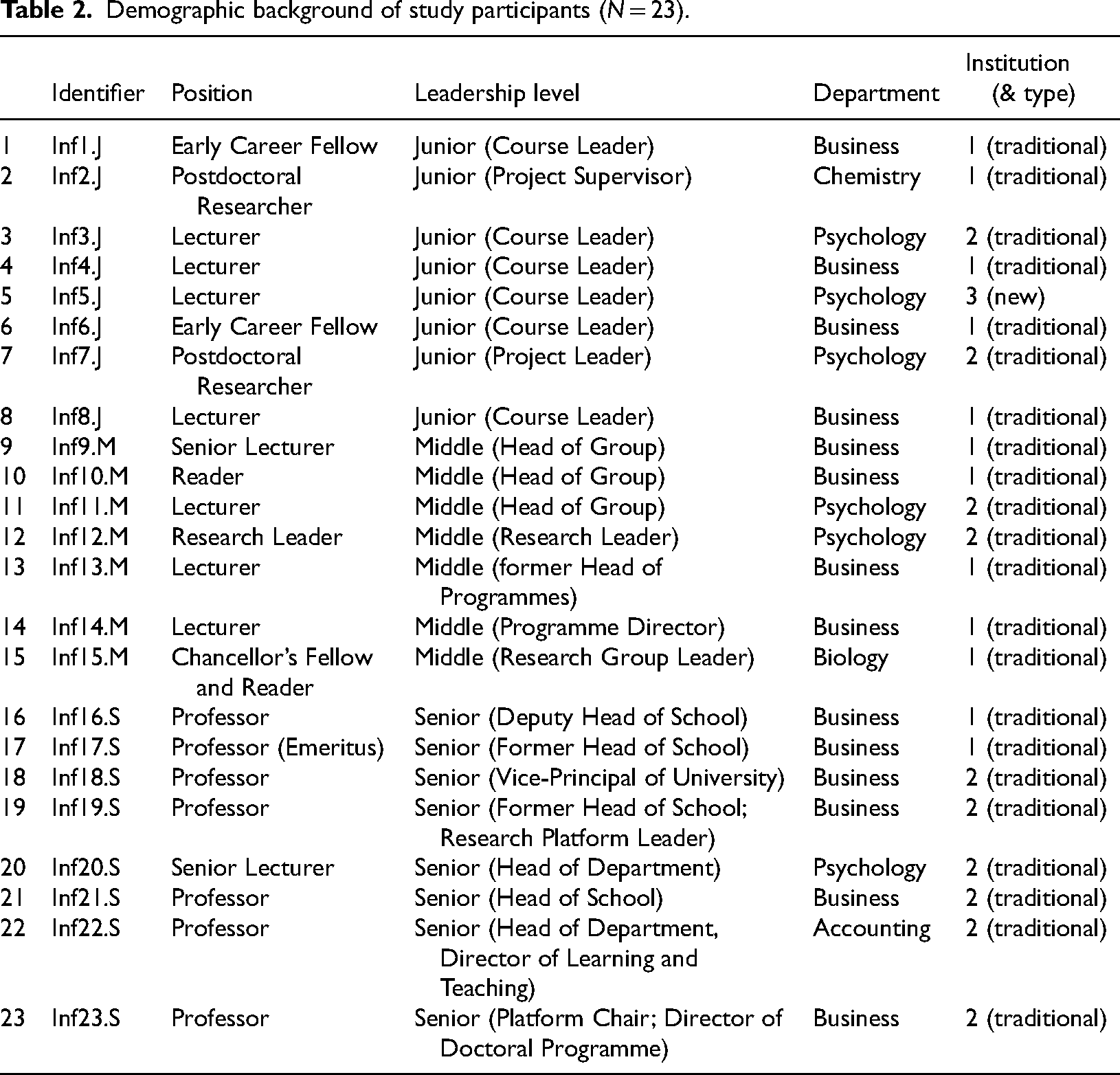
Participants recruited for this study were contacted mostly by email, few in person. Except for one person, participants were employed at what is often referred to as ‘traditional’ UK universities, typically denoting research-focused HE institutions which were founded many decades or even centuries ago, are internationally recognised and hold research expertise and histories (Kok et al., 2010). Participants came from two traditional universities, one belonging to the UK’s Russell Group of universities, which claims to represent ‘24 leading UK universities’ that deliver ‘world-class research and education’ (Russell Group, 2021) (institution 1 in Table 2). The second traditional university that many participants were affiliated with is perceived to focus strongly on research that is scientifically worthwhile as well as being applicable to practice (institution 2 in Table 2). One participant was employed at a so-called “new” university, which describes a HE institution that used to be a polytechnic under more corporate-like control of local government (Kok et al., 2010). The institution this participant came from was founded in the mid-20th century, used to be a technical college, and focuses on providing excellent teaching (institution 3 in Table 2). All three universities are public universities. Most participants were employed in their universities’ business (including accounting) and social sciences departments, with some in sciences (i.e. chemistry, biology) (Table 2).
Demographic background of study participants (N = 23).
To address the research objectives, an understanding was sought of the ways in which individuals perceive academic leadership, including in-role expectations and demands, skills and competencies required, alongside professional development activities. Semistructured interviews represented an appropriate means of data collection, Silverman (2013: 201) arguing that ‘[m]any interview studies seek to find out how a particular group of people perceive things’ and ‘interviews can give direct access to “experience”’. Interviews were recorded and subsequently transcribed using the verbatim transcription method (Poland, 1995).
Interviews and data analysis
The interviews were conducted face-to-face, using an interview guide prepared on the basis of the preceding literature review. The interviewing process comprised two stages. Firstly, 17 academic staff were interviewed, and the data were analysed. Miles et al.’s (2019) approach was adopted in order to analyse in-depth, qualitative data inductively. Having firstly condensed the dataset, it was then tabularised and structured. Finally, the findings were verified, and conclusions were drawn, adopting a grounded theory approach (Glaser and Strauss, 1999; Strauss and Corbin, 1998) with the use of iterative coding (Miles et al., 2019).
As suggested by Glaser (1998), we did not preconceive any framework from the literature review. Based on this version of grounded theory, any preconceived framework or theory would limit the scope of research and put restrictions on comparative analysis; patterns might emerge due to the in-depth comparison between cases. Despite advice to construct a framework based on leading research paradigms in order to help inform the process of data collection (Partington, 2000), the authors decided to impose the minimal force of a preconceived theory (Strauss and Corbin, 1998).
Based on our theoretical sampling, constant comparison and open-coding approach (Eisenhardt and Graebner, 2007; Holton, 2007), we started the coding process, comparing codes and memos from the beginning. This resulted in an early framework and identification of latent themes (patterns), based on data from interviews with 17 academic staff.
After extensive coding of the transcribed data, the following core categories emerged: (i) definitions; (ii) expectations and demands; (iii) skills and competencies; and (iv) development. Drawing on both iterative coding (Miles et al., 2019) and constant comparison methods (Strauss and Corbin, 1998) enabled appreciation of the depth of each category and identification of initial themes (Glaser and Strauss, 1999).
Following this framework-building stage, the second interview stage was more structured, and more time was spent on themes identified in the first stage, seeking corroboration and theoretical saturation (Glaser, 2001). As our main goal was to reach saturation, we stopped the second data collection stage after interviewing six academic staff, no new or additional aspects or dimensions of the core themes having emerged (Holton, 2007). Pattern coding (Miles et al., 2019; Saldana, 2021) was used for this analytical stage, facilitating the development of meta codes that captured participants’ individual perceptions of academic leadership and its development. An analysis was conducted of the ways in which the perceived effectiveness of development approaches was affected by participants’ views of academic leadership and its different types, perceived expectations of their role and required competencies.
In addition, in the stage, particular attention was paid to the core categories and the different types of academic leadership identified by participants, alongside the importance of formal versus informal leadership development approaches. The results of stage 2 did not lead to any substantial change in the emerged themes from the first stage interviews and our data reached the saturation point. It was also evident that through the dynamic nature of these two coding rounds, in addition to comparing techniques employed for data coding, theoretical similarities of converging themes were identified.
Although the primary source of empirical evidence consisted of interview transcripts, this was supplemented with secondary data, namely information about training courses, further development activities and online resources available to study participants. These data were collected from the websites of interviewees’ universities and other providers of HE personnel development. These secondary data were gathered to provide an insight into the context of the sites used for data collection (Simons, 2009) and were also used to corroborate and triangulate interviewees’ comments (Stake, 2006).
Discussion of the findings follows in the next section.
Findings
Definition of academic leadership
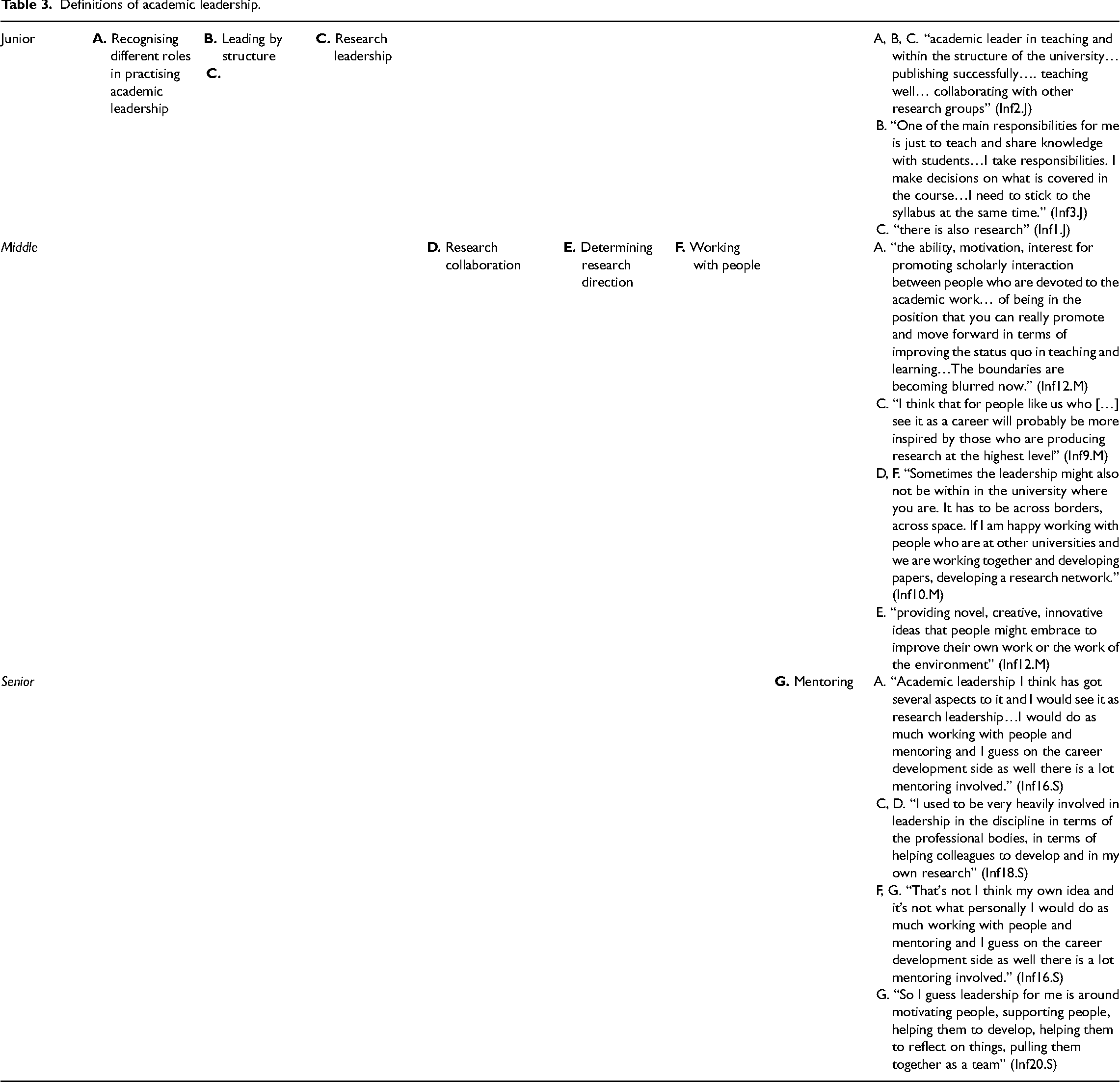
The academics defined leadership differently depending on their own leadership position and experience. Three components of academic leadership can be distinguished (Table 3): institutional management/administration, teaching and research (cf. Bolden et al., 2012): … we can talk about academic leadership in teaching, academic leadership in research, academic leadership in management or administrative responsibilities. (Inf14.M)
Definitions of academic leadership.
Among these three roles, ‘leadership in research’ was highlighted by many participants regardless of their academic leadership level: Academic leadership I think has got several aspects to it and I would see it as research leadership. (Inf16.S)
I think that for people like us who have come in to professional and intellectual interest and see it as a career will probably be more inspired by those who are producing research at the highest level. (Inf9.M)
Our secondary data analysis of universities’ webpages further highlighted the importance of leadership in research: for example, at one of the targeted universities, there was a four-day training course for research leadership focusing on forming research teams for writing grant proposals.
The emphasis of the three components teaching, research and management/administration seems to be directly impacted by individuals’ level of leadership. For example, research leadership roles are referred to across the three levels, while teaching and complying with the university’s structure and regulations were more emphasised by junior leaders: So, in teaching, staff might have very different expectations of leaders or what’s a successful leader compared to what students are looking for. (Inf6.J)
Meanwhile, middle- or senior-level leaders were inclined to weight research and administrative roles more by highlighting ‘research collaboration’, ‘being a thought leader’ and ‘working with people’ as three significant aspects of academic leadership: I used to be very heavily involved in leadership in the discipline in terms of the professional bodies, in terms of helping colleagues to develop. (Inf18.S)
If I am happy working with people who are at other universities and we are working together and developing papers, developing a research network. An academic leader needs to be a thought leader. You have ideas. You can imagine what the future is like in terms of research… Then you also have the ability to galvanize interest around that idea so that you can entice other people to share that idea. (Inf10.M)
Senior leaders seemed to adopt a broader vision that included the strategic development of the institution as a whole. They also emphasised mentoring, developing others and developing their organisation (Breakwell and Tytherleigh, 2008; Spendlove, 2007): So I guess leadership for me is around motivating people, supporting people, helping them to develop, helping them to reflect on things, pulling them together as a team. (Inf20.S)
Shared nature of leadership
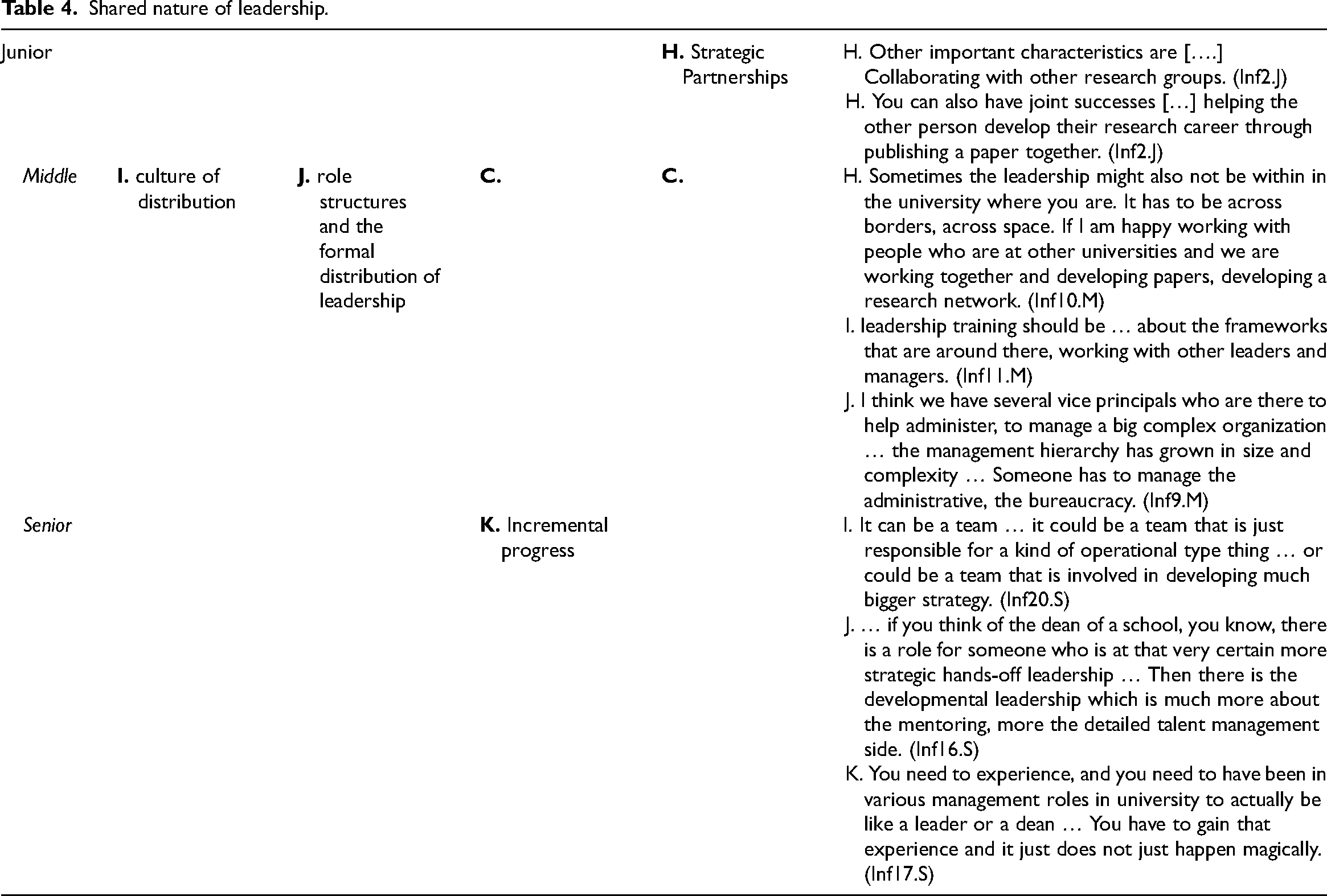
Our findings indicate that middle and senior academic leaders put more emphasis on shared and distributed leadership in HE by referring more to aspects of this compared to junior leaders. Senior participants perceived leadership as a group activity, highly dependent on existing relationships between individuals. Moreover, the evidence suggests that the ‘culture of distribution’ is more established among middle and senior rather than junior leaders in HE (Table 4): … for effective academic leadership, I would say, that you need a team of people that complement each other and that recognize each other strengths and areas which are not so strong but it works out together. (Inf16.S)
Shared nature of leadership.
It can be a team … it could be a team that is just responsible for a kind of operational type thing … or could be a team that is involved in developing much bigger strategy. (Inf20.S)
leadership training should be … about the frameworks that are around there, working with other leaders and managers. (Inf11.M)
Besides, middle and senior leaders emphasised the importance of role structures and the formal distribution of leadership in academia: I think we have several vice principals who are there to help administer, to manage a big complex organization … the management hierarchy has grown in size and complexity … Someone has to manage the administrative, the bureaucracy. (Inf9.M)
… if you think of the dean of a school, you know, there is a role for someone who is at that very certain more strategic hands off leadership … Then there is the developmental leadership which is much more about the mentoring, more the detailed talent management side. (Inf16.S)
However, senior leaders stressed that the process of progressing in leadership positions is incremental and requires gaining experience, and that more responsibility should be taken gradually: You need to experience, and you need to have been in various management roles in university to actually be like a leader or a dean … You have to gain that experience and it just does not just happen magically. (Inf17.S)
For middle and especially junior leaders, the distributed nature of leadership takes predominantly the form of strategic partnerships, particularly those with researchers from other universities, for the purpose of publishing or securing funding grants: Sometimes the leadership might also not be within in the university where you are. It has to be across borders, across space. If I am happy working with people who are at other universities and we are working together and developing papers, developing a research network. (Inf10.M)
Demands on academic leaders
Findings suggest that academic leaders’ expectations fall into the following three categories: (i) ‘academic’ expectations, which include responsibilities relating to teaching and supporting students, doctoral supervision and engaging with external academic and funding institutions; (ii) ‘managerial’ expectations, which relates to decision-making, maintaining existing routines, leading teams and keeping the balance between innovation and maintenance in an academic environment and (iii) ‘social’ expectations, which pertain to having informal influence on colleagues, effective communication, encouragement and the ability to take risks (Table 5).
Demands on academic leaders.
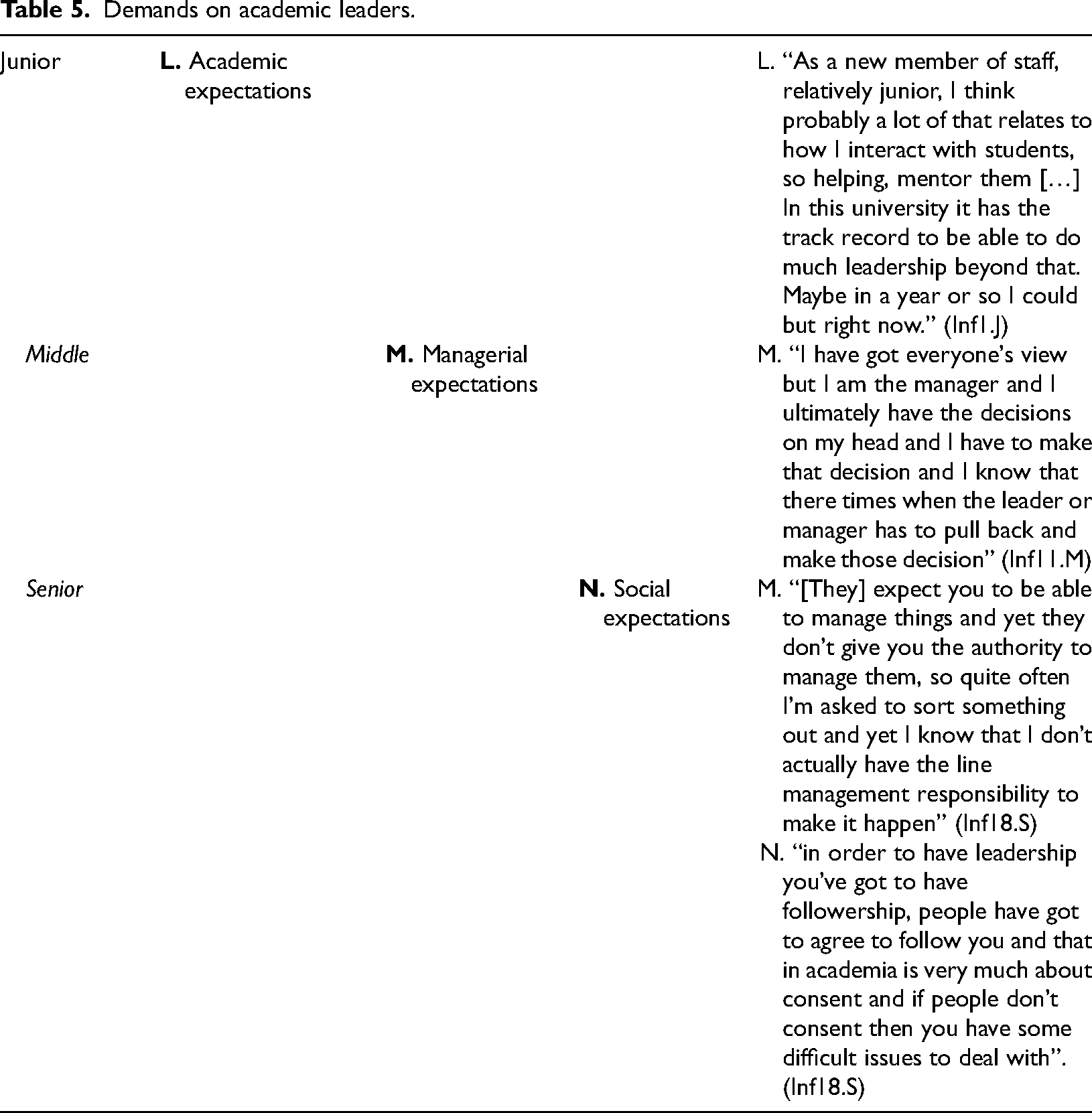
Those expectations also depend on the level of leadership role. Although junior leaders highlight academic expectations, often relating to their teaching role, middle and senior leaders emphasise management of the expectations of students, team members and the institution. These leaders seem to show an awareness that academic leadership involves not only managing processes but also managing creative and critical individuals, who respond better to persuasion than coercion. Moreover, senior leaders perceive their activities to have wider societal implications through the strategic development of the institution and its research. On the whole, leaders at all levels seem to be greatly aware of their position in the organisational hierarchy in the context of demands asked of them: As a new member of staff, relatively junior, I think probably a lot of that relates to how I interact with students, so helping, mentor them … In this university, it has the track record to be able to do much leadership beyond that. Maybe in a year or so I could, but right now … I think it is probably a little bit about building a reputation as a leader with the students before going beyond (Inf1.J)
In higher education the ultimate product or service you’re selling is very sophisticated … it’s on us what to do to generate that return. (Inf14.M)
Aside from asserting the importance of managerial expectations, more senior participants highlighted social expectations, such as having an influence on people in academia: … in order to have leadership you’ve got to have followership, people have got to agree to follow you and that in academia is very much about consent and if people don’t consent then you have some difficult issues to deal with. (Inf18.S)
Skills and competencies for effective academic leadership
Leadership skills and competencies are comparatively coherent across the three leadership levels and can be categorised into ‘social skills’, ‘personal capabilities’ and ‘knowledge of academia’. These three overarching core competencies were found to be important at all three hierarchical levels suggesting that similar generic, underlying skills seem to be important for academic leaders regardless of their level of leadership (Table 6). That being said, some differences could be observed according to leaders’ hierarchical level: While social skills and interactions as well as personal capabilities are emphasised by all three groups, senior leaders focus more on the importance of knowledge of academia compared to middle and junior leaders. The findings largely align with the literature on skills and competencies (Bolden et al., 2012; Breakwell and Tytherleigh, 2008; Bryman, 2007; Hoppe, 2003; Munro, 2011; Ramsden, 1998; Spendlove, 2007; Uslu and Welch, 2016; Wilkes et al., 2015), in that ‘people skills’, such as being able to interact and communicate with others, are perceived as key to academic leaders’ effectiveness.
Skills and competencies for effective academic leadership.
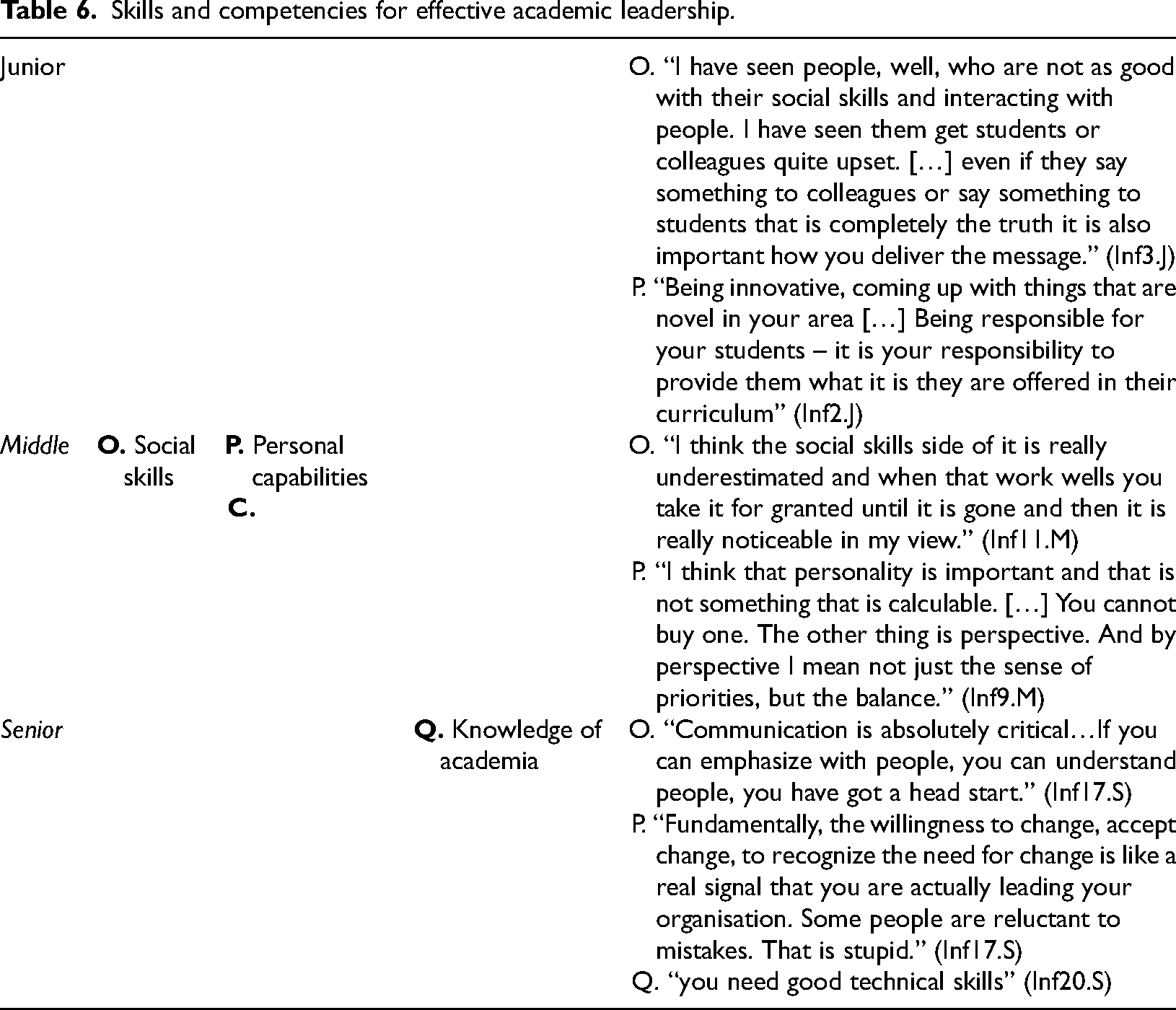
According to the participants, social skills include communications skills (including listening to and convincing others), interacting with others (including team-working skills) and being able to tolerate criticism. Participants highlighted personal capabilities such as having empathy and showing interest in people, the ability to make decisions, willingness to change, prioritising tasks, being organised and detail-focused, and patience. Finally, knowledge of academia refers to, amongst others, subject knowledge, institutional familiarity, research methods and technical skills.
Further, academic leaders at any leadership level perceived on both social skills and personal capabilities as key to effective academic leadership; there were no meaningful differences in perceptions between the three leadership levels. This is evident in the following two quotes from junior (Inf8.J) and middle (Inf14.M) leaders respectively, emphasising the importance of social skills: The other thing that comes to my mind is team-working skills. Because if you want to be a leader I think you need to have the skill … But the guidance, taking people, you definitely need team-working skills. (Inf8.J)
I think you need a lot of people skills, lots and lots of people skills. So just to be able to relate to people and kind of create those alliances. (Inf14.M)
Equally, personal capabilities were found to be of key importance for effective academic leadership, regardless of the level of seniority: Being responsible for your students – it is your responsibility to provide them what it is they are offered in their curriculum. (Inf2.J)
Fundamentally, the willingness to change, accept change, to recognise the need for change is like a real signal that you are actually leading your organisation. Some people are reluctant to make mistakes. (Inf17.S)
Although social skills and personal capabilities were highlighted as key by all three groups of academic leaders, only senior leaders meaningfully referred to knowledge of academia as an important competency; this is evident in the following quote, suggesting an academic leader cannot lead a team to success without adequate knowledge of academia: I think the mentor I’ve had through all of my career as I say she’s retired now, she’s still a good mentor because she understands academia really well so even if she doesn’t know the individual person. (Inf18.S)
Approaches for developing academic leaders
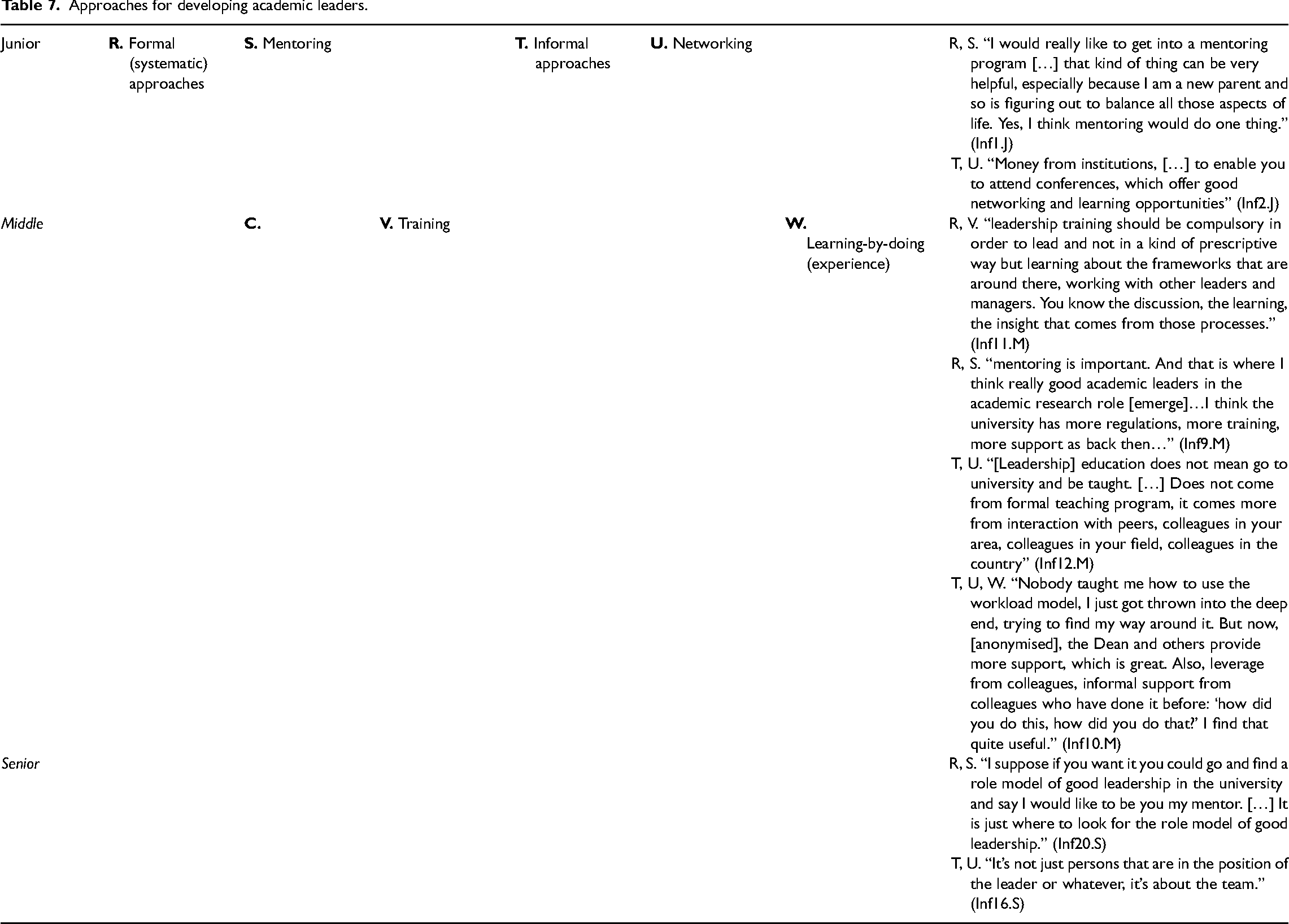
All leaders interviewed appreciated institutional programmes, mentoring and networking. Moreover, middle leaders emphasised specific leadership training and experiential learning. Senior leaders also stressed the importance of team development and informal mentoring (Table 7). Most of these findings reflect approaches noted by previous researchers, highlighting the importance of relationships and networks, with a particular focus on mentoring (Clifton and Harder, 2003; Doh, 2003; Ely et al., 2010; Govinji and Linley, 2007; Wilkes et al., 2015; Wise and Jacobo, 2010). Our secondary data analysis showed that mentoring was typically offered to academic leaders by their universities. One of our interviewees believed mentoring to be particularly useful when a new academic member joined the university rather than for senior members: …mentoring is important. And that is where I think really good academic leaders in the academic research role [emerge]…I think the university has more regulations, more training, more support as back then… (Inf9.M)
Approaches for developing academic leaders.
The identified developmental approaches also support our findings that the awareness and practice of distributed leadership are prevalent in middle and senior leadership levels (Floyd and Preston, 2018). However, leaders in this study did not mention coaching as a potential tool for leadership development, nor did they allude to the importance of personal reflection or a focus on individuals’ strengths.
Participants at all three leadership levels distinguished between formal (systematic) approaches, most notably mentoring, supervising and training, and informal approaches to leadership development, such as networking and learning-by-doing. In terms of training, they explained that this usually includes one- or two-day sessions, typically for junior academics at an early career stage, such as training for PhD supervision. Informal approaches on the other hand represent a wide range of activities, such as learning-by-doing or learning through experience and networking, which can include seeking feedback and advice from more experienced colleagues, alongside attending conferences or training sessions.
Participants across all three leadership levels highlighted mentoring as an effective means for developing academic leaders’ skills and capabilities. Nevertheless, there were some criticisms of mentoring processes within academic environments. For example, one participant considered that the process of matching mentees to mentors requires further attention: You could go and find a role model of good leadership in the university and say I would like you to be my mentor …. It is just where to look for the role model of good leadership. (Inf20.S)
Although leaders of all three levels emphasised the importance of mentoring, only middle leaders considered training as equally important: People have been put in higher positions within their careers because of the job that they do, not because of the leadership skills, because they are often untrained in that area and I think it should be absolutely compulsory just as teacher training is compulsory in order to teach. (Inf11.M)
In terms of informal approaches, networking was perceived to be key to developing leadership skills and capabilities, regardless of leadership level: You need to master the interface of academic society … I engage people in my research but to disseminate teaching approaches, knowledge and how we can incorporate this research output into teaching approaches … So I get that feedback from the society. (Inf12.M)
I mean formal course that I have done previously in leadership, actually one of the chief benefits to build that network, that developed afterwards and that may be very practical things. (Inf16.S)
One area where there was no consensus amongst leaders of different levels concerned the effectiveness of learning-by-doing for developing academic leaders. More so than the other two groups, middle leaders believed this type of development approach to be as effective as networking: When I came to this university nobody told me that it was ‘publish or die’. I came as a research fellow and I did publish. But no one told me that, no one mentored me. You were left on your own. There were no training courses on how to lecture or to deal with your doctoral work or supervisor. It was just…you learnt as you went along. (Inf9.M)
Discussion
Academics define leadership differently depending on the level of leadership; however, they consistently refer to three distinguishable components: institutional management/administration, teaching and research (Bolden et al., 2012). In our sample, individuals indicated subtle differences in their perceptions of how devolved or emergent academic leadership is (Bolden et al., 2009). Although the theory of distributed leadership in HE has received significant attention by scholars (Bolden et al., 2012), most studies have focused on more senior academic leaders. The extant literature, therefore, noticeably lacks evidence that reflects the perspective of junior and middle leaders and perhaps fails to capture the evolution of this position. This study found that the concept of distributed leadership is prevalent amongst middle and senior leaders. Academics frequently alluded to the cultural dimension of distributed leadership, whereby leadership is assumed and shared organically and has a wider social impact (Bolden et al., 2009).
Overall, this research indicates that junior academic leaders possess limited leadership experience, such as organising an undergraduate course or a module, and are not normally involved in any management role. They feel their practices need to reflect the structure imposed by the university and their leadership scope is restricted to formally devolved responsibilities across their institutions. They seek leadership in adjusting courses based on students’ needs and feedback while abiding by accepted HE syllabi. The construction of academic leadership for junior academics often consists of a challenge with managing informal requirements expressed by students on the one hand and formal expectations imposed by decision-makers within HE, such as course/module evaluation committees on the other hand. As this group of junior leaders have not been significantly involved in managerial processes and may not have experienced the ‘traditional tension between “managerialism” and “collegiality”’ (Bolden et al., 2009: 258), they see collegial expectations involved in teaching, PhD supervision and supporting students as an inherent, informal component of emerging academic leadership.
The middle leaders in this study, in addition to significant collegial responsibilities, had held at least one managerial position such as the leadership of an undergraduate course (pathway) or a postgraduate programme. Compared to junior leaders, they seemed to be more aware of the tension between managerial and academic authorities. Regarding managerial responsibilities, they refer to maintenance of existing procedures, innovation when required and taking managerial decisions for their courses or programmes. Paradoxically, this group of leaders recognised that as academic leaders they also have the responsibility to determine their research direction. These contrasting views amongst middle leaders underscore the distinction between devolved and emergent aspects of academic leadership (Bolden et al., 2009). These conflicting observations are also corroborated by their suggested methods for leadership development in academia; while they considered formal training sessions important for their development, they saw equal value in informal approaches such as ‘developing by doing’.
The senior academic leaders had experienced at least one of the following positions: department head, school deputy dean, school dean, deputy (pro) vice chancellor and so forth. In addition, most hold a professorship that reflects their academic authority in their own field/discipline. Like middle leaders, they also believed that an academic leader is expected to have both administrative or managerial and academic authority and therefore hold a formal managerial position at the institution. Senior leaders seemed to consider collegial knowledge, such as the knowledge of academia, as a more important skill than leadership-specific knowledge and competencies. As with middle leaders, senior leaders referred to ‘working with people’ as a crucial leadership skill. Emphasising the importance of collective engagements indicates that middle and senior leaders’ perception of leadership is not limited to a top-down and formal practice but is instead heavily influenced by the notion of leadership being shared and dispersed across the university. However, they showed awareness of the weight carried by the authority that stems from the organisational hierarchy and formal responsibilities assigned by HE management.
The findings of this study have broader implications for theory and practice. Firstly, they provide an enhanced, contemporary understanding of academic leadership, based on a bottom-up, exploratory approach to examining the construct, from the perspective of academic leaders themselves. The focus was on the views of individual leaders, rather than on the collective of leaders or academic leadership in universities focused on by other researchers (e.g. Kok and McDonald, 2015). It is notable that participants with international experience, specifically at the senior level, often referred to the notion of distributed leadership, suggesting that leadership in academia may per se be more collective than in other industries. Secondly, unlike other research which focused on senior academic leaders, a holistic approach was adopted, pointing to clear differences between the ways in which junior, middle and senior academic leaders define and perceive expectations, skills, competencies and preferred leadership development approaches. To the best of our knowledge, this study is the first to provide a direct comparison between different leadership levels within academia regarding the aspects examined here. Thirdly, the interviews hinted at a discrepancy between the training opportunities and other support academic leaders expect from their universities and the actual support received. It is evident that many leaders do not feel sufficiently prepared or supported for their leadership roles.
Consequently, it is recommended that HE institutions distinguish more between different leadership levels in terms of individual requirements for support and developmental offerings (Dinh et al., 2020). The study findings support the extant evidence base, suggesting that universities’ personnel development departments should offer not only formal activities for leadership development but also informal activities, such as mentoring and networking, again with an emphasis on tailoring such offerings according to leadership level (LFHE, 2016).
Limitations and future research avenues
The sample of interviewees recruited for this study was almost entirely employees of traditional, UK universities. As set out in our literature review, existing evidence suggests that changes to the UK HE landscape, particularly the move from professions to managerialism and new public management, have had a general impact on UK universities, which may suggest that opinions of academics at different types of universities might be similar. Such an assumption merits closer studying. Future research on academic leadership could therefore focus on this aspect and directly compare perceptions of academics in different types of HE institutions to examine differences and similarities in perceptions of academics employed in traditional versus in new universities. Moreover, individuals interviewed for this study were all formally nominated to their (leadership) posts. It was therefore not possible to determine the extent to which distributed leadership, which can emerge naturally and informally, might have occurred in this sample even if individuals had not been appointed formally to their roles. Yet, we believe that the question to what extent and how distributed leadership can emerge informally within academia merits further investigation.
Many leaders interviewed were affiliated with business/management and psychology departments, and thus a broadening of the scope to other disciplines within HE constitutes another avenue for future investigations. A further question concerns the extent to which academic leadership differs from leadership in other areas. This research has shown that there is commonality regarding skills and competencies required by leaders within and outside academia. Medical consultants with a leadership function have a role remit that is close to academic leaders in the UK context, in that they are required to practice their profession, while also doing research and management. However, while academic leaders increasingly need to manage processes as well as people, much like leaders in any domain, potential differences to non-academic leadership can be seen in the ‘people domain’, which is very specific to academia and emphasises the collegiality of shared leadership. Perhaps more senior academic leaders gravitate to the concept of distributed leadership as academics are inherently encouraged to be highly critical, innovative, creative and self-motivated, with a great sense of their work’s wider societal impact. That said, future research comparing leadership across academic and non-academic contexts would be valuable, to facilitate greater understandings of leadership on a conceptual level and to provide developmental leadership opportunities at both individual and group levels within HE.
Finally, from an international point of view, our study was constrained to academics working in UK universities. We believe factors such as national culture and the way the HE system is organised and funded in different countries may impact on perceptions of academic leaders and academic leadership. Therefore, we would like to encourage researchers to extend our study to other countries for instance by conducting a similar interview-based project and comparing findings to our findings and/or by carrying out cross-cultural comparative research on the matter, which would further increase our understanding of developmental needs academic leaders from different countries have.
Conclusion
Academic leadership definitions, expectations, needs, demands, skills, competencies and developmental approaches can be clearly distinguished according to academic leadership levels. Further, although leadership in teaching, research and administration are present at all levels, the emphasis and ways in which leaders define their roles differs. A change in role perception seems to happen at middle and senior levels, where leaders define their role coherently with the concept of distributed leadership and emphasise the social responsibility aspect of their job.
The new insights contributed by this study can inform HE institutions regarding how to position and offer leadership development to academic leaders. Universities need to recognise that standardised leadership training is of limited effectiveness given different requirements and needs. More tailored support will provide academic leaders with an environment in which to develop and successfully lead the advancement of knowledge, providing crucial contributions to a broader development in society.
Footnotes
Acknowledgements
This work was partially supported by a Leadership Foundation for Higher Education (now Advance HE) Small Development Project Grant.
Declaration of conflicting interests
The authors declared no potential conflicts of interest with respect to the research, authorship, and/or publication of this article.
Funding
The authors disclosed receipt of the following financial support for the research, authorship, and/or publication of this article: This work was supported by the Advance HE. This work was partially supported by a Leadership Foundation for Higher Education Small Development Project Grant.
