




Abstract
The present study aims to generate broad insights from the large corpus of literature on the associations between a comprehensive range of school leadership practices and student outcomes in different school contexts. Three-level meta-analysis of 493 independent effects from 108 studies published since 2000 showed that the mean effect size was small at r = 0.14. Effect sizes for leadership practices ranged from r’s = 0.10 to .26. Results underscored the importance of different types of leadership practices related to instructional management, enhancing teacher capacity, and engaging external stakeholders to improve student outcomes. School leadership practices were significantly associated with students’ academic achievement (in different subjects except science) and learning attitudes/processes but not attainment. Moderator analyses showed that school leadership effects were significant in studies using a school-level analysis but not in those using a lower-level of analysis. Additionally, school leadership effects were significant at different grade levels (G1–G6, G7–G12) and in research reported in different study types (articles, dissertations) and in different years (2000–2009, 2010–2018).
Over the past two decades researchers have sought to understand the relationship between school leadership and student learning outcomes (Tan et al., 2020). This research has been driven by policymakers convinced that high-quality leadership contributes to equitable and high levels of student learning. Indeed, research shows that leadership has the second largest effect among school/classroom-level variables on student learning after teaching (Leithwood et al., 2020). It also affirms that school leaders mainly influence student learning indirectly by developing conditions that support classroom teaching (Hallinger and Heck, 2010; Hendriks and Scheerens, 2013; Leithwood, 2005, 2012; Sebring et al., 2006).
This article provides insights on the association between leadership practices of different levels of leaders and student learning. In the present study, school leadership refers to “the exercise of influence on organizational members and diverse stakeholders toward the identification and achievement of the organization's vision and goals” (Leithwood, 2012: 3). This definition emphasizes the development, articulation, and promotion of the school vision on student learning; and the alignment of the school philosophy, structure, and activities to achieve this shared vision (Bush and Glover, 2003). Addtionally, “school leaders” include principals, vice-principals, and teacher leaders while student learning outcomes encompasses academic and non-academic domains.
Some of the most influential leadership studies have been meta-analyses (e.g. Robinson et al., 2008). These studies have contributed to the debate but evolving insights on the nature of leadership effects necessitate further study in four ways. First, notwithstanding the truism of the indirect leadership effects model (Bush, 2019; Hallinger and Heck, 2010), meta-analyses have not compared the degree of association between a comprehensive range of leadership practices and student outcomes. For example, Witziers et al. (2003) and Sisman (2016) focused on practices pertaining to instructional leadership while Chin (2007), Leithwood and Sun (2012), and Sun and Leithwood (2012) examined only transformational leadership practices, Addtionally, Sun and Leithwood (2015) focused on direction-setting practices while Liebowitz and Porter (2019) examined specific practices informed by Grissom and Loeb’s (2011) framework. Second, many meta-analyses assume that principals are the only, or the most important, leaders of student learning (Chin, 2007; Liebowitz and Porter, 2019; Witziers et al., 2003). This ignores the impact of multiple leaders within schools on student learning (York-Barr and Duke, 2004). Third, most meta-analyses have not embraced more expansive definitions of student learning that include non-achievement outcomes (Chin, 2007; Karadag, 2020; Leithwood and Sun, 2012; Liebowitz and Porter, 2019; Sun and Leithwood, 2012; Uysal and Sarıer, 2018; Witziers et al., 2003). Lastly, existing meta-analyses (Chin, 2007; Karadag, 2020; Liebowitz and Porter, 2019; Sun and Leithwood, 2012; Uysal and Sarıer, 2018; Witziers et al., 2003) have not adequately considered school contextual moderators in investigations of leadership effects. In particular, there are calls to reconceive school leadership from a social justice perspective to improve learning of lower-socioeconomic status (SES) students (Berkovich, 2014). The present study is therefore important because it investigates the effect of a research-based set of practices, for different levels of school leaders, on different types of student outcomes, and examines the moderating effects of different contextual (and methodological) variables on school leadership effects.
School leadership practices
The consensus in school leadership research is that school leaders should focus on the quality of teaching-and-learning (i.e. instructional management) to improve student outcomes (Boyce and Bowers, 2018; Daniels et al., 2019; Hallinger and Kovacevic, 2019). However, it appears insufficient to focus on leadership practices directly related to improving teaching-and-learning within the school, given the complex environment that schools are operating in (Hitt and Tucker, 2016). Relatedly, some scholars recognise multitudinous responsibilities confronting school leaders (May et al., 2012), so it is important to ascertain the impact of different school leadership practices on student outcomes. These practices can be delineated from (a) leadership frameworks/models that encompass different leadership practices (e.g. Leithwood’s (2012) Ontario Leadership Framework; Murphy et al.'s (2006) Learning-centered Leadership; Sebring et al.'s (2006) Essential Supports Framework; Swaffield and MacBeath’s (2009) Leadership for Learning Framework; Bennett et al.'s (2003) distributed leadership model; Hallinger and Murphy's (1985) instructional leadership model; Sun and Leithwood's (2012) transformational leadership model); (b) research on different leaders in the school hierarchy (Hallinger and Murphy, 1985; York-Barr and Duke, 2004); (c) cross-cultural leadership research (Gurr, 2015; Hallinger and Murphy, 1985; Walker and Qian, 2012, 2015; Wang, 2007; Yin et al., 2014); and (d) systematic reviews of leadership practices (Hitt and Tucker, 2016).
In the present study, “leadership practices” is defined as what school leaders do to improve teaching and learning in schools (Hitt and Tucker, 2016), namely instructional management, enhancement of teacher capacity, organizational responsibilities, and engagement of external stakeholders. The following sections discuss these practices in greater detail.
Instructional management
The first two practices are related to instructional management. First, enhancing the quality of teaching-and-learning includes addressing student needs in teaching; developing and improving curricular, instructional, and assessment programs; evaluating instruction; protecting instructional time; incentivising learning; helping students to excel in examinations; monitoring student progress; and maintaining a safe and orderly learning environment (Hallinger and Murphy, 1985; Leithwood, 2012; Murphy et al., 2006; Sebring et al., 2006; Sun and Leithwood, 2012; Wallker and Qian, 2015; York-Barr and Duke, 2004). Next, school leaders building a shared learning-centred vision foster goal consensus among staff; implement the vision by setting high performance expectations; communicate school goals; strengthen the school culture; and model aspirational and ethical practices (Gurr, 2015; Hallinger and Murphy, 1985; Leithwood, 2012; Murphy et al., 2006; Sebring et al., 2006; Sun and Leithwood, 2012).
Enhancement of teacher capacity
The next three leadership practices recognize the importance of enhancing teacher capacity for effective teaching (Eyal and Roth, 2011). First, the provision of professional development for teachers includes facilitating opportunities for the entire faculty to learn, providing intellectual stimulation, fostering staff responsibility for learning, creating communities of practice, and embracing continuous learning (Gurr, 2015; Hallinger and Murphy, 1985; Leithwood, 2012; Murphy et al., 2006; Sebring et al., 2006; Sun and Leithwood, 2012; York-Barr and Duke, 2004). Professionally developed teachers are more efficacious and equipped to contribute to the school's academic capacity (Hendriks and Scheerens, 2013). Next, the empowerment of teachers in decision-making includes establishing collaborative processes, inculcating shared accountability, and distributing leadership (Bennett et al., 2003; Gurr, 2015; Leithwood, 2012; Sebring et al., 2006; Sun and Leithwood, 2012; Swaffield and MacBeath, 2009). Empowering teachers enables better-quality decisions to be made based on teachers’ professional inputs (Leithwood and Mascall, 2008; Supovitz et al., 2009). Lastly, school leaders motivate their colleagues by providing individualized consideration and support; building trusting relationships; supporting, buffering, and recognizing staff; and providing contingent rewards and incentives (Hallinger and Murphy, 1985; Leithwood, 2012; Murphy et al., 2006; Sebring et al., 2006; Sun and Leithwood, 2012). Motivated teachers feel recognized and supported, so they are more committed to achieving school goals (Hulpia et al., 2009).
Organizational responsibilities
The next two leadership practices pertain to organizational responsibilities. First, the practice of managing resources is exemplified by leaders acquiring appropriate resources to realize the school mission and vision, promoting data use for continual improvement, and considering school contexts to maximize organizational functioning (Leithwood, 2012; Murphy et al., 2006; Sebring et al., 2006). Second, the practice of transforming and redesigning the school reflects the long-term perspective of school leaders (Dimmock, 2000). This practice has only recently begun to receive scholarly attention (e.g. Gurr, 2015) and is argued to characterize teacher leadership (York-Barr and Duke, 2004). It involves school leaders challenging existing processes and participating in school improvement and change.
School leadership practices benefit student learning if they are supported by well-managed school resources. For example, students in well-resourced schools can learn from qualified, motivated teachers who teach using state-of-the-art educational resources. School leaders who redesign schools to improve student learning often use data in their planning (Murphy et al., 2006; Robinson et al., 2008) and channel school resources to achieve educational goals (Jacobson et al., 2007; Leithwood, 2012).
Engagement of external stakeholders
The last two leadership practices comprise responsibilities beyond the school confines. First, engaging families and the community includes building productive relationships with families and external community partners and engaging them in collaborative processes, and anchoring the school in the community (Leithwood, 2012; Murphy et al., 2006; Sebring et al., 2006; Sun and Leithwood, 2012; York-Barr and Duke, 2004). Next, school leaders need to manage external accountability pressures and external relationships (e.g. cultivating relationships with education officials and influential individuals) (Leithwood, 2012; Murphy et al., 2006; Walker and Qian, 2012, 2015; Wang, 2007; Yin et al., 2014).
School leaders who engage external stakeholders leverage diverse sources of strengths (Leithwood, 2012; Marks and Printy, 2003; Murphy et al., 2006; Sebring et al., 2006) and enhance communication between the school and the community (Daly, 2009; Leithwood, 2012; Marks and Printy, 2003; Murphy et al., 2006; Sebring et al., 2006). School leaders who manage external accountability pressures competently are able to translate external expectations into contextually meaningful school improvement goals (Murphy et al., 2006).
Student learning
The present study examines student learning outcomes (e.g. academic achievement, attainment, learning attitudes/processes) as the dependent variable. This inquiry is informed by the focus of educational administration scholarship on leadership for student learning in the past six decades (Hallinger and Kovacevic, 2019) and enables us to ascertain complementarity or trade-offs in leadership effects (Van der Wal and Waslander, 2007).
Moderating variables
Researchers emphasize the importance of understanding school leadership influence in contexts which may enable or circumscribe teaching-and-learning trajectories (Hallinger, 2018). Four contextual and four methodological variables are examined in the study for their moderating influence on the association between school leadership practices and student learning.
The first contextual variable is school SES. School SES is associated with differing levels of parental involvement and expectations (Tintore et al., 2020) that may influence the implementation of school leadership practices. Next, leadership effectiveness may vary with school grade levels because of different curricular foci (Burcar, 2017). Third, the effectiveness of leadership practices may vary in schools of different performance levels because of students’ diverse learning needs (Tintore et al., 2020). Lastly, leadership effectiveness may vary with leaders’ school hierarchical position (Connolly et al., 2019). For example, teacher leaders may influence student learning more than higher-level leaders because of their proximity to classroom teaching.
As for methodological moderators, the first variable pertains to sources of leadership data. Leadership effect sizes may be smaller if teacher (vis-à-vis principal) reports of principal leadership are used (Bowers et al., 2017). Second, leadership effectiveness may vary with the level of analysis adopted in studies. For example, leadership practices may be more strongly associated with student outcomes in a school-level analysis as the latter is able to measure principals’ influence on school-wide conditions affecting all students. Third, the evidence is mixed concerning effect sizes reported in different types of studies, namely journal articles and dissertations (Sun and Leithwood, 2012; Uysal and Sarıer, 2018). As for the last moderator, leadership effects may be larger in recent studies because of advances in leadership preparation or smaller because of homogenization in school processes (Heyneman, 2016).
The present study
The present meta-analysis has two objectives (conceptual framework in Figure 1). First, it examines associations between school leadership practices and student outcomes. The second objective is to investigate if this association varies with contextual and methodological variables.
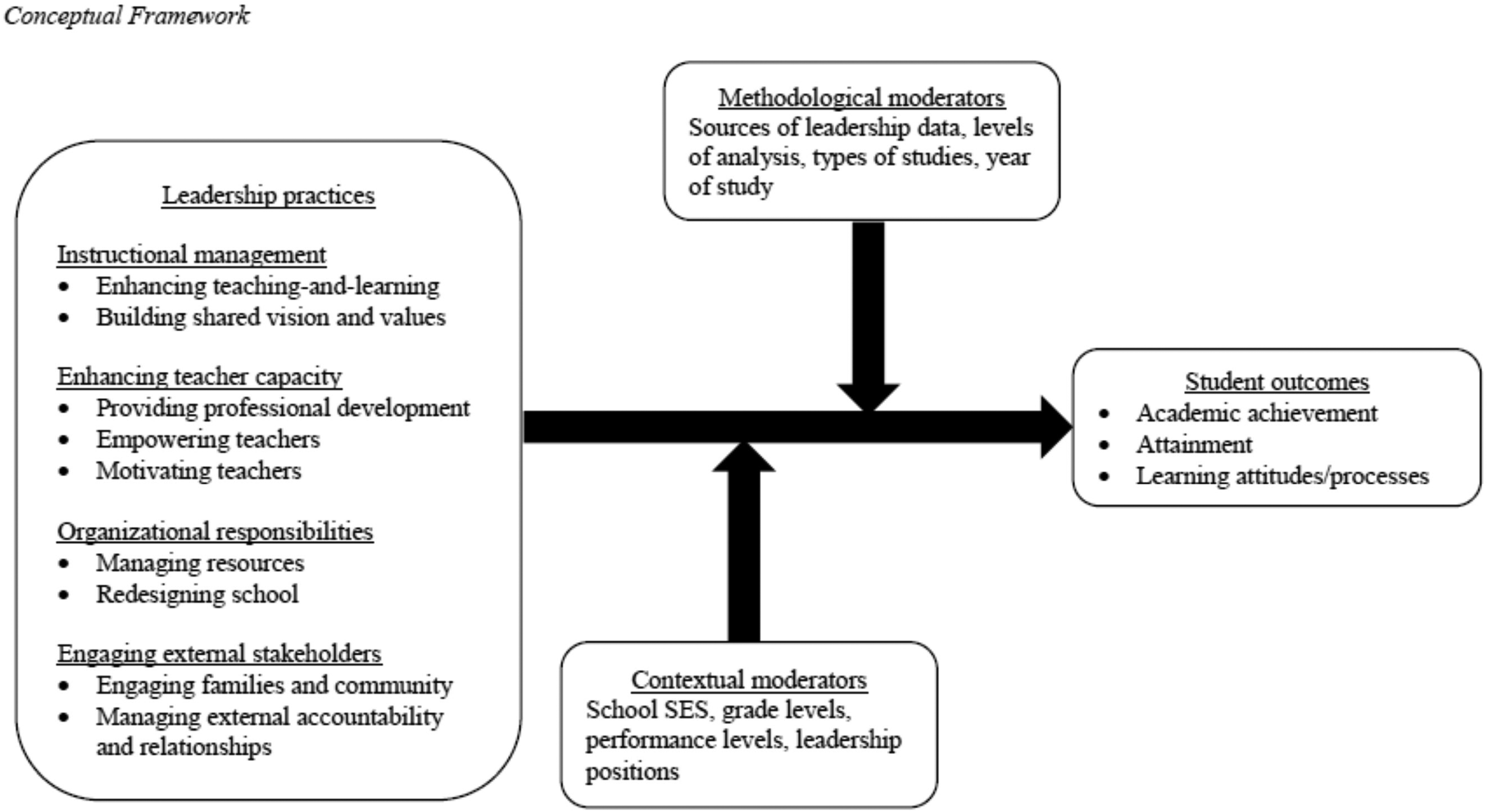
Conceptual framework.
Method
Meta-analysis was employed to analyse empirical findings across studies. It enables effects in individual studies to be converted to a common metric and compared across studies. In conventional meta-analysis, researchers address the requirement of effect size independence by ignoring the dependency and treating the effect sizes independently, averaging the dependent effect sizes within a study, selecting only one effect size for each study, or selecting one unit of analysis and averaging effect sizes within the unit. These different approaches result in biased effect sizes or a loss of information that can otherwise be used to compute more accurate effect sizes. The present study employed a three-level meta-analysis using R (Viechtbauer, 2015) instead of conventional meta-analysis (Van den Noortgate et al., 2014). A three-level meta-analysis is capable of incorporating different variance components attributed to different levels, namely sampling variance of effect sizes at level 1 (participants), variance between effect sizes from the same study at level 2 (e.g. dependency among effect sizes corresponding to different leadership practices for the same student outcome or to the association between a leadership practice and multiple student outcomes reported in the same study), and variance between studies at level 3. All relevant effect size information in each study can be included in a three-level meta-analysis and the correlations among the effect sizes appropriately accounted for within and between studies. In the present study, the mean number of effect sizes per primary study was 4.56 (493 effect sizes from 108 primary studies) and all primary studies analyzed had more than one effect size, thereby justifying the use of the three-level meta-analysis.
The three-level meta-analysis was represented by the following equations:
Level 1: Level 2: Level 3: OR
where
Identification of studies
A search of quantitative studies, comprising doctoral dissertations and journal articles examining associations between school leadership practices and student outcomes in G1–12 schools published 2000–2018, was performed in March–September 2019. This time period (from 2000 onwards) represented the dawn of development in the field where scholars began to integrate research streams on principal leadership and school improvement, explore notions of shared leadership and social justice, and conduct leadership research in non-Western societies (Hallinger and Kovacevic, 2019).
Five computer databases (Academic Search Complete, British Education Index, ERIC, TOC Premier, ProQuest Dissertation and Theses) were searched. Search terms in titles, abstracts, and keywords included combinations of relevant keywords, namely (“educational leadership” OR “school leader” OR “principal” OR “vice-principal” OR “department head” OR “teacher leader” OR “collaborative leadership” OR “instructional leadership” OR “distributed leadership” OR “transformational leadership” OR “leadership practice”) AND (“academic achievement” OR “achievement” OR “attainment” OR “school performance” OR “self-concept” OR “well-being” OR “motivation” OR “engagement” OR “non-academic”).
This search was complemented by three manual searches of quantitative studies (a) from reference lists in review articles on school leadership; (b) in eight key school leadership-related journals (Educational Administration Quarterly, Educational Management Administration and Leadership, International Journal of Educational Management, International Journal of Leadership in Education, Journal of Educational Administration, Leadership and Policy in Schools, School Effectiveness and School Improvement, School Leadership and Management); and (c) using the name of eight influential scholars in school leadership research listed in Hallinger and Kovacevic (2019) (Alma Harris, Doris Jantzi, James Spillane, Joe Murphy, Kenneth Leithwood, Philip Hallinger, Ronald Heck, Wayne Hoy).
These searches returned a total of 584 studies. However, 93 of these studies had to be excluded because there was no full text available. Therefore, this step yielded 491 studies for further screening.
Selection of studies
The studies were next screened to ascertain if they (a) examined quantitatively the association between school leadership (principal, vice-principal, teacher) practices and student outcomes (academic, non-academic); (b) reported different effect sizes that can be compared by conversion to a common metric (e.g. correlations, means and standard deviations, raw and standardized mean differences, t values, Cohen's d); (c) sampled G1–12 students; (d) were written in English; and (e) published 2000–2018.
Studies were excluded if they
examined school leadership models (e.g. instructional, transformational, distributed leadership) instead of the nine practices
1
; examined educational leaders beyond the school level (e.g. district superintendents, education ministry policymakers); did not involve G1–12 students or involved special groups of students (e.g. with special educational needs, adjudicated students)
2
; examined teacher (e.g. job satisfaction, well-being, teaching practices) or organizational (e.g. organizational justice, citizenship, commitment, trust, performance, culture, climate) outcomes; or were qualitative or review studies.
The inclusion and exclusion criteria eventuated in 108 studies (comprising 23 journal articles, 85 doctoral dissertations) for analysis (Figure 2; Supplemental Materials 1 and 2).
The identification of more dissertations than articles in the searches is similarly reported in other school leadership meta-analyses (Chin, 2007; Marzano et al., 2005; Sun and Leithwood, 2015). This may arise because many doctoral students are interested to examine the question of whether school leadership contributes to student outcomes and because many journal articles were excluded for not reporting enough statistical information needed to compute effect sizes. Some researchers have reservations about the quality of dissertations given that they are not peer-reviewed anonymously (Robinson et al., 2008). However, including dissertations mitigates against publication bias. Therefore, the present study provide more conservative estimates of effect sizes for school leadership influence on student outcomes.
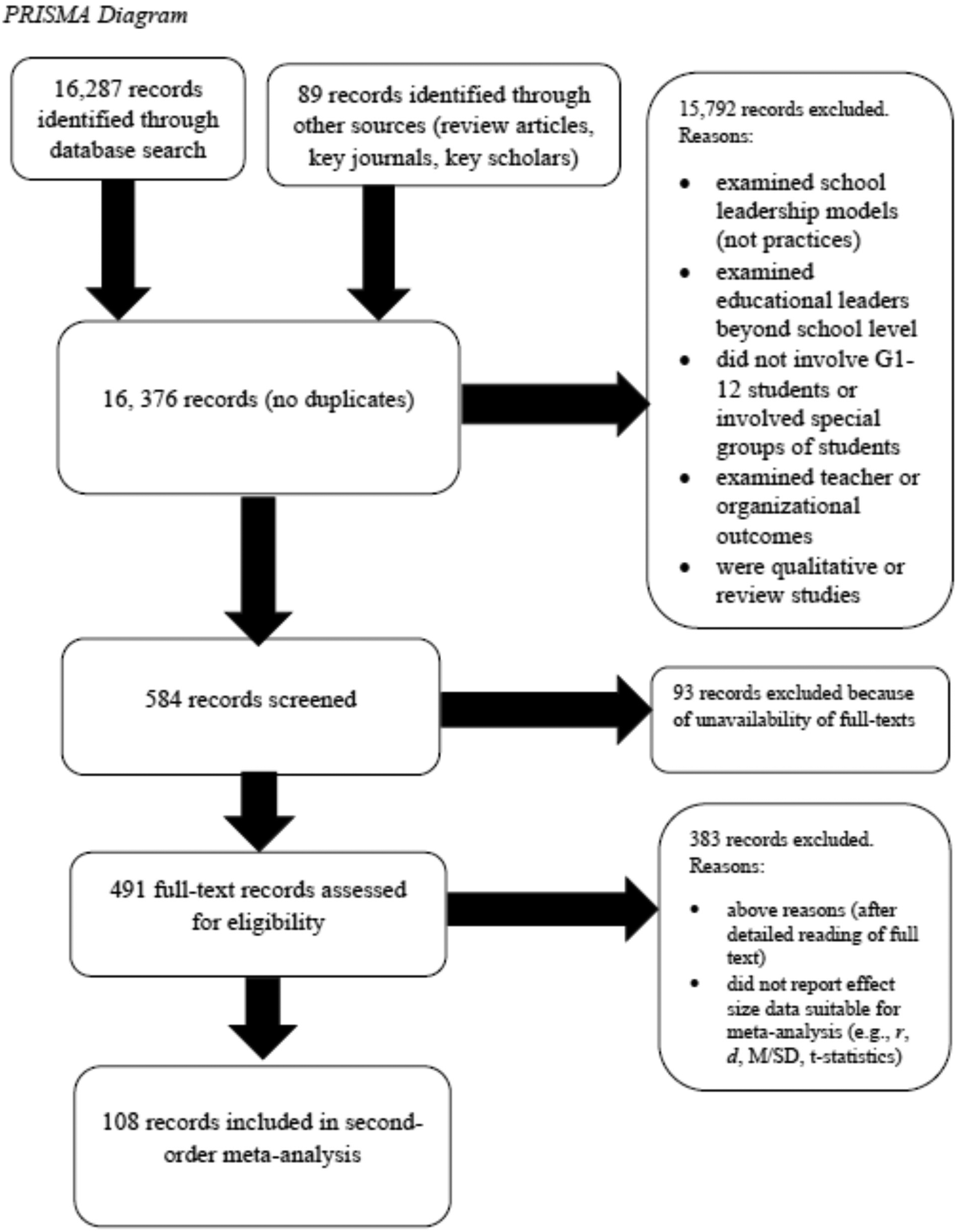
Preferred Reporting Items for Systematic Reviews and Meta-Analyses (PRISMA) diagram.
Coding procedure
A coding scheme was developed to record substantive and methodological details from the studies (Table 1):
Study identification: author(s), publication year, study title. School leadership practices:
Enhancing teaching-and-learning (personalizing the environment to reflect students’ backgrounds; developing and improving curricular, instructional, and assessment program; monitoring student progress; evaluating instruction; protecting instructional time; maintaining safety and orderliness); Building shared vision and values (setting high academic expectations; strengthening school culture; maintaining high visibility; modelling aspirational and ethical practices); Providing professional development (providing learning opportunities and intellectual stimulation; fostering responsibility for learning; creating communities of practice; promoting continuous learning); Empowering teachers (establishing collaborative processes for decision-making; sharing and distributing leadership and accountability); Motivating teachers (encouraging teachers; fostering commitment; providing individualized consideration and support; building trusting relationships; supporting, buffering, and recognizing staff; managing by exception); Managing resources (acquiring and allocating resources to achieve vision and mission; selecting for the right fit; promoting data use for continual improvement; considering school context to maximize organizational functioning); Redesigning the school (fostering participation in school improvement); Engaging families and community (building productive relationships with families and community partners; engaging families and community to strengthen student learning; promoting parental and community involvement; anchoring schools in the community); Managing external accountability and relationships (meeting state's performance goals; cultivating relationships with education officials and influential individuals); Composite (≥ 2 individual practices). Student outcomes: achievement (language, mathematics, science, social science, general); attainment (e.g. school attendance, promotion; retention (reverse coded), graduation, college enrolment); learning attitudes/processes (e.g. engagement, problem-solving); combination (≥ 2 outcomes). Effect size data on association between school leadership practices and student outcomes. School context:
School SES: low (e.g. Title 1 schools), high, no information; Student grade levels: G1-6, G7-12, G1-12, no information; School performance levels: low-achieving, high-achieving, no information; Leadership positions: principal, vice-principal, teacher leader, mixed, no information. Methodological variables:
Sources of leadership data: principal, vice-principal, teacher, mixed, no information; Levels of analysis: school (e.g. analysis of principal self-reported leadership, school mean achievement), non-school (e.g. analysis of teacher perceptions of principal leadership, student-level achievement); Types of study: articles, dissertations; Year of study: 2000–2009 and 2010–2018.
Coding of key variables.
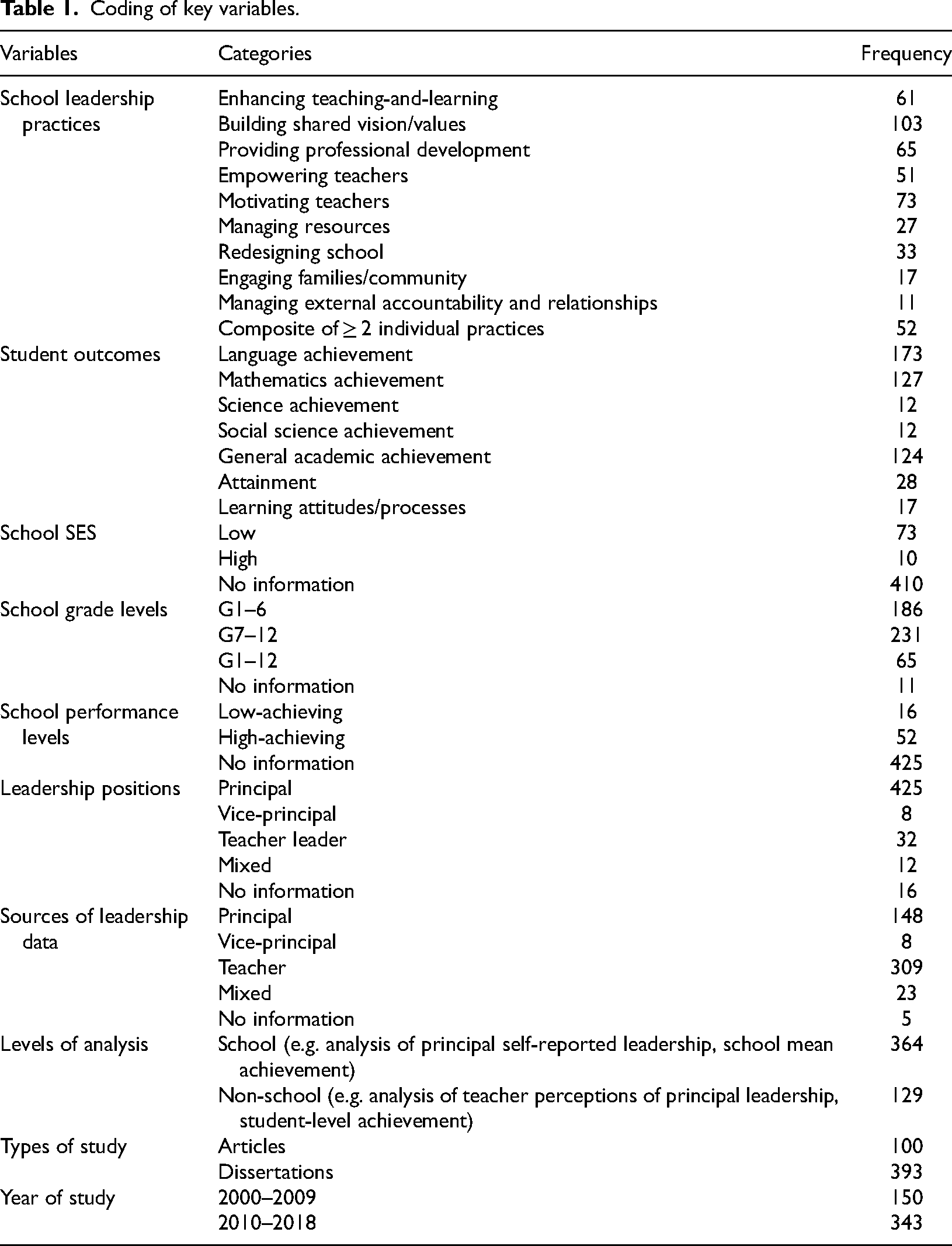
Coding was done in a two-stage process. The first author coded the data for all studies independently. After that, one-third of the studies (36 studies) were randomly selected for independent coding by a trained research assistant to clarify understanding of the coding scheme. Results showed perfect inter-rater reliability of 1.00 (z = 23.56) as measured by Cohen’s (1960) k.
Calculating effect sizes
A total of 493 effect sizes from 108 studies were analysed. These effect sizes comprised 446 Pearson's correlation coefficients (r's), 44 means/standard deviations, one standardized differences in means, and two t-statistics. r was used as the metric for reporting because the meta-analysis aimed to examine associations between school leadership practices and student outcomes. r's were converted to Fisher's z-scores and weighted by the inverse of their variance. The weighting enabled effect sizes from larger-sample studies, which had larger study reliability, to be given more weight than those from smaller-sample studies. The effect sizes were subsequently converted back to r's in the reporting of results.
Publication bias
A common concern in meta-analyses is the presence of publication bias in studies (Polanin et al., 2016). Specifically, studies with significant effects are more likely to be published than those with nonsignificant effects. The funnel plot of standard errors by effect sizes showed that effect sizes from primary studies were distributed on both sides of the mean effect size and that there were effect sizes corresponding to studies with different standard errors (Figure 3). Moderator analysis also found that standard errors were not a significant moderator for school leadership effects (β = 0.13, p = 0.50, σ² (level 2) = 0.003, σ² (level 3) = 0.042), F(1, 491) = 0.45, p = 0.50). Therefore, there was no evidence of publication bias.
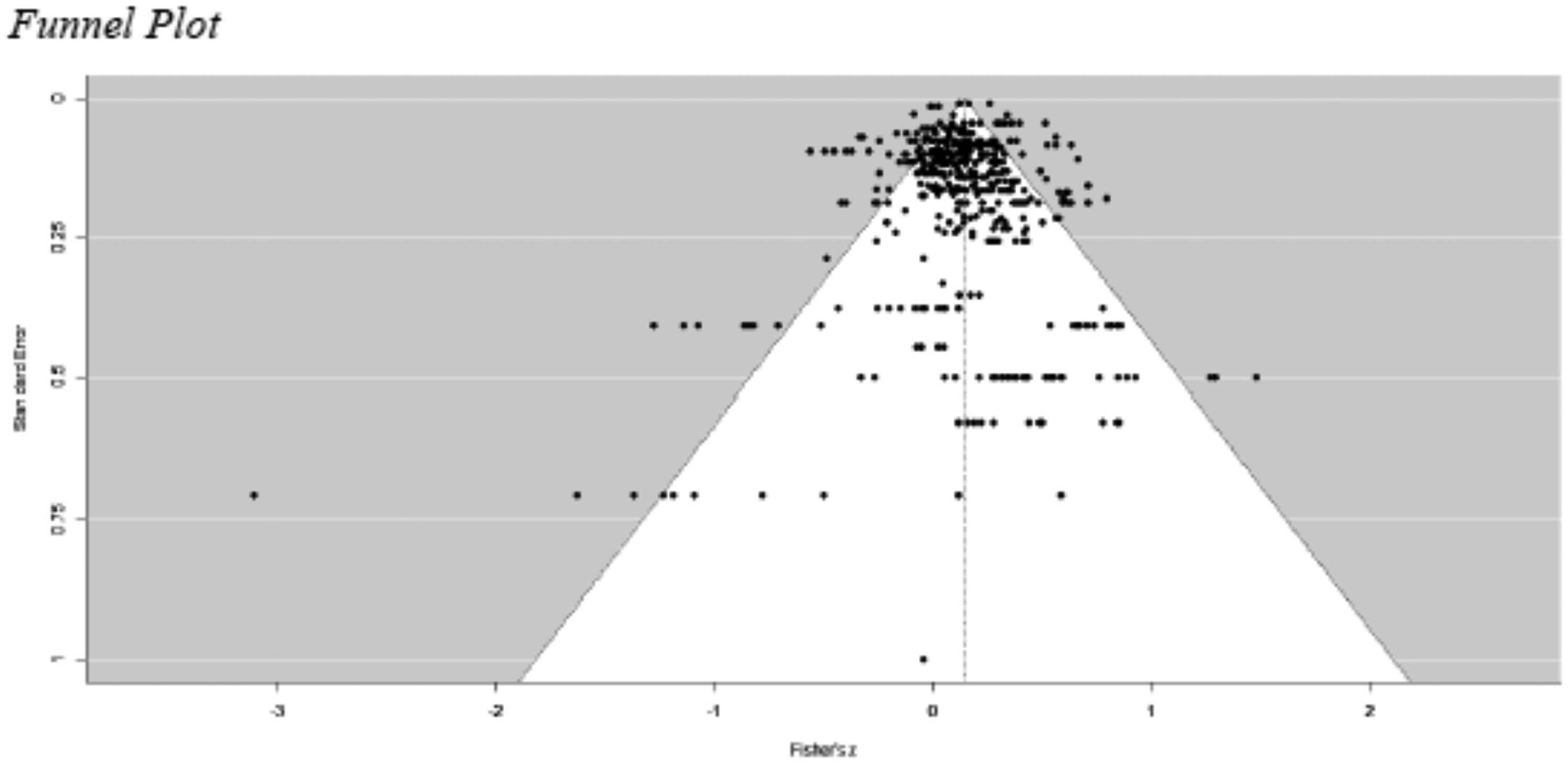
Funnel plot.
Random effects models
The random effects model was employed in the analysis because it (a) does not require effect sizes analysed to come from the same underlying population and (b) enables results to be generalized beyond the studies analysed (Hedges and Vevea, 1998). A nonsignificant test result for the variation among effect sizes means that the observed variation among the effect sizes is attributable to random sampling errors and that the effect sizes belong to a common underlying population. However, a significant test result means that the observed variation cannot be accounted by sampling errors and that the effect sizes belong to different underlying populations.
Limitations
Results from the present study should be read with some limitations in mind. First, the validity of results from the meta-analysis depends on whether comparable primary studies are included. The study addresses this concern by developing clear research objectives and well-developed inclusion and exclusion criteria for deciding whether to include a primary study in the meta-analysis. Second, school leadership is enacted in context but the meta-analysis, as a quantitative research design, is unable to comprehensively code all the qualitative details of the context. What we have done is to include contextual variables that are relevant to the research objectives and that can be quantitatively coded, ensure a high level of inter-rater reliability in coding, and ascertain how school leadership effects may vary with these contextual variables in moderator analyses.Third, the study adopts school leadership practices as the unit of analysis, while in reality, school leaders exhibit different practices that can reinforce or compromise each other in impacting student outcomes. Lastly, although we have included in our search leadership at different levels within the school, there are very few studies that are not based on principals (e.g. 425 effect sizes for principals vs. 8 for vice-principals and 32 for teacher leaders). This finding is similar to that reported in other meta-analyses (Chin, 2007; Liebowitz and Porter, 2019; Witziers et al., 2003).
Results
Effect sizes of leadership practices
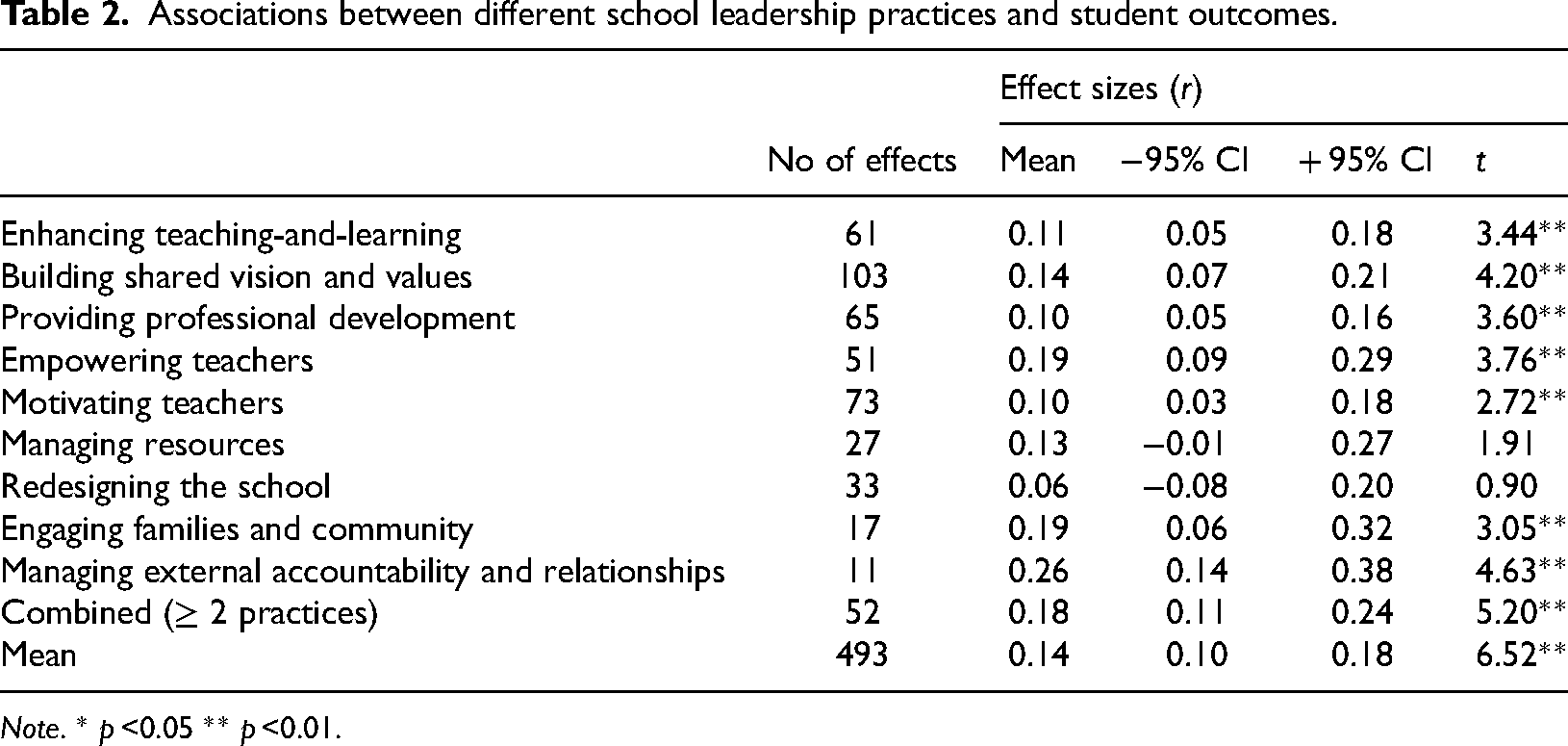
The mean effect size was 0.14, p <0.01 (Table 2). The mean effect size was small, according to Cohen’s (1992) rules of thumb (r's = 0.10, 0.30, 0.50 for small, medium, large effect sizes respectively). The effect size means that, on average, only 1.96% of the variance in school outcomes was explained by school leadership practices. 3 Most of the variance (84.87%) in effect sizes in the studies included in the meta-analysis occurred between studies (i.e. level 3) whereas the sampling variance of effect sizes (level 1) was only 9.95% and variance in effect sizes within studies (level 2) was only 5.19%.
Associations between different school leadership practices and student outcomes.
Note. * p <0.05 ** p <0.01.
Results showed that mean effects were significant for eight school leadership practice variables, p <0.01 (Table 2). The effect sizes were all small: building shared vision and values (r = 0.14), enhancing teaching-and-learning (r = 0.11), providing professional development (r = 0.10), empowering teachers (r = 0.19), motivating teachers (r = 0.10), engaging families and community (r = 0.19), managing external accountability and relationships (r = 0.26), composite comprising two or more of these variables (r = 0.18). Two leadership practice variables were nonsignificant: managing resources (r = 0.13, p = 0.07) and redesigning the school (r = 0.06, p = 0.38). Excluding the two nonsignificant leadership practices, results showed that the association between leadership practices and student outcomes did not vary with types of leadership practices (F(7425) = 0.74, p = 0.64).
Effect sizes for different student outcomes
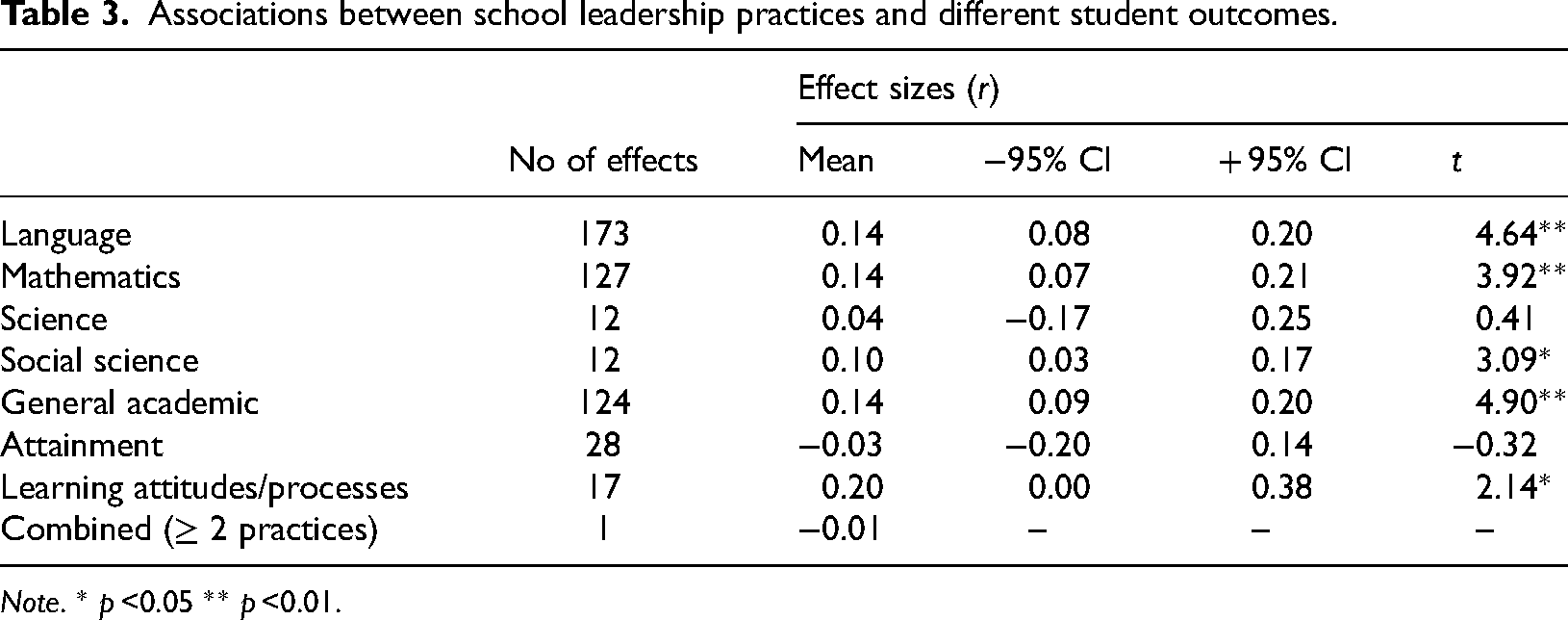
Effect sizes varied among the student outcomes examined (Table 3). Effects were significant for language (r = 0.14), mathematics (r = 0.14), and general academic achievement (r = 0.14) at the .01 level, and social science achievement (r = 0.10) and learning attitudes/processes (r = 0.20) at the .05 level. In contrast, leadership practices were not significantly associated with students’ science achievement (r = 0.04, p = 0.69) or attainment (r = −0.03, p = 0.76).
Associations between school leadership practices and different student outcomes.
Note. * p <0.05 ** p <0.01.
Moderator analyses
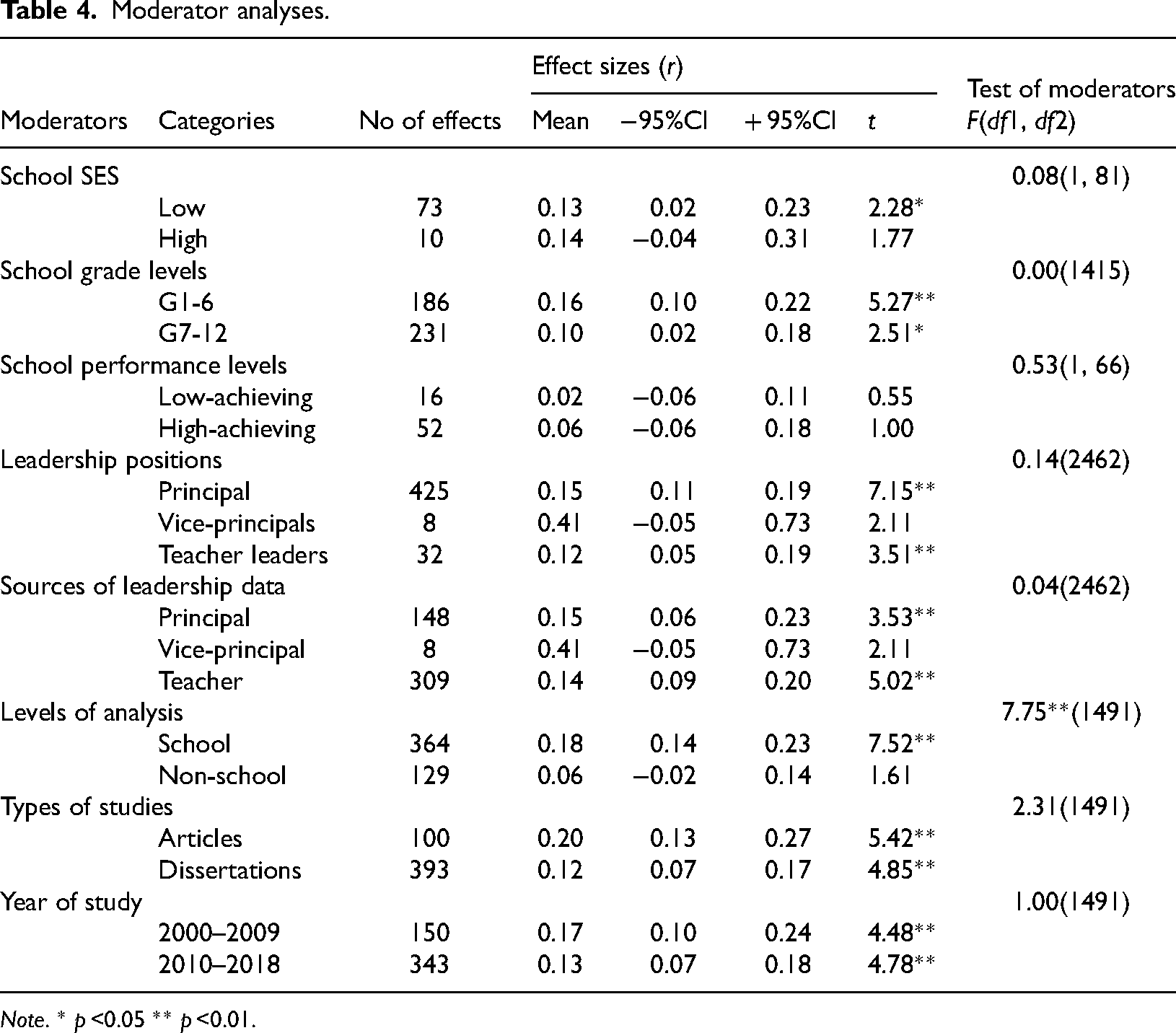
The test for heterogeneity for the overall analysis of all studies was significant (Q(492) = 2145.14, p <0.01), so moderator analysis of contextual and methodological variables was conducted (Table 4). Results showed that only levels of analysis significantly moderated leadership effects (F(1, 491) = 7.75, p <0.01). Studies employing school-level (r = 0.18, p <0.01) analyses yielded significant effects but not for those using non-school-level analyses (r = 0.06, p = 0.11). Moderator analysis results were overall nonsignificant for school SES (F(1,81) = 0.08, p = 0.77), grade levels (F(1415) = 0.00, p = 0.97), school performance levels (F(1,66) = 0.53, p = 0.47), leadership positions (F(2, 462) = 0.14, p = 0.87), sources of leadership data (F(2462) = 0.04, p = 0.96), types of studies (F(1491) = 2.31, p = 0.13), and year of studies (F(1491) = 1.00, p = 0.32).
Moderator analyses.
Note. * p <0.05 ** p <0.01.
Discussion
Leadership effect size is small but significant across school contexts
The study found that the mean effect size for the association between school leadership practices and student outcomes was .14. This small effect size is consistent with those reported in other meta-analyses (e.g. r's = 0.02–.04 in Witziers et al., 2003; r's = 0.04–.08 in Liebowitz and Porter, 2019; r = 0.05 in Hendriks and Scheerens, 2013; r = 0.12 in Sun and Leithwood, 2012). 4 However, Baumert et al. (2006) argued that correlations as small as .15 have huge educational significance because they translate to the average learning gains in a school year. A caveat with the analysis is that there are more effects from dissertations (k = 393) than articles (k = 100) that are available for analysis, so effects from articles may be “underrepresented”. Therefore, researchers publishing their findings in journals should report effect size statistics that are amenable to future meta-analysis.
The analysis also showed that effect sizes did not vary with most contextual and methodological variables except for levels of analysis. Specifically, effect sizes computed from studies adopting a school-level unit of analysis (e.g. using principal self-reported leadership, school mean achievement) were significantly larger than those using a lower-level unit of analysis (e.g. using teacher perceptions of principal leadership or student-level achievement). This finding may arise because most of the studies analysed pertain to principal leadership. Compared to other individuals, principals’ self-reported leadership practices may be more accurate indicators of what they do. A school-level analysis is also better able to reflect principals’ influence on school-wide conditions affecting all students as compared to a lower- level analysis where results may be influenced by student- or classroom-level factors. Indeed, meta-analyses often show larger school leadership effect sizes for teacher and organizational processes (Liebowitz and Porter, 2019).
Moderator analyses (Table 4) also showed that school leadership effects were significant for both G1–6 and G7–12 schools. Therefore, school leadership has a consistent effect on student learning across grade levels. Results also showed that school leadership effects for principals and teacher leaders were significant, thereby suggesting that there are multiple sources of influence within the school that can be harnessed for student learning. Schools can therefore harness distributed leadership (Bennett et al., 2003) to leverage on different expertise to make better decisions. Distributed leadership also provides a greater sense of staff ownership that eventuates in effective, sustainable implementation of decisions.
However, it is unclear why the analysis found no overall differences in leadership effects among schools with varying SES but significant effect sizes for low-SES schools. Future research can investigate the moderating role of school SES more comprehensively given societal expectations that schools achieve both excellent and equitable student outcomes (Schleicher, 2009). For lower-SES schools, scholars have recommended strategies such as school leaders introducing compensatory curricula and resources for low-achieving students, encouraging closer collaboration with low-SES families, and promoting pedagogies that address students’ needs (Theoharis, 2007). It is also unclear why leadership effects are nonsignificant for low- and high-achieving schools. One possible reason is that leadership practices required for addressing students’ learning needs in these two types of schools differ from the nine examined in the present meta-analysis. For example, leaders of low-achieving schools need to prioritize restoration of campus control and improve conditions for teaching-and-learning to occur (Hallinger, 2018), whereas leaders in successful schools can focus on developing organizational academic capacity (Hallinger and Heck, 2011). Future research may unravel specific practices that leaders of high- or low-achieving schools need to improve student learning.
The mixed results for contextual and methodological variables contribute to the growing body of research emphasizing the importance of examining leadership in context (Hallinger, 2018). They clarify the variables that significantly moderate school leadership effects (e.g. principal leadership influencing student achievement measured at the school (not student) level), thereby providing support for the contingency perspective of understanding school leadership effects. However, the many nonsignificant moderators also highlight the need in future studies to identify more precisely contextual and methodological variables that matter when we examine school leadership effects.
Principal leadership practices beyond instructional management
The study showed that, in addition to instructional management, leadership practices related to enhancing teacher capacity and engaging external stakeholders were significantly associated with student outcomes. These findings underscore the need to examine more comprehensively the scope of school leaders’ work beyond instructional management. They also indicate that school leaders may indirectly influence student outcomes via different practices. For example, school leaders need to work collaboratively with teachers to benefit student learning. York-Barr and Duke (2004) advocated that teacher leadership resources can be optimally harnessed when school goals are clearly communicated and ways in which teachers can contribute are clarified, when teacher leadership roles match their individual strengths, when conversations about teacher leadership expectations are held, and when support and feedback is provided to teacher leaders. The indirect effects leadership model postulates that (a) school leadership influences school outcomes indirectly (b) through the development of intermediary school conditions (Hallinger and Heck, 2010; Hendriks and Scheerens, 2013; Leithwood, 2005, 2012; Sebring et al., 2006). However, previous research has not systematically compared these different effect sizes. Therefore, the present study contributes to the scholarship by identifying a comprehensive range of leadership practices (including but not limited to teaching-and-learning) from the literature and comparing effect sizes measuring the association between these practices and different outcomes.
The analysis also showed that two leadership practices related to organizational responsibilities were not significantly associated with student outcomes. However, this does not mean that school leadership development should eschew leadership training in these areas because effective teaching-and-learning depends on the effective resource management (Grissom and Loeb, 2011). Furthermore, some successful initiatives only show results in the longer term. Therefore, school leaders need to make informed decisions when embracing new initiatives and to take a medium-to-long term perspective in anticipating student learning improvements.
The different patterns of association between the specific leadership practices and student outcomes affirm the merits of our analysis to focus on leadership practices (vis-à-vis frameworks/models). Our approach enables us to differentiate leadership practices which are associated with student outcomes from those that are not. It implies that existing conceptions of leadership in terms of frameworks/models are not necessarily effective as some of them may entail practices that do not contribute to student learning.
Impact of school leadership on different students’ learning outcomes
Significant associations between school leadership practices and different student learning outcomes provide empirical support for the argument that school leadership contributes to student learning (Hallinger and Kovacevic, 2019). It contributes to the scholarship by ascertaining the influence of school leadership on student achievement and learning attitudes/processes and demonstrating that school leadership influences student outcomes in some areas (e.g. linguistic and mathematics achievement) more than others (e.g. science achievement).
The study showed that school leadership practices were significantly associated with student academic achievement in different subjects (language, mathematics, social science, general) except science. The nonsignificant association for science suggests that students need more than effective school leadership for science mastery. For example, research underscores the role of parents in building up students’ science capital (Archer et al., 2015). Another possible reason is that many education systems pursue policies that focus on students’ language and mathematics (vis-a-vis science) mastery, so principals may emphasize student learning in these two subjects. Policymakers should therefore revisit their espoused education aims to emphasize students’ science mastery.
The finding of a significant association between leadership practices and students’ learning attitudes/processes in the present study is important given the paucity of studies examining how principals contribute to students’ learning attitudes (Adams and Olsen, 2019; Leithwood and Jantzi, 2000; Zheng et al., 2017). This finding indicates that school leadership practices matter for different aspects of student learning, including learning attitudes/processes. Therefore, the evaluation of school leadership effectiveness can include multiple student performance criteria, including students’ academic achievement and learning attitudes/processes (Reynolds et al., 2014). Future research can investigate whether there are specific school leadership practices that affect one aspect of student learning more than others or whether school leadership practices holistically influence student learning (Van der Wal and Waslander, 2007).
Conclusion
The present study indicates that the field of school leadership research needs to move beyond the direct-versus-indirect effects distinction to more effectively characterize leaders’ contribution to student outcomes. Furthermore, student outcomes are increasingly being defined to include learning beyond the academics, so leadership studies need to embrace leadership contributions to non-academic outcomes. In the present study, we have shown how leadership practices contribute to student outcomes in a wide range of ways, both within and without the school, how the leadership contribution varies with specific contextual and methodological variables, and how it varies across core subjects. In addition, new policy orientations and priorities of governments and employers imply the need for a redefinition of the roles of school leaders. Indeed, existing conceptions of the instructional role of school leaders risk becoming obsolete (Dimmock and Tan, 2016), especially when school leaders embrace the need to promote equitable student learning opportunities and high levels of student academic performance. These developments signal the need for future meta-analyses to embrace newly defined school visions and goals, which in turn create new roles for leaders, and make past studies somewhat dated and even redundant.
To conclude, the present study contributes to scholarship and practice in three ways. First, it is one of the few meta-analyses to ascertain associations between a comprehensive range of school leadership practices and student outcomes. Second, the study advances our knowledge on indirect school leadership effects by ascertaining different practices through which school leaders may influence student outcomes. It highlights that school leaders should not only focus on some practices if they want to improve student outcomes. Third, the study clarifies that school leadership practices influence both student achievement and learning attitudes/processes. Future research would further refine the field by unravelling specific processes by which school leaders influence different types of student outcomes in different contexts and performing moderating analyses for each leadership practice (e.g, with respect to school SES or leadership positions).
Supplemental Material
sj-docx-1-ema-10.1177_17411432211061445 - Supplemental material for How school leadership practices relate to student outcomes: Insights from a three-level meta-analysis
Supplemental material, sj-docx-1-ema-10.1177_17411432211061445 for How school leadership practices relate to student outcomes: Insights from a three-level meta-analysis by Cheng Yong Tan, Clive Dimmock and Allan Walker in Educational Management Administration & Leadership
Footnotes
Acknowledgements
The authors are thankful for the research support provided by Lin Gao, Jie Liu, Kai Hong Lo, Meijia Shi, and Aishi Zeng.
Authors note
Cheng Yong Tan, Faculty of Education, The University of Hong Kong. Cheng Yong Tan is now at the Faculty of Education, The University of Hong Kong.
Clive Dimmock, Robert Owen Centre for Educational Change, School of Education, University of Glasgow. Clive Dimmock is now at Robert Owen Centre for Educational Change, School of Education, University of Glasgow.
Allan Walker, Faculty of Education and Human Development, The Education University of Hong Kong. Allan Walker is now at Faculty of Education and Human Development, The Education University of Hong Kong.
Declaration of conflicting interests
The authors declared no potential conflicts of interest with respect to the research, authorship, and/or publication of this article.
Funding
The authors disclosed receipt of the following financial support for the research, authorship, and/or publication of this article: This work was supported by the General Research Fund 2018/19 (grant number Project No 17602518).

Supplemental material
Supplemental material for this article is available online.
Notes
Author biographies
References
Supplementary Material
Please find the following supplemental material available below.
For Open Access articles published under a Creative Commons License, all supplemental material carries the same license as the article it is associated with.
For non-Open Access articles published, all supplemental material carries a non-exclusive license, and permission requests for re-use of supplemental material or any part of supplemental material shall be sent directly to the copyright owner as specified in the copyright notice associated with the article.
