



Abstract
Offensive behaviour towards school employees is widespread and involves a number of potentially harmful acts. There is evidence that school employees’ experiences of offensive behaviour are shaped by demographic, role and school-based factors that mediate the likelihood of victimisation. However, very few studies have investigated the prevalence and correlates of offensive behaviour against school leaders. This study analysed 13,028 survey responses from the Australia Principal Occupational Health, Safety and Wellbeing survey that were completed between the years 2011 and 2019. The analysis determined the prevalence of bullying, threats of violence and physical violence against government school leaders, the main perpetrators of these offenses and the moderating effects of key socio-demographic factors. Results from the study demonstrated that considerable proportions of Australian government school leaders were subjected to offensive behaviour with an average (pooled) prevalence of 36.2% for bullying, 48.6% for threats of violence and 38.7% for physical violence. School leaders report that students and parents are responsible for most offensive behaviours, but that colleagues also contribute considerably to incidents of bullying. Our findings illustrate that offensive behaviours against Australian school leaders are very high and that particular groups of school leaders are at elevated risk of victimization, especially female school leaders and to a lesser extent assistant principals and those inner or outer regional areas.
Keywords
Introduction
Abuse, aggression and violence towards school staff members has emerged as a serious issue and cause for concern in many different countries and contexts. Offensive behaviour towards teachers is widespread and includes a wide range of acts, from verbal abuse to sexual assault (Mcmahon et al., 2014; Wei et al., 2013; Wilson et al., 2011). In some contexts, concerningly high proportions of teachers have reported facing verbal abuse, threats of violence, and even physical violence (Mcmahon et al., 2014; Wei et al., 2013). A recent national survey in the U.S. found that 80% of teachers had been the victim of some form of offensive behaviour (aggression or violence) in the current or past school year, and 30% had been the victim of a physical assault (Mcmahon et al., 2014). Studies in other contexts have also determined concerning levels of offensive behaviour against those working in schools (Moon and McCluskey, 2016; Wilson et al., 2011).
Feeling safe in school is a fundamental requirement for effective teaching and learning (Fernet et al., 2012; O'Malley et al., 2015). Further, school employees that are subjected to offensive behaviours are more likely to suffer negative physical and psychological consequences, including higher levels of fear at work, lower levels of job satisfaction, lost wages, and increased time off work (Gerberich et al., 2011; Gerberich et al., 2014; Wilson et al., 2011). Gerberich et al. (2011) found that after being subjected to physical and non-physical violence the commonly reported symptoms were feelings of frustration, anger, fear and sadness. Some educators also experienced difficulty in sleeping and somatic stress such as headaches and stomach problems (Gerberich et al., 2011).
While there is growing acceptance that offensive behaviour towards school employees is a serious issue in need of urgent policy attention, extant research is overwhelmingly focused on the experiences of school teachers or all educators, and very few studies investigate the experiences of school leaders. The present study uses data from 13,023 school leader survey responses to investigate the prevalence of Australian school leaders reports of offensive behaviour. The research is important given growing divergence between the school teacher and school leadership roles and considering the important role that school leaders play in preventing and managing offensive behaviours in schools.
In the following section, we review research into the prevalence of violence against teaching professionals in different contexts, examine the predictors of victimisation and review research on the main perpetrators of offensive behaviour against teaching professionals. We then highlight the differences between the school teacher and the school leadership role to emphasise why this analysis is necessary.
Prevalence of violence against school leaders
Over the last decade, there has been growing international research interest in offensive behaviour directed against school employees. Although this research is still in its early stages, a number of studies have started to map out the prevalence of offensive behaviour in different national and subnational contexts. In the United States, a national survey of 2998 K-12 teachers found that 43% of teachers had been verbally abused by students and 30% have been physically assaulted (McMahon et al., 2014). State-level studies have also determined that significant proportions of educators experience offensive behaviours at work. For example, Gerberich et al. (2011) found that 38.4% of educators in Minnesota experience non-physical violence and 8.3% were physically assaulted. Similarly, Tiesman et al.'s (2013) study of Pennsylvanian educators found that 28.9% of education workers experience non-physical offensive behaviour and 7.8% experienced physical assault. Studies in Canada (Wilson et al., 2011) and South Korea (Moon and McCluskey, 2016) have also determined that violence against educators is a significant issue.
In a recent meta-analysis of 24 studies in 10 different countries, Longobardi et al. (2019) found that between 20% and 75% of teachers (with a pooled prevalence of 52%) reported that they had experienced at least one instance of offensive behaviour in the last two years of their work. The analysis focused on offensive behaviours perpetrated by students and found that the most common forms experienced by teachers were obscene gestures (44%) offensive/ obscene remarks (29%), verbal violence (29%), damage or theft of personal property (17%), intimidation (10%), physical attacks (3%) and sexual violence (3%) (ibid).
Perpetrators of offensive behaviours in schools
Most research into violent and offensive behaviours against school employees has focused on students as the perpetrators of these acts (Longobardi et al., 2019). A number of studies in United States have found that students are responsible for the majority of violent and offensive behaviours towards teachers. For example, in their study of over 1600 teachers in the South-West region of the U.S., Moon and McCluskey (2020) found that students were responsible for between 90% and 99% of each of the five different types of teacher-directed violence measured in their survey (theft/property damage, physical assault, verbal abuse, sexual harassment, and non-contact aggression). In separate studies, Gerberich et al. (2014) and Tiesman et al. (2013) both determined that 90% of teachers who experienced physical assault in the last year of their work reported that students were responsible. Both studies also found that 70% of teachers who were victims of non-physical violence reported that students had perpetrated the act(s) (Gerberich et al., 2014; Tiesman et al., 2013).
Although much of the extant research has focused on offensive behaviours perpetrated by students against teachers, other members of the school community are also responsible for offensive acts. Tiesman et al. (2013) found that 15% of teacher-victims of non-physical violence reported that co-workers were responsible and 10% reported that students’ family members had committed the acts. Gerberich et al. (2011) found that parents/visitors/tresspassers were responsible for 20% of non-physical assaults against teachers and school employees were responsible for 17%. Similarly, Espelage et al. (2013) found that 37% of teachers in their study had experienced violent offensive behaviours from parents and 21% had experienced offensive behaviours from colleagues.
The moderating role of demographic factors
School employees’ experiences of offensive behaviours are moderated by key demographic factors. Several studies have shown that gender plays an important role in determining the likelihood of experiencing offensive behaviours, and the nature of the offensive behaviours experienced. In the United States, McMahon et al. (2014) found that male teachers were more likely to report experiencing most of the offensive behaviours measured (obscene remarks, obscene gestures, verbal threats and having a weapon pulled on them) but that females were more likely to report intimidation. In contrast, other studies determined that female teachers were more likely to experience violence than their male peers (Kapa et al., 2018; Wei et al., 2013). For example, Gerberich et al. (2011) found that male teaching professionals were less likely to risk experience offensive behaviours (both physical violence and non-physical violence) than their female colleagues. Other studies in the US (Anderman et al., 2018) and South Korea (Moon and McCluskey, 2016) found that there were no gender differences in teachers’ experiences of offensive behaviour. These studies indicate that the role that gender plays in experiences of violence is complex and may be mediated by different contextual factors.
Most studies have focused on the prevalence of offensive behaviours among school ‘teachers’. In these studies, the term ‘teachers’ is typically used very broadly to encompass a wide range of different teaching professionals, including principals and school leaders. However, a small number of studies have investigated differences between teachers and school leaders’ experiences of offensive behaviour. In their survey of 6469 K-12 educators in the US state of Minnesota, Gerberich et al. (2011) found that compared to classroom teachers, school leaders (‘administrators’) were 1.64 times more likely to experience physical violence and 1.49 times more likely to experience non-physical violence at work. In contrast, in the context of South Korea, Moon and McCluskey (2016) found that school leaders reported experiencing lower levels of offensive behaviour than teachers. In Australia, annual reports from a longitudinal study of principal occupational health and wellbeing survey - the survey from which data for this analysis is drawn - have consistently shown that principals and school leaders face high levels of offensive behaviours (Riley, 2018, 2019). Riley (2018, 2019) have demonstrated that the proportion of Australian principals reporting at least one experience of physical violence in their career has increased from 27% in 2011 to 42% in 2019. Over the same period of time, the proportion of principals reporting at least one threat of violence increased from 38% to 51% (ibid).
Researchers have also explored the relationships between teachers’ experiences of offensive behaviour and the geographic location of the school community. Several studies have shown that teachers working in schools in urban settings report higher levels of offensive behaviour than their counterparts in suburban and rural communities (Bounds and Jenkins, 2018; Mcmahon et al., 2014). McMahon et al. (2014) found that teachers in urban settings were more likely than their rural and suburban counterparts to report having experienced multiple different types of violence and aggression, with particularly marked differences for harassment (excluding internet victimisation), property offenses and physical offenses. However, they noted that there were some reports of every type of offensive behaviour in rural and suburban settings and ‘therefore, what typically might be perceived as an urban problem is not confined to urban settings’ (McMahon et al., 2014, p. 763).
The present study
Although there is extensive literature on school leadership, very few studies have considered school leaders’ experiences of offensive behaviours. Annual reports for The Australian Principal Health and Wellbeing Survey provide an overarching picture of school leaders’ experiences of offensive behaviours. Although the reports are comprehensive, they are targeted at a public audience and rely on only a limited analysis of data, such as prevalence rates for the year of the report. The present study draws on the extensive data collected through the survey to undertake an in-depth analysis of all nine years of data on offensive behaviours towards school principals. By pooling the nine years of data, the study aims to address the lack of in-depth analysis about offensive behaviours against school leaders and identify the prevalence of three types of offensive behaviour: bullying, threats of violence and physical violence. Furthermore, the study will investigate the main perpetrators of each type of offensive behaviour and the moderating effects of key socio-demographic factors. To achieve this, the analysis aims to identify: (i) the prevalence of offensive behaviours towards school leaders in government schools; (ii) the impact of demographic and school-based factors on school leaders’ experiences of offensive behaviours; and (iii) how each type of offensive behaviour can be attributed to three groups of perpetrators (colleagues, parents and students). Before outlining the research method, the following section provides an overview of school leadership in Australia.
School leadership in Australia
The role of the school leader has been transformed over recent decades. In Australia, and many other contexts, policies promoting decentralisation, greater school autonomy and increased accountability have given school leaders a more managerial role focused on the delivery of school objectives (Blackmore, 2004). The school leadership team is responsible for coordinating and supporting teaching staff and for facilitating a positive teaching and learning environments. This positioning of the school leadership role ensures that leaders are ultimately responsible for preventing, responding to and dealing with offensive behaviours in their schools. In terms of prevention, strong school leadership (Astor et al., 2009) and supportive school cultures (Galand et al., 2007) can lead to lower levels of violence victimisation among staff members. In terms of responding to and dealing with offensive behaviours, school leaders have responsibility for the safety of students and staff members in schools and must manage school discipline and respond to incidents of offensive behaviour in the school (Kennedy et al., 2017). This may place some school leaders at increased risk of experiencing offensive behaviours.
In most Australian schools, school leaders’ roles and responsibilities are not uniform and they vary according to their leadership position and level of seniority (Harvey, 1994). Although there are important variations according to sector and geographic location, most school principals are responsible for the operations of the school and have overall responsibility for financial and personnel management, policy implementation, teacher professional development and school improvement. Given these directorial responsibilities, principals often delegate much of the responsibility for the day-to-day running of the school to their Assistant/Deputy Principals. This may mean that Assistant/Deputy principals interact more frequently with students and teachers and are more likely to be called upon to respond to student-teacher conflict and student-student conflict (Kennedy et al., 2017).
School leadership in Australia varies considerably by geographic location. School leaders in rural and remote areas are often presented with challenges that differ considerably from their colleagues in urban locations. Leaders in rural schools are often required to juggle multiple roles and may be required to manage multiple schools or to balance administrative duties with heavy teaching loads (Clarke, Stevens and Wildy, 2006). They may also be required to act as a pillar of the local community (Clarke, Stevens and Wildy, 2006). Lock et al. (2012) found that rural school leaders felt that they needed to make themselves constantly available to the community and were viewed as the community's ‘property’ (p.70). These dynamics may impact how school leaders interact with the school community in different geographic locations.
Methods
Participants
This study draws on longitudinal data from the Australian Principal Health and Wellbeing survey (e.g. Riley, 2019). This large research project collects annual data on principals’ health and wellbeing. Between 2011–2019 inclusive data were collected from 2991 government schools (42% of all government schools in Australia) and 4103 unique participants. For this analysis we stacked all data collected for the nine years between 2011 and 2019. This was to ensure we had adequate sample sizes, thus statistical power, to accurately analyse the impact of each demographic group of interest
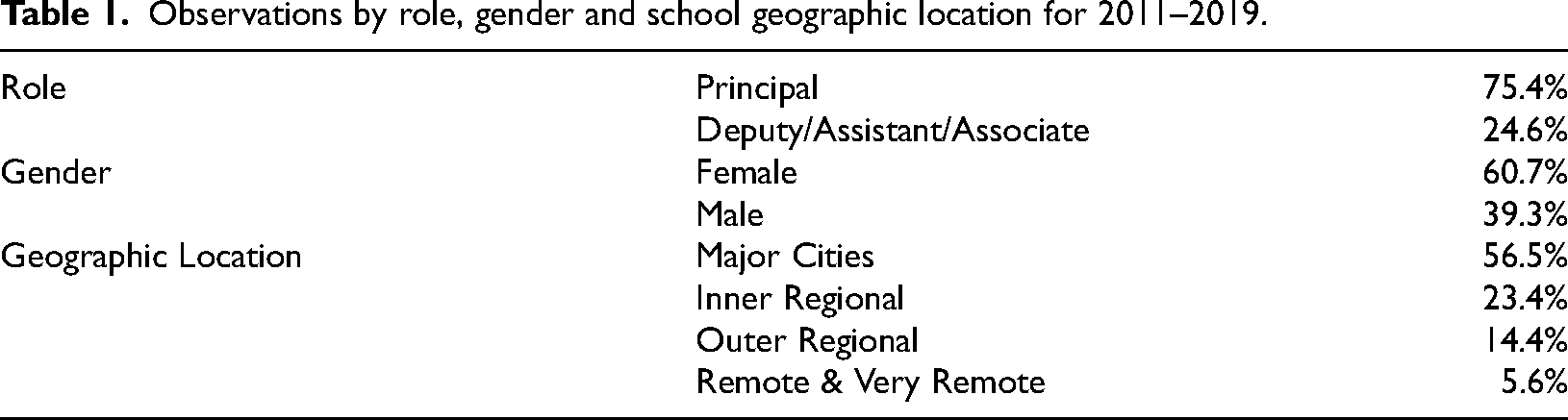
After cleaning the dataset, the sample consisted of 13,028 observations and 4103 unique participants. The age range of the sample was 25 to 76 years old (mean: 53 years old), 75% were principals and 25% were assistant/deputy/associate principals. 61% of the participants were female and 39% male. Approximately 57% of school leaders worked in schools in urban areas, 23% in inner regional, 14% in outer regional and around 6% in remote or very remote areas. See Table 1 for a breakdown.
Observations by role, gender and school geographic location for 2011–2019.
Definitions
Various terms have been used to describe aggressive, violent and offensive behaviours against teachers. In this article we use the term ‘offensive behaviours’ drawn from the COPSOQ II instrument. In COPSOQ II, the dimension ‘offensive behaviours’ is a term that includes seven different types of violence, aggression and intimidation at work. For the purposes of this analysis, we focus on three offensive behaviours: physical violence, threats of violence and bullying. The item on bullying was preceded by the following statement: “Bullying means that a person repeatedly is exposed to unpleasant or degrading treatment, and that the person finds it difficult to defend himself or herself against it” (Pejtersen, Kristensen, Borg and Bjorner, 2010, p.24).
Instruments
The Australian Principal health and wellbeing survey is a longitudinal survey instrument that has been administered to principals and school leaders in Australia on an annual basis for the last ten years. School leader characteristics including age, gender, school geographic location, role type and many other background/demographic factors were included in the annual survey. Offensive behaviours in the workplace was measured using the second version of the long Copenhagen Psychosocial Questionnaire (COPSOQ-II: (Pejtersen et al., 2010). COPSOQ II is a widely used self-report measure that has been used in many different occupations and contexts and its validity is well established (Pejtersen et al., 2010), including in relation to school principals/leaders (Dicke et al., 2018). The Offensive Behaviours Scale of COPSOQ II includes several types of offensive behaviour: bullying, conflicts and quarrels, gossip and slander, physical violence, sexual harassment, threats of violence and unpleasant teasing. In this study, we focus on the three types of offensive behaviour measured by the COPSOQ instrument: physical violence, threats of violence and bullying.
School leaders were asked if they had been exposed to each type of offensive behaviour during the previous 12 months. The response options included the following five options: Yes, daily; Yes, weekly; Yes, monthly; Yes, a few times; No. For the purposes of our analysis, school leaders that experienced each type of offensive behaviour in the previous 12 months were coded “1” and those that had not experienced violence were coded “0”. Further, aligned with COPSOQ method, the COPSOQ domain scores for the three types of offensive behaviours were normalised to 0–100 aiding comparisons across the measures. Each year of the survey was treated as a separate event. If participants completed multiple surveys during the study period (2011–2019), each reported offensive behaviour for each year of the survey, was counted as one incident. Given that participants were asked about experiences during the last 12 months- and the survey took place on an annual basis- there was no need to discount repeated reports from the same individual during the study period (2011–2019) as they would be expected to be separate incidents. These responses were used to calculate the overall prevalence rates for each offensive behaviour for the sample population. Participants that answered ‘yes’ to any of the offensive behaviours were then asked who perpetrated the act. They were able to select from one of five options: students, parents, colleagues, manager/superior and subordinates.
Three variables—gender, role type and school geographic location- were measured as teachers’ socio-demographic characteristics. For the variable ‘geographic location’, ‘major cities’ was used as a reference group to compare with inner regional, outer regional, remote and very remote areas. Regarding role type, school principals were coded as “0” and assistant/deputy principals were coded as “1”.
Data analysis
Data analysis for this paper included two sets of explanatory and exploratory analysis. Pooled prevalence was defined as school leaders in sample who reported offensive behaviours in the last 12 months of their work. The overall prevalence of each type of offensive behaviour was calculated as the proportion of school leaders in government schools who had been exposed to violence (during the last 12 months) out of the total number of principals in the sample. Percentages were also calculated to identify the proportion of school leaders that reported experiencing offensive behaviours from each different perpetrator. The incidence rate was not calculated as this would only apply to new cases and the authors were interested in calculating the total number of incidents of each offensive behaviour existing in the population (prevalence).
Logistic regression is a useful method for analysing binomial, percent, and multinomial response data (Hosmer, Lemeshow and Sturdivant, 2013; Harrell, 2015). In this study, logistic regression methods were used to evaluate the relationships between socio-demographic factors, perpetrators and each type of offensive behaviour. Separate logistic regressions were conducted at two levels, first on the main dataset and then on three subsets of the data. Independent variables included gender, role and school geographic location across all models at both sets of the first and second level analyses. Logistic regressions were first conducted on the whole sample data to determine the relationship between demographic factors and frequency of participants experience of each type of violence. With each of these logistic regression models, the outcome variable was whether the participants had experienced the relevant offensive behaviour in the last 12 months (1 = Yes, 0 = No). The second set of logistic regressions were conducted on the subsets of the data for those who were exposed to bullying, threats of violence or physical violence. The aim of the second level of analyses was to ascertain how school leaders’ experiences of offensive behaviours were shaped by the main demographic factors and perpetrators of offensive behaviours.
Results
Offensive behaviours against school leaders: pooled prevalence
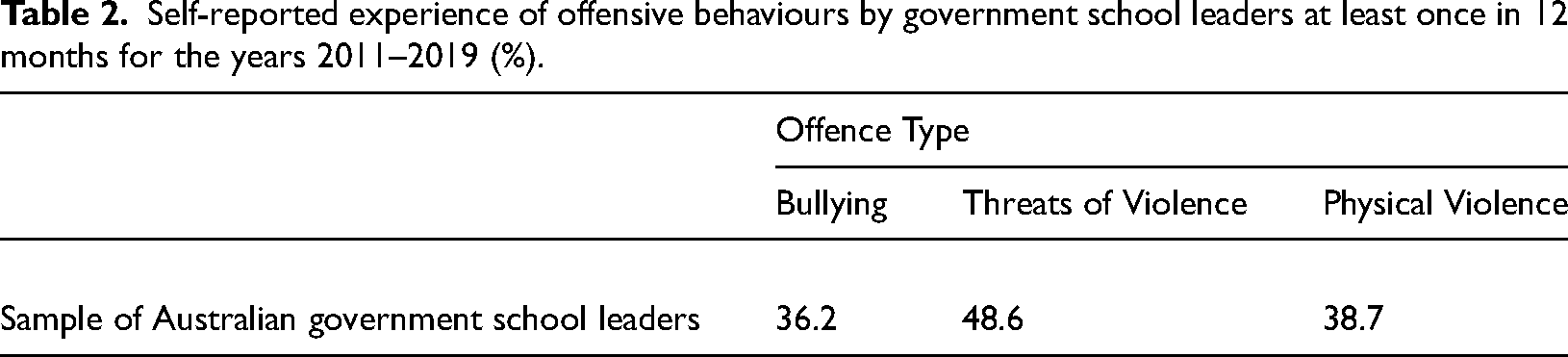
Table 2 displays the results of our analysis of the pooled data for school leaders’ experiences of offensive behaviours. The table demonstrates that the prevalence of offensive behaviour towards Australian school leaders is high. Out of 13,028 school leader participants from Australian government schools, approximately 36.2% (n = 4716) had experienced bullying in the last 12 months of their work. Almost half of all government school leader participants (48.2%; n = 6332) reported experiencing threats of violence and 38.7% (n = 5041) reported experiencing physical violence in the last 12 months of their work (see Table 2).
Self-reported experience of offensive behaviours by government school leaders at least once in 12 months for the years 2011–2019 (%).
Offensive behaviours against school leaders: socio-demographic factors
Initial exploration of the data revealed that exposure to certain types of offensive behaviours could be attributed to the participants’ role type, gender and school geographic location (see Table 3). The contribution of each of the each of these factors to prevalence rate are further explored via different series of logistic regressions.
Self-reported experience of offensive behaviours by government school leaders at least once in 12 months from 2011–2019 (%).
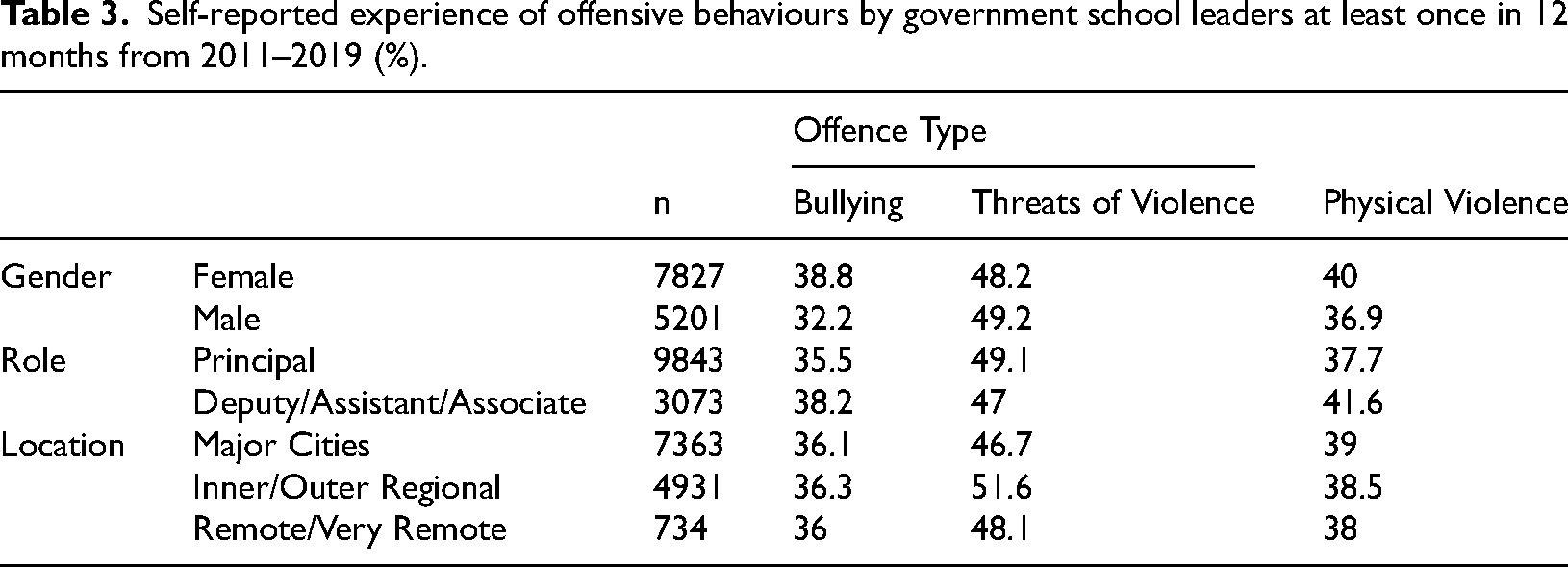
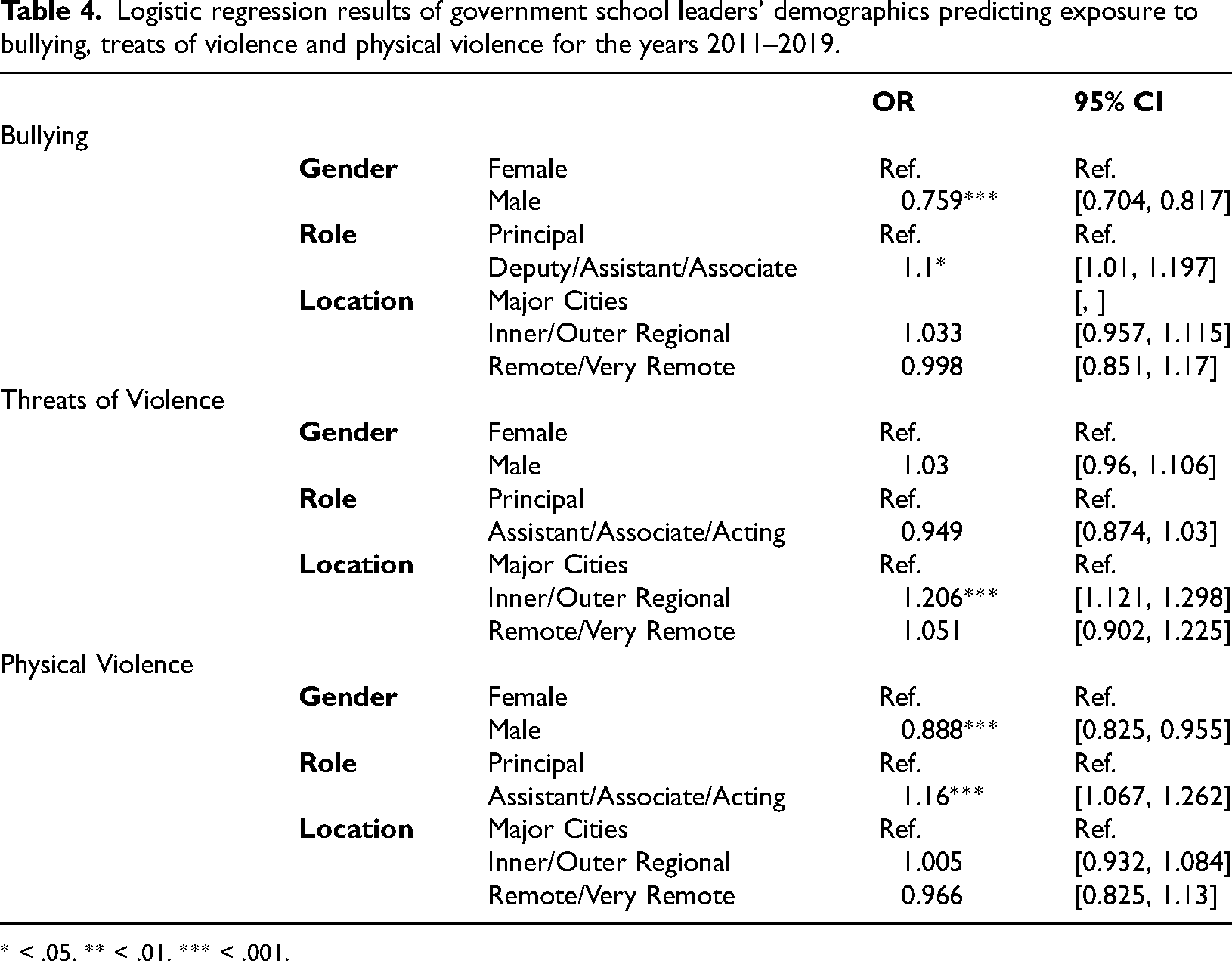
Table 4 demonstrates that there were significant differences between the proportion of male school leaders and female school leaders reporting experiences of bullying and physical violence. Female school leaders were more likely than male leaders to experience bullying or physical violence in Australian government schools. There were no significant gender differences for school leaders’ experiences of threats of violence. In relation to role, the results reveal that leaders in deputy/assistant/associate roles are more likely to experience bullying and physical violence than school principals. In terms of school geographic location, leaders in regional areas appear to be at greater risk of experiencing threats of violence.
Logistic regression results of government school leaders’ demographics predicting exposure to bullying, treats of violence and physical violence for the years 2011–2019.
* < .05. ** < .01. *** < .001.
Offensive behaviours against school leaders: main perpetrators
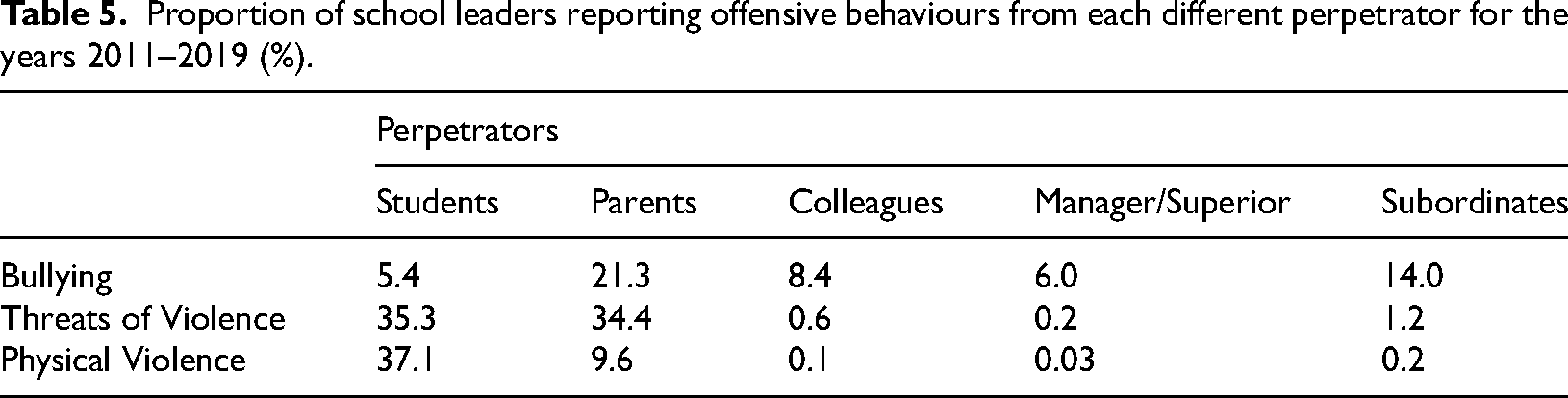
As indicated in Table 5, all five categories of perpetrator were responsible for bullying of school leaders. Parents were responsible for more incidents of bullying than all other groups. They were followed by subordinates, colleagues, and managers/supervisors as the key perpetrators of bullying towards the school leaders. Students were reported as perpetrators of bullying towards school leaders the least Students and parents were the main perpetrators of threats of violence and physical violence towards school leaders. Colleagues, subordinates, and managers were responsible for a very small proportion of these offenses (<1% mostly) and are therefore not included in the table.
Proportion of school leaders reporting offensive behaviours from each different perpetrator for the years 2011–2019 (%).
Offensive behaviours against school leaders: The association between perpetrators and socio-demographic factors
Bullying
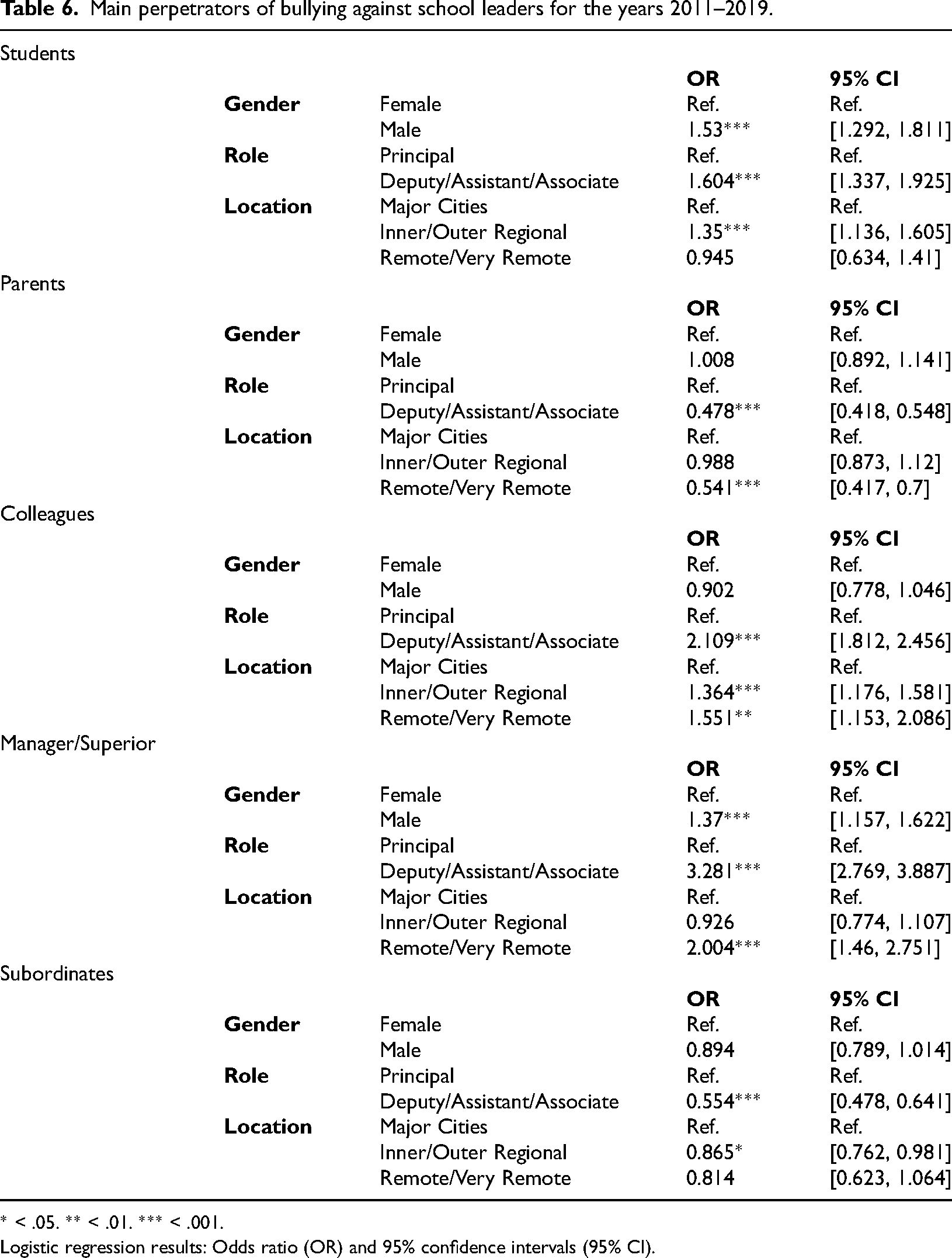
Male school leaders were significantly more likely to report bullying from students and managers (See Table 6). There were no other significant gender differences for other types of perpetrators. Deputy/Assistant/Associate principals were significantly more likely to report experiencing bullying from students, colleagues, and managers/superiors. However, school principals were significantly more likely to report experiencing bullying from parents and subordinates. Compared to school leaders working in major cities, those in regional areas were significantly more likely to experience bullying from students and colleagues but less likely to experience bullying from subordinates. Compared to those in major cities, those in remote and very remote areas were significantly more likely to report experiencing bullying from colleagues and managers but significantly less likely to report bullying from parents.
Main perpetrators of bullying against school leaders for the years 2011–2019.
* < .05. ** < .01. *** < .001.
Logistic regression results: Odds ratio (OR) and 95% confidence intervals (95% CI).
Threats of violence
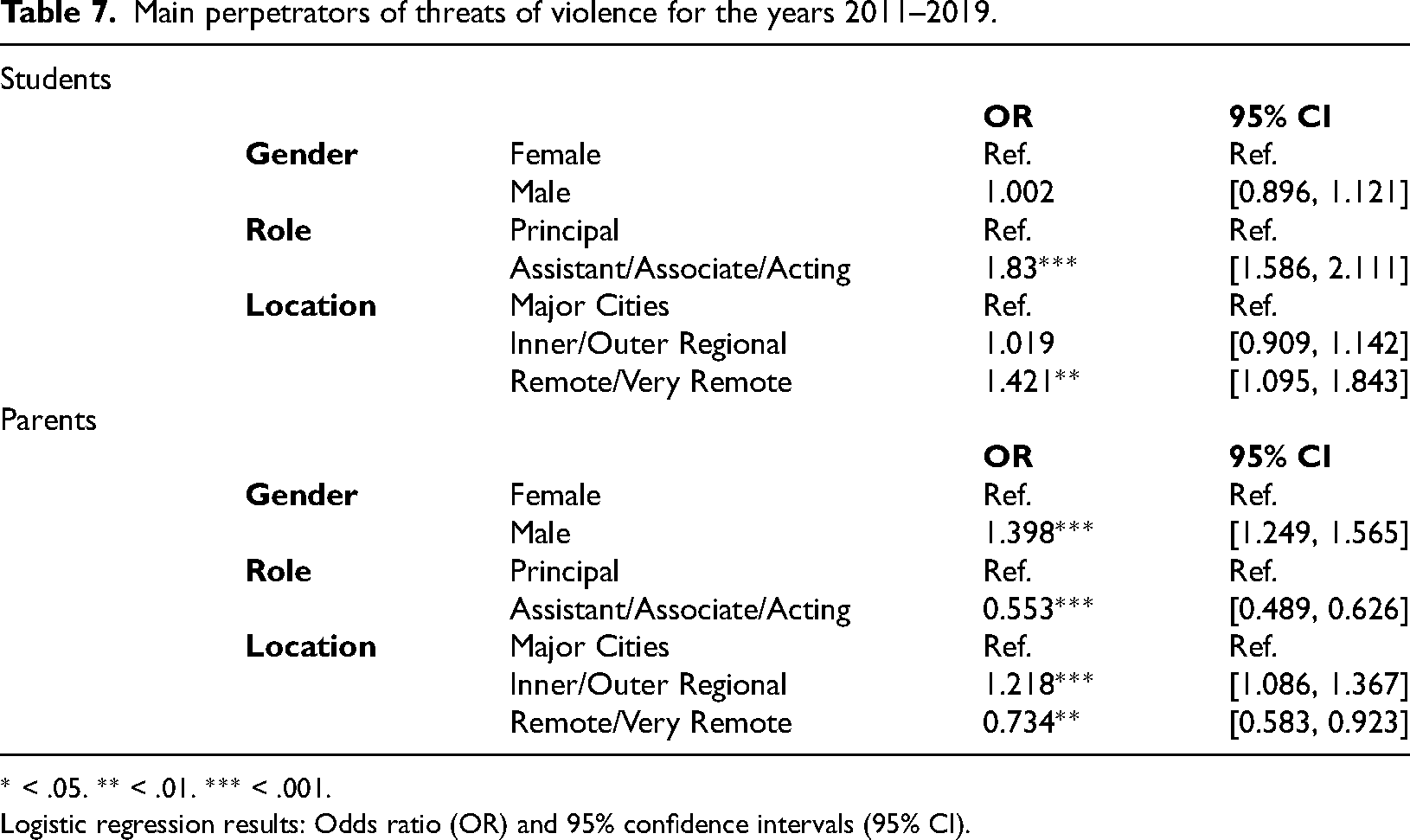
Male school leaders were significantly more likely than females to report experiencing threats of violence from parents (see Table 7). Compared to school principals, Assistant/Associate/Acting Principals were significantly more likely to report experiencing threats of violence from students but significantly less likely to experience threats of violence from parents. Compared to school leaders located in major cities, those in regional areas were significantly more likely to experience threats of violence from parents. School leaders in remote/very remote areas were more likely to face threats of violence from students but less likely to face threats of violence from parents.
Main perpetrators of threats of violence for the years 2011–2019.
* < .05. ** < .01. *** < .001.
Logistic regression results: Odds ratio (OR) and 95% confidence intervals (95% CI).
Physical violence
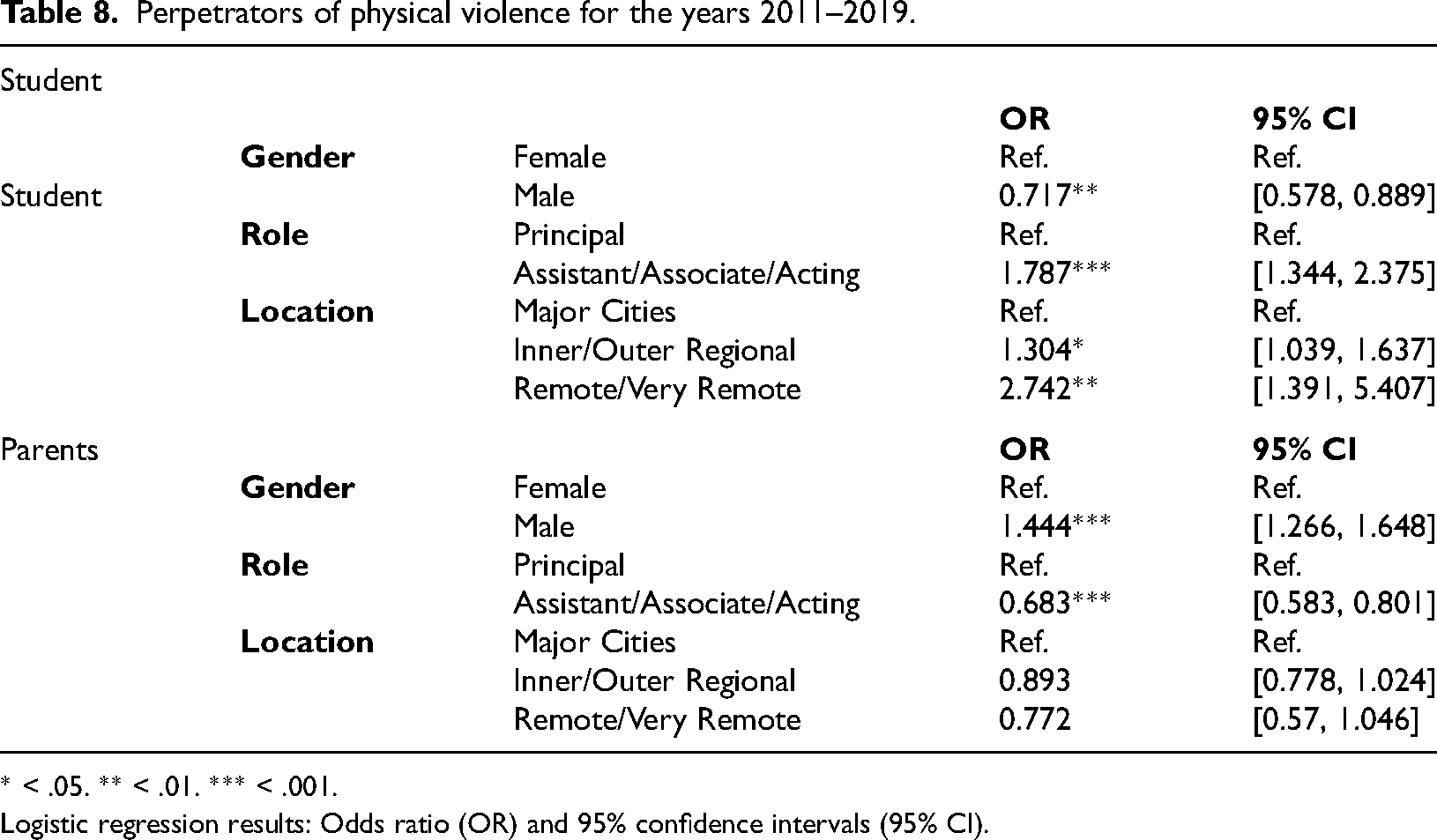
Female school leaders were significantly more likely to report experiencing physical violence from students but significantly less likely to report experiencing physical violence from parents (Table 8). Compared to school principals, Assistant/Associate/Acting Principals were significantly more likely to report experiencing physical violence from students but significantly less likely to experience physical violence from parents. Compared to school leaders in major cities, those in regional areas were more likely- and those in very remote areas were significantly more likely to report experiencing physical violence from students.
Perpetrators of physical violence for the years 2011–2019.
* < .05. ** < .01. *** < .001.
Logistic regression results: Odds ratio (OR) and 95% confidence intervals (95% CI).
Discussion
Our results show that large proportions of Australian principals and assistant principals face bullying, threats of violence, and physical violence in their work. The prevalence of physical violence against school leaders in Australia is substantially higher than the rates of physical violence against education employees in other contexts. Between 2011–2019 a pooled prevalence of 37% of Australian school leader participants reported experiencing physical violence during the last 12 months of their work. This exceeds known prevalence rates of physical violence towards school employees in other contexts. Longobardi et al.'s meta-analysis of 24 studies in 10 countries determined a pooled prevalence of 3% for physical violence against teachers in the last 24 months of their work. Furthermore, Riley, Rahimi and Arnold (2021a, 2021b) found that 35% of principals and 25% of teachers in New Zealand government schools experienced physical violence in 2020. They indicated that 23% of New Zealand government primary principals and 24% of teachers experienced bullying at least once in the 2020. The figures for threats of violence towards government principals and teachers were 32% and 19% respectively (Riley, Rahimi and Arnold, 2021a, 2021b). All of these figures are lower than the reported frequencies of bullying (36.2%) and threats of violence (48.6%) towards Australian government schools principals. This demonstrates that offensive behaviours against Australian school leaders are a serious cause for concern.
Overall, the analysis shows that socio-demographic factors appear to play an important role in determining the likelihood that school leaders experience each type of offensive behaviour. In terms of gender, female school leaders in Australia were more likely to experience bullying and physical violence than their male counterparts. This aligns with a number of studies in the U.S. which have determined that female teachers are more likely to experience violence than their male colleagues (Gerberich et al., 2011; Kapa et al., 2018; Wei et al., 2013). By role, assistant principals were more likely than school principals to experience both bullying and physical violence. This may be related to the differences in job responsibilities in most schools where principals have a more directorial, managerial role and AP's are responsible for the day-to-day running of the school. According to school geographic location, leaders in regional areas were at greater risk of facing threats of violence than their peers in major cities. There were no significant overall differences between school leaders’ experiences of bullying and physical violence in each type of geographic location. These findings contrast with the results from research studies in the US context which have shown that likelihood offensive behaviours towards school employees are significantly higher in urban settings (McMahon et al., 2014).
Our results demonstrate that while students are the main perpetrators of threats of violence and physical violence, parents are the main perpetrators of bullying against school leaders. Compared to teachers, school leaders may spend less time with students and more time dealing with parents and colleagues, especially those that are frustrated or disgruntled. Bullying school leaders by colleagues, managers/superiors and subordinates is a matter of concern in the government school environments. However, with considerably lower frequencies, colleagues, managers/superiors and subordinates, are less likely to be the main cause of any of threats of violence and physical violence towards school leaders. Our analysis indicates that socio-demographic factors interact with the type of perpetrator to impact on the likelihood that school leaders will experience different kinds of offensive behaviour. Although male school leaders were less likely to report bullying overall, they were significantly more likely to report students and managers as perpetrators. Male school leaders were also more likely to report experiencing threats of violence and physical violence from parents. In contrast, female school leaders were significantly more likely to report experiencing physical violence from students. Our analysis demonstrates that gender not only plays an important role in determining the overall likelihood of experiencing offensive behaviours at work- leaving female school leaders exposed to more incidents of bullying and physical violence at work- but also plays a role in shaping how different members of the school community direct offensive behaviours towards school leaders.
Our findings also illustrate the important relationship between school leadership role and experiences of offensive behaviour from the main perpetrators. APs were significantly more likely to experience physical violence and threats of violence from students whereas principals were more likely to these offensive behaviours from parents. Regarding experiences of bullying, APs were more likely to report being victimised by students, colleagues and managers/superiors whereas school principals were more likely to report bulling from parents and subordinates. These findings illuminate the unique challenges facing different types of school leaders in their respective positions. APs may be more likely to experience offensive behaviours from students because they interact more frequently with them in their daily work and are likely to be called upon to respond to conflicts in schools. School principals are ultimately responsible for dealing with issues and complaints that arise from parents (and employees) within the school community (Le Fevre and Robinson, 2014), and this may leave them more exposed to offensive behaviours from parents.
Finally, we demonstrate that in some geographic locations school leaders were significantly more likely to report experiencing offensive behaviours from certain perpetrator groups. In comparison to major cities, school leaders in regional areas were more likely- and those in very remote areas were significantly more likely- to report experiencing physical violence from students. Those in remote/very remote areas were also more likely to face threats of violence from students and those in regional areas were more likely to face threats from parents. Experiences of bullying from each type of perpetrator also varied by school geographic location. These results may reflect the unique challenges of working in each location. In regional and remote areas, school leaders are often required to develop close relationships- and interact more frequently- with members of the school community both inside and outside of the school grounds (Clarke et al., 2006; Wildy and Clarke, 2012). This may place school leaders in these settings at increased risk of experiencing offensive behaviours from students and parents.
This study has several strengths including the large sample size and the longitudinal nature of the data. This ensures the reliability of our analysis of school leaders experiences of offensive behaviours and enables us to draw valid inferences about the interactions between violent and offensive behaviours, perpetrators and demographic factors. There are some limitations that should be taken into consideration when interpreting the results of this study. A retrospective approach was used whereby participants were asked to self-report on their experiences of offensive behaviours in the last 12 months of their work. Although this approach is frequently used in studies of offensive behaviours towards school employees (e.g. Espelage et al., 2013; McMahon et al., 2014; Moon and McCluskey, 2016), it can lead to an increased risk of recall bias - where participants do not accurately remember previous events or experiences or omit key information. A further limitation of using self-reports to investigate offensive behaviours at work is the possibility of underreporting (Arnetz et al., 2015). The present study reveals associations between experiences of offensive behaviours, perpetrators of offensive behaviours and school leaders background/demographic factors. However, given the nature of the analysis causality cannot be drawn. Further investigation is required to draw causal inferences regarding the relationship between offensive behaviour victimization, perpetrators and demographic factors.
Conclusions
To address the issue of offensive behaviours against school leaders, it is critical to understand the main perpetrators of various types of offensive behaviour and the attributes of targeted leaders. This study used data from 9 waves of the Australia Principal Occupational Health, Safety and Wellbeing survey between the years 2011 and 2019 to establish the average prevalence of bullying, threats of violence and physical violence against Australian government school leaders. Results from the study showed that government school leaders are subjected to high levels of offensive behaviour with an average (pooled) prevalence of 36.2% for bullying, 48.6% for threats of violence and 38.7% for physical violence. Our results also demonstrated that demographic factors play an important role in moderating experiences of violence: female school leaders, assistant/deputy principals and those in regional areas were found to be at greater risk of experiencing particular offensive behaviours. Finally, our results demonstrated that students were reported as the main perpetrators of threats of violence and physical violence and that parents were reported as the main perpetrators of bullying against school leaders. Gender, job role and school geographic location moderated school leaders’ experiences of offensive behaviours by different perpetrators.
These findings indicate that urgent action is required to reduce the very high levels of violence, aggression and bullying against school leaders in Australian schools. Policymakers are beginning to recognise violence against school leaders (and teachers) is a serious cause for concern. In Australia, the recently released ‘National strategy to address the abuse of teachers, school leaders and other school staff’ outlines five priority areas to support the mitigation and prevention of offensive/abusive behaviour towards school employees (AITSL, 2020). The inclusion of priority area one ‘Building the evidence base’ is welcome as it advocates for the development of a nationally consistent approach to the measurement and data collection of abusive/offensive behaviours towards employees in schools. However, although the strategy calls for the establishment of ‘a clear national picture of prevalence of school staff abuse’ (AITSL, 2020, p.13), a national survey of school staff abuse is yet to be announced.
The development of national survey to examine teacher and learning support professionals’ experiences of offensive behaviours is an urgent priority. Policies and strategies to address school staff abuse, must be informed by robust evidence. Longitudinal studies of school staff abuse in Australia (and elsewhere) are necessary to systematically track the prevalence, consequences and responses to incidents of abuse in schools. This will support policymakers and practioners to understand the causal sequences of victimization, the consequences of offensive behaviours for teaching professionals, the suitability of reporting processes and the efficacy of school and policy responses to incidents.
Evidence informed policies that adopt a multi-faceted approach to the prevention and management of offensive behaviours are likely to be most effective. Professional support, school-community engagement, teacher training and processes for mediating relationships between students, teachers and parents are important components of policies/strategies to reduce offensive behaviours towards teachers (McMahon et al., 2014).
Footnotes
Declaration of conflicting interests
The author(s) declared no potential conflicts of interest with respect to the research, authorship, and/or publication of this article.
Funding
This article was supported by a grant from the Australian Research Council to Professor Phil Riley and colleagues at the Australian Catholic University (LP160101056).
