



Abstract
Chile is undertaking an ambitious public education reform, re-centralising the administration of municipal schools in larger territories. This reform is unprecedented, both for the size of the new intermediate-level services (Servicios Locales de Educación Pública) and the escalation of their bureaucratic complexity, facing widespread organisational problems that cause high stress and labour suffering. We argue that improving emotional working conditions is necessary to accomplish pedagogical goals, but this dimension has received little attention. This article presents a follow-up study focused on school principals and professionals’ emotional and occupational experiences that have worked in the initial two-and-half years of one of the first Servicios Locales de Educación Pública created in the country. The qualitative analysis of interviews reveals how they make sense of organisational dilemmas while crafting solutions for facing structural shortcomings of new institutions. We understand their extraordinary commitment as ‘philanthropic emotional work’, driven by genuine care for children and the nation's future. However, in this effort, they also experience labour suffering and work overload, which may compromise their well-being and the long-term accomplishment of this reform's goals. These observations highlight the need for a reflexive improvement of this reform, recognising emotional work as a valuable resource but unsustainable without appropriate institutional support.
Introduction
Under the New Public Education Law, the Chilean public educational system has been undergoing a structural reform that is unprecedented in terms of scale and complexity. Public schools are being transferred from 345 municipalities to 70 local services (Servicios Locales de Educación Pública (SLEP)), which are intermediate-level organisations under the authority of the Ministry of Education (Ministerio de Educación, MINEDUC). This reform involves the creation of very large-scale administrative agencies, the adaptation of relatively flexible local administrative procedures to the rigid bureaucratic supervision of the central government and, hopefully, the improvement of public education (Anderson et al., 2021; Bellei, 2018; Uribe et al., 2019). In this process, two major challenges must be addressed. First, the quality of public education must be improved to provide schooling that gets closer to the private sector standards, which directly competes for students. Second, to sustain the first, complex organisational problems must be resolved to provide adequate academic and material conditions to teachers and students in the learning process (PUC, 2021).
In this study, we focus on the organisational challenges that educational reforms must overcome to provide the means for learning improvements (Fullan, 2016). This dimension is often overlooked in the design of public policies in Chile, where a market-oriented managerial stance focused on competition goes along with an ethos of deliberate improvisation that resolves unanticipated problems on the fly (Silva, 2011). The previous studies of the Chilean public educational system have found that this improvised managerial approach generates high levels of workload, stress and burnout among teachers and principals (Cornejo, 2009; Soto et al., 2016; Zoro et al., 2019). We argue that both problems are imbricated because the systemic fragility of poorly designed institutions is stitched through workers’ extraordinary performance.
The aim of this paper is to analyse the subjective experiences of key actors (SLEP professionals, members of the Directive Committee and schools’ principals) in their adaptation to the reform's implementation in the first territory that was created in 2018. This exploratory study seeks to follow up on these professionals’ emotional and occupational experiences during the NEP's first two-and-a-half years of execution using qualitative methods of analysis. We provide insights into how school principals and intermediate-level administrators shape and make sense of the organisational challenges and dilemmas during the time when they were learning to interact under new rules in an improvised institutional design (Ganon-Shilon and Schechter, 2019; Louis and Robinson, 2012; Shaked and Chechter, 2017). In this analysis, we identify both significant service commitment and high levels of labour suffering that stem from professionals’ efforts to surmount the precarious conditions of the NEP's implementation (Dejours, 2015; Zikhali and Perumal, 2016). Following Bolton' (2003) definition of ‘philanthropic emotion management’, we understand their extraordinary performance as an altruistic response to the reform's structural and functional shortcomings; however, assuming a high emotional cost, previous studies of philanthropic emotion work in educational systems have focused on the experiences of teachers (Hebson et al., 2009) and principals (Zikhali and Perumal, 2016). We contribute to this literature by extending the application of Bolton's ideas through observing the emotional work of professionals at the newly formed intermediate level (SLEP) and of school principals who directly interact with them.
This exploratory analysis highlights the relevance of the study of the emotional aspects of work in educational leadership (Berkovich and Eyal, 2015; Crawford, 2007a, 2007b; Zoro et al., 2019) and educational reforms (Ganon-Shilon and Schechter, 2019; Hourani et al., 2020; Kelchtermans et al., 2011; Leithwood and Beatty, 2007). The importance of focusing on emotional work can complement the fundamental role that school districts’ management must play in providing learning opportunities and institutional support in educational change processes (Anderson, 2006; Fullan, 2016; Goldspink, 2007).
The remainder of this paper is organised as follows. First, we review the literature on the role of emotions in educational leadership, with a particular focus on emotional work. Second, we describe the background of the NEP reform and the characteristics of the district in which the research was performed. Third, we present the methodological framework used in this study. Subsequently, we describe the main findings of the study, discuss the most relevant insights and implications of our analysis and propose practical and theoretical contributions for educational reforms from an emotional management perspective.
Emotional work in educational leadership
Educational reforms are complex socio-political processes that involve administrative changes, pedagogical objectives, values and beliefs (Fullan, 2016; Spillane and Keney, 2012). These reforms are affected by power disputes that can generate contradictory designs, particularly between social equality ideals and standards based on individual competitiveness (Ball, 2017). The socio-political conditions and technical underpinnings of education reforms particularly affect principals, who act as mediating agents in the execution of reforms’ mandates and the internal resources and capacities of schools (Louis and Robinson, 2012; Shaked and Chechter, 2017; Spillane and Keney, 2012). Reforms’ overemphasis on managerial methods and bureaucratic performance accountability can undermine principals’ capacity to focus on strategic matters and learning outcomes, loading them with administrative duties and diminishing their morale and effectiveness (Goldspink, 2007; Hebson et al., 2009; Soto et al., 2016). Therefore, changes in education should consider the inclusion of support systems that help to integrate and improve the learning processes of all stakeholders (Goldspink, 2007; Wallace, 2003). Such support systems need to address the relational and emotional aspects involved in the interconnected roles the different stakeholders play in the educational network (Hebson et al., 2009; Louis and Robinson, 2012).
The focus on these relational and emotional aspects acknowledges that education is a central activity in human life that demands a high emotional and intellectual involvement from teachers and principals to achieve an effective learning process (Hebson et al., 2009; Louis and Murphy, 2018; Zoro et al., 2019). These professionals should acknowledge how their feelings affect their interpretations and actions in the work with students, parents and colleagues (Leithwood and Beatty, 2007). However, the emotional aspects of teaching have been traditionally marginalised by the predominance of rational and technical criteria that seek to define what is good teaching by narrowly measuring teachers’ performance (Hebson et al., 2009). The predominance of rationality to the detriment of emotions and relationships also affects the practice of leadership and the role of principals in schools, who must respond to rational parameters and repress emotions to meet expectations (Crawford, 2007a; Kelchtermans et al., 2011; Leithwood and Beatty, 2007). This bias is reflected in the scant interest shown in studying the emotional aspects of the practice of leadership in schools and in the educational system (Berkovich and Eyal, 2015; Crawford, 2007a; Yamamoto et al., 2014).
Addressing this theoretical ‘lacuna’ in research on the links between emotions in educational leadership, several scholars stress the relevance of this topic to efforts to develop a more holistic understanding of the role that emotions play in principals’ work (Berkovich and Eyal, 2015; Crawford, 2007b; Ganon-Shilon and Schechter 2019; Leithwood and Beatty, 2007). The study of the affective aspects of educational leadership has been developed under the theoretical framework of emotional intelligence. This is defined as the individual emotional competencies and traits produced by ongoing social learning, and it determines the capacity to effectively relate with others to achieve professional and organisational goals (Hourani et al., 2020). Emotional intelligence is an essential competence for principals to motivate teachers and staff, resolve conflicts, face the challenges of school improvement and encourage innovation and creativity in schools (Arar, 2017; Hourani et al., 2020).
However, as Crawford (2007b) argues, emotional intelligence in educational leadership should not be reduced to generic prescribed competencies that can be measured, monitored and learnt to achieve better performance. Principals must manage and make decisions in schools in particular organisational and socio-cultural spaces, where the dynamics of subordination, domination and resistance always operate (Zorn and Boler, 2007). Thus, emotions emerge in a relational context, so they must be understood as enacted emergent phenomena that are formed in a public, political and cultural context (Bolden and Gosling, 2006; Crawford, 2007b).
The self-regulation and positive alignment of the emotional factors in leadership and principals’ decision-making can enhance their capacity for school management. This regulation requires a reflective understanding of the ‘emotional context’ in which principals operate, particularly in schools located in vulnerable and deprived areas that need to cope with complexities of staff, students and parents (Crawford, 2007b; Zikhali and Perumal, 2016). The recognition of both local context's characteristics and the complexity principals face in framing and bridging external and internal demands is essential to avoid the tendency to blame them for the failures in the execution of top-down policy changes (Ganon-Shilon and Schechter 2019; Shaked and Schechter, 2017). In this effort, principals’ sensemaking of change requirements becomes a central emotional process that helps to reduce anxiety by providing their school communities with emotional support to reduce resistances against transformations. This ‘positive leadership’ can be created through fostering reflective spaces wherein collaborative learning practices and a shared working culture can be developed with teachers (Ganon-Shilon and Schechter 2019; Louis and Murphy, 2018).
The mediating role of principals is strongly dependent on the capacity of intermediate agencies to provide adequate administrative and material support (Fullan, 2016; Shaked and Schechter, 2017). Both sides require working in partnership to negotiate a good fit between external mandates and schools’ internal objectives. In the generation of this working alliance, district officials need to shape their interactions with principals through the establishment of a reciprocal rather than vertical influence (Louis and Robinson, 2012). Crafting a coherent partnership between these two sets of agendas lies in principals’ capacity for developing a bridging strategy that allows conforming to external stakeholders’ expectations (Louis and Robinson, 2012; Shaked and Schechter, 2017). This ‘gatekeeper’ role can be very uncomfortable and emotionally demanding because it requires balancing political and ethical interests between agendas often in conflict. In this struggle, principals feel torn between the deep need to belong and protect their school community and the loneliness that stems from the pressure to respond to externally defined reform mandates (Kelchtermans et al., 2011). Coping with this struggle forces principals to build emotional strength and to conceal their frustration and ambivalence, as they finally become the central figures that incarnate new policies and the targets of school members’ negative projections (Leithwood and Beatty, 2007).
The seminal work of Hochschild (1983) has greatly contributed to understanding how emotions are managed within the workplace in response to employers’ expectations and demands. Studying the private service sector's frontline workers, she coined the concept of ‘emotional labour’, describing how employees must produce a satisfactory emotional state in the client according to expected service rules. In this context, emotions become ‘commodified’ as saleable labour power, and employees become alienated from their own feelings and pay high personal costs as a result of the colonisation of their subjectivity by managerially designed rules of feeling. Studying public sector professionals, Bolton (2003) extends Hochschild's theoretical framework to other forms of feelings rules, which are not commercially motivated and do not deny employees’ individual subjectivities. To this end, she proposes the concept of ‘philanthropic emotion management’ to describe the positive aspects of emotional labour that respond to altruistic professional motivations and rules, based on genuine feelings and sincere relations with clients.
In Bolton's (2003) extensive work with caring professionals in public health, she describes their extraordinary efforts to fulfil hard work demands. By offering significant amounts of emotional work as a ‘gift’, these professionals give a ‘little extra’ to users of public services and become deeply engaged in their personal situations. This extra work performed by these professionals often serves to ‘paper over the cracks of under-resourced (public) services’ (Bolton, 2003: 160).
Hebson et al. (2009) applied Bolton's ideas to explore the impact of educational reforms in England on the emotional aspects of teaching based on teachers' subjective experiences. Other studies employ Hochschild's notion of emotional labour to explore the complex roles played by school principals (Maxwell and Riley, 2017; Yamamoto et al., 2014). Zikhali and Perumal (2016) integrated these frameworks to explore the philanthropic emotional work performed by female principals in very disadvantaged schools in Zimbabwe. These principals must work in extremely harsh conditions, responding decisively and compassionately to children's vulnerable life conditions while suffering high levels of stress. Remarkably, they can engage in genuine feelings and relations with children and communities, allowing them to overcome severe plights to accomplish educational goals (Isenberger and Zembylas, 2006).
However, the combination of a high professional commitment with the predominance of negative feelings such as anxiety, frustration and sorrow, under high stress and burnout, hampers principals’ work performance (Friedman, 2002; Zikhali and Perumal, 2016). Permanent emotional labour and the effort to comply with high work demands generate ‘emotional numbness’ as a defence against ‘labour suffering’ (Dejours, 2015; Leithwood and Beatty, 2007). Constant changes in education policy exacerbate the ‘moral push’ for principals to mask their suffering, contradictions and disagreements. The imperative to conceal their real feelings disconnects principals from colleagues and students, thus losing the ability to harness their emotional and mental capacities on the task fulfilment (Leithwood and Beatty, 2007: 138). In this context, individual work failure is often attributed to professionals’ lack of competencies and commitment without acknowledging the systemic shortcomings that generate labour suffering (Dejours, 2015).
The strong labour commitment that principals develop to face and make sense of the paradoxical emotional and relational repercussions elicited by reforms’ implementation is a relevant topic that deserves further exploration (Ganon-Shilon and Schechter, 2019; Kelchtermans et al., 2011; Zikhali and Perumal, 2016). The push for an ‘extraordinary performance’, often motivated by a genuine positive connection with work, helps to compensate for ill-designed organisational processes but overburdens individuals with negative feelings that stem from work overload (Dejours, 2015). As will be developed in the following sections, we argue that overcoming organisational design flaws in complex educational systems can be partially surmounted by ‘philanthropic emotion management’, with the cost of individual's work suffering at different institutional levels (Bolton, 2003).
Background: The reform of the intermediate level in Chile
The NEP reform was a large-scale change process that was prompted by four main factors. The first one was a critical assessment of the low quality of public education in Chile in the national context of low performance (OECD, 2019). Secondly, the education system had experienced a systematic deterioration of Public schools’ share of total enrolment, which had fallen from more than 80% in 1981 to less than 40% in 2017 in the context of competition with private schooling (Torche, 2005). Thirdly, the exodus from the public system was related to an enormous asymmetry in financial and management capacities among Chilean municipalities – which are the main responsible for public schools – and between the public and private sectors (OECD, 2019). Finally, these inequalities fuelled a social movement since the early 2000s of teachers and students demanding a structural transformation of the educational system, which attained its strongest momentum in 2006 and 2011.
The NEP reform (2017) aimed to resolve these issues by creating 70 local services of public education (SLEP), administered by the central government, to replace the 345 municipal education departments or corporations that had been defined in 1981 (Figure 1).
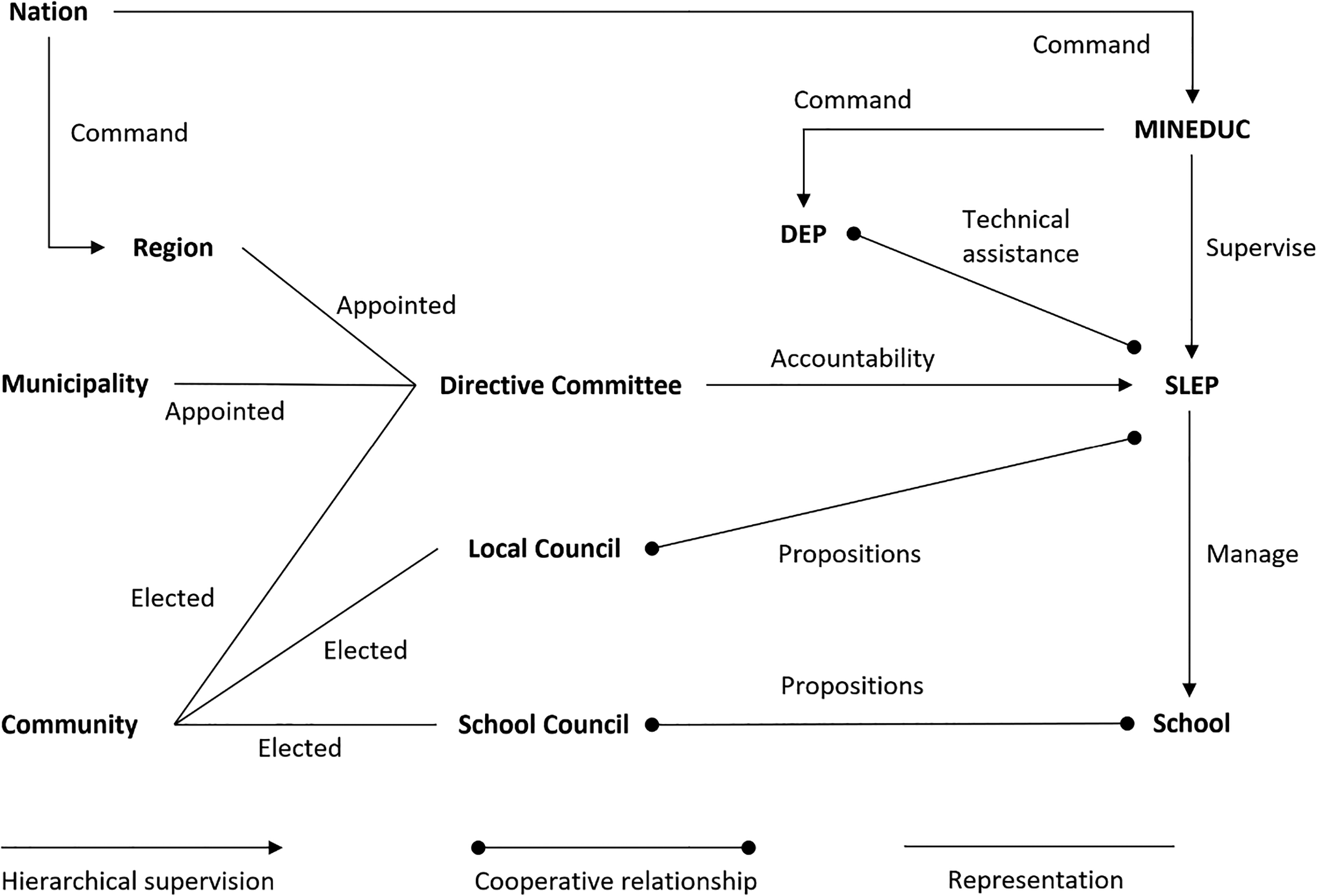
Governance of the New Public School System.
Each SLEP is to be a semi-autonomous entity under the authority of the Education Ministry, specialised only in education, in charge of the management and technical support of schools. It is also related to entities of civil society (Local Council) and supervision boards (Directive Committee). The Local Council, formed by elected community members, should represent the interests of the educational communities, being the main instrument for citizen participation in the reformed educational system. The Directive Committee – formed by representatives of the Regional Government (appointed by the Central Government), the municipalities and the community – should foster strategic development, contribute to system coherence, and monitor accountability to assure the quality of education. Educational communities are also represented directly in each school through elected School Councils. Finally, the NEP contemplated the creation of the Directorate of Public Education (DEP), a national public service dependent on the MINEDUC, to give technical assistance, support and guidance to the SLEPs (Bellei, 2018).
In this scope, two improvement areas were expected with the NEP (DEP, 2019): first, resolving deficiencies in the municipal administration of public schools, breaking the dependence on cycles of political control, improving the financial administration of public schools, and taking advantage of (hypothetical) economies of scale to reinforce management and instruction capacities; second, reinforcing the unequal and often scarce professional capacities of municipal administrations, to focus the efforts on students, their learning process and performance evaluation, defining schools as the basic organisational unit that receives support from all levels of the education system.
The NEP's implementation will be gradual. In the first stage (2018–2021), 11 SLEPs will be installed. In the second stage (2022–2025 or 2030), the remaining 59 SLEPs will be created. This progression aims to address the complex challenges of developing better learning processes while simultaneously creating a new institutional superstructure of SLEPs, which encompass large territories of several municipalities. So far, the creation schedule for the 11 new SLEPs has been met, and a National Public Education Strategy (DEP, 2019) has been approved.
The transfer of schools occurs after a year of preparation in each municipality while the respective SLEP is created. The transfer involves the school infrastructure, the teaching and technical staff, as well as the associated student enrolment and its financial resources. These transfers have been made in all 42 municipalities (including 814 schools) of the first 11 SLEPs. However, there is a high degree of heterogeneity among services, which face complex situations. The evidence collected so far highlights three main problems of the reformed system: first, an excess of teaching and technical staff, inherited from the municipal administration, which affects the financial sustainability of the new public education; second, a weak coordination among professional teams from new and older institutions; and third, a large delay for the new SLEPs to develop adequate management processes to support schools, postponing the focus on pedagogical improvement (PUC, 2021).
Local actors linked to the first four SLEPs showed high positive expectations for the reform's effects regarding the improvement of the quality of education, but also apprehensions about the challenges of creating SLEPs and the administrative capacities needed to manage very large educational systems (Uribe et al., 2019). The present study aims to complement other studies that have been mainly focused on systemic evaluations of the first year of this reform's execution, from the individuals’ emotional perspective (Anderson et al., 2021; CEPPE-DESUC, 2018; Uribe et al., 2019). Thus, we observe the emotions of people involved at different levels of a specific SLEP, to develop a qualitative understanding of their emotional work in successive stages of the NEP reform.
Our research was conducted in one of the first four SLEPs formed in Chile. The corresponding Public Education system serves three municipalities in the western part of the Metropolitan Region (comprising A, B and C municipalities; their actual names are omitted for confidentiality). A and B's populations are middle-class, with poverty rates like those of the rest of the metropolitan region, but C is more socially vulnerable than the other two. Prior to the reform, these three municipalities were characterised by a low percentage of school enrolment in public schools, since most children attended private subsidised schools, many of them outside this territory (Valenzuela and Montecinos, 2017).
This SLEP is responsible for managing 54 schools and 23 kindergartens, with more than 23,000 students and 3600 professionals and technicians working in them. The average performance in education, reflected in national standardised scores, is below the national average for vulnerable students. The situation prior to the creation of this SLEP was highly differentiated among the three municipalities: while A had a better performance than the national average in primary education, the other two showed below-average performance. Their financial management of public education was also different: A showed a balanced performance, B showed an intermediate situation, and C was among the municipalities with the most critical situation at the national level.
Professional and technical staff working in this SLEP was formed by 109 people. According to them, the number of people working in this intermediate-level service is not sufficient to respond to its functions. Previous research has shown that the personnel selection mechanisms were inadequate, since in many cases the previous competences of the selected professionals did not match the functions to be performed (Anderson et al., 2021). Moreover, approximately two-thirds of these civil servants were previously employed by the former municipal education systems of either A, B or C municipalities (Líderes Educativos, 2018), which had different organisational approaches, so their integration inside the SLEP has been a major challenge. The incorporation of professionals from private sector organisations adds further complexity to the process of organisational change (Uribe et al., 2019).
As one of the first SLEPs to be established in the country, it did so jointly with the DEP at the beginning of 2018, so in its initial stages it did not have evidence-based guidelines to support its installation. Moreover, a new government assumed office the same year, supported by a right-wing coalition that had opposed the NEP reform. This political change undermined the stability of SLEP authorities, which had been appointed by the previous left-wing government. In this SLEP, the first Executive Director resigned in September 2018 and a new one was appointed in April 2019. Meanwhile, this crucial role was provisionally assumed by five different officers. Other positions demanded high technical capacities and were often assumed by professionals without adequate training, which have produced high rates of internal roles rotation or dismissals, particularly in the SLEPs created in 2018 and 2019 (Council for the Evaluatión of Public Education, 2021). For instance, in this SLEP, three persons have taken up the position of Deputy Director of Administration and Finance in the last years, and now it is still vacant. Thus, this service has experienced an exceptionally high personnel turnover, which has hampered the learning process and the continuous improvement of its management (PUC, 2021).
Finally, the installation of this service has been perceived in a heterogeneous way, largely depending on the previous situation of counties A, B and C. Actors that were in a more critical situation report substantial improvements, but those that were better off tend to resent the reform. However, most still hope that this deterioration will be resolved as the NEP execution is consolidated (Anderson et al., 2021).
Methodology
Research design
This research seeks to develop an exploratory qualitative analysis of the first two-and-a-half years of the NEP implementation in Chile, through the study of the subjective experiences of key actors that work in one of the first two SLEPs that were implemented in 2018. The analysis of the educational reforms’ effects on principals and teachers has become a relevant scope of investigation in different change processes around the world (Berkovich, 2011; Ganon-Shilon and Schechter 2019; Park and Jeong, 2013; Shaked and Chechter, 2017; Thorne, 2011). Our research was designed as a follow up in real time of the emotional and occupational experiences of professionals that work in different organisations of the system (SLEP professionals, members of the Directive Committee and schools’ principals). Thus, we address the lack of research about ongoing educational reforms at the intermediate level (Anderson et al., 2021). Although the interviewees included in the study were not the same ones during the different steps of the investigation, the exploratory analysis of collective narratives, about their shared and diverging emotions, allows following changes during the reform's evolution and across different levels of the system (Figure 2).
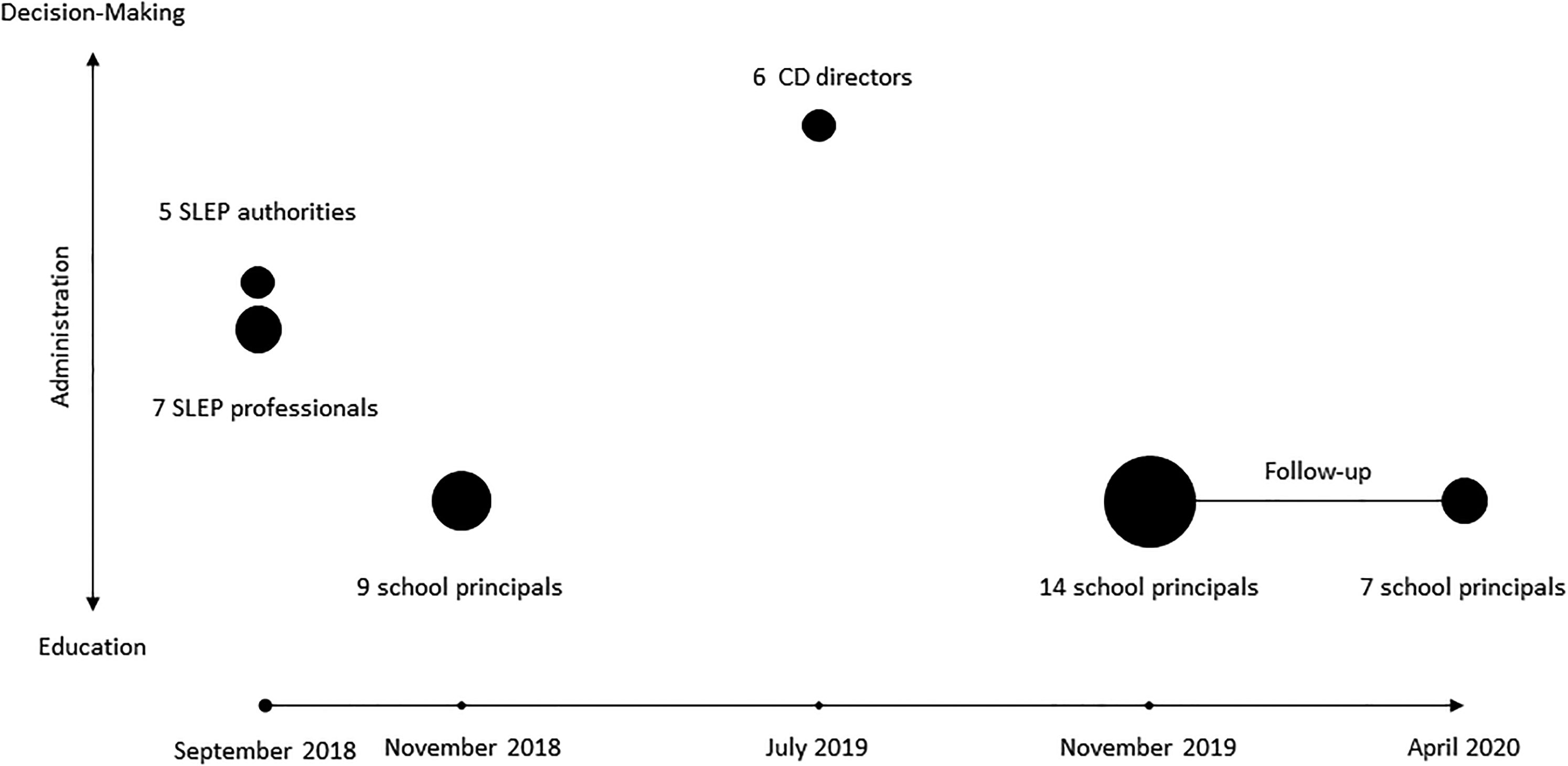
Interviews by time and position in the educational system.
Data collection
Data collection was conducted in several stages (Figure 2), based on semi-structured interviews with 41 professionals (seven of them twice) in different positions of the local educational system, to obtain a comprehensive perspective of the whole system (Denzin and Lincoln, 2018; Locke, 2003). All the people involved in the study signed an informed consent form that authorised the recording and use of data for the analysis (see Appendix).
In September 2018, we interviewed five managers and seven professionals who worked in the SLEP to examine the main institutional, financial and territorial challenges experienced by them in setting up the service. We also expected to explore differences between managers and professionals. The SLEP's management team actively supported us in the selection of the sample.
In November 2018, we interviewed nine principals, three of each municipality, to study their labour and emotional experiences within the context of the NEP's first year of implementation.
In July 2019, we interviewed all six members of the Directive Committee. This enabled us to include the viewpoints of people with substantial knowledge of the local reality and of the Chilean educational system (Strauss and Corbin, 1998). Several of them were actively involved in the transfer of schools’ administration from the municipalities to the SLEP.
In November 2019, we interviewed 14 school principals to examine the impact of the reform on the way they managed their schools, by the end of its second year of implementation. These principals were not the same that were interviewed in November 2019, because we could not get access to them. We selected the new sample including principals of pre-primary, primary and secondary schools that belonged to each of the territory's three municipalities. Seven principals of this last group were interviewed again in April 2020, just beginning the third year of the reform, to delve into the subjective experiences and management strategies they developed to adapt to the new institutional context.
As a whole, the collected information provides a temporal perspective of evolving labour feelings among principals, complemented with those of professionals in higher levels of the educational system (Figure 3).
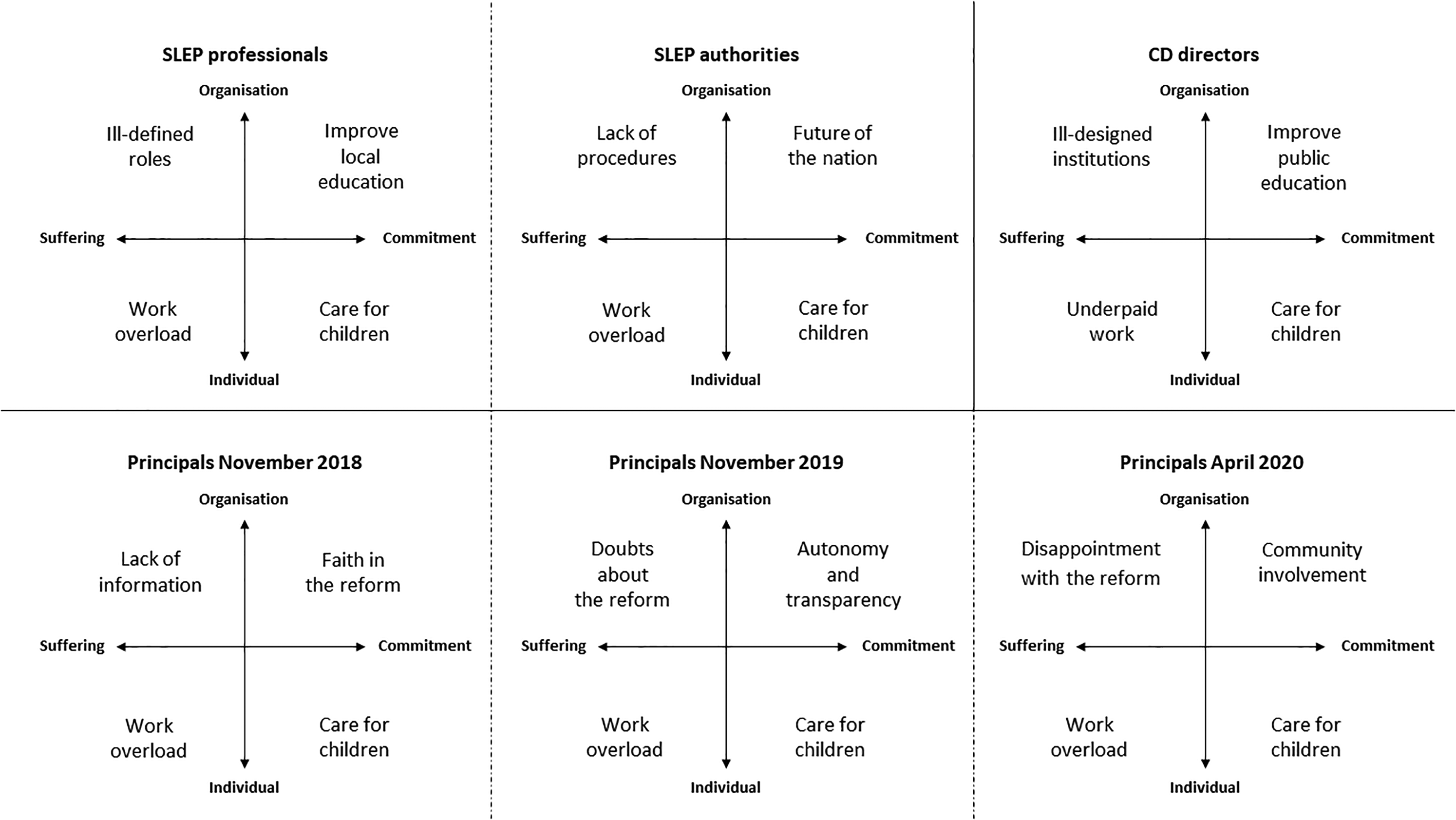
Axial representations of narratives across time and professional positions.
Data analysis
The data analysis followed the principles of grounded theory, designed to identify the main topics, concepts and propositions referred by the interviewees. This methodology is particularly suited to revealing dense descriptions of the observed phenomena through an iterative process of coding and comparing events in the data (Strauss and Corbin, 1998). These narratives are the means by which experience is reflexively and subjectively reconstituted and made meaningful and communicable (Brown et al., 2008; Czarniawska, 2004).
Several triangulations were carried out during different stages of the study to check for biases and enhance the robustness of the findings. Three researchers analysed the raw data by searching for commonalities and differences in the coding process. The quality and consistency of the results were continuously discussed with two senior researchers until analytical coherence and precision were obtained (Locke, 2003; O’Reilly et al., 2012).
In the first stage, we carried out an ‘open coding’ of all the interviews’ verbatim transcriptions. This inductive analysis enabled us to remain close to the interviewees’ narratives and to distil ‘first-order’ categories that represent the main recurrent terms employed by them (Gioia et al., 2013).
Subsequently, we continued with ‘axial coding’ searching for the connections and oppositions of first-order concepts, thus defining the main topics and emerging narrative dimensions. We organised these concepts in a Cartesian representation, structured by two axes (Figure 3): first, from suffering to commitment, respectively, representing the main negative and positive emotions of the interviewees; second, from the individual to the organisation, to differentiate personal from collective levels of experience.
In the final step of this inductive conceptualisation process, we identified the notion of philanthropic emotional work (Bolton, 2003) as the ‘aggregate dimension’ that organises the data analysis (Gioia et al., 2013). It is a constant theme across time and professional positions, a common reflective strategy to surmount suffering with motivation and to perform a role among others.
Findings: Labour suffering and public service commitment
The main second-order themes that emerged from the interviewees’ narratives were deeply intertwined. Major organisational gaps caused labour suffering, both of which were overcome through an extraordinary performance sustained in a sense of public service commitment, widely shared throughout this educational system. We understand this dialectic in the sense of philanthropic emotional work that allows actors to ‘paper over’ the system's breaches (Bolton, 2003), but which also produces substantial labour suffering (Dejours, 2015).
Labour suffering
The strongest recurrent theme in the interviewees’ narratives was the feeling that the SLEP's professionals and school principals’ precarious labour conditions negatively affected their emotional and mental wellbeing. SLEP professionals report high levels of stress and burnout as a result of work pressure, inadequate workspaces, poor material resources and weak support from authorities and educational institutions (Maxwell and Riley, 2017; Stephenson and Bauer, 2010). These conditions generate substantial levels of labour suffering due to the high pressure of the work demands arising in achieving organisational goals (Dejours, 2015). Within the context of NEP's under-resourced institutional framework, professionals sacrifice their personal well-being to cope with severe deficits in schools and children's socio-economic vulnerability. The excessive emotional work of SLEP professionals is illustrated in the following statements: Here [in the SLEP], people remain working for one hour, two hours, three hours [after their normal working day]. There are people who work until 11 at night. This is very well regarded in this system. I arrive on time, and I leave at the end of my workday. It's terrible because they say that I have no commitment. (SLEP Professional). For me, it does not make sense, it does not make sense that you try so hard, if in the end … you forget yourself, you forget your family, it's a very high cost (SLEP Professional).
As the interviewees indicated, the organisation’s demands for extraordinary performance generated strong contradictions among professionals. Although they have a strong will to back the NEP's implementation, the excessive burden and responsibilities on their shoulders become very hard to bear in the long term. They feel involved in a continuous ‘state of exception’ at work that presses them to overstep their capacities to reduce the system's operational, material and human deficits. Moreover, professionals feel excessive demands by their managers, because in the absence of adequately structured work teams and task clarity, they are forced to meet the targets without any consideration of the adverse labour conditions (Dejours, 2015). The following assertion describes this situation: Some managers put too much pressure on work teams, knowing that we have little staff and that many colleagues are suffering severe stress […]. So, in the end, as managers are too demanding and we do not have enough information to do our job, people end up suffering quite complicated stress conditions. (SLEP Professional).
A similar level of emotional labour, stress and over-commitment to sustain the precarious educational system was revealed in the principals’ interviews. They reported an overwhelming sense of strain resulting from coping with schools’ vulnerable conditions, disorganised operational functioning, cumbersome bureaucracy and institutional abandonment. As observed in previous studies (e.g. Howard and Mallory, 2008; Stephenson and Bauer, 2010), the lack of social support and isolation from supervisors and the wider professional network negatively impact the principals’ levels of stress and burnout, impairing their leadership capacities to manage schools. The principals’ expectations about NEP improvements have been overshadowed by the constant frustration concerning the SLEP's repetitive administrative and operational failures, as shown by the following statements: The worst thing is the amount of administrative work we have now, much more administrative work than in the past, and because of their mess [SLEP], someone asks you to fill a form, but two days later they ask for another form, and the third day they ask you for another form that has nothing to do with you; they are very messy. (school principal) You have to do everything, there are no procedures in the service [SLEP], there were no procedures installed in the school either. (school principal)
The generalised disorganisation of the educational system generates strong contradictions among the principals. On the one hand, they feel driven to offer an ‘extra’ effort to reduce organisational disorder in an attempt to improve public education (Bolton, 2003; Hochschild, 1983). However, they also feel involved in a ‘quixotic struggle’ with very little support from the SLEP. In the absence of such support, principals must reinforce their self-management capacities as the only way to achieve a basic level of operation of the schools they manage (Zikhali and Perumal, 2016). The pressure imposed by the SLEP is illustrated in the following excerpt: The director [of the SLEP] makes a speech and says, “you are the leaders, you have to … you, you, you …”, then finally you convince yourself that if you want to have a successful school and to increase children's learning, you have to manage it on your own. (school principal)
Public service commitment
The analysis of narratives shows that professionals in different positions throughout this educational system cope with labour suffering through a strong commitment to their work. This engagement is underpinned by professionals’ passionate effort to ‘rebuild’ the Chilean public education to provide a good quality education for the most vulnerable. Such vision and commitment to the reform are also shared by all members of the Directive Committee, who have worked and gathered as a team far beyond the duties of their job appointments. This feeling of fulfilling a transcendental purpose, undertaken as a public service commitment, is manifested in the following statements of SLEP's professionals: Like several of us who are here, we don’t work because it's just a job or because we receive a salary, because the success of this law [NEP] is deeply important for us and for the country. Several of us are following this line. (SLEP Authority). I think that in my entire professional career there has not been a project that makes more sense to me than being here, working for what we work for [children's education]. (SLEP Professional).
Thus, working in the SLEP plays a central role in their life projects, transcending a mere contractual link with the institution and motivating them to cope with their job's complexities (Tomic and Tomic, 2008). The responsibility for generating a real pedagogical contribution to school communities, the country, and its citizens’ socio-economic progress gives a deep meaning to their work. In this context, professionals underscore the relevance of building good work teams to support principals’ school management by listening to their demands and responding to them in the best possible way (Louis and Robinson, 2012). Professionals’ passion and conviction become essential in the attempt to build a new institutional design for Chilean public education. Nonetheless, such efforts clash with the shortage of the SLEP's human and material capacities to meet such laudable purposes, as described in the following vignettes: You must be extremely motivated to work here [SLEP], because they do not pay you well, the work overload is brutal, and every day we have severe problems. (SLEP Authority). I came here to work in this reform with high expectations, but it's hard to find a brick wall in front of you and constantly clash your head against it. (SLEP Authority).
In a similar vein, principals’ reports at the beginning of the NEP's third year of implementation corroborate the ineffectiveness of the administrative and pedagogical support received from the SLEP. They partially cope with this adversity through emotional work, which is mainly focused on developing caring relationships with children at schools (Leithwood and Beatty, 2007). The meaning, self-transcendence and even existential fulfilment that principals find in their work reduce the risk of being overburdened and collapsing from burnout (Tomic and Tomic, 2008). They seek to create an ‘ethics of care’ that emphasises emotional receptivity and relatedness in the attempt to build up a healthy environment at schools that can compensate for children's socioeconomic vulnerability (Isenberger and Zembylas, 2006; Louis and Murphy, 2018). This empathic care is consistent with Zikhali and Perumal’s (2016) description of how principals respond to the plight of children in the context of a much more severe shortage of material resources in Zimbabwean schools. The following statements illustrate their commitment: Our little children are the ones that move us in the school, the youngsters that come here, the ones who are excluded from the system. (school principal) When you see that families improve their life conditions and children are better, that motivates you to go on. But with all our administrative burden, because in kindergarten the principal does everything… We work alone, so we have to take on board all the work. (kindergarten principal)
In the context of the NEP reform, which has been unable to substantially improve the pre-existing precariousness of this educational system over the two-and-a-half-year period covered by the current study, principals have had to perform beyond the basic responsibilities of their role to find supplementary economic and material resources to help children's plight. The development of a ‘culture of care’ at the school becomes essential for principals to transform the unpleasant aspects of emotional labour, such as sadness, frustration and anxiety, into a rewarding experience (Louis and Murphy, 2018; Zikhali and Perumal, 2016). In this sense, rather than avoiding or neutralising these negative emotions, principals feel invigorated by the challenge of surmounting the schools’ lack of resources (Isenberger and Zembylas, 2006). In this context, principals’ philanthropic emotional involvement leads some of them to spend their own money and get deeply involved in taking care of children's basic needs and the system's deficits (Bolton, 2003; Zikhali and Perumal, 2016). However, although they acknowledge the benefits of this passionate involvement, they also realise some of the negative psychological consequences of these ‘excesses’. The next vignette shows the kind of predicament assumed by principals that try to protect children's wellbeing: We almost paid an institution to receive a child, because we thought what could we do? We did not have a mother or father for this child. Therefore, instead of taking him to Sename [National Children's Service], let us look for a private institution. Everyone was going to pay 5000 pesos, but then we realised that we were a bit crazy; actually, I went crazy. Remember that I had custody of one of these children, I was in the process of adopting one of my students. (school principal)
The SLEP's inexperience to support the schools has also increased principals’ autonomy, thus opening more opportunities for crafting their relations with the community (Ganon-Shilon and Schechter 2019; Shaked and Chechter, 2017). These conditions have allowed some principals with sufficient management capacities to compensate for the weakening of the links with the former municipal education departments caused by the NEP's centralised institutional design. The gap left by the SLEP's precarious integration with the community networks has required another extra effort of principals to renew their ties with the municipal authorities, educational communities, neighbourhood associations, enterprises, business organisations and other local public services in the territory. Although these incipient collaborative solutions with the community have allowed solving some of the schools’ deficits in terms of neighbourhood insecurity, infrastructure failures and students’ learning opportunities, they rely on each principal's personal motivation and effort rather than on the technical and financial support from the intermediate level. Remarkably, instead of the generalised burnout and stress that result from weakened support, as previous studies have found (Howard and Mallory, 2008; Stephenson and Bauer, 2010), some principals have taken advantage of their increased autonomy to reinforce previous and new support networks in their territory. Moreover, principals have benefited from a more transparent and efficient financial system, which enables them to manage schools with well-planned budgets. They feel accountable to a much more reliable system, which improved ill organisational practices of former administrators that undermined schools’ operation, such as hiring ineffective technical support agencies, irregular personal recruitment, and the political instrumentalisation of educative spaces.
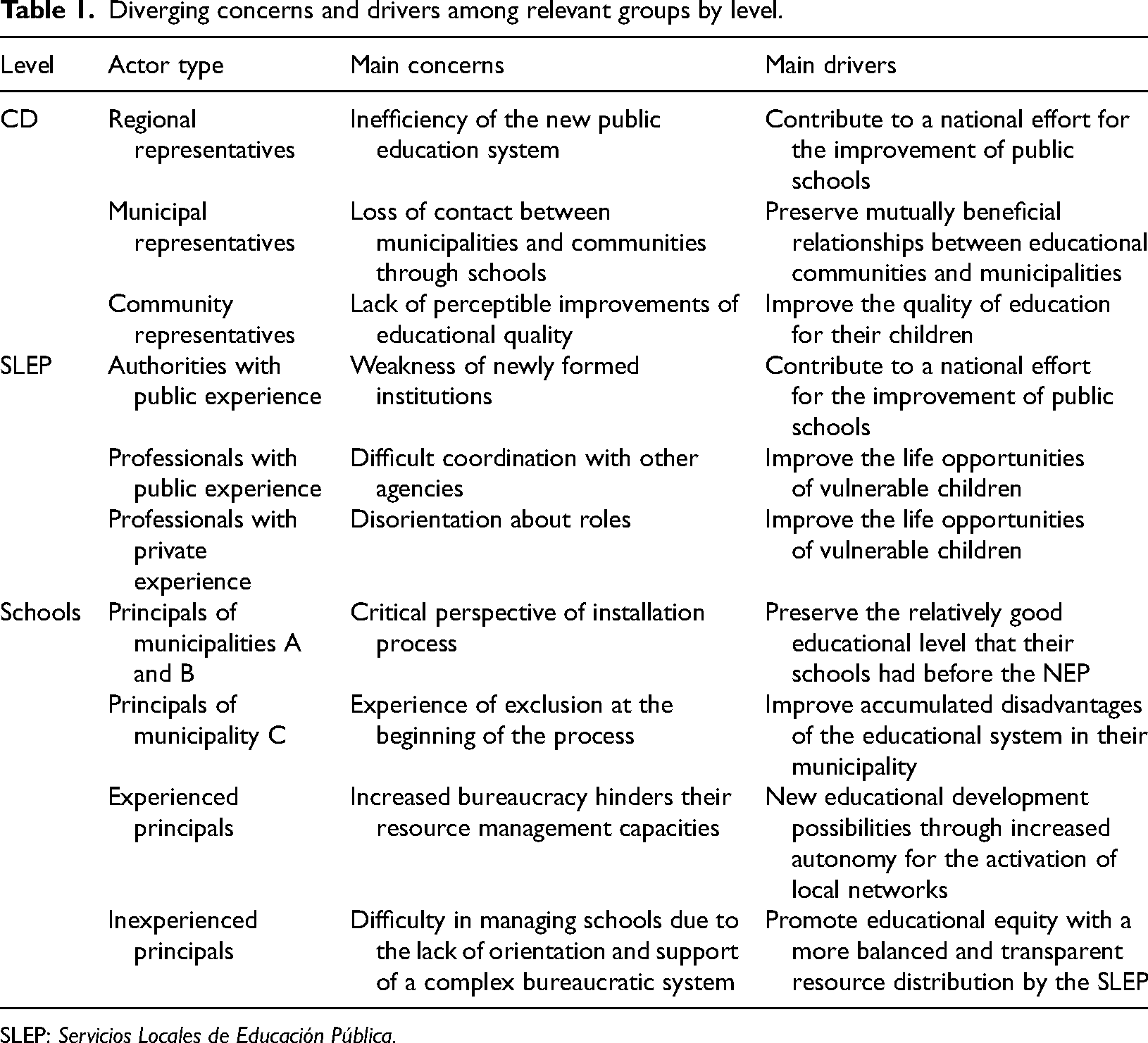
However, taking advantage of the reform requires exceptional capacities, found more often among experienced principals. In fact, we observed very heterogeneous concerns and ways to cope with the reform among principals, administrators and authorities, which strongly depend on each person's background and role (Table 1). Rather than gender, age or other usual cleavages, we found that having experience in the public sector or schools’ management were valuable resources to leverage new opportunities and overcome the reform's shortcomings. Moreover, being grateful or concerned about the new system's support capacities strongly depended on more disadvantaged municipalities or those with previously better educational conditions.
Diverging concerns and drivers among relevant groups by level.
SLEP: Servicios Locales de Educación Pública.
The most generalised concerns were focused on deficiencies of institutional design, with different emphases across positions in the educational system. The main drivers to keep on working were different perspectives on the significance of education itself, ranging from giving equal life chances to vulnerable children to a more idealised contribution to the nation's future (Table 1). Since a detailed account would be too extensive, we summarise the main narratives in Table 1, contrasting the most relevant group cleavages at different levels.
Discussion
The above-mentioned observations suggest that the emotional commitment of professionals who work in different areas of the educational system is a widespread and essential resource to ‘paper over the cracks’ (Bolton, 2003) of a reform that has not provided the necessary tools and resources to fulfil its ambitions. Specifically, we argue that the well-being of children is a shared and constant motivation of professionals in different positions, which allows them to give the ‘little extra’ emotional work that is necessary to surmount labour suffering from stress and burnout. In addition, we also observe more heterogeneous narratives of heroic commitment – with the future of the nation, to improve public education or for social justice – as well as differentiated concerns about the organisation of the reform (Figure 3).
From a general perspective, our interviewees share very similar narratives about their individual-level experiences (Figure 3). All of them displayed genuine care for children, even though high-level ideals were expressed more vehemently by some groups (Table 1). For most groups, the main source of embodied suffering was work overload, the extra hours that are needed to create non-existent procedures, comply with overambitious objectives, redundant or contradictory tasks and other organisational inefficiencies. The CD directors expressed a nuance in this regard, as they do not need to commit excessive time to this work, but significantly more than they are paid for. On the contrary, regarding organisation-level experiences, there is great heterogeneity in both negative and positive emotions (Figure 3).
The follow-up branch of this exploratory study (Figure 2) – focused on the evolving of principals’ narratives from the end of the first year to the beginning of the third year of the NEP – suggests significant changes in their view of the reform (Figure 3). These changes only involve their organisational-level experiences, while the individual-level ones are remarkably constant, as discussed above. In the first year, we observed general disorientation due to the lack of information, which was overcome with faith in the NEP's ideals, such as giving equal opportunity to children to build the country's future. At the end of the second year, the doubts about the capacity of the new institutions to improve public education were widely installed, but the principals were discovering some advantages in the new administrative system, such as more financial transparency, increased reliability of financial flows and more autonomy to develop their own support networks. These included previous collaboration lines with the municipality and communities, and new ones that became possible under the NEP, mainly with local enterprises. At the beginning of the third year, which coincided with sanitary restrictions due to the COVID-19 pandemic, they were sceptical about any radical improvement under the new system while actively crafting survival strategies with the help of their communities (Figure 3). In sum, as the nature of suffering changed, coping mechanisms also did.
Bolton' (2003) ideas are well suited for understanding these professionals’ emotional labour during the NEP's first two-and-a-half years of implementation. Our study shows that interviewees in different positions had similar experiences regarding high levels of workload, stress and labour suffering (Dejours, 2015; Stephenson and Bauer, 2010). They also display a widespread strong commitment and service vocation regarding their work and support of the reform, allowing them to partially offset the negative experiences and adverse conditions of the reform. Such commitment is anchored to their concern for the well-being of vulnerable children and their ideals and willingness to contribute to ‘rebuild’ the Chilean public education system. These professionals offer significant amounts of emotional work to cope with hard labour conditions and the vulnerable socio-economic background of schools and students (Zikhali and Perumal, 2016). This ‘little extra’ motivation emotionally supports them amid the complex working conditions that predominate in the Chilean public education system. Thus, their sense of fulfilling a public service commitment can be framed through Bolton’s (2003) notion of ‘philanthropic emotional management’, which holds that civil servants are able to respond to altruistic motivations besides the actions dictated by their employers’ prescriptive mandates, as argued by Hochschild (1983).
However, we also observed a significant imbalance between excessive work demands, scant human resources and mismatched technical competences, as consistently shown by recent studies of this reform (Anderson et al., 2021; PUC, 2021; Uribe et al., 2019). Such an imbalance can generate toxic work environments and high levels of labour suffering and burnout (Dejours, 2015; Friedman, 2002; Stephenson and Bauer, 2010). According to Dejours (2015), to deal with labour suffering, professionals defensively intensify their efforts to meet personal and organisational objectives, thus normalising the causes of such suffering. They become trapped in a ‘self-assigned impossible task’, trying to accomplish their duties in a very adverse context, unconsciously relying on ideals of heroism and superiority that magnify their real capacities at the expense of underestimating the contradictions and constraints of reality (Roberts, 1994). As reported in the previous section, SLEP professionals and principals struggle to achieve complex goals in very uncertain conditions, driven by individual and collective ideals, while assuming high emotional costs and labour suffering that may compromise the long-term sustainability of their organisations (Dejours, 2015).
Finally, this study also highlights the relevance of framing the exploration of emotional resources in a situated form (Zorn and Boler, 2007; Zoro et al., 2019). As Crawford (2007b) suggests, we have explored the particular ‘emotional context’ in which leadership practices and emotional capacities are enacted within a larger political, social and cultural background (Ball, 2017; Zorn and Boler, 2007). Educational reforms involve a great complexity of power disputes, diverging pedagogical goals and ideals between different groups, which are matched by equally complex emotional processes (Ball, 2017; Goldspink, 2007; Hebson et al., 2009). In the context of the intense periods of institutional transformations, professionals’ emotional work is essential to cope with high levels of uncertainty and confusion (Goldspink, 2007; Wallace, 2003). In this sense, the design of support systems for leaders and professionals in educational reforms should consider their affective-relational needs and competencies to reinforce their capacities and improve their performance (Louis and Murphy, 2018; Sanfuentes et al., 2021).
Conclusions
Our study gives a real-time account of the subjective perspective of key actors in different positions of the educational system, in one of the first two SLEPs implemented under the NEP reform in Chile. The research thus responds to the call for developing follow-up studies to examine how different actors respond and make sense of educational reforms’ demands (Ganon-Shilon and Schechter 2019) and contributes to a growing literature about this ambitious yet improvised reform (Anderson et al., 2021; Uribe et al., 2019, among others). We acknowledge that our exploratory study does not comply with a rigorous longitudinal design (Figure 2), which was difficult for us to achieve due to some of the negative consequences of the NEP's improvised implementation in this territory, such as the turnover of authorities and professionals (Council for the Evaluation of Public Education, 2021; PUC, 2021). Despite these methodological limitations, we argue that the collective narratives that emerge from the analysis allow characterising collective variations in time for principals and across professional positions, concerning different emotional strategies to cope with organisational shortcomings (Figure 3). Further research is needed to confirm these insights, but the consistency of shared narratives strongly suggests that participants’ opinions about the reform have evolved along the lines that were sketched in this study.
The remarkable consistency of individual-level experiences regarding the widespread willingness to tolerate work suffering with an emotional commitment to children highlights the value of this philanthropic emotional work for supporting educational reforms across their initial shortcomings. We believe that these shared ideals are powerful drivers for improving educational systems and developing new territorial networks. We have witnessed the creative capacity of principals and SLEP's professionals to ‘paper over the cracks’ of the system, renew old relationships and establish new ones with educational communities and local organisations. Our paper thus contributes to the literature about educational reforms from an emotional perspective, applying Bolton' (2003) idea of philanthropic emotional management to the experience of intermediate-level professionals and principals involved in the NEP reform. These findings concur with the observations of philanthropic emotional work that have been previously observed in educational systems, in both teachers (Hebson et al., 2009) and principals (Zikhali and Perumal, 2016).
Moreover, our study connects the literature on emotional labour with the concept of labour suffering (Dejours, 2015), balancing the appreciation of philanthropic emotional work as a valuable resource, with the long-term organisational risk of relying on this ‘little extra’ rather than reflexively improving the educational institutions. Accordingly, although we acknowledge and value professionals’ emotional capacities to deal with an ill-designed institutional reform, we also suggest that these resources are ineffective in the medium and long term without an appropriate institutional framework to support them. Hence, developing adequate institutional, financial and human capacities before the implementation of education reforms is extremely important in countries like Chile, to overcome an ethos of deliberate improvisation in structural reforms (Silva, 2011). Despite we cannot extend the findings drawn in one territory to the others that have been incorporated to the NEP, the recent assessments of this reform show similar deficits across the system (Council for the Evaluation of Public Education, 2021; PUC, 2021). This highlights the need to learn from these first experiences for the progressive improvement of the first SLEPs, thereby providing better installation conditions for the forthcoming ones.
In sum, the main finding of this study is that the emotional commitment of individuals that work in the educational system has been crucial for overcoming severe institutional shortcomings of an improvised reform. This suggests that the long-term success of the NEP reform might be more fragile than hinted by global and quantitative evaluations. In consequence, our advice for sustaining this endeavour from a person-centred perspective is to implement institutional mechanisms for the early detection of labour suffering and to provide emotional support for distressed professionals.
Footnotes
Declaration of conflicting interests
The author(s) declared no potential conflicts of interest with respect to the research, authorship and/or publication of this article.
Funding
The author(s) disclosed receipt of the following financial support for the research, authorship and/or publication of this article: The research was supported by the Centre for Social Conflict and Cohesion Studies (COES) funded by National Agency for Research and Development (ANID). The support from ANID/ PIA/ Basal Funds for Centers of Excellence FB0003 is also gratefully acknowledged.
