




Abstract
The number of research publications dealing with the simultaneous localization and mapping problem has grown significantly over the past 15 years. Many fundamental and practical aspects of simultaneous localization and mapping have been addressed, and some efficient algorithms and practical solutions have been demonstrated. The aim of this paper is to provide a critical review of current theoretical understanding of the fundamental properties of the SLAM problem, such as observability, convergence, achievable accuracy and consistency. Recent research outcomes associated with these topics are briefly discussed together with potential future research directions.
Keywords
Introduction
The simultaneous localization and mapping (SLAM) problem asks whether it is possible for a robot to be able to build a map of an unknown environment in real-time and simultaneously work out its own location within the map, using information gathered from sensors mounted on the robot. Reliable solutions to SLAM underpin successful robot deployment in many application domains, especially when an external location reference such as a global positioning system (GPS) is not available. SLAM applications include environment reconstruction, urban search and rescue, underground mining, underwater surveillance and planetary exploration. Solutions to SLAM aim to provide an estimate of the robot location and a geometric representation of the environment, as measurements are gathered from a sensor as the robot moves through the environment. An accurate prediction of the uncertainties associated with these estimates is also required in the context of robot navigation, where the reliability of the information available plays an important role in the decision making process.
In situations where it is possible to process information from the sensors to obtain the locations of geometric primitives, or features present, such as points, lines and planes, the map of the environment can be described using a collection of such features. Dissanayake et al. demonstrated that a Kalman filter based SLAM algorithm, where the state vector consists of the latest robot pose (position and orientation) and coordinates of a set of points that describe the environment, can converge to the true solution as the robot continues to gather information about its environment. 1 Three essential convergence properties of the algorithm under the assumption of linear motion and observation models were proven. In a practical scenario, both motion and observation models are nonlinear. Therefore, an extended Kalman filter (EKF) that relies on a first-order linear approximation is required to solve the SLAM problem. Also, given that the only information available to solve SLAM are relationships either between two robot poses or between a robot pose and the observed feature locations, the initial pose of the robot with respect to an arbitrary global coordinate frame is not observable. This issue is typically addressed by placing the origin of the global coordinate frame at the robot initial pose. While the EKF formulations have been successfully implemented on robots equipped with mm-wave radars, 1 laser range finders, 2 and monocular cameras, 3 a number of researchers reported the fact that under some situations the EKF-based SLAM algorithm becomes inconsistent leading to overconfident estimates. 4–6
Huang and Dissanayake provided a theoretical analysis of this phenomena, illustrating that the inconsistency is a result of the fact that the Jacobians of the motion and measurement models are not evaluated at the true state, which is of course not feasible in a practical implementation. 7 Alternatively, when a SLAM state vector is defined relative to a coordinate frame attached to the latest robot pose (called robocentric mapping 5 ), the errors due to linearization become smaller and as a consequence the state estimates obtained using the EKF are more accurate. Recently, a globally asymptotically stable EKF based SLAM algorithm was also reported by Bishop and Jensfelt, and Guerreiro et al., under the assumption that no feature disappears from the sensor field of view. 8,9
When the robot pose relative to an arbitrary global coordinate frame is included in the state vector of the EKF, observability of the SLAM problem can be analyzed from the control theoretic point of view. It was shown by Huang et al. 10 that the inconsistency in EKF SLAM is closely related to the partial observability of the SLAM problem. 11,12 This insight resulted in a number of observability-constrained EKF SLAM algorithms which significantly improve the SLAM consistency. 13
SLAM can also be formulated as a parameter estimation problem where all the robot poses from where the measurements were taken together with all the observed features are treated as a set of unknown constant parameters that need to be estimated. An objective function based on maximum likelihood of the parameter estimates can be formulated by using robot odometry measurements and robot-to-feature observation information to relate the unknown parameters. 14 The optimization based SLAM methods improve the consistency of SLAM as Jacobians are repeatedly computed at the most recent parameter estimate, and in the limit at the optimal state as the solution converges. Exploiting the sparse structure of the optimization problem leads to very efficient solutions, 15 despite the increase in the size of the state vector as all robot poses from which measurements were taken now need to be estimated. Current algorithms that use the optimization framework can efficiently solve SLAM problems consisting of a few thousand of robot poses and a few million robot-to-feature observations. 16
Another possibility is to formulate the problem as that of estimating all the robot poses from where the measurements were taken. This is known as pose-graph SLAM, 17,18 which also has a sparse structure and can be solved efficiently. 16 In pose-graph SLAM, the sensor observations are used to obtain an estimate of the relationship between the robot poses from which these observations were taken, without using an explicit geometric representation of the environment. Such relative pose estimates can be obtained using a scan or image registration algorithm for laser range finders and cameras respectively, provided that the situations where the sensors observe the same region of the environment can be recognized. This is relatively easy when the time between observations is relatively small, but when the robot visits previously observed regions after a long traverse, special loop-closure identification techniques are required. 19 A map of the environment is reconstructed once the estimates of all the robot poses are available.
Optimization based SLAM methods (for both feature-based SLAM and pose-graph SLAM) have been observed to converge to the global minimum under many situations, in contrast to the usual behaviour of typical nonlinear optimization problems where convergence to local minima can only be avoided by providing a relatively good initial guess to the solution. Some special structures present in point feature based SLAM and pose-graph SLAM have been recently discovered by Wang et al. and Carlone et al., accounting for this suprisingly good behaviour. 20 –22 Research along this direction has resulted in the development of new algorithms for optimization based SLAM. 22,23 The authors are of the view that further research on the structure of the SLAM problem has the potential to result in more robust SLAM algorithms.
The aim of this paper is to review and consolidate the research on the fundamental properties of SLAM and discuss some of the future challenges. The focus of this paper is on the theoretical aspects of SLAM such as the observability of different SLAM formulations and the convergence, achievable accuracy and consistency of different SLAM algorithms. It is shown that although many algorithms to solve SLAM effectively are available, the theoretical understanding of this important problem is still incomplete.
This paper is a significant extension of an earlier conference paper and focuses on feature based SLAM and pose-graph SLAM using estimation and optimization techniques. 24 For a thorough review of SLAM research work prior to 2006, readers are referred to works by Durrant-Whyte and Bailey; 25,26 for a practical review from the users’ perspective, see Frese et al.; 27 for a recent review that covers other variants of SLAM problems such as SLAM using particle filter and appearance-based SLAM, see Zamora and Yu. 28
Typical SLAM implementations consist of two distinct phases. First, the information from sensors are pre-processed to identify potentially spurious readings as well as to associate sensor readings with the parts of the environment that have been previously observed. This is known as the front-end, which is specific to the sensors used and the application domain. The SLAM back-end is where estimation or optimization algorithms are used to provide robot location estimates and a representation of the environment based on the strategies described in the previous paragraphs. Much of the discussion in this article relates to the SLAM back-end. Therefore, important front-end issues such as data association and identifying loop closures are mostly ignored.
This paper is organized as follows. Section “The statement of the SLAM problem” provides the statement of the SLAM problem. Section “Fundamental properties of SLAM” examines basic properties of SLAM problems including observability of SLAM problem and convergence of some SLAM algorithms. Some criteria for evaluating SLAM algorithms are discussed in Section “Criteria for evaluating the performance of SLAM algorithms”. Section “Other recent developments in SLAM” briefly discusses various recent developments in SLAM research. In Section “Future directions in SLAM research”, some possible future research topics in SLAM are proposed. Finally Section “Conclusion” concludes the paper.
The statement of the SLAM problem
SLAM is the process of building a map of an unknown environment while concurrently generating an estimate of the location of an autonomous robot (a moving sensor). In the most fundamental form of the SLAM problem, the only information available is from sensors on-board the robot that observe the robot ego-motion and the environment.
Feature based SLAM problem
In feature based SLAM, the environment is assumed to consist of “features” that are stationary. The robot pose (including position and orientation) at time k is denoted by
A process model that relates the robot pose at time

where
The observation at time k is a function of

where
The feature based SLAM problem aims to obtain an estimate of feature parameters
Extended Kalman filter based solution
In the conventional formulation of the EKF based SLAM solution
1
, the state vector consists of the most recent robot pose

The initial robot pose
In an alternative formulation known as robocentric EKF,
5
the state vector is comprised of the feature parameters and the initial robot pose, all with respect to the most recent robot pose

In this formulation the whole state vector
In particular, if the initial robot pose is removed from the state vector and only feature parameters are estimated, the problem becomes even simpler. As shown by Bishop Jensfelt, 8 the estimation error is guaranteed to be bounded if all the features are observed all the time. Guerreiro et al. show that the nonlinear system dynamics in sensor based SLAM can be regarded as a time varying linear system and a Kalman filter can be designed to estimate the system state. 9 Although robocentric SLAM formulation can reduce linearization error to some extent, it is clear that the uncertainty of the location estimates of features that have not been observed for a long period of time can become very large due to the presence of the process noise.
Optimization based solution
In the nonlinear least squares (NLS) optimization formulation of SLAM, 14 the state vector includes all the robot poses and the feature parameters
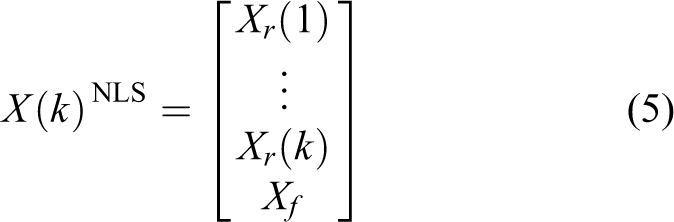
and the aim is to find the state vector which maximizes the likelihood of the odometry and observation measurements. This is equivalent to minimizing an objective function that is the weighted sum of the odometry and observation error function squared.
14
The initial robot pose
Pose-graph SLAM problem
In pose-graph SLAM formulation,
16
the observations of the environment are used to first estimate the relationship between the poses from which the observations are acquired. The relative pose between pose i and pose j is denoted as
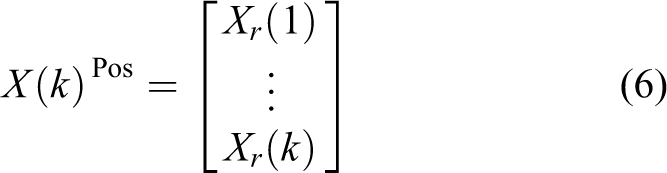
and as before, the initial robot pose
Other variants of SLAM problem
Many variations to the above SLAM problems may occur under practical scenarios. In some cases, external information such as the global robot location may be intermittently available through a GPS receiver. Sometimes the environment may be partially known, for example there may be a landmark with a known global location. The process model may be not available or unreliable for some scenarios such as a robot moving in an uneven terrain or when a handheld sensor such as a camera provides the only information available. When sensors contain biases, it may be necessary to simultaneously estimate the sensor biases together with robot poses and feature parameters. These variations result in SLAM problems which may have significantly different fundamental properties to those discussed in the following sections.
Fundamental properties of SLAM
This section discusses some of the fundamental properties of SLAM.
Observability
The first important question to ask is whether the SLAM problem is solvable. That is, whether the information available is sufficient to obtain an estimate of the current state
Control theoretic formulation of observability
The observability of a deterministic linear discrete-time system

means the ability to fully and uniquely recover the system state
On the other hand, it can be shown that the robocentric formulation of EKF SLAM is observable from the control theoretic point of view, if the robot pose
Parameter observability of SLAM given a process model
A more straightforward alternative method for analyzing observability of SLAM is to examine its formulations in the form of a parameter estimation problem. The question to ask is whether the robot poses and feature parameters can be inferred (with certain level of accuracy) from a sequence of noisy observations and control inputs, if the initial location of the robot is available. This question can be addressed by analyzing the notion of “parameter observability”. 29
When SLAM is formulated as a nonlinear least squares parameter estimation problem, the Fisher information matrix (FIM) governs the observability. If the FIM is singular, then the parameter estimation problem is not observable. Moreover, when the FIM is non-singular but has very small eigenvalues, the parameters are observable but the observability is “marginal” or “poor”. 29
When a process model and measurements of all the appropriate control inputs are available, it can be easily shown that the FIM in this situation is always not singular, even if there is no observation of features in the environment. Thus all the robot poses along its trajectory are observable. However, the eigenvalues of FIM will gradually decrease over time due to the noises present in the process model. The uncertainty of the computed robot poses will increase as a result and the observability of the robot poses becomes poorer and poorer as time progresses.
When the robot poses at different time steps are all known, the observability of the feature locations in the environment depends on the sensor model. For example, when a range and bearing sensor is available to observe the environment, the location of any observed point feature can be computed and thus point feature based SLAM is always observable. However, it is important to note that the observability gradually becomes poor unless the robot revisits previously mapped areas. Balancing the extent of exploring new areas with revisiting previously explored regions is important in the quest to obtain reliable SLAM solutions.
When a bearing-only sensor such as a camera is used, the uncertainty of the Cartesian coordinates of features observed with near zero parallax may be very poor. Interestingly, if the feature locations are described using a different parametrization, for example using parallax angles as proposed by Zhao et al., 30 parameters used to describe the features can be computed very accurately even when the parallax angle is zero. Thus an appropriate parametrization can enhance the level of observability.
When a range-only sensor is used, the observability of a point feature position depends on the motion of the robot/sensor. For example, if the robot is moving along a straight line, then there will always be an ambiguity of the point feature location no matter how many range observations are made. 31
For more general types of geometric features such as line segments and planes, the observability analysis, although tractable, is much more complicated.
Parameter observability of SLAM when a process model is not available
When a process model is not available, estimates of robot poses
For example, in 2D scenarios, observing the same two point features from two robot locations using a range and bearing sensor is adequate to obtain an estimate of the relative pose between the robot locations. When a robot is moving in a long corridor, the robot motion along the corridor cannot be determined by observing the walls of the corridor. In the case of 3D bearing-only sensors such as cameras, image observations of at least five common 3D point features are needed to obtain an estimate of the relative rotation and translation between the two poses, if the motion model is not available. Even then the scale parameter is not observable. Observability issues that arise with monocular cameras have been well addressed in computer vision literature through projective geometry. 32
Parameter observability of pose-graph SLAM
Pose-graph SLAM is observable as long as the graph whose nodes describe the robot poses is connected. If odometry measurements exist between each pair of consecutive poses, then the graph is always connected. However, similar to the case of feature based SLAM with process model, the quality of the solution deteriorates as the time progresses. Additional links between the nodes obtained through observing the environment and computing relative poses serve to enhance the connectivity of the graph and improve the observability. It has been shown by Khosoussi et al. that graph connectivity defined through the number of spanning trees in the graph can be used to compute the FIM and therefore compute the quality of the SLAM solution. 33
Issues related to motion and sensor models
Sensors used for observing the environment as well as the ego-motion of the robot are typically assumed to generate observations corrupted by zero-mean Gaussian noise. When the sensors have biases, solving the SLAM problem requires estimating these biases as well. Algorithms for on-line estimation of sensor biases have been proposed 34 –36 . The key question of observability when the SLAM state is augmented with bias parameters has also received some attention. 37 The motion model can be a function of the terrain over which the robot travels. Changing motion models and time-varying biases introduce interesting challenges for both theoretical analysis and practical implementations.
Table 1 summarizes some of the observability analysis of different SLAM problems reported in the literature. As discussed previously, in most of the control theoretic observability analysis, it is assumed that all the features are observed at all the time steps in order to keep the observation model time invariant and the analysis tractable. This is not realistic in many situations. The parameter observability analysis does not have this restriction. Although almost all the SLAM problems in Table 1 are observable when treated as a parameter estimation problem, whether the observability is “good” or “poor” is an important issue in practice as a near singular FIM can result in large estimation errors.
Observability analysis of SLAM problems.

Convergence
When a filter based algorithm such as EKF or EIF is used to solve SLAM, a fundamental question to ask is whether the uncertainty of the estimate reaches a finite value as k goes to infinity, assuming a sufficient number of observations can be made. Alternatively, for an optimization based algorithm the question is whether the solution obtained is a local or the global minimum. This is the convergence problem.
Convergence of filter based algorithms
When a linear system is fully observable from a control theoretic point of view, the lower bound of the error in the estimate of its state will only depend on the noise parameters of the system and is independent of the initial information available on the states. However, since SLAM is nonlinear and not fully observable from the control theoretic point of view, it is not possible to draw a similar conclusion with respect to filter based SLAM algorithms.
It has been shown that the feature location uncertainty will monotonically decrease if the motion and observation models are linear. 1 This result has been extended to some simple nonlinear scenarios. 7 Lower bounds of the uncertainty of the system states in EKF SLAM are also derived for some specific instances, but the proofs are only available for the linear case and when Jacobian matrices are evaluated at the ground truth in the nonlinear case. These proofs rely on a zero-mean Gaussian noise assumption. The lower bounds of the estimation uncertainty can only be reached by controlling the robot to move in a specific manner and make a sufficient number of observations to the same features.
Mourikis and Roumeliotis derive an analytical upper bound of the map uncertainty using a dual-map filter, assuming the features are observed in all the steps. 54 The derived upper bound depends on the observation noise level, the process noise level and the size of the map.
Similarly, for robocentric SLAM problems with range and bearing sensors, the uncertainty of the feature estimate can be bounded, as long as no feature leaves the sensor field of view for more than a fixed time period. 8,9
The practical behaviour of EKF SLAM algorithms is significantly influenced by the linearization errors. For example, the theoretical lower bounds could be violated due to the fact that Jacobians with respect to the same landmark are evaluated at different estimate values at different steps. 4 –7 This is the inconsistency issue of EKF SLAM that will be discussed further in the subsection “Consistency”.
Convergence of optimization based algorithms
Whether an algorithm converges to the global solution in a nonlinear optimization problem depends on whether the initial guess used to start the iterations is sufficiently close to the global minimum as well as the optimization algorithm used. In contrast, it has been observed that relatively naive optimization algorithms as well as somewhat randomly selected initial guesses are adequate to solve the optimization based SLAM problems. Olson et al. use a stochastic gradient descent (SGD) algorithm to solve the pose-graph SLAM problem by addressing each constraint individually in a sequence. 55 This is somewhat surprising as in general one could only expect such a strategy to work if the problem does not have local minima. Results reported by Olson et al. and Grisetti et al. show that the pose-graph SLAM can converge to the correct solution most of the time even if the iteration is started from a poor initial guess, provided that the covariance matrix of the relative pose information is close to a spherical matrix. 55,56 For point feature based SLAM, Huang et al. showed that for the popular Victoria Park dataset, 2 a Gauss–Newton algorithm can converge to the global minimum 80% of the time from a random initial guess to the 6898 vehicle poses and the 299 feature positions, if all the covariance matrices are set to identity. 57 Furthermore, the final result is very close to the true solution obtained using the exact covariance matrices. For another popular SLAM dataset, the DLR Spatial-Cognition dataset, when the covariance matrices are set to identity matrices, the same Gauss–Newton algorithm converges to the global minimum when zeroes are used as the initial guess but converges to a local minimum when a random initial guess is used. 57
These surprising results raise some interesting questions: How many minima exist in a SLAM problem? Do local minima exist near the globally optimal solution to the SLAM problem? How far is SLAM from a convex optimization problem? Some recent research work by Wang et al. has revealed the partially linear structure of SLAM and provides a necessary and sufficient condition for the existence of only one minimum for one-step SLAM, as well as a numerical method for obtaining the global minimum of two-step SLAM, assuming spherical covariance matrices. 20,51 In a paper by Carlone, a conservative estimate of the region of attraction of the global minimum for a Gauss–Newton algorithm is provided for 2D pose-graph SLAM. 48 Furthermore, Carlone et al. provide a method to verify whether the global minimum solution is obtained by using Lagrange duality. 50
Despite these interesting developments, an algorithm that can guarantee the convergence to the globally optimal solution of a SLAM problem involving a large number of poses is not yet available.
Another interesting question to ask is how to control the robot motion or sensing in order to achieve a desired accuracy of robot location and map while achieving other goals such as covering the area of interest. This is known as the active SLAM problem which is addressed in various works. 18,58 –62
Table 2 summarizes some of the convergence results for different SLAM algorithms. It is clear that the research in this direction requires further investigation.
Convergence of SLAM algorithms.

Criteria for evaluating the performance of SLAM algorithms
In the past 15 years, a large number of different algorithms have been proposed to solve SLAM. Implementations of many such algorithms are also publicly available, for example through the OpenSLAM website: https://www.openslam.org.
Given this, an obvious question to ask is how to evaluate and compare their performance. Recently, a set of benchmark problems and datasets have become available, for example, the Radish dataset repository and the dataset papers published in the International Journal of Robotics Research, making it possible to follow the standard scientific practice to evaluate the different SLAM algorithms. 63 –66
Given that SLAM front-end tends to very much sensor and robot specific, the focus of this section is on the back-end that solves the estimation or the optimization problem.
Consistency
Consistency of the solution is one of the most important criteria for evaluating a SLAM solution. For the state estimation problem of a dynamic system, a solution is said to be consistent if the estimate is unbiased and the estimated covariance matrix matches the real mean squared error. 29 It has been demonstrated that both the EKF based SLAM solution and the particle filter based SLAM solution can be inconsistent in some scenarios. 4 –7,67
In the conventional EKF SLAM algorithm, even when the system noise is zero-mean Gaussian, the estimate can be inconsistent because the relevant Jacobian matrices are evaluated at the estimated system state, which are different at different time steps for the same feature/pose. It has been shown that the extent of inconsistency is closely related to the uncertainty of the robot orientation estimate. In a particle filter based SLAM algorithm, the level of inconsistency depends on the number of particles used. The larger the number of particles, the less the extent of the inconsistency. 67 The possible estimate inconsistency in EKF based point feature SLAM was recognized as early as in 2001, 4 and was later shown to be an important issue in SLAM implementations of large-scale environments. When complex geometric features such as line features are used in SLAM, the estimate inconsistency of EKF algorithms become apparent even in relatively small environments. 68 Robocentric EKF SLAM has been shown to perform better than conventional EKF SLAM in terms of estimator consistency. 5 Guerreiro et al. have reported a sensor-based SLAM using a Kalman filter, the algorithm is shown to produce consistent estimates but only results using small experimental data are provided. 9 Approaches based on observability analysis, such as an observability constrained Kalman filter, have also been shown to reduce the inconsistency. 13,53
In recent years it has become clear that the overconfident estimates generated by SLAM estimators is mainly due to the fact that the estimation process is fed with incorrect information as a result of the Jacobian matrices of observation/odometry functions with respect to the same feature/pose are evaluated at the current feature/pose location estimates, rather than at the true state. 7,10 This effect is most prominent when the difference between the true and estimated orientation is large. Using active control to keep the robot orientation uncertainty within certain bounds to reduce the level of inconsistency is a practical strategy that has been shown to be effective. In optimization based SLAM, all the odometry and observation information are fused together in one go, and the Jacobians are re-evaluated in each iteration, thus the estimates are much better than EKF based approaches in terms of consistency. Finding a filter based SLAM algorithm that can achieve a consistency level comparable to the optimization based approach would be an interesting research topic.
While it is unlikely that inconsistency can be completely avoided, as the SLAM problem is inherently nonlinear, it is important to compare the tendency for inconsistency in different algorithms. The consistency of a SLAM algorithm could be evaluated through Monte Carlo simulations by comparing the sample covariance with the covariance reported by the algorithm, as shown by Huang et al. 69 Another strategy is to calculate the average normalized estimation error squared and then perform a χ2 test. 6 In practice, whether inconsistency can be tolerated or not depends on the intended application of the SLAM output. For example, in an urban search and rescue scenario where the purpose of the map is purely for human interpretation, what is of importance is whether the topological structure of the map is correct or not.
Accuracy
Given that SLAM algorithms reported in the literature rely on different simplifying assumptions in order to make the computations more efficient, the impact of these on the final accuracy is also an important evaluation criterion. The most common approach to this is to compare the results from a given algorithm with that obtained by the full nonlinear least squares based SLAM solution starting from a good initial value. Since the SLAM problem aims to minimize the χ2 error, comparing the χ2 error is an indication of how far the results obtained are from the optimal solution. Some SLAM algorithms only provide an estimate of part of the SLAM state vector. In this case, to compare the χ2 error of the full SLAM problem, one needs to first find the optimal value of the remaining states by treating the estimated part of the state as constants. 69
Alternatively the ground truth, if available, can be used to evaluate the accuracy of SLAM algorithms. In this case, Monte Carlo simulations are needed to provide some statistical results.
A number of experimental datasets are publicly available for performance evaluation of SLAM algorithms. For some of the datasets, the ground truth of the robot poses (e.g. obtained through high quality GPS) is also available for comparison. 70 Given that different algorithms may perform well in different scenarios, rigorous evaluations require examining the algorithm performance under different sizes of environments, noise levels, feature densities, and loop closures.
Computational efficiency
Computational efficiency has been a focus of the SLAM community for many years. An increasingly large array of algorithms that make use of a wide range of mathematical techniques such as sparse linear equation solvers to achieve impressive results are becoming available. For example, g2o is one of the most efficient implementations of SLAM back-end based on nonlinear least squares optimization. 16
One way for comparing computational efficiency of different SLAM algorithms is to analyze and compare the computational complexity (e.g. the number of floating point operations needed in the algorithm). Another relatively straightforward (but less rigorous) way is to compare the execution time of the algorithms using the same computation platform.
It is worth noting that some of the algorithms achieve efficiency using approximations. Their final results, while potentially be accurate, will differ from the globally optimal solution obtained through nonlinear optimization. This is particularly important in map joining algorithms such as the Combined Kalman–Information Filter SLAM algorithm and Linear SLAM. 71,72 Moreover, some algorithms such as LAGO and pose-chain SLAM may only work well for datasets with particular characteristics. 22,73 Thus it is important to recognize that both the computational efficiency and accuracy need to be considered when selecting a SLAM algorithm for a practical application.
Other recent developments in SLAM
This section outlines some of the other recent significant achievements in SLAM.
Graph pruning for long term SLAM
When it comes to life-long operation of a robot, where the robot is required to navigate in an environment for several months or even longer, state vector in pose-graph SLAM will grow to an unmanageable size. Graph pruning is one way to deal with this issue and keep the computational cost acceptable. A typical graph pruning process includes the following steps: (a) the selection of which nodes or edges to remove, (b) performing marginalization, and (c) applying an approximation to maintain the sparsity of the graph. 74 –77 Interestingly, it has been recently shown that allowing adding edges that are not present in the original graph can also make the graph pruning result more effective. 78
Robust SLAM back-end
Another interesting problem that has attracted SLAM researchers in the past few years is the robustness of SLAM back-end. The question to ask is, if the SLAM front-end generates incorrect data associations or loop closure detections, can the SLAM back-end deal with these? A number of strategies for addressing this problem, such as Switching Constraints, Dynamic Covariance Scaling, Realizing, Reversing, Recovering, and Max-Mixtures, have been proposed. 19,79 –81 Although none of the existing algorithms can guarantee adequate performance, especially when outliers that are consistent among each other exist, they do provide useful tools for the robust SLAM back-end.
Dense mapping
In point feature based SLAM, the final map only contains sparse representation of the environment, 1,30 as only a small fraction of information available from the sensors such as laser range finders or cameras is exploited to extract geometric features present in the environment. The remaining sensor data are discarded. In pose-graph SLAM, once the complete robot trajectory is estimated, 56,82,83 data from the observations can be superimposed together to get a dense map, usually in the form of an occupancy grid. However, the uncertainty associated with the robot trajectory estimate (especially for large-scale pose-graph SLAM) will have a significant influence on the quality of the final map. One way to evaluate the quality of the superimposed map is to use the crispness. 84
By modelling the environment with more complex geometric primitives such as lines or B-splines, more sensor data information is incorporated. 68,85 However, some issues related to the inconsistency of the solution have been observed. 68,86 Another hybrid strategy is to model the region surrounding a point feature using a shape model in a coordinate frame attached to the feature. 87 In this case, only the point feature estimates can be updated while the shape models are only used to increase the information content of the map. Recently, truncated signed distance function (TSDF) representation has become a popular method for building dense maps, especially when RGB-D sensors are used. 88 Although promising, the uncertainty involved in the map representation cannot be handled elegantly, especially when closing large loops. By combining the idea of local map joining with TSDF, maps with improved quality can be obtained. 89
For monocular SLAM, significant progress has also been made along this direction. The representative works are DTAM and LSD SLAM. 90,91
A fully parameterized environment representation which captures all the information available from sensors such as laser range finders and depth cameras, which can be updated in a statistically consistent manner, and is computationally tractable, remains an interesting future challenge.
Data association
Data association, establishing the relationship between information collected at different time instances, is one of the most important tasks in SLAM. This task is typically handled by the SLAM front-end.
When information from sensors such as laser scanners and RGB-D sensors is available, ICP and its different variations have been key algorithms for estimating the relative pose between the locations from which the scans have been acquired. 92 Recently Gaussian Mixture Models (GMM) and Normal Distribution Transform (NDT) based scan registration have been shown to be able to provide superior performance compared with the ICP based approach. 93,94
For monocular SLAM, image matching and loop closure detection are mainly based on feature descriptors (such as SIFT and SURF) and bag-of-words. 95 Recently ORB has been shown to be a more efficient alternative to SIFT and SURF. 96
Since the uncertainty of the state estimate can be very large before closing a large loop, traditional data association based on geometric information together with the estimated uncertainty may not be adequate for loop closure detection. The quality and robustness of the data association in SLAM can potentially be improved by using the local submap joining strategy to perform data association at two levels, one at the feature level within a local map, the other at the local map level in which features in different local maps are matched. 71,72,97
Future directions in SLAM research
One important question to ask with respect to a SLAM back-end is how to guarantee to achieve the globally optimal solution. Finding a good initial value is critical, but how good is adequate is an interesting question to pose. Although some important progress along this direction has been made, 20,48 more investigation is necessary to gain further understanding of this important problem. Furthermore, given that most of the existing SLAM formulations assume Gaussian noise, understanding the impact of non-Gaussian noise and strategies for handling this efficiently may lead to more effective SLAM algorithms, particularly when the data rate and sensor quality are poor, for example in turbid underwater environments.
Important research directions also include the close integration of the SLAM front-end and SLAM back-end for practical applications. Although there has been some interesting progress in handling outliers that have been undetected by the SLAM front-end, fault detection in SLAM, either front-end data association failure or back-end optimization failure, are important future challenges. Furthermore, mapping an environment at the object level is important particularly when robots are used in predominantly human environments. Important questions include how to use prior knowledge of the environments, how to identify complicated objects, how to present the objects and environments and how to correctly describe the uncertainties involved. 98
SLAM in dynamic environments poses a number of new challenges. Important issues include how to identify the moving parts, how to represent the changing environments and how to model the deformation. 52 The observability analysis for SLAM in deformable environments is also an important research topic.
Conclusion
Significant progress has been made in SLAM research in the past 15 years, and many insights into the fundamental aspects of SLAM have been discovered. Observability is an important issue and parameter observability is perhaps the best strategy available to analyze this aspect. The level of parameter observability, which is closely related to the graph connectivity and the sensor model, is also a critical issue in practice. The study of convergence properties for different SLAM algorithms is still at an earlier stage and further understanding of the achievable estimate accuracy is required. Compared to filter based SLAM algorithms, optimization based SLAM algorithms have better consistency and could provide more accurate estimates. In practice, pose-graph SLAM could provide more robust estimate of robot trajectories than feature based SLAM as the former is able to tolerate some imperfect feature matching.
Some important future research topics include understanding the fundamental limitations and achievable accuracy in SLAM, how to reliably achieve the globally optimal solution to SLAM, failure detection in SLAM algorithms, active SLAM for improving the performance of SLAM, robust algorithms for SLAM front-end, dense mapping with a theoretically sound uncertainty model and SLAM in dynamic or deformable environments. Further progress on building up some standards for examining and evaluating SLAM algorithms, especially for long-term and large-scale SLAM in dynamic environments, is also essential to making the outcomes of SLAM research useful to a practitioner.
Footnotes
Acknowledgements
This article is a revised and expanded version of a paper entitled “A review of recent developments in simultaneous localization and mapping” presented at the 6th IEEE International Conference on Industrial and Information Systems held in Kandy, Sri Lanka, in August 2011.
Declaration of conflicting interests
The author(s) declared no potential conflicts of interest with respect to the research, authorship, and/or publication of this article.
Funding
The author(s) disclosed receipt of the following financial support for the research, authorship, and/or publication of this article: This work was supported by the Australian Research Council Discovery Project DP120102786.