




Abstract
Dear Editor,
Huang et al.
1
recently published a meta-analysis on the association between rs738409 polymorphism and hepatocellular carcinoma (HCC). As their main finding, they indicated “a significant association with the likelihood of HCC was detected for the PNPLA3 rs738409 polymorphism in dominant (P = 0.0001; odds ratio (OR) 0.66; 95% confidence interval (CI) 0.53, 0.82), and recessive (P < 0.0001;
There are two different points of views for genetic models of rs738409, based on which allele (C or G) is chosen as the reference for definitions of genetic models. If the authors aim to compare C vs. G in allelic model (as described in their study), associated dominant and recessive models are
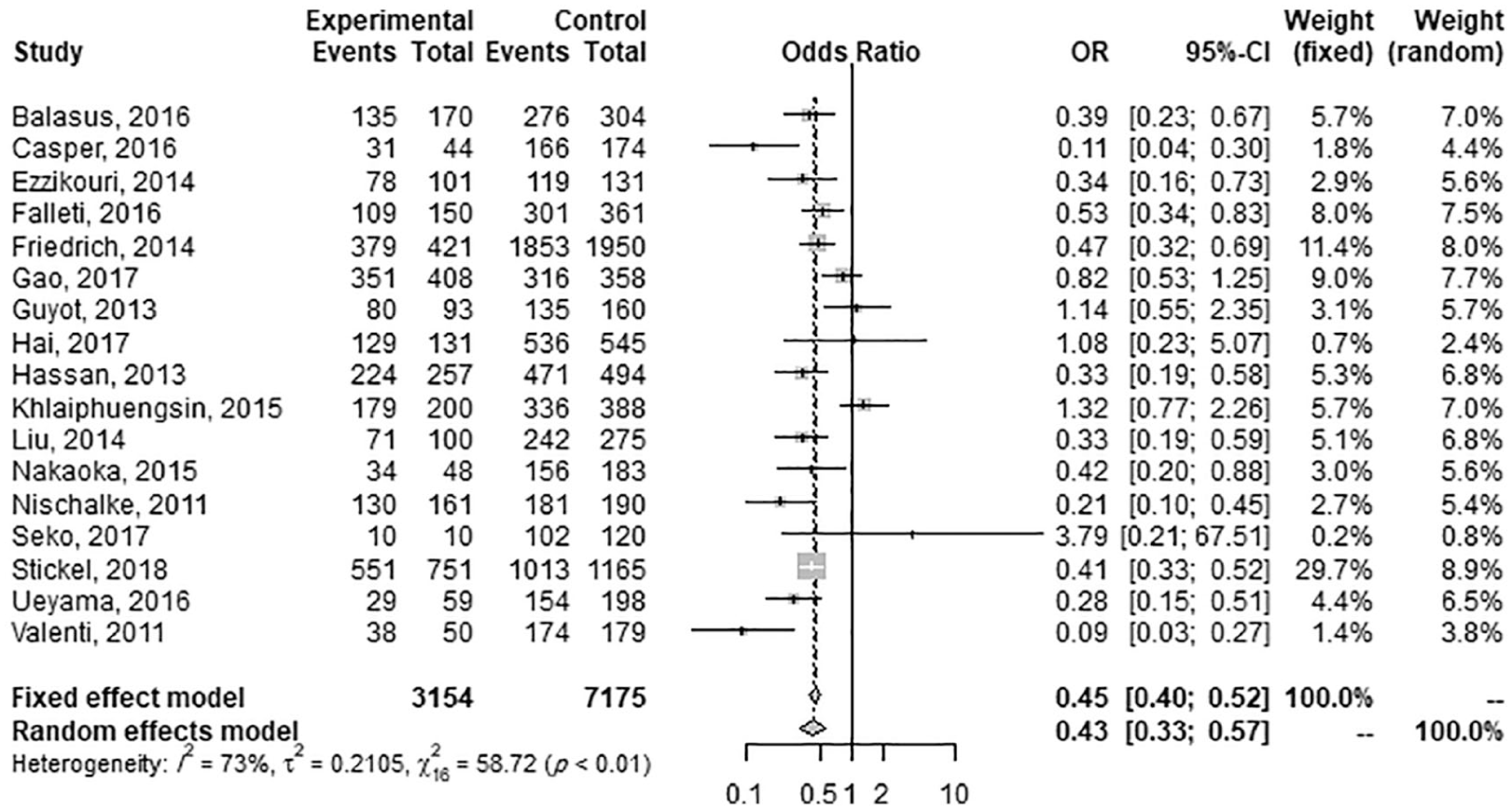
Forest plot of rs7384409 polymorphism and risk HCC under the dominant model.
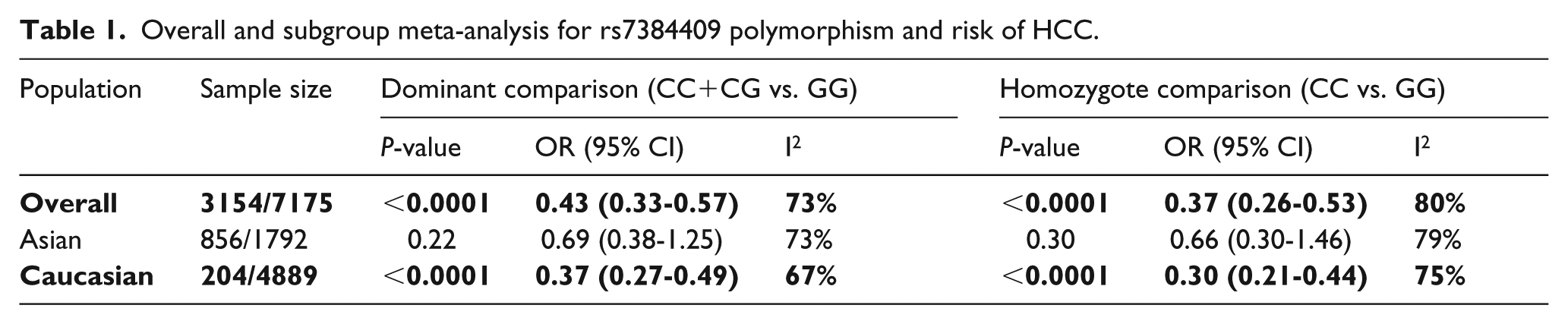
Overall and subgroup meta-analysis for rs7384409 polymorphism and risk of HCC.
In a further meta-analysis, we found the most significant association (OR=0.37; 95% CI=0.26, 0.53) in homozygote model (CC vs. GG), which is important in interpreting the results (Figure 2).
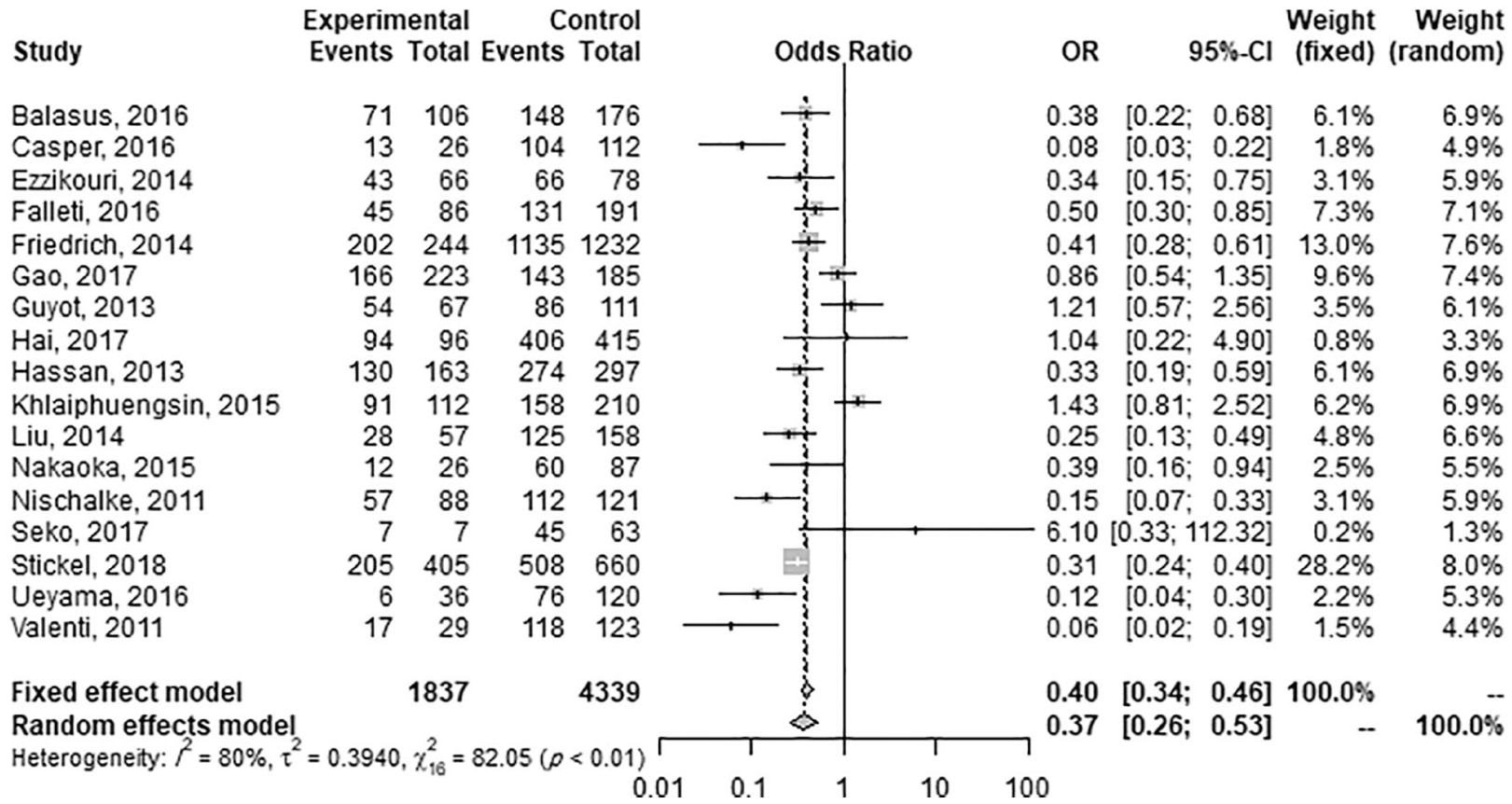
Forest plot of rs7384409 polymorphism and risk of HCC under homozygote model.
In conclusion, when we combine our meta-analysis with the results from the Huang et al.
1
meta-analysis it seems to be clear that the
Footnotes
Declaration of Conflicting Interest
The author(s) declared no potential conflicts of interest with respect to the research, authorship, and/or publication of this article.
Funding
The author(s) received no financial support for the research, authorship, and/or publication of this article.
