



Abstract
Background:
Understanding gender disparities in the way women pharmacists experience their careers is essential for robust workforce planning, as the profession has undergone substantial feminization in recent decades. This study aimed to quantify gender-related wage gaps in the Canadian pharmacy workforce as a tracer for progress toward gender equity in the wake of COVID-19.
Methods:
A national observational study was conducted using gender-disaggregated data among pharmacists from the 2021 population census and integrated income tax records capturing annual professional earnings in 2019 and (pandemic-affected) 2020. Descriptive and multivariate decomposition analyses were used to characterize earnings differentials, with adjustment for several professional, personal, and geographic factors.
Results:
Nearly two-thirds (63%) of pharmacists aged 25 to 54 were women. Despite similar levels of education, women’s earnings averaged 88 cents for every dollar earned by men. A significant gender wage gap was found, with women earning 9.2% (95% confidence interval [CI]: 4.8%–13.8%) less than men on average in 2020 after adjustment for other confounders. Much of the gap was explained by the measured predictors, including gendered earnings differentials observed the previous year, but a significant residual (34% of the gap) remained unexplained in the decomposition analysis.
Discussion:
This first nationally representative investigation of wage differentials among Canadian pharmacists found evidence of a persistent gender-related wage gap, one that was only marginally affected by labour disruptions brought on by the COVID-19 pandemic and which was largely unexplained—an outcome commonly attributed, at least in part, to gender bias and discrimination.
Conclusion:
Concerted efforts are needed among multiple stakeholders for achieving women’s full economic inclusion in the pharmacy profession.
Introduction
Pharmacists and other health care professionals across Canada and around the world face increased pressures to meet the growing demands of aging populations, complexity of health care needs, and access to and use of medicines.1,2 Along with such increasing demands, analyzing the status of the pharmacy workforce is critical to identify potential challenges such as shortages and geographic, sector, or gender imbalances. 2 Monitoring the numbers of registered pharmacists alone is insufficient to describe workforce capacity, as this does not reflect issues such as part-time work, places of delivery of pharmaceutical services, and attractiveness of pharmacy as a career choice, especially for women. 2 Understanding gender equity among pharmacists is of great importance for workforce planning in order to meet current and future demands, as the profession has undergone substantial feminization in recent decades.3,4 Despite the rapid feminization, evidence suggests that gender-based disparities persist, including in leadership representation and wages.4-6
Knowledge into Practice
The global pharmacy profession has undergone rapid feminization, but limited evidence from some countries points to persistent gender-based inequities, including earnings disparities.
This study provides quantitative insights into the gender wage gap among Canadian pharmacists, in the wake of the acute labour disruptions brought on by the COVID-19 pandemic.
Given the significant gender wage gap found in Canadian pharmacy across work sectors and regions of the country, concerted actions are needed to enhance pay transparency and opportunities for women in leadership development, to help recruit and retain talent
A growing body of research has documented persistent gender wage gaps in several skilled health care professions, including pharmacy and other cadres seeing rapid influxes of women. Lower wages among women pharmacists may be a signal of labour market factors such as place of work or working fewer hours but may also reflect (real or perceived) social unfairness in the distribution of resources, such as who is more likely to receive mentoring, promotions, and pay raises.7,8 Further mitigating social factors may relate to gendered divisions of labour, by which women—even while advancing their qualifications at entry to the profession—tend to retain primary responsibility for informal child and elder care and thus remain in more stereotypical work patterns (e.g., stable hospital pharmacy jobs and part-time work), while men enjoy the flexibility to pursue new areas, notably in self-employment, which is potentially more lucrative. 4 In particular, the COVID-19 pandemic heightened attention to the disproportionate burden on women in the front lines of health and pharmaceutical services and deep-rooted barriers to their career progression. 8 Addressing career constraints and other forms of gender bias and discrimination faced by women in pharmacy may lead to improved work satisfaction, reduced turnover, and increased innovation for the profession as a whole.4,5
Studies have examined gendered imbalances and pay gaps among pharmacists in the United States, Australia, and the United Kingdom4-6 and among other health professions in Canada. 9 However, there is a dearth of timely, comprehensive assessments on the gender pay gap among pharmacists in the Canadian context. A scoping review of the literature identified only 1 case study among a small sample of pharmacists in the province of Ontario undertaken more than 2 decades ago. 10 National investigations may be hindered by the data fragmentation that often accompanies the diversity of pharmacy workforce planning stakeholders, including provincial/territorial health ministries, professional regulators, hospitals, large corporate employers, and independent pharmacies. 1 To overcome the challenges of data silos, this study draws on nationally representative data from the latest Canadian population census, which, given its large sample size and high response rate, 11 provides robust data on the earnings and other labour and sociodemographic characteristics of pharmacists across service settings and scopes of practice. The aim is to quantify the current state of the gender pay gap in the Canadian pharmacist workforce and examine how it was affected by acute workplace disruptions due to the COVID-19 pandemic.
Mise En Pratique Des Connaissances
La profession de pharmacien a connu une féminisation rapide à l’échelle mondiale, mais les données limitées provenant de certains pays suggèrent que les inégalités fondées sur le sexe et les disparités salariales persistent.
Cette étude fournit un aperçu quantitatif de l’écart salarial entre les hommes et les femmes parmi les pharmaciens canadiens, à la suite des interruptions de travail importantes causées par la pandémie de la COVID-19.
Compte tenu de l’écart salarial important entre les hommes et les femmes dans les pharmacies canadiennes, dans tous les secteurs d’activité et dans toutes les régions du pays, des mesures concertées sont nécessaires pour améliorer la transparence salariale et les possibilités de développement en leadership pour les femmes afin d’aider à recruter et à retenir les talents.
Methods
Study design
This national observational study uses microdata from the 2021 population census conducted by Statistics Canada. The census captures detailed and standardized information on sociodemographic and labour market characteristics through a long-form questionnaire administered to a 25% sample of all households. 11 The present study focuses on individuals who identified in the long-form census their main occupation as pharmacist, based on the taxonomy of the National Occupational Classification (code 31120). This occupational group includes providers of pharmacy services in a wide range of settings, such as hospitals, clinics, and community-based pharmacies. 12 Pharmacologists, drugstore managers, academic pharmaceutical researchers, pharmaceutical sales representatives, and pharmacy technicians are excluded (classified elsewhere).
The target population was constrained to postsecondary-trained pharmacists in the core working ages of 25 to 54 years who worked for pay (full-time or part-time) and earned income from employment or professional practice in the 2 calendar years preceding the census. The key predictor variable, gender, was categorized by women and men (with a small number of nonbinary persons distributed across these 2 groups to prevent risk of disclosure of any identifiable data). 13 The outcome variable of interest was individuals’ annual employment income, which was measured objectively through integrated administrative income tax and benefits records for the year before (2019) and during (2020) the COVID-19 outbreak. Employment income encompassed all earnings acquired from wages, salaries, and commissions through paid employment as well as net self-employment income from professional practice. All income data are presented in inflation-adjusted (2020 constant) Canadian dollars.
Statistical analysis
After conducting a descriptive analysis of the active pharmacist workforce aged 25 to 54 years, we used simple linear regressions for bivariate analysis of the unadjusted gender wage gap (using logged earnings to address data skewness). Dynamic regression-based decomposition analysis was then applied to examine structural differences in the female and male pharmacy workforces that may help explain gendered differences in professional earnings, using the Oaxaca-Blinder decomposition method.14,15 This econometric approach disentangled the collective contributions of the average characteristics of women and men into an “explained” portion of wage gaps (i.e., attributable to the observed characteristics of women and men) vs an “unexplained” portion (any remaining difference in average earnings not attributable to the measured characteristics). A finding of significant unexplained portion of wage differences following decomposition is often framed in the literature as the result of gender discrimination: that is, a residual reflecting the earnings women receive below what would be predicted in the absence of discrimination.
The multivariate decomposition model controlled for several professional, personal, and geographic variables widely postulated in the literature as related to professional earnings, including age group (25–34, 35–44, or 45–54 years), educational attainment (diploma/certificate, bachelor’s degree, or graduate degree), main place of work (hospital, community-based pharmacy, primary care clinic, wholesale/industrial pharmaceuticals, or other sectors such as long-term care or regulatory affairs), class of worker (employee vs self-employed), working status (full-time vs part-time), household living arrangements (whether or not living with spouse and/or children), adult migrant status (whether or not immigrated to Canada in adulthood), and ethnic/ancestral origin (Indigenous identity, visible minority, or Caucasian). The analysis further controlled for relative urbanity vs rurality of pharmacists’ communities by linking the census data with the Index of Remoteness, a continuous index developed by Statistics Canada 16 to gauge the accessibility of all 5161 inhabited communities (census subdivisions) by proximity to population centres, services, and transportation infrastructure. To enhance meaningful comparisons across Canada’s vast landscape, the index was ranked into deciles, from Decile 1, representing the country’s most urbanized and accessible 10% of communities (where 61.5% of the total population reside), to Deciles 4 to 10, denoting the most rural and remote 60% of communities (where 16.6% of the population reside).
The analyses were carried out using the Stata statistical software. 17 Person-level census weights were applied to all estimates to ensure population representation of the parameters and robust 95% confidence intervals (CIs). Population counts were subject to controlled rounding and other protocols to adhere to Statistics Canada’s data privacy guidelines.
Results
Descriptive analysis
According to the 2021 census, 32,805 Canadians aged 25 to 54 worked as pharmacists, of whom nearly two-thirds (63%) were women. Most were employed in community-based pharmacies, more often men (82%) than women (72%) (Table 1). Conversely, more women than men were working in hospital settings: 21% vs 12% (p < 0.05).
Distribution (expressed as percentages) of the pharmacy workforce aged 24 to 54 by gender, 2021
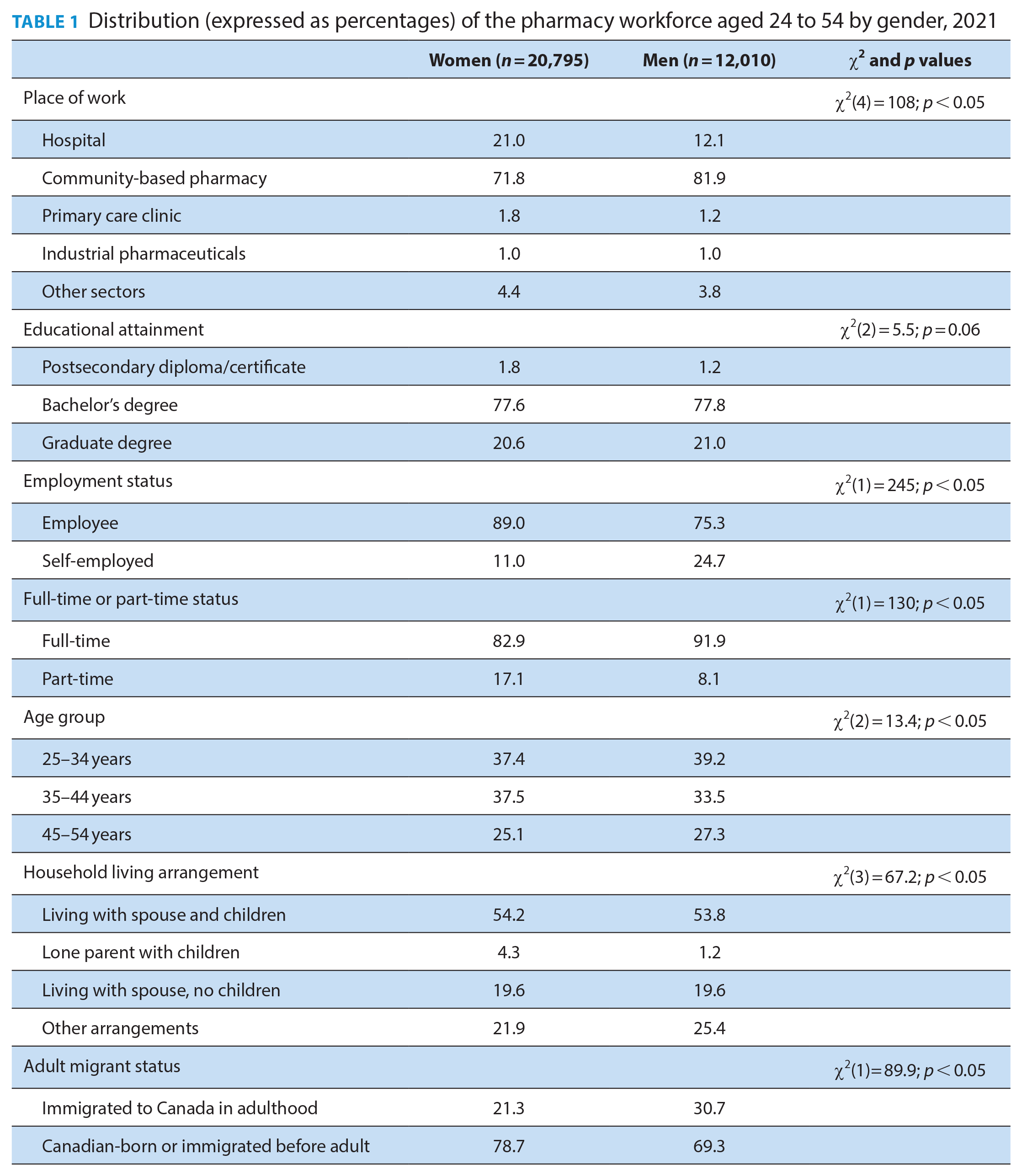
Women and men were found to have similar levels of education attainment, with 21% possessing a graduate degree among both genders (p = 0.06). There was some difference in the age composition of the female vs male workforces, with more men than women in the older age group of 45 to 54 years (27% vs 25%; p < 0.05). Women were overrepresented in part-time roles compared with men (17% vs 8%; p < 0.05) and more often had children at home (59% vs 55%; p < 0.05). Meanwhile, more men than women were self-employed (25% vs 10%; p < 0.05). More men than women were adult migrants to Canada (31% vs 21%; p < 0.05).
Some urban concentration was seen for both women and men pharmacists, who were similarly underrepresented in the country’s more rural and remote areas (~14%; p = 0.16) compared with the population they served (17%) (Figure 1).
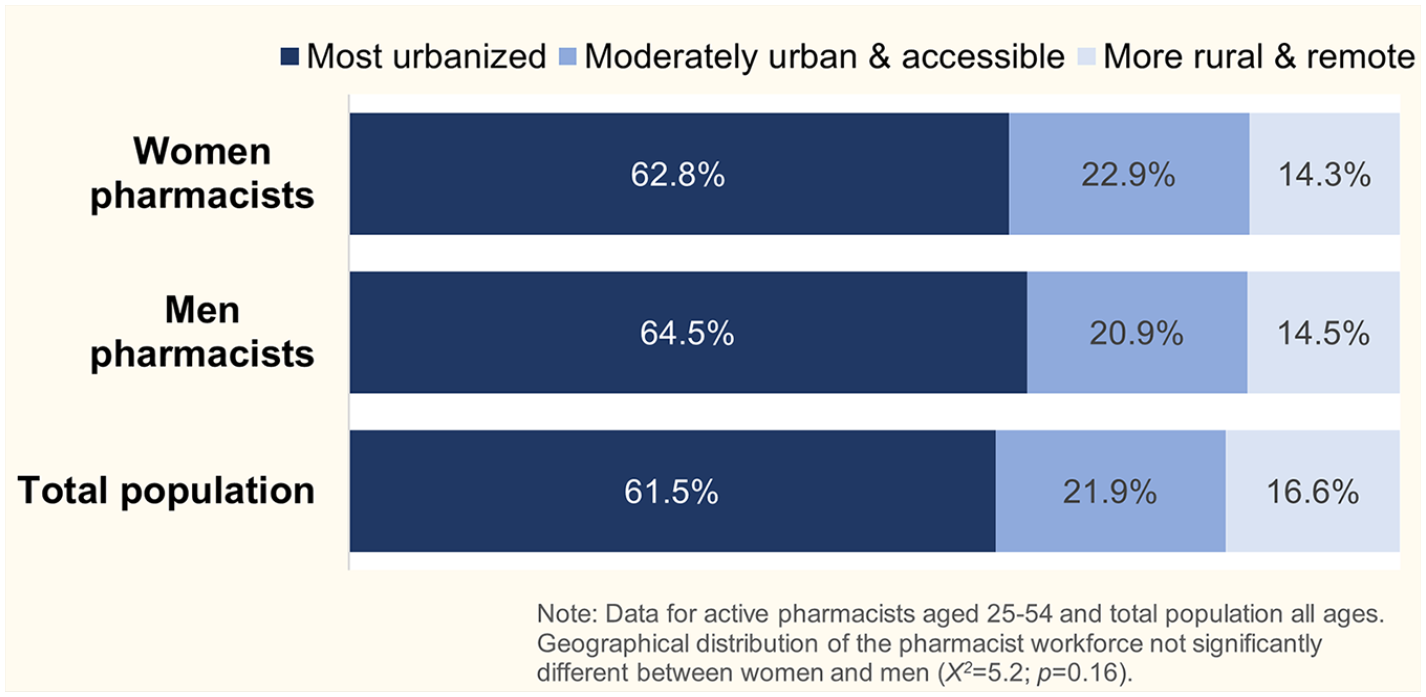
Percentage distribution of the pharmacist workforce and total population by relative remoteness of residential communities, 2021
Wage differences by gender
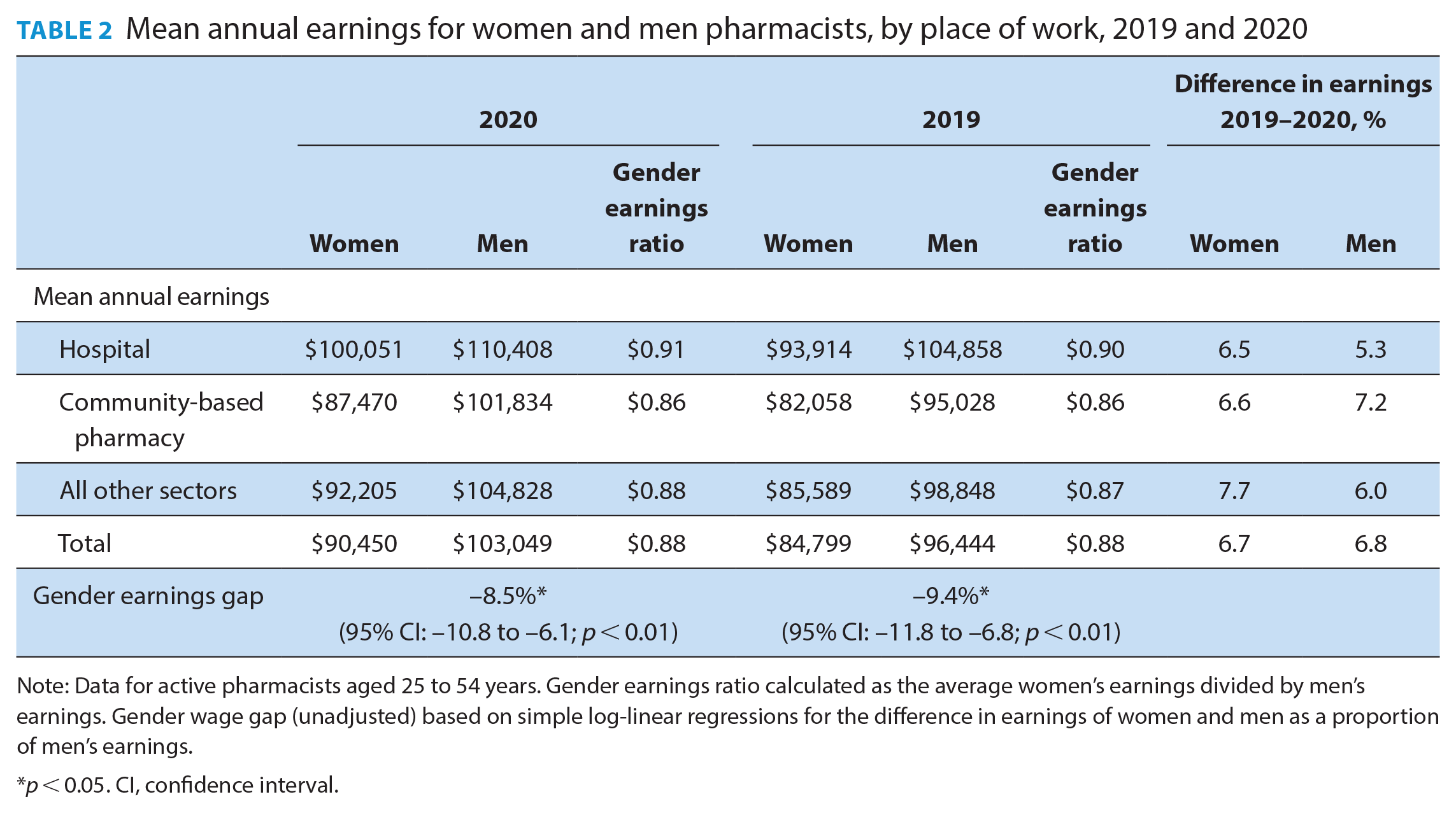
While inflation-adjusted earnings increased across all sectors for both women and men between 2019 and pandemic-affected 2020, disparities persisted by gender (Table 2). The gender earnings ratio remained stable, with women’s earnings continuing to average 88 cents for every dollar earned by men. The difference was somewhat narrower among those working in hospital settings (91 cents to the dollar in 2020) and wider in community-based pharmacy settings (86 cents to the dollar).
Mean annual earnings for women and men pharmacists, by place of work, 2019 and 2020
Note: Data for active pharmacists aged 25 to 54 years. Gender earnings ratio calculated as the average women’s earnings divided by men’s earnings. Gender wage gap (unadjusted) based on simple log-linear regressions for the difference in earnings of women and men as a proportion of men’s earnings.
p < 0.05. CI, confidence interval.
Since averages can be skewed by professionals with very high income, we conducted simple regression analysis using logged earnings; results showed a marginal decrease in the unadjusted gender earnings gap. In 2019, women earned a significant 9.4% (95% CI: 6.8%–11.8%; p < 0.05) less than men (Table 2). In 2020, the gap was still significant but trending downward, with women earning 8.5% (95% CI: 6.1%–10.8%;p < 0.05) less than men.
Significant gender wage gaps were observed across the country, with women pharmacists earning on average 8.1% (95% CI: 3.8%–12.1%; p < 0.05) less than men in Ontario to 13.5% (95% CI: 7.8%–18.9%; p < 0.05) less than men in British Columbia (Figure 2).
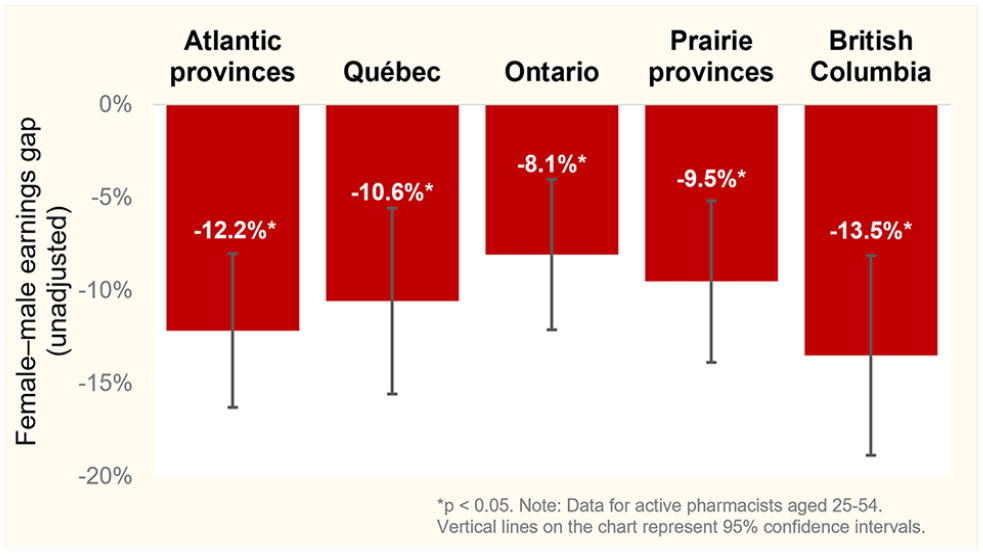
Gender earnings gap in the pharmacist workforce by province/region, 2020
Decomposition of the gender wage gap
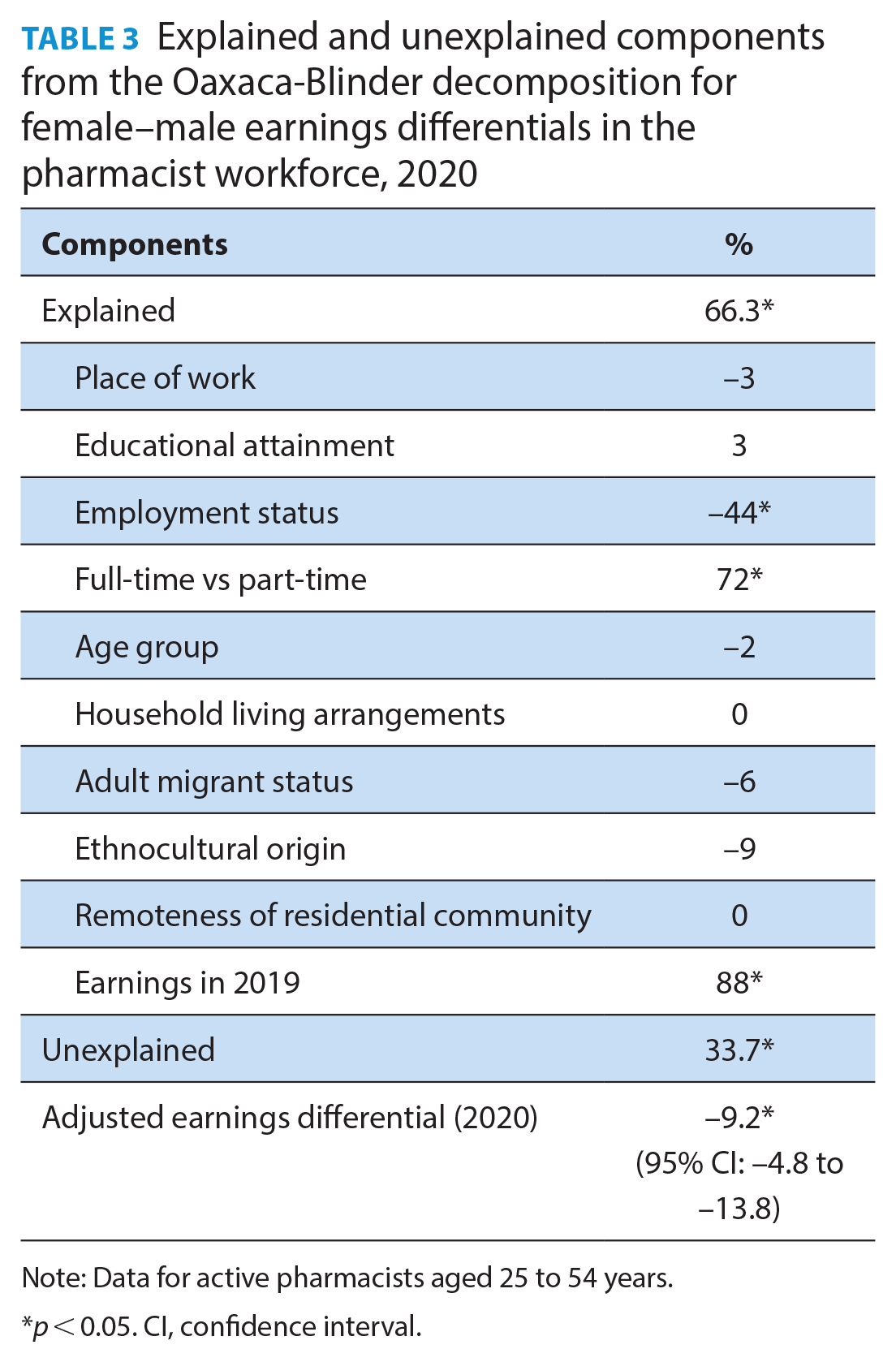
The multivariate decomposition analysis confirmed the persistence of a significant gender wage gap, with women earning 9.2% (95% CI: 4.8%–13.8%; p < 0.05) less than men on average in 2020 after adjustment for differences in the gender-specific composition of the pharmacy workforce by a range of professional, personal, and geographic characteristics (Table 3). Much of the gap was explained statistically by the measured predictors, including the earnings differentials between women and men observed the previous year. Employment status and part-time work were other factors for which differences in labour behaviours between women and men contributed significantly to the wage gap. The gap could not be explained by gender-related differences in age group or educational attainment. A significant residual (34%) of the gap was unexplained by these or other confounding sociodemographic factors, including place of residence, migrant status, presence of children, and ethnocultural origin.
Explained and unexplained components from the Oaxaca-Blinder decomposition for female–male earnings differentials in the pharmacist workforce, 2020
Note: Data for active pharmacists aged 25 to 54 years.
p < 0.05. CI, confidence interval.
Discussion
This national study showed evidence of a persistent gender wage gap in the Canadian pharmacist workforce, one that was seemingly only marginally affected by disruptions to the labour market brought on by the COVID-19 pandemic. Women’s professional earnings were found to average 9.2% less than men’s in 2020, a significant gap after adjustment for gender-specific structural differences by place of work, employment status, education, relative rurality, and other sociodemographic characteristics. While the earnings differential was slightly narrower than that recorded in prepandemic 2019, a significant portion of the gap (34%) was unexplained statistically by the measured predictors. Such significant residuals following decomposition of the gap are commonly attributed in the literature, at least in part, to effects of (unmeasured and unmeasurable) gender bias and discrimination.9,17
The present results were consistent with a 1998 case study of pharmacists in Ontario, which found that women were earning 14% less than their male counterparts in hospital positions and 19% less in community settings. 10 Although the earlier findings were not population-representative, a comparison with the national-level earnings differentials recorded in this analysis may be suggestive of some modest improvements. However, closing the gender wage gap remains elusive despite the lessons learned on gender equity as the health and pharmaceutical systems were stressed by the COVID-19 pandemic. 18 Since women now represent nearly two-thirds (63%) of income-earning pharmacists in Canada, the gender gap remains a notable problem across provinces and regions for the pharmacy profession to attract and retain talent. The problem persists even in hospitals, a highly institutionalized setting where hierarchical structures and pay scales may reinforce pre-existing inequities.
Somewhat surprising was the lack of notable change in the pay gap during the year of the COVID-19 emergency response. An online survey of pharmaceutical personnel in Scotland conducted 15 months after initial lockdown measures indicated that the pandemic was perceived to have negatively disrupted the provision of clinical services as well as opportunities for mentoring and professional development. 19 Despite the increased burden on health care professionals, the global outbreak may have sparked greater workplace flexibility from which women can especially benefit. The majority of pharmacists are employed at places that were on the front lines against COVID-19 8 and thus may have been better able to continue to serve patients (remotely or in-person) with fewer interruptions from pandemic mitigation measures.
Given the vital need for action toward gender equity and inclusion in the pharmacy workforce, several steps can be taken by various stakeholders. First, mandating transparency in pay scales and compensation guidelines at all levels of employment (e.g., health ministries, hospitals, pharmaceutical industries) could help redress wage disparities. Transparency laws across multiple provinces have been attributed to reducing the gender wage gap by 2.2 to 2.4 percentage points among academic faculty in Canada. 20 Second, promoting mentorship and leadership development opportunities for women in pharmacy is essential to help balance representation at senior levels and address the wage gap at its roots, especially in the wake of the COVID-19 pandemic. 19 A study among pharmacists in Florida, United States, found a significant effect of perceived greater advancement opportunities with higher earnings for women, independent of hours worked and other human capital variables. 21 Third, further and regular studies conducted at the national level and disaggregated by jurisdiction, sector of work, and intersecting social characteristics are needed to continue to monitor Canada’s progress toward achieving gender parity beyond simple counts but in women’s full economic inclusion in the pharmacy profession.
A key strength of this study is the use of the nationally representative census data, which allows for a comprehensive examination of gender-based wage disparities generalizable to the pharmacy workforce across locations and sectors. Some limitations are also noted. The data used in the study are cross-sectional, limiting the ability to assess long-term trends in wage disparities or, for example, changes in the labour market affecting career progression or in provincial/territorial regulatory frameworks affecting scopes of practice. While earnings data from integrated tax records were available for both the 2019 and 2020 calendar years, individual characteristics were those self-reported at the time of the census (May 2021). It is possible that some persons qualified in pharmacy left the profession during this period—a tendency that may be more pronounced among women—and thus were not included in the target population. Several characteristics hypothesized to influence earnings potential were considered in the multivariate analysis, but other factors were not measured in the census, such as work–life balance preferences, negotiation behaviours, access to credit to launch an independent business, and implicit or explicit female stereotyping and gender-based discrimination in the workplace. Last, the earnings data may have captured some government wage replacement benefits from programs initiated as an emergency response to the pandemic in 2020 22 but not from other ongoing benefits or subsidies programs such as for parental leave, for which uptake may be more prevalent among women.
Conclusions
The Canadian Pharmacists Association recognizes there are clear gender disparities in the way women experience their careers in pharmacy but that data-driven evidence on the extent of the problem in terms of wage gaps in Canada has been lacking. 23 Given the inherent challenges of data silos across provincial/territorial health professional regulatory and information systems, this study leveraged nationally standardized data from the population census. A significant wage gap was found to persist, with women pharmacists earning on average 9.2% (95% CI: 4.8%–13.8%; p < 0.05) less than men in 2020 after adjustment for a range of confounders. Actions to promote pay transparency, targeted mentorship and leadership development opportunities, and ongoing monitoring are essential to ensure women’s economic inclusion and fair treatment in the pharmacy profession. ■
Footnotes
Acknowledgements
The deidentified census microdata used in this study were accessed in the secure computing facilities of the New Brunswick Research Data Centre (NB-RDC). The services of the NB-RDC are provided through the support of the University of New Brunswick, Government of New Brunswick, Canada Foundation for Innovation, Canadian Institutes of Health Research, Social Sciences and Humanities Research Council, and Statistics Canada.
Author Contributions:
N.G. conceptualized the study and its design. S.N. wrote the first draft of the manuscript. P.M. performed data management and formal analysis. All authors contributed to the interpretation of the results and provided substantive contributions to the final version.
Funding:
Financial support for this work was received from the Social Sciences and Humanities Research Council of Canada (Insight Grant #435-2020-0706, awarded to N.G.).
Declaration of Conflicts of Interest:
The authors declare no potential conflicts of interest with respect to the research, authorship, and/or publication of this article.
Ethics and Consent to Participate:
Internal ethical review for research using deidentified federal statistical sources was not required for this study, in accordance with institutional requirements of the University of New Brunswick Research Ethics Board. Informed consent for the collection of personal information by Statistics Canada for the census program is governed under the provisions of the Statistics Act.
Data Availability:
The data that support the findings of the study are available through Statistics Canada’s Research Data Centres, but restrictions apply to the availability of these confidential data, which were used with permission for the current study and so are not publicly available.
