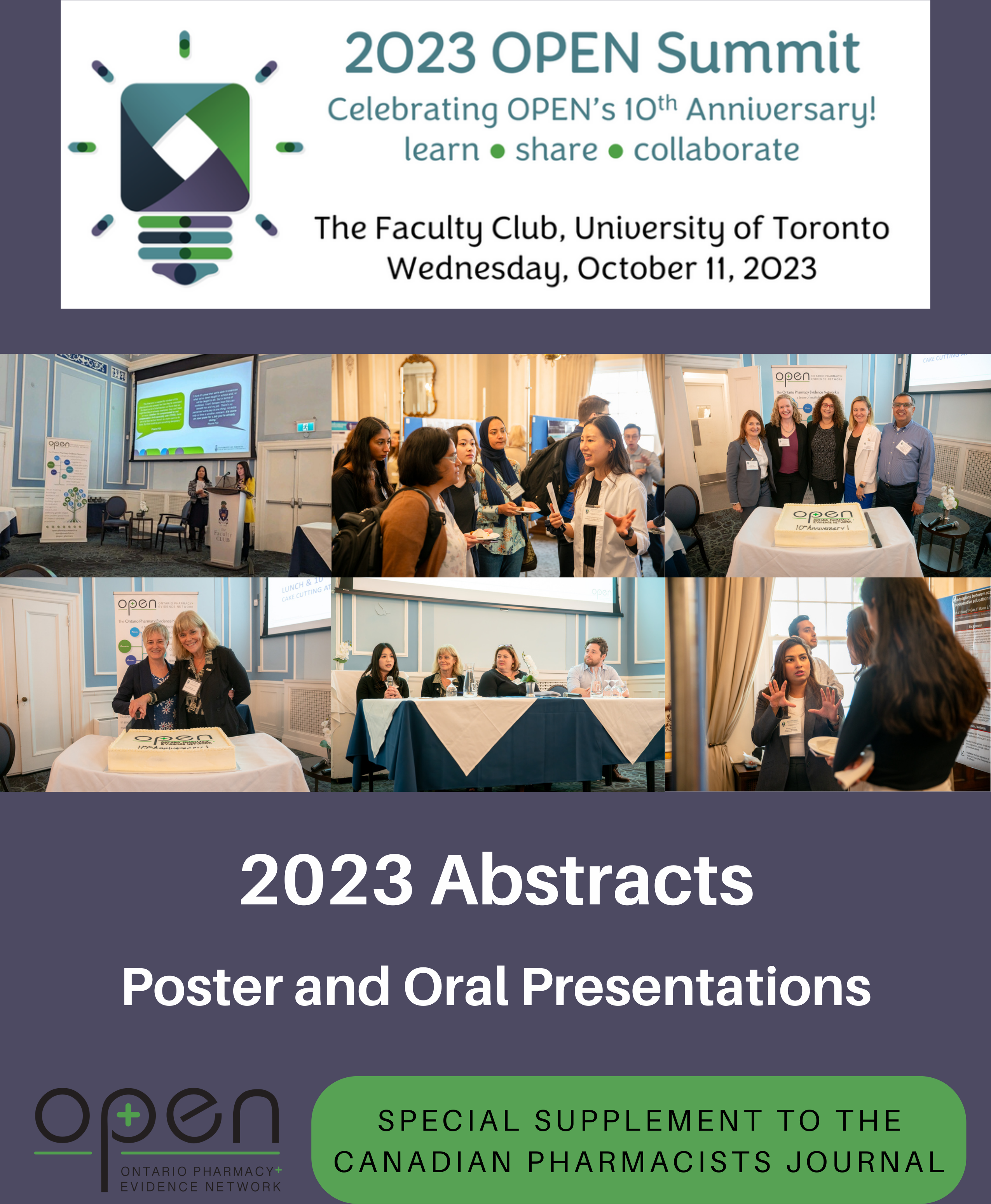
Ontario Pharmacy Evidence Network (OPEN) 10th Anniversary Summit
The Ontario Pharmacy Evidence Network (OPEN) held its 10th Anniversary Summit on October 11th, 2023 in Toronto, Ontario. OPEN was founded through Government of Ontario funding as a consortium of scientists and knowledge users including educators, policy makers, advocates, and practitioners with common interests related to medication management and the evolving role of pharmacy in the health care system. After a 4-year pandemic hiatus, OPEN was ready to reconvene in-person to share with a diverse audience ongoing research that contributes to evidence-informed policy making and practice change.
The opening keynote was delivered by Bev Zwicker and Dr. Andrea Bishop from the Nova Scotia College of Pharmacists. They noted the pivotal role of research in driving policy decisions and highlighted opportunities where regulators and researchers can effectively partner to advance research objectives aligned with urgent priorities. During the question-answer period the importance of developing collaborative relationships with regulators/policy makers throughout the research process, from inception to dissemination, was highlighted.
Following the keynote, three research teams presented their findings on topics related to minor ailments prescribing in Ontario, health professionals’ and patients’ perspectives on opioid use disorder treatment, and use of screening tools to identify medication management challenges for older adults. An innovative feature of these presentations was the contribution of knowledge users (including patients). Specifically, research teams described models and methods for including different kinds of knowledge users in all aspects of the research process, including framing of questions and objectives, data analysis, and dissemination of findings. These oral presentations were followed by a panel discussion comprised of stakeholders from the Ontario College of Pharmacists, the Ontario Pharmacists Association, the Ontario Ministry of Health, and an OPEN Citizen’s Council member. These panelists reflected on the research presented from their unique perspectives.
A key objective of OPEN is to provide opportunities for scientists/researchers at all stages to present their work and build networks. The Summit featured 30 posters selected for presentation based on quality and impact. During the interactive poster sessions, presenters and participants had opportunities to share their work with more than 80 Summit attendees.
The afternoon keynote presentation was delivered by Dr. Sara Guilcher in the form of a “fireside chat discussion” with Dr. Lisa McCarthy. Through personal anecdotes and professional experiences, Dr. Guilcher shared her “lessons learned” related to evidence-informed policy partnerships and challenged participants to engage more strategically with the stakeholders that rely on their work. Oral presentations from four research teams followed, including a novel pre-exposure prophylaxis prescribing pilot project in Nova Scotia, a descriptive project highlighting the long-term research impact of deprescribing guidelines in practice, a quality improvement initiative to evaluate the impact of patient and public perspectives within a research program, and a recent study highlighting the experiences of patients from the LGBTQ2S+ communities with pharmacists. A large group discussion concluded the formal Summit proceedings and focused on next steps for OPEN and practice research.
The Summit was followed by an OPEN Advisory Committee meeting. This critical committee provides a venue for key stakeholders to provide additional input on research, policy, and practice needs as well as on future opportunities for OPEN’s strategic priorities and activities.
Abstracts for this event have been collated to provide the pharmacy community with an opportunity to explore and learn from the breadth and depth of work presented. As the role and scope of pharmacists and regulated technicians continue to expand, the need for evidence-informed policy and decision making is increasing. OPEN Scientists welcome opportunities to share their findings, build collaborative networks, and ensure alignment of their work with the pharmacy community and other stakeholders in order to optimize healthcare and outcomes for all Canadians.
About OPEN
OPEN is a team of multidisciplinary researchers working together to evaluate the quality, outcomes and value of medication management services that pharmacists and other healthcare professionals provide.
We are fostering knowledge translation and exchange, building capacity in medication management research, and addressing the needs of Ontario’s diverse population.
OPEN Executive members:
Zubin Austin, Leslie Dan Faculty of Pharmacy, University of Toronto
Lisa Dolovich, Leslie Dan Faculty of Pharmacy, University of Toronto
Sherilyn Houle, School of Pharmacy, University of Waterloo
Lisa McCarthy, Leslie Dan Faculty of Pharmacy, University of Toronto
Nancy Waite, School of Pharmacy, University of Waterloo
Contact OPEN for more information
Email: open@uwaterloo.ca
Website: www.open-pharmacy-research.ca
Twitter/X: @open_pharmacy
Facebook: https://www.facebook.com/ontario.pharmacy.evidence.network
To join the OPEN mailing list, visit our website at www.open-pharmacy-research.ca
OPEN currently has a home at both the University of Waterloo and the University of Toronto.
School of Pharmacy
University of Waterloo - Health Sciences Campus
10A Victoria St. S, Kitchener, ON N2G 1C5
Leslie Dan Faculty of Pharmacy
University of Toronto – St-George Campus
144 College St, Toronto, ON M5S 3M2

Acknowledgements and Citations
The Ontario Pharmacy Evidence Network (OPEN) Summit 2023 conference took place on October 11, 2023, in Toronto, Ontario.
The peer-reviewed abstracts accepted for presentation at the 2023 OPEN Summit as oral or poster sessions are published in this special supplement of the Canadian Pharmacists Journal. The primary author has provided permission for publication of their abstract.
OPEN wishes to acknowledge the support of CPJ and the Canadian Pharmacists Association in helping to promote and disseminate pharmacy education initiatives, educational scholarship, pharmaceutical science and pharmacy practice research.
The citation format for abstract publication in the Canadian Pharmacists Journal can be seen below:
Authors’ Last names, Initials. Title of abstract. OPEN Summit 2023 Abstracts – Poster and Oral Presentations. Can Pharm J (Ott) 2024; Number[Suppl]:page number.
Table of Contents
ORAL 1A: Facilitators and barriers to minor ailment prescribing in Ontario: Perceptions of pharmacists, physicians and patients to service implementation
Yasmin Abdul Aziz1, Vivian Ng2, Diya Srinivasan3, Julie Vo3, Laura Desveaux3,4, Kevin Schwartz5,6, Zahava R.S. Rosenberg-Yunger7, Erin Berenbaum5, Lindsay Friedman5, Bradley Langford5,6, Valerie Leung5, Emily Angl8, Nardine Nakhla9, Mina Tadrous1,3
1 Leslie Dan Faculty of Pharmacy, University of Toronto
2 Ontario College of Pharmacists
3 Women’s College Hospital
4 Institute for Better Health, Trillium Health Partners
5 Public Health Ontario
6 Dalla Lana School of Public Health, University of Toronto
7 Toronto Metropolitan University
8 Toronto East Health Network, Michael Garron Hospital
9 School of Pharmacy, University of Waterloo
BACKGROUND: Expanding pharmacists' scope of practice to include prescribing for thirteen minor ailments, including infectious diseases, in the community pharmacy setting began January 2023. This expansion presents opportunities to improve patients’ access to timely care and harness pharmacists’ expertise to increase appropriate prescribing. Identifying key facilitators and barriers for the effective implementation of pharmacist prescribing is crucial to proactively support this evolution.
OBJECTIVE: To identify facilitators and barriers for the effective implementation of pharmacists prescribing medications for selected minor ailments and infectious diseases
METHODS: Virtual interviews and online surveys were utilized to gather pharmacists’ perspectives on service provision across Ontario prior to the launch. Virtual focus group discussions were conducted with primary care physicians and patients separately. Focus groups and interviews were audio recorded, transcribed verbatim and thematically analyzed. Data analysis was guided by the Consolidated Framework for Implementation Research (CFIR) and the Theoretical Domains Framework.
RESULTS: Twenty-four pharmacists, nine physicians and sixteen patients participated in interviews or focus groups. Seventy-one surveys were included in the analysis. All participant groups perceived the expanded scope to be beneficial if implemented well. Facilitators and barriers identified were predominantly in the domains of (1) Inner setting and (2) Intervention characteristics. Findings relevant to pharmacist roles and patient attributes did not fit into CFIR domains. Overburden and compensation were the most cited barriers by pharmacists. Pharmacist-identified facilitators included education and training, and access to patient information. Patients and physicians cited access to patient information as a primary barrier in addition to variable patient trust in pharmacists. Increasing access to healthcare was the top facilitator from this group of participants.
CONCLUSION: Overall, Ontario pharmacists, patients and physicians positively rated the expansion of scope to include minor ailment prescribing. Some concern was raised by pharmacists around implementation of this new service in the current COVID-19 climate with the current limited resources.
ORAL 2A: OUDCareRx Research Program - Changes and challenges in pharmacy practice to support people with opioid use disorder
Beth Sproule
1,2,3, Maria Zhang1,2, Mina Tadrous2,4,5, Zubin Austin2, Bruna Brands1,6,7, Peter Selby1,3,8, Sylvia Hyland9, Jes Besharah10
1
Centre for Addiction & Mental Health
2
Leslie Dan Faculty of Pharmacy, University of Toronto
3
Dept. of Psychiatry, Faculty of Medicine, University of Toronto
4
ICES Toronto
5
Women’s College Research Institute
6
Dept. of Pharmacology and Toxicology, University of Toronto
7
Office of Drug Research and Surveillance, Controlled Substances and Cannabis Branch, Health Canada
8
Dept. of Family and Community Medicine, Faculty of Medicine, and the Dalla Lana School of Public Health, University of Toronto
9
Institute for Safe Medication Practices Canada
10
OUDCareRx Research Program Citizens Panel Member
BACKGROUND: The opioid crisis and pandemic have brought significant challenges for people with opioid use disorder (OUD). Subsequent changes in clinical practice guidance and regulations have impacted pharmacy practice in the care of these patients.
OBJECTIVE: The goal of this research program is to identify challenges and perceptions of pharmacist medication management services for OUD in Ontario, and to inform clinical and policy changes.
METHODS: This research program has used a multi-method approach including: a survey of Ontario pharmacists; stakeholder interviews; and administrative claims data analyses. Pharmacist perspectives were sought using a REDCap survey that was distributed in March/April 2021 using the Ontario College of Pharmacists email list for pharmacists consenting to be contacted for research. Virtual interviews on pharmacist OAT services were conducted in 2022 with pharmacists, prescribers and OAT patients. Access to OAT from 2016-2022 is being assessed over time using Narcotics Monitoring System OAT prescription and location data from ICES. A panel of people with lived experience provides input on the focus, design and interpretation of all studies.
RESULTS: A total of 315 pharmacists completed the survey (84% community). Most indicated increases in OAT take-home doses, with mixed opinions on whether this should continue (endorsed by 51% for methadone and 62% for buprenorphine). Pharmacists utilized the CDSA exemptions for patients receiving OAT, primarily transferring prescriptions (60%) or accepting verbal orders (45%). Although most pharmacists endorsed feeling confident in providing OAT services (83%) and find it valuable (79%) many want more training on substance use disorders (65%). The interview study and access to OAT data analyses are underway and will be available for the summit.
CONCLUSION: During the ongoing opioid crisis, optimizing pharmacy practice services for people with OUD is critical. The results of this program of research will inform recommendations to guide and advance practice going forward.
ORAL 3A: Tools to measure barriers to medication management capacity in older adults: A scoping review
Bincy Baby1, Annette McKinnon2, Kirk Patterson2, Hawa Patel1, Rishabh Sharma1, Caitlin Carter1, Ryan Griffin3, Catherine Burns4, Feng Chang1, Sara. J. Guilcher5, Linda Lee6, Sara Abu Fadaleh1, Tejal Patel1
1
School of Pharmacy, University of Waterloo
2
Patient Advisor’s Network
3
National Research Council Canada
4
Faculty of Engineering, University of Waterloo
5
Leslie Dan Faculty of Pharmacy, University of Toronto
6
Centre for Family Medicine Family Health Team
ENCORE PRESENTATION
ORAL 4A: Acceptance of a pharmacist-led prescribing service for Pre-Exposure Prophylaxis (PrEP) for Human Immunodeficiency Virus (HIV) by patients
Calum MacDonald
1, Andrea Murphy1, Jennifer Isenor1, Tasha Ramsey1, Kirk Furlotte1, Alesha Smith1, Andrea Bishop1, Deborah Kelly1, Lisa Woodill1, Connor Booker1, Kyle Wilby1
1
Dalhousie University
BACKGROUND: Pre-exposure prophylaxis (PrEP) for Human Immunodeficiency Virus (HIV) is a highly effective way to reduce virus transmission for those individuals who are at highest risk. Across Canada there have been increasing calls to improve access to PrEP, one way to improve access is by having more prescribers available.
OBJECTIVE: The purpose of this study was to determine target users’ acceptability of a PrEP-prescribing service by pharmacists in Nova Scotia.
METHODS: A triangulation, mixed-methods study was conducted consisting of an online survey and qualitative interviews based on the Theoretical Framework of Acceptability (TFA) constructs (affective attitude, burden, ethicality, intervention coherence, opportunity cost, perceived effectiveness and self-efficacy). Participants were those eligible for PrEP in Nova Scotia under the provincial formulary (men who have sex with men or transgender women, persons who inject drugs, and HIV-negative individuals in sero-discordant relationships). Descriptive statistics and ordinal logistic regression were used to analyze survey data. Interview data were deductively coded according to each TFA construct and then inductively coded to determine themes within each construct.
RESULTS: A total of 149 responses were captured by the survey and 15 participants completed an interview. Participants supported pharmacists’ prescribing PrEP across all TFA constructs from both survey and interview data. Identified concerns related to pharmacists’ abilities to order and view lab results, pharmacists’ knowledge and skills for sexual health, and the potential for experiencing stigma within pharmacy settings.
CONCLUSION: A pharmacist-led PrEP prescribing service is acceptable to eligible populations in Nova Scotia. The feasibility of PrEP prescribing by pharmacists should be pursued as an intervention to increase access and potentially contribute to HIV infection reduction.
ORAL 5A: A decade of deprescribing guidelines: Telling a contribution story using a research impact framework
Barbara Farrell
1,2
1
Bruyere Research Institute
2
Department of Family Medicine, University of Ottawa
BACKGROUND: Deprescribing guidelines help clinicians decide when and how to reduce or stop medications. Our team developed four guidelines and collaborated on a fifth from 2013 to 2016. The evaluation of the dissemination of this research over the last decade and its’ contribution to impact, in the context of other ongoing national and international activities, is an important priority to help understand the difference a research program makes.
OBJECTIVE: To develop an approach to describe contributions of stakeholder engagement and knowledge mobilization strategies to international uptake and use of deprescribing guidelines, as well as the impact of these activities in advancing medication-related care.
METHODS: This descriptive study used a research contribution framework to outline processes and describe uptake, use and impact of deprescribing guideline methods, stakeholder engagement and knowledge mobilization strategies. The “Matter of Focus” outcome mapping approach and “Outnav” software were used to identify outcomes and impact that matter, and to bring evidence, feedback and data together.
RESULTS: Two pathways were articulated; stepping-stones reflecting six outcome levels (including e.g., “what we do”, “who we do it with”, “how they feel”, “what they learn and gain” and “what they do differently”) were identified and a visual map illustrating progress toward these outcomes and confidence in the data were illustrated.
CONCLUSION: Using a structured approach to report on activities and outcomes at different levels helps to ‘tell the story’ of the contribution of a research program, and to identify areas where sufficient data has been collected or where more information is needed to build confidence in results. This analysis was performed retrospectively after initially developing a knowledge-to-action plan in 2013. Teams aiming to impact policy and care should consider using an outcomes-focused mapping approach from the outset of planning in order to understand what is needed to enact change.
ORAL 6A: Integrating patient and public perspectives within OPEN pharmacy practice research: A
mixed methods evaluation
Mathew DeMarco
1, Zahava Rosenberg-Yunger3, Nancy Waite1, Lisa Dolovich2, Mansur
Mehdi1, and Jon Jones
1
School of Pharmacy, University of Waterloo, School of Pharmacy
2
Leslie Dan Faculty of Pharmacy, University of Toronto
3
Toronto Metropolitan University
BACKGROUND: During the past three years, the Ontario Pharmacy Evidence Network (OPEN) has
embedded a patient and public engagement strategy at the program level through the OPEN
Citizen’s Council (OCC). The OCC consists of members from a variety of demographics living in
Toronto or Waterloo. The OCC meets up to two times annually. The purpose of the OCC is to provide feedback to OPEN researchers regarding their projects.
OBJECTIVE: This quality improvement project focuses on the evaluation of the effectiveness of the
OCC from the council members and presenting OPEN researchers’ perspectives.
METHODS: A mixed methods evaluation was conducted which included quantitative descriptive analysis of survey data and qualitative analysis of interview transcripts. Surveys used the
McMaster University’s Public and Patient Engagement Evaluation Tool (PPEET) to evaluate the initiative from both the OCC member and OPEN researcher perspectives. Qualitative data collection included individual semi structured interviews with OCC members and OPEN researchers. Qualitative data was categorized using thematic content analysis to identify themes.
RESULTS: A total of 19 interviews were completed with OPEN researchers (n=10) and OCC members
(n=9). A total of 49 surveys were collected over 3 years across 6 meetings from OCC members (n=41)
and OPEN researchers (n=8). The qualitative analysis of interview transcripts and
quantitative analysis of collected surveys are in progress.
CONCLUSION: The OCC provided a valuable opportunity to bring the voices of patients and the public to the forefront of pharmacy practice research discussions.
ORAL 7A: Disparities in accessing pharmacy services for sexual and gender minorities across Canada
Molly Yang
1, James Morrison1
1
Wholehealth Pharmacy Partners
BACKGROUND: Members of the 2SLGBTQQIA+ community experience challenges in accessing healthcare services due to stigma, discrimination, and lack of knowledge from healthcare providers.
OBJECTIVE: The purpose of this survey was to understand the collective pharmacy experiences of patients who identify as 2SLGBTQQIA+ and highlight areas for improvement for pharmacists and pharmacy teams to provide safer, more inclusive care.
METHODS: A 31-item survey, consisting of questions about patient demographics and pharmacy experiences relating to gender identity and sexual orientation, was completed by members of the 2SLGBTQQIA+ community residing in Canada from October 2022 to June 2023. Questions were developed based on Government of Canada and Trans PULSE surveys and adapted to collect pharmacy experiences. The survey was shared on Wholehealth’s social media channels, community groups, and pride organizations.
RESULTS: A total of 50 responses were collected from the survey. 70% of participants accessed pharmacy services monthly, with most having a community pharmacy they regularly visit. About half of the responses indicated being uncomfortable discussing 2SLGBTQQIA+ specific healthcare needs with a pharmacist and discussing either their gender identity or sexual orientation with an unfamiliar pharmacist. Common themes around negative pharmacy experiences included a lack of knowledge about 2SLGBTQQIA+ related care, refusal to use lived names or pronouns, misgendering, and discrimination. Suggestions to incorporate more inclusive care in the pharmacy included: asking for patient pronouns and lived names, protecting patient privacy, posting visuals to establish the pharmacy as a safe space, having 2SLGBTQQIA+ representation in the pharmacy team, and training pharmacy professionals on 2SLGBTQQIA+ health topics.
CONCLUSION: 2SLGBTQQIA+ patients report varied experiences when accessing pharmacy services across Canada, highlighting gaps in knowledge and cultural safety around their care. There is an urgent need for pharmacists and pharmacy teams to be educated on 2SLGBTQQIA+ health and incorporate strategies to promote inclusive care.
POSTER 1B: Two Spirit peoples' experiences accessing and receiving care in community pharmacies
Marissa Pirlot
1,
Jaris Swidrovich
1,2
1
University of Saskatchewan
2
Leslie Dan Faculty of Pharmacy, University of Toronto
BACKGROUND: Two Spirit people face unique challenges in accessing and receiving healthcare in Canada. The Canadian healthcare system is embedded with homophobia, transphobia, heteronormativity, and racism due to colonization which impedes appropriate care for Two Spirit peoples. Coupled with a lack of representation and lack of programming, these issues have resulted in a lack of awareness and understanding of the obstacles faced by Two Spirit individuals in the Canadian healthcare system.
OBJECTIVE: This CIHR-funded project set out to gain knowledge about the experiences of Two Spirit peoples in accessing and receiving care in community pharmacy settings in Canada.
METHODS: A total of 21 Two Spirit participants were asked to share their stories in focus group settings. Four different focus groups were held in various geographic locations (Vancouver, Edmonton, Saskatoon, Toronto). Informed by Indigenous methodologies, data was recorded via audio-recordings of the various focus groups. The audio was then transcribed and analyzed for themes using the Voice-Centered Relational method.
RESULTS: All gifted stories shared had connections to at least one of the following three structural systems: white supremacy, heteronormativity, and capitalism. These structural processes presented themselves as racism, lack of =me and greed, lack of knowledge, and homophobia/transphobia. Participants expressed positive experiences when they felt the pharmacist and themselves had a relationship, their Traditional Medicines were valued, or when they were white-passing or straight-passing. The participants also emphasized avoiding pharmacies due to poor experiences with healthcare professionals (physicians, nurses, pharmacists) in the past. Many suggestions to improve experiences in pharmacies were shared.
CONCLUSION: Two Spirit Peoples face barriers when it comes to accessing and receiving care in community pharmacies due to various structural processes that exist in this country. This has resulted in many Two Spirit individuals avoiding healthcare to save themselves from unsafe and uncomfortable interactions.
POSTER 2B: Improving the client experience in university-based flu vaccination pop-up clinics with the CARD system (Comfort, Ask, Relax, Distract)
Victoria Gudzak
1,
Natalie Crown
1, Anna Taddio1, Charlotte Logeman2, Antonio Ilersich3, Joshua LeBlanc1, Mike Folinas1, Lisa Dolovich1, C Meghan McMurtry4
1
Leslie Dan Faculty of Pharmacy, University of Toronto
2
SickKids Hospital
3
University of Waterloo
4
University of Guelph
BACKGROUND: CARD (Comfort, Ask, Relax, Distract) is a vaccine delivery framework demonstrated to reduce stress-related responses and improve vaccination experiences. To date, evaluation has not been completed using a quality improvement paradigm
OBJECTIVE: Our goal was to measure improvement in client experience as we made real-time changes to CARD implementation for mass influenza vaccinations
METHODS: Before and after quality improvement study. Discovery Pharmacy hosted four clinics across Toronto. One baseline clinic preceded 3 CARD clinics. Data collected during the baseline clinic was the “before CARD” phase. PDSA (Plan, Do, Study, Act) cycles refined implementation. Changes were informed by client and staff feedback. Data collected during the final clinic after the final PDSA change was included in the “after CARD” phase. Clients reported on experience, stress-related responses, and areas for improvement. Immunizers reported on attitudes and behaviours, and areas for improvement. Quantitative data was analyzed using descriptive statistics. Qualitative feedback was deductively coded.
RESULTS: 476 clients (55.4% female) were vaccinated by 21 immunizers across 4 clinics from November 17 to December 1, 2022. CARD included 1) educating immunizers on CARD, 2) setting up clinic areas with private spaces, distraction items, delineated waiting and vaccination spaces and 3) incorporating client participation and feedback using a CARD coping checklist. Client and immunizer feedback resulted in implementation refinement, including staff huddles, standardizing CARD checklist administration, explicitly demarcating pre- and post-vaccination waiting areas, and increasing communication with clients about eliminating alcohol skin antisepsis from the injection. More people rated their experience as better than previous vaccination after CARD (p<0.001). Stress-related symptom scores were lower for fear and pain after CARD (p=0.03 and p=0.02, respectively). Immunizers reported positive attitudes and perceptions about acceptability, feasibility, and fidelity of CARD.
CONCLUSION: Implementing CARD using quality improvement methodologies resulted in improved client experiences during influenza vaccine pop-up clinics. CARD was positively received by immunizers
POSTER 3B: Playing CARD (Comfort, Ask, Relax, Distract) during children's COVID-19 community-based vaccinations: Effect on implementation outcomes
Victoria Gudzak
1,
James Morrison
2, Charlotte Logeman3, C. Meghan McMurtry4, Lucie M. Bucci5, Christine Shea1, Noni E. MacDonald6, Molly Yang2, Anna Taddio1
1
Leslie Dan Faculty of Pharmacy, University of Toronto
2
Wholehealth Pharmacy Partners
3
SickKids Hospital
4
University of Guelph
5
Bucci-Hepworth Health Services
6
Dalhousie University
BACKGROUND: Pharmacists report that vaccinating children in community pharmacies can be difficult due to more frequent incidences of high fear. The CARD (Comfort, Ask, Relax, Distract) system is a vaccination planning and delivery framework that incorporates evidence-based strategies to reduce immunization stress-related responses (fear, pain, dizziness). CARD has been proven effective for both children and adults across multiple settings, including long-term care facilities, schools, and pop-up clinics
OBJECTIVE: The objective of this study was to determine acceptability and feasibility of CARD in community pharmacy settings from the perspective of pharmacist implementers.
METHODS: Mixed-methods before-and-after CARD implementation study across 5 independent Wholehealth pharmacies that offered COVID-19 vaccinations to children ages 5 to 11. Vaccinators (n=6) provided feedback after the study using structured surveys. Vaccinators and implementation leaders (n=7) also participated in focus group interviews. Quantitative data were analyzed using descriptive statistics. Qualitative data were deductively coded using the Consolidated Framework for Implementation Research (CFIR).
RESULTS: The study was conducted between January 16 and March 20, 2022. Participants reported positive attitudes about CARD and its alignment with their professional standards. They believed that CARD effectively reduced children’s fear and improved the vaccination experience for children, caregivers as well as staff. They reported increased confidence during vaccination delivery, which they attributed to CARD. CARD was compatible in their practice settings and did not add time to vaccination services. Participants had mixed feedback regarding CARD sustainability in their practice. They expressed concerns about maintaining fidelity to certain CARD components, but shared suggestions for how to address them in the future. Participants continued to use some CARD interventions after study completion.
CONCLUSION: CARD was well-accepted and feasible for those completing community pharmacy vaccinations in children. More research will be conducted to determine what supports are needed to sustain high-fidelity use of CARD.
POSTER 4B: VaxCheck: Development and testing of a community pharmacy-based vaccination service using a continuous quality improvement approach
Sherilyn Houle
1, Molly Yang2, Liz Vernon-Wilson1; Lisa Dolovich3; Nancy Waite1
1
School of Pharmacy, University of Waterloo
2
Wholehealth Pharmacy Partners
3
Leslie Dan Faculty of Pharmacy, University of Toronto
BACKGROUND: Identifying unimmunized or under-immunized individuals is an important public health strategy for preventing disease. The accessibility and expertise of community pharmacists place them in a pivotal position for delivering vaccination services.
OBJECTIVE: This study developed and tested the feasibility of a tool and process to facilitate vaccination reviews and identify immunization gaps in adults (VaxCheck). Quality improvement methodology was used to drive rapid adaptation and evaluation of the VaxCheck tool in practice.
METHODS: A comprehensive, concise tool was created reflecting vaccine monographs, NACI recommendations, Ontario’s publicly funded vaccination program, and Ontario pharmacists’ scope of practice. Participating pharmacies undertook three rapid cycles of quality improvement adjusting the VaxCheck process for groups of 5-8 patients. Data on vaccination recommendations made and uptake were collected. Semi-structured interviews explored VaxCheck feasibility and workplace adaptations made to accommodate the service.
RESULTS: From November 2022 to May 2023, 8 Wholehealth pharmacies conducted 113 VaxCheck consultations. Patients had a mean age of 60 years (range: 20-88) and 57% were female. Overall, 78 (69%) were aged ≥50 years, 38 (34%) had a chronic disease impacting vaccination needs, 20 (18%) had relevant social/lifestyle factors, 14 (12%) were travelling, and 13 (12%) were immunocompromised. The most commonly recommended vaccines were pneumococcal conjugate (n=55), COVID-19 (n=39), herpes zoster (n=39), pneumococcal polysaccharide (n=38), tetanus/diphtheria (n=31), and influenza (n=25), with the lowest acceptance rates for those outside pharmacists’ scope or which required referral elsewhere for publicly funded supply (0-8%) versus those accessible in pharmacies (23% and 24% for COVID-19 and influenza, respectively). Pharmacists welcomed a concise, comprehensive tool for reviewing vaccinations and guiding recommendations with time, workforce capacity and collecting sufficient vaccination history recognized as obstacles to providing the service.
CONCLUSION: VaxCheck adds structure and value to the process of reviewing vaccination needs. Expansion in scope and access to publicly funded vaccines should be investigated.
POSTER 5B: Spray, don't delay!: Facilitating naloxone distribution in pharmacy
Molly Yang
1, Terence Chan2, Mirabella Chan3
1
Wholehealth Pharmacy Partners
2
Leslie Dan Faculty of Pharmacy, University of Toronto
3
School of Pharmacy, University of Waterloo
BACKGROUND: Despite the 2020 Canadian guidelines recommending take-home naloxone for all patients receiving an opioid, naloxone distribution and access in community pharmacies remain low due to barriers such as stigma, time, pharmacist knowledge, and pharmacy workflow.
OBJECTIVE: To examine changes in naloxone distribution following a pharmacist training program and incorporation of pharmacy workflow optimization. To evaluate pharmacist perceptions and feedback on barriers and facilitators when recommending and dispensing naloxone.
METHODS: 25 Wholehealth pharmacies across Ontario participated between July to December 2022. A one-hour training module was provided to pharmacists to review the updated naloxone guidelines and infographic tools were developed to support pharmacy and patient education. A digital workflow was designed in collaboration with a third-party clinical pharmacy software, including reminder prompts and a documentation panel that collected additional pharmacy-reported details (patient previous knowledge about naloxone, receptivity to recommendations, and estimated interaction duration) and facilitated naloxone filling and counselling. Focus groups with participating pharmacists were conducted at the end of the project, engaging pharmacists to identify common barriers and facilitators to providing naloxone.
RESULTS: Over 1200 naloxone kits were distributed during the study, representing a 200% increase in naloxone dispensing compared to the previous year. Details for 301 patient interventions were recorded, with 91% of naloxone recommendations accepted. Patients were generally perceived to be very receptive (56%) and most interactions reportedly took less than five minutes (53%). Having naloxone in stock and positioning naloxone as a standard safety tool were facilitators. Barriers to pharmacists and patients included lack of time, stigma, and lack of knowledge regarding the risk of opioid toxicity.
CONCLUSION: Pharmacist training and workflow optimization increased the number of naloxone kits dispensed. Pharmacists are well-positioned to enhance naloxone uptake through quick interventions, further support in pharmacy workflow and education can help improve naloxone access within our communities.
POSTER 6B: GUIDE newcomer international students: Gain real insights, Understand lived experiences, Identify major challenges, Decrease burden, Ensure continuity of care and wellness
Yasmin Aboelzahab
1, Andrew Pinto2, Lisa McCarthy1, Lisa Dolovich1
1
Leslie Dan Faculty of Pharmacy, University of Toronto
2
Dalla Lana School of Public Health, University of Toronto
BACKGROUND: Canada welcomes a large number of newcomers every year including international students. The over half a million international students who are in Canada in 2021, are twice as likely to face difficulties in accessing healthcare services compared to domestic students. Lack of access to these services may jeopardize their full participation in Canadian society. Pharmacists can play a crucial role in addressing the healthcare needs of newcomer international students. Considering the expanding responsibilities of pharmacists in Canada, they can serve as valuable resources in assisting these individuals with their transition to the Canadian healthcare system and navigating available services.
OBJECTIVE:
1) Understanding the experiences of newcomer international students and their families with care transition between their country of origin and Canada
2) Identifying challenges associated with medication use and management
3) Uncovering the gaps in the current healthcare system that hinder the continuity of care
4) Exploring how pharmacists can bridge the transition of healthcare services and improve medication management.
METHODS: Several approaches will be used including qualitative in-depth interviews with newcomer international students and their families, followed by a survey to validate the qualitative findings. A prototype of pharmaceutical care services delivered by pharmacists will be developed based on the study's insights and evaluated using accepted measures and stakeholder feedback. The refined prototype will be communicated to policymakers for potential implementation.
RESULTS: N/A – pending
CONCLUSION: This project will help identify how pharmacists can deliver a tailored package of pharmaceutical services to this population to best address their healthcare needs including transitioning to the Canadian healthcare system and reducing healthcare gaps and inequities. Moreover, it will encourage pharmacists to practice to their full scope of practice, provide new avenues for professional development, and foster pharmacists’ delivery of care to alleviate the strain on the primary healthcare system.
POSTER 7B: Virtual care in community pharmacy services: Protocol for a scoping review and resulting recommendations for practice and policy
Yasmin Aboelzahab
1, Andrea McCracken1, Marcia McLean1, Andrea C. Tricco2,3,4, Andrew Pinto5, Lisa McCarthy1, Lisa Dolovich1
1
Leslie Dan Faculty of Pharmacy, University of Toronto
2
Li Ka Shing Knowledge Institute, St. Michael’s Hospital, Unity Health Toronto
3
Epidemiology Division and Institute of Health Policy, Management, and Evaluation, Dalla Lana School of Public Health, University of Toronto
4
Queen’s Collaboration for Health Care Quality: A JBI Centre of Excellence, Queen’s University School of Nursing
5
Clinical Public Health Division, Dalla Lana School of Public Health, University of Toronto
BACKGROUND: The rapid and increased integration of virtual care has been essential to ensure the continuity of patient care during the COVID-19 pandemic. Community pharmacists have increased their use of virtual care to provide remote services. However, the use of virtual care has not been comprehensively reviewed.
OBJECTIVE: To conduct a scoping review aimed at mapping the literature and exploring research gaps in the use and value of virtual care in community pharmacy services.
METHODS: The proposed scoping review will be conducted in accordance with JBI methodology. A comprehensive search strategy will be employed to locate studies in Ovid MEDLINE, Ovid Embase, CINAHL, Scopus, and gray literature sources. Two levels of screening will be conducted, and data extraction will use a pre-specified form. Community pharmacists and patients will be the target subjects. A descriptive summary, PRISMA-scoping review flow diagram, infographic, and digital digest will be used to present the findings to end-users.
RESULTS: Findings from this review will explore: 1) how virtual care has been used in community pharmacy settings; 2) the types of virtual care platforms that have been used for the delivery of community pharmacy services and their associated barriers and facilitators; 3) strategies for integration of virtual care into community practice and associated patient outcomes (e.g., medication adherence, quality of life) that have been studied; 4) the current evidence on the utilization of virtual care to enhance patient outcomes, particularly in the context of mental health; 5) the current approaches employed to educate pharmacy students on the delivery of virtual care
CONCLUSION: This scoping review will identify and summarize what is reported in the literature about the provision of virtual care by community pharmacies. This will aid in informing future service design by understanding why interventions work, for whom, in what setting, and under what circumstances.
POSTER 8B: The impact of pharmacist-led medication reviews on reducing polypharmacy in hospitalized medically-stable older patients (2022 review)
Alina Lalani
1,2, Amy Choi2
1
St. Joseph's Health Centre, Unity Health Toronto
2
Leslie Dan Faculty of Pharmacy, University of Toronto
BACKGROUND: Polypharmacy, concurrent use of 5 or more medications, is associated with higher risk of adverse drug events. Medication reviews and deprescribing can reduce polypharmacy and improve patient outcomes. A standardized medication review guideline was established at St. Joseph’s Health Centre Toronto (SJHC) in 2021 to reduce polypharmacy for medically stable, geriatric inpatients.
OBJECTIVE: This was the second evaluation of medication reviews to assess consistency in practice with a focus on how often venous thromboembolism (VTE) prophylaxis and as needed (PRN) medications were reviewed.
METHODS: A retrospective chart review was conducted on documentation extracts between May to August 2022. Documentation extracts were pulled from the electronic patient record filtered by the unit and name of pharmacists trained to conduct reviews. Search terms were used to filter polypharmacy reviews which were assessed for medications discontinued or reduced in dose, and how often VTE prophylaxis and PRN medications were appropriately discontinued.
RESULTS: Twenty-nine (n=29) patients with polypharmacy reviews were identified. Mean age of patient was 81 years, and 34% were male. Seventeen patients had a medication discontinued or dose reduced. Most common deprescribed drug class was antiemetics, followed by antipsychotics, antihyperglycemics, vitamins, proton pump inhibitors, and antihypertensives. Of the 29 patients, 7 had their VTE prophylaxis reassessed. Reviews of 16 patients assessed PRN medications, and of these 9 had PRNs discontinued.
CONCLUSION: In this evaluation of polypharmacy reviews, antiemetics were most often stopped or reduced, followed by antipsychotics and antihyperglycemics, consistent with previous review. More than 50% of reviews discontinued PRN medications. VTE prophylaxis was not commonly assessed, reflecting lack of consensus on discontinuing VTE prophylaxis in this population. Further study is needed to determine need and duration of VTE prophylaxis. This review found that polypharmacy review guidelines continue to reduce medication burden. Standardized documentation could facilitate evaluations and improve recommendations to reduce polypharmacy.
POSTER 9B: Standardizing virtual interactive Cases for Pharmacist Prescribing for Minor Ailments
Autumn Qiu Hua Chen1, Certina Ho1,2, Danya Nguyen1, Eulaine Ma1, Neil Patel1,
Karnie Garabedian
1, Gordon Tait2,3
1
Leslie Dan Faculty of Pharmacy, University of Toronto
2
Temerty Faculty of Medicine, University of Toronto
3
University Health Network
BACKGROUND: Virtual cases are associated with increased learner satisfaction and provide learning opportunities that simulate practice. We created a series of pharmacist prescribing for minor ailment (PPMA) cases, via the Virtual Interactive Case (VIC) System, to facilitate PPMA engagement. Following a usability study of three pilot cases, users requested an enhanced feedback mechanism in VIC to better inform individual gaps in PPMA patient assessments.
OBJECTIVE: To develop and standardize the scoring/feedback mechanism of PPMA VIC cases to more accurately reflect community pharmacy practice and provide case-specific feedback to users.
METHODS: A preliminary scoring table was created incorporating feedback from the usability study of three PPMA VIC cases and by consulting the curricular resources on PPMA. Three independent pharmacy-student assessors then applied the scoring table on three VIC cases and regrouped to reach a consensus on the final scoring table. The final scoring table was then applied to the entire series of 14 PPMA VIC cases by four independent reviewers, followed by consensus generation.
RESULTS: The final scoring table was separated into five “point” levels: 50, 25, 15, 5, and 0. If a PPMA VIC user asks all 50-point questions, then they have completed a core patient assessment of the respective minor ailment. If the user also asks the 25-point questions, then they will be able to recommend patient-specific interventions. For the 15-point questions, they represent best practices for general patient-centered care. The 5-point questions are unrelated to the specific minor ailment, but present opportunities for health promotion. Finally, 0-point questions are irrelevant/unnecessary PPMA patient-assessment questions.
CONCLUSION: Through an iterative/consensus-generating process, we developed and standardized the feedback mechanism of a series of 14 PPMA VIC cases. With this enhanced scoring method, pharmacists may better engage in the VIC learning experience and reflect on their strengths and weaknesses in PPMA patient assessments.
POSTER 10B: Patients' experiences of medication management while navigating ongoing care between outpatient services: a qualitative case study of patients on hemodialysis
Tracy Zhang
1, Angelina Abbaticchio2, Mai Mohsen1,2, Marisa Battistella1,2
1
Leslie Dan Faculty of Pharmacy, University of Toronto
2
University Health Network
BACKGROUND: Patients on hemodialysis have complex medical diagnoses and medication regimens. In order to ensure their medications are safe and effective, these patients engage with numerous health services and service providers, such as nephrologists, family doctors and pharmacists. Good interprofessional collaboration between these service providers should help shield individuals from potential harms associated with miscommunications and missed communications, yet patients on hemodialysis commonly experience medication-related problems and frequent hospitalizations. Understanding the multifaceted nature of effective interprofessional collaboration is important, yet in this field, few studies examine the experiences of patients.
OBJECTIVE: This exploratory case study aims to capture the lived experiences of patients on hemodialysis in hopes to better understand their medication management needs as they navigate the numerous health services that impact their complex medication regimens.
METHODS: We will conduct a qualitative case study using one-on-one, in-person, semi-structured interviews of 14 patients on hemodialysis at Toronto’s University Health Network’s dialysis clinic. We will use the Picker Principles of Patient Centered Care, a globally accepted framework used to understand patient experiences in healthcare, as a guide. Data will be analyzed using a general inductive approach and common themes in the patient narratives will be identified.
RESULTS: We hope to identify and describe themes that emerge regarding the lived experiences of patients on hemodialysis with respect to their medication management needs as they navigate ongoing care between various outpatient services that impact their medications. We hope to discover themes regarding interprofessional collaboration, including its presence and significance in these patients’ lived experiences
CONCLUSION: As this study is exploratory, we are open to any themes that may emerge from the narrative data. We simply hope to showcase the lived experiences of these patients on hemodialysis.
POSTER 11B: Increasing vaccination service capacity by use of injection-certified pharmacy technicians: A qualitative analysis of best practices
Mathew DeMarco1, Nancy Waite 1, Sherilyn Houle 1
1
School of Pharmacy, University of Waterloo
BACKGROUND: Community pharmacies have demonstrated their role as accessible vaccination hubs. Yet community pharmacists’ prioritization of clinical and dispensary activities limits their ability to fit vaccination services into their busy practice. To meet increasing patient vaccine needs, pharmacy technicians can be an important member of the vaccination team by screening prospective patients for eligibility and/or providing injectable administration to support vaccination.
OBJECTIVE: This research describes injection certified pharmacy technician and pharmacist self-identified best practices for optimal vaccination workflow and pharmacy/patient experience in Ontario, Canada.
METHODS: Twelve injection certified pharmacy technicians-pharmacist pairs completed individual semi-structured interviews (24 in total). Qualitative data was categorized using a thematic content analysis to identify themes related to injection certified technician role in the vaccination workflow, important workflow influences and associated workflow impacts in community practice in Ontario.
RESULTS: Pharmacy technician impact on workflow was described as increasing efficiency, capacity, pharmacist time, safety, patient access and improved patient experience. Improved efficiency (2.5-10-minute vaccine appointments) was further characterized by pharmacy assistants completing patient intake, injection-certified technicians conducting vaccinations, and pharmacists providing therapeutic approval and patient engagement roles. Pharmacists and technicians described comfort with identifying when pharmacist involvement was needed to answer patient questions, provide clinical context, and manage challenging patient situations. Pharmacy assistant staffing shortages or busy dispensary times resulted in intake roles collapsing onto the injection certified pharmacy technicians resulting in less efficient 15–20-minute vaccinations. Injection certified technicians conducting the intake role as well as vaccine administration, resulted in a protective effect against interruption of concurrent dispensary or clinical services.
CONCLUSION: Community pharmacy professionals should tailor their pharmacy's planning of vaccination services to optimally use pharmacy staff, consider concurrent dispensary services and clinical services, and manage temporary surges in patient volumes. These role-optimization strategies can allow safe and effective expansion of community pharmacy vaccination services.
POSTER 12B: Evaluation of feasibility and potential impact of a clinical innovative software tool to support pharmacists to prescribe for minor ailments
Humayra Tasnim
1, Mhd Wasem Alsabbagh, Elena Neiterman, Kelly Grindrod
1
University of Waterloo
BACKGROUND: The role of community pharmacists has shifted from dispensing prescribed medications to providing patient-focused clinical services such as Pharmacists Prescribing for Minor Ailments (PPMA). These services are expected to improve patient care. Pharmacists across provinces have been given some level of prescriptive authority since 2005. The PPMA service was first introduced in Alberta. Currently, eight out ten Canadian provinces have the authority for PPMA service. Ontario became the most recent province to adopt PPMA, in January 2023. However, there are several barriers such as workload, time constraints and integration to workflow that can hinder pharmacists’ ability to implement PPMA into existing practice. Technological solutions such as computerized decision support system (CDSS) can help pharmacists and facilitate performing PPMA service. PharmAssess Diagnostics developed a CDSS that provides a digital software platform for pharmacists to provide clinical services such as minor ailment prescribing. Although previous research examined the acceptability and impact of CDSS in other professions, there is paucity of research about the feasibility and impact of implementing supporting software tools into the workflow of community pharmacies on adapting PPMA.
OBJECTIVE: The aim of this project is to evaluate the feasibility and potential impact of a clinical innovative software tool to support pharmacists for minor ailment prescribing.
METHODS: This project followed a mixed method design. It included an anonymous online survey and semi-structured interview with community pharmacists/pharmacy student interns to explore their perspectives on the usability, acceptability, potential impact on integration in workflow and overall effect on workload while using the PharmAssess Diagnostics software for PPMA. In Ontario, pharmacists were recruited via the list of pharmacists in the Ontario College of Pharmacist (OCP) who agreed to be contacted for research purposes. Additionally, Co-op supervisors list from the School of Pharmacy University of Waterloo, and clients of the software company were contacted to be recruited. Demographic (age, gender) and professional characteristics (academic qualification, type of community pharmacy, current position in the pharmacy) were collected from participating pharmacists. Then, pharmacists’ perspectives from the survey were examined using Likert’s scale questions and was summarized. Descriptive statistics were used to describe the distribution of the responses. Semi-structured interviews were conducted with pharmacists/student interns who were further interested in providing their detailed perspectives with the use of this software tool in community pharmacy settings. The interviews were analyzed thematically. Then both forms of data were merged using the side-by-side approach to draw conclusion
RESULTS: A total of 11 survey responses were collected. Pharmacists agreed that the software tool was usable (72%), acceptable (81%), had a positive impact on workload (63%) and had a positive impact on workflow (45%). Overall, 90% of participants stated that the average time per consultation using the software tool ranged between 5 to 15 minutes. Seven pharmacists were interviewed virtually. Three major themes emerged from the interviews, revealing usability of the software tool, facilitators, and barriers to the implementation of the software tool and impact of the software tool implementation into community pharmacy.
CONCLUSION: The software tool is feasible i.e., usable, acceptable and has a positive impact on workload and workflow in the community pharmacy setting to facilitate pharmacists to prescribe for minor ailments. The implementation factors identified during this evaluation study can be used to customize the tool to increase its usability, effectiveness, and acceptability at the community pharmacy setting. The results can be also used in scaling this software tool at pharmacies to enhance PPMA service, which will ultimately optimize patient care.
POSTER 13B: Associations between academic performance in a PharmD program using a co-operative education model and practice readiness milestones
Ali Syed
1, Yuying Huang, Joslin Goh, Sarah Moroz, John Pugsley, Sherilyn Houle, Nancy Waite
1
School of Pharmacy, University of Waterloo
BACKGROUND: The relationship between student performance in pharmacy programs and entry-to-practice milestones has been limited in Canada and in programs with a co-operative (co-op) education model.
OBJECTIVE: The purpose of this research is to analyze the relationship between student grades and evaluations achieved in the University of Waterloo (UW) Doctor of Pharmacy (PharmD) program and success rates on the Pharmacy Examining Board of Canada (PEBC) Qualifying Exam and performance on PharmD clinical rotations.
METHODS: Existing UW PharmD student data from 2017-2019 including grades and evaluations from courses, co-op work terms and PharmD clinical rotations as well as PEBC exam pass rate data was obtained and processed. Using R statistical software, a multivariable regression analysis was performed to explore the relationship between student grades and evaluations with PEBC exam pass rates and performance on PharmD clinical rotations.
RESULTS: Holding all other variables constant, identifiers with higher grades in Anatomy and Physiology 2 tend to score lower on the PEBC Qualifying Exam, while identifiers with higher grades in Professional Practice 4 tend to score higher on the PEBC Qualifying Exam. Co-op data did not seem to be significant in predicting PEBC data. Identifiers with higher grades in Integrated Patient Focused Care 9 tend to score higher on PharmD clinical rotations and identifiers with higher overall co-op work term 1 scores and direct patient care co-op work term scores showed a positive correlation with PharmD clinical rotations.
CONCLUSION: The proposed research will create a greater understanding of practice readiness amongst UW PharmD students and new graduates. However, there is a need to develop a standardized definition for practice readiness for pharmacists and future research may accomplish this by exploring perspectives of employers and preceptors on student and new graduate preparedness for practice. The comparative utility of Entrustable Professional Activities (EPAs), which are competency-based decisions on the level of supervision required by trainees, may also be explored as a novel assessment measure in Canadian pharmacy schools.
POSTER 14B: Implementing a minor ailments curriculum into the pharmacy technician program at Humber College
Yameen Ingar
1, Sandra Gerges
1
Humber College
BACKGROUND: Since January 1, 2023, pharmacists in Ontario have been granted legislative authority to prescribe medications for 13 minor ailments. Given this increased responsibility placed on pharmacists, pharmacy technicians play a crucial role in minor ailments implementation to best utilize the resources in the pharmacy. Their role can include initial screening and appointment scheduling, creating patient profiles, initial assessments, billing, device counselling, and subsequent prescription filling.
OBJECTIVE: The purpose of this initiative is to implement mandatory minor ailments training into the PHRM 204: Pharmacy Dispensing Lab 3 curriculum, to prepare students for their role in minor ailments prescribing and to evaluate student satisfaction of the training.
METHODS: A series of asynchronous, online modules were created, with content covering an introduction to minor ailments, descriptions of the various roles pharmacy technicians can play in the service, key documentation elements, billing information, and foundational therapeutic content on each minor ailment. Assessments were also implemented, including knowledge-based checkpoints throughout the modules and a series of multiple-choice questions based on patient cases. Following the completion of the modules, students will complete a survey evaluating their satisfaction with the module format, content, and perception of its applicability in their future practice. The implementation of a minor ailments curriculum in the Pharmacy Technician Program at Humber College will allow students to better understand the crucial role of pharmacy technicians in minor ailments prescribing, whilst offering them foundational therapeutic knowledge on each approved minor ailment in Ontario. Increased pharmacy technician involvement in minor ailments services enables better pharmacy resource allocation, as pharmacists can focus more on the clinical aspects of minor ailments prescribing and other clinical services.
RESULTS: N/A – pending
CONCLUSION: N/A – pending
POSTER 15B: Exploring disparities in dispensing: A regional analysis of harm reduction
supply distribution across Ontario’s Public Health Units
Kristy Scarfone
1, Shaleesa Ledlie1,2,3, Dana Shearer2, Tara Gomes1-5
1
Leslie Dan Faculty of Pharmacy, University of Toronto
2
Li Ka Shing Knowledge Institute, Unity Health
3
ICES
4
MAP Centre for Urban Health Solutions, St. Michael’s Hospital
5
Institute for Health Policy, Management, and Evaluation, University of Toronto
BACKGROUND: The drug toxicity crisis in Canada remains a significant public health concern. Harm reduction supplies provided by pharmacists and Public Health Units (PHUs) across Ontario can mitigate drug-related harms faced by people who use drugs (PWUD)
OBJECTIVE: This study aimed to examine geographic disparities in opioid-related deaths and the distribution of harm reduction supplies among 34 PHUs in Ontario between January 2019, and December 2021.
METHODS: Using administrative data, we conducted a population-based descriptive study. Population adjusted rates of opioid-related deaths and the distribution of harm reduction supplies (including inhalation supplies, naloxone, and needles exchanged) were calculated per PHU. Additionally, small area rate variation statistics were used to assess variation across PHUs in 2021. The extremal quotient (EQ) is calculated as the ratio of the highest PHU dispensing rate compared to the lowest for all variables. Correlation coefficients were calculated for distribution rates and opioid-related deaths at the PHU-level in 2021.
RESULTS: Over the study period, the quarterly rate of opioid-related deaths increased by 59%. In 2021, there were 3 PHUs with significantly higher rates compared to the provincial average. In general, these PHUs also had significantly higher rates of naloxone, needles, straight stem, and foil distribution. The EQ was the greatest for foils (EQ=1466.4), and smallest for naloxone (EQ=29.9). The strongest correlation between opioid-related death and harm reduction distribution was observed for straight stems s (r=0.78, p<0.001), naloxone (r=0.67, p<0.001) and needles (r=0.45, p=0.007).
CONCLUSION: This study emphasizes the variability in harm reduction supply distribution and opioid-related mortality, underscoring the need for specialized access to regional-level and community-informed harm reduction services across Ontario. Regions with elevated harm rates also had high supply distribution rates, highlighting the impact of such measures. Heightened engagement with PWUD by pharmacists and PHU initiatives may help facilitate increased harm reduction access.
POSTER 16B: Fostering collaborative pharmacy department research initiatives: A cross-sectional survey
Mira Maximos
1
1
Women's College Hospital
BACKGROUND: The presence of clinician-researchers, who are practicing pharmacists integrated in teaching hospitals provides unique opportunities for a focus on research projects initiated from a pharmacy lens. The conduct of practice-based research requires a collaborative approach and interest from frontline healthcare professionals, in this case pharmacy staff, to attain robust outcomes and stakeholder buy-in.
OBJECTIVE: The purpose of this survey was to understand Women’s College Hospital pharmacy department research interests to foster the growth of pharmacist-led practice-based research.
METHODS: An anonymous survey was sent to pharmacy staff (pharmacists, pharmacy technicians and pharmacy students) in the fall of 2022 using an electronic platform to determine attitudes and perceptions on research engagement. The survey included multiple choice questions with the opportunity for open responses for each question and was intended to take less than 5-minutes to complete.
RESULTS: 11 of 15 respondents queried answered the survey (73%) and the estimated time to completion was 1 minute. Responses were received between September 5th to October 13th, 2022. With respect to previous participant training in an area of research, 36% had specialized training and 64% did not. Almost 40% of respondents indicated that they had a research idea that they were interested in turning into a research project and many provided project ideas in the description of the response. Most respondents (73%) were interested in meeting with the clinician-researcher to discuss their vision for a research program through the pharmacy department with one respondent who had answered no due to workload.
CONCLUSION: Most respondents expressed an inquisitiveness in research with specific projects in mind for developing research initiatives and were interested in meeting with the clinician-researcher to develop the project ideas into a researchable question.
POSTER 17B: Exploration of pharmacist integration into a community-based approach for complex, vulnerable patients with a compassionate care community
Doris Nessim
1, Michelle Howard1, Kathy Pfaff2, Deborah Sattler 4, Merrick Zwarenstein3, Lisa Dolovich1,5
1
Department of Family Medicine, McMaster University
2
University of Windsor
3
Western University
4
Windsor-Essex Compassionate Care Community
5
Leslie Dan Faculty of Pharmacy, University of Toronto
BACKGROUND: The Windsor-Essex Compassion Care Community (WECCC) is an example of an integrated health system that addresses the universal needs of aging and end-of-life as public health issues through linkages among health delivery organizations, volunteers and community agencies; however, lacks a focus on medication management. Pharmacists have not yet been substantively engaged with WECCC.
OBJECTIVE: This exploratory qualitative research describes the barriers, facilitators, and strategies for integrating pharmacists to optimize the quality of care with medication management for vulnerable persons with the health and social care systems such as WECCC.
METHODS: An exploratory qualitative was conducted. A purposeful sample of 15 participants was recruited consisting of 7 pharmacists in varying practice settings, 3 other healthcare providers, 2 community administrators, and 3 clients with WECCC. Data were collected using a semi-structured questionnaire and in-depth phone interviews and analyzed using inductive thematic analysis of the transcribed data set.
RESULTS: Three predominant themes emerged: (1) comprehension of integrated care (2) effective and timely decision making to medication therapies and (3) need for a structured and well-functioning healthcare system. Pharmacists equated integrated care with patient-focused care. Pharmacists and other participants recognized different types of contribution to care that pharmacists provided and indicated these activities were essential. The consideration of a designated responsible pharmacist was identified as a key enabler.
CONCLUSION: Greater understanding of the concept and elements of integrated care by pharmacists and implementation of specific strategies such as a designated most responsible pharmacist could increase connection of pharmacists into integrated care approaches.
POSTER 18B: Exploring patient experience including implementation of data collection processes from patients at the Discovery Pharmacy
Andrea McCracken
1, Yan Ling Iris Chiu1, Lisa Dolovich1
1
Leslie Dan Faculty of Pharmacy, University of Toronto
BACKGROUND: The Canadian health system is fragmented across different sectors of care which negatively impact patient’s health outcomes and healthcare costs. Positive patient experience with healthcare service delivery is one of five key Institute for Healthcare Improvement (IHI) quintuple aims.
OBJECTIVE: To assess the acceptability and appropriateness of implementing routine data collection processes at Discovery Pharmacy (DRx), and to routinely measure patient’s experience as a tool for improving the provision of healthcare.
METHODS: This mixed methods study used a survey tool that collected quantitative and qualitative data. Participants were University of Toronto community members receiving care at DRx. The 10-item patient experience survey was implemented using REDCap, web-based software after a patient encounter. Four questions were from the Ontario College of Pharmacy Quality Indicators for patient experience, while others are based on an implementation science framework (Proctor et al). An open-ended question elicited narrative responses. Quantitative data were analyzed using descriptive statistics and qualitative data were analyzed using a descriptive content approach. Qualitative and quantitative data were triangulated. Aggregate results were presented weekly in DRx team meetings.
RESULTS: 111 patients completed the survey (52 students, 24 staff and 35 unspecified). Almost all responses indicated positive patient experience. Participants gave high ratings (agree plus strongly agree) for OCP quality indicators i.e., pharmacist helped patient understand purpose of medication (77%), take medication properly (70%), effects of medication (81%) and if medication is working (64%). Similarly, participants responded positively for acceptability (59-69% strongly agree) and appropriateness (62-75% strongly agree) of implementation. The lowest scored implementation question was comfort level of answering the survey. Qualitative responses indicated positive experiences.
CONCLUSION: Highly rated patient experience and implementation findings demonstrated successful implementation of DRs processes to obtain patient experience data. Further work is needed to foster scalability of data collection processes in community pharmacy.
POSTER 19B: Comparison of medication-related discrepancies between hospital MARs and hospital discharge orders: Accuracy and clinical relevance in transition of care to nursing homes
Parnian Ghafari
1, Robin Gunning1, Susan Shen1, Amanda Propp1, Michael Hum1, Angela Ho1, Alyssa Lopez1
1
CareRx Pharmacy
BACKGROUND: The transition of care from the hospital to nursing homes is a critical phase that involves several healthcare professionals, including pharmacists. Medication errors are common during this transition, and medication discrepancies have been identified as a major cause. Discrepancies between medication administration records (MARs) and discharge orders can lead to adverse drug events, hospital readmissions, and increased healthcare costs. In addition, the availability and timeliness of discharge orders can be inconsistent, and at times may not be accessible at all. Consequently, Medication Reconciliation is completed based on MARs. It is of utmost importance to assess the level of risk associated with this reliance on MARs alone and to ascertain whether it provides sufficient information. This study aims to compare the medication-related discrepancies between hospital MARs and hospital discharge orders and determine which discrepancies are clinically relevant and which source is the accurate one for patients going from the hospital into nursing.
OBJECTIVE: To compare medication-related discrepancies between hospital MARs and hospital discharge orders. To identify clinically relevant medication discrepancies. To determine which source (MARs or discharge orders) is the accurate one for medication reconciliation in transition of care to nursing homes.
METHODS: This study will employ a retrospective chart review of recent new admissions with a sample size of 25-50 patients who are being discharged from a hospital to a nursing home between. To identify potential cases, transition of care pharmacists will notify the researcher of any residents who meet the inclusion criteria. The inclusion criteria will be patients who were discharged to a nursing home and taking three or more medications at the time of discharge. Data will be collected on medication discrepancies between hospital MARs and hospital discharge orders, and discrepancies will be classified as omission, dose discrepancy, frequency discrepancy, route discrepancy, and duplication. The research team also collected data on any potential adverse drug events that could have happened during the transition of care.
RESULTS: In 21 patient charts, we found 121 medication differences between the MAR and the discharge documents (an average of 6 per patient). The majority (79%) appeared to be intentional medication changes, however, of those, only 12.5% were clinically relevant changes. In contrast, medication discrepancies that were judged to be unintentional accounted for only 7% of all medication differences, 100% of these unintentional discrepancies were deemed clinically relevant. 14% of medication differences were unclear (unclear whether the change was intentional or unintentional), of these, 35% were deemed clinically relevant. When we combined unintentional and unclear discrepancies, the total accounted for 21% of all medication differences, of these, over half (56%) were deemed clinically relevant. Of all clinically relevant medication differences, 46% were intentional changes, whereas 31% were unintentional discrepancies and 23% were unclear medication discrepancies.
CONCLUSION: Medication differences between MARs and discharge documents were frequently found. Most medication differences on discharge documents were intentional changes, although not all were clinically relevant. In contrast, unintentional or unclear discrepancies occurred less often, but when they did occur, they were more likely to be clinically relevant. Amongst clinically relevant medication differences on discharge documents, we found that unintentional medication discrepancies (many of which could potentially increase risks of medication errors/patient harm) occurred almost as frequently as intentional changes (which were generally expected to benefit the patient). The findings of this study emphasize the imperative for in-depth investigation and exploration. In light of these results, our initial recommendation is to elevate the safety and quality of medication reconciliation during transitions from hospital to nursing homes by integrating information from both the MARs and discharge orders, thereby ensuring patient safety.
POSTER 20B: The creation of a national pharmacy association focused on climate change and planetary health
Shellyza Sajwani
1
; Caitlin Roy
1
1
Canadian Association of Pharmacy for the Environment
BACKGROUND: The climate crisis is the greatest health threat of the modern era according to the World Health Organization. Global health systems contribute approximately 5% of greenhouse gas emissions, twice that of the aviation industry. Within healthcare, pharmaceuticals represent 25-33% of health system GHG emissions Pharmacy plays a crucial role in mitigating the effects of pharmaceuticals on climate through interventions on anesthetic gases and inhalers, medication optimization and waste management. Within climate adaptation pharmacists are tasked with developing disaster management policies, addressing clinical impact of extreme heat, and the management of drug shortages. Outside of climate change, the pharmacy team also addresses pharmaceutical and plastic pollution. The Canadian Association of Pharmacy for the Environment (CAPhE) was rapidly established through leveraging existing pharmacy volunteer resources in Canada.
OBJECTIVE: To share development methodology and early organizational learnings of a new volunteer-based association focused on planetary health through the lenses of pharmacy
METHODS: During April and May 2022, founding members of the association reviewed current work on environmental sustainability within pharmacy across Canada. From September to December 2022, the team approved a constitution and logo, and recruited co-leads for its eight pillars: supply chain management, operations, mitigation, adaptation, communications, education, partnerships/advocacy, and research.
RESULTS: Between June 2022 and April 2023, the organization completed recruitment of 17 core team members, six students, and six environmental pharmacy consultants. CAPhE also completed four university presentations, and five other presentations to other institutions, and collaborated with two organizations to deliver a sustainability taskforce (CSHP) and pharmacy playbook (CASCADES).
CONCLUSION: Climate change and planetary health are niche areas which require urgently attention within the pharmacy profession. The rapid formation of this new association has filled an identified professional gap in Canada and can be a model for evidence-based implementation science.
POSTER 21B: Environmentally sustainable opportunities for health systems: Metered-dose inhaler prescribing, dispensing, usage and waste at The Ottawa Hospital
Carolanne Caron
1,2, Salmaan Kanji2,3, Shellyza Sajwani2, Mathilde Gaudreau-Simard2,3, Katherine Bateman2, Owen Degenhardt2, Smita Pakhale2,3
1
Montfort Hospital
2
The Ottawa Hospital
3
The Ottawa Hospital Research Institute
BACKGROUND: Canada’s health sector’s carbon footprint is amongst the highest in the world, and is responsible for 4.6% of Canada’s total greenhouse gas emissions. A quarter of Canada’s health care greenhouse gas emissions are linked to pharmaceuticals, with metered dose inhalers (MDIs) contributing disproportionally high amounts. MDIs use propellants such as hydrofluorocarbons which act as greenhouse gases and contribute to the health care sector’s overall carbon footprint.
OBJECTIVE: To describe MDI prescribing, dispensing, usage and waste patterns at a Canadian tertiary care academic hospital. Secondary objectives included estimating the monetary and carbon cost of current practice and the potential benefits and costs of switching to the more environmentally friendly dry powder inhalers (DPI).
METHODS: This study is a retrospective point-prevalence cohort study of 100 consecutive patients discharged from medical and surgical services and who were prescribed at least one MDI during their admission. Through health records review, data was collected to describe patient demographics, MDI prescribing, dispensing, usage and waste patterns. Usage and waste data was applied to annual purchasing data to estimate annual usage and waste. Financial cost was computed using local purchasing estimates while carbon cost was calculated using published estimates.
RESULTS: In 100 consecutively discharged patients, 315 MDIs were dispensed in total, of which 96 were unused. This represents 61440 actuations or doses dispensed, with 56773 (92%) of doses unused or wasted. Waste data was applied to annual estimates, with a calculated annual carbon footprint of 315.8 tonnes of carbon dioxide equivalents (tCO2e). We estimate that a 20% waste reduction would result in carbon savings of 68.5 tCO2e. If 20% of salbutamol prescriptions were switched to the dry powder inhaler alternative, terbutaline, a 14% reduction in waste would be required to offset the additional monetary cost.
CONCLUSION: This study suggests that 92% of MDI doses are unused and wasted. Many opportunities for waste reduction exist and would be associated with both financial and carbon savings that could be used to offset the cost of adding dry powder inhaler alternatives to formulary.
POSTER 22B: Pharmacist Prescribing for Minor Ailments (PPMA) in Ontario: Needs assessment of pharmacy students
Zhiting Zhou
1, Certina Ho1,2, Zubin Austin1
1
Leslie Dan Faculty of Pharmacy, University of Toronto
2
Department of Psychiatry, Temerty Faculty of Medicine, University of Toronto
BACKGROUND: In January 2023, Ontario pharmacists had the prescribing authority for minor ailments (i.e., PPMA). Currently, no literature has explored the attitudes and preparedness of pharmacy students towards PPMA.
OBJECTIVE: The objective of this study is to identify pharmacy students' perceived confidence, readiness, and needs, including potential barriers and facilitators of PPMA.
METHODS: This is a needs assessment project, where we surveyed 465 senior University of Toronto PharmD students using a 30-item online questionnaire, which was distributed via the student listserv and Facebook page from October 11 to 25, 2022. Quantitative data collected were analyzed using descriptive statistics. Thematic analysis of free-text input was performed.
RESULTS: We received 67 responses (14.4% response rate). Of the 13 minor ailments approved for PPMA in Ontario, students were most confident in managing gastroesophageal reflux disease and uncomplicated urinary tract infection, and least confident in skin conditions (e.g., impetigo and tick bites). Students' confidence was associated with their perceived preparedness acquired from the school curriculum, frequency of ailment encounters, and complexity of the condition. Student-perceived barriers to PPMA included lack of time, legal liabilities and risks, and minimal financial compensation, as indicated by 97%, 84%, and 81% respondents, respectively. Students were concerned about potential mistrust from other prescribers and inadequate knowledge. Notably, 96% respondents agreed that additional resources could guide decision-making and 90% respondents perceived that increased number of pharmacy staff would be beneficial to support PPMA. Having access to health records and enhanced pharmacy software would also facilitate PPMA.
CONCLUSION: Students' confidence in managing the 13 minor ailments differed based on their learning and practice experience, familiarity with the conditions, and complexity of the disease. Various barriers and facilitators towards PPMA were identified. However, the study was limited by a low response rate of 14.4%, which may affect the validity of the findings. Further research with a larger sample size and a higher response rate is needed to strengthen the results and make valid inferences on students’ attitudes and needs regarding minor ailments prescribing.
POSTER 23B: What is the impact of integrating pharmacists into a home and community support services agency?
Norman Umali
1, Tom Wang1, Mandy Wong1, Maneet Dhugge1, Susan Chang1
1
VHA Home HealthCare
BACKGROUND: As pharmacists' scope of practice expands across Canada, we are witnessing an increased demand for pharmacy services. Starting in 2015, the home and community support services domain in Ontario experienced multiple changes as well, signaling potential changes to funding models. VHA Home HealthCare is a non-profit home and community care support services agency that operates primarily in Ontario and fulfills contracts for a wide array of professional services.
OBJECTIVE: To identify and trial non-dispensing roles that a pharmacist can perform within a non-traditional clinical multidisciplinary setting, and to initiate a new pharmacist service that is guided by quality improvement methods and Patient Reported Experience Measures.
METHODS: In October 2022, VHA Home HealthCare initiated a pilot project to offer pharmacist services by starting on a small scale utilizing 1 full time equivalent staff pharmacist. After performing a literature search, acquiring input from internal stakeholders, and incorporating guidance from Health Quality Ontario, a pilot pharmacist service was articulated and implemented. Patients will be referred to the pilot pharmacist service in several ways: nurse-initiated referrals, patient-initiated referrals, and patients being discharged from hospital to the community. In addition to standard new program measures, pharmacy-specific outcomes will be measured, such as: # of patients taking inappropriate medications, # of discrepancies, # of drug related problems, # of resolved drug related problems, # of older adult patients being discharged with opioid prescriptions, and if the medication review was completed within 7 days of hospital discharge. To capture the patient voice, a patient survey was developed using the quality indicators identified in the joint Ontario College of Pharmacists and Health Quality Ontario June 2019 Report Quality Indicators for Pharmacy.
RESULTS: Results are not available currently. Referrals to the pilot service started in December 2022 and are ongoing through 2023. It is expected that data from 100 pharmacist-patient encounters will be available by September 2023.
CONCLUSION: N/A - pending
POSTER 24B: Academic detailing to reduce high-risk opioid and benzodiazepine prescribing
Trish Rawn
1, Victoria Burton1
1
Centre for Effective Practice
BACKGROUND: The Centre for Effective Practice’s Academic Detailing Service brings together a family physician and a pharmacist (academic detailer) for a one-on-one visit to discuss the latest balanced, evidence-informed, and practical information on various clinical topics. These discussions are tailored to the clinician’s practice setting and knowledge gaps, take approximately 30 minutes, and occur at a time and place convenient for the clinician. Academic detailers also equip clinicians with clinical tools and resources. The first visits focused on three areas key to addressing the opioid crisis: opioid therapy, chronic non-cancer pain, and opioid use disorder. Following this series, visits focused on benzodiazepine use in older adults.
OBJECTIVE: N/A
METHODS: The service is evaluated through a mixed methods approach using aggregate prescribing data and post-visit feedback surveys. Aggregate prescribing data was analyzed to detect differences in prescribing behaviour in participating physicians and matched controls. Post-visit feedback surveys provided insights into physicians’ satisfaction, perceptions of the academic detailers, and confidence.
RESULTS: Among post-visit survey responses:
99% were satisfied with their visit
100% agreed their academic detailer was credible and provided practice-relevant information
99% felt confident in their ability to practically translate evidence into patient care as a result of the visit
Compared to family physicians with a similar practice, service participants achieved:
3x greater reduction in high-risk opioid prescriptions
4x greater reduction in new-start benzodiazepine prescriptions
2.5x greater reduction in benzodiazepine prescriptions in older adults
CONCLUSION: From March 2018 to November 2022, over 2100 visits on opioid therapy, chronic non-cancer pain, opioid use disorder and benzodiazepine use in older adults were conducted with clinicians across Ontario. Participant feedback indicates clinicians value the service and its impact on their practice. Improvements in high-risk prescribing behaviour indicates the service has a positive impact on patient care, with further potential of closing care gaps among high prescribers and preventing related harms.
POSTER 25B: Bite-sized educational resources and a virtual community of practice to engage healthcare professionals and students in quality improvement
Certina Ho1,2,
Pamela Molina
1, Eulaine Ma1, Annie Yao1,3, Wei Wei1
1
Leslie Dan Faculty of Pharmacy, University of Toronto
2
Department of Psychiatry, Temerty Faculty of Medicine, University of Toronto
3
Joseph L. Rotman School of Management, University of Toronto
BACKGROUND: Bite-sized educational content (e.g., infographics, podcasts, video microlessons) about quality improvement (QI) can be shared online and tailored to diverse learning styles of healthcare professionals (HCPs) and students. A virtual community of practice (CoP) facilitates knowledge exchange/translation of QI initiatives among HCPs/students.
OBJECTIVE: We aimed 1) to develop and evaluate educational resources for HCPs about QI concepts using infographics (Online Pocket Guide to QI; PGQI), video microlessons, and provide real-world examples of QI/leadership (Leading with Quality Podcast; LQP); 2) to engage HCPs/students by featuring the content in a virtual QI CoP.
METHODS: Development of educational resources involved consulting national/international resources for training HCPs on QI (PGQI, video microlessons) and interviewing guest speakers (e.g., faculty members, clinical directors) about their experiences with QI/leadership (LQP). Resources were featured on a QI CoP for pharmacists hosted on QID. The PGQI and LQP were individually pilot-tested to a convenience sample of Canadian pharmacy professionals/students through online surveys based on Kirkpatrick's four-level training evaluation. We asked about perceived value, relevance, and knowledge gain after reviewing the PGQI or LQP.
RESULTS: The PGQI, video microlessons, LQP and QI CoP have been developed. Survey respondents for both PGQI (n = 20) and LQP (n = 20) found the materials to be relevant and easy to understand, indicated improved knowledge on QI and/or leadership, and recommended the resources to other HCPs/students. PGQI respondents suggested more external resources, QI examples, and case scenarios, while LQP respondents suggested improving clarity by explaining concepts and jargon at the beginning of the episode, and to divide some episodes into two sessions for greater elaboration of subject matter.
CONCLUSION: Our bite-sized content (PGQI and LQP) will serve as resources to support a virtual QI CoP for HCPs/students for knowledge exchange, personal and professional development, and fostering student leadership in QI.
POSTER 26B: MedsCheck service delivery after the 2016 policy changes and COVID-19 pandemic: Descriptive analysis through to March 2023
Sachia Ranjit-Cadarette
1, Maha Chaudhry2,3, Mina Tadrous2,3, Yuna Cho2, Suzanne M Cadarette2,3
1
Faculty of Health, University of Waterloo
2
Leslie Dan Faculty of Pharmacy, University of Toronto
3
ICES
BACKGROUND: MedsCheck (MC) is a government-funded medication review consultation between a pharmacist and patient. MC Annual (MCA) services were introduced in 2007 for residents taking 3+ chronic medications. The program expanded in September 2010 to reimburse MCs completed within a patient’s home (MCH), and all residents with diabetes (MCD). An immediate drop in the number of MC services was identified following policy changes in October 2016 that increased documentation and reporting requirements. In contrast, the COVID-19 pandemic declaration in March 2020 that led to the approval of virtual MCA and MCD services may have improved MC access.
OBJECTIVE: 1) determine if the monthly number of MC services have recovered to levels before the October 2016 policy change, and 2) describe the impact of COVID-19 on MC service delivery.
METHODS: We identified all MC community claims submitted between October 2014 and March 2023. The number of MC services were plotted by month and summarized over time. Analyses were completed separately for each type of MC service.
RESULTS: The COVID-19 pandemic had little impact on most MCA and MCD services with numbers increasing on average over time and exceeding pre-policy change numbers by early 2023. However, MCA follow-up services have not recovered to pre-policy change levels and MC services to support planned hospital admissions remain lower than pre-pandemic levels. Similarly, MCH services were heavily impacted, dropping from a monthly average of 2,751 (SD=321.1) pre-policy change, to 1,557 (SD=249.2) after the policy change/pre-pandemic declaration (2016/10-2020/03), and to 494 (SD=138.5) since pandemic declaration (2020/04-2023/03).
CONCLUSION: The COVID-19 pandemic had minimal impact on MCA and MCD services, likely related to shifts to virtual MC service delivery. Indeed, numbers are now higher than pre-policy levels. However, COVID-19 had an immediate and lasting impact on MCH and planned hospital admission services.
POSTER 27B: Evaluation model to support community pharmacies integration into Learning Health Systems
Jennifer Lake
1, Ernie Avilla1,
Andrea McCracken
1, Christine Truong1, Jonathan Nhan1, Lisa Dolovich1
1
Discovery Pharmacy, Leslie Dan Faculty of Pharmacy, University of Toronto
BACKGROUND: Current healthcare trends compel fundamental transformation of modern community pharmacy. Effective program evaluation does more than collect, analyze, and provide data. It supports a learning health system to spur transformation by applying evidence and drawing knowledge about delivery processes in real time.
OBJECTIVE: To create a program evaluation model that supports local innovation and dissemination by adapting to a variety of community pharmacies for their use in evaluating services.
METHODS: The program evaluation model used an iterative, pragmatic approach focused on specific elements: 1. Conceptual frameworks; 2. Common data indicators across programs; 3. Timeliness and ease of data collection; and 4. Prototype processes. Kellogg’s logic model was selected because it was clear, visual, longitudinal, and flexible. Flexibility was important for dissemination and adaptation to other community pharmacies. Data were collected by document analysis, stakeholder interviews, feedback on iterations, and application to an early “Transitions in Care” project.
RESULTS: The presented logic model for People-Centered Care Delivery was developed with activities, outputs, outcomes, and objectives. The objectives were: 1. Deliver high quality, financially viable, sustainable people-centred care optimizing health and promoting wellness; and 2. Embed science, data, and informatics to drive continuous improvement for people-centred care and healthcare delivery. Activities and relationships were captured for individuals, programs, team, organization, partners, and community levels. It included common indicators such as demographics, quality of life, individual experience, people’s self-identified goals, and linkages to quintuple aims.
CONCLUSION: By blending theory, research, and frontline experiences the logic model leveraged “what works.” The logic model served a dual purpose of a local longitudinal approach to improved healthcare and experiences; and a systematic evaluation plan for the integration of community pharmacies across the Learning Health System.
POSTER 28B: Co-developing an opioid deprescribing guideline to close care gaps: Utilizing the insights of individuals with lived experience
Feng Chang1, Sarah Versteeg1, Kevin Pottie2, Wade Thompson3, Nyasha Gondora1
1
School of Pharmacy, University of Waterloo
2
Department of Family Medicine, Western University
3
Faculty of Medicine, University of British Columbia
BACKGROUND: In recognition of the value of lived experience perspectives, pain research, including related knowledge transfer exchanges with engagement by ‘patient partners’, has not only become more common but is moving to being a requirement for many funders and has been outlined as a next step in Canadian Pain Task Force recommendations.
OBJECTIVE: To co-develop an evidence based opioid deprescribing guideline for patients over 50 years of age with individuals with lived experience.
METHODS: A guideline group was created with equal opportunity memberships and evidence-based processes. To ensure the guideline would be appropriate and impactful for those living with chronic pain, we invited those with applicable lived experience to join the guideline development team along with engagement by prescribers, researchers, statisticians, and methodologists. Training was provided to patient partners to foster understanding of the methodology used and to empower them to make meaningful contributions to the guideline. The GRADE evidence to decision (EtD) process was used to critically review applicable evidence.
Guideline group members included 24 national and international experts in the field including those with lived experience. Patient partners were engaged in creating the scope of the guideline through validation of findings from the scoping review (PRISMA framework), environmental scan and systematic review (PRISMA framework and GRADE approach) as well as participating in the Delphi process to contribute to the group consensus on the guideline’s target population. Patient partners will also be surveyed and met with to confirm findings from supplemental literature reviews on the proposed recommendation’s benefits, harms, cost requirements, equity, acceptability and feasibility, approve drafted recommendation, and its affiliated evidence (Evidence-to-Decision Making Table) prior to the guideline’s finalization and dissemination. Partnering with individuals living with chronic pain through the guideline development process and its affiliated preparations have fostered the development of a more approachable and inclusive guideline to opioid deprescribing.
RESULTS: N/A – pending
CONCLUSION: N/A – pending
POSTER 29B: Reaching rural: building vaccine confidence in rural southwestern Ontario
Feng Chang1, Sheila Schuehlein2, Sarah Versteeg1, Daniel Stuckless1, Joshua Pusong1, Michael Luba1
1 School of Pharmacy, University of Waterloo
2Gateway Centre of Excellence in Rural Health
BACKGROUND: Vaccine related misinformation has spread among all age groups with perceptions and beliefs varying with age. This is compounded in rural communities who have significantly lower levels of health literacy as compared to urban centers, with limited access to health services, medical professionals, and evidence-based health related information contributing factors. There is opportunity to leverage rural attributes, such as the close-knit communities and reliance on personal networks, to help spread essential messages for vaccine uptake.
OBJECTIVE: To build COVID-19 vaccine confidence in rural Southwestern Ontario communities.
METHODS: A comprehensive dual approach to build vaccine confidence was utilized including direct engagement with content experts in community forums and a neighbour-helping-neighbour model to provide peer influence and support. Previously piloted and community-accepted resilience-based education was customized to empower rural residents to engage in volunteer leadership positions in delivered peer circles of support (PCs). Ongoing program monitoring and surveys were used to evaluate impact.
RESULTS: Through implementation, 248 community members became discerning consumers of health information, increasing their ability to make evidence-based decisions and improving their understanding of vaccines. Specifically, 94 rural Southwestern Ontario residents, who were vaccine hesitant or vaccine curious, looking for reliable information, and those belonging to high-risk populations, were reached through attendance at community forums and PCs. 154 were reached through free-to-access COVID-19 vaccine related resources developed. These supplemental KTE products were provided to requestees with frequent uptake on offered vaccine-centered conversations with a skill-enhanced, pharmacist-trainee navigator (50% of PC attendees).
CONCLUSION: Through combined clinical expertise and applying a community-focused, collaborative dual approach, an inclusive and effective program to encourage vaccine confidence in rural Southwestern Ontario was implemented. Leveraging the strengths and reality of rural living with customized peer-led and pharmacist-trainee resourcing could be a future avenue to explore to advance vaccine promotion among rural Canadians.
POSTER 30B: Understanding care processes to tackle diabetes overtreatment in Long-Term Care
Lisa McCarthy1,2,4, Jana Borras1, Christina Kang2, Mira Memelli3, Kerry Kuluski1,2, Laura Desveaux1,2, Iliana Lega2,4, Wade Thompson5
1Trillium Health Partners
2Leslie Dan Faculty of Pharmacy, University of Toronto
3Partners Community Health
4Women’s College Hospital
5University of British Columbia
BACKGROUND: More than half of Ontario’s long-term care (LTC) residents experience “overtreatment” (i.e., are treated to intensive glycemic targets [A1c < 7%]), counter to clinical guideline recommendations. This increases residents’ risk for hypoglycemia and its consequences. Practical, evidence-informed, interventions for addressing diabetes overtreatment may include deprescribing medications as well as reducing the frequency of laboratory and point of care testing.
OBJECTIVE: In collaboration with our partner LTC home, we are mapping current diabetes care processes to generate change ideas that can be tested as part of future intervention development.
METHODS: Semi-structured interviews with 12-15 people who provide care for residents with diabetes in our partner LTC home are being conducted. Participants include physicians, nurse practitioners, pharmacists, registered nurses, registered practical nurses, personal support workers, dietary staff, and family council members. An inductive content analysis approach is being used to code data and determine themes.
RESULTS: Findings will identify opportunities to reduce overtreatment and enhance diabetes care processes with respect to new admissions, readmissions, management of hypoglycemia and care conferences in our partner home. Our next step will be to convene a change team within the home to prioritize identified opportunities and plan tests of change.
CONCLUSION: This study is a component of the DIAL (Deintensifying Diabetes Management for Older Adults Living in Long-Term Care) initiative. DIAL is using a learning health system approach to address diabetes overtreatment through deintensification of laboratory and point-of-care testing and medication therapy in Ontario LTC homes, with the aim of improving LTC resident well-being.




