




Abstract
The nanomaterials-modified strain hardening cementitious composites were prepared in this study. The split Hopkinson pressure bar technique was used to conduct the dynamic compressive test. The dynamic compressive properties were evaluated and compared with the quasi-static properties. The experimental results indicated that the addition of nanomaterials had positive effect on improvement of the strength and toughness of strain hardening cementitious composite. The strain hardening cementitious composite with and without adding nanomaterials showed an obvious strain rate dependence, and the nanomaterials-modified strain hardening cementitious composite was more sensitive to the strain rate.
Keywords
Introduction
Concrete is the most common and widely used construction material. However, the brittle nature of concrete turns to be a major concern when it is applied to the constructions suffering high strain rate load such as blast, impact, and earthquake. It is necessary to develop a class of high-performance cement-based materials to overcome the concrete drawbacks of low tensile strength and low ductility for infrastructure construction, especially for protective structure construction. Strain hardening cementitious composite (SHCC) is a unique high ductile fiber-reinforced cementitious composite. The SHCC exhibits strain hardening behavior under tensile or bending load condition.1–4 Since the SHCC is designed by VC Li et al.,5–10 a large number of papers regarding the mechanical properties, durability, self-healing, and modeling of SHCC have emerged over the past several decades. However, most of the studies focused on the mechanical properties under quasi-static conditions in the past time. In the last 5 years, researchers have begun to concern the dynamic properties of SHCC, especially under the high strain rate condition. The common techniques used to measure the dynamic properties of construction materials include drop weight impact and split Hopkinson pressure bar (SHPB). Ranade et al. 11 employed the drop weight impact method to evaluate the behavior of thin SHCC slab under high velocity impact. The results show that the SHCC slabs can maintain their impact load-bearing capacity up to 20 times and structure integrity. Li et al. 12 investigated the effect of steel fibers on the dynamic compressive behavior of hybrid-fiber SHCC by using SHPB technique. The experimental results show that the SHCC exhibits the strain rate effect, and the strain rate sensitivity decreases with the increase of steel fiber content. Wang et al. 13 revealed that the SHCC is less sensitive to high strain rate than fiber-reinforced high strength concrete with similar compressive strength. Although the studies on the dynamic properties of SHCC have begun to attract attention, it is still in the beginning stage. Moreover, with the development of super infrastructure, the cement-based materials are driven to attain high strength and high toughness. It is necessary to continue to investigate the dynamic behavior of SHCC, especially the strengthening and toughening of SHCC to improve the dynamic properties.
With the appearance of nanomaterials and the development of nanotechnology, the nanomaterials are widely used to improve the properties of materials including civil engineering materials. Adding nanomaterials is proved to be effective on improving the toughness of concrete materials. A large number of papers have reported the effect of adding nanomaterials on the mechanical, microstructural, and functional properties of the cement-based materials.14–17 Wu et al. 14 suggested that the optimal dosage of nano-SiO2 particles is 1% of cementitious materials by mass in terms of the fiber-matrix bond and microstructure of ultra-high strength concrete. Meng et al.18,19 found that the addition of nano-CaCO3 can significantly improve the early stage compressive strength of cement mortar attributing to the effects of nano-filling and seeding. The main purpose of addition of nano-titanium oxide in cement is to improve the self-cleaning ability and contribute the application of materials in green building. 20 Some studies also reported the effect of nanomaterials on the dynamic properties of concrete. It reported that the addition of nanomaterials can reduce the strain rate sensitivity of cement-based materials. 21 However, no studies reported the effect of addition of nanomaterials on the dynamic behavior of SHCC.
In this study, three type of nanomaterials such as nano silica (NS), nano titanium dioxide (NT), and nano calcium carbonate (NC) were incorporated to prepare the SHCC. The dosage of extra nanomaterials was 1% and 2% by weight of cementitious materials. The compressive strength and four-point bending test were performed to evaluate the quasi-static mechanical properties and verify the strain hardening behavior. The SHPB technique was used to conduct the high velocity impact experiment, and the dynamic compressive properties of the SHCC with and without addition of nanomaterials were discussed.
SHPB
The SHPB system is adopted in this study to perform the dynamic compressive experiment. The whole SHPB system consists of power system, loading system, and data acquisition system. The loading system includes striking bar, incident bar, transmitted bar, and absorbed bar. The working principle of SHPB test is briefly described as follows. The specimen is placed between the incident bar and transmitted bar. At the end of the incident bar, a stress wave is generated due to striking which propagated through the bar to the specimen. This wave is referred to as the incident wave, and upon reaching the specimen, the incident wave splits into transmitted wave which propagates through the specimen and into the transmitted bar; the other wave called the reflected wave is reflected away from the specimen and travels back in the incident bar. The mechanical properties of the specimen can be determined according to these three waves’ amplitudes. It is difficult to measure the stress and strain of the specimen directly in the SHPB test. Most of the SHPB setup use the stain gauges attached on the incident bar and transmitted bar to measure the strains caused by the waves. Figure 1 shows the typical shape of incident wave, transmitted wave, and reflected wave. Based on an assumption of uniform deformation, the stress and strain of the specimen can be calculated from the amplitudes of the incident, transmitted, and reflected waves as shown in equations (1)–(3)22–24



where A is the cross-section area of the specimen, A0 is the cross-section area of the bar, E0 is the elastic modulus of the bar, εT is the amplitude of transmitted wave, εI is the amplitude of incident wave, εR is the amplitude of reflected wave, L is the length of the specimen, and C0 is the velocity of the stress wave.
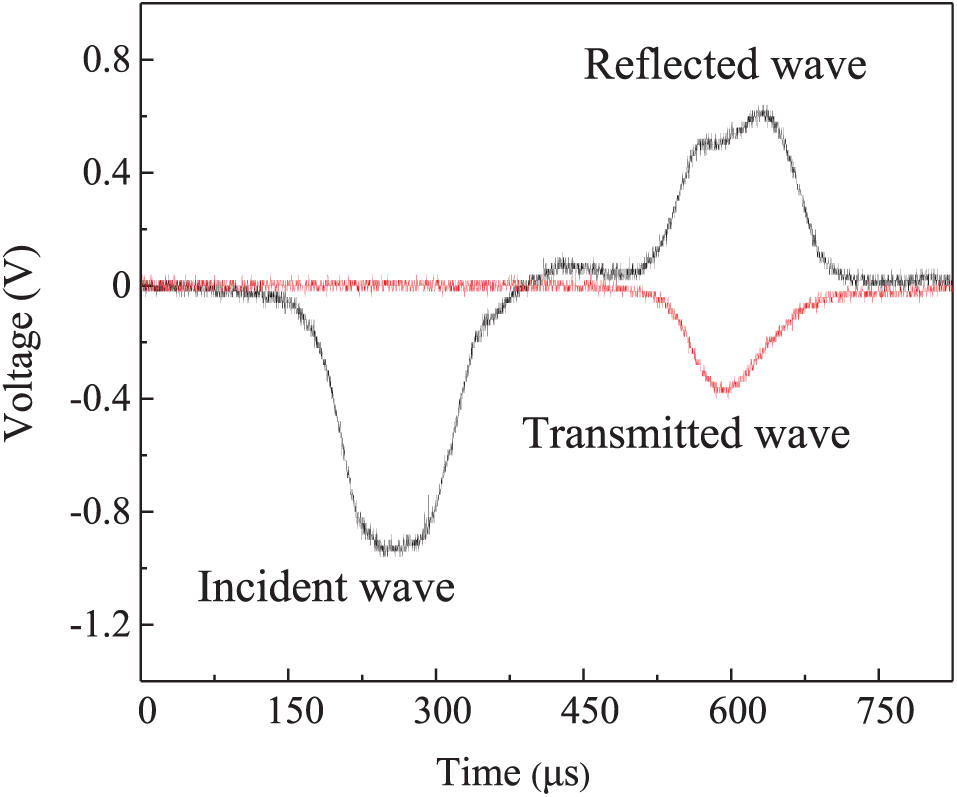
Typical waves in the SHPB test.
Experimental work
Materials for normal SHCC preparation
The raw materials used to prepare SHCC without addition of nanomaterials include CEM I 42.5, coal fly ash, silica sand, poly vinyl alcohol (PVA) fiber, superplasticizer, and water. The binder materials including cement and coal fly ash are obtained locally, and the chemical compositions of the binder materials are presented in Table 1. The silica sand is provided by a local company, and the fineness modulus of the silica sand is 1.03. The maximum and average particle size of the silica sand is 160 and 110 μm, respectively. The PVA fibers used in this study are provided by Kuraray Trading (Shanghai) Co., Ltd. The mechanical and geometrical properties of the fibers are listed in Table 2. The superplasticizer is a kind of polycarboxylic acid–based high performance water reducer. The concentration of active ingredient is around 40%.
Chemical compositions of binder materials.

Mechanical and geometrical properties of PVA fiber.

PVA: poly vinyl alcohol.
Nanomaterials
Three kinds of nanomaterials including NS, NT, and NC are used to improve the properties of SHCC. All nanomaterials are available in China, and the physical properties provided by the supplier are shown in Table 3. The nanomaterials selected in this study are not only for improving the mechanical properties but also for the further concern of functionality. The NS was widely used in preparation of ultra-high performance concrete (UHPC) due to the higher reactivity and particle shape effect. The NT was used to improve the self-cleaning activity and solar reflectivity of cement-based materials used in the green building and functional pavement. For the NC, it can enhance the properties of concrete on the first hand, and on the other hand, the price is much cheaper than the other nanomaterials. Because the dispersion of nanomaterials is difficult, the ultrasonic dispersion method was used to disperse the nanoparticles in this study. The nanomaterials were dispersed in water, and the superplasticizer was used as a dispersion agent to form a stable nanomaterials emulsion. Due to ultra-high aspect surface area of nanomaterials, the water demand for SHCC preparation could increase dramatically. In order to maintain a good workability and control the dosage of superplasticizer, the dosage of nanomaterials in this study was controlled in the range of 0%–2% of cementitious materials by mass.
Physical properties of nanomaterials.

NS: nano silica; NT: nano titanium dioxide; NC: nano calcium carbonate.
Mix proportions and specimen preparation
Seven mixes of SHCC were designed in this study as shown in Table 4. The ratio of fly ash to total cementitious materials was 70%. The water to cementitious materials ratio was 0.25, and the volume fraction of the PVA fiber was 2% for all mixes. The content of nanomaterials was 1% and 2% of cementitious materials by mass. The dosage of superplasticizer was adjusted according to the workability of fresh SHCC. It was found that the amount of superplasticizer required for suitable workability of nanomaterials-modified SHCC increased dramatically in comparison with the control SHCC.
Mix proportions of SHCC with and without nanomaterials (kg/m3).

SHCC: strain hardening cementitious composite; NS: nano silica; NT: nano titanium dioxide; NC: nano calcium carbonate.
The fiber dispersion is very important for obtaining good mechanical properties of hardened SHCC. Therefore, the following mixing procedure was adopted in this study to ensure a good dispersion of PVA fibers in the fresh mortar. First, the dry powders including cement, fly ash, and silica sand were mixed for at least 2 min followed by adding water and superplasticizer and were mixed at a low speed until the required fluidity and rheology of the mortar were achieved; the mixing duration was about 4–5 min; for preparation of nanomaterials-modified SHCC, the ultrasonic dispersion method was used to disperse the nanoparticles in mixing water, and the superplasticizer was used as a dispersion agent to form a stable nanomaterials emulsion. After the dry mixing, the emulsion was added and mixed until the required workability was achieved; at last, the PVA fibers were added slowly into the mortar and mixed for another 8 min at a moderate speed until the fibers were evenly dispersed in the mortar without fiber cluster. The fresh SHCC was casted into different sizes of molds for various tests. The specimens were demolded after 24 h and cured at a standard curing room (20 ± 0.2°C and 95% RH) for another 6 days or 27 days before testing.
Test methods
Compressive strength test
The compressive strength test was carried out using a WDW-100D electronic universal testing machine to determine the quasi-static compressive strength of SHCC with and without addition of nanomaterials. The cubic specimen with dimension of 40 × 40 × 40 mm was used for compressive strength test, and the loading rate was controlled at 2.4 kN/s according to the Chinese standard of GB/T 17671-1999. Three cubes were used for each mix to determine the average compressive strength.
Four-point bending test
To verify the strain hardening behavior of SHCC with and without addition of nanomaterials, the four-point bending test was performed on the coupon specimens with dimension of 320 × 40 × 12 mm using an electronic universal testing machine with load capacity of 10 kN under displacement control at a rate of 1.0 mm/min. The distance between two roller supports was 300 mm, and the load span was 100 mm as shown in Figure 2. The load and the mid-span deflection were recorded on a computerized data acquisition system. Three specimens were tested for each mix.

Four-point bending test setup.
Dynamic compression test
The SHPB with a diameter of 40 mm was used to perform the dynamic compressive test (Figure 3). Cylindrical specimens with dimension of ∅38 × 20 mm were used to determine the dynamic compressive stress–strain curves. All specimens were coated a very thin layer of grease on the both ends before the high speed impact to minimize the effect of end friction. The specimen preparation is very important to obtain a reliable result in SHPB test. In this study, the cylindrical specimen was polished by using a numerical control machine to ensure the parallelism between two ends of the specimen. In order to alleviate the wave oscillation and ensure the uniform deformation, the pulse shaping technique, which was using a square lead sheet as pulse shaper, was introduced in this study. Figure 4 shows a comparison of the incident wave before and after pulse shaping. It was clearly shown that the incident wave after shaping become smoother in comparison with the wave before shaping, and the wave oscillation is reduced.

Loading system and signal acquisition system of SHPB setup: (a) SHPB, (b) data logger, and (c) oscilloscope.

Comparison of incident wave before and after shaping by lead shaper.
Field emission scanning electron microscope (FESEM)
The microstructure of SHCC such as the interface micromorphology was characterized by using FESEM observation. The model of the FESEM is FEI Quanta 200. A gentle beam mode with a lower accelerating voltage of 5 kV and probe current of 5 A was used in the FESEM study to obtain high-resolution secondary electron images (SEI).
Experimental results and discussion
Quasi-static compressive strength
The quasi-static compressive strength was determined to evaluate the effect of nanomaterials on the strength development. Figure 5 shows the 7-day and 28-day compressive strength of SHCC with and without nanomaterials. At 7 days, the compressive strength of the control SHCC can reach 37.5 MPa, and the addition of nanomaterials can increase the compressive strength. The NS was more effective on improving the compressive strength of SHCC than the NT and NC. When the dosage of NS was 1%, the 7-day compressive strength increased by 16% in comparison to the control SHCC. The compressive strength of control SHCC can reach 55 MPa at 28 days. The compressive strength of nanomaterials-modified SHCC was improved in comparison with the control SHCC. For example, the compressive strength of SHCC with addition of 1% NS, NT, and NC increased by 6.0%, 1.1%, and 4.5%, respectively. As the content of nanomaterials was up to 2%, the compressive strength of nanomaterials-modified SHCC was still higher than that of control SHCC, but lower than that of SHCC with addition of 1% nanomaterials. On the one hand, the addition of nanomaterials can reduce porosity of hardened SHCC due to particles’ filling effect. Also the nanoparticles can be served as the nucleation site to enhance the hydration of cement resulting in a denser matrix. 25 On the other hand, as the content of nanomaterials increase, the dispersion of the nanomaterials become difficult, and the agglomeration of nanoparticles should have a negative effect on improvement of strength. In addition, because the specific area surface of nanomaterials was much higher than that of cement or fly ash, the amount of superplasticizer required for suitable workability of fresh nanomaterials-modified SHCC was larger in comparison with the control SHCC under same water to binder ratio as shown in Table 4. The addition of nanomaterials and larger amount of the superplasticizer resulted in the increasing of the viscosity of the fresh mortar. This possibly entrained a certain extent of air bubbles into the fresh SHCC resulting in reduction of the compressive strength slightly.

Compressive strength of SHCC with and without nanomaterials at 7 and 28 days.
Four-point bending
The four-point bending test was performed in order to verify that the SHCC prepared in this study possesses the strain hardening behavior. Figure 6 shows the typical bending stress–strain curves of the SHCC with and without addition of nanomaterials. As can be seen in Figure 6, the SHCC with and without addition of nanomaterials showed the obvious strain hardening behavior. The analyzed results of the bending test in terms of peak load (fp), flexural strength (f), and deflection (df) are summarized in Table 5. It can be seen that the addition of nanomaterials can improve the bending load bearing capacity of SHCC. The flexural strength increased as the content of nanomaterials increased. For example, as the amount of nanomaterials increased from 1% to 2% of cementitious materials, the flexural strength of NS, NT, and NC modified SHCC increased 9.7%, 6.5%, and 2.5%, respectively. The deflection of SHCC with and without addition of nanomaterials was in the range of 13–17 mm. After addition of the nanomaterials, the midspan deflection of SHCC was slightly reduced in comparison with the control SHCC. In order to evaluate the effect of adding nanomaterials on the toughness of SHCC, the toughness index (Tg) was calculated as shown in Table 5. The toughness index was expressed as a ratio of first cracking strain energy (Gi) to the bending fracture strain energy (Gp). 26 As can be seen from the results in Table 5, after adding nanomaterials, the toughness index of SHCC increased in comparison with the control SHCC. This meant that the addition of nanomaterials can further improve the toughness of SHCC. As discussed in “Quasi-static compressive strength” section, the addition of nanomaterials can increase the viscosity of fresh mortar, and possibly entrain a certain amount of air bubbles. This should result in a rough interface between fibers and matrix (Figure 7), and the friction effect could be enhanced during the fiber pullout process after cracking. In addition, the addition of nanomaterials can increase the matrix fracture toughness due to the shielding effect on the crack tip.
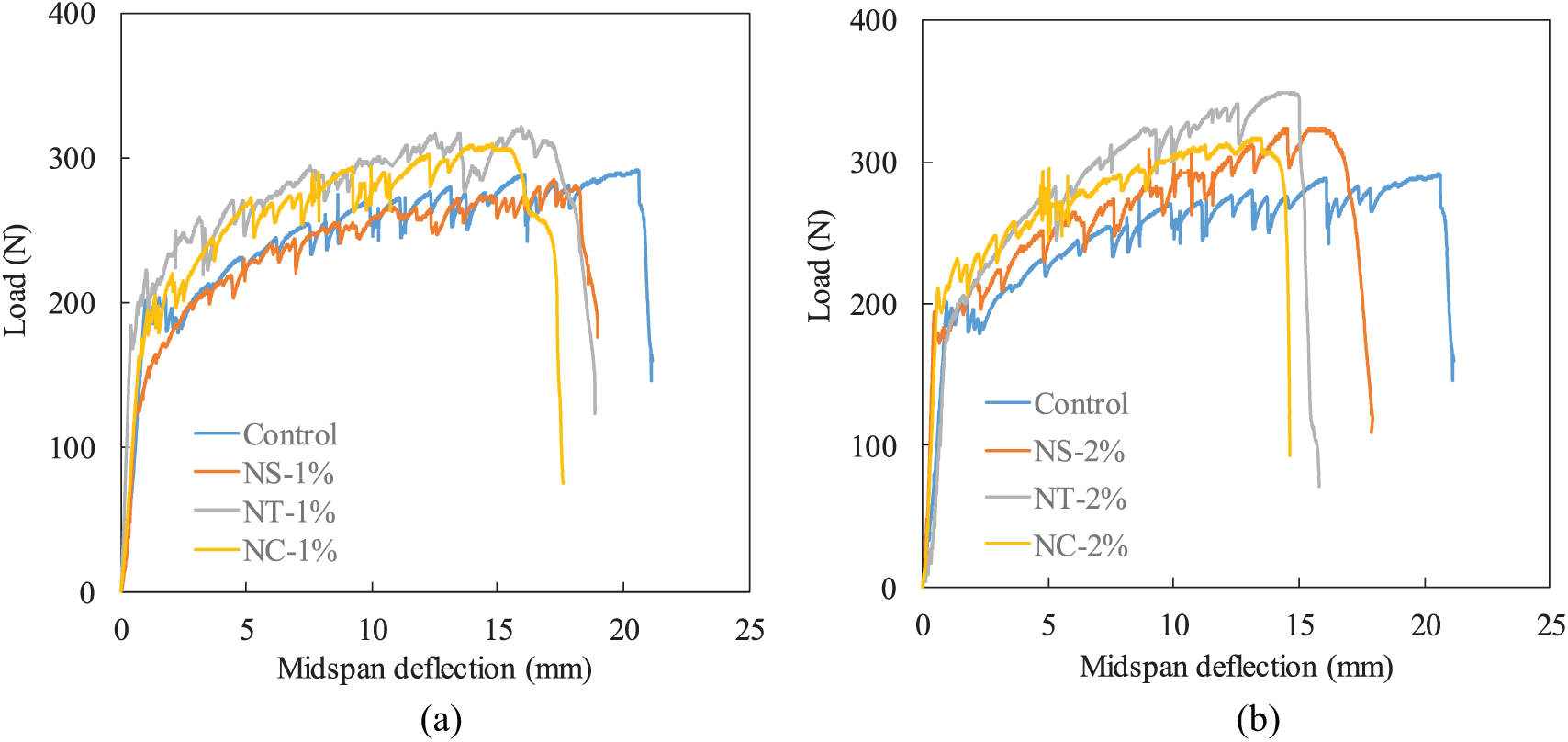
Typical load-deflection curves of SHCC after adding (a) 1% and (b) 2% of nanomaterials.
Four-point bending properties of SHCC with and without nanomaterials.
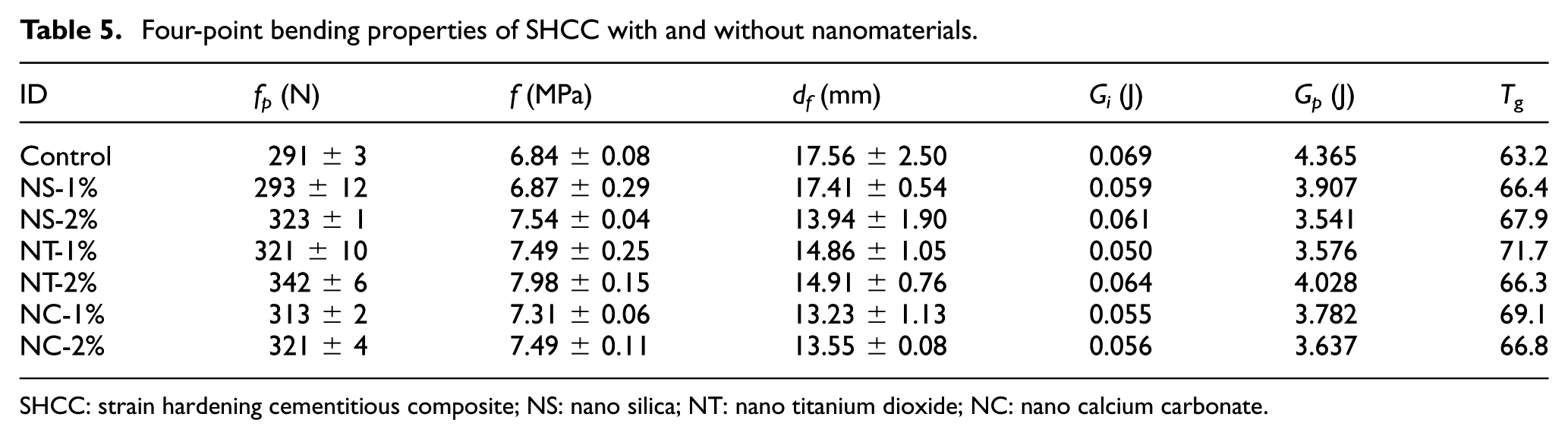
SHCC: strain hardening cementitious composite; NS: nano silica; NT: nano titanium dioxide; NC: nano calcium carbonate.

Micromorphology of interface between fiber and matrix: (a) control, (b) NS-2%, (c) NT-2%, and (d) NC-2%.
Dynamic compression properties
Figure 8 shows the dynamic stress–strain curves of SHCC with and without adding nanomaterials at a constant strain rate of around 170 s−1. It was observed that the stress–strain curves of the SHCC with and without addition of nanomaterials were similar. For the control SHCC, the peak strain was around 1%, and the peak stress was at the vicinity of 80 MPa. As compared with the control SHCC, the peak strain of the nanomaterials-modified SHCC was marginally smaller than that of control, and the dynamic compressive stress was quite closed to the control under the current loading rate level. Based on the shape of the curves of different type of nanomaterials-modified SHCC, it was observed that the influence of amount or type of nanomaterials on the dynamic compression properties in this study was not obvious. At the pre-peak section of the curve, the slope considered as the stiffness of the SHCC showed a slight difference among these three types of nanomaterials-modified SHCC. It seemed that addition of NS had a positive effect on higher stiffness. In addition, at the post-peak section, it seemed that the nanomaterials-modified SHCC showed a relative gently descending trend in comparison with the control SHCC.

Dynamic compressive stress–strain curves of SHCC after adding (a) 1% and (b) 2% of nanomaterials at loading rate of 170 s−1.
As discussed above, the amount of added nanomaterials in this study had no obvious influence on the dynamic compression properties. Furthermore, the results of the quasi-static compressive strength indicated that the strength of SHCC with addition of 2% nanomaterials was lower. In order to evaluate the strain rate effect of the nanomaterials-modified SHCC, the SHCC with addition of 2% nanomaterials were selected to perform the dynamic compression test at three different strain rate levels. Three strain rates in increasing order were 117 ± 7, 208 ± 19, and 272 ± 28 s−1, respectively. Figure 9 shows the failure patters of the SHCC with and without addition of nanomaterials after high velocity impact. As can be seen, the degree of destruction was aggravated with the increase of strain rate. The specimens nearly kept the original appearance at lower strain rate level of 117 ± 7 s−1. Only some tiny cracks were found on the side surface and end surface. As the strain rate achieved the level of 208 ± 19 s−1, larger cracks appeared and some cracks were throughout the whole cross section of the specimen. However, the specimens still maintained intact due to the fiber bridging effect. Until the strain rate up to 272 ± 28 s−1, the specimens were crushed into distinct fragments.

Failure pattern of SHCC modified with and without nanomaterials at different strain rates: (a) control, (b) NS-2%, (c) NT-2%, and (d) NC-2%.
Figure 10 shows the dynamic compressive stress–strain curves of SHCC with and without addition of nanomaterials under different strain rates. In this study, the dynamic elastic modulus was defined as the slope of the linear increasing part of the curve. The dynamic compressive strain was defined as the strain when the stress reached the peak value, and the peak stress was recorded as the dynamic compressive strength of the SHCC. As can be seen from Figure 10, the dynamic elastic modulus of SHCC increased with the increase of strain rate. In addition, either the control SHCC or nanomaterials-modified SHCC presented an obvious strain rate effect reflecting as the peak stress increased with the strain rate increasing. Furthermore, the dynamic compressive strain showed no significant change with the increase of strain rate. The ultimate strain was at vicinity of 1% for all specimens at different strain rates. In order to evaluate the strain rate effect of SHCC with and without addition of nanomaterials, the dynamic increase factor (DIF) was introduced in this study. The DIF value was defined as the ratio of the dynamic compressive strength under various strain rate to the corresponding quasi-static compressive strength.27–29 The relationship of DIF versus strain rate was shown in Figure 11. All the DIF values range from 1.1 to 1.7. The DIF values showed a linear relationship with the logarithm of strain rates, and the simple equations were also shown in Figure 9. According to the slope of the fitting curves, it was found that the strain rate effect of nanomaterials-modified SHCC was more obvious than the control SHCC.
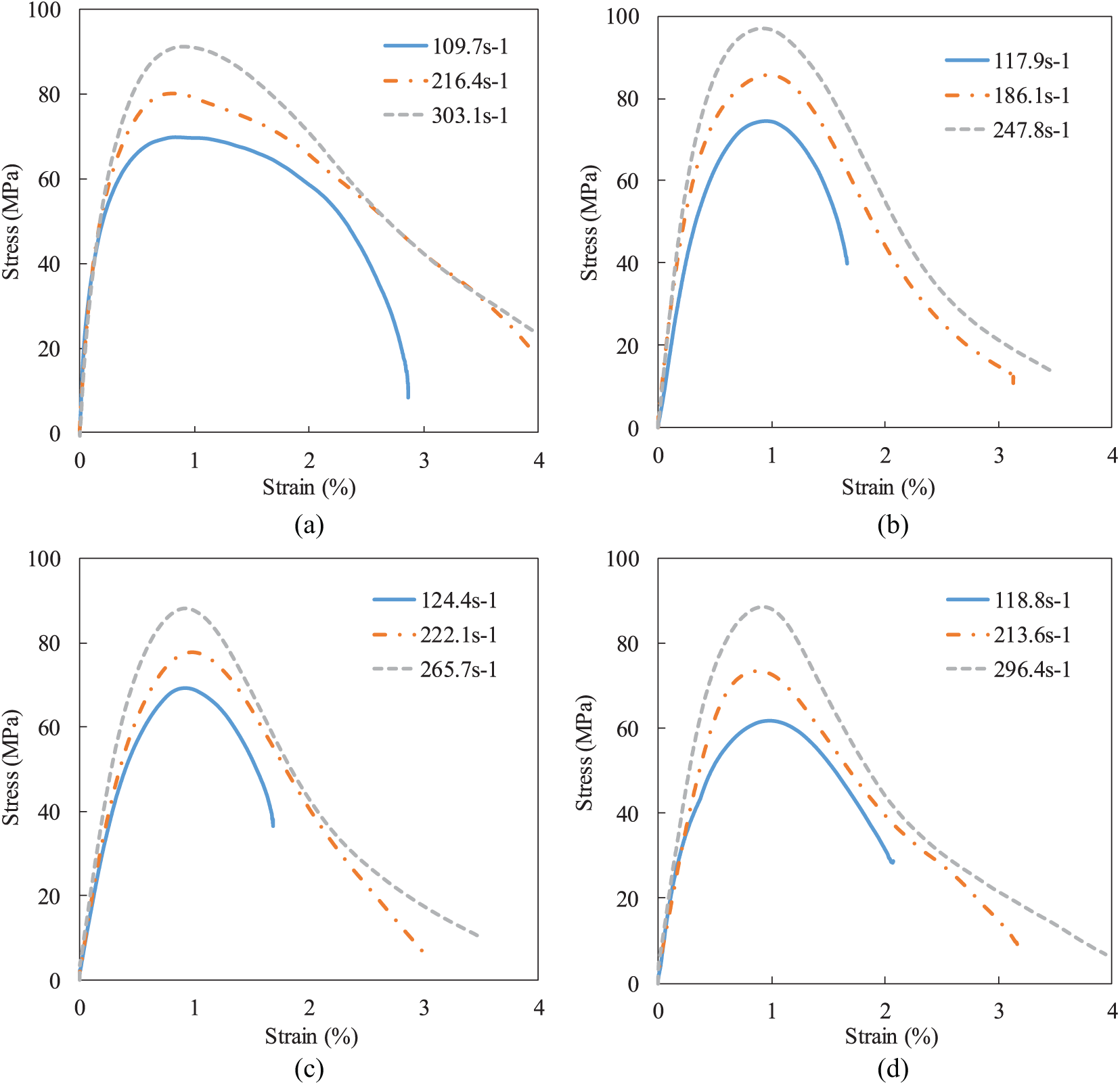
Dynamic compressive stress-strain curves of SHCC at different level of loading rate: (a) Control, (b) NS-2%, (c) NT-2%, and (d) NC-2%.

Dynamic increase factor as a function of strain rate.
Conclusion and recommendation
In this study, the nanomaterials-modified SHCC was prepared, and the quasi-static and dynamic mechanical properties were investigated. The SHCC without nanomaterials was used as the control. According to the experimental results and discussion, the main conclusions can be drawn as follows.
Addition of nanomaterials can increase the early stage compressive strength significantly, but limitedly improve the later stage compressive strength. Adding more nanomaterials had a negative effect on enhancing the compressive strength due to the dispersion issue and the air entraining effect. In this study, adding 1% NS can obtain the optimal quasi-static compressive strength.
The flexural deflection of the SHCC had slight decrease after adding nanomaterials. The flexural strength increased after adding nanomaterials and it increased with the increasing dosage of nanomaterials. Moreover, the flexural toughness of SHCC was enhanced after addition of nanomaterials. Based on this study, the NS was more suitable for improving the mechanical properties, and the NT and NC were acceptable to improve the mechanical properties of SHCC.
The dosage and type of nanomaterials had no obvious influence on the dynamic compressive strength and strain of SHCC at a constant strain rate level of 170 s−1. Both the control and nanomaterials-modified SHCC showed an obvious strain rate effect. The dynamic compressive strength and dynamic elastic modulus increased with the increasing strain rate. According to the DIF values, it seemed that the nanomaterials-modified SHCC was more sensitive than the control to the strain rates.
Nanomaterials possess unique properties on enhancing the static and dynamic mechanical properties of cement-based composites. This study was only a preliminary exploration, and many future works are needed to implement. The toughening mechanism of nanomaterials needs to be discussed in detail. In addition, the strain rate effect of nanomaterials-modified SHCC in this investigation is different from other research results. It is necessary to further study the validation of the research findings.
Footnotes
Handling Editor: Farhad Ali
Declaration of conflicting interests
The author(s) declared no potential conflicts of interest with respect to the research, authorship, and/or publication of this article.
Funding
The author(s) disclosed receipt of the following financial support for the research, authorship, and/or publication of this article: The authors acknowledge the financial support from National Natural Science Foundation of China (No. 51578193).