




Abstract
In this research, free vibration behavior of thick functionally graded nanoplates is carried out using the Chebyshev spectral collocation method. It is assumed that the plates are resting on variable elastic foundations. Eringen’s nonlocal elasticity theory is used to capture the size effect, and Mindlin’s first-order shear deformation plate theory is employed to model the thick nanoplates. Hamilton’s principle along with the differential form of Eringen’s constitutive relations are utilized to obtain the governing partial differential equations of motion for the functionally graded nanoplates under consideration. A numerical solution is presented by applying the spectral collocation method and the natural frequencies are obtained. A parametric study is conducted to study the effects of several factors on the natural frequencies of the functionally graded nanoplates. It is found that the parameters of the variable elastic foundation (Winkler and shear moduli), thickness to length ratio, length to width ratio (aspect ratio), the nonlocal scale coefficient, the gradient index, the foundation type, and the boundary conditions have a remarkable influence on the free vibration characteristics of the functionally graded nanoplates.
Keywords
Introduction
Micro and nano structures are popular in many advanced technological fields such as aerospace engineering, composites, and electronics for their novel properties comparing with other structures and mechanisms at the standard order of dimensions. These features allow them to be part of smart and reliable devices in various machines and mechanisms.
In order to enhance the specific strength (strength divided by density) of the structures used in micro/nano electromechanical systems (MEMS/NEMS), orthotropic, anisotropic, composite, and functionally graded (FG) materials are commonly used. To insure the smoothness variation of the material properties along the thickness of the structure, FG materials (which are manufactured from a combination of ceramics and metals) can be utilized, where the properties of these FG materials can be tailored for specific purposes. On the other hand, composite materials suffer from pre-mature failure as a result of the sudden change in the properties between the material’s plies. In addition, these materials may experience a decay in the elastic characteristics due to an unstable medium and sticky layers. 1 Similarly, the properties of micro and nano materials such as carbon nanotubes and graphene sheets cannot be considered homogeneous due to the influence of lattice distance or grain size on their mechanical properties.
The impact of the size effect on the characteristics of the micro/nano structures can be predicted by experimental and atomistic simulations and models. Unfortunately, these techniques may be restricted by the cost and computational issues. As the theories of modeling different structures and systems are scale free, they are incapable of capturing the effect of the small-scale order on the performance of micro/nano structures. Hence, these theories and relations are insufficient in investigating the characteristics of these systems. 2 Therefore, to apply the continuum mechanics theories in the analyses of different micro and nano structures, the scale effect should be taken into account. Various theories have been suggested to study the performance of micro/nano structures such as Cosserat elastic theory, Cosserat theory with constrained rotations, multipolar elastic theory, and the nonlocal elasticity theory. 3 The nonlocal elasticity theory will be employed in this research to perform the free vibrations of FG Mindlin plates embedded in variable elastic medium.
Eringen’s nonlocal elasticity theory has been extensively utilized to model and analyze the micro/nano structures. Aghababaei and Reddy 4 applied this theory, along with a modified version of a simple higher order theory of laminated plates, to study the deflection and the natural frequencies of nanoplates. Shen et al. 5 carried out the nonlinear vibrations of single layer graphene sheet in thermal medium. The sheet was modeled as a thin orthotropic nanoplate with von Kármán nonlinearity. The numerical results revealed that the nonlocal elasticity theory can successfully predict the natural frequencies of the graphene sheet. Moreover, Ansari et al. 6 applied Eringen’s theory to examine the free vibrations of single-layered graphene sheets. The first-order shear deformation theory was used to model these sheets, and the frequencies were computed via the generalized differential quadrature method.
In another study, Pouresmaeeli et al. 7 obtained closed form solutions for the natural frequencies of double-orthotropic nanoplates bonded by a set of identical springs and resting on Winkler-type layers. Eringen’s nonlocal theory was adopted to obtain the mathematical model, the impacts of the nonlocal index, the stiffness of the connecting springs and the Winkler foundation, and the length-to-width ratio on the free vibrations of the double nanoplates. Khorshidi and Fallah 8 implemented Eringen’s theory to investigate the buckling analysis of FG nanoplates. It was shown that the scale coefficient, power law indexes, and aspect and thickness ratios all have a remarkable influence on the buckling behavior of the FG rectangular nanoplates.
Shahidi et al. 9 examined the vibration analysis of orthotropic nonuniform Kirchhoff nanoplates. The effect of the thickness, nonlocal scale coefficient, boundary conditions, and the geometries on the frequencies was investigated. Namin and Pilafkan 10 investigated the vibration behavior of imperfect graphene sheets via Eringen’s theory. Mindlin’s plate theory was used to derive the equations of motion which were solved using the differential quadrature method. Zhang et al. 11 applied the nonlocal elasticity theory to study the vibrational behavior of quadrilateral graphene sheets in a magnetic field. The governing equations of motion were solved by employing the kp-Ritz method. The influences of the skew angles, nonlocal scale coefficient, the magnetic field, and the type of boundary conditions on the fundamental natural frequencies of the single-layered graphene sheets were discussed. Furthermore, Li and Hu 12 analyzed the torsional vibrations of tubes made of bidirectional FG materials. It was assumed that the material properties vary along the length and the radius directions of the nanotube. It was concluded that the torsional frequencies are increased by decreasing nonlocal parameter. However, it was observed that this parameter does not have an effect on the mode shapes of the nanotubes.
The mechanical response and characteristics of nonuniform bidirectional FG beam sensors were investigated by Khaniki and Rajasekaran. 13 The modified couple stress theory along with Hamilton’s principle were used to formulate the model of the microbeams with linear, exponential, and parabolic cross-sectional areas. A mixed finite element method, Gaussian quadrature method, and Wilson’s Lagrangian multiplier were used to solve the governing equations. Moreover, Hosseini-Hashemi and Khaniki 14 applied Eringen’s nonlocal elasticity theory to carry out the effect of a moving nanoparticle/load on the mechanical behavior of thick FG nanoplates lying on a Kelvin–Voigt viscoelastic layer. The Galerkin approach and the Runge–Kutta method were employed to solve the governing equations of motion. Rajasekaran and Khaniki 15 analyzed the static deformation, stability, and free vibration characteristics of nonhomogeneous nonuniform nanobeams in the framework of nonlocal strain gradient theory. The beam was made of axially FG materials and was assumed to have nonuniform cross-section. Finite element and Gaussian quadrature methods, in conjunction with Wilson’s Lagrangian multiplier, were applied to solve different problems.
Recently, Ebrahim and Barati 16 applied a Galerkin-based solution and the nonlocal strain gradient theory to investigate the vibration behavior of axially FG nanobeams resting on variable elastic foundation. It was assumed that the material properties vary axially following a power law distribution. The elastic foundation consists of a Winkler layer and a Pasternak layer with constant stiffness. Linear, parabolic, and sinusoidal variations of Winkler foundation were considered. It was shown that the layers have an increasing influence on the frequencies. Khaniki et al. 17 used Eringen’s two-phase integral model to study the vibration analysis of nanobeams resting on axially varying elastic foundation. A power law relation was considered to present the stiffness variation of the elastic foundation. The generalized differential quadrature was utilized to obtain the first four frequency terms of the nanobeams with different boundary conditions. Other scientists and researchers used Eringen’s nonlocal theory to study the behavior of different dynamical systems at the micro/nano scale.6,18–33
Eringen’s theory has integral and differential forms. For some boundary and loading conditions (especially for cantilever beams), inconsistent and illogical findings may be resulted by the differential model.34–37 However, for MEMS modeled as cantilever beams, using an integral-based nonlocal elastic model, a solution identical to the classical local stress beam model without any small-scale effect is obtained. 38 On the other hand, Eringen 3 showed that the integral constitutive equation can be converted exactly into a corresponding differential form for some kernels. As Eringen’s two-phase local/nonlocal theory is well-posed and has the ability and flexibility to model various structures with several boundary conditions, it has been utilized to model the dynamics of structures at the nanoscale in the recent years.39–41
In many applications, micro/nano structures may be resting on variable elastic foundations. Introducing a variable elastic foundation model must be considered in order to model any imperfect geometry and material changes in foundation. This situation may arise in the case of buried nano structures. Moreover, electrically actuated micro structures, which are used to model resonant sensors, are examples of microplates resting on variable elastic foundation.
To date, no reports in the literature of the vibration behavior of thick FG nanoplates resting on variable elastic foundations are available. Motivated by these considerations and for the sake of improving the design of MEMS/NEMS, the objective of this research is to examine the vibrational behavior of thick FG nanoplates embedded in variable elastic foundations. The differential form of Eringen’s nonlocal theory will be utilized.
A nonlocal Mindlin plate model for FG nanoplates resting on variable elastic foundation
At the macro scale, the stress tensor at a given point in an elastic field is a function of the strains at the same point. However, according to Eringen, the stress field at a point in an elastic domain depends on the stress tensors at all other points. 3
In a nonlocal elastic field, the stress tensor tij is expressed as

where x is a reference point in an elastic continuum,
Alternatively, Eringen proposed a differential operator form of equation (1) that reflects the material dispersions. This linear differential operator ς is defined by

Thus, equation (1) is reformulated as

Due to its convenience and simplicity, the differential form given in equation (3) has been widely used by many investigators in employing the nonlocal theory to carry out the vibration characteristics of micro/nano structures.
According to the first-order shear deformation theory, the displacement components of the middle surface of the plate in the x, y, and z directions are given as

where
The normal strains

Based on Hooke’s law, and in light of equation (3), the constitutive relations are expressed as


where E(z) is the modulus of elasticity,

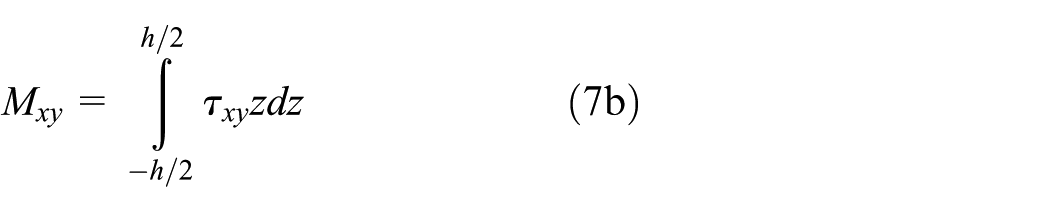
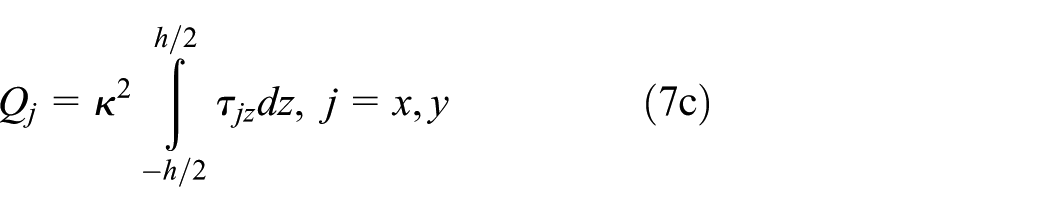
where κ2 is the shear correction factor and h is the thickness of the plate. Substituting equations (7a–7c) into equations (6a–6e) yields the nonlocal moments and shear forces as




Following the work of Hosseini-Hashemi et al., 42 the modulus of elasticity (Young’s modulus) and the density are suggested to be changed smoothly across the thickness of the plate as


where the subscripts m and c represent the metallic- and ceramic-rich surfaces. The FG plate is formed from two different materials. The top surface (z = h/2) of the plate is ceramic-rich, whereas the bottom surface (z =−h/2) is metal-rich, and


The equations of motion of the free vibrations for a rectangular FG nonlocal plate embedded in a variable elastic foundation, shown in Figure 1, are derived using Mindlin’s plate theory and Hamilton’s principle. These equations are given as



where


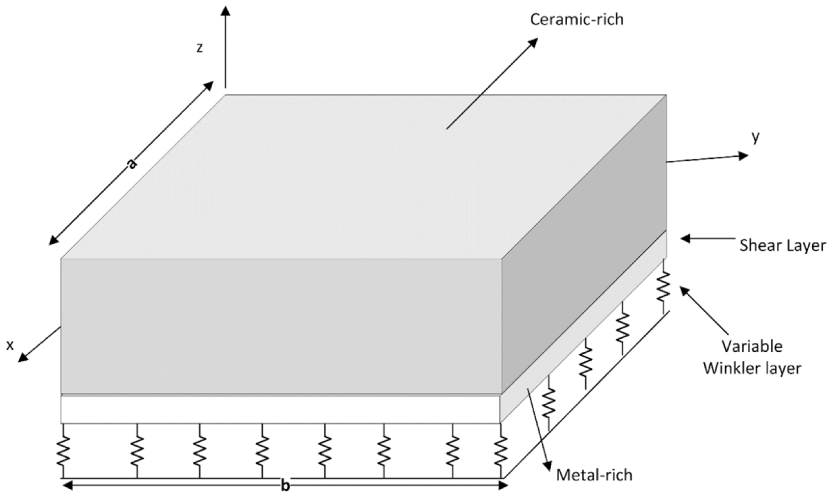
A nonlocal FG nanoplate resting on a variable elastic foundation.
Substituting the constitutive relations of Eringen (equations (8a–8e)) into equations (11a–11c) yields
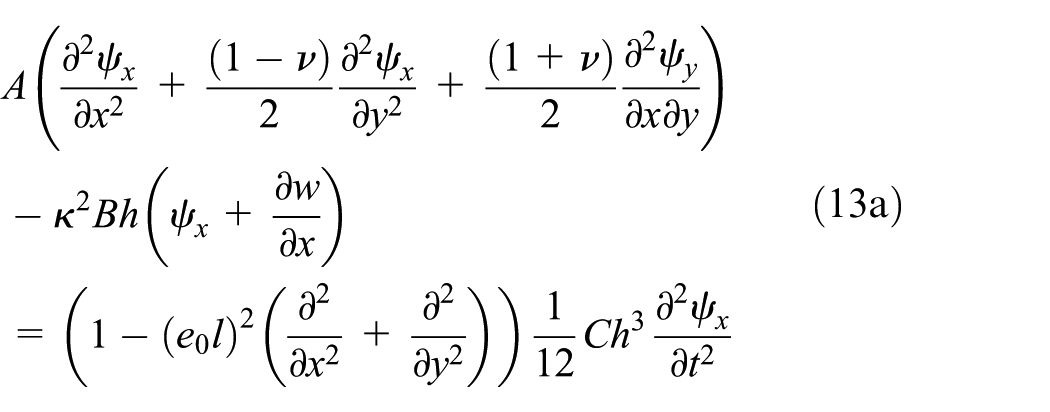


where
In the present study, the variable Winkler elastic foundation is a function of the x coordinate only, and its variation with x may be either linear, parabolic, or sinusoidal (as Pradhan and Murmu 43 and Sobhy 44 )

where
For convenience, the following dimensionless quantities are defined as 42

Assuming sinusoidal variation in time as

Substituting equations (15) and (16) into equations (13a) to (13c) yields the following dimensionless equations


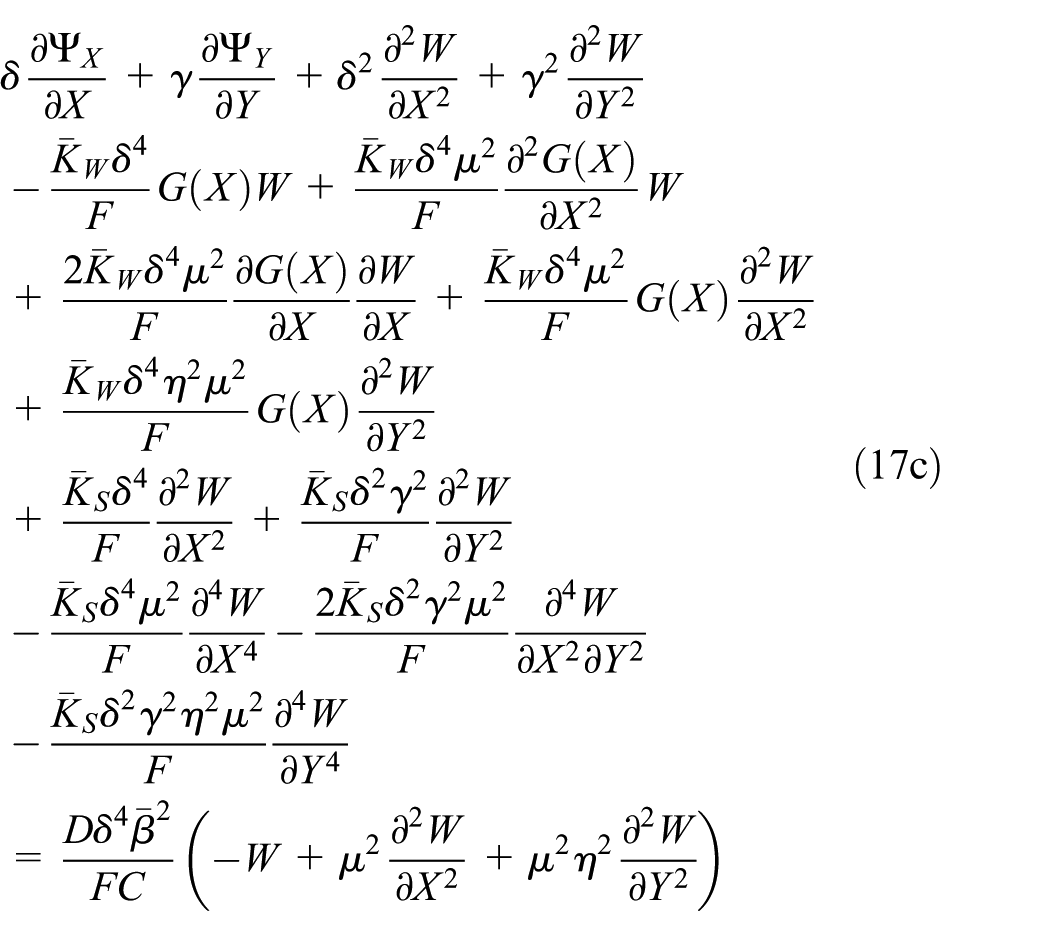
where

The shear correction factor is given as

where the values of the constants Ci
Material properties used in the FG plate. 42

FG: functionally graded.
Solution procedure: Chebyshev collocation method
As the governing partial differential equations of motion of the FG nanoplate under consideration are coupled and have several varying coefficients, it is clear that finding exact solutions for the displacements is challenging. Hence, these equations are discretized by applying the Chebyshev collocation method (CCM). The details of this method including the Chebyshev points and the Chebyshev differentiation matrix are given in Trefethen 45 and are omitted in the present article for brevity.
Due to its accuracy, fast convergence, and simplicity in implementation, the CCM has been utilized to carry out the vibrations and buckling characteristics of one, two, and three dimensional continuous systems (at the macro and micro levels).46–52 When discretizing ordinary and partial differential equations by the CCM, the nth derivative of a function is given by Dn = (DN)n.
Equations (17a) to (17c) are discretized by utilizing the CCM as

where {U} is the displacement vector for the plate and


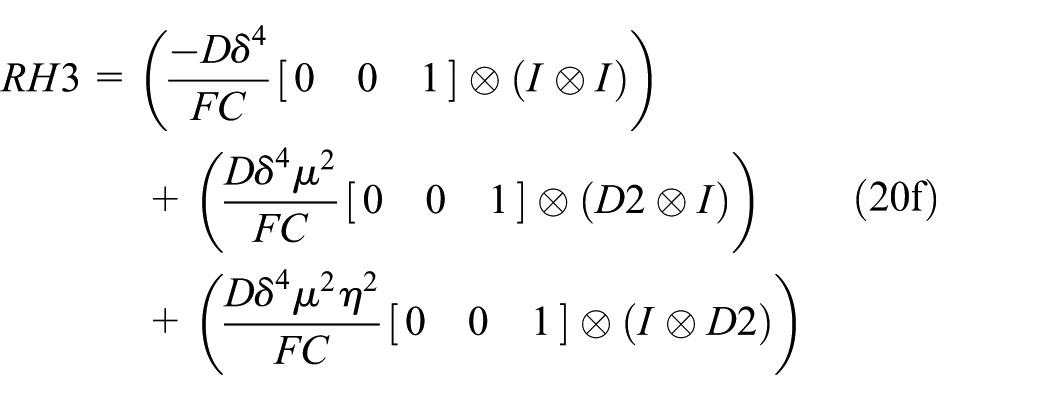
where ⊗ is the Kronecker product.
Boundary conditions
In the present study, two types of boundary conditions, simply supported (S) and clamped (C), are taken into consideration. For a clamped edge, the displacements W, ΨX, and ΨY equal zero, whereas for a simply supported edge at X = 0 or 1, the displacements W, ΨY, and the moment MXX equal zero. The boundary conditions (in dimensionless form) at the edge X = 0 are applied using the CCM and the Kronecker product as
(C):


(S):



In case the boundary conditions are applied at the edge X = 1, the vector [1 0 … 0] is replaced by the vector [0 0 … 1], and D1(1,:) is replaced by D1(M,:), where D1(1,:) is defined as

and D1(M,:) is defined as

More details can be found in Sari and Butcher. 47
Comparison studies
In order to check the validity and accuracy of the present model of the FG Mindlin nanoplates, a comparison study is performed. Initially, the results of the FG local plate (by setting the nonlocal parameter to zero) resting on an elastic foundation are compared to those computed by Hashemi et al.
42
Next, the outcomes of a nanoplate with constant properties (isotropic) are compared with the results of Hashemi et al.
53
In Tables 2 and 3, the fundamental nondimensional frequencies for SSSS, SSSC, and SCSC Mindlin FG beams are shown and are defined as

Fundamental frequency parameter
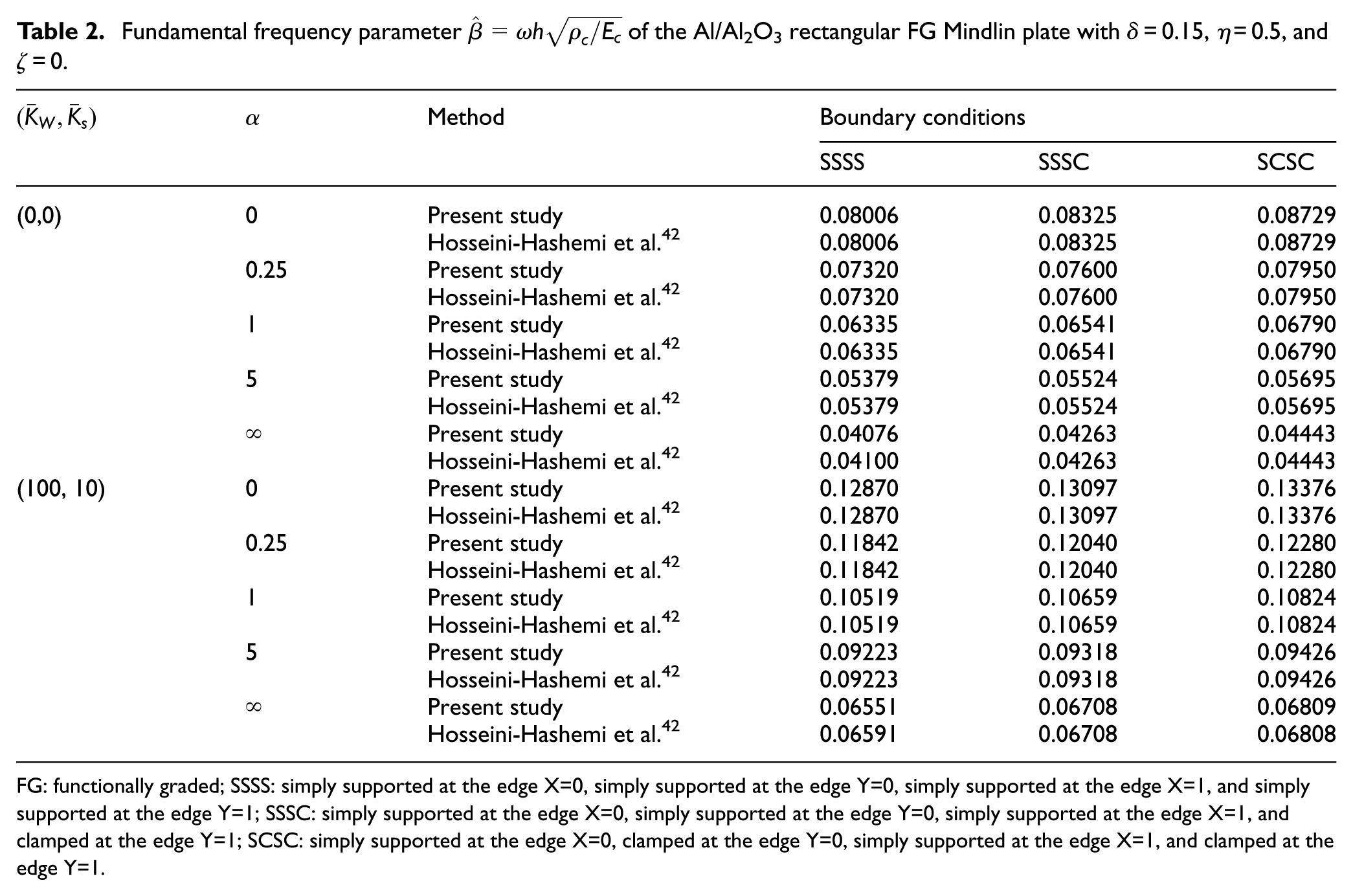
FG: functionally graded; SSSS: simply supported at the edge X=0, simply supported at the edge Y=0, simply supported at the edge X=1, and simply supported at the edge Y=1; SSSC: simply supported at the edge X=0, simply supported at the edge Y=0, simply supported at the edge X=1, and clamped at the edge Y=1; SCSC: simply supported at the edge X=0, clamped at the edge Y=0, simply supported at the edge X=1, and clamped at the edge Y=1.
Fundamental frequency parameter

FG: functionally graded; SSSS: simply supported at the edge X=0, simply supported at the edge Y=0, simply supported at the edge X=1, and simply supported at the edge Y=1; SSSC: simply supported at the edge X=0, simply supported at the edge Y=0, simply supported at the edge X=1, and clamped at the edge Y=1; SCSC: simply supported at the edge X=0, clamped at the edge Y=0, simply supported at the edge X=1, and clamped at the edge Y=1.
Fundamental frequency parameter

FR: frequency ratio.
Results and discussion
The variations of the fundamental dimensionless frequencies with the parameter

The fundamental natural dimensionless frequency versus the variable parameter
Figure 3(a) and (b) displays the influence of the nonlocal scale parameter µ on the fundamental frequencies of FG CCCC nanoplates with η = 0.5, α = 1,

The fundamental natural dimensionless frequency versus the nonlocal parameter for a CCCC FG Mindlin nanoplate,

Variation of the fundamental natural frequency with the nonlocal scale coefficient of an SSSS FG Mindlin plate,
Figure 5 shows the influence of the nonlocal scale coefficient on the dimensionless frequencies of FG SSSS nanoplates with η = 1.5, α = 4.0,
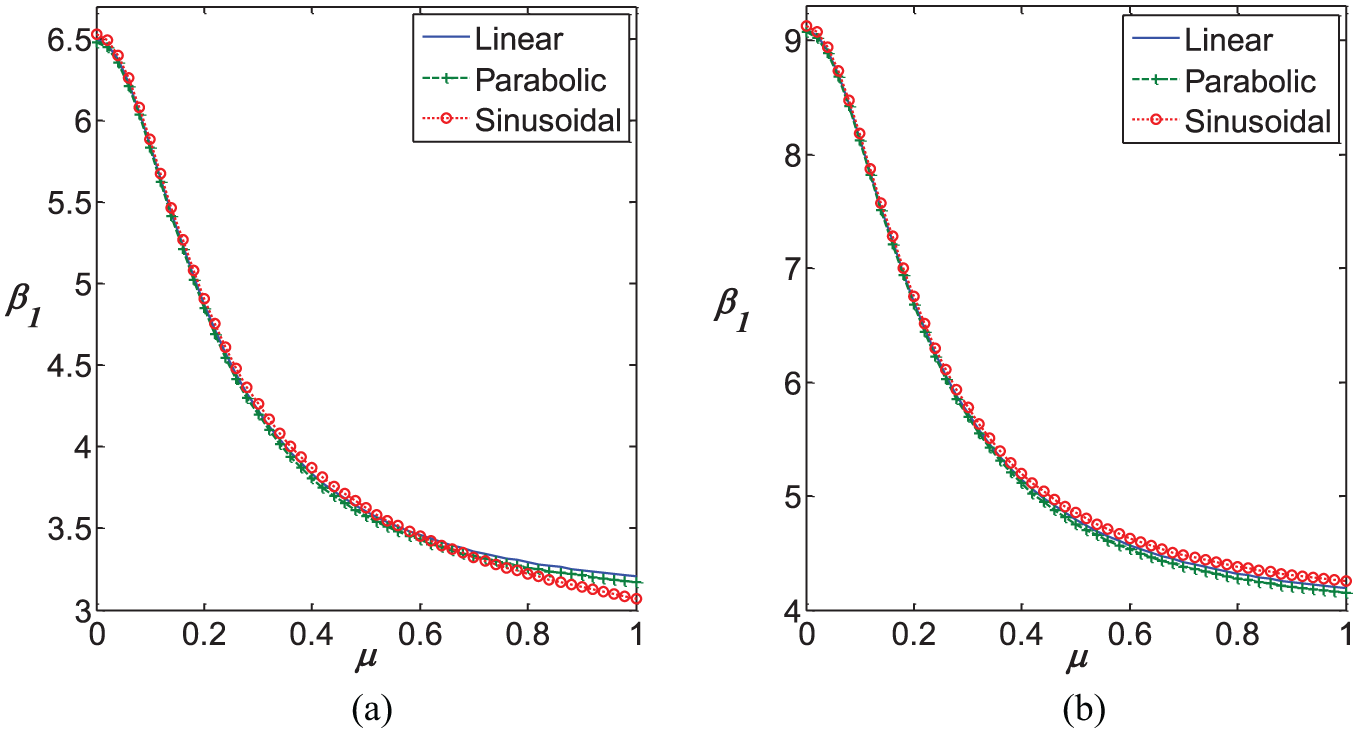
The fundamental natural frequency versus the nonlocal scale coefficient for an SSSS FG Mindlin nanoplate,

Effect of the fundamental natural dimensionless frequency on the gradient index for an SSSS FG Mindlin nanoplate,

The fundamental natural dimensionless frequency versus the gradient index for an SCSC FG Mindlin nanoplate,
The effect of the slenderness ratio δ (the thickness of the plate divided by its length in the x-axis) on the dimensionless frequencies is examined for the FG SSSS nanoplates (η = 1.0, µ = 0.1, α = 0.2,

The fundamental natural dimensionless frequency versus the thickness ratio of an SSSS FG Mindlin nanoplate,

Variation of the fundamental dimensionless natural frequency with the Winkler foundation stiffness parameter of an SSSS FG Mindlin nanoplate,
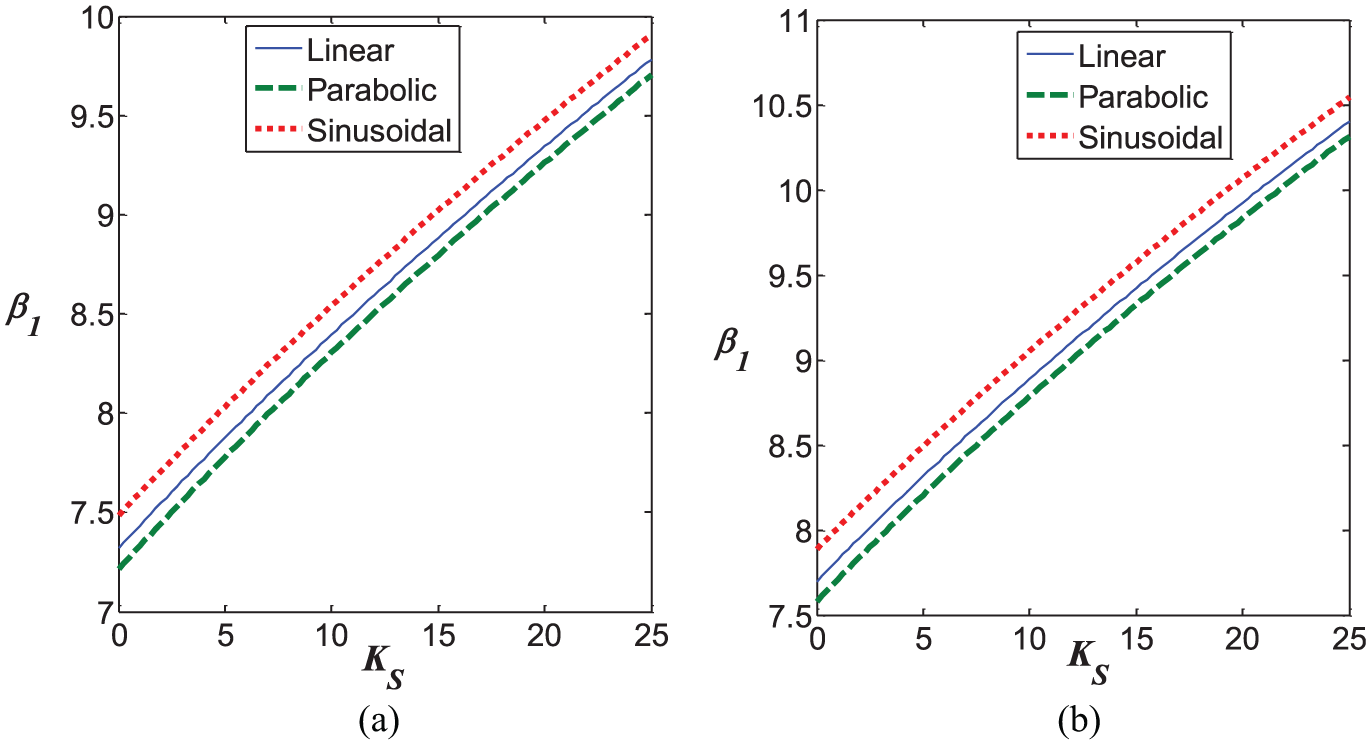
Variation of the fundamental dimensionless natural frequency with the shear foundation stiffness parameter of an SCSC FG Mindlin nanoplate,
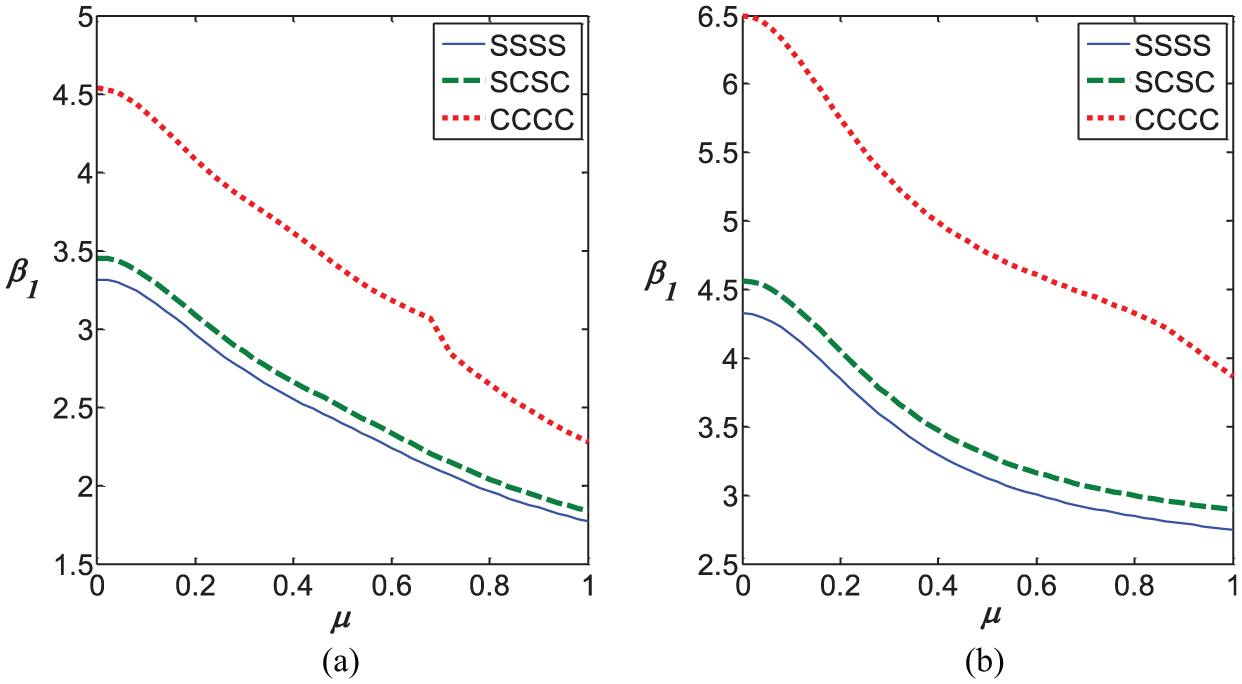
Figure 11 displays the impact of the boundary conditions on the fundamental dimensionless frequencies of an FG plate (η = 1.0, δ = 0.05, α = 1.0,

Variation of the fundamental dimensionless natural frequency with the nonlocal scale coefficient of an FG Mindlin nanoplate lying on a linear elastic layer,

Variation of the fundamental dimensionless natural frequency with the nonlocal scale coefficient of an FG Mindlin nanoplate resting on a parabolic elastic foundation,
Variation of the fundamental dimensionless natural frequency with the nonlocal scale parameter of an FG Mindlin nanoplate resting on a sinusoidal elastic foundation,
In Figures 14 to 16, the first three dimensionless frequencies versus the nonlocal scale parameter


Variation of the first three dimensionless natural frequencies with the nonlocal scale parameter of an SCSC FG Mindlin nanoplate lying on a linear elastic layer,

Variation of the first three dimensionless natural frequencies with the nonlocal scale parameter of an SCSC FG Mindlin nanoplate resting on a parabolic elastic medium,

Variation of the first three dimensionless natural frequencies with the nonlocal scale parameter of an SSSS FG Mindlin nanoplate resting on a sinusoidal elastic foundation,
Conclusion
The natural vibration behavior of thick nonlocal FG nanoplates lying on variable elastic foundations was investigated. Eringen’s nonlocal theory was used to account for the small-scale effects of the FG material, and Hamilton’s principle was utilized to obtain the partial differential equations that govern the behavior of the FG Mindlin nanoplates lying on variable elastic mediums. The CCM was applied to calculate the dimensionless natural frequencies. The partial differential equations with variable coefficients were discretized in an efficient and convenient scheme. The influences of different parameters such as the nonlocal scale coefficient, the slenderness ratio, Winkler and shear foundation stiffness parameters, boundary conditions, gradient indices, and the type of the elastic medium on the dimensionless natural frequencies were performed.
The findings showed that the dimensionless natural frequencies decline by the rise of the nonlocal scale coefficient, the thickness ratio, and the gradient index. Moreover, the dimensionless natural frequencies grow as the values of the variable parameter
Footnotes
Handling Editor: Francesco Massi
Declaration of conflicting interests
The author(s) declared no potential conflicts of interest with respect to the research, authorship, and/or publication of this article.
Funding
The author(s) received no financial support for the research, authorship, and/or publication of this article.
