



Abstract
The quality of heavy-duty machine tool foundations can drastically affect the operating life and working precision of the tool, and the high cost of manufacture has drawn a lot of attention. This article summarized the research status of the relevant literature on the characteristics, vibration isolation, foundation optimization, and quality inspection of heavy-duty machine tool-foundation system, induced the influencing laws of the influencing factors of the system, reviewed the highlights and achievements in the research of heavy machine tool-foundation system at present, and put forward some problems and development directions existing in the research of heavy machine tool-foundation system. It lays a foundation for realizing the judgment of the concrete foundation quality and improving the processing precision and the maintenance of the heavy machine tool.
Keywords
Introduction
The quality of foundations supporting heavy-duty machine tools can drastically affect the working life and accuracy of the tool.1,2 Strict standards exist for the maximum safe vibration amplitude of heavy machine tool-foundation systems and maximum allowable deformation, in both the transverse and longitudinal planes. 3 Therefore, it is necessary, and critical, to study the influence of foundations on the characteristics of heavy-duty machine tools. Theoretical and practical significance can be attributed to improving the innovation and design of heavy machine tools. As of 12 September 2017, the number of papers in the Web of Science database including the keywords “machine” and “foundation” was 3350, in which China (1069 articles), the United States (768 articles), and Germany (193 articles) account for more than 60% of the total (Figure 1). In addition, node size indicates strong centrality and is cited by many countries. From Figure 1, it can be seen that China, the United States, and Germany have strong centrality and innovation. From a chronological point of view, the United States and Germany began to undertake this research from approximately 1992 onward, Japan and Britain carried out the relevant research in 1994, while China began in 1996 (Figure 2). Most research has focused on modeling, simulation, design, and optimization (Figure 3).

Worldwide distribution of papers presenting research related to heavy-duty machine tool foundations.
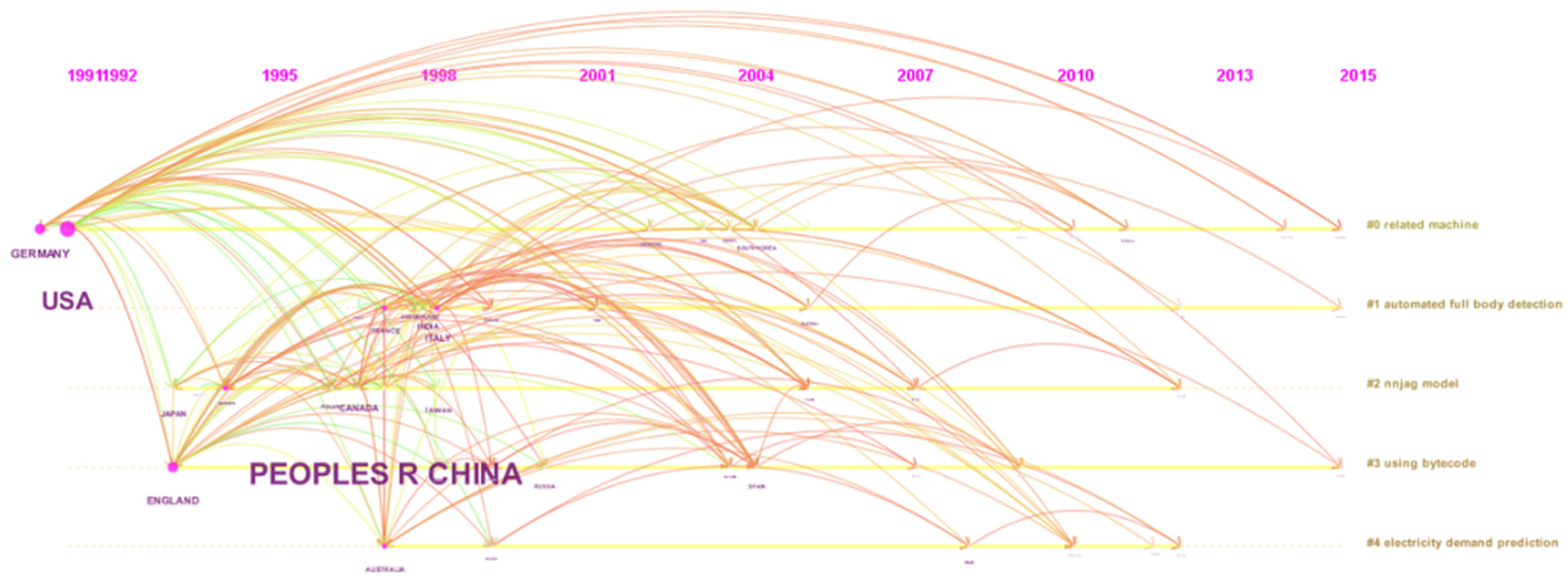
Time distribution of papers published about heavy-duty machine tool foundations.

Keywords of papers on heavy-duty machine tool foundations.
The influence of the supporting foundation of heavy-duty machine tools can be embodied by a number of factors: (1) the foundation as the main carrier of the machine tool, whereby the bearing capacity of the concrete directly determines the rigidity of the overall mechanical structure; (2) due to the interaction between the heavy-duty machine tool and the foundation, the characteristics of the heavy-duty machine tool with the foundation of it concerned are significantly different from ones without the foundation of it concerned; (3) the heavy-duty machine tool is fixed to the foundation by bolts. As an example, the contact length between the bed body and concrete of a gantry-type machine tool is up to dozens of meters and has a large metal-concrete contact area. The static and dynamic characteristics of the joint, composed of metal and concrete, are key factors affecting the precision and reliability of the machine tool; (4) the high cost of foundations for heavy-duty machine tools; (5) the foundation, which acts as the carrier of heavy-duty machine tools, has been described as a “black box” after pouring the concrete, since the construction quality cannot be evaluated. Therefore, many disagreements often ensue between building enterprises and customers.
Based on the factors outlined above, this article presents an extensive overview of existing literature on machine tool foundations in relation to (1) the bearing deformation capacity, (2) dynamic characteristics, (3) characteristics of the different contact surfaces within the machine tool-foundation system, (4) vibration isolation, (5) system optimization, and (6) quality inspection. The current status of research progress and main problems are summarized, and future research trends forecast.
Research foundation deformation capacity
Foundations can directly affect the working precision and operating life of heavy-duty machines; in particular, deformation can be caused by a lack of rigidity of the heavy machinery foundation, which can seriously affect machining precision, as well as the amount of maintenance required by the machine. Factors influencing the bearing deformation of foundations are complicated, and the foundation size and rebar distribution are two major factors crucial to the performance of the foundation. Therefore, related research has been carried out both in China, and throughout the world, on factors affecting the bearing deformation capacity of heavy-duty machine tool foundations.
Establishment of models of foundation deformation
Concrete foundations used in construction are generally considered as rigid bodies, and research has mainly focused on the strength of foundations. However, in mechanical engineering, the elasto-plasticity of concrete should be considered, and in this respect, deformation under heavy loading and sedimentation of concrete foundations have drawn a great deal of attention. A typical model of a heavy-duty machine tool-foundation system is shown in Figure 4. To analyze the deformation states of heavy machine tool foundations, Atapin 4 used the finite element method, and the influence of different size foundations on bearing capacity was assessed. Haldar et al. 5 added reinforcements to improve the rigidity of foundations, and in this respect, Tian et al. 6 established a coupling deformation model of the finite element-boundary elements and analyzed the influence of rebar distributions on the deformation of the system. Another method, proposed by Tian et al., 7 increased the number of segmented steel hoops to improve the rigidity of box-type foundations. In a different approach, Wang et al. 8 explored the influence of uneven sedimentation in concrete foundations on the machining precision of heavy-duty tools. Furthermore, Salah et al. 9 analyzed the deformation of foundations due to various cutting conditions, although in this study the cutting force was simply applied to the equivalent treatment, without considering the interaction between the upper and lower structures. Another study by Wang et al. 10 proposed an analytical method to solve for the basic stress and displacement of a foundation under vertical cyclic loading.

Deformation of a heavy-duty CNC machine tool-foundation system. CNC: computerized numerical control.
Boundary conditions of foundations
The boundary conditions of the foundation are an additional factor affecting the establishment of the system model. At present, two popular methods are mainly used to select boundary conditions. In one method, the foundation soil is directly introduced into the system model. As an example, Pradhan et al. 11 designed a model computational area, with inherent boundary conditions, for considering the mechanical model of soil–structure interactions. In another study, Mozos and Luco 12 established a finite element model, which assumed the half-space foundation to be an elastic medium. Pitilakis and Clouteau 13 used the Wiener–Hough equation, assuming only small displacements within the soil, and studied a number of potential boundary conditions, including the soil surface, internal forces, and continuous displacements. The second method simplifies the foundation and soil around it based on the spring–damping boundary parameters. To this end, Beredugo and Novak 14 derived spring–damping boundary parameters for box-type foundations based on the definition of stiffness. Similarly, Lee 15 provided a specific method for calculating boundary parameters and established a mechanical model based on a paper machine-foundation system that considered the boundary conditions of the foundation. Moreover, Gohnert et al. 16 deduced the boundary parameters of a pile foundation used for heavy machine tools, and stiffness and damping values for a single pile were calculated by Novak, 17 and furthermore, the dynamic interaction factor was used to calculate vertical stiffness and damping of a pile group. The most commonly used boundary conditions are shown in Table 1.
Commonly used boundary conditions for foundations.

Existing literature on the bearing deformation of concrete foundations is relatively limited; however, the bearing capacity of concrete foundations is directly related to the precision and operating life of heavy machine tools, which highlights the importance of the problem. In terms of the consistency of the physical properties of concrete materials, the coupling deformation of heavy-duty machine tools and concrete foundations, and thermal deformation of heavy machine tools, all of these have yet to be studied. Moreover, in relation to the boundary conditions of concrete, while most of the available literature has applied traditional values for the spring constant and damping ratio in all directions of the foundation, the foundation-boundary conditions in fact change nonlinearly. Therefore, introducing the nonlinear boundary conditions into the system model will be discussed.
Research on dynamic characteristics of machine tool-foundation systems
The vibrations caused by heavy machine tools disturb the surrounding equipment, which is sensitive to environmental changes, and also causes a loss in precision of the machine itself. Due to interactions within the heavy Machine and foundation, the entire array of characteristics of the foundation will directly determine the quality of work done by the machine tool and its ability to maintain precision. Therefore, it is impossible to analyze and design the heavy machine tool-foundation system without regarding it as a whole system, including its foundation.
Dynamic modeling of machine tool-foundation system
To effectively research the characteristics of heavy machine-foundation systems, an accurate system model is needed, and the mechanical model can be used for additional studies. To some degree, this research has been carried out in both China and abroad. Ghosh 18 established a model of a heavy machine-foundation system using the three-dimensional finite difference method. The influence of an artificial boundary range to static and dynamic characteristics of the system was studied, and the influencing degree was significantly reduced when the artificial boundary value exceeded 10 times the mechanical dimensions. Liu et al. 19 presented a three-dimensional finite element model to consider the dynamic response of a soil-power mechanical interaction system. Based on the model, the dynamic response of the compressor foundations of a high-pressure polyethylene unit was analyzed to reveal the main factors affecting the dynamic response of the large machine foundation. Based on principles from the dynamics of the multi-body system, a wind power tower system was discretized into a series of continuous super units by Guangling. 20 The finite element model of the tower-foundation multi-body system was then established by setting the boundary conditions of the spring and damper at the interface between the foundation and the soil body. Moreover, Aşık and Vallabhan 21 established analytical solutions for strip-type and circular-type foundations, based on the Variation Principle and Hamiltonian Principle of Energy Minimization. Meanwhile, Yi et al. 22 established a model of a computerized numerical control (CNC) machine tool-foundation interaction system based on Lagrangian mathematics and analyzed the impact responses due to different boundary conditions. Based on cloud computing, Cai et al. 23 conducted a series of studies to analyze the characteristics of heavy-duty machine tool-foundation systems. Finally, Stănescu and Tabacu 24 established a 2-degree of freedom (DOF) machine-foundation model, considering the nonlinearity of soil, and studied the stability of the equilibrium position.
Dynamic experimental methods of the system
To study the dynamic characteristics of heavy-duty machine tools-foundation systems, numerous experimental methods have been used to obtain relevant data, and to analyze the factors affecting the characteristics of heavy machine tools-basic system. Kumar and Boora 25 designed four different combinations of test models by adjusting the position of the spring and rubber pad between the machine and foundation. Interestingly, Akilu et al. 26 built a machine tool-foundation test bed, in which the foundation was interchangeable, and elucidated the influence of different foundations on the dynamic characteristics of rotating machinery. The data fusion technique was then used to handle the test data.
Influencing factors of dynamic characteristics of the system
The purpose of analyzing heavy-duty machine tool-foundation systems is to study the reliability, stability, and accuracy of such systems; however, the system characteristics are often the result of multi-factor coupling. In order to determine the laws influencing various factors, the authors have studied the main factors that influence the characteristics of heavy-duty machine tools. Vivek and Ghosh 27 used the finite element method to study the dynamic response of adjacent foundation interactions and analyzed the influence of the distance between different foundation profiles and type of foundation on the dynamic characteristics of the system. In another study, Štimac et al.28,29 developed a finite element model of a turbo-generator system, to explore resonance avoidance while using turbines and generators, and to optimize the foundation cross-sectional dimensions. Finite element software was enlisted by Salah et al. 30 to analyze the influence of different foundation contours on the dynamic system response, under different loading scenarios, and the influence of the change of the foundation stiffness on the natural frequency of the foundation was further analyzed. Wang et al. 31 studied the anti-micro-vibration capabilities of foundations for high-precision power machine by considering the influence of the type of material surrounding geology, and other external environment factors. Haldar and Babu 32 used a net-shape stiffener in the soil to improve the natural frequency of heavy machine tool-foundation systems and to avoid resonance occurring at the frequency at which the machine rotates. Measures were proposed by Svinkin 33 to reduce the impact of vertical loading on the surrounding facilities. Furthermore, Werner 34 deduced a vibration analysis model to calculate the basic frequency of the machine tool-foundation system. The analysis showed that the fundamental frequency of the system could be improved by increasing the contact area between the machine and foundation. Chandrakaran et al. 35 discovered that by adding new materials to the concrete, the dynamic performance of the foundation could be improved.
In engineering practice, the foundations of multiple heavy machine tools are often close together in order to make full use of available space, which inevitably causes interference between them. Using the finite difference method, Ghosh 18 modeled the foundation in close proximity to a heavy machine tool (Figure 5), and the settlement law of the foundation with different spacing, under dynamic excitation, was analyzed. Swain and Ghosh 36 conducted a study considering different vibration conditions for a square foundation, based on the Ghosh paper (Figure 6), to obtain the dynamic response of different length-width ratios of concrete foundations under different excitations.

Schematic layout of the problem definition under sinusoidal dynamic loading.

Schematic layout of two closely spaced footing assemblies.
Due to the large amount of penetration of a cutting tool and feeding ranges used in heavy-duty machine tool processing, the cutting force is relatively large, and the vibration caused by cutting force seriously affects the machining accuracy of heavy-duty machine tool. F Chen 37 presents a novel multifunctional magnetic actuator, which not only damped the vibration of machine tools but also measured the cutting force in real time. H Wu 38 established the relationship between cutting parameters and cutting errors based on back propagation neural network, thus completing compensation of the error produced by the cutting force of heavy machine tool-foundation system.
For buildings located in more complex geological regions, the concrete foundations of heavy machine tools are usually in the form of piles. Fattah et al. 38 used ANSYS to analyze the dynamic characteristics of heavy machine tool-pile foundation systems and showed that as thickness of the pile cover increases, the displacement of vibrations is reduced, due to the damping properties of the concrete foundation. Cai et al. 23 proposed a pile foundation model of a layered soil composite for heavy machine tools. Based on the model, the dynamic response of the system under impact forces was analyzed, to determine the influence of different soil properties and pile lengths.
In conclusion, the main factors affecting the dynamic characteristics of heavy machine-foundation systems include the form of the foundation, contours of the foundation, ratio of stiffener, material properties, contact area between the machine and foundation, form of the piles, and thickness of the pile coverage (Figure 7). Previous research has usually focused on a single factor, but has not analyzed the impact of the coupling of factors, nor have any relevant studies been carried out to perform a side-by-side comparison of these factors. Generally, heavy equipment that features a large scale, dead weights, and large loads requires the construction of a concrete foundation. Ambient temperatures can seriously impact the accuracy of heavy machine tool-foundation systems. Despite this, thermal coupling of heavy machine tool-foundation systems is yet to be studied, whereas a large amount of published literature is aimed at foundations in close proximity. Power plants do not have a uniform layout, and moreover, there are thermal and force interactions between the heavy machine foundations and plant foundations; therefore, it is necessary to carry out research on heavy machine tool-foundation layout optimization. The foundations of heavy machine tools can be affected by the environment, or by the heat and forces generated, and dynamic errors can be introduced into the heavy machine-foundation system. How to compensate for these errors remains to be studied.
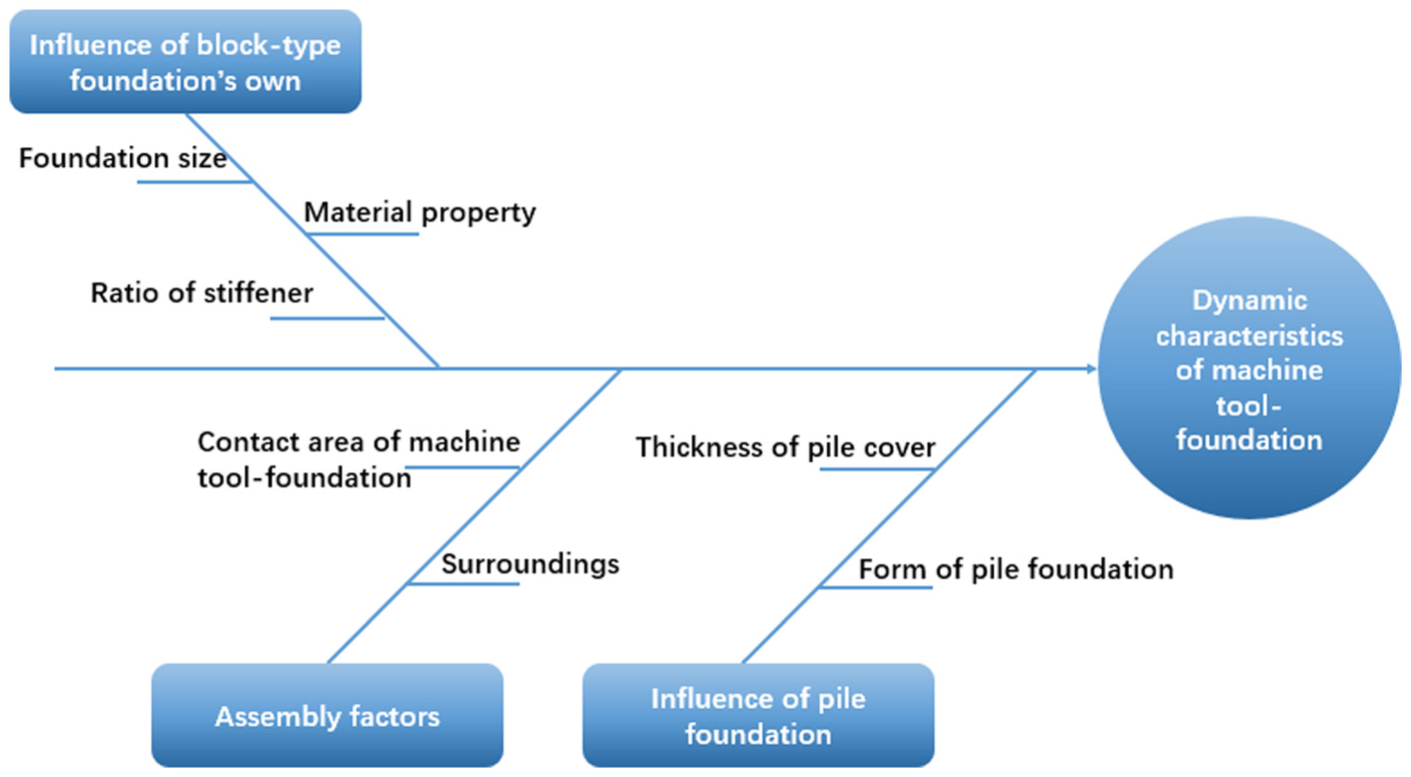
Factors influencing the dynamic characteristics of the system.
Research on joint surface of the system
The contact stiffness of joints often plays an important role in the overall stiffness of a mechanical structure and is at risk of becoming the weakest links. It is therefore necessary to fully consider the contact stiffness of the joint when studying the static characteristics of mechanical structures.39,40 Machine tool joints usually involve different types of materials, such as cast iron, steel, and concrete. However, since concrete is relatively less stiff compared to other materials, and its overall contact area is large, the study of metal-concrete joints is of great importance. Hoshi et al. 41 pointed out the decisive influence of contact stiffness of concrete foundations on the stiffness of the entire foundation-joint system. The form of connection between the heavy CNC machine tool and concrete foundation is shown in Figure 8.

Technical drawing of the structure of the joint surface of the system.
In the research of joint surfaces of materials with different properties, more attention should be paid to the real contact area (Figure 9), since the real contact area will directly determine the stiffness at the joint surface. However, due to the complex formation mechanism of concrete surfaces, there is a high probability of a rough surface morphology. Moreover, under large surface pressures, concrete undergoes a brief elastic stage. When the concrete surface exceeds a particular amount of elastic deformation, the convex pellets in the concrete surface will fracture, leading to uncertainty in the real contact area.

Literature distribution matrix.
To study the effect of contact area of the different materials on the joint surface, Shimizu et al. 42 proposed a simple normal stiffness model, to calculate the normal stiffness of the joint surface of different materials, and developed a new method to detect the real contact area for different materials (Figure 10). Based on Shimizu’s model, Kono et al. 43 proposed a three-dimensional contact stiffness model with different material joint surfaces and built an experimental platform, as shown in Figure 11, to reduce the influence of specimen tilt on the testing accuracy at the joint surface. Based on the three-dimensional fractal characterization method, and assuming the cross-sectional area of contact asperities is exponential, Komvopoulos and Ye 44 established a finite element contact model of a rigid sphere with a semi-infinite elasto-plastic isotropic medium, to obtain the average contact pressure, true contact area, and relationship between response and deformation. The model was successfully applied in the elasto-plastic analysis of multi-layered media. Tian et al. 45 investigated two elasto-plastic deformation regions and established a theoretical solution of the actual contact area of the machine tool-foundation bolt joint under a normal contact load and normal contact stiffness.

Outline of the measurement device for the research.
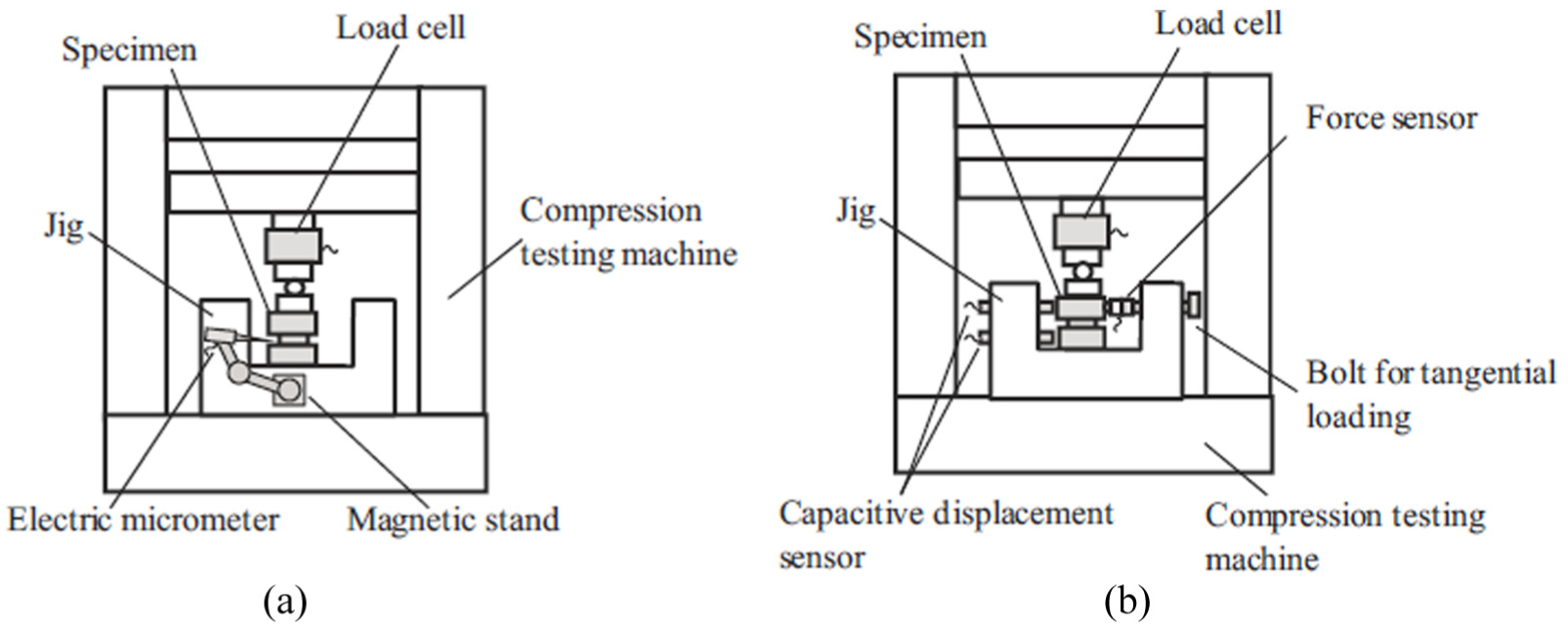
Schematic diagram of measurement setup: (a) measurement in the normal direction and (b) measurement in the tangential direction.
Due to the roughness of concrete surfaces (Figure 12), the elastic phase of concrete under large surface pressure is very small. When the elastic limit is exceeded, most of the convex pellets on the surface break, resulting in uncertainties in the real contact area between the concrete and metal structure. To avoid errors in the estimated value of contact stiffness caused by the real contact area, a joint-surface identification method has been adopted by a number of researchers, for obtaining the parameters of a metal-concrete joint surface. Xiao et al. 46 worked out the relationship between the contact stiffness at the bolted joint and the equivalent elastic modulus of different materials, based on the hammer mode test. In addition, Zhang et al. 47 established a test bed for a bolted joint surface between the lathe bed and foundation and used modal testing to obtain the modal frequency, so as to identify the equivalent stiffness and damping of the bed-foundation joint.
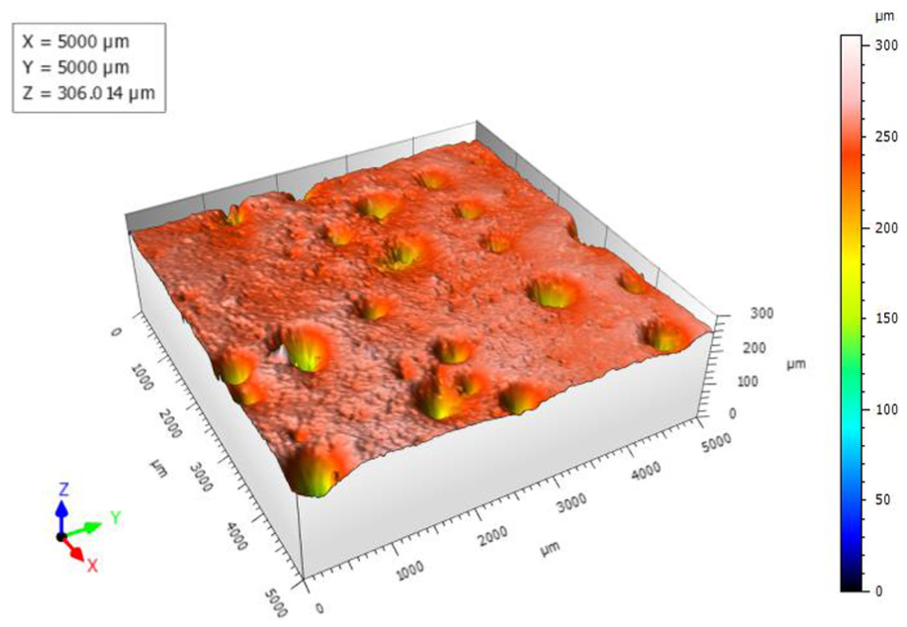
Morphology of grouting foundation surface.
To provide more useful research on the characteristics of joint surfaces, a number of publications have focused on the improvement of stiffness characteristics at the joint surface. In this way, Tang 48 studied the influence of a fixed form bed body on the dynamic characteristics of the structure, via the analysis of the foundation bolt layout and the natural vibrations of the machine. Similarly, Ungar 49 studied the influence of bolt spacing, bolt preloading, bolt material, and surface roughness on the dynamic characteristics of bolted joints. A three-dimensional contact stiffness model was applied by Kono et al. 50 to study the adjustment of machine stiffness, which can effectively enhance the stiffness of the machine. Furthermore, Tian et al. 51 introduced a neural network model into a study on the characteristic parameters of the joint surface, so as to effectively solve the nonlinear mapping relationship between the joint parameters and the joint influencing parameters. Based on classification theory, the stiffness and damping parameters at the nodes of the joint surface were obtained, and the specific application to the joint surface was achieved. According to the literature, the performance parameters of the joint have a nonlinear relationship with the excitation frequency and amplitude. 40 For the fixed joint constitutive relation, discrete modeling cannot be done easily. A number of characteristics should be considered including heavy loads, multi-point parallel distribution, and uneven load distribution at the joint surface between the heavy machine tool and concrete foundation, size, partial loading, twisting loads, and impact loads influences, as well as manufacturing, assembly, thermal deformation, the impact of wear, and other factors. In particular, large joint surfaces must be specially designed and manufactured, and therefore, the traditional experimental studies of joint surfaces are not suitable for researching the dynamic and static characteristics of the joint surfaces of heavy machine tool-foundation systems. The material at the joint surface between the machine tool and foundation is mostly secondary grouting, which has different properties to the foundation material. How to synthesize the physical properties of the secondary grouting material and foundation materials remains to be elucidated.
Research on vibration isolation of the system
The disturbance of environmental vibrations not only causes vibration of the machine body, but also causes relative vibration displacements between the cutting tool and the machined part, which will directly affect the precision and surface quality of the machined part. Therefore, to avoid loss of accuracy caused by environmental vibrations, it is common practice to construct a seismic isolation groove around the foundation of a heavy machine tool.
Since the 1950s, the problem of the vibration isolation of soil has been highlighted and has gradually become a popular area of research. The size of the isolation trench determines the isolation level. Hung and Yang 52 summarized previous research in this area and pointed out that the relationship between the trench depth H and wavelength λR of the Rayleigh wave should satisfy a certain relationship, to obtain adequate vibration isolation effects. The effect of the trench depends mainly on the ratio of the depth to the wavelength of the vibration. To prevent the spread of external vibrations to precision instruments and equipment, the ratio of H/λR should be above 1.2. Furthermore, Shrivastava and Kameswara Rao 53 carried out a numerical simulation of the efficiency of vibration attenuation from the perspectives of trench depth, length, width, and several other aspects. The study effectively showed that only the width of the isolation trench has an influence on reducing the vibration amplitude.
However, simply analyzing the size change of the trench does not make it possible to assess the efficiency of the trench, since the overall efficiency is the result of coupling of the size, filler, and so on; therefore, the current research on vibration isolation has mostly been carried out by combining the various influencing factors. Ahmad and Al-Hussaini 54 conducted a detailed analysis of filler and non-filler trenches for two-dimensional homogeneous foundations using time-domain and frequency-domain boundary elements and proposed a number of design criteria for vibration isolation. Moreover, Adam and Estorff 55 studied the vibration isolation effects of the two types of trench. Using the soil-building plane model combined with boundary elements and the finite element method, displacements can be reduced by 80% using the non-filler trench. Babu et al. 56 carried out further analyses on the trench depth, type of filler, and other influencing factors.
In the field of construction, isolation walls have been applied in some cases to limit vibrations. Haupt 57 studied the vibration isolation and model tests of underground concrete-filled walls of different shapes using the finite element method and analyzed the vibration scattering effects of the filled trench. It was found that the scattering effect was not related to the actual shape of the barrier, but to its cross-sectional area. The study showed that the near-field vibration isolation is more effective than far-field methods. However, Andersen and Nielsen 58 concluded that the vibration isolation effect of the non-filled trench is better than the barrier vibration isolation. Adam and Estorff 55 demonstrated that the trench filled with a flexible material (the extreme of which is non-filled trench) performed better, in terms of vibration isolation, than a rigid material. Therefore, to obtain better isolation effects, the non-filled trench is usually adopted in the design of concrete foundations for heavy machine tools. Based on cloud computing, Cai et al. 23 further analyzed the effects of trench size, use of a double trench, type of filler, and trench position on vibration isolation and summarized the effects of each parameter. The study provided further verification that the non-filled trench is better than the filled trench (Figure 13). Based on the superior effects obtained using the non-filled trench, specific design parameters can be extracted from Ahmad’s study 59




where

Vibration isolation efficiency according to filler type.
In conclusion, vibration isolation effects caused by the trench are mainly due to the shape of trench and type of filler, and coupling effects exist between different influencing factors. The coupling effects have a nonlinear relationship. Moreover, the foundation materials and the layout of the stiffness distribution can affect vibration isolation. Therefore, analyzing the effect on isolation due to a single influencing factor is not enough. Sensitivity analysis for each influencing factor should be carried out and a study of the isolation efficiency under the coupling effects should be performed.
Research on system optimization
The foundations of heavy machine tools consist of steel and concrete and can weigh twice as much as the heavy machine itself, costing up to 30% of the cost of a heavy machine. Therefore, optimizing the composite foundations of heavy machine tools has important economic value in the construction of foundations. In recent years, more and more attention has been paid to foundation optimization, as shown in Figure 14, in which number of research papers published on this topic after 2000 is presented.

Number of published research papers on foundation optimization after 2000.
The reasonable design approach is helpful in optimizing structures 60 ; however, a precise structural mathematical model would provide the basis for further foundation optimization. In this light, Sienkiewicz and Wilczyński 61 proposed a rectangular foundation optimization model for heavy machine tools under harmonic loading. Following on from this, Sienkiewicz and Wilczyński 62 studied a rectangular foundation optimization model under external forces and bending moments. Huang and Hinduja 63 developed a foundation optimization model based on nonlinear constraints and the finite element method. Moreover, Khajehzadeh and Eslami 64 conducted a multi-objective optimization of dynamic responses using a gravitational search algorithm (GSA). Optimization of reinforced concrete columns subject to dynamic loads, with the transverse and longitudinal cross-sectional dimensions of the foundations used as the design variables, was presented by Štimac et al. 28 Structural vibration responses were obtained by Sun and Zhang 65 by establishing dynamic equations of the foundation, so as to determine optimized variables, constraints, and targets.
The optimization models listed above consider the heavy machine tools and foundations separately. Using a different approach, Silva et al. 66 established a heavy machine tool-foundation optimization model that takes into account the static and dynamic characteristics of the machine. However, due to the complicated structure of the system, the general simulation environment did not meet requirements. Cui 67 used a network to form a super-computing environment and achieved dynamic optimization for the design of a turbine engine.
For heavy machine tools that require higher accuracy calculations, considering only the above factors influencing the precision is far from sufficient. For example, the above studies do not consider the influence of the joint surfaces, system boundary conditions, thermal deformation, and so on. Therefore, research on the foundation optimization, which comprehensively considers of various influencing factors, still needs to be carried out.
Research on quality inspection of foundations
The quality of concrete foundations can directly impact the carrying capacity and heavy machine tool accuracy. To measure the quality of foundations, a series of studies have been carried out on various methods to examine the health of concrete foundations. Wireless displacement sensors on fan-concrete foundations were installed by Currie et al. 68 to monitor variations in the displacement of foundations (Figure 15). In another study, Jia et al. 69 buried liquid-filled plastic tubes into concrete foundations in the transverse direction, and graduated glass tubes were connected to the other end. The glass tubes vertical to the foundation were placed downward to monitor settlement. To monitor pile foundation settlement, Wang and YIin 70 filled a reinforced cage with an intelligent piezoelectric ceramic as an aggregate. String-type sensors were used by Chen 71 to test the strains in a mass of concrete (Figure 16). Furthermore, Song et al. 72 embedded temperature and strain sensors into concrete foundations, to monitor the construction process during the laying down of mass concrete foundations, and ensured the tensile strength was always greater than the ultimate tensile stress corresponding maximum temperature, to avoid the emergence of temperature cracks.

Displacement monitoring by wireless sensor.

Testing of reinforced concrete with string-type sensors.
Most of the methods for quality testing of concrete foundations are regularly applied in the field of civil engineering; however, relatively little research is done within the mechanical engineering industry. The measurement precision required in mechanical engineering is much higher, and structural failure can often be caused by only slight deformation of a structure. As such, the above methods do not meet the measurement accuracy requirements for mechanical engineering applications. To meet these requirements, Wang et al. used fiber-grating sensors to detect uneven settlement of concrete foundations 73 (Figure 17). Similarly, Zhu 74 installed fiber grating monitoring sensors in foundations, to form a quasi-distributed ground-foundation health monitoring system, and was able to successfully monitor the foundation remotely. Tian et al. 6 obtained the curvature values at particular points in a heavy machine tool-foundation system, again using fiber grating technology, and the curvature information of each point was fitted using the least squares method, to obtain the deformation values of components in the heavy machine tool-foundation system (Figure 18).
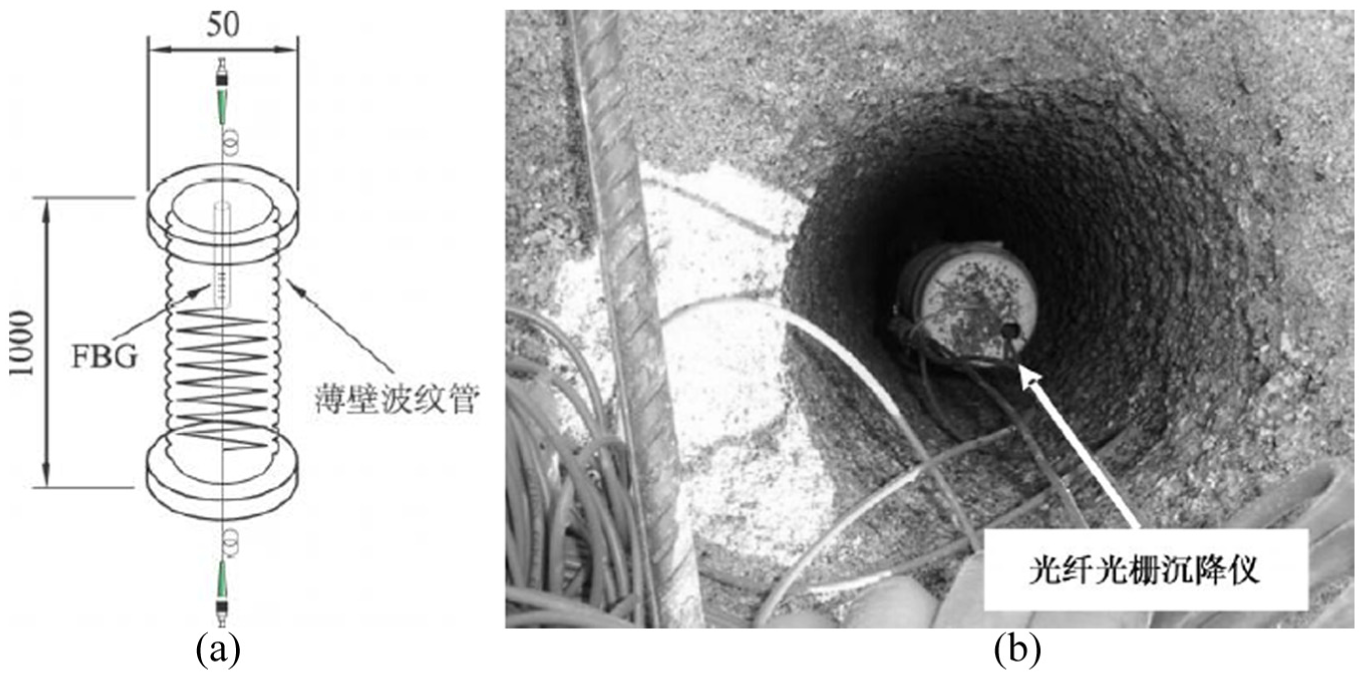
Schematic drawing (left) and photograph (right) of fiber grating settlement sensor.

Illustration of deformation detection using fiber grating technology.
For detecting the dynamic characteristics of a system, Brecher et al. 75 carried out three-dimensional dynamic measurements using a laser tracking interferometer. Compared with traditional measurement techniques that require dozens of acceleration sensors or excitation points, this method can quickly obtain the whole machine mode; however, the accuracy of measurements is not particularly high. Finally, Hiroaki and Kimiyuki 76 invented a 3-DOF measuring mechanism with a rotary encoder, to allow three-dimensional measurements of the tool’s spatial attitude. The above summary demonstrates the variety of testing instruments and methods available for the dynamic three-dimensional measurement of machine tools; however, there are still some shortcomings in the measurement range and precision.
Traditional methods of bearing deformation detection do not meet high-accuracy detection requirements, neither in terms of sensor assembly nor in terms of test accuracy. While accuracy requirements can be met using fiber grating technologies, at present, the sensors cannot be distributed continuously. Moreover, it is very difficult to apply fiber grating technologies to the design and assembly of sensors, and simultaneous deformation of the fiber grating sensor and structure, required for effective measurements, cannot be fully guaranteed. In detecting modal parameters, the common excitation has been unable to meet the excitation needs of the system, due to the huge structure. Therefore, the establishment of a new set of methods is necessary for testing the characteristics of a system, and to accurately evaluate foundation quality problems.
Conclusion and future prospects
With a focus on heavy machine tool-foundation systems, a systematic review and analysis were carried out on the precision characteristics, life span, and quality control of the system. The specific conclusions and future prospects can be summarized as follows:
By analyzing the static and dynamic characteristics of the heavy-duty machine tool-foundation system, the general rule that the system characteristics are influenced by the concrete foundation size, concrete foundation material, reinforcement distribution, and boundary conditions is revealed. The thermal deformation of the foundation is an important factor, affecting the static and dynamic characteristics of heavy machine tools. The thermal damage and thermal transmission will be an important direction for future research on the accuracy and precision of heavy machine tools.
Whether using experimental method or theoretical method, the difficulty lies in judging the real contact area at the joint surface. At present, the statistical methods are used in most academic papers to quantify the actual contact area, so further research is needed on the surface damage mechanism of concrete foundations. In addition, the equivalent physical properties are key technical issues in the study of joint-surface characteristics. Combining the influence of various factors to fully establish the joint-surface model remains a difficult problem to solve.
The establishment of an accurate model of heavy machine tool-foundation system is the precondition for the vibration isolation and optimization of the system. The application of the simplified theoretical model of heavy-duty machine tool-foundation system will cause the loss of influencing factors. The cloud computing simulation model is an effective means to solve the characteristic calculation of the multi-factor coupling system model.
This article discussed that the fiber grating technology has some advantages in both installation technology and detection precision using high-precision sensors to detect system characteristics. However, shortages are prevalent in the manufacture and installation of sensors. The application of distributed optical fiber sensors will be crucial to overcoming the shortcomings of current fiber grating sensors.
Footnotes
Handling Editor: Jan Torgersen
Declaration of conflicting interests
The author(s) declared no potential conflicts of interest with respect to the research, authorship, and/or publication of this article.
Funding
The author(s) disclosed receipt of the following financial support for the research, authorship, and/or publication of this article: This work was supported by the Natural Science Foundation of Liaoning Province, China (20170540431), Jing-Hua Talents Project of Beijing University of Technology, National Natural Science Foundation of China (51575009), and Beijing Natural Science Foundation (3162003).
