




Abstract
Numerous infrastructures, especially the bridge, require some safe inspection and assessment at the soonest when hit by a disaster like catastrophic earthquake. However, plenty of bridges within disaster area and limited resources for inspections may lead to the traffic delays and hampering the quick post-disaster assessment and rebuilt. In this article, a public-acceptant method, where cable force of bridges can be investigated quickly based on ubiquitous smartphones, was proposed to raise the efficiency of inspection and assessment in post-disaster emergency. First, public-participant post-disaster emergency disposal system was supported by the developed mobile software Orion-CC. Second, the lab’s comparison experiment was conducted with the mature wireless monitoring method, which verified the feasibility of the above-mentioned method. Third, the field experiment in totally three bridges in Dalian including Hualu Bridge which used three iPhones demonstrated the feasibility, practicability, high efficiency, and stability of the novel method, and showed its huge potential for the application in bridges’ quick health investigation. Besides, utilizing the smartphone-based cable force investigation method as the breakthrough, the data collection network and the framework of public-participant post-disaster emergency disposal system were preliminary established.
Introduction
Highway is an important channel of transportation system, and its post-disaster traffic capacity has great effect on the emergency rescue work. However, thousands of bridges as key nodes in the highway system, their damage degree directly affect the safety of the transportation network.1,2 Rapid evaluation and emergency response of the post-disaster bridges have been the important content and key links of the rescue work. Thus, damage assessments after the disasters have attracted significantly attentions among researchers and practitioners of the disaster management.3,4
Cable structure as one of the key components of bridges, the size and distribution of its internal force largely affect the safety of the bridge structure; moreover, the change of cable force will also reflect the safety status of the bridge. Therefore, cable force is an important content of the entire bridge structural health monitoring (SHM). Convenient and quick measurement of the cable force has great significance to the bridge structure health assessment after suffering from disasters such as an earthquake.5–9
There are several ways to measure the cable force. Currently, available techniques to estimate the cable force include the static methods that directly measure the cable force by a load cell or a hydraulic jack, and the vibration-frequency methods (VFMs) that indirectly estimate the cable force by measuring the natural frequencies. 6 Compared with other cable force measuring methods, VFMs have occupied the main market in the field of engineering application because of the advantages of good dynamic response and simple operation. It is notable that the conventional VFMs have high costs in hardware purchasing, installation, and post-maintenance, and highly vulnerable to the site factors. Meanwhile, the monitoring equipment should be performed by the professionals. Although wireless monitoring methods derived from the VFMs aiming to solve some of the above issues and have received increasing attention,10–12 additional issues are introduced related to the data acquisition and transmission, power consumption, and networking. These issues have also hindered the practical implementation of SHM methodologies on massive scales, such as the networks of highway bridges. 13
Modern smartphones as the highly integrated devices have computational power, information storage capacity, and communication networks. Moreover, smartphones are equipped with a variety of sensors, which make them to be the good choice for distributed monitoring. Smartphones have been applied on some fields besides communication, such as real-time occupancy information acquisition of buildings, 14 conducting questionnaire survey, 15 human health monitoring, 16 car crash detection, 17 structural vibration measurement, 18 structural displacement measurement,19,20 and seismic sensing.13,21 Most of the mobile applications can complete data storage and processing on the mobile devices themselves, and embed related softwares or sensors that can be used for SHM. Thus, in 2012, our team had initially proposed the idea for SHM using the smartphones technique in civil engineering 22 and validated the feasibility of this smartphone-based method by applying to cable force test in 2015. 23 The Internet, ubiquitous smartphones, and mobile networks have created a great opportunity to form a low-cost wireless public-sensor network by public participating in post-disaster SHM and producing valuable data and quickly sharing the monitoring messages.
In this article, a bridge cable force rapid measurement software system was developed based on the smartphone, which had a fast, convenient, and easy-operation mobile phone interface. This system enables a crowdsourcing platform where smartphones act as mobile sensors and provide monitoring data (pre-processed by the phones), field photographs and Global Positioning System (GPS) location data to a Data Collection Server (DCS), and the corresponding website (http://www.cloudshm.com) has been preliminary established. The DCS can realize the collection and management of the monitored data obtained by the public, which provides the possibility of rapid cable force investigation for the bridges in the disaster area.
Smartphone-based post-disaster emergency detection method for bridges
The feasibility of smartphone-based detection technique
Over the last few years, smartphone technology has made significant advances. The phone central processing unit (CPU) and random-access memory (RAM) capabilities have increased significantly, while the size and weight of the phone have decreased. Modern smartphones are equipped with a variety of sensors such as proximity sensor, motion sensor/accelerometer, ambient light sensor, three-axis gyro, and compass. This makes them attractive for applications in the field of monitoring, where data can be recorded, processed, stored, transmitted, and visualized by the smartphones.9,18,19
Considering many factors that might have an influence on the measurement performance of the embedded sensors, two types of smartphones (iPhone 4s and iPhone 5s) were tested in this study. Both of the two generations of iPhones were embedded with the LIS331DLH three-axis accelerometer, which is made by ST Micro-electronics. The properties of the accelerometer embedded in smartphones were compared with traditional accelerometers (force balance accelerometer and piezoelectric accelerometer), as shown in Table 1.
Traditional accelerometers and smartphone sensor performances contrast.

From Table 1, it is easy to find that the inner accelerometer of smartphone has high performance and can meet the engineering monitoring requirements, which provides the precondition for the research work in this study.
Smartphone-based post-disaster emergency detection method
Time as an important factor that directly affects the progress of post-disaster emergency work should be taken into account. Rapid detection and evaluation of the damaged bridge as the primary work to ensure the lifeline be clear, its time consumption will be very urgent and every second should be counted. Thus, a series of bridge detection work should be finished in a short period of time, which calls for post-disaster emergency work should be more efficient.
At present, internationally, the post-disaster emergency detection and assessment methods of bridges mainly relied on the ground artificial inspections and supplemented by the remote sensing methods.24–27 These conventional investigation methods mainly need the professionals to judge the bridge appearance state by visual examination, and the investigation results will be used as an important reference data to guide the following post-disaster disposal work. However, experience shows that the available resources, such as the inspection equipment and qualified inspectors and engineers, will be typically stretched for such a huge task. 28 While the time in the disaster area is very precious, if the work efficiency of the emergency detection and evaluation has been improved, it will create very good economic and social benefits.
If creating conditions to fully mobilize the enthusiasm of the public to participate in monitoring work, the efficiency of bridge post-disaster field investigation will be easier to be improved. In this study, a public-participant quick bridge investigation method based on smartphones was proposed, which provided the possibility for the public to participate in the post-disaster emergency detection and assessment work. First, a convenient bridge cable force test software named Orion-CC (see section “Introduction of Orion-CC”) was developed by our research team. This smartphone-based software makes the cable force, an important evaluation factor for judging the health status of the bridges, more convenient and simple to test, and create the condition for its popularization within the public. Second, the basic bridge information stored in the form of the Quick Response (QR) code makes it easy to be obtained by the public. Once the bridge basic parameter acquired, every person can participate in the bridge health detection work using their smartphone installed with Orion-CC. Finally, the data monitored by the public can be uploaded to the DCS through the network, and the expert based on the collected data will make a QR and share the corresponding information and data with the public. The data also can be used as the instructional information for the government to make the rescue arrangement work and carry out the post-disaster reconstruction projects.
Bridge basic information stored in the QR code in each cable
QR code is the trademark for a type of matrix barcode (or two-dimensional (2D) barcode), first designed for the automotive industries in Japan. A QR code uses four standardized encoding modes (numeric, alphanumeric, byte/binary, and kanji) to efficiently store data. Once a QR reader app installed on the smartphone, useful information can be grabbed immediately when pointed the phone camera at these codes. So, QR code as a type of 2D barcode provides an easy access to acquire the information.
QR code has the function of fault tolerance, and the error-tolerant rate can be divided into four levels: L (7%), M (15%), Q (25%), and H (30%). The higher the error-tolerant rate is, the easier to quick scan out the message, but the greater the information redundancy will be.
QR code is a static code and the scanning content is fixed. Usually, the QR code content less than 150 characters is recommended, which is more suitable for common code equipment. As a part of QR code, live code is recommended if there is network around. Live code is a website in theory, but the website content can change at any time, and can store information including images, video, audio, and other multimedia content. In comparison, the live code possessed greater scalability, flexibility, and powerful storage capacity than normal QR code. So, if the information is large, the generated QR code will be more complicated (as shown in Figure 1(a)), generating a low error-tolerant level or a live code (as shown in Figure 1(b)) is recommended.

(a) QR code with H level error-tolerant rate and (b) live code with H level error-tolerant rate.
In this article, the QR code stored the basic bridge parameter information, and it was pasted on the well-marked location of each bridge cable. The messages of the bridge cable can be acquired using smartphone to scan the QR code, as shown in Figure 2. So, this method can provide the essential information and support the public to participate in the bridge cable monitoring. When the parameter of the bridge cable is obtained, the cable force can be calculated and uploaded to the terminal server with the help of the mobile software of Orion-CC.

(a) QR code scanning process and (b) the information stored in the QR code.
Public-participant post-disaster emergency disposal method
Due to the large number of bridges within traffic network in disaster area and limited resources for inspections, the emergency quick bridge investigation can be a time-consuming process. This issue may cause traffic delays and congestion, thus hampering quick post-disaster recovery and rebuilt. In order to provide a solution to solve the above problems and improve the efficiency of emergency response, a smartphone-based post-disaster emergency disposal method was developed in the study, which occupied the advantages of public easy participant, low cost, high efficient, and simple operation. Corresponding emergency disposal process is proposed, as shown in Figure 3. When disaster happened around us, thousands of infrastructures, especially for the lifeline facilities such as bridge structures, would be destroyed in a short time. Limited qualified inspectors and testing equipment for inspections will be a problem that hinders the process of emergency work. Public participation provides a new way to solve this matter. Using only our mobile phones to scan the QR code attached on the bridges around us, and obtained the bridge cable parameters, the public can easily get into the bridge health monitoring. With the help of the public’s collective efforts, this method will make thousands of bridges in post-disaster area to finish the detection work in a short time. Then, corresponding collected data (such as GPS information, image data, and monitored cable force data) can be uploaded to the terminal server and analyzed and processed by the experts. Processed data and corresponding proposals will share with the public, which are very helpful for the people in the disaster area to know the situation around and make the right decision. Meanwhile, the processed data information will be submitted to the local government, and the government can carry out more effective post-disaster relief and reconstruction work with the help of the data from the disaster site. For the safety of the public, it is important to note that this method is mainly focused on the post-disaster investigation of the slightly and moderate damaged bridges. For the serious damage bridges, the image and GPS information of the bridges are enough for the public, stepping on the bridges to conduct cable force test is not recommended, unless participator is under the guidance of professionals.

Public-participant post-disaster emergency response flow chart.
The smartphone-based bridge cable force quick test method, which is proposed in this study, shows its potential application in emergency response after the disaster. It is a public-acceptant detection approach that possesses the features such as simple operation, short-time test, well numerical stability, and without additional devices. Also, this technology can be used as a conventional method to evaluate the bridge health state by conducting the cable force monitoring. Complex bridge cable force test equipment is no longer necessary in the process of bridge construction and post-maintenance and can be replaced by the user-friendly smartphone-based method.
Introduction of Orion-CC
In practice, the VFMs have received increasing attention and widely used in bridge cable force test because of its good dynamic response, simplicity, and speediness. In early 18th century, the British scientist Taylor utilized the flat taut string theory to obtain the calculation formula of the string’s fundamental frequency when the string was subjected to harmonic vibration in the plane (as shown in Figure 4). The fundamental frequency can be described by the following equation

Here, f is the fundamental frequency (Hz); T, the tension of the string (N); ρ, linear density (kg/m), and l is the string length (m).

Vibration of string.
Theoretically, when both of the sag-extensibility and bending stiffness are neglected, once the fundamental frequency (f) of the cable is measured, the cable force (T) can be calculated according to equation (1), as shown in equation (2)

However, affected by the environmental noise and sensors’ installation location, the fundamental frequency usually cannot be accessed directly in most of the time. In engineering practice, the frequency difference (Δf) is often adopted to substitute the fundamental frequency, as shown in the following equation6,29


Here, Δf is the frequency difference (Hz) and n is the order of the frequency.
For a bridge, take cable-stayed bridge as an example, by installing the acceleration sensor on the cable to collect the acceleration time-history (ATH) information, the power spectral density (PSD) can be obtained by fast Fourier transform (FFT). The frequency difference can be got from the PSD, and the cable force can be calculated using equation (3). The above is the fundamental principle of the software Orion-CC developed in this study.
Orion-CC as a smartphone-based software built on iOS 7.0 or higher platform has been launched by our research group in the Apple App Store. The software can invoke the inner acceleration sensor to collect data, and complete data process and analysis when input the basic parameters of the bridge cable, as shown in Figure 5. Meanwhile, the monitored data information can be uploaded to the DCS and submitted to the specialist and government. The operation process is simple, as shown in Figure 6.

Function introduction of Orion-CC.

The operation process of Orion-CC.
This method makes the cable force test become more efficient, and it can provide the important data (cable force, GPS information, and structure image) for the bridge health condition evaluation, especially useful for the post-disaster emergency assessment and emergency response. In the following experiment, the results show that this method can ensure the test precision and efficiency when compared with the traditional measurement technology. The fact above shows a strong encouragement of the method to be used in the engineering sites and guarantees the feasibility for bridge emergency investigation by public participation. In order to develop a simple, quick, and easily operated method for bridge state evaluation, the sag-extensibility and bending stiffness are not taken into account, and the results proved that this method has been able to meet the requirements of engineering detection and test well.
Comparison experiment
Smartphone-based cable force test software is designed for the quick bridge health state investigation and provides the possibility for post-disaster bridge emergency processing; thus, its reliability and practicability need to be verified by the lab experiment at first.
Experiment preparation
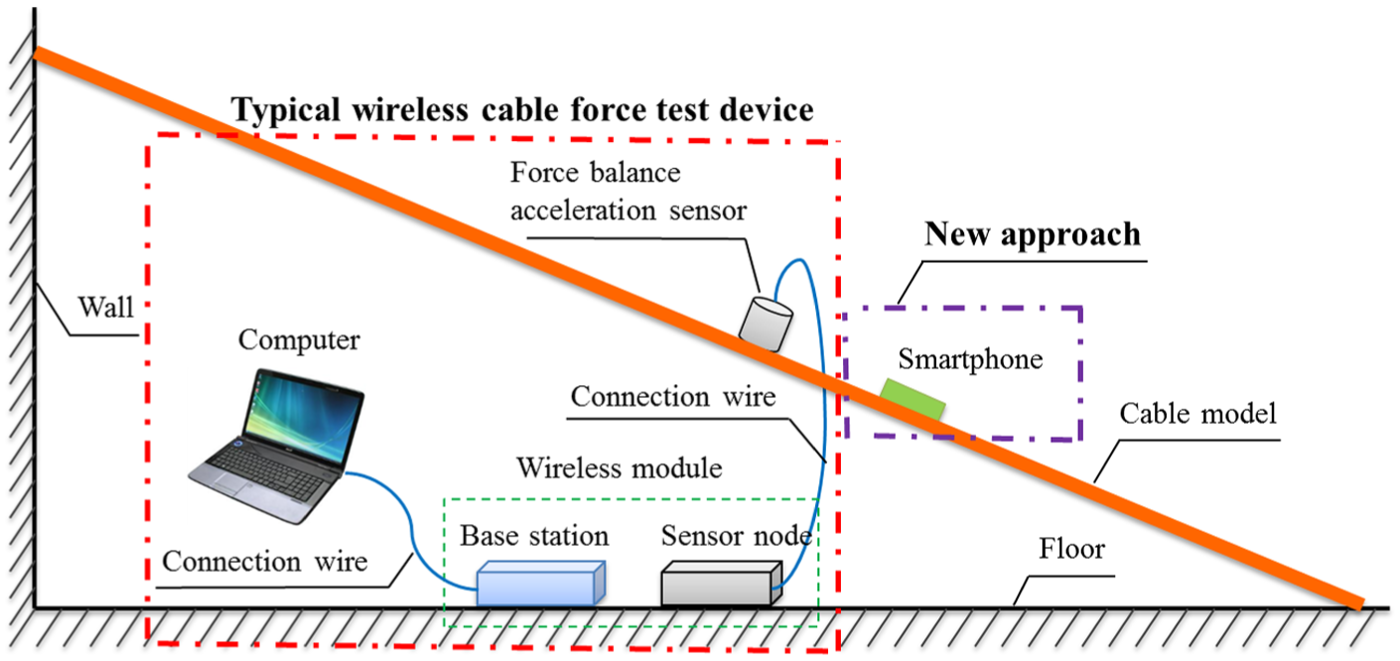
In order to verify the feasibility of this method, a comparison experiment was carried out in the lab. The force balance acceleration sensor as one of the matured traditional wireless acquisition approaches was adopted in this test, compared with the smartphone-based method developed in this article. The lab experiment adopted the cable model at Institute of Bridge Engineering, Dalian University of Technology. The length of the cable model is 15.53 m, and the linear density is 3.93 kg/m. The arrangement diagram of the cable force acquisition devices is shown in Figure 7.
Sensor arrangement diagram of comparison test.
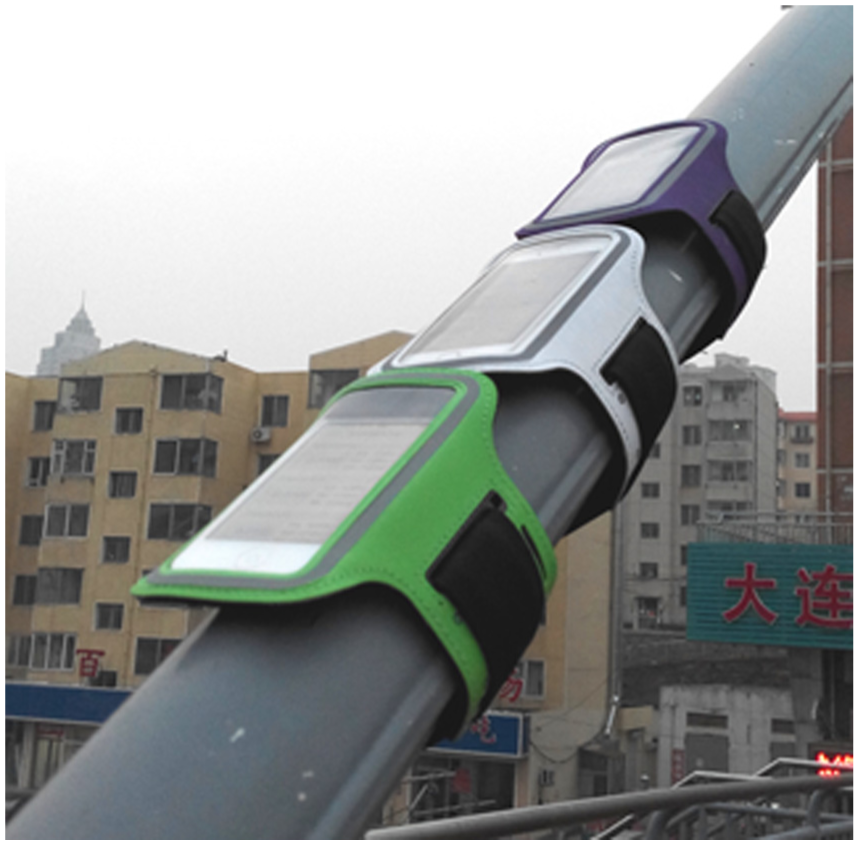
An iPhone 4s installed Orion-CC was employed to collect data. The data acquisition duration adopted the default setting of 60 s, and chosen artificial excitation as the external-excitation method. The artificial excitation is an artificially imposed external force. During the tests, something rigid was often used to tap on the cable to apply the external force. It is noted that the coupling between the smartphone and the structure can affect the vibration measurement. 30 In this study, the smartphones were tightly fixed on the structures using the mobile phone jackets, as shown in Figures 10 and 15. The front cover of the mobile phone jacket adopted transparent soft colloid material, which ensures that the operation screen can be touched conveniently. The back of the mobile phone jacket is a very thin layer of elastic cloth, and the smartphone can be put in easily. Meanwhile, the two wings of the mobile phone jacket using nylon fastener tape to make the phone fix around the cables tightly and ensure that no local vibration would affect the quality of the structural vibration measurement.
Experiment results
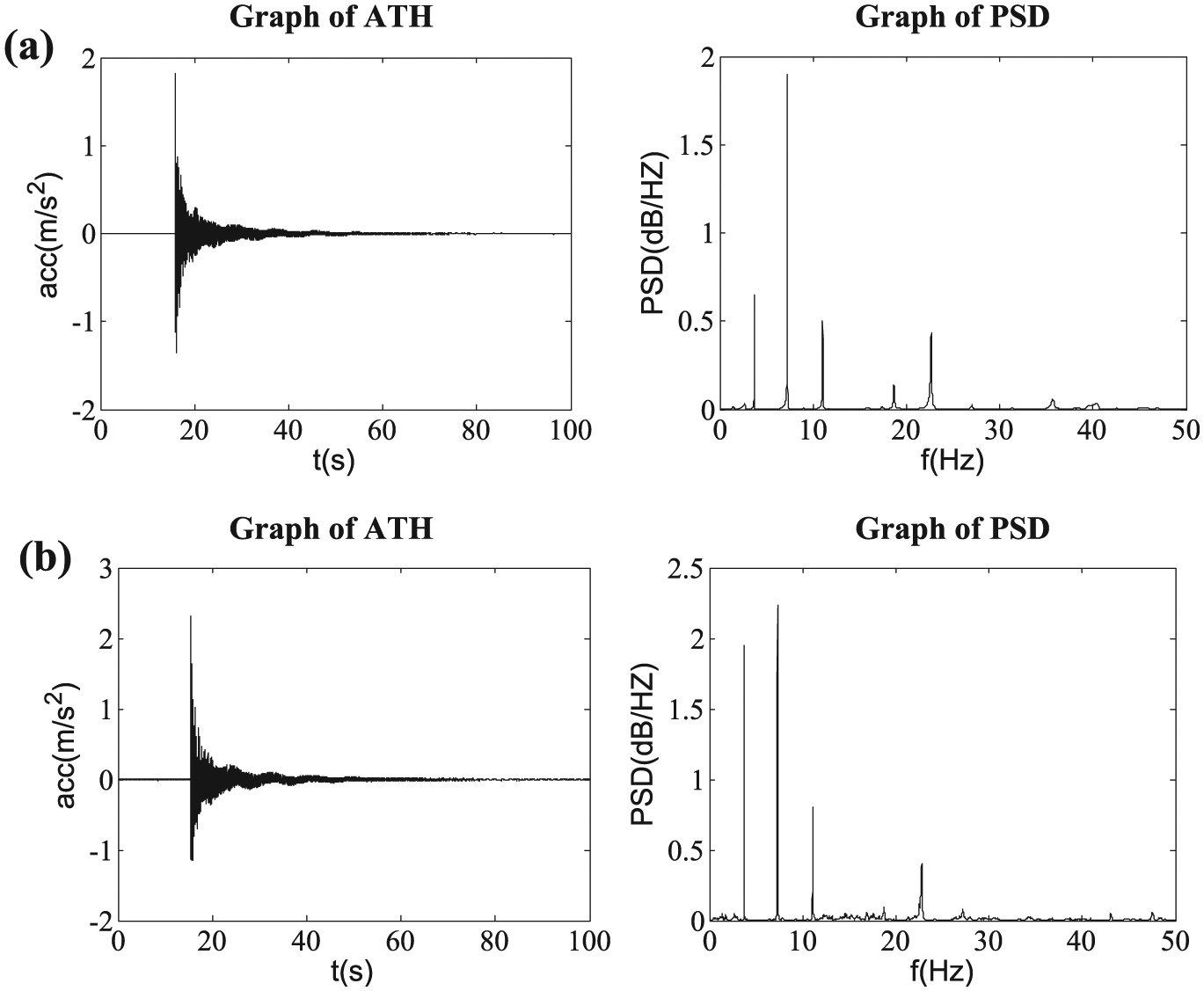
In the experiment, when the force balance accelerometer and the iPhone 4s finished the installation operation, artificial excitation was applied on the bridge cable. In order to be more strict and scientific to verify the feasibility of the mobile phone, data files of the two methods were extracted and analyzed by MATLAB. The results are as follows: Figure 8(a) shows the results of the force balance accelerometer, and Figure 8(b) shows the results of iPhone.
(a) Results of the force balance accelerometer and (b) results of the iPhone.
The frequency difference can be obtained from PSD graphs, and the cable force can be calculated when input the basic cable parameters into equation (3). The comparison of frequency difference and cable force between two methods is shown in Table 2.
Result comparison of iPhone and the force balance accelerometer.

As shown in Figure 8, the graphs of ATH and PSD obtained from the force balance accelerometer and iPhone, respectively, are coincident. Table 2 shows the relative errors of the frequency difference and cable force between the reference method and the smartphone-based. It is observed that the error of frequency difference is 0.54% and the cable force is 1.09%, which means the smartphone-based bridge cable force test approach can meet the precision requirement. However, as shown in Figure 7, it is easy to be observed that the force balance accelerometer acquisition device is very complicated compared with the smartphone-based method. Only one smartphone is enough to realize the cable force detection work, which shows its advantages of quick and convenient for bridge health state investigation. The comparison experiment has verified the feasibility of this novel method proposed in this study, and its practicability will be introduced in the following section.
Field application
Field application of quick cable force investigation on Dalian Hualu Bridge
Experiment preparation
Hualu Bridge is a single tower cable-stayed bridge with four stay cables, located in Dalian City, China, and its structure diagram is shown in Figure 9.

Structure diagram of Hualu Bridge.
The basic parameters of the stay cables are known, and 1# and 2# cables were chose to carry out the study. The messages were stored in the QR codes and attached on the bridge cables, and can be easily obtained by scanning, as shown in Figure 3. Three mobile phones (iPhone 5s, white; iPhone 4s, black; and iPhone 4s, white) were fixed on the cable at the same time with the help of the mobile phone jackets, as shown in Figure 10. Adopting the default settings (the acquisition duration was 60 s; the acquisition frequency was 100 Hz; and the acceleration threshold was 1 m/s2), and artificial excitation was chosen as the external-excitation method.
Data collection process.
Experiment results and discussion
Frequency difference is the main influence factor that determines the cable force in VFM, and therefore, the following research mainly focuses on the analysis of frequency differences.
Take 1# stay cable as an example, the peak frequency can be artificial selection in the PSD interface. However, it is worth noting that at least three consecutive peak frequencies should be selected when adopted this artificial intervention approach. As the low-order frequency is very difficult to obtain directly, and for the convenience of data comparison, third to eighth orders of peak frequencies were used to calculate the fundamental frequencies of the bridge cable. While in practical engineering application, the participants can freely choose the suitable peak frequency to calculate the cable force based on the site conditions and their engineering experience. In this study, the test had carried out for 6 times. As shown in Figure 11, the peak frequencies collected by the three different iPhones are all very steady, and the repeatability of the data is very good during the 6 times test. The third to eighth orders of peak frequencies are steady around 4.70, 6.50, 8.05, 9.80, 11.65, and 13.60 Hz, respectively, implying the natural frequencies of the bridge cable. However, the data stability of white iPhone 5s and white iPhone 4s is better than black iPhone 4s, by contrast.

Third to eighth orders of peak frequencies in six group tests of 1# stay cable.
The frequency differences of 1# and 2# cables can be calculated, as shown in Table 3. It is easy to find that the data are stable, and the variance and the standard deviation are very small. The relative errors are also very small, and the maximum error is 2.91% of 2# stay cable collected by the black iPhone 4s.
The frequency differences of 1# and 2# cables.

However, the data of the black iPhone 4s are not stable enough and show large fluctuation, while the performance of white iPhone 5s and white iPhone 4s is very well, and the data fluctuation is small. In theory, the configuration of iPhone 5s is higher than iPhone 4s, and the test results should be more stable. But, many factors might have an influence on the smartphone sensors’ measurement performance. These factors could be related to the hardware such as the accelerometer and processor embedded in the phone, as well as the different applications used in the mobile phone. In this test, the number and kind of the operated applications of the phones may be the main factor. The black iPhone 4s had been used for a long time and installed many application programs that may decrease the speed of mobile computing. Therefore, the data stability of the white iPhone 4s can be better than the black iPhone 4s, even better than the white iPhone 5s. Generally, in the same condition, high configuration of mobile phone is recommended to conduct the cable force test.
The field experiment proved the practicability, high efficiency, and stability of the smartphone-based cable force test method, and shows its huge potential for the application in bridge quick health state assessment.
Field investigation on different bridges in Dalian area
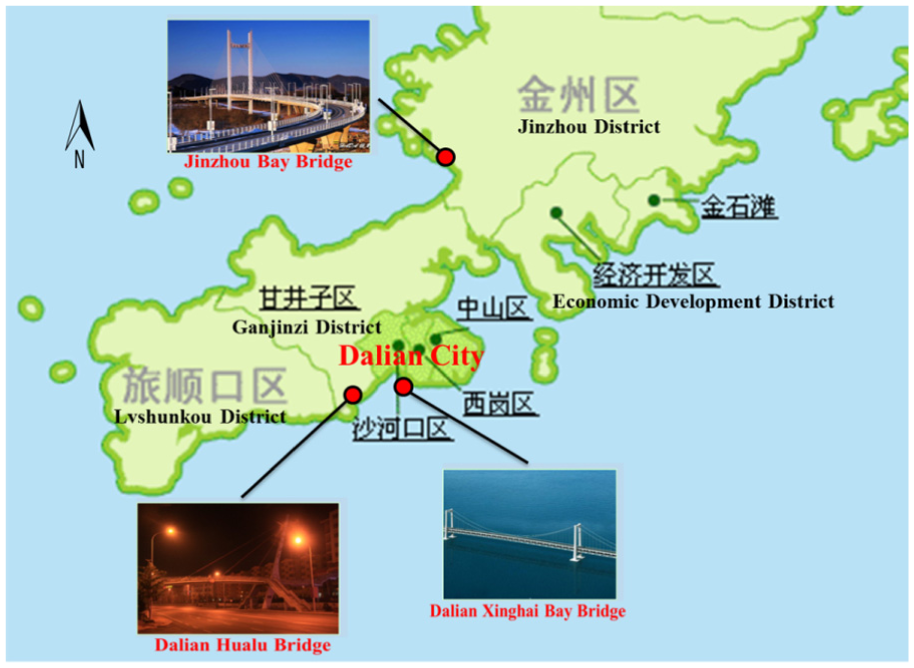
In addition to the Hualu Bridge, Dalian Xinghai Bay Cross-Sea Bridge and Dalian Jinzhou Bay Bridge were investigated in this study, as shown in Figure 12.
The investigated bridges of Dalian area.
Dalian Jinzhou bay bridge
Jinzhou Bay Bridge is the largest cable-stayed bridge in Dalian with two lanes in the two-way, and the main bridge is designed for single tower and double cable plane, as shown in Figure 13. The height of the main tower is 72.3 m, and there are total of 13 sets of stay cables in the bridge. Take cable 4# to 10# as examples to conduct the cable force test, and their frequency differences were shown in Table 4.

Dalian Jinzhou Bay Bridge.
Jinzhou Bay Bridge cable frequency difference investigation from cable 4# to 10#.

Once the basic parameters (cable length and linear density) of the cables were obtained, the cable force can be easily calculated.
Dalian Xinghai bay Cross-Sea Bridge
Xinghai Bay Cross-Sea Bridge is also located in Dalian, a coastal city of Northeastern China’s Liaoning Province. The Cross-Sea Bridge with the length of 5.3 kilometers, designed with two-way eight lanes, will realize the connection between the urban district of Dalian City and its hi-tech industrial zone. The main bridge is a three-span, earth-anchored suspension bridge with a double tower. Take 18# cable as an example to carry out the cable force test, as shown in Figure 14.

Suspender arrangement of Xinghai Bay Cross-Sea Bridge.
In this test, two cables, 18#_E and 18#_W of cable 18# were used; each cable is subjected to three different vibration tests. The operation is easy, after fastening the smartphone on the suspender with the help of the mobile phone jacket, and then input the project name and started the test, as shown in Figure 15.

Field operation on Xinghai Bay Cross-Sea Bridge.
Once the frequency differences of the cable were obtained, input the bridge basic messages and the corresponding cable force can be got. The accuracy of the frequency difference as the key parameter to calculate the cable force will be very significant. Thus, in this test, cable frequency difference investigation was also adopted to reflect the cable force level, as shown in Table 5.
Xinghai Bay Cross-Sea Bridge cable frequency difference investigation of cable 18#.

Each cable carried out three tests, and the data have good stability. When the data of the cables were obtained, it can be uploaded to the DCS with the help of the network, and make a preparation for the subsequent data processing and analysis.
Data collection and uploading
In this study, the data collection network was preliminarily established. When the messages (GPS, cable force, and image data) that can reflect the health state of bridges were collected, the messages can upload to the data collection network. The GPS information can reveal the monitoring location, and the image data can give an intuitive judgment on the bridge health status. Meanwhile, the cable force data can be analyzed by the experts and provide scientific basis for bridge structure health assessment. After processing, the collected data which is closely related to bridge health can be presented in the map. For example, when the cable force tests of Hualu Bridge, Jinzhou Bay Bridge, and Xinghai Bay Cross-Sea Bridge have been conducted and the corresponding data information has been collected, the monitoring data can be uploaded to the DCS and provide to the public with an intuitive map message. This will be very helpful for the post-disaster emergency investigation and assessment of the bridges in a large area. However, this work is on the way, the data collection network is initially established and needs to be improved before its putting into service.
Conclusion
Bridge cable force is an important data for the bridge health state evaluation, and its quick and easy detection will have a great significance. In this study, an iPhone-based cable force monitoring software Orion-CC developed by our research team was introduced. With the help of QR code to store the cable message and mobile phone jackets to fix the mobile on the cable, the system will be more acceptable for the public. In order to verify that the method is reliable in rapid data acquisition, lab comparison experiment between the smartphone-based method and the balance acceleration sensor was carried out, and the result shows its feasibility when applied in cable force test. The field experiment in Hualu Bridge proved the practicability, high efficiency, and stability of the smartphone-based cable force test method, and shows its huge potential for the application in bridge quick health state investigation. Another two bridges were investigated and demonstrated the feasibility of this quick bridge investigation method in large area, and the data collection network was preliminarily established for the disaster data collection and sharing.
In order to create a simple, efficient, easily operated, and public friendly mobile interface, it should be noted that the sag-extensibility and bending stiffness are not taken into account in the developed software. But, this method has been able to meet the requirements of engineering detection. Currently, this method only supports iOS mobile operating system, and the software based on the commonly used android mobile system is under development. Nevertheless, this study has demonstrated the feasibility and practicability of the smartphone-based quick cable force investigation method using in bridges’ health inspection, and shows its potential for the public participation in disaster emergency investigation.
Footnotes
Academic Editor: Jun Li
Declaration of conflicting interests
The author(s) declared no potential conflicts of interest with respect to the research, authorship, and/or publication of this article.
Funding
The author(s) disclosed receipt of the following financial support for the research, authorship, and/or publication of this article: This research was financially supported by key Projects in the National Science Foundation of China (51221961).