



Abstract
Riga plates serve as electromagnetic actuators originally designed to minimize hydrodynamic drag and pressure. Their utility has since broadened to drag reduction in submarines, micro-coolers, biomedical flow control, and thermal reactors. This study computationally simulates and statistically analyzes the energy transfer efficiency of an electro-magnetohydrodynamic (EMHD) Casson trihybrid nanofluid flowing past a vertical radiant Riga plate in scenarios involving natural and forced convection, considering the effects of viscous dissipation, suction, and the nanomaterials’ shape factor. The governing model is solved using a hybrid spectral technique, with numerical results validated against benchmark data. According to the results of the current work, suction augmentation diminishes the tri-hybrid Casson nanofluid’s velocity and drag forces. Elevating the values of mixed convection or Casson factors reduces the Casson tri-hybrid nanofluid’s temperature and enhances its energy transfer. The incorporation of non-spherical nanoparticles reduces the Nusselt number by 0.23%–5.3% and increases skin friction by 1.6%–14% in comparison to using spherical nanoparticles. Multiple regression indicates that thermal radiation is the most positive contributor in boosting energy transfer rates. These insights may advance predictive capabilities for thermal management in energy systems and guide next-generation EMHD reactor design.
Keywords
Introduction
Electric field, or electrohydrodynamic (EHD), is one of the external factors that regulates fluid movement and produces the required boundary layer disturbances, resulting in substantial improvements in the ability to control energy transport rate and flow characteristics.1–4 Similar to the electric field, the magnetic field, commonly referred to as magnetohydrodynamics (MHD), is another substantial external factor in regulating the required level of the rate of energy transport. The use of electric and magnetic fields as a means of controlling heat transfer has found wide-ranging applications in diverse fields such as heat exchanger performance improvement, electronics cooling, nuclear reactors, and MHD pump applications.5–7 The Riga plate provides a practical tool for investigating the interplay between EHD and MHD, or what is known as the electromagnetohydrodynamic (EMHD) force, its influence on thermal efficiency, and the flow characteristics of electrically conducting fluids. Electrodes and magnets are utilized to create Riga plates, which function as electromagnetic actuators affixed to a flat object. Initially developed to reduce pressure and drag force in hydrodynamics, they have since expanded their applications to include biomedical areas and various technological advancements. The multi-application phenomena present in Riga plate flows have gained a significant amount of interest in the mathematical simulation area. A numerical simulation conducted by Vaidya et al. 8 on combined convection over a stretched Riga surface revealed that increased levels of the modified Hartmann number can enhance fluid velocity while simultaneously reducing temperature. In their numerical analysis of convective liquid flow on a stretching Riga surface, Shamshuddin et al. 9 revealed that raising the radiative factor significantly boosts the Nusselt number, while a larger combined convection factor or wider Riga surface electrodes enhance boundary layer thickness. Li et al. 10 numerically simulated the influence of alumina nanosolids on the heat transfer efficiency of a liquid as it flowed across a vertical Riga surface. They revealed that as the volume fraction factors grow, the original liquid’s temperature and its ability to transfer heat improve. According to Bilal et al.’s numerical research 11 on combined convective nanoliquid as it flows over a vertical Riga surface, a combined convection factor with a positive value promotes flow, while one with a negative value restricts flow. Additionally, a higher Eckert number results in a stronger thermal field.
The investigation of fluid viscosity is crucial for enhancing thermal performance in heat exchanger systems. At elevated flow velocities or with highly viscous fluids, viscous dissipation significantly influences the heat transfer dynamics and thermal distribution within the fluid. This phenomenon has diverse applications, notably in scenarios where substantial temperature increases occur. For instance, in polymer processing techniques like injection molding and extrusion at high flow rates, as well as within the thin boundary layers surrounding high-speed aircraft, viscous dissipation raises surface temperatures. Additionally, its effect on rising temperatures in microelectronics and micro-electro-mechanical systems is observed. Numerical investigations12–16 undertaken on the thermal efficiency of a nanofluid moving over a Riga plate showed that an elevation in the dissipation factor results in escalated temperatures of the nanoliquid and a growth in the energy transmission. The process of suction has garnered significant interest due to its effectiveness in extracting reactants during chemical reactions. Numerous numerical analyses have explored the influence of this mechanism on fluid flow and thermal performance. Khatun et al. 17 demonstrated that an increased suction coefficient not only reduces the flow rate but also enhances shear stress. A decline in the temperature and enhancement in surface energy transport are observed with the higher of the suction factor, according to Zaydan et al.’s study. 18 The numerical analysis conducted by Shah et al. 19 revealed that enhancements in the suction factor correspond to an increase in drag forces and a reduction in Nusselt number values.
For decades, nanomaterial fluid enhancement technology has been recognized as one of the most effective techniques for enhancing energy transfer efficiency in several fields of application.20,21 Metallic or ceramic nanomaterials were widely utilized in the synthesis of the mono-nanoliquid. The application of metallic nanomaterials greatly enhances the original liquid’s thermal conductivity but tends to reduce its stability, whereas the use of ceramic nanomaterials enhances stability at the expense of reduced thermal conductivity.22–24 To tackle this issue, the fabrication of hybrid nanofluids that combined the original fluid with two nanomaterials was initiated.25–31 In recent years, a novel class of highly effective nanofluids known as ‘trihybrid’ nanofluids has been discovered and thoroughly investigated. The tri-hybrid nanofluid consists of a host liquid and a combination of three nanoparticles, exhibiting distinctive flow characteristics and near-perfect heat transfer. 32 Computational investigations have addressed the thermal performance of the trihybrid nanofluid, with studies33–38 revealing that tri-hybrid nanoliquids demonstrate enhanced energy transfer rates, velocity, and temperature compared to their hybrid and single nanoliquid counterparts. On the other hand, nanoparticles’ surface area and geometric configuration, which characterize the shape factor, influence both the thermal boundary layer thickness and the convective energy transfer coefficient.39,40 Numerically, Khashi’ie et al. 41 examined the impact of spherical, brick, and blade shapes on the thermal properties of a hybrid nanoliquid moving past an electromagnetohydrodynamic Riga plate. Research findings indicated that blade nanosolids exhibit the most rapid rate of energy transfer, whereas sphere nanosolids demonstrate the smallest rate. According to Ahmed et al.’s study 42 on the mass and energy transfer of nanoliquid across a Riga plate, taking into account different nanomaterial shapes, spherical nanomaterials generate the highest drag forces, whereas platelet nanomaterials generate the lowest.
The thermal behavior of nanofluids as its flow over Riga surface using Casson mathematical model has been investigated in prior research, including investigating the impacts of the chemical reaction on nanoliquids over a porous Riga plate, 43 investigating the energy transport and entropy generation optimization of EMHD radiative nanoliquid on a melting Riga plate, 44 analyzing the characteristics of energy transmission and entropy generation on MHD second-grade nanoliquid while taking the radiation factor into account, 45 computationally and statistically analyzing the flow of hybrid nanoliquid across a perforated Riga surface, considering the effects of activation energy and radiation, 46 studying the thermal efficiency of hybrid nanoliquid over a Riga plate, considering suction/injection and thermal slip factor, 47 and examining the thermal behavior of electro-magneto nanoliquid with variable viscosity on a Riga surface. 48 This study presents a comprehensive computational and statistical exploration of energy transfer in an electromagnetohydrodynamic (EMHD) Casson tri-hybrid nanoliquid flow over a radiative vertical Riga surface. Uniquely integrating the combined effects of nanoparticle morphology (shape factor), suction, and viscous dissipation under mixed convection. To the best of our knowledge, this study offers the first cohesive framework for tackling these related issues, allowing for precise energy transfer prediction in EMHD systems.
Thus, the objectives of this study are to:
Create a thorough computational model that integrates shape factor, suction, and viscous dissipation for EMHD Casson tri-hybrid nanofluid flow on a vertical radiative Riga surface.
Providing a numerical solution to the mathematical model created using the technique of hybrid spectral.
Quantify the effects of each of these parameters separately and in combination on thermal performance.
Create predictive regression models for skin friction and heat transfer.
Mathematical representation
Consider an EMHD combined convection flow of a dissipative Casson tri-hybrid nanoliquid past a radiative vertical Riga surface, as illustrated in Figure 1.
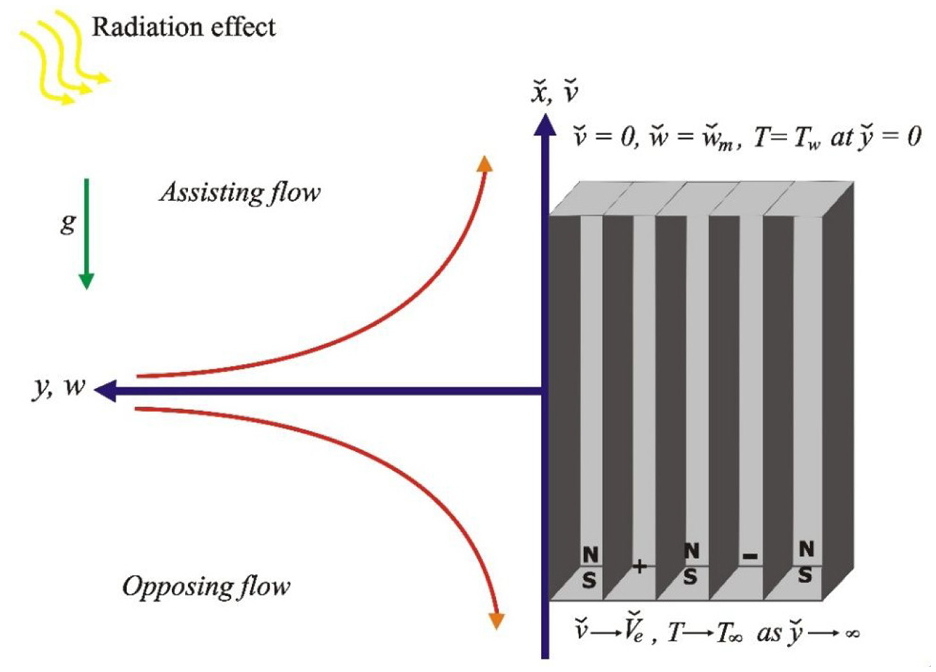
Physical configuration.
In light of the stated assumption, the simulation model is49–51:


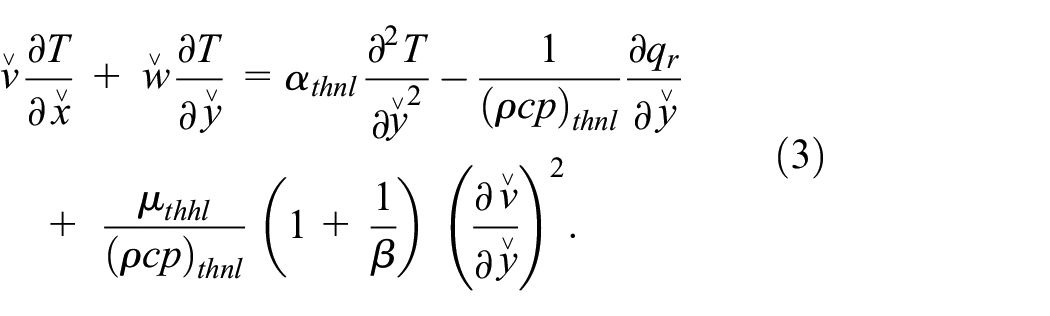
where
Incorporating the effects of suction, the boundary conditions can be stated as:

where
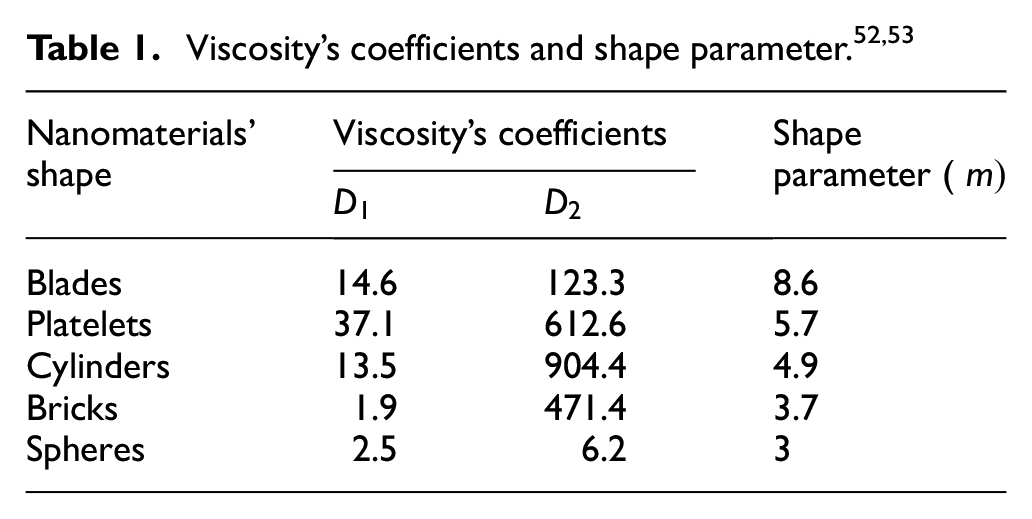
Through the succeeding mathematical formulas, the shape-dependent thermophysical characteristics can be articulated40,52–55:
Thermal conductivity and viscosity of single-compound nanoliquid are:

here,
Thermophysical characteristics of trihybrid nanoliquid are 55 :
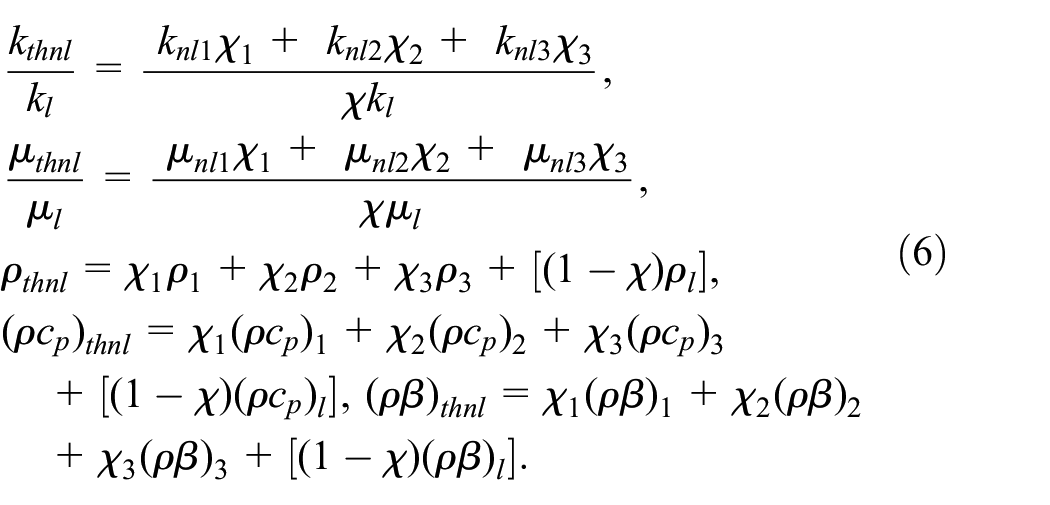
In this context,
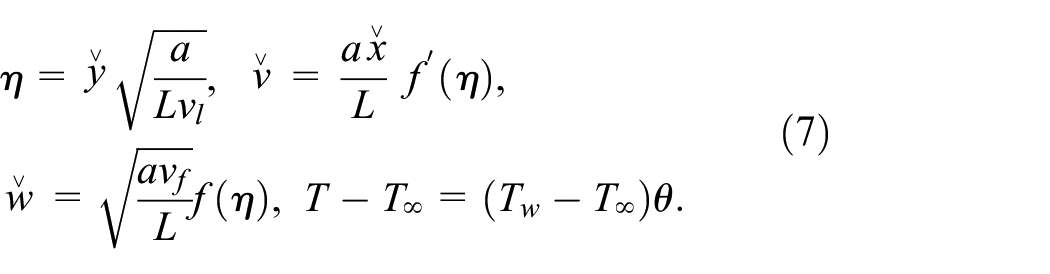
Using similarity transformations (7) yields the following reduced mathematical model:


Subject to:

here
The following formulas represent the Nusselt number

Where
Applying similarity transformations (7) yields the following reduced form of

here,
Computational approaches and results’ validation
The hybrid spectral numerical technique is an advanced computational method that integrates spectral methods with linearization approaches to effectively solve complex nonlinear differential equations.55–57 By employing this technique, the governing model is solved numerically, with computations generated through MATLAB, achieving an accuracy level of up to 10−6. The results obtained demonstrate significant compatibility with previous findings, as highlighted by the numerical results presented in Tables 2 and 3.
Comparison of

Comparison of

Graphical results and discussion
This section presents analyses of the impact of key factors on temperature and velocity distributions, specifically the nanosolid volume fraction and its shape, the Eckert number, the suction factor, the combined convection factor, the Casson factor, and the modified Hartmann number. Additionally, it includes an assessment of heat transfer rates and drag forces by analyzing the numerical outcomes for both the Nusselt number and the skin friction coefficient. The original fluid is a mix of 50% ethylene glycol and 50% water (H2O-EG), and the nanosolids used to create the trihybrid nanosolid are aluminum oxide (Al2O3), silicon dioxide (SiO2), and titanium dioxide (TiO2). Their thermo-physical features shown in Table 4 were employed to obtain the graphical and tabular results.

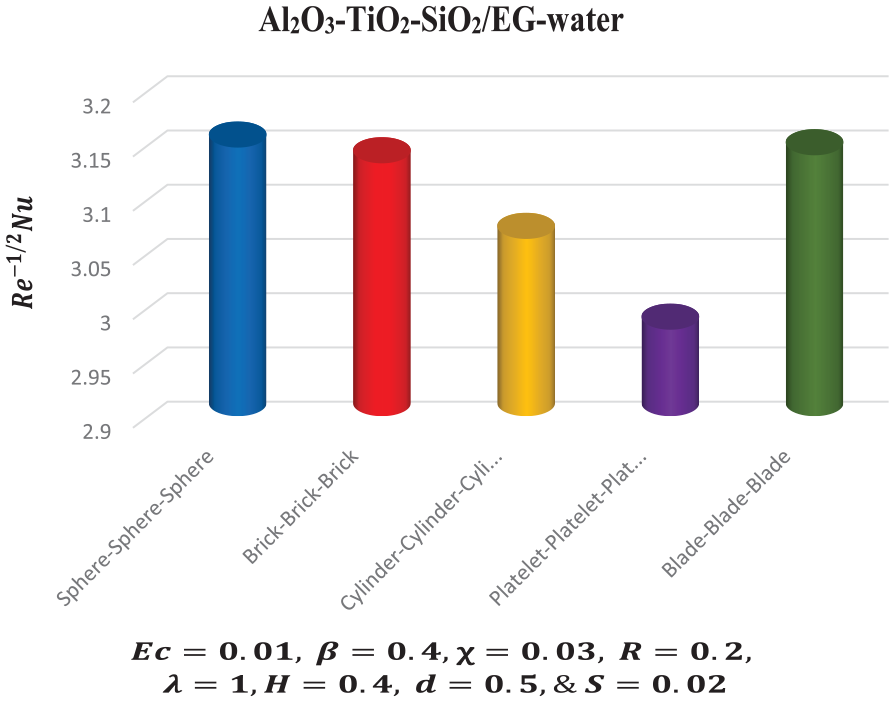
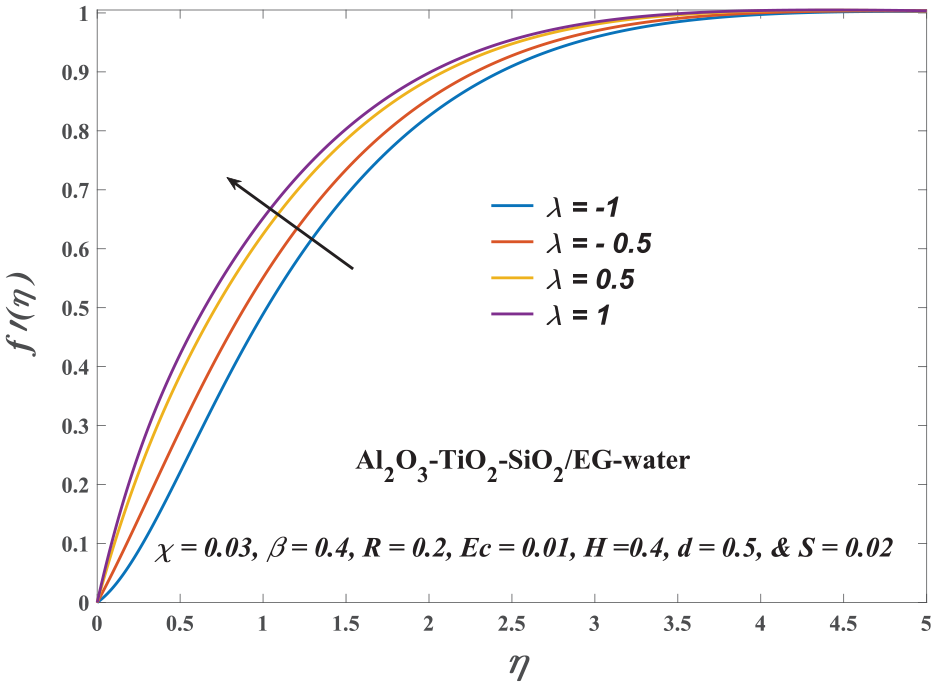
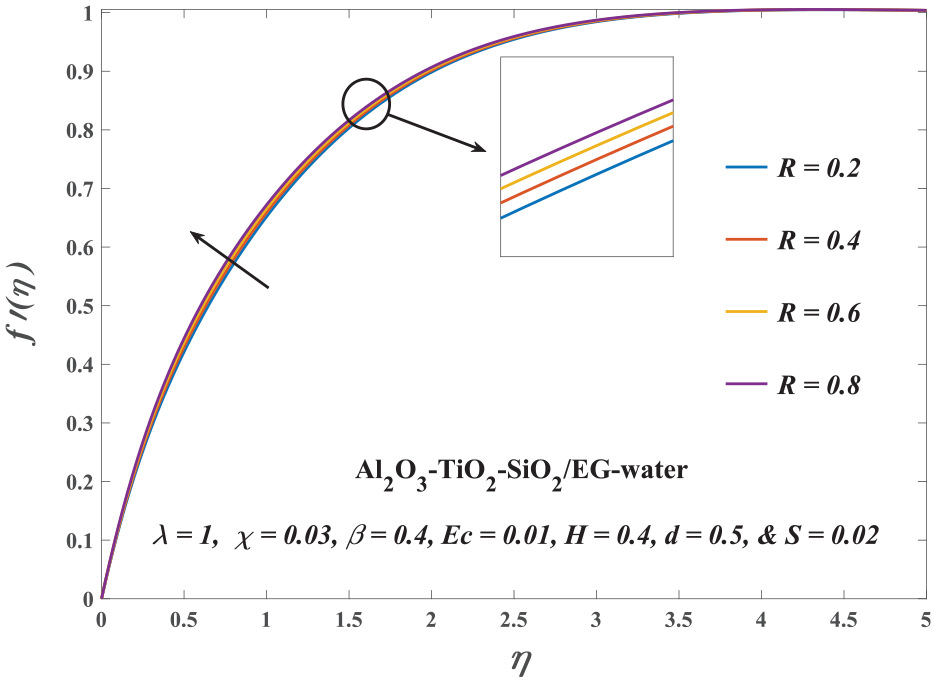
The effect of the shapes of blades, platelets, cylinders, bricks, and spheres on velocity, temperature, skin friction, and Nusselt number is investigated through Figures 2 to 5. It was found that spherical nanoparticles achieve the maximum velocity for the initial fluid, outperforming the other shapes, while platelet nanoparticles provide the lowest velocity. This occurs because the smooth surfaces of spherical particles minimize drag forces, enabling streamlined flow, whereas platelet nanoparticles’ irregular edges increase drag resistance. Platelet nanoparticles yield the highest temperatures, while spherical nanoparticles give the lowest temperatures due to their efficient thermal diffusion versus platelet particles’ disruptive heat transfer pathways. Compared to spherical nanoparticles, cylindrical, brick, platelet, or blade nanoparticles reduce the Nusselt number by 0.23%–5.3% by disrupting thermal boundary layer development. Non-spherical nanoparticles increase skin friction by 1.6%–14% through enhanced viscous dissipation at sharp edges. Figures 6 and 7 show the impact of the mixed convection parameter λ on both velocity and temperature of the tri-hybrid nanofluid in assisting and opposing flow scenarios. Increased buoyancy forces from higher λ values intensify fluid motion, enhancing tri-hybrid nanofluid velocity. Concurrently, heightened forced convection improves advective heat removal, reducing temperature. Figures 8 and 9 illustrate the substantial impact of the Casson parameter β on the velocity and temperature of the tri-hybrid nanoliquid. Higher β elevates apparent viscosity, shrinking the momentum boundary layer, restricting fluid motion (reducing velocity), and impeding energy transport (diminishing temperature). Figures 10 and 11 manifest the potency of the radiation factor in velocity and temperature distributions. An increase in the radiation factor leads to increased trihybrid nanofluid velocity and elevated temperature. In a real sense, a higher radiation factor typically leads to the release of more external energy into the trihybrid nanoliquid, which can elevate the overall temperature and increase velocity profiles within the trihybrid nanoliquid. Figures 12 and 13 illustrate the velocity and temperature distributions influenced by the Eckert number. According to the figures, there is a direct relationship between the Eckert number on the one hand and both the velocity and temperature profiles on the other. The physical mechanisms that transform kinetic energy into thermal energy provide an explanation for this relationship. Work done against the strains of the viscous fluid converts kinetic energy into internal energy as the Eckert number raises. Consequently, the trihybrid nanofluid’s temperature and velocity are both improved when the Eckert number escalates. Figures 14 and 15 introduce the influence of the suction parameter on velocity and temperature profiles. The ascending values of the suction factor contribute to the decrease in velocity and temperature of the trihybrid nanoliquid. A growing suction factor indicates that more trihybrid nanoliquid is sucked away from the surface, thereby tending to slow down the trihybrid nanoliquid at the surface. In addition, the temperature of the trihybrid nanoliquid at the boundary layer decreases as the trihybrid nanoliquid is sucked away since cooler fluid from the bulk of the flow replaces the warmer fluid close to the surface. Figures 16 and 17 expose the behavior of velocity and temperature under EMHD parameter H influence. Elevated H strengthens Lorentz forces, accelerating fluid via electromagnetic body forces (increasing velocity) while enhancing convective cooling (marginally reducing temperature). Figures 18 and 19 show the influence of the volume fraction parameter on velocity and temperature profiles. The incorporation of nanoparticles at low volume fractions can enhance heat transfer and improve the thermal conductivity of the original liquid without significantly affecting viscosity, optimizing the thermal transportation effectiveness of the host liquid. As a result, the velocity will increase while the temperature will decrease.

Impact of

Impact of
Impact of

Impact of
Impact of

Impact of

Impact of β on velocity.

Impact of
Impact of

Impact of

Impact of

Impact of

Impact of

Impact of

Impact of

Impact of

Impact of χ on velocity.

Impact of χ on temperature.
Numerical results of the variation of
Variation in

Multiple linear regression analysis
Statistical multiple linear regression is a technique frequently applied in many fields to model the relationship between a dependent variable (the response) and multiple independent variables (the predictors) through a linear equation. In heat transfer parametric analysis, it is an effective method for analyzing the relationship between thermal and flow fields and various key factors affecting them as well as determining the extent of their contributions.62,63 Using data in Table 5, the descriptive statistics of the predictor factors are presented in Table 6.
Descriptive statistics of the predictor factors.

where

where

where
Regression analysis of

Regression analysis of
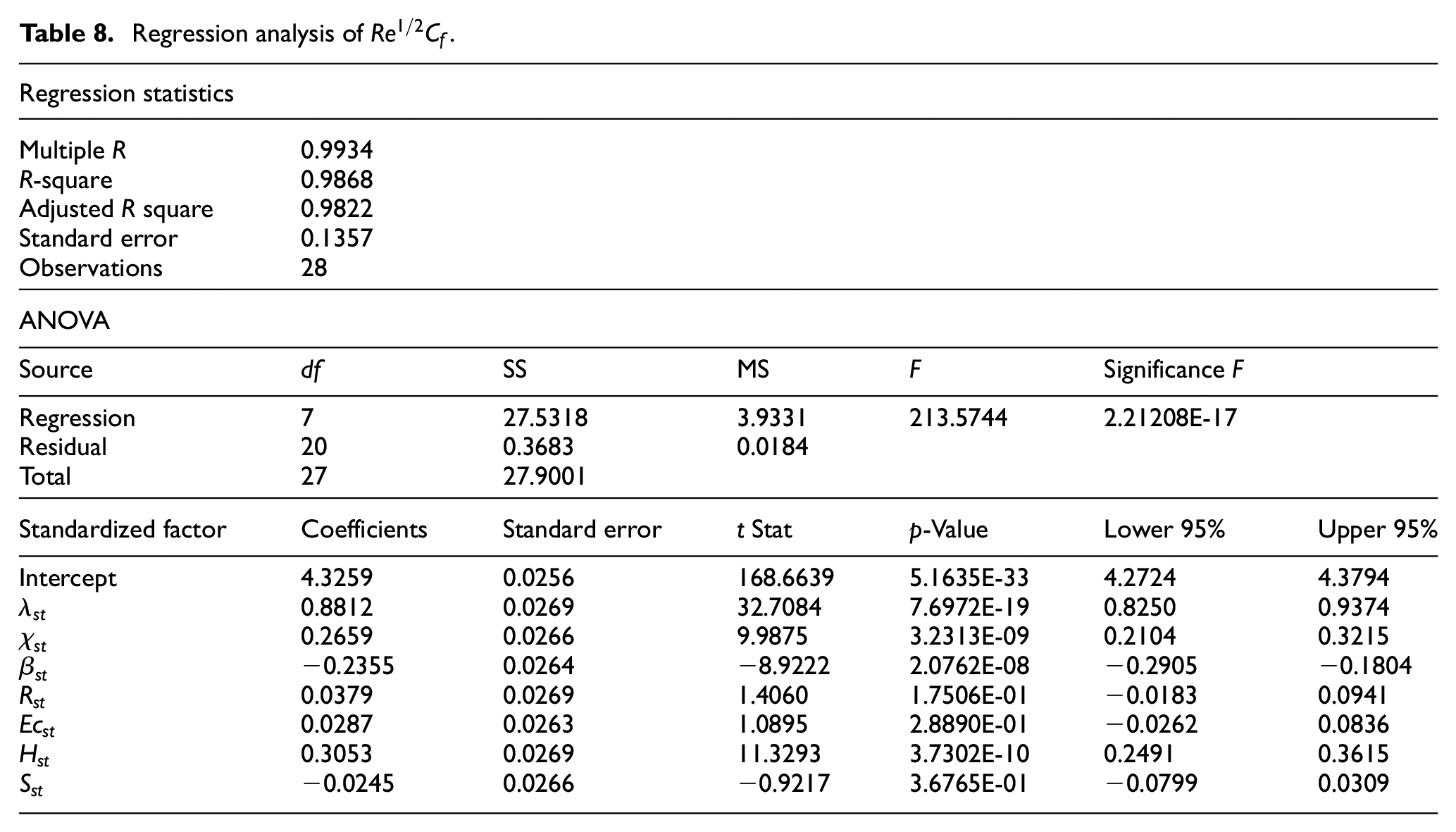
In Table 7, the coefficient of determination (R-Square) value indicates that variations in the key factors collectively contribute to 99% of the total changes seen in
Based on Tables 7 and 8, the linear models incorporating multiple predictors of

Figures 20 and 21 illustrate the numerical solution versus the regression estimation of

Numerical solution versus regression estimation of
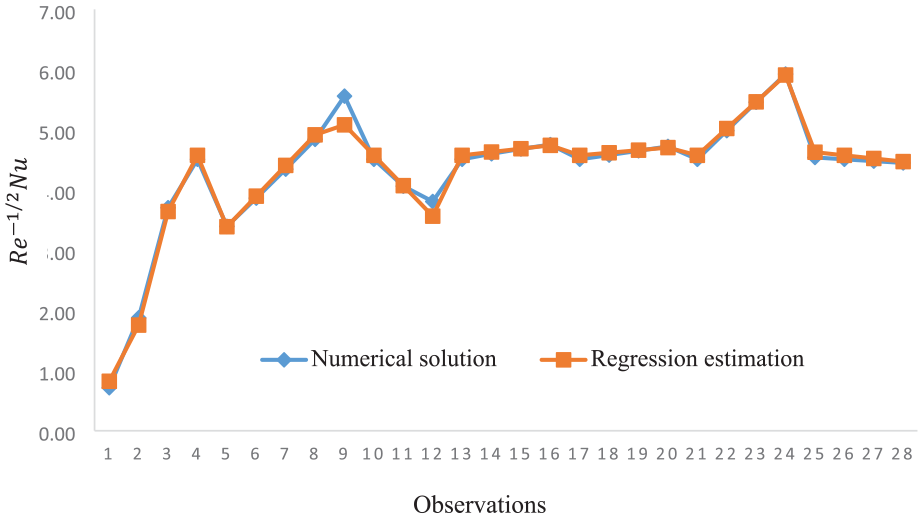
Numerical solution versus regression estimation of
Conclusion
Numerical simulation and statistical regression analyzed an EMHD Casson tri-hybrid nanoliquid flow over a radiative vertical Riga plate, incorporating viscous dissipation, suction, and nanoparticle shape effects. Key findings are:
Spherical nanoparticles maximize velocity and minimize temperature; platelet nanoparticles minimize velocity and maximize temperature.
Non-spherical nanoparticles reduce the Nusselt number (0.23%–5.3%) and increase skin friction (1.6%–14%) compared to spherical nanoparticles.
Velocity falls with an increase in the suction factor, but it increases with other factors examined.
Escalating the values of
Multiple regression indicates that thermal radiation is the most positive contributor in boosting energy transfer rates, while the mixed convection parameter is the primary driver of skin friction augmentation.
In addition to its utility in academic research, the numerical data and multiple linear regression models from this study may be employed to optimize thermal systems such as cooling devices and heat exchangers. Future studies could concentrate on tri-hybrid nanofluids, utilizing different mathematical models. Furthermore, analyzing flow behavior over complex geometries, optimizing nanoparticle form factors, and undertaking stability analyses would yield useful insights.
Footnotes
Handling Editor: Sharmili Pandian

Author contributions
Conceptualization, FA. Alwawi and EE; investigation, FA; writing, review & editing; FA; resources, FA; writing original draft, FA; formal analysis EE; software EE; methodology EE; validation EE; All authors have read and agreed to the published version of the manuscript.
Funding
The author(s) disclosed receipt of the following financial support for the research, authorship, and/or publication of this article: The authors extend their appreciation to Prince Sattam bin Abdulaziz University for funding this research work through the project number (PSAU/2024/01/29137).
Declaration of conflicting interests
The author(s) declared no potential conflicts of interest with respect to the research, authorship, and/or publication of this article.
Data availability statement
Data available on request from the corresponding authors.