



Abstract
In this study, a novel geothermal based multi-generation system has been developed. The proposed system integrates an organic Rankine cycle with an internal heat exchanger, a double-effect absorption refrigeration cycle, a proton exchange membrane electrolyzer unit, a dual flash geothermal source, and an innovative cascade liquefaction cycle. A comprehensive thermodynamic and economic assessment has been conducted on the system under investigation. The proposed system achieves an energy efficiency of 43% and an exergy efficiency of 56%. It is expected that this system will generate hydrogen at a rate of 114 kg/h, with an output power recorded at 36,558 kW. The analysis indicates that the overall exergy destruction in the examined system is 98,956 kW. The liquefaction cycle, with an exergy flow of 7513 kW, constitutes the largest portion of the system cycles, whereas the modified Rankine cycle demonstrates the lowest exergy flow at 1014 kW. The steam heat exchanger generator is the most expensive component, with a cost rate of 263,050 $/GJ, while the electrolyzer experiences the highest exergy destruction at 54,008 kW. Increasing the inlet water temperature to the electrolyzer can enhance system efficiency. The economic assessment reveals a total system cost of 0.37 $/GJ. Additionally, the annual capital cost and net present value are calculated to be 0.02 and 3.59 $/year, respectively. Furthermore, the levelized cost of electricity generation is 0.03 cents/kWh, while the levelized cost of hydrogen production stands at 2.009 $/kg. The novel liquefaction cycle exhibits a performance factor of 36%, with the exergy efficiency of this unit calculated at 39%.
Keywords
Introduction
Energy is a vital component of the global economy and political landscape, akin to the role of fossil fuels in the 20th century. The rising demand for energy, coupled with the finite availability of fossil fuels, underscores the significance of energy on a global scale. Our dependence on fossil fuels has resulted in considerable environmental challenges, particularly carbon dioxide emissions and global warming, which necessitate a transition to renewable energy sources. As fossil fuel reserves are expected to diminish, there is an urgent need to pivot towards sustainable and environmentally friendly energy alternatives. 1 Renewable energy is abundantly available across the globe, in contrast to fossil fuels, which are concentrated in specific regions. Many renewable sources necessitate less complex and less expensive technologies, making them more appealing to developing nations. Currently, geothermal energy is emerging as a cost-effective alternative within the renewable energy sector. 2 Geothermal resources are natural reservoirs within the Earth that provide heat for generating electricity and fulfilling various industrial, agricultural, and domestic needs. They are extensively utilized to meet energy demands and hold significant potential for applications such as power generation, cooling, hydrogen production, and desalination. Consequently, improving energy extraction from these resources for diverse applications has become a crucial focus of research and development. 3 Geothermal energy can significantly enhance energy efficiency and reduce greenhouse gas emissions when utilized in absorption cooling systems and combined power generation. By harnessing heat from geothermal reservoirs, these systems offer reliable and sustainable energy for both residential and industrial applications. However, effectively designing, optimizing, and evaluating the performance of these integrated systems necessitates a comprehensive understanding of thermodynamic, economic, and environmental factors. 4 Geothermal energy harnesses the Earth’s internal heat, particularly from high-temperature geothermal waters found in specific regions, to generate electricity and thermal energy. The technology for utilizing geothermal energy is well-developed and widely employed for electricity generation and district heating. 5 Research has concentrated on enhancing the efficiency, cost-effectiveness, environmental sustainability, and production of hydrogen. Several processes have been identified to support these objectives. 6 Important factors affecting hydrogen’s stability include its ability to complement other renewable energy sources, its advantages over traditional fuels, its conversion into electricity, the development of a sustainable energy system alongside renewables, and the technical feasibility of these processes. 7 Hydrogen is abundantly available on Earth, primarily in compounds such as water and hydrocarbons. Extracting hydrogen from water requires substantial energy, and in its gaseous state, hydrogen is highly explosive and challenging to contain. Furthermore, cooling and condensing hydrogen into a liquid form also necessitates considerable energy. 8 Naquash et al. 9 examined the effectiveness of a hydrogen liquefaction system that integrates an organic Rankine cycle with an air-liquid energy system and absorption refrigeration. Their findings indicated an exergy efficiency of 35.7%. In a separate study, Riaz et al. 10 explored the potential for enhancing the performance of liquefied natural gas through regasification within a hydrogen liquefaction system, utilizing both exergy and energy analysis. They found that the total refrigerant charge was reduced by nearly 50%, and the exergy efficiency of the proposed process was determined to be 42.25%. Nabat et al. 11 conducted a study on a novel energy storage system utilizing liquid air energy storage, focusing on its energy, exergy, and economic dimensions. Their findings indicated that the round-trip exergy and energy efficiencies were 52.84% and 61.13%, respectively. In a separate analysis, Manesh and Ghorbani 12 examined the energy and exergy characteristics of a new energy storage system that combines a compressed liquid air unit, a Linde–Hampson liquefaction system, an organic Rankine cycle, and a molten carbonate fuel cell. Their results revealed that the storage efficiency and round-trip efficiency of this hybrid system were 86% and 69%, respectively, with the exergy efficiency calculated at 60%. Koc et al. 13 conducted an evaluation of a novel energy system for liquid hydrogen production from a thermodynamic standpoint. Their research focused on assessing power generation efficiency through a thermodynamic framework across various operating conditions. The energy and exergy analysis revealed that the exergy and energy efficiencies were 58.37% and 60.14%, respectively. In a separate study, Bi et al. 14 analyzed and optimized a cutting-edge hydrogen liquefaction system. They compared the performance of this proposed system with existing alternatives and examined the exergy losses associated with the primary devices as well as the temperature profiles. The results indicated that, under the assumption of complete liquefaction, the performance factor, and exergy efficiency of the system were determined to be 18% and 54%, respectively. Ding et al. 15 introduced a system that integrates solar, biomass, and geothermal energy through various technologies to enhance energy production efficiency. This system features a Kalina cycle, a refrigeration cycle, an organic Rankine cycle, water electrolysis, and thermoelectric cycles. A multi-objective optimization algorithm is employed to maximize exergy efficiency and minimize the unit cost of the output. The findings indicate that the system can generate 1.80 kW of electricity and 1930 g/h of hydrogen, achieving an efficiency of 35.9% and a unit cost of 36.95 USD/GJ. Additionally, the costs for electricity and hydrogen production are optimized to 5.67 USD/kg and 0.098 USD/kWh, respectively. Shakibi et al. 16 introduced a novel hybrid system that focuses on geothermal resources to produce geothermal power, cooling, fresh water, and hydrogen. This system undergoes a comprehensive analysis from energy, exergy, and economic viewpoints, utilizing artificial neural networks for optimization. Various two- and three-objective optimization scenarios are explored, resulting in an optimal system with a net power output of 1263 kW, an exergy efficiency of 89.39%, and a payback period of 13.2 years in the base case. Sun et al. 17 performed a thermodynamic design and optimization of a multi-generation system that utilized a geothermal power plant as the primary energy source, incorporating solar energy. They employed a genetic algorithm to enhance the energy and exergy performance of the system. Their findings indicated an electrical output of 1.26 MW, with energy and exergy efficiencies recorded at 24.9% and 53.4%, respectively. Meanwhile, Zhang and Liu 18 investigated a novel hydrogen liquefaction process. The model they proposed integrated an enhanced Cloud precooling system with the Joule–Bryton cooling system and utilized mixed refrigerants. The performance coefficient and exergy efficiency of the newly developed unit were determined to be 0.157% and 55.30%, respectively. Faramarzi et al. 19 conducted a thermodynamic analysis of an innovative hydrogen liquefaction system that utilizes a mixed refrigerant cycle in conjunction with the cold energy from liquefied natural gas, comparing it to earlier cycles. Their findings indicated that the annual costs associated with the newly developed model were reduced by 13.43% compared to the original model. Ebrahimi et al. 20 examined the thermodynamic characteristics of a novel hydrogen liquefaction system that incorporates solar collectors and a thermoelectrochemical unit, employing the pinch method within multi-flow exchangers. Their results demonstrated that the thermal efficiency of this proposed system reached 71.4%. In the current study, a novel multi-generation system leveraging geothermal energy for the production of liquid hydrogen, as well as for electricity and heating and cooling capabilities, is analyzed from a thermodynamic perspective. The proposed system features an enhanced organic Rankine cycle that incorporates an internal heat exchanger and a feedwater heater, alongside a dual flash geothermal energy source, a double-effect absorption refrigeration cycle, a proton exchange membrane electrolyzer unit, and a novel cascade liquefaction cycle. An economic assessment of the system has been conducted using updated cost functions. Additionally, a parametric analysis was carried out to examine how variations in key parameters under different operating conditions impact system performance. Previous research utilized a single-effect absorption refrigeration cycle for pre-cooling the hydrogen liquefaction unit; however, this study demonstrates that employing a double-effect absorption refrigeration cycle leads to improved performance coefficients and enhanced exergy efficiency of the liquefaction unit compared to the single-effect cycle. The innovation of this study lies in its unique approach to integrating these cycles and assessing their performance within a practical multigeneration system, an area that has not been extensively investigated in existing literature. This methodology provides new insights into the optimization of renewable energy systems, the enhancement of hydrogen production, and the advancement of cooling generation technologies. The aim of this research is to conduct a thorough thermodynamic and economic evaluation of the innovative combined system that enables simultaneous production through the cascade Claude cycle. A key feature of this study is the implementation of a unique cascade liquefaction cycle with two adjustable temperatures, which independently generates liquid nitrogen. Furthermore, it utilizes the generated liquid nitrogen in conjunction with hydrogen within the heat exchanger of the hydrogen liquefaction cycle, thereby minimizing temperature gradients and reducing exergy loss in the liquefaction unit—an approach not previously explored in earlier research. This study demonstrates that the novel liquefaction technique employed in the proposed system significantly enhances the thermodynamic efficiency of the multi-production system and improves the performance of the hydrogen liquefaction unit.
System description
The diagram of the proposed system is illustrated in Figure 1. This system integrates a modified organic Rankine cycle featuring an internal heat exchanger and a feedwater heater, a proton exchange membrane electrolyzer unit, a double-effect absorption refrigeration unit, and a dual flash geothermal unit serving as the primary energy source, along with an innovative cascade liquefaction cycle. The geothermal fluid, in the form of hot water, is directed to the separator after undergoing the expansion valve choke process. Within the modified organic Rankine cycle, the temperature at the turbine outlet exceeds that of the condenser outlet. This high-temperature flow is utilized to preheat the liquid that enters the evaporator. An internal heat exchanger is strategically positioned between the turbine outlet and the condenser inlet, which helps to lower power requirements and enhance overall system efficiency. A portion of the medium-pressure steam is extracted from the turbine and routed directly to the feedwater heater, while the remaining steam is expanded to generate work until its pressure is reduced to the condensing level. Subsequently, the steam enters the condenser at a reduced temperature, where it is cooled to a saturated liquid state through a cooling process. The hot mixture of steam and water that exits the Rankine cycle turbine undergoes cooling in the condenser before being returned to the geothermal well, along with the water released from the heat exchanger. Proton exchange membrane electrolysis is crucial for generating hydrogen and oxygen gases through the electrolysis of water. The electricity necessary for this electrolysis is sourced from the modified organic Rankine cycle, which supplies the energy needed for hydrogen production. A double-effect absorption refrigeration unit minimizes power consumption in the liquefaction unit by pre-cooling the hydrogen gas generated in the electrolyzer. The hydrogen gas then proceeds to the cloud cycle compressor, where the high-pressure gas is divided into two distinct streams. In heat exchanger 1, one stream of hydrogen gas is pre-cooled using cold steam returning from the separator, while the other stream is cooled by nitrogen steam in heat exchanger 2. The combined hydrogen streams first enter the pre-cooler, which is immersed in liquid nitrogen produced by the liquefaction cascade cycle. After exiting the pre-cooler, the hydrogen is further cooled by the separator steam as it moves through a heat exchanger. It is then separated from the steam in the liquid separator, and the resulting liquid hydrogen is stored in a reservoir.

Schematic view of the proposed system.
Methodology
In this research, a thorough thermodynamic and economic modeling of a multiple generation system has been conducted. The thermoeconomic analysis identifies the temperature and mass flow rate of the geothermal source as key variables. Parametric studies are performed to explore various temperatures and mass flow rates of the geothermal source within the thermoeconomic framework. The modeling utilizes Engineering Equation Solver (EES) software, which encompasses functions related to thermodynamic properties. The thermodynamic equations are resolved in a steady state and concurrently. Through EES software, calculations are made for variables such as electricity generation, cooling capacity, heating load, hydrogen production rate, and cost estimates for the proposed model, which has undergone thermodynamic and thermoeconomic analyses. This study examines the energy, exergy, and economic performance of multiple generation systems that utilize geothermal energy. The emphasis will be on assessing the overall efficiency of the system, analyzing degradation and exergy losses, and conducting a thermoeconomic analysis to evaluate the cost-effectiveness of the proposed system. In the economic analysis segment, the cost-effectiveness of the proposed system is assessed using current pricing and cost rates. Following this, a parametric analysis is conducted to examine how variations in functional parameters under various operating conditions affect system performance. This study utilizes a double-effect absorption precooling unit aimed at decreasing the power consumption of the liquefaction cycle. Additionally, it incorporates an innovative cascade liquefaction cycle that independently generates liquid nitrogen while simultaneously utilizing the produced liquid nitrogen for cooling within the cloud cycle.
The following assumptions are considered for modeling the proposed system 21 :
The system components are considered in steady state.
The static temperature is assumed to be 20 °C and the static pressure is assumed to be 101 kPa.
The effects of pressure drop in the components are neglected.
The effect of kinetic and potential energies on the system performance is assumed to be negligible.
Constant isentropic efficiency is assumed for pumps, turbines, and compressors.
Thermodynamic analysis of the system under study
A thorough energy analysis of a system entails measuring both energy inputs and outputs to assess efficiency and pinpoint areas of energy waste. This evaluation utilizes thermodynamic principles to analyze the effectiveness of energy conversion techniques. The findings are crucial for enhancing system design and operation, thereby fostering sustainable and efficient energy use. In this section, an in-depth examination of the thermodynamic characteristics and performance of the proposed multi-generation system is presented. 22 In the initial analysis of the law, the mass and energy balance equations for each component are taken into account. In equations (1) and (2), h denotes the flow enthalpy, while the subscripts “i” and “e” indicate the inlet and outlet limits of a control volume. Utilizing the aforementioned assumptions, the mass and energy balance equation for the proposed system is derived from the equations presented below 23 :



Conducting an exergy analysis of a proposed system serves as a reliable approach to evaluate the system’s performance and identify the exergy degradation values across various components, thereby revealing the primary sources of exergy loss. The exergy balance in the system is expressed as follows. In this relation

Where

The coefficient of performance of the absorption refrigeration cycle is given as follows:

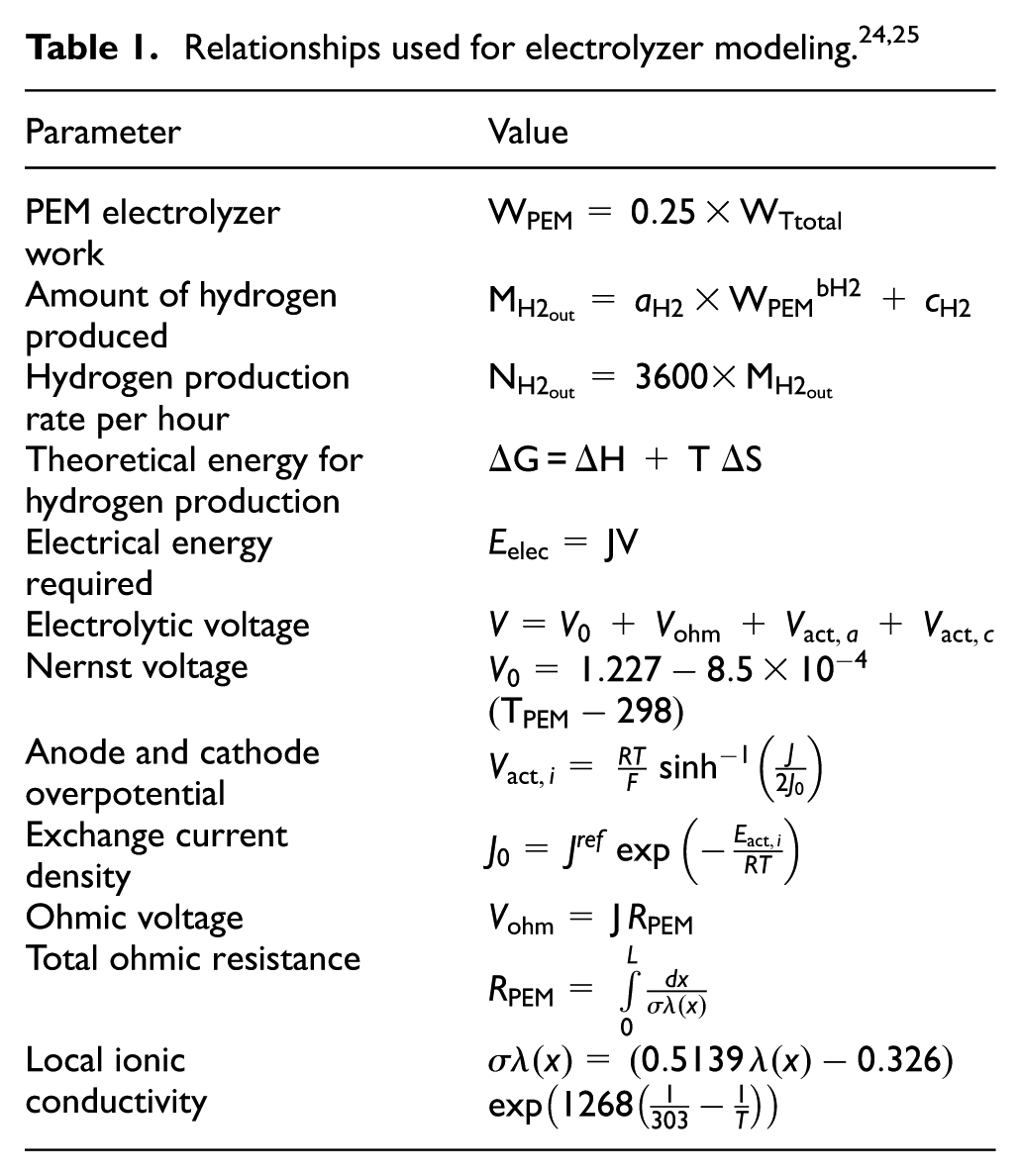
In the Proton Exchange Membrane (PEM) electrolyzer system, water at room temperature is directed through a heat exchanger to elevate the temperature of the electrolyzer. The supplied electrical energy facilitates the decomposition of the heated water into oxygen and hydrogen. The resulting streams of oxygen and hydrogen are subsequently stored in their designated tanks. Any water that remains unconverted is redirected back into the initial water supply. The governing equations for PEM electrolysis are presented in Table 1, along with a brief explanation. The coefficients a, b, and c are 3.382, 0.97, and 5.928, respectively.
The energy and exergy efficiency of the system can be calculated using the following relationships:


The suggested multiple generation system has been assessed through the application of mass, energy, and exergy balance equations. The necessary data for the modeling process is provided in Table 2.
Initial thermodynamic data used for modeling.

Economic analysis
The economic assessment of energy systems examines their financial viability and operational efficiency by taking into account initial capital outlays, recurring costs, and anticipated income. A crucial component of this evaluation is the determination of the annual cost rate, which reflects the overall financial obligation, encompassing system installation, operation, and maintenance. This section provides a thorough analysis of the economic performance of the proposed multi-generation system. Thermoeconomic analysis integrates thermodynamic concepts with economic factors to assess the system’s financial sustainability and viability. The purpose of thermoeconomic analysis is to determine cost-efficient design and operational strategies that achieve an optimal balance between capital and operational expenditures. In general, thermoeconomic analysis offers important insights into the economic viability and competitive performance of the proposed model. Such insights are crucial for decision-makers and stakeholders engaged in the planning and execution of sustainable energy initiatives, as they aid in guiding investment choices and prioritizing resources effectively. The fundamental economic equation can be expressed as follows 26 :

This equation indicates that the cost rate linked to the system’s output is equivalent to the total of the fuel cost rate, capital cost, and operating cost. Additionally, the final two components of this equation can be expressed in the subsequent equation:

At this point, the unit exergy cost is allocated to each flow, including the exergy flow of input or output materials, as well as the work or heat flow, and the system’s output. The corresponding symbols are presented in the equations below:


where c represents the average cost per unit of exergy. By applying the aforementioned equations for each component, the cost balance equation is modified to the following expression:

By introducing the equations that assign the cost to each exergy flow, the following equation is obtained:

The equation presented indicates that the overall cost of the exergy flows exiting the system for a specific component is equivalent to the total expenses associated with calculating this cost. This encompasses the input exergy flow, as well as the initial investment and additional costs. For each component k, the ratio of input to output exergy is determined through exergy relations. With these costs estimated, the generalized formula for the cost ratio related to the initial investment and maintenance expenses for component k can be articulated as follows 27 :

In this equation, the purchase price (in dollars) represents the component k, while the capital recovery factor (CRF) is influenced by the operating hours of the business per unit year, denoted as N, and is also affected by the operating and maintenance expenses. The capital recovery factor CRF serves as an economic metric, that is, contingent upon the interest rate and the projected lifespan of the equipment. It can be expressed using the following equation 28 :

In this research, the correlations between the levelized cost of energy (LCOE) and the cost of hydrogen production (LCOH) for the system are articulated as follows 29 :


In these situations, τ denotes the yearly operating hours of the system, which is projected to be 8000 h annually. The formula for determining the annual operating cost (AOC) is outlined below:

In this context, the total operating costs (TOC) encompass all operational expenses, with φ denoting the maintenance factor, valued at 1.06. 30 This approach involves calculating all expenses associated with a structure throughout its projected technical lifespan. This includes the annual capital cost (Cacap), replacement cost (Carep), and maintenance cost (Camain). Given that the project’s useful life is estimated at 20 years, the economic evaluation metrics are articulated accordingly. The annual capital cost (Cacap) encompasses the acquisition costs of the aforementioned equipment, which are amortized over the useful life of each integrated structure, represented by the following equation 31 :

Cacap represents the overall purchase cost of the device, i denotes the real bank interest rate, and CRF stands for the capital recovery factor. The real bank interest rate is determined using the annual inflation rate f and the nominal interest rate j, as outlined below:

To perform economic research on the system, the annual inflation rate, nominal interest rate, and the system’s useful life were taken into account, with values set at 17%, 20%, and 20 years, respectively. The total cost of the acquired device (Ccap) is determined using the following equation:

The replacement cost (Carep) of the system is calculated using the following equation:


Camain encompasses the expenses associated with regular maintenance and the replacement of delicate components, which is determined using the following formula:

The annual system cost (ACS) is represented by the following equation:

Through the calculation of Net Present Value (NPV), all expenses and income throughout the useful life of the integrated structures are adjusted to reflect their value at the present time or at the commencement of the project. The net present value can be determined using the following method:

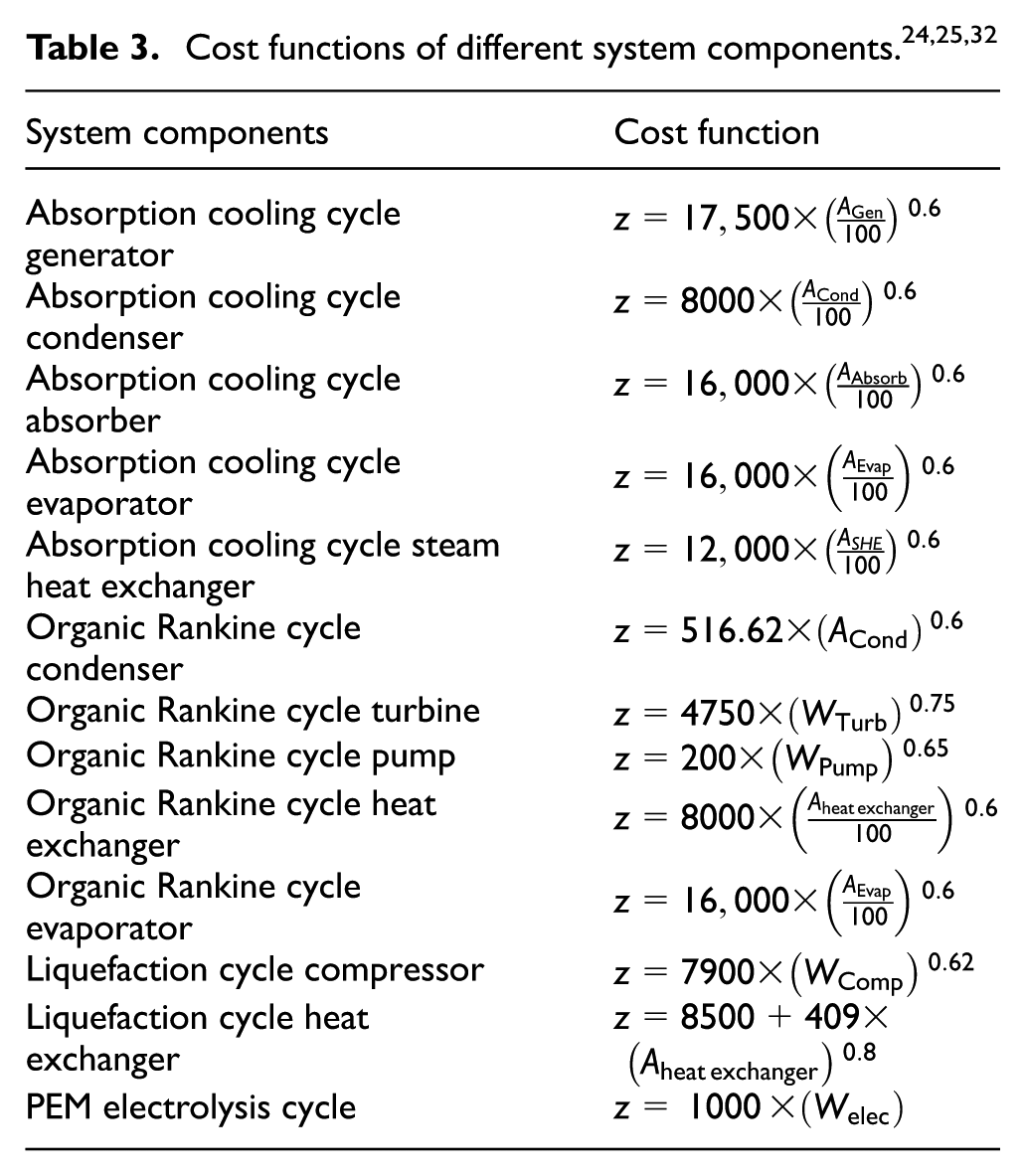
Economic analysis enables designers to comprehend the prevailing economic landscape and its influence on the prospective success of their designed system. Table 3 outlines a procedure for determining the purchase cost of each component within the system illustrated in Figure 1. Considering the anticipated operational lifespan of each component, the cost rate expressed in dollars per gigajoule acts as a significant metric for evaluation.
Validation
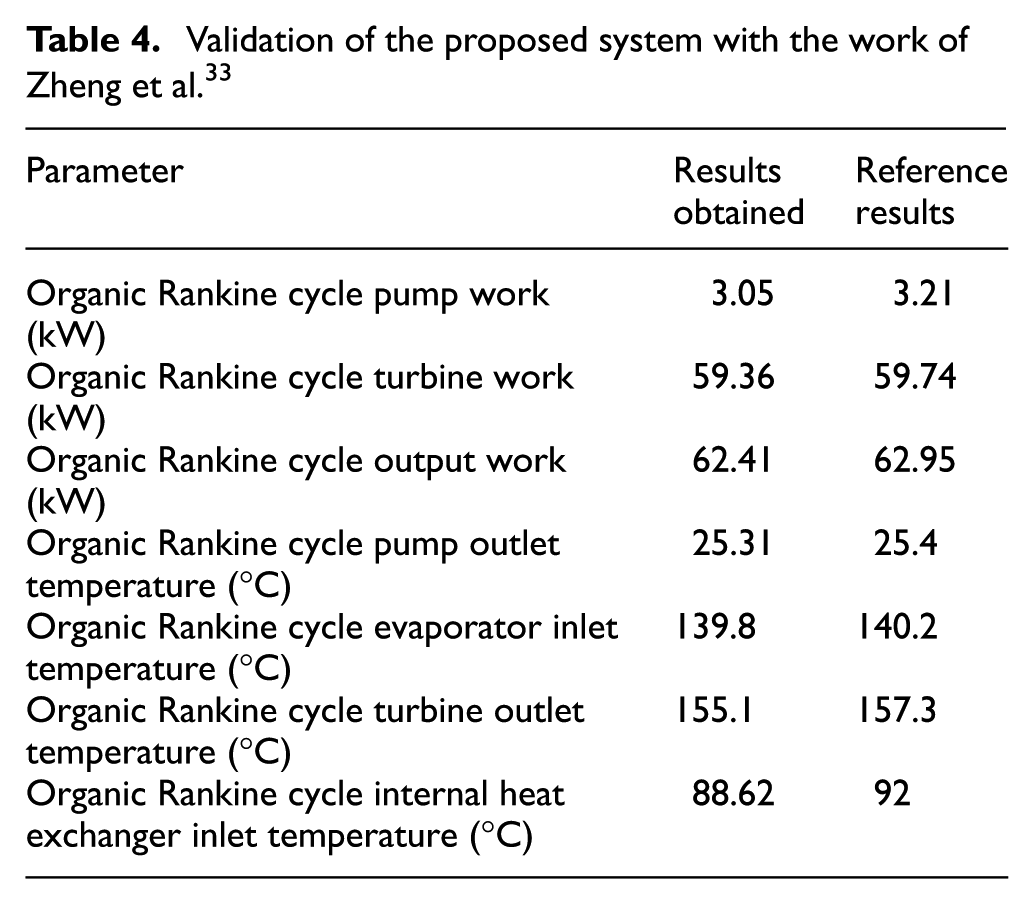
This study introduces an innovative method for structuring a cogeneration system. To assess the effectiveness of the proposed system, an evaluation was conducted using the results from Zheng et al. 33 as a reference point, with further comparisons made against the data presented in Table 4. Both this research and the previously mentioned study will undergo analysis through the modeling of the outlined processes. The models will be developed based on specific initial conditions and assumptions, which include an ambient temperature of 25 °C and an ambient pressure of 101 kPa. The outcomes will subsequently be analyzed for comparison. The isentropic efficiencies for the pump and turbine are determined to be 85% and 80%, respectively. The evaporator pressure is maintained at 2500 kPa, while the condenser temperature is set at 298 K. Heat is supplied by the modified Rankine system, which utilizes a heat source of 252 kW. The intermediate pressure for the modified Rankine cycle, incorporating regeneration, is assumed to be 1000 kPa. Additionally, both pumps are considered to operate at the same efficiency, unaffected by varying flow conditions. It is also assumed that there are no losses in heat or pressure within the equipment.
Validation of the proposed system with the work of Zheng et al. 33
Results and discussion
This section provides an extensive examination of the economic and engineering results obtained from system modeling. It features a thorough parametric study that investigates how different parameters influence system performance. Furthermore, it outlines the outcomes of optimization efforts aimed at determining the most effective operational parameters for the system. A detailed assessment of the thermodynamic characteristics and performance of the proposed multi-generation system is performed. This analysis encompasses the evaluation of factors such as energy efficiency, exergy destruction, and irreversibility to assess the overall performance of the system. It also includes an analysis of energy and exergy flows within system components, including geothermal wells, absorption chillers, power generators, and heat exchangers. Key thermodynamic indicators, such as energy efficiency and exergy, are computed to evaluate the system’s ability to transform input energy into useful work while minimizing energy losses. Furthermore, exergy analysis offers valuable insights into the quality and availability of energy within the system, aiding in the identification of potential areas for optimization and enhancement. The results of the energy and exergy analysis for the multi-generation system utilizing geothermal energy are summarized in Table 5. The exergy rate is determined based on the dead-state properties of the system at 25 °C and 100 kPa. The thermodynamic characteristics of the working fluid R113 in the organic Rankine cycle, the geothermal fluid in the dual flash geothermal source, the LiBr–H2O fluid pair in the absorption refrigeration cycle, and hydrogen in the liquefaction cycle were computed using EES software.
Thermodynamic analysis results.

The findings from the energy and exergy analysis indicate that the multi-generation system presented in this study demonstrates a high level of efficiency, achieving an energy efficiency of 43% and an exergy efficiency of 56%. This system primarily utilizes geothermal energy for hydrogen production, generating 114 kg/h of hydrogen without any pollutant emissions. Additionally, the double-effect absorption cooling unit plays a crucial role in minimizing the energy required for the liquefaction cycle. The electrolyzer unit produces an output power of 12,186 kW, while the newly designed liquefaction cycle yields an output power of 709 kW. The multi-generation system has the capability to generate an output power of 36,558 kW. The findings indicate that the newly proposed method for hydrogen liquefaction in this study achieves a coefficient of performance of 36% and an exergy efficiency of 39%, reflecting the optimal functionality of the innovative hydrogen liquefaction cycle. An exergy analysis has been conducted on the proposed system to pinpoint areas where the most significant exergy destruction occurs, enabling the implementation of measures to enhance system performance and minimize exergy loss, thereby increasing work capacity. As illustrated in the exergy flow diagram of the analyzed system in Figure 2, the liquefaction cycle, with an exergy flow of 7513 kW, represents the largest portion of the system cycles, while the modified Rankine cycle exhibits the lowest exergy flow at 1014 kW. The decline in the quality of system equipment significantly impacts the effectiveness of cogeneration systems, leading to reduced energy output and increased fuel consumption, which raises electricity generation costs. This degradation typically results in lower nominal efficiency and higher pollutant emissions. Malfunctioning and outdated equipment in power plants results in energy inefficiency, reduced electricity generation, and increased greenhouse gas emissions, negatively affecting air quality and contributing to climate change. Aging equipment requires frequent repairs, leading to higher costs and potential shutdowns of power generation. This obsolescence can shorten a power plant’s lifespan, necessitating costly renovations or new construction. Upgrading to modern technologies can significantly improve efficiency and reduce operational expenses.

System exergy flow diagram.
Exergy destruction in an energy system is evaluated by investigating the irreversibility inherent in each of its components. A thorough energy analysis must consider factors such as temperature variations, pressure differences, and flow constraints. The heat transfer coefficient in thermodynamic systems can decrease over time due to inadequate insulation, buildup of deposits, or changes in material properties. Accumulation of mineral deposits, contaminants, or corrosion on heat transfer surfaces creates an insulating layer that increases thermal resistance. Regular inspections and maintenance of insulation and heat transfer surfaces are essential to detect and repair defects, thereby preventing a decline in heat transfer efficiency. By addressing these issues proactively, it is possible to maintain the heat transfer coefficient and ensure long-term system efficiency. This meticulous approach is crucial for measuring exergy losses during energy conversions, which subsequently highlights inefficiencies within the system and informs optimization strategies. By identifying the origins of exergy destruction, engineers can determine opportunities for enhancing both the efficiency and environmental performance of the system, allowing for the implementation of specific improvements. The effectiveness of the proposed system is evaluated through an exergy analysis, which aims to maximize the work output from the cycle. Consequently, exergy analysis effectively pinpoints inefficiencies and areas for improvement within a system. As illustrated in Table 6, the total exergy destruction within the system amounts to 98,956 kW, with the electrolyzer exhibiting the highest level of exergy destruction, while the evaporator of the absorption refrigeration cycle contributes the least to the overall exergy destruction among the system’s various components.
Exergy destruction results of various system components.

An economic assessment is conducted to evaluate the profitability of the suggested system. A comprehensive grasp of thermoeconomics, particularly as it pertains to thermodynamic systems and renewable energy systems, is crucial for attaining optimal performance by harmonizing thermodynamic and economic factors. The primary objective of thermoeconomic analysis is to uncover cost-efficient design and operational strategies that enhance the equilibrium between capital expenditures and operational costs. In this research, a comprehensive economic assessment of the proposed system is conducted, with the cost rates of the system components presented in Table 7. The steam heat exchanger generator accounts for the largest portion of the overall cost, while the organic Rankine cycle pump has the lowest cost rate among the components.
Cost rate results for various system components.

In thermoeconomic analysis, a multifaceted relationship exists among various interrelated concepts such as depreciation, exergy, quality, cost, price, source, consumption, purpose, and causality. To grasp the physical and local mechanisms that characterize specific production flows throughout the costing process, an analytical study is essential. The key parameters for the economic assessment of the system have been computed, and as indicated in Table 8, the overall system cost amounts to 0.37 USD/GJ. The levelized cost of electricity (LCOE) and the levelized cost of hydrogen (LCOH) are critical factors in the economic assessment of the analyzed system, with values recorded at 0.03 cents/kWh and 2.009 USD/kg, respectively.
Economic evaluation results.

Parametric analysis
A comprehensive examination of various factors is crucial for enhancing design and operational strategies, aiming to pinpoint the primary elements that greatly affect the energy efficiency and long-term sustainability of the system. This research explores how these vital factors influence both the technical and economic performance of the system. Parametric analysis serves as a dependable approach for assessing a system’s performance across different operating conditions, offering an in-depth insight into its behavior. This type of analysis focuses on the impact of critical design parameters, including turbine isentropic efficiency, geothermal source temperature, and geothermal fluid mass flow rate, on the performance of the system being investigated.
Effect of changes in geothermal fluid mass flow rate on system performance
The mass flow rate is essential for the effective operation of geothermal power generation systems, as it determines the quantity of heat energy that can be converted into electrical power. Accurate regulation and adjustment of the mass flow rate are vital for maximizing electrical output while ensuring the preservation and sustainability of the geothermal resource. Figures 3 to 8 illustrates that an increase in the mass flow rate of the geothermal fluid correlates positively with enhanced desalination processes in the system. However, achieving this enhancement requires the deployment of more durable equipment, resulting in higher capital and operational costs. Consequently, although a higher flow rate benefits energy production, it demands a thorough economic assessment due to the associated cost increases. On the other hand, a rise in this parameter leads to a decrease in exergetic efficiency, which is due to the larger denominator. Despite an increase in the numerator of these equations, the more pronounced rise in the denominator leads to a reduction in overall effectiveness. Additionally, the mass flow rate of the geothermal fluid significantly impacts the cooling requirements, highlighting its crucial role in the operational dynamics of the system. When the mass flow rate of the geothermal fluid increases from 28 to 32 kg/s, the energy efficiency of the multi-generation system decreases by 7%, while the exergy efficiency declines by 6%. This reduction in system efficiency is attributed to the heightened exergy destruction, which diminishes the available output power and adversely affects system performance. Exergy efficiency is closely linked to output power, and the decline in production power is a direct result of the reduced exergy efficiency. Furthermore, an increase in the mass flow rate of the geothermal fluid not only incurs additional costs for the system but also raises the annual expenses and the net present value. As the exergy destruction escalates with the increased mass flow rate, the efficiency of the liquefaction cycle is similarly impacted, resulting in a decrease.

The effect of changes in geothermal fluid mass flow rate on energy and exergy efficiency.

The effect of changes in geothermal fluid mass flow rate on total cost rate.

The effect of changes in geothermal fluid mass flow rate on total net work.

The effect of changes in geothermal fluid mass flow rate on total exergy destruction.

The effect of changes in geothermal fluid mass flow rate on annual system cost and net present value.

The effect of changes in geothermal fluid mass flow rate on exergy efficiency of the liquefaction cycle.
The effect of changes in geothermal fluid inlet temperature on system performance
Figures 9 to 14 illustrate how the temperature of the geothermal source affects the techno-economic attributes of the examined system. The thermal state of the geothermal fluid is a crucial factor influencing the operational efficiency of geothermal power plants. An increase in the source temperature enhances the energy conversion process by providing a greater thermal differential for heat transfer activities. It is essential to sustain an optimal source temperature to ensure the plant’s durability and to maximize the energy extracted from the geothermal reservoir. The capacity for electric power generation surpasses the overall increase in costs. It is important to highlight that hydrogen and electricity are not produced at the same time. The hydrogen production capacity indicated is attainable only when the entire electric output is directed to the electrolyzer. The findings reveal that an increase in the temperature of the geothermal fluid leads to a reduction in the exergy efficiency of the liquefaction cycle. Evidence from the high-temperature geothermal source indicates a decline in both energy and exergy efficiency within the system, while an increase in exergy destruction corresponds with a decrease in the useful extractable output power. This reduction in exergy efficiency can be explained by the direct relationship between exergy efficiency and the system’s output power; as the system’s work diminishes, so too does its exergy efficiency. Furthermore, alongside the decline in system efficiency, there is an increase in the cost rate, as well as a rise in the annual costs and net present value, all of which are negative consequences of elevating the inlet temperature of the geothermal fluid.

The effect of changes in geothermal fluid inlet temperature on energy and exergy efficiency.

The effect of changes in geothermal fluid inlet temperature on total exergy destruction.

The effect of changes in geothermal fluid inlet temperature on total cost rate.

The effect of changes in geothermal fluid inlet temperature on total net work.

The effect of changes in geothermal fluid inlet temperature on exergy efficiency of the liquefaction cycle.

The effect of changes in geothermal fluid inlet temperature on annual system cost and net present value.
The effect of changes in turbine isentropic efficiency on system performance
As the isentropic efficiency of the turbine rises, it significantly influences the overall performance of the system, leading to alterations in energy and exergy efficiency, output power, total exergy destruction, total cost rate, exergy efficiency of the liquefaction unit, annual system costs, and net present value, all of which are illustrated in Figures 15 to 20. The findings indicate that the system’s output power increases as the isentropic efficiency of the turbine improves from 0.7 to 0.9. In a multi-generation system, the turbine is crucial for electricity production. This increase in power output is attributed to the beneficial impact of enhanced turbine efficiency on work efficiency. The enhancement in power generation resulting from the higher isentropic efficiency of the turbine positively influences the operation of the electrolyzer, thereby boosting hydrogen production within the system and improving the exergy efficiency of the hydrogen liquefaction unit. The energy and exergy efficiency of the system improves as the isentropic efficiency of the turbine rises. This enhancement in exergy is attributed to the direct relationship between exergy efficiency and the system’s output power. To boost the output power of the system, it is essential to utilize larger and more sophisticated equipment, which consequently impacts the overall cost and necessitates a greater financial investment to generate additional power. This also leads to an increase in the annual operating costs and the net present value of the system. Exergy signifies the maximum potential work that can be harnessed from the system and reflects the useful work generated by the turbine. As turbine efficiency improves, exergy loss diminishes, enhancing the work capacity, and positively influencing the thermodynamic efficiency of the system.
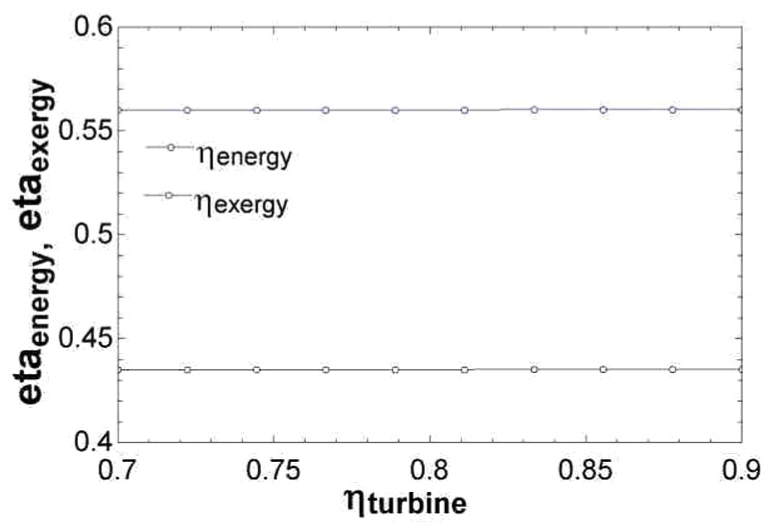
The effect of changes in turbine isentropic efficiency on energy and exergy efficiency.

The effect of changes in turbine isentropic efficiency on total net work.

The effect of changes in turbine isentropic efficiency on total cost rate.

The effect of changes in turbine isentropic efficiency on total exergy destruction.

The effect of changes in turbine isentropic efficiency on exergy efficiency of the liquefaction cycle.

The effect of changes in turbine isentropic efficiency on annual system cost and net present value.
Conclusion
This study explores the enhancement of energy efficiency and economic feasibility by utilizing geothermal energy as the main energy source within a multigeneration system. A comprehensive analysis reveals significant opportunities for improving both energy efficiency and cost-effectiveness. The results underscore the practicality and effectiveness of integrating renewable energy sources in multigeneration systems. These findings are encouraging for a range of stakeholders, including energy policymakers, planners, engineers, and investors, offering essential insights for the shift towards cleaner and more efficient energy alternatives. This research explores the transformation of energy into various forms through cogeneration processes aimed at electricity production from geothermal sources, alongside heating and cooling applications. It employs an innovative cascade liquefaction technique that operates at two distinct temperatures to generate liquid nitrogen independently. Additionally, by immersing liquid nitrogen within the heat exchanger of the hydrogen liquefaction cycle, the system cools the heat exchanger and enhances the exergy efficiency of the hydrogen liquefaction process by minimizing exergy loss, resulting in the creation of a unique system. The newly developed double-effect absorption refrigeration cycle for precooling the electrolyzer unit demonstrates strong compatibility with the organic Rankine cycle, which includes an internal heat exchanger and a feedwater heater. This compatibility validates the technical and economic viability of merging power generation and cooling within a unified system. Furthermore, liquefaction systems are suitable for the long-term storage and transportation of hydrogen to distant locations. These systems encompass heat exchanger networks and refrigeration systems that are entirely interdependent. This review explores the potential of geothermal energy for the production of renewable hydrogen. The study presents solutions and opportunities to evaluate the viability of utilizing geothermal reservoirs for the generation of liquid hydrogen. The evaluation involved thermodynamic and thermoeconomic modeling of liquid hydrogen production systems, leveraging the thermal capacity of geothermal resources. This study presents a geothermal-based multi-generation system that utilizes a novel hydrogen liquefaction technique, making it suitable for a range of industrial applications due to its enhanced efficiency and advantageous performance. Following conclusion remarks are made:
Geothermal resources are primarily located in areas with volcanic and tectonic activity, particularly near plate boundaries. Designing a geothermal multigeneration system requires careful consideration of regional energy demand, geological conditions, water availability, and economic factors. The energy demand patterns significantly influence the system’s design, size, and operational strategies, with regions having high cooling needs favoring cooling-efficient systems, while those with heating demands prioritize heat generation. The availability of other renewable energy resources also affects the choice and integration of energy sources in the system. Ultimately, understanding the specific energy requirements, renewable resource availability, and climate conditions of a region allows engineers to create efficient multigeneration systems that meet diverse energy needs.
Climate change significantly impacts multigeneration systems by affecting their efficiency, resource availability, and long-term viability. Rising temperatures, extreme weather, and changing precipitation patterns disrupt energy generation and material access. Specifically, higher ambient temperatures reduce hydrogen production capacity and storage levels, as warmer conditions lead to decreased system performance and altered thermodynamic properties. This decline in performance is particularly pronounced in turbines, making cooler environments more favorable for optimal system operation.
A comprehensive thermodynamic and economic evaluation has been conducted on the proposed system. The effective coordination of system components, along with the utilization of a clean geothermal primary energy source, results in an energy efficiency of 43% and an exergy efficiency of 56% for the multi-generation system. The findings demonstrate that the novel liquefaction method presented in this study is exceptionally efficient, with the performance factor of the liquefaction unit calculated at 36% and its exergy efficiency at 39%.
Furthermore, the results reveal that the proton exchange membrane electrolyzer exhibits the highest level of exergy destruction among the thermodynamic components utilized in the proposed system. To enhance system performance, strategies such as increasing the inlet water temperature to the electrolyzer can be implemented to minimize maximum exergy destruction, which is crucial for improving the overall efficiency of the proposed system.
The thermoeconomic analysis offers significant insights into the economic and competitive effectiveness of the proposed model. These insights are crucial for decision-makers and stakeholders engaged in the planning and execution of sustainable energy initiatives, as they facilitate informed investment choices and resource allocation. The proposed system demonstrates high economic efficiency, achieving a total cost rate of $ 0.37/GJ through cost functions and economic assessments. The economic evaluation reveals a payback period of just 0.18 years for the system, indicating that it becomes profitable in under 2 months of operation, highlighting its cost-effectiveness. Additionally, the levelized cost of electricity (LCOE) for the system is calculated at 0.03 cents/kWh, making it suitable for various commercial and industrial applications. Given its low cost, this system presents a viable alternative to traditional electricity supply from the consumption network, which often incurs significant expenses for consumers. The double-effect absorption precooling unit implemented in the examined system lowers the levelized cost of hydrogen (LCOH) to $2.009/kg. Among the various components of the proposed system, the steam heat exchanger generator represents the most significant portion of the total expenses.
To enhance the efficiency and economic viability of hydrogen production based on geothermal energy, initiatives focus on improving the performance of individual components and the overall system by minimizing heat losses and determining optimal operating conditions. The identification of ideal operating conditions for geothermal-assisted liquid hydrogen production systems, encompassing factors such as the temperature and flow rate of the geothermal fluid, along with the operational parameters of the modified Rankine cycle components, plays a crucial role in determining system performance.
Footnotes
Nomenclature
CRF Return on investment factor
C Cost ($)
Ex Exergy (kW)
h Specific enthalpy (kJ/kg)
s Specific entropy (kJ/kg K)
T Temperature (°C)
p Pressure (kPa)
n Operation period
I Interest rate
Q Heat transfer (kW)
LCOE Levelized cost of electricity generation (cents/kWh)
LCOH Levelized cost of hydrogen production ($/kg)
φ Maintenance coefficient
AOC Annual operating cost
TOC Operating cost
COP Absorption cycle coefficient
τ Annual plant operation hours
Cacap Overall purchase cost ($)
Ccap Total cost of the acquired device ($)
Carep Replacement cost ($)
Camain Cost of maintenance and replacement ($)
ACS Annual system cost ($/year)
NPV Net present value ($/year)
i Inlet
e Outlet
ORC Organic Rankine cycle
PEM Proton exchange membrane
N Operating hours per year
f Annual inflation rate
j Nominal interest rate
HΔ Total energy required for electrolysis(kJ/kg)
GΔ Change in Gibbs free energy (J/mol)
j Current density (A/m2)
F Faraday constant (C/mol)
HΔT Thermal energy demand (J/mol)
Handling Editor: Sharmili Pandian

Funding
The author(s) received no financial support for the research, authorship, and/or publication of this article.
Declaration of conflicting interests
The author(s) declared no potential conflicts of interest with respect to the research, authorship, and/or publication of this article.