



Abstract
There has been an increasing interest in natural fibre-reinforced composites as viable alternatives to typical synthetic fibre composites as a result of increased environmental consciousness, which has led to the quest for materials that are more sustainable. This review paper aims to provide a comprehensive evaluation of the environmental performance of both natural and synthetic fibre-reinforced composites by summarizing relevant information. The article begins by discussing the advantages of natural fibres. These advantages include the fact that natural fibres are eco-friendly, Natural fibre composites demonstrate a significantly reduced carbon footprint and energy usage over their entire life cycle when compared to their glass fibre-reinforced counterparts. Furthermore, the biodegradability of natural fibres provides the opportunity for end-of-life recycling or disposal options that are more ecologically benign than those for synthetic fibre composites. This is because natural fibres are biodegradable and the research acknowledges that various factors, such as the specific fibre and matrix used, and the manufacturing procedures employed, can influence the environmental performance of natural fibre composites. Additionally, further research and development to optimize their performance and ensure their widespread adoption as sustainable alternatives to traditional composite materials. Natural fibre-reinforced composites are more environmentally friendly than traditional composite materials.
Keywords
Introduction
Recently, environmental issues and the demand for materials that would be ecological and safe for their exploitation led to the creation and use of fibre-reinforced polymer matrix composites. These composites, a matrix material that is reinforced with synthetic or natural fibres, provide high strength, low density, flexibility, and ease of handling, convincing people to abandon other, more conventional forms of material. Nonetheless, due to the continuous implementation of fibre-reinforced composites, it is vital to establish their behaviour in the environment at different stages across their life cycle. The purpose of this review article is to present current knowledge in the field of environmental perspective of synthetic and natural fibre-reinforced composites, to stress the need for the study of these materials with regard to environmental aspects, and to present the latest references and trends.
Definition of synthetic and natural fibre reinforced composites
Fibre reinforced composites are those materials in which a matrix (like polymer, ceramic or metal etc.) is reinforced with fibres to increase its mechanical, thermal and other physical characterizes. The fibres used in these composites can be classified into two main categories: as the natural fibres and synthetic fibres. Synthetic fibre reinforced composites use man made fibre namely glass fibre, carbon fibre, aramid fibre and basalt fibre and are processed using chemicals through various processes and heat treatments. 1 These fibres can be characterized with high strength, stiffness, and durability that enables them to be used in high performance applications that demand high reliability. 2
On the other hand, the natural fibre reinforced composites involve fibres that are natural and includes hemp, flax, jute, sisal or wool. Such fibres include the bio-degradable and renewable natural fibres which are regarded superior to synthetic fibres. 3 It has therefore become attracting and useful to develop automobile natural fibre composites because they assist in the reduction of the carbon footprint of products and make manufacturers adopt sustainable practices in the fabrication of the parts. 4 However, the natural fibres as reinforcing material also have some drawbacks such as low mechanical strength, high moisture absorption, and unlike synthetic fibres, they are not uniform in quality and so on, which are also necessary to remove for using these natural fibres successfully in various industries. 5
Importance of studying environmental behaviour in synthetic and natural fibre reinforced composites
Fibre-reinforced composites are being gradually integrated into different industries including automotive, aircraft, construction, and by-products and this has elicited concerns over their environmental footprint in every stages of their life cycle as shown in Figure 1. The processing, utilization, and waste management also possess ecological impacts of these composites including greenhouse gas emissions, energy requirements, and material consumption and disposal. 6 It is imperative to examine the environmental behaviour of synthetic and natural fibre reinforced composites to ensure that the disposal difficulties associated with the products are well understood and to look for suitable methods to apply environmental solutions in the manufacturing and disposal process of the fibre reinforced composite products.

The life cycle of natural fibre reinforced composites. 7
Another of the aims of the analysis of the environmental behaviour of fibre-reinforced composites is to establish the cradle to grave period that offer the greatest environmental contribution. They credited general life cycle assessment (LCA) analyses where they can determine the amount of impact of every phase from the extraction of composite materials to the disposal phase. 8 The information provided herein can aid the manufacturers and designers in the right choice of material, fabrication methods, and disposal ways or recycling processes to ensure that the environmental impact of the composites is minimized. 9
It is equally vital when investigating the environmental behaviour of fibre reinforced composites that efforts are made to assess the ‘green credentials’ of varying fibre and matrix materials. Because natural fibre composites are predominantly viewed as being superior to synthetic composites in terms of environmental friendliness, it is essential to assess the actual environmental footprint of natural fibre composites with a view to comparative environmental impacts such as the use of land, water, and chemicals during production as proposed. 11 Figure 2 shows water absorption curve of unidirectional, Angle-ply and Cross-ply hybrid composites. Likewise, the type of matrix materials, for instance thermoset or thermoplastic polymers, have a potential of affecting the environmental performance and recyclability of the composites. 12 Perform comparative analyses contribute to reveal the best combinations of fibres and matrices for various fields and give directions for creating organic composites with minimal negative impact on the environment. Figures 3 and 4 shows SEM images of dry and wet hybrid composites

Water absorption curve: (a) unidirectional, (b) angle-ply, and (c) cross-ply hybrid composites. 10
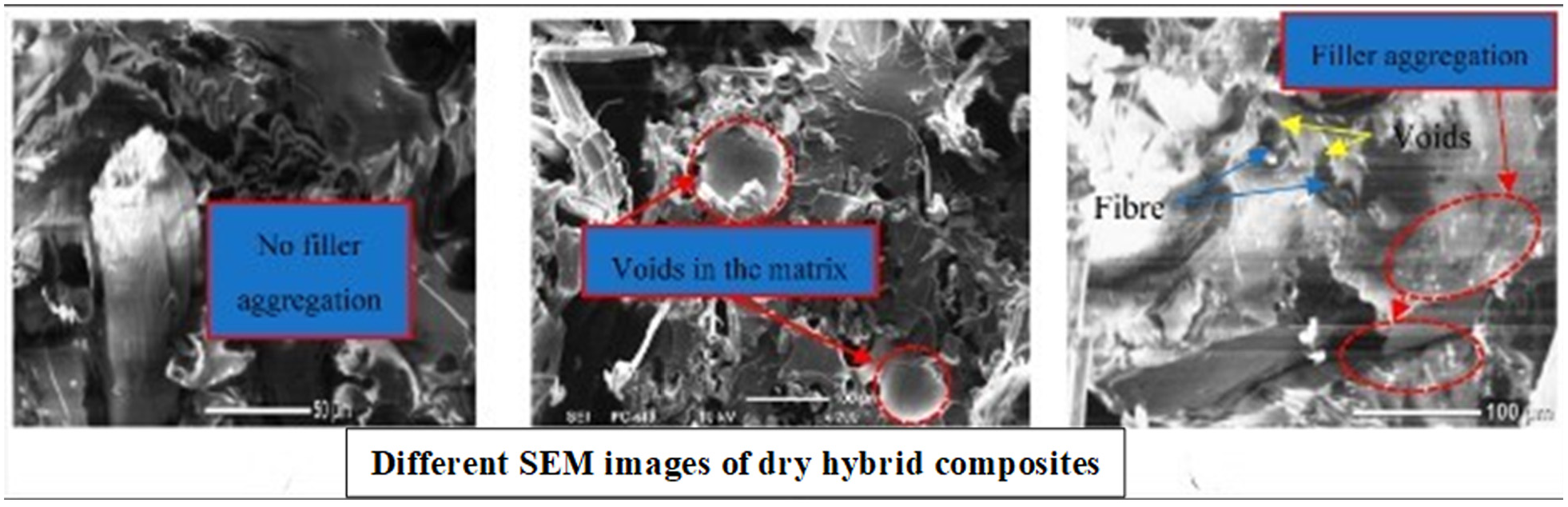
Different SEM images of dry hybrid composites. 13

SEM images of wet hybrid composites. 13
Also, knowing the environmental behaviour of various applications of fibre-reinforced composites is crucial when it comes to end-of-life disposal techniques. This means that the more this composites are utilized in industries and products, the more the waste produced from their disposal. 14 Thus, some possible avenues should be considered for reprocessing of these materials, can be recycling, reusing or finding a new life for these products at the end of their useful life. Therefore, through an understanding of the effects of these methods of waste management on the environment, for instance mechanical recycling, thermal recycling, or landfilling, researchers are able to determine which are the most sustainable and cost effective methods of managing wastes from composites. 15
Overview of the current research on the synthetic and natural fibre reinforced composites
Literature survey, which has been performed in this investigation of environmental characteristics of synthetic and natural fibre reinforced composites, address nearly all the aspects from composites’ life cycle including choice of material, manufacturing, utilization of the final product and disposal. As the current assessment of environmental impacts and issues of these composites has been claimed to be enhanced with the LCA approach in providing a holistic approach to sustainability. 16 In the LCA works of the past years, there has been a focus on the kind of fibres or matrices, which, when used in the composites makes an impact of lower environmental value and identifying the most sensitivity factors concerning the impact of the composites. 17
The LCA of a CFRP part of an aircraft, and observed that the highest environmental contribution arises from the manufacturing of the component especially the carbon fibre. The overview of closed-loop recycling of aviation carbon fibre composite waste as shown in Figure 5. The authors also discussed issues related to re-use of CFRP end of life products and the effect of such a process on the environmental characteristics of CFRP. 19 Similar to this, the mechanical properties and water absorption properties of icons of snake grass fibre reinforced polyester, thereby indicating that the snake grass fibre could strengthen the polymer matrices as an organic reinforcement. 20

Overview of closed-loop recycling of aviation carbon fibre composite waste. 18
Another area under research focus is regarding the natural fibre composites with reference to the bio-based and biodegradable matrices. These matrices are required to be green in the sense that they draw from renewable resources such as plant oils, starch or lignin in an attempt to reduce the composite’s impact on the environment and improve the disposal options at the final stage of the product’s life cycle. 21 For instance the mechanical properties and biodegradability of jute fibre reinforced PLA matrix identified that it is biodegradable by composting, a green process according to the study done by the authors. 22 Life cycle of natural fibre reinforced composites as shown in Figure 6.

Life cycle of natural fibre reinforced composites. 13
Thus the current researches not only are involved in creating usable materials for the utilization of natural fibres for reinforcement purposes but are also involved in the production technologies and recycling technologies which could bring optimization more towards the fibre reinforced composites. According to a closed-loop recycling strategy for CFRP waste including mechanical recycling through the separation of CFs and resin from the composites utilizing supercritical fluids for reuse in composites production and recovery of the corresponding resources. For instance, some environmental benefits, mechanical properties of a Recycled carbon fibre and Bio sourced epoxy Resin composite as an example of recycling and using Bio sourced material composites. 23
Besides, the study also confirms that researchers are studying the prospects of different sections with recomposed fibre reinforced composites. The different recycling practices of CFRP waste and assessed on the environmental benefits of recycles carbon fibres used in car industries and constructions. 9 The use of crushed recycled glass fibres derived from waste wind turbine blade in concrete where the application of the composite waste in the construction sector is recognized. 24
However, as in any aspect of research, there could be questions, issues and factors that are yet to be discussed on the topic relating to the environmental behaviour of the synthetic and natural fibre reinforced composites. Such challenges may include a plea for one type of LCA approach regarding composite materials and appropriate databases for the assessment of composite materials and for better manufacturing processes from an environmental standpoint as well as the improved efficiency of recycling and waste management. 25 More papers should be published with regard to longer-term stability and environmental interaction of developed NFCs and correlation between the established sustainability benefits regarding those composites and their mechanical properties. 14
Hence, the studies done on the environmental interaction of synthetic and natural fibre reinforced composites are useful in improving the sustainability in processing and application of these materials. Included in the current researches in this field are evaluations of the impacts of the environment, which include embracing the specific materials and processes of fabrication, integrating bio based and recycled composites and finding out new approaches towards recycling and disposing wastes. Further, as the market concern for the green material rises in the future, the future studies and co-operation between the research institutions and industries will emphasize the analysis and the strength and weakness of the FRP materials with the green reinforcements.
Environmental factors affecting composites
FRP composites, both synthetic and natural, including fibre reinforced plastics, are used in service applications and are subjected to several effects of the environment over their service lifetime. 21 This section discusses three key environmental factors: effects of water absorption or moisture content, ultraviolet radiation and any chemical makeup on properties and vice versa on the fibre reinforced composite materials. It is important to note these factors to better understand and minimize them when choosing and developing composites which are best suited to survive the environmental conditions and have expected service life. 27 Figure 7 shows environmental factors affecting natural fibre reinforced polymer composites.

Environmental factors affecting natural fibre reinforced polymer composites. 26
Moisture absorption and its effects
Water absorption is another factor of environmental sensitivity of the fibre-reinforced composites in relation to their performance and service life. In the case of composites containing a matrix and reinforcing fibres, both the components are subjected to dimensional changes and deterioration of mechanical properties, environmental behaviour in humid climates. 28 The amount of moisture taken by the composite is influenced by presence of matrix and type of fibres, volume fraction of fibres, temperature, and relative humidity. 29
Thus, NFCs are particularly vulnerable to moisture penetration by plant-based fibres, which have hydrophilic properties and hydroxyl groups providing effective interaction with water molecules. 9 For example, authors reported that the moisture absorption of the jute fibre reinforced polyester composites ranged from 5% to 14% when exposed to 95% RH at 23°C for 24h. 1 This is due to the high moisture absorption that results into swelling of the fibres as well as the deterioration of the fibre-matrix interface and the mechanical properties. 22 Figure 8 shows moisture affecting fibre and matrix in composites.
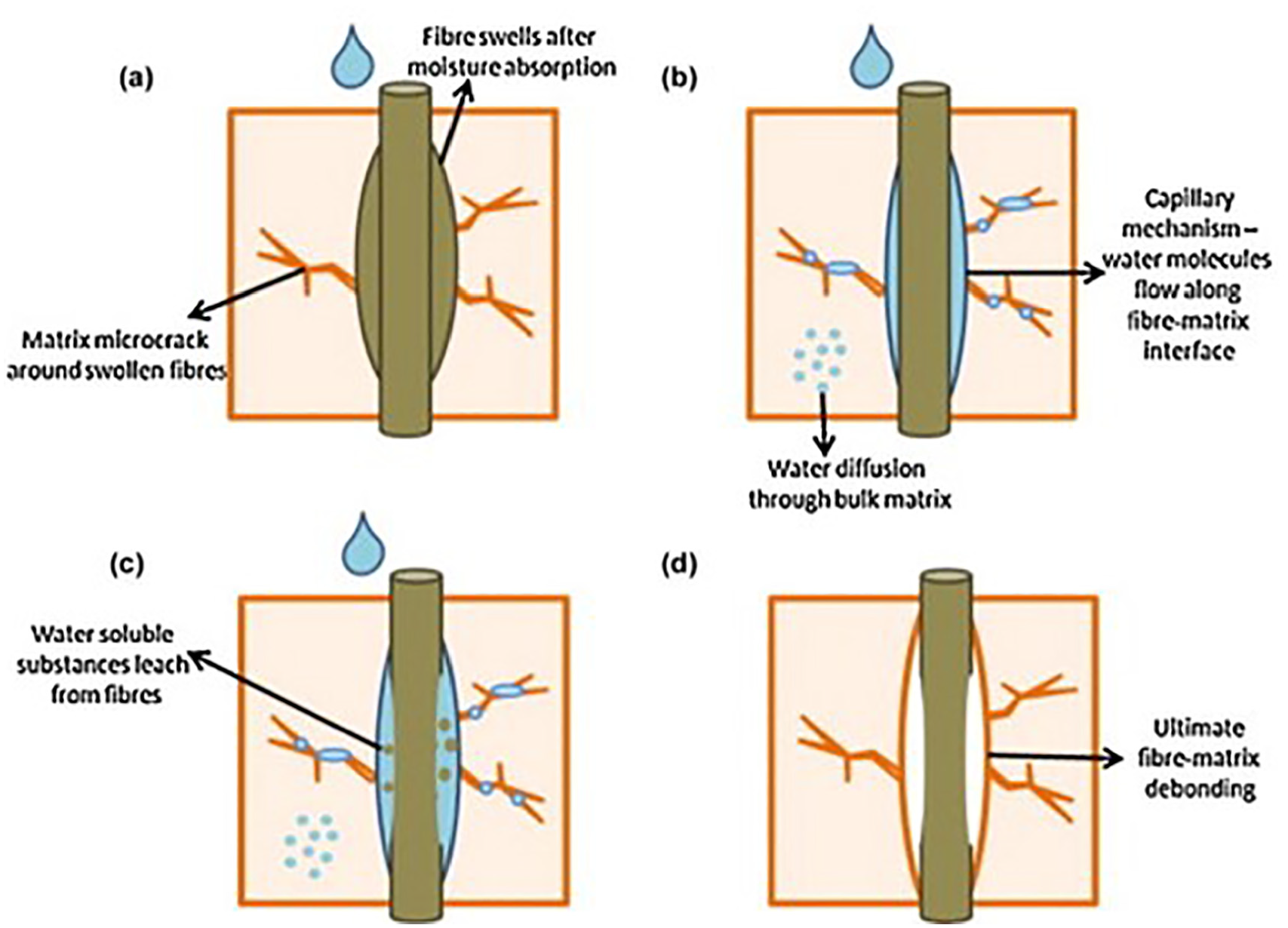
Effect of water on fibre-matrix interface. 29
SCM reinforcements like CFRP and GFRP are in most cases more resistant to moisture compared to NFCs. Nevertheless, they can swell and uptake moisture, and likely at the interface between the fibre and the matrix, which will subsequently leads to the plasticization of the matrix, an overall decrease in glass transition temperature and general decline in mechanical properties. 9 For example, the investigation in which CFRPs after 1000 h of exposure to 70% of relative humidity and temperature 70°C reduced 0, This implies that the specimens had absorbed about 3% moisture which caused less interlaminar shear strength of about 20%. 30
In the attempts to reduce the impact of the moisture effects, several approaches have been considered including the use of the hydrophobic films, chemical treatments of the fibres and embedding of the moisture barriers within the composite structure. 21 Figure 9 shows that various types of surface treatments of natural fibres. For instance, preliminary work included the treatment of jute fibres with alkali and silane coupling agents leading to a decrease in the extent of moisture absorption of composites made from the combination of jute fibres and polyester by up to 50%. 22 Likewise, a study reveals that applying a graphene oxide coating layer to the carbon fibres’ surface can decrease the CFRPs’ water absorption by 35%. 31

Types of surface treatments of natural fibres. 19
UV radiation exposure and degradation
UV radiation also constitutes one of the environmental parameters that affect the behaviour of the fibre reinforced composites especially in degradation and service duration. UV radiation leads to photodegradation of the said polymer matrix that inevitably weakens the mechanical behaviour of the composites; this is evidenced by the formation of cracks, discolouration, and embrittlement of the composites. 6 The degree of UV degradative impact, for instance, is determined by a sort of a matrix, the presence of UV stabilizers and the period and the frequency of its exposure to UV radiation. 32 Effects of various UV lights on FRP-strengthened RC structures as demonstrated in Figure 10, which may affect the strengthened structure.

Potential effects on fibre reinforced polymer (FRP)-strengthened reinforced concrete (RC) structures from different UV lights. 14
Synthetic fibre reinforced composites specially the ones which have their matrices as thermoplastic tend to be more sensitive to UV than those with thermoset matrices. For instance, polypropylene (PP) based GFRPs which had been subjected to UV radiation for 1000 h saw their tensile strength decrease by 50% and their elongation at break reduce by 70%. 33 Antioxidants including UV stabilizers like hindered amine light stabilizers (HALS) and carbon black should be used in order to enhance the UV resistance of the composites. 34
Similar to the thermoset ones, natural fibre reinforced composites are also susceptible to UV degradation, mainly on account of the photodegradation of the lignin and hemicellulose phases of the plant-based fibres. 35 The analysis focussed on the outcome of UV exposure on mechanical characteristics of snake grass fibre polyester composites. The tensile strength was reduced to 80% of its initial value and the flexural strength to 85% of the original value after 500 h of UV exposure. 36 Surfaces of the composites can be protected with UV stabilizers or exterior layers which makes it easier to enhance the UV stability of such composites. 4
Chemical exposure and corrosion
Environment issues as chemical, which include acids, alkalis, solvent and salts that can lead to decrease in mechanical properties of the fibre-reinforced composites. 37 The factors affecting chemical deterioration contain the elongation of matrix, and fibre, the type and concentration of the chemical and exposure time. 38
It is also pertinent to state that SFC particularly those with thermoset matrix exhibit higher resistance to chemical than their thermoplastic counterparts. However, the above strengthening of the composite can still be reduced due to the deterioration of the matrix and the fibre-matrix interface by chemically active dead volume fluids. 39 For instance, while the mechanical properties of CFRPs can be affected by exposing them to 10% sodium hydroxide solution and at 23°C for 1000 h which equally causes a reduction of 15% in ILS and 10% in FS. 40
Earlier it was also pointed out that initial natural fibre reinforced composites normally have poor resistive ability to chemical attack as compared to synthetic fibre composites because many natural plant fibre possess polar directives groups like hydroxyls and other active units. 41 Besides, they noted that there was actually adverse effect that relates to the interaction of the fibres with alkalis such as sodium hydroxide leading to the hydrolysis of cellulose and hemicellulose forms of the fibres and a consequent reduction of the mechanical properties of the final composite material. 42 Research on the effect of DT on tensile characteristics of flax fibre reinforced PLA composites. On treating the specimen with 5% sodium hydroxide solution for 24 h the tensile strength was decreased up to 25% and young’s modulus was declined by 20%. 43
Concerning the improvement of chemical resistances of the fibre reinforced composites different strategies were pursued which include the use of a coating layer, chemical treatment of the fibre, and incorporation of corrosion inhibitors into the matrix. 44 For instance the interaction of silane coupling agents on natural fibres has been identified to increase the resistance to alkali and the compatibility between the fibres and the polymer matrices. 45 On the similar veins, the incorporation of GO in epoxy matrix of CFRPs, it has been reported that improves their chemical resistance and barrier properties. 46
Based on this, it can be suggested that moisture absorption, UV, and chemical are among the most critical environmental factors that can affect the applicability of the fibre-reinforced composites’ performance lifetime, stability, and type of ecological footprint left by the products. One hence has to determine the degree of efficiency with which these factors lower the intended composite and the amount of damage they afford this is to acquaint oneself with the most appropriate composite material to work with. Some of these have been attempted to be controlled by activities such as using special paints, use of special chemicals, addition of stabilizers, inhibitors among others. However, further research is required in order to identify improved approaches for increasing the above said fibre reinforced composites for their durability and green chemistry.
Environmental testing methods
As for the objective is in respect of the evaluation of environmental behaviour and the life preview of fibre-reinforced composites, there are standard test procedures available. Figure 11 explains the Schematic representation of composite interface/interphase. Such approaches can be effectively used which allows to accelerate exposure of composites to the required environmental conditions such as moisture, UV radiation, and specific chemicals which are in the nature faster than through their exposure to natural conditions. 48 This section discusses three common environmental testing methods: There are many varieties of accelerated weathering tests; some are the Taber Abraser test, AC humidity test, cyclic salt spray test, cold temperature test, and UVB sun test; These are highly dependent on the general information for accelerated weathering tests; In addition, the summarized data of water immersion tests and chemical resistance tests as acquired from some recent research. 49

Schematic representation of composite interface/interphase. 47
Accelerated weathering tests
These are accelerated tests that aim at doing in a short span of time what would be done by the environmental conditions in a relatively much longer period of time on fibres reinforced composites as shown in Figure 12. These tests mainly consist in immersing the composite samples into a chamber where they are subjected to UV radiation, moisture and temperature variation. 50 Some of the well-known accelerated weathering tests applied for composites are stated in ASTM G154 and ISO 4892 that illustrate test circumstances, period, and procedures. 51
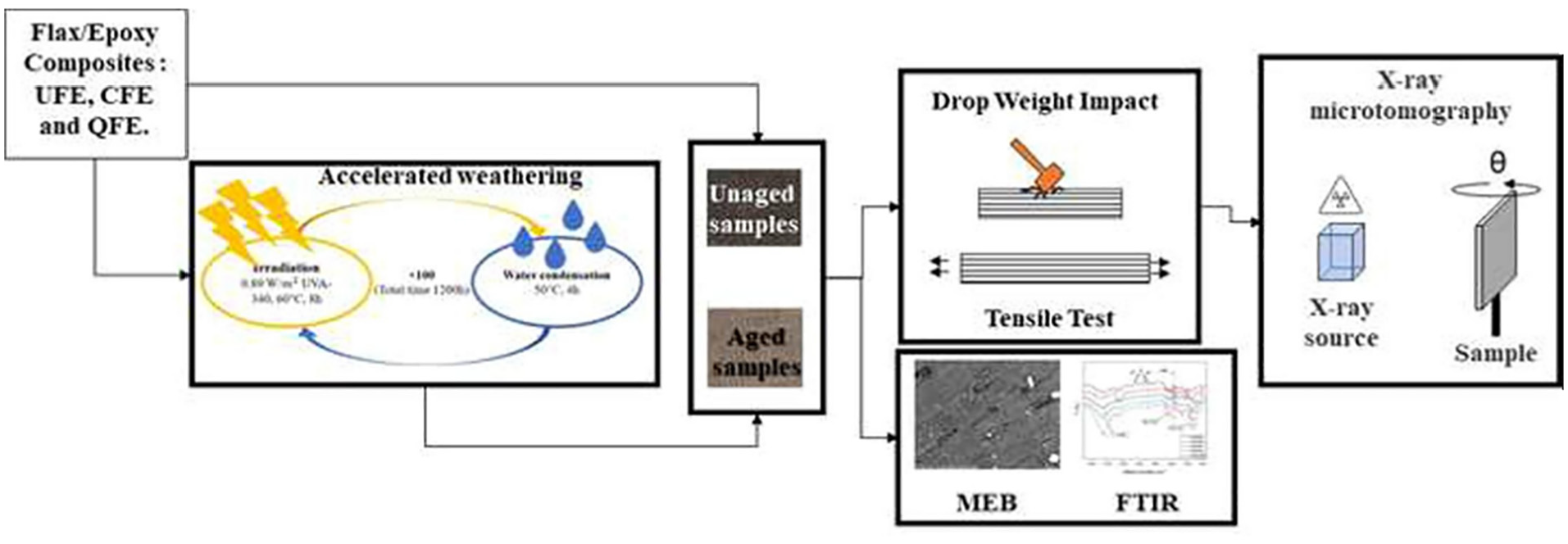
Accelerated weathering test of FRC. 52
In their research article published in 2020, Tapper et al. aimed to establish the impact of accelerated weathering on the mechanical characteristics and aesthetics of the CFRP composites. The samples underwent the ASTM G154 procedure in which the exposed samples were illuminated with UV radiation of 340 nm intensity of 0.89 W/m2 and moisture in the form of relative humidity of 50% for 1000 h. 53 In this research, it can be observed that the samples that were subjected to weathering lost 20% of their tensile strength and 15% of their flexural strength when compared to the samples that were not exposed to weathering. 19 The surface external layer contained chalking, discolouration as well as cracking of the matrix and this was confirmed by the Scanning Electron Microscope (SEM).
The information on the impact of accelerated weathering on mechanical and thermal characteristics of snake grass fibre reinforced polyester composites was obtained. The samples were subjected to UV radiation of 340 nm, 0.77 W/m2 and moisture in the form of a relative humidity of 65% using a weathering chamber according to the ASTM G154 for 500 h. Compared to the control samples, the samples that were exposed to weathering showed the loss of 22% tensile strength, 18% flexural strength, as well as 12% impact strength. 54 The thermal stability of the composites as reflected in the thermogravimetric analysis also declined after the weathering; the TGA start onset decomposition temperature dropping by 10%. 55
Water immersion tests
MATs are applied to assess the extent of change in aspect and function of fibre-reinforced composites’ mechanical behaviours due to moisture content which was shown in Figure 13. These tests entails exposing the composite samples to water or other aqueous solutions at a set time and temperature and determine the Alterations in the mass, size and mechanical characteristics of the samples. 56 Water immersion tests for composites are determined by ASTM D570 and ISO 62 that present the test conditions, duration, and practices. 57

Water ingress mechanism in fibrous reinforced polymers composites. 59
The water absorption behaviour and its consequence on the mechanical performance of jute fibre reinforced PLA composites. The samples were placed in distilled water at 23ºC for 24 h in the accordance with the ASTM D570 procedure. The findings revealed that the water absorption percentage was determined to be 12.5% and consequently; there was about 15% and 12% loss of tensile and flexural strength respectively in the samples that were saturated. The water absorption also led to an increase in cross-sectional thickness by 5% in the samples and the length increasing by 3% this is suggesting that the natural fibres swell up. 58
The impact of water immersion on mechanical properties and microstructure of carbon fibre reinforced polymer (CFRP) composites. The samples are soaked in distilled water at 70°C for 1000 h as per the ISO 62 specification. These results indicated that an increase of 0.3% in the weight of the immersed samples and reduction of 10% on the interlaminar shear strength of the samples as compared with the dry ones was observed. It was noted that the scanning electron microscopy (SEM) of the TMA+epoxy samples indicated matrix plasticization and fibre-matrix debonding due to water immersion. 60
Chemical resistance tests
The chemical resistance tests are employed for assessing the impact by chemical agents on the characteristics and behaviour of fibre-reinforced composites. These tests consist of immersing the composite samples in acids, alkalis, solvents, salts etc. at a fixed time and temperature and record the weight loss, changes in dimensions and reduction in the mechanical properties. 61 Chemical resistance tests most widely used for composites depends on ASTM D543 and ISO 175 by which the test conditions, duration, and methods are described. 62
The peripheral chemical resistance of flax fibre reinforced polylactic acid entitled, Chemical resistance of flax fibre reinforced polylactic acid (PLA) composites to different chemicals. the chemical performance of the composites on the hands of acetic acid, sodium hydroxide, gasoline. The samples were dipped into the chemical solutions at an environmental temperature of 23°C for 24 h as per the ASTM D543 procedure. The findings depicted that composites had the highest weight loss and reduction in tensile strength in NaOH, the second highest in acetic acid and the least in gasoline. In this study, the SEM analysis of chemically treated samples showed the fibre-matrix debonding and matrix cracking mainly in the samples that were treated with sodium hydroxide. 64
Likewise, the effects of aviation fluids, namely jet fuel, hydraulic fluid, and de-icing fluid on CFRP composites. The samples were exposed to the fluids at 23°C for 1000 h compliant with the ISO 175 procedure. The investigations found that CFRP composites had lower chemical weight changes that were less than 1%, and moisture and chemical affected the mechanical properties by reducing the tensile, flexural, and ILSS strength by less than 5% after being immersed in the fluids. The authors explained the high chemical resistance of the CFRP composites to resistance of the carbon fibres and the crosslinked structure of the epoxy matrix. 65 Chemical resistance properties of different fibre-reinforced composites as shown in Table 1.
Chemical resistance properties of different fibre-reinforced composites. 63

Jw* = Woven jute fibre; EFB = Empty fruit bunches.
Therefore it can is concluded that the accelerated weathering tests, water immersion tests, and chemical resistance tests are key environmental testing procedures that help assess the environmental performance of FRCS. These tests give the vital data about the degradation caused by moisture, UV radiation, and chemicals on the mechanical, thermal and microstructure of the composites which could help in the selection of materials and design of the composite structures for various recycling. That is why, it can be mentioned that these accelerated tests may be not quite adequate in terms of providing actual information about environmental conditions and long-term behaviour of the composites. Hence, for the evaluation of actual behaviour of the FRC’s in service environment, both accelerated testing and real exposure testing is largely suggested.
Environmental performance of synthetic fibre composites
Carbon fibre reinforced polymers CFRPs and glass fibre reinforced polymers GFRPs are some of the most used synthetic fibre reinforced composites today in different applications because of their high mechanical properties, light weight and high durability. Nevertheless, variations with these functionalities are also vulnerable to environmental influences such as humidity, ultraviolet radiation and chemical aggressiveness, which impacts on physical and durability characteristics. This section covers the effects of such environmental factors on composite materials made of synthetic fibre and their stiffness, the prevalent degradation processes and ways of enhancing their environmental endurance.
Impact of environmental factors on strength and stiffness
One of the most important environmental impacts which directly hit the strength and the stiffness of the composite made of synthetic fibre is moisture absorption. Moisture can also adversely affect the polymer matrix as well as the fibre-matrix interface as the two has capability to particularly absorb moisture when exposed in humid environment, which in turn can plasticize the matrix, reduce the glass transition temperature and finally diminish the interfacial bond strength. 66 For instance, CFRPs aged at 70% relative humidity and 70°C for 1000 h, the ILSR and the FSR dropped to 80% and 85% relative to the dry samples. Figure 14 shows that interlaminar shear strength with loading rate of glass fibre/epoxy composites at −50°C temperature.

ILSS with loading rate of glass fibre/epoxy composites at −50°C temperature. 67
The another environmental factors that may affect the strength and stiffness of synthetic fibre composites, especially those containing thermoplastic matrixes include UV radiation exposure. The UV radiation can lead to the photodegradation of the polymer matrix causing it to become brittle, crack, and thus lose it mechanical properties. 68 For example, Tapper et al. in their work realized that polypropylene (PP) based of glass-fibre reinforced plastics (GFRPs) which was exposed to UV radiation for 1000 h had its tensile strength reduced by 50% and its elongation at break, reduced by 70% from that of the as-received samples.
Chemicals also have an impact on the strength and stiffness of the synthetic fibre composites; the kind of the chemical used and its concentration. Organic solvents, acids, and alkalis reduce the mechanical properties on breaking the polymer matrix and the fibre matrix bond. 69 For instance, CFRPs immersed in a 10% sodium hydroxide solution at an ambient temperature of 23°C for 1000 h lost 15% of their interlaminar shear strength, and 10% of their flexural strength as compared to the control specimens. 70
Degradation mechanisms in synthetic fibre composites
Environmental degradation of synthetic fibre composites comes with several physical/chemical changes like Matrix plasticization, fibre-matrix debonding, Matrix cracking and Fibre degradation. 71 Water uptake is also one of the main concerns in the deterioration of synthetic fibre composites due to the cause of plasticization of the matrices and also pull-out of the fibres from the matrix as shown in Figure 15. 49

Fibre pull-out and debonding. 50
The absorbed moisture can also lead to increase in the volume of the matrix and build up of internal stresses that can precipitate matrix crack formation and fibre-matrix interface delamination. 72
UF exposure leads to the deterioration through photodegradation of the polymer matrix especially in the thermoplastic –based composite. The UV radiation can cause the cleavage of the chemical bonds in the polymer chains and create free radicals which then undergo oxidation and chain scission reactions. 73 Such reactions cause the hardening, staining and crackling of the matrix and further exposes the reinforcing fibres to more deterioration by the environment. 74
Chemical however leads to the breakdown of the polymer matrix and the fibre-matrix interface through chemical reactions like hydrolysis, oxidation and dissolution. 75 The degree and the kind of the chemical deterioration depend on the kind and the concentration of the chemicals and the chemical capacity of the matrix and the fibres. For instance, chemical degradation: this is the breakdown of the polymer chains and the dissolution of the matrix through hydrolysis by either strong acids or alkalis and or the swelling and plasticization of the matrix by organic solvents. 76
Strategies for improving environmental resistance in synthetic composites
Several measures have been attempted to enhance the resistance of synthetic fibre composite to the environmental factors such as the use of protective coatings, further treatment, and the application of additives and matrix modifiers. 77 One of the common strategies is to cover the surface of the composites with a protective layer which will only allow moisture, UV radiation or any chemicals to penetrate through the surface. For instance, it has been documented that the usage of a PU coating to the CFRPs’ surface disposes moisture absorption by 50% and adds UV resistance by 30% compared to the sample without the coating. 78 Figure 16 shows Graphene oxide-coated Poly(vinyl alcohol) fibres for enhanced fibre-reinforced cementitious composites.

Graphene oxide-coated Poly(vinyl alcohol) fibres for enhanced fibre-reinforced cementitious composites. 77
The other possible approach is the alteration of the reactivity of the polymer matrix with the view of making its resistance to the environment better. It can be done by including more additives of the matrix like UV stabilizers, the antioxidants, the corrosion inhibitor etc. 79 For instance, incorporation of 1% by weight of hindered amine light stabilizer (HALS) in the polypropylene (PP) matrix enhances the UV resistance of PP based GFRPs by 50% higher than the unmodified samples. 80
Another technique to increase the environmental resistance of synthetic fibre composites is to apply chemical treatments on the reinforcing fibres. These treatments focus on altering the nature of the fibres’ exterior to improve their compatibility with the matrix as well as the physical bond between the fibre and the matrix. 81 For instance, the application of a silane coupling agent in the treatment of carbon fibres was stated to enhance CFRPs’ moisture resistance by 30% as well as interlaminar shear strength by 20% compared to the untreated samples. 82
Apart from these approaches, characteristics of the composite structure and the choice of the materials making the synthetic fibre composites can also bolster the measure of the environmental resistance. For instance, sandwich structures with froth core and shield skin layer as opposed to solid laminate structure were found to enhance the moisture that GFRPs absorb and their resistance to UV light compared to what was discovered earlier. 83 In line with this, it was asserted that implementing a thermoplastic matrix with a higher Tg and a lower moisture absorption rate say polyetheretherketone PEEK increases the environmental resistivity of the CFRPs more than the common thermoset matrix epoxy. 84
Therefore, it can be said that performance of synthetic fibre composites in terms of environmental factors degrades due to the presence of factors like moisture, UV radiation and chemical which impacts the fibre strength, stiffness and durability. The degradation mechanisms include; plasticization of the matrix, debonding between the fibre and matrix, matrix cracking and fibre failure. To enhance the environmental resistance of synthetic fibre composites some of measures that have been taken are protective coating, chemical treatment and the use of additive and matrix modifiers. It is also apparent that the choice of the constitutive materials as well as the construction of the composite structural form can also help influence the levels of environmental steeled exhibited by these kinds of composites. Nevertheless, additional studies are required in order to gain the data necessary for the creation of more efficient and long term solutions for enhancing the environmental characteristics of synthetic fibre composites in various environmental climates.
Environmental performance of natural fibre composites
Sustaining fibre reinforced composite structures are expanding its importance of using natural fibre composites to synthetic fibre composites. These composites use polymers with reinforcements of natural fibres like hemp, flax, jute or sisal and benefits such as low density and high specific strength, biodegradability and low impact on the environment are achieved. 85 But the environmental behaviour of natural fibre composites is considered by several factors consisting of the kind of fibre, matrix and preparation methods and the public exposure conditions. This section includes the natural and synthetic fibre composite environmental impacts and the natural fibre composite biodegradability and recycling aspects and the difficulties of sustaining mechanical features in exposed conditions.
Comparison of natural and synthetic composites in environmental conditions
Thus, the natural fibre composites will have different environmental characteristics as compared to synthetic fibre composites due to the difference in the constitution of the composites. Another advantage is the fact that natural fibres have the propensity to absorb carbon within their growing process, thus reducing the emissions about the actual production of the composites. 85 Conducting a Life cycle assessment (LCA) study revealed that, manufacturing flax fibre reinforced polyester composite was found to emit half of the amount of carbon dioxide than glass fibre reinforced polyester composite. 86
Nevertheless, natural fibres also have certain drawbacks as far as their environmental characteristics as compared to synthetic fibres are concerned. Natural fibres are more hydrophilic when compared to synthetic fibres and they can absorb more moisture that enhances swelling of the fibres and also damage the fibre-matrix bond. 87 snake grass fibre polyester composite absorbed 12% more moisture and lost 20% of it tensile strength after being immersed in water for 24 h while the glass fibre polyester composite on the other only absorbed 2% more moisture and lost 5% of its tensile strength when immersed in water for 24 hours. 88
Other vary include; Natural fibre composites also have poor resistance to UV radiation and biodegradation compared with synthetic fibre composites. Specifically, the lignin and hemicellulose found in the natural fibres get affected by photodegradation and microbial degradations that render the fibres and the composites weaker in structure, a flax fibre reinforced PLA which was used in the research had its tensile strength reduced to 50% of its initial value upon exposure to UV for 500 h; on the other hand, a carbon fibre reinforced epoxy under similar conditions suffered a tensile strength reduction of only 10%. 89
Biodegradability and recyclability of natural fibre composites
Another key environmental benefit of natural fibre composites is their degradability that makes it possible to degrade the composites at the end of their useful life. 41 The biodegradation of natural fibre composites depends on factors such as the type of fibre and matrix, fibre volume fraction, and climatic conditions. 56 Jute fibre reinforced PHB composite with 30% fibre loading had a 60% weight loss after 90 days of soil burial, which demonstrated a high biodegradation rate. 69
On the same note, natural fibre composites are also characterized by poor biodegradability which is a disadvantage when using them in products that are expected to be durable or resistant to environmental factors. Figure 17 shows that recycling of natural fibre composites. The biodegradation of the natural fibres can cause the composite structure to degrade and the mechanical properties of the material to deteriorate over time. 47 Flexural strength of jute fibre reinforced PLA composite reduced by 10% after being buried in the soil for 60 days, while that of glass fibre reinforced polyester composite reduced only by about 50%.

Recycling of natural fibre composites. 19
Besides biodegradability, NFC also has the possibility of being recyclable as the natural fibre can be isolated from the matrix and utilized in other composites or other products. 59 But, the recycling of natural fibre composites is a problem since these composites are heterogenous and the fibres may degrade during recycling. 53 The tensile strength was reduced by 30% and the flexural modulus was reduced by 20% once the flax fibre reinforced polypropylene (PP) composite was recycled through mechanical grinding followed by decompounding. 58
Challenges in maintaining mechanical properties in natural composites under environmental exposure
A primary issue that has been cited in the application of natural fibre composites is the ability to retain the mechanical properties of the component once it has been exposed to environmental elements, especially in applications that may require the components to be constantly serviceable in the long run. 51 The hydrophilic character of natural fibres, in addition to their sensitivity to UV radiation and biodegradation, results in detachment of the fibre –matrix interface and disintegration of the composite structure over some time. 62
To enhance the environmental degradation of natural fibre composites, several methods have been tried which include chemical treatments, compatibilizers, and coatings. 6 For instance, NATURAL fibres have been treated with alkali, silane, or maleic anhydride which enhances their interaction with the matrix and the reduction of moisture absorption. According to the study of using snake grass fibres and treating them with 5% sodium hydroxide improved the reduction of moisture absorption and increased tensile strength of polyester composites by 30% and 20% respectively. 41
To improve the environmental resistance of natural fibre composites there are a number of processing techniques; another method is the hybridization of natural fibre reinforced composites with synthetic fibres, or nanofillers. Evidences show that the addition of a small quantity of CNTs or graphene into natural fibre composites enhances the mechanical performance, thermal stability, and UV protection. 30 an improvement in tensile strength and reduction in moisture absorption of flax fibre reinforced PLA composite by incorporation of 1 wt% graphene.
Yet, these strategies pose limitations and vicissitudes, particularly the long-term degradation of natural fibre composites under the environmental influences that is still a subject of research studies. 34 Potential areas for future research as new bio-based and biodegradable matrices, improvement of the fibre/matrix interface as well as multifunctional coatings and additive. 48
In conclusion, there is a significant difference in environment related properties of natural fibre composites as against synthetic fibre composites in terms of carbon footprint, biodegradation and recyclability. But they do have their drawbacks as well as far as moisture absorption, UV stability and overall outdoor stability are concerned. A comparison of the environmental impact of natural and synthetic matrix based composites has established the fact that the selection of matrices and the design of composite structures should be done in a balanced way depending on the demand of the application and the environment where the composite structure will be served. It is essential to develop techniques and methods about how to enhance the environmental barrier properties while keeping the mechanical properties of the developed natural fibre composites at satisfactory levels for broader acceptance and uses in different industries.
Conclusion
➢ The environmental behaviour of synthetic and natural fibre reinforced composite is an area of paramount significance in case of these materials especially in and around automobiles, construction, and packaging industries.
➢ By presenting this review article, the current situation of the research carried out in the environmental performance of these composites has been revealed, which factors affect their behaviour, the process of degradation, and the ways that can enhance the environmental resistance of these composites.
➢ The review has indicated that all the types of synthetic and natural fibre reinforced composites are sensitive to environmental conditions such as moisture, UV radiation, and chemicals, which can cause lowering of mechanical properties and environmental characteristics of the composite materials.
➢ This is of course due to the type of fibres, matrix and environment in which they are used and more so, natural fibre composites exhibit poor resistance to moisture and biodegradation as compared to synthetic fibre composites.
➢ The use of natural fibres, such as jute, in composite materials offers several advantages, including biodegradability, low cost, and reduced dependence on petroleum-based products.
➢ Furthermore, natural fibre reinforced composites have been shown to exhibit comparable or even superior mechanical properties to their synthetic counterparts, making them suitable for a wide range of applications, including the automotive, aerospace, and construction industries.
➢ The specific mechanical properties of natural fibre reinforced composites can be tailored through various methods, such as fibre treatment and optimization of the manufacturing process. For instance, a study on jute fibre reinforced epoxy/polyester composites reported a tensile strength of 45 MPa and a flexural strength of 85 MPa.
➢ Another study on glass/jute fibre reinforced polyester composites found that the inclusion of natural jute fibres at a content of 25%–33.3% resulted in enhanced tensile, flexural, and impact strength.
➢ While natural fibre reinforced composites offer significant environmental advantages, their performance can be further improved through the strategic hybridization with synthetic fibres. Such hybrid composites leverage the strengths of both natural and synthetic fibres, leading to enhanced mechanical properties and broader application potential.
➢ The review has also explained the environmental benefits in the use of natural fibre composites including low CTE, biodegradable, and recyclability. A life cycle assessment (LCA) study it was reported that, the eco friendly flax fibre reinforced polyester composite emitted 50% less carbon dioxide than the glass fibre reinforced polyester composite.
➢ However, the review has also established the problems of degrading the mechanical characteristics of natural fibre composites while in use; Some works have cited a range of 20%–50% reduction of tensile strength and 10%–50% reduction of flexural strength of NCF composites under the circumstances of exposure to moisture, UV radiation, and biodegradation.
Footnotes
Handling Editor: Humberto Almeida Jr
Declaration of conflicting interests
The author(s) declared no potential conflicts of interest with respect to the research, authorship, and/or publication of this article.
Funding
The author(s) received no financial support for the research, authorship, and/or publication of this article.
