



Abstract
A detailed examination of the effects of double stratification on the magnetized second grade nanofluid created by a stretching sheet within the porous medium has been carried out in this study. The CBC (convective boundary conditions) and NH (Newtonian heating) conditions are utilized for the analysis. The relevant similarity transformations are defined in order to transform the governing nonlinear PDEs into dimensionless ODEs. The transformed equations are numerically treated with bvp4c in Matlab software package. The computations are expressed in tabular and graphical forms. The flow parameters involved in the modeling are demonstrated on temperature, velocity, and concentration of nanofluid. The calculations of Nusselt number
Introduction
The rheological behavior of non-Newtonian fluids has engaged the researchers due to its involvement in industrial and technology processes such as chemical engineering and petroleum production. The researchers had proposed the various models of non-Newtonian materials because an individual fluid model is insufficient to demonstrate the complete characteristics of all these materials. These models are mainly categorized as rate, differential and integral type fluids. A paramount subclass of differential type fluids is the Rivlin Ericksen fluid of grade two or second grade fluid proposed by the Rivlin and Ericksen 1 to address the normal stress effects. Tauseef Saeed et al. 2 studied the exact analysis of second grade fluid with generalized boundary conditions. Abbas et al. 3 presented the chemical reactive species features of second-grade nanofluid flow past an exponential curved stretching surface with the help of numerical approach. Siddique et al. 4 explored the bioconvection of MHD second-grade fluid with nanoparticles over an exponentially stretched sheet.
Several practical applications of natural and engineering include dynamics of nanofluid to control heat transfer rate. Nanofluid has suitable thermal characteristics to enhance thermal conductivity. Nanofluid is combination of tiny solid particles in a parent fluid as presented by Choi. 5 Nanofluids are extensively utilized for thermal procedure where declining and growing temperatures involve. In these kind of procedures, heat transmission is assumed to be largely essential factor. Nanofluid proves best candidate as compared to other fluids (oil and water etc.) in this situation. In view of reliabilty, various flow models are formulated to explore the nanofluids. Tiwari and Das 6 is proposed to discuss the volumetric fraction of the nano-particles. In addition, Buongiorno 7 model mainly addresses the thermophoresis influences and Brownian motion in convective state in comparison with thermophysical properties and highlighted that both impacts improve the thermal conductivity. Hussain et al. 8 discussed the numerical investigation of three-dimensional water-based magneto-hydrodynamic rotating nanofluid flow produced by a linearly extended sheet. Jain et al. 9 investigated the solutal and thermal transportation of Williamson hybrid nanofluid past a permeable stretching/shrinking surface with mixed convected boundary condition. Salawu et al. 10 discussed the Maxwell Arrhenius kinetic nanofluid flow over a stretchable surface with nonlinear variable properties. Cui et al. 11 studied the impact of non-similar modeling of forced convection nanofluid flow over stretching sheet with chemical reaction and heat generation.
Thermal stratification occurs when two fluids at different temperatures come together. The heavier/colder fluid freezes at the bottom of the surface because of their differences in temperature whereas letting the warm/ light fluid to floating above the cooler fluid. Temperature or density variation causes the continuous outflow of the TBL (thermal boundary layer) within the medium. Fluids of variably warm sidewalls have thermal stratification properties. Thermal stratification in various flows is applicable to significant engineering applications such as polymer extrusion. During the production of polymer extrusion, the heat transfer is important for cooling the objects as it passes via a die to achieve the desired properties of the obtained product. Besthapu et al. 12 discussed the mixed convected thermal stratified nanofluid flow produced by an exponential stretchable sheet. Anjali Devi and Kandasamy 13 addressed the mass species and thermal influences on steady-state magnetized flow over an accelerating thermally stratified sheet under suction/blowing situation. The behavior of radiated thermally stratifying Maxwell fluid flow was presented by Hayat et al. 14 Nakayama and Koyama 15 discussed the thermal stratification behavior on free convected transportation through porous space.
The stretching surface has become the important part and extensive range of benefits is found where heat transfer relate with final product. The manufacturing of paper, glass blowing, drawing wires, crystal growth, heat decline of continuous filaments or strips and extrusion of plastic sheets are a few instances of importance. It is commonly found feature that the velocity in numerous cases is not linear and it may be in nonlinear or exponential form. The concept of stretching surface continuously moving with constant speed was initiated by Sakiadis 16 to observe the flow characteristics. Further, Crane 17 initiated the steady flow caused by linear stretching plate. The extension of this work was adopted by Gupta and Gupta 18 by involving the suction and blowing cases. The flow on a continuously stretchable surface with temperature variation was illustrated by Carragher and Crane. 19 Magyari and Keller 20 considerably discussed the boundary-driven flow engendered by exponential stretchy sheet by taking temperature’s exponential variation. Subhani and Nadeem 21 adopted a numerical analysis to address the 3D micropolar nanofluid flow induced by an exponentially stretching surface embedded in porous medium. Ayub et al. 22 inspected the slip effects on electromagnetohydrodynamics (EMHD) nanofluid flow through a horizontal Riga plate. Saleem et al. 23 demonstrated the convected thermal and solutal transmission in magneto Walter’s B nanofluid flow induced by a rotating cone. Ur Rehman et al. 24 explored the thermophysical analysis for three-dimensional MHD stagnation-point flow of nano-material influenced by an exponential stretching surface.
There are a number of heating mechanisms discussed by Merkin 25 mentioning the temperature division starting from the wall to the ambient situation such as CHF (constant heat flux), NH, CBC, and CWT (constant wall temperature). The heat movement from boundary surface related to heat’s finite capacity in NH conditions commonly referred as the conjugate convected flow. CBC is the flow of heat via finite thickness bounding surface signifying the heat’s finite capacity. The impact of heated processes on fluid motion is substantial and investigated by many researchers. Mohd Kasim et al. 26 investigated the constant heat flux solution for mixed convection boundary layer viscoelastic fluid. Hayat et al. 27 delibrated the boundary-layer flow of Walters’ B fluid with Newtonian heating. Rehman et al. 28 delibrated the Newtonian heating convective flow by way of two different surfaces. RamReddy et al. 29 delibrated the similarity solution for free convection flow of a micropolar fluid under convective boundary condition.
The problem under consideration is investigated by assuming the NH and CBC for the effects of double stratification on the magnetized second grade nanofluid created by a stretching sheet. A detailed analysis of temperature distributions, velocity variation and concentration change is computed and interpreted. These cases are also taken to evaluate the physical quantities of interest related to flow equations. The calculated results are new and useful for various industrial and engineering applicable processes where heat transfer involved.
Problem formulation
The nanofluid dynamic across a two-dimensional (2-D) stretchable sheet of length

Flow geometry with coordinates.
The governing equations are30–32:

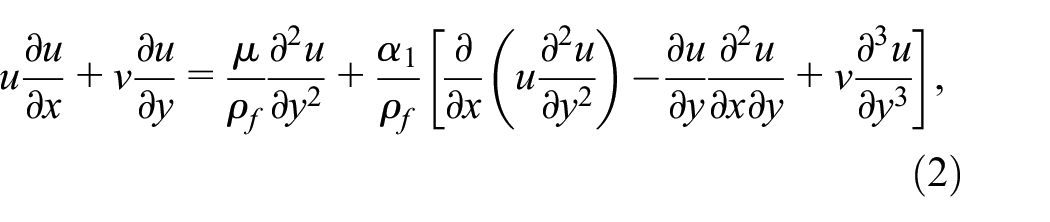
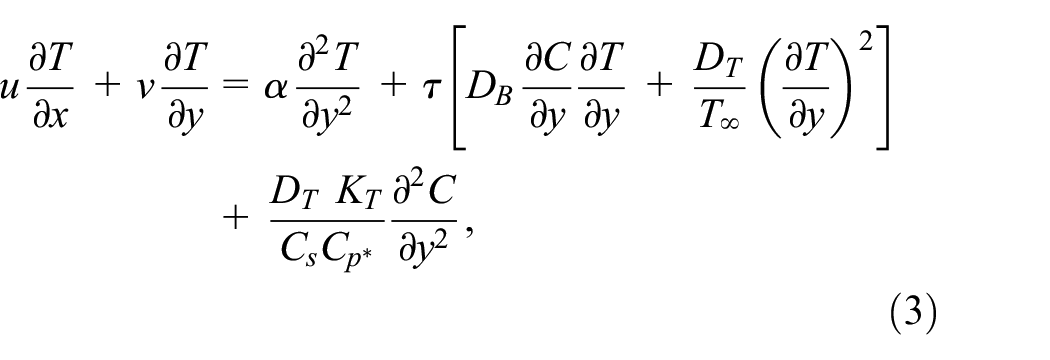

Here, the symbols are denoted as:
The subjected BCs (boundary conditions) are:



Here

To derive the non-linear ordinary form of flow equations, a suitable stream function
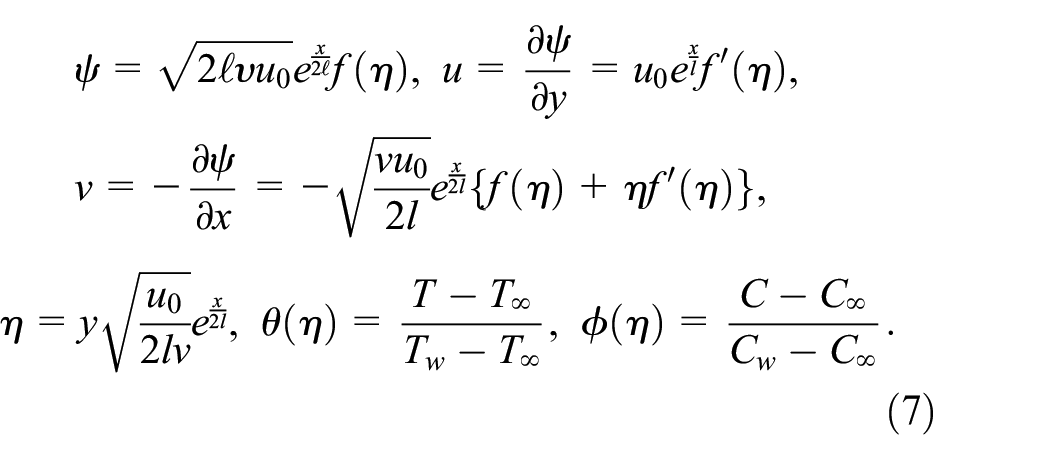
By using equation


The superscript ‘ denotes the derivative of variables w.r.t.
The corresponding BCs (8) become:


Here,
The physical quantities generated by the current flow problem are:

Where the expressions of the wall shear stress



The coefficients like

Results and discussion
This section is prepared to illustrate the numerical solution of relevant equations with bvp4c in MATLAB technique. The procedure of numerical technique is illustrated in Figure 2. The conversion of differential equations to ordinary form is taken with the defined similarity variables and then the solution related to thermophoresis parameter

Numerical procedure.
The values of

Table 1 gives the accuracy of current flow problem as one can see that there is a good agreement for the Nusselt number
Numeric values of

The calculations of
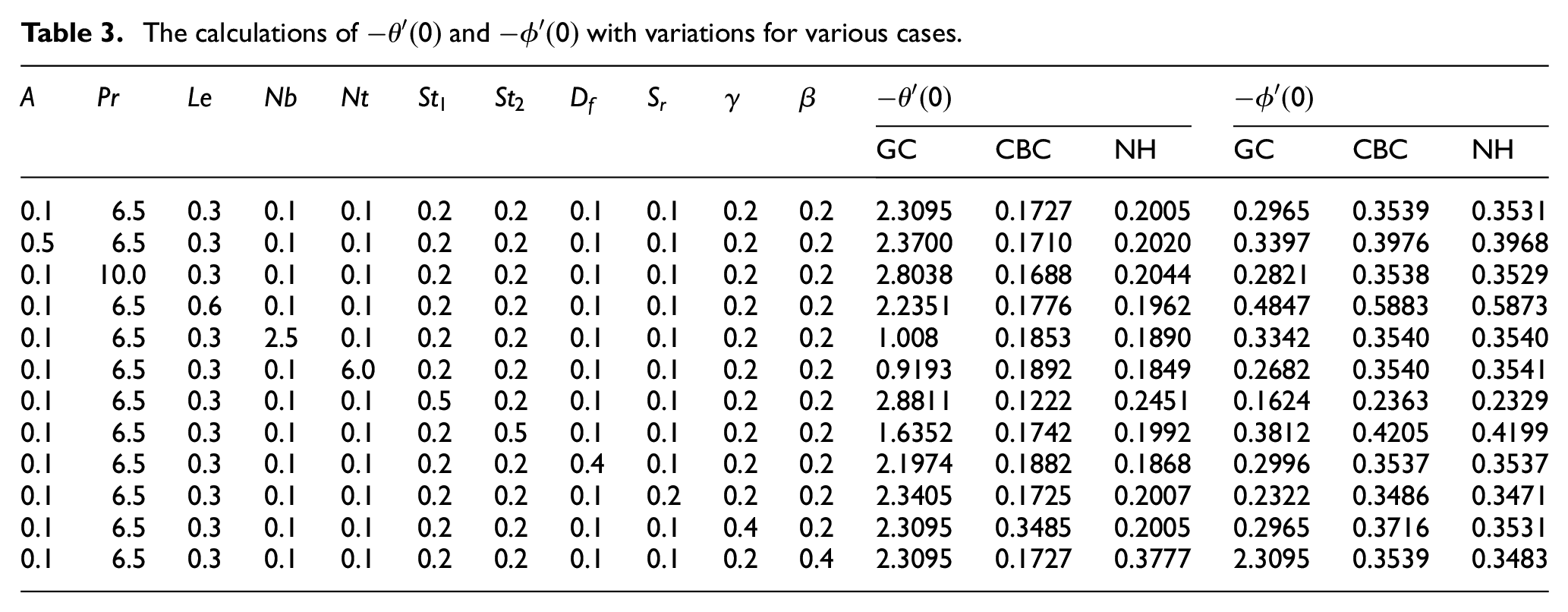
Figure 3 expressed the velocity profile for numerous values of second grade parameter

The impacts of

The impacts of

The impacts of

The impacts of
Figures 7–9 represent the influences of dissimilar values of Brownian movement constraint

The impacts of
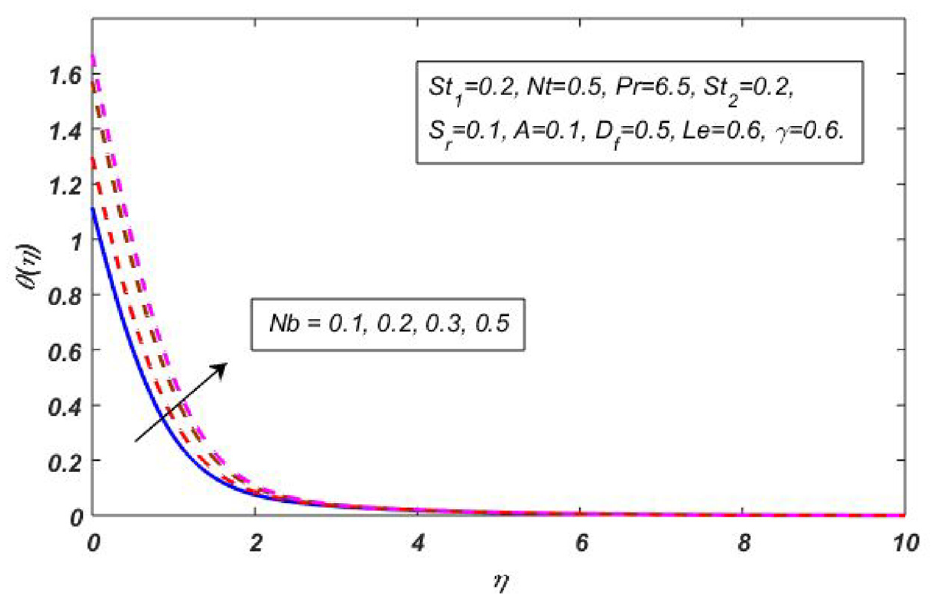
The impacts of

The impacts of

The impacts of
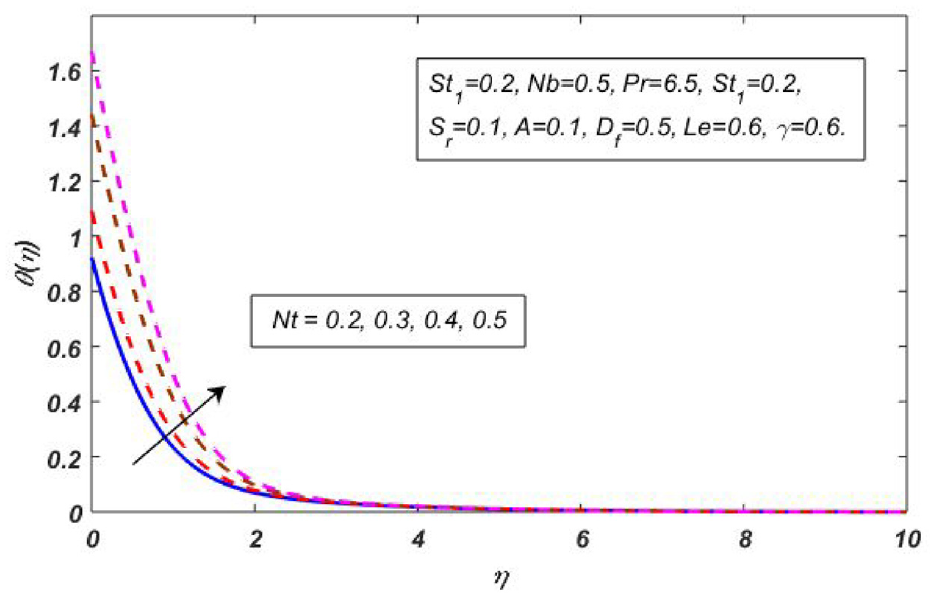
The impacts of

The impacts of

The impacts of

The impacts of

The impacts of
Figures 16–18 revealed the temperature

The impacts of

The impacts of

The impacts of
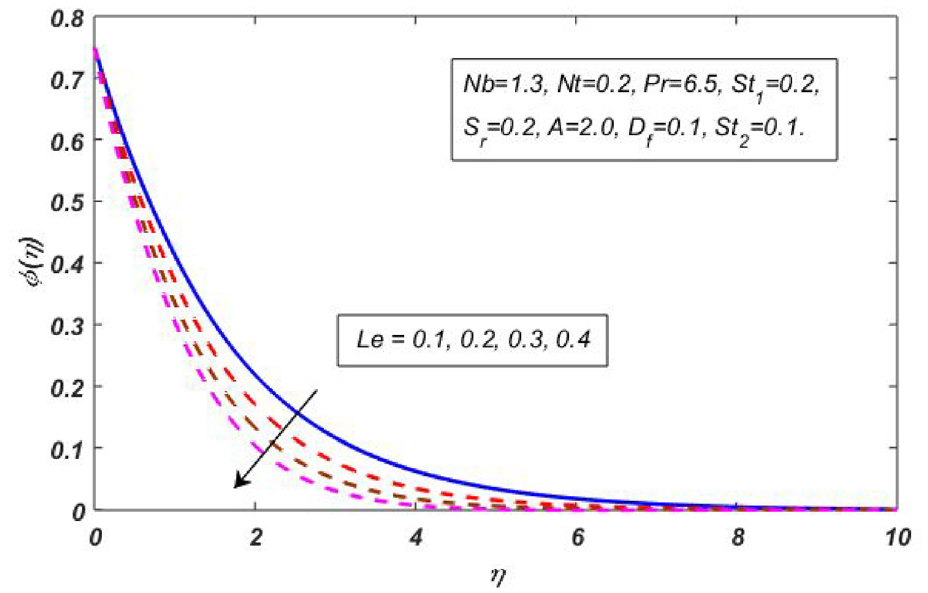
The impacts of
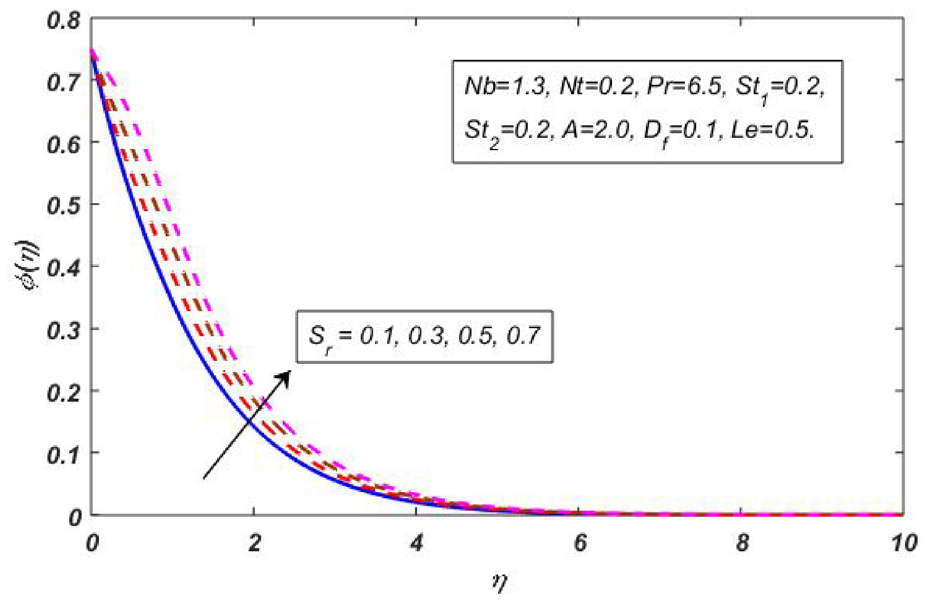
The impacts of

The impacts of
Conclusions
The present study is conducted to analyze the double stratification impacts on a second grade nanofluid flow produced by a stretchable sheet with the help of a numerical approach in MATLAB called bvp4c.The CBC and NH cases are discussed in detail. The numeric computations and comparison with the literature are presented and evaluated. This research work can also be extended for Riga surface, power law surface, curved surface, micropolar and hybrid nanofluid. Moreover, the results obtained from this present analysis can be summed up as:
(1) The enlargement of the second grade constraint caused an enhancement in the velocity profile.
(2) Temperature profile is reduced by rising the Prandlt number and thermal stratification parameter for NH and CBC cases, respectively.
(3) Temperature profile decreases as a result of an increase in Soret parameter. On contrary, greater the solutal stratification parameter and Lewis number resulted a decrement in concentration profile.
(4) The skin friction increased by enhancing the second grade constraint values.
(5) For general case, the reduced Nusselt number displays an increase in case of increasing values of second grade parameter, thermal stratification parameter, and Prandlt number.
(6) For CBC case, the reduced Nusselt number resulted an augmentation against higher Lewis number, Brownian movement and solutal stratification constraint.
(7) For NH case, the reduced Nusselt number displays an increase in case of increasing values of Soret number, thermal stratification and Newtonian heating constraints.
Footnotes
Appendix
Handling Editor: Dharmendra Tripathi
Declaration of conflicting interests
The author(s) declared no potential conflicts of interest with respect to the research, authorship, and/or publication of this article.
Funding
The author(s) received no financial support for the research, authorship, and/or publication of this article.
