



Abstract
In recent years, due to the low thermal coefficients of common fluids and the increase in size and cost of heat exchangers, technologies for improving heat transfer and reducing dimensions have been developed and widely used in industries such as refrigeration, cooling of processing cells, chemical industries, and more. Previously, increasing heat exchange capacity in heat exchangers was achieved by altering parameters such as boundary conditions, flow geometry, heat exchanger geometry, or changing the type of fluid. Additionally, apart from the use of nanofluids, various other operational methods can be employed to improve the thermal performance of heat exchangers. Accordingly, considering the combination of the aforementioned innovative techniques, this study presents the modeling of flow and heat transfer inside helically coiled tube heat exchangers under the flow of nanofluids containing nickel, gold, silver, and gold/silver hybrid nanoparticles using numerical and artificial intelligence methods. In this study, the effect of variations in the inner diameter of the coiled tube and the volume fraction of nanoparticles was examined. The results showed that increasing the inner diameter and volume fraction of nanoparticles leads to an increase in heat transfer coefficient and Nusselt number, while the friction factor decreases with an increase in Reynolds number and increases with an increase in diameter and volume fraction. Finally, the accuracy and validity of the model were evaluated using statistical parameters and experimental results, which showed a 99.9% level of agreement between the predicted and experimental outcomes.
Introduction
One of the major to modern life that always provides the foundation for the economic development of societies, energy has always been one of the most essential and valuable issues in the world, increasing energy prices, reducing access and insecurity, as well as environmental concerns in the 21st century have changed the world’s energy view. Today, population growth and the increasing dependence of industry and technology on fossil energy have challenged all societies and countries in the future. 1
According to the World Energy 2019 scenario presented by the International Energy Agency, the amount of energy needed by the world will increase by 37% by 2040. The growing trend of energy requirements increased environmental pollution, and greenhouse gas emissions based on fossil energy consumption have led to a unique look at optimizing different thermal systems in 2019 to reduce energy consumption. 2
Heating and cooling in different industrial systems by other fluids is significant. Cooling and heating systems are designed based on various methods and parameters affecting heat transfer and increasing the thermal efficiency of systems. Given the restriction of energy resources in the world as well as the increase in the cost of using energy in recent years, research on energy conservation aims to reduce its consumption in various processes is seeing a growing trend. 3 So, recently, much literature and research were done by researchers on heat conveyance in heat systems. Heat exchangers are industrial equipment that can indirectly help heat exchange between two fluids at different temperatures. Generally, there are at least two fluids in each heat exchanger, with the heat displaced between the two. Existing industrial heat exchangers are available for numerous uses such as power generation plants, refineries, metal and glass smelting industries, food and pharmaceutical industries, paper making, petrochemical industries, and heating and cooling systems of buildings and electronics used. Among the types of existing converters, these types of heat exchangers are made up of one or more spiral tube rings, which are attached to the main inlet and outlet pipe at the beginning and end of this spiral tube, which covers a chamber. The spiral tubes in these converters are usually made of carbon steel or copper, and their alloys or rust steel and nickel alloys. Since heat transfer in curved and spiral paths is higher than in the direct path, the dimensions of this group are usually less than in other pipe converters. Due to their wider side surfaces, spiral pipes have greater thermal efficiency, which increases the use of their heat exchangers in the industry.4–7
Zhou et al., 8 have proposed a new optimization model based on the minimum energy drop available for same-line coil-based dual-tube spiral converters. Their numerical model takes into account the work drops that arise from both heat transfer and friction pressure in the heat exchanger.
Wang et al. 9 used numerical methods in 2018 to analyze the effect of blade geometry and discharge of fluid inlet on an excess drop in the heat exchanger of the blade coil tube with a cylinder-shaped shell. The findings recommend that with the surge in the transmission of the inlet fluid to the shell, the increase in the height of the blades and their number, the surge in transmission units (NTUs) number, the heat transfer and the amount of fan work, the excess decay increases. Finally, two relationships are provided to obtain optimal geometric and applied values of a heat exchanger.
The method of increasing heat transfer as an ineffective increase, Andrzejczyk and Muszynski 10 have been conducted in which blades’ form has been used to improve the efficiency of coil and Povey heat exchanger energy. This research shows that due to a combined synchronous heat transfer, natural heat transfer significantly affects low levels of Reynolds and high thermal flux.
Another study was done by Alimoradi. 11 This research examined the impact of geometric and applied parameters on exergonic efficiency by presenting a practice analysis of forced heat transfer in coil heat exchangers and shell spiral tubes. According to the equation intended to predict efficiency, a coil with the maximum number of spiral rings and minimal diameter has higher efficiency than coils with similar lengths and steps. In another study, Alimoradi et al. 12 numerically examined the increase in heat transfer in the coil and shell spiral exchanger so that the effect of installing circular blades installed on the outer surface of the spiral coil was evaluated. This review considers all heat exchangers in three Reynolds, equivalent to 7500, 15,000, and 30,000. The results show that in the range of Reynolds, which is 7500–30,000, the heat transfer rate can increase to 44.11%.
In a study by presenting a numerical model of the coil and shell spiral exchanger, Etghani and Baboli 13 estimated the heat transfer coefficient and exergy drop in this heat exchanger. For this research and evaluation, four parameters of design, comprising coil steps, pipe diameter, as well as cold and hot fluid discharge, are of great importance in the quality of the heat exchangers. They also used Taguchi’s approach to discover the optimum values of design factors. The results show that the diameter of the cold fluid pipe and discharge are the most important and remarkable parameters of heat transfer design and excess drop, respectively. As such, the highest number of nusselt is obtained by hot and cold fluid discharge and increased heat transfer coefficient by increasing the coefficient and excess drop.
Chen et al. 14 worked on the small spiral tube and make an effort to examine the influence of Jules Thomson on the speed of Argon gas heat conveyance through the spiral pipe. Their studies showed that in the coil of 0.3 mm diameter, the effect of the distributed Jules Thomson is significant and the secondary current in the large Reynolds number is more prominent, which results in the surge of heat conveyance compared to the 0.5 mm tube.
In a study by Talib et al., 15 heat transfer in the converter with spiral pipes with an external fin was experimentally examined. This experimental work used a blade with a length of about 4 m and an inner diameter of 0.44 cm with small exterior fins (about 266 fins). Three different hot flow rates on the coil and five cold flow rates or various shells were investigated during the experiments. The findings have revealed temperature increases with rising altitude, and the shell side flow rate was significantly and positively affected. Finally, the coil side mass greatly affected the heat transfer rate.
Gu et al., 16 a new spiral heating converter with an oval-shaped oval tube is suggested to overcome the falling of the fluid pressure during the heat conveyance activity of the helical baffle heat exchanger improves. Fluent was used to display the shell and current heat transfer properties. The principle of the field interaction was employed for assessing the activity of the shell side. The findings revealed that the transmission rate supply on the spiral heat exchanger shell side had higher uniformity, and the speed close to the pipe wall was increased in the range of the research parameters as the circular tube was replaced with a twisted oval tube similar. The spiral heat exchanger with a spiral angle of 15° better performs better than the circular pipe; its heat transfer coefficient is roughly 3.3% improved, and the pressure fall is decreased by 17.1%–19.1%. This increases the heat transfer yield between 21.5% and 22.5%. When the spiral angle is 20°, the heat transfer yield is 16.1%–18.0%, improving the heat conveyance coefficient by 3.6% and reducing pressure falls by 13.9%–16.5%.
The efficiency of equipment like heat exchangers in transferring heat depends significantly on the thermal conductivity of the energy carrier fluid and the displacement coefficient of heat transfer. Fluids are usually employed in transferring or carrying energy in various industries, and these fluids generally include water, oils, and ethylene glycol. Due to the increase in global competition in multiple sectors as well as the critical function of energy in manufacturing prices, the mentioned firms have strongly moved to develop progressive and new fluids that possess higher thermal indices. More than a century ago, the concept of dispersing solid particles in liquids to increase their capacity for heat transfer was first proposed. A theoretical model for the electrical conductivity of solid particles in heterogeneous mixtures was once proposed by the eminent scientist James Clerk Maxwell. Since then, research into heat transfer in mixtures of solid particles in a liquid has used Maxwell’s classical model. At first, the mentioned research was restricted to particles with a size of millimeters or micrometers. However, the problems of instability, sedimentation, abrasion and erosion of channels, and blocking of pipes in the case of these fluids always prevented achieving a commercial product. 17 One of these ways to upsurge the heat conveyance coefficient is to add solid metal particles on the nanoscale to the base fluid and, as a result, develop its physical properties. A Nanofluid is a fluid that contains metallic or non-metallic suspended solid particles with an average diameter of lesser than 100 nm. It should be noted that the term nanofluid was used for the first time by Choi for a new class of fluids containing suspended solid particles. 18
The average size of the particles employed in nanofluids is less than 50 nm, although today, research is not limited to this size and particles with different size distributions in the range of less than 10 nm are studied. With the development of research in the field of nanofluids, today, nanofluids can be manufactured by the addition of metal nanoparticles as well as metal oxide nanoparticles and carbon-based ones such as carbon nanotubes, graphene oxide, and graphene. The addition of metal nanoparticles, metal oxides, or carbon structures to a fluid like H2O affects both the thermal conductivity and some physical features like the heat capacity of the fluid.19–21 In recent years, researchers have conducted various studies aiming to improve the thermal performance of systems by utilizing nanofluids containing different types of nanoparticles. Nanofluids have attracted significant attention from researchers due to their ability to enhance heat transfer characteristics. Nanofluids consist of a base fluid (such as water or oil) in which nanoparticles are dispersed. The addition of nanoparticles to the base fluid alters its thermal properties, resulting in improved heat transfer efficiency. The enhanced performance of nanofluids can be attributed to several factors, including the increased surface area due to the presence of nanoparticles, which promotes better heat conduction, and the ability of nanoparticles to induce convective heat transfer enhancements. As a result, the utilization of nanofluids has gained prominence among researchers in recent years. They have been explored for various applications in heat transfer systems, including heat exchangers, cooling systems, solar collectors, and thermal energy storage. The goal is to exploit the unique properties of nanofluids to enhance the overall thermal performance of these systems and address the increasing demands for efficient heat transfer in various industries. The continuous research and development in this field have opened up new avenues for advancements in heat transfer technology, leading to improved energy efficiency and more sustainable thermal systems.22–24
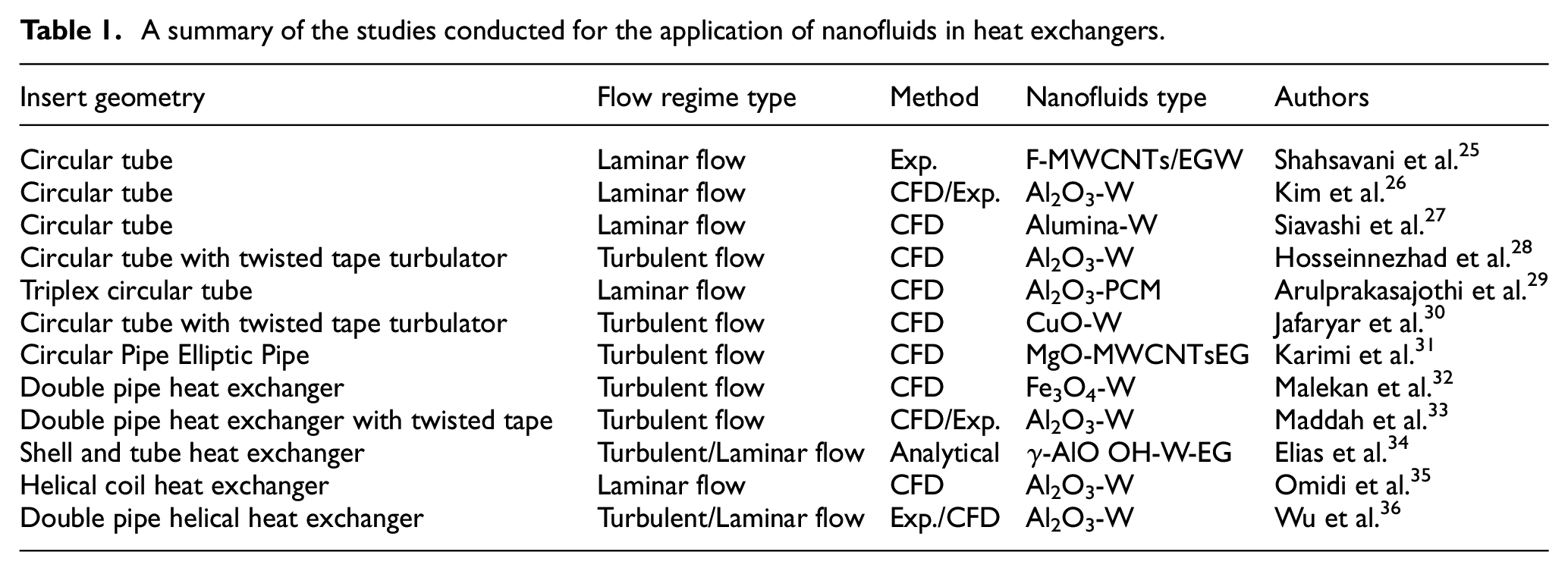
In recent years, due to the importance of using nanofluids, the use of numerical and experimental methods to investigate the role of different nanoparticles in increasing the efficiency of converters has attracted the attention of researchers, which is shown in Table 1.
A summary of the studies conducted for the application of nanofluids in heat exchangers.
In a shell and tube heat exchanger using an aluminum nanofluid as the working fluid, Barzegari et al. 37 looked into the heat conveyance percentage. In this study, the results of the performance of the nanofluid were compared to those of distilled water, and the impact of the alumina concentration in the nanofluid (0.5% by volume) and hot fluid temperatures (70°C–40°C) at various flow rates (−2-3.5 L/min) was also examined. Their research revealed that a fraction volume of 0.016, a flow rate of 3.5 L/min, and a temperature of 70° got the highest heat conveyance rate (9505.6 W).
Heat transfer, pressure drop, friction coefficient, and the green self-synthesis of silver nanoparticles using neem leaf extract were all explored by Kulkarni et al. 38 for a helical coil heat exchanger. When compared to the base fluid, the heat conveyance coefficient has increased by 32% when green synthetic nanoparticles are used. The coefficient of thermal performance has decreased slightly with increasing concentration, and they showed that it is possible to use a 0.05% nanofluid concentration in this type of converter.
Singh et al. 39 prepared CNT nanofluid using distilled water (as base fluid) and combined surfactant (a mixture of SDBS and GA surfactant) while maintaining the ratio of one surfactant to CNT. They showed that CNT nanoparticles play a crucial position in increasing the heat conveyance level of nanofluid compared to H2O. Likewise, they revealed that the heat transfer coefficient for CNT nanofluid at 5000 Reynolds number was 62.62% higher than that of water.
Afzal et al. 40 prepared a test set on a laboratory scale to examine the thermal activity of the three-fluid spiral tube heat exchanger by the use of three various concentrations of graphene/water nanofluid (i.e. 2%, 4%, and 6% by volume) as the working fluid and investigated experimentally. Their research showed that, at all fluid flow rates, the overall heat transfer coefficient rose. Additionally, significant changes in the heat transfer coefficient between hot water and nanofluid as well as between hot water and air have been seen in situations when nanofluid is flowing in either hot water or air. The inversion of the nanofluid transmission rate, on the other hand, demonstrates the negligible impact of nanofluid on the interaction between hot water and nanofluid.
Nowadays, considering the importance of reducing energy consumption and energy storage, thermal systems, one of the industry’s most essential sources of energy consumption, must be continuously improved with maximum speed and minimum cost. Therefore, more than ever is needed to increase the scale and development of thermal processes and optimize, change, or improve process operations and control systems.
In this study, numerical methods have been used to transform the governing partial differential equations for fluid dynamics into algebraic equations for numerical solution. By examining the conditions and dividing the desired domain into smaller elements, and imposing boundary conditions on the boundary nodes, a system of linear equations has been derived by employing approximations. By solving this system of algebraic equations, the velocity, pressure, and temperature fields within the specified domain will be obtained. In addition, artificial neural networks have been utilized to model the results under different network configurations, including varying numbers of layers and neurons with various activation functions. Based on the conducted investigations by the authors, a comparison of the accuracy and validity of different modeling methods, including numerical solutions and artificial intelligence, has not been performed against experimental results for these types of problems. The first section will focus on examining and defining the problem and its governing conditions. Then, by investigating the results of numerical solutions and comparing them with experimental data, the analysis will proceed to explore modeling using artificial intelligence. Finally, in the concluding section, the accuracy and validity of each presented model will be evaluated, and the best model, based on the lowest error, will be introduced.
Model description
Numerical method
Numerical methods have become commonplace among laboratory and experimental methods for analyzing fluid and heat transfer problems, and using these methods for engineering analysis has become commonplace. Numerical solutions are widely used in various industrial fields related to fluids, heat transfer, and fluid-assisted mass transfer. Among these cases, we can include automotive industries, 41 aerospace industries, 42 turbo machines, 43 nuclear industries, 44 military industries, 45 oil and gas and energy industries, 46 and many other cases. Another industrialist pointed out that the numerical solution method has become a solution to related industrial problems.
Geometry of a model
The energy balance in a spiral tube heat exchanger involves the transfer of heat from a hot fluid to a cold fluid. This heat transfer process occurs within the spiral tube, which is the primary heat transfer surface. In Figure 1, the hot fluid is represented by the fluid flowing in the area between the tube and the shell. This hot fluid carries thermal energy that needs to be transferred to the cold fluid. The cold fluid, on the other hand, flows in a separate region of the heat exchanger.

Spiral coil heat exchanger.
As the hot fluid passes through the spiral tube, it releases its thermal energy to the surrounding tube walls. This heat is then transferred to the cold fluid through conduction and convection. The cold fluid absorbs the heat and gradually increases in temperature. The spiral design of the tube in the heat exchanger provides a larger surface area for heat transfer, allowing for efficient thermal exchange between the two fluids. This configuration enhances the overall heat transfer performance of the system.
By analyzing the energy balance and considering the properties of the fluids, such as their flow rates, temperatures, and thermal conductivities, it becomes possible to model and predict the heat transfer characteristics of the spiral tube heat exchanger. This modeling approach aids in optimizing the design, improving the efficiency, and accurately predicting the performance of such heat exchangers in various applications.
In this model, the heat transfer within the spiral tube involves two types of flows: single-phase flow and cold boiling. These two flow regimes occur under different conditions and contribute to the overall heat transfer process.
In the single-phase flow regime, the hot fluid flows through the spiral tube without undergoing a phase change. Heat is transferred from the hot fluid to the tube walls through convection, resulting in a temperature increase in the tube walls. This heat transfer occurs primarily through the displacement heat flux between the hot fluid and the tube wall. In the cold boiling regime, the temperature of the fluid inside the spiral tube reaches a point where it starts to undergo phase change, transitioning from a liquid to a vapor. This phase change enhances the heat transfer process as the latent heat of vaporization is absorbed by the fluid, promoting a more efficient transfer of thermal energy. The cold boiling regime typically occurs in regions where there is a significant temperature difference between the hot fluid and the tube wall.
Within the heat transfer path from the hot fluid to the cold fluid inside the spiral tube, three main heat fluxes can be identified:
Displacement heat flux between the hot fluid and the tube wall: This heat flux represents the transfer of thermal energy from the hot fluid to the tube wall through convection.
Conduction heat flux in the tube wall: This heat flux occurs within the wall of the spiral tube and represents the transfer of heat through the solid material via conduction.
Displacement heat flux from the tube wall to the cold fluid: This heat flux represents the transfer of thermal energy from the tube wall to the cold fluid through convection, completing the heat transfer path from the hot fluid to the cold fluid inside the spiral tube.
Considering these heat fluxes and the different flow regimes, the model captures the complex nature of heat transfer within the spiral tube heat exchanger, providing insights into the mechanisms involved and allowing for accurate analysis and optimization of the heat transfer process. Table 2 displays the examined coil’s dimensional data.
Geometrical specifications of the converter.

Governing equation
The heat flux is initially transferred from the heated fluid to the wall when it reaches the space between the tube and the shell. Equations (1)–(3) all make reference to this procedure. 47


Heat must then move through the pipe’s wall after it has reached the outer surface of the pipe, which is accomplished by the conduction heat flux in the wall. Equations (4) and (5) represent the equations related to conduction heat flux. 47


The heat is transmitted into the cold fluid through the displacement heat flux in the next phase of the heat transfer path after passing through the pipe wall, and this raises the temperature of the cold fluid. The important stage at this moment is the change in the type of fluid flow, and this change is influenced by both the temperature of the fluid and the inner surface of the pipe. The temperature of the inner surface of the pipe determines how these two single-phase flows and cold boiling differ from one another, as was previously indicated. The single-phase flow of the fluid will cease when the internal surface temperature of the pipe reaches the heat transfer fluid’s saturation temperature, and the cold boiling flow will start instead. The relationships pertaining to single-phase flow can be observed in the following equations. 47


The local Nusselt number should be used for the Nusselt number. Two relations for the local Nusselt number for the two boundary conditions of constant temperature and constant flow have been provided by Jayakumar et al. 48 for this purpose. According to the model considered in this research, for the local Nusselt number, the mentioned relationship is regarded for the constant flux boundary condition, which can be seen in equation (9).

The remarkable point in the physics of the fluid flow inside the spiral pipe is the secondary flow, this finally causes the pipe wall to have a higher Reynolds number than the pipe core. The Nusselt number corresponding to the same range is taken into account in the calculations by defining the Reynolds number’s contents because the Reynolds number and the Nusselt number have a direct link. The flow in the heat exchanger is assumed to be fully developed, and in this type of flow, the critical value of the Reynolds number corresponds to the starting point of the turbulent flow, equal to 2300. In this way, the Nusselt number for smooth flow is equal to 4.36, and for turbulent flow (Reynolds number value higher than 2300), it is obtained from Glinilski’s relation (equations (10)–(12)). 47



Also, when the temperature of the fluid reaches saturation, the cold boiling flow is completed, and the fluid enters the drum structure to become steam. The relationships used to calculate the heat flux in the cold boiling section are according to the following relationships.47,49





The heat transfer coefficient in the sub-cooled region, which was the Forster-Zuber heat transfer coefficient in this investigation, is a crucial factor. Additionally, Chen’s equation’s parameter S value is used.47,49


During cold boiling, the mass percentage or mass fraction of the vapor phase is generally small, and finally, the value of this mass fraction (ϕ) can be considered equal to the unit value.
The thermophysical characteristics of the base fluid are a function of the fluid temperature, as should be noted in the equations used. The parameters’ values alter as a result of changes in the fluid’s temperature. According to the research done by Jayakumar et al., 48 the following relations are considered for the thermophysical parameters of the base fluid.


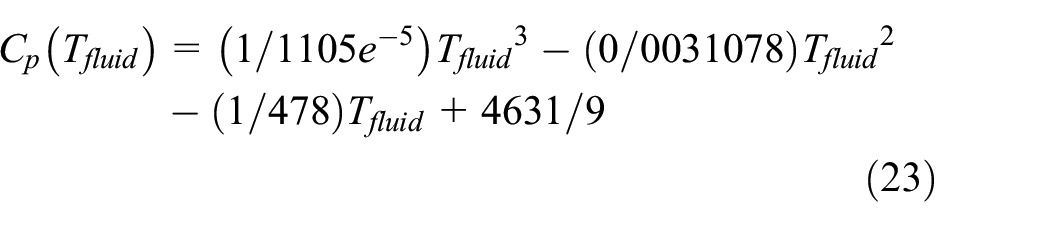
Fluid parameters such as fluid density, thermal conductivity coefficient, fluid-specific heat capacity, and fluid viscosity are affected by nanoparticles when nanoparticles are added to the heat conductivity fluid. In this section, we will express the relationships related to the thermophysical parameters of the fluid considering nanoparticles.
Fluid density, fluid viscosity, thermal conductivity coefficient, specific heat capacity, and fluid enthalpy are the variables that need to be modified. A significant fact to mention is the relationship between these parameters, including the particles’ volume percentage. Below we express these relationships. 50





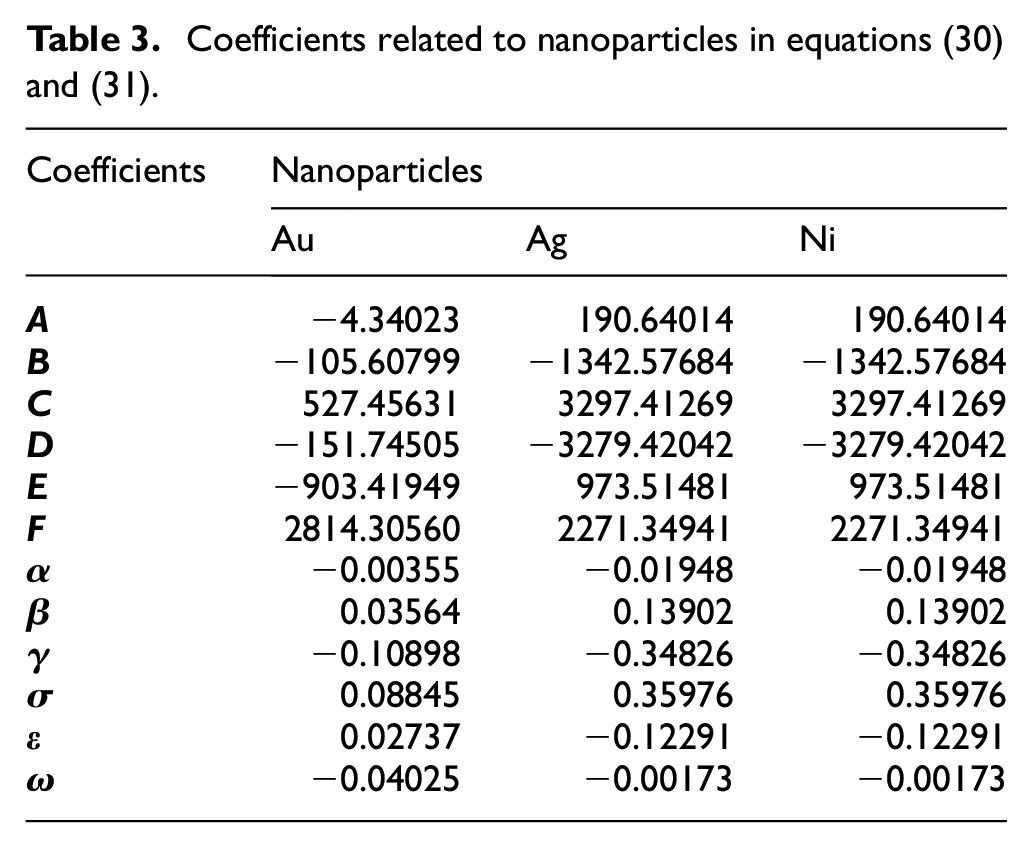
From empirical equation (29), one may determine the enthalpy for nanofluids. Experimental relations 30 and 31 are also used to generate the coefficients C1 and C2, which are only affected by the volume concentration percentage. It is important to observe that the coefficients in these two relationships (C1 and C2) for each nanofluid are indicated in Table 3 as having distinct values.



Coefficients related to nanoparticles in equations (30) and (31).
Artificial neural network
One of the areas of AI that is inspired by how the human brain recognizes spectacles is artificial neural networks. The neurons are assembled in various layers in the multilayer of artificial neural networks. The initial layer, named the input layer, accepts input data and sends the input impulses into the subsequent layer depending on the strength of connections with neurons in other layers. Neuron weight refers to the strength of each neuron’s connections with other neurons, and it determines how many neurons are present in each layer as well as how many neurons were present in the layer before it. Additionally, neural networks have intermediate and outer layers in their input layer. It should be noted that each layer’s number of neurons and intermediate layers might vary. Still, it’s crucial be note through the supplementation of an extra neuron to the middle layer, although it reduces the mistake, increases. It will be time for calculations. Therefore, a reasonable proportion should be achieved in selecting the number of neurons. 51
Many essential advances have been achieved with simple and cheap computer simulations. After an initial period of enthusiasm and activity in this field, a period of reluctance and notoriety has passed. During this period, when investment and professional support for this issue were at their lowest level, significant advances were made concerning the limited research in this field. Neural networks, or artificial neural networks, are cutting-edge computer systems and methodologies for machine learning, knowledge representation, and utilizing the acquired knowledge to forecast system behavior in complex systems. 52 The basis for this theory is the way that the neurobiological system analyzes facts and information to learn and generate knowledge. This concept’s crucial component is the creation of innovative structures for the information processing system. In order to solve problems and communicate information through synapses (electromagnetic communication), this system uses a variety of heterogeneous processing components known as neurons. When cells are damaged in these networks, other cells can recoup for the lack and contribute to their reconstruction. The ability to learn exists in these networks. For instance, by causing irritation to touch nerve cells, adopt new strategies for learning not to approach a hot object, and with the help of this algorithm, the system learns to repair its mistake. The adaptive learning that occurs in these systems. That is, through the use of the example, the synaptic weights change such that the system produces the correct response with new inputs. 53
Given that artificial intelligence (AI) is widely recognized as a practical tool for modeling, this research employs AI methods instead of conventional numerical solution techniques. As there are various machine learning approaches available, the neural network method has proven to be effective for modeling nanofluids in heat exchangers, based on the conducted investigations. The presence of nanofluids in heat exchangers introduces numerous key parameters for calculating the fluid’s heat transfer coefficient, making the computations challenging and complex using numerical methods. This complexity often leads to a decrease in accuracy and precision in numerical solutions. Therefore, this study focuses on exploring and modeling the heat transfer coefficient using neural networks under different conditions, addressing the limitations of traditional numerical approaches.
Statistical analysis
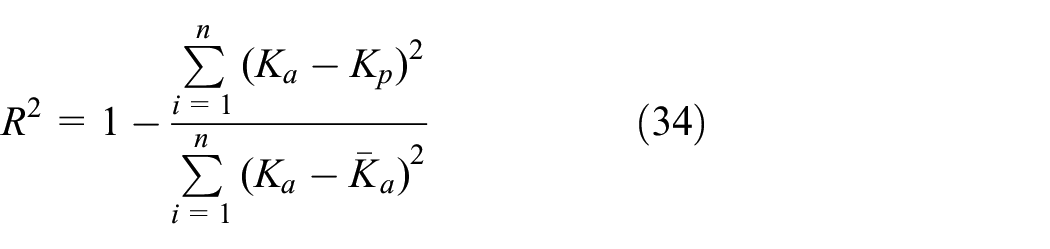
To assess the accuracy and activity of the model and network, in the current literature, statistical measures including root mean square error, absolute average error percentage, and detection coefficient are utilized. The percentage of absolute mean error and the root mean square error are appropriate measures of the model’s correctness; the closer these two measures are to zero, the more accurate the model is. The detection coefficient shows how likely a correlation is. The closer this value is to 100 between the two future categories of data, the better the model performs. The following are some examples of the relationships used to calculate the indices54–58:


Results and discussion
In research, since the obtained results include a vital part of the work, and to get these results, numerical analyses obtained from coding and sometimes simulations are used, it is necessary to prove the correctness of the obtained results. The performed analyses should be validated and verified. This research uses coding to model the spiral coil tube and shell heat exchanger and obtain thermal results. In this way, verification is necessary to prove the correctness of the code written for both single-phase and cold boiling. In this process, using a reproducibility process, the unknowns are calculated by solving the five equations of five unknowns, which include energy equations and energy balance. According to Garten’s theory of the hot fluid for the area between the tube and the shell, the solution’s general operation is that during a heat transfer, heat energy is first exchanged between the hot fluid and the shell’s outer surface. The heat that the pipe has absorbed then travels through the pipe’s wall through a conductive heat flux before being transmitted to the cold fluid through the heat flux to heat it.
The existence of single-phase and cold boiling fluid flow components, whose nature depends on the temperature of the fluid and the temperature of the internal surface of the fluid, is a key factor in discussions of heat transfer in fluids. This causes the fluid to be exposed to the incoming heat flux from the pipe wall and causes its temperature to rise as a result when it enters the pipe. Additionally, when the liquid flows, the pipe’s interior surface heats up. The liquid is actually in the area of single phases. Until the inner surface of the tube reaches the fluid’s saturation temperature, this section is repeated. The single-phase part is completed, and the cold boiling segment starts as soon as the temperature of the inner surface of the tube reaches the saturation temperature of the fluid. The fluid’s temperature rises in this portion, as does the inside surface of the pipe. The cycle repeats until the fluid reaches its saturation temperature. The fluid now enters and leaves the heat exchanger, signaling the end of the cold boiling portion. Drumming is applied to the building, which, in this construction, produces saturated steam. In this study, MATLAB a2023 software has been utilized for both numerical modeling and artificial neural network modeling.
Validation of the model
Regarding the validity and validation of the analysis done in this treatise, an experimental and numerical study was conducted by various researchers, Salimpour, 59 Etghani et al., 13 and Jamshidi et al. 60 were used. Since the geometry and boundary conditions considered for each of the mentioned researches are the same, the calculations were done for the base fluid, which is water. Therefore, the results of their review and comparison can be cited.
In this validation, the result obtained for the Nusselt number against the Dean number is used. In Figure 2, the result of the verification can be seen.
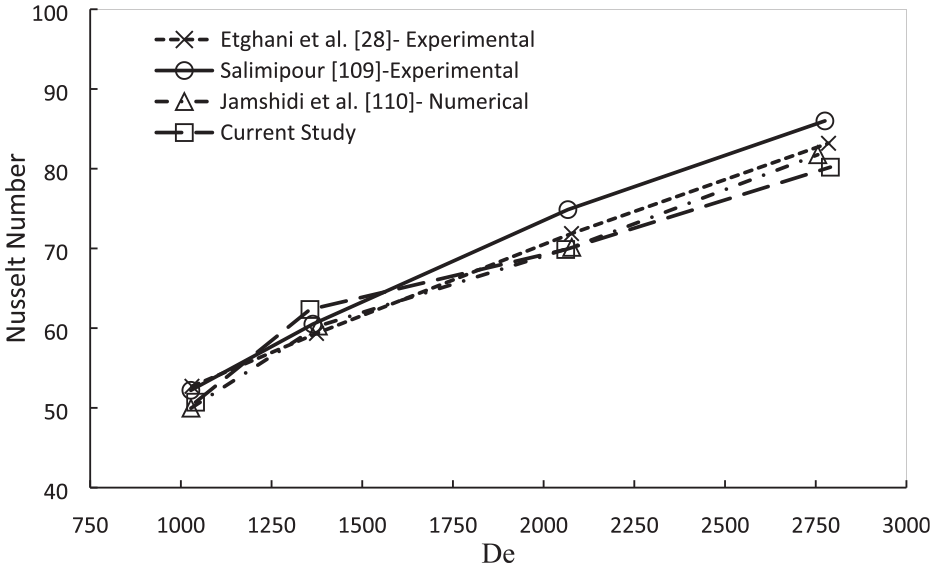
Comparison of experimental and numerical results for base fluid (water).
As presented in Figure 2, there is a good agreement between the experimental results made by other researchers and the modeling results of the current research. Therefore, after this validation, it is possible to continue investigating the effect of different nanoparticles in the existing thermal system.
Investigating the effect of weight percentage and type of nanoparticles
As mentioned before, a coding operation is used to calculate the thermal parameters in this numerical analysis. The calculations were done, and the written code was based on linear numerical calculations with the approach of the repeatability method, in which by solving the device of five equations and five unknowns, the desired unknowns are obtained. In this treatise, the effect of two critical factors, changing the inner diameter of the tube and adding nanoparticles of nickel, silver, and gold to the base fluid, has been investigated on the thermal characteristics (Figure 3). The obtained results show an improvement in thermal quality and converter efficiency.
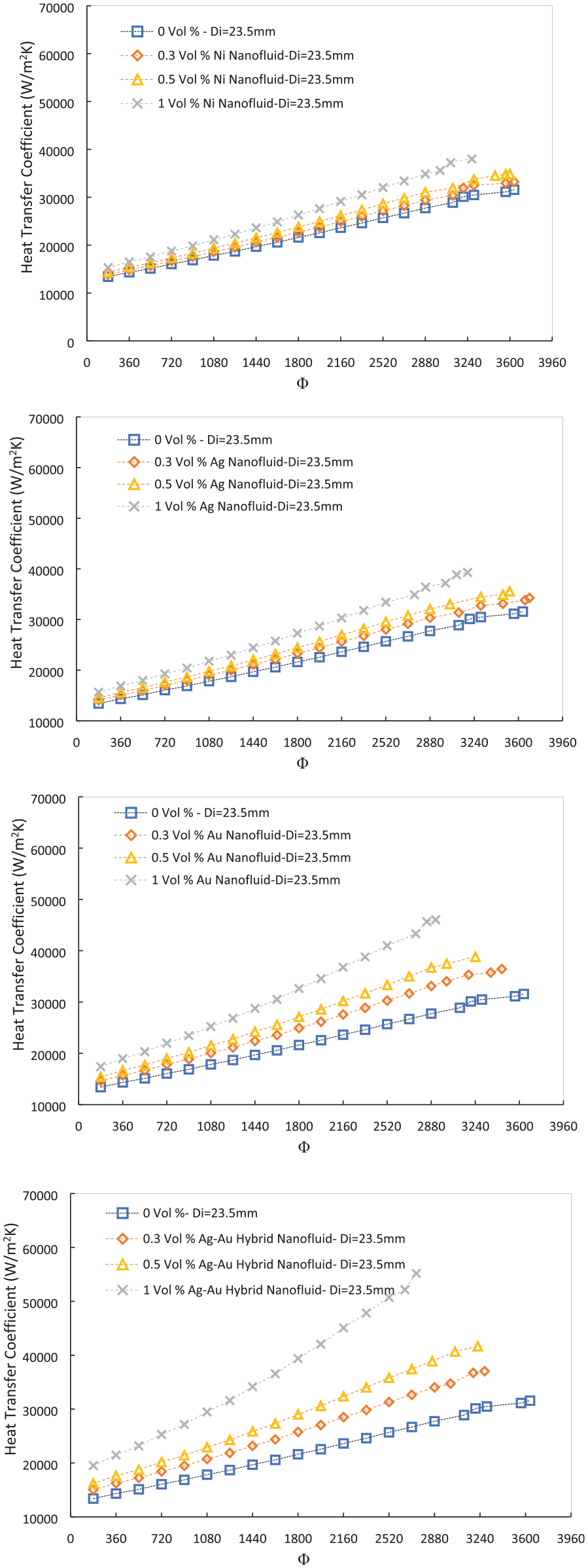
Investigating the role of volume fraction and nanoparticle type on the heat transfer coefficient of 23.5 mm diameter.
The increase in the volume percentage of nanoparticles in each nanomaterial, as demonstrated by the data in Figure 3, causes a sizable increase in the heat conveyance coefficient in the spiral coil under investigation. On the other hand, it may be claimed that the desired coil length can be decreased by adding nanoparticles to the base fluid, which is pure water. This means the process is completed in less time than the base fluid limit. As stated in the previous chapters, optimal coil design is one of the most critical methods in designing systems. Therefore, the selection of this type of nanoparticle according to the volume fraction of 1% can improve the size of the coil.
On the other hand, the results show that the hybrid nanofluid containing silver and gold with a ratio of 50% has an upper heat transfer coefficient in comparison to other nanoparticles so that the maximum transfer coefficient for the hybrid nanofluid is equal to (W/mK) 55,164. This value for nickel, silver, and gold nanoparticles is 37,999, 39,283, and 46,039 (W/mK), respectively. In general, the increase in heat transfer coefficient in hybrid nanofluid was about 145% in comparison to nickel, 140% to silver, and 119% to gold, which is essential in thermal systems. In the following, the role of the weight percentage of silver nanoparticles, gold and hybrid nanofluid that includes silver and gold in diameters of 13.5 and 17.5 mm will be investigated in Figures 4 and 5. The findings revealed that the heat conveyance coefficient will surge significantly following the surge in the weight percentage of nanoparticles.

Investigating the role of volume fraction and nanoparticle type on the heat transfer coefficient of 17.5 mm diameter.

Investigating the role of volume fraction and nanoparticle type on the heat transfer coefficient of 13.5 mm diameter.
In this section, the effect of the weight percentage of different nanoparticles as well as the type of nanoparticle on the Nusselt number distribution in the coil will be investigated. The results of these cases are shown in Figure 6.

Investigating the role of volume fraction and nanoparticle type on the Nusselt number of 23.5 mm diameter.
Figure 6’s findings reveal that increasing the volume fraction of nanoparticles in each nanomaterial causes the Nusselt number in the investigated spiral coil to significantly increase. The Nusselt number of nanofluid containing gold and silver hybrid nanoparticles has seen more changes than the volume fraction changes. As shown in Figure 6, fewer changes involved nickel nanoparticles. It is also worth mentioning that with the increase in the weight percentage of nanofluids from 0.5% to 0.1%, there is a big difference in the Nusselt number compared to the rise in the weight percentage from 0.3% to 0.5%.
Artificial neural network modeling
Artificial networks typically behave like functions, absorbing inputs based on the number of neurons in the input layer and producing outputs based on the number of neurons in the outer layer. Phi, Reynolds number, and volume percent of the gold/silver hybrid nanoparticle, which is used in the first layer, are the input parameters in this work. The heat conduction coefficient and the friction coefficient are regarded as the output of the network in the final layer based on the weights assigned to neurons as well as the variety of neurons in the middle levels.
The trial-and-error method is used at this point, and the number of neurons, layers, and network functions is altered each time. The accuracy and precision of the model, as well as the outcomes of statistical indicators, are shown in Table 4.
The results of model accuracy measurement indicators in the training, validation, and network testing section according to different conditions.
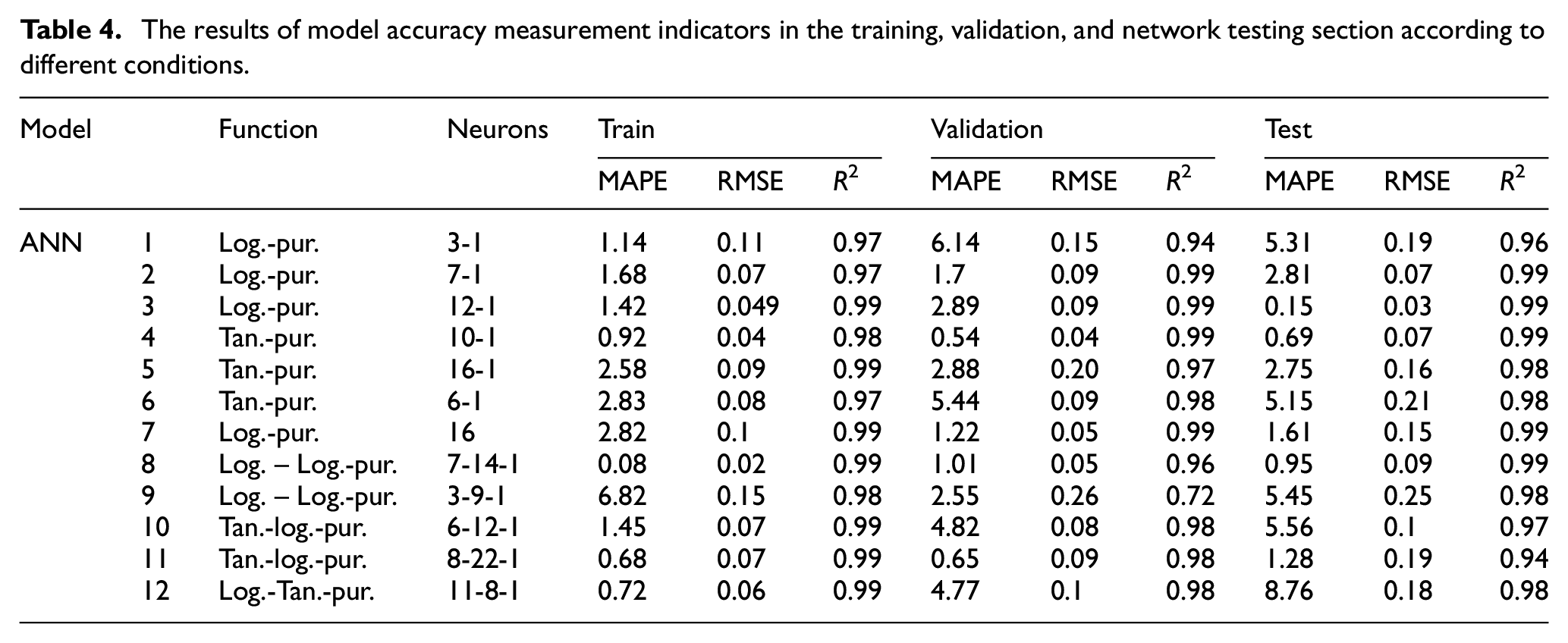
The results presented in Table 4 were analyzed to identify the optimal model, characterized by enhanced precision and accuracy. The selected optimal model employs specific activation functions in different layers of the neural network. The purelin activation function is utilized in the output layer, while the losgig function is applied in both the first and second hidden layers. The optimal configuration also involves determining the number of neurons in each layer. In this case, the first layer is comprised of seven neurons, while the second layer consists of 14 neurons. The choice of neuron numbers is based on the increasing complexity of the model, allowing for more nuanced representation of the problem. Notably, as each modeling stage is concerned with a single parameter, such as the thermal conductivity coefficient or friction coefficient, the final layer of the neural network is structured to have one neuron dedicated to each respective output parameter.
The results of the neural network modeling will be compared to the numerical solution. Figures 7 and 8 provide a visualization of the accuracy of the neural network modeling results. Upon analyzing the modeling results depicted in Figure 7, it is evident that there is significant agreement between the neural network predictions and the actual values. To evaluate the accuracy and reliability of the model, statistical indicators are utilized. Specifically, the absolute average error index is considered, and if this index is less than 10%, the model is deemed to have high accuracy and reliability. Moreover, a value approaching zero for this error index signifies a higher level of accuracy in the model’s predictions.
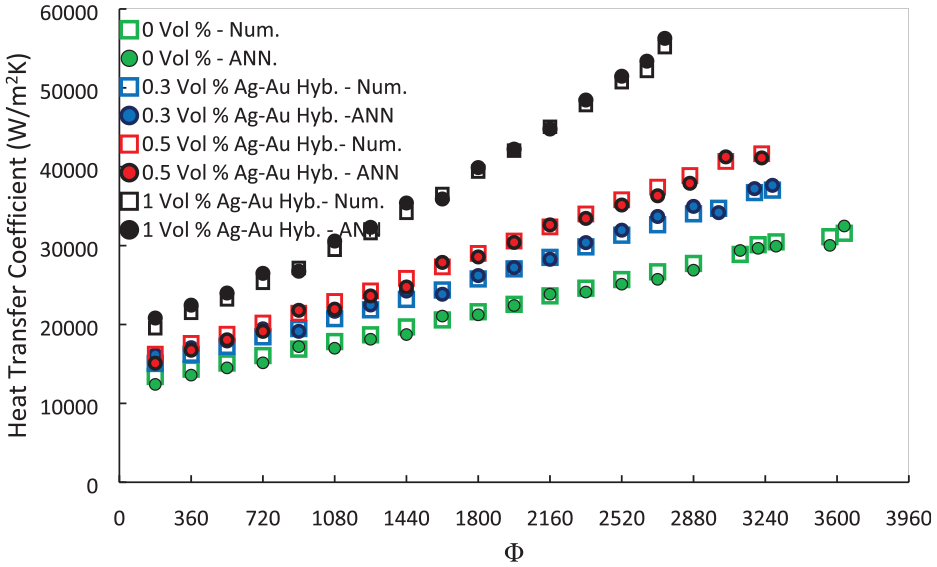
Comparison of heat transfer coefficient modeling results and artificial neural network prediction value.

Correlation diagram between heat transfer coefficient measurement results and artificial neural network model.
In order to thoroughly assess the performance of the neural network and the modeling results, it is crucial to analyze the correlation between the modeled effects and the predictions made by artificial intelligence. Figure 8 provides insights into the relationship between the obtained results from the optimal model estimation and the modeled values. As depicted in the figure, there is a strong correlation coefficient of 0.99 between the experimental results and the predictions. The favorable prediction results can be attributed to the high level of association between the investigated results and the model’s predictions, as indicated by the close proximity of the correlation coefficient to one.
Conclusion
Since the criterion for improving heat transfer in exchangers is to upsurge the displacement heat conveyance coefficient and subsequently increase the functional effectiveness of the exchanger, in the research conducted in this treatise, to sum up, what we achieved we found that by the addition of nanoparticles to the base fluid, which in this research is water was pure, it causes the thermal conductivity coefficient of nanofluid to uplift as a result of the presence of solid particles, and also the Nusselt number increases with the upsurge in a volume percentage of nanoparticles.
Also, because the violation of the allowed range of volume fraction causes the opposite effect in increasing the friction loss and decreasing the efficiency, the use of higher nanoparticle concentrations causes better conversion optimization. It should be mentioned that in the volume fraction under discussion, the value of 1%, their maximum value, creates better conditions. In contrast, it was discovered by analyzing the hydrodynamic and thermal parameters that water-based fluids experience less frictional loss than other nanofluids do. Additionally, it was discovered that the heat transfer coefficient changes more drastically as the volume fraction of gold and silver hybrid nanoparticles in water increases. As a result, its increase will be favorable for our purpose in this research. The obtained results show that the water/silver/gold hybrid nanofluid can play a better role in the discussed converter. Nowadays, according to the ever-increasing progress of computers, artificial intelligence modeling methods can be used with appropriate accuracy. As shown in this research, the artificial neural network method, as one of the branches of the burning machine and artificial intelligence, can model with high accuracy.
In order to further enhance the research, the following aspects can be explored:
Investigating the Role of Hidden Layer Number and Neurons: A thorough investigation into the impact of the number of hidden layers and neurons on the model’s accuracy is necessary. This analysis will help determine the optimal configuration for achieving the highest accuracy. Additionally, developing a new stable formula for calculating the appropriate number of hidden layers and neurons based on the specific problem and dataset characteristics would provide valuable insights.
Comparative Study of Accuracy and Validation: Conducting a comparative study to evaluate the accuracy and validation of machine learning methods, such as artificial neural networks, with another modeling method, such as Computational Fluid Dynamics (CFD). This analysis will provide a comprehensive understanding of the strengths and weaknesses of each method and their suitability for different applications. It will also shed light on the accuracy and reliability of machine learning approaches compared to traditional modeling techniques.
Combination of Population-based Metaheuristic Algorithms: Exploring the combination of population-based metaheuristic algorithms, including genetic algorithms, particle swarm optimization algorithms, imperialist competitive algorithms, bee colony algorithms, firefly algorithms, artificial immune system algorithms, ant colony optimization algorithms, and harmony search algorithms, with artificial neural networks. This integration aims to optimize the training process of the neural network by leveraging the search and optimization capabilities of these metaheuristic algorithms. This combined approach can lead to improved model performance and accuracy.
Combination of Single-Solution Metaheuristic Algorithms: Investigating the combination of single-solution metaheuristic algorithms, such as tabu search, simulated annealing, GRASP search, guided local search, variable neighborhood search, and iterated local search, with an artificial neural network for optimizing the training process. This integration can enhance the search and optimization capabilities of the neural network, leading to improved model performance and accuracy.
By exploring these research directions, a deeper understanding of the role of hidden layers and neurons, conducting comparative analyses, and leveraging metaheuristic algorithms for optimizing the training process of artificial neural networks can be achieved, thereby advancing the field of modeling and optimization.
Footnotes
Appendix
Handling Editor: Chenhui Liang
Declaration of conflicting interests
The author(s) declared no potential conflicts of interest with respect to the research, authorship, and/or publication of this article.
Funding
The author(s) received no financial support for the research, authorship, and/or publication of this article.
