




Abstract
In shallow waters, the Wu-Zhang (WZ) system describes the (1+1)-dimensional dispersive long wave in two horizontal directions, which is important for the engineering community. This paper presents proofs for various theorems and shows that the natural decomposition method (NDM) solves systems of linear and nonlinear ordinary and partial differential equations under proper initial conditions, such as the Wu-Zhang system. We use a combination of two methods, namely the natural transform method to deal with the linear terms and the Adomian decomposition method to deal with the nonlinear terms. Several examples of linear and nonlinear systems (ODEs and PDEs) are given, including the Wu-Zhang (WZ) system. The present approach, which has numerous applications in the science and engineering fields, is a great alternative to the many existing methods for solving systems of differential equations. It also holds great promise for additional real-world applications.
Keywords
Introduction
Due to its numerous applications in physics, chemistry, mechanics, electricity, biology, economics, control theory, signal and image processing, biophysics, blood flow phenomena, and aerodynamics, solving nonlinear systems of differential equations has been the subject of extensive research for decades, see (Dundar et al. 1 ). Numerous scholars have utilized a variety of diverse ways to obtain approximations of this model’s solutions, but in our study, we use two famous techniques (Adomian decomposition, natural transform), which have never been used before on the Wu-Zhang system of nonlinear ordinary and partial differential equations (Wazwaz, 2 Adomian, 3 Adomian 4 ). There are various marine activities and biochemical processes that take place above and below the ocean’s surface. Therefore, the purpose of our work is to apply a new alternative and powerful schemes to the WZ system in order to develop exact solutions of the problem in discussion that would be useful for those processes and activities, as well as to add more physical qualities to the model, (see Krishnan 5 ). The generalized KdV equation is a crucial model for a number of physical phenomena, such as shallow-water waves close to the critical value of surface tension and waves in a nonlinear LC circuit with mutual inductance between neighboring inductors. An LC circuit is a type of electric circuit that consists of a capacitor and an inductor coupled together. It is also known as a tuned circuit, tank circuit, or resonant circuit. Because there is no universal solution for this class of models, even if the fifth order KdV equation’s exact solution was discovered for the unique case of solitary waves, (see Qasim and Ali, 6 Miah et al. 7 ). One of the crucial characteristics of many models is the dispersion of water waves. The frequency dispersion is described by this feature. In another sense, it refers to the movement of waves with various wave lengths and phase speeds.
One of the nonlinear partial differential equations and the Wu-Zhang system are discussed in this study. In two horizontal orientations and on shallow waters, this system describes (1 + 1)-dimensional dispersive long waves, (see Miah et al. 7 ). Mathematical models are commonly used by physicists, engineers, computer scientists, and mathematicians. The use of statistical models is particularly useful in the natural sciences and engineering, as well as in the social sciences. As a result of that, obtaining accurate or approximate solutions to different types of equations in physics and applied mathematics is still a significant issue. Various powerful mathematical methods, such as the Adomian decomposition method, the natural decomposition method (Rawashdeh, 8 Rawashdeh and Maitama, 9 Obeidat and Bentil, 10 Obeidat and Bentil, 11 Obeidat and Bentil 12 ), the reduced differential transform method (RDTM) (Rawashdeh, 13 Rawashdeh, 14 Rawashdeh and Obeidat, 15 Rawashdeh 16 ), the natural transform method (Belgacem and Silambarasan, 17 Hussain and Belgacern, 18 Khan and Khan 19 ), The Summudu transform method, (Belgacem et al. 20 ) Laplace decomposition method (Spiegel 21 ) are still useful tools for solving these equations. By using the natural Adomian decomposition method, we don’t have to worry about discretization, linearization, or thinking of any restrictive assumptions like with differential transform method and Homotopy perturbation method. The NADM algorithm greatly reduces the size of computational work and avoids round-off errors. The current mechanism consists of combining the natural transformation with the Adomian decomposition. These methods are both new to this century, and have been used in different ways for different purposes. In addition, Khan et al. (2016) found that the use of social media has a significant impact on our social lives. Some properties and applications of natural transformations are given in Hussain and Belgacern 18 under the name N-transform. In addition, researchers solved the unsteady fluid flow problem over a plane wall, and they showed how it is related to the Laplace and Sumudu transforms. Elementary properties such as first shift, change of scale, transform of derivatives (first and second) and integrals of N-(natural) can be found very important in mathematics.
The current research work is presented as follows: In section two, we introduce the basic concepts of the natural transformation including some properties and definitions. Also, we give proofs for important theorems of the natural transform, which can be used later to give exact solutions to well-known systems of ODEs and PDEs in section three. Section four is devoted to solve some applications of linear and nonlinear systems of both ODEs and PDEs using the proposed method. Finally, we give the conclusion of our work in section five.
Natural Adomian decomposition method
This section provides an overview of the natural transform’s definitions, literature, and relationships to the Sumudu and Laplace transformations. The idea of the natural transform method (NTM), established by many researchers, is an integral operator that takes a function and converts it (by integration) into another function, see (Belgacem and Silambarasan,
17
Hussain and Belgacern,
18
Khan and Khan
19
).Unlike when utilizing the differential transform technique and Homotopy Perturbation Method (HPM), we do not need to linearize, discretize, or make any restrictive assumptions while using the natural Adomian decomposition method (NADM). The size of the computing task is then significantly reduced by the NADM computational approach, and round-off error is avoided. We suggest that readers read up on the history of the general integral transform, the Laplace, Sumudu, and natural transform methods, as well as the method’s associated properties for any particular function
Note that for any

The above is convergent if
Then, the natural transformation (N-transformation) is given as:

where

where,
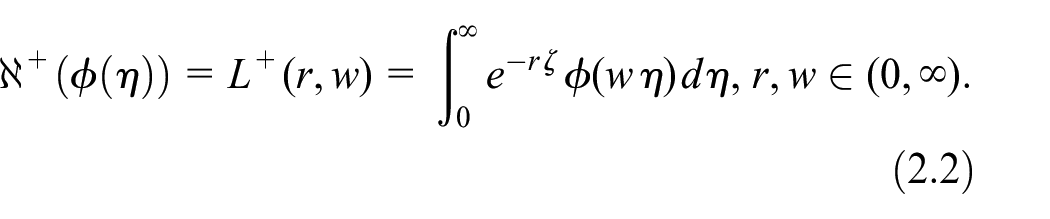
Moreover,

Thus, equation (2.2) is the natural transformation and equation (2.3) is the inverse natural transformation of
Properties of interest:
The following are a few of the fundamental properties of N-transformation, see Rawashdeh 16 :
If

Adomian polynomials evaluations
In this section, we provide methodical algebraic computations of the Adomian polynomials. For many years, Taylor series based on Adomian polynomials were utilized to readily break down complex nonlinear expressions into smaller, more integrable terms. The following decomposition series can be used to represent the unknown linear function

Here the terms

and the

Now, the general formula in equation (2.6) can easily be simplified as follows:
Let

The rest of these components can be easily accomplished in the same way. The above polynomials in equation (2.7) give two important observations. First,
Second, by substituting equation (2.7) into equation (2.5), we get:

One may notice it because the most recent expansion provides the Taylor series as a function rather than a traditional point. The Adomian polynomials provided in equation (2.6) thus unequivocally demonstrate that for any term of the sum of the subscripts of the components. Note that there are several algorithms available for computing the Adomian polynomials of the nonlinear terms.
Natural transform theories derivation
Throughout this section, we will look at some fresh, detailed proofs for various natural transformation-related theorems. In addition, we shall use these theorems to find exact solutions to four systems of ODEs and PDEs, namely, the Wu-Zhang nonlinear systems of linear and nonlinear ordinary and partial differential equations under proper initial conditions.


Which implies:

Therefore,

Hence, the proof of Theorem 3.1 is now complete.


To do this, use the N-transform definition and then integrate by parts twice to get:

Which is equivalent to:

Thus,

Now, differentiate equation (3.3) we arrive at:

Using equation (3.2), and Leibniz rule, we have:

which is equivalent to:

Multiplying equation (3.4) by

However, from the definition of N-transformation, equation (3.5) becomes:

Hence, the proof of Theorem 3.2 is now complete.
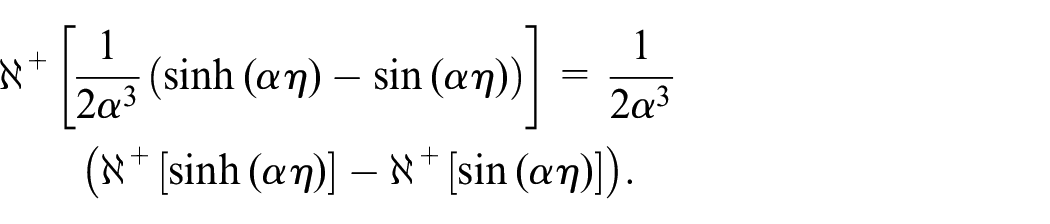
Theorem 3.3 Let


First, we show that:

and,

Thus,

Therefore,
Hence, the proof of Theorem 3.3 is now complete.


Hence, the proof of Theorem 3.4 is now complete.


Let
Then,

Therefore,

Hence, the proof of Theorem 3.5 is now complete.


We first notice that:

But using the N-transformation of

Differentiating equation (3.7) twice, we arrive at:

Multiplying by

Hence, the proof of Theorem 3.6 is now complete.
Systems of nonlinear ordinary differential equations
This section describes the natural decomposition method (NDM) algorithm for general linear and nonlinear nonhomogeneous systems of ODEs.
Describing the methodology of the NDM
Consider the general linear and nonlinear non-homogeneous system of ODEs shown below:

Along with I.C:

Where

Combine both equations (4.2) and (4.3) to arrive at:

Employing the inverse of the N-transformation for equation (4.4), one concludes:

Where
Suppose we have an infinite series of solutions of the form:

From equation (4.6), one can write equation (4.5) as:

where
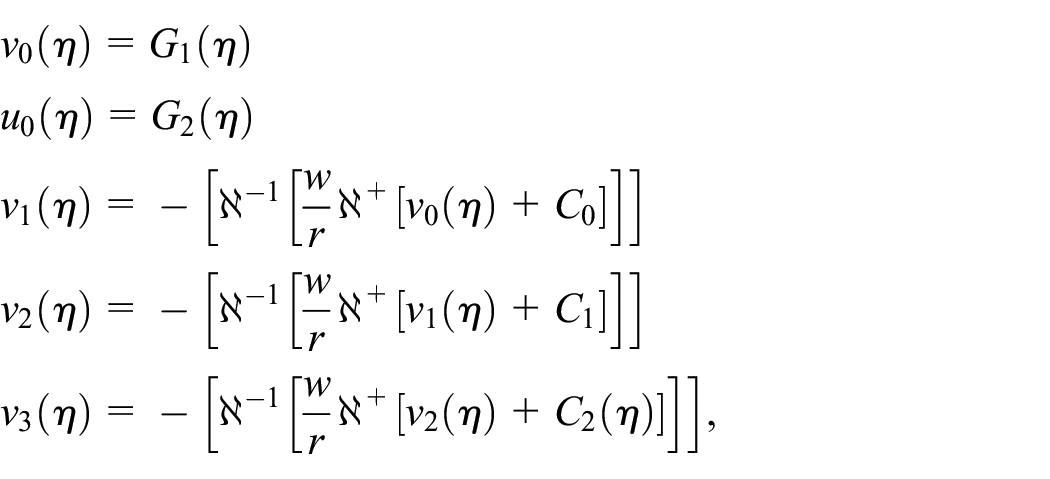
Looking at equation (4.7), one can easily build a recursive formula as follows:
and,

On the long run, one can arrive at a general formula as:

Finally, the intended solution can be written as:

Worked examples

With I.C:

Solution. Employ N-transformation to equation (4.10), to arrive at:

Substituting equation (4.11) into equation (12), to obtain:
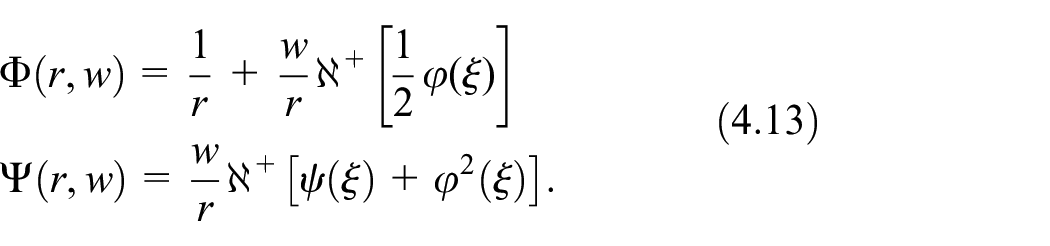
Suppose our intended solutions are given in the form:

Employ the inverse N-transformation of equation (4.13), one can arrive at:

Where
Analyzing equation (4.15), one can generate the recursive relation as follows:

Then, the general formula is given by:

From equation (4.17), one can evaluate the rest of the terms as:


Note that,

Then,

We proceed to arrive at the exact solution:

Hence, the intended solutions are given by:

The precise answer is in perfect agreement with the outcome produced by (ADM).
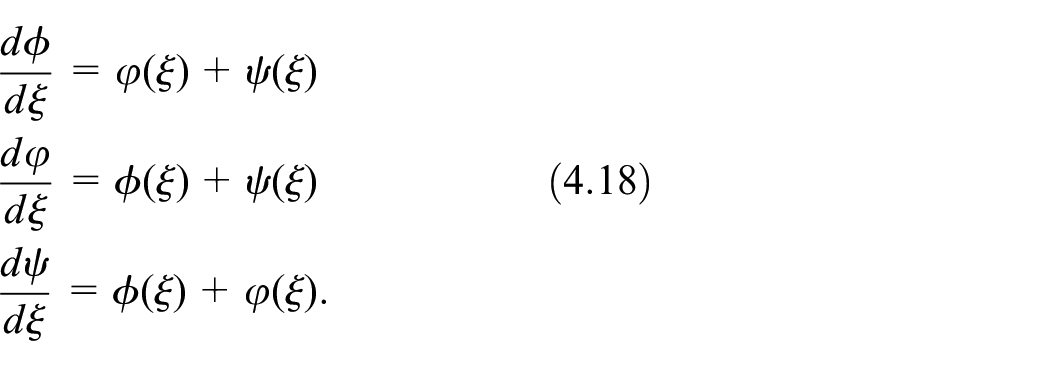
Along with the following conditions:

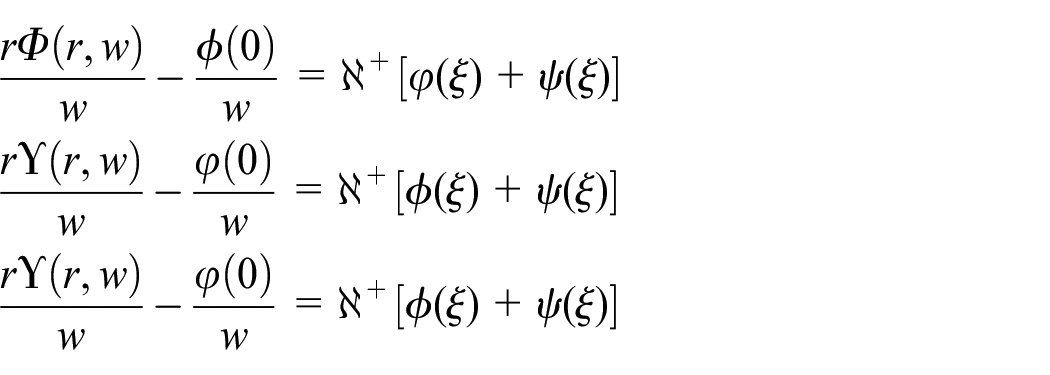
Substituting equation (4.19), we obtain:

Suppose our intended solutions are:

Taking the inverse N-transformation for equation (4.21), we arrive at:

Examining equation (4.22), one can come up with a formula like this:

and,
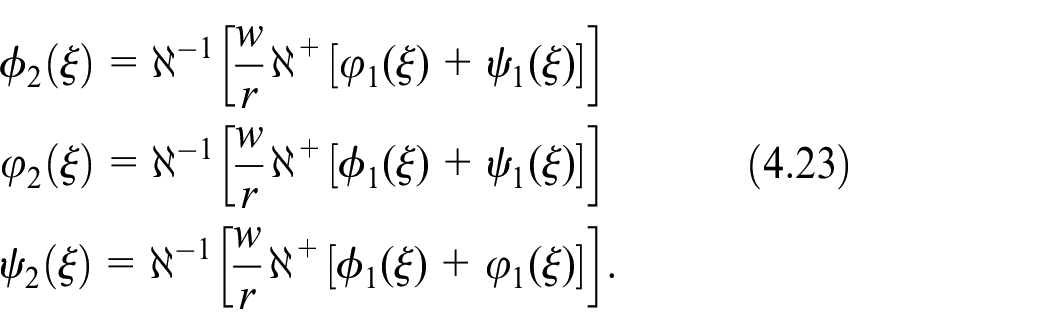
Thus, the general formulas can be written as follows:
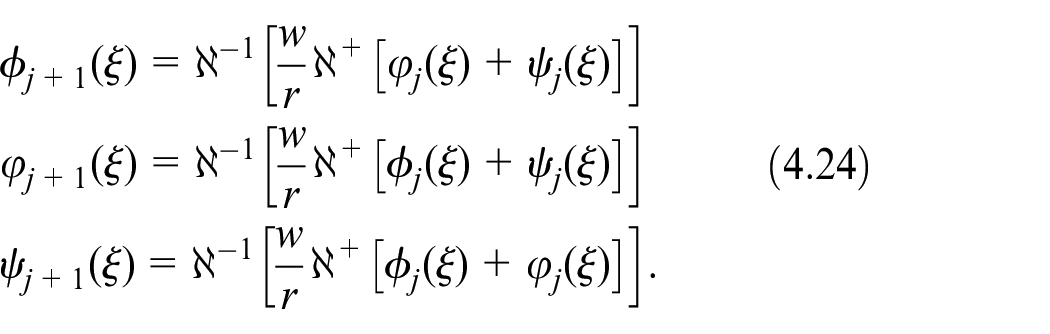
Using equation (4.24), we can evaluate the rest of the terms as follows:


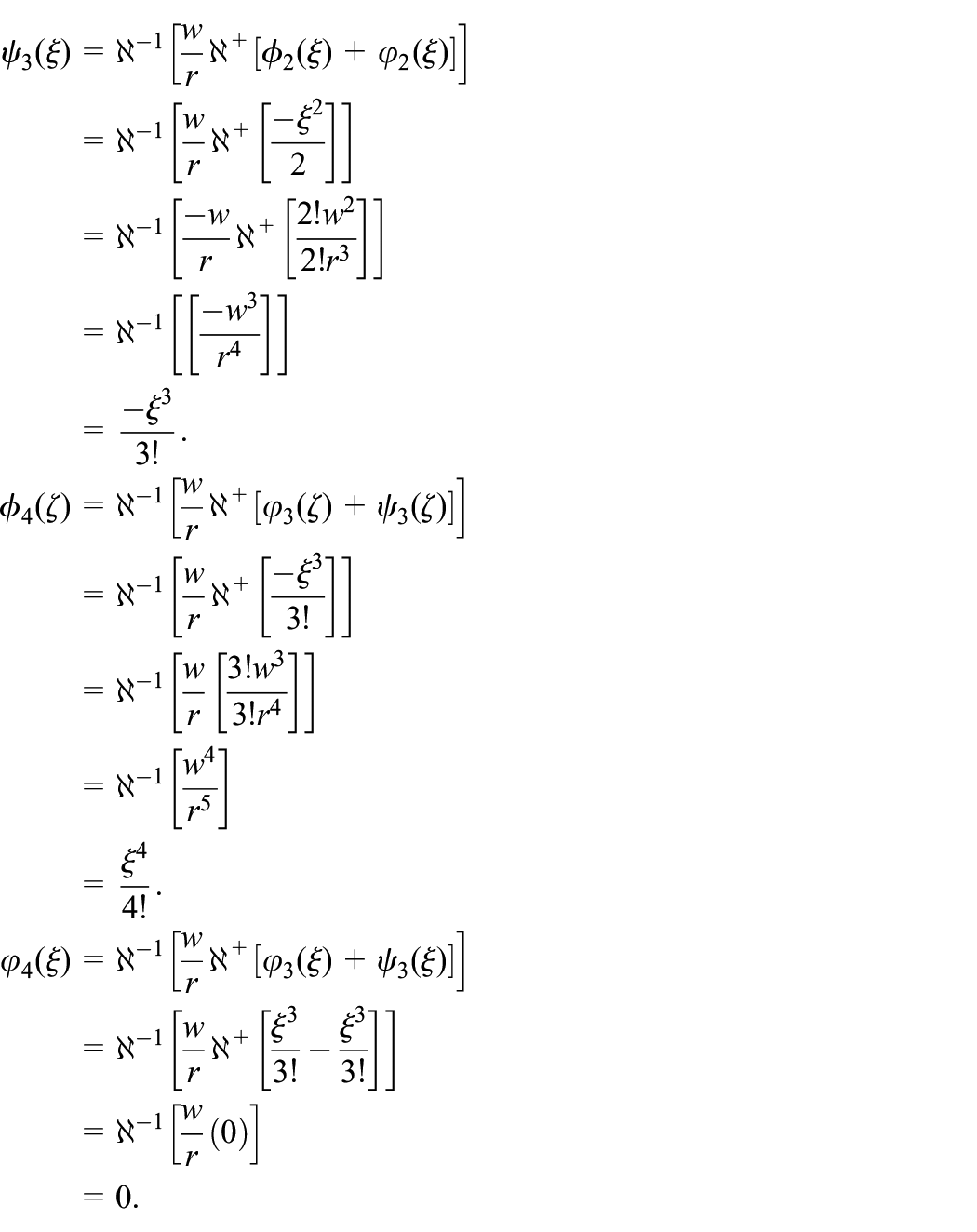
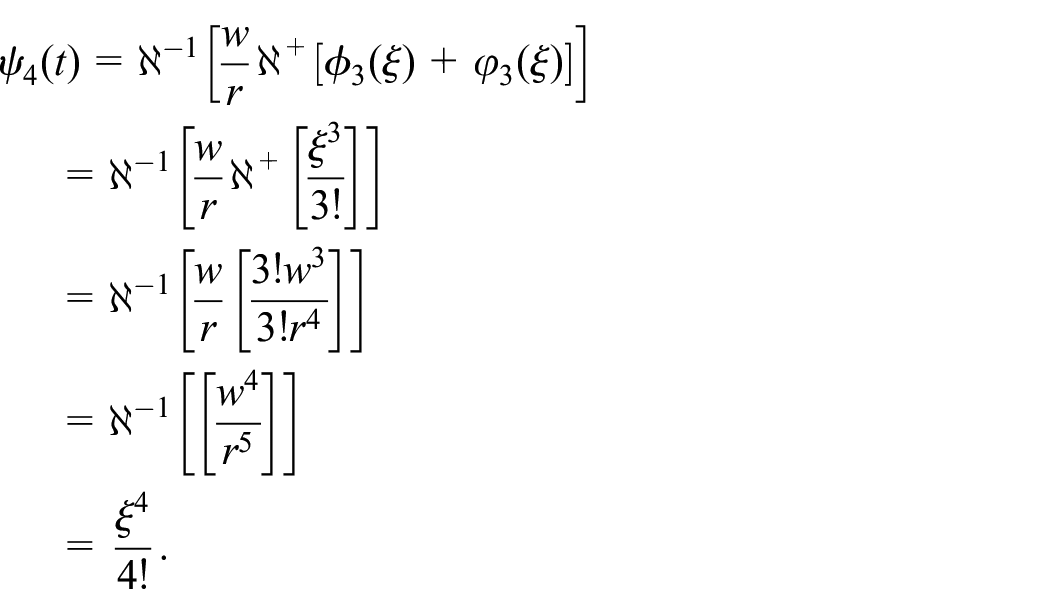
We proceed as usual to arrive at:
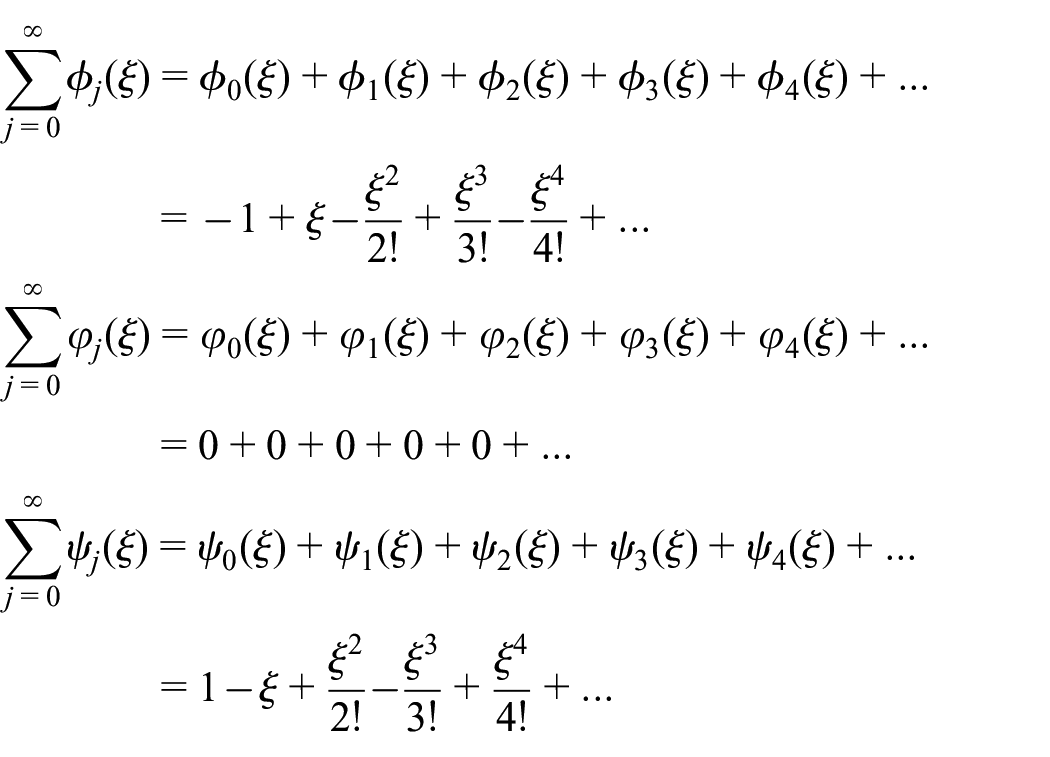
Hence, the intended solutions are:

The precise answer is in perfect agreement with the outcome produced by (ADM).

With conditions:


Thus,

Taking the inverse N-transformation, we arrive at:

Suppose we have the following solutions:
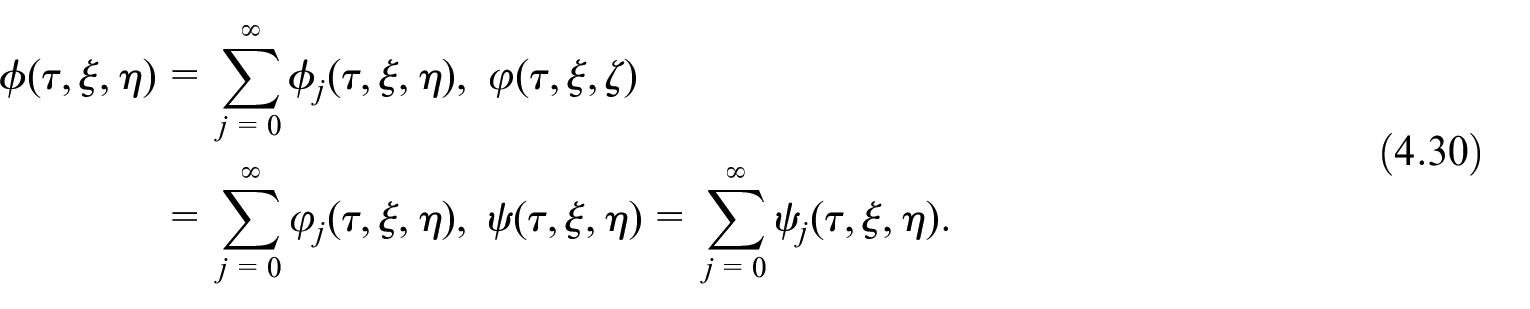

Where
Looking at the above equations, we can generate the recursive relation as follows:

and,

Then, our general formula is given by:
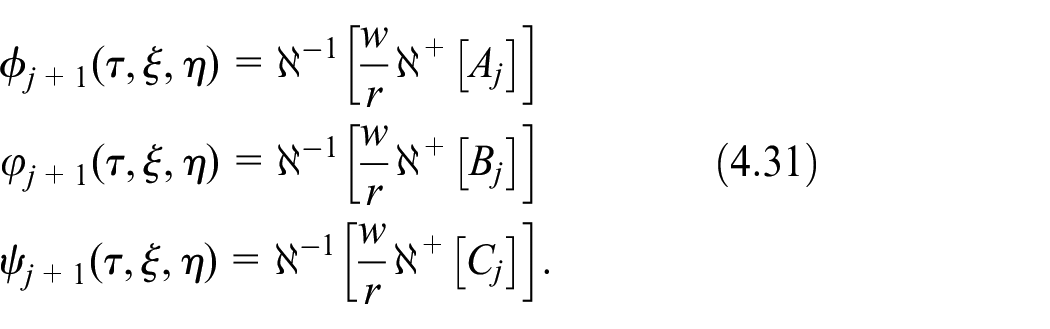
Using equation (4.31), we can evaluate the rest of the iterations as follows:


We proceed to arrive at the intended solutions to the form:

Hence, our intended solutions are as follows:

The precise answer is in perfect agreement with the outcome produced by (ADM).

Along with conditions:

Solution. Employing the N-transformation of equation (4.32), we obtain:

Thus,

Take the inverse N-transformation of equation (4.35) to arrive at:

Suppose we have solutions given in the following forms:

Substitute equation (4.37) into equation (4.36) to arrive at:

Here
Comparing both sides of the above formulas, one can conclude that:
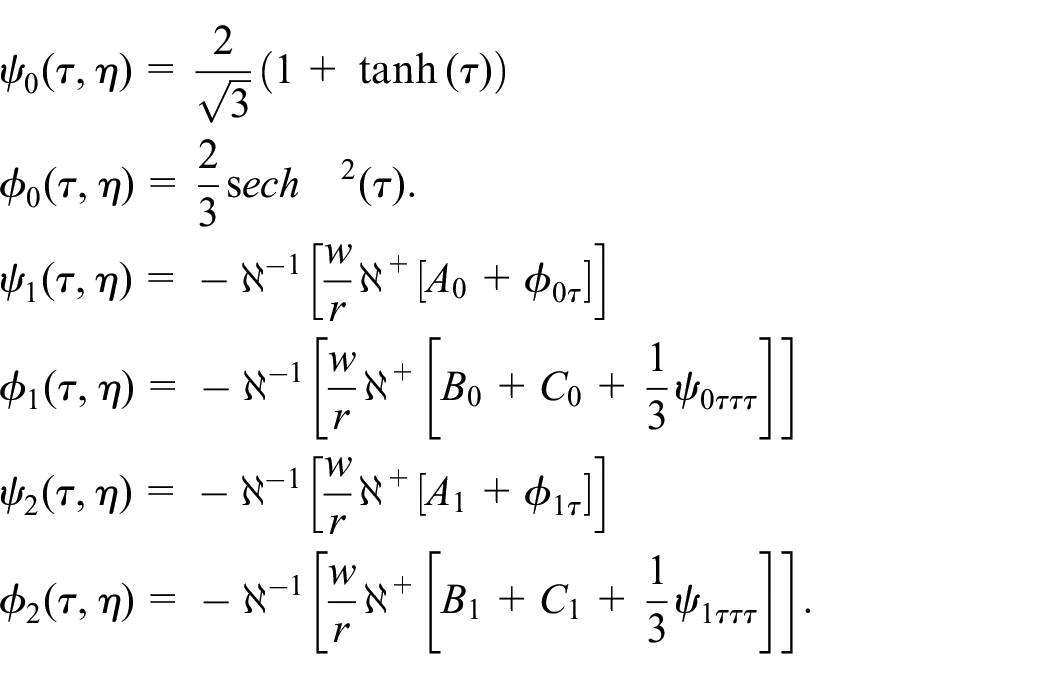
Then the general formula is of the form:

From equation (4.38), one can evaluate the rest of the terms as follows:
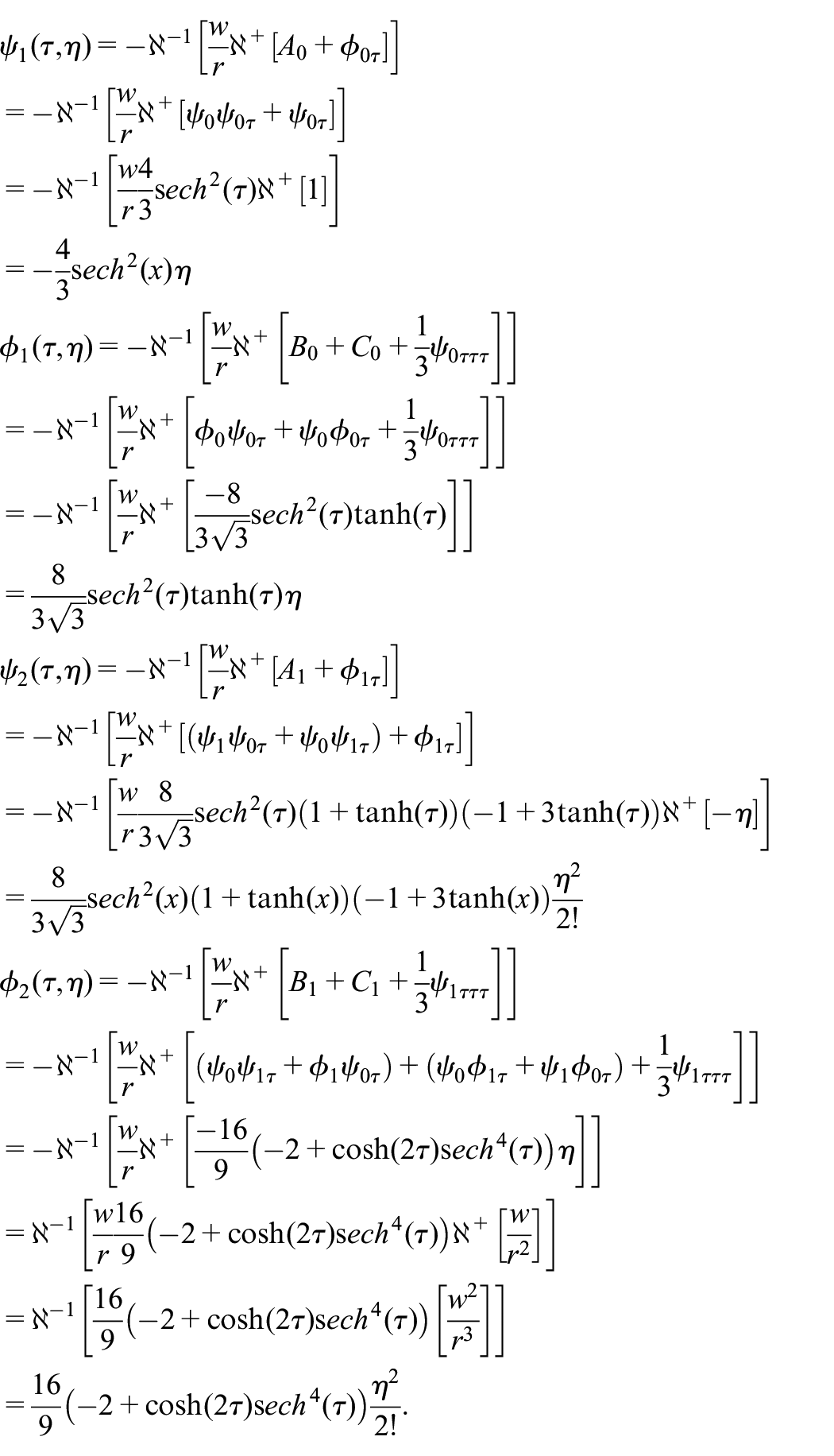
We proceed to arrive at the intended solutions presented in the form:


Thus, the intended solutions are given by:

The precise answer is in perfect agreement with the outcome produced by (ADM).
Conclusion
In the present research work, a novel approach for solving Wu-Zhang system of nonlinear ordinary and partial differential equations under proper initial conditions was developed by combining the natural transform method and the Adomian decomposition method. The outcomes demonstrate that the NDM’s rate of convergence is quicker than that of other approaches described in the literature. The NDM’s applicability in the engineering and applied scientific areas demonstrated its significance. Many researchers used various techniques on the Wu-Zhang system to find solitary wave solutions since the solitary wave is a localized wave that propagates without any change of shape or velocity. This kind of wave is stable against mutual collisions. Additionally, when we used the present scheme on a few numerical examples, its efficacy and applicability were proven. Based on the study provided above, the NDM can also be used to precisely solve additional non-linear ODEs and PDEs, including systems of ODEs and PDEs, which are often encountered in science and engineering.
Footnotes
Acknowledgements
The authors appreciate the constructive criticism and recommendations from the anonymous referees, which helped to raise the paper’s caliber.
Handling Editor: Chenhui Liang
Declaration of conflicting interests
The author(s) declared no potential conflicts of interest with respect to the research, authorship, and/or publication of this article.
Funding
The author(s) received no financial support for the research, authorship, and/or publication of this article.
Consent to participate
Participants are aware that they can contact the University of Vermont Ethics Officer if they have any concerns or complaints regarding the way in which the research is or has been conducted.

Availability of data and materials
Data sharing not applicable to this article as no data sets were generated or analyzed during the current study.