



Abstract
Some complex problems in science and engineering are modeled using fuzzy differential equations. Many fuzzy differential equations cannot be solved by using exact techniques because of the complexity of the problems mentioned. We utilize analytical techniques to solve a system of fuzzy differential equations because they are simple to use and frequently result in closed-form solutions. The Generalized Modified Adomian Decomposition Method is developed in this article to compute the analytical solution to the linear system of intuitionistic triangular fuzzy initial value problems. The starting values in this case are thought of as intuitionistic triangular fuzzy numbers. Engineering examples, such as the Brine Tanks Problem, are used to demonstrate the proposed approach and show how the series solution converges to the exact solution in closed form or in series. The corresponding graphs at different levels of uncertainty show the example’s numerical outcomes. The graphical representations further demonstrate the effectiveness and accuracy of the proposed method in comparison to Taylor’s approaches and the classical Decomposition method.
Keywords
Introduction
System of differential equations are used to model physical and technical problems in a wide range of disciplines, including visco elasticity, biology, physics, solid and fluid mechanics, and many more. In general, the parameters, variables and initial conditions within a model are considered as being defined exactly. In reality there are only vague, imprecise, or incomplete information about the variables and parameters available. This can result from errors in measurement, observation, or experimental data; application of different operating conditions; or maintenance induced errors. General differential equations or system of differential equations can be transformed into fuzzy differential or system of differential equations by employing a fuzzy environment for the parameters, variables, and initial conditions instead of crisp ones in order to overcome these uncertainties or lack of precision. Due to the limitations of fuzzy arithmetic, system of fuzzy differential equations may be difficult to solve precisely in practical applications, requiring the employment of reliable and effective semi-numerical techniques.
The concept of fuzzy set theory was firstly introduced by Zadeh 1 in 1965, as the extension of classical set theory. The concept of fuzzy set theory has been applied to various fields of science and engineering to handle vagueness and uncertainty. In 1987, Kandel and Byatt 2 introduced the fuzzy differential equations. The fuzzy differential equations have been applied in numerous daily life problems.3,4 Vasavi et al. 5 discussed fuzzy differential for cooling problems. Sindu Devi and Ganesan 6 used fuzzy differential equations in modeling electric circuit problems. Ahmad et al. 7 studied a mathematical method to find the solution of fuzzy integro differential equations. Sadeghi et al. 8 studied the system of fuzzy differential equations. Buckley et al. 9 find the solution of system of first order linear fuzzy differential equations by extension principle. Fard 10 introduced numerical technique for computing SFDE. Hashemi et al. 11 finds the series solution of SFDE. In 1986, Atanassov 12 introduced an extension of fuzzy set theory known as intuitionistic fuzzy set. The intuitionistic fuzzy set 13 not only provides the information about membership values but also the non-membership values respectively, and so that the sum of both values is less than 1. Intuitionistic fuzzy differential equations are being studied widely and being used in various fields of Physics, Chemistry, Biology as well as among other fields of science and engineering. Melliani and Chadli 14 obtained the approximate and numerical solutions of intuitionistic fuzzy differential equations with linear differential operators. Akin and Bayeğ 15 studied a method to find general solution of second order intuitionistic fuzzy differential equation and to solve the system of intuitionistic fuzzy differential equations with intuitionistic fuzzy initial values. Prasad Mondal and Kumar Roy 16 studied the generalized intuitionistic fuzzy Laplace transform method and to solve the system of differential equations with initial value as triangular intuitionistic fuzzy number. Saw et al. introduced a method for solving system of linear intuitionistic fuzzy equations.17–20
Adomian21,22 first introduced the semi-analytical Adomian and Rach Decomposition Method (ADM) in the 1980s. Differential equations, algebraic equations, and integral equations can all be effectively solved using this technique. The Generalized Modified Adomian Decomposition Method (GMADM), which can be used to solve a system of linear intuitionistic fuzzy differential equations whose initial values are generalized trapezoidal intuitionistic fuzzy numbers, is introduced in this article. Wazwaz 23 proposed this modification. He suggested the ADM to make a substantial improvement. Wazwaz divides the original function into two components in this modification, allocating one to the series’ first term and the other to its second. The series that is produced as a result of this alteration is distinct. The efficiency of this approach solely depends on the selection of the components into which the original function will be split.
First order system of fuzzy differential equations is important among all the fuzzy differential equations. There are many approaches to solve the SFDEs. Buckley et al. 9 solving the linear system of first order ordinary differential equations with fuzzy initial conditions by extension principle using triangular fuzzy number. The geometric approach is developed by Gasilova et al. 24 and series solution is developed by Hashemi et al. 11 Mondal and Roy 25 studied strong and weak solution of first order homogeneous intuitionistic fuzzy differential equation, subsequently, who studied system of differential equation in literature. 13 Melliani et al. 26 discussed the existence and uniqueness of the solution of the intuitionistic fuzzy differential equation and its system using the analytical technique. Therefore, finding an efficient and accurate algorithm for investigating FIE has been one the hot areas of research in recent time. To achieve these goals, various methods and procedures were used to handle integral equations, for details, see Sadeghi 8 and Nirmala and Pandian. 27
Motivated by the aforesaid work, in this article, we use a GMADM to solve the fuzzy system of intuitionistic differential equations.
The main contributions of this research work are summarized below.
• GMADM is used to solve a system of differential equations using initial conditions as a triangular intuitionistic fuzzy number.
• In order to solve a system of fuzzy intuitionistic differential equations that have not before been explored, the computational complexity of the suggested GMADM is discussed.
• Applications of system of intuitionistic fuzzy differential equations in mechanical engineering are taken into consideration in a intuitionistic fuzzy environment.
• Computational tools are used to evaluate the effectiveness and applicability of the suggested method.
This article is organized as follows: We went over some important concepts in section 2 that will be used in the sections following. The proposal’s Section 3 contains our suggested procedure. Applications in section 4 have demonstrated the efficiency of this method. Section 5, concludes the paper.
Preliminaries
In this section, the fundamental definitions of fuzzy set and intuitionistic fuzzy set 28 are presented.

where

defines the grade of membership or simply called membership function.

where

for all

Intuitionistic fuzzy set

where

defines the grade of membership and grade of non-membership respectively, of the element

where

for all
Triangular intuitionistic fuzzy number (TIFNs) is geometrically presented in Figure 1.

Triangular intuitionistic fuzzy number.
Figure 1: Shows membership and non-membership function of triangular intuitionistic fuzzy number.

for all

• Normal intuitionistic fuzzy set.
• Convex intuitionistic fuzzy set for membership function.
• Concave intuitionistic fuzzy set for non-membership function.


where
Arithmetic operations on TIFNs

The generalized modified Adomian decomposition method
A key concept is that the Adomian decomposition series expansion about the initial solution component function that permits solution by recursion, in which the aforesaid rearrangement is accomplished through the choice of the recursion scheme. The modified ADM yields a rapidly convergent sequence of analytic functions as the approximate solutions of the original mathematical model. Thus the Modified Adomian decomposition method subsumes even the classic power series method while extending the class of amenable non-linearity to include any analytic non-linearity. Here we generalized the MADM to GMADM to solve system of intuitionistic triangular fuzzy differential equation. Let us consider the system of intuitionistic fuzzy differential equations with linear differential operator as follows:
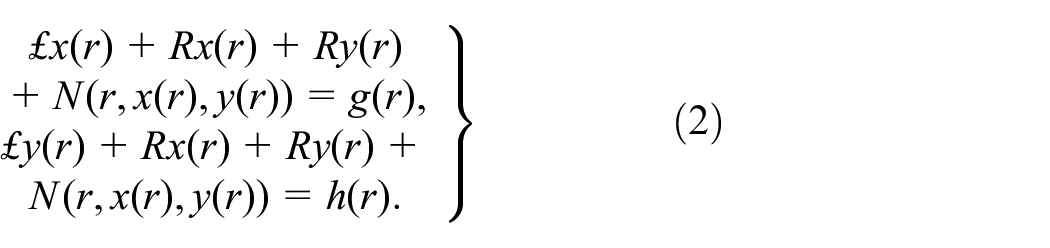
where £ is the highest order linear differential operator,

where

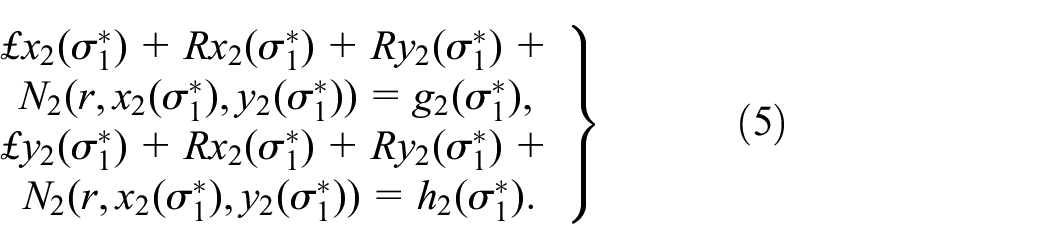

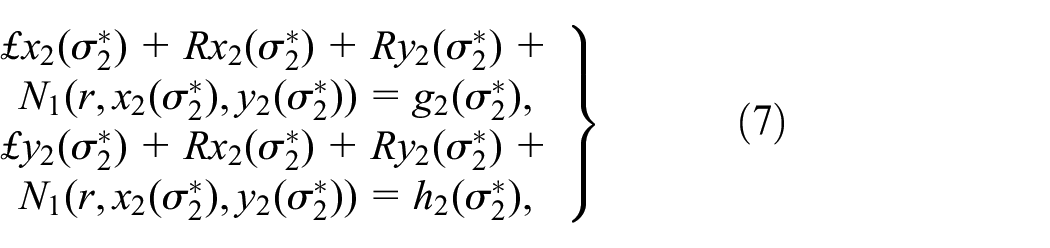
Applying the

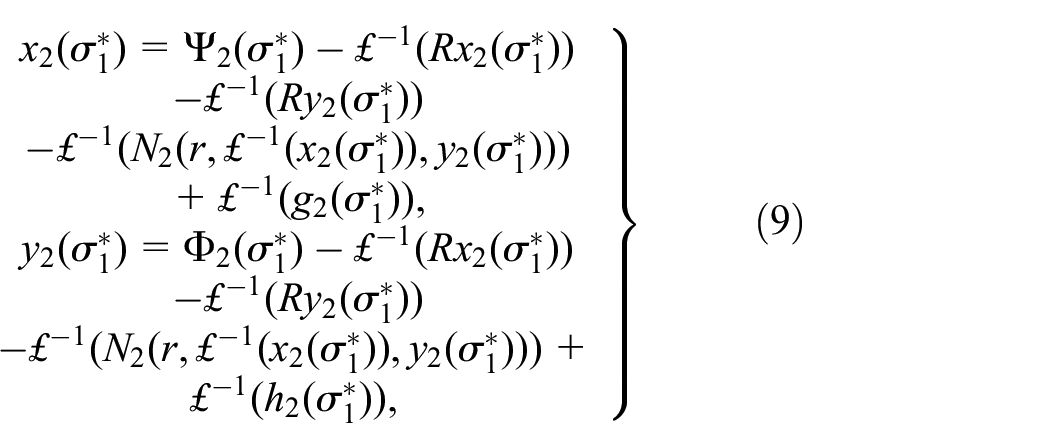


where,


the above functions are found by using the initial conditions. Now by using the GMADM the solutions of the (8)−(11), can be expressed in the form of an infinite series for the unknown functions as follows:
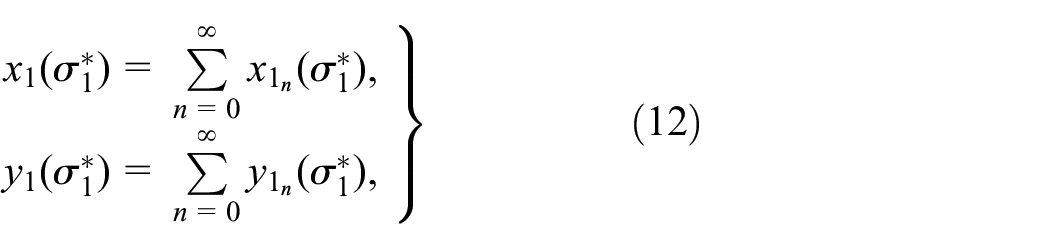

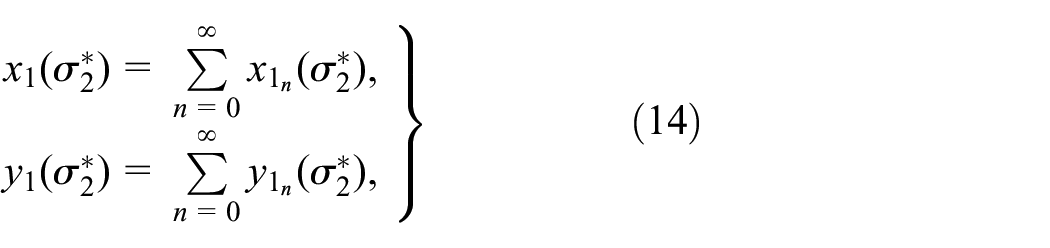

Using (12)−(15), in (8)−(11), we have:


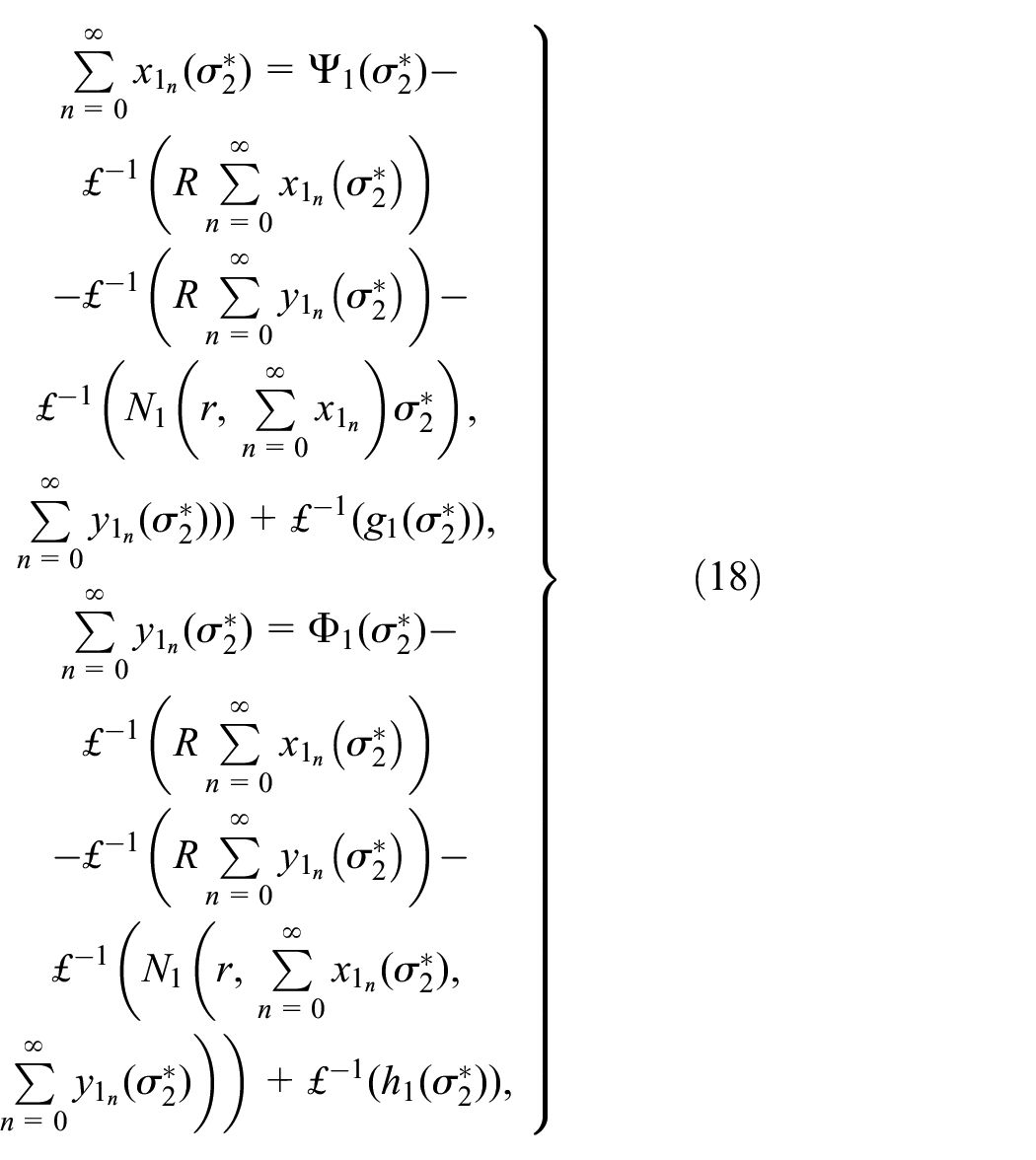
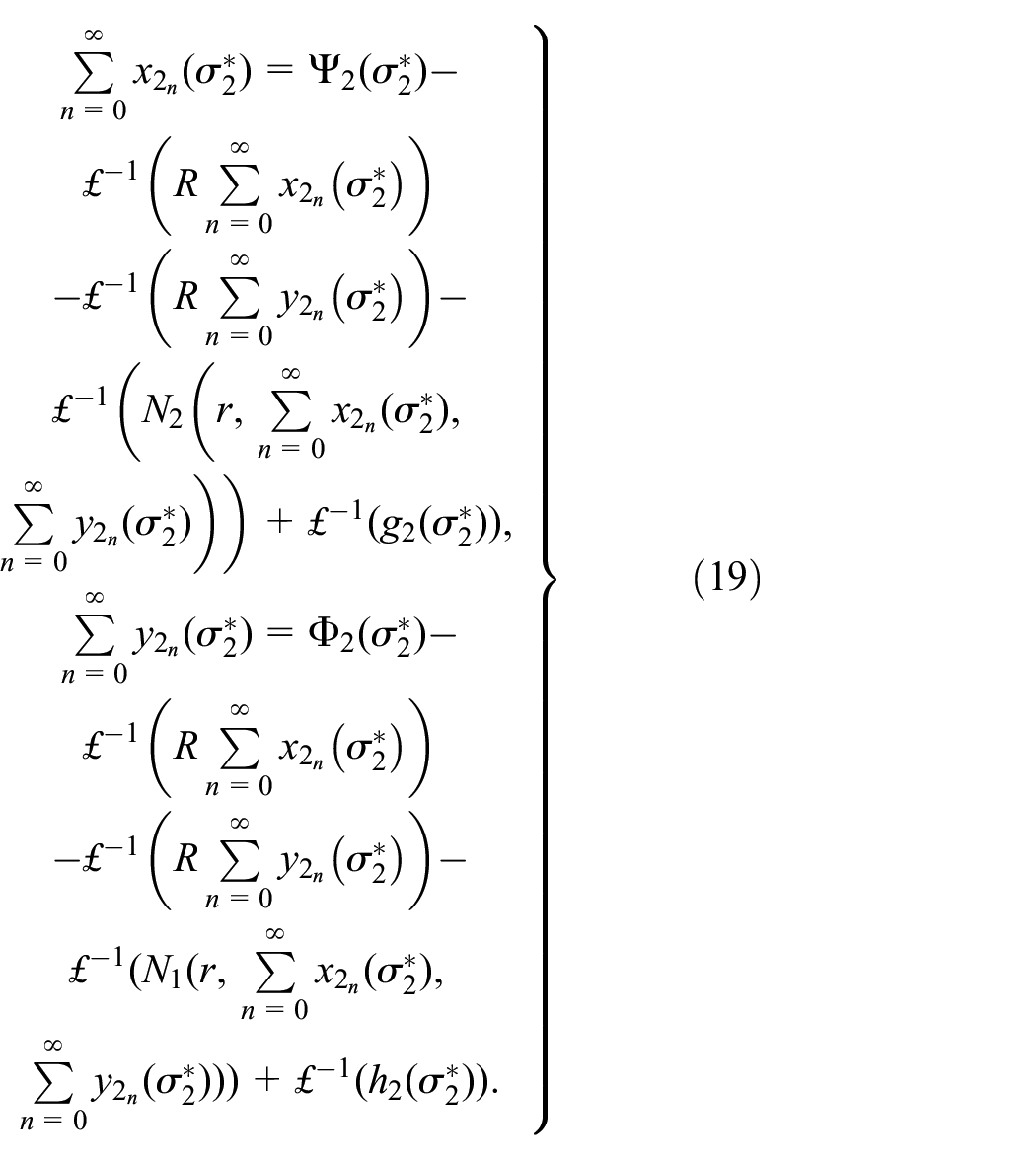
According to the GMADM the recursive relation for the above expression are as follows:


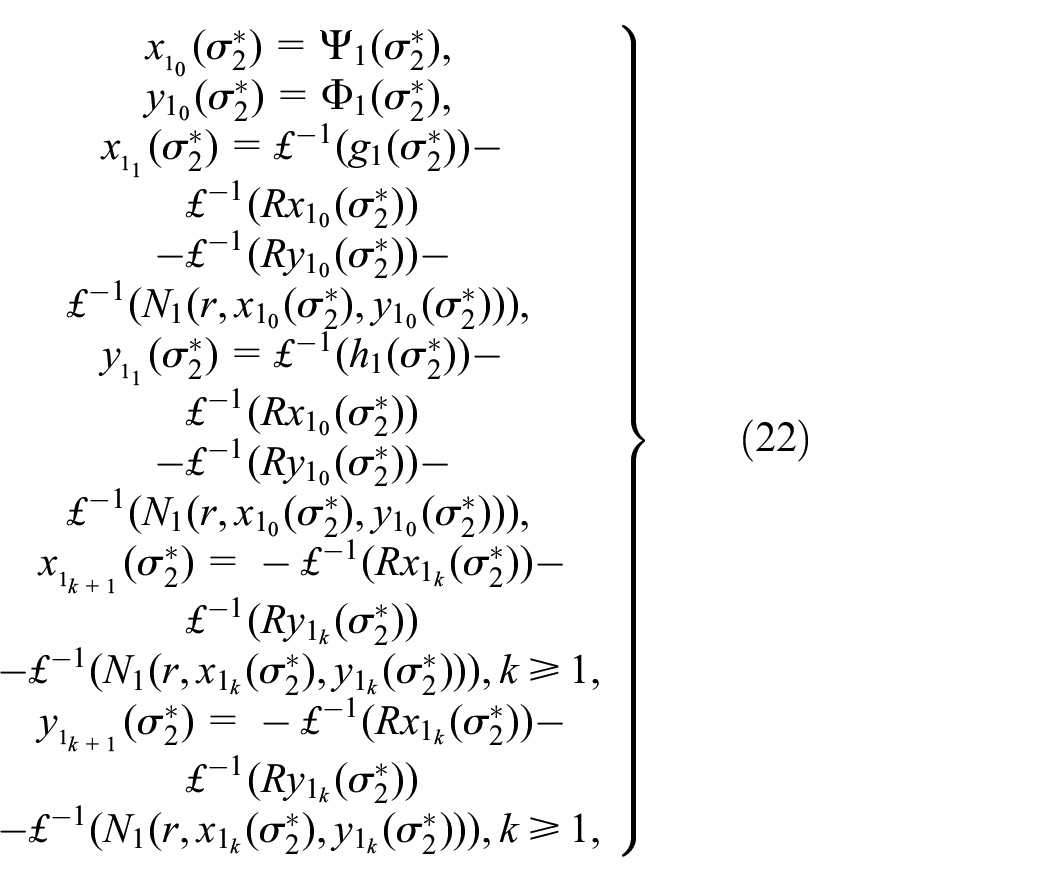

The nth-term approximation to the solution is defined as follows:

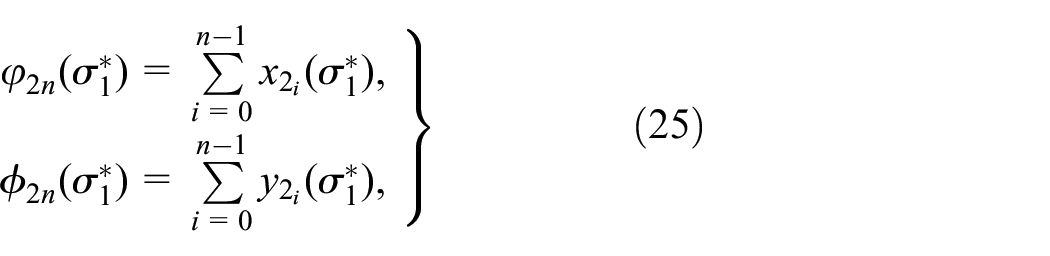
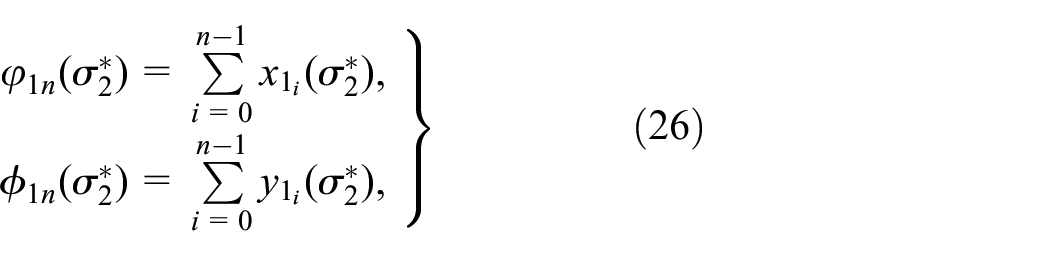

Hence,
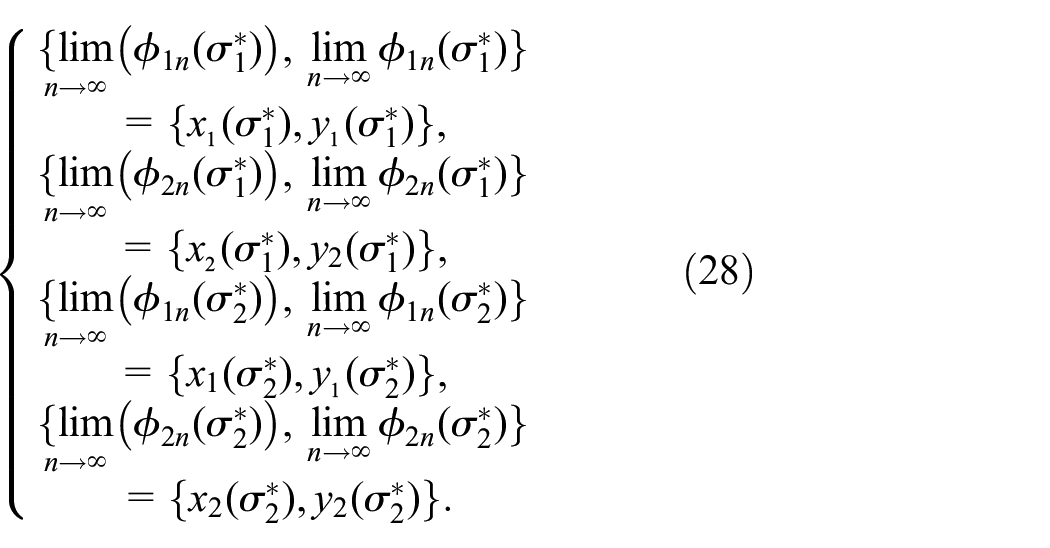
Numerical outcomes
In this section, we show some examples to illustrate the effectiveness and efficiency of the GMADM method, Taylor’s series method (GTM) and generalize decomposition method (GDM) for solving triangular fuzzy system of intuitionistic differential equations. The computer application is terminated using CAS- MatLab 2011Rb and used the following terminating criteria

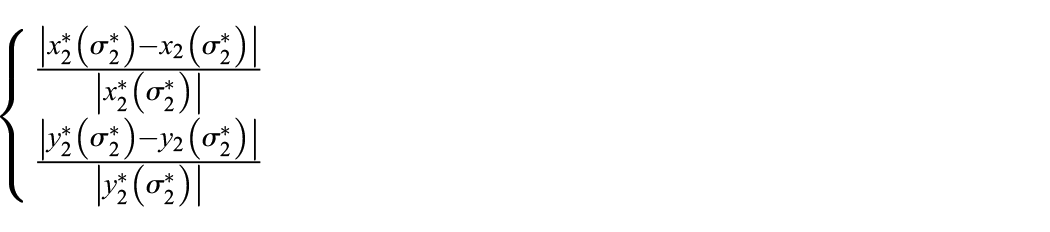
where
Engineering applications
Here, we discuss some engineering applications which contains system of intuitionistic fuzzy differential equations.
Consider a mechanical system30,32,33 that consist of two masses, m1 and m2, each of which is free to slide along a horizontal surface with no fraction. Three springs are used to bind the masses to each other as well as to two stiff walls. The system’s spring constants are k1 = 1 Nm, K2 = 2 Nm, and K3 = 1 Nm. The

Using the given data, we get;

with initial conditions

By taking


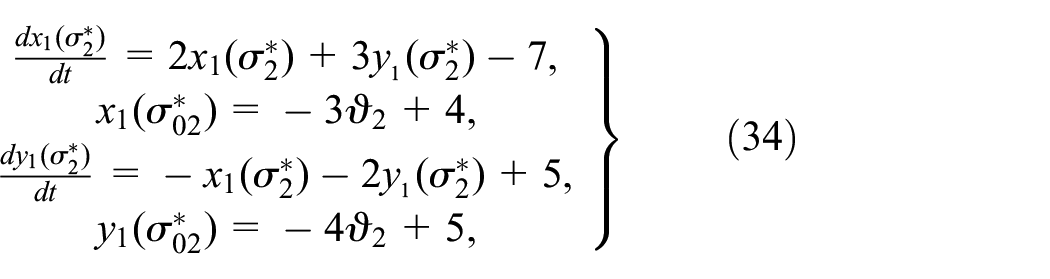

where

and . Here


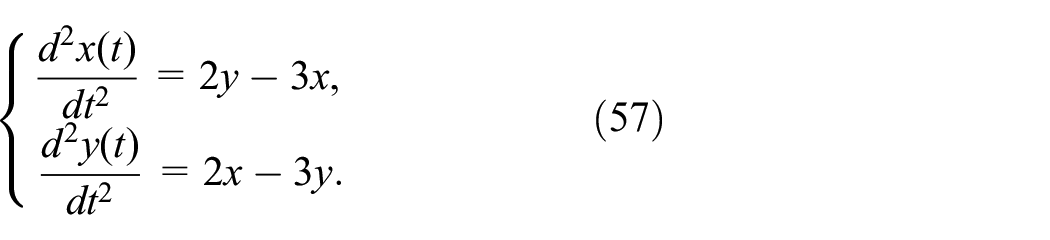
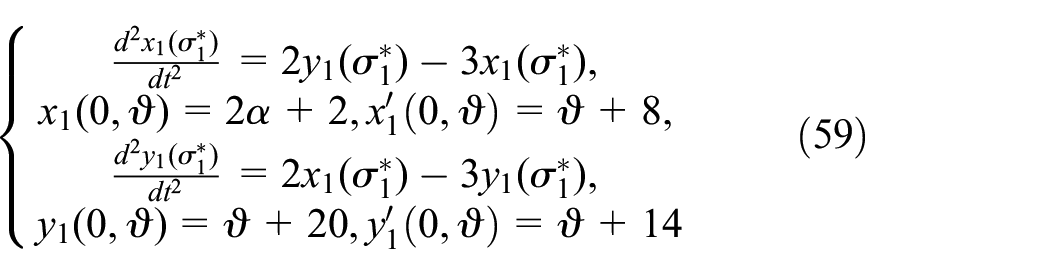
Now by using GMADM we get;


By solving the (39)−(43), we get the approximate solution after four iterations as follows:


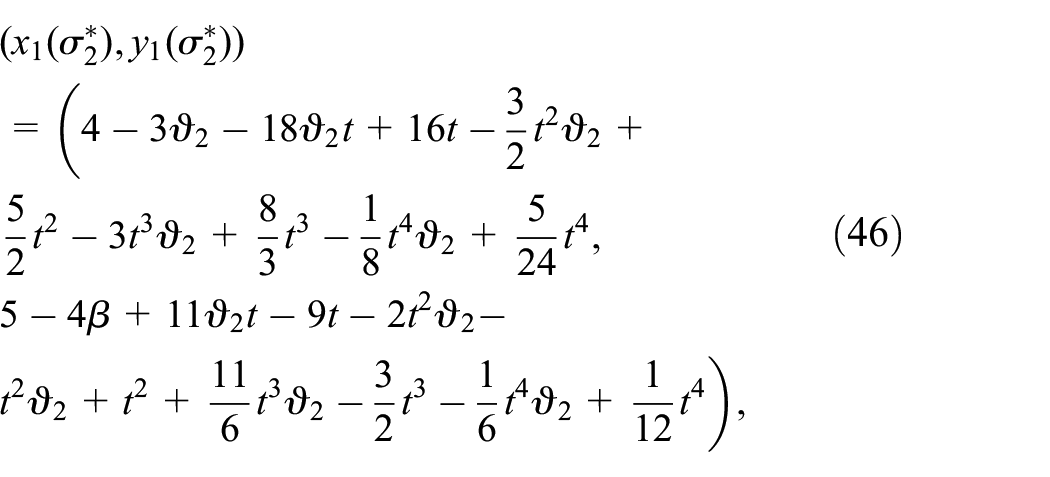

In Table 1,
The analytical solution for the membership functions of Example 1 for

In Table 2,
The analytical solution for the non-membership functions of Example 1 for

The exact solution of numerical example given by classical method is as follows:


In Table 3,
The exact solution to the membership functions for the

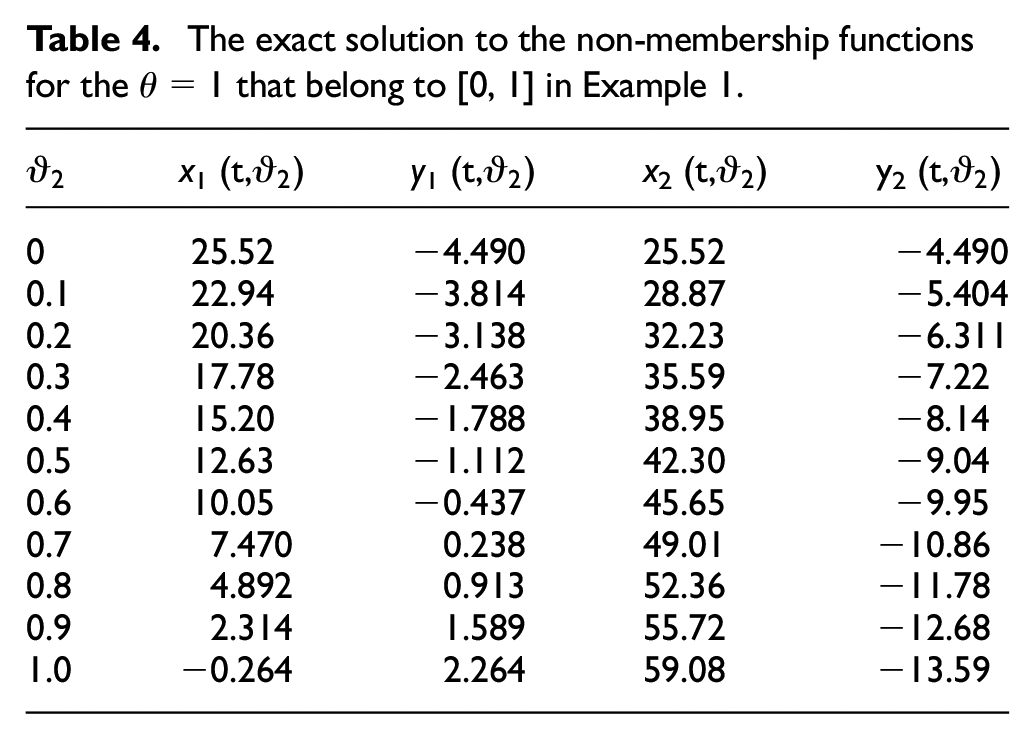
In Table 4,
The exact solution to the non-membership functions for the
The exact solution of Example 1 by classical method is given as follows:


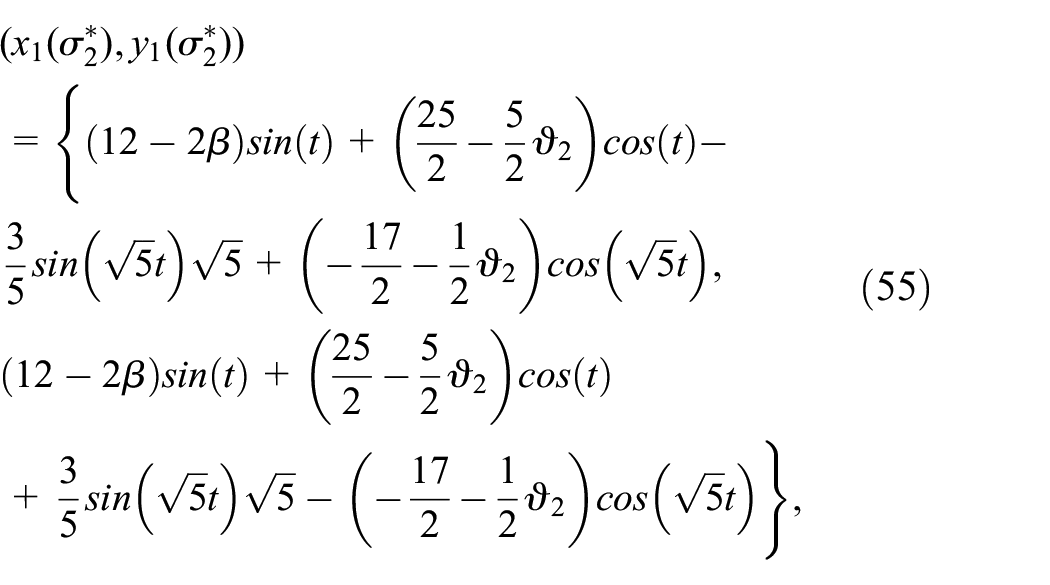

Table 5. shows numerical comparison of computational time seconds (CPU), number of iterations (Ns), and residual error (Err) of GMADM, GTM, and GDM respectively for solving system of intuitionistic fuzzy initial value problems used in engineering application.
A numerical comparison of GMADM, GTM, and GDM for solving the intuitionistic fuzzy system of differential equations used in Example 1.

with initial conditions,

By taking


Here


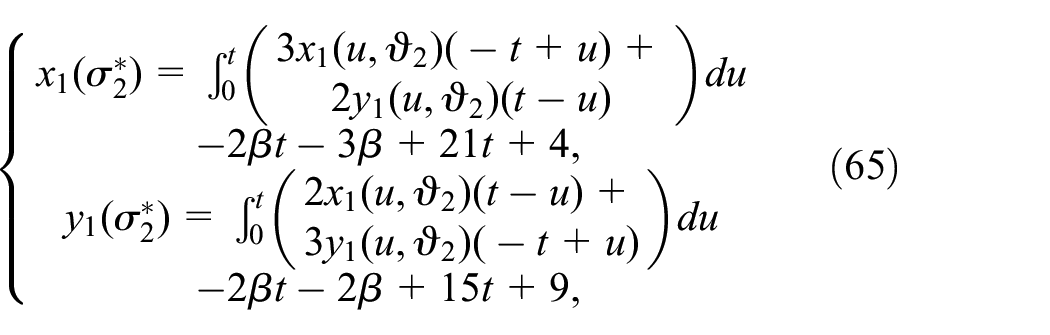

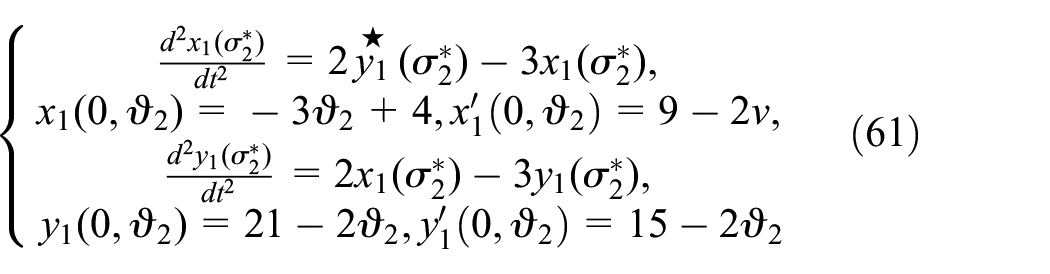
Now by using GMADM the solution of (62)−(66), can be expressed as;
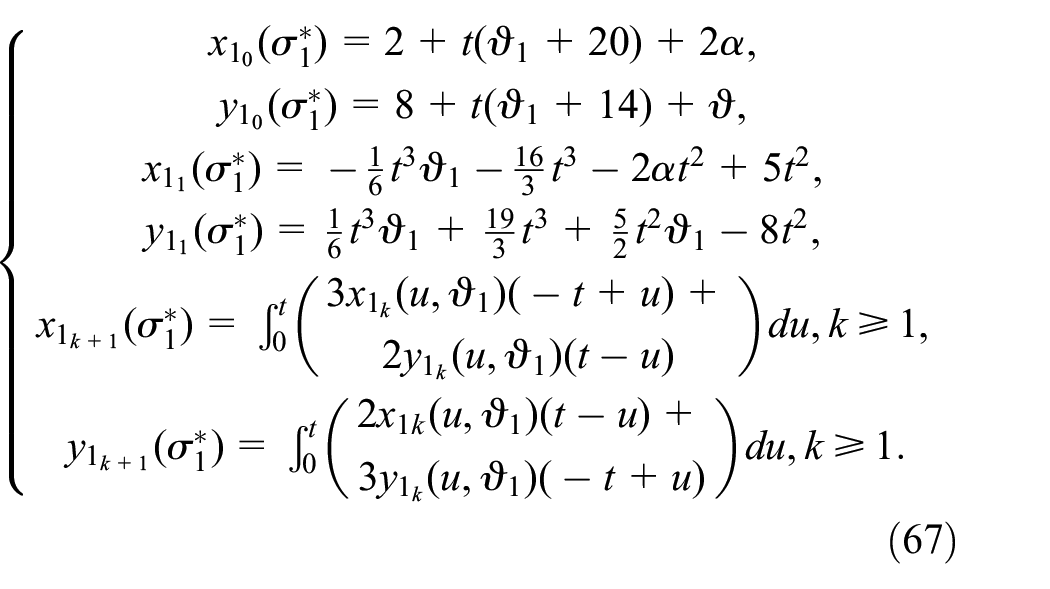

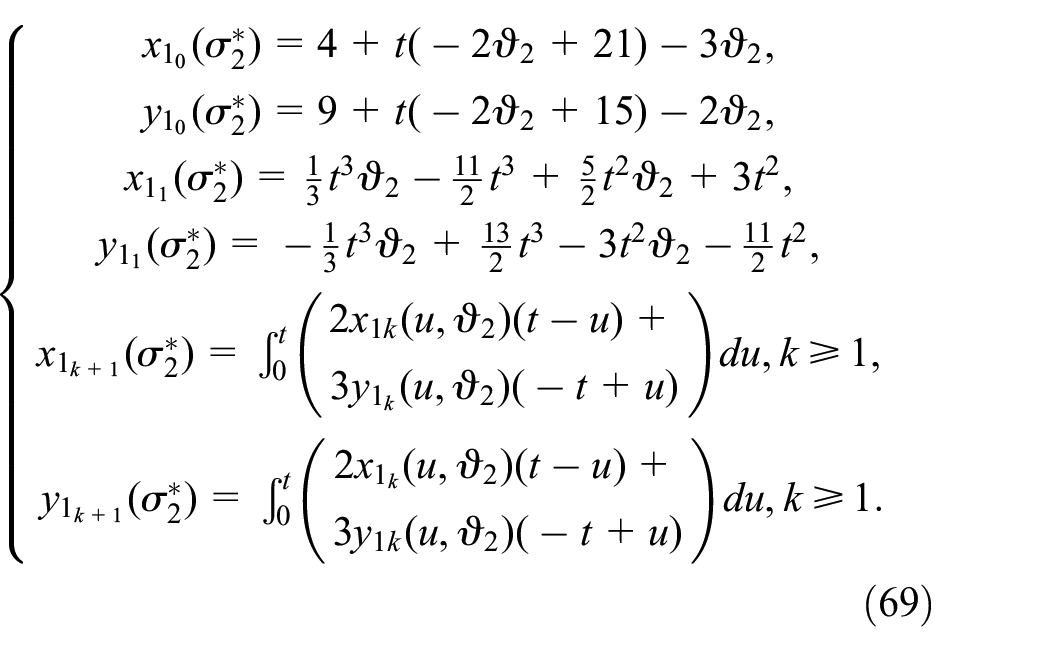

By solving (66)−(70), we get the approximate solution after four iterations as follows:

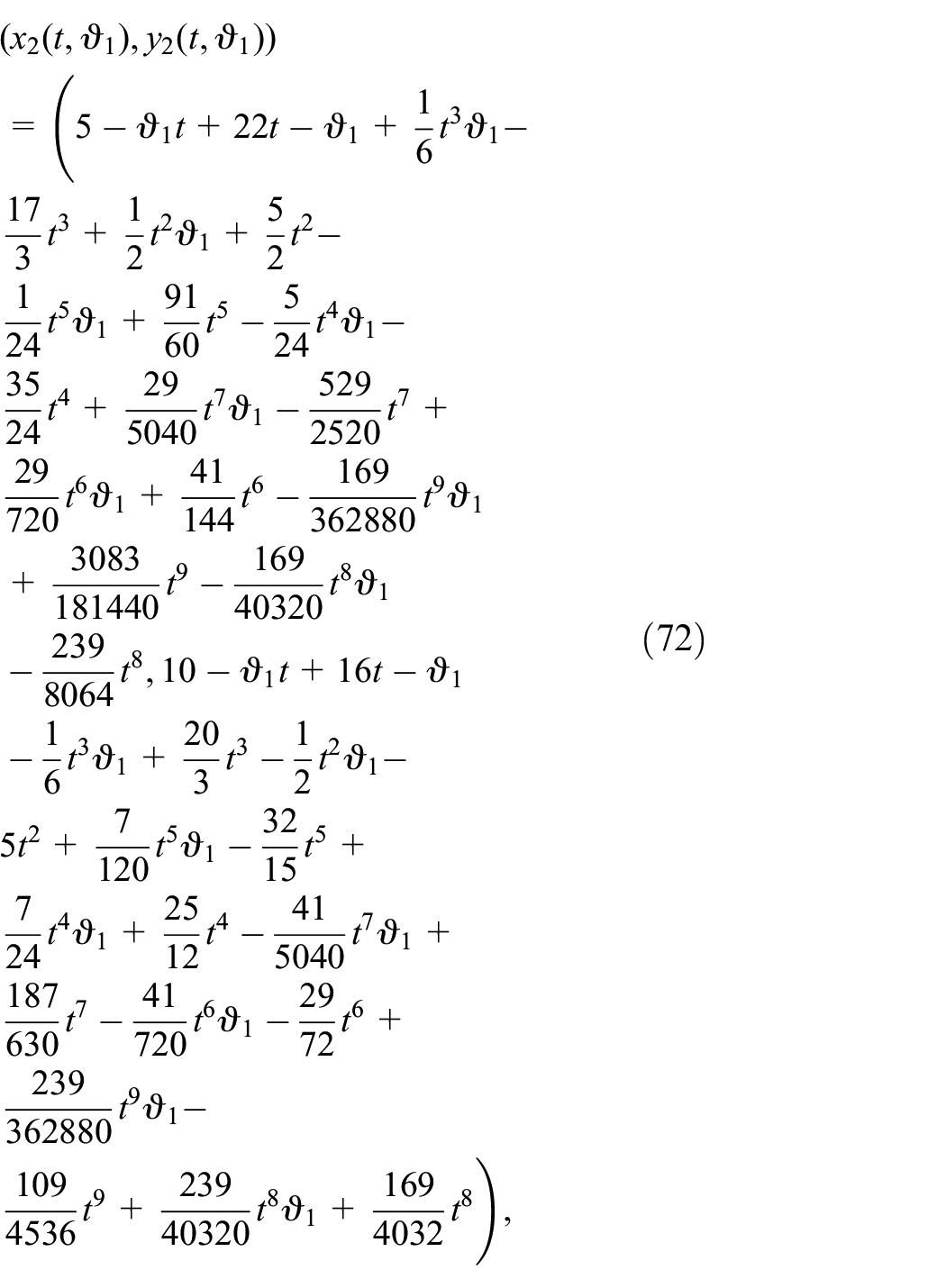

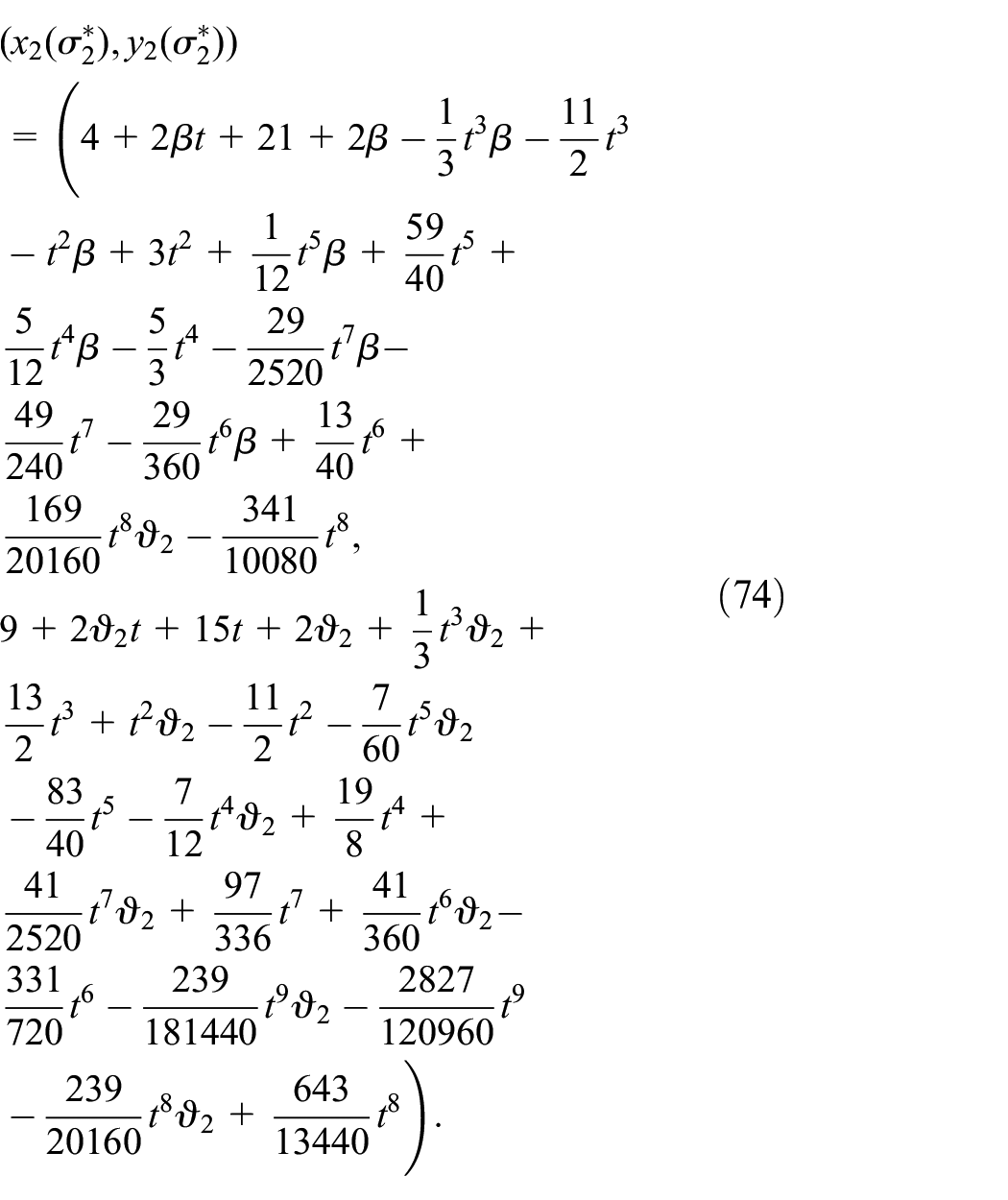
In Table 6,
Analytical solution of the membership functions of the Example 2 for

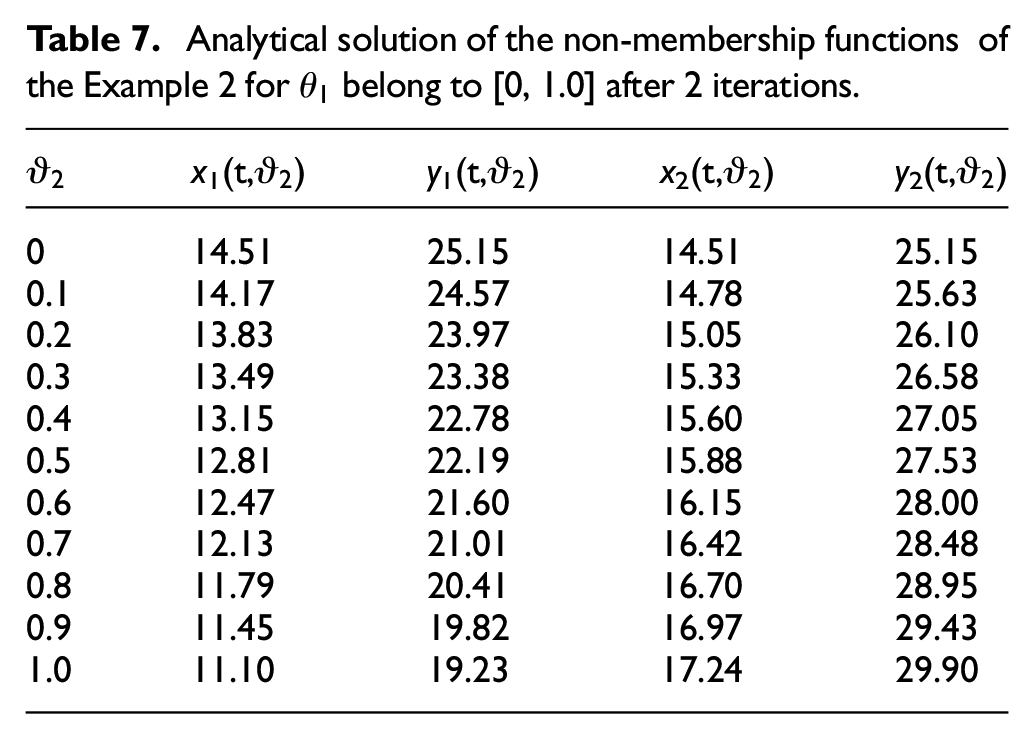
In Table 7,
Analytical solution of the non-membership functions of the Example 2 for
The exact solution of Example 2 by classical method is given as follows:


In Table 8,
The exact solution to the membership functions for the

In Table 9,
The exact solution to the non-membership functions for the

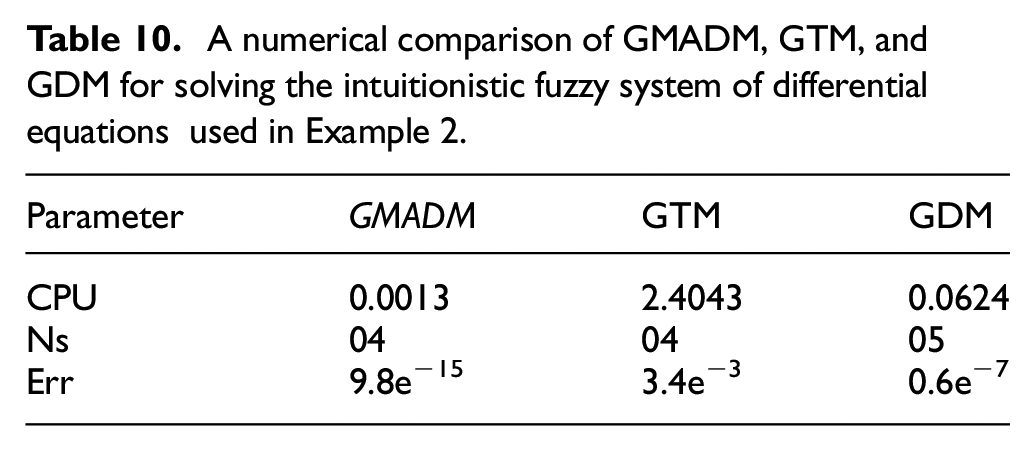
Table 10. shows numerical comparison of computational time seconds (CPU), number of iterations (Ns), and residual error (Err) of GMADM, GTM, and GDM respectively for solving system of intuitionistic fuzzy initial value problems used in Example 2.
A numerical comparison of GMADM, GTM, and GDM for solving the intuitionistic fuzzy system of differential equations used in Example 2.
Advantages of the GMADM
• GMADM is found to converge very quickly and to be more accurate than GTM and GDM in solving a system of fuzzy intuitionistic differential equations.
• The main advantage of the GMADM method is that it can solve all types of fuzzy differential equations and system of intuitionistic with more generalized fuzzy numbers.
• The GMADM also has the practical advantage of reducing computing cost while preserving improved accuracy of the numerical solution.
• GMADM can efficiently, rapidly, and accurately solve a large class system of fuzzy intuitionistic differential equations with closed form solutions that rapidly converge to exact solutions.
• The GMADM has proved to be very efficient and yields significant accuracy and computation time savings, as illustrated in Figures 1 to 3 and Tables 1 to 10.

(a–d): clearly shows that numerical approximate solution obtained by GMADM are exactly matched with analytical solution of system of intuitionistic triangular fuzzy initial value problems used in Example 1. (a) Numerical and analytical solution of
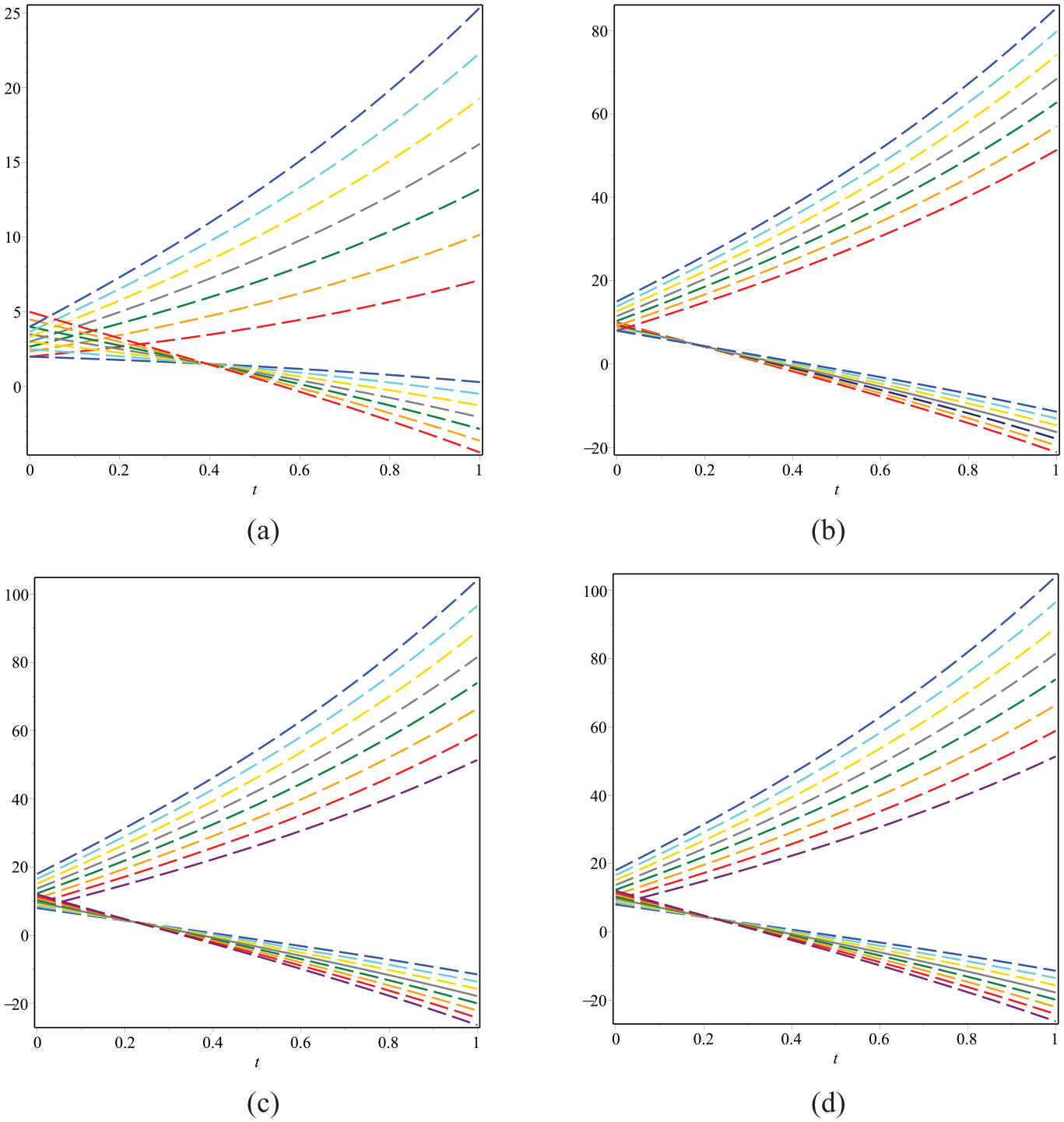
(a–d): clearly shows that numerical approximate solution obtained by HPM are exactly matched with analytical solution of system of intuitionistic triangular fuzzy initial value problems used in Example 2. (a) Numerical and analytical solution of
Conclusion
In this work, Generalized Modified Adomian Decomposition Method have been utilized for computing the approximate solution of the linear system of intuitionistic fuzzy initial value problems. We used the initial conditions as a triangular intuitionistic fuzzy numbers. We have applied this procedure to mechanical engineering problems. From all Tables 1 to 10 and Figures 1 to 3, clearly shows the dominance efficiency of GMADM over GTM and GDM in terms of computational time, number of iterations and in errors. Moreover, by comparing the approximate results with exact solution, we have shown that this method is more reliable. Future studies will therefore focus on the solution of systems of higher order generalized triangular intuitionistic fuzzy differential equations as well as a system of nonlinear first order differential equations and their application in a generalized intuitionistic fuzzy environment utilizing GMADM.
Footnotes
Acknowledgements
Thanks to American University of the Middle East for their support in this research
Handling Editor: Chenhui Liang
Authors’ contributions
All authors contributed equally to the preparation of this manuscript.
Declaration of conflicting interests
The author(s) declared no potential conflicts of interest with respect to the research, authorship, and/or publication of this article.
Funding
The author(s) received no financial support for the research, authorship, and/or publication of this article.

Data availability
No data were used to support this study.