



Abstract
The adverse effect of mechanical vibration is inevitable and can be observed in machine components either on the long- or short-term of machine life-span based on the severity of oscillation. This in turn motivates researchers to find solutions to the vibration and its harmful influences through developing and creating isolation structures. The isolation is of high importance in reducing and controlling the high-amplitude vibration. Over the years, porous materials have been explored for vibration damping and isolation. Due to the closed feature and the non-uniformity in the structure, the porous materials fail to predict the vibration energy absorption and the associated oscillation behavior, as well as other the mechanical properties. However, the advent of additive manufacturing technology opens more avenues for developing structures with a unique combination of open, uniform, and periodically distributed unit cells. These structures are called metamaterials, which are very useful in the real-life applications since they exhibit good competence for attenuating the oscillation waves and controlling the vibration behavior, along with offering good mechanical properties. This study provides a review of the fundamentals of vibration with an emphasis on the isolation structures, like the porous materials (PM) and mechanical metamaterials, specifically periodic cellular structures (PCS) or lattice cellular structure (LCS). An overview, modeling, mechanical properties, and vibration methods of each material are discussed. In this regard, thorough explanation for damping enhancement using metamaterials is provided. Besides, the paper presents separate sections to shed the light on single and 3D bandgap structures. This study also highlights the advantage of metamaterials over the porous ones, thereby showing the future of using the metamaterials as isolators. In addition, theoretical works and other aspects of metamaterials are illustrated. To this end, remarks are explained and farther studies are proposed for researchers as future investigations in the vibration field to cover the weaknesses and gaps left in the literature.
Keywords
Introduction
Studying vibration behavior of machines is essential to analyze the source of malfunction and find out the best isolation technique to mitigate its adverse effects. It can be predicted through studying the experimental and analytical methods on a specific part or machine element. Several works have been done to study the vibration behavior of specific machine elements. Also, different cellular materials have been proposed as good replacements to provide the essential isolation to machines for the purpose of controlling the vibration and suppressing its effects through absorbing the associated energy.
Starting with a simple feature of cellular materials, porous materials (PM) historically emerged first, which are composed of cells recognized with closed shape, different sizes, and distributed randomly in the 3D-space. PM could be found in nature like cancellous bone, coral reefs, and sponge. Besides, artificial PM could be manufactured using different methods to create metal foams. The mechanical properties and vibration behavior of such materials were tested experimentally and using finite element methods. First of all, it has been observed that the feature of the foam unit cell, which is almost closed from all directions, has limited damping capacity and strength. In addition, it is difficult to design and control mechanical properties of PM due to the stochastic distribution of the unit cells. For the same reason, single unit cell-based modeling will not work efficiently for predicting the mechanical properties of PM. Hence, complex designs with predictive properties are being explored as a growing solution for vibration isolation. From this point, researchers and experts put their focus on studying the behavior of these complex models. Table 1 summarizes the important literatures related to the mechanical metamaterials as a vibration isolation and control over the years. The literatures were published between 2003 and 2021, included several studies about PM, PCS, or LCS. In addition, these structures were studied in several applications like passenger seat, gear, and vibration isolator. These studies were conducted experimentally and numerically to investigate vibration isolation performance of the mentioned structures, as listed in Table 1. In this paper, further studies are discussed and explored thoroughly to provide a broader insight of the mechanical metamaterials for vibration isolation.
Important literatures for mechanical metamaterials.

Of these complex designs, mechanical metamaterials built in the form of periodic cellular structures (PCS) or lattice cell structures (LCS) are developed to enhance vibration properties compared to solid materials. Strut based metamaterials can be designed in many ways like body-centered cubic (BCC) and face-centered cubic (FCC) unit cells. Recently, vibration isolation of metamaterials is gradually increasing in academic research. When the vibration wave passes through metamaterials, it is attenuated based on the topology and geometry of metamaterials, and the associated amplitudes will be reduced. BCC unit cell created by fused deposition modeling (FDM) 3D printer has been investigated by Azmi et al. 10 to study the effect of manufacturing parameters like the print density on the vibration characteristics. Obviously, it has been shown that the solid density printing creates struts with larger cross-sectional area, heavier weight, and good integrity compared to the corresponding ones printed with almost solid density through which some cavities are involved. It has been concluded that any increase in the area induces obvious increase in the corresponding value of the area moment of inertia and, hence, the strut stiffness, thereby affecting the natural frequency. The effect of printing orientation of the 3D printed structures on vibration characteristics was studied by Singh et al. 23 The Dynamic Mechanical Analysis (DMA) was used to predict the complex modulus of the printed structures as well as vibration characteristics. The results show that the printing orientation has an influence on the complex modulus and the natural frequency. Besides, LCS can be used to attenuate the vibration. Elmadih 24 in his thesis project selected LCS to perform vibration reduction based on shifting the natural frequency. In this regard, the attenuation can be either high or low based on amplitude ratio. The below 0 dB amplitude ratio in the bandgap frequency region shows high level of attenuation and vice versa. Figure 1 shows the vibration damping and isolation through the LCS. In this case, the LCS itself can serve as a combination of springs and dampers. 25 With appropriate design, the stiffness and the damping properties of metamaterials can be controlled to obtain the required vibration mitigation based on the selection of the topology, material type, and physical parameters. 26 In addition, finite element analysis (FEA) could be used to study the static and dynamic mechanical properties of LCS and to predict natural frequencies.4,5,22,26

Vibration damping and isolation through the LCS.
Metamaterials can be fabricated by either conventional method or additive manufacturing (AM) method. Several researchers used the conventional manufacturing method by which it is usually difficult to fabricate metamaterials and requires highly skilled labors as well as needs more raw material. For example, Feng et al. 27 reported to use many steps to create the metastructure. On the other hand, AM can be used to fabricate complex structures in shorter time with saving more bulk material. Different AM technologies used to fabricate complex structures are extrusion based fused deposition method (FDM), selective laser melting (SLM), selective laser sintering (SLS), stereolithography (SLA), etc.20,22,28–32
The current study aims to cover modeling, mechanical properties, and vibration methods of PCS and metamaterials along with theoretical works. Emphasis is given on metamaterials through explaining the damping enhancement by such materials in details. Besides, the paper presents separate sections to shed the light on single and 3D bandgap structures. This study highlights the advantage of metamaterials over the porous ones, thereby showing the potential applications of metamaterials and the future of using them as isolators. Other aspects of metamaterials are also discussed thoroughly. To this end, remarks are explained, and further studies are proposed for researchers as future investigations in the vibration field to cover the weaknesses and gaps left in the literature.
Theory of vibration isolation and control
The excitation force is usually expressed as F(t) = F0 sin (ωt), where F0 is the amplitude of the excitation force and ω is the frequency of the excitation. Vibration isolation occurs when the frequency ratio, r > √2. The frequency ratio is the frequency of the excitation divided by natural frequency. Furthermore, the occurrence of isolation is affected by damping, the isolation is better when damping is smaller.33–35
To control and adjust the vibration of any machine, it is essential to use two main parameters: natural frequency and damping ratio. The natural frequency of an undamped system is indicated as

Where,

The damping ratio denoted by ζ is a unitless measurement expressing how fast the oscillations can diminish between the successive bounces. This means that the damping generally induces dissipating in the energy of the vibratory system to prevent it from the oscillations and to bring it to the stable or static mode in a certain period of time based on the intensity of the damping coefficient. If the damping ratio is zero (ζ = 0), the machine is undamped. While, if it is smaller than one (ζ < 1), this means the vibration system is in underdamped mode. The critically damped case occurs when the damping ratio is one (ζ = 1) and the overdamped mode usually occurs if the damping ratio is higher than 1 (ζ > 1). In essence, the higher values of damping ratio give an indication that the oscillations decay rapidly and vice versa. In addition to the damping ratio, the frequency ratio can tell whether the isolator is working properly by checking r > √2. 32 The theory of vibration isolation is studied and explained by Crede and Ruzicka. 35 The transmissibility or absolute transmissibility is considered one of the most common factors upon which the isolation of vibration system can be evaluated. It refers to the reduction obtained in the oscillating force or motion transmitted through the isolation system of an equipment. In the case of force excitation, the transmissibility represents the ratio of the force amplitude reached the foundation to the corresponding one initiated within the equipment. Also, it can be defined as the ratio of the motion amplitude transmitted to the equipment to the amplitude applied at the foundation in the case of motion excitation. In consequence, the minimal transmissibility is a sign of good isolator, for example, only little amount of force or motion could be transmitted through the isolator of minimal transmissibility and vice versa. An analytical study has been presented by Xu et al. 36 for equipment-isolator system consisting of two-stage isolation. To this end, modeling and controlling of active structures like LCS, foam material, and other structures under vibration excitation have received a lot of considerations in the past decades. There are several studies conducted on this topic.16,37–42
Cellular materials as vibration isolation and control
In this section, PM and PCS are explained in details, thereby showing the main differences in the modeling, mechanical properties, and vibration methods along with more emphasis on PCS.
Porous materials
PM can be found in nature like fork and can be created using complex technique like steel foam or using 3D printing like a material built with voids inside. It is used commonly in biomedical engineering. Figure 2 shows the foamed aluminum as an example of porous material.

Porous material, foamed aluminum.
Modeling of porous material
Altintas 43 worked on the dynamic analyses of porous bone and used image processing technique as essential part involved within the finite element analyses (FEA) to create the shape of bone close to reality. Sliced images of 480 cross-sectional area of the bone were scanned by Micro-CT and collected together to build an accurate 3D geometrical feature of the porous bone with emphasis on including the microstructural details. After that, the whole model was created and investigated in Abaqus software to conduct the vibration analyses. To show the significance of FEA based on image processing technique, another homogeneous model for the bone was created and analyzed in Abaqus. Then, the results of the porous model were compared with homogeneous one, thereby not only showing numerical differences in the values of the modes between the two models but also revealing other unique modes in the porous model which were not appeared in the homogenous one.
Furthermore, Sahmani et al. 44 started from the fact that the porous biomaterials of nano-scale pore size help improving the capacity of material isolation. After exploring the mechanical properties based on truncated cube cell model, dynamic behavior of nano-porous biomaterial was investigated to predict the size-dependent nonlinear secondary resonance for both sub-harmonic and super-harmonic cases based on nonlocal strain gradient beam model. Then, the nonlocal strain gradient response and amplitude response under strong excitation were achieved for the non-linear vibration through using Galerkin-theory and multiple-time scale method. They presented the following governing equation (3) of a refined hyperbolic beam.
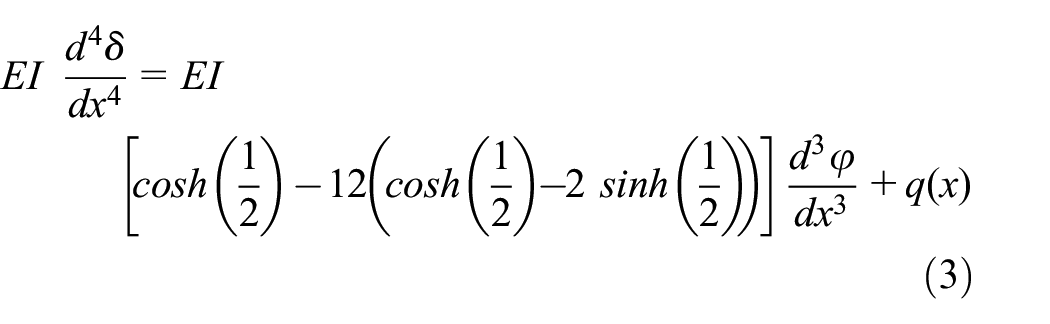
where, E is the Young’s modulus, I is the moment of inertia,
Mechanical properties of porous material
Wang et al. 45 proposed a new method for fabricating porous cellular structures using polymer matrix composites based on fused deposition modeling (FDM) technology. The FDM filament was made from a combination of three materials, including acrylonitrile butadiene styrene (ABS) as a matrix material, Babbitt alloy powders (LSn-03), and p-Toluene sulfonyl semicarbazide (PTSS). Then, the mechanical properties of the 3D printed cellular structure made from composite material based on FDM were studied after applying heat treatment through electromagnetic furnace to ensure creating various pores inside the printed structures. In this regard, the effect of heating time on the pore size and the influence of adding different percentages of (LSn-03) and (PTSS) to the ABS matrix on the pore size were investigated. In other word, the porosity and heat treatment have been analyzed together to improve mechanical properties. In addition, polycarbonate was used as a shield to gain further improvement in the mechanical properties. The results showed that increasing the heating time within a certain limit helps improving the mechanical properties and the polycarbonate shield induces an improvement in the tensile and compressive strength with percentages about 20% and 25% respectively. Finally, a composite honeycomb cellular structure was fabricated efficiently by using the proposed methodology, thereby showing that this study is very helpful when the design requires a great mechanical property with low weight.
Shahverdi and Barati 46 developed a model based on nonlocal strain gradient theory for analyzing the vibrational behavior of nano-porous plate made from gradient material and placed on elastic base. To get more accurate results, additional two parameters were considered for the first time in this model to mimic the dynamic behavior of nano-scale plate used as a nano-senor in the real-life application. These parameters are the temperature and moisture, which were applied at the same time on the nano-scale plate as loading conditions. To create this model in an efficient way, first of all, the authors employed a new power function to express the gradient in the compositions of nano-porous plate material. Then, Hamilton theory was adopted to formulate the governing equations of nano-scale plate in the elastic field made from gradient material and subjected to thermal and moisture loadings simultaneously. After that, Galerkin method was used to solve the governing equations and find the natural frequencies as defined in equation (4).

where Umn, Vmn, Wbmn, and Wsmn are the unknown coefficients of the displacement fields. By setting them to zero, the natural frequency can be obtained. The results of this investigation revealed that both temperature and moisture should be incorporated in the vibrational analyses of nano-porous plate since the increase of both parameters induces a significant decrease in the natural frequencies. For this reason, the structural design of the nano-scale plate used for vibrational application like nano-senor could be modified when including the effect of both the temperature and moisture.
Hedayati et al. 47 investigated the effect of material type and structural parameters (relative density and topology) on the mechanical characteristics of different unit cell types created by additive manufacturing technology. Co-Cr, Ti-6Al-4V, and CPT porous structures with three to four different porosities and three topological features have been explored experimentally under quasi-static compression in biomedical applications to find out whether the material type has a major influence on the normalized mechanical properties or unit cell topology. It has been found that the topological design of the porous biomedical material has an effect on the normalized mechanical properties with a percentage quantified as 1000%. Whereas, the material type shows an influence on the normalized mechanical properties with 200% only. This means, the topology design of the unit cells out of which the core of porous biomedical material is made has more dominant effect than the material type by five times.
Vibration analysis of porous materials
As stated previously, porous materials can be examined analytically or experimentally. Dahil and Karabulut 8 performed an experimental vibration analysis on aluminum foam leg of bus seat. They measured the vibration on the seat and the comfort of the passenger. The results showed that the legs with porosity has good vibration absorption capabilities and comfort improvement than the original legs. Yin and Rayess 5 performed vibration excitation on a composite aluminum foam and polymer. They applied a variable compressive force on the specimen. This force was fluctuated sinusoidally in which the specimen was investigated theoretically and experimentally. The universal testing device used for this experimental work consisted of bottom plate and upper shaker with a specimen in between. They examined three group of specimens at 1 and 2 Hz together with a mean force of 50 lbs and a double amplitude of 50 lbs. Dynamic stiffness and loss factor were obtained to study the interference at 1 and 2 Hz. 5 Viscoelastic material like melamine foam can be used in vibration isolation application which is investigated by Jaouen et al. 2 Figure 3 show several loading setups of vibration device. Figure 3(a) illustrates the vibration in vertical loading direction, Figure 3(b) shows torsional vibration setup, Figure 3(c) shows a pure shear, Figure 3(d) illustrates a traction-compression vibration, Figure 3(e) shows the vibration as point force, and Figure 3(f) shows the vibration as line loading.

Vibration device with different loading setups (a) The vibration in vertical loading direction, (b) Torsional vibration setup, (c) The pure shear, (d) The traction-compression vibration, (e) The vibration as point force and (f) The vibration as line loading. (adopted from Jaouen et al. 2 ).
Metamaterials
Metamaterials are engineered materials to have specific mechanical properties which are difficult to obtain from other materials manufactured using traditional methods. LCSs are used in this paper as an example of metamaterials which are used to show the differences between metamaterials and porous materials. In this paper, the aim is to cover a complete review of the vibration analysis methodologies, so this study is done for the researchers to investigate the mechanical performance of metamaterial by experimental work, FEA, and other methods. Based on recent studies, conventional vibration isolation for metamaterial, investigation of 1D bandgaps and investigation of 3D bandgaps are considered in this paper to explore the vibration attenuation methods. The purpose of conventional vibration isolation is to survey the ability of LCS for reducing the vibration at frequencies greater than the natural frequency. Secondly, the purpose of 1D and 3D bandgaps is to study the wave propagation across the LCS and to explore their ability to bandgaps.15,24,48 Several studies have been done on the porous material. This type of material can be used for vibration and noise isolation. It is very good in reducing the waves of vibration and sound. 43
Modeling of metamaterials
First, LCS can be designed using CAD software like SolidWorks and AutoCAD since the LCS is usually complex in shape. However, it can be built either by conventional methods or by 3D printing. Al Rifaie et al. 49 explored the mechanical properties of LCS which was modeled using SolidWorks as shown in Figure 4.
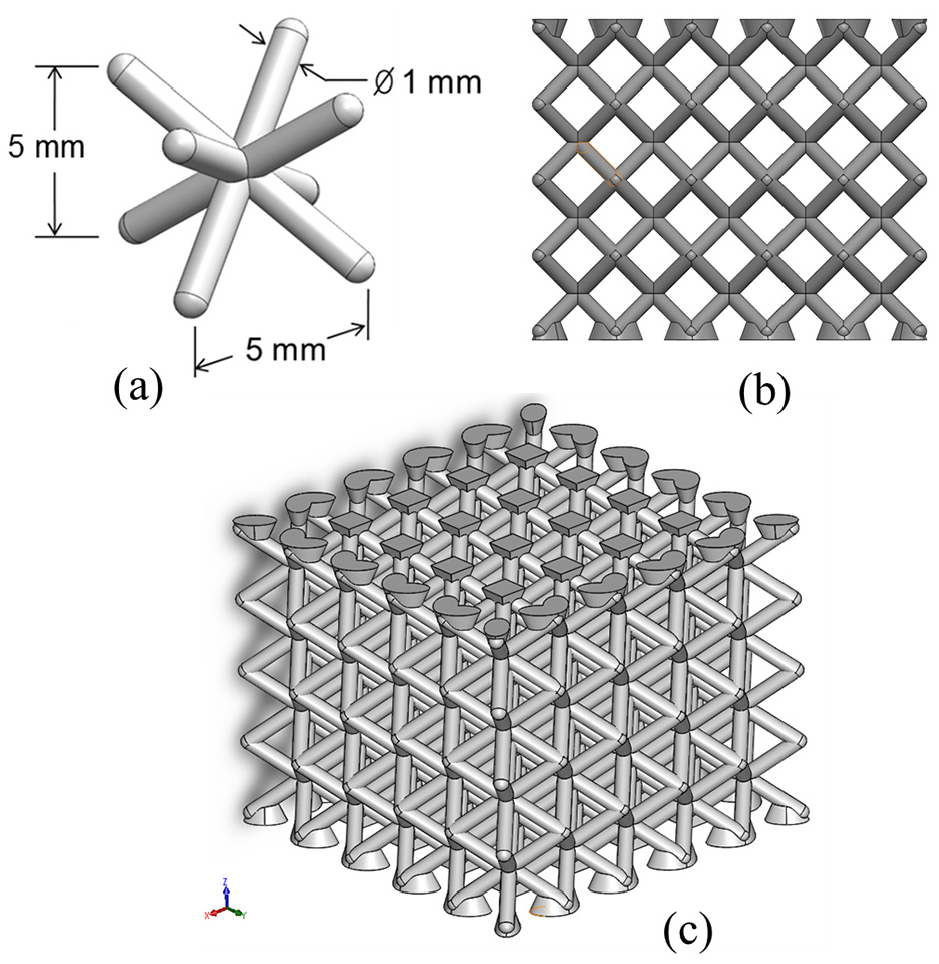
(a) BCC unit cell, (b) side view of BCC lattice structure, and (c) 3D view of the BCC lattice structure.
Usually, researchers study the effect of changing the shape of the LCS such as changing length, diameter, and angle of the strut which forms a singular unit cell.50–54 This gives a change in natural frequency and influence the vibration response as well as vibration bandgaps properties. Modeling can be introduced in various ways like LCS, composite structures, mass spring structure, and porous structure. Porous structure can be similar to LCS with a periodic pattern of unit cell or with a stochastic pattern. The shape of the model depends on the requirement of vibration application like requiring a stiff and light structure, metaplate, and isolator.
Mechanical properties of metamaterials
The vibration attenuation in metamaterials can occur due to their appropriate stiffness and damping properties. These parameters can be measured experimentally. Sahmani et al. 18 explored the behavior of nano-beam under vibration to evaluates difference in frequency ratio with dimensionless maximum amplitude. It is important to find the mechanical properties which is the stiffness of the structure to find out the frequency. Computational, experimental, or analytical approach can be used to find the natural frequency. In analytical approach, the degrees of freedom for the link of a unit cell is crucial to construct the stiffness matrix for the entire structure. Furthermore, the mechanical properties of the LCS can be found experimentally 19 to measure the stiffness property. In addition, the experimental and FEA approaches were used to verify the theoretical results. In this case, the structure consisted of two parts combining sinusoidal-beam and semicircular-arch as shown in Figure 5 and was 3D printed. Finally, they studied the performance of vibration isolation of this structure.

Quasi-zero stiffness isolator (a) Structural model, (b) Unit cell, (c) Sinusoidal beam and (d) Semicircular arch. 19
ABS material was used by Li et al. 9 who introduced its mechanical properties in their paper. It is not mentioned the tests done to get the Young’s modulus, Poisson’s ratio, and density of ABS. An et al. 15 created load-displacement curves of various metatruss LCS to find mechanical properties of the specimens which were 3D-printed by selective laser sintering (SLS). Furthermore, Wu et al. 6 carried out analytical work on 3D Kagome lattice structure as a Timoshenko beam model. Mechanical properties of the structure elements were investigated by using beam element, tension element and torsional element as well as a whole element. In addition, dynamic mechanical analysis was explored for both steel and epoxy materials with known mechanical properties of Young’s modulus, Poisson’s ratio, and density.
Vibration measurement of metamaterials
The same experimental techniques as shown in Figure 3 can be used to characterize metamaterials as well. For instance, Liu and Hu 55 have used an electromagnetic shaker to study vibration responses of three types of 3D knitted fabrics as a spacer made from polymer. Resonant frequency and isolation frequency were investigated for the three types of samples. Each sample was loaded by different amount of mass to study the response by calculating resonant frequency and isolation frequency. Furthermore, Elmadih et al. 28 explored several types of lattice structures under vibration excitation using shaker with signal producer. They have explored vibration modes, natural frequency, and isolation frequency of each specimen. They have concluded that LCS can be used to attenuate the vibration, and using large unit cell and low volume fraction can reduce the natural frequency.
Damping enhancement of metamaterials
The enhancement in the damping properties of metamaterials has been done using several techniques. For instance, Wang et al. 56 developed a new mechanism for improving the damping behavior of lattice through filling the air gaps existed within the structure of the lattice with an appropriate viscoelastic material. The selected lattice type was Kagome, which is a common configuration in the field of lattice design consisting of six cylindrical struts radiating out from the same central junction. Three of them are located in the upper side and the others are placed in the lower or opposed side. A single lattice layer of 3 × 3 unit cells was fabricated using Nylon PA6 based on selective laser sintering technology and placed between two plates to create a sandwich structure of fixed-fixed boundary conditions. In addition, polyurethane was used as viscoelastic material filling (VMF). The damping behavior of the developed sandwich structure combining the VMF and Kagome lattice was analyzed using finite element methods and experimental work. Besides, the results of developed sandwich structure (Kagome and VMF) were compared with Kagome sandwich structure (without VMF) and solid plate made of the same Nylon material. Significantly, it has been found that adding VFM to the Kagome lattice structure helps improving the damping capacity with a reduction of 18.19 and 6.03 dB in the acceleration amplitudes comparing with the classical Kagome lattice without VFM and the solid plate, respectively. In the same way, 57 another feature of sandwich structure called pyramidal lattice made of Aluminum alloy was combined with two types of filling foam materials, hard polyurethane (B-II-HPF) and soft polyurethane (B-II-SPF). By this way, the damping efficiency of the created hybrid material was improved up to two to four times, comparing with the basic feature of pyramidal sandwich structure.
Sterling et al. 58 worked on the effect of material type on damping performance of subordinate oscillator array (SOA), which is defined as an array of small structures. SOA is designed to be placed on a machine or mechanical system to dissipate or move its vibration energy. The design and distribution of these arrays could be varied based on the required frequency band. Also, the SOA is primarily fabricated from metals, whose Q-factors have higher values. This factor is an indicator of damping and is related directly to the number of arrays. To obtain higher values of Q-factor, higher number of arrays is required. At the beginning, metal SOA looks like a good choice to increase the damping due to its higher Q-factor. However, the drawbacks behind using metal SOA are the need for larger space. Besides, any imperfection even in a single array can cause significant impact on the frequency response of the metal SOA. These drawbacks stimulated the researchers to look for other materials as a replacement for metals, especially that the advances in 3D-printing technologies filled the gaps and helped them to build parts using various material with shedding the light on using light materials. In this regard, stereolithography apparatus (SLA) 3D-printer, Form2 produced by FormLabs, was used to fabricate thermoplastic SOA based on curing partially the GPBK-03 resin material using ultraviolet waves. Then, the fabricated samples were put in Alcoholic path for 30 min using Form Wash machine. Next, they were fully cured at 50°C temperature for 60 min using Form Cure machine. After testing the thermoplastic SOA, it has been found that thermoplastic material has lower values of Q-factor and the produced SOA is not affected by the irregularities that could be induced by the manufacturing parameters. This draws a conclusion that even the higher percentages of irregularities involved within the 3D-printed materials will not disrupt the thermoplastic SOA frequency response. Most importantly, the cost of production will be reduced and the related time will be shorter, as well as less space is required for installing 3D-printed thermoplastic SOA. Gietl et al. 59 investigated the sensitivity of the subordinate oscillator array (SOA) as a 3D-printed structure to the imperfections ensued from changing the printing parameters. There is also an emphasis on how the manufacturing parameters could affect the damping and natural frequency of the 3D-printed structures with considering the external sources that could cause additional damping, such as the environment and base attachment. This in turn helped providing more accurate estimations regarding internal damping of the 3D-printed structures. In this study, two types of 3D-printing technologies based on thermoplastic materials were adopted to print cantilever parts instead of using 3D-metal printers. First, the fused deposition modeling (FDM) based on solid filament materials was used to print one sample corresponding to each type of the seven thermoplastic materials, where the printed samples are fully hardened, and there is no need for the post-print curing. The other printing technology is stereolithography apparatus (SLA) based on resin material, where the printed samples are partially hardened, and the post-print curing is required to fully harden these samples. In this case, only one type of resin material was used, and the samples were printed with nine different orientations. After fabricating process, Q-factor as an indicator of damping, natural frequency, elastic modulus, and density were determined for all printed samples and compared with the corresponding manufacturing values. The results showed that the printing orientations of SLA technology have no significant influences except on the elastic modulus values, while both the density and elastic modulus of the samples printed by FDM technology are apparently different from the manufacturing values. Besides, the Q-factor values of the samples fabricated using Acrylonitrile Butadiene Styrene (ABS) and Polylactic acid (PLA) thermoplastic materials were found to vary with a percentage more 10% when making a comparison between the vibration behavior of the same parts in two environments, one with vacuum and the other without vacuum. This means the damping of the SOA structures made of ABS and PLA materials has such a light sensitivity to the external damping mechanisms.
Furthermore, a new method was presented by Dunaj et al. 60 to increase the damping efficiency of thin-walled structures by using covering components made of 3D-printd light materials. These components are simple in design and could be pressed directly on the target structures to make the right connection without the need for special kits. Also, a parametric study was conducted using finite element methods to find out the best thickness and distribution of these covers, that could improve the vibration damping properties. Then, an experimental work was done as a validation for the efficiency of the proposed method and finite element models. The results showed that the covering components made of 3D-printed PLA material are able to reduce the vibration amplitude of free-free steel beam by 90%. Besides, it was proven that these covers are efficient in mitigating the vibration amplitude of a steel frame by 37%.
Monkova et al. 22 explored experimentally the influence of geometrical parameters on the vibration damping behavior and compressive mechanical properties of thermoplastic BCC lattice structures. In this study, a single unit cell of BCC lattice was designed with three different sizes in X, Y, and Z-direction (5 × 5 × 5 mm3, 7 × 7 × 7 mm3, and 10 × 10 × 10 mm3). Corresponding to each size, three different relative densities were selected (25%, 50%, and 75%) through changing the strut diameter such that nine cases of BCC lattice design were considered. For the purpose of providing accurate results from the experimental work, five samples were repeated corresponding to each lattice design; thus, the total number of samples were 45. In this regard, All the BCC lattice samples were fabricated using Acrylonitrile Butadiene Styrene (ABS) material based on FDM technology with a layer thickness of 0.254 mm. The material class was ABSplus-P430 Ivory and the 3D-printer type is uPrint SE, provided by Stratasys. After that, the vibration damping response of the printed lattice samples was evaluated based on a linear-viscous system of harmonic excitation and single degree of freedom (SDOF). In addition, a destructive quasi-static axial compression test was conducted on BCC lattice samples to estimate the corresponding mechanical characteristics. In short, it has been concluded that increasing the relative density of BCC lattices leads to increasing the stiffness and, hence, reducing the damping influence of the lattices. While, there is an evident increase in the damping capacity of BCC lattices with increasing the lattice size. Also, it has been observed that the ultimate tensile strength of BCC lattices increases in a non-linear manner with increasing the relative density.
Xu et al. 61 presented novel techniques for improving the damping response of metamaterials made from carbon fiber reinforced polymer (CFRP). The high stiffness and light weight are far-famed characteristics of CFRP structures; thus, there is an increasingly demand on these types of structure in the today market. However, they are not suitable for the applications that required energy reduction due the lack of good damping properties. Consequently, Xu et al. 61 introduced a technique of projection stereolithography at microlevels to print lattice structures consisting of two materials for the purpose of obtaining a combination of high damping and stiffness at the same time. In this regard, octet single lattice unit cell was fabricated by this technique from a combination of CFRP composite and polyethylene glycol diacrylate resin to prove the efficiency of the proposed technique. Besides, Xu et al. 61 suggested another method for enhancing the damping behavior of composite metamaterials based on creating multiple phases within the same structure of the printed material. For this aim, octet lattice structures were built based on the suggested method from two-phase CFRP composite material, where a soft phase of smaller fraction was embedded in the middle of each strut of stiff-phase. Thereafter, the damping characteristics of the created lattice structures were tested experimentally at small and large strains, thereby showing the efficiency of the suggested methods in producing accurate composite lattice structures of both high damping and stiffness properties.
In consequence, the enhancement in damping could be attained by adding external components to the structure of lattice to improve its capability for absorbing the vibration energy, such as viscoelastic material, subordinators, special types of dampers, and novel elements. Also, the damping properties of metamaterials could be enhanced based on the 3D-printing technology by manipulating the manufacturing parameters. The rapid developing of this technology enables the researchers to design and print PLSs of complicated topologies and various geometries. However, there is still lack of information about how the topology of the metamaterials could affect the damping properties. Besides, studies regarding the influences of gradient geometrical parameters on the vibration behavior of the metamaterials are limited up to date. Thus, it is highly recommended to conduct future work on how to enhance the damping performance of metamaterials based on testing different lattice topologies, using gradient lattice structures, and changing geometrical parameters like the cross-sectional area shape.
Specialized metamaterials
New advances in metamaterials for vibration isolation and damping enhancement were achieved by using novel elements, such as inerters and viscoelastic dampers. Inerter is a mechanical component coming with two terminals used to produce a force, which is in a direct proportional relationship with the acceleration difference across these terminals. In this regard, Kulkarni and Manimala 62 developed five features of inertant metamaterials. Three of them had inerters set in local attachments (purely, series and parallel), which were modeled based on the lattice effective-mass. The others had inerters set in the lattice (parallel and series), which were modeled using the lattice effective-stiffness. Then, the propagation properties of longitudinal elastic wave for the developed inertant metamaterials were investigated relative to the local resonant metamaterials using one-dimensional models with their discrete element representations. In short, it has been found that the developed inertant metamaterials have a narrow bandwidth and cannot work efficiently as barriers against the seismic waves. For this reason, Sun and Xiao 63 worked farther on developing inerter-in-lattice metamaterials by adding a series combination of spring elements and inerters to the tuned viscous mass damper. Also, they conducted parametric study for the influence of unit cell number, mass ratio, and damping coefficient on the characteristics of attenuation zones. This in turn helped introducing a new design for the unit cells of inerter-in-lattice metamaterials that could be used as good barriers against the seismic waves. Besides, Al Ba’ba’a et al. 64 investigated thoroughly the wave dispersion and band gap characteristics as well as the band gap formulation for the inertially amplified acoustic metamaterials (IAAM). For this purpose, a unit cell of IAAM with both local and nonlocal inerters was considered at the beginning. Then, an alternative design of IAAM unit cell was introduced with only local inerter elements due to the fact that the presence of nonlocal inerters in the IAAM system creates anti-resonance behavior. By this way, the new design of IAAM could provide wave dispersion similar to the traditional acoustic metamaterials, but without the need for local resonators. In this research, vibration performance was evaluated for actual finite IAAM system with n-number of unit cells, instead of the traditional infinite IAAM system. The results show that unique phenomena could be created based on the positions and values of the inerters in the IAAM system, including wave dispersion of zero group velocity and transition from a metamaterial to phononic behavior. The results also reveal that adding inerters to the IAAM system is not necessary to expand the band gap width, and the requirements to avoid narrower band gap.
As an attempt to exploit the inerters in vibration systems, Fernados et al. 65 probed the geometrical effect of adding inerters in a horizontal direction with respect to the vibration system motion on the isolation behavior. The analyses were done based on harmonic balance method, and the results were compared with traditional vibration isolators of a linear behavior. Computational analyses were also used to complete the study. It is shown that the behavior of the generated force and acceleration between the terminals of horizontal inerters is nonlinear. This leads to possible advantages in the region of high frequencies. In this regard, the nonlinear effects coming from the geometrical arrangement were noticed to be disappeared for large-amplitude motion. A similar study was conducted by Wang et al. 66 to explore the influence of placing lateral inerters in a vibration isolation system. The dynamic analyses were achieved by averaging method and compared with computational results, as well as the stability of the system was involved as a part of the dynamic analyses. The isolation competence of the lateral inerters-based vibration isolator was compared with parallel- and series-placed inerter-based isolators, as well as linear vibration isolators using four vibration indices. Comparing with a linear vibration isolator, it is found that the vibration isolator based on lateral inerters can have smaller maximum force transmissibility and larger isolation frequency range, corresponding to the same force transmissibility in the larger isolation frequency range. In short, the proposed lateral inerters-based vibration isolator of nonlinear behavior shows the same benefits of the parallel- and series-placed inerters-based isolators along with a better performance based on the four indices considered here. In the same manner, Yang et al. 67 added two oblique inerters to the linear spring-damper vibration system and nonlinear quasi-zero-stiffness (QZS) isolator to investigate the influence of nonlinear inertance mechanism (NIM) on the isolation performance of vibration isolators. The oblique inerters were assembled together in a way such that the two terminals of the inerters were connected through one common hinge located at the upper side and the other two terminals were fixed separately at the lower side. Thus, the motion of the isolator will be restricted in two-dimensional space or a single plane. The isolation systems were excited by applying a harmonic force and the associated dynamic analyses were conducted using harmonic balance method. It is concluded that the behavior of nonlinear inerter-based vibration isolator, comprising NIM and linear stiffness, is the same as that of Duffing oscillator with a softening stiffness. Furthermore, adding oblique inerters of geometrical nonlinearity to nonlinear QZS isolators helps improving the vibration isolation capabilities through providing wider frequency range of smaller amplitude response and force transmissibility.
In addition to the inerters, a new type of dampers called double shear lab-joint (DSLJ) could be added within the structures of lattices to improve their damping capabilities. For example, the vibration isolation properties of honeycomb lattice structures were enhanced through embedding DSLJ damper inside hexagonal unit cell of the same structure. 68 The damping capacity of DSLJ dampers was compared with that of optimized features of constrained layer dampers (CLDs) on beam and plate structures, where simply supported and cantilever boundary conditions were used. Significantly, it has been noticed that the damping performance of DSLJ dampers is considered better than that of CLDs corresponding to the cantilever boundary conditions and plate structures, while it is considered comparable with CLDs regarding the other type of boundary conditions and the same structures.
Investigation of metamaterials in vibration bandgaps
Modeling 1D waves
In this case, the model can be built using unit cells patterned in one directional array, as shown in Figure 6. Matlack et al. 69 investigated wave propagation of 1D model experimentally and analytically based on FEA model using COMSOL software. The whole LCS is created by arranging unit cell in one-dimension and the wave propagation through the 1D structure and its bandgap frequency were analyzed. In addition, 1D-periodic rod combined with local resonators was introduced to produce very low-frequency band gap for the longitudinal waves propagated along it. 70 The rod comprised rigid frames and rubbers, and the local resonator is called high-static-low-dynamic stiffness (HSLDS) resonator, which is recognized with negative stiffness mechanism based on the geometrical nonlinearity. The dispersion of longitudinal waves when passing along the 1D-periodic rod was analyzed by using harmonic balance method to reveal the influence of the damping and nonlinearity of HSLDS resonator. It is shown that the damping can affect the width and depth of the band gap, and the nonlinearity can only influence the central frequency and the band gap depth. 70 Besides, multiple resonators of negative stiffness mechanisms in a unit cell are used to allocate multi-low-frequency band gaps of flexural waves in beams. Each one comprises a vertical spring connected to the resonator mass along with two oblique springs such that the stiffness could be controlled and reduced to the required values. 71 The band gaps of the flexural waves in beams were analyzed based on the plane wave expansion method, and then verified by the computational methods. Significantly, it is found that using multiple resonators of negative stiffness in a unit cell leads to expanding the band gaps at low frequencies range. 71

5 × 5 × 5 mm3 unit cell patterned with 10 cells.
Modeling 3D bandgaps
Works have been done to study the vibration bandgaps in 3-direction using 3D models. Yao et al. 30 examined vibration isolation on a metaplate which was created by a periodic repetition of a unit cell. The model was fabricated using 3D printer in a shape of mass-spring system to reduce the vibration. The specimen was modeled using FEA software COMSOL Multiphysics, and the experiment was performed for comparison. They applied an external vibration on the anchor points and measured the response at the center to predict the vibration isolation within the bandgap of the specimen. Similarly, Li et al. 9 studied the vibration attenuation in a cantilever beam made form ABS which was also fabricated by a periodic repetition of a unit cell but with a different pattern. The specimen was coated with polyvinylidene difluoride (PVDF) thin films to convert kinetic energy to electric energy. This is done to study both vibration isolation and energy harvesting of the specimen.
Bandgap properties of metamaterials
Analyzing 3D bandgaps can be done in different ways, for instance spectral element method, finite element analyses, experimental work, and analytical solutions. Yao et al. 30 used a spectral element method (SEM) to study the bandgaps properties of the 3D printed metaplate specimen. This method which is numerical solution of partial differential equations can be successfully used to study vibration bandgap attenuation of LCS and composite structures. 72 The same method of spectral element was also used by Wu et al. 73 to probe the bandgap properties of rectangular 2D lattice structure designed with cross-shape unit cells distributed uniformly in x- and y-directions. Each single unit cell was made of two materials. In the analyses of the 2D lattice structure, two types of elements were employed, the beam and piezoelectric elements. Besides, the effects of adding defects (central column, central row, and altogether) to the 2D lattice on the wave propagation and vibration isolation performance were investigated. Other influences on the vibration behavior of the lattice structure were also studied, such as increasing the thickness of piezoelectric, and involving material at the central and outer frame of the lattice. After comparing the results with finite element methods, very accurate outcomes of the modal analyses and mechanical vibration response were provided by the spectral element method based on deriving the dynamic stiffness matrix of the 2D lattice structure, thereby showing the proficiency of SEM in analyzing the vibration behavior of metamaterials. Baravelli and Ruzzene 4 studied the bandgap properties of a chiral core unit cell fixed as a cantilever beam from both ends. The study included both experimental and finite element approaches to predict the vibration bandgaps properties. The device setup consisted of vibrating table in which the beam is fixed, and accelerometer fixed at the beam end. Resonance properties and vibration bandgap attenuation can be obtained from this study. In a similar way, Zouari et al. 74 used finite element methods to simulate both finite and infinite dynamic models, and experimental work to investigate the capability of metaplate for absorbing and isolating an elastic flexural vibration wave. This type of metamaterials was created as a single-layer lattice structure consisting of a thin Aluminum plate and unit cells distributed regularly on the plate. The geometrical shape of the unit cell was designed as a screw with mass attached at its head. These unit cells worked as resonators for the metamaterials. In addition, Hajhosseini 17 introduced an analytical approach to study the vibration bandgaps of a periodic LCS. Within the analyses of the vibration bandgaps, differential equations of three setups of vibration which are longitudinal, torsional, and transverse vibration were obtained. Then, these equations were solved by differential quadrature method (DQM) to find the derivatives of the function. After solving the equations, an example was introduced to examine the results of the sample, which was proven to be a good absorber. To this end, the differential quadrature method was recently developed by Liang et al. 75 to introduce a numerical technique for solving the elastic bandgaps of periodic structures, especially those distinguished with local resonant. In addition to the DQM, other methods like matrix-partitioning and variable substitution were involved in the developing process of the proposed numerical procedure. Finally, very accurate results comparing with finite element and plane wave expansion methods were achieved in a relatively short time by the developed numerical method.
Advantage of metamaterials over porous materials
Metamaterials are open-celled engineered materials with uniformly distributed unit cells. On the other hand, the whole structure of porous material is closed-form in three directions. This influences the vibration capabilities and the strength of material. In addition, the mechanical properties of metamaterial can be found and predicted more accurately than porous material. This is because the porous material is shaped in such a way with different cell sizes and dimension. Unlike porous materials, properties of metamaterials can be easily predicted and controlled. The mechanical properties of metamaterials can be investigated using one-unit cell or the whole structure. 76 Both metamaterials and porous materials have good strength-to-weight ratio. However, finding structure stiffness and strength of porous material could be a little bit challenging due to a stochastic distribution of the unit cells which its shape is unknown. However, LCS can be designed on the basis of periodic arrangements of unit cells and their properties can almost accurately predicted. In addition, the metamaterials can be also fabricated using various AM methods.
Applications of metamaterials
The metamaterials have participated clearly in expanding the range of engineering applications and the market demands on such materials have increased rapidly. In this regard, 3D-printed Kagome lattice was made of Nylon PA6 and placed between two plates. Then, it was combined with polyurethane viscoelastic material to create metamaterials having a unique combination of high stiffness and competitive vibration properties. This composite material was considered as a good candidate in aerospace applications, especially for constructing the airplane wings as shown in the Figure 7. Also, it helped reducing significantly the vibration amplitude comparing with both a Kagome lattice without viscoelastic material and solid structure made only of Nylon. 56

Metamaterials combining Kagome lattice and viscoelastic materials used for structural damping of airplane wing. 53
In addition, two-phase composite metamaterials, 77 consisting of non-traditional feature design as a star-shaped fiber inserted inside a matrix, were introduced in this study to build a turbine blade as shown the Figure 8. This composite material was fabricated from Aluminum and Epoxy, and tested experimentally using shear-dynamic rig and a dynamic mechanical analyzer. Also, the vibration parameters of the composite metamaterials were evaluated based on finite element methods. The results of star-shaped cells were compared with those of cylinder-shaped ones to reveal the importance of the proposed design. It has been found that star-shaped composite material showed an evident improve in the energy dissipation and tangent loss properties comparing with classical-shaped cells. 77 Besides, a novel technique for placing double shear lab-joint dampers inside the unit cells of honeycomb lattice structures as an enhancement for the lattice damping performance was proposed for specific applications, where external dampers are not applicable, such as gas turbine blades. 68
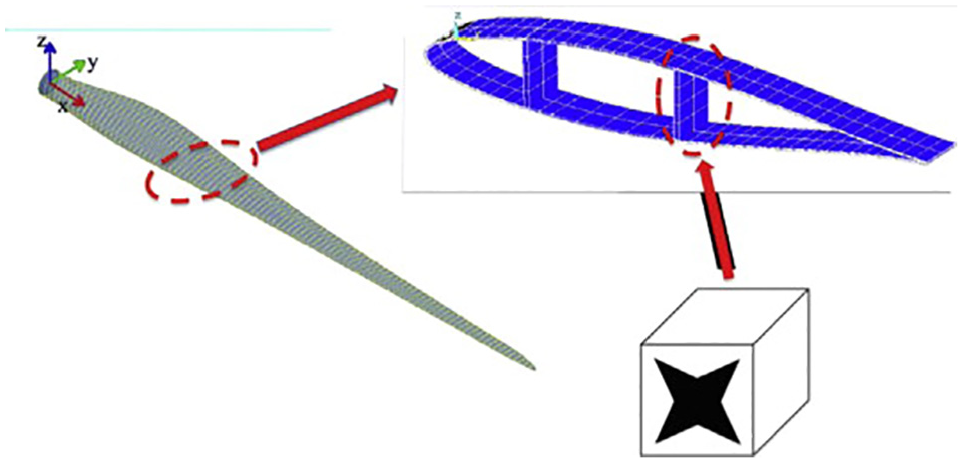
Two-phase composite metamaterials applied for turbine blade. 68
Furthermore, large-scale metamaterials (LSMs) 78 were proposed to be applied for seismic applications to mitigate remotely the influences of seismic waves by creating a barrier of metamaterials around the entire area required to be protected as shown in the Figure 9. For this purpose, three types of unit cells were adopted, including cross-cavity cell surrounded by soil, hollow cylinder cell made of stiffer material surrounded internally and externally by soil, and a cylinder cell made of stiffer material surround by a rubber hollow cylinder and then surrounded by soil. These unit cells were repeated in a periodic way to build a square array around the target place to be protected from earthquakes. These features of metamaterials were selected to work effectively within the frequency range of seismic waves.

Large scale metamaterials developed for attenuating remotely the seismic waves, including three unit cell types. 69
Also, full 3D-simulation based on finite element analyses for the seismic waves (surface and guided), including the viscoelastic effect of the soil, was conducted for the three types of metamaterials with considering certain ranges of mechanical properties. The results showed that seismic waves could be attenuated and their amplitudes could be reduced theoretically by using LSMs, thereby enabling the protection of civil fields and saving mankind from the risk of earthquakes. 78 For the same applications, a unit cell design of inerter-in-lattice metamaterials was proposed to be used as a remote shield to attenuate the love waves based on one-dimensional analyses. The design of the unit cell includes viscous mass dampers on the upper and lower sides to resist the shear deformation of love waves and two plates on the right and left sides to support the structure of metamaterials in the vertical direction. 63
To this end, not only the metamaterials have been used in the applications that required a good damping capacity but also there are other emerging materials showing good capabilities for dissipating the vibration energy. Of these materials, the carbon nanotubes (CNTs) have been exploited recently for assembling macroscopic materials of high damping properties. 79 For instance, the compression behavior of CNT bundle during loading and unloading conditions, especially that the material returned to its original state in the case of unloading without any residual strain, could be used to design an elastic damper. 80 Besides, the influences of adding CNTs in the matrix of fiber-reinforced composite materials on the vibration damping characteristics were explored. It has been found that damping performance could be raised by more than 130% through adding CNTs to a stationary composite beam and by more than 150% in the case of adding CNTs to a composite beam spinning at 500 rpm. 81 In addition, hybrid composites for structural damping applications were developed based on covering the surface of woven graphite fabrics with a thin film of silicon dioxide. Then, CNTs were grown on this film by using the technique of Graphitic Structures by Design (GSD), by this way creating so-called multi-walled carbon nanotubes (MWCNTs). The dynamic mechanical analyses showed that the tangent loss factor of the hybrid composites was improved by 56% in the frequency range 1–60 Hz, compared with other composites that did not undergo any type of surface treating or covering with grown CNTs. 82 It is also worthwhile mentioning that the characteristics of transverse elastic waves moving through three-dimensional groups of vertically aligned single-walled carbon nanotubes (SWCTs) were investigated using continuous and discrete models. 83 Also, the recent studies revealed that the mechanical properties of vertically aligned SWCNTs could be improved in the direction of applying longitudinal magnetic field. For this purpose, the properties of elastic waves traveling within the three-dimensional forests of magnetically influenced SWCNTs were explored using non-local higher order beam theory. 84 In addition to the SWCNTs and MWCNTs, the bilaterally nonlocal dynamics of vertically aligned double-walled carbon nanotubes (DWCNTs) built in the form of layer-by-layer was studied as a free vibration using developed nonlocal continuum models. 85 Another material class, termed as interlocked CNT, was developed by utilizing floating catalyst chemical vapor deposition method. As a comparison with other CNT species, the interlocked CNT networks showed higher damping factor and storage modulus due to the abundant inter-bundle slip-stick motion. 86 Most importantly, it was noticed that the damping behavior of this material relies on the frequency, where both the tangent loss factor and the dynamic modulus increased clearly with increasing the frequency from 1 to 200 Hz. 86 Finally, CNT-reinforced cementitious composite materials were produced by dispersing CNTs within the cement dehydrate by using two methods, aromatic modified polyethylene glycol ether termed (TNWDIS) and polyvinylpyrrolidone named (PVP). 87 Indeed, it was observed by the scanning electron microscopy there is a good compatibility between CNTs and cement hydrate, which was seen to grow successfully on the surface of CNTs. These structures were tested experimentally, and the results showed that the damping ratio was enhanced by 25.9% for CNTs/hydrate cement composites dispersed by TNWDIS technique. This is almost double the corresponding value of PVP-based CNTs/hydrate composites. 87
Theoretical works verified experimentally
Many works have been done theoretically to study vibration suppression and damping enhancement. It is crucial to verify the results experimentally. Gantzounis et al. 88 investigated low-frequency bandgaps of local resonators (granular crystals) numerically and validated the results experimentally. Wang et al. 56 performed vibration analysis on a Kagome lattice structure using FEA compared with and experimental measurements, and found good agreement between the results. Moreover, beam-like structure was studied by Baravelli and Ruzzene 4 who analyzed the bandgap properties of a chiral core structure which is fixed as a cantilever beam from both ends. The study included both experimental and finite element approaches to predict the vibration bandgaps properties. The results show a good match of the experimentally measured frequency response function with the predicted one numerically according to Euler–Bernoulli beam theorem, as shown in equation (5). This equation can be used to find the frequencies of the beam-like structure. When n equals to 1, αn is approximately equal to 4.73.

The following governing equation (6) is used for plate-like metamaterial which is used in vibration attenuation and suppression. The wave propagation growth through the plate-like structure is performed by Li et al. 89
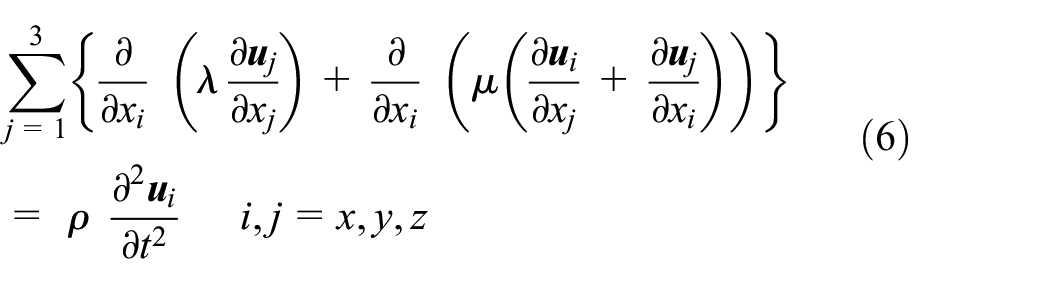
where, ρ is the density and u is the displacement.
Therefore, the numerical method can be used for predicting the frequencies that might be used to enhance and possibly optimize this design in the future.
Future of metamaterials as vibration isolators
Metamaterials are increasingly being used in the development of vibration isolator systems. It is expected to receive more attention in the years to come due to the development of additive manufacturing field. Metamaterials can be easily fabricated using AM technologies due to their layer-by-layer fabrication process. This can offer more research opportunities in the field of vibration isolation and control. Zadpoor 90 has explored metamaterial in detail in his recent research. Also, Li et al. 21 provided a new research about a 4D printed shape memory polymers which can be used in many applications as an intelligent device for vibration isolation and control. Kelkar et al. 91 also presented a review on recent studies and future opportunities of metamaterial in different fields like sensors and actuators. Furthermore, Mu et al. 92 presented a future research possibilities of vibration attenuation of seismic waves. They have provided many models and systems to study a wide range of metamaterial as an isolation and control. Metamaterials are being used to measure seismic wave to predict waves of earthquakes. Brûlé et al. 93 discussed this field in his recent research.
Other aspects of metamaterials
In this section, other aspects of metamaterials will be discussed. For instance, Chen et al. 94 proposed three-dimensional double-arrow-head (3D DAH) auxetic metamaterials fabricated based on hot molding press method using carbon fiber reinforced polymer (CFRP) material as shown in the Figure 10. Six configurations of 3D DAH metamaterials were designed with different angles, including (15°, 30°), (15°, 45°), (15°, 60°), (30°, 45°), (30°, 60°), and (45°, 60°). Then, the samples were tested experimentally using a quasi-static axial compression test as a static mechanism and resonant test as a dynamic mechanism to obtain the damping properties. Then, function-fitting and half-band methods were used to estimate tangent loss factor and energy dissipation for the six configurations, and hence the associated results were compared with each other. It was found that the 3D DAH auxetic metamaterials offered high damping capacity, relatively high compressive strength, and light weight. In addition, the configurations of (15°, 30°) and (45°, 60°) showed the best damping performance among the others.

The general feature of 3D double arrow head AH auxetic metamaterials (a) Representative volume element of the 2D DAH structure and the geometry parameters, (b) The 3D DAH structure and (c) Photos of the specimens. 94
Sun 95 introduced membrane acoustic metamaterials to work as a damping mechanism for reducing the amplitudes of vibration structures, like steel plates. Such metamaterials consist of two layers of plastic frame connected together firmly by the means of pins and holes, a medium layer of rubber membrane, and a group of metal platelets. The plastic frame includes 70 grids distributed as 5 along the frame width of 80 mm and 12 along the frame length of 192 mm, where the frame thickness is 7 mm. Also, there are 24 half-circle-shaped iron plates distributed as four in each of six-unit cells or platelets located at the center of the polymeric frame as shown in Figure 11. Four samples of the membrane acoustic metamaterials were fabricated and located at the upper, lower, right, and left positions of the host structure (a steel plate).

Membrane acoustic metamaterials act as a damping mechanism. 86
An experimental work was conducted to compare the vibration behavior of the steel plate without anything, with membrane acoustic metamaterials, and a commercial rubber plate. The results revealed that the proposed metamaterials have participated evidently in reducing the resonant vibration amplitude of the free plate by 24.7 dB as an overall value over the frequency range from 100 to 1200 Hz. These metamaterials showed also a better damping performance compared with the commercial rubber plates in both low (100–500 Hz) and high frequency ranges (500–1200 Hz). Significantly, this aspect of metamaterials is recognized with relatively light weight, thereby putting them within the top candidate structures for aerospace applications.
He et al. 96 presented a new design of laminate acoustic metamaterials. It is composed of two orthotropic parallel laminates made of carbon-fiber-reinforced polymer and an array of periodically distributed mass-spring elements mounted between the two laminates as seen in Figure 12. These elements usually work as absorbers. In this regard, any unit cell of laminate acoustic metamaterials consists of a middle absorber mass connected with upper and lower springs of similar stiffness. And, the other ends of the two springs are connected with the upper and lower pieces of laminates, respectively. Significantly, the dispersion analyses revealed that the new laminate acoustic metamaterials have wider bandgaps due to using the carbon-fiber-reinforced polymer, which is far-famed with its high specific-strength to weight ratio. For this reason, the new laminate acoustic metamaterials are better than the traditional ones in suppressing the vibration behavior. The results showed that the width of the bandgap depends on the ratio of absorber-mass to the unit-cell-mass of laminate metamaterials, and the position of bandgaps depends on local resonant frequency of the absorbers. Up to this point, the new laminate acoustic metamaterials were applied to build vehicle doors and succeeded in reducing their vibration by a noticeable amount.
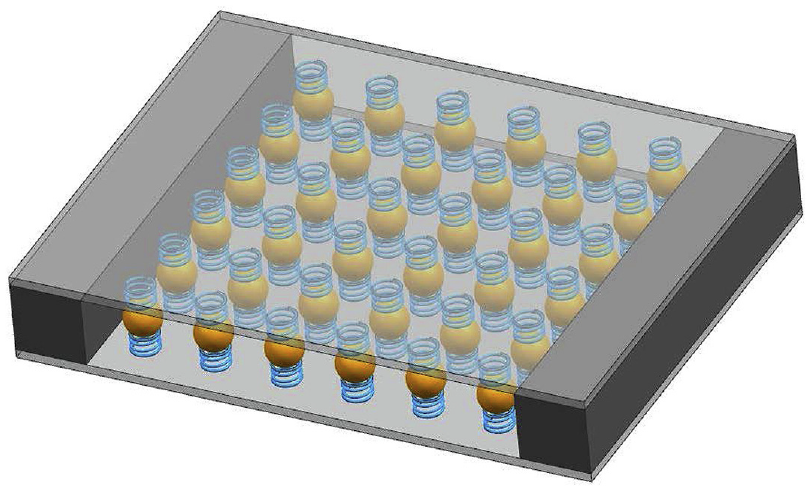
The design of laminate acoustic metamaterials. 87
In addition to the three types of metamaterials aforementioned, there are other two aspects of metamaterials so-called large scale and granular used for dissipating the vibration energy. The large-scale metamaterials 63 were applied for the seismic applications to protect the areas from the risk of natural hazards, which was explained in details in the section (Applications of metamaterials). And, the granular acoustic metamaterials 88 were recognized with their capabilities to be used for many applications of low-frequency stopbands, where the vibration isolation is of high importance. The granular acoustic metamaterials were discussed earlier in the section (Theoretical works verified experimentally).
Summary and conclusions
This paper presents a review of metamaterials and porous structures with a particular focus on metamaterials in vibration isolation and control. Metamaterials can be used in several applications and technologies but the most essential application is used for the vibration isolation and control. It offers unique capabilities regarding vibration attenuation. In conclusion, metamaterials can be used in a wide range of mechanical vibration systems and structures. It showed that metamaterials have great capabilities to reduce the vibration of the system as presented by many researches. The opportunities of research in this field have an outstanding range of possibilities in recent advances and the following gaps are recommended to be covered as future studies.
Studying the structural parameters of metamaterials that influences the mechanical vibration characteristics in a systematic way, which could be summarized as listed below.
Corresponding to each topology, a range of relative densities could be set to determine the corresponding values of the damping coefficients. Based on the latter, the damping ratio could be found to identify the type of damping whether it is over, under, or critical damping. This in turn will give, in advance, the machine operators a good insight about the isolation capability of the structure that they are planning to use in the field, thereby providing a good control for the vibration system and a safer environment for the operators. The same thing is valid when testing the bandgap properties of new topologies corresponding to the same relative density. Now, putting the above-mentioned two structural parameters together (relative density and topology) under investigation will be the main key for optimizing the vibration behavior of a mechanical system in order to obtain the required damping ratio at a minimal cost.
An advance analysis for the influence of strut distributions and strut angle variations on the cellular material stiffness could be conducted to manipulate the associated natural frequency. This is of high importance in avoiding the resonant mode that could cause a catastrophic failure to the components of a vibration system.
The gradient in the structure of metamaterial could be a good point of investigation to control the wave propagation. In this case, the direction of applying load is essential since the structure is not symmetric, which in turn opens more avenues for the researchers to apply farther studies in the field of mechanical vibration.
Exploring the effect of material type on the natural frequency and damping coefficient of metastructures. In this regard, the manufacturing parameters of 3D printers using certain materials could also be probed to reveal their influence on the corresponding vibration isolation.
Finding out which one has a more dominant influence on the vibration energy absorption, the structural parameters or the material type. In this regard, this study will require large data set. Also, it will be very helpful in providing wide-range selections out of which the designers of mechanical vibration systems could choose what is suitable for them, based on the availability, the site environment, the targeted application, and, of course, the cost.
Predicting the essential parameters of a vibration attenuation system, such as the frequency ratio and damping factor. To explain that, potential correlations relating the damping factor with the relative density, and the frequency ratio with the relative density could be obtained for the purpose of predicting the vibration characteristics of machine elements. These correlations are supposed to be similar to the scaling laws and are very beneficial in reducing the size of the experimental work, and saving human time and effort.
Investigating the impact of dynamic-loadings and boundary conditions on the isolation of vibration systems. Toward this goal, the vibration isolation of a metamaterial in the longitudinal direction might be different from that in the lateral one, especially when structure of the metamaterial is not symmetric. For this reason, it is important to realize and analyze the vibration response and the associated attenuation when applying loads for the purpose of inducing vibration in both longitudinal and lateral directions with respect to the metamaterial structure. In addition, the boundary conditions of LCSs whether constraint or unconstraint might have an influence on the vibration properties due to their evident impact on the overall mechanical behavior of LCSs.
Footnotes
Handling Editor: Chenhui Liang
Declaration of conflicting interests
The author(s) declared no potential conflicts of interest with respect to the research, authorship, and/or publication of this article.
Funding
The author(s) received no financial support for the research, authorship, and/or publication of this article.
