




Abstract
Since the 1980s, feminist scholars have explored the dynamic linkages between nationalism and gender. Case studies have shown representations of women as reproducers, transmitters of culturally sanctioned behaviour, signifiers of ethnic groups and markers of national identity and honour. The emergence of social media created a new digital arena for the circulation of tropes related to gender and nationalism, and the recent rise of Hindu nationalism in India was reflected and perpetuated in social media. This article explores several memes in the intersecting discourse of gender and Hindu nationalism and investigates memes, tweets, Facebook posts and hashtags that were used on social media during the general elections held in India in 2019. Such media content reveals the extent to which nationalist projects relied on gender norms. Although there is no fixed pattern in terms of how gender shapes memes and digital images, we can identify gendered ideologies of nationalism that embrace patriarchal forms of social organization. The article shows that current online discourses of Hindu nationalism often perpetuate patterns of heteronormative, hegemonic masculinity embedded in satire and jokes. Though women's participation and visibility are on the rise in the Global South, sexism and misogyny manifest as mediatized satire in political memes.
The shift from traditional door-to-door campaigning to the extensive use of social media in contemporary election campaigns has given rise to new practices of political communication. With over 460 million internet users, India is the second largest online market, ranked only behind China. 1 Social media such as Twitter, Facebook and WhatsApp are abuzz with discussions and debates about nationalism. As a new genre of political communication, memes not only inform and express opinions about events; they also provoke sensibilities and emotions to share and forward messages persuasively. Memes produced and disseminated by nationalist individuals or groups are persistently framed within a historical and gendered perspective. As acts of self-expression and political participation in gendered technological spaces, especially in the context of an intensely patriarchal Indian society, a common pattern for memes is to illustrate the othering and exclusion of women through practices of humour and irony.
Memes are units of cultural information that are characterized by strategic features such as fads, catchphrases, remixes, commentaries, songs and images that may be altered, modified and/or shared by users. They include videos and pieces of text that are typically humorous or satirical in nature. The term ‘meme’ is a neologism coined by Richard Dawkins in his 1976 book, The Selfish Gene, to describe the self-replicating units of culture that have a life of their own. 2 They are ‘multimodal symbolic artefacts’ created, circulated and transferred by countless mediated cultural participants. 3 Yet they are more than just funny images or controversial hashtags, and their high visibility has the ability to influence campaigns and public opinion. According to media studies expert Carrie Lynn Reinhard, memes can accomplish several things that the traditional news media cannot always achieve, namely instantaneous distribution, extended audience reach, viral and easily sharable content and the ability to focus on seemingly unimportant, but highly shareable, sound bites. 4 She states that creating memes has become a popular form of political participation and spreading them can be a powerful and democratic method of reinforcing views held by a particular social network. They often circulate in media echo chambers such that their persuasive effect on those outside that network is likely to be limited. 5 Like other cultural artefacts that are shaped by social ideologies, memes often are imagined and composed through gendered practices and with gendered meanings.
In general, civic dimensions of nationalist projects involve motivation and imagining for statehood and nation related to specific territoriality and to enshrined ideals and principles. In ethnocentric nationalist projects, culturally homogeneous or exclusionary visions are informed by language, race, religion and/or other practices, and they are presented as the essence of the nation. Ethnic nationalism is a form of nationalism wherein the nation is defined in terms of ethnic consciousness and presupposes an awareness of other groups. 6 For whichever specific ethnicity involved, the central theme is always that nations are defined or imagined through a shared heritage that usually includes a common language, faith, ethnic ancestry or culture. Max Weber points out that the nation contains notions associated with common descent that aligns with the sentiment of solidarity, which is fed from variable sources. 7 Ernest Gellner outlines nationalism as the principle that ‘the rulers should belong to the same ethnic (i.e. national) group as the ruled’. 8 In contrast, Walker Connor argues that a nation is not brought into being when its elites decide it to be so, but when the ‘subjective’ experience of nationhood pervades the larger social body. 9 For him, the distinction between nationalism and ethnonationalism is blurred: The emotional attachment to lineage, ancestry and continuity is shared by both those who have power and those who are deprived of it. In other words, ethnonationalism is conceived of in a very broad sense, and may be used interchangeably with nationalism.
Stanley Tambiah argues that in its variant forms, ethnonationalist movements are most definitely not solely a Western construct but emerge instead at many different non-European sites. 10 In the present phase of ethnonationalism that is characterized by the politicization of ethnicity, he claims that there are two salient features: (1) the majority/ethnic group demands collective entitlements as affirmative action and (2) the migration and collusion of groups produce competition for control and access to economic wealth, political power and social status. Most of these male theorists have rarely gone on to explore how nationalism is implicated in gender power. As a result, Cynthia Enloe remarks, nationalisms have ‘typically sprung from masculinized memory, masculinized humiliation and masculinized hope’. 11
To explore the intersecting discourse of gender and Hindu nationalism, I will proceed in three steps. First, I investigate the highly gendered assumptions on women as reproducers and men as providers and protectors central to Indian nationalism. Next, I provide a thorough historical background for the analysis of contemporary media and trace the development of concepts of Hindutva and female citizenship over time. Finally, an analysis of gendered memes demonstrates how gendered ideologies of nationalism continue to shape especially women's representation in contemporary India's political discourse, followed by a brief conclusion.
Indian nationalism as a gendered project
Since the 1980s, feminist scholars have explored the link between nationalism and gender showing how women and representations of women have been involved in ethnic and national processes, including as reproducers of ethnic collectivity, transmitters of culturally sanctioned behaviour, signifiers of ethnic groups, markers of national identity and community honour. 12 According to V. S. Peterson, gender is a structural feature of social reality and must be ‘put on the map’, systemically studied and have its symbolic and material effects incorporated into our contemporary accounts. 13 A vigilant observation of Indian nationalism makes clear the unique cultural and masculinist manifestation with important implications for the narrative of the nation-building process and socially constructed ideas of gender. The values characterizing manhood or masculinity are not fixed entities or particular personality traits; rather, they are historically, politically and culturally constituted. Masculinities are configurations of practice that are accomplished in social action and can therefore differ according to the gender relations in a particular social setting. 14 Media representations of particular versions of masculinity employ the interplay of commercial sports and war imagery celebrating force, domination and competition. 15
Gender and sexuality are pivotal to the narratives of ‘self’ and ‘other’ produced by media, and its universality can be traced to the ‘biological reproduction of the nation’ that corresponds to the notion of common blood and belonging. Feminists have criticized the established national agency as representing male power and how gender inequality continues to contribute towards these social and political formations. These differences between women and men serve to symbolically define the limits of national difference and power. Excluded from direct action as national citizens, women are subsumed symbolically into the national body politic as its boundary and metaphoric limit but denied any direct relation to national agency. 16 Being constructed as carriers of honour and intergenerational reproducers of its culture, women are delineated from men through specific codes and regulations. Given that female identity has been traditionally tied up with the reproductive roles of women, who are thence perceived as the biological producers of the members of the nation, women's contributions to the reproduction of the nation became a particular focus of concern. Women and ‘respectable’ female sexuality become the ‘gate-keepers’ of the moral as well as biological boundaries of the national community. 17 However, gendered constructions of women's social identities and collectivity in electoral politics or policy discussion seldom go beyond the idealized and symbolic bearers of tradition. 18
With regard to Indian nationalism, several fissures developed over a period of time since it was not fully inclusive, and the aspirations of several ethnic groups remained unfulfilled. Consequently, primordial and ethnic identities were invoked in politics to such an extent that democratic principles tend to be replaced by caste and religion. 19 In the political domain, ethnic nationalism and identity politics became intertwined and consequently blurred the distinction between ethnic identity and identity politics in popular perception. India's nationalist discourse sheds light on the fact that political nationalism is not homogeneous, and despite its modernist-secular identity, it is no less silent in drawing on women's bodies to articulate imaginaries of (in)security vis-a-vis a Muslim Other/Pakistan. 20
Nationalist politics in India constitute a rich field of gendered power relationships to inscribe its boundaries, anxieties and insecurities. 21 Adapting to the political models of the West in the material domain, nationalist discourse in India earmarks the spiritual, private domain of the family, a so-called space uncorrupted by colonialism, to articulate nationalism. To situate my discussion about this prolific field of gendered power relationships and the articulation of the nationalist discourse in the private domain of family, I refer to anthropologist Partha Chatterjee, who in his book, The Nation and Its Fragments, makes a distinction of an outer (state) and an inner (nation) domain: While the outer domain is represented by the colonial or the postcolonial state (i.e. the structure, laws and material), the inner domain embodies the nation and signifies the spiritual, natural, essential, cultural and family. 22 Women, as part of the inner domain, form the very centre of a realm called reproductive resources and, similar to the family, nature or cultural essence, would be the most in danger of being exploited and in need of being ‘defended’ or ‘protected’. 23
In occupying a liminal position, women provide a most convincing and consolidating platform. First of all, women are depicted as the homogeneous mass and are identified with the common folk or the whole people. 24 Historian Tanika Sarkar points to a complicated process of interrogating power relationships in the context of traditions among Bengali intelligentsia in 19th-century Bengal. 25 In an interesting observation, she shows how gender relations, with a focus on household and conjugality, gained significance. The married woman was viewed as a moral agent, one who had to carry forth the message of the shastra (body of Hindu religious texts), while the male body was cleared of these responsibilities on account of having passed through the grind of Western education, office, routine and forced urbanization.
Conjugality provided a variety of possible registers that could test, confirm or contest the Hindu's political condition. Conceived as an embryonic nation, this relationship could also define ingrained Hindu dispositions that might mirror or correct or criticize and overturn the values structuring colonialism. Virtues accumulated through a proper expertise in conjugality could accord the man a share to power in the world. Equally, proof of the absence of moral leadership here would disqualify him and explain his subjection. 26
The ties among family, nation and state are further elaborated by Anne McClintock who observes the representation of women as the atavistic and authentic entity of national tradition embodying nationalism's conservative principle of continuity. Men, by contrast, represent the progressive agent of national modernity embodying nationalism's progressive or revolutionary principle of discontinuity. 27
Hindutva and the female body politic in India – historical background
The idea of modern India as a Hindu nation has complex origins with contributions from several persons (all men) including Dayanand Saraswati, Aurobindo Ghose, Lala Lajpat Rai and B.G. Tilak. 28 The early nationalist movement rejected caste, image and idol worship, the practice of sati (burning of widows on the funeral pyre of her husband) and Hindu polytheism, and it urged a return to the four Vedas. However, a definitive theme introduced was that of ‘Hindutva’, loosely translated as the essence of Hindu-ness, Hindu nationalism or political Hinduism. Its origin goes back to the early 1920s when Vinayak D. Savarkar, a Hindu revivalist, elaborated upon the essentials of Hindutva in his book Hindutva: Who is a Hindu?. According to Savarkar, a Hindu is the one who acknowledges Hindustan as his pitrubhumi (fatherland) as well as his punyabhumi (holy land). 29 His work defined Hindu rashtra (nation) with a distinct identity, namely the Hindutva, which, according to him, does not coincide with Hinduism. 30
Savarkar's concept of Hindutva or Hindu nationalism is based on three pillars: geographical unity, racial features and a common culture. 31 Formulated as a pervasive sociocultural process, the Hindu nationalists set out to transform the movement into a political force. As an alternative political culture, ‘Hindutva’ developed into a dominant idiom that endorsed violence as a legitimate means against British colonialism and Muslim separatism. The result was the institutionalization of Hindu nationalism with the establishment of the Rashtriya Swayamsevak Sangh (RSS) in 1925, the Bharatiya Jana Sangh in 1951 and its gradual merger into the Bharatiya Janata Party (BJP) (Indian People's Party) in 1980. 32 Based on cultural, religious and ethnic nationalism in the subcontinent, the ‘Hindutva’ narrative imagines a male Hindu rashtra (nation) embodied in the feminine form of Bharat Mata (Mother India).
Posed as an inherently exclusionary process, Hindutva indicates the extent to which patriarchy, gendered ideologies, spatial and familial metaphors, as well as the sacredness of Sanskrit define the predominant understanding of the identity ‘Hindu’ as well as ‘India’. 33 In the diaspora, Hindutva politics presents an overarching mythology of tolerance and tradition, service, liberalism and humanist ancient wisdom to create a global Hinduism. This canopy includes national security, gender, science, economics, secularism and identities in the diaspora. 34 While not all Hindus in India subscribe to Hindutva, it is undeniable that its major supporters in the post-1980s era, consist of the affluent middle classes. As such, rich professionals, petty industrialists and rich peasants became its core base. 35
Nationalism provided new spaces for women to mobilize in particular contexts and even enabled them to use and endorse the universal construction of ‘the citizen’ in some situations – at the same time, framing those spaces through rhetoric and language in specific ways. Women participated in the construction of nationalist programmes, even though the process itself led to their simultaneous co-optation and/or exclusion from these constructions. The BJP's powerful role in mainstream Indian politics and the might of the Hindutva movement had important implications for women's activism in the new political reality in India. 36 The platform of Hindutva encourages women's espousal of violence to rectify the unethical nature of the social order. 37 The RSS provides institutional support in the form of Rashtriya Sevika Samiti and Sadhvi Shakti Parishad for women's mobilization. These affiliated women's organizations draw on images of women as the valiant mother, the virtuous wife and ascetic warriors to negotiate their way. While the RSS may idealize women from epic literature who embody notions of suffering and forbearance, it also celebrates brave and powerful women who use violence if necessary to protect their communities. Women, thus, became included in the discourse as both historical and legendary subjects who are culturally endorsed within the body politic, and as a restorative force to deal with masculinist fears.
In her detailed work Colonial Masculinity, Mrinalini Sinha explains the emasculation of Bengali man in contrast to the manly Englishman and points to its roots in the material and historic specificity of the colonial encounter. 38 This crisis of masculinities is a significant factor in shaping the Hindutva articulation of muscular nationalism. Ideas of manhood are animated by a fear of a hypermasculine enemy, which necessitates the recovery of a lost manhood to resist the erosion of Hindu political presence and even dominance, in India. 39 Sikata Banerjee argues in favour of a gendered story of nationalism that is nested within masculine Hinduism and has two dominant models – the Hindu soldier and the warrior monk – that have mediated a visible and powerful interpretation of Hindu nationalism in India. 40 It is inferred that due to exposure to the Western ideals of materialism, Hindu culture has declined, and it is only by reinvigorating Hindu womanhood that the family and nation can be restored.
A gendered analysis of Hindutva imaginaries
The latest and previous general elections in India mark a shift in the ways in which images and ideas were mobilized by a range of new actors and institutional factors such as information technology cells and social media influencers. To explore the gendered dimensions of contemporary ethnic nationalism in India, I conducted a selective intertextual and sociocultural analysis on data retrieved from the World Wide Web over a period of approximately 1 year, between 2018 and 2019. Some of these images had been created in the previously conducted general elections of 2014 and were in circulation prior to the elections of 2019. My constructed archives include popular phrases, memes and images that appeared on online news portals, Facebook pages, WhatsApp messages and/or trended with specific hashtags, such as #nationalist, #IndiaElections2019, #Hindutva, #saffron and #rightwing. I collected a range of memes regarded as ideological/ethnonationalist, including those illustrating certain vocabularies, metaphors and speech conventions that are referred to as social structures with certain potentials. A sample of still-image memes belonging to the image macro category was selected and analysed. Image macros are basically images with overlaid text. As one of the most widespread online meme categories with image and text in a single frame, they are easy to share as a WhatsApp image, Facebook post or tweet. These memes reflect satire or humour in a political setting, with a focus on prominent political figures.
I examine language, ideology and power encoded in these messages, their socio-historical context, parodic reworkings and how the past has been used to serve current political agendas. The framework of studying political humour in relation to norms and gendered practices offers a compelling resource for understanding how people assert their domination along ethnic lines and/or struggle against oppression and ‘othering’ in digital forms. Since gender is at the centre of most social orders, ideologies related with nationalistic varieties can generally be expected to interact in a variety of ways with gender stereotypes. Informed by wider sociocultural processes, memes shape and satisfy the human need for self-expression. As a form of public discourse, they manifest egalitarian and inclusive participation and representation of the self and the ‘other’ (anti-nationalist, minorities, community or ethnic groups). Media representation of a gendered discourse and the prevalence of hostility coupled with anonymity on the internet holds immense power with ethical and material implications.
Memes play a powerful role in subliminal persuasion messages, propaganda or psychological operations in a political context, and therefore, become a very effective tool in persuasive political warfare. 41 They are referred to as forms of popular culture and post-modern folklore. In addition, memes facilitate trolling of the vicious kind, with political parties, religious groups, student communities, IT professionals and even retired folks indulging in mudslinging of the worst kind. 42 Before the general elections of 2019, several nationalist memes were employed and circulated in social media. Image memes are exemplary of multivocal public participation, including those developed by political parties as tools for propaganda. Analysis of the social conversation around hashtags such as #Hindutva, #rightwing, #Modisarkar2 and #mahilamorcha helped establish a framework for the sample collection. For example, the #Hindutva received 290 tweets and 240 retweets in 10 weeks (from March to April 2019) with 33% of the tweets and retweets by females and 67% by males. I followed tweets rated by Trendsmap, 43 which generates trends based upon a set of data that covers the whole globe. This highlights not only the communication strategies of social media users but informs the audience on issues on which the mainstream media maintains silence; the means of tweets thus also serves as a political commentary on prevailing situation.
From 11 April to 19 May 2019, India conducted its last general elections in seven phases to make up the 17th Lok Sabha or lower house of Parliament. Enthusiastic media analysts predicted that nationalist fervour would most likely secure a second term for the right-wing BJP (translation: Indian People's Party) and its incumbent Prime Minister, Narendra Modi. 44 Beyond political acumen and populist projects, his dominance over media, especially social media, was a key factor contributing to his party's victory. More importantly, media discourses from the preceding elections of 2014 had articulated a gendered focus on Modi's ‘manly’ leadership style. His empowering celibacy was ‘implicitly counterpoised to his ‘impotent’ predecessor, and against an ‘effeminate’ Indian type who is unable to strike hard at external enemies, namely Pakistan and China and internal threats from Muslim terrorists’. 45 Modi boasted of a ‘56-inch chest’ to prove his courage and ability (read: manliness) to bear burdens in the service of Bharat Mata or ‘Mother India’; this, of course, is a much-invoked metaphor, especially in memes, images and hashtags (see Figure 1). The refashioning of masculine identities influenced by Bollywood appealed to a wide audience and turned into a successful campaign strategy.
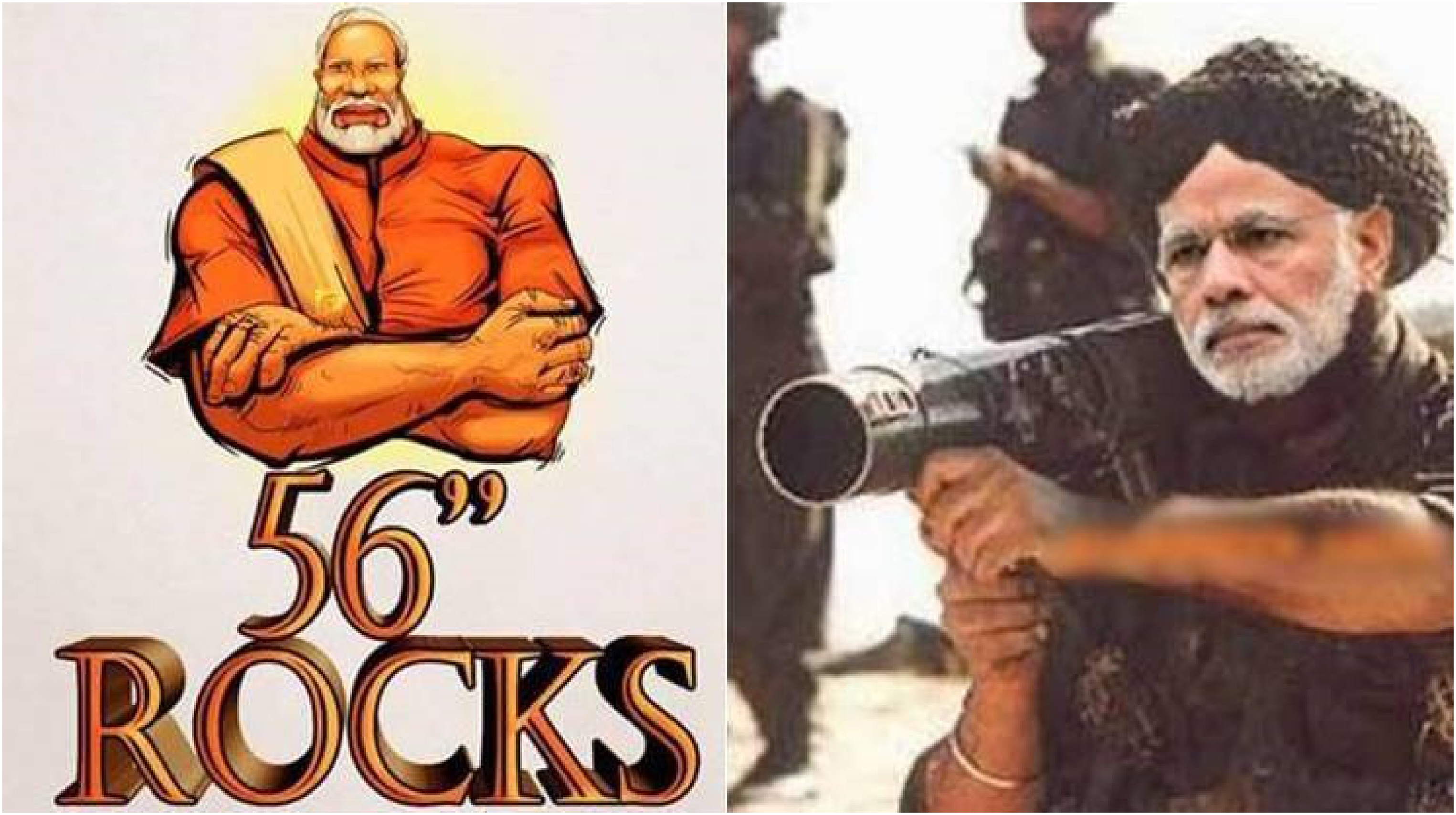
This image is taken from the news article ‘Surgical strikes: Indian social media responds with overwhelming pro-Modi memes’ (dated: 29 September 2016) by the Express Web Desk of The Indian Express. Image is downloaded from https://indianexpress.com/article/trending/trending-in-india/surgical-strikes-social-media-twitter-react-with-celebratory-posts-3056449/.
A hegemonic Hindu masculinity was achieved through the celibate body of Narendra Modi. In the previous election campaign of 2014, Modi was hailed as the Vikas Purush, translated as the ‘development man’. 46 The BJP's most prolific senior, female leader, Sushma Swaraj, carried the rhetoric of masculinity in politics further in the 2019 election campaign. Serving as the Minister for External Affairs of India, Ms Swaraj addressed an election rally in Satna, in the state of Madhya Pradesh in April 2019. 47 She said, ‘He (Modi) is the Vikas Purush and the Indian woman is a spark not a flower.’
Another significant aspect of circulated memes is the manner in which it democratizes social commentary. The commercial links underpinning most hashtags, however explicit, highlight that the gendered images are directed by shared histories, attitudes and interests beyond the user community. Gender plays a significant role in content creation and distribution, with women being less likely to share content online. 48 The overall representation of women serves entertainment purposes but any deviance or violation of ethnonationalist boundaries would lead to immediate sexual policing in the comments section. My analysis of social media content shows that representations of women intersect the masculinized discourse of nationalism by taking on the roles of the heroic mother, the chaste wife and the celibate masculinized warrior. All three representations of female behaviour draw on the common themes of female virtue and chastity. 49
Corresponding to common traditions of national identity building, the Indian nationalist discourse refers to its state as a specific kind of feminine entity: the ‘mother’. India has been associated with a mother's role even before it achieved independence from the British imperial power. In fact, the anthropomorphism of India into ‘Mata’ or ‘Mother India’ is closely linked to the patriotic struggle for independence and devotion towards a sacred territory. 50 Within the patriarchal authority structures, the onus of protecting the passive, receptive and vulnerable ‘mother’/nation and her honour falls upon the male, who is highlighted in his role/duty as the ‘son’/citizen. In this obligation, the son is expected to protect a valorized kind of female body – epitomized by purity, an erasure of sexual desire and a readiness to sacrifice.
The only ideal body that qualifies for being a ‘Bharat Mata’ is that of an upper-caste and upper-class Hindu mother; of a woman who has used her sexuality to produce an heir to her husband's family and who no longer experiences sexual desires. 51 In this process, besides status, the sexuality of a woman is evoked and suppressed, detailed and regulated the moment ‘Bharat Mata’ is chanted. Consequently, it forms ways in which nationalism engulfs the woman as the signifier for nation and the male as the warrior exhorted to protect the nation. The nation is understood as a nurturing and self-sacrificing entity, but it also becomes a site that needs to be revered, protected and served.
In his discourse on Hindu Dharma, M.K. Gandhi exhorted ‘the enlightened daughters of Bharat Mata, the women to be strong, pure and conserve what is best in our culture … This is the work of Sitas, Draupadis, Savitris and Damayantis not of amazons and prudes’. 52 This is emblematic of the restorative stance whereby mythical characters are called upon to create a discourse of an idealized past with constant threat to a woman's honour located in her sexual purity. Women in such narratives become a collective symbol for virtue, fertility, strength and continuity. In the ethnonationalist project, such myths of common origin are used as the organizing principle that greatly emphasizes on the ‘purity’ of nation and continues the line of patriarchal genealogy. The mother conceives children who are lovingly nurtured on her land by means of available resources and institutions and raised to become citizens of the nation-state. Associated with this symbol of an unconditionally loving and prosperous motherhood, the notion of India is hence deeply connected to women's sexuality and fertility.
In an incident that occurred around early March 2016, Mohan Bhagwat, the chief of the RSS, exhorted the new generation of Indians to chant ‘Bharat Mata ki Jai’ or ‘Hail Mother India!’ His comments drew a spate of reactions from members across party lines, with the most defiant coming from Asaduddin Owaisi, Member of Parliament and Chief of the All India Majlis Ittehadul Muslimeen (AIMIM). He said that he would never chant the slogan of ‘Hail Mother India!’, even if a knife were put to his throat. The incident snowballed when a member of his AIMIM party was suspended from the State Assembly in Maharashtra for refusing to join the chant of Bharat Mata ki Jai. A majority of political parties, namely BJP, Shiv Sena, Indian National Congress and Nationalist Congress Party, supported the decision for suspension. This was followed by widespread criticism from both sides, and the chief of the AIMIM party stated that since India was a republic, and the Constitution mentions ‘We the people …’, there was no issue of gender or Mata (mother).
Many memes were shared across media. At first and casual glance, the image below (see Figure 2) appears as a one-dimensional view of Mother India or ‘Bharat Mata’. However, it proves to be multidimensional, bearing many aspects of the literal and symbolic content of the sexual fantasies and also sarcasm relayed by the structural aspects such as silence, exasperation and innuendos.
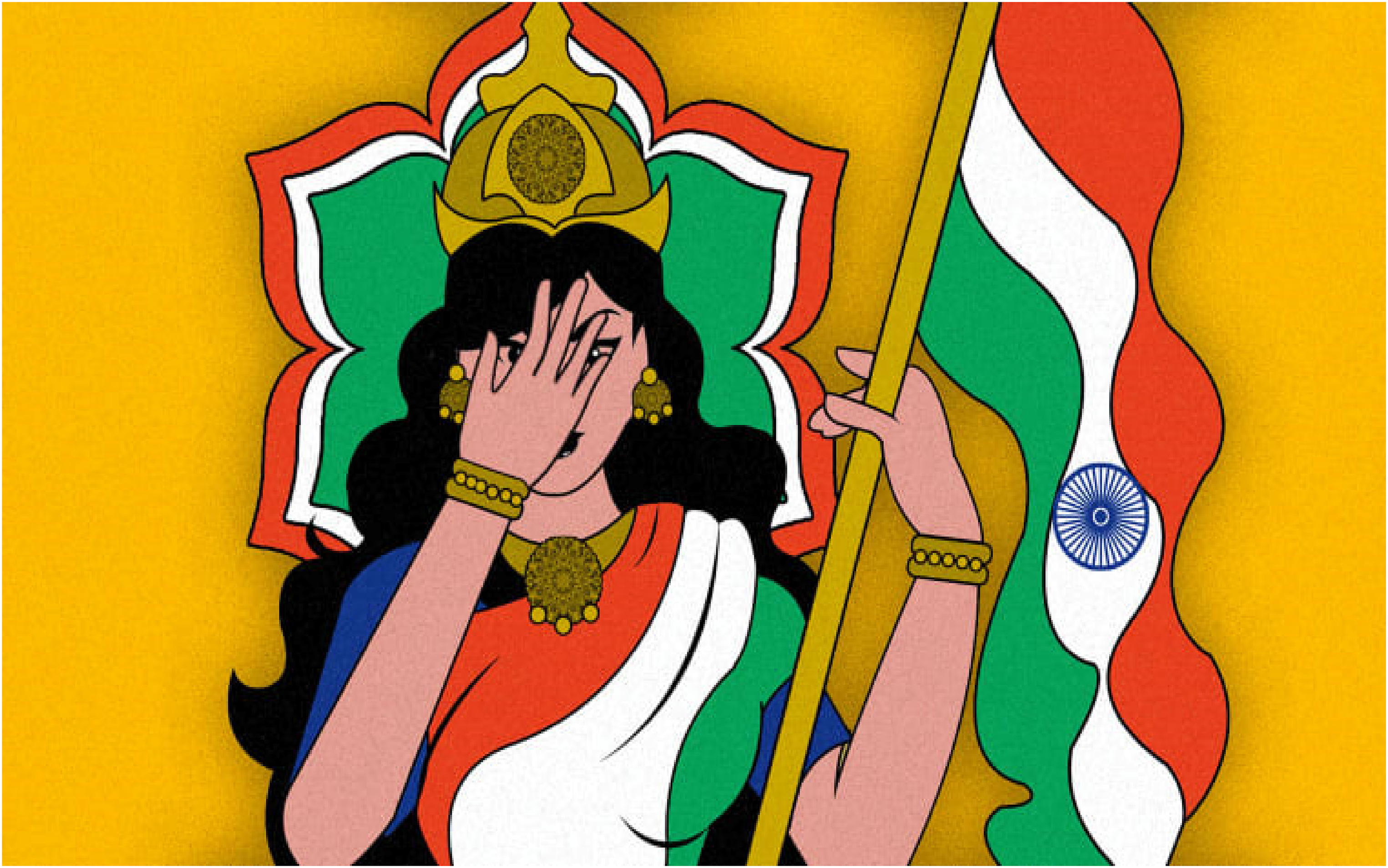
This image is from the article, ‘It's All about Loving Your Mata’ (dated: 11 April 2016) authored by Ambarish Ray, illustrated by graphic artist, Namaah in the infotainment website, Arré. Image is downloaded from https://www.arre.co.in/humour/its-all-about-loving-your-mata/.
Political humour plays a prominent role in ways that citizenship and moral sensibilities are cultivated in everyday life. 53 They not only normalize exclusionary, discriminatory political views and positions but also prioritize sociocultural frames, prevailing gender orders and hierarchies of bodies. This is evident in the next image (see Figure 3) where aggression is neutralized between the diverse public segments and participants are prepared for compromise. Opening up a space for an affective recognition among citizens and for possibilities of imagining an innovative way to bring different religions to the same platform over the issue of chanting Bharat Mata ki Jai, this meme engages different religious communities and promotes moral citizenship through laughter.
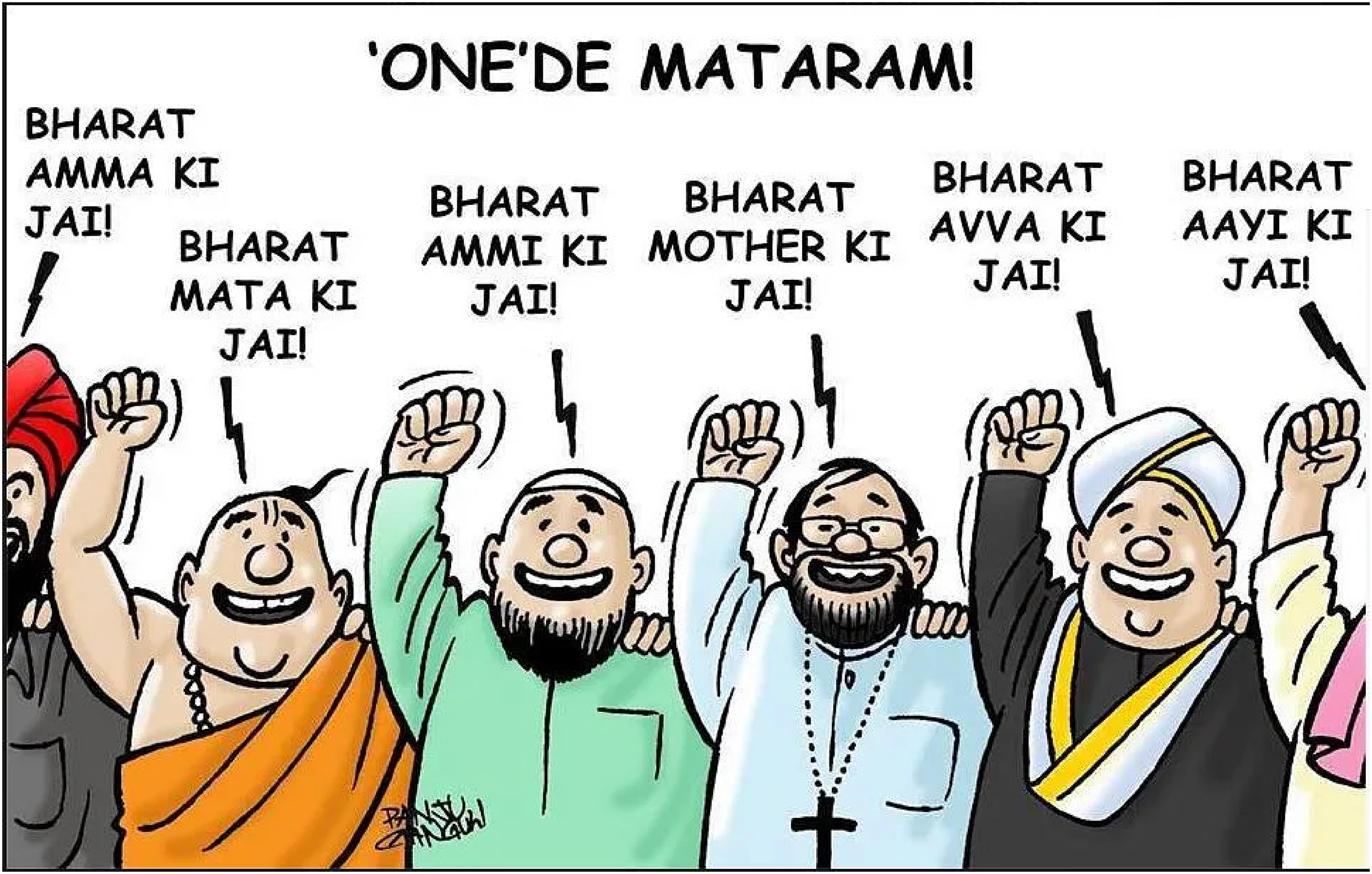
This image is from the article, ‘The Chronicles of Bharat Ammi and Her Jai’ (dated: 23 March 2016), authored by Divyani Rattanpal in the general news and opinion website, The Quint. Image downloaded from https://www.thequint.com/news/india/the-chronicles-of-bharat-ammi-and-her-jai.
In ‘Everyday Nationalism: Women of the Hindu Right in India’, Kalyani Devaki Menon examines everyday acts that complicate and engage plural and sometimes dissonant subjects of Hindu nationalism. 54 For example, she discusses stories that are integral to the RSS as they reiterate Hindu nationalist norms and create a place for themselves in these narratives. In the most dominant Hindu nationalist narratives, the 17th-century Maratha King Shivaji is valorized as the epitome of a righteous Hindu ruler and the progenitor of the modern Hindu nation. However, Menon finds that among the women of the Rashtra Sevika Samiti, the figure of Jijabai, Shivaji's mother, is the generative force for a newly awakened Hindu politics, an ‘architect of the Hindu Nation’. The stories that circulate around Jijabai highlight the central role of motherhood and construct a historical agency for women in the RSS (see Figure 4). Jijabai becomes a key symbol through which individual women are mobilized to make a deep impact on public, political events through the private choices they make for themselves, and specifically for their children.
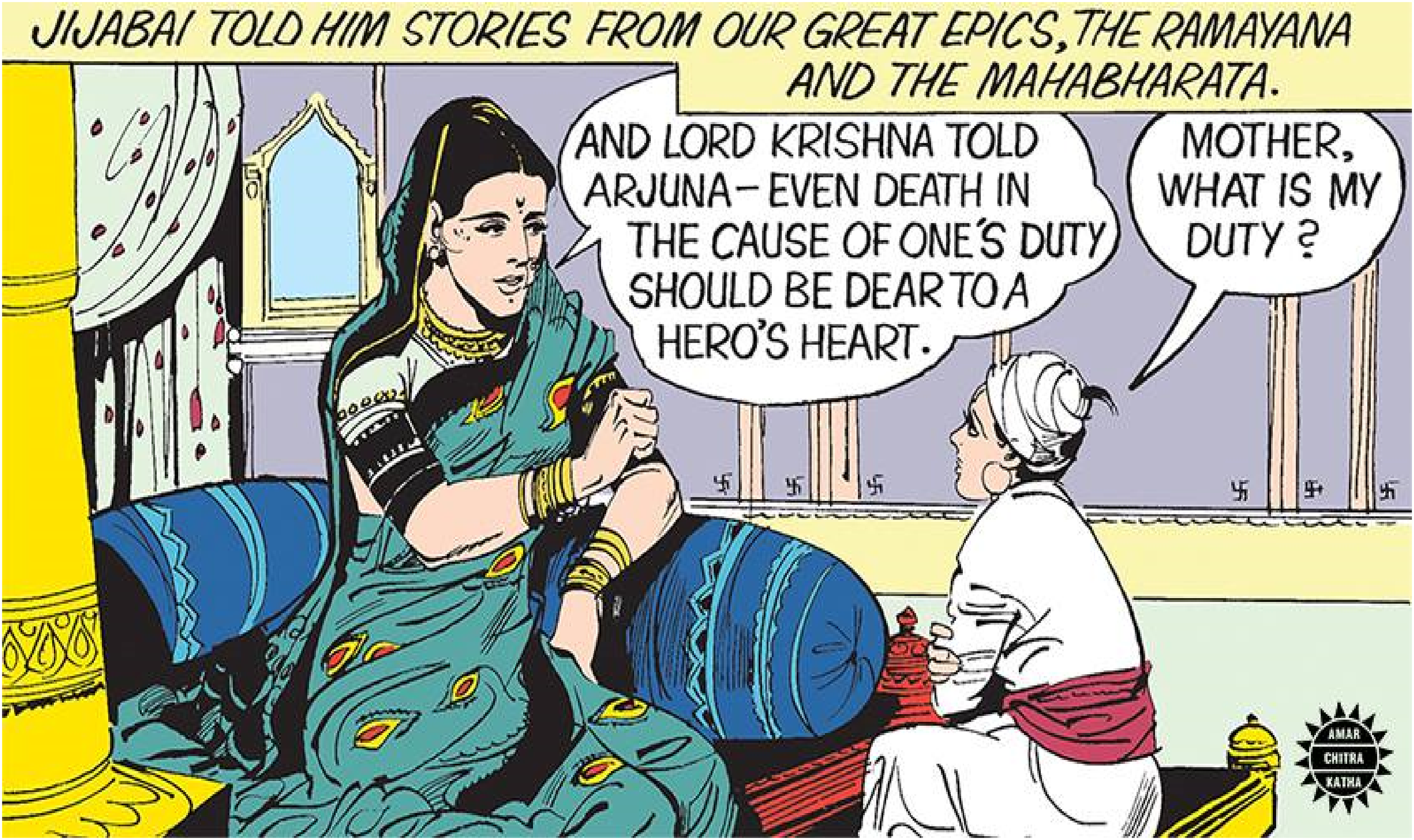
This image is from a Facebook post by The Amar Chitra Katha Studio (dated: 3 April 2014), an Indian publisher of graphic novels based on biographies, religious figures and cultural stories. Image is downloaded from https://www.facebook.com/amarchitrakatha/photos/a.314396308601566.68055.313807031993827/674117422629451/?type=1&permPage=1.
Feminist voices in India have been frail and fragmented when it comes to questions of gender exclusion, especially in situations of decision making such as in marriage practices. At the collective level, marriage is considered a life cycle ritual in India, a cultural prescription for social reproduction and the future of caste and kinship association. Marriage initiates and continues relationships of reciprocity and alliance between different patrilineal families within a caste. However, in certain cases, boundaries between kinship-arranged and ‘love’ marriages are not clearly defined. Especially when it is the case of the ‘other’, particularly the Muslim. Vigilance and violence against Muslims are implicit acts while approving an idealized patriarchal Hindu family with the civic duty to protect Hindu women from Muslim men (see Figure 5).
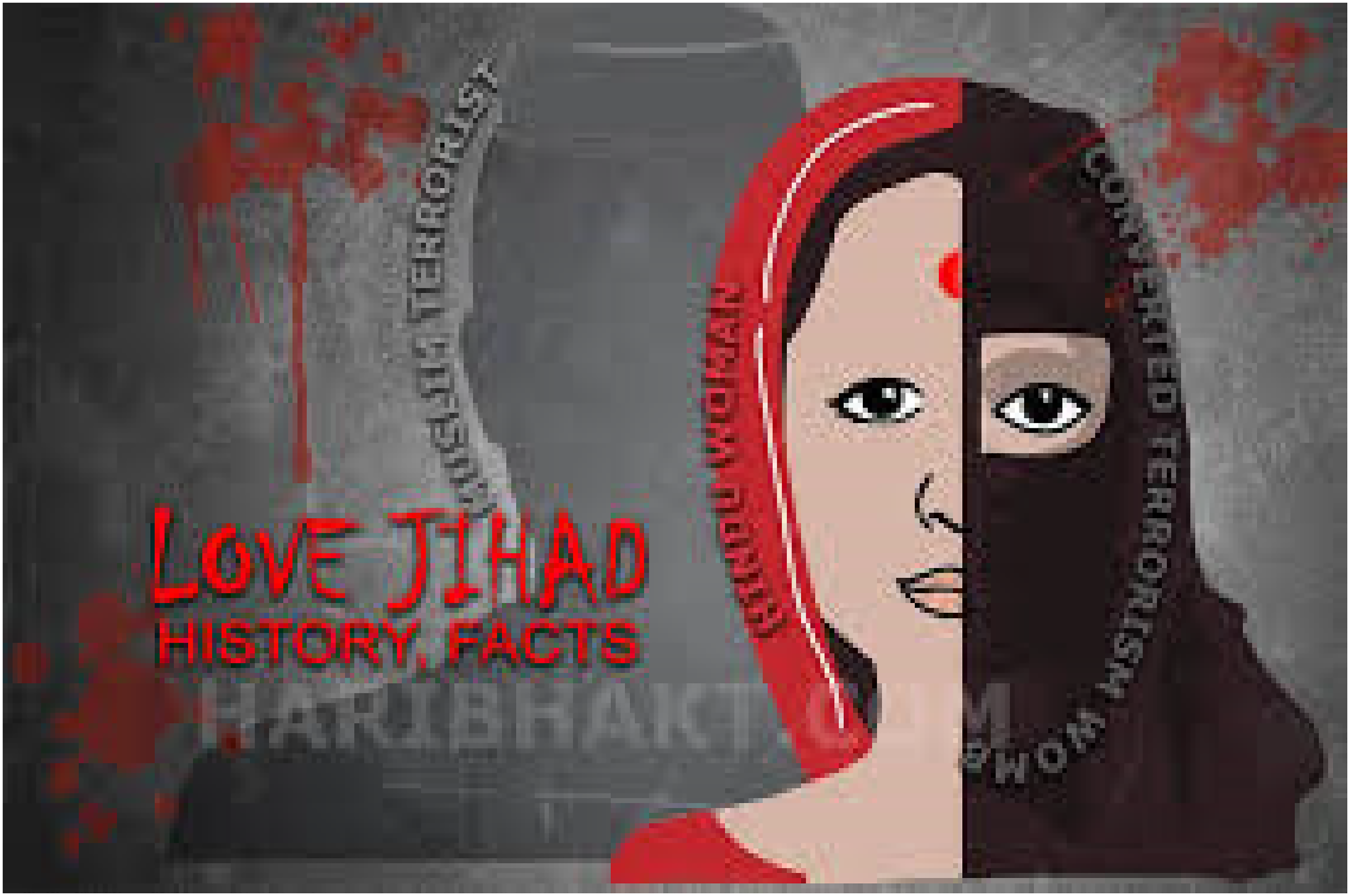
This image is sourced from an online article, ‘Love Jihad History, Facts: Hindu Women Trapped by Muslim Terrorist Men’ (not dated) published by a far-right site HariBhakt. Image is downloaded from https://haribhakt.com/eye-opener-for-hindu-girls-history-of-love-jihad-and-slavery-of-thousands-of-hindu-girls-in-india/.
In the Indian context, ‘protection’, especially in the context of marriage, is often a euphemism for controlling women's sexuality. 55 It includes not only safeguarding a woman's physical security, but also restraining her freedom and limiting her mobility to maintain her purity. As a result, not only do women find it difficult to select their spouses, their attempts to do so are silenced or marginalized to the point of being discredited or considered invalid. Marriages between Hindus and Muslims have long attracted censure in conservative Indian families, but the attachment of a deeper, sinister motive to them is a recent phenomenon. Several right-wing Hindu activists have alleged that members of the Muslim community are conspiring to marry Hindu women, convert them to Islam and have Muslim children. Love jihad, according to these activists, threatens to make Hindus a minority and, consequently, undermine the Hindu religion. 56 Campaigns such as love jihad often take the form of ‘moral panic’ that distorts social issues and thereby gives rise to reactions disproportionate to the actual seriousness (risk, damage and threat) of the event. Stanley Cohen has explained moral panic as acting on behalf of the dominant social order, orchestrating consent by actively intervening in the public space by influencing opinion through the use of highly emotive language. 57 In the language of common sense, moral panic operates as an advance warning system, and, as such, it progresses from local issues to matters of national importance, from the site of tension and petty anxieties to a full-blown social and political crisis. 58 The recurring theme of love jihad campaigns is the call for Hindu men to save or protect Hindu women, Hindu religion and Hindu nation.
Apart from its paradigmatic value in mythology and religion, the ideals of renunciation and celibacy exercise an enormous moral force in India. 59 The power of renunciation heightens the iconic status of India because it reiterates its deep association with Hindu ideals of spirituality, purity and other worldliness. Amrita Basu in her work on the real woman and the gendered imagery of Hindu nationalism shows that being sanyasins/sadhvi (renouncer and celibate) make these women reliable spokespersons for the future Hindu Rashtra (see Figure 6).
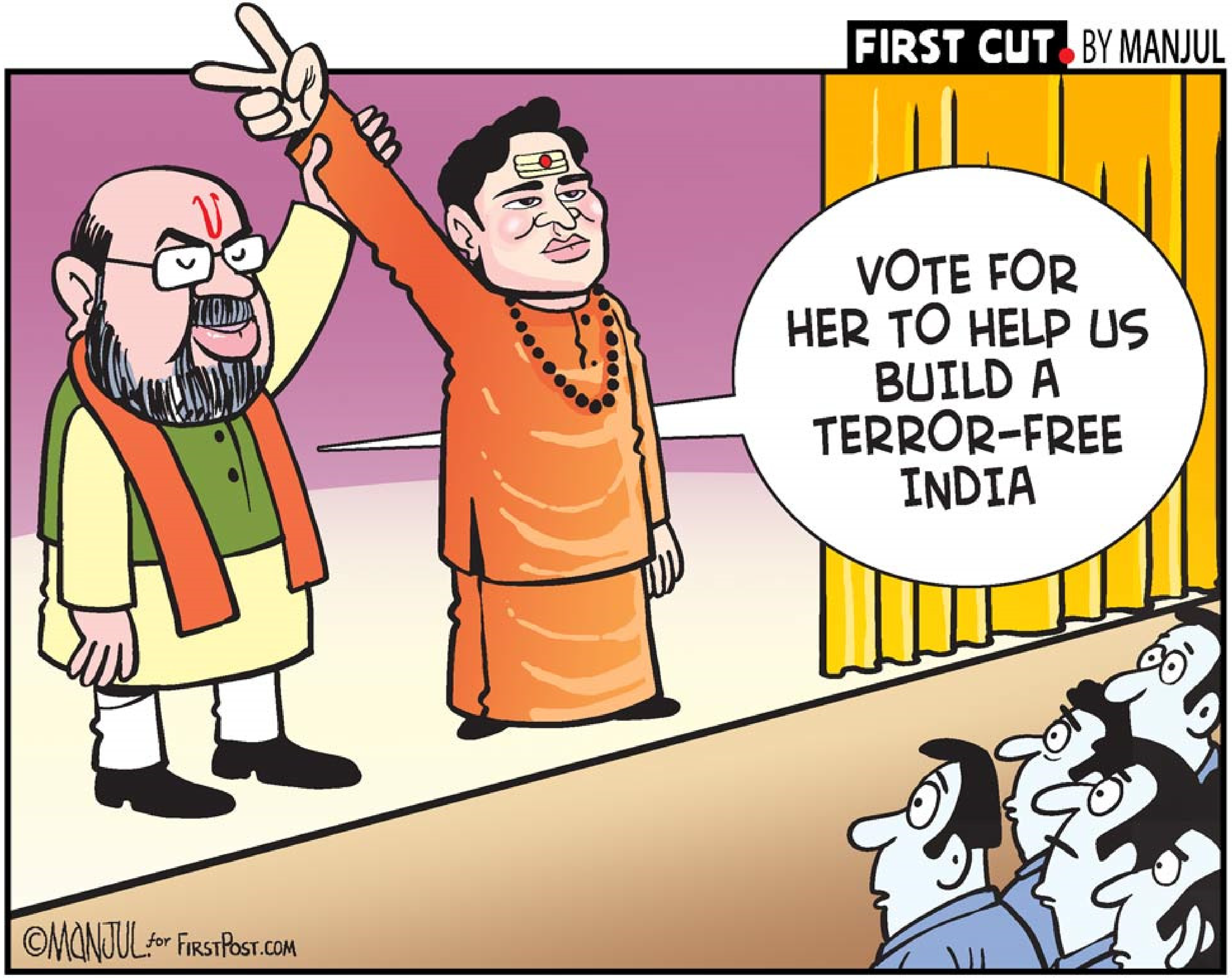
This image is taken from the Twitter handle @MANJULtoons, an independent editorial cartoonist. Image is downloaded from https://twitter.com/manjultoons/status/1118740943358840833?lang=en.
Female leadership of the Hindutva movement does not advocate passivity; instead, they are portrayed as powerful agents espousing violence against the ‘other’. Here, a Sadhvi (religious female ascetic) and active member of RSS who was the prime suspect in a bomb blast case was presented as the nationalist party symbol for the 2019 elections in India. This is an iconic representation of women, namely their association with violence powered by their celibate and ascetic lifestyles.
Very few studies discuss how the digital interacts with gender to produce renewed nationalist projects and practices. This article shows how memes utilize scripts from unrelated media sources to position and heighten gendered connections and subjectivities, allowing expression with anonymity and provoking discussion. Hashtags provide additional affective information that depicts discriminatory political practices and ways of engaging with political issues. Many such messages are polysemic, with multiple meanings depending on the specific context of their use. Instances of incongruity as an opposition between two scripts, where a script is defined as a cognitive structure involving the semantic information, are often reframed as unobjectionable and passable. Such violations or deviations from the norm may generate a humorous response by constituting a social corrective aimed at highlighting, eliminating and even preventing any disruption from what is socially accepted and approved of. 60
The complex positioning that unfolds in the production and consumption of political parody reveals participation and propagation of a majoritarian, ethnic and mostly middle-class discourse.
The convergence of media and its democratizing potential often resets the exclusive online spaces and networks besides informing political communities. The complex positioning that unfolds in the production of political satirical images is problematic and reveals the reappropriation of a Hindu majoritarian, ethnic and mostly middle-class discourse. Simultaneously, we see the reinforcement of religion and the polarization of gender roles, making patriarchal perspectives and arrangements pervasive and taken for granted. Just as any humour intended to influence behaviour is classified as controlling, the level of power that is invoked varies from each case.
Given that the online dimensions of these social media ventures are very misogynistic, the sharing of memes that appropriate gender and ethnicity can be cathartic in a politically charged environment, such as an election. Dissent and democracy, feminism and society, environment and development – these are usually the subjects of serious debates and angry newspaper columns. With memes, anyone can become an influencer or thought leader and, most importantly, their view/opinion could be heard or seen, appreciated or rejected and shared by hundreds and thousands of people. Taking cue from a master narrative (such as epics, historical figures or Bollywood film scenes) and applying it to a new, unrelated setting decontextualizes the original and generates a new, partial narrative. As a means to prompt polyvocal participation in online communication, viral texts in the form of memes produce the multifaceted effects. For instance, they highlight sociocultural and political implications, the significance for self-representation and identity formation, the promotion of alternative opinion or trending interpretation, the subversive and resistant power in media, and the propaganda and digital political campaigning. In the case of contemporary global politics, ethnonationalist discourses intertwined with parodic practices of gender have achieved the effects of everyday jokes and a popularity it never had before.
Masculinities are evoked, valorized and used in politically unexpected spaces. Chauvinistic ideologies are conceptualized as being embedded in discursive practices and power structures are articulated in hegemonic terms. This contributes to the formation and perpetuation of an anti-feminist right-wing polemic by reproducing gendered dynamics of dominance and subordination at the intersection of new technologies and the nation. I conclude that this iteration of heteronormative, hegemonic masculinity in the current online nationalist discourses, though specifically mocking gender stereotypes, rarely serves to challenge well-established hierarchies. Even though women's participation and visibility are on the rise, sexism and misogyny manifest in new forms masquerading as parody, irony and humour in memes. Beyond embracing vulnerabilities, establishing power relations and engaging adversities, humour and sarcasm have the potential to perpetuate or subvert gendered hierarchies. Moreover, sexist humour entangled with complex political subjects is a case of symbolic violence that serves to suppress and sideline women in nationalist pursuits.
Footnotes
Declaration of conflicting interests
The author(s) declared no potential conflicts of interest with respect to the research, authorship, and/or publication of this article.
Funding
The author(s) received no financial support for the research, authorship, and/or publication of this article.
