




Abstract
Young children should be included in research that investigates their life experiences, as this honors their rights to inclusion and allows their voices to be heard. This paper summarizes key themes, takeaways, and recommendations gathered from a multi-year research study regarding how to include young children in violence against children research, where feedback on the scope, methods, and consequences was sought from child participants and study staff. Children (age 4–17 years) in South Africa were included as the youngest participant group in a multi-generational study that also included their parents and grandparents, though data here focus on children aged 4–10. Rigorous policies and safeguards were employed to prioritize the ethical inclusion of child participants. Following completion of a child-friendly questionnaire, qualitative data were collected from a sample of participating children, as well as study staff (fieldworkers; social worker), wherein they reported their views on including young children in violence research. Following thematic coding of this qualitative data, the study management team engaged in multiple reflection sessions to discuss the fieldwork challenges, solutions, best practice takeaways, training implications, and beyond with regards to conducting VAC research with young children. Key themes and takeaways included: the feasibility of young children’s participation and how they understood and responded to participation, the interviewer qualities that allowed for meaningful participation from young children, the role of play, arts, and fun in the interview space, and post-participation considerations and actions. The takeaways and recommendations pointed to how young children can be safely included in violence-focused interviews and research, while noting that careful attention must be paid to how they are invited to and engaged in the research, as well as the attentiveness and sensitivity of the interviewers and research team.
Background
An estimated 1 billion children experience violence each year, representing a massive burden of harm inflicted on children annually with the potential to lead to negative health impacts across their life course (Hillis et al., 2016). Violence against children (VAC) is a significant public health concern, and there is a pressing need to ensure children have safe, violence-free childhoods to both foster child health and ensure health in adulthood. In order to measure, prevent, and address the myriad forms of VAC that children may experience, there have been growing calls to foster greater inclusion of all impacted groups—including young children and VAC survivors—into violence research (Roth et al., 2023). Using a child rights framework, these calls for inclusion acknowledge the necessity that young children be included as participants in VAC research studies to allow them to speak on issues that impact them and share their lived expertise (Evang & Øverlien, 2015; Roth et al., 2023). Though gatekeepers have resisted allowing young children to participate in VAC research given ethical concerns around their vulnerability and the sensitive nature of the topic, research shows that when appropriate ethical safeguards and developmentally sound research methods are in place, young children can safely and meaningfully participate in VAC research without undue distress (Franchino-Olsen et al., 2024; Roth, 2023; Woollett et al., 2024). For example, work by Evang and Øverlien (2015) demonstrated how young children could participate in research on violence when interviewers were aware and respectful of their verbal and non-verbal cues, which allowed children to exercise agency by leading or negotiating the conversation and to introduce play into the interview space. This created opportunity for young children to regulate their emotions during a potentially difficult conversation as the interviewer followed the children’s signals and lead. An overview of participatory research with children in Europe highlighted additional examples of studies with young children as participants where researchers used arts-based, storytelling, and play- or game-based methods to engage young children around sensitive topics like VAC (Alfandari et al., 2023). However, including young children in VAC studies should be done with thoughtful consideration regarding their needs and protection and should build on what has been learned and viewed as promising practice by VAC researchers who interact with this age group.
This paper draws from the fieldwork and career expertise of the author team in conducting VAC research with young children (primarily ages 4–10 years old). The primary study from which these reflections were drawn was a multi-year, multi-generational study of intergenerational violence in South African families who live in rural or peri-urban, low-resource communities that included young children as participants. The focus of the multi-generational study was around intergenerational transmission of violence, thus data on VAC and other types of violence were collected. Young children completed interviewer-administered standardised questionnaires employing play- and arts-based methods, as well as in-depth qualitative interviews, which also used arts-based methods. Thus, children answered closed- and open-ended questions about sensitive topics, including VAC, and created drawings or other arts-based materials to creatively explore their thoughts and feelings on violence and families.
This paper employs a rights-based paradigm that children of all ages have a right to be heard and included in research. Articles 12 and 13 of the United Nations Convention on the Rights of the Child state that children have a right to be informed, involved, and consulted on decisions and issues which impact their lives (The United Nations Convention on the Rights of the Child, 1989). The implicit meaning of this—which this paper adopts—is that children of all ages are capable and competent and that their thoughts and feelings should be sought and valued (Øverlien & Holt, 2021). However, while this framework highlights the need to include children in research, it also seeks to honor children’s right to be protected from harm, which requires that their participation at any level of research needs to be ethical and to appropriately safeguard their well-being as well as accurately assess how the benefits of the research weigh against potential risks (Mathews et al., 2022). Grounded in this rights-based paradigm, this paper will touch on some of the ethical considerations, including potential safeguards and other relevant research features, that allow young children to exercise their right to participation while ensuring their right to protection is also honored. Using data collected from young children and study staff in the South African research study, as well as reflections from the author team following fieldwork completion, this paper will summarize the key themes, takeaways, and recommendations we believe are highly relevant to conducting VAC research with young children.
Methods
Sample and Setting
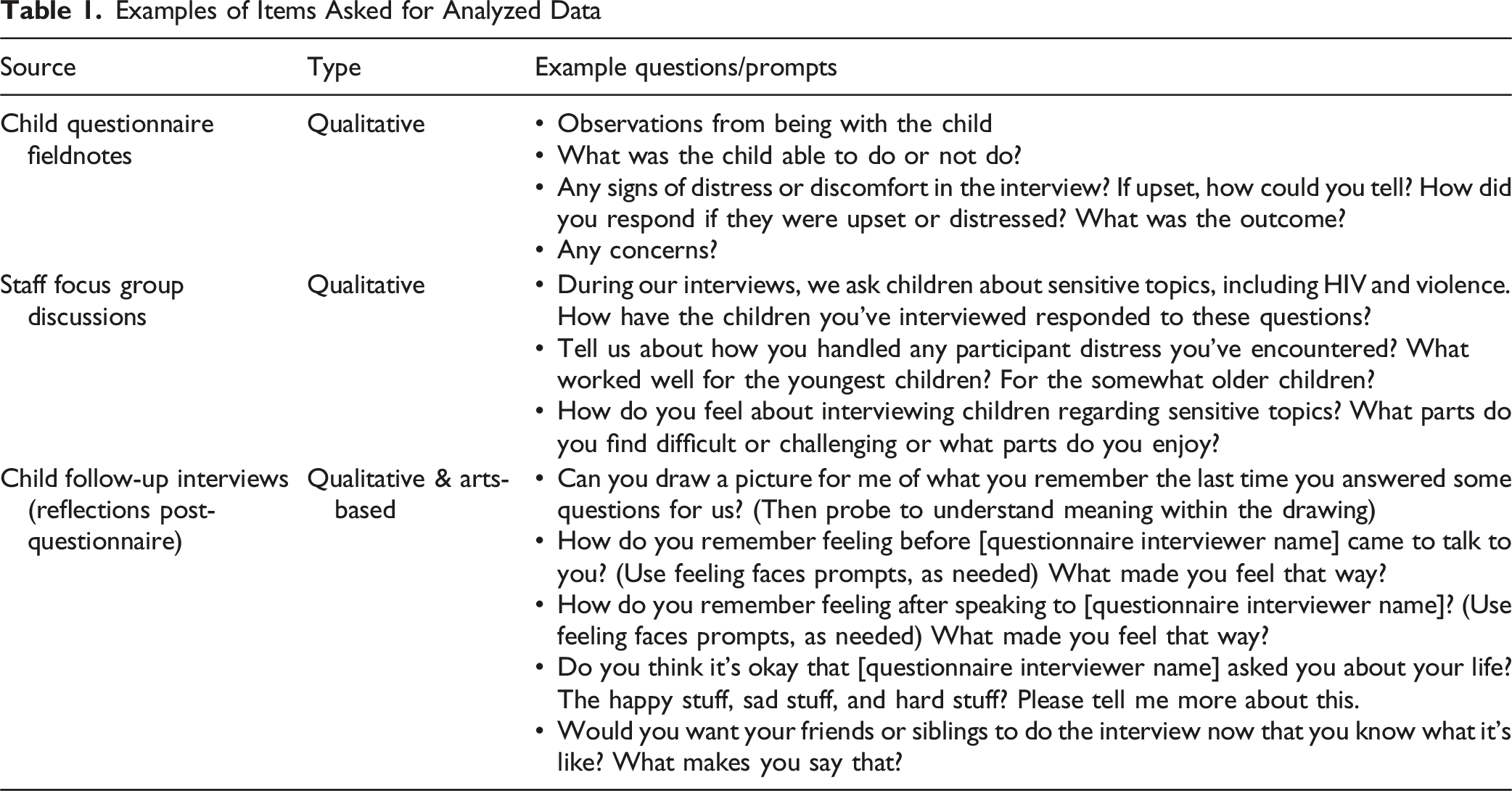
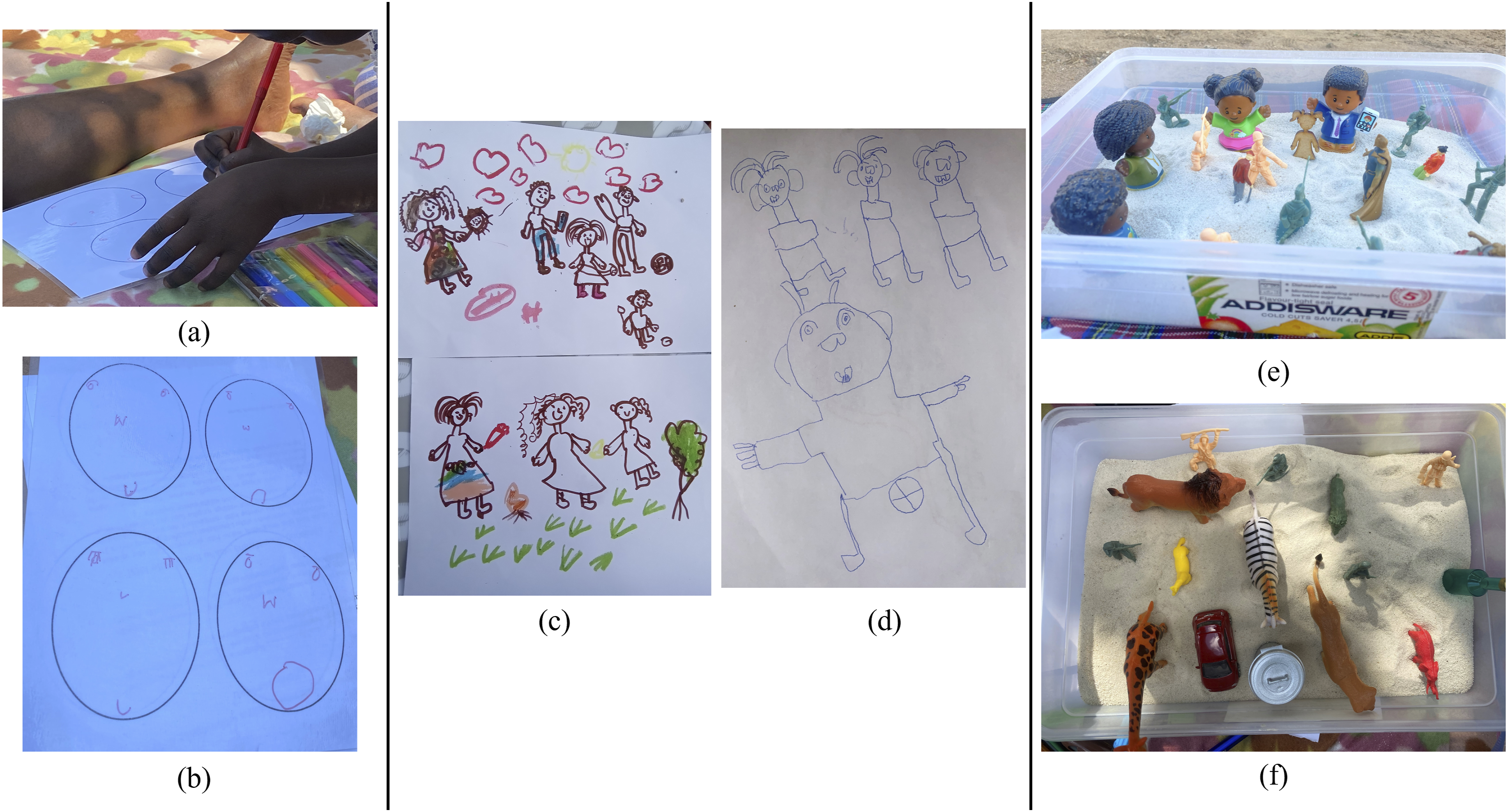
While the team’s years of experience outside of this research sample informed their understanding of the data gathered and key takeaways and recommendations from it, these insights are grounded in fieldwork experiences and data from the Interrupt_Violence study. The Interrupt_Violence main study was the third wave of a longitudinal study, and wave 3 recruited three generations of participants within a single family, including young children aged 6 years and older (Meinck et al., 2023). Eligible children were the oldest child of the young adults (age 21–28) in the sample and were invited to participate in a questionnaire interview if they were between 6–17 years old (n = 280). Given the age range of the young adult parents/caregivers of eligible children, 67.5% of the child sample in the main study were young children (age 6–9). Prior to beginning wave 3 data collection for the main study, the research team conducted an in-depth, 4-month pilot study in neighboring communities, which recruited children aged 4–7 (n = 24) (Franchino-Olsen et al., 2023). Most of the children in the pilot study were 4- and 5-year-olds (age 4: 50%; age 5: 21%; age 6: 21%; age 7: 8%). Together, the data from young children in the main and pilot studies are used to inform the themes, takeaways, and recommendations in this paper. Children participated in the study via a questionnaire interview, and a sub-sample additionally took part in in-depth qualitative interviews. The questionnaire interview was a mixed-methods interview that included standardized questions alongside play- and arts-based methods (Franchino-Olsen et al., 2023; Meinck et al., 2023). Arts-based methods included a facial expressions drawing game designed to help children verbalize, identify, and check for understanding around basic feelings (happy, sad, scared, and angry) and a house plan drawing discussed using play-doh figures to explore the child’s home environment and identify safe and unsafe people and spaces there (Fouche & Joubert, 2003; Woollett et al., 2023). Children in the qualitative sub-sample (n = 23) were invited to participate in one or more violence-focused in-depth interview with an experienced qualitative interviewer who engaged the child in additional play- and arts-based methods to investigate the child’s experiences of and views on violence and other difficult events in their life, home, family, and community. Qualitative interviews used Kinetic Family Drawing—in which children were asked to “draw a picture of their family doing something” and then were asked via open-ended questions focused on family dynamics and violence to explain their drawing—and sandboxing—an exercise inspired by sand play therapy wherein participants were given a plastic container half-filled with sand and prompted to use items from a collection of miniature objects (e.g., small figures of people, animals, plants, stones, etc.) to illustrate their lives or an experience of violence which came to mind (Meinck et al., 2023; Woollett et al., 2023). Selected children were recruited within families intentionally because children and family members were known to be experiencing and/or perpetrating violence based on previous interviews (quantitative questionnaires) with their parents and/or grandparents. This process increased the level of vulnerability for children in the qualitative sample but also increased their need for inclusion and participation to have their stories heard regarding violence. It is essential to note that social workers (n = 2) were embedded in the study staff and fieldwork team, which allowed disclosures of harm, potential distress stemming from participation, or requests for help or connections to services to be handled swiftly with interviewers making a referral to a social worker and the social worker following up with consideration regarding the needs of the child and family.
Data
Examples of Items Asked for Analyzed Data
Ethical Considerations
While guidance exists on conducting ethical research with children (Graham et al., 2013), there is not a comprehensive guide on ethical dimensions and needed safeguards for including young children in violence research. However, valuable work considering these ethical issues has been done, which offer guidance on potentially promises methods and practices to engage young children safely in this work (Attrash-Najjar & Friedman-Hauser, 2025; Evang & Øverlien, 2015; Mathews et al., 2022; Roth, 2023; Øverlien & Holt, 2021). For this study, ethical approval was granted by the University of Edinburgh School of Social and Political Science Research Ethics Committee, the University of the Witwatersrand Human Research Ethics Committee, North-West University Health Research Ethics Committee, and the Mpumalanga Department of Health. The study had comprehensive safeguards in place to allow children to safely participate in the research. These safeguards included: (1) the study employed two full-time social workers who attended to all referrals, including disclosures or observations of harm to a child or a child experiencing distress or upset; (2) children were only recruited and invited to participate once their parent (young adults in the sample) had participated, thus ensuring parents understood the scope of the topics addressed in the interviews before providing consent for their child; (3) parents and children were informed before consent/assent obtained that if the study learned a child was in danger then a mandatory report would be made as per the Children’s Act (Children’s Act, 2005); (4) a distress protocol was used during and following child interviews; and (5) in-depth training and mentorship were held for interviewers engaging with children.
Key Themes, Takeaways, & Recommendations
The key themes and reflections and associated takeaways and recommendations are broadly grouped into four categories: (1) Young children’s active participation in a VAC research study, which explores the feasibility of, meaning of, and response to participation and considers how young children show up to the research space. (2) The interview space for young children, which includes establishing rapport and trust, interviewer qualities that children want and seem to work well, the need for a trauma-responsive environment as well as one filled with play, arts, and fun, and the limits of confidentiality. This theme is the broadest and encompasses what participation can entail and feel like to young children, including what the interviewer brings to and what happens in the interview dynamic. (3) The need for extensive and ongoing interviewer oversight and training for those conducting VAC interviews with young children, which covers how researcher supervision should monitor these interview spaces to provide feedback and improvements to the interviewers and fieldwork protocols. (4) Post-participation considerations and actions, which may include additional referrals/follow-up visits from social workers and young children’s ongoing relationships with the interviewer.
Young Children’s Active Participation
Feasibility
Young children recruited for the violence-focused interviews in the qualitative arm of the study were sampled from families known to be experiencing and perpetrating violence based on the findings from the three-generations sampled first via the quantitative questionnaire. Thus, participating children had heightened vulnerability, risks, and needs. Despite the concerns expressed by some gatekeepers (i.e., ethics boards) that primary caregivers would not consent to these children participating under the study protocol, it was feasible to gain parental consent (and child assent) for young children’s inclusion in both the quantitative and qualitative samples. Primary caregivers of child participants had completed their own detailed parenting questionnaires, including questions about the use of violence towards their children. Parents were either not concerned/fearful about their children’s potential disclosure of violence or believed the research team could provide support for them and their children. The procedure of referral was clearly outlined in the participant information sheets.
What Participation Means to Young Children
When comparing the youngest children (age 4) to those slightly older in early childhood (age 10), participation may represent a series of novel and potentially formative experiences for them. Unlike those a few years ahead, a 4- or 5-year-old in our sample will have only recently started attending school and interacting regularly with adults outside of their home. Thus, engaging in a research interview with a helpful adult they feel is trustworthy may be one of their first opportunities to discuss violence or other harms they’ve experienced. While a 10-year-old may have had disappointing experiences with seeking help from supposedly-safe adults—such as teachers who dismissed their disclosures, as older children in our study reported—the younger children seemed more likely to speak with an interviewer about their experiences because they believed doing so could help. For many of the children interviewed, distrust and fear of adults seemed like the status quo, and participation offered a chance for a new type of interaction and dynamic with an adult who valued and believed their words. Thus, participation can serve as a formative and reparative experience where children are believed and offered help, which is an opportunity to shape their view of how safe or responsive adults will act when children disclose VAC and instill an understanding that their voice can and should be believed. In our experience, the youngest children interviewed seemed less likely to have internalized the silencing norm of “what happens at home, stays at home”, so they are also less likely to self-censor or have not yet been directed to avoid speaking about violence they’ve experienced or witnessed (Callaghan et al., 2017).
These point to the implication that young children’s participation in VAC research can enable, support, or encourage their own help-seeking behaviors, including disclosures to adults, for violence or other harms in their lives. While the senior author’s experience with adolescents shows that older children come to distrust their own impulses to seek help as they have been let down or not believed so often that they eventually give up trying, younger children are less likely to have lost this faith in their help-seeking behaviors.
How Young Children View, Conceptualize, Respond to Participation
One key theme found repeatedly in our quantitative and qualitative samples was that young children can participate beyond gatekeeper assumptions. Occasionally, a gatekeeper (e.g., a child’s parent/caregiver) expressed skepticism that a younger or less developmentally advanced child would be able to meaningfully participate in or enjoy an interview. However, children demonstrated enthusiasm and engagement in interviews and were able to disclose complex experiences beyond the limitations assumed by the gatekeeper. One interviewer captured such an instance in their fieldnotes at the end of a child’s participation in the quantitative questionnaire and demonstrated how they adapted to the child’s needs. The grandparent was worried that the child won't be able to answer but the child was engaging well with the questions […] The child could not really tell me the correct number of rooms [in the house] but I just asked him who sleeps on which room and he was able to remember. (Female interviewer fieldnote, boy, age 8)
Children have different capacities for comprehension, focus, and communication. The interviews were flexible to accommodate different abilities. The use of drawings to discuss and elicit feelings were very helpful and enjoyable, such as in a game called “feeling faces” where the intention was for interviewers to understand a child’s feeling states and vice versa (Woollett et al., 2023). Tangible tools such as containers that were full, half-full, and empty were aids for children to communicate “always”, “sometimes”, and “never”. The approach limited exclusion and enabled children with different abilities to participate.
In the context of this study, children did not have a template prior to their participation of how to speak from their heart or discuss their experiences with an adult in a non-directive way, as explained below regarding children’s view of the interaction as “teaching”. Thus, participation in an interview was an opportunity to engage with an adult outside of the norms or patterns typical of their communities. Most children seemed able to relax and engage—as evidenced by the violence disclosures they shared with interviewers—once they were informed of the scope of the study and were aware that their parent/guardian gave permission (consent) for them to talk to interviewers about these topics.
One young child interviewed (10-year-old girl) emphasized that she felt it is better for adults, such as interviewers, to “teach” children rather than “communicate” with children. This was interesting as many children seemed to think of teaching as unidirectional wherein the adult told the child what to think. Children in the sampled communities are expected to listen to adults and give opinions only when requested, and this dynamic is viewed as “good”. Ergo, children may feel trepidation “communicating” with an adult, whereas “learning” from “teaching” aligns with expectations and is a way for children to be “good”. Given children’s inclination to view interactions with adults as “teaching”, the interviews did seem to be instructive to young children as they learned from the interviewer’s cues or the language in the questions. Interviewers modeled how an adult can listen to hard stories and respond in a believing and empathetic manner. Children seemed to learn about violence in the interviews because experiences were named in the questions, allowing children to label the thing they or their peers were experiencing while simultaneously giving them space to talk about the experience, thus engaging in communication with the interviewer rather than one-way teaching. Despite the two-way dynamic, interviewed children still spoke of these interactions that allowed them to name and speak about violence as teaching.
It was important that young children left their interview feeling their participation mattered and that they had contributed meaningfully to the research. For many, it was important that their interviewer used language that signaled they had done a good job regardless of how they engaged or what they disclosed. Perhaps owing to the perceived teaching/learning dynamic, children wanted to feel successful of the task asked of them—participation in an interview—and were receptive to verbal and non-verbal communication signaling that success. Children’s participation was positively reinforced and rewarded with high fives, smiles, and verbal encouragement, which made them feel successful.
For many children, participation in the interview seems a positive experience. For example, one interviewer noted that one child’s mood, which was poor when he arrived, improved during the interview. Other interviewers noted mood shifts during the interview, with some children becoming sad or withdrawn for a period after a difficult topic or disclosure, as has been noted elsewhere (Franchino-Olsen et al., 2024). Despite their shifting moods, young children continued to verbally and non-verbally demonstrate their desire to continue, which potentially demonstrates their investment in answering the questions and continuing participation and that their mood/behavior shifts are an attempt at self-regulation. This potential self-regulation seemed to be facilitated when interviewers employed a patient and accepting approach, allowing the child time and space to express any difficult feelings that arose and/or to take a pause from the questions to process or sit with their feelings.
Interview Space for Young Children
Relationship with Interviewer: Building Rapport and Trust
A central element of creating an interview space that allowed young children to safely and meaningfully participate was the relationship and trust they developed with their interviewer. As the interview was designed to be child-centered and child-led, the interviewer was attuned to the cues the child gave and able to respond to their needs throughout their interactions, which seemed to deepen the safety and trust the child felt. One interviewer recalled a young child becoming upset recounting an event from her life, so they took a short break from the questionnaire. Rather than going to play with her nearby friends during the break, she chose to stay close to the interviewer and asked that they sit quietly together. Once she felt better, she chose to resume the questionnaire interview, and when the interview was finished, she wanted to go play with her friends. This example demonstrated how the relationship the child developed with the interviewer allowed the child to process difficult emotions stemming from challenges in her life and facilitated her ability to guide the interviewer around the support she needed.
It was common for young children to want to continue their relationship with the interviewer even after their participation in the study. Fieldnotes by interviewers often noted that participants asked them to return another day to “play”, “visit”, or “see them”. As interviewers came from the same community as participants, it was common for children to see and approach them months later to chat and maintain this relationship with an adult they viewed as caring and validating. Further insights about this desire for an ongoing relationship are explored in the final theme on post-participation considerations.
Based on the fieldnotes and feedback from participants, it is clear there were a few interviews where rapport and trust were not well established in the interview space and, as a result, the child did not feel the interviewer cared about them. Consequently, neither the interviewer nor participation felt safe to the young child.
Interviewer Qualities for Safe and Meaningful Participation
Young children reported the qualities they wanted interviewers to have to make participation feel safe and enjoyable, and staff reflected on additional qualities that seemed to work best when interviewing young children. Some of these qualities are characteristics that would be difficult to train someone to adopt, which implies that they may be more about the qualities individuals should possess if they are going to interview young children and that researchers should seek them when hiring for these roles. Children spoke of wanting an adult who “can make them laugh” and who can laugh at themselves, which speaks to interviewer qualities around playfulness that are useful in engaging and building rapport with young children and that help create a child-friendly interview space. The child-friendly interview space also required the interviewer to be responsive and engaging, which involved adjusting the interview pacing as needed; being creative, flexible, and patient when the interview is interrupted or children lose focus (and taking breaks or refocusing when needed); assessing and responding to cues indicating potential distress; and accepting what the child shares with them with openness and curiosity instead of judgement. This also required energetic interviewers who arrived at the interview space with enough energy to play and laugh with the child, while simultaneously engaging in the emotional labor required to be responsive and engaging.
Children wanted the interviewer to demonstrate that they valued the child and their contributions—touching on wanting to feel successful, as explored above—which included believing what the child said and feeling they were honest. Trustworthiness seemed to be a key quality children wanted the interviewer to both possess and express and encompassed the interviewer doing what they promised during and following the interview (e.g., seeking social worker assistance), believing the child’s words, and showing respect. Valuing the child included the interviewer’s ability to actively listen to difficult experiences and emotions without trying to downplay or curtail them, which required that the interviewer be patient and allow stories and feelings to come at the child’s pace.
Many of the key qualities young children wanted their interviewer to possess were rooted in understanding child development and holding a rights-based perspective. Being developmentally attuned to the needs of children allowed the interviewer to help children feel settled and reassured by engaging in a developmentally appropriate way. Holding a child rights perspective alongside this knowledge of child development meant that interviewers were able to understand young children’s behaviors in interviews as meaningful and appropriate (including being distracted or restless) rather than judgementally viewing children as “naughty or disobedient”. We found it difficult to train staff into adopting this child rights perspective and instead had to select interviewers who enjoyed spending time with young children and had a curiosity about children’s behaviors (good and bad) while holding the core belief that children’s words and actions were valuable to the research.
Successful interviewers were those who sought to understand young children’s feelings, the causes of those feelings, and the ways children demonstrated or acted out their feelings. Many participants spoke about feeling angry after disclosing VAC in their interview, particularly when speaking about violence experienced in their homes or from a caregiver. This seems to be rooted in their recognition that violence in their home is difficult to escape and their belief that it is a circumstance unlikely to change. Anger was an emotion commonly reported or non-verbally demonstrated in interviews which required careful attention and response from the interviewer. In trying to understand and hold space for children’s feelings, interviewers had to be able to self-regulate their own emotions while helping the child by co-regulating their feelings. Interviewers needed to be comfortable hearing a child’s anger without getting defensive and approaching the interaction with the view that anger is understandable, appropriate, potentially indicative of a deeper sadness, and a possible teaching moment to help the child understand the purpose anger can serve (e.g., help them see anger as their body’s way of telling them someone crossed a line). In one case, a participant was angry they had been asked about incidents of physical abuse. Rather than lie and deny any abuse, the child had spoken about abuse from their mother and reflected later that these questions made them mad because they loved her. In this case, attentive management from the interviewer and subsequent follow-up visits from the social worker ensured the child did not leave the interaction angry and that they and their mother received help to correct this behavior. This speaks to the important role anger can play in uncovering vulnerability and hurt; the interviewer must respond carefully to attend to the complex reasons for the anger and, when additional reporting or referrals are required, provide the family with support so these harms can be interrupted. Interviewers who were able to navigate anger and other difficult emotions in the interview space seemed to carry an innate recognition that it is difficult for young children to be vulnerable enough to show any emotions, particularly negative emotions, and they communicated appreciation to young children when they spoke about these feelings or even when they demonstrated their negative emotions via potentially difficult or disruptive behaviors.
Trauma-Responsive Space
Many of the interviewer qualities that allowed young children to safely and meaningfully participate were characteristics that made the interview space trauma-responsive and, thus, attuned to the needs of the child. In the context of samples with a high prevalence of VAC or other trauma, young children are on high alert for cues around safety, assurance, and validation from adults. The first steps in the creation of a trauma-responsive interview space began before the interview started when the interviewer first approached and was introduced to the child. Children reported that they often felt important because an unknown adult in a position of authority was interested in talking to them or felt scared because they worried this new adult was there to get them in trouble or punish them. As it is difficult to know what meaning young children will ascribe to a new adult when they are approached for participation, it is important to ask the child why they believe the interviewer is there to visit with them, which opens a conversation and builds a positive relationship between the new adult and the young child. Throughout their entire time together, it is critical that interviewers communicate to children that they are not upset with them via their tone (relaxed and empathetic) and face (children wanted interviewers to seem happy and at ease). In the context of our study, it was crucial for interviewers to remember that children carry a general distrust and fear of adults, who often hurt children to discipline or “teach” them, and that young children will be continually scanning the interviewer seeking cues for safety or the lack thereof.
Play, Arts, and Fun
While the key research questions for interviews focused on VAC and other difficult experiences, the design and implementation of the research in the interview space centered on play, arts, and fun to create a space that was child-friendly, developmentally appropriate, and able to respond to and manage distress and difficult emotions (Franchino-Olsen et al., 2024; Woollett et al., 2023). Play and playfulness underlay all the interviewer’s engagement with the child, which included play- and arts-based methods used as part of the data collection process, as well as spontaneous, non-directive, child-led play breaks that interviewers were encouraged to take with the children. Examples of some of the employed arts-based methods created by children—feeling faces, Kinetic Family Drawing, and sandboxing—are shown in Figure 1. These worked to balance some of the difficult topics and disclosures with fun interactions. Despite their data collection role, children understood arts-based pieces as elements of play and fun in the interview. Though we sought to balance required questions with breaks and child-led play while keeping the interaction to an hour or less, feedback from participants indicated they would have enjoyed more play and additional opportunities to simply have fun or create art with the interviewer, even if it lengthened the interview time. The art and playful elements allowed children to feel successful because they understood there was no “wrong way” to play or create and were the elements the young children carried with them and remembered after the interview because they involved all the children’s senses and were embodied (Conroy & Perryman, 2022; Pliske et al., 2021). This is particularly valuable for children exposed to interpersonal trauma when they have a restorative play or creative collaboration with a helpful rather than harmful adult. Children spoke of the arts-based tasks as the interviewer “teaching” them which they viewed as a meaningful and acceptable way for an adult to engage with them and discuss difficult topics. Examples of Art (Drawing; Sandboxing) Created by Child Participants. Left Panel: Feeling Faces; Middle Panel: Kinetic Family Drawing; Right Panel: Sandboxing. Child Participants: (a & b) Girl, Age 8; (c) Girl, Age 6; (d) Boy, Age 6; (e) Boy, Age 6; (f) Boy, Age 6
As reported by children and interviewers particularly skilled at playfully engaging, the play- and arts-based elements woven into the interview were a critical piece of creating a safe space for young children’s participation as they were a creative outlet that allowed discussion of upsetting events in a way that helped them process distress or other negative emotions in the moment. Following up disclosures or periods of dysregulation with unstructured play also proved important to the interviewer and the young child as it helped them regulate emotions via playfulness and movement.
Confidentiality
Confidentiality was sought via study procedures, which ensured interviews were not overheard and protected young children’s data. While the concept of confidentiality was explained to young children in the assent process, we recognize that they may have not completely understood the concept and could have worried about getting in trouble with caregivers or other adults if they spoke about something meant to be a family secret. This fear of discipline came up in a couple of interviews when the child was informed that a social worker would be referred to their family for a follow-up visit. Though referrals were intended to be communicated in a trauma-responsive manner with attention to the child’s feelings, that was not always done successfully, and this poor communication caused children to worry that the referral (and the break in confidentiality potentially required with it) would put them at risk of retribution. As post-participation referrals and reporting may mandate a break in confidentiality in adhering to child protection principles, the protocol around these referrals/reporting and the interviewer’s communication about them to the child and the family must be carefully considered. As a result, the interview space should be thoughtfully designed to offer the best protection of confidentiality to young children while recognizing that referrals and reporting ethically mandated for child protection may ultimately breach that confidentiality.
Incorporating play- and arts-based elements in an interview may offer a solution to one issue of confidentiality around young children’s participation. Some young children explained that after participating in the initial questionnaire or in-depth interview, their caregiver probed for information about what they had discussed. As the play- and arts-based elements were some of the most memorable pieces for the children, they reported explaining these activities to their caregiver and some even recreated the experience for younger children in the household to teach them what they’d learned. In this way, the inclusion of play- and arts-based elements may provide a way for children to discuss their participation without being required to remember and report some of the more sensitive or complex interview questions, like those around VAC experiences.
Interviewer Training and Oversight
Though we are encouraged by much of the feedback children provided regarding their participation experience, certain results also highlighted how cautiously young children’s participation in VAC research must be facilitated. There is significant onus on the interviewer to create and deliver a child-friendly and trauma-responsive space, which requires many of the interviewer characteristics discussed above. This is not an ability all—or likely the majority—of interviewers will have and requires careful and cautious selection of individuals who will do these interviews and ongoing training and oversight. In our study, interviewers who excelled in working with young children were further able to develop and grow skills when given sufficient oversight and ongoing training, often learning from skilled managers and other young child interviewers via group debriefs. Other interviewers adept at speaking with adults were not well-suited to conducting young child interviews, even after in-depth training and practice. This was clear in the reflections some children offered regarding their questionnaire interview experience wherein certain interviewers failed to notice and react to the non-verbal cues of young children at times. Among those naturally suited for success with young children, most interviewers needed in-depth training on how to monitor cues for and seek continuous consent from young children during participation. On a more minute scale, even the best interviewer may have a day when they are worn down or lack the energy required to be responsive and attentive in a child interview. A potential safeguard to prevent poor interview experiences for children may include study protocols that ensure interviewers do not “push through” on these low-energy days but avoid interviewing young children until they are able to do so wholly and energetically.
Post-participation Considerations and Actions
Social Worker Referrals
Young children were often referred to a study social worker for individual and family follow-up support based on what was disclosed during their interview. This was explained as a possibility to children and parents during the assent/consent process and was typically not met with resistance or concern (Franchino-Olsen et al., 2023, 2024). In general, interviewers believed that children left the interview space feeling calm and not distressed because they had an opportunity to disclose experience of VAC and other difficult events to an adult who believed them and gave them their full attention. Follow-up visits by interviewers or social workers reassured them of this belief, as children’s emotional needs were attended to via additional referrals to resources and services and children displayed improved coping skills in subsequent visits. As such, interviewers believed that referrals were an active demonstration to the child that the interviewer believed and validated their voice. And children prefer, like you believe in them if you…if a participant the child participant says “I was touched inappropriately.” You must believe them the first time when they say that and say, “When did this happen?” Like normally I stay on the topic and I probably probe and say “Did you tell Mommy about it, am I the first person you are disclosing this to?” And normally I'd be the first person they disclose to, say and then after that I'll be, at that moment I tell them, “Don't worry, we have a social worker. You remember when we started the interview? I told you, if I find out that there's something that you went through, I'll have to tell the social worker and now I'll have to tell social worker.” Then at the moment I text [Social Worker] and usually on cases maybe of sexual violence, she's there within before the end of the day, she would be there. So that helps the child to say, “Oh yeah, I got the help that I was looking for someone believes me.” There's an action that is taken not just to say, “I believe you then. Okay. Bye bye.” But then “I believe you” then there's a next step that's taken to help the child. (Interviewer 3, Site 1 FGD)
In the vast majority of interviews, young children responded positively to the social worker referral and often looked forward to their follow-up visit. Most children seemed to rely on the rapport they had with the interviewer and the positive interview experience, as they viewed the follow-up visit by the social worker favorably, who they seemed to see as connected to their interviewer because they were part of the same research team. This perception of social workers may differ based on context, as there may be settings where social workers are viewed with more fear or mistrust, particularly around child protection issues. The occasions where a child reported feeling upset or fearful of the social worker’s involvement were those where the interviewer had failed to develop rapport and trust with the young child, so they did not believe reassurances that the social worker would help. On one occasion, the interviewer did not discuss the social worker in a trauma-responsive manner and left the child feeling the social worker was coming for a follow-up visit to take them away from their mother for what they said in the interview. Children want to see the social worker. The children love social workers. They all want to see a social worker. Yeah, they do. Yeah, yeah. (Multiple interviewers speaking at once, Site 1 FGD) Yes, I've also had a child that was a bit distressed after I told her about social worker. But she was not worried about what others would think. She was just wondering how is this person like “Is she gonna judge me? Is she friendly?” Like she kept asking a lot of questions. And I speak to her not to worry, you can call her name, it’s [Social Worker]. She's very good with kids. You'll see. You're gonna have fun with her. She's gonna have some fun with you… and then after that when I gave her that assurance, then she started like okay, “I believe you then.”. (Interviewer 3, Site 1 FGD)
Ongoing Relationship with Interviewer
As evidence of the rapport and trust established in the interview, many young children spoke of and sought out an ongoing relationship with their interviewer after their participation in the research ended. Many ended their visits by asking to spend more time with the interviewer, and some continued to reach out informally in their community. These established positive relationships are a strength for young children’s participation, but they also represent a potential post-research burden for interviewers. A continued informal relationship beyond the scope of professional interactions is a norm for many in this context (South Africa), particularly those employed in helping professions—social workers, teachers, nurses, etc.—where personal and professional boundaries are blurred due to non-functioning systems and professionals’ motivations to ensure adequate care, education, and beyond for those in their remit even when such care requires pro bono work. This reality highlights the question of what responsibilities a research study has to the research team after the study has concluded, particularly with vulnerable or young participants. For interviewers who continue to nurture relationships and support these young children, the researchers and management teams likely have a continued ethical responsibility to provide them with supervision and support after the study closes by making themselves available to provide counsel or connections to resources. Researchers may be well-served to anticipate these long-term relationships between interviewers and young children and dedicate time during the study to support the staff’s professional development (e.g., seeking training or additional qualifications) to empower them to be better resourced and more self-sufficient and to make a positive difference in their communities in the long term via the relationships built during the study. We found it helpful to facilitate close working relationships between the interviewers and study social workers throughout the fieldwork, as it led to an improved understanding among the interviewers about the social worker scope of practice and additional systems of help that exist within their community. While this team integration and support amongst staff members does not fully remove the burden of these ongoing relationships, it may be a helpful resource to offer interviewers while also carefully considering additional ways to address this issue in the design and implementation of violence research with young children.
Summary of Takeaways and Recommendations
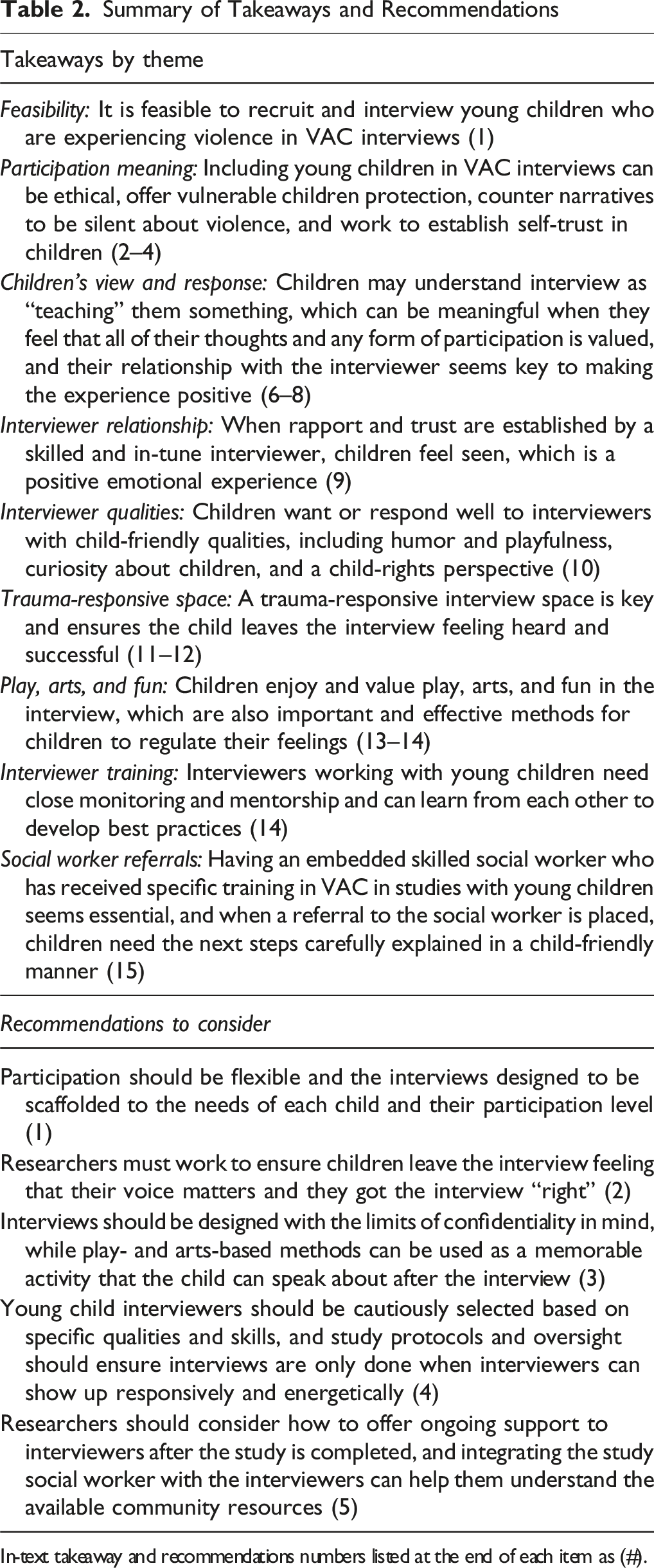
In-text takeaway and recommendations numbers listed at the end of each item as (#).
Conclusions
From our experience conducting VAC interviews with young children, we believe it is possible to facilitate their participation in a safe and ethical manner. In fact, we ascribe to a rights-based paradigm that implies that their exclusion due to overly cautious gatekeepers or child protection concerns are a violation of their rights to inclusion and having a voice on issues that impact them. However, in making the recommendation for broader participation of young children in VAC studies, we are not advocating for thoughtless or reckless inclusion. We recognize that their participation must be designed to be meaningful and to allow their voice to be heard and believed. This requires appropriate and ethical safeguards and careful design of the interview space, including interviewer qualities, a trauma-responsive space, and skilled follow-ups for referrals and reporting, to create safe ways to include young children and ask them about their experience of violence. The role of play, arts, and fun should not be overlooked in the inclusion of young children, as these can represent valuable ways to collect data from this age group while also facilitating the safety and responsiveness required in the space and honoring the child’s development and ways of communicating/learning. Play, arts, and fun also offer ways for the interviewer to be trauma-responsive and for the child to process and regulate their feelings in the interview space. The creation of a child-led, child-friendly, child-centred space seems the safest and most ethical way to facilitate young children’s participation in VAC research as such a space honors their rights, is playful and enjoyable for them, and is responsive to their needs.
Footnotes
Acknowledgements
We thank the children who gave their time, attention, perspective and stories for this research. Also, thanks to the fieldworkers who conducted the interviews and the social workers who provided services to vulnerable participants. Interrupt_Violence Advisory Committee: Elsinah Mhlongo, Dr. Alexander Butchart, Prof. Karen Devries, Prof. Heidi Stöckl, Prof. Lorraine Sherr, Dr. Mark Boyes, Prof. Andrea Gonzales, Prof. Lucie Cluver and Prof. Michael P. Dunne. Thank you to the study area local government, chief, indunas, and ward councillors.

Ethical Considerations
The INTERRUPT_VIOLENCE study was approved by the University of Edinburgh School of Social and Political Science Research Ethics Committee (264227), the University of the Witwatersrand Human Research Ethics Committee (M190949) and North-West University Health Research Ethics Committee (NWU-00329-20-A1). Further ethical approval was granted from the Mpumalanga Department of Health (MP-202012-003). All methods were carried out in accordance with relevant guidelines and regulations or the Declaration of Helsinki. Written consent (adults) and assent (children) were obtained from all the study participants or their legal guardians for the study. Consent and assent procedures were approved by all involved Ethics Committees.
Funding
This study is funded by the European Research Council (ERC) under the European Union’s Horizon 2020 research and innovation programme [Grant Agreement Number 852787] and the UK Research and Innovation Global Challenges Research Fund [ES/S008101/1]. The original Young Carers Study was funded by the Economic and Social Research Council (UK) and the National Research Foundation (RES-062-232068), the National Department of Social Development, the Claude Leon Foundation, the Nuffield Foundation (OPD/31598), the Health Economics and HIV/AIDS Research Division at the University of KwaZulu-Natal (R14304/AA002), the John Fell Fund (103/757), the University of Oxford Impact Acceleration Account (1602-KEA-189, 1311-KEA-004 & 1069-GCRF-227) and the Leverhulme Trust (PLP-2014-095). The funding bodies were not involved in the design, data collection, analysis, or interpretation of data, nor involved in writing the manuscript.
Declaration of Conflicting Interests
The authors declared no potential conflicts of interest with respect to the research, authorship, and/or publication of this article.
Data Availability Statement
The data the support the findings of this study are available from the corresponding author upon request.