




Abstract
This paper presents an innovative axiological stance developed by integrating the principles of the trauma-informed approach with the components of compassion to effectively study the traumatic bereavement experiences of women in Kerala, India, who lost their husbands to COVID-19 in Gulf countries. The unique challenges of this research, stemming from the geographically separated lives of the deceased and the bereaved, the remote and unobserved death and burial of the spouse, and the diverse cultural contexts of Kerala, necessitated a tailored ethical framework. By merging the structural rigour of the trauma-informed approach with the emotional depth of compassion, the research redefined participant engagement as compassionate engagement, prioritising both the emotional well-being of participants and that of the researcher. The paper elaborates on the strategies employed for compassionate engagement and the broader implications of this compassion-guided trauma-informed axiology for qualitative research, particularly within the field of social work.
Keywords
Introduction
Axiology, the philosophical study of values and ethics, is fundamental in shaping the principles and methodologies of research. It involves examining the underlying values that guide researchers in their pursuit of knowledge and understanding (Lincoln et al., 2018; Spencer et al., 2014). In social work research, axiology helps to ensure that studies are conducted with a deep awareness of the ethical implications and values that drive the profession. The axiological position is also crucial in maintaining the researcher’s integrity and social responsibility. It helps shape the framework within which researchers interpret and respond to human experiences, ensuring that research is conducted with sensitivity to the values and needs of the study population. The choice of research methods, the formulation of research questions, and the interpretation of data are all guided by the values and ethics that underpin the research (Lincoln et al., 2018). For example, a commitment to social justice may lead researchers to adopt participatory or community-based research methods that empower participants and address power imbalances. Similarly, valuing human dignity may result in using qualitative methods that allow a deeper understanding of individuals’ lived experiences. Additionally, axiological positions shape the outcome of the research. Studies grounded in strong ethical values are more likely to produce scientifically valid and socially relevant findings beneficial for the participants. They contribute to the body of knowledge in a way that supports the goals of social work, such as promoting social change, enhancing human well-being, and addressing social problems (Al-Mamun et al., 2024).
This paper aims to discuss the axiological framework, Compassion-Guided Trauma-Informed Axiology (CGTIA), that the researcher adopted in their doctoral study on Gulf Breadwinner Bereavement (GBB). The study investigated the profound impact of the COVID-19 pandemic on the cross-border families of the Gulf expatriate community, focusing particularly on those from Kerala, India. The pandemic resulted in a significant number of deaths among breadwinners, leaving their families in the home country, especially the widows, grappling with the sudden, distressing loss of their husbands, who were infected, died, and were buried abroad.
To explore these deeply personal experiences, the GBB research utilised interpretative phenomenological analysis (IPA), a qualitative methodology well-suited for capturing the complexity of lived experiences. In alignment with IPA’s emphasis on depth rather than breadth, the study was conducted with a purposively selected sample of twelve women in Kerala who lost their husbands to COVID-19 while working in the Gulf. Fieldwork spanned approximately three months in 2024, during which in-depth interviews were conducted to explore each participant’s narrative. This focused approach facilitated a comprehensive and contextual understanding of the participants’ experiences with traumatic bereavement; their loss, and resilience.
The GBB study acknowledged the trauma-informed and emotionally challenging nature of the research, as pointed out by Alessi and Kahn (2023), Anderson et al. (2022), and Isobel (2021), along with the contributions of Burrell et al. (2023) and Kumar and Cavallaro (2018). Hence, the development and application of CGTIA for researching traumatic bereavement, a sensitive topic, was aligned with the methodological guidelines of IPA. Additionally, CGTIA demonstrated that undertaking research in sensitive contexts marked by trauma requires competencies embodied in the trauma-informed practice and a compassionate approach to ensure that both the process and the outcomes of the research are sensitive to the emotional and ethical needs of all involved.
Traumatic Bereavement
Traumatic bereavement (TB) indicates the interface between trauma and bereavement, encapsulating the experiences of both (Rubin et al., 2017). Stroebe et al. (2001) define TB as “one in which the death occurred in highly impactful circumstances, those that are not a universal, inevitable part of normal life” (p. 189). Therefore, TB is a condition experienced after the sudden loss of a loved one, where the natural process of grief and mourning is overwhelmed by the traumatic stress caused by the circumstances of the death (Rando, 2012). TB is characterised by intense emotional distress, prolonged grieving, and significant life disruption (Barlé et al., 2017; Green, 2000; Malkinson & Brask-Rustad, 2013).
Researchers confirmed that public health emergencies, particularly the COVID-19 pandemic, are traumatic events (Bridgland et al., 2021; Heris et al., 2022; Horesh & Brown, 2020). In the GBB study, the suddenness of the death due to COVID-19 and the geographical separation between the deceased and the bereaved heightened the traumatic elements of the bereavement. Notably, the mortal remains of the deceased were not brought back to the homeland due to the pandemic restrictions. Their burial in the Gulf disrupted traditional mourning practices and rituals, leading to feelings of incompleteness and unresolved grief. In addition, the socio-economic impact of losing the breadwinner complicated the grieving process as families faced financial instability alongside emotional distress.
Imperative for Espousing an Explicit Axiological Stance
Given the sensitive nature of the GBB study, which involved participants recounting their traumatic experience of losing their husbands to COVID-19 in a faraway land, it was crucial to take a clear ethical position to minimise potential risks. In the GBB study, the risk of re-traumatisation was a significant concern. The term re-traumatisation is used interchangeably to represent re-victimisation and reactivation of trauma. In this paper, re-traumatisation refers to the “reactivation of trauma-related distress” (Leshner et al., 2012, p. 569) or the “distress that occurs with the retelling of a trauma narrative” (Follette & Duckworth, 2012, p. 2). The GBB research also addressed the issue of secondary trauma and burnout experienced by the researcher during the study on TB. Secondary trauma refers to the emotional distress that researchers may feel when listening to participants share their traumatic experiences (Bhagwagar, 2022; van der Merwe & Hunt, 2019). This emotional distress can lead to researcher burnout, which is characterised by emotional, physical, and mental exhaustion (Wagaman et al., 2015). Therefore, the GBB research needed to adopt a clear ethical stance to mitigate the risks of re-traumatising participants and causing secondary trauma to researchers.
Compassion-Guided Trauma-Informed Axiology
In the context of the GBB study, the researcher adopted a novel axiological framework, CGTIA, by integrating the principles of a Trauma-Informed Approach (TIA) (Elliott et al., 2005; Harris & Fallot, 2001; Levenson, 2017, 2020; Substance Abuse and Mental Health Services Administration [SAMHSA], 2014) with compassion, the guiding force in social work (Mathew & Joseph, 2024). TIA framework emphasises the importance of safety, trustworthiness, choice, collaboration, empowerment, and cultural competence in addressing trauma. While, compassion combines sensitivity to the sufferings of others, with an urge to alleviate those sufferings (Gilbert & Choden, 2013; Jazaieri et al., 2014; Nussbaum, 2001; Singer & Klimecki, 2014; Tanner, 2020). Neurological research indicates that compassion for those suffering can generate emotional resilience and positive emotions (Singer & Klimecki, 2014). So much so that, by combining the structural strength of TIA and the emotional depth of compassion, the GBB study has taken into account the well-being of participants and the researcher alike.
Conceptual Framework of Compassion-Guided Trauma-Informed Axiology
CGTIA framework integrates the four Rs of TIA (SAMHSA, 2014) with the key components of compassion proposed by Geshe Thupten Jinpa (Jazaieri et al., 2014). The four Rs, Realise, Recognise, Respond, and Resist, require the researcher to grasp the widespread impact of trauma and potential paths to recovery, identify signs and symptoms of trauma in participants, respond by integrating trauma knowledge into research practices, and actively avoid re-traumatising those involved. By doing so, the researcher can ensure that their study is sensitive to the complex and often hidden effects of trauma on participants.
Simultaneously, the CGTIA framework incorporates the four components of compassion, cognitive, affective, intentional, and motivational, which guide the researcher’s emotional and ethical approach to the study. The cognitive component involves an awareness of suffering, while the affective component reflects an emotional response to that suffering. The intentional component drives the desire to alleviate suffering; the motivational component represents the responsiveness or readiness to act on that desire. Finally, the researcher compassionately engages the participants in the research process in a secure environment ensuring that processes do not inadvertently re-traumatise participants. Thus CGTIA provides a framework for scientifically sound and ethically grounded research. Figure 1 shows the conceptualisation of CGTIA. Conceptual Framework for Compassion-Guided Trauma-Informed Axiology. Source: Original Creation Drawn by the Researcher
The key assumptions of CGTIA clarify that the objective of TIA is engagement rather than treatment. The researcher employs TIA as a tool for engagement, and by incorporating compassion, they transform it into compassionate engagement. A mutually reinforcing relationship emerges between compassion and TIA through the compassionate engagement of participants (Mathew & Joseph, 2024). In this dynamic interplay of compassion and trauma-informed perspectives, each element enhances and elevates each other, resulting in a transformative and enriching qualitative social work research methodology.
Theoretical Foundations of CGTIA
According to SAMHSA (2014, p. 7), “Individual trauma results from an event, series of events, or set circumstances, that is experienced by an individual as physically or emotionally harmful or life-threatening and that has lasting adverse effects on the individual’s functioning and mental, physical, social, emotional, or spiritual well-being”. Ringel (2019) describes trauma theory as a comprehensive framework that explores the profound and pervasive impact of traumatic experiences on individuals, families, and communities. It integrates insights from various disciplines, including psychology, neuroscience, and social work, to understand how trauma affects mental health, behaviour, and social functioning. The theory emphasises that trauma is not only an individual experience but also shaped by social and cultural contexts. Key components of trauma theory include the understanding of trauma’s neurobiological effects, its influence on cognitive and emotional processes, and the importance of addressing trauma within therapeutic and social work practices. The theory supports TIA as ensuring a safe environment to foster trust, choice, and empowerment among clients and facilitate healthy therapeutic relationships (Elliott et al., 2005; Levenson, 2017).
CGTIA extends trauma theory into qualitative social work research by embedding the core principles of TIA within the researcher’s axiological stance. While traditional trauma theory focuses on understanding the multifaceted impacts of trauma and implementing trauma-informed practices in care and support settings, CGTIA emphasises the role of the researcher in not only recognising these impacts but also in approaching the research process with a deep sense of compassion. It involves acknowledging the trauma experienced by the research participants, especially in sensitive contexts such as bereavement studies, and ensuring that the research methodology itself is shaped by a commitment not to re-traumatise. CGTIA recognises that qualitative research is about data collection in a secure and supportive environment where participants feel safe and valued.
In addition, CGTIA aligns with empowerment theory (Zimmerman, 1995, 2000) which emphasises giving voice to marginalised populations and addressing power imbalances, by prioritising participant choice and fostering a sense of agency in them. Further, relational theory (Cait, 2008) underpins CGTIA's emphasis on building strong, trust-based relationships between the researcher and participants. A compassionate act is also a relational activity, not so much about doing things for others (Dewar et al., 2014). Similarly, compassion-guided research is a relational activity in which the researcher chooses to conduct research by collaborating with participants.
From the neuroscientific perspective, trauma can change the structures and functions of the brain, especially in areas involved in responding to stress and regulating emotions, such as the amygdala, hippocampus, and prefrontal cortex (Jung et al., 2016). However, the brain’s ability to reorganise itself, known as neuroplasticity (Eichinger, 2018), allows it to repair the damage caused by trauma. Research by Klimecki et al. (2013) demonstrates that compassion training is vital in understanding neuroplasticity in the affective domain. They show that compassion can enhance positive affect when dealing with challenging situations. Compassionate responses, rooted in positive emotions directed towards others, promote prosocial behaviour and increase positive affect and resilience (Singer & Klimecki, 2014).
The theoretical foundations of CGTIA drawn from the intersection of trauma theory and compassion-based frameworks, provide a robust model for ethical and sensitive research practices in social work. CGTIA stands as a critical advancement in qualitative social work research, advocating for a research paradigm that is both trauma-sensitive and compassion-driven, ultimately fostering a more humane and ethically grounded research environment.
Strategies for Compassionate Engagement
Participant Engagement (PE) in research denotes a two-way, mutually beneficial interaction between participants and the researcher, with participants being essential to the research process. PE in research provides opportunities to focus on participants’ experiences, address trauma, build trust, and increase transparency. Ultimately, PE can leverage the rigour and relevance of research that generates evidence to improve participants’ lives. PE in qualitative social work research occurs in processes ranging from recruitment to data collection.
In the GBB study, the researcher’s CGTIA stance promoted compassionate engagement with participants, allowing the research process to address their specific challenges. The strategies for compassionate engagement (Figure 2) combine the principles of trauma-informed research (Goodwin & Tiderington, 2022; Levenson, 2020; Murray, 2018) with the key attributes of compassion. This section explores the strategies for compassionate engagement and how they were applied in the GBB study. Strategies for Compassionate Engagement. Source: Original Creation Drawn by the Author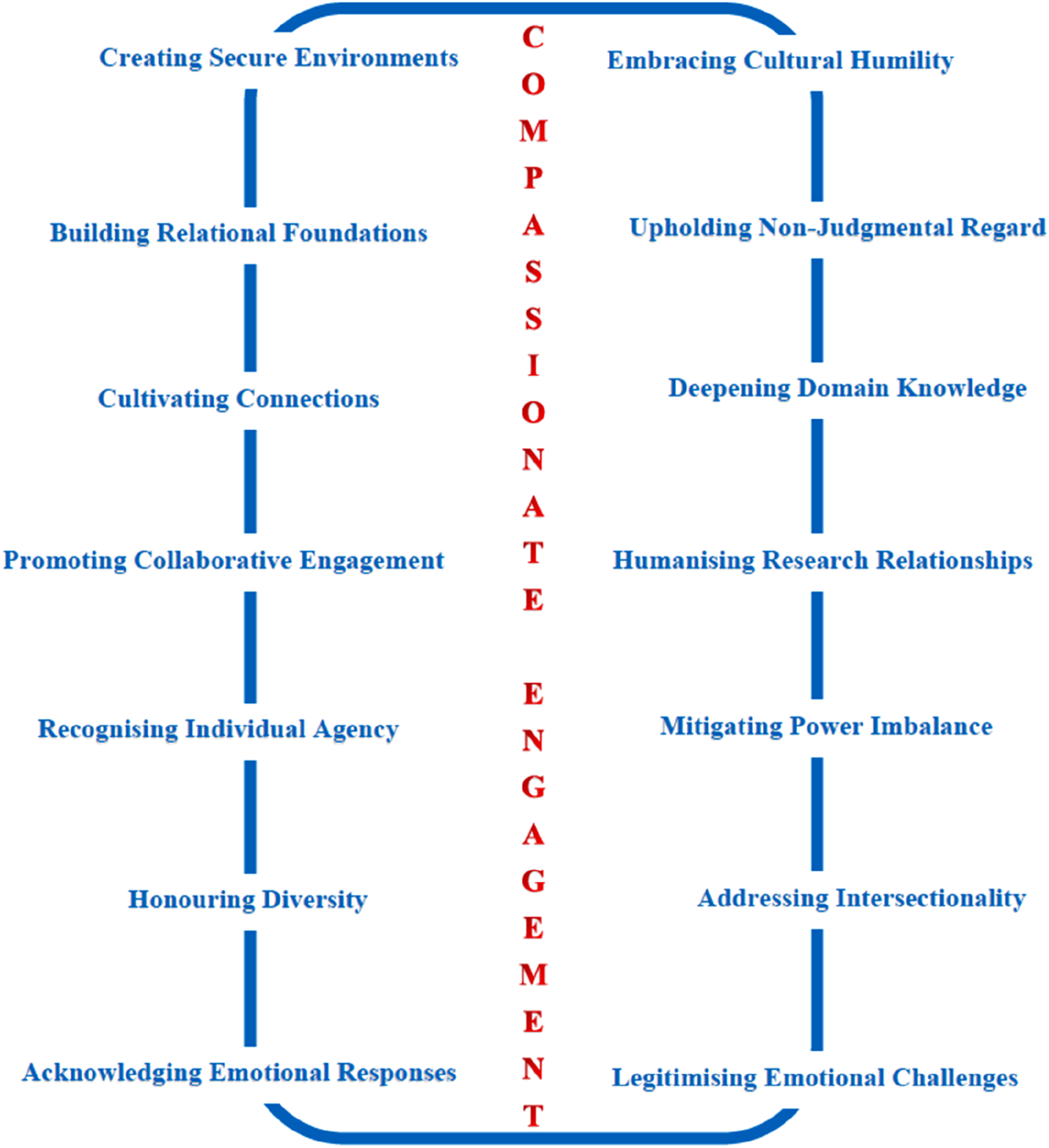
Creating Secure Environments
Establishing physical and emotional safety is fundamental in compassionate engagement. This involves using research methods that protect participants’ well-being, ensuring that both the setting and interpersonal interactions foster a sense of security. Researchers must be vigilant about minimising the risk of re-traumatisation by carefully designing their data collection process and offering resources to help participants manage any distress that may arise.
Application
To handle the delicate nature of the GBB study, the researcher developed the Local Government Referral Sampling (LGRS) method to find and recruit participants, utilising established connections and the trust of local governments in their respective localities. This approach was aimed at ensuring the physical and emotional safety of participants by approaching them with care and sensitivity, creating rapport and gaining trust through local government representatives who were familiar with and trusted by the participants. The researcher was introduced by the local body members, which helped minimise the potential distress for participants. LGRS also facilitated the general safety assessment of the participant locations to ensure that home visits could be conducted without undue risk to the researcher’s safety. The researcher visited all the participants at their homes in Kerala and conducted data collection sessions based on their preference for safety and comfort. While the importance of informed consent was respected, the researcher adapted the process to avoid potential trauma triggers, specifically, signing documents, which could remind participants of signing papers related to their husband’s burial in the Gulf.
Building Relational Foundations
Trustworthiness and transparency are critical in research involving trauma survivors. Researchers can foster trust by clearly outlining each step of the research process, explaining confidentiality measures, and offering participants insights into how their information will be used. By creating an open and honest relationship, researchers can lay the groundwork for a meaningful and safe exchange of information.
Application
In the GBB study, the Building Relational Foundations strategy was implemented by collaborating closely with the local government, leveraging their established trust within the community to facilitate introductions to potential participants. The researcher took time to clearly explain the purpose of the study and the steps involved, assuring participants that their confidentiality would be strictly protected. To further solidify this foundation, the researcher maintained scheduled, structured, and time-limited contact with participants. This consistent communication was crucial in establishing a deep sense of trust and rapport, essential for sensitive topics. Regular check-ins via phone helped prepare participants for upcoming interview sessions. Importantly, these interactions were carefully bound to provide the necessary support without leading to extended personal involvement, thereby mitigating the challenges associated with prolonged contact and ensuring that professional disengagement remained feasible. Additionally, the researcher reinforced this trust by aligning actions with words, maintaining transparency, and consistently prioritising the participants’ well-being and autonomy.
Cultivating Connections
Although researchers are not peers or counsellors, they play a pivotal role in supporting participants. Trauma survivors may have additional support needs, and researchers may be one of their few connections to help. Therefore, researchers have an ethical responsibility to minimise risk, offer support, and provide information on relevant local, regional, and national resources. Ensuring that participants have access to these resources helps them navigate their trauma-related challenges during and after the research process.
Application
Initially, the study protocol included mapping local resources for psychological support. However, understanding the prevailing stigma around professional psychological support, this strategy was reconsidered based on feedback from local body heads. To fill this gap, the researcher, drawing on their expertise as a psychiatric social worker, attended courses to refresh and enrich their knowledge of trauma-informed care and bereavement counselling. This preparation allowed the researcher to serve as a primary support system for participants, ready to address any distress that might arise during the research process.
Promoting Collaborative Engagement
Collaboration and mutuality are key to creating a trauma-informed research environment. By involving participants and community partners in research design and implementation, researchers can enhance the relevance and sensitivity of their work. This collaborative approach ensures that the researcher respects the autonomy of survivors and incorporates their contexts and perspectives into the study. Additionally, participant involvement in data interpretation can further exemplify mutuality, leading to more accurate and ethically sound findings.
Application
The participants noted that families of Gulf migrants who remain in Kerala are often overlooked by government policies and welfare programmes due to the expatriate status of a family member, despite their low income in the Gulf. This neglect persisted during the pandemic. As a result, the participants saw the GBB study as an opportunity to raise awareness about their challenges and communicate their concerns to the officials. They were allowed to choose which issues to highlight as obstacles to their resilience. Additionally, debriefing at the end of sessions allowed them to confirm their perspectives and interpretations.
Recognising Individual Agency
Empowering participants by offering them a voice in the research process is a key strategy in compassionate engagement. This includes respecting participants’ right to choose the location and time of interviews and preparing them for sensitive questions. Additionally, ensuring that participants have the right to deny participation or withdraw from the study at any time contributes to a sense of autonomy and respect. When participants feel empowered, they are more likely to engage honestly and openly in the research process.
Application
The researcher emphasised the voluntary nature of participation, making clear that participants had the right to withdraw from the study at any point without any consequences. The researcher also allowed participants to set the pace of the interviews, giving them the space to share their stories in their own time. If participants felt uncomfortable or needed to pause, they were encouraged to voice their feelings, and the session was adjusted accordingly. Moreover, session debriefing gave options for the participants to review their contributions, ensuring that their voices were accurately represented.
Honouring Diversity
Mastering cultural competence is crucial when researching diverse and marginalised populations (Jackson, 2018). Researchers must know the cultural, historical, and gender-specific factors that may influence the participants’ experiences. By honouring diversity, researchers can create a more inclusive and respectful research environment that acknowledges and values the unique backgrounds of each participant. This approach ensures that the research is sensitive to the different contexts of the participants, leading to more accurate and ethical research outcomes.
Application
The researcher recognised the socioeconomic diversity of the participants and was considerate of their cultural norms and values, especially concerning gender roles, family structures, and religious beliefs. They gained an understanding of the participants’ cultural practices and mourning rituals. Care was taken to avoid scheduling interviews during periods of religious observance, such as Ramadan, to honour the participants’ traditions and beliefs. Kerala’s linguistic diversity was also acknowledged, with Malayalam as the predominant language, alongside various dialects spoken across different communities. The communication was adapted to these cultural subtleties, ensuring respectful and appropriate language for the participants’ diverse backgrounds.
Addressing Intersectionality
Addressing intersectionality is essential for understanding how multiple forms of oppression, such as race, gender, class, and other social categories, intersect to shape participants’ experiences (Rice et al., 2019). By incorporating an intersectional lens, researchers can better understand the nuanced ways in which systemic inequalities, discriminations, and historical trauma impact individuals differently. This strategy ensures that the research process is more inclusive, equitable, and responsive to the diverse realities of participants, ultimately leading to more accurate and meaningful findings.
Application
The researcher closely observed how the intersection of gender and economic dependency affected the participants’ bereavement experience. They also took into account how cultural and religious beliefs intersected with participants’ experiences of grief. The study acknowledged that the participants held different social positions within their communities, influenced by factors such as caste, education level, and community standing. The researcher considered these social positions during the PE, avoiding assumptions that oversimplify the participants’ experiences. The interview questions were tailored to explore how the participants’ socioeconomic status influenced their access to support systems and how their religious identity impacted their grieving process.
Embracing Cultural Humility
Cultural humility in research involves continuous self-reflection and learning (Ranjbar et al., 2020), where researchers acknowledge their cultural biases and limitations. Unlike cultural competence, which often focuses on acquiring knowledge about different cultures, cultural humility emphasises the importance of listening to and valuing participants’ cultural perspectives without making assumptions (Foronda et al., 2016). This strategy encourages researchers to engage in meaningful dialogue with participants, co-creating a research environment that honours their lived experiences and cultural identities. By embracing cultural humility, researchers can build more authentic, respectful, and trusting relationships, ultimately leading to richer and more ethically sound research outcomes.
Application
The researcher prioritised the participants’ narratives, allowing them to define their own experiences and cultural meanings. Recognising the significance of cultural context, the researcher collaborated with local cultural mediators, such as community leaders and elders, to gain deeper insights into the participants’ cultural backgrounds. Culturally sensitive communication practices were adopted, ensuring that the language used during interviews and discussions was respectful and appropriate. For example, the researcher used different terminologies for addressing elders, such as Etha or Chechi, Ekka or Chettan or Achayan or Ichayan, Umma or Amma or Ammachi, Vappa or Achan, or Appachan. Additionally, the researcher was meticulous in selecting attire appropriate for various regions of Kerala; for example, opting for full-sleeved dresses in areas where sleeveless or short-sleeved garments are not culturally accepted. Furthermore, the researcher adjusted the interview timing to align with cultural practices, such as conducting interviews at times that respected religious observances. Also, the researcher engaged in continuous self-reflection to examine their cultural biases and how they might affect the research process.
Deepening Domain Knowledge
For effective compassionate engagement, researchers must possess a deep understanding of the context and content of their research domain. This includes not only knowledge of the subject matter but also an awareness of the broader social, cultural, and historical factors that influence the experiences of trauma among participants. Deepening domain knowledge enables researchers to approach their work with greater insight and sensitivity.
Application
The researcher prepared extensively by attending specialised courses on trauma-informed practices, compassion training, and bereavement counselling. For a deeper understanding of the cultural contexts of the bereaved women, the researcher closely collaborated with community leaders. These collaborations provided valuable insights into participants’ cultural backgrounds, traditions, and sociocultural dynamics that influenced their experiences. Additionally, the researcher engaged with Gulf-returned Uber taxi drivers in Kochi to gain an understanding of the living and working conditions of Kerala migrant labourers in the Gulf countries. Through these conversations, the researcher learned about visa types, the nature of labour-intensive jobs, payment structures, living arrangements, and specific geographical areas in the Gulf where these men had worked. This collaboration was crucial in filling the gaps in the research conversations, ensuring that the PE process was informed by a deep, contextually relevant understanding of the participants, lives and the environments in which their deceased loved ones had lived and worked.
Upholding Non-Judgemental Regard
Compassion is fundamentally non-judgemental (Weber, 2017). Within the realm of trauma, individuals often bear the weight of shame, guilt, or self-blame. Adopting a compassionate stance means withholding judgment and acknowledging the resilience required to face and surmount traumatic events. Qualitative researchers, driven by compassion, avoid enforcing their values or assumptions, choosing instead to create a space where individuals are embraced and appreciated for their authentic selves, thus promoting an environment of safety and transparency (Levenson, 2020).
Application
In the GBB study, upholding non-judgemental regard was integral to compassionate engagement, creating a supportive environment for participants. The researcher approached each interaction with an open mind, free from preconceived notions, fully recognising that grief manifests differently for everyone. By consciously avoiding language or behaviour that implies criticism and respecting the cultural norms and personal values of each participant, the researcher ensured that participants felt safe to express their emotions. By prioritising a non-judgemental stance, the researcher cultivated an atmosphere of trust and respect, essential for discussing sensitive and deeply personal experiences.
Humanising the Research Relationship
Compassionate engagement begins by expressing a genuine interest in understanding the participant’s unique experience and perspective. This approach humanises the research relationship by acknowledging the shared humanity between the researcher and the participant. It emphasises that both are a journey; one of mutual understanding and growth. By bridging the perceived gap between professional and participant, this strategy fosters a connection rooted in shared vulnerability and authenticity, making the research process more meaningful.
Application
In the GBB study, humanising the research relationship was a key component of compassionate engagement, emphasising shared vulnerability between the researcher and participants. The researcher humanised the relationship by holding participants’ hands when they shared distressing memories, providing a tangible sense of support and comfort. In moments of intense emotion, the researcher offered hugs, acts that went beyond professional detachment to convey genuine care and compassion. These interactions were not one-sided; the researcher allowed themselves to be vulnerable, shedding tears alongside the participants as compassion legitimises experiencing and expressing emotions triggered by an environment that features distress. By acknowledging the emotional weight of the participants’ experiences and sharing moments of vulnerability, the researcher helped to create a research environment where participants felt truly understood and valued.
Mitigating Power Imbalance
In research, there is often an inherent power imbalance between the researcher and the participant. Compassionate engagement requires working actively to mitigate this imbalance by fostering collaboration, ensuring transparency, and valuing participants’ contributions as equal partners in the research process. This approach empowers participants and promotes a more ethical and equitable research environment.
Application
The researcher made conscious efforts to minimise the hierarchical differences between herself and the participants, beginning with the Local Government Referral Sampling participants were approached and engaged. The research process was explained in detail, and participants were encouraged to ask questions and voice their concerns, reinforcing their agency in the study. The researcher also adapted the informed consent process to be more sensitive to participants’ needs, forgoing the formal signing of consent forms, which could have triggered traumatic memories. By prioritising participants, comfort and autonomy at every step, the researcher actively worked to create an environment where participants felt they had control and voice in the research process, thereby effectively mitigating any power imbalances. During the interactions, the researcher avoided using technical jargon or authoritative language, instead opting for clear, accessible communication that involved participants sharing their thoughts and experiences as equals. Further, the researcher being compassionate, intentionally broke down the barriers that normally exist between the researchers and participants. For example, during emotionally intense conversations, when participants preferred to sit on the floor, the researcher sat with them to physically position themselves at the participants’ level and reduce any sense of hierarchy. This simple yet significant gesture reinforced the notion of partnership in creating knowledge.
Acknowledging Emotional Responses
Compassionate engagement requires the researcher to acknowledge the emotional responses of participants. This involves recognising and validating the emotions that arise during the research process, and understanding that these responses are deeply tied to the participants’ experiences. By acknowledging these emotions, the researcher creates a safe space where participants feel seen and heard, fostering a trusting relationship that encourages openness and honesty. This strategy supports the emotional well-being of participants and enhances the depth and authenticity of research findings.
Application
The researcher understood that discussing the loss of their husbands could cause deep emotional pain in participants. Therefore, they prepared participants for the conversations by discussing the sensitive nature of the topic. This allowed the participants to anticipate and mentally prepare for the emotional journey. During the sessions, the researcher paid close attention to the participants’ emotional cues, offering immediate support such as pausing the interview to give them time to compose themselves if they showed signs of distress. By acknowledging the legitimacy of their grief and pain, the researcher created a space where participants felt their emotional responses were acceptable and an integral part of the research process.
Legitimising Emotional Challenges
In the process of compassionate engagement, it is essential to recognise that researchers may encounter profound emotional challenges as they delve into the world of pain, trauma, and distress experienced by the participants. Compassion legitimises the emotional challenges that researchers may experience, affirming that these emotions are a natural and valid part of engaging deeply with the suffering of others (Tanner, 2020). By accepting these emotional responses, researchers maintain their authenticity and emotional well-being, enabling them to continue their work with compassion and resilience. This strategy acknowledges that emotional reactions are not signs of weakness but are integral to the human experience of compassionate engagement.
Application
In the GBB study, the researcher embraced the concept that experiencing and expressing emotions in response to the participants’ stories of loss and trauma is a natural and legitimate part of the research process. This acknowledgement allowed the researcher to approach the study with emotional honesty, accepting that feelings of sadness are valid. To further support this, the researcher engaged in regular reflective practices, such as journaling and debriefing with peers, to process the emotions that arose during the PE. These practices provided a safe outlet for the researcher to express and understand their emotional reactions, ensuring that these challenges were not suppressed but instead addressed in a healthy and constructive manner. By legitimising their own emotional challenges, the researcher was better equipped to remain fully present and compassionate with participants, reinforcing the human connection at the heart of the study.
These strategies collectively form an inclusive framework that engages participants with compassion. Each strategy is interlinked, bolstering the efficacy of the others, and fostering a comprehensive approach to PE. The synergy among these strategies underscores the necessity of treating them as an integrated entity, where the effective implementation of one amplifies the influence of the rest, culminating in ethical and impactful research.
Participant Voices: Reflections on the Compassionate Engagement
This section presents participant reflections from the GBB study, illustrating how CGTIA created a supportive and empowering research environment. The participants’ voices revealed the positive emotional, psychological, and practical benefits they experienced, validating the effectiveness of compassionate engagement in qualitative research.
Feeling Heard and Understood
A key benefit of compassionate engagement was the creation of a safe space where participants felt truly heard and understood. For the participants, this was the first time they had shared their grief and personal struggles with someone who listened without judgment.
Snippets
By fostering an empathetic and non-judgmental space, CGTIA ensured that participants felt validated and supported. The trust built through compassionate listening allowed participants to open up and share deeply personal and sensitive experiences, enriching the research data.
Emotional Comfort and Relief
Participants expressed a sense of emotional relief after sharing their stories. The opportunity to talk about their loss in a supportive environment helped them process their grief and find comfort.
Snippets
CGTIA’s compassionate engagement provided participants with a therapeutic outlet, allowing them to release emotional burdens and shift their focus toward self-reflection and healing.
Empowerment and Agency
Compassionate engagement allowed participants to share their feelings and encouraged them to take ownership of their future. Through supportive discussions, participants felt empowered to make decisions that could improve their well-being and financial independence.
Snippets
These reflections demonstrated how CGTIA’s emphasis on recognising individual agency helped participants transition from passive grief to active planning and self-reliance. The encouragement they received from the researcher fostered resilience and future-oriented thinking.
Validation and Acceptance of Existential Journey
Participants valued the researcher’s validation of their experiences, which helped them accept their grief and decisions without guilt or regret. This validation fostered a sense of dignity and self-worth.
Snippets
CGTIA’s compassionate engagement acknowledged participants’ lived experiences and decisions, offering them acceptance and recognition. This approach helped participants view their journeys with pride and confidence.
Acknowledgement of the Researcher’s Role in Healing
Participants expressed gratitude for the researcher’s dedication and emotional presence, indicating that the compassionate engagement played a significant role in their emotional relief and recovery.
Snippets
These reflections illustrated how CGTIA’s compassionate approach facilitated meaningful participant engagement and supported participants’ healing processes by providing empathy, care, and acknowledgment of their experiences.
The participants’ reflections validated CGTIA’s core argument that compassionate engagement makes qualitative research with vulnerable populations in sensitive contexts more ethical and beneficial. By providing participants with emotional relief, validation, and empowerment, the study highlighted the transformative potential of CGTIA in fostering healing and producing richer, more meaningful data.
Self-Reflection: Compassion Satisfaction to Researcher Resilience
As a researcher, I experienced profound compassion satisfaction after every interview session with participants in the GBB study. Witnessing the emotional relief participants felt after sharing their stories and seeing their empowerment to take control of their futures reaffirmed the meaningfulness of this work. Moments of connection, whether through compassionate listening, supportive gestures, or shared tears, created a sense of fulfillment, knowing that the research was more than data collection; it was an avenue for healing. The gratitude participants expressed and their reflections on newfound resilience resonated deeply, allowing me to reflect on how compassionate engagement enriched their lives and strengthened my commitment to ethical, trauma-informed research. This satisfaction became a source of personal motivation, providing emotional resilience and reducing the emotional toll typically associated with such sensitive studies.
Implications of CGTIA in Qualitative Research
The implications of CGTIA in qualitative research extend beyond methodological shifts, offering profound impacts on ethical sensitivity, participant engagement, power dynamics, researcher well-being, and overall research outcomes. CGTIA redefines ethical sensitivity (Weaver, 2007) in qualitative research by embedding compassion at the core of the research process. While traditional trauma-informed approaches focus on minimising harm, CGTIA actively promotes compassionate engagement, ensuring that participants’ emotional and psychological needs are prioritised. For instance, in the GBB study, the researcher’s thoughtful adaptation of consent processes and their consistent, empathetic communication exemplified this enhanced ethical sensitivity. By recognising and validating the participants’ lived experiences, CGTIA helps to create an ethically responsible research environment that transcends mere compliance with standard ethical protocols.
The compassionate engagement fostered by CGTIA has the potential to significantly deepen participant involvement in qualitative research. When participants feel genuinely cared for and understood, they are more likely to share deeply personal and sensitive information, enriching the quality of the data collected. In the GBB study, the use of trust-building strategies, such as Local Government Referral Sampling, ensured that participants felt safe and supported throughout the research process. This approach facilitated deeper enagagement and contributed to richer, more authentic data, as participants felt empowered to share their stories in a supportive environment.
CGTIA actively works to address and mitigate power imbalances between researchers and participants, a common challenge in qualitative research. By fostering an egalitarian relationship grounded in mutual respect and compassion, CGTIA ensures that participants are viewed as active collaborators rather than mere subjects of study. In the GBB study, the researcher implemented measures to empower participants, allowing them to shape the research process and contribute to its outcomes. This approach helped to reduce hierarchical dynamics and ensured that the research was more inclusive and responsive to the participant’s needs.
One of the most significant implications of CGTIA is its emphasis on the well-being of the researcher. PE in trauma-informed research can be emotionally demanding, and CGTIA acknowledges this by encouraging self-care practices and the validation of emotional challenges faced by researchers. The concept of compassion satisfaction is particularly relevant here; it refers to the positive emotional state that researchers can experience when their work contributes to the well-being of participants (Stamm, 2010). Compassion satisfaction serves as a protective factor against researcher burnout (Senreich et al., 2020). In the GBB study, the researcher’s effort to support participants through their bereavement, while also managing their own emotional responses, exemplified how CGTIA can lead to compassion satisfaction. This sense of fulfillment enhances the researcher’s resilience and contributes to the overall effectiveness and sustainability of the research process.
CGTIA also broadens the scope of qualitative research by making it more inclusive and accessible to diverse and vulnerable populations. By incorporating compassion and trauma-informed principles, CGTIA enables researchers to explore complex, sensitive topics and engage with communities that might otherwise be difficult to study. This approach can lead to more comprehensive and socially relevant research outcomes, as it allows for the inclusion of voices and perspectives that are often marginalised in traditional research frameworks. In the GBB study, the researchers’ deep contextual knowledge of the participants’ cultural and social backgrounds, combined with the compassionate approach, allowed for a richer exploration of the participants’ experiences and challenges.
In summary, the implications of CGTIA in qualitative research are vast, offering a framework that enhances ethical sensitivity, deepens PE, addresses power imbalances, supports researcher well-being, and broadens the research’s scope. By placing compassion at the heart of the research process and fostering compassion satisfaction, CGTIA provides a powerful, human-centered approach to qualitative research, ensuring that the research is methodologically rigorous and ethically sound.
Recommendations
To enhance the effectiveness of the CGTIA framework in qualitative research, we recommend that researchers develop competencies in trauma-informed practices, compassion-based approaches, and cultural competence. In practice, this can be achieved through a combination of:
Formal Training
Engage in workshops, certificate programs, and continuing education courses to acquire foundational and advanced skills.
Interdisciplinary Collaboration and Mentorship
Partner with experts, such as mental health professionals and cultural competence trainers, and seek mentorship from experienced practitioners to navigate the challenges of working with vulnerable populations.
Self-Directed Learning and Reflective Practice
Utilise existing literature, case studies, and reflective exercises to build a nuanced understanding of trauma-sensitive research.
Institutional Support
Advocate for research institutions to provide access to mental health resources, establish networks, and offer guidance in collaborating with community leaders and stakeholders to ensure culturally relevant and context-sensitive practices.
By adopting these strategies, researchers can better navigate the complexities of sensitive research settings, ensuring that the CGTIA framework is applied in a manner that prioritises the well-being and dignity of both participants and researchers while mitigating risks such as re-traumatisation and burnout.
Limitations
While CGTIA offers a robust framework for conducting compassionate and trauma-informed research, several limitations must be acknowledged. First, the intensive engagement required by CGTIA can be time-consuming, potentially limiting the scope and scale of research studies. Second, the subjective nature of compassion and trauma responses may lead to variability in how CGTIA is implemented across different studies, making it challenging to standardise or compare findings across research projects. Finally, CGTIA may require adjustments in research designs, particularly in an environment where cultural norms and practices may conflict with this approach. For instance, it is considered inappropriate for a male researcher to offer a hug to a female participant, and vice versa, within the cultural contexts of Kerala.
Conclusion
In conclusion, CGTIA represents a significant advancement in the field of qualitative research, particularly within social work research. By merging the principles of TIA with a deep commitment to compassion, CGTIA fosters a research environment that prioritises the well-being of participants and researchers alike, ensuring that ethical considerations are deeply embedded in every stage of the research process. This approach not only yields richer and more authentic data but also broadens the inclusivity and relevance of qualitative research, especially in sensitive and complex social contexts. As the field of qualitative research continues to evolve, CGTIA offers a robust framework for conducting ethically sound and impactful studies that honour the dignity and experiences of all involved. Furthermore, CGTIA aligns with the core values of social work, such as promoting human dignity, addressing inequalities, and empowering individuals. As social work research advances, CGTIA offers a way to integrate methodological rigour with the ethical imperative of compassionate engagement, ultimately contributing to reliable and impactful research outcomes.
Footnotes

Ethical Considerations
RCSS/IEC/005/2024.
Funding
The authors received no financial support for the research, authorship, and/or publication of this article.
Declaration of Conflicting Interests
The authors declared no potential conflicts of interest with respect to the research, authorship, and/or publication of this article.