




Abstract
This paper introduces Constructivist Networked Grounded Theory (CNGT), an innovative methodology designed to address the analytical limitations of both Constructivist Grounded Theory (CGT) and Social Network Analysis (SNA) when applied independently to complex systems. In contexts such as Disaster and Emergency Management (DEM), where meaning-making processes are tightly interwoven with relational dynamics, existing methodologies often fail to provide a comprehensive understanding. CNGT addresses this methodological gap by integrating grounded coding, an adapted constant comparative method, and relational analysis through networked approaches. Drawing on a case study within Aotearoa New Zealand’s DEM environment, the paper demonstrates how CNGT can be operationalised to explore how coordination and collaboration evolve across a network of stakeholders. The study concludes that CNGT offers a rigorous and adaptable methodology for exploring complex systems where social meaning and structural positioning co-construct outcomes. Its ability to trace interpretive patterns alongside evolving networks positions it as a valuable contribution to qualitative research methodology, with relevance extending beyond DEM into domains such as healthcare, governance, and organisational studies. CNGT is evaluated using established criteria - credibility, originality, resonance, and usefulness - demonstrating its capacity to generate contextually rich, theoretically robust, and actionable insights. The paper argues that CNGT enables a more holistic understanding of how actors make sense of and act within dynamic, networked environments.
Introduction
The study of complex systems, such as those encountered in disaster and emergency management (DEM), requires methodological approaches that can capture both the structural and interpretive dimensions of system behaviour. Complex systems are characterised by multiple interconnected components, non-linear interactions, and emergent behaviours, which means that small changes can have disproportionate effects, and system-wide patterns arise from the interactions of individual elements rather than from a centralised entity (Hodges & Larra, 2021). In the DEM context, this manifests in the dynamic interplay between governmental agencies, emergency services, non-governmental organisations, and communities, all of which operate under conditions of uncertainty and time pressure throughout the disaster continuum (mitigation, preparedness, response, and recovery). These systems are adaptive, with relationships shifting in response to evolving threats, resource constraints, and political or social influences.
Existing research methodologies often prioritise either structural relationships (e.g., social network analysis) or meaning-making processes (e.g., constructivist grounded theory), but rarely integrate both, which is critical to understanding disasters. Grounded theory offers deep insight into lived experiences, yet often overlooks the structural relationships shaping these experiences (Nord, 2003). Social network analysis, while mapping connections effectively, lacks the interpretive depth to explain how relationships evolve (Luxton & Sbicca, 2020). This disconnect is limiting when researching complex environments like DEM, where both interpretative and structural dimensions are crucial to understanding systems (Burger et al., 2021).
To address this gap, this paper introduces constructivist networked grounded theory (CNGT) as a systematic and relationally embedded methodological approach that extends constructivist grounded theory by integrating network analysis principles into its iterative data collection and coding processes. This integration is particularly relevant to disaster studies, where effective response and recovery depend on understanding both the evolving social dynamics and the structural relationships between actors (Burke, 2018). Disasters unfold within complex, adaptive systems where stakeholders must coordinate under conditions of uncertainty and time pressure (Miller et al., 2025). Traditional research methodologies, such as linear case studies or standalone social network analyses, often overlook the interconnected and evolving nature of these relationships, either focusing on individual narratives or static structural connections, rather than capturing how these elements interact over time. By enabling researchers to trace both emergent narratives and relational dynamics, CNGT provides a more comprehensive means of studying how disaster management networks form, adapt, and influence decision-making throughout the disaster continuum.
This paper introduces and operationalises CNGT by demonstrating its practical application within a real-world case study. The objective is twofold: (1) to present the theoretical and methodological underpinnings of CNGT as an integrated approach to studying complex disaster and emergency management systems; and (2) to illustrate its operationalisation through a study conducted in Aotearoa New Zealand’s DEM environment. This dual focus ensures that CNGT is not presented solely as a theoretical framework but as a workable methodology grounded in empirical research.
The paper is structured into five sections. It begins with reviewing the foundational concepts that informs CNGT, focusing on the integration of constructivism and complexity theory. It then provides a detailed account of the core components of CNGT through a case study, including networked coding, the adapted constant comparative method, and relational analysis. Following this, the paper evaluates CNGT, against Charmaz’s (2014) established criteria of credibility, originality, resonance, and usefulness to assess its methodological robustness. The discussion concludes by realigning the discussion with its overarching objectives. It reflects on the contributions of CNGT to disaster research and its broader applicability to other networked social systems, reinforcing its significance as a methodological advancement in the study of disasters.
Literature Review: Foundations for Constructivist Networked Grounded Theory
This section reviews the theoretical and methodological foundations that inform the development of CNGT. It builds the case for an integrated methodology by exploring the complexity of disaster systems, the interpretive role of constructivism, the dynamics of complex adaptive systems, and the structural utility of social network analysis. These components are synthesised to justify the need for a relational, iterative, and constructivist methodology like CNGT.
A systematic review of relevant literature was conducted, focusing on key themes such as constructivist grounded theory, social network analysis, complexity theory, and disaster and emergency management systems. Searches were performed across academic databases, including EBSCO and Google Scholar, employing targeted keyword searches within article abstracts to refine the scope of inquiry. To expand the depth and breadth of the review, backward and forward citation tracking was employed, enabling engagement with both foundational works and emerging research perspectives.
The initial search returned 6,679 articles, which were then screened based on relevance, methodological alignment, and connection between the key terms. The review prioritised peer-reviewed journal articles, conference proceedings published between 2015 and 2025, and seminal texts, ensuring that the theoretical framework was built on credible and contemporary sources. Articles were excluded if they were not peer-reviewed, or only tangentially related to the research focus. After refining the search and the title and abstract screening, 69 articles were used.
Complex Systems in Disaster and Emergency Management
The DEM environment is inherently complex and adaptive, shaped by multiple internal and external stressors, including political, economic, social, cultural, infrastructural, climatic, and hazard-related factors (Miller et al., 2025). These stressors and the need for system adaptation before, during, and after disasters further reinforce the complexity of DEM systems. Actor interactions within such systems produce emergent properties that cannot be fully understood by analysing individual parts in isolation (Turner & Baker, 2019). For example, during both the 2011 Christchurch earthquake and 2005 Hurricane Katrina responses, informal networks – such as Ngāi Tahu’s Māori Recovery Network and grassroots volunteer groups like the “Cajun Navy” - mobilised rapidly, often outpacing formal government agencies in delivering disaster relief (Crowley, 2013; Kenney & Phibbs, 2014). These examples illustrate how culturally embedded and community-driven responses play a vital role in complex systems. DEM systems, similar to other complex social environments, operate at the intersection of interpretative meaning-making and relational structural interdependencies. While existing theories offer valuable insights into these dimensions separately, they do not provide a unified framework for studying both simultaneously. These limitations underline the necessity of the integrated approach detailed subsequently in Section 2.7
Complexity Theory and Emergent Behaviour
Understanding complex systems requires a methodological approach that captures both how meaning is constructed and how relationships evolve to influence system behaviours. DEM systems involve multi-agency coordination, rapid decision-making under uncertainty, and evolving stakeholder interactions, making them inherently complex and dynamic.
In such systems, operating amidst uncertainty and rapid change, small-scale actions, due to non-linear interactions and feedback mechanisms, can trigger significant and often unpredictable outcomes on a larger scale (Turner & Baker, 2019). The adaptive capacities of these systems are influenced by both tangible structures, such as organisational hierarchies, and intangible factors, including relationships, trust, and shared interpretations among actors (Zafari et al., 2020). This was evident during the 2019 Australian bushfire crisis, where informal networks of volunteers and local community groups played a critical role in coordinating evacuation efforts, sharing real-time information, and mobilising resources faster than traditional emergency management agencies (Ledger & Ahmed, 2023). Researching such systems requires a holistic approach that considers micro-level interactions, macro-level patterns, and the socially constructed realities that underpin them (Burger et al., 2021). Constructivism enhances this perspective by focusing on the shared meanings and interpretations that underpin these interactions. In disaster contexts, social engagement and institutional trust play a critical role in shaping response behaviours and outcomes.
Constructivism and Meaning-Making in Complex Systems
Constructivism posits that knowledge is not an objective representation of reality but instead shaped through experiences, interactions, and shared interpretations (Brau, 2016; Gordon, 2009). In DEM, this perspective suggests that understandings of and responses to emergencies and disasters are informed by the experiences, perceptions, and interpretations of those involved (Seddiky et al., 2021).
Constructivist approaches emphasise the importance of context, recognising that different communities may understand and respond to disasters uniquely based on their prior experiences and social constructs (Seddiky et al., 2021). For example, during the 2020 Cyclone Amphan response, Bangladesh’s trusted cyclone preparedness volunteers enabled high evacuation compliance, demonstrating the effectiveness of locally embedded trust networks (Chakma et al., 2022; Haque et al., 2022). In contrast, during the response to Hurricane Katrina in 2005, widespread distrust in official agencies - particularly among marginalised communities - contributed to delayed evacuations and fragmented response coordination, ultimately exacerbating human and systemic vulnerabilities (Crowley, 2013). These examples underscore the importance of exploring the dynamic interplay between human interactions, collective meaning-making, and broader socio-organisational contexts that influence the operation and evolution of complex systems (Savage, 2019; Turner & Baker, 2019). This aligns with the characteristics of highly complex social systems (Hodges & Larra, 2021; Provitolo et al., 2011), where interconnected and interdependent components interact in ways that give rise to emergent behaviours that cannot be fully predicted by examining individual elements in isolation (Martínez-García & Hernández-Lemus, 2013; Miller et al., 2025).
By integrating constructivism with complexity theory, CNGT provides a dual perspective that captures both the subjective meaning-making of actors and the non-linear emergent properties of complex adaptive systems (Miller et al., 2025). Recognising the co-constructed nature of knowledge within these systems allows researchers to explore both structural and relational dynamics, as well as the subjective processes that influence system behaviour and outcomes (Mauser et al., 2013; Metelski et al., 2021). This dual focus enables a comprehensive understanding of how emergent outcomes arise from the interplay between human interactions, adaptive capacities, and the broader social, cultural, and organisational landscapes in which complex systems operate (Turner & Baker, 2019). Consequently, constructivism serves as a powerful lens for studying complex systems, particularly in DEM. By adopting a constructivist-complexity approach, researchers and practitioners can better anticipate and navigate the evolving challenges of disaster management, ensuring that policies and strategies remain adaptive, inclusive, and contextually relevant.
Constructivist Grounded Theory: Origins and Epistemological Evolution
Grounded Theory (GT) has undergone significant methodological evolution since its inception in The Discovery of Grounded Theory (Glaser & Strauss, 1967). Initially conceptualised as a systematic and inductive method for theory generation, GT has since diversified into distinct methodological strands, each reflecting different epistemological positions (Coşkun, 2020; Rieger, 2019). The Classic Glaserian Grounded Theory emphasises an emergent, flexible approach to theory development, while Straussian Grounded Theory incorporates structured coding paradigms (Corbin & Strauss, 1990; Glaser, 1999). Later developments, particularly Charmaz’s (2014) Constructivist Grounded Theory (CGT), have repositioned GT within a constructivist epistemology, highlighting the co-construction of knowledge between researcher and participants (Charmaz, 2014, p. 13).
Despite these advancements, traditional GT approaches remain limited in their ability to systematically analyse relational structures within complex systems (Brailas, 2014). Social network analysis, by contrast, offers a structural lens for examining connections, interactions, and emergent properties within networks (Wasserman & Faust, 1994). However, social network analysis alone lacks the interpretive depth required to capture the meaning and context underlying these relationships (Rodrigueza & Estuar, 2018).
By incorporating networked grounded coding, an adapted constant comparative method, and dynamic network development techniques, CNGT provides a framework for analysing both the emergent meaning-making processes and the evolving relational structures within complex systems such as DEM (Burger et al., 2021; Hodges & Larra, 2021).
CGT represents a transformative shift in grounded theory methodology, moving beyond its positivist roots to embrace a constructivist epistemology (Mills et al., 2006; Nagel et al., 2015). This evolution reframes the researcher-participant relationship as one of co-construction, where both parties contribute to the creation of knowledge (Charmaz, 2017; Coşkun, 2020). By emphasising interpretive practices, researcher reflexivity, and the subjective experiences of participants, CGT situates itself within broader changes in qualitative research paradigms, reflecting a deeper engagement with the complexities of human experience (Charmaz, 2014; Mills et al., 2006).
Central to CGT is its rejection of the notion that data is neutral or objectively discovered. Instead, data is seen as shaped through the researcher’s interaction with participants and embedded within social and historical contexts (Charmaz, 2017). This perspective acknowledges the existence of multiple realities, encouraging researchers to interpret participants’ accounts through a reflexive and iterative process. By recognising the influence of the researcher’s positionality, CGT integrates methodological rigour with a nuanced understanding of how knowledge is constructed and situated (Brannick & Coghlan, 2007).
While CGT retains key methodological strategies from earlier GT approaches - such as coding, memo-writing, and theoretical sampling – these are reinterpreted through a constructivist lens (Charmaz, 2001; Rieger, 2019). Coding becomes a process of actively engaging with the data to co-construct meaning, rather than a neutral categorisation exercise. Memo-writing serves not only as a tool for documenting analytical insights but also as a reflexive exercise, enabling researchers to critically examine their interpretations and their influence on the developing theory (Charmaz, 2014; Nagel et al., 2015; Rieger, 2019). These refinements have positioned CGT as a rigorous and adaptable methodology capable of capturing the complexity of social phenomena.
Social Network Analysis: Mapping Relational Structures
Social network analysis (SNA) provides a structural and relational perspective, enabling researchers to examine how actors within a system interact, collaborate, and exchange resources (Flecha et al., 2023). This approach is particularly well-suited for complex systems such as DEM, where collaboration and coordination among diverse actors are essential for effective response and recovery (Rodrigueza & Estuar, 2018). By mapping relationships and analysing network dynamics, SNA facilitates the identification of key actors, critical connections, and potential vulnerabilities, offering valuable insights into the functionality and resilience of the system (Harris & Clements, 2007).
Despite its value in mapping structural relationships, SNA alone yields an incomplete picture of networked dynamics within complex systems such as DEM. Wolbers et al. (2013) illustrate the temporal evolution of DEM network structures in response to crisis dynamics; nevertheless, their analysis remains confined to observable network interactions without accounting for the underlying interpretative and decision-making processes that shape these structural shifts. While SNA excels at depicting relational structures, it lacks the capacity to capture the subjective, experiential dimensions of these relationships. Its application within DEM research has often been constrained by its reliance on quantitative metrics, limiting its ability to explore how actors construct meaning within their network (Brailas, 2014). This methodological gap suggests the need for an integrated approach that combines the analytical strengths of SNA with the qualitative depth of CGT. Such an integration offers a more comprehensive lens for understanding both the structural and interpretive dimensions of complex systems, enabling researchers to explore how meaning is constructed within evolving disaster networks.
Why an Integrated Approach is Needed: Synthesising Theory and Structure
The integration of CGT and SNA within CNGT represents a significant methodological advancement. While CGT excels at exploring meaning-making processes, it lacks a relational analytical tool; conversely, SNA provides a relational framework but lacks the qualitative depth necessary for exploring actors’ subjective experiences (Brailas, 2014). CNGT bridges this divide by systematically integrating grounded theory’s iterative coding processes with network analysis.
CNGT provides an innovative methodological framework that builds on constructivist grounded theory’s interpretive depth while incorporating the relational and structural insights of social network analysis. This integration offers a robust approach for analysing complex, adaptive systems, particularly within the DEM context. By advancing grounded theory to include a networked perspective, CNGT enhances the capacity of qualitative research to capture the dynamic interplay between individual agency, relational structures, and systemic emergent phenomena. This methodological advancement ensures that both meaning-making processes and evolving network dynamics are systematically analysed, positioning CNGT as a critical tool for studying complex social systems.
The Development of Constructivist Networked Grounded Theory
Building on the theoretical justification outlined above, CNGT responds to the limitations of both CGT and SNA by offering a methodology that is simultaneously systematic, relational, and iterative. It advances grounded theory by incorporating network analysis with the iterative coding and constant comparative method of constructivist grounded theory. In doing so, CNGT provides a comprehensive methodological framework specifically designed for the rigorous exploration of complex adaptive systems in DEM.
The Constructivist Networked Grounded Theory Framework
This section demonstrates the application of CNGT within a case study of Aotearoa New Zealand’s DEM environment. To support clarity and thematic coherence, the section is organised around key methodological components: recruitment and sampling, data collection and reflexivity, coding and categorisation, network analysis, and theory development. Each subsection illustrates how CNGT processes were used to reveal both interpretive meaning and structural relationships within the networked system.
The authors developed CNGT to conduct research within the complex, networked environment of DEM, where knowledge, decision-making, and responses emerge through dynamic social interactions (Miller et al., 2025). These interactions are influenced not only by formal structures but also by the evolving relationships between stakeholders, including emergency managers, responders, policymakers, and communities. The following sections outline the key elements of CNGT (Figure 1), illustrated through the authors’ research into Aotearoa New Zealand’s DEM environment, which demonstrates how these elements are applied in practice. Constructivist Networked Grounded Theory. Note. The CNGT framework has been adapted from Charmaz’s (2014, p. 18) constructivist grounded theory, by including social network analysis into the iterative (adapted) constant comparative method
CNGT involves an iterative and reflexive process, beginning with the systematic coding and categorisation of qualitative data, allowing researchers to identify patterns, themes, and emerging concepts grounded in the data. As the analysis progresses, these categories are further developed and integrated into a cohesive framework that reflects the intricacies of the system under study. The methodology emphasises capturing both the individual components and the broader interactions within the system, ensuring a holistic understanding of its functioning.
To support the contextualisation of each CNGT element, a case study is interwoven throughout the following sections to illustrate the framework in practice. The case study was situated within Aotearoa New Zealand’s national DEM system and involved participants from central government agencies, emergency services, and key support organisations. The research was conducted at AUT University, with approval from Auckland University of Technology Ethics Committee (AUTEC) under reference number 24/37, ensuring compliance with ethical research standards. Participants were informed about the objectives, potential risks, and their right to withdraw at any stage. Informed consent was obtained in writing before data collection, and all personal identifiers were anonymised to maintain confidentiality.
The study seeks to understand how coordination and collaboration within Aotearoa New Zealand’s DEM system can be enhanced, particularly considering the system’s complex and dynamic nature. Using a CNGT approach, the research explores the relational structures and interactions that shape collaborative action. It is grounded in the lived experiences and perspectives of those across the DEM environment. The overarching inquiry guiding this work centres on how collaboration and coordination amongst actors such as government agencies, non-governmental organisations, community-based and volunteer groups, might be more effectively enabled. This involves examining the current state of collaborative capacity and connectivity, identifying the factors that influence coordination.
Research Question Development in CNGT
In CNGT, the research question is not a rigid starting point but an evolving guide that adapts as the research progresses. The research question serves as an exploratory tool, enabling researchers to uncover the underlying processes, relationships, and dynamics that shape DEM systems (Kapucu, 2009). Given the adaptive nature of DEM, where emergent behaviours and interorganisational interactions shape responses to crises, the research question should remain flexible to accommodate unfolding insights (Turner & Baker, 2019).
This study applied CNGT to examine collaboration and coordination in Aotearoa New Zealand’s disaster and emergency management system. The central research question guiding the inquiry was:
How can Coordination and Collaboration Amongst Actors Involved in Disasters be Strengthened in Aotearoa New Zealand
To explore this question, the research was guided by three objectives: 1. What is the existing landscape of coordination, collaboration, and capacity among actors, including the DEM network’s strengths, weaknesses and gaps? 2. What are the different factors that enable or limit collaboration and coordination? 3. In what ways can Aotearoa New Zealand refine its collaborative strategies for more efficient disaster response?
These objectives evolved through the iterative processes of coding, memo-writing, and network analysis, in line with CNGT’s methodological emphasis on theoretical sensitivity and emergent discovery.
Recruitment and Theoretical Sampling
Recruitment and sampling are integral components of CNGT, designed to reflect the dynamic and iterative nature of the methodology (Charmaz, 2014; Draucker et al., 2007). Theoretical sampling serves as the primary strategy, guiding data collection based on emerging conceptual directions (Butler et al., 2018). Unlike random or exhaustive sampling, theoretical sampling is purposeful and evolves in response to the data analysis, ensuring that the research remains grounded in the realities of the field (Nagel et al., 2015). This approach ensures that participant selection is driven by the developing theory rather than predefined categories (Draucker et al., 2007).
The recruitment process begins with an initial pool of participants representing diverse perspectives and experiences within the research context (Ellard-Gray et al., 2015). These may include key stakeholders, practitioners, or other relevant actors whose roles and interactions are central to the system under study. Recruitment methods may include targeted invitations, professional networks, or referrals, ensuring ethical considerations such as informed consent and voluntary participation are upheld throughout the process (Arcury & Quandt, 1999).
As themes and patterns emerge, theoretical sampling directs the recruitment of additional participants who can contribute to specific areas of inquiry (Charmaz, 2014). The iterative process continues as the developing theory highlights gaps or areas requiring further depth. The adaptability of this approach is particularly suited to complex systems, where emergent behaviours and interdependencies are critical to understanding the phenomena under investigation (Charmaz, 2014). Sampling concludes upon reaching theoretical saturation - the point at which additional data no longer yield new insights into the evolving theory (Dunne, 2011). This ensures that the resulting theory is robust, comprehensive, and firmly rooted in empirical evidence.
In total, 40 participants were interviewed during the study. These participants were selected through theoretical sampling and included a mix of local, regional, and national stakeholders operating across various parts of the DEM system.
Theoretical saturation was considered reached when additional interviews no longer yielded new codes or categories relevant to the emerging theory. Specifically, after the 36th interview, recurring patterns became consistent across stakeholder groups, and subsequent interviews largely reinforced existing insights. Four further interviews were conducted to test for variation, but no significant new categories emerged. This indicated that the data was sufficiently rich and coherent to support grounded theory development.
Data Collection and Reflexive Inquiry
Data collection is an iterative and reflexive process that begins with in-depth semi-structured interviews. Analysis is integral from the outset, commencing as soon as data collection begins (Corbin & Strauss, 1990). This dual focus ensures that data collection and analysis inform and refine each other throughout the research process.
In-depth semi-structured interviews were conducted both in-person and virtually, serving as a qualitative method designed to uncover rich, detailed insights into participants’ perspectives and experiences. These interviews offered flexibility, allowing the researcher to adapt questions and prompts to the flow of the conversation (Hochschild, 2009). The goal was to co-construct meaning between the researcher and the participants, enabling the exploration of beliefs, motivations, and experiences that may not surface through more structured or quantitative methods (Charmaz, 2014; Metelski et al., 2021).
All interviews were audio recorded with participant consent, transcribed verbatim, and de-identified during the transcription process to preserve confidentiality. Initial interviews focused on exploring participants’ roles, experiences, and perceptions of collaboration within the DEM environment, while subsequent interviews were refined based on emerging insights, in accordance with the iterative principles of CNGT. This allowed for progressive theoretical sampling and the targeting of participants who could speak to evolving patterns and relationships identified during early analysis.
A central feature of data collection in CNGT is its iterative nature, where data collection and analysis occur simultaneously. This approach ensures that emerging insights from early interviews shape the direction of subsequent data collection, enabling the researcher to refine questions and explore gaps in understanding as they arise. The result is a grounded theory that evolves directly from empirical data, capturing the complexity of social processes and relationships within the research context (Charmaz, 2014; Noble & Mitchell, 2016). This process not only strengthens the methodological rigour of CNGT but also ensures that the resulting theory is deeply rooted in the lived realities of participants.
Memo Writing: Bridging Data and Theory
Memo writing is a reflective and integral practice in CNGT, enabling researchers to document thoughts, visual cues, and stay closely connected to the data... Lempert (2007) highlights memo writing as “both a methodological practice and a simultaneous exploration of processes in the social worlds of the research site” (p.296). These memos, which focus on codes, categories, relationships between categories, and the broader emerging theory, play a crucial role in deepening the analysis. Acting as a bridge between data and theory, they track the evolution of understanding while supporting ongoing reflexivity (Charmaz, 2014).
Memo writing is not a static process but one that occurs in tandem with data collection and analysis. For instance, memos are often written immediately after interviews, capturing fresh insights, non-verbal cues, and the context surrounding the interaction. This reflective process facilitates rethinking the data and can be enhanced by incorporating diagramming and network mapping techniques (Lempert, 2007). Charmaz (2014) advocates for the inclusion of raw data in memos to remain grounded in the data. This strategy, maintained even as memos become increasingly analytical, ensures that the participants’ voices and meanings remain central to the development of the theory (p.31).
Initial Coding
An Example of Initial Coding

Note. 1. Catastrophic Planning Handbook, 2. Temporary Accommodation Service, 3. Common Operation Picture.
Table 1 presents an extract of data from Participant 01 and the initial coding applied to the transcript. Coding was conducted using NVivo software, V.15 (QSR International, 2024).
In this exploratory phase, coding should be simple, precise, and open to a range of possibilities. It is critical that the researcher remains reflexive and attentive to the participants’ voices, allowing their perspectives to shape the emerging insights. Charmaz (2014) emphasises that initial coding should stay close to the data, preserving the participants’ intent and meaning, and refraining from imposing pre-existing theoretical frameworks onto the analysis (p.120). This ensures that the resulting codes remain true to the nuances and complexities of the participants’ lived experiences.
Integrating Network Analysis: Node and Edge Categorisation
A significant aspect of CNGT is the adaptation of network analysis into the constructivist grounded theory methodology, and the need to identify actors and record identified relationships is critical for exploring the scope and dimensions of the system under investigation. In the context of network theory, node and edge categorisation represents a crucial step (Marin & Wellman, 2011). Nodes represent entities or concepts, while edges signify the relationships or interactions between them (Knoke & Yang, 2008). Categorising nodes and edges is essential for understanding the structure and dynamics of systems, helping to illuminate key actors, resources, and interactions (Mohammadfam et al., 2015; Tacheva & Simpson, 2019).
During the initial coding phase, actors were identified and coded individually, allowing for the recognition of distinct entities within the data. Simultaneously, the relationships between these actors began to be categorised. For example, if Actor 1 was the interviewee who discussed Actor 2, this interaction was represented as two nodes - one for each actor - and an edge defining the relationship between them. This process laid the groundwork for mapping the network of interactions and understanding the dynamics within the system.
Node and Edges Categorisation

These initial relationships served as the foundation for constructing the network design (Figure 2), ensuring that its structure emerged directly from the empirical data rather than being imposed externally. As actors and their interactions, were progressively identified and coded, the evolving network reflected the complex interconnections within the DEM system. This data-driven approach ensured that the network remained grounded in real-world interactions, capturing both explicit and implicit relationships that shape coordination and collaboration dynamics. An Example of Node and Edges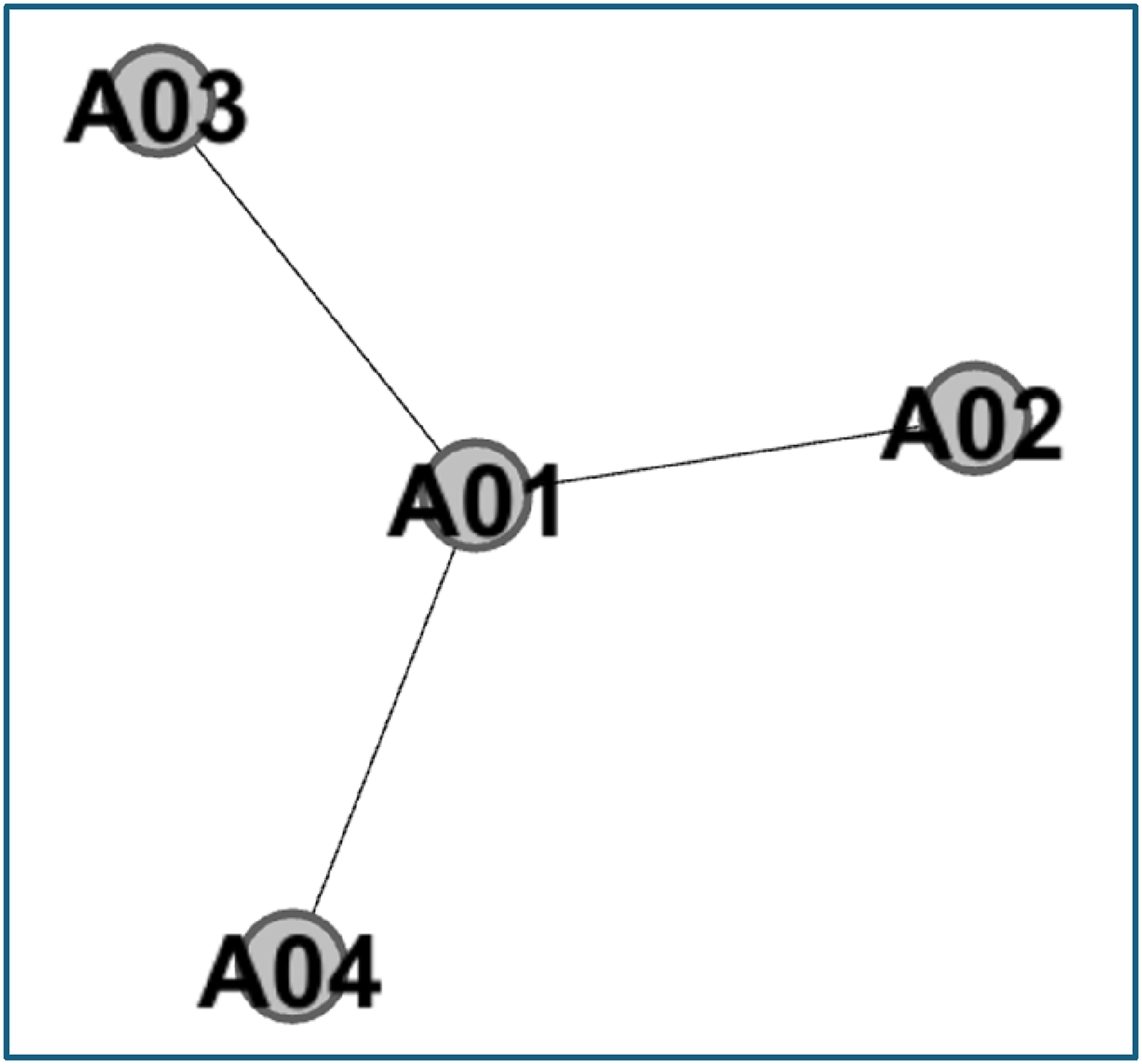
By systematically categorising nodes (actors) and edges (relationships), the network design began to take form, offering a visual and analytical representation of the system’s structure, its key influencers, and the relational patterns that underpin disaster and emergency management. The researchers used Gephi (v0.10) – an “open source software for graph and network analysis” (Bastian et al., 2009, p. 361) - as the primary SNA tool to record nodes, edges and develop a map of the networked environment.
Focused Coding and Categorisation
As the research progresses, the focus shifts to focused coding and categorisation, where the most significant and frequent initial codes are identified (Hoflund, 2013). This stage is pivotal in recognising patterns and themes within the data, enabling the conceptualisation of larger segments and forming categories that serve as the building blocks for major themes (Charmaz, 2014, p. 138). These categories represent broader concepts that begin to explain the data in a structured way, facilitating the transition from raw data to meaningful insights.
Example of Focused Coding and Categorisation

The initial codes identified in Table 1 were revisited following additional data collection and re-analysed using the constant comparative method. Through iterative engagement with the data, codes were grouped into higher-order focused codes and then abstracted into broader conceptual categories. This process, outlined in Table 3, enabled the emergence of themes that reflected both relational dynamics and systemic challenges within the DEM environment. These categories formed the foundational elements for later stages of theoretical development, ensuring that the analytical process remained grounded in participant narratives while progressively abstracting towards system-level insight.
Adapted Constant Comparative Methods
The constant comparative method (CCM) involves an ongoing process of comparison that starts as soon as data is available and continues throughout the study by “generating a theory that is integrated, consistent, and plausible (Glaser & Strauss, 2017, p. 103) and is “grounded in the data“ (Boeije, 2002, p. 392). This approach requires the researcher to constantly compare data elements, such as different pieces of data, data with codes, codes with codes, codes with categories, and actors (Boeije, 2002; Charmaz, 2014; Glaser & Strauss, 2017). Through this iterative process, the researcher can identify patterns, variations, and relationships in the data. The CCM is instrumental as it informs subsequent data collection, ensuring a deep and comprehensive understanding of the research. Diverging from the traditional CCM, the adapted CCM approach extends to encompass the SNA aspect of CNGT.
The adapted CCM was applied iteratively throughout data collection and analysis, aligning with the core principles of CNGT. Following each round of interviews, new data were immediately compared with existing codes and categories to identify consistencies, contradictions, and emerging patterns. This process informed the direction of subsequent interviews, ensuring that the evolving theory remained grounded in the participants’ lived experiences and responsive to relational dynamics within the DEM system.
Nine overarching categories were developed. These categories reflect both the substantive themes emerging from participant accounts and the structural patterns uncovered through relational analysis: (1) Actors (2) System complexity (3) Collaboration and coordination (4) Governance and leadership (5) Emergency preparedness (6) Barriers to effective DEM (7) Stakeholder engagement (8) Resources and funding (9) Legislation and policy
These categories provide the foundation for theory development, capturing the interplay between social meaning, institutional context, and the evolving structure of disaster response systems in Aotearoa New Zealand.
Network Analysis and Development
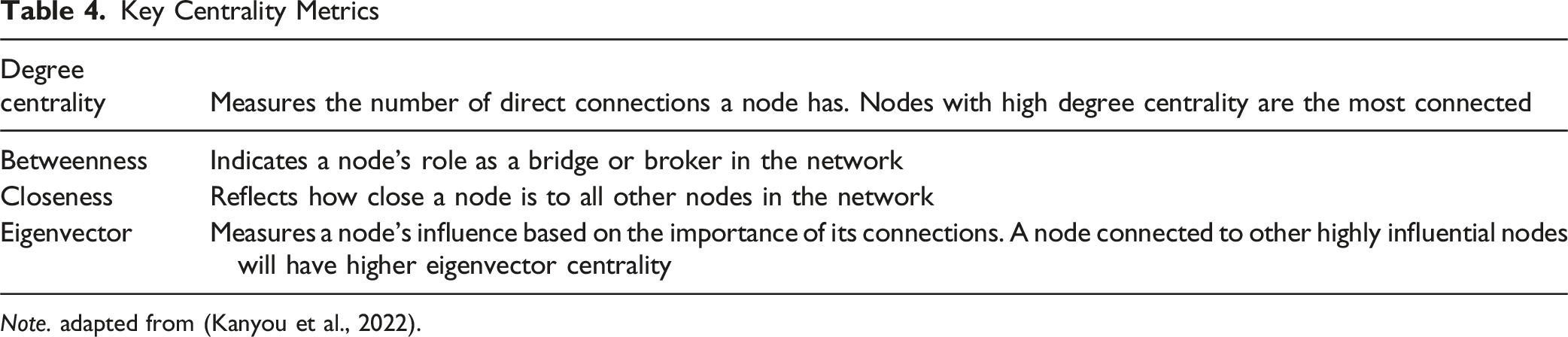
Network analysis and development marked a phase of synthesis and understanding (Knoke & Yang, 2008). Categorised nodes and edges were analysed to decipher the broader network’s characteristics. This analysis was not only about mapping connections; it also examined how these connections influenced the system’s functionality (Brailas, 2014). It revealed central nodes, patterns of information flow, and potential areas of resilience or vulnerability within the network. Node and edge categorisation, alongside network analysis, was conducted iteratively across the stages of data collection and analysis. The creation and visualisation of these elements were instrumental in enhancing the exploration of participants and the mapping of the DEM system. Network mapping and centrality were then explored (Flecha et al., 2023; Kanyou et al., 2022).
Key Centrality Metrics
Note. adapted from (Kanyou et al., 2022).
As additional data was collected and analysed, a rich network began to develop (Figure 3), where central actors were identified. In this example, nodes were weighted relative to their degree, and coloured according to their betweenness centrality (Lambiotte et al., 2008). In the context of DEM, high centrality actors may serve as critical hubs, playing a pivotal role in coordinating information flow, resource allocation, and operational leadership across multiple stakeholders. Their central positioning suggests that they function not only as key decision-makers but also as gatekeepers, with many organisations depending on them for directives, approvals, or coordination efforts. While such centrality could enhance coordination and facilitate an effective response, it also introduces potential risks. DEM Network Development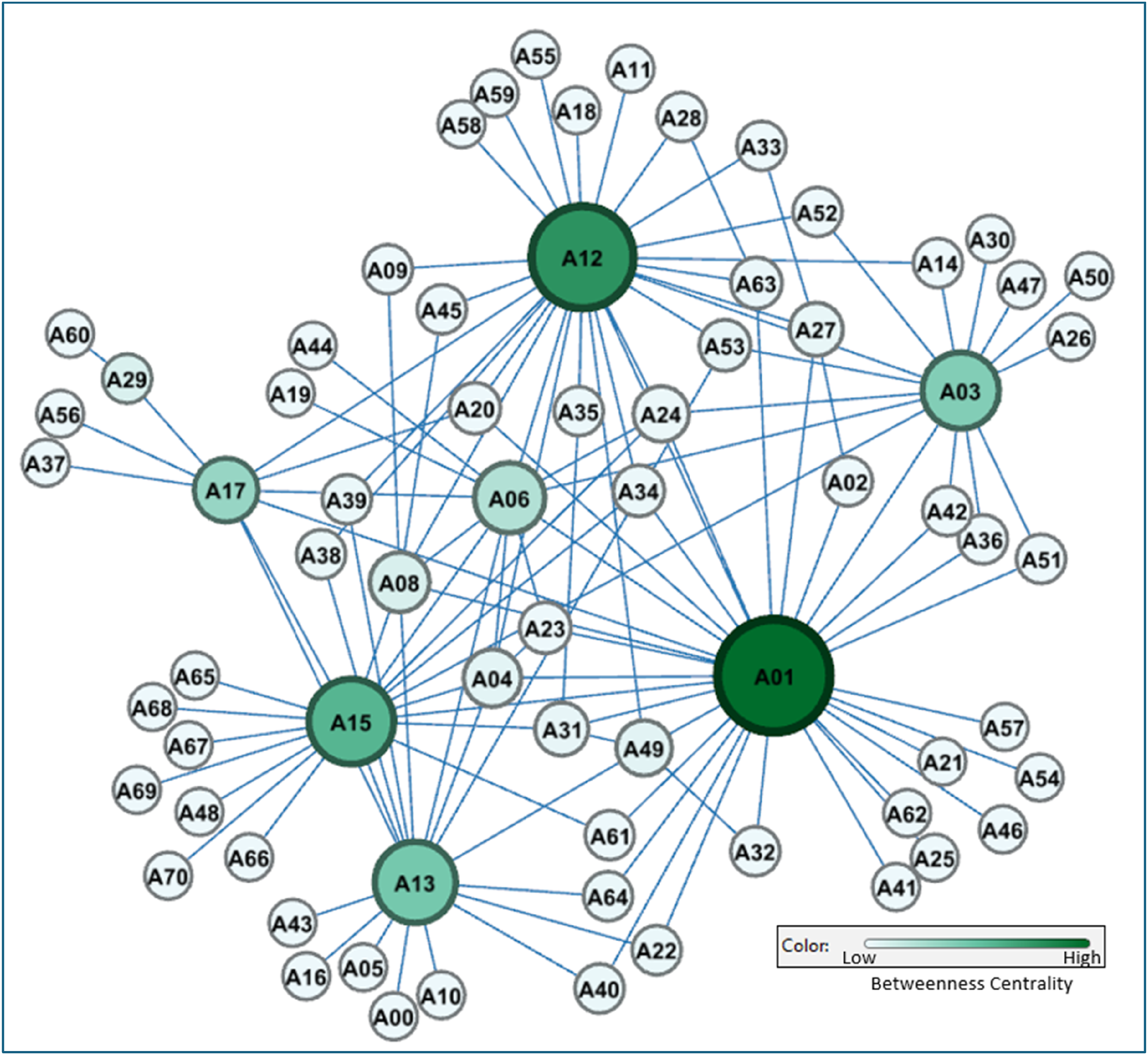
Theory Building
The theory building phase involves synthesising and interrelating categories to construct a cohesive theoretical framework (Charmaz, 2014). This stage builds upon the identification and description of categories, delving into the relationships and interactions that define their roles within broader social processes. In CNGT, categories are conceptualised as interconnected components of a complex system, capturing dynamic interactions and emergent behaviours.
A critical aspect of this phase is comparative analysis, through which patterns, relationships, and potential causal links among categories are identified. This process is reflexive and iterative, requiring deep engagement with the data to ensure the theory remains firmly grounded in empirical evidence (Charmaz, 2014, p. 224). The researcher’s insights play a pivotal role in shaping the evolving theory, as category integration goes beyond merely linking concepts, to uncovering the nuanced interdependencies that underpin the system under study.
The culmination of this phase is theory development, where the data, categories, and any network analyses are synthesised into a coherent and comprehensive framework (Mitchell, 2014). The final theory, rooted in empirical data, aims to capture the intricacies of complex systems, including the diversity of actors and their interactions. Beyond advancing theoretical understanding, this integrative process produces insights with practical applicability, offering value in contexts such as policy development, organisational planning, or enhancing community resilience (Charmaz, 2014; Hutchison et al., 2010). By engaging deeply with the interconnectedness of categories, CNGT provides a robust approach to understanding and explaining dynamic, adaptive systems.
Evaluation of CNGT Against Charmaz’s Criteria
CNGT represents an innovative methodological advancement that combines the interpretive depth of CGT with the structural and relational insights of SNA. This synthesis enhances the study of complex systems by capturing both meaning-making processes and evolving relational structures. To evaluate CNGT this section applies Charmaz’s (2014) four key criteria for assessing grounded theory methodologies: credibility, originality, resonance, and usefulness. Additionally, it addresses potential limitations and challenges inherent in the approach.
Charmaz (2014, p. 337- 338) outlines specific evaluative questions under each criterion, which this section explicitly addresses. For credibility, Charmaz asks whether the data are sufficient to merit claims made and whether systematic comparisons were made. CNGT answers this through rigorous application of the constant comparative method and reflexive memo-writing, supplemented by structural analysis that enables systematic comparison. Regarding originality, Charmaz queries whether the study offers new insights or challenges prevailing concepts. CNGT fulfils this by integrating network analysis into CGT, producing novel understandings of relational dynamics in complex systems. On resonance, Charmaz prompts the researcher to consider whether the categories portray the fullness of the studied experience and whether participants would recognise themselves in the narrative. CNGT’s alignment of participant narratives with network visualisations allows for a more complete depiction of lived realities and their structural embeddedness. Finally, with respect to usefulness, Charmaz suggests asking whether the analysis offers interpretations that people can use in their everyday worlds. CNGT generates theoretically grounded, yet actionable insights, particularly within DEM practice, by identifying not only key actors and dynamics, but also leverage points for coordination, policy development, and systemic resilience. Thus, CNGT meets the intent of Charmaz’s evaluative framework while extending it into new epistemological and methodological terrain.
Credibility: Ensuring Rigour Through Methodological Integration
CNGT maintains methodological credibility by adhering to the foundational tenets of CGT, particularly the constant comparative method and the iterative nature of data collection and analysis. The incorporation of social network analysis enhances the depth and reliability of the analysis by introducing quantitative elements, such as metrics for centrality, density, and modularity, to complement qualitative insights (Crossley, 2010). This dual approach ensures that the theory remains grounded in rich empirical data while leveraging structured analytical tools to validate emergent findings. The emphasis on reflexivity further strengthens credibility, as researchers continuously evaluate their positionality and influence on the research process, ensuring interpretations are transparent and robust. These systematic comparisons, conducted throughout data collection and analysis, align with Charmaz’s call for iterative rigour and analytic sufficiency to substantiate theoretical claims (2014, p. 337).
However, the credibility of CNGT can be challenged by the complexity of integrating qualitative and quantitative methods, requiring researchers to possess expertise in both domains. The reliance on network data also necessitates careful consideration of data completeness and accuracy, as gaps in network relationships could undermine the validity of the findings. These challenges necessitate rigorous documentation of methodological decisions to maintain credibility throughout the research process.
Originality: Advancing Methodological Boundaries
CNGT’s originality lies in its ability to extend grounded theory methodologies into networked environments. By embedding network perspectives within the constant comparative method, it enables researchers to examine both individual meaning-making and the systemic structures that influence social interactions. This dual focus makes CNGT particularly suited for studying complex adaptive systems such as DEM, where coordination relies on evolving relational dynamics.
In accordance with Charmaz’s emphasis on originality as both conceptual innovation and a challenge to existing assumptions (2014, p. 337), CNGT expands grounded theory’s scope to incorporate networked, systemic complexity. Unlike traditional CGT, which focuses primarily on individual agency and interpretive meaning, CNGT systematically integrates structural dimensions into theory development. Concepts such as actor positioning, brokerage roles, and information flow become part of the analytic vocabulary, extending GT into new domains.
While frameworks such as Actor-Network Theory (ANT) and thematic network analysis also map relationships, CNGT offers a novel synthesis tailored to the study of complex DEM systems. Its contribution lies not just in topic but in design: it combines constructivist coding, mem-writing, node/edge development, and network metrics (e.g., centrality, betweenness) within a grounded and generative sequence. This workflow ensures that meaning-making and relational structure are analysed together, rather than in isolation.
For researchers, this approach presents both opportunities and challenges. Integrating qualitative coding with tools like Gephi or Kumu. io requires a methodological shift and technical learning curve. To support this, CNGT provides a clear scaffold: an iterative process where insights from coding inform network construction, and network patterns in turn guide further theory development. For example, open codes may surface themes like trust or influence, which are then visualised as relational attributes within a network. This networked representation feeds back into the grounded theory process, enabling a dialogic, reflexive, and systemically aware mode of inquiry. In this way, CNGT transforms integration from a technical hurdle into a generative analytic dialogue - offering a replicable and adaptable methodology for dynamic systems research.
Resonance: Capturing Meaning and Context
Resonance in CNGT is achieved through its commitment to aligning theoretical developments with participants’ lived experiences and contextualising them within the broader networked system. The method’s focus on both micro-level interactions and macro-level structures ensures that the resulting theories align closely with the realities of the participants and the systemic environment they navigate.
A key strength of CNGT is its ability to reveal nuanced relational patterns that might otherwise remain obscured in purely qualitative or quantitative studies. Network mapping enables researchers to visualise hidden structures of collaboration, power dynamics, and emergent alliances, providing deeper insights into how meaning-making unfolds within an interconnected system. By aligning emergent categories with participants’ own narratives and validating these against observed relational patterns, CNGT ensures resonance in Charmaz’s terms - where theory reflects and refracts lived experience (2014, p. 338).
However, ensuring resonance requires careful attention to translating network data into meaningful narratives. The researcher must bridge structural findings with contextual meaning, ensuring that emergent theories remain grounded in the participants’ realities. For example, while network centrality measures may highlight key actors in a DEM system, qualitative insights can reveal the underlying trust, power dynamics, or informal coordination shaping their influence (Hart & Saunders, 1997).
Usefulness: Practical and Theoretical Contributions
CNGT ‘s practical applicability is one of its most significant contributions. By integrating network analysis into grounded theory, CNGT provides insights that are both theoretically robust, and actionable in real-world contexts. For example, in DEM, CNGT provides valuable frameworks for understanding interorganisational collaboration, resource allocation, and adaptive decision-making. In DEM, it provides valuable frameworks for understanding interorganisational collaboration, resource allocation, and adaptive decision-making. These insights can inform policy development; organisational strategies aimed at enhancing systemic resilience. This meets Charmaz’s criterion of usefulness by generating interpretations that practitioners can apply within real-world contexts, informing strategies, policies, and relational interventions (2014, p. 338).
Beyond DEM, CNGT’s adaptability makes it relevant to other fields that examine complex networks, such as healthcare systems, organisational studies, and digital communication networks. The method’s flexibility allows researchers to tailor its application to diverse contexts, making it a versatile tool for studying relational and emergent phenomena.
However, the effective application of CNGT relies on researchers’ ability to translate theoretical insights into actionable recommendations. While integrating GT with SNA introduces methodological complexity, this challenge can be addressed through clear communication strategies, such as using intuitive network visualisations, practitioner-friendly interpretations, and interdisciplinary collaboration (Glegg et al., 2019). Ensuring that theoretical constructs remain accessible to diverse audiences will enhance CNGT’s practical utility across both research and applied settings.
For researchers adopting a reflexive stance informed by the ethics of care, CNGT offers practical guidance. First, it encourages sustained engagement with participants through reciprocal communication and transparency. Second, the iterative coding and memo-writing process provides space for researchers to surface and question their assumptions, fostering ethical reflexivity. Third, the inclusion of network analysis allows for the identification of power dynamics, enabling researchers to highlight and potentially disrupt systemic exclusions. These practices will ensure that research remains attentive to the wellbeing, agency, and situated knowledge of all participants (Brannelly & Boulton, 2017).
Limitations
Several limitations must be acknowledged. First, although the sample size (n = 40) was sufficient to reach theoretical saturation, it does not support statistical generalisation. Second, while CNGT was operationalised within a national emergency management system, its adaptability to other cultural or sectoral contexts requires further exploration. Third, as a constructivist methodology, CNGT is shaped by the interpretive stance of the researcher, which may influence category construction and network framing. While reflexivity was embedded throughout, interpretive subjectivity remains an inherent feature.
Discussion and Conclusion
The findings of this study suggest that CNGT offers a compelling advancement in the methodological toolkit available for studying complex systems. By aligning with the constructivist principle of co-constructed meaning while integrating relational network analysis, CNGT fills a methodological void in qualitative disaster research. These findings resonate with calls for more dynamic, multi-scalar approaches to studying adaptive systems (Burger et al., 2021; Turner & Baker, 2019). Furthermore, this approach aligns with complexity-informed paradigms that view social systems as emergent and interdependent, providing an analytical bridge between interpretive richness and structural clarity. In doing so, CNGT offers practical value to scholars and practitioners seeking to navigate the intertwined relational and contextual dimensions of DEM and similar fields.
The methodological value of CNGT also corresponds with frameworks such as VUCA (Volatility, Uncertainty, Complexity, Ambiguity) and BANI (Brittle, Anxious, Nonlinear, Incomprehensible), which are increasingly used to describe the volatile and unpredictable conditions shaping contemporary systems (Menaria, 2024). These paradigms highlight the need for flexible, adaptive, and relational approaches to both research and practice (Halil et al., 2025). CNGT responds to this demand by offering a method capable of capturing the interplay between fluid meaning-making processes and evolving structural configurations. Its iterative, reflexive workflow makes it well-suited to environments where predictability is low and emergence is high - including DEM, healthcare, digital networks, and organisational transformation contexts.
By integrating constructivist grounded theory and social network analysis, CNGT provides a systematic, relational, and iterative approach to understanding dynamic environments, such as DEM. This synthesis enables researchers to move beyond traditional qualitative methods, which often overlook the structural dimensions of complex systems, while also addressing the limitations of network analysis, which lacks interpretive depth. The resulting framework is both rigorous and adaptable.
The significance of CNGT lies in its ability to capture both subjective experiences and the evolving structures that shape interactions. This dual focus supports comprehensive analysis of systems such as DEM, healthcare, and crisis management - domains where networked relationships fundamentally shape outcomes. By incorporating grounded coding, network triangulation, and theoretical sampling, CNGT ensures that findings remain empirically robust and contextually meaningful.
While CGT explores meaning-making, it lacks relational tools; SNA captures structure but omits interpretive depth. CNGT bridges this divide by offering an integrated approach that traces both interpretive patterns and network evolution. This contribution broadens qualitative research into areas traditionally dominated by quantitative approaches.
The evaluation of CNGT demonstrates its credibility, originality, resonance, and usefulness for studying complex systems. CNGT also fosters resonance by co-constructing knowledge with participants, ensuring alignment with lived experiences. Its usefulness extends beyond academia, providing insights that can inform policy and practice in complex environments.
Beyond its methodological innovations, CNGT has important ethical implications, particularly in multicultural or unequal research contexts. By embedding reflexivity and an ethics of care into each stage of analysis, CNGT responds to the challenges of conducting research in systems shaped by power asymmetries, marginalisation, or cultural difference. The method’s capacity to illuminate not only who is central or peripheral in a network but also how meaning is constructed across those positionalities allows researchers to engage more equitably with participants. In contexts such as Indigenous governance, community-based disaster response, or underserved populations, this ethical grounding enhances the relevance and integrity of qualitative inquiry.
CNGT’s ability to generate grounded and transferable insights reinforces its value for understanding complex social systems. By extending qualitative research boundaries, it provides a robust foundation for advancing theory and practice across disciplines and applied contexts.
Footnotes

Ethical Considerations
This study received ethical approval from the Auckland University of Technology Ethics Committee (AUTEC) under reference number 24/37 on June 21, 2024.
Funding
The authors received no financial support for the research, authorship, and/or publication of this article.
Declaration of conflicting interests
The authors declared no potential conflicts of interest with respect to the research, authorship, and/or publication of this article.
Data Availability Statement
Due to the nature of this research and the ethical obligations to protect participant confidentiality, the data supporting the findings of this study are not publicly available.