




Abstract
Rural Americans experience health disparities compared to those in urban areas, including higher incidence of disease, disability, and injury; higher mortality rates; and lower life expectancies. These disparities are driven, in part, by factors such as geographic isolation, transportation challenges, limited access to specialist healthcare providers, and socioeconomic disparities that impede equitable access to healthcare. These contextual factors are unique to each rural community, leading to challenges in developing appropriate and effective interventions to meet their unique health needs. There is no “one size fits all” approach: health interventions in the rural context must be tailored to each community’s unique characteristics, culture, and circumstances. We describe how three interdisciplinary mapping approaches (group concept mapping, communication asset mapping, and intervention mapping) can be used for engaging with rural communities in health equity research and, specifically, if used appropriately, can enhance community participation in the design of culturally tailored, accessible, and sustainable health services. Group concept mapping employs a participatory approach to gather and organize ideas from community members, facilitating collaboration and shared decision-making that can inform the directions of future interventions. Communication asset mapping is a structured approach to identify and evaluate community resources and capabilities to serve as sites for health promotion and education efforts. By identifying assets, community members are empowered to develop strategic approaches to leverage the strengths of their own communities. Both group concept mapping and communication asset mapping can be integrated as steps of the intervention mapping process, which provides a systematic framework for developing and tailoring effective interventions. By integrating these three approaches, community-engaged researchers and their partners can collaboratively design culturally appropriate, feasible, and sustainable interventions tailored to the specific needs and assets of rural communities.
Keywords
Introduction
Approximately 20% of the American population (almost 67 million people) live in rural areas across the United States (US) (US Census Bureau, 2024); however, this percentage can vary depending on how rurality is conceptualized and measured. For example, commuting patterns, population density, and geographic isolation may be used variably to define a rural area or community in the US (Hart et al., 2005). Regardless of the operationalization of rurality, rural US residents experience a multitude of health disparities compared to Americans living in urban areas. Particularly, people living in rural areas have overall poorer health status and increased risk of disease and death compared to those living in urban areas, including for conditions such as diabetes, heart disease, stroke, mental health conditions and suicide, unintentional injury, and cancer (Rural Health Disparities, 2024). Rural health disparities are driven by socioeconomic, political, and geographic factors, including higher rates of poverty, lower median household incomes, lower educational attainment, and higher rates of uninsurance compared to urban areas (Rural Data Explorer, n.d.; Bar Chart of Uninsured, ages 0–64 in metro and nonmetro counties, 2022, n.d.). Proportionally fewer healthcare providers are located in rural areas compared to urban areas, contributing to a shortage of care (Rural Healthcare Workforce, 2025). Rural geography requires residents to drive long distances to receive health care and, therefore, experience longer wait times (Maganty et al., 2023; Myers & Standley, 2023; Warshaw, 2022). These socioeconomic and geographic factors prevent rural Americans from equitable, quality, and timely access to care and good health outcomes.
The challenges that lead to rural health disparities also pose distinct obstacles for research and engagement. For example, financial limitations and lack of transportation may hinder community members’ participation in research; geographic isolation complicates the ability of researchers and participants to maintain consistent relationships and attend meetings; provider and infrastructure shortages mean fewer partnerships to nurture; and resource inequities may foster power imbalances and mistrust between academic researchers and rural communities. Thus, authentic partnership and engagement with rural communities is crucial when conducting research to address rural health disparities and improve public health in rural areas. Thus, authentic partnership and engagement with rural communities is crucial when conducting research to address rural health disparities and improve public health in rural areas.
Community engagement in research involves an understanding of the definition of “community” as it relates to the research, a strong community-academic partnership when collaborating on research, equitable power and responsibility, capacity building for communities to address the health issue, and effective dissemination of results including related policies and programs (Ahmed & Palermo, 2010). Generally, community engagement in research and public health seeks to identify health priorities and utilize community strengths to improve health and well-being, with the community involved every step of the way. Community engagement is especially crucial to address health challenges and advance health equity in rural communities, which face health disparities due to social, cultural, economic, and geographic factors described above (Weeks et al., 2023). Although community-engaged practices benefit both rural and urban communities, these practices have been limited in public health research and health promotion initiatives in rural communities. Thus, developing and employing community-engaged research practices that can be appropriately tailored for rural populations is crucial to improve rural public health.
Researchers involved in rural community engagement efforts must consider how the rural context differs from urban settings. For instance, although trust is required in all community-engaged practices, trust plays a vital role in rural community engagement, especially in research contexts, and may require significant time investment to develop and sustain trusting partnerships that are equitable, long-lasting, and productive (Morgan et al., 2014). Engendering trust in rural communities may require intensive relationship-building efforts due to mistrust and skepticism toward outsiders and top-down initiatives (Reck et al., 2025). The large geographic areas between communities can make it difficult to organize engagement sessions. This situation may result in lower participation rates and a dependence on alternative engagement methods. Strategies for engaging rural communities in health equity research must consider these elements and culturally adapt to the rural context. Cultural adaptation of community-academic partnerships in rural areas involves modifying community engagement methods to address specific challenges like geographic isolation, transportation obstacles, and mistrust of outsiders. Effective strategies include extending relationship-building timelines, using existing community gathering spaces and networks, incorporating local communication styles, and collaborating with trusted community leaders to foster genuine participation (Baquet et al., 2013; Noel et al., 2019). Relying on frameworks, such as the community-based participatory research (CBPR) framework, which integrates these key tenets of cultural adaptation, can provide guidance in developing, implementing, and evaluating public health projects, research, and interventions together with rural communities (Agency for Toxic Substances and Disease Registry, 2024).
In addition, within community-engaged research methods, there are models that outline different levels of participation and continua of community engagement, such as the Community Engagement Continuum and the Active Community Engagement (ACE) Continuum. The Community Engagement Continuum begins with outreach, consult, involve, collaborate, and ends with shared leadership (McCloskey et al., 2011). As researchers move through the continuum, it may increase the difficulty in conducting research, but the level of involvement, impact, trust, and communication with the community increases (McCloskey et al., 2011). The ACE Continuum involved three levels of engagement (consultative, cooperative, collaborative) across 5 characteristics of community engagement: community involvement in assessment, access to information, inclusion in decision making, local capacity to advocate to institutions and governing structures, and accountability of institutions to the public (Russell et al., 2008). Both of these community engagement continuum models can be used by researchers to improve public health systems and services by strategically integrating community engagement into community-based research projects; actively guiding researchers to move beyond community involvement (i.e., including community members in research activities) to engagement (i.e., generation of ideas, contributions to decision making, and shared responsibility), and addressing power imbalances by building community capacity to address health challenges (McCloskey et al., 2011; Russell et al., 2008). Further, there are nine principles of community engagement that can help researchers put these practices into action; the nine principles are organized in three sections including (1) items to consider prior to beginning engagement, (2) what is necessary for engagement to occur, and (3) what to consider for engagement to be successful (McCloskey et al., 2011).
Notably, conducting community-engaged research as these methods may be complex, challenging, and labor-intensive, particularly in rural contexts. Common challenges seen in community-engaged research include maintaining community involvement, addressing differences between the community and researchers, working with hard-to-reach communities, initiating new community relationships, and overcoming competing priorities (McCloskey et al., 2011). However, it is important to work through these challenges and engage with communities throughout the research process to develop and implement effective and culturally relevant public health interventions. As illustrated by the “Nothing About Us Without Us” principles, communities have the right and ability to participate in and advise on activities that impact their wellbeing, ensuring research and public health interventions serve community priorities (Arumugam et al., 2023).
We have identified three interdisciplinary mapping approaches, informed by these frameworks and models, for engaging rural communities in health equity research: (1) group concept mapping, (2) communication asset mapping, and (3) intervention mapping. In our experience, these approaches boost a community’s involvement in the research process by magnifying their voices and leveraging their intrinsic knowledge and experiences within their community. Moreover, these three “mapping” approaches can be integrated into a single project, so communities and researchers can successfully collaborate and design culturally appropriate, feasible, and sustainable interventions tailored to the specific needs and assets of rural communities. We describe each of the mapping methods below.
Group Concept Mapping
Group Concept Mapping (GCM) is an engaged research method that can be used to synthesize community member perspectives to ensure there is a community-driven understanding of the interrelated factors of a complex problem, and that context and patient-informed outcomes are incorporated into future responses or interventions (Rising et al., 2019; Windsor, 2013). GCM is particularly well-suited for engagement with rural communities as it is a structured, collaborative process that promotes self-determination of a community and gathers and organizes community ideas into successful and sustainable actionable priorities (Keller et al., 2025).
GCM involves a mixed-method approach with six steps: preparation, brainstorming, sorting and rating, analysis, interpretation, and utilization (Kane & Trochim, 2007). The first GCM step (preparation) involves the formulation of a clear, concise, open-ended question or prompt, which should elicit participant input and directly relate to a specific topic. An example prompt may be, “What concerns do you have when you think about accessing health care services in your community?” The focus prompt should be created and drafted by a community advisory board(s) and other community partners and should not be specified in advance. After the focus prompt is created, the study team collaborates with the community advisory board(s) and partners to identify criteria to evaluate responses to focus prompts (brainstormed ideas). For example, a rating question for the above focus prompt could be “How much impact does this concern have on accessing health care services?” Scales often range from 1 to 5 (e.g., 1: not impactful, 5: very impactful). Ideally, multiple rating criteria can be employed to allow for contrasting perspectives.
In the second GCM step (brainstorming), participants independently respond to the focus prompt by brainstorming all possible responses, producing “items.” Once items are brainstormed, the study team, with community partners, reviews and synthesizes them, including deduplicating similar or repeated items, splitting compound or complex responses, and improving clarity if needed.
In GCM step three, participants sort all brainstormed items (not just their own) into thematic groups (clusters), drawing on their individual experiences and perceptions for a more comprehensive understanding. This can also be carried out by hand (using cards, similar to pile-sorting) or by using online software (Yeh et al., 2014). Participants also rate each item based on the criteria drafted in the first step. Data management and analysis for GCM can be conducted using dedicated GCM software, such as GroupWisdomTM. The first step in GCM analysis is nonmetric multidimensional scaling, used to generate a group similarity matrix across all items (Hout et al., 2013). The matrix is then used to create a point map (Figure 1), wherein each point indicates an item, and its location represents the spatial relationship among other items on a two-dimensional plane (proximity between points indicates frequency of being sorted together). Next, hierarchical cluster analysis is used to group ‘clusters’ of items based on conceptual similarities identified using multidimensional scaling. Ward’s minimum variance method is used for agglomerative clustering of the point map data from multidimensional scaling (Murtagh & Legendre, 2014). Agglomerative clustering involves grouping the most proximal pair of items, and then successively merging clusters based on proximity until the whole dataset is merged into one single large cluster. The number of clusters is unknown until the data are analyzed, and even then, the final number of clusters can be subjective. Researchers can rely upon various indices as stopping rules for the optimal cluster solution (Hu et al., 2018); however, they should also collaborate closely with community partners to identify the final cluster solution, or “cluster map” (Figure 2). Rating data is used to measure participants’ assessments of statements per specified criteria, using mean scores for statements and clusters. Interpretative figures comparing ratings across items or clusters (i.e., go-zone maps and ladder diagrams) are generated for discussion with the community. Point Map Developed From Group Concept Mapping. Example Point Map Created During a Group Concept Mapping (GCM) Exercise. Numbered Points Represent Statements or Items Brainstormed in Response to a Focus Prompt. The Spatial Distribution of Points Reflects the Similarities Among Statements as Conceptualized by Community Members Cluster Map Developed From Group Concept Mapping. Example Cluster Map Created During a Group Concept Mapping (GCM) Exercise. The Point Map (Figure 1) Serves as the Foundation From Which Clusters are Generated Through Agglomerative Hierarchical Cluster Analyses, and a Final Cluster Solution is Discussed and Identified by Community Members. Each Cluster Represents a Conceptually Similar Group of Statements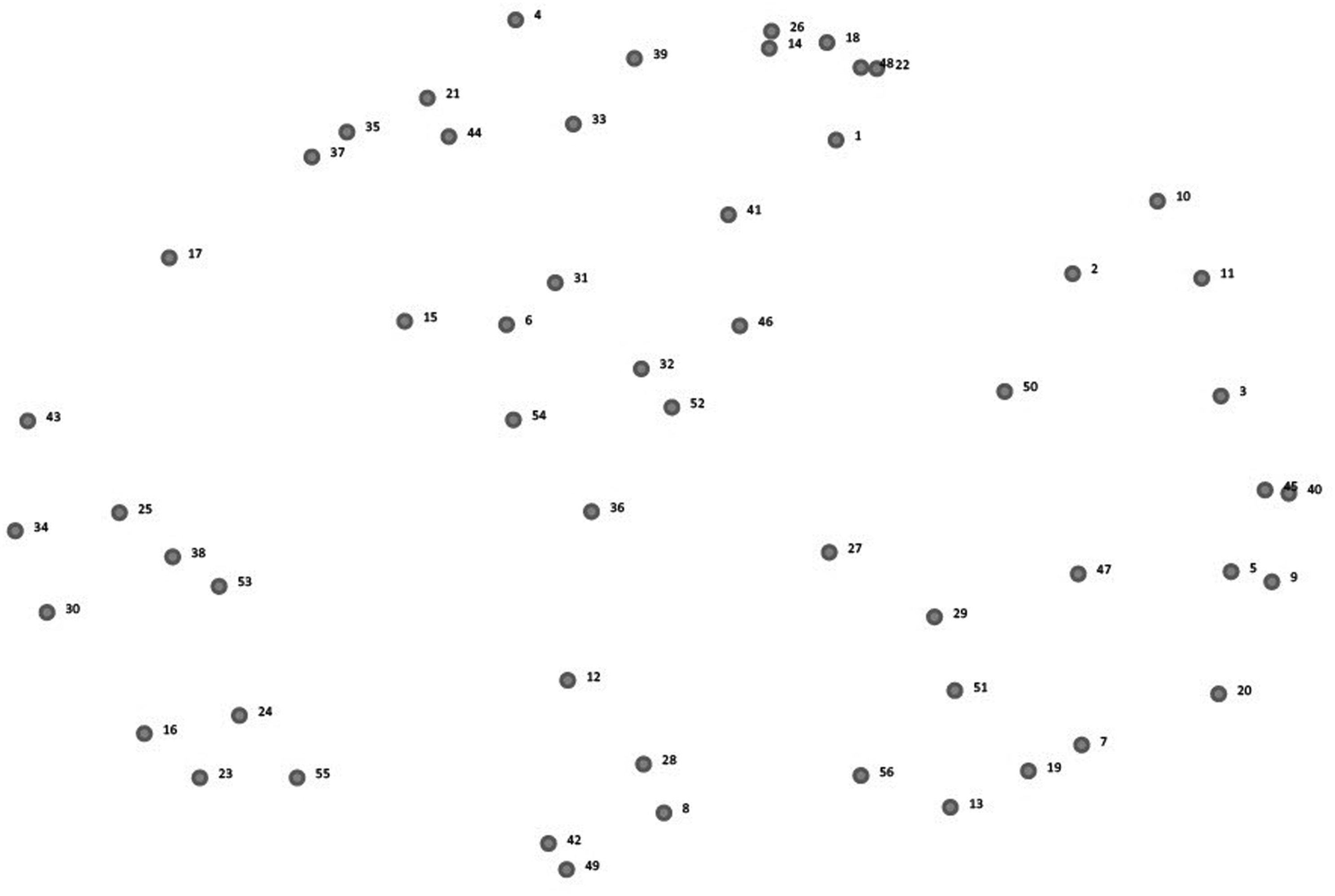

The final GCM step involves reviewing maps and results from ratings with communities (interpretation) and utilizing the results. This step is critical in understanding the findings in the study population’s context and is necessary to identify and prioritize future intervention efforts. From our experience, the highly visual nature of GCM lends itself well to sharing relationships between ideas, clusters, and concept maps with community members.
Important components to consider when engaging communities for GCM include accessibility and logistics. All GCM instructions and resources should be easily readable and provided in languages preferred by the community. Data collection can occur in person or online. Researchers should plan for in-person brainstorming and sorting/rating sessions to last at least 2 hours and be held at community centers or locations preferred by participants. Online brainstorming and sorting activities should remain open for several weeks, with periodic reminder emails sent to participants to encourage engagement. Challenges associated with using GCM in a community setting include the time commitment and, especially when conducted online, the recruitment of participants willing to engage throughout the GCM process. Establishing relationships with community partners and potential participants is crucial for success. GCM is a flexible approach that can be adapted to honor local needs and cultural preferences (for communication, for example).
Communication Asset Mapping
Communication Asset Mapping (CAM) examines the relationship between local community resources and population health disparities. The importance of local geography to social and physical health has long been established across disciplines; CAM is an effort to operationalize and leverage this connection through participatory research (Minkler, 2000). The CAM method identifies spaces in a neighborhood that can promote information and resource sharing. These community assets are discursive spaces where residents feel comfortable engaging in interpersonal dialogue about health-related concerns. They are also useful sites for health promotion and education that can be particularly valuable when trying to engage hard-to-reach populations. In rural health promotion, trust and rapport are critical for any community outreach efforts; CAM thus provides a methodological roadmap for effective outreach and engagement.
CAM is informed by an integrated theoretical framework that merges communication infrastructure theory and assets-oriented community field mapping (Ball-Rokeach et al., 2001; Kim & Ball-Rokeach, 2006; Kretzmann, 1995; Sharpe et al., 2000; Vamos et al., 2021). The CAM method involves hands-on, street-level mapping to identify communication assets that have the potential for community building and discursive interaction. This approach enables community members to recognize, endorse, and mobilize community resources to collectively envision change within their own neighborhood. Traditionally, community health promotion efforts employ a deficit-based approach, with a focus on addressing community shortcomings or shortfalls. Instead, CAM employs an asset- or strengths-based approach, emphasizing existing community assets to address health disparities. Variations of the CAM method have been applied in contexts such as neighborhood redevelopment, women’s health promotion, anti-displacement advocacy, and cancer prevention (Lumpkins et al., 2023; Villanueva, 2021; Villanueva et al., 2016).
An application of CAM in the rural public health context requires a strong academic-community partnership that can nurture active engagement and meaningful translational research outcomes. First, collaboration with local community organizations facilitates the recruitment of residents to engage in the CAM method and produce a community map that highlights local health resources, community assets, and places where community health promotion can occur. Maps that visually highlight communication assets specifically can guide future health interventions and can be leveraged by community members in their own advocacy efforts. The CAM method has been useful, for example, in identifying the communication ecologies of Latina women to more effectively promote cervical cancer prevention behaviors (Gonzalez, 2013). A primary goal of any mapping project should be to cultivate a sense of ownership in both the data collection process and the project deliverables. In more rural and remote communities, it is especially important for the research team to conduct all activities on-site and in the participants’ preferred language, ensuring that the CAM method is culturally appropriate and identifies local public health resources relevant to the community. Remuneration, childcare, and food can be offered to compensate participants for their time and to increase accessibility.
The CAM data collection process consists of in-person field instrument development, participant training, field mapping, debriefing sessions, and map development (Vamos et al., 2021). All research activities are designed to be participatory, collaborative, and iterative to ensure that community needs are at the center of the project goals. Transparency and accountability are particularly important to the research process. During field instrument development, community members are invited to participate in a two-hour co-design workshop to (a) divide the community into manageable sub-areas for mapping and identify areas of priority; (b) review and edit printed field instruments that are used during the mapping process—these instruments include predetermined categories of communication assets (public space, business, community organization, school, public service, medical/health, church, culture/arts resource, and emergent categories) and sections for recording the asset’s address, subarea, field observations, mappers’ names, and the date and time of mapping; and (c) review and edit an appropriate protocol for the visual documentation of assets during field mapping (Vamos et al., 2021).
For analysis, the same participants are then invited to another two-hour training session where the goals of the project are revisited and mapping protocols and instruments reviewed. The researchers guide participants through a sample mapping exercise to ensure clarity of instructions. Participants are then given mapping assignments based on specific neighborhood sub-areas and are supported as needed during the field mapping period. Following the field mapping exercise, participants are invited to a final two-hour co-design workshop where researchers moderate a discussion of which communication assets are most important for promoting health equity. Participants then co-design their community map by prioritizing assets and resources to be visually represented. Per good practice in community-based research and participatory design projects, participants are financially compensated for their participation in each of the workshops, with remuneration decided upon in collaboration with the community partner (Israel et al., 2008). Past renumeration amounts have ranged from $50 to $100 per hour for each participant. Another good practice in the map design process is hiring a local graphic designer to help streamline decision-making processes during map development, as design preferences can often vary across cultures. Figure 3 offers a sample communication asset map for health promotion, similar to those presented in prior work (Gonzalez, 2013; Villanueva et al., 2016). Example Communication Asset Map for Health Promotion Strategies
Because of the significant commitment the CAM method requires of researchers and community members, participant retention is understandably a challenge in such efforts. Trusted community leaders are critical to the success of these projects as they can ensure that the final maps adequately reflect the perspectives and visions of the broader community of residents. In prior work, we have detailed the ways in which community leaders and residents are financially compensated for their involvement in CAM projects (Villanueva et al., 2016). Similarly, we have explored the ways in which local projects that center participatory design methodology help to build capacity at the individual, organizational, and community level (Brough et al., 2018; Gonzalez et al., 2021). At the individual level, community-based research participants have described a sense of agency in holding ownership of the primary data and the value in learning about how research can be used in advocacy efforts. At the organizational level, community research partners may benefit from resource sharing and access to translational tools that help them creatively use their data. And at the community level, methods like CAM can work to build a sense of community cohesion and belonging, particularly when there is a tangible mapping product that presents an optimistic and asset-based image of their local neighborhoods. While often challenging to measure, all these outcomes of the research process help motivate residents to think of research as an extension of their ongoing community advocacy. While intensive and immersive, the CAM approach is an example of how theory-driven participatory research can yield findings that are actionable and accessible for health interventions.
CAM is particularly useful in rural communities as it can adapt to less-dense communication landscapes by leveraging the unique communication ecology of rural areas; systematically cataloging less visible or known resources, skills, and assets that may otherwise be an overlooked source or site of communication (Estrada et al., 2018). In addition, efforts to address rural health disparities can benefit from community-engaged research approaches like CAM that prioritize local assets to ensure that health campaigns and interventions serve those most impacted by health inequalities.
Intervention Mapping
Detailed Description of the Steps Involved in the Intervention Mapping (IM) Process (Fernandez, Ruiter, et al., 2019)

The participatory framework of IM respects rural communities’ expertise about their own needs and leverages existing social networks and leadership structures (Fernandez, Ruiter, et al., 2019). This method’s emphasis on extensive stakeholder input and contextual assessment aligns with rural values of local knowledge and community self-determination, making it particularly suitable for developing culturally appropriate interventions in rural settings (Fernandez et al., 2019a, 2019b). To ensure a culturally appropriate approach to IM in rural settings, researchers employ CBPR principles and focus on building authentic partnership-building, power-sharing with community stakeholders, and adaptation of research methods and approaches to the local cultural contexts and communication patterns (Bess et al., 2019; Corbie-Smith et al., 2010). This approach requires prioritizing community-identified priorities over predetermined research goals, engaging local cultural brokers as valued team members, and addressing structural barriers while building on existing community strengths and resources.
An example of the application of IM in a rural healthcare access study includes the following steps. The IM process can be conducted in three in-person sessions (Table 1). Steps 1 and 2 of the IM process can be completed during the first session with each group of community representatives. This involves first developing a shared understanding of the healthcare access problem. Then, we will develop a shared model of change to address the problem. Literature reviews can be used to identify pertinent theories and interventions to address the problem. Relevant community data can be used if available, and point and cluster maps, data placemats (Pankaj & Emery, 2016), and community asset and resource maps previously developed by community members, as well as new ideas and understandings from the group, are all incorporated into the shared model of change. The results from IM Steps 1 and 2 comprise two logic models, one depicting the problems and the other the change process. These models can be included in a strategic plan outlining the problems, resources, and strategies to improve healthcare access and outcomes. IM Steps 3 and 4 can be completed in a second session with the community. The programs needed to address the healthcare access problems and align with the model of change should be prioritized using group consensus-building processes and focusing on the use of theory, evidence, and existing interventions adapted to practical strategies that meet the community’s needs (Fernandez, Ruiter, et al., 2019). Culturally appropriate intervention program processes and materials can then be co-developed with the team. The culturally adapted interventions, program strategies, and materials can be included in the strategic plans along with guidelines for ethical and effective strategies to evaluate interventions in the future. In IM steps 5 and 6, implementation and evaluation plans can be developed in the final session with each group of community representatives. The IM process can be followed step-by-step guide to adopt, implement, and maintain the programs and interventions identified in IM Steps 3 and 4 in a culturally responsive manner (Fernandez, Ruiter, et al., 2019). Focus groups are useful for eliciting strategies for implementation and evaluation plans at multiple levels (e.g., policy, local community providers/agencies, partner providers/agencies, individual level).
Intervention mapping can uniquely address the needs of rural communities and develop, in collaboration with the community, culturally tailored and effective health services. As intervention mapping employs community-based participatory methods, specifically engaging community members and key interest holders throughout the process and building on existing community assets and strengths, it ensures that interventions match local community needs and contexts (Fernandez, Ruiter, et al., 2019). Strategically, intervention mapping involves systematic approaches to planning interventions that can help communities with limited resources make the most of their efforts, as well as involves an ecological approach to address health problems at multiple levels (individual, interpersonal, organizational, community) (Fernandez, Ruiter, et al., 2019). Further, as many rural communities experience barriers in accessing healthcare, intervention mapping is a promising strategy to incorporate in implementation science research as it focuses on increasing accessible interventions in areas with limited healthcare access (Fernandez, Ten Hoor, et al., 2019).
A number of prior studies have shown how using intervention mapping leads to the successful development and implementation of health services in rural and underserved communities. One study aimed to develop a peer support strategy to reduce diabetes-related health disparities among rural African American adults in Alabama’s Black Belt region. Through the use of intervention mapping principles, the study team was able to successfully work alongside the community to develop a culturally relevant 1-year peer support intervention to improve diabetes self-management among this population (Cherrington et al., 2012). Another study incorporated intervention mapping methods with CBPR principles to develop a multi-level, multi-generational HIV prevention intervention for African Americans residing in rural communities in eastern North Carolina (Corbie-Smith et al., 2010). In addition, intervention mapping provides a systematic approach to adapting evidence-based programs and interventions for use in rural communities, leading to culturally appropriate programs that meet the needs of the community. For example, one study used intervention mapping methods to adapt an evidence-based physical activity and nutrition program to reflect the needs of rural Latinas in the United States (Perry et al., 2017). Another study found that using intervention mapping along with CBPR principles was efficient and feasible for adapting a comprehensive and culturally appropriate lifestyle evidence-based intervention for rural African Americans with cardiovascular disease (Bess et al., 2019).
Other Considerations
Ongoing process evaluation to collect feedback and assess community engagement should be prioritized throughout a project. For example, the “Engage for Equity Community Engagement Survey” instrument (which is available and valid in English and Spanish) to assess perceptions of partnership context, processes, and outcomes within community-academic partnerships (Engage for Equity Community Engagement Survey, 2022; Expanding Community Engaged Surveys to More Partners, 2024). Throughout the project, this survey should be administered annually to community partners and researchers. The CAM protocol includes pre- and post-survey measures to assess participants’ comfort with research, overall satisfaction with the fieldwork process, and ideas for translating research findings into practice. The study team can regularly utilize a brief engagement survey to garner feedback from the community advisory board(s), community partners, and research team members about their goals, needs for capacity building, desires for involvement, and engagement. Process evaluation data should serve as measurable performance metrics to track the quality of our partnerships and identify emerging concerns. To promote transparency and trust, teams should always work with project partners and communities to interpret findings.
The success of a community-based mapping project depends largely on a robust and transparent relationship between researchers and community members. Best practices, such as flexible timelines, clearly defined roles and expectations, equitable compensation, non-extractive study designs, and translational research products, are critical in any academic project that employs decolonizing methodologies toward transformative praxis (Thambinathan & Kinsella, 2021; Wallerstein et al., 2020). Where mapping methodologies like the ones we have discussed here may depart from other approaches (e.g., photovoice, walking maps, GIS mapping, narrative maps, testimonios, etc.) is in the intentional focus of bridging research and action. GCM, CAM, and IM are all particularly suited for engagement with under-resourced and under-represented communities who tend to resist extractive forms of research engagement and prefer projects that provide actionable recommendations and solutions. Our goal is to continue deploying these methodologies in rural contexts to better understand how to repair and nurture academic-community partnerships in communities that have often been displaced or forgotten.
Conclusions
In this article, we provide a summary of three promising community engagement tools in rural health equity research: GCM, CAM, and IM. While there are many other strategies, in our experience, these approaches lend themselves well to rural communities, can enhance participation in research by amplifying community voices, and allow communities to prioritize their needs, identify assets, and tailor interventions accordingly. The synergistic integration of these “mapping” techniques within a single project can provide a framework for collaboration between researchers, community members, and community advisory boards. By embracing these and other community engagement strategies, we can forge a path towards more inclusive, effective, and sustainable health equity initiatives in rural communities.
Footnotes

Ethical Considerations
Ethical approval was not required as this research was not considered human subjects research under 45 CFR 46.102(e)(1).
Funding
The authors disclosed receipt of the following financial support for the research, authorship, and/or publication of this article: This project was supported in part by the Centers for Disease Control and Prevention (CDC) of the U.S. Department of Health and Human Services (HHS) award 1 R49CE003565-01-00 (PI: Moore). The contents are those of the author(s) and do not necessarily represent the official views of, nor an endorsement, by CDC/HHS, or the U.S. Government. No copyrighted material, surveys, instruments, or tools were used in the research described in this article.
Declaration of conflicting interests
The authors declared no potential conflicts of interest with respect to the research, authorship, and/or publication of this article.