




Abstract
The complex healthcare struggles faced by Syrian refugee women in Ontario, Canada necessitate innovative methodologies that transcend traditional research dissemination to accurately reflect their diverse lived experiences. Ethnodrama emerges as a potent tool in this context, addressing the noticeable gap in engaging wider audiences—including the refugee women themselves—in the research process through dynamic and impactful knowledge mobilization. This study investigates the healthcare challenges and coping strategies of Syrian refugee women using ethnodrama, explores their potential to facilitate knowledge transfer, empower women, and ultimately impact refugee health policy and practice. As part of a broader critical ethnography project involving 25 Syrian refugee women, this research integrates critical ethnography with intersectionality to delve into the participants’ interactions with the Ontario healthcare system. The data collected were transformed into dramatic scripts, which were then created by the research team in a simulated hospital environment to maintain the confidentiality and anonymity of the study participants. The process entailed iterative script development, filming, and revisions, ensuring that the portrayal was both accurate and resonant, effectively engaging the audience. The study identified three key themes: navigating and coping with healthcare hurdles, barriers to timely specialist care and cultural dissonance in healthcare. The use of ethnodrama not only enhanced the understanding of these issues but also demonstrated its significant potential in empowering refugee women and influencing public policy. By presenting complex social issues in an engaging and comprehensible manner, ethnodrama has proven to be an effective tool for social change, enhancing policy engagement and providing refugee women with a valuable platform to voice their experiences. This approach not only contributes to the fields of qualitative research and public policy but also underscores the transformative power of integrating artistic modalities with traditional research methods to enact social change and empower marginalized communities.
Keywords
Introduction
The integration and healthcare challenges facing refugee women are multidimensional and often involve gender, ethnicity, socioeconomic status, and religion (Al-Hamad et al., 2022a). As a result of these complex challenges, these women encounter traumatic experiences and struggle to fit in with host societies and their healthcare systems (Al-Hamad et al., 2022a; Carranza, 2024). The effectiveness of healthcare services for Syrian refugees is hindered by several factors, including language barriers, the mobility of the refugee population, shortages in mental health and rehabilitation services and certain leg constraints (Assi et al., 2019; Floyd & Sakellariou, 2017; Samari, 2017; Torun et al., 2018). These challenges complicate the provision of adequate healthcare to the refugee community, impacting their overall well-being and access to necessary medical care (Floyd & Sakellariou, 2017). In Canada, the healthcare experiences of Syrian refugee women are marked by significant challenges: inadequate postpartum social support (Cameron et al., 2022), structural barriers such as inconsistent interpreter services and limited childcare (Guruge et al., 2018), paternalistic attitudes from providers limiting decision-making autonomy (Cameron et al., 2022), and a critical need for culturally competent care (Al-Hamad et al., 2022a). Additionally, O’Mahony et al. (2023) conducted a study in BC, Canada, around Syrian mothers’ perspectives of social support in the early, middle, and later phases of resettlement. This study revealed several critical factors that influence Syrian refugee mothers’ resettlement and integration, including steps in the migration journey, pathways to integrated care, social determinants of refugee health, effects of the COVID-19 pandemic and continuing resettlement, and the strength-based capabilities of Syrian mothers (O’Mahony et al., 2023). Health researchers are tasked with conveying study findings to relevant audiences, who traditionally target the academic community (Taylor et al., 2017). However, with the rise of participatory research, there is a growing interest in using innovative dissemination and knowledge mobilization techniques such as ethnodrama to engage wider audiences, including research participants and their communities (Saldaña, 2018; Taylor et al., 2017). Art-based methods in refugee research emphasize the resilience, self-representation, and agency of refugee women (Lenette, 2019). For example, (Lenette & Boddy, 2013) concluded that visual ethnography enhances the understanding of themes in daily life beyond just conversations, enabling deeper data analysis of refugee women’s stories. Similarly, digital storytelling (DST) specifically highlights women’s abilities for self-expression and empowerment, aligning with participatory and strengths-based social work approaches (Lenette et al., 2015). Using DST with lone refugee mothers helps create powerful counternarratives that impact both individual and community narratives by documenting life stories digitally (Lenette et al., 2015). Turner (1982) emphasized the importance of employing theatrical approaches to portray the depth and complexity of cultural and social events and championed the idea of turning ethnographic data into performances. Ethnodrama is an innovative approach that challenges the conventions of traditional research dissemination by presenting the data in the form of a script, which is then turned into a theatrical performance known as an ethnotheatre (Saldaña, 2010). The term ethnodrama was formed by combining ‘ethnography’ and ‘drama’ and was originally coined by the anthropologist Victor Turner, who laid important groundwork for the integration of performance and ethnography (Saldaña, 2010). Saldaña (2003, p. 218) described “an ethnodrama, the script, consists of analyzed and dramatized significant selections from interview transcripts, field notes, journal entries, or other written artifacts”. Similarly, Țiștea (2023) defines ethnodrama, or ethnographic drama, as a script derived from various sources, such as interview transcripts, observations, and personal narratives.
Over the years, ethnodrama has been influenced by qualitative scholars, who have significantly enriched its practice (Nimmon, 2007; Saldaña, 2018; Țiștea, 2021, 2023). The objective of ethnodrama is to provoke profound audience reflection through immersive theatrical experiences and compelling storytelling (Țiștea, 2023). The combination of theater arts and ethnography gave rise to ethnodrama, a genre that combines artistic modalities with qualitative data to explore social issues (Saldaña, 2018). Ethnodrama also explores the importance of positionality in migration research, emphasizing the power imbalances between researchers and participants and encouraging audiences to consider their own positions in relation to broader social issues (Țiștea, 2021, 2023). Furthermore, ethnodrama serves to present research data in a credible way that emotionally engages the audience through a live interactive performance (Saldaña, 2018). The use of dramatization to exhibit the lived experiences of participants offers a creative way to capture and present complex realities (Saldaña, 2018). The distinctive emphasis that ethnodrama places on dramatizing data from ethnographic research sets it apart from other theater-based methodologies (Saldaña, 2018; Țiștea, 2021). Ethnodrama is based on actual events and experiences that are drawn from qualitative studies, as opposed to traditional theatre, which frequently uses made-up stories (Saldaña, 2018; Țiștea, 2021).
There is a noticeable gap in the use of innovative dissemination and knowledge mobilization techniques such as ethnodrama to engage a wider audience and their communities in the research process (Cavallerio et al., 2022). This paper examines the healthcare challenges and coping mechanisms of Syrian refugee women in Ontario, Canada, using ethnodrama within a critical ethnography framework. It explores how ethnodrama can effectively communicate the complex experiences of these women, enhance public understanding and empathy, and influence policy. Additionally, the study investigates ethnodrama’s potential to empower women, drive social change, and improve engagement with research, practice, and policy on refugee issues.
Materials and Methods
This project is part of a study that employed critical ethnography, a methodology grounded in Carspecken’s approach for critical ethnography (Carspecken, 2001), to analyze in depth the experiences of Syrian refugee women with the Ontario healthcare system and how these experiences intersect with broader social structures of oppression (Al-Hamad et al., 2022b). Similarly, Clark (2018) utilized ethnographic field observations to explore the experiences of Karen refugee women during resettlement and the elements that shaped community support for their mental health and well-being. Critical ethnography enables us to undertake a cultural critique; it explores the wide-ranging social, political, historical, and economic disparities that affect the conditions of Syrian refugee women. Consequently, this shapes their experiences of trauma and migration, as well as the effects of these experiences on their health and well-being (Al-Hamad et al., 2022b). Additionally, the study was strengthened by merging intersectionality with critical ethnography as a theoretical framework to analyze how unequal social power structures and processes lead to disparate health outcomes (Al-Hamad et al., 2022b). Intersectionality was used to increase the robustness of the study findings. Intersectionality effectively analyzes social power structures and processes that contribute to unequal health outcomes. It emphasizes the interplay between factors such as gender and race at multiple societal levels, influencing issues such as access to healthcare (Kapilashrami & Hankivsky, 2018). For example, lower socioeconomic status may hinder Syrian refugee women’s healthcare access compared with those from higher socioeconomic backgrounds (Kapilashrami & Hankivsky, 2018). By using intersectionality, this research systematically examines the factors impacting these women’s experiences of trauma and health, highlighting how multiple risks and vulnerabilities intersect (Al-Hamad et al., 2022b). Combining critical ethnography with intersectionality offers insights that can empower marginalized groups and advocate for social justice and change, providing a comprehensive understanding of how power dynamics and discrimination affect Syrian refugee women’s health in their host countries (Al-Hamad et al., 2022b). This dual approach of critical ethnography coupled with intersectionality enhances the robustness of the findings, offering a comprehensive analysis of the complex factors affecting the health and well-being of Syrian refugee women (Al-Hamad et al., 2022a).
Data Collection
Ethical approval for the original study was granted by a University Health Science Research Ethics Board (HSREB) in Ontario (Project #114,519) (Western University). All research procedures adhered to the ethical guidelines outlined in the Declaration of Helsinki, ensuring rigorous standards of scientific integrity and respect for participant rights. Ethnodrama, a written or live performance derived from research findings, is not commonly used solely for research dissemination, resulting in limited information on its planning and execution (Saldaña, 2018; Taylor et al., 2017). The initial steps of ethnodrama are similar to those of a conventional research approach: the investigators formulate the study question, choose the theoretical framework, select the method for gathering data, define the sample, gather data, and conduct data analysis (Mienczakowski, 2009). However, planning and formulating the script is an important step in ethnodrama (Mienczakowski, 2009).
Our research centers around Syrian refugee women via interviews, observational field notes and observations of participants’ interactions with their surroundings (Saldaña, 2018). The study utilized purposive and snowball sampling techniques to recruit 25 Syrian refugee women aged 21–60 years. Women were eligible to join the study if they were Syrian refugees, spoke English or Arabic, were 18 years or older, had lived in Canada for at least one year, and resided in Ontario. The study excluded participants who were not Syrian refugees, did not speak English or Arabic, or did not live in Ontario.
During the COVID-19 crisis, limitations on physical movements and face-to-face interactions presented significant obstacles for many qualitative researchers in carrying out and finishing projects that depended on in-person fieldwork (Lobe et al., 2020; Watson & Lupton, 2022). The interviews were conducted via a secure Zoom platform due to COVID-19 restrictions, with each lasting 1–2 hours to delve deeply into the cultural context spanning over six months in 2020. Informed consent was obtained, and the participants chose private virtual spaces for their interviews, which included observations of their environments and interactions. These engagements provided rich insights into the sociocultural dynamics affecting these women’s lives, helping to identify emerging themes until data saturation was achieved. The interviews were recorded and supplemented with field notes, enhancing the understanding of the participants’ social and cultural contexts (Watson & Lupton, 2022). We also engaged in a “video-call home tour” where participants showed their living organisms, home decor, cultural arts pieces, doors, windows, and walls of their residences (Watson & Lupton, 2022).
Data Analysis and Representation
Data analysis was performed from two distinct perspectives. Initially, the first author functioned as a story analyst, carrying out a reflexive thematic analysis of the transcripts (Braun & Clarke, 2019). The first author subsequently adopted the role of a storyteller, where the narrative itself served as a form of analysis, employing creative analytical practice (CAP) to further interpret the data (Smith, 2017). Creative analytical practice (CAP) involves incorporating artistic methodologies into qualitative research and highlights the application of various artistic forms, including fiction, poetry, and screenplays, to present data and deepen the comprehension of research topics (Berbary, 2015). While CAP provides innovative research methods, traditional analytical approaches remain crucial for reliable, generalizable findings and balancing creativity with rigor to enhance research insights (Berbary, 2015). Data analysis begins by immersion with the data, followed by systematic coding to develop themes that group codes into broader patterns (Braun & Clarke, 2019). After reviewing and making minor adjustments to these themes, they were named to encapsulate their core essence (Braun & Clarke, 2022).
The identified themes were used to construct the narrative and progression of the story from a storyteller’s perspective, and the CAP approach enhanced the vivid portrayal of the refugee women’s lived experiences in the study (Smith, 2017). To develop the ethnodrama scenes, we chose interview quotes that best illustrated the key themes and created a fictional plot of Syrian refugee women’s experiences. Although fictional, the plot was shaped by study observations and informal conversations. To improve the script, the first author, who is a skilled ethnodrama scholar, employed advanced literary techniques to structure the script effectively. In our analysis, we considered both the story analyst and storyteller perspectives, aiming for rigor by adhering to the key traits identified by Sparkes and Smith (2009) for evaluating study quality from a relativist nonfoundational standpoint. To further enhance rigor, we conducted member checking and revisited participants to deepen our initial findings, thereby uncovering additional layers of understanding. We adopted the Cavallerio et al. (2022) approach in evaluating our ethnodrama by triggering questions for readers that are rooted in the Barone and Eisner (2012) approach of evaluating arts-based research. Barone and Eisner (2012) contend that effective arts-based research captivates the audience, prompting them to reconsider aspects of the social world that are often overlooked (Barone & Eisner, 2012, p. 145). Consequently, we applied Barone and Eisner’s standards for evaluating arts-based research and posed questions to the reader: does this scene sharply address its central issue? Does it present information succinctly? Is it coherent in its storytelling? Does it inspire change, whether in refugee women, healthcare providers, or others? Does it hold social relevance? Can it stir emotions and shed light on new facets of a scenario? With these considerations, we encourage the reader to engage deeply, envisioning the unfolding drama as if the stage curtains were parting (Cavallerio et al., 2022).
Results
Data analysis revealed three major themes: (a) navigating and coping with healthcare hurdles; (b) barriers to timely specialist care; and (c) cultural dissonance in healthcare. The following discussion describes the various stages of developing ethnodrama scenes to represent the study findings.
Dramatic Script Development and Filming
The resulting themes were formatted into case vignettes and playscripts (ethnodrama) developed by the first author (a trained ethnodrama researcher) (Eaton, 2017). In planning the script, the first author selects ideas that typically arise from the themes identified during the data analysis (Eaton, 2017). After selecting these insights, we rearrange the themes to inform the development of the playscripts, including setting the stage first with something to engage the audience with a powerful quote (Eaton, 2017; Țiștea, 2023). When writing the script, we assign quotes to key themes within the narratives, and as the process of ethnodrama is iterative, we cautiously remove any quotes that do not align with the script (Eaton, 2017; Țiștea, 2023). Furthermore, we carefully review the transcribed interviews to choose quotes that capture the study’s theme rather than solely creating a dramatic impact through the script (Taylor et al., 2017). We then develop characters to represent the study participants; however, not all participants are developed as a single character all the time; rather, one character could be suited to a theme of quotes (Eaton, 2017). The final developed scripts were then edited and refined to increase the comprehension of the quotes, but the quotes were primarily verbatim. Notably, the performers of these scripts were the researchers themselves, a decision made to ensure the confidentiality and anonymity of the participants. Pseudonyms were used to anonymize the names of the participants to ensure their privacy and confidentiality throughout the study.
Setting the Stage
We utilized the simulation lab in our nursing school to film scripts that have been developed to mimic an emergency room or hospital setting. This was achieved by incorporating authentic medical equipment, such as a hospital bed with an attached monitor, and ensuring that the actor portraying the nurse was appropriately dressed in a lab coat with a stethoscope. (See Figure 1 for two videos still from the developed scenes). We are committed to preserving the authenticity of our scripts by incorporating the exact quotations from the original transcripts, including any grammatical or linguistic imperfections (Eaton, 2017; Nimmon, 2007). This methodological choice was not made to diminish the contributions of the participating women but rather to ensure that the narratives retain their authenticity, thereby faithfully representing their experiences and voices in the most impactful manner possible (Eaton, 2017; Nimmon, 2007). Additionally, our decision to include verbatim quotes and conversations, complete with grammatical inaccuracies, in our study was not made to underestimate the capabilities of Syrian refugee women. Rather, it was a strategic choice aimed at preserving the authenticity of our findings. This approach highlights the real language barriers these women face when seeking healthcare in Canada. By presenting their words exactly as spoken, we aim to provide a clearer, more impactful understanding of the communication challenges they encounter, emphasizing the need for culturally sensitive and accessible healthcare solutions. Video stills from the developed scenes.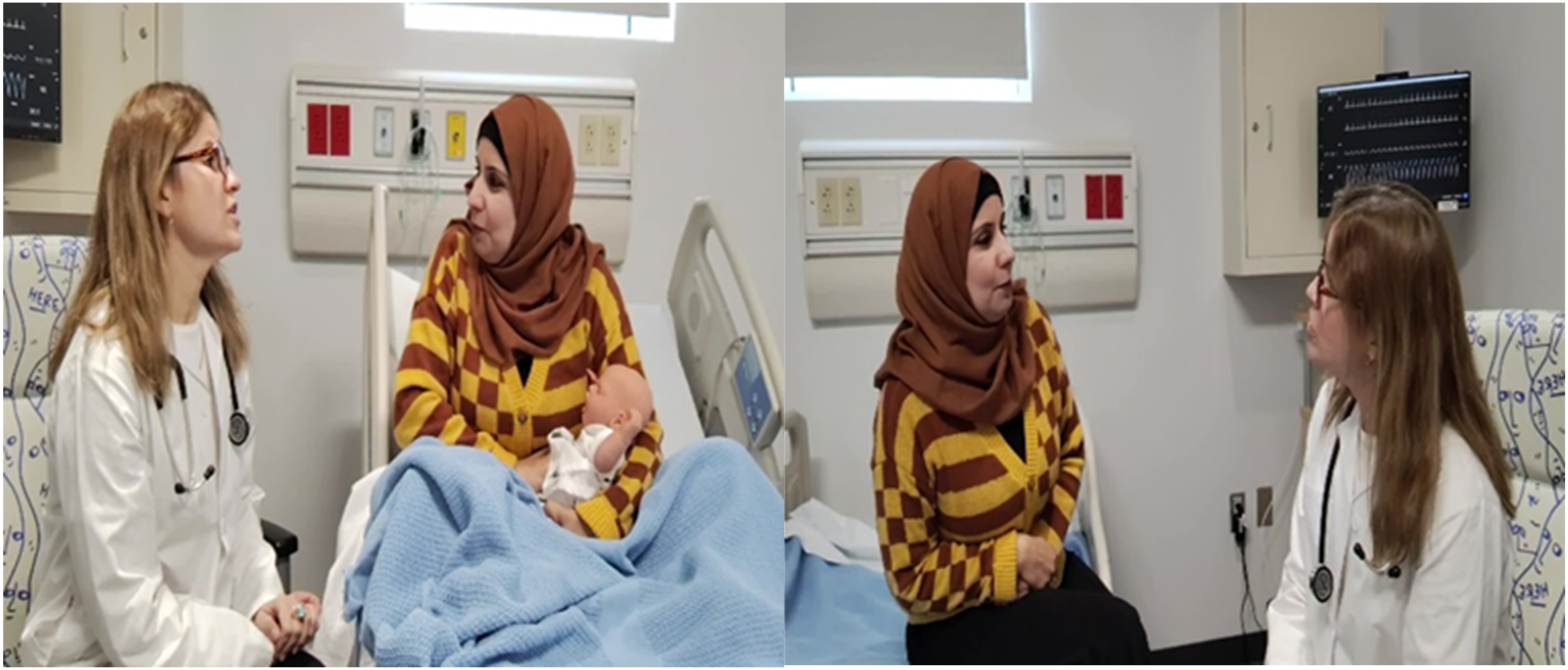
The final developed scripts and films were shared with three participants to ensure that these representations accurately reflected their perspectives. The participants remarked that this novel and interesting form of presenting study findings was highly effective, expressing their appreciation for the final products and requesting copies of the developed films to share with their families. (See Figure 2 for the process of developing and filming the scripts). Process of developing and filming the scripts.
The Developed Dramatic Scripts
In our ethnodrama titled “Crossroads of Ontario’s Healthcare”, we developed three scenes 3 minutes in length for each scene to explore the complexities of navigating Ontario’s healthcare system through the experiences of Areej, a Syrian Muslim refugee woman in her late 30 s, and Kateryna, a compassionate nurse in her early 30 s. The scenes include [Scene 1: ER and Dental Care Struggles], where Areej faces challenges in emergency and dental healthcare services in Ontario, Canada; [Scene 2: The Forgotten Appointment], which highlights the delayed specialist Care appointments and the repercussions of a missed healthcare appointment for Areej; and [Scene 3: Cultural Sensitivity in Healthcare], which focuses on the importance of culturally sensitive care in enhancing patient outcomes. The following section presents the developed drama scripts. See the following link for the developed ethnodrama scenes. See the supplementary file for the developed scenes.
Ethnodrama title: “Crossroads of Ontario’s Health Care”
(1) Areej: A Syrian refugee woman in her late 30 s, adapting to life in Ontario. She is resilient, resourceful, and often relies on traditional remedies because of her struggles with the healthcare system. (2) Kateryna: A compassionate nurse in her early 30 s working in Ontario’s healthcare system.
[Scene 1: ER and Dental Care Struggles]
The scene opens in an emergency room setting, capturing the tense atmosphere of a hospital. Kateryna, a nurse, is present alongside Areej, a Syrian refugee woman experiencing pain and seated on a hospital bed. The room is equipped with essential emergency medical equipment, including a monitor that beeps intermittently, emphasizing the urgency of the setting.
Kateryna: Good morning, Areej. I see you are here early today.
Areej: Good morning, Kateryna. Yes, I thought maybe coming early would help... Last time, I waited so long, I forgot why I was here.
Kateryna: (sympathetically) I understand. The wait times can be overwhelming.
Areej: (frustrated) In Syria, I never waited this long. Here, for a simple Tylenol and some fluids, it’s 6–8 hours in ER! I have started using herbal remedies instead.
Kateryna: That’s resourceful of you. However, please, be cautious with home remedies. They’re not always safe substitutes for medical treatment.
Areej: (sighs) You know what, I even called 911 once, just to avoid waiting. It cost me $50, but I was seen immediately.
Kateryna: That’s a tough choice to make. However, emergency services should be for immediate, life-threatening situations.
Areej: I am grateful, though. In Syria, healthcare isn’t free. However, here, there should be more healthcare providers to reduce these wait times.
Kateryna: Absolutely. The system is stretched, and we are advocating for more resources.
Areej: And dental care! It is so expensive. Many refugees considered flying back to Syria for treatment. It’s cheaper, even with the flight ticket.
Kateryna: That’s a real concern many refugees and immigrants face. Dental care is a significant issue here.
Kateryna: I hope one day the system will be more equitable and accessible for everyone.
Areej: Yes, a system where people do not have to forget their pain in long waiting lines or fly thousands of miles for health care. The scene Ends with Areej and Kateryna Looking Thoughtful.
[Scene 2: The Forgotten Appointment]
The scene opens in Areej’s home. Her phone rings, and the receptionist reminds her of a long-forgotten specialist appointment. Surprisingly, Areej explained that the issue had resolved itself and had managed to find her own solutions, showing her attempts to independently handle her health needs.
Kateryna: Hello, is this Areej? This is Dr Smith’s office, the obstetrics and gynecology specialist. We are calling to confirm your appointment for next week.
Areej: (confused) Appointment? I… I don’t remember making an appointment.
Kateryna: It was scheduled about six months ago for your cycle irregularities.
Areej: (realizing) Oh, that… My cycle has been regular for the past three months. I had forgotten about the specialist with all the waiting.
Kateryna: I see. Would you still like to keep the appointment?
Areej: No, thank you. It seems to have resolved itself. The scene Ends with Areej Hanging up, Looking Frustrated.
[Scene 3: Cultural Sensitivity in Healthcare]
The scene opens in the ER, where Kateryna and Areej are present. Areej, looking distressed and in pain, holds her newborn baby. Her discomfort stems from a recent miscarriage, adding a layer of emotional and physical tension to the setting.
Kateryna: Areej, I’m so sorry to hear about your miscarriage. To complete your assessment, I need to ask: how many partners have you had in the last month?
Areej: (shocked and angry) What? How many partners? I am a married Muslim woman. These questions are inappropriate and disrespectful to my religion and culture!
Kateryna: (apologetically) I’m sorry, Areej. These questions are standard procedures, but I understand how they can be upsetting.
Areej: (frustrated) I came for medical care, not to be judged or questioned about my personal life. If this is how it is going to be, I would rather not come to the ER at all. I can manage with pain killers at home. The scene ends with Areej leaving the ER abruptly and disappointing, leaving Kateryna looking concerned.
Discussion
Demographic and Socioeconomic Details of the Syrian Refugee Women.

Scene 1: “ER and dental care struggles” delve into the challenges faced by Syrian refugee women as they navigate emergency and dental health services in their host country. This scene portrays Syrian refugee women’s experiences with long wait times, language barriers, and some coping mechanisms that are adopted by these women (i.e., calling an ambulance, using home remedies and traveling back to their previous country to overcome the cost of dental care). These findings are aligned with those of a previous study reported by Al-Hamad et al. (2022a). This highlights the frustration and helplessness they feel when trying to access timely and appropriate medical and dental care (Cameron et al., 2022), exacerbated by communication difficulties (Guruge et al., 2018), unfamiliar healthcare procedures and unaffordable dental care. The scene aims to evoke empathy and awareness by illustrating the personal impacts of these systemic issues on health and well-being (Clark, 2018).
Scene 2: “The Forgotten Appointment” portrays a Syrian refugee woman who misses a critical healthcare appointment due to communication barriers (O’Mahony et al., 2023), delayed appointment for a specialist, and the complexities of navigating a new environment (Cameron et al., 2022; Guruge et al., 2018). This missed appointment exemplifies the broader issue of delayed access to specialized care, as it leads to further postponement of essential medical treatment. The scene underscores the compounded delays that result from such missed opportunities—intensifying the woman’s health challenges and highlighting systemic shortcomings such as ineffective reminder systems and a lack of culturally sensitive support. This narrative ties directly into the broader themes of access barriers (Cameron et al., 2022; Guruge et al., 2018), the burden of ER and dental care and the urgent need for improvements in healthcare responsiveness and accommodation.
Patient 3: “Cultural sensitivity in healthcare” delves into a sensitive interaction between a nurse and a Syrian refugee Muslim woman during a routine health assessment. The nurse, following a standardized assessment, inquires about the woman’s sexual history, asking how many partners she has been with. The question, which is culturally inappropriate and insensitive given the woman’s background and beliefs, leads to visible discomfort and frustration. This scene illustrates the critical need for cultural competence in healthcare settings (Al-Hamad et al., 2022a), highlighting how standardized assessments can alienate and distress patients from diverse backgrounds. It emphasizes the importance of healthcare providers receiving training to approach patients with cultural empathy (Moffit et al., 2022) and understanding rather than a one-size-fits-all approach that can lead to judgment and discomfort.
Ethnodrama is particularly important in the context of refugee women, as these women may come from cultural or social backgrounds where traditional gender roles impose the silence of women; thus, ethnodrama provide agency to voice experiences (Saldaña, 2003). Furthermore, by illustrating the breadth and depth of refugee women’s experiences through dramatization, ethnodrama possess the ability to engage with audiences emotionally in addition to creating a shared, communal experience (Saldaña, 2018). As a result, this immersion promotes empathy and fosters a greater connection to narratives that otherwise may not be conveyed through other forms of dissemination (Ares, 2016; Balabuch, 2021). Arguably, this method enables audiences to grasp the complex and nuanced challenges faced by refugee women, ultimately leading them to question and challenge their beliefs, assumptions, and privilege (Hare, 2008).
Notably, Gayatri Chakravorty Spivak’s concept of strategic essentialism highlights the power of minority groups to unite under a shared identity for collective representation, critiquing Western-centric frameworks (Gandhi, 2015). This approach is particularly effective in ethnodrama research with Syrian refugee women, helping them navigate the complexities of the Canadian healthcare system more effectively. By presenting a unified identity, these women can better address specific barriers such as cultural misunderstandings and accessibility issues, advocating for systemic changes that promote culturally safe care.
Our findings add evidence that ethnodrama is a valuable method for exploring migration. It uses the power of theatrical immersion to prompt deep reflection among its audience (Țiștea, 2023). Ethnodrama promotes social and political change by amplifying the voices of marginalized and otherwise silenced individuals in society (Balabuch, 2021; Saldaña, 2018). This method is particularly useful in migration studies, as it highlights issues of social justice and power dynamics between those affected by migration policies and those creating or applying them (Țiștea, 2023). Ethnodrama serves as a potent catalyst for empowerment by engaging diverse audiences through a compelling medium and provocative story that challenges the audience to examine their positionality to ongoing inequities (Țiștea, 2023).
The dissemination of research through traditional means, such as journal articles and conferences, primarily targets academic audiences (Taylor et al., 2017). However, this approach commonly misses the opportunity to engage with important stakeholders, such as the study populations and their communities (Taylor et al., 2017). Ethnodrama allows researchers to go beyond the confines of academics and provide accessibility to broader audiences (Hare, 2008). For these audiences, ethnodrama not only democratizes information but also has the power to translate the complex terms of scientific literature into language that is understandable (Denzin, 2003).
The ethnodrama scenes developed through our project were showcased at community forums and a symposium, drawing stakeholders, migration scholars, and refugee women together. During these events, the participants expressed their enthusiasm for ethnodrama as a compelling method for disseminating knowledge. They highlighted how this approach is not only engaging and empowering but also challenging the conventional methods of information sharing. The interactive and dynamic nature of ethnodrama has sparked considerable interest among many attendees, including graduate students who are particularly intrigued. These students approached the first author for detailed discussions about the project’s specifics and methodology, underscoring their interest in adopting ethnodrama as a promising research technique within the fields of health and migration studies.
Limitations
Methodological considerations of ethnodrama research encompass the ability to maintain qualitative rigour alongside artistic modalities (Hare, 2008). The use of dramatization to present narratives through ethnodrama produces a considerably different experience than traditional qualitative methods cannot (Hare, 2008). However, this points to whether credibility, trustworthiness, and ethical representation are compromised as a result of artistic interpretation, raising concerns about how faithfully the dramatization adheres to the original data while still achieving its intended emotional and educational impacts (Cohen & Crabtree, 2006; Hare, 2008; Saldaña, 2010; Taylor et al., 2017). The concept of “ethnodramatic validity,” put forth by Saldaña, strives to preserve authenticity and plausibility in the dramatization while recognizing the inherent conflict between artistic and researcher objectives (Hare, 2008; Saldaña, 2010, 2018).
When ethnodrama is used as a research methodology among refugee women, it is important to highlight ethical considerations. There is a considerable power imbalance between the participant, a refugee storyteller, a researcher, and the listener (Razack, 1996). The power to represent and interpret participant narratives through the selected mode of data collection is dictated by the researcher. This power imbalance is further complicated by the inherent desire to offer assistants to refugee women (Razack, 1996). As a result, which parts of the data are included and how the narrative is shaped may lead to misrepresentations (Saldaña, 2016). Such misrepresentations can result in the risk of oversimplifying participants’ nuanced experiences (Saldaña, 2016). Similarly, previous researchers have highlighted the risk of inadvertently perpetuating stereotypes among Muslim women surrounding gender and power within the context of migration and resettlement (Bragg, 2022; Maghbouleh et al., 2019).
While not all refugee women have the same experience, many of their experiences may involve common themes and challenges that are significant. Consequently, this can elicit memories and potentially cause participants to relive traumatic experiences through the shared narratives of others within ethnodrama research (Maghbouleh et al., 2019). Despite ethnodrama as a means to be informative and empowering, presenting certain subject matters to vulnerable audiences may lead to negative and unintended outcomes (Hare, 2008). Owing to the risk and vulnerabilities associated with conducting research with refugee groups, the research process should also include aspects of relational ethics in addition to traditional procedural ethics (Bilotta, 2021). Thus, maintaining reflexivity throughout the research process can allow researchers to be more attuned to the position and authority they hold when they share the stories of refugee women.
Implications for Research, Practice, Policy and Education
Ethnodrama, as a qualitative research methodology, offers profound insights into the experiences of refugee women, which can significantly inform future research, educational practices, and policymaking. By embodying the lived experiences of participants through dramatic presentations, ethnodrama provide a nuanced understanding that traditional research methods might overlook. Ethnodrama allows researchers to observe and analyze the emotional and psychological impacts of refugee experiences in a vivid manner (Saldaña, 2018). This can lead to a deeper exploration of the impact of psychological, social, and cultural dynamics on refugee women’s experiences. For example, researchers can investigate how different audiences perceive and react to ethnodramatic presentations or examine the long-term effects of such participatory research on refugee communities themselves.
Ethnodrama also encourages interdisciplinary collaboration, drawing from health, psychology, theater, sociology, and anthropology to enrich the research framework. In educational settings, ethnodrama can be used to teach students and professionals about the complexities of refugee experiences. By engaging with real-life scenarios, participants can learn beyond theoretical knowledge, gain empathy and gain a better understanding of the cultural and emotional landscapes that shape refugee lives. This method can be particularly effective in training healthcare providers, social workers, and educators, equipping them with the sensitivity and insight needed to work effectively with diverse communities and refugee groups.
Ethnodrama can have a direct effect on policy by illustrating the needs and challenges faced by refugee women. Policymakers exposed to these dramatizations are more likely to grasp the human dimensions of asylum and immigration issues, which can inspire more compassionate and practical policy measures. For example, performances that highlight inadequacies in mental health and dental care support or legal assistance can catalyze policy revisions and inspire new initiatives tailored to the needs of refugee populations. Ethnodrama can also serve as a powerful tool for community engagement and advocacy by not only raising awareness among the general public but also empowering refugee women by amplifying their voices in public discourses (Taylor et al., 2017). Such visibility can foster greater community support and drive meaningful advocacy efforts, calling for systemic changes that improve the lives of refugees.
Ethnodrama, as a qualitative research methodology, provides deep insights into the lived experiences of refugee women, offering significant benefits for education and training in healthcare. By dramatizing real-life scenarios, ethnodrama enhances the understanding of the complex psychological, social, and cultural dynamics affecting these women, fostering greater empathy and cultural sensitivity among healthcare providers. This methodological approach is invaluable in training settings, where healthcare professionals, social workers, students and educators can move beyond theoretical knowledge to engage with the emotional and cultural landscapes that shape refugee experiences. The use of ethnodrama in educational frameworks could equip service providers with the skills necessary to offer culturally safe care and reduce barriers to accessing healthcare for refugee populations. Additionally, by highlighting the real-world challenges refugee women face, ethnodrama can influence policy, promoting changes that lead to better support and care for refugee communities.
Conclusion
The experiences of Syrian refugee women in Canada reveal key healthcare challenges: (a) coping with the burdens of emergency and dental care; (b) delayed access to specialized care; and (c) cultural barriers in healthcare. By integrating the powerful medium of theatre into qualitative research, ethnodrama has demonstrated significant potential to deepen our understanding of refugee women’s experiences. This methodology brings to life the emotional and cultural complexities these women face, fostering empathy and comprehension among diverse audiences. The use of ethnodrama in research on refugee women not only enriches the data collected but also empowers participants by providing them with a platform to share their stories in their own voices, challenging traditional power dynamics in research. Future research and comparative studies could be conducted to assess the effectiveness of ethnodrama in different cultural contexts or among different refugee populations, offering broader insights into their adaptability and impact.
Ethnodrama could be integrated into curricula in social work, psychology, and public health to deepen understanding and empathy among future professionals. Additionally, professional development workshops using ethnodrama could enhance the cultural competence of those currently working with refugee populations. This method can lead to more empathetic and informed policies tailored to the specific needs and challenges of refugee women and help in advocacy and knowledge mobilization. Overall, ethnodrama is a transformative approach that can significantly influence research, education, policy, and public attitudes toward refugee issues. Continuing to explore and expand this methodology is crucial for maximizing its impact and fostering more inclusive and empathetic support for refugee women.
Supplemental Material
Supplemental Material - Dramatizing Care: An Ethnodrama Into Syrian Refugee Women’s Healthcare Challenges and Coping in Ontario, Canada
Supplemental Material for Dramatizing Care: An Ethnodrama Into Syrian Refugee Women’s Healthcare Challenges and Coping in Ontario, Canada by Areej Al-Hamad, Kateryna Metersky, and Yasin M. Yasin in International Journal of Qualitative Methods
Footnotes
Acknowledgements
We extend our sincere gratitude to the Syrian refugee women who generously shared their experiences and insights for this study. We also thank the community forums, symposium attendees, and stakeholders, whose support and feedback enriched our research.
Author contributions
AA was responsible for conceptualizing the study, curating and analyzing the data, investigating, developing the methodology, and writing both the initial draft and subsequent revisions of the manuscript. KM contributed to data curation through role play, managed the software, assisted in filming, and participated in reviewing and editing the manuscript. YY was engaged in manuscript review and editing, providing constructive feedback throughout the process.
Declaration of Conflicting Interests
The author(s) declared no potential conflicts of interest with respect to the research, authorship, and/or publication of this article.
Funding
The author(s) received no financial support for the research, authorship, and/or publication of this article.
Ethical Statement

Data Availability Statement
All the data generated or analyzed during this study are included in this published article [and its supplementary information file].
Supplemental Material
Supplemental material for this article is available online.
References
Supplementary Material
Please find the following supplemental material available below.
For Open Access articles published under a Creative Commons License, all supplemental material carries the same license as the article it is associated with.
For non-Open Access articles published, all supplemental material carries a non-exclusive license, and permission requests for re-use of supplemental material or any part of supplemental material shall be sent directly to the copyright owner as specified in the copyright notice associated with the article.
