




Abstract
This article explores the challenges and adaptations we undertook to engage people with different communication needs, specifically those living with motor neurone disease (MND), in qualitative research interviews. While interviewing those in advanced stages of illness has raised ethical concerns, participants continue to report value in contributing to research. We reflect on our experiences of conducting qualitative interviews with people living with MND and provide guidance for researchers facing similar challenges. MND significantly impairs communication abilities, impacting speech, gestures, and facial expressions. Communication aids such as augmented and alternative communication (AAC) devices are often key tools for communication. We draw on two research studies using expanded interview techniques to accommodate these devices and provide space for participants to express their views. Interview methods were modified to cater for participant fatigue, setting and individual communication needs. While acknowledging the limitations, we explore how digital platforms, such as MS Teams and Zoom, enabled online interviews, offering advantages for both participants and researchers. Joint interviews involving participants and family members were found to be crucial, considering the interdependence of experiences in illness. Family members often aided communication and enriched data by providing context. Email interviews were another valuable method, allowing participants time to respond and consider their answers, which was particularly useful for those with limited speech. By incorporating a variety of qualitative methods and adapting approaches, we aimed to create inclusive and meaningful research experiences for individuals with different communication needs, ensuring their voices and experiences were captured effectively.
Keywords
Background
Research in Palliative Care
Interviewing people with life-limiting illness for the purposes of research is always challenging. There has been much consideration of whether, in the advanced stages of illness, it is appropriate to take up people’s limited time with research (Barnett, 2001; Gysels et al., 2008). Discussing experiences of palliative and end of life care and decision-making can be difficult for participants, and at times, the researcher (Borgstrom & Ellis, 2020). Yet exploration of this topic continues to show that those with life-limiting illness believe that participation in research is worthwhile (Dewhurst et al., 2022). Participants can welcome the opportunity to voice their perspectives and report positive experiences, despite the difficulty of the topic (Pessin et al., 2008; Lowes & Gill, 2006). Dewhurst et al.’s recent findings bolster the assertion that participants should not be excluded from research on the basis of advanced illness or ability to undertake daily tasks, showing that 80% of people receiving palliative care would find taking part in an interview acceptable (Dewhurst et al., 2022).
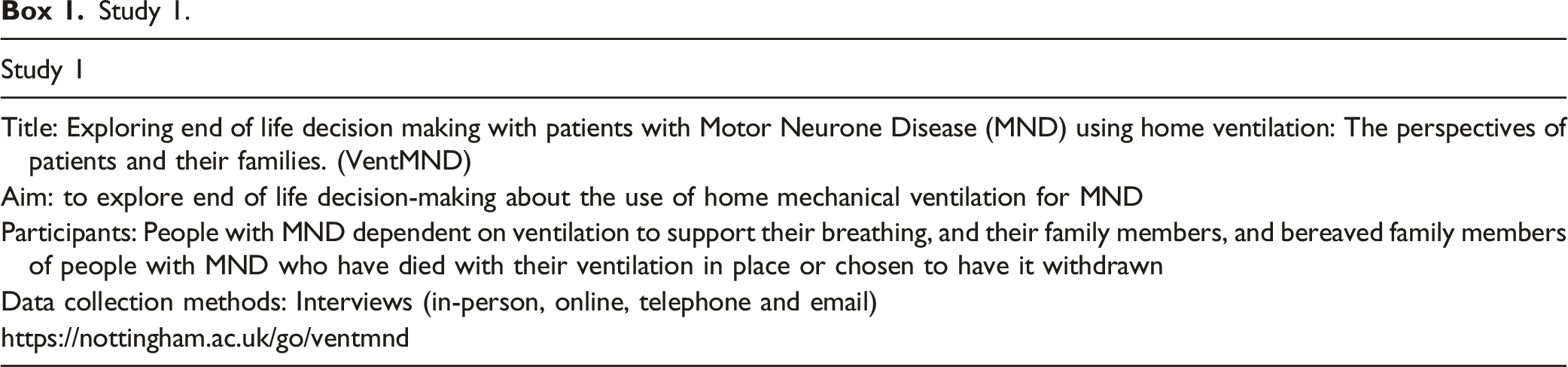
In this paper, we reflect on our experiences of carrying out qualitative research interviews with people living with motor neurone disease (MND) in two research studies addressing aspects of palliative and end of life care. We discuss how we adapted and expanded approaches to qualitative interviewing to address the needs of our study population; specifically, the loss of ability to communicate using either voice or gesture, the sensitivity of the research topic, and significant fatigue. Building on our experience, we offer guidance for researchers who are planning qualitative research with people who have different communication needs, recognising the importance of maximising the quality and usability of research data whilst minimising burdens on participants.
We begin with a brief outline of the communication issues associated with MND and approaches to maintaining communication.
Impact of MND on Communication
Motor Neurone Disease (MND) or Amyotrophic Lateral Sclerosis (ALS) is a neurodegenerative disorder that causes the muscles to weaken and often leads to death within 2–4 years. Those diagnosed with MND eventually lose the ability to move and therefore to perform physical gestures and facial expressions (Motor Neurone Disease Association, 2022). Speech may also become increasingly faint, slurred, or unclear as the muscles in the tongue, vocal cords, lips, and chest weaken, and it can be increasingly tiring to try to speak. As the illness progresses, home mechanical ventilation may become necessary to support breathing. This can involve using a mask over the nose and mouth or undergoing a tracheostomy to insert a tube in the neck, both of which significantly inhibit communication.
There are a number of communication aids or augmented and alternative communication (AAC) devices that can be used by people with MND, such as alphabet/communication boards and computer-aided technology, including communication apps, voice and message banking (Motor Neurone Disease Association, 2022; Clarke et al., 2023). Eye gaze technology, which tracks eye movement to direct an onscreen mouse, or a ‘headmouse’ to imitate the functionality of a desktop mouse can be employed to construct messages once limb and finger movement has been lost. A degenerative illness such as MND can therefore require the researcher to adapt interview techniques to accommodate and optimise the use of AAC devices in order to enable participants to ‘voice’ their views and experiences. To date, studies of people living with MND where communication is an issue have primarily relied on quantitative approaches (Linse et al., 2017), proxy accounts from family members (Veronese et al., 2015) or have only given a brief overview of any adapted methods used (Pavey et al. (2015).
In a meta-analysis encompassing 293 qualitative examinations of chronic illnesses, Thorne et al. (2002) determined that conditions affecting verbal communication were ‘disproportionately unpopular topics’, with preference for studies with verbal, and articulate participants or proxy accounts. Leaving out less articulate participant groups leaves chronic illness narratives incomplete, with the potential to misdirect decisions about care provision and patient need (Howard et al., 2021). There is currently little evidence on which to draw to better understand how to conduct research interviews with people who require a different approach to communication, and the perspectives of people with different communication needs are relatively absent from the literature (Philpin et al., 2005). There is a small body of work by authors who have drawn on their own research to highlight some key strategies for undertaking interviews (Carlsson et al., 2007; Howard et al., 2021; Luck & Rose, 2007; Philpin et al., 2005). Each point to the need to adopt flexible, tailored approaches. In their reflections on interviewing people with impaired speech about having a feeding tube, Philpin et al. (2005) note the importance of written notes to capture verbatim responses that may not be caught on audio recordings (also see Carlsson et al., 2007). Luck and Rose (2007) and Howard et al. (2021) suggest using more direct questions to allow simpler responses, providing examples, and increased prompting. In their study of people with traumatic brain injury, Carlsson et al. (2007) discuss the challenges added by participant fatigue, suggesting shorter interviews and heightened recognition of this issue by researchers. Howard et al. (2021) challenge the role of the researcher and notions of traditional qualitative interviews in their work with people with chronic critical illness using mechanical ventilation. Their discussion of the value of ‘thin’ data is important in superseding expectations of ‘thick description’ from verbally proficient participants as a marker of quality in qualitative research.
We aim to add to this evidence base by drawing on our experiences of working on two research studies focused on understanding the experiences of people with MND who use home mechanical ventilation. We explore our reflections on expanding approaches to qualitative interviewing to make research more accessible to those with different communication needs and offer guidance for future researchers in this area.
The Research Studies
Study 1.
Study 2.

Whilst our experiential learning in the field of palliative and end of life care has been important in extending our approaches to qualitative interviewing, incorporating the advice, knowledge and support of others remains vital to enhancing the quality of research. We found it essential to draw on a study advisory or steering group made up of experienced researchers and key clinicians, including those with expertise in palliative care, MND, respiratory care and ventilation. We also sought advice and guidance through Patient and Public Involvement (PPI) to tailor each study to the needs of potential participants and make recruitment and participation as inclusive as possible. Our PPI contributors helped us better understand the challenges we might face and the range of strategies people with MND and their families use to communicate. PPI input informed the advertising, participant information sheets and interview topic guides of both studies. The wider research teams played a significant role in supporting us as researchers.
Participants used a combination of communication strategies, often within the same interview, for example AAC accompanied and interchanged by verbal expressions, gestures such as nodding, and proxy/supported accounts. These could be prefaced or followed-up by email. Below we use extracts from both studies to illustrate our learning regarding expanding qualitative interviewing. Pseudonyms are used throughout.
Obtaining Consent
We begin by describing adaptations to the process of obtaining informed consent to facilitate access to the study by people with different communication needs. Research ethics and governance processes often stipulate a requirement for written consent; however, this may not be feasible for some, including our participants with MND. Online consent forms are now more acceptable and were used in both studies (Pocock et al., 2021). Participants were emailed a link to a consent form created on MS Forms that could be completed on most devices. This had the same content and phrasing as the hard copy consent from, which was provided for participants who preferred this option or were unable to access the online version. The online consent form was considered more inclusive of those who can no longer write as it could be completed and returned using eye-gaze technology and is straightforward to distribute and collate for the researcher. Verbal consent was also recorded where possible. While formal consent needed to be established, ongoing or process consent (Dewing, 2007) was employed throughout the interview process and during any follow-up interactions. It was particularly important to check for participant fatigue during interviews with people with MND and establish ongoing consent at regular intervals.
The following extract illustrates how Steve’s ongoing consent was negotiated by the interviewer, with the support of his wife Cath Interviewer: OK, I’m just going to take a check now, because I’m conscious that you have been typing for a while, and the tennis is on [Steve had been watching a tennis tournament prior to the interview], and I don’t want to take up any more time than you can spare, so would you prefer to take a break now and I can come back to you, or are you happy to carry on for a bit longer? [Steve types using eye gaze] Cath: [to Steve] Do you want to see who’s playing before you decide? I know you’re used to typing, but if you want to see who’s playing, that’s quite important! [Reads from Steve’s eye gaze] Doubles? [laughs] He says ‘it’s doubles, I’m not interested in doubles, only in singles’. [to Steve] Are you happy to carry on Steve? Blink again. [to Interviewer] Yes, he’s happy to carry on, because he’s used to typing for a long time. He’s typing something now. (Steve and Cath_Study 2)
Data Collection
Online Interviews: Advantages
While in-person interviews were offered and preferred by a small proportion of our participants, online interviewing using digital platforms such as MS Teams and Zoom was a primary data collection method for both studies. The recent COVID-19 pandemic saw an exponential growth in the use of online video platforms in many areas of daily life, including healthcare (Hutching, 2020), research, and socialising with family and friends. Successive lockdowns saw video conferencing usage surge from 35% to 71% in the UK (O'Halloran, 2020). Consequently, digital communication is no longer the domain of the few. A considerably larger proportion of the public have downloaded the software, developed the skills and confidence and are more comfortable using this technology, making this form of interviewing more feasible for researchers.
The advantages for participants are that they do not need to welcome a stranger into their home, or feel that they need to be dressed appropriately, and their home needs to be presentable. Many of our participants with MND needed to use a lot of specialist equipment at home to support daily living. The subsequent disruption to the physical and socio-emotional space of the home can be challenging for people with MND and family members to manage and may make it more difficult for them to accommodate a researcher. With online interviewing, participants can have greater control over what the researcher sees and hears (Foley, 2021), and can potentially better manage and contain any ambiguity associated with the transformation of ‘home’ into a place of care (Milligan et al., 2016).
For researchers too, the advantages of online interviews are considerable. For studies where the pool of potential participants is small, such as in our MND research, it is highly beneficial to be able to widen the geographical reach without increasing the amount of time and monetary costs associated with travelling to visit people in their homes (Saarijärvi & Bratt, 2021). This wider reach can also allow greater insight into local service provision and disparities between different regions.
For our online interviews, we used the secure digital platforms© MS Teams and Zoom and offered participants the option of choosing which platform they preferred. Both allow for simple recording and downloading of video and audio data (Maldonado-Castellanos & Barrios, 2023). In addition to in-platform recordings, we used separate, encrypted digital audio recorders, primarily for back-up. On occasion, technological issues disrupted the flow of an interview, so making sure we could contact the participant by telephone or email if Internet connection was lost was essential, particularly as the research involved discussion of sensitive topics. Depending on when in the interview the disruption occurred and the rapport established with the participant, we would try either to reconnect, reschedule the interview for another time, or send some follow-up questions by email.
When interviewing people with MND, it was sometimes necessary to conduct a series of shorter interviews to avoid participant fatigue. The flexibility of the online format meant that multiple, short interviews could easily be scheduled in response to the immediate needs of the participant.
Online Interviews: Conducting the Interview
In our experiences of conducting online interviews with people with impaired communication, we found that investing time in discussion at the start, or in prior correspondence, to establish how they would like to manage the interview was essential. It was important to understand how any AAC devices were being used to support communication, and to encourage participants to ask for more time to respond if needed. We stated at the outset that we recognised the participant may become fatigued, that it was fine to provide short answers, and that we might prioritise the most pertinent aspects of the person’s overall experience for discussion if necessary. As fatigue affects the volume and level of effort required to speak, it also helped to plan interviews at an optimal time for the person with MND, for example, mornings were often better than an afternoon (Howard et al., 2021).
As Luck and Rose suggest, when interviewing people with different communication needs, the researcher must ‘step out of the traditional role of the qualitative interviewer’ (2007:208) by structuring and ‘closing’ the questions whilst trying to maintain opportunities for participants to shape the interview and preserve richness of data. We found that for people with MND with limited communication, we needed to gather data in very short segments, using both open and closed follow-up questions to create opportunities for expansion on topics of interest. To cover areas not addressed in the initial interview, or to explore aspects in more detail, it was important to generate ways of ‘leaving the door open’ for another short interview, further questions via email, or to check information with a family member. The extract below is taken from fieldnotes from an interview with a man with MND who had very limited speech but could articulate a few words or short sentences: I asked if he has ever thought about stopping his ventilation and he said, ‘No I am not brave enough’. I want to try to explore this a little further with Duncan via email. He has previously also said in an email he was afraid of dying in his sleep. I asked if I could continue the conversation more directly with him to allow him time to think and respond. He gave a thumbs up, … so I have said I will be in contact in the new year. (Duncan_Study 1)
Another important technique applied in both studies was to relax the pace of the interview as we found that people with MND who use AAC devices were not able to respond quickly enough to interject their contribution at a normal conversational pace. It was often necessary to allow for silences whilst a participant typed their response, which sometimes had to edited for comprehension by a family member. The silence could last from just a few seconds to as long as 20 minutes. We learnt to sit comfortably with the awkwardness a protracted silence can create, especially on a video link, and to avoid interjecting in ways that might break the participant’s chain of thought. In this extract we have included the timings of the interview to illustrate how it takes the participant 1 minute 28 seconds to type a short sentence, and for it to be read aloud by her phone: [07:28] Interviewer: So what do you think about it? Having to use [the ventilation] all the time now? [08:54] Susan: [phone reads out what she has typed] ‘had to get used to it’. [08:57] Interviewer: takes a bit of getting used to. Yeah yeah. And have you always had this type of mask? [Susan nods], Yeah, you have always had that one, ok. (Susan_Study 1)
When interviewing participants with MND who still had some speech, it was sometimes necessary to ask for a response to be repeated, to repeat a question, or ask it in another way, as responses were not always intelligible. The following short extract shows how the researcher worked with the participant to establish what they were saying, then repeated the point to check they had understood correctly, and asked a potentially closed question to allow a simple answer for which Thomas was able to gesture a response by shaking his head: Interviewer: Does that worry you? Thomas: .. lose [unclear 19:12]. Interviewer: Lose some what? Thomas: Independence. Interviewer: Losing some more independence, yeah, slowly. So is there anything that particularly concerns you at the moment or anything that you want more information about? [Thomas shakes head] No, OK. (Thomas_Study 1)
We found that video as well as audio recordings were helpful when transcribing and reviewing data, especially where speech was difficult to discern.
Setting the optimal environment with quiet space where you can see each other’s faces is recommended for interviews where communication can be an issue (Sivell et al., 2019). In our studies, this was often difficult as choice of environment was limited when the person with MND was in a bed and/or using eye gaze, and ventilators create consistent noise making it challenging to hear responses. However, family members often made a point of holding the phone/laptop in front of the person with MND so face-to-face greetings could take place at the beginning and end of the interview. We experienced this as a very positive example of how family members supported the interview process and enabled us to enact the foundational principle to preserve the autonomy and dignity of the individual as a research participant, whilst ensuring data collected was useable.
Online Interviewing: Joint Interviews
Many of the people with MND who participated in our research chose to do so alongside a close family member or care worker. Often this was essential, as the person with MND was not able to position or operate a device for taking part in an online interview without assistance. Whilst not technically joint interviews, the presence of the other person in the interview space inevitably generated a different dynamic, with implications for the data collected and knowledge gained. On other occasions, participants with MND chose to take part in a joint interview, where the views and experiences of the other person formed part of the study data.
There is a well-established debate in the literature concerning the advantages and disadvantages of individual versus joint interviewing and the ethical and epistemological concerns raised (Morris, 2001; Polak & Green, 2016; Taylor et al., 2021). Our contribution here is to consider the particular circumstances of interviewing someone with different communication needs, where the presence of another person is often a pre-requisite for their participation (Howard et al., 2021). We concur with the view that experiences of illness and of care in family settings are seldom autonomous but are enacted and understood in relation to others (Gibson et al., 2018; Philpin et al., 2005). Family members can act as a ‘translator’ for people with different communication needs (Green & Thorogood, 2004; Shakespeare, 1993), helping to co-construct the talk beyond that of normal conversational turn taking (Bloch & Beeke, 2008).
Bloch and Beeke (2008) provide instances of three types of co-constructed talk, which we encountered while conducting interviews in both studies (also see Howard et al., 2021; Philpin et al., 2005). Firstly, there were instances where response construction was shared. The person with MND would initiate the response, but it would be completed by the other person. This maintained the inference that the person with MND could complete their thoughts, ensuring their continued engagement in the interview. Here Barry and Nadia, his wife, work together to share Barry’s response: Interviewer: Ok, and was there anything else that helped you to make the decision [to have a tracheostomy], any other factor that was important? [Barry begins to type using eye-gaze, manages L-U-C] Nadia: You feel like you’re lucky to have it? [Barry nods]. You were lucky to be offered the option of having this operation [Barry nods]. (Barry and Nadia_Study 2)
Secondly, it was common for the person with MND to respond, and then their family member would “unpack” the information, effectively elaborating on their behalf. Since participants who used AAC devices often provided brief statements in their responses, the additional context supplied by family members was valuable for understanding the answers. Here it is David’s wife Abby who expands on his response: Interviewer: Was there anything it would have been helpful to know in advance that you hadn’t already found out before the tracheostomy procedure? Abby: [Reads from David’s AAC device]. So he said ‘information about how long he has to spend in rehab’. He spent six months, which he didn’t expect. Interviewer: Right, and was that to do with waiting for the care package to be put in place? Abby: Yes, they said they were going to fast-track him because he has got motor neurone disease, so we were expecting a couple of months. [Reads from David’s AAC device]. So David says he was ‘the longest fast-track in history!’ (David and Abby_Study 2)
Thirdly, there were situations where the person with MND would give an unclear or ambiguous response. In such cases, the second person would restate the utterance, expressing what they thought the participant intended to say. The accuracy of the rearticulated statement would then be confirmed by the person with MND (Bloch & Beeke, 2008). In the extract below Robert’s wife Beth unpacks his response and rearticulates it to clarify what Robert means: Interviewer: And was it important to you in terms of having a tracheostomy, to know that you would still be able to enjoy your food? [Robert types using eye gaze] Beth: [Beth reads from his tablet] Surprised? You were surprised you still could [Robert nods]. Yes. Interviewer: Ok, so that was something you weren’t expecting after the procedure? [Robert nods]. So that was an added bonus in a way? [Robert nods]. (Robert and Beth_Study 2)
Joint interviews can recognise the relational nature of illness, ‘given that people’s experiences of illness do not occur in a vacuum’ (Philpin et al., 2005, p. 300). For those with MND who have little movement and limited verbal communication, they can be a vital tool in enabling involvement and engagement with research.
Email Interviews: Advantages
Another key data collection method for our studies involving people with MND was the use of email interviews. Fritz and Vandermause (2018) cover email interviewing comprehensively and provide well thought-out and experientially based hints and tips on the process. We expand this discussion by drawing on experiences of studies that included participants whose speech was affected by MND and whose ability to provide responses of more than a few words was often limited, even where AAC devices were in use.
The option of an alternative to a face-to-face interview (albeit online) was welcomed by some participants: I’d be happy to share my perspective. My speech is badly affected by MND but I can tap out emails on my phone. (Adam_Study 1)
The use of email allowed participants to respond to questions at their own pace and in their own time. When communication is challenging and typing may be laborious, asynchronous responses, as and when suited the participant, offered a significant advantage for those with MND. Our studies also included family members, some of whom chose to take part via email. When time and energy is constrained by caring for someone with complex needs at home, this approach allowed family members to take part at their own pace (Saarijärvi & Bratt, 2021). It also enabled people to spend time reflecting on their responses, as this bereaved family member noted: I would prefer to respond to emailed questions, if possible, please. That way I can have time to think about my responses and make sure I don’t forget anything. (Angela_Study 1)
Email Interviews: Conducting the Interview
The option to conduct an interview by email was sometimes selected by the person with MND following initial contact and provision of information about the study by email. On other occasions, an initial telephone conversation or video call with a family member, sometimes with the person with MND present, confirmed that an interview by email would be the preferred option. In all cases, we made sure to introduce ourselves as researchers and tried to establish some rapport with the participant before sending any questions. The process of building rapport is especially significant when conducting sensitive research where there is potential for distress. An effective strategy was to send a brief introductory video along with the link to the consent form so that the person could get a better sense of who they were talking to.
Email interviews could take place over a period of months in multiple back and forth exchanges. We advocate for recognising the additional time this approach might take when designing the study. When conducting the interview, we were careful to proceed at the participant’s pace. Beginning with some straightforward questions about the person’s circumstances (age, family members, date of initial diagnosis) enabled us to get a sense of the speed and amount of detail to expect in the participant’s responses. If a person with MND took a week to respond to a question or set of questions, we waited a few days before sending further questions so that they did not feel rushed or pressured. With an email interview, it is difficult to assess how a question might be received by a participant. We acknowledged this at the outset, and when sending questions, we emphasised that they did not need to answer all of them if for any reason they did not wish to.
For our research studies, it was important to work up to key questions around sensitive topics so that trust and confidence in the interviewer could be established and we could build an understanding of how open and responsive the individual might be. We found it helpful to reflect the participant’s language in our responses, and to thank them for each response, acknowledging how hard it might have been for them to write it.
As with the video interviews, when working from an interview schedule it was necessary to spend time rephrasing and reworking open-ended questions, taking into account the breadth of previous responses. We made judicious use of follow-up questions to try and elicit more information on key aspects of our research, but found we were more cautious about rephrasing the same question in different ways than we might have been in a video interview as it was more difficult to gauge when the participant had said as much as they wanted, or were able to.
A salient feature of email interviewing was knowing when the interview had come to an end. If a period of several weeks passed without receiving a response from a participant, we sent a follow up message to ask if the person wished to continue. Sometimes a participant stopped responding altogether or sent a very limited response to the extent it was difficult to continue the conversation. We always reassured people that their participation was voluntary, and that they always had the option to not respond. When we had finished asking questions, or were no longer receiving responses, we sent an email thanking the participant for their contribution.
Tea and Small Talk - The Overarching Challenges
While these more remote forms of interviewing have considerable benefits, as noted above, it is important for the researcher to weigh these against the potential losses incurred through not meeting with a participant face-to-face in their own environment. The social convention of offering a researcher a cup of tea when conducting an interview in the participant’s home can build familiarity and shared experience very quickly (Sivell et al., 2019). Small talk can be an essential tool for the researcher as it creates a foundation of talk that provides an ‘ice breaker’ and helps to generate rapport. Small talk can act as a lubricant in helping to shift a conversation towards more sensitive topics and return it to more neutral ground. At the end of an interview, particularly in research on palliative and end of life care, small talk can be used to help assess the wellbeing of the participant and draw the interview to a close. However, conducting small talk with people whose ability to communicate is limited can require more consideration. For example, it may be necessary to consider the trade-off between establishing rapport and gathering data when interviewing people who are unlikely to be able to ‘talk’ for long, or in much detail.
Furthermore, to conduct interviews online or via email requires adaptation of skills for the qualitative researcher. The lack of physical presence in online interviews means that the researcher needs to be more vigilant about reading other cues or signs of distress during an interview, for example, delays in responding, shorter responses or responses that do not allude to the subject matter of the question (Carlsson et al., 2007). If a participant became distressed about some aspect of their MND, rather than the interview itself, we were able to direct them to their healthcare provider or other sources of information and support such as the Motor Neurone Disease Association. For potential upset caused by recalling distressing events, we checked that the participant had a family member or friend on hand they could speak to if they wished. In instances where we were concerned about leaving someone distressed, we also offered to call them back later, or check in with them another time if appropriate. In our experience, participation in both studies has provided people with an opportunity to discuss aspects of their life they may not otherwise get to talk about. As this participant notes it is not the process of the interview that is upsetting but the situation they have experienced: I’m just speaking aloud what goes through my head all the time anyway, you know. So yeah, it’s not particularly upsetting really because it just churns around in my brain anyway. (Helen_Study 1) Thanks for your concern about remembering that time [the tracheostomy operation], but I'm honestly fine, almost like I'm talking about a different person but suppose it's what I have done to cope with what has happened to me. Feel free to ask me about anything. (Liam_Study 2)
Often, participants reflected that they valued the opportunity to contribute: I will think about your next questions soon - I am really enjoying this - it's good to talk. (Gareth_Study 2)
By not planning travel to someone’s home, knocking on the door, meeting them in person and sitting on their sofa and seeing their environment (Sivell et al., 2019) we, as researchers, lose other visceral cues we rely on for recall. With no touch, smell, or peripheral sound and only limited visual memories of an interview it becomes more difficult to recall and differentiate between interview participants. This makes interview notes, video recordings and detailed transcripts even more vital in aiding the process of analysis (Philpin et al., 2005). In Study 2 in particular, we have employed additional methods of data collection, using a case study approach that allowed the opportunity to revisit topics with participants. For example, a photovoice technique (Glaw et al., 2017) was employed to help people with MND share information on their daily activities and quality of life. This method of visual story telling relied on the person with MND and either their family member or a paid caregiver working together to take photographs using a mobile phone and sending them to the researcher via a standard messaging application. Photographs were helpful in generating further discussion in follow-up interviews. Ecograms were also used to provide a visual map of participants’ relationships and care provider networks (Ray & Street, 2005). Ecograms allowed for depictions of the strength of these relationships and their reported level of importance. Previous work has shown that these can complement interviews by illustrating complexity and social burden (Pollock et al., 2021). Ecograms were discussed and drawn with the researcher and could be referred to during subsequent interviews to elicit further detail. Using multiple qualitative methods thus helped to enrich and expand the data gathered through interviews and was particularly valuable when working with people with different communication needs as it reduced the reliance on verbal data alone.
Conclusion
When we wish to hear from people who have different communication needs, the online interview techniques developed and refined during the COVID-19 pandemic can provide us with several important adaptations to the researcher’s toolbox that are worth embracing further. Video interviews offer advantages in time and comfort for both the interviewee and interviewer. Email interviews are an emerging form of interview and can be extremely useful when a participant’s ability to speak is limited or lost. They can also be an important tool for those who want to spend time thinking about how they want to respond and formulate answers to sensitive questions. Whether in-person or online, adapting our questioning skills for each person and each research method is vital, especially when the communication needs of participants may change over the course of data collection. Communication skills training may be valuable in developing the skills and confidence of researchers in extending qualitative interviewing. Study design and methods will always have impact for data quality and analysis. As qualitative researchers, it is important that we continue to expand our toolbox. By employing flexibility in our approaches, we can offer a range of ways to participate in studies, making our research as inclusive as possible, embracing the quality, richness and value of all research narratives.
Footnotes
Acknowledgement
We would like to thank all those who have participated in these research studies as well as those who have share their expertise to help shape the methods of data collection.
Declaration of Conflicting Interests
The author(s) declared no potential conflicts of interest with respect to the research, authorship, and/or publication of this article.
Funding
The author(s) disclosed receipt of the following financial support for the research, authorship, and/or publication of this article: This work was supported by the University of Nottingham (Anne McLaren Research Fellowship), Motor Neurone Disease Association (Wilson/Oct21/968-794). Study 1: Exploring end of life decision making with patients with Motor Neurone Disease (MND) using home ventilation: The perspectives of patients and their families. (VentMND) funded by a University of Nottingham Anne McLaren Fellowship. Study 2: Understanding living with tracheostomy ventilation for Motor Neurone Disease (MND) and the implications for quality of life. (TVLife) funded by the Motor Neurone Disease Association.
