




Abstract
This article explores the potential and challenges of inclusive research methodologies when working with older individuals with lower literacy levels. We present inclusive approaches developed during our research and discuss their implications for methodology and individual well-being among older adults with lower literacy levels. Our key insight is that the promise of inclusive research lies in relational design and praxis. Prioritizing meaningful relationships between researchers and participants, we emphasize the importance of considering participants as active contributors rather than mere informants. Creating a safe and supportive environment fosters trust, empowerment, and meaningful contributions from participants. Flexibility and adaptability in research approaches, including phased informed consent and the minimizing of written language, enhance participants’ self-confidence and trust in their own voices. This approach empowers participants in co-creating knowledge, which strengthens the trustworthiness and validity of research results. Inclusive research, while promising, requires researchers to navigate ethical dilemmas, invest time in building rapport, and adapt to participants’ needs. It challenges traditional research norms, emphasizing ethical engagement, meaningful participation, and tangible outcomes that benefit both researchers and participants. Employing inclusive research strategies, despite their departure from traditional praxis, ensures that the voices of older individuals with lower literacy levels are respected. This shift enhances the validity of knowledge, promotes co-creation, and fosters feelings of inclusiveness and empowerment. These promises underscore the importance of embracing inclusive research methodologies in contemporary research practices.
Introduction
Older individuals who experience low literacy are rarely included or reached by mainstream research (Bonevski et al., 2014). Yet, they have been shown to have a higher chance of experiencing adverse aging outcomes, such as health issues, financial challenges, and other difficulties that may impact their overall well-being (Bode et al., 2007; Cramm & Nieboer, 2017). Low literacy can negatively impact people’s basic skills and digital accessibility, as well as their health literacy (Dornaleteche-Ruiz et al., 2015; Easton et al., 2010). Perhaps contrary to expectations, even in the Netherlands, a fairly substantial part of the population experiences lower literacy. Indications on the prevalence of low literacy among seniors – exact numbers for older adults are not known, as they are no longer part of the working population and are therefore excluded from regular surveys – detail a prevalence of 21.5% for the age group 55–65 years old (Buisman & Houtkoop, 2014). It is expected that this number is even higher for those above the age of 65 and concerns about 700,000 older adults (Buisman et al., 2013).
Low literacy, although often characterized as the personal shortcoming of having limited ability to read, write, and comprehend written information, is a phenomenon that goes beyond the individual. Experiencing lower literacy is shaped by systemic and environmental factors, such as inadequate educational resources, social exclusion, and economic barriers that can cause disadvantages to accumulate throughout the life course (Elinder et al., 2022; Van Regenmortel et al., 2018; Vignoles & Cherry, 2020).
Often, though not always, lower literacy coincides with lower socio-economic status (SES), which is defined by three key factors: educational level, income, and occupation (World Health Organization, 2018). Given this intersectionality, and that there is little known about the aging experiences of older adults with lower literacy, here we outline a broader take on what is known about the experiences of older individuals with a lower SES, although research “with” them is also scarce (Platzer et al., 2021a). Studies show that older individuals with a lower SES are often confronted with myriad complex issues, ranging from lower digital inclusion (Ngiam et al., 2022) to social isolation (Pinto & Neri, 2017; Shankar et al., 2017), and higher risk of morbidities and mortality (Courtin & Knapp, 2017; Warr et al., 2009). Understanding their lived experiences, both obstacles and expertise, and providing them with appropriate and fitting solutions that align with their experiential knowledge, would likely benefit these older adults and help alleviate some of the drawbacks they may experience as a result of the accumulation of disadvantages many are confronted with.
Scholars argue that individuals with a lower SES and, in analogy, those with lower literacy, are often left out of traditional research or the development and implementation of policy due to methodological challenges and because studies fail to reach them (Aliyas et al., 2023; De Jong et al., 2020; Platzer et al., 2021a). Both the recruitment and retention of so-called marginalized or vulnerable groups has been shown to be subpar, due to inadequate recruitment strategies, inappropriate methodological approaches, and complex language usage (Andrews & Davies, 2022; Bonevski et al., 2014; Raifman et al., 2022). On top of this, some scholars tend to avoid these individuals altogether due to the additional time and ethical requirements they necessitate (Aliyas et al., 2023; Andrews & Davies, 2022). From the point of view of the older adults, a lack of trust in scientific research, due to a history of being mistreated by institutions in general, and fear of authorities or being judged for their shortcomings, all result in older individuals with a lower SES to be reluctant to participate in research projects (Bonevski et al., 2014). In addition, these older adults often feel ill-represented in research. They fail to recognize themselves in the research, or their concerns are not included in the projects (De Jong et al., 2020). Rather than being included for their expertise or experiential knowledge, a focus is often placed on their assumed shortcomings, such as their literacy problems or health issues. Therefore, they see little need or reason to participate or actively contribute to research, development, or practice. This then becomes a vicious circle in which their experiences are disregarded, leading to a diminished sense of representation and subsequently dampening their motivation to engage in interventions, despite these programs often being explicitly designed to provide them with assistance.
Inclusive methodological research strategies, which we regard here as an umbrella approach drawing on Nind’s (2017) definition, is based primarily on research with people with learning disabilities. It was part of an emancipatory movement that aimed to ensure that research was done with them, not about them (Walmsley & Johnson, 2010). Inclusive research refers to a set of research approaches and methods that may be referred to as participatory, emancipatory, partnership, and survivor-led research (Abma et al., 2019; Groot & Abma, 2022). The overall aim of these approaches is to create space for those whose voices are underrepresented in research and to contribute to epistemic and social justice (Cohen Miller & Boivin, 2021; Duke, 2020; Groot et al., 2023). These approaches enhance the validity and relevance of the research outcomes. They adopt a wide variety of methods, such as photo elicitation (Kohon & Carder, 2014), graphic facilitation (Sandholdt et al., 2022), and walking interviews (Bartlett et al., 2023). A large body of literature on inclusive research strategies shows that they focus mainly on the recruitment phase by minimizing barriers through using suitable language and appropriate recruitment strategies (Ellard-Gray et al., 2015; Lindsay et al., 2021; Nielsen et al., 2017; Tully et al., 2021; Vissenberg et al., 2017). While these are promising efforts, inclusion and long-term participation of older adults with lower SES still seems rather limited (Platzer et al., 2021b) and drop-out rates during research are high (Dibartolo & McCrone, 2003; McMurdo et al., 2011). In addition, it does not automatically highlight their experiential knowledge or generate a cherished impact for the older adults concerned. In this article, therefore, we focus particularly on aspects of inclusivity in the research process, since the question remains: how can older individuals with lower literacy become and remain included in the research process?
In this article, we set out to answer this question and aim to shed light on the transformative potential of inclusive research, both in terms of methodology and impact for older adults with lower literacy. We will do so by providing an empirical account of our data collection and the methodological reflections gathered during the co-creation process of an inclusive conversational tool designed in collaboration with older individuals with lower literacy. First, we will describe how inclusivity was ensured throughout the cycle of the research process. Second, we will highlight some of the implications of employing inclusive research strategies and working with older individuals with lower literacy. By doing so, we aim to contribute to the growing and broadening dialogue on innovative, inclusive research methods as well as to add to the debate on the ethical obligations of researchers in this regard.
Creating a Conversational Instrument
The core of this article is shaped by detailing the process of the development of a person-centered conversational instrument. This instrument guides older individuals step by step to identify and discuss their perspectives on aging well with relevant others, including professionals, and plan how to achieve what is important to them in later life. The protocol for this study was reviewed and declared by the Institutional Review Board of the Medical Ethical Committee Leiden-Den Haag-Delft for observational studies, registered under number N20.032/PV/pv, not to be subject to the law on research involving human subjects. The protocol was reviewed, assessed, and considered to comply with scientific due diligence. With the approval of the scientific review commission, an abbreviated information sheet and consent form were developed in plain Dutch, largely removing complex terms, academic terms, and jargon.
The process commenced with the recruitment of older individuals who experience lower literacy levels for focus group sessions and interviews on the topic of “aging.” The participants were asked to join via an oral consent procedure and a comprehensive and accessible invitation, which was drafted in collaboration with the Dutch Reading and Writing Foundation. Our recruitment strategy centered predominantly on the local contexts of our participants, which involved visiting and “hanging around” in community centers and local libraries to meet with potential participants. We involved key members of these locations in the process of recruitment to generate a sense of familiarity and comfort for the participating seniors. As a result, most of the participants in the focus groups and co-creation sessions already knew each other from other activities or from seeing each other in the neighborhood.
The goal of the focus groups was twofold. First, we wanted to learn about the perspectives on the lived experiences of the aging process of older individuals with lower literacy. Second, the focus groups were a way to look for potential practical pointers to develop the conversational instrument.
Characteristics of the Participating Older Adults.

After the focus groups and interviews, the development of the instrument started with three co-creation sessions with four participants from the focus groups. In this article, we follow in particular the phase of co-ideation and co-design (Pearce et al., 2022). These participants varied in age, literacy levels, and lived experiences. A short overview of their life history can be found in the Supplemental Materials 1. Through discussions, feedback, and iterative design, participants contributed their insights on the steps, style, colors, outline, and material, allowing the instruments to evolve in line with their needs and desires. In the end, the instrument harnesses the power of pictograms, visually representing important topics intertwined with the aging process, which were first drawn or described by participants, then drafted by a graphic designer, and then further changed or refined in the next session. As a last step, a prototype of the instrument was tested in one-on-one sessions with six older individuals, the four participants of the co-creation sessions and two additional seniors from the focus groups.
At various instances throughout the duration of the process described above, questions of inclusivity and accessibility emerged prominently. In the next section we will highlight some of these moments, explore the approaches we used, and subsequently accentuate the implications for inclusive research strategies and practice.
Procedural Anticipations for Inclusive Approaches
Good Scientific Praxis?
Our first inclusive approach, initially, was to provide substantial transparency in informed consent. We expected the recruitment to be challenging, since, despite increasing attention and policy endeavors, experiencing low literacy is still a taboo in the Netherlands. Following our protocol, and assuming that building trust would require transparency about the goals and expectations of our research, we started out with complete informed consent to the entire research process, as stipulated by medical ethical conventions. But this ignored the daunting amount of information entailed in such an endeavor, as became quite clear during one of our recruitment attempts: I tried to talk about our project with the ladies attending the coffee morning at the community center in [neighborhood]. From my conversation with the community center manager, I knew that at least some of them experience problems with their literacy. But, pooh, this might become more difficult than we expected. When I started talking about our aim to learn about the lives of older people who have difficulty reading and writing, and the instrument we would like to develop, all eyes stared at me with confusion. I was not clear, that’s for sure. I tried to explain our intentions a bit more but by doing so I started to add more information to an already difficult conversation. I lost them completely. I tried breaking down my message a bit and focused on the reading and writing part. Nooo, this was not something they had issues with, they were all very capable to read and write. Again, not the right formulation … (field notes, August 1, 2021).
After a couple of these experiences, we decided that explaining the whole procedure was simply too much and we rather needed to be transparent about each separate step. We introduced a more inclusive phased informed consent. This made our message clearer and more concise, without reducing research transparency. Although this may go against common ethical guidelines, we noticed how the overwhelming amount of information would unnecessarily exclude and reduce research transparency and lead to bad scientific praxis. Moreover, instead of protecting the welfare and rights of our participants, it made them feel uncomfortable and uncertain, and jeopardized their rights, because it became hard to understand the research process and its implications. With this, we also adjusted our expectations about involving the same individuals throughout the entire research project, and rather resorted to a stepwise inclusion, which was more appropriate for the participants, although more uncertain for the researchers.
Reframing Low Literacy
Besides the issue of applying appropriate ethical guidelines, there was still one vital issue left in our recruitment phase, which was that people did not feel addressed when we mentioned low literacy. This brings us to our second inclusive approach, which concerns framing low literacy. Older individuals, particularly those with a native Dutch background, have found a wide variety of coping mechanisms to hide their difficulty with reading or writing (van der Kamp & Boudard, 2003). The way in which having low literacy is formulated can shape participants’ sense of inclusivity and willingness to engage. Using phrases such as being low literate, having lower literacy or having difficulty reading and writing each signify a different degree of being determined by, or having, an ascribed identification marker that can be stigmatizing, undesirable, or simply not the lived experience of potential participants, which undermines their self-identification (cf. Wallengren, 2021). Approaching the topic too blatantly deterred individuals from participating, as some felt uncomfortable sharing their experiences, whereas others stated that this was not their primary concern at that moment. Given these apprehensions, we had to refrain from using a strict inclusion criterion or definition for low literacy. Instead, we focused our recruitment on the goal of our project – learning about diverse aging experiences and making a new tool – thereby speaking to the experiences and knowledge of the older individuals, rather than their shortcomings. Subsequently, potential participants were simply asked if they encountered problems with letters from, for example, organizations or the municipality in their day-to-day life. By doing so, we used concrete designations, referring to common everyday problems, and did not label our participants from a narrative of deficit. As a result, people felt more at ease joining one of the focus groups and sharing their stories.
Here, we would like to take a short detour and reflect on the significant challenge language poses for researchers throughout the entire research process. This predicament extends beyond the data gathering phase and permeates the very fabric of scientific communication, for example, when writing up findings in scholarly articles such as this one. Researchers find themselves grappling, on the one hand, with the tension between adhering to traditional, commonly used wording that is familiar to a broader audience and in line with our quest for visibility and readership and, on the other hand, the imperative to contribute to changing the deficit frame associated with language, such as the use of the phrase “low literacy”, which may inadvertently reinforce stigmatization. In this article, we also struggled with this dilemma. We choose to maintain the use of the term “low literate,” mainly because it is commonly used in policy papers and daily practices, and even partly recognized by our respondents themselves. However, we did so by referring to individuals as “older adults with lower literacy” rather than labeling them as “low-literate older adults” – a slight difference, but one that refrains from referring to lower literacy as an ontological state. Moreover, we think that the real change lies in advocating for a paradigm shift by emphasizing the strengths, knowledge, and expertise of individuals often labeled as low literate. By adopting more inclusive and empowering language and showing their lived experiences, we hope that we as researchers can contribute to transforming the discourse surrounding low literacy, fostering a more respectful representation in academic research. Going back to our research project, choosing the appropriate words turned out to be an important element throughout the process, from recruitment to the focus groups, interviews, and co-creation sessions. Finding a balance between comprehensive and inclusive language, yet not being vague, remained challenging on more than one occasion. One example showing this relates to our interview guide. We made sure the guide was based on concise and uncomplicated questions using primary school-level language, anticipating that this would ease our interaction with the older participants and ensure that they felt included. However, it quickly became startlingly apparent during the focus group that our well-intentioned simplicity, in fact, had the opposite effect. An example in our field notes: When diving into the “social contacts” topic, we avoided using the actual term social contacts as we assumed this not to be a clear and obvious concept. Instead, we asked them: Can you tell us something about your contact with others? By contact we mean the conversations and relationships between you and people around you. After this sentence it remained rather quiet until one of the participants looked at us and blatantly said: “You mean our social contacts?” (field note, September 14, 2021).
On several occasions our choice of wording found a mare’s nest, and instead of the participants finding it easier to answer our questions, they were confused and a bit irritated by some of our vague and lengthy descriptions. Our aspiration to fit into the assumed life world of our participants by simplifying our interview guides actually translated into complicating oversimplification. If this taught us one thing, it was that you should never assume anything before entering into fieldwork. Although it was definitely necessary to simplify the interview guide to some extent to make it suitable for our participants, we actually fell into the same trap as many others before, by making assumptions about a group often framed as vulnerable, but in fact very resilient, skilled, knowledgeable in many respects, and with lifelong experiences of creatively coping. Reiterating this assumed vulnerability in our addressing of potential participants, and in our choice of words, showed how our effort to be inclusive failed, precisely because we were not inclusive enough. As in the design of our study, we had not involved our participants in the creation of the topic guide. Thus, at a minimum, adjusting your words to tacit knowledge and conventions, and preferably involving your research participants in designing your research, would be a second inclusive approach we draw from our study. I enjoy going on vacation, preferably to an all-inclusive hotel in a warm country. I still travel abroad at least once a year. Because I struggle with reading and writing, I sometimes encounter difficulties. At the airport here in the Netherlands, I have become familiar with the layout, but it can be quite challenging in another country when you cannot read the signs. What I often do in such situations is look for a Dutch couple from my flight who appear friendly, and I might assist them, for instance, in retrieving their luggage from the conveyor belt and make some small talk. I have noticed that when you do something kind, people are less bothered if you subsequently walk with them or stay nearby. This way, I often find my way to the buses or taxis without having to ask and admit that I cannot read (male, 74 years old).Box 1. Creatively Coping
From Limitations to Valued Contribution
During the research, it became evident that, as many other previous studies have shown (Aliyas et al., 2023; Andrews & Davies, 2022), it is of great importance to establish a deep level of trust between researchers and participants because of previous experiences with failed promises, unpleasant interactions with authorities, and having a hard time making themselves heard. Such negative experiences with institutions or authoritative figures in their past continually reinforced participants’ feelings of incapability and fueled mistrust: I have nobody that can help me with these things (complicated letters), official organizations do not help you at all. Even getting an appointment is difficult. When you call them for help the only answer is that you “have to do it online,” while this is exactly what I am not capable of (female, 75 years old).
These encounters, marked by feelings of marginalization and disregard, have engendered a sense of skepticism and caution toward any interaction with external entities, including scholars and researchers. Therefore, building a foundation of trust is essential to foster meaningful engagement. Our participants described navigating a complex world of socio-economic challenges, limited educational backgrounds, and potential health issues. For some this resulted in anxiety, for others in resignation, and for several in hostility. Overcoming these feelings meant the researchers had to take small steps and show care during the research and, more specifically, create a safe space in which the participants could share their experiences of the aging process and feel genuinely listened to. It involved empathic guidance and aftercare, by remembering personal events, inviting people to share, and calling them before and after sessions. For researchers, the professional relationship between informant and researcher may take on a different dimension than usual (cf. Wallengren, 2021). Working with this particular group means accommodating their concerns to show them you care and value them: If you had not picked me up, I would not have joined, no. I do not like driving in the city center and never take the bus, so that would have not been an option (female, 75 years old).
Besides practical guidance to attend a focus group or co-creation session, we continually reached out to the participants. We gave them all a reminder call before the session, sending out messages via post or WhatsApp. After the sessions we sent transcripts or summaries, called those who had said they would like to talk individually a bit more, and kept them updated and occasionally checked in “without a reason.” Although these actions may seem like a lot, most participants had previously had bad experiences with research and institutions and felt like guinea pigs and were often approached for what they could not do. Emphasizing their contribution and importance during the entire research process was, therefore, an approach of utmost importance.
Methodological Flexibility
A fourth approach that we identified to foster inclusivity is the pivotal role of methodological flexibility. Including older individuals with lower literacy in quite mainstream qualitative research – employing methods such as focus groups, interviews, or co-creation – necessitates a nuanced approach that acknowledges both the unique challenges they may encounter as well as the invaluable insights they can offer.
Initially, we decided to organize focus groups only, as we considered them an exceptionally suitable approach for engaging older individuals with lower literacy. In previous formal and informal conversations with older adults with lower literacy, they had expressed the desire to share experiences with older people in similar situations and build social contacts. Within a group context, our participants would be able to engage in a collective exploration of the challenges, aspirations, and narratives that had shaped their experiences. An additional rationale behind this choice was to mitigate potential apprehensions some participants might have toward one-on-one interviews, particularly those who might harbor reservations based on negative past encounters with authority figures or institutions.
In many ways, the focus groups did indeed fit with these expectations. For certain participants, the groups provided an opportunity to engage with others and talk about their lives with people with similar experiences. Instead of being the stranger in the room trying to hide what they could not do, they bonded over their strategies for dealing with literacy obstacles, their negative experiences, and their abilities to overcome these. Additionally, by gathering individuals sharing similar socio-economic backgrounds, the focus groups fostered an environment conducive to mutual understanding and validation, enabling participants to bring forward the complexities of aging in lower socio-economic circumstances: I enjoyed being able to talk to the others about our lives, what keeps us busy and our worries. I knew some of them from other activities, but this was something new. We did not have to test anything but just talk about ourselves, that was nice (female, 51 years old).
However, along the way, we found out that, for some individuals, the focus group setting was not suitable. For example, one participant was not able to join due to physical restrictions and another preferred a one-on-one interview due to social anxiety. Others who did join the focus group felt that they were unable to share or articulate their opinions and experiences in detail, thereby leaving them somewhat disillusioned post-session. In order to create a safe space for these individuals to share their experiences, we opted for a mixed qualitative methods approach to cater to the diverse preferences and comfort levels of our participants.
Similarly, we initially set out to test the prototype of our conversational instrument in a group session. Our participants indicated that they would rather do this in a one-on-one session. Some stated that they would like to have the full focus on their experiences, while others preferred a private setting as they were afraid they would not be able to fully understand the instrument in a group setting (Image 1). Participant testing the prototype during one-on-one interview.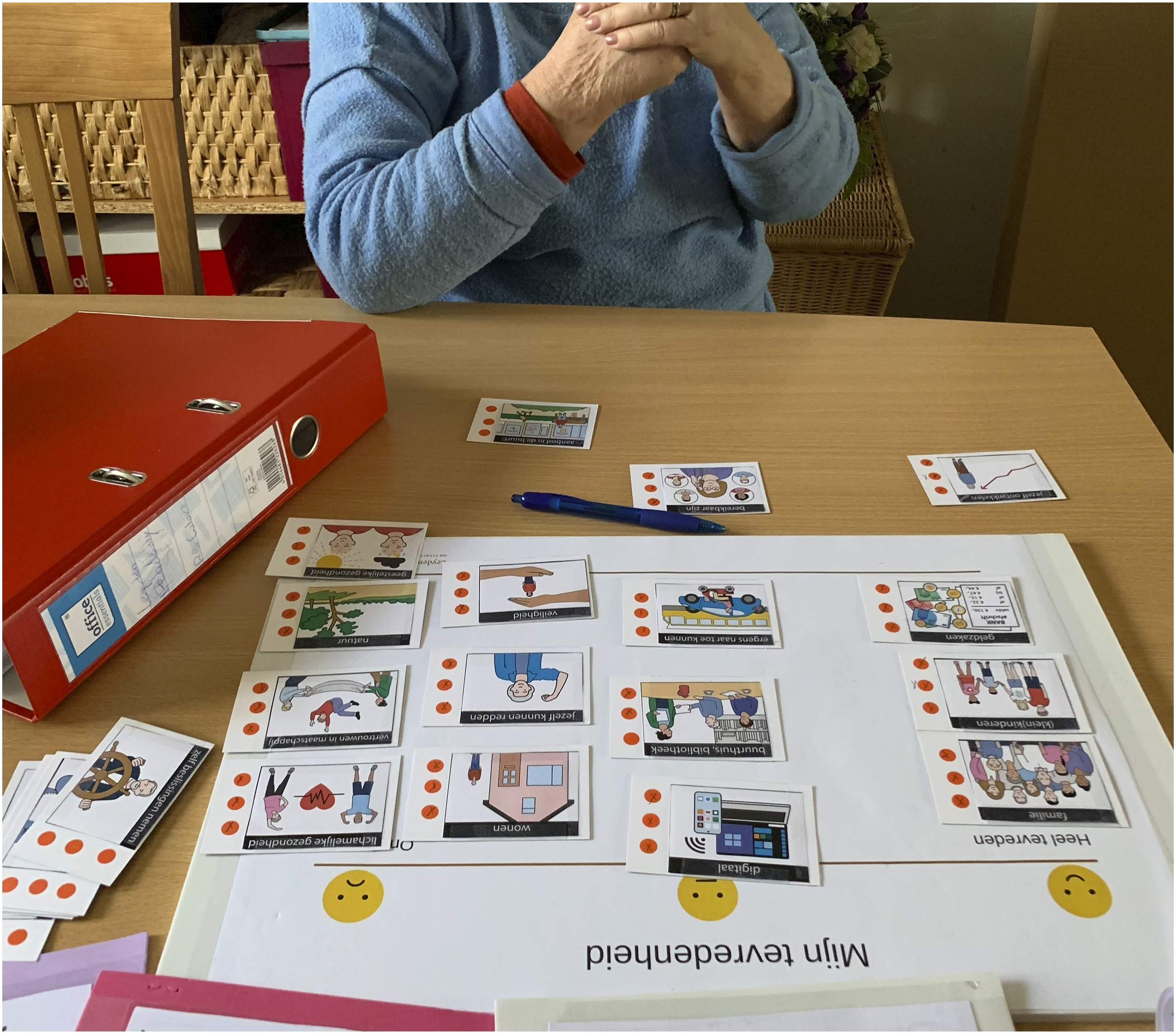
In practice, this meant that, although we had applied for and anticipated a certain research design, along the way we had to adjust our methods and request amendments to our protocol. However, as shown above, the actions taken to adjust and refine the approach were not merely procedural alterations, but also a way to understand the contextual nuances that may require a tailored methodological approach when working with individuals with a lower SES. To capture the richness of the data and ensure our participants felt comfortable, we had to respond dynamically on more than one occasion.
The Primacy of Written Language in Research
The last inclusive approach we adopted throughout our research process concerns the primacy of language in research procedures and methods. The research design, the protocol, informed consent, the focus groups, and interview guides are all written or require linguistic expression. Thus, for instance, informed consent forms require writing names and signatures. On more than one occasion, we noticed that some participants felt uncomfortable writing their name or had to ask for assistance. We tried to minimize this by giving an oral explanation of the research process and by assisting with filling in the informed consent forms. In doing so, we noticed that, for our participants, their most important consideration in participating was the personal connection they felt with us, the researchers.
During the gathering of data, we focused on creating a safe space in which participants’ experiential knowledge was valued. We opted for a creative approach during the co-creation and asked the participants to describe the topics that were discussed by drawing them on paper. By doing this, we created a space where individuals felt empowered to share their perspectives despite any potential literacy-related barriers. Even though we had expected this might be difficult for some, it turned out to be a very beneficial approach. One of our participants, who was rather quiet during the focus group, lit up as soon as we started the drawing process: I like to paint a lot during my leisure time. Nothing professional, but it helps me calm my mind a bit. That’s why I like this (the drawing), I think it is sometimes easier to put something on paper than to explain it in words (male, 67 years old).
Drawing offered the participants a way of transferring their thoughts and feelings in a clear and visual way, unhampered by lexical limitations (see Image 2 and Image 3). This often opened up new topics and experiences that had not been discussed in earlier focus groups or interviews. Drawing of the topic “self-reliance” made by one of the participants. The final design of the topic “self-reliance” made by the designer.

Implications and Ethical Dilemmas
In our analyses of the inclusive approaches we developed during the research process, we identified that these resulted in implications for research praxis and ethical dilemmas in need of consideration. In particular, our research praxis brushed against core standards about research professionalism, research impact, and research language.
When Research Participation Equates to a Personal Relationship
The first implication we drew from our findings was that it is essential to know what participants’ expectations and desires are, as far as possible. As explained above, like other hardly reached groups (Bonevski et al., 2014), individuals with lower literacy have often had negative experiences with official organizations, authority figures, or traditional research. Participants described how discouraged they felt when being sent from pillar to post. As a result, it took us some time to build trust and establish a working relationship. To do so, we noticed it was crucial to have open and in-depth discussions with each participant about what they expected from the project and their involvement. Since people may have different levels of understanding, communication styles, and goals, having these conversations from the very beginning helps to ensure that your research is aligned with each person’s expectations and needs. Importantly, research recruitment relied mainly on personal relations and, therefore, the stakes were higher in maintaining and being reliable in this relationship.
This relates to the first ethical implication we drew out – where does the project and relationship end? This question is relevant for almost all qualitative research, but often enough there is a written closure: a report, a publication, or a final presentation. But when the research is situated within personal relations with individuals with lower literacy who have rebuilt their trust through you, there is more at stake. Their ideas about what trust means are colored by their life history. Although the research may have ended, their idea about the relationship and what it means to end it may feel like trust broken, yet again.
Through honest conversations, you can learn about why participants want to be part of the research, what they hope to get out of it, and any concerns they may have. By outlining who does what, what the expectations are, and what may come out of participating, you build a shared understanding that helps prevent misunderstandings and any potential discomfort from unmet or mismatched expectations. It also assists the researcher in knowing what the cherished outcomes may be and to ensure that promises made can be kept. These conversations also ensure that participants know fully what the research is about, how it is going to be done, and what the possible outcomes could be. I like to participate in (research) projects, but most of the time I am cut short when telling my story. That I do not like. I have a lot to tell, and I do not always know how to do this in a short way. When I am cut short, it feels like I am too much, you know. That’s why I like working with you, you take the time to listen to me, I feel like I can fully share my experiences and that you listen (male, 74 years old).
We also noticed that it became crucial for us to be aware of our own limitations and boundaries as researchers. This means understanding how much time and effort you can realistically put into building and maintaining relationships with the people you work with, while also taking care to set boundaries for yourself, practically and emotionally, during the research process. At one stage, we were being called frequently by some of the participants because they wanted to add to their stories or because they thought we could help them with practical issues, for which they actually needed to contact social workers. While we remained open to calls and conversations about the research topic, we also made it clear that we could not assist in solving practical issues any further than referring them to local social workers. Preparing in advance to refer to such practical, and more enduring, support resources is vital in working with participants who may require more aftercare. For researchers, this means being very aware that research participants may have immediate and practical concerns for which they may call on you, because they engaged in a personal relationship with you and expect your support. It is important to consider this before the research and to see to it that you consider what professional boundaries and practical solutions you can offer, ensuring and reflecting upon your ethical position that participants’ concerns are to be taken seriously, while also feasible in your position as researcher.
Having Tangible Outcomes
From the description above, it is clear that most older adults did not participate just for the sake of the research, but rather in anticipation of a tangible impact. Participants, driven by a genuine desire to contribute meaningfully, seek to witness the transformational effect of their engagement. Their perspectives were now heard and needed to be translated into something they could see and touch, not just words. Throughout our research process, we noticed the importance of “working toward” quite literally some thing (see Image 4). Participants asked us during the recruitment and focus group sessions what we were going to do with the information we gathered. For us, setting out to develop a tangible instrument made explaining the project and its importance much easier, as it resulted in something visible, something to hold in their hands and that reciprocated their efforts. Such a wish for tangible impact not only related to their priorities in life, which were not necessarily represented by written reports, but was also situated in previous experiences: Usually when I do these kinds of things (participate in [research] projects related to low literacy) I do not see the end result. For example, we tested something for the bank a while ago, a new function or something, and I asked them if they could let me know when it was finished or implemented. They promised me they would, but I have not yet heard back. Of course, this can still happen, but most of the time it does not. This is a shame I think; I would like to know what my input was for (female, 51 years old). Participant with the final end product.
Even though all the attention is nice, I sometimes feel like a monkey doing the same trick over and over again. I can tell my story, but nothing is done with it. I have shared my issues on several occasions with institutions and people but I do not feel as if they actually do anything with it. In the end I still encounter the same issues (male, 74 years old).
As highlighted in these citations, we noticed that the expectations and desires of our participants were profoundly influenced by their life history, prior encounters, and accumulated experiences. In addition, integrating participants in the co-creation process created a sense of agency and shared responsibility for creating something. Given their sense of shared responsibility for the end product, one of the side-effects was a strong sense of ownership and a boost in self-confidence and feelings of empowerment once holding the actual prototype: This is not something I have done before, I liked being part of the whole process. We made this, you know! That is kind of great! (male, 67 years old).
Oh wow, this is the end result? It looks amazing. The cards are very nice, she (graphic designer) did a great job! (male, 74 years old).
The significance of not only listening to people, but also translating that what you hear and learn into tangible outcomes, cannot be overstated. Often, scientists claim to give voice to individuals in challenging circumstances, but our participants already had a voice; it is through attentive listening and co-creating something tangible that genuinely aids them, that we ensured their voices were not just acknowledged but also valued and legitimized. With this, we also raise the question of the necessity of research: who are we doing the research for? Should the emphasis not be on practical application? We believe that research is needed in order to comprehend the nuances of the issues at hand and to ethically guide our actions. Here, however, we propose going beyond the “do no harm” principle, seen in the medical field, and move toward a proactive “do good” principle. As researchers, we must continually question the impact of our work: Does it have a positive effect on the individuals we engage with? It may be subtle, but we must be acutely aware of our influence. This underscores the importance of robust (after)care and guidance, as previously discussed in this article.
Language that Closes Doors
A third and final implication that arose from our findings concerns the usage of language. As many studies have identified, research procedures for individuals with a lower SES may run counter to actual research praxis (Abma et al., 2019; Groot & Abma, 2022). Instead of standardized, clear-cut processes, it requires adaptive flexibility in methods, time frames, and consent procedures, such as our adjustment of the research design and the introduction of phased research consent. What stood out in our research was that in the research procedures, from applying our research design for ethical considerations, to our topic guides, and our choice of wording, language mattered. Thus, not only can procedures be excluding, the language used can be equally excluding in its reliance on extensive lexicon, the designation of the participants, and the reliance on written procedures. So, in this case, and likely in many other cases, language actually closes doors to inclusivity instead of opening them. It gives rise to epistemic injustice, as being heard and included rely on written language proficiency, for instance, in signing informed consent forms. This form of injustice seems to extend Fricker’s two types of epistemic injustice, testimonial and hermeneutical injustice (Fricker, 2007), with a type in which the knower is excluded; wronged because of inaccessibility. Often enough, unconscious, indeliberate choices and demands in the research process underlie this, resulting in simply not being able to engage in research (cf. Watharow & Wayland, 2022), leading to what may be called accessibility injustice.
Discussion
In this article we have provided insight into the challenge of including older individuals who experience lower literacy levels in research practices and have detailed how they can become and remain included in research processes. We have done so by highlighting some of the inclusive approaches we developed and applied during our work. By describing the implications of these inclusive research approaches, we have pointed toward the transformative potential of inclusive methodologies in terms of methodology and individual impact for older adults with lower literacy.
The main takeaway that is drawn out in our methodological reflections is that the promise of inclusive research lies in relational design and praxis. Relational design involves intentionally structuring research processes to prioritize and foster meaningful relationships between researchers and participants in order to build trust and rapport (Andrews & Davies, 2022). Particularly when it concerns research with older individuals with lower SES or lower literacy, it is of paramount importance to consider participants as active contributors with valuable experiential experience, rather than merely categorizing their role as that of informants (McMurdo et al., 2011). In line with the principles of participatory action research, we found that, in order to be inclusive, researchers should cultivate a safe and supportive environment where participants feel valued and empowered to share their experiences (Abma et al., 2019). This means deconstructing the power relation between researcher and participant (Čanigová, 2022) by taking small steps, showing care and empathic guidance, and being sensitive to appropriate labels and language to accommodate any potential concerns of the participants.
Throughout our research process, we came across multiple occasions on which we had to adapt our research approach in order to respect the participants’ perspectives, their preferences, and needs. We had to let go of the initial research protocol and follow the participants in using phased informed consent, by employing diverse methods and minimizing the use of written language. Such a flexible design is at odds with current research procedures that approach reliability, transparency, and trustworthiness with entirely different concepts and definitions and instead adhere to the idea that once certain procedures are agreed upon they should stay that way, for the sake of participants’ rights, integrity, and well-being. In this study, if we had adhered to these procedures, we would actually have impeded their well-being and rights and would have reduced the participants’ inclusion in the research. Following the needs of our participants by being adaptive and flexible resulted in a strengthening of their self-confidence and trust in their own voices, making their contribution to our research process an invaluable experience for their personal growth (van Regenmortel, 2020). This approach, which is all about being open and working together, empowers the participants in a “communicative space” where they become part of the co-creation of knowledge through their experience and managing their own boundaries (Groot et al., 2023). It also strengthens the trustworthiness, validity, and value of the research results, as they are based on the real experiences and needs of the people involved.
Despite their promise, inclusive research strategies come with specific implications that researchers must navigate. The process requires a high degree of reflexivity and asks researchers to cede some control, be present in the moment, and actively address ethical dilemmas as they arise. Furthermore, it may actually expose ethical dilemmas that are only partially foreseeable, as in our case with the use of written consent and our role as researchers in this. Explanations of the research were provided in writing, with visualization, but our participants indicated that their most important consideration was the personal connection they felt with the involved researcher. It made us reflect: when is informed consent informed enough? We had little doubt that they understood what was expected and what the potential implications were, but when their decision is based primarily on the trust they feel toward the researcher, is that really informed? Thus, the use of inclusive methods is not solely a technical issue, but a relational challenge of adapting and aligning oneself differently with one’s participants. This requires spending considerable time building rapport, establishing trust, and facilitating clear communication (Aliyas et al., 2023; Watharow & Wayland, 2022).
The process of recruiting, explaining, and adjusting the research objectives, and obtaining informed consent takes up substantial time, as compared to working with more literate populations (Bonevski et al., 2014). Moreover, ensuring that participants feel valued and understood demands patient and unhurried interactions, which may extend the overall duration of the research process (Andrews & Davies, 2022). The relational praxis may also go against common professional standards about your engagement as a researcher, as it may bring into doubt your professional distance and objectivity. While the flexibility and time investment can be demanding, it is a necessary commitment to ensure ethical engagement, meaningful participation, and the attainment of comprehensive insights from older adults with lower literacy. As a result, researchers may need to deviate from regular, standardized protocols, such as those set by institutional ethics committees, to accommodate the unique needs and preferences of participants.
Finally, what our findings show is the importance of a tangible result that participants can point to as a direct outcome of their involvement (Ammerman et al., 2002; Wallace & Bartlett, 2013), thereby going beyond the collection of data for the sole purpose of scientific representation (Gallegos et al., 2023). Removing the sentiment of feeling “used” or a “gimmick” (’S Jongers et al., 2022) requires a departure from the conventional research approach, and actively embracing social justice and equity. In line with the work of Mertens (2021), we believe that, in order to be truly inclusive, researchers should critically examine the impact of their work and strive to create an environment in which both the researchers and the participants benefit. This means moving beyond the notion of “do no harm” towards the principle of “do good”. Researchers do so when they build up proximate relationships that enable them to experience a direct link between their actions and the consequences for the participants. This requirement may again challenge traditional research norms that prioritize academic outcomes and (moral) professional distance that may be primarily abstract or theoretical contributions.
Conclusion
In conclusion, inclusive research methodologies are not merely new research methods or techniques; they represent a transformative approach that necessitates a shift in research methodologies toward relational design and praxis. For inclusive research methodologies to fulfill their promises, we must fundamentally alter our relationships with participants, adapting to communication styles to better serve the needs of those with whom we work (Groot & Abma, 2022). This shift in ethos is grounded in the concept of epistemic justice, which recognizes historical and systemic injustices faced by marginalized communities and seeks to address them through inclusive and collaborative research practices (Abma, 2020; Groot et al., 2023). Moreover, inclusive research has the power to instill trust in institutional systems and structures. When individuals from marginalized communities, such as those with lower literacy, engage with researchers and institutions that value their experiences and knowledge, it can lead to a more profound trust in these entities. This newfound trust can contribute to greater civic engagement, as individuals are more likely to participate in institutional processes when they believe their voices matter (de Jong et al., 2020; Israel, 2013).
Thus, employing inclusive research strategies to encourage and ensure the inclusion of older individuals with lower literacy may run counter to traditional research praxis but will ensure, as our findings show, that participants’ voices are not only heard but also valued and respected. Although our findings focus on individuals with lower literacy, we believe that the emphasis on relational design and praxis, prioritizing meaningful relationships between researchers and participants, transcends the specific context. Applying these principles to participant groups who do not speak the native language of the researchers, or those marginalized by dominant cultures, can foster trust, empowerment, and meaningful contributions. The flexibility and adaptability embedded in our research approaches, such as phased informed consent and minimizing written language, can be particularly beneficial for individuals who feel a power difference.
Changing our praxis can enhance the validity of (academic) knowledge and the appropriateness and fit of our research methodologies, as well as amplifying the co-creation of knowledge (Halvorsud et al., 2021) and – importantly – paticipants’ feelings of inclusiveness and empowerment (Stringer, 2014). Such outcomes approach the promises of inclusive research methodologies.
Supplemental Material
Supplemental Material - The Promises of Inclusive Research Methodologies: Relational Design and Praxis
Supplemental material for The Promises of Inclusive Research Methodologies: Relational Design and Praxis by Miriam Verhage, Jolanda Lindenberg, Mariëtte Bussemaker, and Tineke A. Abma in International Journal of Qualitative Methods
Footnotes
Acknowledgements
We thank the research participants for working with us, their honesty, for sharing their experiences and for showing us how our research could fit their needs better.
Declaration of Conflicting Interests
The author(s) declared no potential conflicts of interest with respect to the research, authorship, and/or publication of this article.
Funding
The author(s) disclosed receipt of the following financial support for the research, authorship, and/or publication of this article: The development of the conversational instrument was supported by the Codde en van Beresteyn foundation.
Ethical Statement

Supplemental Material
Supplemental material for this article is available online.
References
Supplementary Material
Please find the following supplemental material available below.
For Open Access articles published under a Creative Commons License, all supplemental material carries the same license as the article it is associated with.
For non-Open Access articles published, all supplemental material carries a non-exclusive license, and permission requests for re-use of supplemental material or any part of supplemental material shall be sent directly to the copyright owner as specified in the copyright notice associated with the article.
