




Abstract
While the use of phenomenological approaches in qualitative research increases in the field of performing arts, their legitimate application as research methods can prove to be challenging. The article introduces the dominant dichotomies and challenges in phenomenological research, such as concerns emerging from the researcher’s position, interdisciplinarity and mixed methods. The paper is addressed to novice researchers, researchers-practitioners and scholars with an interest in the theory of phenomenology. Drawing from a phenomenological research project that examined embodiment in Greek tragedy in the context of performer training and theatre directing, the article illustrates the methodological approach employed both in theory and practice. To this end, it proposes a model of data collection, organisation and analysis in interview design and practice-based research in performance. The proposed model sets subjectivity at its core and invests in the participants’ lived experience in an inclusive manner, concurrently calling on the investigator’s transparency as defined by the Husserlian epochè. It, therefore, comes into an inclusive step-by-step guide based on scientifically evident and ethically approved methods that accumulate Husserl and Giorgi’s phenomenological methods, Schön’s action research combined with Kolb’s reflective practice and tools for findings validation by Colaizzi (1978), Van Manen (1997) and Van Kaam (1966). Finally, in order to make phenomenological interviews more accessible, the article includes an interview schedule, which can be further developed and applied to practice-based research in both physical and digital environments.
Keywords
Introduction
This article aims to illustrate a phenomenological methodology in Practice as Research (PaR) emphasising research design, data collection and organisation, as well as interview analysis. A noticeably growing scholarship in phenomenological research design appears in social (Groenewald, 2004) and health sciences, including psychology studies and nursing (Neubauer et al., 2019; Sundler et al., 2019; Wilson, 2015). However, the lack of systematic and methodic guidance in phenomenological interview design feels like a common issue among researchers in performance studies. Much of the confusion occurs in the employment of an approved phenomenological approach in qualitative research in the arts. This is perhaps the result of two causal factors that underline the discursive nature of practical research: first, the field attempts to integrate theory into diverse practices, asking for flexible adjustments. Second, artistic research is inherently influenced by other disciplines, constantly evolving and changing in form and methodology. The article presents the Phenodramatic System or the Phenomenological Model of Performance Practice (PMPP®), a model of analysis that addresses such issues whilst ensuring the appropriate use of the phenomenological attitude (epoché) in performative contexts. Epoché, in this context, expands on extant literature about positionality and reflexivity to examine the researcher’s position in findings assessment and outcomes validity in PaR.
The article is addressed to novice researchers, researchers-practitioners and scholars interested in phenomenology as an analytical implement to articulate praxis and a methodology to conduct qualitative research in performing arts. Theatre directors, movement directors, choreographers, teachers and practice researchers will find in PMPP a creative device of critical embodied reflection. The proposed model can be applied to PaR and relevant studies under the Arts-based Research (ABR) umbrella term. Moreover, the type and content of the questions included in the provided example can be appropriated for interviews in audience research, mainly focus groups and small audiences. Essentially, the model demarcates epistemologically the potential vagueness and subjective assumptions that might be produced while describing experienced phenomena in practice-based research. In detail, it provides a step-by-step research and creative guide by implementing phenomenological approaches (i.e. Giorgi, 2009; Husserl, 1970) and reflective analysis (i.e. Kolb, 1984; Schön, 1983) of qualitative data in practice; clarifies the researcher’s position by providing practical examples; and offers a systematic methodological approach to the examination and assessment of findings (i.e. Colaizzi, 1978; Giorgi, 2009; Van Kaam, 1966; Van Manen, 2007).
Background
This article is generated from a four-year research study funded by the University of Leeds and conducted at the School of Performance and Cultural Industries. Embodying Greek Tragedy: Phenomenological Explorations of the Suffering Body in Theory and Practice (Bouzioti, 2022) investigates theoretical, practical and performative possibilities produced in the post-dramatic mise-en-scène. An eidetic difference between dramatic directions and postdramatic theatre is that the latter shifts from the dominance of the text to the existential centrality of the human body, which simultaneously represents the ‘theme and protagonist’ (Lehmann, 2006, p. 25). To this end, the focus is on the intersection of Greek tragedy, phenomenology and contemporary dance theatre, where the body exists and manifests through its perceptual, expressive and communicative modalities.
The novelty of the investigation lies in the introduction of phenomenology as both an analytical and creative tool in Greek tragedy. This genre is profoundly infused with the notions of suffering, mortality and the human condition. Since phenomenology investigates subjective experience and consciousness, the study proposes a model of dramaturgical analysis to elucidate the experience of psychophysical imprisonment as a form of suffering. Here, phenomenology demystifies suffering as an inherent aspect of human existence. Thus, it offers the researcher-director a psychophysical (Leib) insight into the tragic body that expands beyond its physio-biological (Korper) capacity. Moreover, the research constructs a system of identification and facilitation of embodiment in performer training and theatre directing. It thereby establishes a psychophysical performer training method that adheres to the phenomenological principles.
In detail, the phenomenological approach that underpins the research draws on the theories of Husserl, 1970; Leder, 1990; Merleau-Ponty & Landes, 2012. Husserl’s (1970) and Merleau-Ponty’s (2012) body-centred phenomenological views associate experience with consciousness but mainly foreground it as an intrinsic, fundamental and embodied condition. Merleau-Ponty understands the body as the centre of orientation within its perpetual presence in the ultimate here and now and places emphasis on the lived experience. Leder’s (1990) medical phenomenology discusses modes of embodiment (i.e. ecstatic, recessive, chiasmatic, and dys-appearing) that explain the absence of consciousness. In particular, his work attempts to anatomise the structures of consciousness and explicate internal awareness by describing organic functions, physiological processes and behavioural responses.
The research process is evidenced by three body-centric performances: Prometheus Immobile (2018), Bacchae in Absentia (2019) and the film Medea Inside (2021). The selected case studies provide characteristic examples of tragic bodies suffering psychosomatic imprisonment. The performances resist traditional logocentric approaches and use the medium of dance to enable an in-depth psychophysical investigation of suffering. The element of speech is excluded in order to eliminate emotional influence.
Prometheus Immobile (2018) forms a practical examination of the lived experience of suffering departing from stillness and physical confinement. Bacchae in Absentia (2019) follows a systematic analysis of Leder’s (1990) modes of disappearance to explore consciousness in psychosomatic imprisonment reflected through mental illness and its impact on the body. Finally, the lockdown digital adaptation of Medea Inside (2021) investigates imprisonment in the relationship between Self and Other. Although it refers to birth and infanticide within the context of psychosomatic separation (écart), the film is also influenced by the lived experience of social isolation during the lockdown. The article evidences the proposed methodology through the development of the system across the three case studies. In addition, it provides interview schedules, including a discussion around emerging problems and solutions while validating the system’s applicability in different environments (physical/virtual), conditions (normal living circumstances/social isolation) and media (dance theatre/dance film).
Navigating Theory: Dichotomies, Methods and Interdisciplinary Fields
Dance and performance scholars increasingly use phenomenology to articulate their practice (Fraleigh, 1987; Kozel, 2007; Parviainen, 1998; Sheets-Johnstone, 2015) or expand the field of performance analysis (Garner, 1994; Johnston, 2017). However, when it comes to the wide deployment of phenomenology as an analytical model in the performing arts, a rigorous qualitative research method seems to be missing or remains underdeveloped. Amedeo Giorgi (2008) observes that: a proper understanding of how to employ the phenomenological method in the social sciences is not something about which a consensus exists. There are several procedures being recommended presently, but not all of these are acceptable, either according to the criteria of phenomenological philosophy or in terms of sound phenomenological research strategies. (Giorgi, 2008, p.1)
In the era of corporeal prominence, the phenomenological theories of Husserl, Merleau-Ponty and Heidegger are revalued by contemporary academics-practitioners. However, very little information about their application as analytical or research methods has been offered. This fact allows the constant impeachment of the phenomenological approach by opponent theories, such as analytical philosophy. Furthermore, it raises concerns about positionality, personal bias and impact on findings.
Psychology can provide us with illuminating phenomenological interventions, such as Giorgi’s (2009) Descriptive Phenomenological Method, Smith’s (1996) Interpretative Phenomenological Analysis (IPA) and Van Manen’s (2007) Phenomenology of Practice. Phenomenology in the qualitative research of psychology indicated the beginning of the quest for an appropriate phenomenological method. Meanwhile, there has been a rising demand for phenomenological applications in the social sciences since the early ‘70s. The prominent schools of phenomenology originated from the understandings of Husserl and his student, Heidegger (Utrecht School). Their views shaped the philosophical approaches of Transcendental and Hermeneutic Phenomenology, respectively.
Husserl’s Transcendental or Descriptive Phenomenology is concerned with the epistemological enquiry that asks What do I know about the world? The nature of knowledge primarily occupies the enquiry’s ontology. In this respect, reality is internal to the subject and is located within the limits of its consciousness. The epistemology is accumulated around the concept of epoché – that is, the phenomenological reduction or bracketing. The researcher becomes a transcendental subjectivity that remains neutral and unbiased (bracketed), avoiding using prior knowledge or judgement not to impact the subject(s) of the study. The examination calls on intuition and description – thus, operating in a pre-reflective manner (in other words, reflexively). The methodology relies on imaginative variation and the reduction of research data into units of meaning. The reductionist approach justifies Giorgi’s endeavour to ascribe measurable qualities to the phenomenological process and legitimise it as a valid scientific method. The tendency towards rationalisation is positivistic and defends the axiom of objective reality. It is, therefore, rational and measurable, explaining why empiricism and reductionism rely on data to reach an outcome (quantitative research).
Heidegger (1982) and the Utrecht School developed the Interpretive or Hermeneutic Phenomenology. Here, the focus is ontological, seeking to understand: What do I know about myself in the world? The ontology of the hermeneutic approach is located in the nature of being and the lived experience, as it appears in the subject’s lifeworld (Husserl, 1936/1970). Epistemologically, the researcher is involved in the study as part of the world, bringing in his or her input and prior knowledge. The analytical process reflectively uses interpretation. Hence, the methodology utilises other theories and ‘iterative cycles of reflection for a robust and nuanced analysis’ (Neubauer et al., 2019, p. 92). Drawing on the paradigm of naturalism, reality is subjective. Thus, it is inductive and dynamic (intersubjective) as it develops within relationships. Such a relationship is between the researcher and the participant in qualitative research. Van Manen’s (2007) applied phenomenology in practice is widely employed as an in-depth investigating model with patients and students in medical sciences. At the same time, Smith (1996) has developed IPA as a psychological approach to qualitative research.
Issues of reflexivity and positionality are likely to surface from the practical nature of the research, thereby reinforcing the interrogation of phenomenological bracketing in performative contexts. Often conducted by researchers-practitioners, the applied phenomenological methods are not as explicit due to the obscurity caused by interdisciplinarity and the ‘multiple overlapping identities’ (Kezar, 2002, p. 96). Principal investigators might inhabit different roles, such as the researcher-director, researcher-choreographer or researcher-dancer. The dual capacity of the researcher-director, for instance, might influence assumptions in various ways, given his/her active involvement in the process. Mason-Bish (2019) notes that ‘positionality is a transitory and dynamic situation’ (p. 264), and the fluidity between identities may impact findings and the exchange with participants. What is more, in the case of the researcher-director is the constant concern with power relations (Mason-Bish, 2019, p. 264) and the dynamics developed between the researcher and the research subjects within the ensemble.
While the research examines how the embodied experience of suffering is portrayed in Greek tragedy, the digitalisation of the process in Medea Inside (2021), highlighted the phenomenological significance of intentionality and the lived experience. That raised questions about first and third-person perspectives, validation of findings and integrity of judgement, especially when both investigator and participants are exposed to extreme suffering conditions (i.e. the pandemic). Similar thoughts emerged during the dramaturgical analysis of the tragedy around domestic violence and oppression against women. This reflection led to re-evaluating the extent to which the researcher can remain bracketed during the investigation of vulnerable and oppressed female subjects if she identifies as such.
In detail, bracketing refers to unbiased judgement exclusive to prior knowledge in findings validation. The outsider observes research subjects (third-person perspective) unaffected by the conditions designed for and experienced by them. This is apparent in the director-actor relationship. For instance, in Prometheus Immobile (2018) and Bacchae in Absentia (2019) studio practice, the conditions are shaped by the set activities. This dynamic might contribute to bracketing by minimising the chances of being influenced by intersubjective relationships or experienced circumstances. On the other side, bracketing can be challenged by various determinants, such as cultural differences or diverse professional backgrounds between researchers and research subjects.
An insider uses a first-person perspective to describe the impact of certain phenomena or responses to given stimuli. The examination can be conducted at an individual or group level. In Medea Inside (2021), positionality and influence were problematised when virtual meetings replaced the studio training sessions due to the lockdown. The conditions in the studio are typically determined and controlled by the director. However, in Medea Inside (2021), the circumstances were defined by the pandemic and the imposed governmental measures (i.e., social distance and self-isolation). That radically impacted intersubjective dynamics and the group’s lived experience of suffering, as it unanimously forced everyone involved, even the director, into a vulnerable state of being. The occasion forms an example where bracketing can be likely affected by feelings of solidarity and collective empathy.
The validity of phenomenology as an empirical method in qualitative research constitutes an ongoing epistemological debate. Literature on reflexivity and positionality demonstrates that this validity depends on the researcher’s position as an insider/outsider (Berger, 2015; Mason-Bish, 2019). Despite Giorgi’s rigid position, which situates the investigator outside any prior knowledge, this status is pivotal to assessing the investigator’s influence on research findings and outcomes. This is due to personal traits, beliefs, ideologies, experiences and preferences that play an essential role in decisions and assumptions during data analysis and the meaning-making process (Berger, 2015; Bradbury-Jones, 2007; Finlay, 2002; Horsburgh, 2003; Primeau, 2003). These parameters can also determine the linguistic and communicational avenues the researcher selects during data collection (Mason-Bish, 2019, p. 265).
The debate might originate from the opposition between the description and interpretation of the lived experience. The notions of description and interpretation ignorantly substitute for each other, occasionally falling into circles of misuse (Giorgi, 2008). Thus, we first need to identify the appropriate methods for the examination of lived experience in performative research contexts. Second, we must seek how the researcher can validly elucidate meanings without deviating from the phenomenological logic. The existence of dichotomies serves the human tendency to rationalise things and phenomena. This form of categorisation functions as a mechanism for simplifying their apprehension. Observation, interrogation, description, analysis, and interpretation are fundamental cognitive processes of human consciousness. Phenomenological interrogation cannot be a fixed, rigid method but rather a flexible one, determined by the openness of our being-in-the-world. Still, maintaining the principles grounding each phenomenological method is of utmost importance. According to Giorgi (1985), there certainly is liberty in adopting different approaches as long as their applicability and functionality are defined and evidenced by a disciplinary attitude. In addition, these approaches must adhere to the requirements and specificities of the method (Giorgi, 2008, p. 2). In the sections below, I will illustrate how my doctoral thesis utilised the transcendental method for data analysis while adopting a reflective studio practice.
A suggested attitude is that the researcher acknowledges and clarifies their position when employing phenomenology as an analytical method. A rigorous qualitative research method or interpretive analysis in performance studies cannot rely on conceptual interplays. Instead, it requires precise positions and accurate framing of the research as descriptive or interpretative. The research confirms that first-order phenomenology is descriptive, yet any interpretive properties of the method are secondary but inherent, constituting fundamental cognitive processes of the human consciousness. In agreement with Giorgi’s (1985, 2009) view, this research resorts to psychology in order to illuminate the phases of meaning elucidation and the explication of lived experience. The richness of the findings reveals the benefits of the congruent phenomenological attitude and subjective openness that operated in a pre-reflective manner. In Medea Inside (2021), characteristically, psychology provides a list of potential meanings for intersubjective relationships, illuminating the lived experience of isolation during the ensemble’s virtual encounters. Participant descriptions of the process during lockdown (subjective experience) form a situated structure. The sum of descriptions constitutes the general structural description of the phenomenon (Englander & Morley, 2023, p. 37), contributing to a generalised formation of ideas through psychology. At this point, I compare results with the data from the body-centric dramaturgical analysis. The participants’ lived experience of suffering is now contextualised into the play’s premise to communicate its thematic significance from within the embodied narratives.
Setting Up the Framework: Identifying the Research Objectives
The experimental nature of the research required a concrete framework to avoid deviations from the phenomenological route due to the trial-and-error approach adopted in the studio. The project utilised phenomenology as a philosophical approach, research tool and creative method, dividing the process into three stages. Accordingly, the objectives were formulated around the establishment of a phenomenological model of theoretical analysis (dramaturgy), but also of practical reflection (performer training) and embodiment of suffering (theatre directing).
Since the research begins from the tragic text, the project had to identify how phenomenology can inform the dramaturgical analysis of Greek tragedy. Then, it sought ways to translate theory into practice in order to implement phenomenology in performer training and theatre directing. The practice-based phase should be designed in a reflective manner in which findings generated by studio work would continuously inform theory. Throughout these stages, the focus was set on the embodiment of the ‘internal or interior’ (Conroy, 2010, p. 15) lived experience as defined by Leder’s recessive body. This mode of embodiment is associated with ‘the bodily depths’ and ‘the ways in which the visceral organs, along with certain of the body’s temporal modes, recede from personal apprehension and control’ (Leder, 1990, p. 4). The term also includes our biological functions, emotionality and the subconscious.
The participants actively contribute to the advancement of the research process while harnessing the benefits of the embedded reflective approach. The project used a set of methods in order to explore and acquire an understanding of the ensemble’s inner lived experience: (i) description of emotions and thoughts that emerge during physical activity; (ii) reporting thoughts or feelings in diaries (journaling); (iii) expression of feelings through movement; and (iv) activation of imaginary mechanisms through activities similar to body scanning (e.g. the Bubble exercise, where the instructor narrates the journey of an imaginary bubble that travels down the performer’s body).
Qualitative research offers a deeper understanding of underexamined phenomena, highlighting possible issues (Cavana et al., 2001; Marshall & Rossman, 2006) in the embodiment of psychophysical traumatisation. Identifying the research objectives and concretising the research framework act as systematic methods of data collection and organisation. In this respect, the project falls within the remits of exploratory research. This research concerns unknown phenomena that emerge during performer training and theatre directing processes and seeks to identify solutions that can be used and further developed by future researchers and practitioners (Phillips & Pugh, 2000).
Phenomenology and Psychophysical Training: Thinking in PaR Terms
The activities were developed upon a phenomenological basis to investigate lived experience in various forms and body conditions. The research was built upon the practices of Phillip Zarrilli and Meg Stuart. In addition, it utilised phenomenological interventions from my previous works (e.g. blindfolds for the examination of sensory deprivation) to reinvent practical agendas in performer training.
First, the aim was to explore the performing subject’s psychophysical response in conditions of absence (Leder, 1990), suffering, and internal or external imprisonment. Second, the project sought to understand corporeal and perceptual implications among individuals (i.e. intersubjective experience). Therefore, to uncover and understand the human condition, we must position and navigate ourselves as researchers within various fields, maintaining openness, curiosity and a sense of hospitality to accept diversity and novelty. The complexity of responses and rejoinders is characteristic of human nature, while individualisation is fundamental in the phenomenological method. Besides, this attitude underlines our phenomenological stance and allows for exploration and experimentation. PaR is inextricably and essentially dependent on that in the same way science relies on laboratory experimentation, trial and error and the liberty to doubt.
Mock’s (2000) methodology integrates a reflexive attitude in the studio, giving prominence to corporeal approaches through practice. In Performing Processes: Creating Live Performance, Mock (2000) indicates a cyclical model of what she considers performance, proposing the recycling between processes of ‘conception, development, presentation, reception and reflection’ (Mock, 2000, p. 9). Current developments in performer training show that practice is more favourably served from a reflective embodied phenomenology. Still, epistemologies might gravitate either towards the Husserlian method of the ‘outsider’ researcher or the Heideggerian perspective of the ‘insider’, where the practitioner is involved in their subjects’ lifeworld. By adopting the phenomenological attitude (Wilson, 2015, p. 42), my research used a pre-reflective circle of somatokinetic investigations attempting to locate the essence of the lived experience. Through the continuous validation of findings, it evolved towards an understanding of the embodied subject in Greek tragedy.
PaR illustrates the journey from phenomenology as philosophy to phenomenology as a research method. Thus, it creates a conceptual framework where the ‘creative work in itself is a form of research and generates detectable research outputs’ (Smith & Dean, 2009, p. 5). The artistic product results from a creative research process, and its content ‘can lead to specialised research insights which can then be generalised and written up as research’ (Smith & Dean, 2009, p. 5).
The research drew on Zarrilli’s phenomenological heritage in performer training to apply it to the field of non-logocentric performance. In (Toward) A Phenomenology of Acting (Zarrilli, 2019), Zarrilli addresses questions of attentiveness through ‘first-person accounts of embodied practice’ (Zarrilli, 2017), while his work encompasses elements from Asian martial arts (i.e. taijiquan/kalarippayattu) and yoga. These interventions ameliorate self and bodily awareness, body-mind attunement (i.e. the bodymind), as well as energy directing in pre-performative actor training (Zarrilli, 2017). Similar exercises were incorporated at the beginning of each workshop to explore those areas and introduce the ensembles in the realm of psychophysical training.
In Stuart’s practice, exploring emotional states through breathing allocates the dancer outside herself, ‘both as a practice and as a form’ (Peeters, 2010, p. 22). Her practice includes the Alexander and Klein techniques, Skinner Releasing Technique (SRT) and contact improvisation to release the body from unnecessary tension and enhance focus, body control and communication with the self. According to Stuart, the dancer’s body needs to be characterised by emptiness and transparency (Peeters, 2010, p. 29) – the same principles that govern epoché. Variations of Stuart’s activities enriched the study’s psychophysical agenda, particularly in the search for the lived experience of sensory deprivation and the understanding of the reciprocal relationship between emotionality and movement.
Sampling
The practical investigation of the research took place at the facilities of the University of Leeds. Undergraduate and postgraduate students were recruited based on backgrounds relevant to the project, such as dance and physical theatre. Moreover, research and artistic interests pertinent to the project’s intersecting disciplines (e.g. philosophy, postmodernism, somatic practices) were considered. The sample varied between eleven to thirteen participants in all three ensembles. Participants for the inaugural project were approached by personal invitation, snowball sampling and announcements to the broader community of the University. In contrast, the Bacchae and Medea adaptations used official calls and auditions addressed to dance professionals and theatre practitioners from local dance schools (Northern School of Contemporary Dance; Yorkshire Dance) and other Higher Education Institutions (Leeds Beckett University; Leeds Arts University). In Medea Inside (2021), the audition was advanced to a psychophysical workshop, where I joined forces with the actor trainer, Mark Shields.
The practice-based process consisted of training sessions, rehearsals, and the final performance. The training was divided into a series of workshops followed by a month of weekly rehearsals. The workshops required full attendance to ensure maximum engagement. However, due to the voluntary nature of the project, attendance was often impacted, causing problems with the quality of the research and the making process. Therefore, the rehearsals were scheduled individually or in groups according to availability and other practicalities.
Data Collection
Data were collected from on-site or online observation, interviews, focus groups and diaries (journaling). Due to the performative nature of the research, the participants can be identified; however, we have obtained their consent in written form whilst practicing participant anonymisation according to the Data Protection Act (2018) and the ESRC Framework for Research Ethics. As data, we consider the participants’ performance as much as kinetic, sensory and other aesthetic responses manifested in verbal, non-verbal, written and embodied forms. Besides participant observation, the majority of data was captured on video and still cameras, audio recorders, diaries and notebooks. In the next section, I provide examples of how interviews might link to these forms of data (Figure 1). Performer Interview Schedule for Medea Inside (2021).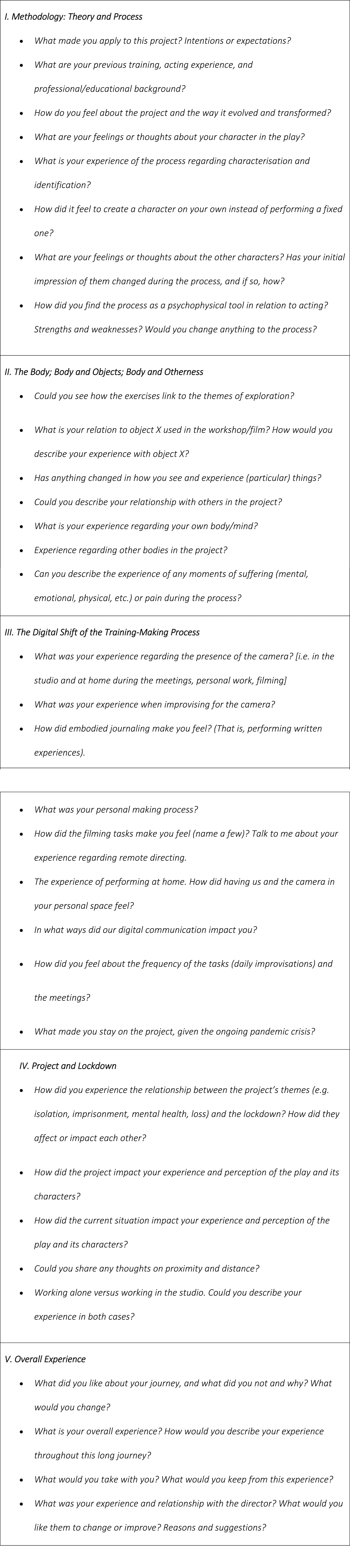
Interview Design and Analysis
In order to ensure the phenomenological focus of the research design and ‘understand phenomena by descriptive means’ (Neubauer et al., 2019, p. 92), the interviews were developed upon a set of semi-structured ‘wide-angle questions’ (see Kozel, 2007, pp. 48–51). The questions were formulated according to the respective enquiry in each case study. Every performance project investigated different manifestations of psychosomatic suffering (coercive physical confinement; mental illness as psychological imprisonment; regimes of isolation and psychosomatic isolation) and explored different perspectives (i.e. inner, outer and chiasmatic body). The semi-structured interview allows space for the participants’ lived experience to unfold. Starting from Wilson’s (2015) idea of bracketed curiosity, interviews were designed to examine thoughts, feelings, and psychological or physiological responses: Please describe the experience of… How did you experience (the)…? How did it feel to/when…? What were you thinking when…? What were your thoughts or feelings about/when/during…?
Taking a reductive approach to data analysis that adheres to the Husserlian method means that thematic and content analysis can act as meaning-making mechanisms. First, finding patterns in first-person descriptions of the experienced phenomenon leads to establishing units of meaning while bracketing all external knowledge. Then, by utilising imaginative variation (i.e. hypotheses or possible scenarios) and articulation through the language of performance, we get to the essence of the experience in a situated structure; that is, we describe the phenomenon within a particular context by generalising the experience and not by universalising it (Giorgi, 1985; Smith, 2009).
In Prometheus Immobile (2018), I examined the core principles that underpin phenomenology as philosophy and sought ways to implement them in my practice. Accordingly, I explored the fundamental relationship between breathing, emotions and movement. Any potential identification of such perceptual, sensory, and bodily associations in this relationship can explain inner bodily experiences. This understanding sets the ground for their integration and exploration into body-centric training and performance. The research objectives of this case study were thereby formulated according to (i) the performing body’s perception and embodiment of suffering, (ii) the communicative modalities between the ecstatic and the inner body, and (iii) the process of training and directing suffering.
Following the ensemble’s final performance, the interviews explored methodological and interpretive possibilities in contemporary adaptations directly from the performers’ subjective experience. Wide-angle questions investigated sensory perception, emotionality and responsivity, scrutinising concepts like absence and background disappearance (Leder, 1990). These notions were examined in the relationship between body and objects (e.g. materiality, qualitative properties), proprioception/exteroception, emotional-sensory stimulation (i.e. through taste or hearing), and sensory perception in relation to time, space and intercorporeity.
Van Manen (1997) suggests that outcome validation can benefit from applying a reflective approach. Quite so, reflection underlined a lack of structure in the interviews of the first project. That led to a reoccurring deviation from the objectives, especially when the interrogation was becoming too personal in the quest for the subjective. This might constitute a potential risk when working with ensembles in practice-based qualitative research. That means that the vagueness of wide-angle questions alongside the familiarity that runs through interpersonal relationships within the collective might influence the researcher’s judgement. The interview schedules in the ensuing projects, Bacchae in Absentia (2019) and Medea Inside (2021), employed eidetic variation to ensure clear intentions and explicit structure. This tool allows for the researcher’s receptive openness while drawing the participant’s attention to a specific experience. Hence, it enables the emergence of ‘psychologically relevant meanings’ to the participant’s consciousness while maintaining focus on the described phenomenon (Englander & Morley, 2023, p. 35). Consequently, the themes were broken down into the theoretical and methodological aspects of the research process to investigate the practice, embodiment and lived experience in depth (Figure 1).
Figure 1 refers to the ‘interview schedule’ (Smith & Osborn, 2003) for Medea Inside (2021). The template includes a section that examines the lived experience of isolation during the digital workshops and the filmmaking process as the research shifted online due to the two extensive lockdowns in Europe and the United Kingdom. Each interview was conducted online via Zoom and lasted approximately ninety minutes. The structure was segmented into five main themes of open questions: (i) methodology and the implemented theory; (ii) examination of the body in relation to oneself and otherness, including subject-subject relations and subject-object relations; (iii) digitalisation of the process and lived experience; (iv) lived experience of psychophysical imprisonment (the lockdown); (v) overall experience of the project.
In phenomenological research, we cannot rely on a ‘predetermined hypothesis’ awaiting validation (Smith & Osborn, 2003, p. 55). Instead, the development of clear units of meaning derives from identified patterns in multiple communicational and expressive systems (performative and verbal) in first-person description. This classifies the responses into thematic categorisation. Interview scheduling is essential as it organises the interview and focuses on the subject matter while preparing the researcher for potential difficulties and ways to overcome them (Smith & Osborn, 2003). In short, we observe that the interview scheduling precedes the interview, whereas ‘theme clustering’ (Smith & Osborn, 2003) and connection between themes are post-interview processes in data analysis.
Studio Methodology
The research methodology was framed by a variety of mixed strategies that facilitated the collection, documentation and analysis of qualitative data grounding the descriptive evaluation of the embodied experience. The methods used in the study varied from participant observation (live or recorded) and field notes to the documentation of first-person narratives obtained in semi-structured interviews, focus groups (ensembles) and informal discussions that would follow a workshop or a set of exercises. The questions addressed to the participants in the ensembles would examine their immediate lived experience and internal response to an activity. The division of qualitative data collection into two stages (workshop discussions and post-performance interviews) ensured the accuracy of findings and minimised assumptions during the meaning-making process. Besides verbal communication, which can sometimes be limiting in this context (Van Manen, 1997), the research also used observation and intuition to extract meanings from body data generated from movement, facial and body expression and non-verbal communication systems. In this respect, the performative nature of the project justified the use of recordings and field notes.
However, in practice-based settings, lived experience alone cannot always provide the researcher with the research outcomes and lead to ‘developmental insight’ (Bolton, 2010, p. xix). Instead, it requires a reflective approach (Cochran-Smith & Lytle, 1999; Loughran, 2002) and an examination of the process as an ongoing learning and research activity. The study used the approach of ‘reflection in/on action’ (Schön, 1983), following the rationale of Kolb’s experiential learning cycle (see Figures 2 and 3). Starting from the initial stimulus, the ‘concrete experience’ (Kolb, 1984), where the ensemble is introduced to an activity for the first time or explores an exercise from a different perspective, it then develops through the stages of reflection and evaluation (Figure 4). At this point, the participants reflect on their lived experiences through discussions coordinated by the researcher. Still, since the material is recorded, the researcher can reflect and assess the findings from observation, field notes and group discussions. Next is the stage of analysis and conceptualisation, where we form abstract ideas and generalise them in a given context. Adapting Kolb’s (1984) Reflective Model into the Phenomenological Model of Performance Practice (PMPP). Adaptation of the Phenomenological Method (Husserl and Giorgi). Adaptation of the Reflective Model combined with Action Research (Kolb and Schön).
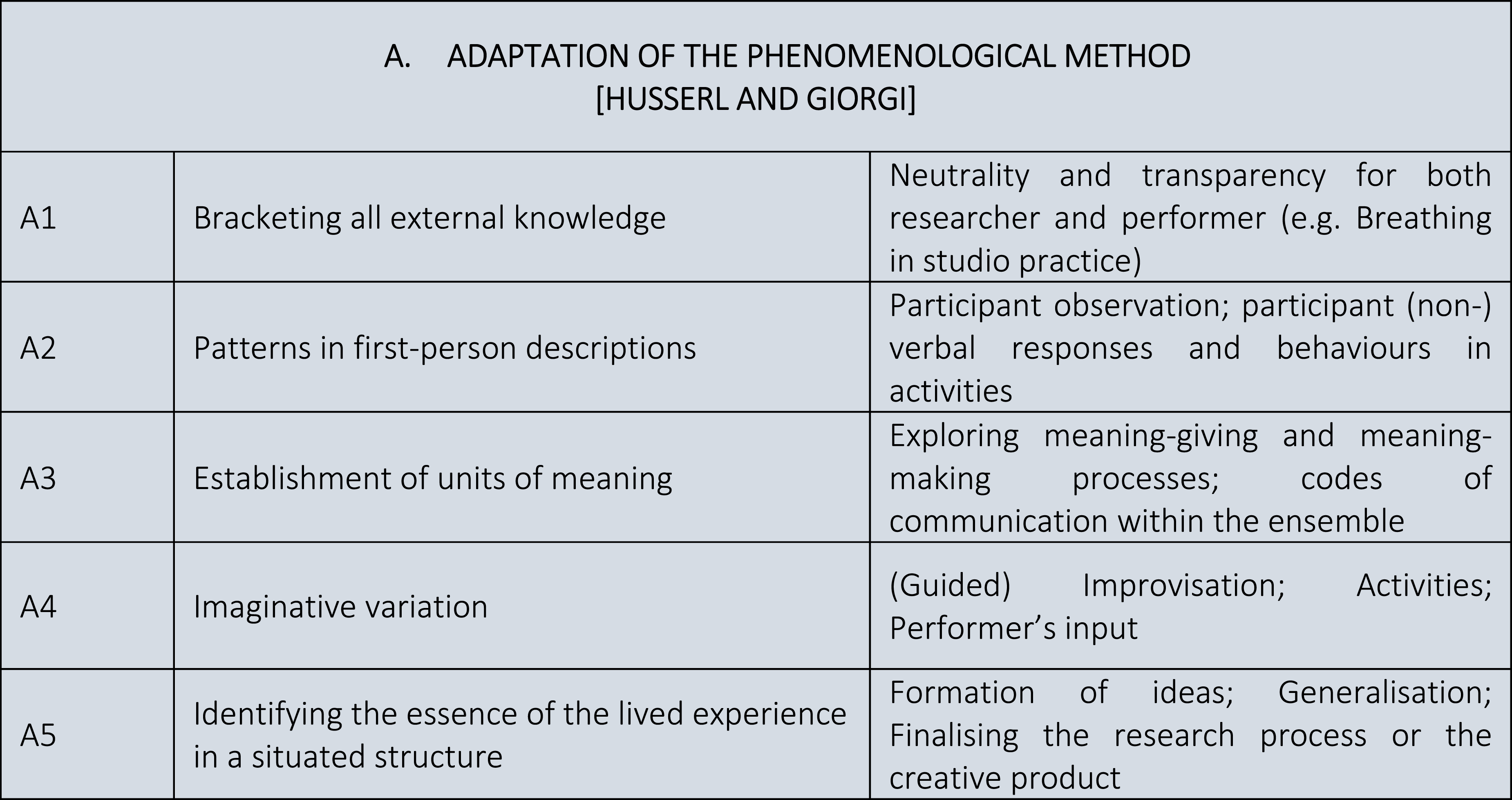
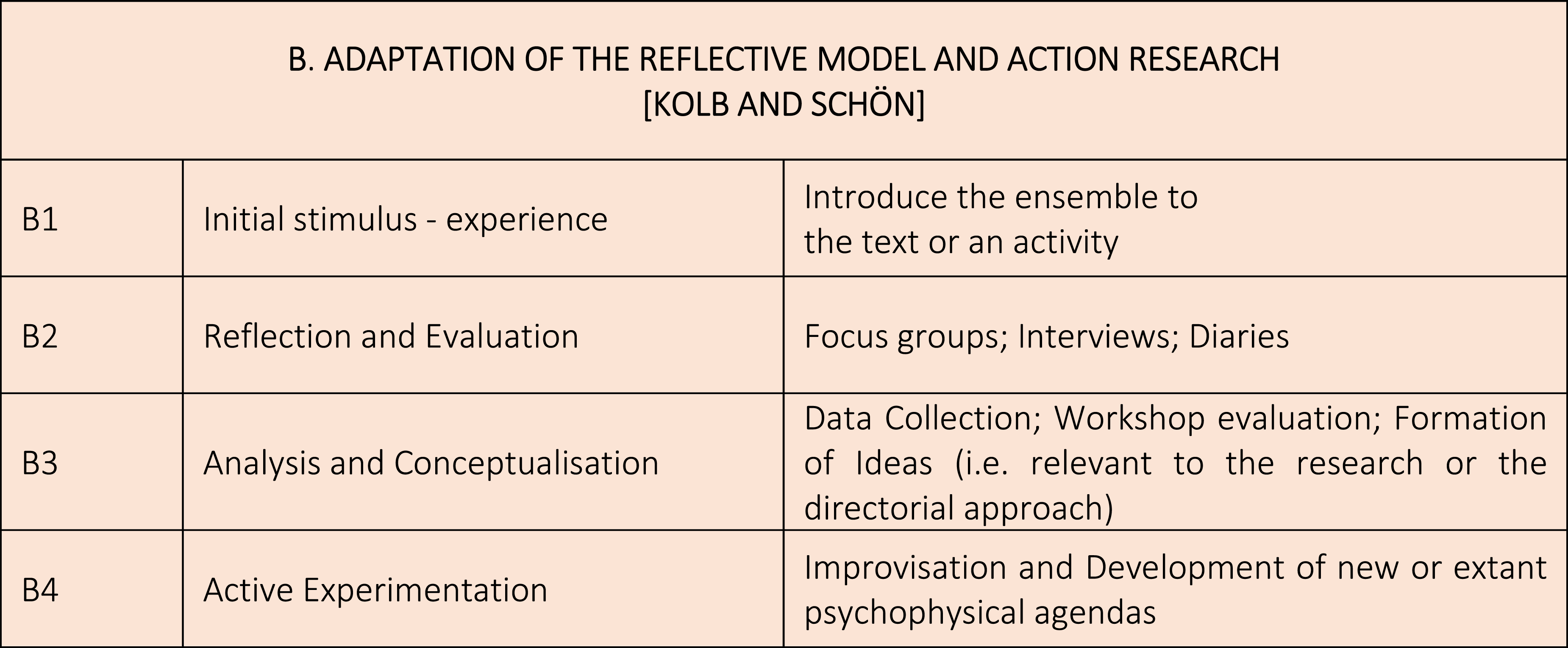
In the studio, the researcher-practitioner evaluates the method employed. For instance, they detect the strengths and weaknesses of a workshop in order to examine its effectiveness and make improvements. Additionally, the investigator analyses the material collected while moving on to forming the first units of meaning. Then, active experimentation might take the form of improvisation or signify the development and readjustment of activities from extant agendas.
This ongoing process of systematic enquiry identifies action research as an integrated methodology. At the same time, it acknowledges the study’s educational and training settings. Both action research and the reflective approach adhere to the principles of phenomenological analysis. While the enquiry is concerned with the applicability of phenomenology as a descriptive method of Greek tragedy and consequently its implementation as a practice in (psychophysical) performer training, it is pivotal to secure the validation of the method through its findings (see proposed model: Figures 4 and 5). Finding Validation Methods.
In transcendental phenomenology, we have three distinct approaches to validation: (i) Giorgi’s (1985) approach, where the verification of findings is produced from publication and criticism; (ii) Colaizzi’s (1978) reconfirmation by the research subjects; and (iii) Van Kaam’s (1966) intersubjective validation by experts (M Reiners, 2012, p. 2). The research employed diverse validating methods due to its mixed nature, which combines theory and practice (see Figures 5 and 6). Even so, in the context of practical implementation, confirmation can also be indirectly generated by multiple bodies (M Reiners, 2012). First and foremost, the researchers can contribute as reflective practitioners (Van Manen, 1997). Second, the long-term participants might compare and describe their experience in group discussions during the workshops or the final interviews (Colaizzi, 1978). Finally, we may also consider external observers of the process, like peers or audience members (Van Kaam, 1966). Noticeably, this diversity in methods might be perplexing and precarious for novice researchers. When working with intersecting fields and overlapping concepts, ‘ideas are dissected’ (Wilson, 2015, p. 40), blurring the lines between descriptive and interpretive phenomenology. PMPP (I): Generic version.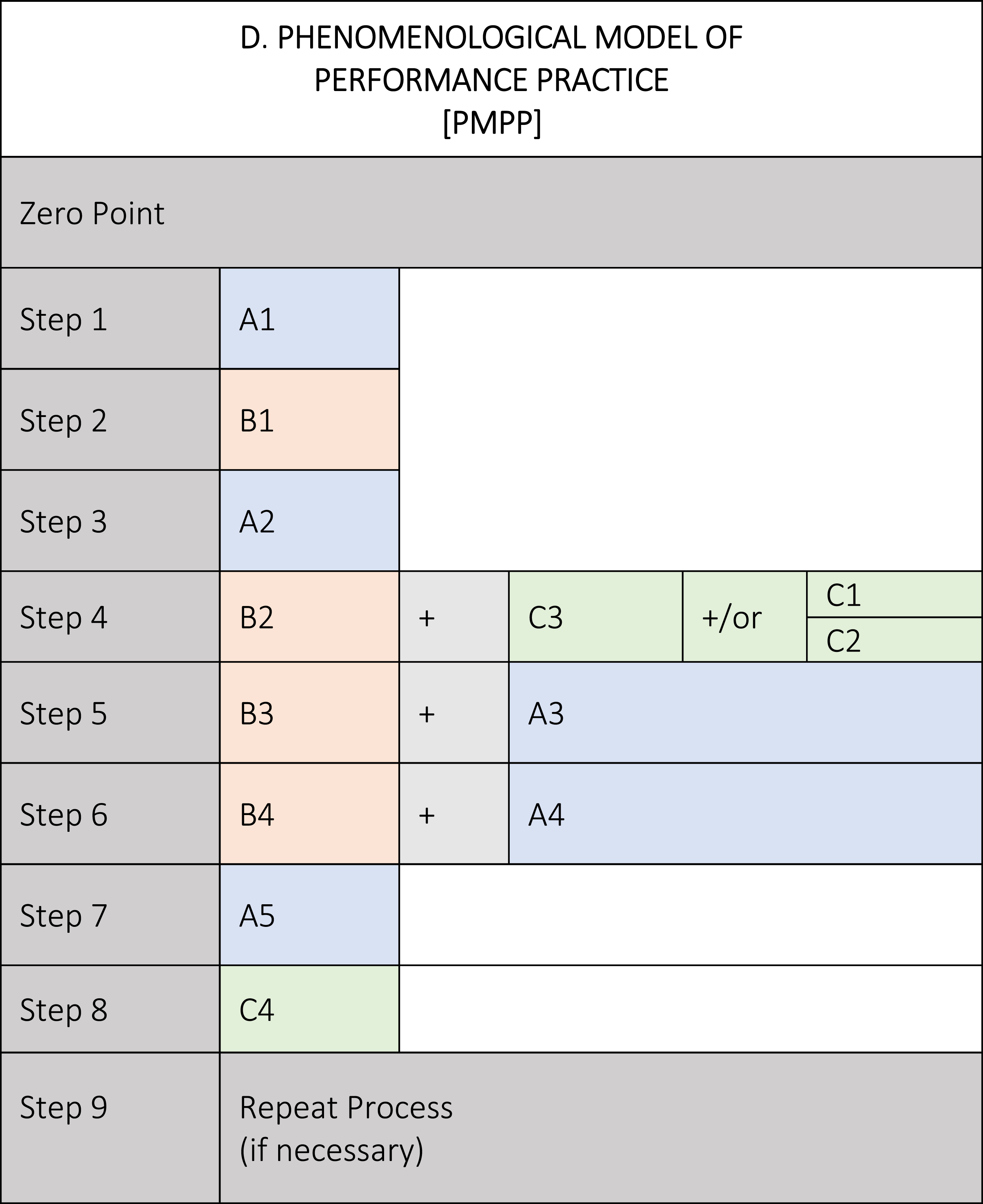
To clarify this, I will give an example based on a pedagogical observation from my studio practice, where I employed reflective phenomenology. The workshop discussions showed that, in some cases, participants could not articulate their practice using taught theories. The problem was intensified with phenomenology, which comes with the vagueness and insecurity of subjectively defined phenomena.
The investigation used different approaches in embedding theory in performer training, resulting in the development of internal communication systems. In Prometheus Immobile (2018), I attempted to familiarise the ensemble with phenomenological concepts while working on specific psychophysical activities. In addition, the participants were tasked with self-led reading beyond our studio work. Nevertheless, the voluntary nature of the research impacted attentiveness, whereas the lack of supervision beyond studio-based work affected their understanding of the embedded theory.
The re-evaluation of studio methodology, in terms of enabling and supporting empirical articulation and intersubjective communication, led to integrating small theoretical sessions into the studio practice. For example, in Bacchae in Absentia (2019), these sessions included a chapter from Zarrilli’s phenomenology of senses in actor training (Zarrilli, 2007), readings of the play text and a theoretical analysis of Bacchae. The aim was to facilitate a deeper theoretical understanding and use phenomenology as a shared language. That plausibly proved challenging for participants unfamiliar with the discipline, such as students from other Schools and practitioners who had developed their professional practice in drama schools in the UK and abroad.
Instead, in Medea Inside (2021), the performers acquired the phenomenological attitude embodying the theory through their personal experience. That formed a continuation of the theoretical integration approach and subsequent practical modifications both in the studio and online.
A phenomenological pedagogy in education, live and virtual environments, research or artistic contexts can benefit further developments. As evidenced by the study, it can enrich embodiment in performance and characterisation in acting. More importantly, it enhances self-esteem and intersubjective communication of experience. Figure 7 PMPP (II): Detailed application
1
.
Conclusion
Phenomenology as a qualitative research method in art and performance studies can be challenging for novice researchers and researchers-practitioners. The article identified and discussed common issues in PaR, such as positionality and bracketing, studio practice and reflexivity, and interview design. The paper addresses those concerns and proposes PMPP as a model of systematic analysis in performance studies and making). Moreover, it illustrates critical methodological aspects of the research to facilitate a deeper understanding of qualitative data collection, organisation and interpretation in studio practice.
In addition, this article expands the debates on positionality and reflexivity (see Berger, 2015; Mason-Bish, 2019) to the field of PaR. It also confirms the value of Mainsah and Rafiki’s (2022) position that navigating through different roles creates ‘a rich space for sharing knowledge’ (Mainsah & Rafiki, 2022). The dualities characterising the capacities of practice-based researchers such as directors, choreographers or performers can often cause unexpected or uncontrollable intersubjective dynamics within the exploratory space. However, those multi-prismatic identities should be regarded with positivity as they constructively enrich the research with empirical insights of artistic, educational and pedagogic interest. At the same time, the continuous demand for solutions qualifies the researcher with a competent skillset.
Further to this, the researcher needs to adopt a flexible methodology based on a reflective approach, openness and inclusivity, eagerness for change and adaptability (Berger, 2015; Cochran-Smith & Lytle, 1999; Giorgi, 1985; Loughran, 2002; Mason-Bish, 2019). Most importantly, the investigator needs to adhere to the principles of the preferred phenomenological method employed in the study (Giorgi, 2008), especially when interdisciplinary fields overlap or when describing the practical application of theory on certain phenomena.
The study demonstrates the significance of phenomenology in conjunction with practice-based research as an evidence-based methodology synthesising first-person and third-person perspectives. Scientifically evident and ethically approved methods underpin the proposed system. The director safely guides the performer-participant through self-awareness, healthy experimentation and multiple ways of expressive communication, harnessing the benefits of psychophysical approaches. In methodological terms, PMPP accumulates strategies and practical knowledge deriving from Husserl’s (1970) and Giorgi’s (1985) phenomenological method, Kolb’s (1984) reflective model, Schön’s (1983) action research and Reiner’s (2012) validation analysis of findings. PMPP establishes the implementation of phenomenology as a practice in (psychophysical) performer training, forming simultaneously a reflective system of analysis and examination of qualitative data in performance research. The model provides a research and creative tool for educational and artistic settings. Finally, by acknowledging certain limitations, the appropriation of the proposed interview design can be applied to focus groups, small-scale audience research and ABR in physical and digital environments.
Footnotes
Declaration of Conflicting Interests
The author(s) declared no potential conflicts of interest with respect to the research, authorship, and/or publication of this article.
Funding
The author(s) disclosed receipt of the following financial support for the research, authorship, and/or publication of this article: This study is supported by University of Leeds, University Research Scholarship 2017-2022/URS2383.
